JUDGE IMPRESSED WITH SOUTHERN ILLINOIS ECONOMIC DEVELOPMENT EFFORTS

Mount Carmel Mayor Joe Judge says the city may consider joining a regional economic development organization following his recent attendance at a leadership conference in southern Illinois.

During the recent Mount Carmel City Council meeting, Judge reported attending the Southern Illinois NOW Leadership Conference on October 6th in Carbondale.

The conference brought together business representatives, municipal officials, and community leaders from throughout southern Illinois to discuss economic development and opportunities for regional growth.

Judge said he was invited to attend by the organization's executive director and came away impressed with the work being done to attract businesses and encourage investment across the region.

Southern Illinois NOW, also known as SI NOW, is an economic development organization focused on promoting business growth and economic opportunities throughout southern Illinois.

Judge told council members that Mount Carmel is not currently a member of the organization but said joining may be something the city considers in the near future.

The mayor described SI NOW as an active and progressive organization working to strengthen the southern Illinois economy.

He said he was particularly impressed by the amount of economic development activity taking place in the Marion, Herrin, and Carbondale areas.

Judge did not announce any formal plans to join the organization but indicated that its regional approach to economic development could be worth exploring for Mount Carmel.

MT. CARMEL CITY COUNCIL APPROVES TWO STREET CORNER FUNDRAISERS FOR LOCAL ORGANIZATIONS

Two local organizations have received permission from the Mount Carmel City Council to conduct street corner fundraisers this fall to benefit college students and families in need.

During the recent city council meeting, Kyle Peach of Wabash Valley College requested permission to hold the college's annual fundraiser on Saturday, November 7th, benefiting the FRESH program.

FRESH stands for Food Resources Erase Student Hunger and provides food, snacks, and personal hygiene items to Wabash Valley College students experiencing food insecurity.

Peach told council members that studies indicate 40 to 50 percent of college students experience food insecurity at some point during their college years.

He said the program continues to see significant use, with money collected during the fundraiser going directly toward keeping its shelves stocked.

The fundraiser is also part of Wabash Valley College's annual November food drive competition among Illinois Eastern Community Colleges.

Peach said Wabash Valley has won the district competition so many consecutive years that the traveling trophy has essentially found a permanent home at the college.

The schools also combine their collections for a statewide community college food drive competition, where the district finished fourth last year.

Members of the Wabash Valley College baseball team will once again help collect donations at intersections around Mount Carmel.

The council approved the request, with Mayor Joe Judge reminding organizers to make sure volunteers wear safety vests.

Meanwhile, Melissa Smith of Operation Share received permission to conduct a similar fundraiser on Saturday, November 14th.

Smith told council members that demand for assistance increased significantly last year, particularly for holiday gifts and food assistance.

Operation Share has moved away from distributing traditional Thanksgiving turkeys and Christmas hams, instead providing 25-dollar Buy Low gift cards to families in need.

Smith explained that some families lack the equipment or ability to prepare large holiday meals, making grocery gift cards a more practical way to provide assistance.

She said rising costs have made it increasingly difficult to meet the growing demand, and additional donations would allow Operation Share to help more families.

The fundraiser will also give volunteers an opportunity to distribute information about Operation Share's holiday bell-ringing campaign, which has experienced volunteer shortages.

Council members agreed to the November 14th date, despite the two fundraisers being scheduled on consecutive Saturdays.

Again, Wabash Valley College's FRESH fundraiser is scheduled for November 7th, while Operation Share will collect donations on November 14th. Both will take place at street intersections in Mount Carmel.

Big Upcoming Weekend In Mt. Carmel

Mount Carmel is gearing up for a busy Halloween weekend, with the Riverview Ramble, Golden Aces playoff football, and two evenings of trick-or-treating.

Saturday’s activities begin at eight a.m. with the Riverview Ramble, presented by Mt. Carmel Public Utility Company. The event features timed five-K, ten-K, and half-marathon races, offering scenic views of the historic Bluff City along the Wabash River.

All proceeds benefit the All Our Kids Early Childhood Network, which brings local organizations, professionals, and families together to support young children and their families.

The races start and finish at Merchants Park at Fourth and Market Streets. Runners should be in the starting corral by seven-fifty. Awards will go to the top male and female finishers in each race.

Packet pickup is Thursday and Friday at the utility office at 316 North Market Street, from eight-thirty until noon and one until four-thirty. Limited race-day packet pickup will be available, but there will be no race-day registration.

Then Saturday afternoon, the Mt. Carmel Golden Aces host the Greenville Comets in the opening round of the IHSA football playoffs. Kickoff is at two at Riverview Stadium, with gates opening at noon. All tickets are eight dollars, a price set by the IHSA, and no passes will be accepted.

Trick-or-treating rounds out the weekend, with official hours from four until eight p.m. Friday, October thirtieth, and Saturday, October thirty-first.

Mayor Joe Judge says residents welcoming trick-or-treaters should turn on their porch or outside lights. Families should skip homes where those lights are off. Judge also notes that some separately organized trunk-or-treat events may continue beyond the city’s designated hours.

IECC BOARD REVIEWS $9.25 MILLION CAPITAL PLAN, ATHLETIC SCHOLARSHIPS AND INSURANCE COSTS

The Illinois Eastern Community Colleges Board of Trustees reviewed potential capital improvements, rising employee insurance costs and athletic program funding during its regular meeting Tuesday night at Olney Central College.

Chancellor Taylor introduced a new enrollment dashboard designed to help the district track enrollment trends and institutional performance. He also discussed recent campus listening sessions and efforts to turn employee feedback into institutional improvements.

One of the major financial topics was a proposed capital financing plan involving up to 9.25 million dollars for HVAC replacements, athletic facility improvements and other projects.

District officials are evaluating financing options aimed at minimizing the impact on property taxes. No bonds or specific construction projects were approved Tuesday. The board is expected to revisit the proposal in November, with possible bond issuance in early 2027.

The board also reviewed its annual intercollegiate athletics report, which showed IECC served 450 student-athletes during fiscal year 2026, providing approximately 2.37 million dollars in athletic scholarships.

Meanwhile, employee health insurance premiums will increase 15 percent in 2027, while dental insurance rates will rise 11.8 percent. The district will maintain its existing insurance carriers and continue fully funding employee-only coverage under its designated high-deductible plan. The additional annual cost to IECC is estimated at more than 226-thousand dollars.

Trustees approved the purchase of two new computer servers from Dell Technologies at a cost not to exceed approximately 57-thousand dollars. The equipment will help improve system reliability while reducing long-term software expenses.

In personnel matters, Jared Price was approved to move from Wabash Valley College Academic Advisor to Program Director of Academic Advising, effective October 26th.

Other personnel actions included naming Libby McVicker Dean of Students, hiring Erica Sanchez as a custodian at Lincoln Trail College, and making Heather Watts's administrative assistant position at Lincoln Trail College permanent by removing the interim designation.

Trustees also approved affiliation agreements with Acorn Estates and Oakview Nursing and Rehabilitation, revised policies governing board meetings and charitable gifts, and authorized a search for legal counsel services.

The board also changed the starting time of its December 8th meeting at Frontier Community College to 5 p.m., with a special board retreat scheduled earlier that day.

The next regular meeting of the Illinois Eastern Community Colleges Board of Trustees will be Tuesday, November 17th, at 6:15 p.m. at Wabash Valley College in Mount Carmel.


Statewide races: Little-known GOP slate faces uphill battle against mostly incumbent Dems

Democrats have held all statewide offices since 2019

By BEN SZALINSKI
& BRENDEN MOORE
Capitol News Illinois
news@capitolnewsillinois.com

Article Summary

  • Democrats have occupied all six statewide constitutional offices since 2019 and are hoping to continue their winning streak in November. 

  • The Republican field is far less funded and has much less name recognition than the mostly incumbent Democratic slate.

  • The GOP slate nonetheless said they have a compelling argument that Democrats have failed to improve the lives of Illinoisians’ and believe the election results will reflect that. 

This summary was written by the reporters and editors who worked on this story. 

When Illinois’ Democrats gathered for their annual rally at the state fair in August, they reached from one end of the stage to the other. 

The party's candidates have occupied all six statewide constitutional offices since 2019 and are hoping to continue their winning streak in November against a Republican field that’s received much less financial support and has limited name recognition.

Democrats haven’t lost a statewide race since 2014, when Republican Gov. Bruce Rauner and Comptroller Judy Baar Topinka won their races. Four years later, Democrats won all statewide offices as a blue wave swept the nation during President Donald Trump’s first midterm election. The party is looking to continue that trend this year in a similar political climate.

Aside from the comptroller and Senate races, every other race for statewide office features established incumbents. And unlike 2022, when the Republican slate included two seasoned state lawmakers and a county auditor, the GOP's candidates in 2026 — save for its repeat nominee for governor — are largely unknown faces in state politics or have achieved perennial status. 

No Republican even bothered to submit petitions to run for treasurer, leading little-known attorney Max Solomon to wage a write-in campaign to earn a spot on the November ballot. 

The GOP slate nonetheless said they have a compelling argument that Democrats have failed to improve the lives of Illinoisians’ and believe the election results will reflect that. They argued, at the very least, that some Republican checks were needed in Democrat-dominated Springfield.

<iframe width="560" height="315" src="https://www.youtube.com/embed/videoseries?si=MkjfCMWfVQliRRhC&amp;list=PLdhByU_rlI50" title="YouTube video player" frameborder="0" allow="accelerometer; autoplay; clipboard-write; encrypted-media; gyroscope; picture-in-picture; web-share" referrerpolicy="strict-origin-when-cross-origin" allowfullscreen></iframe>

Capitol News Illinois interviewed all the candidates for statewide office and published video interviews on YouTube. Solomon spoke to CNI via phone.

Read more: Replacing Mendoza: Candidates vie to be state’s first new comptroller in a decade | Governor’s Race 2026


Secretary of State

Secretary of State Alexi Giannoulias is running for reelection despite also filing petitions to run in Chicago's nonpartisan mayoral election in February. 

The Chicago Democrat launched his mayoral campaign in August with an eye-popping $22 million in his campaign account. He's since spent at least $5 million on television and digital advertisements in the Chicago market, both touting his record in his current job and outlining his plans for the second job he's seeking. 

GIANNOULIAS

Giannoulias faces Diane Harris, a Republican from Will County who's a member of the Joliet Junior College board. She reported having just $134 on hand at the end of September, compared to Giannoulias’ $19.1 million. Her campaign spent $3,420 in the last quarter and has advertised only in the Joliet area on a local gospel and jazz music radio station, according to records.

“We need the votes,” Harris told Capitol News Illinois. “I know that the money is important, but if I had 10 million voters over $10 million, I’ll take the voters.”

While he’s faced criticism for his dual campaigns, Giannoulias said he's focused on the race immediately in front of him. He told Capitol News Illinois that "when you're interviewing for a job, you don't leave the one that you're in." 

He dismissed concerns that voters, particularly outside Chicago, will punish him for committing to only the first five months of a second term, arguing that his track record of results speaks for itself. 

"I could not be more excited about what we've accomplished," Giannoulias said. "I promised to revolutionize the office, to modernize. We focused on eliminating the time tax, making people's lives easier across the entire state of Illinois, not just in Cook County."

Giannoulias touted the implementation of appointment scheduling at driver's services facilities, the introduction of fast-pass kiosks, the opening of a Real ID supercenter in Chicago and offering more services online as examples of moving the office into the 21st Century. He recalled a conversation early in his tenure with a man who he said brought a novel with him to a driver's services facility expecting to be there at least half the day.

"I was like, 'You'll never have to bring a novel in here again,'" Giannoulias said. "He probably thought: 'This guy's nuts. Like, who is this guy?' But that was really fundamentally important. People, especially with all the obligations people have, shouldn't take the day off work just to access government services."

Giannoulias also had a robust legislative agenda in his first term, working with lawmakers to authorize digital IDs and driver's licenses, restrict state grants to libraries that ban books and create a regulatory structure for e-bikes and e-scooters. 

In a second term, Giannoulias said he would continue to implement the new laws and modernization efforts. While coy on specifics, he suggested an effort to ensure companies that supply license plate reader cameras comply with state laws barring that data from being turned over to law enforcement to track immigrants in the U.S. without legal permission or women seeking abortion care. 

And he hinted that the state's license plate design, introduced in 2016 and gradually phased in over a 10-year period, could soon receive an overhaul.

"I think we're going to have some very exciting news on that front very soon," Giannoulias said.

HARRIS

If elected, Harris said she wants to mandate that drivers be able to pass rules of the road tests only in English. The state currently offers those tests in English, Spanish and other languages at the discretion of the secretary of state, including Chinese and Polish.

“There are many individuals who are currently sitting unemployed that could possibly do the same work,” Harris said when asked if that policy would hurt the economy. “That's just like if I were to go to an opportunity to have a job where they ask for bilingual, if I don't prepare myself for that opportunity, then I won't be eligible.”

She said she would also improve the business licensing process and continue many initiatives Giannoulias started, including online appointments alongside walk-in visits to driver facilities.

Attorney General

Democratic Attorney General Kwame Raoul is seeking a third term. He said if he’s reelected, he wants to focus more on retaining attorneys and expanding the resources for his office, especially after lawmakers reduced his budget by $10 million this year.

RAOUL

The last two years of his second term have been marked by roughly 90 legal battles with the Trump administration. Several of those were in response to the Trump administration’s efforts to withhold state funding, which Raoul’s office says has resulted in Illinois maintaining access to more than $8 billion that would have been cut off without the lawsuits.  

His Republican opponent, Bob Fioretti, said Raoul needs to focus more on violent crime and corruption. He said he only agreed with three of Raoul’s lawsuits against the Trump administration, but he declined to say which ones. He pointed out that Raoul is seldom the lead plaintiff on the lawsuits, which often involve dozens of Democratic-led states. 

“Quit the gamesmanship and quit putting out press releases as if you're filing a lawsuit against the administration,” Fioretti said. “You got all these other (attorneys general). It's nonsense. Let's just put it that way.”

FIORETTI

Without giving specifics, Raoul said there have been instances where his office was criticized for not being involved in a high-profile corruption cases, when in reality, he was involved but couldn’t publicly acknowledge it. He said corruption has been a priority during his eight years.

“Not all of them are big, sexy cases, and no matter what state you're in, the U.S. attorney's office is going to get the prioritized bite at the apple for the bigger public corruption case, and that is in part because of the resources that they have at their disposal in both the FBI as well as some jurisdictional authority,” Raoul said.

Fioretti, a Democrat-turned-Republican who is an attorney and former Chicago alderman, ran unsuccessfully for several offices in recent the past decade, including Chicago mayor twice, and board president and state’s attorney in Cook County. He said if he’s elected, he will be focused on pushing state’s attorneys to more aggressively prosecute violent crimes.

“One, I'm going to make sure we represent the victims of crime instead of the criminals,” Fioretti said. “Two, I'm going to restore the rule of law. And three, I'm going to break this cycle of crime and corruption that we see in this state.”

Treasurer

In 2014, state Treasurer Mike Frerichs won his first race by less than 10,000 votes against former House Minority Leader Tom Cross, R-Oswego. A dozen years later, he's attempting to become the longest-serving chief investment officer in state history. 

No Republican submitted petitions to secure a spot on the March primary ballot, leading south suburban attorney Max Solomon to ditch his longshot run for governor and pivot to a write-in campaign for treasurer. He secured more than 60,000 write-in votes in March to earn the GOP line on the November ballot. 

But Solomon hasn't run a particularly visible campaign. He had just $4,917 in his campaign account on Oct. 1 as compared to Frerichs' nearly $1.6 million. 

FRERICHS

"It's the best job because I make money for the state," Frerichs said in an interview. "I help families make money, and I give away money. Every day we're in office, we return about a million dollars to people and businesses in Illinois. It's like I get to play Santa Claus 365 days a year."

In terms of giving away money, he was referring to the state’s unclaimed property database, which connects Illinoisans to money they’re owed but might not have collected.

It’s the treasurer’s most visible line of work, and Frerichs even traveled to Vatican City earlier this year to return $8.65 to former Chicagoan Robert Prevost, now known as Pope Leo XIV, that he’d left in a now-closed Paypal account. 

Frerichs touted the turnaround of Illinois' Bright Start college savings program, which went from underperforming to one of the most highly rated, per Morningstar.

He also heralded earnings from the state's investment portfolio that grew from hundreds of millions when he entered office to more than $1.4 billion in fiscal year 2026, as well as growth in earnings for local governments that invest in his office's The Illinois Funds.

"We know that every dollar we can help them earn through their investments is $1 they don't have to raise in property taxes," Frerichs said. 

Despite pressure from some progressives to stop investing in Israeli companies and government bonds, Frerichs said his office will continue to do so, deeming it a legislative question. 

"Three big things we consider when we make investments: does it generate a good return? Is it safe? And does it diversify our portfolio?" Frerichs said. "And in this case, Israel bonds meet all three of those. They're some of the highest performing bonds in my portfolio."

SOLOMON

Solomon said he would work to reduce politically motivated investment decisions but didn’t identify an instance where Frerichs had made one. Then he said he doesn’t “think that a state or the money or the taxpayers of a state should be doing business with international bodies,” and should instead focus on Illinois investments.

“In fact, I don't care what the returns will be on the bond,” Solomon said. “Illinois first.”

Solomon told CNI that he ditched his gubernatorial campaign because he can “advocate for the same policies” he cares about “from any statewide office.” 

Though not necessarily within the purview of the office he’s seeking, Solomon said he’d focus on rooting out waste and fraud. He said he’d also try to heighten his bully pulpit and serve as “whistleblower-in-chief” for the taxpayers and to influence policy in the state legislature.

"The most important thing is every voter in the state of Illinois now has a choice,” Solomon said.

Capitol News Illinois is a nonprofit, nonpartisan news service that distributes state government coverage to hundreds of news outlets statewide. It is funded primarily by the Illinois Press Foundation and the Robert R. McCormick Foundation.

WABASH COUNTY HEALTH DEPARTMENT REPORTS SUCCESSFUL FLU CLINIC, UPCOMING COMMUNITY EVENTS

The Wabash County Health Department administered 329 flu shots during its recent drive-thru flu clinic.

Health Department Administrator Judy Wissel shared that information with the Wabash County Board of Commissioners during Monday afternoon's meeting.

Wissel thanked Public Utility for providing space for the clinic.

She also reported that the Health Department participated in career fairs at Mount Carmel High School and Edwards County Junior-Senior High School, promoting careers in public health.

Looking ahead, the Department's DFC program will host a Family Movie Night this Saturday, October 24th, at Merchants Park beginning at 7:30 p.m. The featured movie will be "Hocus Pocus," and families are encouraged to bring lawn chairs or blankets.

Wissel also noted that the Health Department has been participating in the "Painting the Town Pink" campaign during October in recognition of Breast Cancer Awareness Month, encouraging screenings and community support.

In personnel matters, the Health Department is currently accepting applications for a Family Engagement Specialist.

Anyone interested in the position can submit a resume to tbarbre@wabashhealth.org or stop by the Health Department for more information.

MCHS SPECIAL EDUCATION STUDENTS LEARNING VALUABLE LIFE AND JOB SKILLS THROUGH SNACK CART BUSINESS

Students in the special education program at Mount Carmel High School are gaining valuable real-world experience through a student-operated snack cart business, while also preparing for a special Thanksgiving tradition.

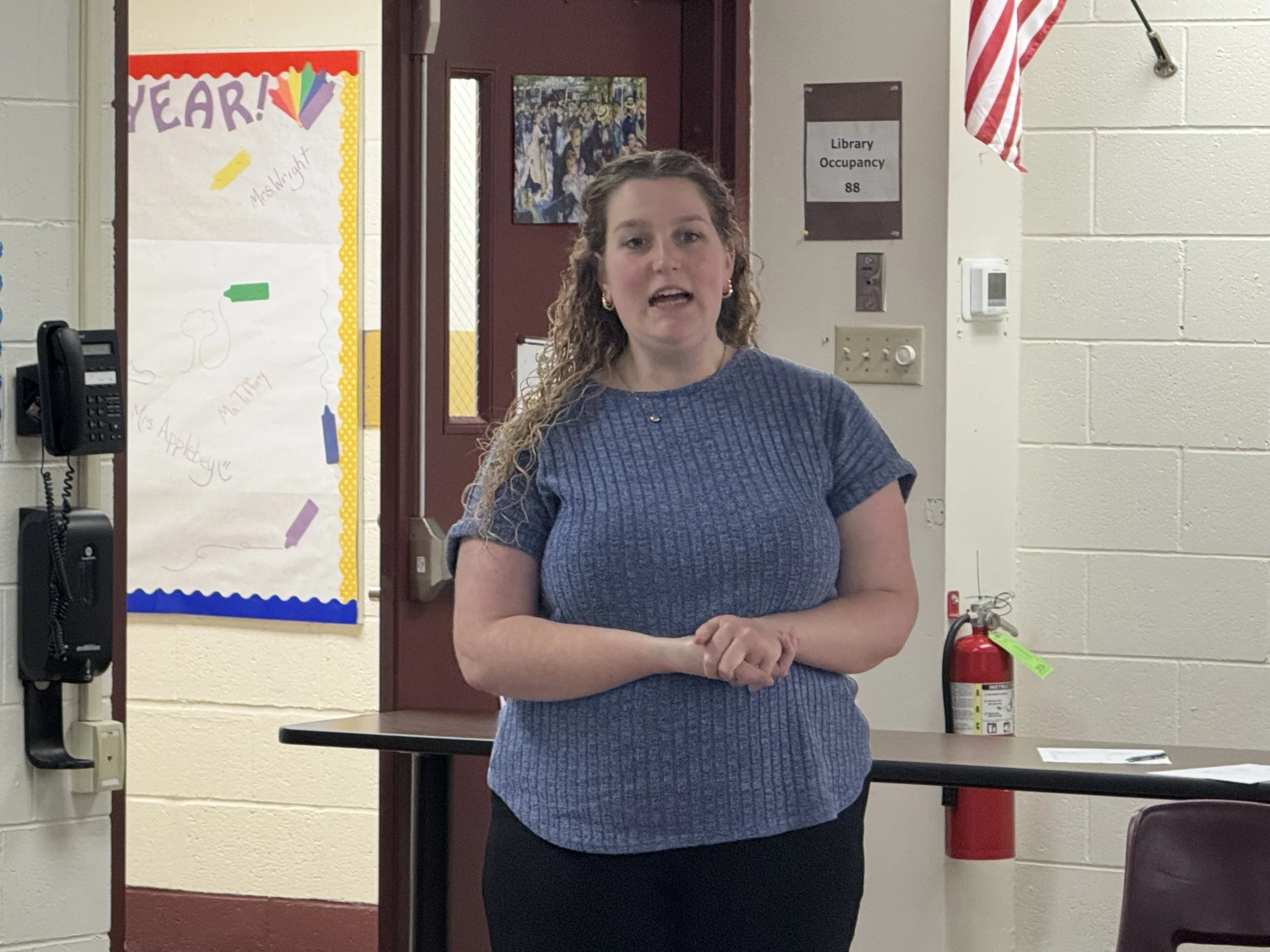
During Monday evening's Wabash Community Unit School District 348 Board of Education meeting, MCHS special education teacher Rebekah Hocking shared details about the life skills and job training opportunities being provided to her students.

Hocking, now in her fourth year with the district, works with nine students, helping prepare them for greater independence and future employment opportunities.

She explained that freshmen and sophomores concentrate on basic life skills, including cooking, cleaning, and laundry, while juniors and seniors focus more heavily on employment preparation.

That includes practicing job interviews, learning workplace expectations, and developing the skills needed to become successful employees.

One of the program's newest initiatives is a student-operated snack cart that delivers snacks to Mount Carmel High School staff members.

Hocking said the students are responsible for processing orders, preparing deliveries, collecting payments, and making change.

Staff members submit their orders each week, and students organize and fill those orders before making deliveries throughout the school.

Hocking told board members the experience has been especially beneficial in improving students' money-handling and communication skills.

She said students who initially struggled with counting change have made significant progress through daily practice.

The snack cart also teaches responsibility, time management, and independence, with students learning to prepare for deliveries without being reminded.

Hocking credited the high school staff for enthusiastically supporting the program.

Money raised through snack cart sales goes directly back into the life skills classroom, helping purchase supplies and fund additional educational activities.

One of those activities is the program's annual Thanksgiving dinner, which students are already looking forward to next month.

Hocking said the class will prepare its second Thanksgiving meal this November after successfully introducing the activity last year.

Students work in small groups to prepare traditional holiday dishes, including mashed potatoes, green bean casserole, dinner rolls, pies, and turkey roast.

Hocking explained that adults provide supervision but encourage students to complete as much of the cooking independently as possible.

She said the experience helps students build confidence in the kitchen while also providing an opportunity to enjoy a family-style Thanksgiving meal together.

Hocking added that the activity is particularly meaningful because not every student has the opportunity to experience a traditional holiday gathering at home.

She told board members the students are already excited about the upcoming dinner and have begun asking when they can start planning the menu.

Hocking said both the snack cart business and Thanksgiving cooking project are helping students develop practical skills they can carry with them beyond high school.

MCHS special education teacher Rebekah Hocking

Study finds Illinois’ Displaced Energy Workers Bill of Rights falls short  

Non-union workers at a southern Illinois coal mine didn’t receive the same benefits as unionized workers, the study found.


 Article Summary 

  • A new University of Illinois report examining the state’s Displaced Energy Workers Bill of Rights found shortcomings in the law. 

  • The report found that non-union workers at a Knight Hawk Co. coal mine that closed did not receive the same level of assistance as unionized employees at two power plants planning to close. 

  • Knight Hawk, headquartered in the southern Illinois town of Percy, disputes the report’s conclusions, saying it complied with all applicable laws and regulations.

This summary was written by the reporters and editors who worked on this story.


By KATE McCANN
For Southern Illinois Source

The 2025 closing of the Viper Coal Mine in Sangamon County left dozens of workers without jobs and exposed gaps in a state law designed to protect energy workers displaced by the ongoing transition away from fossil fuels, according to a new report from University of Illinois researchers.

The report, released by the university’s Climate Jobs Institute, found that non-union workers at the mine about 20 miles southeast of Springfield did not receive the same level of assistance as unionized employees preparing for the closures of two coal-fired power plants in central and southwestern Illinois planned for 2027-28.

The closures were examined as the first of three under the Displaced Energy Workers Bill of Rights, enacted as part of Illinois’ 2021 Climate and Equitable Jobs Act. Although the law was intended to help workers navigate the loss of jobs in the fossil fuel industry, researchers found that limited enforcement authority leaves workers vulnerable when employers fail to comply.

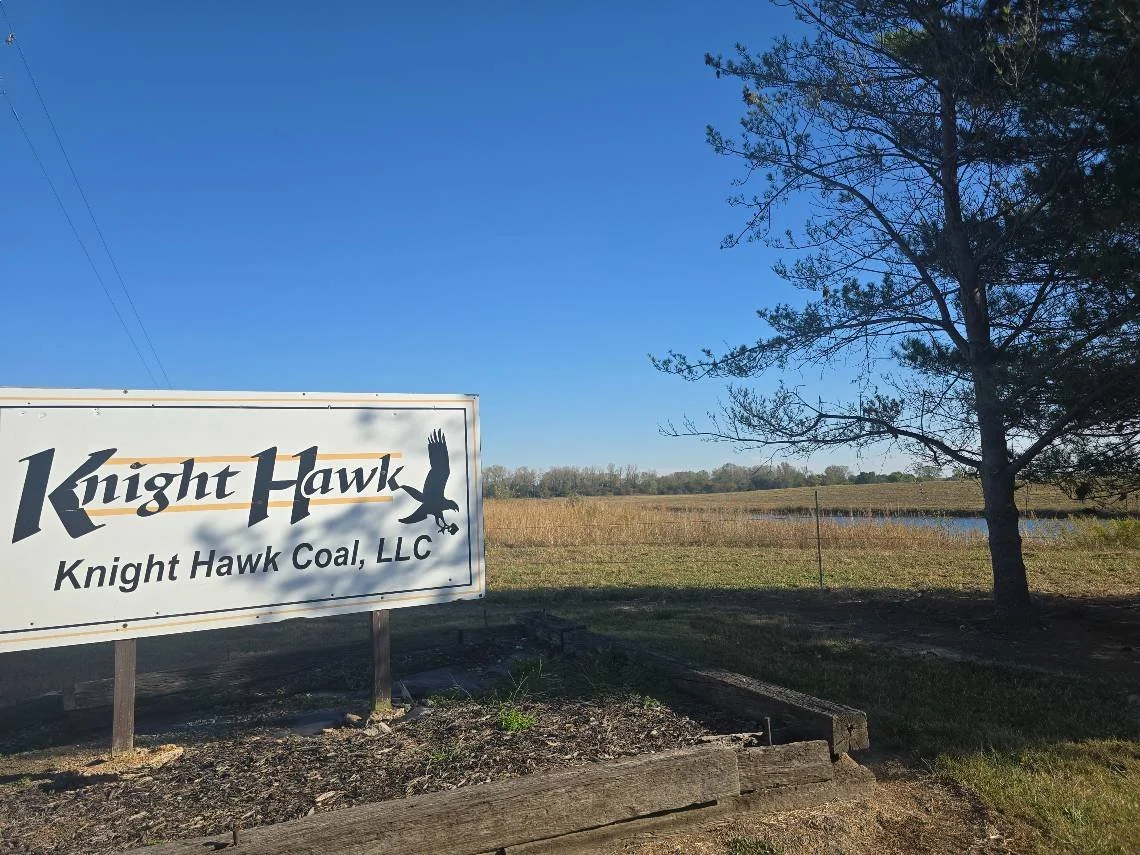
In December 2024, Knight Hawk Coal — based in the deep southern Illinois town of Percy — announced the impending closure of the Viper Coal Mine, once a major employer in the communities of Williamsville and Elkhart.

At its peak, between 2010 and 2015, the mine had employed more than 300 workers. By early 2024, its workforce had fallen to 92. By the end of that year, just 18 employees remained, primarily to oversee the removal of equipment and other decommissioning work.

Researchers Roshan Krishnan and Johnathan Hettinger concluded in the report that Knight Hawk Coal failed to file required closure notices and did not respond to repeated outreach attempts from state officials seeking to connect workers with job-placement and other assistance.

According to the U of I researchers, Knight Hawk’s delayed response to the Illinois Department of Commerce and Economic Opportunity left little time for state officials to connect affected workers with assistance.

The Viper mine was established during the 1980s to provide coal to Springfield. Knight Hawk acquired ownership of the mine in 2020, but Springfield almost immediately reduced its coal purchases, prompting the company to gradually scale back production, company spokesperson Candice Cotter said in an email.

The company said the reductions continued as it attempted to negotiate a new agreement with the city to provide greater certainty for the mine and its employees. 

“Knight Hawk followed all applicable regulations and statutes. Any implication contrary is patently false,” Cotter wrote.

Knight Hawk did not directly address questions about what assistance, if any, was provided to employees following their layoffs, including whether workers were connected with job-placement services or other resources intended to help displaced energy workers.

The disparity highlights a central question raised by the report: whether Illinois’ protections for displaced energy workers are effective and if the 2021 law lacks the authority to ensure employers comply with them.

The report also highlights the role unions can play in helping workers prepare for plant closures, particularly in rural communities where alternative employment opportunities may be limited.

No advanced notice

Former Williamsville Village President Mark Esker, who left office in early 2026, said he received no advance warning despite months of rumors about the mine’s future.

Esker also said he knew of at least two constituents who were laid off shortly before qualifying for retirement benefits, leaving them without benefits they had counted on.  One of the men continued working for Viper by making deliveries to other mines in southern Illinois, Esker told Southern Illinois Source.

The report found that Knight Hawk failed to submit the required closure notices despite repeated attempts by the DCEO to reach the company. This ultimately prevented state officials from connecting workers to resources they should have been offered under the law.

The circumstances also raised questions about whether Viper’s gradual workforce reductions allowed the company to avoid triggering other worker-notification requirements.

The mine reduced its employment over several years as operations declined. The Illinois Worker Adjustment and Retraining Notification Act — known as the WARN Act — requires covered employers to provide 60 days’ notice of qualifying mass layoffs and plant closings.

When Gov. J.B. Pritzker signed the Climate and Equitable Jobs Act into law in 2021, Illinois established a framework for moving toward cleaner energy while providing support for workers and communities affected by the transition.

The legislation set a goal of achieving 100% carbon-free energy in the power sector and ending emissions from privately owned coal-fired power plants by 2030. It also included provisions intended to help displaced energy workers pursue new careers through education, job training and employment services.

Those resources can include assistance through the Illinois Dislocated Worker Program, workforce development programs and Clean Jobs Workforce Network Hubs. Workers seeking to start businesses may also be connected with Small Business Development Centers.

Researchers urged the state to establish penalties for employers who don’t comply and give DCEO greater authority to enforce the law.

They also called for stronger coordination between the state agency and organized labor, along with improved monitoring of federal and regional developments that could change the timing of planned plant closures.

Union presence is evident

The report also examined the scheduled closures of the Kincaid and Baldwin coal-fired power plants, where most employees are represented by unions.

Unlike the workers at Viper, unionized employees at the two plants are already receiving assistance and information through their union representatives as they prepare for the loss of their jobs, according to the report.

At Kincaid, for example, owned by Vistra, 99 people are employed full time, including 80 represented by International Brotherhood of Electrical Workers Local 15. In June 2026 affected workers were sent toolkits prepared by the state to allow workers job placement alternatives.

With the plant’s future uncertain, union leaders have warned that workers may need to leave Illinois to find comparable jobs.

“They are giving employees the opportunity to transfer. It’s just that they are running out of transfer opportunities within Illinois,” said Ben Busser, vice president of IBEW Local 15.

The Baldwin plant, located in southwestern Illinois in Randolph County, employs about 120 people, including 105 represented by IBEW Local 51.

Ryan Watson, a business representative with Local 51, said workers at the Baldwin Power Plant in Randolph County face a different challenge if their next opportunity requires leaving the state.

“Leaving the state is totally different than just moving an hour or two away to the next plant,” Watson said.

Some workers may have opportunities to transfer to facilities in states such as Ohio or Texas. But relocating can be a difficult prospect for employees who have established their lives and families in rural Illinois communities.

Brad Gritt, a business representative with Local 15, said workers at Kincaid have relatively strong wages and benefits, making it difficult to find comparable positions elsewhere.

“Wages- and benefits-wise, these guys are doing pretty well and it’s hard because they’re in one of the better locations now,” Gritt said in the University of Illinois report. He added that workers who take other jobs could find themselves starting over or accepting lower pay.

Busser added he hoped the Trump administration would intervene to extend Kincaid’s operating life.

The report noted that the loss of coal facilities across Illinois is steadily reducing the number of potential transfer opportunities. That is particularly consequential for workers in rural areas, where alternative employers may be scarce.

An industry in decline

Illinois has long been a major coal-producing state and remains the nation’s fourth-largest producer, but the industry has declined as renewable energy has expanded and power generation has shifted to renewable alternatives.

According to figures cited in the report from the Illinois Department of Natural Resources, Illinois boasted 20 operating coal mines employing about 3,000 workers in 2007. By 2024, the number of mines had fallen to 12, employing a little more than 2,000 workers.

Mechanization also has reduced the number of employees needed to produce coal, even as production has increased, the University of Illinois report noted.

The broader decline has affected communities that relied on mines and power plants for well-paying jobs, local tax revenue and economic stability. For some rural towns, the loss of a major employer can affect not only individual workers but also local businesses and the resources available to support schools and public services.

Meanwhile, the future of Illinois’ Kincaid and Baldwin plants remains a concern for workers and their communities. Both facilities have been evaluated for potential conversion to natural gas, an option that could affect their long-term operations and staffing needs.

For the authors of the University of Illinois report, the experience at Viper demonstrates that establishing protections in law is not enough if employers can fail to comply without meaningful consequences.

The disparity between Viper’s non-union workforce and the unionized employees at Kincaid and Baldwin is evidence of how access to representation and timely information can shape workers’ options during a closure.

The researchers urged Illinois to give DCEO more effective enforcement powers, and the ability to impose penalties for noncompliance while improving partnerships with organized labor

In an era of rapidly changing federal policy and changing regulations in the energy sector, the report’s researchers also noted that the data center boom is expected to further strain the load on the state’s energy grid — further underscoring the need to potentially keep coal plants open longer than originally expected and provide more protections for workers caught in the middle of the tussle between state and federal policies.

“It would help if our federal policy wasn't shifting wildly from administration to administration,” said Krishnan, one of the researchers, adding that federal regulation on data centers may ensure a more precise timetable for future plant closures.

Still, the ultimate responsibility to enforce the energy worker bill of rights falls on state officials, not the federal government, they pointed out.

“The onus is on the state — they are making these coal plants close and the state needs to be the one to make sure the onus is met,” co-researcher Hettinger said.

Southern Illinois Source is a subsidiary of Capitol News Illinois.

Capitol News Illinois is a nonprofit, nonpartisan news service that distributes state government coverage to hundreds of news outlets statewide. It is funded primarily by the Illinois Press Foundation and the Robert R. McCormick Foundation.

Stratton, Tracy clash over Trump, affordability in lone U.S. Senate forum 

Democrat vows to check president as Republican defends his policies, casts opponent as socialist

By BRENDEN MOORE
Capitol News Illinois 
bmoore@capitolnewsillinois.com  

Article Summary  

  • Lt. Gov. Juliana Stratton vowed to serve as a check on President Donald Trump, while Republican Don Tracy largely defended the president’s positions on tariffs and the war in Iran as the two sparred in their only face-to-face meeting.

  • Stratton stuck to the unapologetically progressive message that helped her win the Democratic nomination against more moderate primary opponents earlier this year. And she repeatedly tied Tracy to Trump policies that she said have driven up the cost of living.

  • Tracy, on the other hand, labeled Stratton as a tax-and-spend liberal and accused her of being a Democratic socialist "even though she won't admit it."  

This summary was written by the reporters and editors who worked on this story.  

SPRINGFIELD — Democratic Lt. Gov. Juliana Stratton vowed to serve as a check on President Donald Trump while Republican Don Tracy largely defended the president’s positions in their only face-to-face meeting in the race to succeed retiring Democratic U.S. Sen. Dick Durbin.

In the hourlong WTTW forum Tuesday evening, Stratton stuck to the unapologetically progressive message that helped her win the Democratic nomination against more moderate primary opponents earlier this year. And she repeatedly tied Tracy to Trump policies that she said have driven up the cost of living. 

Tracy, on the other hand, labeled Stratton as a tax-and-spend liberal and accused her of being a Democratic socialist "even though she won't admit it." He presented himself as a pragmatic conservative and suggested that Stratton was too focused on Trump.

Stratton enters the final two weeks of the campaign as the heavy favorite, with a recent poll showing her ahead by double digits in a state where Republicans haven't won a statewide election since 2014. But Tracy, who has loaned his campaign $3.5 million and is airing television ads, is betting that his message can resonate with Illinois voters.

A third candidate on the ballot, Whitfield Harrington of the American Center Party, did not meet the station's 15% polling threshold required to participate.   

The Trump question

The candidates debated cost of living and affordability, tariffs and trade policy, immigration, health care costs, energy and climate, and how to balance representing the varying needs of the regionally diverse state. 

But nearly every issue came back to Trump, the two-term Republican president who Illinois voters have rejected by double-digit margins in three consecutive elections. 

Stratton, Gov. JB Pritzker's No. 2 since 2019, echoed the governor's pugnacious playbook for dealing with Trump, labeling the president a "wannabe dictator" and "the biggest threat to national security" while promising to hold him accountable.

"I will be a check on this president," Stratton said. 

She also pledged not to confirm any of Trump's nominees. 

Midway through the forum, Tracy seemed to tire of Stratton's invocations of Trump, saying he was "starting to wonder if my opponent is running against me or against the president."

"But I have to say, it's nice that you're able to say the Trump name without using the F word," Tracy told Stratton, a reference to the viral digital ad Stratton's campaign released during the primary earlier this year.

He also argued Stratton would spend her first two years focused solely on impeaching Trump.  

Stratton then chided Tracy for saying earlier this year that he'd “welcome” Trump's endorsement. Unlike GOP gubernatorial nominee Darren Bailey, Tracy hasn't been endorsed by Trump. But he told reporters at the Illinois State Fair in August that he “would certainly welcome the endorsement of the president of the United States.”

Tracy countered that he would accept an endorsement, though he isn’t actively seeking one.

Cost of living

The issue of affordability seeped into nearly every topic discussed.

According to AAA, the average price of unleaded gasoline in Illinois was $4.65 per gallon as of October 20, nearly 50% higher than this time a year ago. And the Consumer Price Index rose 3.7% year-over-year, according to the Bureau of Labor Statistics.   

Stratton blamed Trump for initiating the war in Iran and for enacting tariffs on friends and foes alike. She vowed not to vote for any bills that provide supplemental funding for the war effort and called for an end to tariffs. 

"It has caused chaos," Stratton said. "It has caused a trade war with our allies, and that is not the kind of leadership we need. And it's why I'm going to hold this president accountable."

Tracy said the cost of living was "higher than it should be," but suggested that gas price hike was a "temporary spike." He said that he would consider the war and the economic pain it has caused "just" if it prevented Iran from developing a nuclear weapon. 

On tariffs, Tracy repeated what he told Capitol News Illinois in July: "The jury's still out."

"I just like the fact that that the president recognizes that we've been subsidizing the world and we've been taken advantage of by the world with unfair trade practices out there, and so he's trying to use, I think, tariffs as a tool, not an objective, to reset world trade policy to make it a more level playing field," Tracy said. 

Stratton rebutted that "the jury is not still out," noting the Supreme Court's ruling that Trump cannot unilaterally impose tariffs. She then said "refunds are owed" to Americans for tariffs paid over the past year. 

Tracy, however, broke with Trump's decision to waive new sanctions on Russia that would have imposed significant tariffs intended to stymie the nation's war effort in Ukraine. Calling Russian President Vladimir Putin a "thug," Tracy said he would have voted against it and an associated deal to supply Russian diesel to U.S. markets. 

The Illinois Republican said inflation remains "too high" but that he would focus on addressing "root causes" to lower costs, such as reducing government spending. He also said affordability could be addressed by cutting taxes, hitting Stratton for various tax and fee hikes enacted under the Pritzker administration.

To put more money into people's pockets, Stratton reiterated her support for raising the federal minimum wage from $7.25 to $25 per hour, a middle-class tax break to be paid for by hiking taxes on income over $1 million and establishing a Medicare for all healthcare system.

"This is an issue of priorities, and if (Trump) can find all of this money for everything else, and to drag us into an illegal war of choice, then we should be able to make sure that people are not choosing between cutting their medication in half or going to the doctor and being able to put food on the table," Stratton said. "That's a false choice."

Tracy said a hike in the wage floor would be "a death sentence to small businesses," though Stratton pointed out that the Pritzker administration incorporated feedback from the business community that resulted in the incremental hike of the state's minimum wage to $15 an hour. 

The Republican disagreed with Stratton on overhauling the nation's healthcare system. In fact, he believes it's "one of the best systems in the world," albeit "not perfect" and "too expensive."

"We cannot ditch a really good system that provides very good healthcare for 92% in a quest for this perfect healthcare system," Tracy said. "We need more market competition."

Immigration

One of the key stances that helped Stratton solidify progressive support in the primary was her unequivocal call to abolish Immigration and Customs Enforcement, which came following the aggressive enforcement campaign known as Operation Midway Blitz.

She stood by that position Tuesday night, repeating her belief that the federal agency can't be reformed. She called for comprehensive immigration reform that includes a pathway to citizenship for people living in the U.S. without legal permission, including immigrants who came to America as children, as well as more judges and caseworkers to unclog a process that often takes years. 

"What I don't want to see is the criminalization of our immigrant neighbors," Stratton said. "I don't want to see racial profiling of Black and brown people. I don't want to see people killed by an agency that is paid for with our tax dollars. It is not OK."

Tracy acknowledged that Midway Blitz was "ugly and chaotic" and that the administration "should have figured out a better way" to enforce immigration law in sanctuary cities like Chicago. But he blamed Illinois' Democratic leaders and protestors for not cooperating, noting that former President Barack Obama deported more than 3 million immigrants without as much backlash.

"The worst of the worst didn't have to be picked up in neighborhoods with armies of immigration advocates encouraged on by my opponent to obstruct immigration enforcement," Tracy said.

Government data and analyses conducted by various news organizations, however, conflicted the “worst of the worst” narrative, showing that the vast majority of people arrested during Midway Blitz did not have a criminal record. 

“Donald Trump went after tamale vendors and daycare workers — our neighbors,” Stratton said. “And so I'm always going to stand up and speak out when we are seeing people getting killed in the streets by a federal agency.”

Other topics

Stratton said she opposed Trump's planned dismantling of the U.S. Department of Education. Tracy said he would "keep an open mind" on the topic but generally believes more education functions should be at the state and local level.

On agriculture, both expressed support for the return of a five-year farm bill. The last one was enacted in 2018 and the most recent extension expired last month. The bill has traditionally included subsidies for farmers as well as funds for the Supplemental Nutrition Assistance Program. Tracy said Democrats were the reason it hasn't gotten done, to which Stratton fired back that "Republicans are holding SNAP benefits hostage."

"I will fight to make sure that we can get back to that bipartisan piece of legislation that will include all of the things that are already in it related to conservation and commodities, but also SNAP benefits," Stratton said.

Tracy defended the more stringent work requirements for adults to qualify for food assistance, which were included in the One Big Beautiful Bill Act.

"There is dignity in work, and we need to get more able-bodied people into the workforce," Tracy said. "It is better for them, and it is better for society. Whereas the other side seems to like welfare dependency, whether you need it or not."

Capitol News Illinois is a nonprofit, nonpartisan news service that distributes state government coverage to hundreds of news outlets statewide. It is funded primarily by the Illinois Press Foundation and the Robert R. McCormick Foundation.

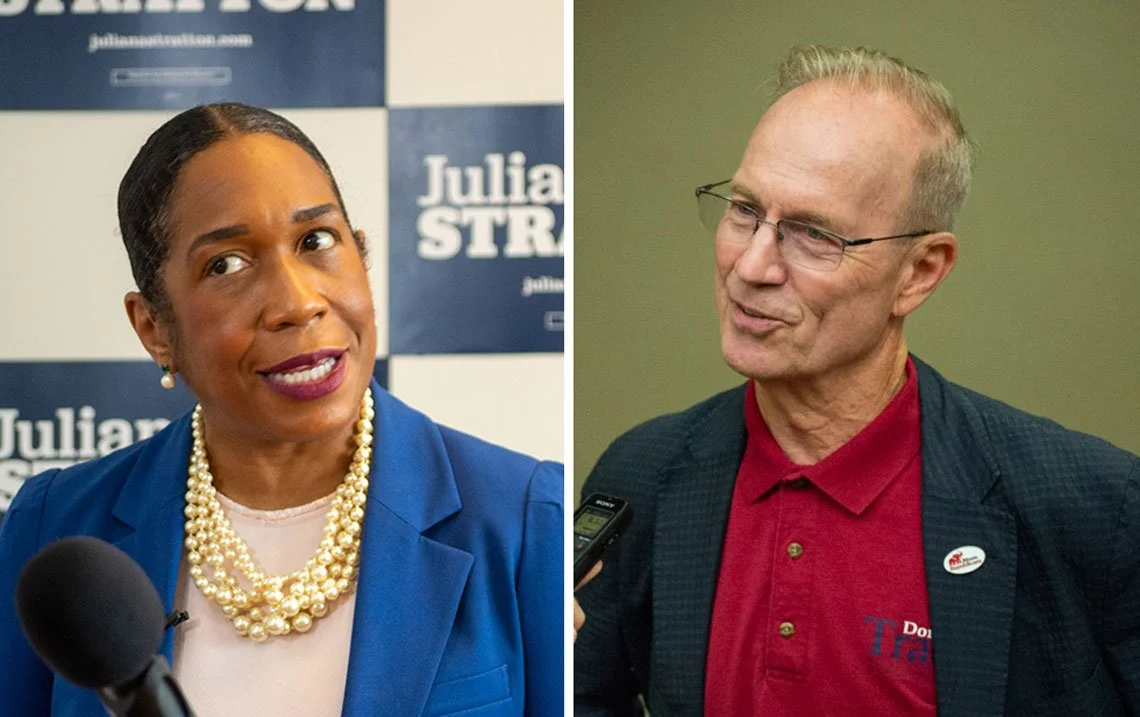
 Democrat Juliana Stratton and Republican Don Tracy, the state’s major-party candidates for U.S. Senate. (Capitol News Illinois photos by Jerry Nowicki)

Bill aims to study how self-driving vehicles can be integrated into Illinois transit 

The pilot program would help determine the future of autonomous vehicles in Illinois.

By BERNARDA MALEVSKA
Capitol News Illinois
bmalevska@capitolnewsillinois.com

Article Summary 

  • State Rep. Kam Buckner urged the Northern Illinois Transit Authority to study how autonomous vehicles could work with existing transit networks.

  • Buckner called for a formal framework, through his House Bill 4663, to test and deploy self-driving cars in the state. The bill has been stalled in the General Assembly.

  • Initially, the study would look at how driverless vehicles could be used at the beginning and end points of mass transit systems.

This summary was written by the reporters and editors who worked on this story.

CHICAGO — Legislation to test autonomous vehicles in Illinois may come up again in the November veto session, though the lead sponsor of a pilot bill says there’s still a lot of work to do.

Autonomous vehicles, or AVs, are motor vehicles that have an automated driving system. Currently, AVs aren't available for purchase, but robotaxis operate in places across the country, including San Francisco, Arizona, and Austin, Texas.

Driverless AVs are not yet authorized in Illinois. But state Rep. Kam Buckner, D-Chicago, has called for a formal framework, through House Bill 4663, to test and deploy self-driving cars in the state. The bill thus far has been stalled in the General Assembly.

Buckner has also urged the newly founded Northern Illinois Transit Authority, or NITA, to study how autonomous vehicles could work alongside the existing public transport network, if they’re made legal.

Buckner’s bill would create the Autonomous Vehicle Pilot Project Act, which would restrict testing to counties with over a million residents, as well as Sangamon County or the Metro East region of Madison, St. Clair and Monroe counties. 

But this legislation will not authorize AVs on the streets immediately, Buckner said. 

“What we're asking for is a very controlled program with a certain number of cars on the road,” said Buckner. “We can actually take that data and figure out what's the best way to implement the policy.”

Buckner also said the legislation aims to determine Illinois' specific needs through research and proper implementation. 

“I don't want Illinois to take everybody else's word for it. I want Illinois to actually do the work, to look through the processes and get the political processes in place, and to walk away and say what we did when no other state did, which is study this intensely, intentionally, and figure out what the way forward was,” Buckner said. 

Jim Merrell, advocacy director with the Active Transportation Alliance in Chicago, said Illinois should allow local governments to pass regulations on AVs beyond what’s in state law. This differs from House Bill 4663, which he said preempts local authority in some ways, meaning state laws override local ones. 

"We think that's something that's going to be really important for a city like Chicago to be able to regulate how and where autonomous vehicles are allowed to operate to make sure that they're not interfering with other infrastructure or transit usage like bus stops or bike lanes,” Merrell said. 

The Active Transportation Alliance pointed to another stalled piece of legislation in the General Assembly — House Bill 4789 — that would establish the Automated Driving Systems Development Act, which would introduce stronger implementation measures and create a review committee within the Illinois Department of Transportation. 

The potential impacts

One issue AVs can solve in Illinois is the first- and last-mile problem, especially in neighborhoods where the last station of public transport is far from passengers' homes, Buckner said. 

“People who live on that side of the South Side, which is where I grew up, don't have direct access to the transit hubs, right, and so we're looking to change that,” Buckner said.

Merrell said there are more efficient ways to solve this problem, like expanding transit service, improving bus reliability, and creating bike lanes.

“Inside the city, you still would run into that space efficiency issue, while there are plenty of other alternatives that are much more efficient and sustainable that are already working,” Merrell said. 

Although public transport is still the goal, it takes time to build, Buckner said. For instance, the Red Line Extension project, which would extend the CTA line to 130th Street in South Chicago, won't be completed until 2030.

“In the meantime, we got to have ways for folks to get from their communities, specifically communities of color that are disconnected to these systems,” Buckner said. 

But autonomous vehicles at high-congestion points may worsen traffic, said Dany Robles, senior legislative director at the Illinois Environmental Council. 

“It really comes down to, how are they integrated into more congested areas so that we're not continuing to exacerbate those congestions and pollution from other vehicles around them,” said Robles. 

For the Illinois Environmental Council, the approach to analyzing AVs includes several angles, Robles said. 

“A lot of AVs are electric vehicles — they're pulling resources from renewable energy, but then there's a lot of emerging concerns too surrounding the loss of jobs in the vehicle space or in the shared driver space,” Robles said. 

This is the reason why some labor unions have opposed the Autonomous Vehicle Pilot Project Act. Among them is Service Employees International Union Local 1, which serves five Midwestern states.

Bailey Koch-Farwana, a union spokesperson, said that according to their economic analysis, every AV that hits the road replaces four human drivers. This is because AVs can operate 24/7 and do not need breaks. 

But there are ways to balance this outcome, Koch-Farwana said.

“There’s a just transition that could happen, you know, for every driver that leaves the app, like the Uber or Lyft app, then a (driverless car) can enter the road,” Koch-Farwana said. “Right now, there’s nothing in that legislation that regulates that or even cares about the working people behind it.”

Buckner responded to criticism that AVs will take jobs away from rideshare drivers by saying that everyone needs to be part of the conversation as researchers explore how to implement these vehicles efficiently in the future.

On the other hand, Koch-Farwana said labor unions and rideshare drivers, who have been unionized since August, still haven't been invited to the table. 

What are the next steps?

Buckner, in his letter to NITA, pointed to the Bay Area as a potential model for integrating AVs into public transit. 

The San Francisco Bay Area has a program that incentivizes autonomous vehicles to solve the first- and last-mile problem. Passengers who use Waymo, a company owned by Google that operates robotaxis, and go on to public transport within two hours get a $2.85 credit for future Waymo trips, according to Streetsblog San Francisco.  

Buckner also said the state does not have to follow this exact example of regional planning. 

“I am not going into this with my mind made up about what I want. The only thing I want is data,” said Buckner. “I want people to be able to utilize them (AVs) and see if they make sense for them. And I want data for it to come back and then make an informed decision.”

For research on potential AV implementation to begin, House Bill 4663 needs to clear the House Rules Committee, be assigned to a substantive standing committee, like the Transportation or Executive Committee, pass the Full House, and repeat the process in the Senate. 

When asked whether the push could occur during the November veto session, Buckner said he is respecting the legislative process. 

“I hope so, but I've also said that I am not interested in rushing this. We're still having conversations and still negotiating,” Buckner said. “And when it's ready to go, we're going to go full speed.”

Capitol News Illinois is a nonprofit, nonpartisan news service that distributes state government coverage to hundreds of news outlets statewide. It is funded primarily by the Illinois Press Foundation and the Robert R. McCormick Foundation.


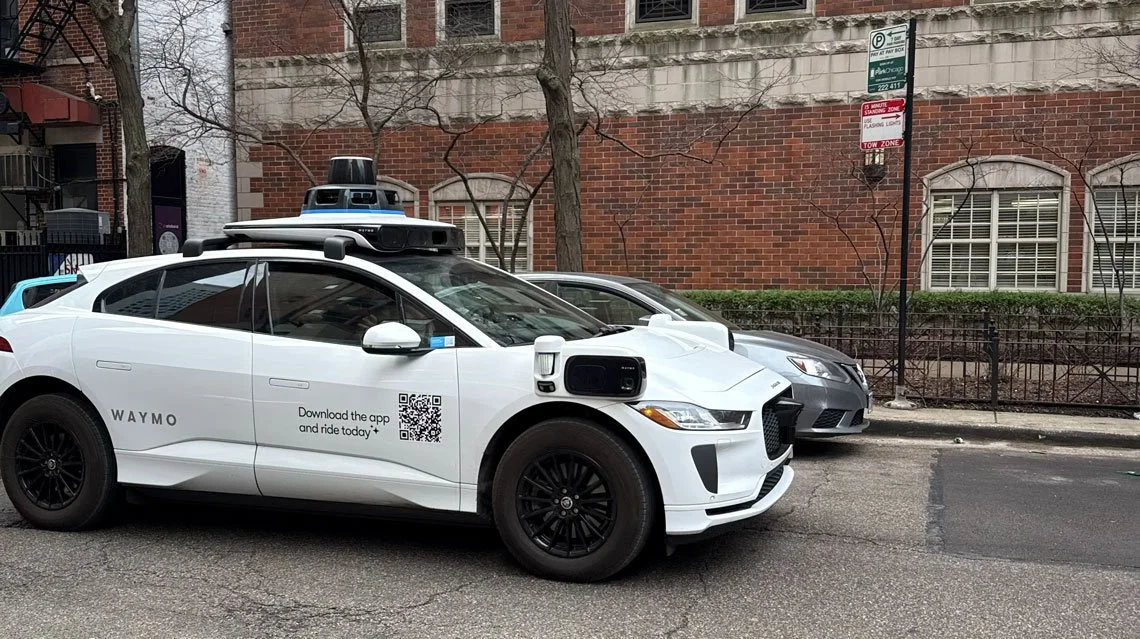
A Google-operated Waymo vehicle drives through Chicago’s Near North Side, with a driver, as the company begins testing and mapping the city in March 2026. (Medill Illinois News Bureau photo by Georgia Epiphaniou)