School Board Looks At Improving Accessible Seating At Riverview Stadium

Wabash Community Unit School District #348 is considering a more than 300-thousand-dollar project to improve handicapped-accessible seating at Riverview Stadium.

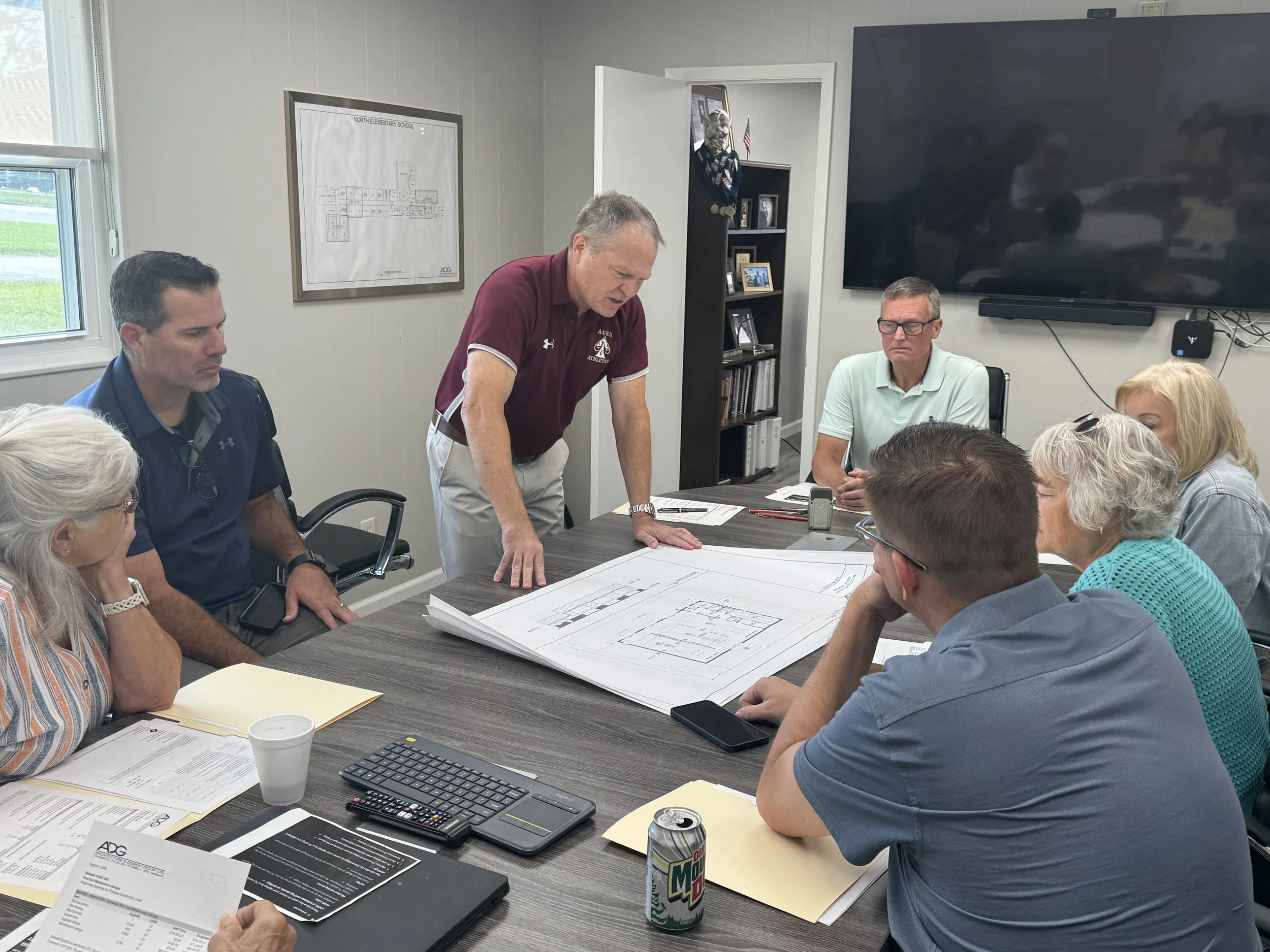
Superintendent Dr. Chuck Bleyer presented the preliminary concept during last Tuesday morning’s special school board meeting.

Bleyer said members of the community have approached the district about providing a handicapped-accessible area at the top of the stadium. He asked ADG to develop a concept that would include platforms extending over the bluff at the top of the home stands.

The preliminary design includes designated wheelchair spaces with fixed companion seats next to each location. A guardrail with a transparent upper portion would be installed along the front to allow spectators seated in wheelchairs to see the field.

Bleyer said the estimated cost came in higher than he initially expected at more than 300-thousand dollars.

Board members discussed the limitations of the stadium’s current accessible seating. Spectators with mobility issues can currently sit near the fence at the top of the stadium or along the track at field level. The visitor side also has a ramp leading to a small number of designated accessible spaces.

Board members said they believe there is a need for improved accommodations, noting the stadium is used not only for football but also track, boys and girls soccer and other activities.

One concern raised last Tuesday was making sure the transparent guard would provide an unobstructed view from a seated position, including views of the field, band and cheerleaders.

Bleyer also said community organizations have previously expressed interest in financially supporting district projects, and the accessible seating project could provide an opportunity for outside contributions. Board members discussed allowing organizations or businesses to help fund the project, with the district potentially covering the remaining cost.

The preliminary design appears to provide approximately 11 wheelchair-accessible spaces at the top of the stadium.

No action was taken last Tuesday. Bleyer said the project would require formal board approval at a future meeting and, if it moves forward, would not be constructed until next summer.

Superintendent Dr. Chuck Bleyer reviews designs for accessible seating at Riverview Stadium during last week’s special board meeting.

Bailey implores Republicans to improve turnout as he plans to shift focus to Chicago

Republican nominee for governor says late August downstate tour is last of the campaign

By BEN SZALINSKI
Capitol News Illinois
bszalinski@capitolnewsillinois.com

Article Summary

  • Darren Bailey said he will shift gears to the Chicago area upon the conclusion of this week’s campaign tour of downstate communities. 

  • Bailey met with supporters in several downstate communities over five days, asking them to improve Republican turnout compared to 2022. 

  • Supporters said they agree with Bailey’s focus on affordability and feel like Gov. JB Pritzker can’t relate to their problems. 

This summary was written by the reporters and editors who worked on this story. 

SPRINGFIELD — Darren Bailey told supporters on a downstate campaign tour last week that they won’t be seeing him again soon. Instead, he’ll be focusing his energy from now through November in Chicago and its suburbs. 

It’s the Republican gubernatorial candidate’s answer to a frequently faced question, following his 12-point loss to Gov. JB Pritzker in 2022: Why will this time be any different?

Bailey told supporters in small towns throughout the southern half of the state that he thought 2022 was going to be a close race but was instead the victim of voter apathy. This year, he insists his new focus on Chicago will put him over the edge, but only if Republicans improve their turnout downstate. 

“This race is ours to lose, but I need your help,” Bailey told a group of about 20 supporters outside a grocery store in Nokomis, a town of about 2,100 people in Montgomery County. “I need you to have the conversations with everybody that you see.” 

The Bailey campaign faces major monetary and historic headwinds. 

Midterm elections are often referendums on the party in power in Washington, D.C., which this year is his Republican Party. His opponent, Gov. JB Pritzker, has dumped $90.5 million into the race and is now launching TV ads attacking Bailey. 

There is not yet any independent polling available to show a snapshot of the race, but Bailey told supporters he’s receiving a different reception in Chicago than he did four years ago when he called the city a “hellhole.” People are now asking him to pose for pictures instead of heckling him, he said.

After cruising to victory in the primary, Bailey pledged to focus his campaign on Chicago and the suburbs. He says he’ll fulfill that promise now after stops in Marion, Anna, Beardstown, Paris, Bloomington and others this week.

“Cindy and I have spent just three weeks in our home since March,” Bailey, of Clay County, told about a dozen supporters at a cafe in Virden in Macoupin County. “The rest of the time we’ve been in Chicago. We wanted to make one more sashay through the heartland, through the southern edge of the state.” 

BAILEY 0833

Bailey received 66% of the vote in Macoupin County in 2022 and 69% in Montgomery County. But combined, the two counties provided about 20,000 of Bailey’s votes in an election that saw about 4 million people cast a ballot, though only about half of registered voters participated.

In Cook County, Bailey received just 23% of the vote four years ago. Bailey’s running mate, Aaron Del Mar, is the Cook County Republican Party chair. He told Capitol News Illinois they are hoping to receive upwards of 33% of the vote in the Chicago area this year. Despite the obvious need to campaign more in that region of the state, he said downstate voters are still important. 

“If southern Illinois doesn’t come out, it doesn’t matter,” Del Mar said.

DEL MAR

Bailey said in an interview with Capitol News Illinois on Monday he will especially focus on the suburbs, where voters exhibit more tendencies to support Republican candidates than in Chicago, though Democrats have increasingly won more races there, too. He said he wants to boost turnout to 2024 levels, which saw 70% of registered voters cast a ballot and President Donald Trump reduce 17-point losses in Illinois in 2016 and 2020 down to 11 points. 

Bailey’s supporters

A few dozen people attended Bailey’s Monday morning events, which Del Mar attributed to people being at work. The campaign held a variety of other events throughout downstate over the five-day tour, which concluded Tuesday, including some ticketed fundraisers and larger county Republican dinners. 

Supporters at Bailey’s events are buying his message that he can do better in Chicago.

“I just really feel like it’s time that somebody downstate, that understands what’s going on down here and also understands what’s going on in Chicago, I think it’s time for somebody like that,” Kurt Aumann, who owns an auction business in Nokomis, told Capitol News Illinois. “I really don’t see where JB Pritzker has had a struggle his entire life. He doesn’t know what I go through.” 

BAILEY 0856

Aumann said high property taxes and heavy regulations are among his top concerns, adding he doesn’t have those concerns about other states where his business operates. 

Jay Martin, Bailey’s Montgomery County coordinator who works for an agricultural company, shared that sentiment. 

“We have eight years of pretty much failed policies and we feel that downstate considerably, especially now with some of the higher real estate taxes that have been hitting us,” Martin said. 

Bailey and Del Mar discussed a variety of topics as they mingled with voters, including closing coal plants, state spending to help undocumented immigrants, public safety, and how Bailey would navigate a likely Democrat-controlled legislature. 

His supporters said they see a sharp contrast between Bailey and Pritzker. 

“Darren starts with humble surroundings,” James Meister, of Springfield, said in an interview. “He’s a farmer. He’s been working his entire life. As soon as he found out his school board wasn’t doing very well, he wanted to make changes. He didn’t sit back and let someone else do it. He made changes.” 

Bailey has faced criticism over the years for supporting property tax hikes while on the North Clay Board of Education. 

Martin said voters in Montgomery County feel they relate better to Bailey, believing the billionaire Pritzker struggles to understand issues facing rural residents. 

“He’s not heartless,” Martin said of Bailey. “And I don’t want to suggest to you that I think JB is. It’s easy to just grow estranged to how everybody else has to deal with life when you don’t have to fight for much.” 

On the issues 

While Bailey faces his own uphill battles to win the election, he thinks Pritzker does, too. 

“To sit here and tell us that he has made life more affordable, I mean, no one is realizing that,” he said in an interview. “I really believe a third term — just the economy and ultimately the Chicago Bears — I personally believe it is going to be a huge win. That it is going to be a huge win that is going to shock this state and this nation.” 

High property taxes and the SAFE-T Act criminal justice reform that abolished cash bail remain top talking points for Bailey, who thinks problems with the law have become more apparent to the public over the last four years. 

Bailey is also calling for a 1% cap on property taxes, which are levied by local governments and not the state, pointing to such policies in neighboring Iowa and Indiana. His supporters said they liked the idea and Bailey said he believes the state can reprioritize enough funding in the budget to cover education costs if school districts are limited in what they can raise in property taxes. 

BAILEY 0871

But Bailey is also facing backlash from Pritzker’s campaign for what is apparently taught in the private school he founded with his wife, Full Armor Christian Academy, which teaches a biblically based curriculum that includes the teaching of creationism in science classes.

The Pritzker campaign has criticized the school for using textbooks that suggested humans and dinosaurs once roamed the earth at the same time, though it is a generally accepted scientific conclusion that dinosaurs predated humans by about 65 million years. 

Bailey didn’t deny that curriculum’s teaching in an interview with WGN-TV last week and later told reporters at the State Fair to “ask Fred Flintstone.” 

“Everything the man says is a lie,” Bailey told CNI on Monday, referring to Pritzker. “My wife and I took our family to the Ark Encounter. There’s nothing in any curriculum. We took our family to the Ark Encounter. He saw that on our Facebook page so he wants to throw that out there. He’s tossing things at the wind.”

The school received a violent threat on Friday, Bailey’s campaign said, blaming Pritzker’s rhetoric. 

As for the Fred Flintstone comment, Bailey said it was a “humorous” reference to Pritzker dressing up as the cartoon character on Halloween last year. The fictional Fred Flintstone cartoon character lived at the same time as dinosaurs. 

Bailey has also selected other names for Pritzker, including calling him a “jackass” earlier this month. He said it’s what voters want to hear. Pritzker, in turn, has called Bailey dangerous and an “extremist Donald Trump puppet.”

“Everywhere I go, people say, ‘Darren, we need you to step up. We need you to be real, we need you to get the message out,’” Bailey told CNI. “When I say jackass, it’s the party’s symbol.” 

Capitol News Illinois is a nonprofit, nonpartisan news service that distributes state government coverage to hundreds of news outlets statewide. It is funded primarily by the Illinois Press Foundation and the Robert R. McCormick Foundation.
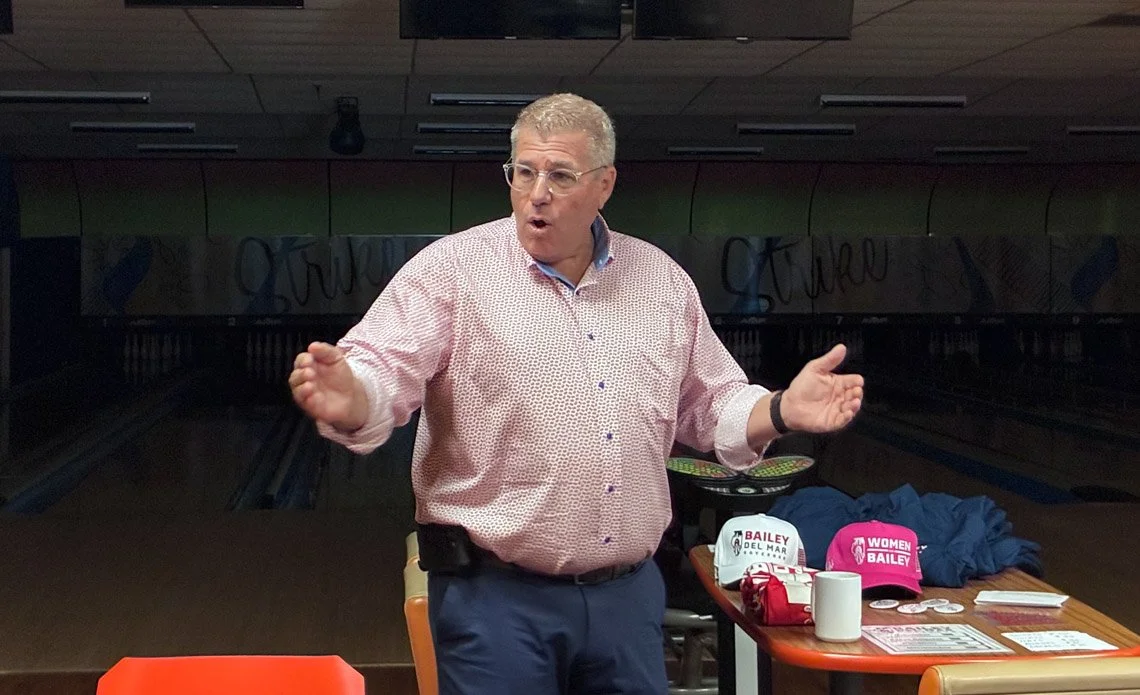
Republican Darren Bailey speaks to supporters at an event in Virden on Monday, Aug. 24, 2026. (Capitol News Illinois photo by Ben Szalinski)

New Illinois law establishes rules for electric bikes, scooters

New Illinois law establishes rules for electric bikes, scooters

Lawmakers express safety concerns over lack of regulations

By BEN SZALINSKI
Capitol News Illinois
bszalinski@capitolnewsillinois.com

Article Summary

  • Gov. JB Pritzker signed a new law to establish statewide rules and regulations for electric bikes and scooters, also known as e-bikes. 

  • The new law establishes rules about where “micromobility” devices can be used along with speed limits and age restrictions. 

  • Supporters of the bill say it’s a necessary framework to improve safety as more people, especially teenagers, are getting injured in accidents while using the devices. 

This summary was written by the reporters and editors who worked on this story. 

New rules governing who can use electric bikes and scooters, including where and how fast they go, will go into effect next year following Gov. JB Pritzker’s signature on Wednesday. 

Pritzker signed Senate Bill 3484 which establishes regulations on “micromobility” transportation that include age requirements, speed limits and rules on where they can be operated. The bill takes effect Jan. 1. 

“Technology is evolving, providing expanded mobility options for our neighbors through the rise in popularity of e-bikes and scooters,” bill sponsor Sen. Ram Villivalam (D-Chicago), said in a statement. “But without clear regulations for these devices, we are seeing increased injuries and accidents — jeopardizing community safety.”

The bill passed both chambers with bipartisan support on June 1 following several amendments throughout the spring session. 

The new law was one of Secretary of State Alexi Giannoulias’ top priorities during the legislative session. The Chicago mayoral candidate said unregulated micromobility devices have become a problem in the city. 

“As these high-powered devices become faster and more common on our streets and sidewalks, the stakes are simply too high to leave them unregulated and outpacing public safety,” Giannoulias said in a statement. “This law brings accountability and common-sense safety standards to our roads while helping prevent serious injuries and ensuring riders, parents and communities understand how to safely share the road.”

The state already has some regulations for low-speed electric bikes and scooters, but regulation often varies at the local level. The bill creates new statewide standards for high-speed electric bikes and scooters, electric motor bikes, and electric unicycles and skateboards.

“Municipal leaders have been responding in real time as new electric devices appear on local streets, sidewalks and bike paths,” Illinois Municipal League CEO Brad Cole said in a statement. “A statewide framework gives communities greater consistency while providing local officials and law enforcement with clearer guidance.”

Law enforcement groups were also in support of the bill. 

What’s changing

It creates a new tier of regulations for “high-speed” e-bikes, which have electric motors and can travel faster than 28 mph. Those would be regulated similarly to motorcycles and require users to have a driver’s license, insurance, an ownership title and register the vehicle with the state. They also must be driven on roads.

“Low-speed” e-bikes are already regulated by the state, but the law creates new tiers that govern how old a person must be to drive them. Drivers must be 15 years old to operate a Class 1 pedal-assist bike that travels up to 20 mph, such as Chicago’s Divvy Bikes, and a Class 2 motor-powered bike that doesn’t have to be pedaled. People must be 16 years old to drive pedal-assist bikes that can travel up to 28 mph.

All low-speed e-bikes can be used on streets, bike lanes, paths and trails, but not on sidewalks.

Some high-speed electric scooters can reach speeds of 50 mph, but the new regulations limit riders to traveling up to 28 mph. Riders would be allowed to operate them on paths, bike lanes, roads with speed limits up to 35 mph, or roads with higher speed limits if there is a bike lane. Users must be 16 years old.

Low-speed electric scooters that top out at 20 mph would also be allowed on paths, bike lanes, and roads by users who are at least 16 years old, down from 18 years old in current law.

Battery-powered devices designed for young children would be unregulated aside from a stipulation they must stay on sidewalks and paths.

Users who violate the regulations could pay fines and have their devices confiscated and impounded by the police. They are also subject to other existing traffic laws and penalties as well.

Safety concerns

Supporters of the legislation say the devices create a safety hazard for both riders and pedestrians because some can travel more than 40 mph and can often be found sharing space on both sidewalks and busy streets.

Several crashes involving young riders on e-bikes have made headlines this summer. A Crystal Lake 15-year-old was left in serious condition in August and was found to be the at-fault driver when he drove in front of a car, according to police. A 14-year-old was killed in July when he crossed in front of an SUV while riding an electronic dirt bike in front of Wauconda High School. 

In Chicago, a 16-year-old on a Lime e-scooter was killed when he lost control and was hit by a semi-truck near the intersection of Western Avenue and Irving Park Road in early August. Two other teens were killed in accidents on e-scooters on the city’s South Side earlier in the summer.

The Secretary of State’s office plans to use a public awareness campaign to make people aware of the new law and will be updating driver education materials. 

Capitol News Illinois is a nonprofit, nonpartisan news service that distributes state government coverage to hundreds of news outlets statewide. It is funded primarily by the Illinois Press Foundation and the Robert R. McCormick Foundation.
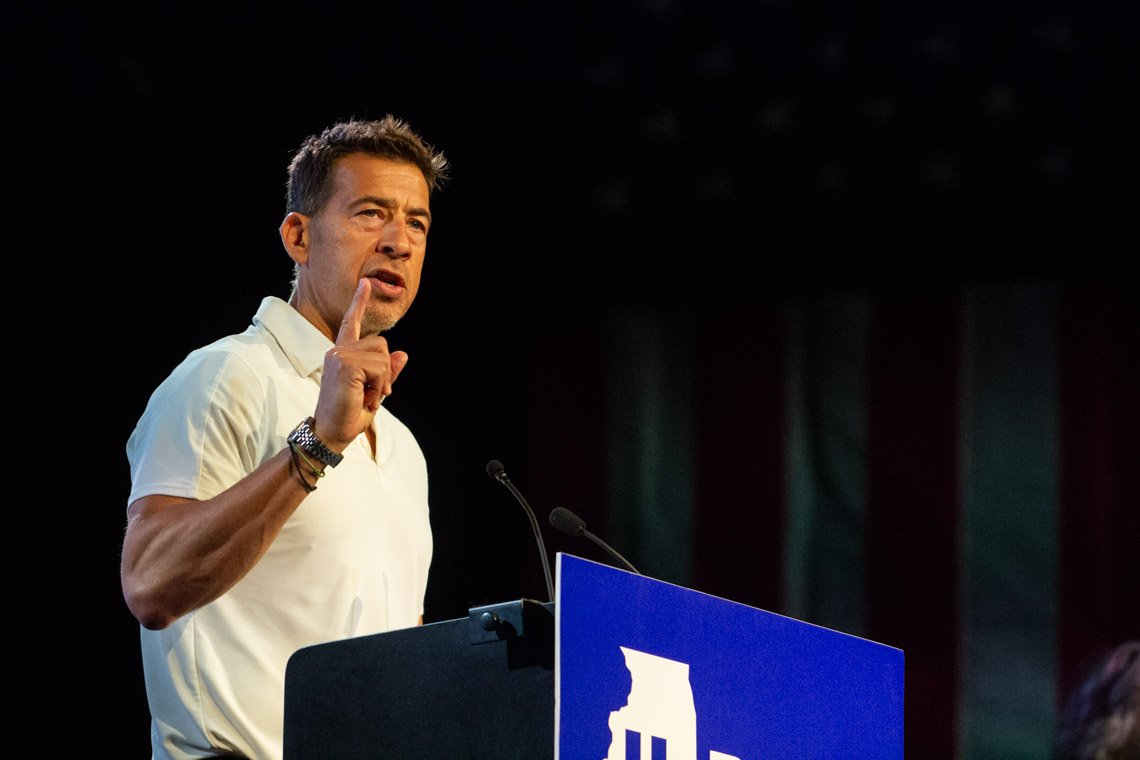
Secretary of State Alexi Giannoulias speaks at the Illinois Democratic County Chairs’ Association annual breakfast in Springfield on Aug. 19, 2026. (Capitol News Illinois photo by Jerry Nowicki)

Illinois to receive up to $768M in Meta settlement over teen social media addiction

Attorney General Kwame Raoul one of many state AGs who investigated, sued Meta

By HANNAH MEISEL
Capitol News Illinois
hmeisel@capitolnewsillinois.com 

Article Summary 

  • Meta, the parent company of Facebook and Instagram, has agreed to a $17.1 billion multi-state settlement stemming from litigation launched by state attorneys general, including Illinois AG Kwame Raoul.

  • Under the settlement, Illinois is set to receive up to $768 million over a 10-year period, which would go toward youth mental health and online safety programs.

  • The settlement also dictates stronger restrictions for teens on Instagram and Facebook, including stronger age verification, time limits and safeguards on mature content. Some of those ideas are also contained in Illinois’ new Children’s Social Media Safety Act, though it isn’t set to take effect until 2028.

This summary was written by the reporters and editors who worked on this story. 

CHICAGO — Illinois will receive up to $768 million from a multi-state $17.1 billion settlement with social media giant Meta, the parent company of Facebook and Instagram — the culmination of a three-year legal battle brought by state attorneys general.

Nearly three dozen AGs, including Illinois Attorney General Kwame Raoul, sued Meta in 2023 over teen social media addiction, following a two-year investigation into decisions made by company executives to encourage more engagement on its social media platforms. The lawsuits alleged engineers greenlit more addictive features like infinite scroll and autoplay despite internal company research showing the harms of compulsive social media use on teens’ brains, in addition to misleading the public about the safety of its platforms.

“This is a monumental victory for online safety that will affect an entire generation of young people,” Raoul said in a statement. “After decades of putting profits before the health and wellness of children, this landmark settlement requires Meta to put our children’s safety and mental health at the forefront.”

The settlement, announced Wednesday, abruptly ended what was supposed to be the first of several trials spawned by the AGs’ litigation. Illinois was not one of the four states acting as plaintiffs in the federal trial kicked off last week in Oakland, California, in which Meta CEO Mark Zuckerberg had been expected to take the witness stand.

Details of the settlement

Though the settlement still faces court approval, the $17.1 billion agreed to is one of the largest state consumer protection settlements in history. Illinois will receive up to $768 million over a 10-year period, which will be used for youth mental health and online safety training programs. In similar multi-state settlements with tobacco and opioid manufacturers, Illinois has used its share of settlement funds to stand up addiction recovery programs.

But the Meta settlement goes beyond money; the company agreed to strengthen its existing age verification systems for users in addition to a host of limitations for those between 13 and 18.

Meta debuted Instagram “teen accounts” nearly two years ago, which automatically placed privacy and content restrictions on users under 16 years, in addition to gentle reminders to get off the app after 60 minutes and a default “sleep mode,” which silences notifications between 10 p.m. and 7 a.m.

However, age verification isn’t iron-clad, and some limitations are easily turned off. Under the terms of the settlement, teens will have two-hour daily limits on Instagram and Facebook in addition to mandatory pauses after 15 minutes of continuous use, and again after 60 and 90 minutes.

The settlement will also supercharge “sleep mode” to a full-on nighttime block restricting teens’ access to content feeds from 12 a.m. to 6 a.m. Muted notifications will be extended from “sleep mode” into weekdays from 8 a.m. to 3 p.m. during the school year.

Meta will also implement stronger safeguards to block teens from accessing content related to eating disorders, suicide and other self-harm, in addition to restricting teens from access to so-called “beauty filters” and “like” counts.

The settlement also dictates that for the first five years of the agreement, an independent auditor will review Meta’s implementation of the changes and their effectiveness. 

New Illinois law

Some of the settlement’s terms were already signed into law in Illinois earlier this summer, though the Children’s Social Media Safety Act isn’t set to take effect until 2028. The new law, pushed by Gov. JB Pritzker this spring, prohibits social media platforms from sending notifications to minors between 10 p.m. and 7 a.m.

Read more: Pritzker signs law regulating how social media platforms interact with children

But Illinois’ law also goes further, requiring social media platforms to confirm a user’s age through the operating system of the device — like a smartphone — on which they are using the account. It also prohibits companies from using a minor’s data to curate the content they are served on an app, a tactic deployed by nearly all social media platforms to make scrolling their feeds more addictive.

Under the law, violators face civil penalties of up to $2,500 for each child for unintentional violations and up to $7,500 per child for intentional violations. 

State Rep. Jennifer Gong-Gershowitz, D-Glenview, the lead House sponsor of the Children’s Social Media Safety Act, said this week’s settlement is “an important first step, but not the last, in holding social media companies accountable for the real-world harm that has been a feature of these platforms, not a bug.”

She noted Meta’s challenge to TikTok and YouTube baked into the settlement: Meta will hold back 30% of the settlement — about $5.3 billion — that it will pay out only if the other two platforms also pay roughly $5.3 billion each to fund youth online safety programs and implement their own limitations on teens. Those include restricted night modes, age verification measures and daily one-hour time limits. If TikTok and YouTube adopt those same time limits for teens, Meta will also halve its daily usage limit to an hour.

“Notably, even Meta now says other platforms like TikTok and YouTube should be held to the same standard — proof that these protections are necessary, not optional, and that no company should be trusted to make that call on its own,” Gong-Gershowitz told Capitol News Illinois. 


Capitol News Illinois is a nonprofit, nonpartisan news service that distributes state government coverage to hundreds of news outlets statewide. It is funded primarily by the Illinois Press Foundation and the Robert R. McCormick Foundation.
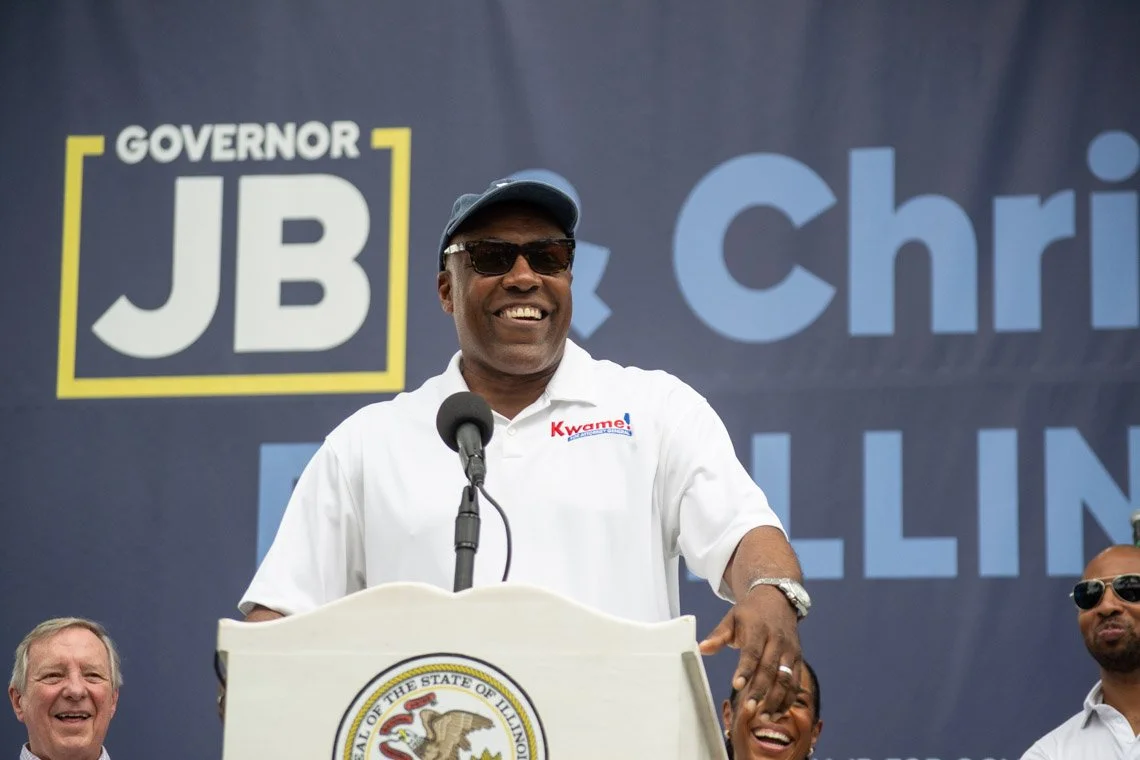

 Illinois Attorney General Kwame Raoul at the Illinois State Fair in August 2026. (Capitol News Illinois photo by Jerry Nowicki)


Pritzker pledges to stay on ‘Team Fight’ as he asks Illinois voters for 3rd term

Governor declines to say when he will make presidential decision

By BEN SZALINSKI
Capitol News Illinois
bszalinski@capitolnewsillinois.com 

Article Summary

  • Gov. JB Pritzker crisscrossed Illinois for a five-day bus tour last week, rallying supporters ahead of the November election. 

  • The governor made stops at union halls, local Democratic Party offices, a college bar and held two rallies during the tour.

  • At each stop, Pritzker emphasized his opposition to President Donald Trump and pledged to continue fighting his administration in a third term.

  • Pritzker declined to say if a third term would be his last and said he has no timeline on when he will decide whether to run for president in 2028. 

This summary was written by the reporters and editors who worked on this story. 

SPRINGFIELD — Gov. JB Pritzker looked for a little luck on the campaign trail from Illinois’ most revered politician. 

“I just rubbed Lincoln’s nose,” Pritzker said in an interview with Capitol News Illinois after making a stop at the Springfield gravesite of the former president ahead of the second day of his statewide bus tour. “I can tell you I was praying for a 12th upgrade.” 

The governor was referencing the state’s 11th credit upgrade since 2021, a decision announced by Moody’s on the first day of his weeklong bus tour. The Wall Street firm cited Pritzker’s “conservative” budgeting as one of the main reasons it has gained more confidence in Illinois. 

Pritzker, a 61-year-old Chicago billionaire, is seeking a rare third term as governor and is running heavily on cost-of-living concerns and his fiscal record. 

With nearly eight years under his belt, Pritzker embarked last week on his latest statewide bus tour since launching his first campaign in 2017. He crisscrossed the state over five days, meeting with union members in the Chicago area and downstate West Frankfort, shaking hands with political allies in Mt. Olive, taking pictures with college students in Urbana and holding rallies in Belleville and Rock Island. 

Parts of the tour waded into territory his Republican opponent, Darren Bailey, is likely to win easily. But Pritzker said that’s part of the job. 

Read more: Bailey implores Republicans to improve turnout as he plans to shift focus to Chicago

“I'm fighting for votes everywhere, and I stand up for the people of Illinois wherever they may live, and even if they're Republicans or independents,” Pritzker said. “One of the things that I think Republicans have forgotten, and certainly Donald Trump has forgotten, is that yeah, you fight hard in an election to try to win, and you talk about the other side and how their policies don't work and yours do, but once you win, your job is to work for everybody.”

Pritzker closed his speeches with a familiar rallying cry: “Are you ready for the fight?” — a phrase he’s deployed for nearly a decade. His theme song at the recent rallies was Tom Petty’s “I Won’t Back Down” and the tour bus declared: “JB Fighting For You.” 

“The fight” has been the theme of Pritzker’s two terms, particularly over the last year as he’s gone head-to-head with President Donald Trump on cable TV, social media, and even via video in Chicago streets during last year’s immigration crackdown. This week, he repeatedly chided Democrats who have stayed too quiet on the sidelines in his view as he declared he’s playing for “Team Fight” against Trump. 

“I have to worry about whether people can eat the lettuce or blueberries off a grocery shelf because Trump is doing away with food inspections,” Pritzker said at a rally on Friday in Belleville. “I have to track measles outbreaks because the president put a madman in charge of vaccine recommendations. I have to monitor the movements of ICE (Immigration and Customs Enforcement) agents because he handed guns to people who couldn’t pass a background check to work in an animal shelter.”

The message was mostly heard by supporters on the meticulously planned tour. Pritzker received endorsements at some of the labor unions he visited, visited local Democratic offices, and made other stops that were largely invite-only while a video team trailed him filming positive interactions with voters. Customers were turned away at Lulu’s Diner in Springfield as the business displayed a sign showing it was closed for a private event where the governor shook hands with invited supporters.

Big issues

Supporters talked to Pritzker about a variety of issues at each stop. College students quizzed him on the big issues of the year while supporters at other events thanked him for his opposition to Trump. 

Pritzker ran in 2018 on an agenda of pulling the state out of financial despair, raising the minimum wage and implementing other progressive policies. In 2022, expanding access to childcare was the theme of his second term, which brought some of Pritzker’s personal philanthropic goals to the forefront of state government.

This year, Pritzker is running on those achievements but telling voters there is more work to do to execute his “ambitious agenda” to “make things more affordable.” 

“When you go through the list of things, we got a whole lot of those things done,” he said in the interview. “Meanwhile, there are so many things that we're in process of accomplishing.”

Pritzker said he still wants to put more money into education, improve the state’s financial standing and achieve universal preschool across the state.

“In terms of the challenges that the state has, I wish that we could have gone at some of them more directly and faster,” Pritzker said. “I think we've done a great job, but I regret that there are some things that take longer than I would like to get through the legislature.”

Pritzker’s also not saying if a third term would be his last.

“I don't know whether it's my last term or not, but I certainly feel like the next four years are an opportunity to sort of cap off many of the things,” he said. 

Students at an Urbana tavern stop hosted by the University of Illinois Urbana-Champaign Illini Democrats were happy to hear lowering the cost of higher education was on his agenda.

“I want someone to defend and push policies that are going to make my life a lot easier so I can focus on my studies, so I can focus on events like this rather than working 20 hours, 40 hours a week to afford rent and groceries,” said Rylee Graves, a junior from Chicago who is an executive board member for the Illini Democrats and interns at the state Democratic Party. 

At many stops along the tour, Pritzker repeatedly brought up immigration as supporters worried about Trump’s continued crackdown. The governor focused heavily on that topic with the college students, citing Marimar Martinez, a Chicago woman who was shot by ICE last year. 

He said Martinez exhibited “bravery to stand up and do the right thing even at the risk perhaps of being attacked by people who disagreed with her.” 

“All of us should be standing up and doing the right thing in this difficult moment,” he said. 

“Him talking about that was very important and it really hit deep for me,” said Rami Khosho, a student from Chicago who came to America from Iraq as an infant and became a U.S. citizen as a child. 

Forming relationships

Pritzker spent close to 30 minutes talking with the students after the event, taking pictures with nearly all of the roughly 50 students, who gave Pritzker, a father of two adult children their early 20s, solid grades on his remarks.

“I think he’s a really great speaker and I think he knew what his audience was when he brought up his talking points,” said River Daniel, a senior from Aurora. 

Some of Pritzker’s skeptics say the governor can’t relate to people with his wealth. But he said in an interview that he thinks his governing record will overcome that perception.

“What I think people should know is that I'm fighting for working families, and I've proven that,” Pritzker said. “Darren Bailey has no record of fighting for working families. He's gotten nothing done as an elected official.”

Sen. Doris Turner, D-Springfield, said Pritzker approaches relationships like a friend and that’s what makes him easy to work with in government. 

“He has been such a phenomenal partner in everything I have done even before I was in the Illinois State Senate; even while I was on the Springfield City Council, he was a tremendous partner of moving Springfield forward,” Turner told Capitol News Illinois.

Supporters agreed he can shake off the “rich guy” perception. 

“I think I just go back to my looking into his life and his whole record prior to even entering politics and what he has invested his time and money and energy (into) and it’s been real people. I don’t see that billionaire game going on,” said Dianne Roberts, a Springfield resident who is active with the AFSCME labor union. 

The presidential question

Pritzker’s campaign is drawing attention from outside Illinois as many pundits believe he is considering running for president in 2028.

“He seems just as great in person as the impression I’ve had from watching him on TV and online and I just think he’s been a really powerful voice this past year,” said Emily Waugh, an Oregon resident.

Waugh is part of the Women’s Walk Across America, a protest walk from Salem, Oregon, to Washington, D.C., in favor of women and LGBTQ rights. She attended Pritzker’s Springfield event while passing through Illinois’ capital city and said he comes off as a “fighter” who is “passionate and intelligent and does such a good job of articulating for us exactly what’s at stake in this moment.”

She also said she’d be interested in seeing Pritzker run for president.

“I might have a hard time if you were asking me to choose between him and (Texas Democrat James) Talarico maybe — there's a few of them up there — but he’s absolutely on a shortlist for me,” Waugh said.  

The first 2028 Democratic primary in South Carolina is less than 17 months away and candidates will likely start announcing themselves not long after November’s election.

“I don't have a timeline for something like that,” Pritzker told Capitol News Illinois. “I mean, I will tell you, I'm running for re-election because I want to be the governor of the state of Illinois. I'm flattered, I really am, that people would even contemplate that I could be a candidate.”

Pritzker’s running mate, Christian Mitchell, is getting plenty of his own attention on the campaign trail. Mitchell, a former state representative from Chicago, was one of Pritzker’s deputy governors during his first term and handled some of the most significant portions of the governor’s agenda. 

Pritzker said Mitchell has a bright future and selected him to replace Lt. Gov. Juliana Stratton, who is running for U.S. Senate, because of his prior experience in state government. 

But at least publicly, Pritzker isn’t looking beyond this election.

“I’m looking forward to really serving as governor and don’t know what the future will hold after that,” Pritzker said. 

Capitol News Illinois is a nonprofit, nonpartisan news service that distributes state government coverage to hundreds of news outlets statewide. It is funded primarily by the Illinois Press Foundation and the Robert R. McCormick Foundation.
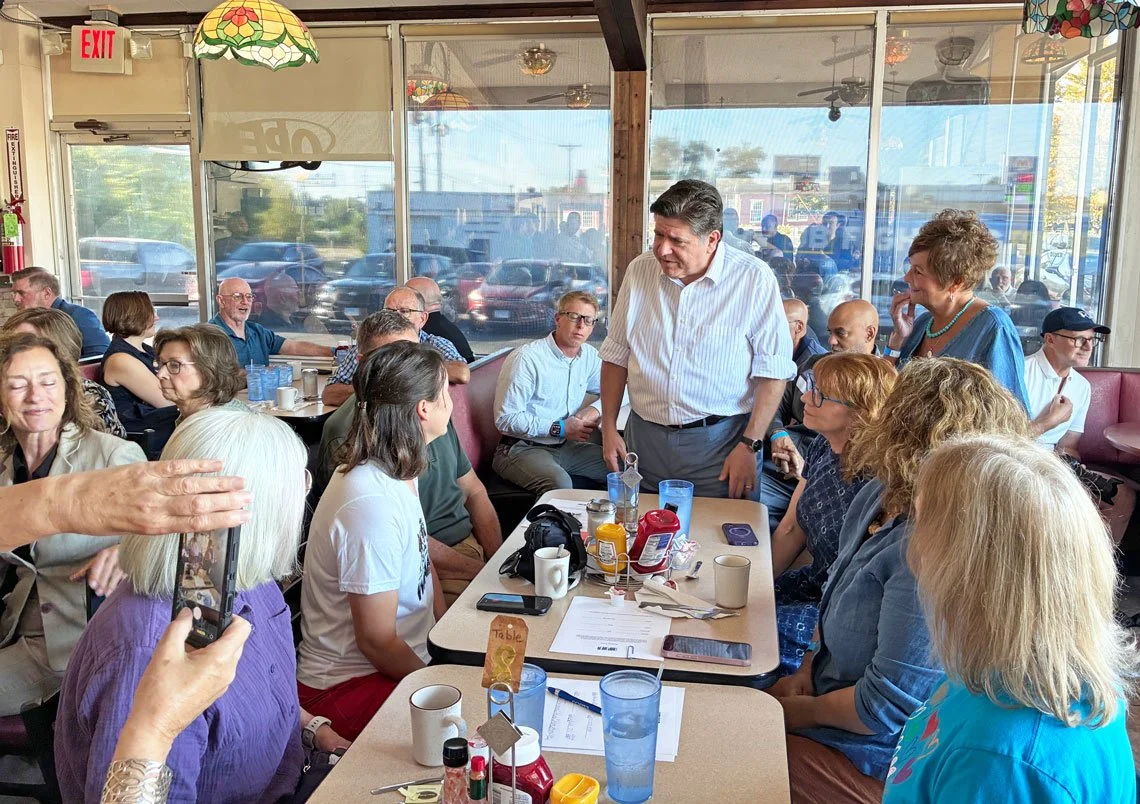

Gov. JB Pritzker speaks to Emily Waugh of Oregon at Lulu’s Diner in Springfield on Thursday, Aug. 27, 2026. (Capitol News Illinois photo by Ben Szalinski)


Lawrence County meth dealer sentenced to federal prison

BENTON, Ill. – A district court judge sentenced a Lawrence County man to a total of 210 months of federal imprisonment for possessing and distributing methamphetamine in Lawrence and Richland Counties and unlawfully possessing several firearms. 

David Royse, 47, of Sumner, pleaded guilty to three counts of distribution of methamphetamine, one count of possession with intent to distribute methamphetamine, and one count of possession of a firearm by a felon. Royse’s federal sentence will run concurrent with any term of imprisonment ordered in Royse’s pending state cases in Lawrence County and Richland County. Following imprisonment, he will serve ten years of supervised release.

“Armed drug dealers face a certain future in federal prison,” said U.S. Attorney Steven D. Weinhoeft. “FBI data show 2025 produced the largest year-to-year drop in the violent crime rate since national estimates began in 1936. That is no coincidence. Aggressive enforcement works.”

According to court documents, Royse possessed at least 50 grams of meth in February 2023 and sold meth on three occasions in March, May, and October 2025. During this time, Royse possessed multiple firearms despite having a prior felony conviction for methamphetamine production. Royse consented to the forfeiture of the firearms.

Royse was arrested in November 2025 and will remain in custody. The judge also ordered Royse to pay a $500 fine.

Bridgeport Police Department, Lawrence County Sheriff’s Department, Richland County Sheriff’s Office, Olney Police Department, Illinois State Police, and the Drug Enforcement Administration investigated this case. Assistant U.S. Attorney David Sanders prosecuted the case.

911 call leads to arrest of duo

On August 29, 2026, at approximately 11:20 a.m.  Gibson County Central Dispatch received a 911 report of two individuals trespassing on a train at factory near County Road 350 South and US 41.  Deputy U.B. Smith was dispatched to the area, and upon arriving he located 44-year-old Steven Wetzel of Almaa, Michigan and 45-year-old Amanda Deroo of San Antonio, Texas.  After a brief investigation both individuals were taken into custody and transported to the Gibson County Detention Center.  Mr. Wetzel was charged with Possession of Methamphetamines, Possession of Hypodermic Syringe, Possession of Paraphernalia, and Criminal Trespass.   Ms. Deroo was arrested for Criminal Trespass. 
 
Deputy Bryan Small assisted Deputy Smith in his investigation. 
 
All criminal defendants are to be presumed innocent until and unless proven guilty beyond a reasonable doubt in a court of law.

Tennessee man arrested for DUI

On August 29, 2026, at approximately 4:45 a.m. Gibson County Deputy Michael Bates conducted a traffic stop on US 41 near County Road 1025 South on a Black 2006 Ford Explorer after observing multiple moving violations.  Upon approaching the vehicle Deputy Bates immediately detected the odor of an alcoholic beverage coming from the driver 47-year-old Justin Harmon of Lewisburg, Tennessee.  At that point Deputy Bates began a roadside DUI investigation. Once the inquiry was completed Mr. Harmon was placed into custody and transported to the Gibson County Detention Center where he was charged with Operating a Motor Vehicle While Intoxicated. 
 
Deputy Levi Sims assisted Deputy Bates in his investigation. 
 
All criminal defendants are to be presumed innocent until and unless proven guilty beyond a reasonable doubt in a court of law.

Local 4-H Members Compete at Illinois State Fair

ALBION, Ill. – Local 4-H members traveled to the Illinois State Fair in Springfield on August 15 to exhibit their 4-H general projects at their County Exhibit Day. Eligible 4-H members from Edwards, Lawrence, Richland, Wabash, and Wayne counties showed alongside members from 33 additional counties throughout the state as part of the three-day event. The following 4-H members received awards for their general projects:


Edwards County

Hayley Perry  — Champion, Consumer Education: Entrepreneurship: Be the E!

Landon Loyd — Champion, Electricity: Electricity 3

Violet Rude — Reserve Champion, Entomology: Entomology 1

Lucas Troyer — Inspire Award, Entomology-Beekeeping: Beekeeping 1

Lillian Bare — Reserve Champion, Entomology-Beekeeping: Beekeeping 1

Hannah Bare — Inspire Award, Geology: Rock Hounds 1

Ellie Troyer — Champion, Health: Sports Nutrition

Aleya Bare — Reserve Champion, Service Learning: Service Learning 2

Ben Kelsey — Reserve Champion, Woodworking: Woodworking 1


Lawrence County

Emma Clodfelter — Champion, Clothing and Textiles: Costume Design - Beginner

Becca Gress — Champion, Visual Arts: 3-D Design / Mixed Media


Richland County

Daniel Scherer — Champion, Aerospace: Model Rocketry

Haley Ginder — Inspire Award, Babysitting: Babysitting Display

Averie Ochs — Reserve Champion, Clothing and Textiles: Sewing 1 Non-Clothing

Lydia Zehner — Champion, Entomology: Entomology Display, Other

Brenna Brooks — Reserve Champion, Foods and Nutrition: 4-H Cooking 101 Cereal Bars

Kylie Kocher — Reserve Champion, Foods and Nutrition: 4-H Cooking 401 Pie Shell

Meadow Anderson — Reserve Champion, Foods and Nutrition: Food Preservation Drying

Kaitlyn Ginder — Champion, Forestry: Forests of Fun 1

Natalie Zwilling — Champion, Forestry: Forests of Fun 3

Ella Tait — Reserve Champion, Geology: Pebble Pups 1

Mallory Kocher — Reserve Champion, Health: Health Innovation

Mary Scherer — Reserve Champion, Horticulture - Floriculture: Wearable Flowers

Audrie May — Inspire Award, Horticulture - Floriculture: Cut Flower Specimens

Quinn Sager — Inspire Award, Horticulture - Floriculture: Outdoor Mixed Planter

Raeanna Hanna — Inspire Award, Horticulture - Vegetables, Herbs, Fruits: Vegetable Gardening Display - Other

Lillie Branham — Inspire Award, Veterinary Science: Veterinary Science 1

Bailey Graves — Champion, Visual Arts - Quilting: You Can Quilt

Clara Weidner — Reserve Champion, Visual Arts - Quilting: Quilting the Best Better

Ellison Ginder — Reserve Champion, Visual Arts: Metal

Norah Brown — Inspire Award, Visual Arts: Nature

Ashtin McCormick — Reserve Champion, Visual Arts: Paper 2D

Bryar Meadows — Reserve Champion, Visual Arts: Wood

Seth Clodfelter — Inspire Award, Welding: Welding


Wabash County

Achilles Enton — Reserve Champion, Computer Science: Beginning Visual Programming

Kristopher Hutton — Inspire Award, Foods and Nutrition: Food Preservation - Preservation Combination


Wayne County

Benton Yandell — Reserve Champion, Agronomy: Hay

Reagan Jackson — Reserve Champion, Clothing and Textiles: Clothing Embellishment Stitched

Kinley Pope — Champion, Foods and Nutrition: Kitchen Boss

Ronen Tannahill — Reserve Champion, Natural Resources: Sportfishing 1

Silas Keyser — Champion, Natural Resources: Wildlife 1

Addisyn Hutchcraft — Inspire Award, Photography: Photography 2

Clayton Fearn — Reserve Champion, Tractor: Tractor B

Jordyn Spindor — Inspire Award, Visual Arts: Chalk / Carbon / Pigment (Drawing and Painting) Division B: Paper

Brody Hutchcraft — Champion, Visual Arts: Metal

Hunter Kirk — Reserve Champion, Visual Arts: Paper 3D

Aubree Houston — Inspire Award, Visual Arts: 3-D Design / Mixed Media


WRITER: Rileigh Holman, marketing and communications program coordinator, University of Illinois Extension

Wabash Community Health Center Celebrates $650,000 in Federal Funding

Wabash Community Health Center has received $650,000 in new federal funding to expand its services.

Program Director Cathy Ruth announced the award during Monday evening’s Wabash General Hospital Board of Directors meeting, saying the Health Center has received its long-awaited New Access Point funding.

Ruth said the award came unexpectedly last week while she was preparing to attend a national community health center conference. As one of the funding recipients, Ruth was recognized during a general session at the conference.

The $650,000 award is through the federal Health Resources and Services Administration, or HRSA, and is effective retroactively to August 1st.

Ruth said there is still considerable work ahead to implement the funding. She has several pages of required tasks to complete and meetings scheduled this week with HRSA officials and the project director to learn more about the requirements.

Ruth thanked Wabash General Hospital board members for their patience and support throughout the application process.

The new funding comes as Wabash Community Health Center continues efforts to expand access to healthcare services in Wabash County and surrounding communities.