Chief Urging Motorists To Use Caution During Holiday Period

With Mt. Carmel preparing for a busy stretch of community celebrations, Police Chief Erin Peach is asking motorists and pedestrians to use extra caution.

During last week’s Mt. Carmel City Council meeting, Peach reminded residents that several events over the extended Fourth of July holiday period will bring increased traffic to the city.

She noted that Market Street will be especially busy with the city's Fantastic 4th celebration and other downtown activities. The area around Riverview Stadium will also see heavier traffic as events continue throughout the holiday weekend.

Chief Peach urged drivers, riders and pedestrians to remain alert, slow down, and be mindful of the increased number of people traveling to and from the various festivities.

"Just be mindful and be paying extra attention," Peach said.

City officials encourage everyone to plan ahead, allow extra travel time, and help make the holiday celebration safe for everyone.

Pritzker signs bills on environmental standards, in-state tuition 

Law banning interchange fees also pushed back to at least next year

By BEN SZALINSKI
& BRENDEN MOORE
Capitol News Illinois
news@capitolnewsillinois.com

Article Summary:

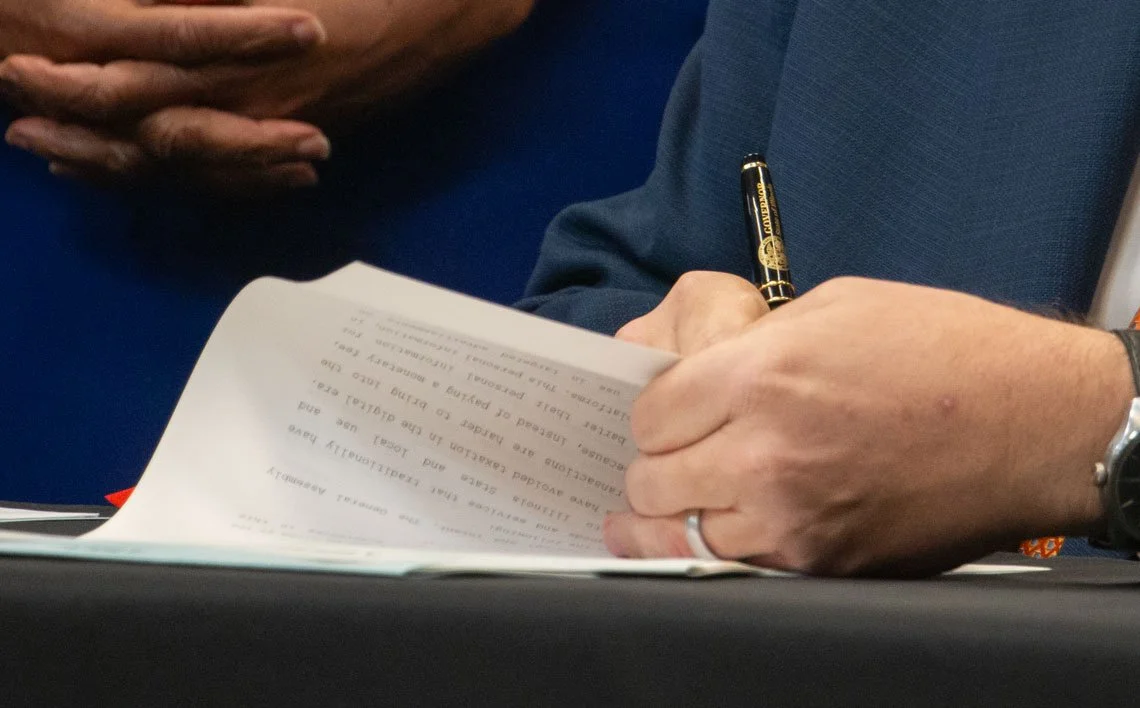
  • Gov. JB Pritzker signed more than 60 bills into law since Friday. 

  • They require diaper packaging to list ingredients, ban certain “junk fees” charged by landlords, aim to aid autistic individuals in traffic stops, protect public media at state colleges and more. 

  • The bills were a chunk of the hundreds that cleared the General Assembly ahead of its June 1 adjournment. 

This summary was written by the reporters and editors who worked on this story. 

Gov. JB Pritzker signed more than 60 bills since Friday, including new laws to increase transparency around rental fees and give some drivers an alternative to having their license suspended. 

Rental transparency

House Bill 3564 bans so-called “junk fees” charged by landlords and adds new layers of transparency to rental agreements.

The law, which takes effect Jan. 1, will prohibit landlords from levying fees or fines for a lease modification or renewal, an eviction notice, after-hours maintenance requests and routine maintenance, among other common scenarios.

It will also cap application and background check fees at $50 unless the actual cost of a third-party background check exceeds that. The landlord will then have to pay upfront and bill the applicant with a receipt displaying the third-party vendor cost within 14 days. 

Landlords must also include a list of all nonoptional fees on the first page of the lease. Tenants aren’t obligated to pay any fee that’s not included. 

Those in violation of the law are subject to civil liability.

Blue envelope program

House Bill 4472 requires the secretary of state to establish a statewide Blue Envelope Program. The voluntary program allows people on the autism spectrum to show a blue envelope to police officers that signals to the officer a person has a communication disorder. The envelope can house documents and includes instructions for both the officer and individual about how to handle the interaction. 

Many police departments around the country and throughout the state already participate in the program. The law takes effect Jan. 1. 

Coupons

House Bill 45 requires retailers to make digital coupons available to other customers through nondigital means. Coupons do not have to be provided in paper, but retailers must ensure the benefits are available to any qualifying customer. 

Lawmakers said they filed the bill after hearing concerns from customers about not being able to access digital savings. The law takes effect Jan. 1. 

Rate hike forums

House Bill 4514 gives public utility customers the right to request a public forum to discuss rate hike proposals in front of the Illinois Commerce Commission, as well as the right to submit written feedback. It takes effect Jan. 1.

Until now, customer testimony hasn't been a protected part of the process, with speaking time limited to 3 minutes at ICC hearings and customers given no opportunity to submit written statements as part of the formal record. The new law also requires scheduling the forum on days and times to allow the greatest participation.

Public media protections

House Bill 4420 enshrines the editorial independence of public radio and television stations affiliated with Illinois colleges and universities. 

The new law shields editors and reporters from prior review by university officials. It’s essentially an extension of the protections already provided to student journalists.

According to the Illinois Public Broadcasting Council, eight colleges and universities operate radio and television stations now covered by the law, which the organization says is the first of its kind in the nation. 

Diaper labeling

House Bill 4702 will require manufacturers of disposable and reusable diapers to include a list of all ingredients in order of predominance on the product packaging. The updated packaging will be required no later than July 2028. 

The goal, proponents say, is to allow families to identify potential allergens. 

“With clear ingredient labeling, families will be better equipped to avoid products that may contain substances they prefer not to use and make informed decisions with confidence,” said Sen. Laura Fine, D-Glenview.

Speed control devices

Illinois drivers who have their license suspended for speeding or reckless driving violations have an alternative under House Bill 4948. Drivers who have their licenses suspended for two infractions within a 12-month period for driving 26 mph or more over the speed limit would be allowed to have a speed control device installed in their car rather than having their license suspended.

The device is programed to know the road’s speed limit and prevents the vehicle from driving any faster than it, no matter how hard the driver presses the gas pedal. It’s similar to ignition interlock devices that people convicted of drunk driving must blow in to start their car.  

“This law creates a pathway for high-risk drivers to remain connected to their communities while helping ensure our roads are safe for everyone,” bill sponsor Rep. Marti Deuter, D-Elmhurst, said in a statement.

The law will take effect in 2028.

Environmental standards

House Bill 5070 bars the Illinois Pollution Control Board from adopting U.S. Environmental Protection Agency rules and regulations that are less stringent than existing state standards.

The board is generally required to adopt federal environmental regulations through an expedited rulemaking process when federal standards change. But the new law would prevent that in some cases amid a significant rollback of federal environmental protections initiated by President Donald Trump’s administration.

“This will ensure Illinois maintains its strong environmental protections that are legally supported and based on sound science,” said Illinois EPA Director James Jennings.

In-state tuition

More students could qualify for in-state tuition at Illinois colleges and universities under a new law.

House Bill 5093 would loosen one of the requirements for paying in-state tuition by making it available to students who attended Illinois high schools for at least three years, even if they established residency outside the state before enrolling. Noncitizens would have to begin the process of becoming a permanent U.S. resident to qualify. 

The change will take effect at the start of the 2027-28 school year. 

Hormone therapy

House Bill 5492 will require insurance providers to cover up to a six-month prescription of hormone therapy. 

The law, one of three signed by Gov. JB Pritzker ahead of the Chicago Pride Parade, will allow patients — especially those receiving gender-affirming care — access to needed medications. 

It comes as several Republican-led states and the Trump Administration are increasingly restricting access to gender-affirming care. Advocates say that a longer supply will reduce interruptions in treatment. It takes effect Jan. 1.

Minor League Baseball wages

Minor League Baseball players are no longer subject to Illinois’ minimum wage law under Senate Bill 454. The change only applies to players on the Peoria Chiefs, which is the only MiLB team in Illinois as the High-A affiliate for the St. Louis Cardinals. 

Rep. Jay Hoffman, D-Swansea, said Chiefs players are salaried, and their wages are governed by a collective bargaining agreement. He said MLB and the player’s union supported the bill, and that state law already exempts other minor league players who play on unaffiliated teams.

Swipe fees

Pritzker also signed Senate Bill 3645, a bill pushing back the effective date or end of several laws, including a controversial bill to ban swipe fees that would’ve taken effect on July 1.

The Illinois law would have prohibited financial institutions from applying an interchange fee to the tax and tip portion of bills. Banks and retailers have estimated it would affect $120 million to $200 million in revenue or more each year — to the benefit of retailers and chagrin of banks. Illinois would be the only place where such a law was implemented.

The law now won’t take effect until at least July 1, 2027, after being delayed for two straight years. It may never take effect after a federal judge issued a permanent injunction against it earlier in June.

Climate risks

Under Senate Bill 4006, insurers generally must send out cancelation and nonrenewal notices 60 days in advance — double what was previously required.

The law also requires insurers that offer fire and extended coverage that doesn’t cover flood losses to explain that in plain language. They must also say whether the company offers flood coverage and how to obtain coverage through the National Flood Insurance Program. The insurer is required to obtain a signature from the insured affirming that flood coverage options were presented and declined. 

The law also requires insurers to participate in the National Association of Insurance Commissioners’ Climate Risk Disclosure Survey. 

Maggie Dougherty contributed.

Capitol News Illinois is a nonprofit, nonpartisan news service that distributes state government coverage to hundreds of news outlets statewide. It is funded primarily by the Illinois Press Foundation and the Robert R. McCormick Foundation.
Illinois Extension Invites Community to Attend Wabash County 4-H Shows

4-H show season is just around the corner, and 4-H members are ready to showcase their talents at this year’s general project, animal, and livestock shows. The Wabash County 4-H shows will kick off on Friday, July 10, and continue through Thursday, July 16, with most of the show schedule coinciding with the Wabash County Fair. Illinois Extension invites communities to attend a show in support of local youth or bring the family to learn more about 4-H.


The 2026 Wabash County 4-H show schedule is as follows:


Friday, July 10             

4 p.m.                 4-H Dog Care Show, followed by 4-H Cat Care Show

6 p.m.                 4-H Horse Show


Saturday, July 11       

9 a.m.                 4-H General Projects, Food, and Clothing Show


Monday, July 13         

3:30 p.m.          4-H Rabbit Show


Tuesday, July 14        

8 a.m.                 4-H Swine Show

10 a.m.                4-H Sheep Show

12 p.m.               4-H Beef Show

2 p.m.                 4-H Poultry Show


Wednesday, July 15

12 p.m.               4-H Dairy Cattle Show

2 p.m.                 4-H Goat Show

5 p.m.                 Master Showmanship (following Pee Wee Showmanship at 5 p.m.)


Thursday, July 16      

6:15 p.m.          Parade of Champions, followed by Livestock Auction


All shows are open to the public and will be held at the Wabash County Fairgrounds in Mt. Carmel, unless otherwise noted. Community members are encouraged to follow 4-H Wabash County, Illinois on Facebook to stay up to date on events and show results.

Judge: Riverview Stadium Not Official Fireworks Viewing Area

Mount Carmel Mayor Joe Judge is encouraging residents planning to attend the city's Fourth of July fireworks to use the designated public parking areas rather than Riverview Stadium.

Speaking Friday morning on WSJD, Judge said parking will once again be available in the junior league football parking area, along with additional grass parking nearby.

Judge said while some people may choose to watch the fireworks from Riverview Stadium, the city is not designating the stadium as an official viewing area this year.

He explained that under the city's liability insurance requirements, the stadium lights would have to remain on if the facility were officially opened to the public. Judge said those lights would significantly reduce the visibility of the fireworks display.

The mayor said city officials, including District #348 Superintendent Dr. Chuck Bleyer, explored options to make the stadium available but were unable to satisfy the insurance requirements.

As a result, there will be no restroom facilities or other accommodations available at the stadium. Judge said anyone who chooses to watch the fireworks from there does so at their own risk and not as part of the city's official event.

Judge added that this year's fireworks show promises to be the largest in recent memory. The display is expected to last between an hour and 15 minutes and an hour and a half, with fireworks scheduled to begin around 9 p.m. on Saturday, July 4.

Mayor Says Blocked Culverts Contributed to Carriage Hills Flooding

Heavy rainfall overnight led to flooding in parts of Mt. Carmel's Carriage Hills subdivision, with approximately four inches of rain falling in a short period of time.

Speaking Friday morning on WSJD, Mayor Joe Judge said homes along Michael Avenue experienced significant flooding as stormwater overwhelmed drainage areas.

Judge said he responded to the area near the old railroad trestle, where clogged culverts and a fallen tree were restricting the flow of water.

He was able to remove debris, and by Friday morning the water had begun to recede.

Judge said while the city maintains its own drainage ditches, many waterways that carry runoff are located on private property. He reminded property owners that under Illinois law, it is their responsibility to keep private ditches clear to help prevent flooding.

The mayor noted the city dealt with a similar issue several years ago on the west side of town, when officials traced flooding problems to blocked sections of Greathouse Creek. He said the city worked with landowners to remove those obstructions and also cleaned the creek outlet near the city's water wells to improve drainage.

Cocktails-to-go, new state agency among laws taking effect July 1

14 new laws will begin with new fiscal year

By BEN SZALINSKI
Capitol News Illinois
bszalinski@capitolnewsillinois.com 

Article Summary

  • Fourteen new laws will go into effect in Illinois on July 1.

  • A pandemic-era law allowing cocktails to be delivered or picked up will become permanent. 

  • Gov. JB Pritzker’s new Department of Early Childhood will begin the full scope of its work. 

  • Posting unauthorized artificial intelligence images, including those sexual in nature, will be considered cyberbullying in schools. 

  • Other laws include new reporting requirements at the Department of Corrections and the beginning of the Office of State Public Defender.

This summary was written by the reporters and editors who worked on this story. 

July 1 marks a second New Year’s Day in Illinois as a new budget takes effect along with more than a dozen new state laws.

In addition to the state’s nearly $56 billion fiscal year 2027 budget being implemented and the 1-cent motor fuel tax increase being suspended for the remainder of the year, 14 news laws will go into effect on Wednesday. 

Cocktails-to-go

A pandemic-era allowance is now law six-and-a-half years later. Senate Bill 618 makes cocktails-to-go permanent. 

Illinois lawmakers passed legislation during the pandemic that allowed restaurants and bars to sell cocktails and mixed drinks for pickup or delivery as businesses were closed to in-person customers. That will be allowed to continue permanently under the new law. 

AI and bullying

Posting unauthorized artificial intelligence images can be considered cyberbullying in Illinois schools under House Bill 3851. This includes posting or distributing sexual images. Creating sexual images of children can also be charged under the state’s child pornography laws under a law passed in 2025. 

“Many people are using AI to produce harmful materials, which has led to a whole new level of cyberbullying,” Sen. Meg Loughran Cappel, D-Shorewood, who sponsored the bill, said in a statement. “We cannot let our laws fall behind technology. This legislation helps our state meet current challenges and ensures bullying via AI is addressed in the school code.”

Illinois lawmakers have broadly sought to regulate artificial intelligence, including its presence in schools. 

Department of Early Childhood

The new Department of Early Childhood will officially launch on July 1, completing one of Gov. JB Pritzker’s top priorities of his second term. 

Senate Bill 1 to create the new agency passed the General Assembly with bipartisan support in 2024 and calls for consolidating a variety of early childhood services that are spread across multiple state agencies under one roof. Those include oversight and funding of preschools, childcare centers, home visiting and early intervention programs.

Pritzker tapped Teresa Ramos to direct the agency. She worked in childcare advocacy before joining the governor’s office’s education policy team. 

Lawmakers appropriated $2.1 billion from the General Revenue Fund to the new agency in fiscal year 2027, which also begins July 1. 

Contraband report

The Department of Corrections will have to report more information about contraband in its facilities as the department continues to face scrutiny around substance exposures. Senate Bill 2201 requires the department to annually report data about what contraband is found, where it was discovered, how it got into the facility, and any disciplinary action that was taken as a result.

It also requires IDOC to report on medical responses and hospitalizations for staff members, including the cause.

Statewide public defender

The bricks of the new Office of State Public Defender can begin being laid on July 1, as House Bill 3363 requires an 11-member commission to be appointed by Oct. 1. The commission will identify the costs and funding sources to establish the Office of State Public Defender. The remainder of the bill, including additional processes to set up the office, will take effect Jan. 1.

Capitol News Illinois is a nonprofit, nonpartisan news service that distributes state government coverage to hundreds of news outlets statewide. It is funded primarily by the Illinois Press Foundation and the Robert R. McCormick Foundation.

Market Street MTC Plans Free Community Art Event During Touch-A-Truck

Market Street MTC is inviting the community to celebrate creativity and America’s 250th anniversary with a free arts event tomorrow in downtown Mt. Carmel.

Speaking on WSJD, spokesperson Coleman Stevenson said the event will be held Saturday, June 27th, from 10 a.m. to 1 p.m. along Market Street. The event coincides with the city's Touch-A-Truck event and serves as part of the kickoff to Mt. Carmel’s America 250 celebration.

Stevenson says the Market Street MTC Murals and Art Team will host a series of pop-up art stations designed for all ages. Activities will be spread throughout downtown and will give both children and adults the opportunity to create their own artwork.

Among the featured activities, Rayven Drone will host a collage-making station at Market Street Mercantile. Stevenson and visiting artist Sarah Wolf of Vincennes will offer a printmaking station at the museum, where participants can create prints using pre-carved blocks.

Additional stations will be located in the breezeway near Cary’s Magnificent Mercantile. Tiffany Loeffler will lead bracelet-making activities, while Mt. Carmel High School art teacher Laurel Thomas will host a watercolor bouquet station.

Maps showing station locations will be available before and during the event. Stevenson noted that all activities are free.

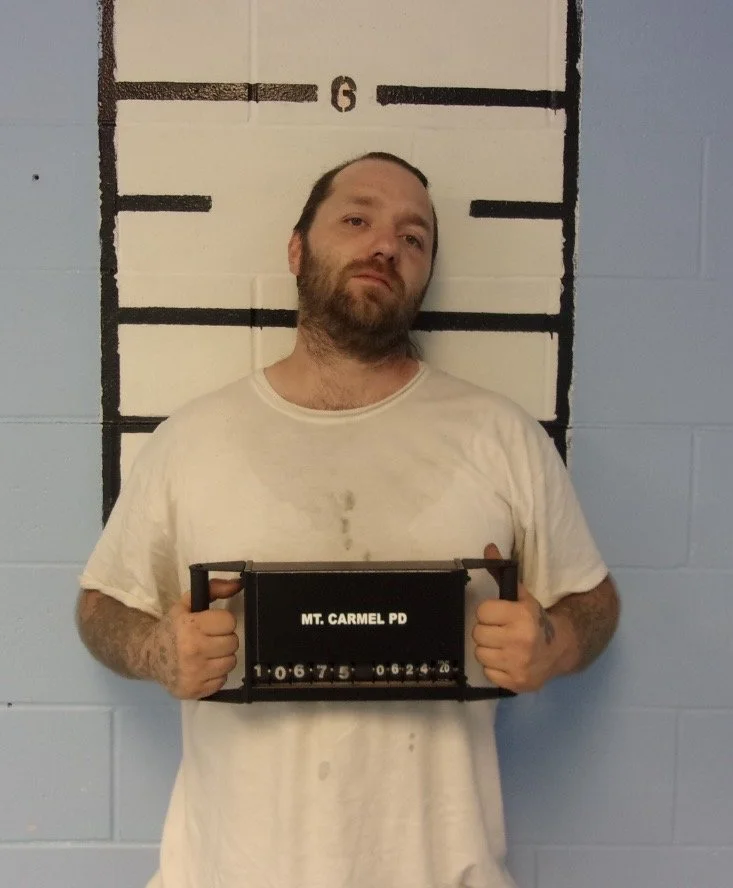
More Than 11 Pounds of Cannabis Leads to Class X Charge Against Mount Carmel Man

A Mount Carmel man is facing multiple felony and misdemeanor charges after Wabash County authorities allegedly discovered more than 11 pounds of cannabis and a fortified residence during an investigation.

Wabash County State's Attorney Kelli Storckman has filed charges against 35-year-old Paul DeWeese of Mount Carmel.

DeWeese is charged with possession of cannabis with intent to deliver, a Class X felony. Prosecutors allege he possessed more than 5,000 grams, or more than 11 pounds, of a substance containing cannabis with the intent to deliver.

He is also charged with criminal fortification of a residence, a Class 3 felony. According to court records, DeWeese allegedly maintained a residence at 818 Mulberry Street in Mount Carmel in a fortified condition to prevent lawful entry by law enforcement or others, knowing the residence was being used for the unlawful storage, delivery, and trafficking of cannabis.

Additional charges include domestic battery, a Class A misdemeanor, alleging DeWeese knocked his wife to the ground and dragged her by the neck into the residence.

He also faces two counts of unlawful possession of a firearm without a valid Firearm Owner's Identification, or FOID, card, both Class A misdemeanors.

The alleged offenses occurred on June 24.

DeWeese appeared Thursday in Wabash County Circuit Court for his first appearance on the charges. Judge Denton Aud advised him of the charges, possible penalties, and his rights before appointing Public Defender William Easton to represent him.

Following a hearing on the State's petition to deny pretrial release, Judge Hudson granted the petition, finding the State had established by clear and convincing evidence that DeWeese is charged with a detainable offense, poses a real and present threat to the safety of a person or the community, and that no combination of release conditions could adequately mitigate that threat.

DeWeese remains in the custody of the Wabash County Sheriff's Department.

A preliminary hearing has been scheduled for July 20 at 11:00 a.m., followed by a final pretrial conference on August 17. A jury trial is currently set to begin September 8.

As with all criminal cases, the charges are allegations, and DeWeese is presumed innocent unless and until proven guilty in a court of law.

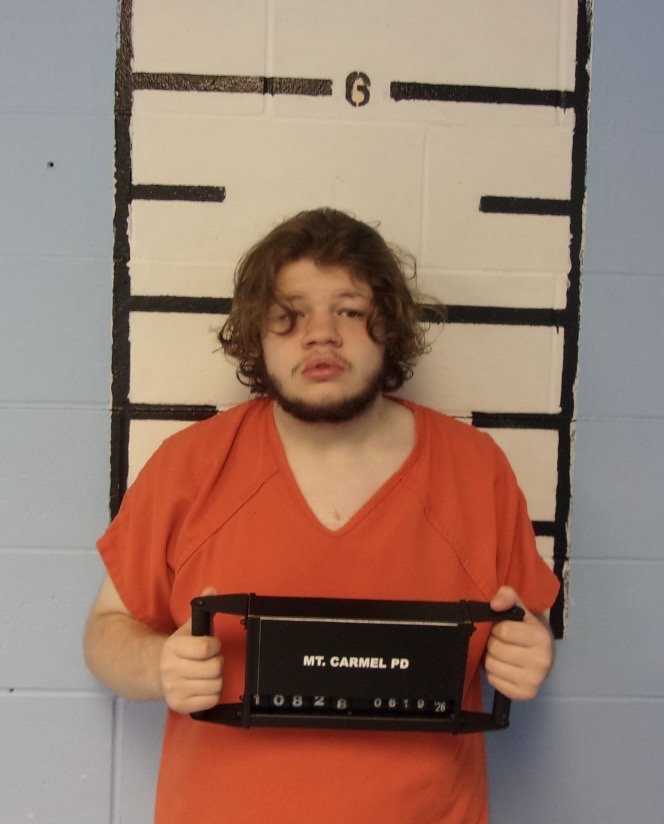
18-Year-Old Mount Carmel Man Faces Eight Charges After Alleged Attack

n 18-year-old Mount Carmel man is facing multiple felony charges, including armed robbery and attempted aggravated criminal sexual assault, following an alleged attack on a local woman.

Joshua Parrish made his first appearance Monday in Wabash County Circuit Court after Wabash County State's Attorney Kelli Storckman filed an eight-count felony information stemming from an incident that allegedly occurred on June 19.

Parrish is charged with armed robbery, a Class X felony, alleging he used a knife to steal money from a woman. He is also charged with robbery and aggravated robbery, both Class 1 felonies. Court records allege the victim was 60 years of age or older and that Parrish threatened her by claiming he was armed with a knife.

Additional charges include attempted aggravated criminal sexual assault, a Class 2 felony, alleging Parrish, while armed with a knife, covered the victim's face with a shirt, told her he was going to sexually assault her, and ordered her to accompany him to a wooded area.

He is also charged with attempted aggravated criminal sexual assault involving a victim age 60 or older, attempted aggravated kidnapping, aggravated battery, and unlawful restraint. Prosecutors allege Parrish struck the victim with his fist and detained her at knifepoint while attempting to move her from one location to another against her will.

During Monday's hearing, Parrish was advised of the charges and the court appointed a public defender to represent him.

Judge William C. Hudson granted the State's motion to deny pretrial release, and Parrish remains lodged in the Wabash County Jail.

A preliminary hearing has been scheduled for July 13, with a final pretrial conference set for August 17. A jury trial is currently scheduled to begin September 8.

As with all criminal cases, the charges are allegations, and Parrish is presumed innocent unless and until proven guilty in a court of law.

Illinois’ abortion landscape continues to evolve amid persistent growth in demand

Number of out-of-state people seeking care in Illinois continues to increase

By NIKOEL HYTREK
Capitol News Illinois
nhytrek@capitolnewsillinois.com

Article Summary 

  • In the four years since Roe v. Wade was overturned and Illinois became a destination for abortion care, Illinois providers and advocates have rebuilt the state’s infrastructure to support the tens of thousands of people who travel to the state for abortion services every year. 

  • Rising costs nationwide have led to people seeking more financial assistance from the state’s abortion fund, which served nearly 32,000 people in 2025.

  • People are also coming to Illinois for basic healthcare such as pregnancy testing because they fear having documented pregnancies in states with abortion bans. 

  • Bans have also led to people needing more complex, hospital-based care. 

This summary was written by the reporters and editors who worked on this story.

The overturn of Roe v. Wade four years ago has wrought numerous changes for Illinois’ abortion ecosystem, turning the state into a destination for tens of thousands of people across the United States who need abortion services. 

Rising costs and a growing number of abortion restrictions nationwide have changed the types of care people need and the amount of money they need from financial aid groups. Now, Illinois advocates are preparing for a future where those needs continue to increase.

“Once everything from H.R. 1 (the One Big Beautiful Bill Act) goes into effect, people are going to have far less, so we're not at the tip yet of what rising costs are going to mean,” Megan Jeyifo, the executive director of the Chicago Abortion Fund said during a press call last week.

The Chicago Abortion Fund, which provides financial, logistical and material assistance to abortion seekers, is the largest of its kind in the nation. Since June 2022, the fund has assisted more than 60,000 callers and distributed more than $25 million in direct support. 

In 2025, about 13,760 people, or 43% of the nearly 32,000 people who came to Illinois from out-of-state, were given direct support from the fund, an increase from the 28% of callers who received that level of support in 2024, according to data released by the group. 

“We are now working with people who have $0 to contribute to their own appointment because all of that money is going towards keeping food on the table, keeping the lights on, keeping their kids in daycare, making sure they have diapers,” Jeyifo said.

According to a 2026 Guttmacher Institute report, Illinois was the destination for nearly a quarter of the 142,000 total people who left their states for abortions in 2025. The Guttmacher Institute is an independent abortion policy research organization.

Jeyifo said abortion is a family issue — especially considering most abortion-seekers are already parenting at least one child — and a patient being denied an abortion affects that person’s whole family.

“Deciding whether to start or grow a family is a big decision in general, but it's also really big decision right now when we have gas prices what they are, food prices what they are,” she said.

In February, Gov. JB Pritzker announced the Prairie State Access Fund, a public-private partnership managed by the Michael Reese Health Trust Fund to provide funding to clinics that need assistance with the number of out-of-state patients they care for. It doesn’t receive state funding but will raise money to address specific, immediate needs to support the clinics and other organizations that provide abortion care in Illinois.

‘Folks are afraid’

Allison Cowett, an OB-GYN and the chief medical officer of Family Planning Associates Medical Group in Chicago, said her clinic now sees more than 1,300 people a month in part because of the number of out-of-state patients.

“I'll tell you, people are coming to Illinois, coming to Family Planning Associates, without any pre-care in their home state,” Cowett said. “Folks are afraid to have an ultrasound with a pregnancy documented in banned states.” 

That fear is one reason why lawmakers this year passed a bill to shield abortion-related information from a patient’s digital medical records and forbid the sharing of that information with out-of-state entities unless the patient consents.

Andrea Gallegos, the executive administrator of the Alamo Women’s Clinic in Carbondale, said they’ve seen patients who travel to Illinois to confirm their pregnancies because people fear even buying pregnancy tests in states where abortion is banned. 

“I would also add that the overwhelming number of crisis pregnancy centers in banned states that patients end up at before coming to us has also added a whole other layer of injustice,” she said. 

Patients at those facilities are often misinformed about how far along their pregnancy is and what their options are, Gallegos said, because crisis pregnancy centers are often non-medical clinics that advertise services like ultrasounds and material help but also aim to dissuade people from seeking abortions.   

Illinois providers have adapted to those changes, and some of those adjustments have been made possible because of investments from the state and local governments and the creation of the Illinois Abortion Access Collaborative. That’s a collection of figures in the Illinois abortion landscape that work together to strengthen the state’s ability to care for abortion-seekers.

One investment is the Complex Abortion Regional Line for Access, or CARLA, which was established by Illinois in 2023 as a collaboration between state agencies, the Chicago Abortion Fund and four hospitals. The program helps people who need hospital-based care. 

‘Pushed into later gestational ages’

Laura Laursen, the co-director of CARLA and a complex family planning physician in Chicago, said the number of patients they see has increased because of abortion bans. 

“As bans increase, people are being pushed into later gestational ages, and then, if you are farther along, you then have fewer clinics that can provide that (abortion) care, and the care is more expensive, so then you're trying to get money and resources available, and the procedure can take longer, and the cycle just continues,” she said. 

Complex abortion care is usually needed when the pregnant person has preexisting health issues — or develops health issues — that would threaten their life if the pregnancy continued. Conditions can include organ failure, cancer, severe heart issues and more. It’s also an option for pregnancies that involve fetal anomalies such as developmental problems with the brain and other organs.

“One of the biggest drivers of the complex care is that more patients are just coming to Illinois for care, and patients who used to be able to get this complex care in their home state are no longer able to get this complex care in their home state,” Laursen said.

“As we know, bans are not doing anything to reduce abortions. The overall number of abortions in this country has actually gone up since Dobbs. It's just making care much more complicated and much more difficult to get,” she continued.

Capitol News Illinois is a nonprofit, nonpartisan news service that distributes state government coverage to hundreds of news outlets statewide. It is funded primarily by the Illinois Press Foundation and the Robert R. McCormick Foundation.

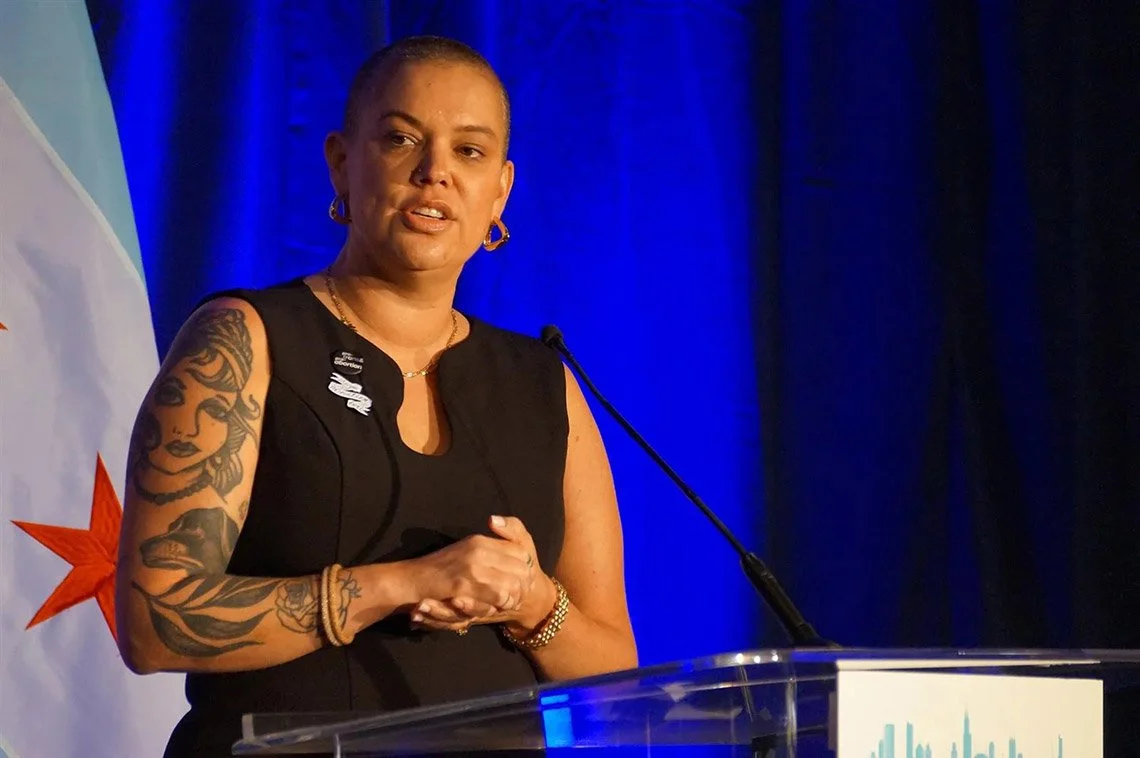
Megan Jeyifo, executive director of the Chicago Abortion Fund, speaks to members of the Illinois delegation on Day 2 of the Democratic National Convention in Chicago in 2024. (Capitol News Illinois photo by Peter Hancock)