People in Illinois lost more than $7.7 billion gambling last year. As lawmakers increasingly bet on gambling to pay the state’s bills, they have only spare change to treat compulsive gamblers
By CASEY TONER & MAGGIE DOUGHERTY
ctoner@bettergov.org
mdougherty@capitolnewsillinois.com
This story is a collaboration between Capitol News Illinois and Illinois Answers Project.
(Editor’s note: Some individuals in this story are identified only by first name and last initial at their request to allow them to speak openly about their addiction without fear of reprisal for actions taken when gambling.)
CHICAGO — When Reeve L. was growing up, his babysitters were the horse tracks in Arlington Heights, Maywood and Stickney, where he’d watch his father bet for hours.
When his father won, life was good — or at least tolerable. But when his father lost, he’d beat Reeve and his mother, her so badly she’d be afraid to show up to work with her bruises. In his father’s life, gambling came first, family a distant second.
Reeve saw how gambling could ruin a man and his family, and it was the last life he wanted to lead.
And yet, after Illinois legalized sports gambling in 2019, Reeve saw a gambling promotion scroll across the bottom of a televised Cubs-Reds game offering a free $5 bet for new customers. A modest bet on the Cubs, his favorite team, cracked open the dam for Reeve, sending his life spiraling into the rapids of uncontrolled gambling for five years.
That first bet, placed with a few taps on his phone, led him to blow through about $450,000 in savings and $150,000 in loans. He drained the nest egg that he and his husband saved to buy a house. Along the way he alienated about two dozen friends and would have lost his husband had he not joined a local Gamblers Anonymous group, Reeve said.
If the state had stronger gambling guardrails in place, Reeve said, he may have never found himself falling headfirst into his father’s addiction.
“There’s a responsibility of the state to protect the people,” Reeve said. “I think there has to be a responsibility of the state to know how many lives are being destroyed, and not even that person, but the lives around them, the divorce rates, the people not going out and spending money at restaurants or anything that now is going to sports gambling. It’s a billion dollar industry — that money is being taken away from somewhere in Illinois.”
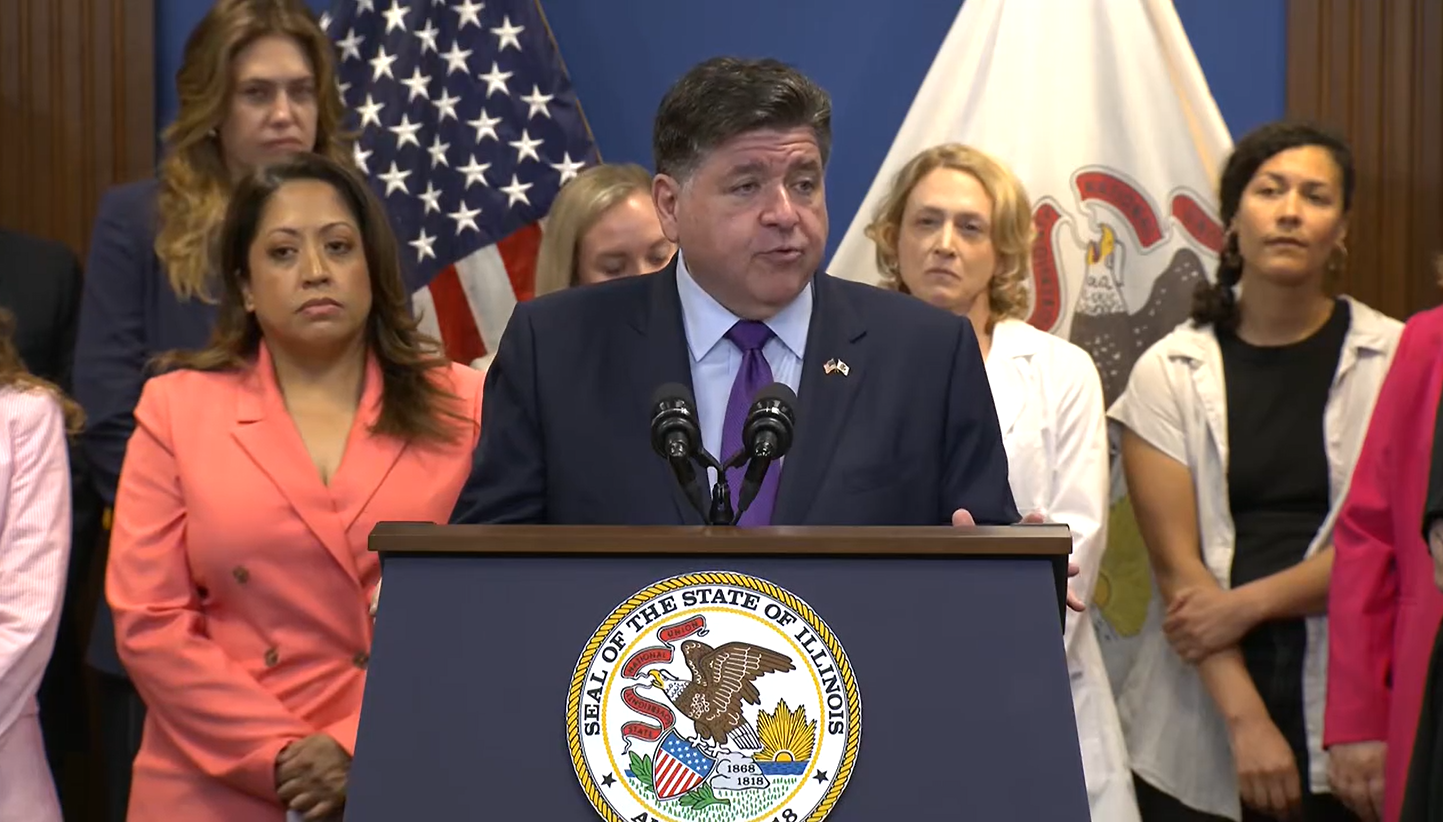
Gov. JB Pritzker expanded casinos and sports gambling in his first year in office and has encouraged people to gamble in Illinois casinos, building on more than three decades of elected officials dealing a favorable hand to gambling operators. Chicago, the last major holdout against slot machines, recently lifted its ban, setting the stage for possibly thousands of new machines to flood bars and restaurants.
The state raked in more than $2.6 billion in gambling tax revenues last year to help balance its budget, but that’s just a slice of the more than $7.7 billion that people in Illinois lost last year gambling at casinos, playing on regulated slot machines, betting on sports and buying lottery tickets. Of those losses, more than $4.1 billion went to sportsbooks, slot machines and casino operators.
The state dedicates less than 0.1% of the revenues generated by gambling back to treating the addiction it causes; for every $100 the state collected from gambling last year, it devoted less than $0.06 to treatment. Nationally, problem gamblers have one of the highest rates of suicide; the National Council on ProblemGambling estimates one in five have tried to take their own life.
The state last assessed problem gambling during the pandemic when sports gambling had yet to be fully implemented, estimating 383,000 Illinois adults to have a gambling problem, and another 761,000 as being at risk of developing one, though some clinicians consider the estimates an undercount. Pritzker’s Department of Human Services plans to publish a second assessment in 2027 and plans to do so every five years.
The governor’s office defended its handling of the issue, citing an overall increase in spending on the problem during his time in office.
“The Pritzker administration has made clear that gambling should be responsibly regulated with strong consumer protections and investments in treatment and prevention services,” a spokesperson wrote in a statement.
But the amount devoted to actual treatment has averaged around $1.5 million annually since 2020, even as the number of ways people can gamble has exploded. And gambling operators have only increased their tech savvy in luring people in and keeping them hooked, as the state appears to struggle with implementing high-tech help for problem gamblers.
“We are being thrown into the deep end of the pool, and we don’t know how to swim,” said Alyssa Wilson, a Fresno State University associate professor who studies gambling. “The technology moves faster than governments can keep up with trying to regulate it.”
For providers, the state’s small allocation for treatment means they run out of money to treat patients and the money does not cover the cost of care. There are only 58 certified gambling counselors in the state, few south of Chicago, and state efforts to certify more have faltered.
The state budgeted $4 million last fiscal year for a public awareness campaign to reach problem gamblers, through billboards and other advertisements, but the calls to a state-funded hotline have not seen sustained increases and few have tapped into a digital gambling recovery app paid for by the state.
The state-funded Illinois Council on Problem Gambling paid $250,000 last year to give Illinoisans access to the app, called Evive, which partners with public health departments to provide digital gambling recovery tools and track progress. As of March, it had just 92 active users in the state, up from 24 when it launched in May 0f 2025.
Sam DeMello, Evive founder, described the progress as “right on track” and said the low numbers are to be expected as the rollout with Illinois Department of Health is in an early stage, focused on “customizing and co-branding” in the first year. DeMello expects marketing and outreach to drive new traffic to the app in the coming fiscal year.
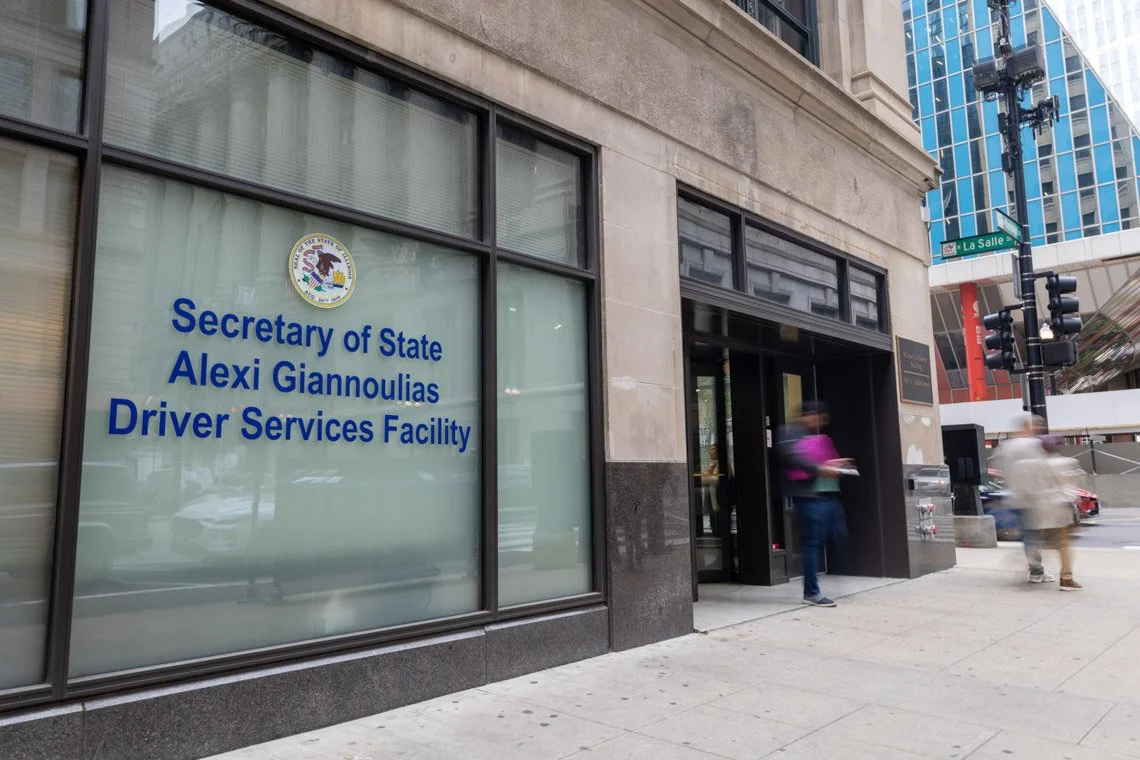
Also facing challenges is the state’s self-exclusion program. This allows compulsive gamblers to ban themselves from casinos and sportsbooks, a program it has maintained in some form since 2002. But exclusion does not apply to the nearly 50,000 slot machines throughout the state, a number sure to grow as Chicago begins allowing them.
Gamblers have to sign up in person, sometimes hours from home, often in a casino. Indiana, along with a few other states, offers online enrollment and has exceeded Illinois’ self-exclusion numbers in recent years.
There was a time when most forms of gambling in Illinois were relegated to the state lottery, horse racing, private card games and the neighborhood bookie.
That started to change when then-Illinois Gov. Jim Thompson legalized riverboat casinos, with the first leaving port in 1991, opening the doors to land-based casinos in the decades to follow. Casino gambling expanded to 17 licensed casinos that have generated nearly $13 billion in tax revenue for the state since opening their doors. Setting the amounts gamblers won versus lost, players are down almost $48 billion in that period.
The state has failed to respond at pace with the rapidly expanding business of gambling.
The Illinois Gaming Board has attempted to slap down new forms of gambling, sending cease-and-desist letters to 13 illegal online gaming operators and prediction markets, which provide an unregulated alternative to bet on sports and other world events, as well as 65 unregistered casino apps earlier this year. The prediction markets kept operating and more than half of the online casino operators ignored the state’s demand without repercussions. Illinois Attorney General Kwame Raoul’s office offered no comment when asked if it has sought to enforce their demands, and the federal government is now suing the state to stop it from applying its gambling laws to prediction markets.
The Gaming Board is also in the process of building out new technology for its self-exclusion program, which allows people to add their names to a list that blocks access to sportsbooks and casinos under the threat of a ticket for trespassing.
Nearly 16,000 people have enrolled on the list since 2002, but experts have called into question its efficacy as a prevention tool in its current form.
In practice, the list does not always prevent gamblers from placing bets, or even from collecting small wins, rather placing responsibility solely on the individual to abstain. Since the program began, state records show more than $3.2 million has been confiscated from people on the list and donated to two state nonprofits devoted to treating problem gambling. Illinois has a separate self-exclusion list for the lottery, which is run by the state, and crucially, neither of the two lists covers the state’s thousands of non-casino slot machines, which have made the most money of any non-lottery gambling enterprise in Illinois since 2019.
To enroll on the list, gamblers have to visit one of 32 sites in person, more than half of which are staffed by Gaming Board employees in casinos. The system is such that the nearest location is often a casino, akin to holding an intervention for an alcoholic in the drinker’s regular liquor store.
“People are embarrassed to go there. They’ve been going to that casino for six years, and the front people know their names,” said Mary D., a former casino gambler who has been in recovery for the last 15 years.
The options in downstate Illinois are scarce, with only five non-casino signup locations sanctioned by the Gaming Board outside Chicagoland. Someone in Effingham, for example, would have to drive nearly two hours to get to a Danville location to add their name to the list.
Indiana, a state with around half as many residents as Illinois, allows people to sign up online. The state offers a one-year exclusionary period instead of Illinois’ minimum five, making it less daunting for a compulsive gambler unsure about the commitment. In the past five years, more than 2,400 people have signed up for Indiana’s, far exceeding the roughly 1,900 that have signed up in Illinois over the same period.
There are nearly 50,000 slot machines at almost 9,000 locations all across the state. Gov. Pat Quinn signed the law that allowed them outside of casinos in 2009.
Quinn said in an interview that the slot machines were necessary to fund a capital bill to bring Illinois back from the Great Recession.
“We came to the Rubicon, and that’s what governors do — you got to do hard things,” said Quinn, who said he did not regret his decision.
The state’s network is now the largest of its kind in the world, according to the Illinois Gaming Board.
Tucked away in the corners of gas stations and hotels, bars and restaurants, golf clubhouses and gambling cafes, these slot machines brought in nearly $3.3 billion in wagers in the month of March alone.
To date, Chicago has been the largest holdout, with unregulated slot machines filling the void. But the promise of the buffet of slot machine money is enticing, and Chicago is grappling with the process of rolling out what will possibly be several thousand slot machines in locations citywide. While the City Council passed a budget last year approving slot machines, Mayor Brandon Johnson opposes the measure and continues to work against it.
Still, companies that place slot machines in bars are already prospecting for business, advertising in bus and train stations promising hundreds of thousands of dollars per year for restaurants and bars that install their devices.
A spokesperson for Johnson said the business interests of video gambling “should not come at the expense of residents’ safety, emotional well-being or financial security.” The expansion came after the City Council passed a budget reliant on the machines’ revenue over Johnson’s objections and levying a hefty tax on sports betting, prompting a battle with state lawmakers who oppose the local tax.
“Adding thousands of gambling machines to bars and restaurants across the city could worsen the devastating impacts of gambling addiction, particularly in vulnerable communities, while also increasing public safety concerns, including burglaries targeting cash-based machines,” Johnson’s spokesperson said.
Outside of Chicago, most of the high-performing machines are concentrated in the more densely populated Cook County and collar counties.
Illinois’ second-largest city, Aurora, which has less than a tenth of Chicago’s population, opted into slot machines and saw enough success that they raised the cap from five to six machines per establishment. People played more than $168 million on 174 machines in Aurora last year alone. The machines averaged about $968,000 in wagers per machine, about $2,650 per day. From those bets, gamblers lost nearly $16 million.
Downstate, in Metropolis, the mythical home of Superman near the Kentucky border, there’s a 24-hour gas station that brings in gamblers around the clock.
Acee’s Food & Fuel sells the same water, chips and gasoline as any roadside stop, plus some Superman trinkets, but the big ticket is gambling. Day and night people stream into the gas station off the highway and pump money into the six slot machines housed in a closed room inside the gas station’s convenience store.
State records show that people have played more than $223 million into these six machines since they went live more than a dozen years ago. That’s the most of any location outside Cook County and its collar counties.
Melissa B., a 53-year-old Kentucky-resident, said she is addicted to slot machine gambling because of the rush she gets when she wins. The machines at this gas station, she said, are closer to her than the ones at the Metropolis casino. Plus, she said, she feels these machines are lucky.
“I should have left earlier when I was winning,” Melissa said. “I also didn’t come here knowing I had $100 to my name. I hear people playing saying, ‘Come on, I got to pay my rent, I got to pay my rent!’”
Slot machines make the most money of any regulated gambling enterprise in Illinois. They also have the least stringent and consistent regulations.
Some are behind locked doors, others aren’t. There’s no option to self-exclude.
Marcus Fruchter, administrator of the Illinois Gaming Board, said adding a self-exclusion option to the video gaming terminals is a priority but expected it to be a multiyear process due to the technological challenges of updating machines across Illinois and ensuring data privacy protections of those on the list. Illinois has had slot machines outside of casinos since 2012.
The state recently signed a $162 million, 10-year contract with a vendor LNW Gaming, which builds slot machines and table games, to upgrade the state’s terminals for self-exclusion among other features. That contract, obtained through a public records request, sets a Dec. 31, 2027, deadline for the vendor to complete the transition to the upgraded system, with fines for delays.
“The last thing our industry wants is to be fueling a problem and we know it is a problem, and we know we are some portion of that problem,” said Ivan Fernandez, the executive director of the Illinois Gaming Machine Operators Association. “We want to be part of the conversation as to the solution of any problem we are a part of. But we are not there yet.”
Michelle Malkin, director of the Gambling Research and Policy Initiative at East Carolina University, where she teaches criminal justice and criminology, said self-exclusion can be a useful roadblock, but that it is ineffective without broader investment in education, prevention and treatment.
“You’re saying that the person with a gambling addiction also needs to be responsible for whether they gamble, but their brain has been impacted by their gambling addiction,” Malkin said.
The addiction that compulsive gamblers experience is often referred to as a “hidden disease.”
According to experts, the dopamine release that compulsive gamblers receive when placing a bet creates a compulsion as strong as alcohol or drug addiction. But unlike substance use disorders, their loved ones won’t smell alcohol on their breath or see bloodshot eyes. Their drug is chasing chance wins and they can’t step away, placing increasingly large bets in hopes of recovering their losses.
In fact, many families won’t discover the addiction until after the gambler is in crisis, losing large sums such as a family savings account or breaking the law to fund their addiction.
More than half of compulsive gamblers who seek treatment will commit a gambling-motivated crime, according to Malkin.
“It’s not because they’re bad people, it’s a natural progression of this disease,” said Malkin, a former Illinois resident who herself spent 10 months in federal custody on charges stemming from her gambling addiction.
Dave K., who has been in recovery for a little over two years, recalled stealing a couple hundred dollars from the college bar where he worked to cover a debt to a bookie, and then later blowing a nearly $15,000 commission check within 30 minutes of being at a casino. It was meant to be a quick stop to kill time before picking up his parents at the airport.
“Within the 30 or 45 minutes I was there, I just remember feeling so low,” said Dave, a resident of Chicago’s West Loop neighborhood. “I felt empty, and I was like, ‘Alright, I feel so low and depleted after all this, I’m going to ban myself.’ And so I banned myself from the Rivers Casino.”
Slot machines brought gambling out of the casinos and into local businesses throughout the state. A 2019 law legalizing sports betting passed by lawmakers on bipartisan lines and signed by Pritzker took it one step further and put the casino in people’s pockets.
People in Illinois responded, losing more than $5 billion on wagers since the sportsbooks opened and nearly $1.5 billion last year alone, state data shows.
Gambling losses are disproportionately felt by compulsive gamblers, especially with sport betting. Though the breakdown in spending has not been studied in Illinois, a 2024 study in Connecticut found that nearly 71% of all legal gambling revenue in the state came from the less than 7% of residents identified as problem or at-risk gamblers.
Over half of sports bets, it found, were made by the less than 2% of Connecticut residents identified as compulsive gamblers.
Online sports gambling allows people in Illinois to bet on sports at all hours of the day, on multiple applications, on a variety of sports — from Venezuelan men’s basketball to Bangladeshi women’s cricket.
As bets have become more precise, an almost endless frontier of new opportunities — and temptations — has opened up.
“I mean, you go from being able to just bet two things on a game, over-under or the point total. You go from two things [before it became legalized] to now 1,000,” said recovering gambler and Little Italy resident, Jimmy M.
“A thousand different bets you could bet on one game. You could bet on every single pitch in a Major League Baseball game.”
Allowing occasional wins at unpredictable times is part of what makes gambling addictive, according to gambling researchers, along with their ability to buzz users with push notifications and drop extra cash in their accounts to encourage betting right then and there.
“Online companies are using sophisticated behavioral and psychological strategies to maximize engagement and spending,” Brent Van Ham, a counselor who specializes in addiction, said at a recent gambling conference. “They actually hire behavioral experts to help design these programs.”
Fred M., who said he was reeled into sports betting by FanDuel ads after moving to Chicago, said he felt the gambling apps baited him with freebies timed to his monthly paydays.
“Like they noticed that I would deposit money on a Friday, Saturday,” said Fred who cashed out his 401(k) and blew his savings on sports gambling.
Sportsbooks have also juiced their profits through heavily-advertised parlay bets, which stack the odds by linking multiple outcomes. These make bets more enticing because they promise larger payouts while in reality they are among the worst bets any gambler can make.
Illinois gamblers have spent more than $900 million on parlay sports bets since 2020 — more than all single bets in other sports combined.
Caleb Driker-Ohren, who is in recovery for gambling, said that parlays appeal to compulsive gamblers’ fantasies. He attends a regular Gambler’s Anonymous meeting in Chicago’s Edgewater neighborhood each Sunday.
“Especially if you’re at a 16-leg parlay that you might be able to put in $1 and it’ll pay you $100,000,” Driker-Ohren said. “It’s always more appealing because you think you’re smarter than everyone else.”
The state has some restrictions. Betting on in-state college sports is banned. Bettors have to be 21 or older. The Illinois Gaming Board enacted bans on betting on yellow cards in Major League Soccer and NFL injuries due to the threat of fixing. All bets on Russian and Belarussian sports are suspended due to the war in Ukraine.
Illinois has strict truth-in-advertising laws, but none constrain the volume of ads on television and at sports games, which are rampant. While advertising is banned on college campuses, the ban does not include geolocation services to block advertising in the ways most young people experience it — through their phones and through social media.
A spokesperson for the Illinois Gaming Board said they would investigate complaints about on-campus digital gambling advertising but they haven’t received any.
But for professional sports, sports gambling companies now occupy the same advertising real estate at sports stadiums that cigarette companies once dominated, not to mention ubiquitous digital ad campaigns.
State lawmakers recognized that billions of losses created a social problem and vowed to set aside $1.5 million per year when they legalized video gambling in 2009, before later removing the provision that guaranteed funding. Lawmakers eventually reserved $6.8 million per year when they expanded gambling again in 2019, and set aside $15 million in last year’s budget.
In response to requests for comment on this story, a spokesperson for Pritzker cited the growth in gambling treatment and prevention funding over the governor’s tenure as a “1,400% increase” from $1 million to $15 million.
But at the same time, people’s losses have nearly doubled, from $4.1 billion to $7.8 billion, and the contracts awarded have fallen short of what lawmakers allocated, with $10.8 million spent last fiscal year on treatment, training, outreach, and a public awareness campaign that features billboards and advertisements for the state’s addiction hotline.
A $4 million marketing campaign designed to get gamblers to call the 1-800-GAMBLER hotline resulted in about 3,200 treatment referrals, although the monthly referral numbers have stayed relatively flat.
“All the marketing and campaigns will never compete,” said Wilson, the Fresno State University associate professor. “The billboards that you see, the (hotline) advertisement … for every one or two of those ads, you’re going to see a thousand of the industries’ (ads promoting gambling).”
Altogether the state spent an average of $1.5 million a year treating people with gambling addiction since 2020 despite new avenues for addiction becoming available, including another half-dozen casinos, legalized sports betting and the explosion of prediction markets operating outside the reach of state gambling regulators. During that period, the state raked in an average of $2 billion in gambling tax revenues.
“That’s a slap in the face,” said Leslie McCants, who does public health outreach in the poor parts of Chicago’s West Side, where scratch-offs reign for problem gamblers. “Like me having $100 and telling you, ‘Here’s $2, go get yourself something nice.’”
Spending on substance abuse dwarfs spending on gambling addiction, according to the National Council on Problem Gambling.
Nationally, there are about 40.3 million people with a substance use disorder and $31.8 billion spent on treatment, compared to 5.7 million problem gamblers and $94 million spent on treatment, according to its study.
That is, per person spending on substance use disorders was 46 times higher, around $789 per person, than per person spending on gambling addiction, around $17 per person.
Even with the state spending $4 million on advertising about gambling resources, the message hasn’t totally broken through, according to Anita Pindiur, whose organization Way Back Inn oversees the campaign and treats problem gamblers.
“People don’t know about it,” she said. “They want to seek treatment. And then when they seek treatment, it has to be available to them.”
Jim Wilkerson, who directs the state’s gambling addiction treatment efforts, told an audience of counselors at a recent gambling addiction conference in southern Illinois that those seeking funds need simply ask.
“We have funding available for you to treat individuals that have a gambling disorder, and it’s available now,” said Wilkerson. “You just need to give me a holler.”
But gambling addiction service providers who receive state money say there are problems with how it’s allocated. The state reimburses for billable hours instead of the full cost of jobs, and treatment money often runs out before the end of the year. Providers have to eat the cost of treatment and triage the care they provide.
Wilkerson declined to speak on the record with reporters, and the Department of Human Services declined repeated requests to make him available for comment.
Residents can seek in-patient treatment for gambling addiction only if they have some other substance abuse disorder, but this spring lawmakers agreed to fund in-patient treatment for gambling addiction alone the same way it treats other substance disorders.
“We have developed an industry in the state of Illinois that has become hugely popular. People begin gambling before they’re even of age,” said state Sen. Julie Morrison, D-Lake Forest, who sponsored the bill. “We haven’t kept up with the fact that the more gamblers we have, the more people who are going to fall prey to the addiction.”
The governor has not signed the bill yet, and his office declined to indicate whether he planned to, saying it was “under review.” With the governor’s signature, the state could fund in-patient treatment from the money it sets aside for gambling treatment.
Further complicating funding options is that gambling addiction is not recognized by the federal government and is not eligible for Medicaid payments; it’s harder for poor people to receive treatment, and there’s fewer incentives for gambling treatment centers to open independently, or for counselors to specialize in treating gambling addiction.
Right now, there are only 58 counselors in Illinois certified in problem and compulsive gambling, and they’re scarce in Chicago’s Black, Latino, and Asian neighborhoods and areas outside Chicagoland.
“They’re just few and far between,” said Elizabeth Thielen, senior director at Nicasa Behavioral Health Services, who has the certification. “So you’ve got a lot of people, in my opinion, practicing outside of the scope of their knowledge.”
Thielen said she’d seen clients who felt discouraged after seeking treatment from counselors who advertised gambling competency without understanding basic prevention tools, including an app that blocks gambling on phones, the self-exclusion list and financial counseling.
“There’s got to be a lot of people who gave up,” Thielen said. “And that’s not okay.”
For counselors, the bar to entry remains high, including expensive test registration and biennial renewal fees and requirements for clinical experience that far exceed those of the international standards on which the state certification board’s are based.
Gambling certified counselors praise the training but said it makes little financial sense for professionals in their field since few people seek care and most have difficulty getting reimbursed.
The Illinois Council on Problem Gambling provides free access to the 30 training hours required for certification and will cover the cost of the test and certification, but has only covered the expenses five or six times in three years because of the lack of interest and incentives, according to Executive Director Dave Wohl.
“Why should you jump through these hoops when there’s no carrot at the end?” Wohl said.
But while the state struggles to catch up, the gambling industry is minting new compulsive gamblers every day.
Driker-Ohren recently celebrated 16 months of sobriety over pizza and soft drinks in a school basement across the street from where he regularly meets with his Gamblers Anonymous group.
He sees the group growing, populated more and more by young men. The meeting, which had only a handful of people when it began in 2020, now regularly fills 20 to 30 seats. Another local GA meeting in the West Loop recently had to split into two nights to accommodate growing attendance.
He says it’s “foolish” for the state of Illinois to think that gambling is a net positive.
“The reason it pays that much is because someone has decided they can make money off you,” Driker-Ohren said. “It’s like getting a bunch of people sick and then saying, ‘But look, we have all this money to treat people now.’”
“It’s like, OK, how about just don’t get them sick in the first place?”