Jurors Hear More Testimony In Trial Of Former Mt. Carmel Man

Testimony continues today in Wabash County Circuit Court in the trial of a former Mount Carmel man charged with multiple child sex offenses.

One of the witnesses called by the prosecution Wednesday morning was Illinois State Police Special Agent Steve Perry, who led the investigation into allegations against 45-year-old Joseph Sellers of Janesville, Wisconsin.

During testimony, Perry told jurors he completed his investigation and presented the case to then-Wabash County State's Attorney Cassandra Goldman in July 2020. However, no charges were filed before Goldman left office in December of that year. The case was later reviewed by current State's Attorney Kelli Storckman, who filed charges against Sellers in 2021.

During cross-examination, defense attorney Monroe McWard questioned Perry about the timeline, suggesting that if the evidence against Sellers had been strong, Goldman would have filed charges during the several months she remained in office after receiving the case.

McWard also raised questions about a potential conflict of interest, noting that Perry attended the same church as both the alleged victim and the church member who first contacted authorities regarding the allegations. Perry acknowledged attending the church but maintained his investigation was conducted professionally.

The trial began Tuesday with opening statements. Prosecutors allege Sellers repeatedly abused a young girl while the two attended the same church in Mount Carmel during the late 1990s and early 2000s. The alleged victim testified Tuesday.

Sellers faces two counts of predatory criminal sexual assault of a child and two counts of aggravated criminal sexual abuse. He has pleaded not guilty to all charges.

The trial is expected to continue through the remainder of the week.


WGH Hosting Anniversary Bash Wednesday

Wabash General Hospital is inviting the community to help celebrate a major milestone as the hospital marks its 75th anniversary tomorrow.

The celebration will take place from 11 a.m. to 1 p.m. across from the WGH Orthopaedics and Sports Medicine building on College Drive. Visitors can enjoy smoked pork chop sandwiches with chips, delicious cupcakes, cookies provided by Wabash Valley FS, and free drinks while helping commemorate three-quarters of a century of local healthcare service.

The anniversary marks a journey that began in 1948 when Wabash County voters overwhelmingly approved the creation of a hospital authority and later backed a bond issue to make the project a reality. Construction of the original hospital began in 1949, and thousands gathered for its dedication on June 3, 1951. The new facility featured 52 beds, 18 bassinets, and a full range of medical departments.

Over the decades, Wabash General Hospital has expanded through new facilities, services, and technology, including the opening of a new hospital in 1983, the addition of ambulance paramedic services in 2002, designation as a Critical Access Hospital in 2003, and the construction of a new medical office building in 2022.

Today, Wabash General Hospital is Wabash County's largest employer and offers a wide range of healthcare services throughout the region. Hospital officials say the anniversary celebration is an opportunity to thank the community for its support while honoring the generations of healthcare professionals, volunteers, and patients who have been part of the hospital's history.

Testimony Begins In Trial Of Former Mt. Carmel Man

Opening statements were heard Tuesday morning in Wabash County Circuit Court in the trial of a former Mount Carmel man charged with multiple child sex offenses.

A jury was selected and seated Monday evening ahead of the trial of 45-year-old Joseph Sellers of Janesville, Wisconsin. Sellers, a former Mount Carmel resident, moved away in 1999 to join the U.S. Army.

During her opening statement, Wabash County State's Attorney Kelli Storckman told jurors the alleged victim and Sellers attended the same church and that Sellers' mother babysat the child. Storckman said evidence will show the alleged abuse occurred while the child sat on Sellers' lap as he played video games.

Storckman argued the incidents happened repeatedly, causing the alleged victim to believe the behavior was normal. She described the case as being about "opportunity and secrets," noting that although the alleged acts occurred in the late 1990s and early 2000s, they were not reported until 2019 when another church member learned of the allegations and contacted authorities.

Defense attorney Monroe McWard told jurors there is no objective evidence proving the state's case. McWard also criticized investigators, claiming they failed to pursue information that could have demonstrated Sellers' innocence.

The alleged victim, now 25 years old, was the first witness called by the prosecution.

Sellers is charged with two counts of predatory criminal sexual assault of a child and two counts of aggravated criminal sexual abuse. Court records indicate the allegations involve incidents that allegedly occurred between September 1997 and October 2000 involving a 7-year-old girl and a 10-year-old boy.

Sellers has pleaded not guilty to all charges. The trial is expected to continue through the remainder of the week.

As with all criminal cases, Sellers is presumed innocent unless proven guilty in a court of law.

'We didn’t have time’: Pritzker, leaders defend adjourning without Bears deal

Arlington Heights mayor disappointed by Springfield’s inaction

By BRENDEN MOORE &

BEN SZALINSKI
Capitol News Illinois 
news@capitolnewsillinois.com  

Article Summary  

  • Gov. JB Pritzker acknowledged Monday that the Chicago Bears may be on their way to Indiana. But he and Democratic leaders defended their decision not to move a bill incentivizing them to stay.

  • The leaders say they’re ready to continue working on the issue throughout the summer. But its unclear when, if at all, they’d return to the Capitol for a vote.

  • They made the comments at a news conference in the governor’s office hours after the General Assembly adjourned the legislative session without a deal. 

  • A last-minute pitch that passed the Senate would have allowed large municipalities in Cook County to compete to lure the team to a publicly owned stadium.

This summary was written by the reporters and editors who worked on this story.  

SPRINGFIELD — Hours after Illinois lawmakers failed to approve a stadium incentives structure aimed at keeping the Chicago Bears in Illinois, Gov. JB Pritzker acknowledged that the “pride and joy of Illinois” may take a deal to build a football palace in Indiana.

That said, Pritzker and the leaders of the House and Senate defended their processes and priorities at a news conference Monday morning, about five hours after they adjourned an all-night session. They told reporters that a combination of the late emergence of bill language in the Senate, along with their own red lines to not hand out taxpayer dollars to a football team valued at nearly $9 billion, kept it out of the end zone.

“That might happen,” Pritzker said of the team taking a stadium deal to build across the state line, where Hoosier lawmakers have pledged $1 billion in public subsidies. 

“But the reality is: I wasn't willing to give up billions of dollars of taxpayer money in order to give it to a billionaire-owned family or team... as much emotional connection as many of us have to the Bears and to keeping them in the city of Chicago or the state of Illinois,” he added.

At the same time, Pritzker said he would work with House lawmakers over the summer on a stadium package and his “hope is that we'll be able to provide something for the Bears.”

Pritzker said a special session this summer would be up to the legislative leaders, though House Speaker Emanuel “Chris” Welch, D-Hillside, told Capitol News Illinois early Monday morning that he wasn’t considering it.

‘It came late’

A bipartisan vote on a hastily crafted bill in the Senate around 3:30 a.m. Monday morning gave late life to hopes the legislature would pass a bill giving the Bears property tax certainty. Unlike a long-discussed structure for a negotiated property tax payment on a privately owned stadium in Arlington Heights, the bill would have allowed five Cook County municipalities that have populations over 70,000 to set up a local stadium authority. 

This would have enabled the Bears to avoid paying property taxes altogether on a new stadium, whether it be on a site they currently own in Arlington Heights or in Chicago, where Mayor Brandon Johnson has fought to keep the team. 

But the House adjourned about an hour later without taking up the bill. 

It was a late-arriving amendment, even in Springfield where lawmakers are accustomed to working through the night at the end of May each year. They’re often up late awaiting thousand-page amendments to bills that have been negotiated for days or months.  

But in this instance, the language was essentially novel when it arrived on lawmakers’ desks.

“I respect the Senate president’s processes over there,” Welch said. “You know, that’s the legislative process — the sausage making. It came over late … we didn’t have time to digest it. We didn’t have time to find out what other folks thought of it. We need to have some feedback from our members before asking them to vote for it on the floor, particularly in the wee morning hours.”

Senate President Don Harmon, D-Oak Park, said he felt both chambers worked well together throughout the session, even on issues beyond the Bears, but lawmakers ultimately had “no appetite” to provide public funding for the team, despite many being Bears fans.

Pritzker added that neither he nor his staff read the 145-page bill because “it came late.”

“Things happen, and we had a whole lot of things that were foisted upon the state that they were dealing with yesterday,” Pritzker said. “But indeed, the speaker is going to work hard to make sure that the House is making progress.”

‘A fumble’

The proposal was a drastic pivot from the PILOT concept discussed for more than three years. Instead, the structure mimics the mechanics of most modern stadium deals, including the offer the Bears have on the table from Indiana.

This switch-up seemed to come as a surprise to two of the entities it would impact the most: the village of Arlington Heights and the Bears.   

Arlington Heights Mayor Jim Tinaglia blasted the legislature’s inaction.

“The Village of Arlington Heights has spent the past five years working diligently to prepare for the redevelopment of Arlington Park,” Tinaglia said in a statement. “We are truly disappointed with the outcome from the spring legislative session yet again. Although we recognize that these discussions are complex and involve many stakeholders, this is clearly a fumble for the State of Illinois.”

Minutes after he filed the bill Sunday evening, Sen. Bill Cunningham, D-Chicago, the Senate’s lead negotiator on the stadium issue, told reporters that the Bears “are now just seeing it” and that he was “looking forward to hearing their response.”

In a statement after the House adjourned Friday morning, the Bears did not address the merits of the Senate bill but reiterated that they “remain on the late spring/early summer timeline” to decide on their future home.

Reporters quizzed Pritzker later Monday about how much he was involved in negotiations on the bill. He received criticism from some lawmakers and observers for a far more hands-off approach to this year’s legislative session in general.

While the governor said he has been intimately involved throughout the process, including several meetings in his Capitol office “throughout the weekend,” he didn’t want to give the Bears special treatment. And seeking “to table set,” Pritzker said the stadium issue was not the most important thing on lawmakers’ agenda, but rather “working to survive” President Donald Trump’s administration.

“Literally, billions of dollars have been taken away from people in our state,” Pritzker said. “We've seen these massive tariffs that are affecting people at the grocery store, when they go buy a car, everything else in their lives. Costs are going up, and then we've got this war that's raised the cost of gasoline for everybody... We're trying to defend the working families of Illinois.”

‘Still time’

The House sponsor of the legislation, Rep. Kam Buckner, D-Chicago, said in a statement the House’s decision not to take up the issue is “the reality of trying to move something of this size.”

“There is still time to answer questions, refine concepts, build consensus, and continue discussions with the Bears and all the stakeholders involved” he said. “The legislative pathway remains open.”

Chicago Mayor Brandon Johnson said in a statement Monday that he is “grateful” senators passed a bill that would give the city a chance to retain the team and that the city already has a publicly owned site managed by the framework in the Senate’s legislation.

“While questions remained about the legislation’s design, legislators ultimately reached the same conclusion the City reached in 2024: the strongest proposal for a new stadium centers public ownership, the use of a sports authority and a commitment to public infrastructure,” Johnson said in a statement.

Under the Senate bill, a municipal stadium authority would have the power to issue revenue bonds to fund stadium construction that can be backed through local tax revenue along with private contributions. 

The Bears have pledged to finance an Illinois project privately and Pritzker and state lawmakers have long ruled out state subsidies for direct stadium construction. That said, the provision would open the door for local governments to do that.

Pritzker said “that is a choice that people at the local level can make if they want.”

“For example, Arlington Heights and Chicago want to compete in order to have a stadium, and you may recall that the mayor of Chicago held a big press conference with the Bears announcing a $2.5 billion stadium that he had no money to pay for,” Pritzker said, referring to a 2024 plan for a public lakefront stadium that would have required $800 million in state-backed bonds for stadium construction. 

“So somehow that was going to have to get paid for,” Pritzker said. “And that's not something I was willing to do and, indeed, the amount of money that the state is willing to put up is money that we would put up for a business in the state of Illinois for infrastructure alone, not building a stadium.”

As for the megaprojects tool nixed by the Senate: “We still need that, by the way,” Pritzker said, reiterating his charge that Illinois is “behind the curve” given how 38 other states have a statewide mechanism for large developers to negotiate property taxes.

“They've always been negotiating about property taxes all across the country,” Pritzker said. “It's just in Illinois where we have had a disorganized, dysfunctional endeavor forever, and now we're trying to organize it and make it work, so that businesses will want to come.”

Capitol News Illinois is a nonprofit, nonpartisan news service that distributes state government coverage to hundreds of news outlets statewide. It is funded primarily by the Illinois Press Foundation and the Robert R. McCormick Foundation.

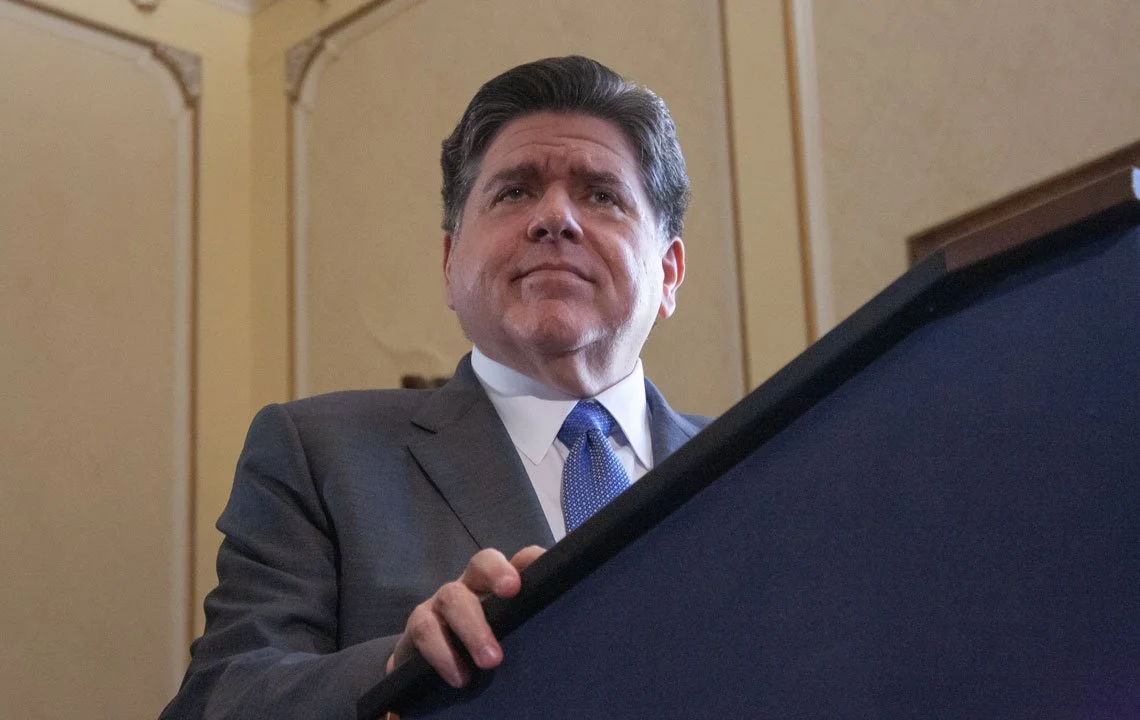
Gov. JB Pritzker responds to reporters’ questions at a morning news conference on June 1. Pritzker said a Bears deal is not off the table, but still a long way from fruition. (Capitol News Illinois photo by Jenna Schweikert)


Mt. Carmel Man Dead After Being Trapped In Grain Bin

From Wabash County Sheriff J. Derek Morgan: On June 1, 2026 at approximately 9:24 a.m. Wabash County 911 received a 911 call reference 3 men being trapped in a grain bin at Friendsville Ave. and N 1550 Blvd. 

The Wabash County Sheriff's Office, Mt. Carmel Police Department responded along with Mt. Carmel Fire Department and Wabash General EMS. Firefighters with Patoka Township Fire And Rescue responded as well. 

When crews arrived, 2 of the three were able to get out of the grain bin. Rescue crews worked diligently trying to get the remaining man. At approximately 1:01 p.m. The man was extricated from the grain bin. Wabash County Coroner Shaun Keepes pronounced 21-year-old Steven D. Haase, of Mt. Carmel, deceased.  

Rideshare drivers could unionize in Illinois under bill passed by General Assembly

Drivers say they want better wages, an ability to set rules and to address punishments

Article Summary

  • The General Assembly passed a bill early Monday that would give rideshare drivers the right to form a union.

  • Drivers for companies like Uber and Lyft could elect union representatives and perform union activities, like collective bargaining.

  • Drivers say a union is necessary because of low wages, and limited opportunities to appeal deactivations, or to have a say in setting rules.

This summary was written by the reporters and editors who worked on this story.

By JENNA SCHWEIKERT 
Capitol News Illinois 
jschweikert@capitolnewsillinois.com 

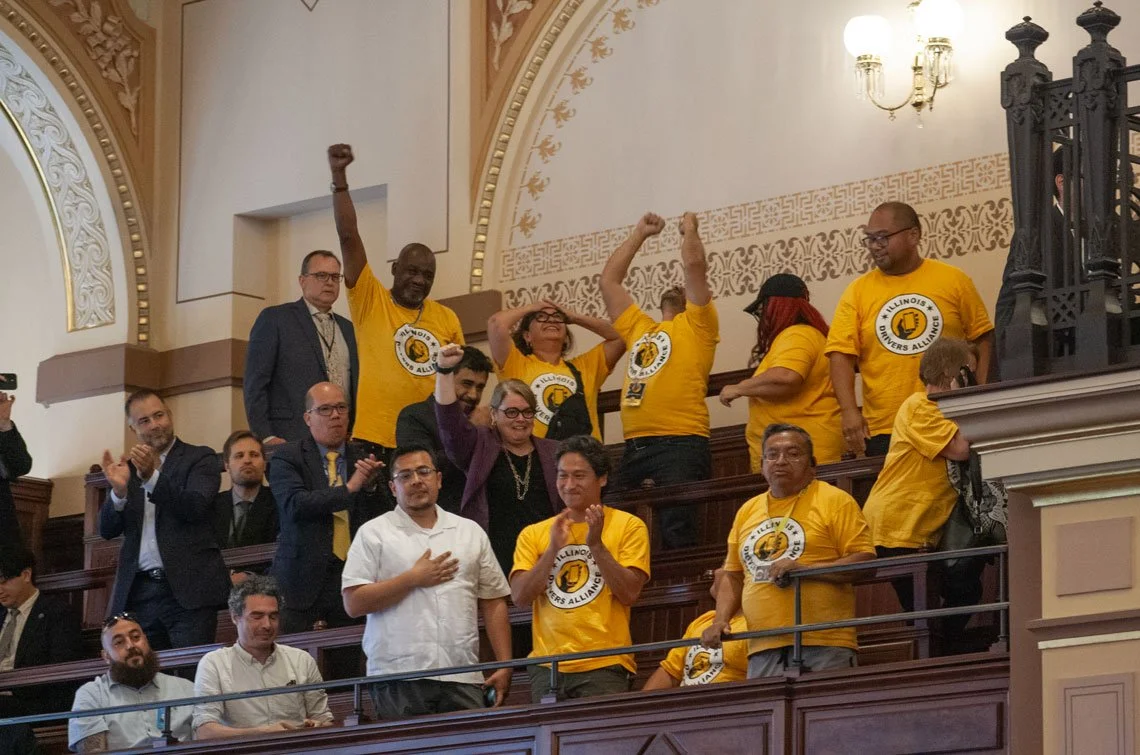
Over the past five months, a sea of rideshare drivers in yellow T-shirts flooded the Illinois state Capitol almost weekly, lobbying for the right to form a union. They may be able to do so soon, after Illinois lawmakers passed a bill giving them that ability in the final hours of the spring session.

House Bill 5090 would regulate how rideshare drivers can form a union, elect union representatives and engage in union activities such as collective bargaining.

The bill passed the House 83-28 early Monday morning and now heads to the governor. It passed the Senate 42-12-1 earlier on Sunday afternoon.

Rideshare drivers say a union is necessary because under federal law, they’re defined as independent contractors, despite having little control over work practices while working for companies like Uber and Lyft. That makes a statewide union their only option to collectively bargain and form a labor agreement, they say.

“This goes back to a fundamental belief that when workers are able to organize and have a collective voice, that does lead to better wages, benefits and working conditions,” bill sponsor Sen. Ram Villivalam, D-Chicago, said. Rep. Yolonda Morris, D-Chicago, carried the bill in the House.

“This legislation is urgently needed as drivers face declining wages, rising vehicle costs and unsafe working conditions without basic protection or a real voice on the job,” Morris said.

Forming a union

Drivers who are interested in forming a union would need to follow specific guidelines to do so: They would have to obtain signatures in support from 10% of active drivers to show interest, then 30% to become a certified union. From there, the union can petition the Illinois Labor Relations Board to conduct an election for individual union representatives.

Those thresholds are lower than in other labor sectors, but they were chosen because this industry is so new, Villivalam said. Union membership would be voluntary.

Every four months, transportation network companies — defined as entities providing rides through a digital platform, not including taxi associations — that provide the top 95% of rides would need to give the ILRB contact information for all drivers who, in the past six months, completed 10 or more rides in Illinois. 

The board would determine the median number of rides completed by that population, and any driver who completed that number or more would be considered an active driver and would be eligible to join the union. 

Like any other organization with unionized employees, these companies would be required to adhere to fair work practices, negotiate in good faith, provide timely and accurate information to the union and follow other standard labor regulations. They could be fined by the ILRB for violations.

This bill also includes a 4-cent-per-ride charge to the companies, to cover the implementation costs under the bill and for a grant program, a charge that companies are prohibited from passing on to the consumer. The grant program, Rideshare Workers Support Fund, would be managed by the secretary of state and paid to the union representative.

The bill also regulates how the ILRB and the Department of Labor would handle bargaining mediation, arbitration, labor agreements and unfair work practices.

The path to unionization

Rideshare drivers in Illinois have pushed for unionization rights since early 2019, initially beginning in the city of Chicago. In rallies and committees, drivers have told stories of dwindling wages and a lack of access to appeals for deactivations.

“Let’s be honest, we don’t operate independently at all. We don’t set our own wages. We don’t control the rules. We don’t decide who is deactivated and how they’re punished. The algorithm, the corporations do,” Brett Currin, a rideshare driver, said at a January rally at the state Capitol. 

The bill does not address those issues specifically, but through a union, drivers would be able to negotiate with their company on those issues.

“Hearing these (constituent) stories and then working with organized labor to craft a product that they had already been working on to move forward, really is what this is stemming from,” Villivalam said.

Villivalam, who represents parts of the northwest side of Chicago and its suburbs, said his district has the largest number of rideshare drivers in Illinois.

The Illinois Drivers Alliance led the effort throughout this spring, backed by the local International Association of Machinists and Aerospace Workers, and the Service Employees International Union Local 1, two unions representing thousands of workers across the Midwest.

California and Massachusetts have also passed similar measures, with Massachusetts certifying their statewide union just last week, on May 26.

Capitol News Illinois is a nonprofit, nonpartisan news service that distributes state government coverage to hundreds of news outlets statewide. It is funded primarily by the Illinois Press Foundation and the Robert R. McCormick Foundation. 



Supporters of the rideshare union bill celebrate in the Senate gallery after the bill passed on the floor. (Capitol News Illinois photo by Jenna Schweikert.)

Property tax debt sale reform will allow homeowners to keep more of their equity 

Illinois lawmakers pass bill to bring state into compliance with 2023 Supreme Court decision

Article Summary

  • State lawmakers passed a bill late Saturday that would change regulations on property tax debt sales.

  • Key changes include a six-year pilot program where Cook County could buy tax debts, and allow homeowners the right to keep their equity, if there is a surplus after auction.

  • The bill, if signed by the governor, would put Illinois in compliance with a 2023 Supreme Court decision, the last state to do so.

This summary was written by the reporters and editors who worked on this story.

By JENNA SCHWEIKERT
Capitol News Illinois 
jschweikert@capitolnewsillinois.com 

Illinois could soon reform the state’s regulations on delinquent property tax sales after the House approved a bill 80-35 along party lines Saturday evening that lets homeowners keep their equity.

House Bill 4537 makes various changes to the regulations for selling property tax debt. The key change is if a homeowner fails to pay their debt in an initial redemption period, and their property is seized and sold, they will receive any surplus funds left over from the auction. 

That change will bring Illinois — the last state to do so — into compliance with the 2023 Supreme Court decision Tyler v. Hennepin County. Previously passed by the Senate, the bill will now head to the governor.

In Tyler, the court decided that the sale process violated citizens’ right to fair compensation for government seizure of property and ruled any surplus funds from the property sale must be returned to the owner to reimburse the equity they had in the property. 

The new regulations would give certain counties the chance to purchase those debts themselves and offer more opportunity for the homeowners to pay back their debt.

The Senate passed the bill 56-1-1 on Thursday. Sen. Chapin Rose, R-Mahomet, voted no, and Sen. Willie Preston, D-Chicago, voted present, out of concern that the changes won’t work.

 “We have done what we could to try to address as many concerns as possible, to try to address as much as we could, to try to ensure that people who are unfortunately in a position of losing their homes because of delinquent property taxes, have an ability to recoup some of the surplus once those properties are sold,” said the bill’s sponsor, Sen. Celina Villanueva, D-Chicago.

Process reforms

When an owner falls behind on property taxes, the county clerk can place a lien — a legal claim against a person’s assets to ensure their debt is paid — on the property. These liens can be sold as tax certificates in annual sales, often to third parties who hike interest rates and charge steep fees.

The property owners are given a redemption period at this point to pay off the debt, during which buyers must meet specific deadlines notifying the owner of the process steps. If the homeowner still can’t pay the debt, then the tax buyers can seize and resell the property. 

In that way, tax buyers can obtain a property for just the cost of the debt, regardless of the property’s market value or equity the homeowner had invested. 

Villanueva’s bill addresses the issue by both restructuring the way counties handle tax debt sales and giving homeowners the right to be reimbursed for their equity.

“That was always my north star in this, is how do I protect people, how do I help people,” Villanueva said. “It's always been them.”

Counties with more than three million residents — effectively just Cook County — can take part in a pilot program during the next six annual sales by obtaining up to 100 tax certificates on certain low-tax, homestead properties. They would need to submit an annual report to the General Assembly detailing how many certificates the county acquired, what happened to them and where the proceeds went between the taxing district and the property owner.

That report will inform lawmakers if the new process works or whether a trailer bill is needed, House sponsor Rep. Curtis Tarver, D-Chicago, said on the floor Saturday night. Following the next six sales, those counties would be required to adopt the process.

“Cook County initially wanted the ability to take all tax certificates. … The pushback was to allow them to have a pilot program,” Tarver said. “Then (they) would report back to the General Assembly annually, and this will allow us to have an opportunity to see if that pilot program is in fact working, and if they have the ability to really scale up to take on all of the tax certificates.”

Some lawmakers pushed back on this model, however: “In six years, Cook County's going to do something completely different than the other 101 counties in Illinois, and I just don't think that that makes sense,” Rose told Capitol News Illinois on Friday.

Outstanding certificates

In February, Villanueva sponsored a bill that extended Cook County’s scheduled property tax sale to buy time while lawmakers negotiated this bill. Cook County was the focus in many of those negotiations, in part because it has significantly more outstanding certificates than any other county.

Lawmakers approved a similar bill in April, House Bill 799, but that bill only fixed the process moving forward, leaving those outstanding certificates in limbo. Then on May 11, a federal judge ruled the Cook County Treasurer’s office is liable to refund the money property owners lost in the tax sales between the Tyler decision and now.

This bill modifies the sales-in-error regulations to create a new category for any current outstanding certificates to be automatically declared in error, meaning those sales will be reversed, tax buyers will be refunded and the process will restart under the new statute. 

There are also provisions extending the initial tax redemption period by six months to a total of three years and establishing a surplus equity fund for those who’ve lost their home in the past two years. That fund would be supplied by a set of fees charged to the tax buyers. 

Buyers in counties of more than three million residents, essentially Cook County, must pay 5% of the total taxes, interest and penalties for a certificate, capped at $1,000, plus an additional 5% of the taxes, interest and penalties. Buyers in smaller counties must pay a flat $20 fee. When the certificate is issued, buyers in counties larger than three million residents must pay $1,000 and those in smaller must pay $500. 

Some Republicans, including Rose, cast doubt on how effective the bill would be because of those fees.

“If the tax buyer doesn't get repaid their money, who's going to ever buy taxes?” Rose said. 

The Illinois Tax Purchasers Association is opposed to the bill, out of concern that the surplus equity fund fees will impact their business model and drive tax purchasers out of the state, Rep. Steven Reick, R-Woodstock, said on the floor Saturday.

“I understand the concern of pushing, you know, the tax buyers completely out. Somebody’s got to pay the taxes, right?” Tarver said. “That's why we understand that the purpose of the pilot program is to ensure that ...  if Cook County really is focused on keeping homeowners in their properties, and they believe they have the ability to do that, then let's see that proven.”

The bill also establishes new notice requirements to ensure that property owners know their rights, how to get help paying their tax debts and what could happen if they don’t.

Negotiations

Illinois is the last state to come into compliance with Tyler because, despite years of negotiations between lawmakers, stakeholders and advocates, those involved struggled to find a statewide solution. 

“90% of the bill, everybody was in agreement with,” Villanueva said. “The question was, how do we ensure that we have a policy that is statewide that works for everybody, because the county (Cook) is always going to be slightly different than everybody else.”

Rose, Villanueva and Preston each said they support larger property tax reforms in the future to address why residents are falling behind on their payments in the first place.

Capitol News Illinois is a nonprofit, nonpartisan news service that distributes state government coverage to hundreds of news outlets statewide. It is funded primarily by the Illinois Press Foundation and the Robert R. McCormick Foundation.
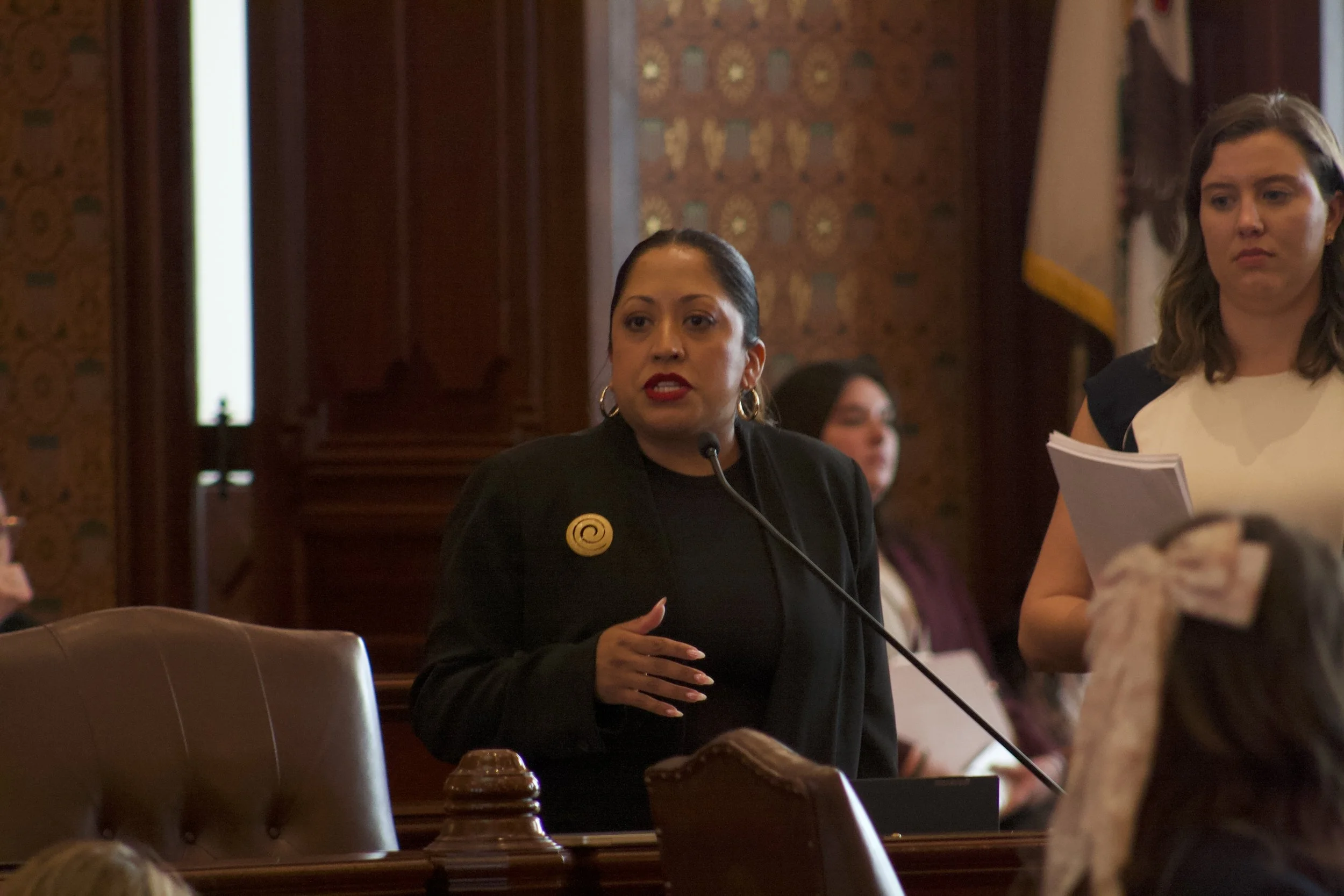
Celina Villanueva, D-Chicago, speaks on the floor on Thursday, May 28. Villanueva led negotiations on this bill for several years. (Capitol News Illinois photo by Jenna Schweikert.)

Lawmakers pass bill to shield abortion information from digital medical records

The measure seeks to protect abortion patients in Illinois from out-of-state retaliation

By NIKOEL HYTREK
Capitol News Illinois
nhytrek@capitolnewsillinois.com

Article Summary

  • In the final week of the session, a handful of laws to protect reproductive rights passed the legislature. One would shield information about abortion services from digital medical records, another would allow minors to consent to receiving birth control without parental consent. 

  • Illinois is a national hub for abortion care, providing it not only for Illinoisans but also for nearly a quarter of the people who have had to leave their home states for abortions, according to data from the Guttmacher Institute, a nonprofit organization that researches abortion policy.

  • Across the country, there have been cases where women were reported to law enforcement by healthcare workers after using abortion medications.

This summary was written by the reporters and editors who worked on the story. 

SPRINGFIELD — Bills expanding privacy for abortion medical records and access to birth control services passed in the final days of the General Assembly’s spring session. 

The bills had strong support from abortion advocates who provide care for Illinoisans and nearly a quarter of the 142,000 people who have had to leave their home states for abortion services, according to data from the Guttmacher Institute, a nonprofit organization that researches abortion policy.

The first measure, House Bill 5295, is an initiative from the governor’s office and would create the Reproductive Health Privacy Act. It would require the separation of information about abortion services or diagnoses of gender dysphoria from a patient’s digital medical records if a patient chooses. 

Access to those records would be restricted for out-of-state entities and could only be shared in certain circumstances and with a patient’s consent. The information would not be deleted, only shielded.

Senate lawmakers on Saturday passed the bill with a vote of 38-19. The House passed the bill Sunday with a vote of 73-39. 

Gov. JB Pritzker said in a statement that he looks forward to signing the bill “to fortify the protections around choice and consent, and that anyone receiving safe, legal abortion care here will not be criminalized.”

VILLANUEVA

Sen. Celina Villanueva, D-Chicago, who sponsored the bill, said the measure is primarily meant to protect people from retaliation when they return to their home state after receiving abortion services in Illinois, where abortion is legal and access is protected.

“We've heard from patients from other states who have traveled to Illinois and were dropped by their primary care physician once their physician saw, via their electronic medical records, that they got an abortion,” Villanueva said.

Across the country, there have also been cases where women were reported to law enforcement by healthcare workers after using abortion medications, and that’s been the case even prior to Roe v. Wade being overturned. 

“The surest way Illinois can protect our residents and their reproductive records is by requiring health information exchanges to implement new policies that keep sensitive information out of bad actors’ hands,” Villanueva said in an emailed statement.

Senate Republicans raised concerns about doctors being able to treat patients without knowing whether they’d received abortions. 

The measure only applies to networks that provide software that shares electronic health information and how they handle patient data, so it doesn’t address medical malpractice if a doctor were somehow unable to treat the patient; those doctors would not be held liable.

In April, House sponsor Rep. Mary Beth Canty, D-Arlington Heights, said medical experts who weighed in on the bill didn’t raise any concerns and they confirmed what kinds of information is necessary for doctors. 

"Illinois has become an island of access for vital healthcare, especially for abortion and gender-affirming care. The Reproductive Health Records Privacy Act ensures that anyone receiving care in our state will not have their sensitive medical records shared without their consent. As other states move to criminalize this essential healthcare, Illinois is taking concrete steps to strengthen protections for both patients and providers," Canty said in a statement. 

The bill initially passed the House 73-34 in April along party lines and had to come back for an amendment. 

Research suggests treatment for rare abortion complications like excessive bleeding or infection wouldn’t be significantly different from how medical workers would treat those conditions if they happened for another reason. 

“To also speak to this, nothing in this bill precludes patients from verbally sharing this information with providers in that moment,” Villanueva said. “And I'll be remiss to say that ER doctors and providers do this work on (an) every single day basis when they don't have a full workup of a patient.”

Sen. Jil Tracy, R-Quincy, questioned whether doctors in states where abortion is banned would knowingly violate patient privacy laws by reporting the patient to the police. 

But that does happen, usually for patients who manage the abortion on their own using medication. Oftentimes, those reports happen because abortion bans are vague about reporting requirements for healthcare workers, and those workers err on the side of caution because the penalties for violating abortion bans are steep. 

Another potential motivator for physicians reporting patients is abortion stigma, the belief that abortion is morally wrong or unacceptable, and interpretations of laws associated with the disposal of fetal remains.

Rep. Bill Hauter, R-Morton, a physician, called the bill “unworkable and unnecessary” during final House floor debate on Sunday.

“This bill fundamentally misinterprets and mischaracterizes what the medical record is for — a private, protected communication between healthcare professionals to take care of patients,” he said.

HAUTER

Lindsey Volz, a legislative advisor in the governor’s office, said at a Sunday House committee meeting that their office had heard stories of women facing serious repercussions after receiving abortion services in Illinois, including being reported to Child Protective Services.

“There's a number of actions that a provider could take that are not a criminal prosecution,” she said. “It is certainly possible that a doctor sees this information and chooses to report it to the police, but there's a wide range of other actions that could be taken that we are concerned about and have heard stories of occurring.”

Several other states have similar laws.

Birth control for minors

Lawmakers also passed Senate Bill 3341, a bill that expands access to birth control for minors, allowing them to consent to birth control without additional consent from a parent or guardian. 

“What we’re trying to do with this bill is, we’re trying to modernize antiquated Illinois statute and make it clear that minors may consent to these services,” said Rep. Dagmara Avelar, D-Romeoville.

Under existing law, young people can consent to birth control without a parents’ consent but only under specific circumstances, such as if they’re married or already a parent, among other qualifications. 

SB 3341 expands that ability to all Illinois minors and follows medical evidence about that minors’ access to birth control reduces rates of teenage pregnancy. 

On Wednesday, the House passed Senate Bill 3341 with a 73-38, party line vote. The bill earlier passed the Senate with a vote of 37-19 and now heads to the governor’s desk for his signature.

“We commend the Illinois General Assembly for trusting the medical community to set up-to-date, evidence-based guidelines that better meet the needs of young people today,” Adrienne White-Faines, president and CEO of Planned Parenthood Illinois Action, said in a statement following its passage. 

Republicans on the floor opposed the bill because they said it violated parents’ rights to direct the care of their children, but Avelar said the bill doesn’t prevent parents and their children from talking about birth control. 

“We know that many young people do involve a parent when it’s safe to do so, but the law also has to work for young people for whom that is not safe or possible,” she said.

Lawmakers and advocates have pointed out that children in foster care or in abusive situations may not have access to birth control, which can be used for reasons other than preventing pregnancy. 

House Republicans also argued that young people having birth control as teenagers may lead to fertility trouble later in life, but no scientific studies have found a long-term impact on fertility if a person uses hormonal birth control as a teenager.   

“More and more we are seeing birth control being stigmatized and suffering from misinformation,” Margot Riphagen-Dunn, President and CEO of Planned Parenthood Great Rivers Action said. “But Illinois has long been a leader in upholding reproductive rights, and protecting access to birth control is fundamental to that fight.”

Capitol News Illinois is a nonprofit, nonpartisan news service that distributes state government coverage to hundreds of news outlets statewide. It is funded primarily by the Illinois Press Foundation and the Robert R. McCormick Foundation.
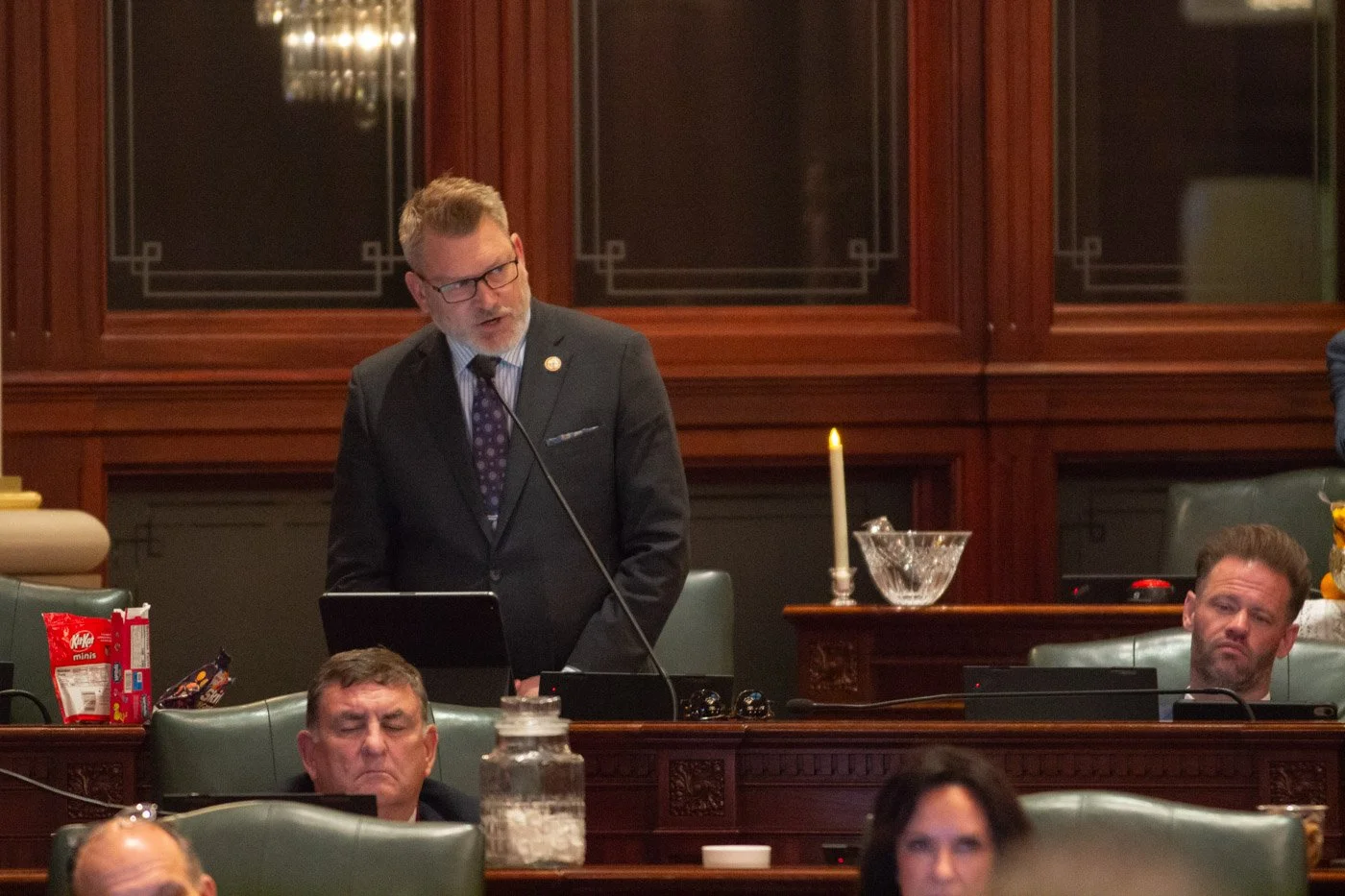
Rep. Bill Hauter, R-Morton, argues against the Reproductive Health Privacy Act on the House floor on May 31, 2026. (Capitol News Illinois photo by Jerry Nowicki)

Schools to get funding increase, but less than some had urged

Budget fully funds 10th year of EBF; restores property tax relief grants

By PETER HANCOCK
Capitol News Illinois
phancock@capitolnewsillinois.com

Article Summary

  • Illinois lawmakers approved a budget after 4 a.m. Monday that includes the full $350 million increase in Evidence-Based Funding for public schools. 

  • The budget calls for just over $10.8 billion in state funding for the Illinois State Board of Education 

  • It includes a restoration of the $47 million for property tax relief grants.

  • Some education advocates had called for a bigger increase. 

This summary was written by the reporters and editors who worked on this story. 

SPRINGFIELD – Illinois lawmakers passed a budget Monday morning that includes a full $350 million increase in Evidence-Based Funding for public schools, money earmarked specifically for the neediest school districts in the state.

That includes a restoration of the $47 million for property tax relief grants called for in the formula that lawmakers passed in 2017 — a program that lawmakers paused in this year’s budget and that Gov. JB Pritzker had recommended not funding again in the upcoming fiscal year.

But that is still far less than what many education advocates had urged lawmakers to pass. Those groups, which included teachers’ unions from some of the state’s poorest districts, noted that as the state enters its 10th year of funding under the EBF model, most school districts in Illinois are still significantly underfunded.

“Today’s budget proposal reflects not enough compliance with the state’s own evidence-based formula, not enough revenue for schools and services, and not enough courage from the governor and lawmakers at a time when it is needed more than ever,” Stacy Davis Gates, president of the Illinois Federation of Teachers and Chicago Teachers Union, said in a statement.

Overall, the budget calls for just over $10.8 billion in state funding for the Illinois State Board of Education, which oversees the state’s public school system. That’s about $120 million more than Pritzker requested in his budget proposal, but slightly less than the agency had requested. 

It’s also about $332 million less than the agency received last year. But that’s because the state is shifting funding for early childhood education this year from ISBE to the new Department of Early Childhood.

In addition to the increase in EBF money, the budget includes increases in certain categories of transportation costs and other kinds of “mandated categorical” spending. It also nearly triples funding, to $26 million, to help fund free breakfast and lunch programs.

Underfunding

The Evidence-Based Funding system was signed into law in 2017 by then-Gov. Bruce Rauner, a Republican. It was intended to address the vast disparities in funding levels across more than 860 school districts in the state.

Under the formula, each district is assigned an “adequacy target,” based on its size, demographic factors and regional cost-of-living factors. It also considers how much local revenue each district is capable of generating to produce an estimate of how much state aid it needs to meet its adequacy target.

Under the law, the state is supposed to add at least $300 million in new funding each year. All districts continued receiving at least as much state aid as they did before the formula was adopted, but the bulk of the new money was earmarked for districts furthest from their adequacy target.

 In the system’s first year, 657 of the state’s 851 elementary, high school and unit districts were funded at less than 90% of their adequacy target, including 167 that were below 60% of adequacy.

This year, the ninth year of the formula, total EBF dollars in the budget — including the base funding districts were getting before the new formula took effect — stands at $8.9 billion. All districts are now funded above 60% of adequacy, but there are still 48 districts below 70% of adequacy, and 532 districts, or 63% of the total, are below 90%.

ISBE estimates that bringing all districts up to the goal of at least 90% of adequacy would cost an additional $3 billion.

Sen. Graciela Guzmán, D-Chicago, introduced legislation this year that would have required the state to fully fund the formula to bring all districts above the 90% adequacy mark.

In a recent interview, Guzmán said that at the current pace of adding just $300 million in new money each year, factoring in inflation, it will take at least another decade to reach the goal of bringing all districts up to or near adequacy.

“We're already seeing the impact of inadequacy in school districts all across our state,” she said. “We've heard a lot of robust testimony from school districts that are talking to us about the kinds of staff decisions that it means. It means fewer counselors, larger class sizes, less bilingual support, less special ed support, less reliable transportation. That's happening. And then at the same time we see more pressure than ever on teachers, on our students, on parents, on families, on local taxpayers.”

Property tax relief

Another element of the 2017 funding reform was to address some of the inequity in local property tax rates around the state.

At the time the EBF formula was passed, according to ISBE data, the state paid only about 26.6% of the total cost of public schools. Local revenue, primarily from property taxes, accounted for 66.4% of the total cost, or $20.4 billion.

Under the new formula, in addition to $300 million in new funding for the neediest schools, the state is supposed to provide approximately $50 million for property tax relief grants, which can be distributed to districts with particularly high tax rates.

Districts that received the grants had to agree to use the money to lower their total property tax levy for at least two years. After that, the grant amount became part of the district’s funding base going forward.

Last year, however, Pritzker called for pausing the property tax relief program amid questions about whether the program was doing any good. Meanwhile, ISBE was tasked with conducting a review of the program to measure its impact.

“We’ve got to figure out, how do we do that better, and I don’t think we have the answer quite yet,” Pritzker said during a March 5 news conference. “But it didn’t seem appropriate for us to just throw the money into the program without having a better potential outcome.”

The state’s report found that from 2015 through 2023, tax rates in districts that received the grants did go down. But rates also declined over that period for most districts that did not receive the grants, a trend the report said could be explained by rising property values.

Further, it found total property tax revenue collected in districts receiving the grants grew, but at a slower pace than in districts that did not receive the grants.

“What I think the report says is that it's helped some districts, hasn't been as beneficial elsewhere,” Sen. Michael Halpin, D-Rock Island, who chairs the Senate’s education budget committee, said in an interview. “But I think it's worthwhile, given the current issues with affordability, to maybe put those back in for this year. But I'm regularly pushing for additional money to go into the formula.”

Under the new budget, districts receiving the grants in the upcoming fiscal year will be required to use them to lower their property tax levies for three years instead of two.


Capitol News Illinois is a nonprofit, nonpartisan news service that distributes state government coverage to hundreds of news outlets statewide. It is funded primarily by the Illinois Press Foundation and the Robert R. McCormick Foundation. 

Sen Elgie Sims, D-Chicago, debates Sen. Dave Syverson, R-Cherry Valley, on the Senate floor before the chamber approved the fiscal year 2027 budget. (Capitol News Illinois photo by Jerry Nowicki)

Session slog ends in $56B budget, new taxes on social media companies, crypto, fantasy sports

Gas tax increase suspended while new taxes on businesses plug revenue hole

By BEN SZALINSKI
Capitol News Illinois
news@capitolnewsillinois.com

Article Summary

  • Democrats largely joined together to support the fiscal year 2027 budget as Republicans warned the plan will harm the state’s financial picture. 

  • The budget totals about $56.9 billion and is just slightly less than what Gov. JB Pritzker proposed in February, though it incorporates key taxes and revenue changes he proposed. 

  • The spending plan is the largest in state history and includes funding for local governments along with full funding of the state’s K-12 Evidence-Based Funding formula. 

  • New taxes would be implemented on social media companies based on the number of users in the state, along with prediction markets, fantasy sports and digital assets. 

  • Republicans bashed the plan’s hasty passage while Democrats defended the new taxes and spending, citing the Trump administration’s cuts. 

This summary is written by the reporters and editors who worked on this story. 

SPRINGFIELD — Illinois lawmakers approved the state budget early Monday morning after slogging through the night, enacting new taxes on businesses and authorizing less spending than what Gov. JB Pritzker proposed in February. 

“It’s allowed us to be prepared for the great reality we face today,” Senate Democrats budget leader Elgie Sims, of Chicago, said during debate. “The reality of federal cuts. The reality of chaos coming from Washington ... We are not placing blame. We are prepared. We are not acting on fear. We are acting responsibly.” 

The budget totals $55.9 billion, supported by a similar amount of revenue. The spending plan included an $830 million supplemental current-year spending plan, meaning the upcoming fiscal year 2027 budget is essentially flat. 

To get it across the finish line, Democrats — especially progressives — had to temper their expectations. Many had called for new progressive revenue measures throughout the session, including taxes on big corporations and billionaires and for Illinois to untie itself from parts of the federal tax code.

Instead, the measure freezes corporate net operating loss and taxes social media companies, digital assets, fantasy sports, tobacco and sports betting on prediction market websites.

Democrats also sought to include at least a few measures that address affordability. It freezes the 1.3-cent gas tax increase that’s slated for July 1, pushing it to January. It also creates a sales tax holiday on school supplies from Aug. 7-16.

Republicans, meanwhile, said the relief didn’t go nearly far enough. 

“We're not going to raise the gas tax in July, we're just going to wait a couple more months, so we can raise it at the end of the year after election time,” Rep. Joe Sosnowski, R-Rockford, said, adding sarcastically that there was a “lot of courage coming out of that side of the aisle and the governor.”

Path to passage

Its passage comes after an spring session thrust further into unpredictability  by the war in Iran and federal policy changes. Budget analysts for the General Assembly and governor’s office tempered revenue expectations just weeks ago, citing growing pessimism over the economy. 

The 3,700-page spending plan and associated implementation bill were introduced late Saturday evening and about 200 additional pages were added around 2 a.m. on Monday. But other components of the budget, including the capital and revenue bills, were not filed until mid-afternoon on Saturday. 

“Thirteen million people expect us to do our jobs in the openness of daylight within the months and weeks leading up to a May 31 deadline each year, not in the final few hours of darkness,” Sen. Chris Balkema, R-Channahon, said as the Senate took up the spending bill around 2:30 a.m. “It's highly embarrassing to the 13 million people.”

No Republicans voted for the plan, though some House lawmakers said they were at least more involved in budget negotiations than in recent years.

“It’s been very recent communication, but it’s certainly better than no communication at all, which has been, of course, the status quo for many years,” Rep. Ryan Spain, R-Peoria, told reporters.  

The spending measure, House Bill 111, passed the Senate 37-21 after 3 a.m. Monday morning. The House followed around 4:15 a.m. with a 76-39vote, followed by the budget implementation bill, House Bill 2949. The revenue and tax changes, Senate Bill 3019, passed the House around 11:15 p.m. on a 73-41 vote, followed by the Senate around 12:30 a.m. with only Democratic votes as well. 

Tax increases and revenue maneuvers

The budget also calls for transferring $150 million in sales tax revenue from gas to the General Revenue Fund once public transportation is fully funded, opening that revenue up to be spent on any purpose.  

"If you’re a driver who is irritated by the high price of gas that you’re paying, you should be extra irritated when you where the funds are going,” Spain said. 

Sen. Chapin Rose, R-Mahomet, aired similar concerns earlier on Sunday during committee.

“We ought to be suspending the sales tax on motor fuel right now – not diverting it to the General Revenue Fund, and not diverting it, oddly to the exact same dollar amount that we got for illegal immigrants and welcoming centers,” he said. 

That state plans to spend $143 million on a healthcare program for undocumented immigrant seniors and another $4 million on welcoming centers that provide services to immigrants arriving in Illinois. 

Lawmakers incorporated a pair of the tax changes that Pritzker had proposed in February. One would lower the cap on corporate net operating loss deductions for business. Another would impose a tax on social media companies based on the number of users the platform has in Illinois. Combined, those would generate $500 million in new revenue. 

Social media companies would be taxed on a progressive scale starting with platforms with 100,000 to 499,999 users paying 10 cents per month for each user all the way up to platforms with at least 1 million users paying a $165,000 fee plus 50 cents for each user each month. A similar tax in Chicago is already tied up in court. 

New taxes on digital asset sales and fantasy sports are expected to generate $65 million. The state would create a licensing structure for fantasy sports operators and impose a 15% tax on each business — something Rep. Curtis Tarver, D-Chicago, said the industry themselves requested. 

Consumers purchasing tires will also see a 50-cent increase in a tax on those purchases, which primarily funds a waste disposal fund. 

Sports bets on prediction markets and remote tobacco retailers would also be taxed under the plan. 

“This state is addicted to spending money it doesn't have,” Rep. Blaine Wilhour, R-Beecher City. “It’s addicted to creating programs that it can't afford. It's addicted to making promises it can't keep, and it's addicted to coming back to the taxpayers constantly, constantly to clean up the mess.”

Rep. Blaine Wilhour, R-Beecher City, criticizes Democrats on the House floor on June 1, 2026. (Capitol News Illinois photo by Jerry Nowicki)

The revenue package also creates a Targeted Advertising Services Tax, which is more commonly known as a digital ad tax. However, lawmakers expect the tax will also face legal challenges and are not planning to gather revenue from it in FY27. Tarver said the goal was to create a framework to implement the tax later if it’s held up in court. Keith Staats, president of the Illinois Taxpayers Federation, told a House committee the tax likely violates federal internet freedom laws. 

The budget package does not eliminate tax incentives for data centers, despite Pritzker calling for it in his budget. 

Other spending in the budget appears to rely on numerous fund sweeps that redirect money from one program to another or to the state’s General Revenue Fund. One of those sweeps includes transferring $70 million from the BRIDGE program — created last year to allow Pritzker to allocate funding to programs that fall short in funding because of federal cuts — to the Fund for Illinois’ Future for infrastructure projects and other grants. Money in that fund is typically earmarked for specific projects in Democratic legislative districts.

However, the spending bill stipulates that $70 million from the BRIDGE Fund should go to a new program to fill gaps in food assistance programs, which led to some confusion among lawmakers debating the bill in the House.

Spending

Rep. Robyn Gabel, D-Evanston, said the budget includes about $65 million in reductions for government operations, a relatively small cut in the budget. She said no government staff would be laid off. 

“Most important in this moment, this budget is not balanced on the backs of working families,” Gabel said. “That means no taxes on working people, and no severe cuts to critical services they depend on.”

The budget would establish a program to help people who have lost Supplemental Nutrition Assistance Program, or SNAP, benefits as the federal government institutes new restrictions on eligibility. Under the new Families Receiving Emergency Support for Hunger, or FRESH Program, people who have lost or seen their SNAP benefits reduced would be eligible for a one-time $400 payment. The program is scheduled to last just one year and is estimated to cost about $70 million.

BLAIR-SHERLOCK

Following Wilhour’s address, Rep. Diane Blair-Sherlock, D-Villa Park, pointed a finger at the federal government. 

“I will not be lectured about excessive state spending at a time when I am watching billion- dollar ballrooms being built, private jets being flown around by staff to go to their girlfriend's concerts, while SNAP benefits are cut, while Medicaid is cut, while Medicare is cut, while people are desperately trying to get health care,” she said. “We as a state are trying to fill in gaps created by the federal government.”

Funding for local governments will increase. Lawmakers allowed the percentage of the income tax that they receive to stay flat at 6.47%. Because of natural income tax growth, their total dollar amount received will grow — Pritzker had proposed reducing the percentage.

Mayors vigorously lobbied lawmakers this spring not to cut the percentage and Sims told reporters on Sunday morning that senators agreed.

Illinois lawmakers are also in line for a roughly 3% pay raise, which will bring their base salaries to $101,450. State law indexes their pay each year to the rate of inflation.

The bill also fully funds pensions and the state’s Evidence-Based Funding model for K-12 education, including a property tax relief component. However, districts receiving those grants will need to forgo property tax increases for three years, rather than two as current law requires.

Higher education will only receive a 1% increase next year — the second year in a row new funding was below the rate of inflation. 

Direct service providers will receive a 60-cent wage increase, half of what is recommended. The budget also does not include any increase in the “rainy day” fund. 

Capitol News Illinois is a nonprofit, nonpartisan news service that distributes state government coverage to hundreds of news outlets statewide. It is funded primarily by the Illinois Press Foundation and the Robert R. McCormick Foundation.