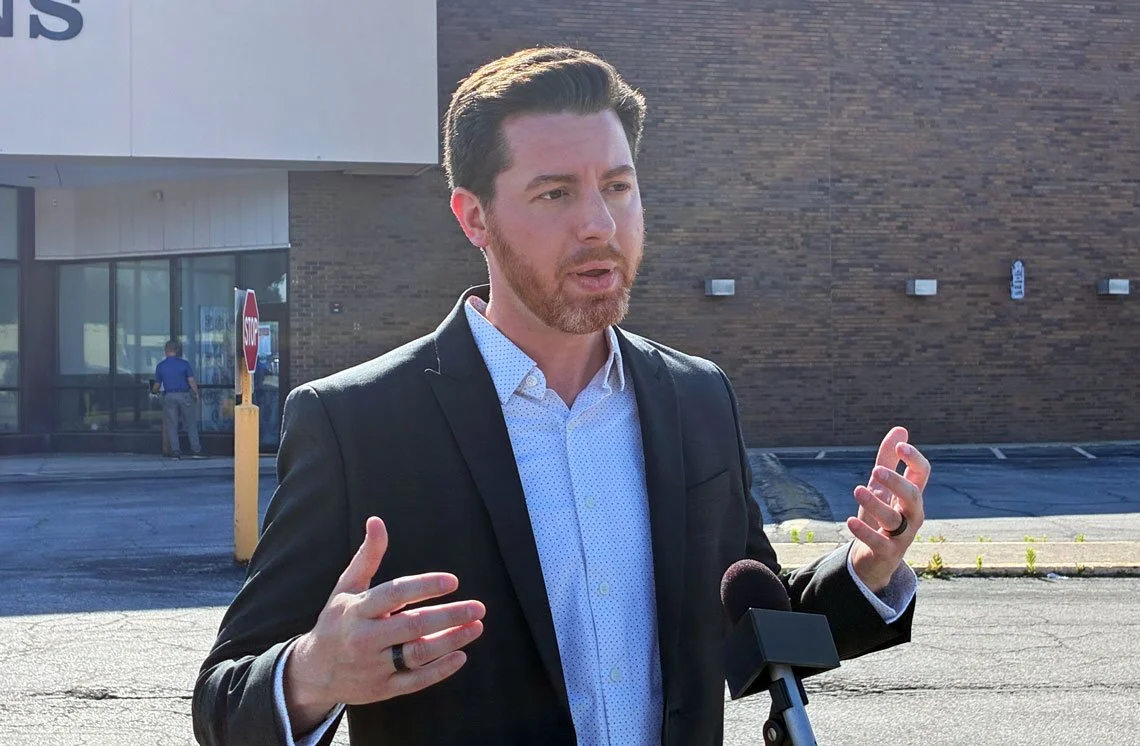
America 250 Celebration Schedule Announced By Mt. Carmel Officials

 Mount Carmel’s America 250 celebration schedule is now set, with a full week of activities planned leading up to and following Independence Day.

Mayor Joe Judge unveiled the lineup during last week’s Mount Carmel City Council meeting, calling it a busy week filled with events for all ages.

The celebration begins Saturday, June 27th, with a Touch-a-Truck event uptown. On Sunday, June 28th, a community church service will be held at Merchants Park.

Activities continue Monday, June 29th, with Kid Fest, featuring inflatables at the Mt. Carmel Little League complex. An 80s and 90s trivia night is planned for Tuesday, June 30th, at the Senior Center, followed by bingo at the VFW on Wednesday, July 1st.

A fish fry at the Senior Center is scheduled for Thursday, July 2nd, and a Creedence Clearwater Revival tribute band will perform at Merchants Park on Friday, July 3rd.

Independence Day festivities on Saturday, July 4th, begin with a free veterans breakfast at 6:30 a.m., sponsored by Judge and his family. Donations from non-veterans will benefit the Senior Center. The America 250 Parade will step off at 10 a.m., followed by fireworks at 9 p.m. on the city’s south end.

The week-long celebration concludes Sunday, July 5th, with Rotary Corn Day.

Judge said the community can expect a very busy and exciting week as Mount Carmel joins in celebrating America’s 250th birthday.

Judge Issues Another Warning To Golf Cart/UTV Drivers

Mount Carmel Mayor Joe Judge is reminding residents that UTVs and golf carts are not permitted to operate on state highways.

During Tuesday afternoon’s City Council meeting, Judge said he recently witnessed a UTV driver leave Cherry Street and enter a state route, creating what he described as a dangerous situation. Judge said he attempted to catch up with the driver to offer a reminder about the city’s rules but was unable to do so.

The mayor stressed that Mount Carmel’s ordinance clearly outlines where golf carts and UTVs may legally operate, and state highways are not included on that list.

Judge warned that drivers who take golf carts or UTVs onto state routes could face enforcement action if spotted by the Illinois State Police.

He urged residents to familiarize themselves with the city’s ordinance and to avoid driving the vehicles on highways for their own safety and the safety of other motorists.

Judge said the city has worked to be accommodating regarding golf cart and UTV use, but he emphasized that operators must follow the rules and stay off state-maintained roadways.

Food Truck Policy Approved

The Mount Carmel City Council has approved a new policy aimed at increasing oversight of food trucks operating on city-owned property.

During last week’s council meeting, Mayor Joe Judge explained that the policy will apply only to food trucks setting up on property owned by the city. Under the new requirements, vendors must be licensed through the Wabash County Health Department or another approved health department, possess a valid tax certificate, and meet all applicable food service certification requirements.

Judge said the policy is designed primarily to address liability concerns, particularly involving vendors that come into town without proper insurance coverage.

The mayor noted there will be no fee associated with the registration process. Instead, food truck operators will simply be required to register with the city and provide documentation showing they meet the necessary requirements.

Judge also clarified that some temporary vendors, such as those participating in events like Ag Day, may not hold a full food manager certification. However, if they receive approval from the health department for a temporary operation, they will still be permitted to operate.

The policy change was approved by the council and takes effect immediately. Judge noted the framework for the new policy was adapted from a similar program already in place in the City of Olney.

Commissioners Deliver Reports At City Council Meeting

Mount Carmel city commissioners provided updates on a variety of projects and activities during last week’s City Council meeting.

Streets and Parks Commissioner Tyson Meador reported crews have begun work on a new sidewalk project along Park Road. Over the past two weeks, city employees have also assisted brush and cemetery crews with mowing, continued street sweeping operations, cleaned storm drains, and completed bush hog mowing in several areas around town. Meador added that 48 American flags were hung along Market Street ahead of the Memorial Day weekend, and several trees were removed at locations throughout the city.

Finance Commissioner Eric Ikemire reported the city received $250,312 in revenue over the past two weeks. The largest source was state income tax revenue totaling $217,024. Additional revenue came from utility taxes and other miscellaneous sources. City expenses during the same period totaled $212,988.

Water and Sewer Commissioner Tom Meeks said installation of screw pump number four at the wastewater treatment plant has been completed, with crews now waiting for an automatic greaser to be installed before the pump becomes operational. Meeks also reported a pump at the Styles lift station had to be replaced after being clogged by so-called flushable wipes. He again urged residents not to flush the products, noting they continue to cause costly maintenance issues.

Meeks said water and sewer crews completed approximately 100 JULIE utility locates, connected 14 service lines, repaired several yards impacted by excavation work, and continued routine maintenance. He also reminded residents that the city’s annual consumer confidence water quality report is now available on the city’s website.

Fire and Garbage Commissioner Susan Zimmerman reported the Mount Carmel Fire Department responded to 17 incidents during the past two weeks. Zimmerman added the city has hired a mosquito spraying contractor that started spraying last week.

City Council Greenlights Two June Events

Mount Carmel city leaders have approved two upcoming community events scheduled for June.

During last week’s City Council meeting, the council granted permission for the Wabash County Health Department’s annual Ticket for a Cure 5K fundraiser. Health Department representative Gracie Barnes said the event, which raises money for breast cancer awareness and services, has been moved from May to June in hopes of attracting more participants.

The race is scheduled for Saturday, June 27th, with runners beginning at 8 a.m. Barnes requested temporary road closures along Park Road, College Drive, and the area near Erin Drive from approximately 7:30 a.m. until 11:30 a.m. to accommodate the event.

The council also approved an anniversary celebration planned by Milk and Honey Coffee and Big Jon’s Lunch Box.

Ana Wirth told council members the businesses plan to host the event on June 20th from 8 a.m. until noon. The celebration will feature vendors, special drinks and pastries, and free meals for customers as a way of showing appreciation for community support.

Wirth requested permission to utilize the city parking lot for the event, which was approved by the council. Both events are expected to bring residents and visitors together for community-focused activities in downtown Mount Carmel.

Pool Begins To Take Shape

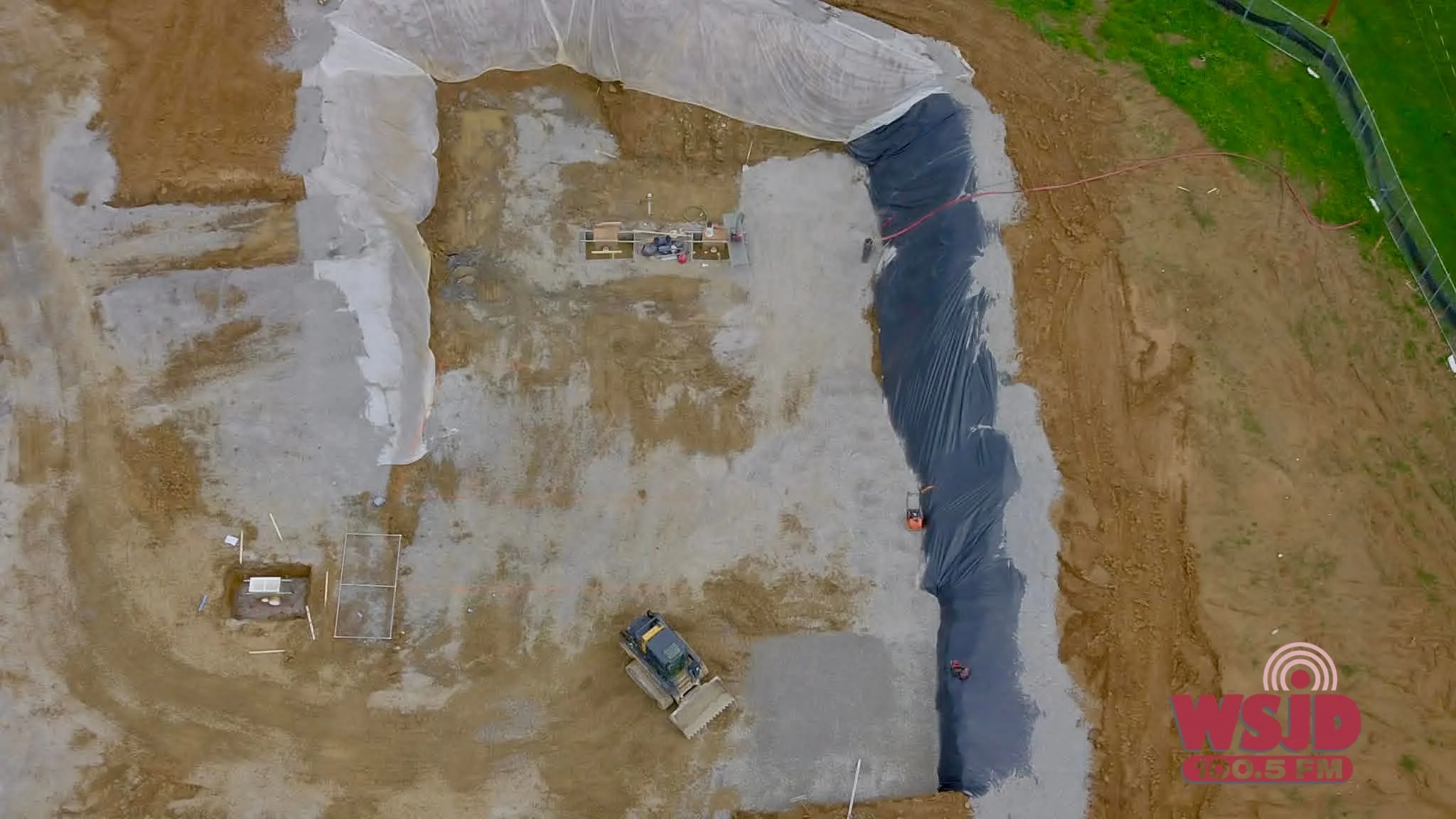
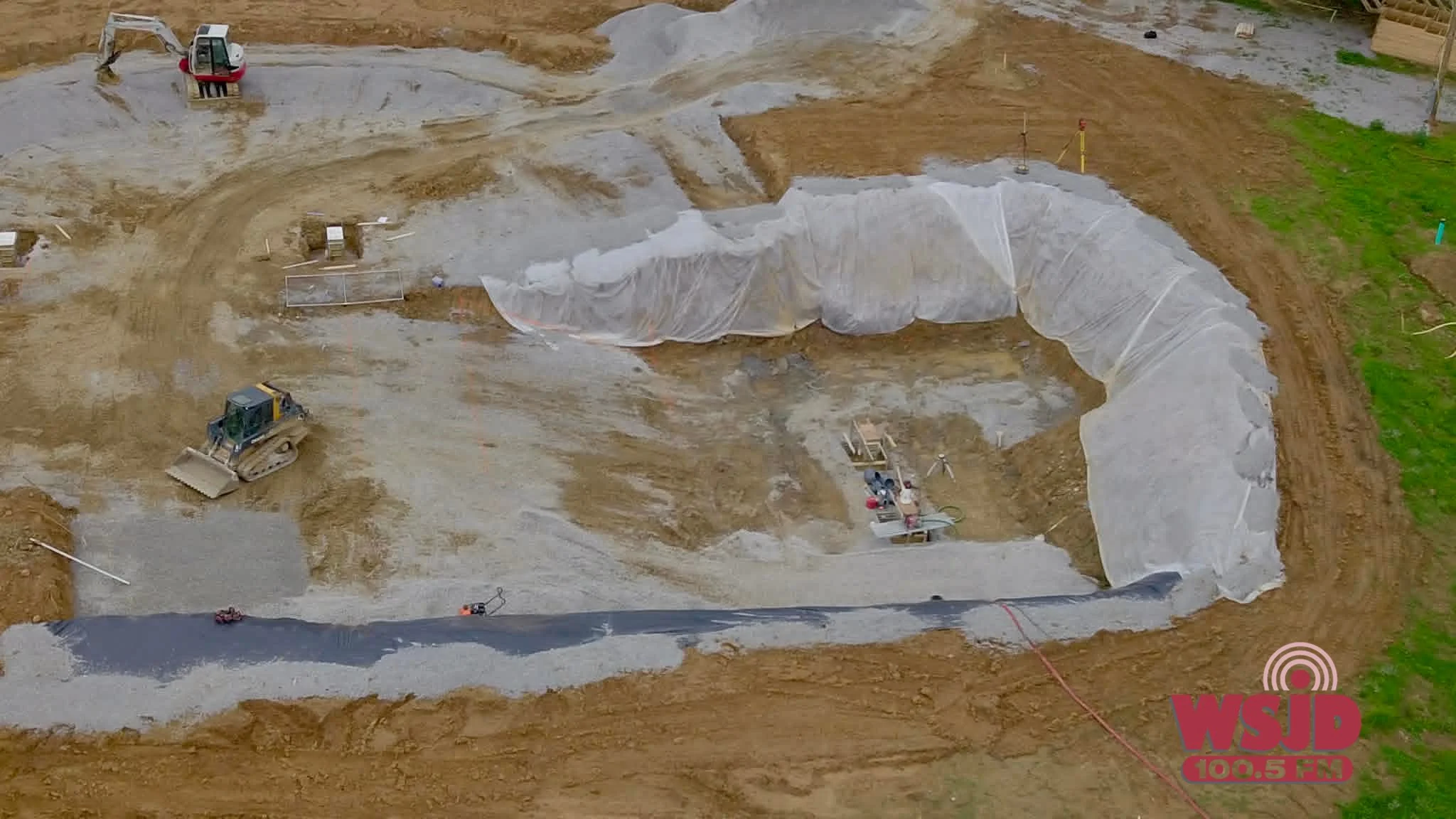
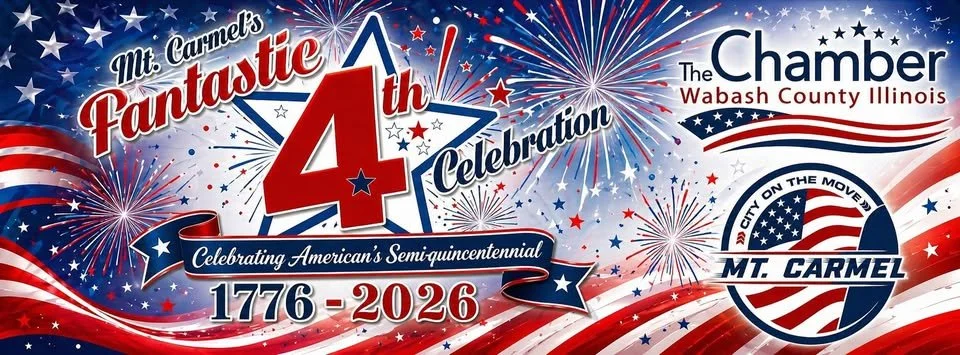
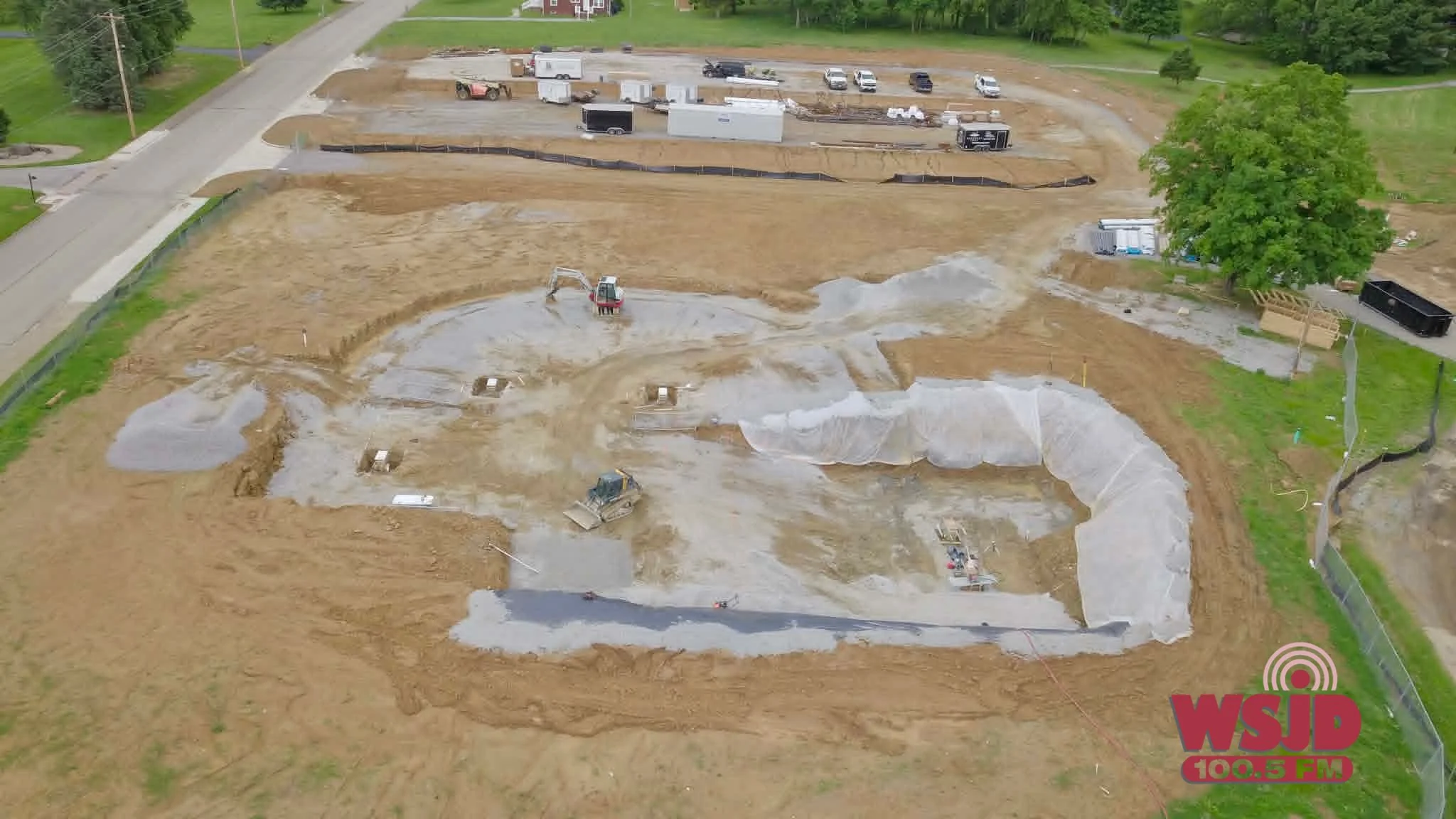
Construction continues to move quickly on the new Mount Carmel Aquatics Center.

During Tuesday afternoon’s Mount Carmel City Council meeting, Mayor Joe Judge said residents can expect to see major changes at the site over the next several weeks as work progresses on both the pool and bathhouse areas.

Judge said crews have already excavated the deep end of the lap pool and have begun installing drainage tile. He added that work on the deep end floor is expected to begin next week, with rebar installation scheduled to start later this week.

Once the floor is completed, construction will shift to the pool walls.

Judge also reported that Garmong Construction is expected to be on site later this week to begin footers for the new bathhouse.

The mayor said the project should begin moving along rapidly, noting that many of the long lead-time materials that are often delayed until later in construction have already arrived.

Judge told council members and residents they should continue seeing noticeable progress at the aquatic center site in the coming weeks.

Lunch Wagon Rolls Tomorrow

The Lunch Wagon summer meals program begins Thursday in Wabash County, marking the start of its ninth year serving free lunches to children across the county.

Organizer Melissa Smith says the program was inspired by a desire to make sure children in Allendale had access to food during the summer months. Smith says she and her husband first started helping families out of their home before expanding into the current Lunch Wagon program in 2018.

Smith says the program now serves children ages 0 to 18 throughout Wabash County using a wagon-style setup similar to an ice cream truck, along with additional truck routes and serving locations.

She says the effort is made possible entirely through community support, volunteers, and local donations.

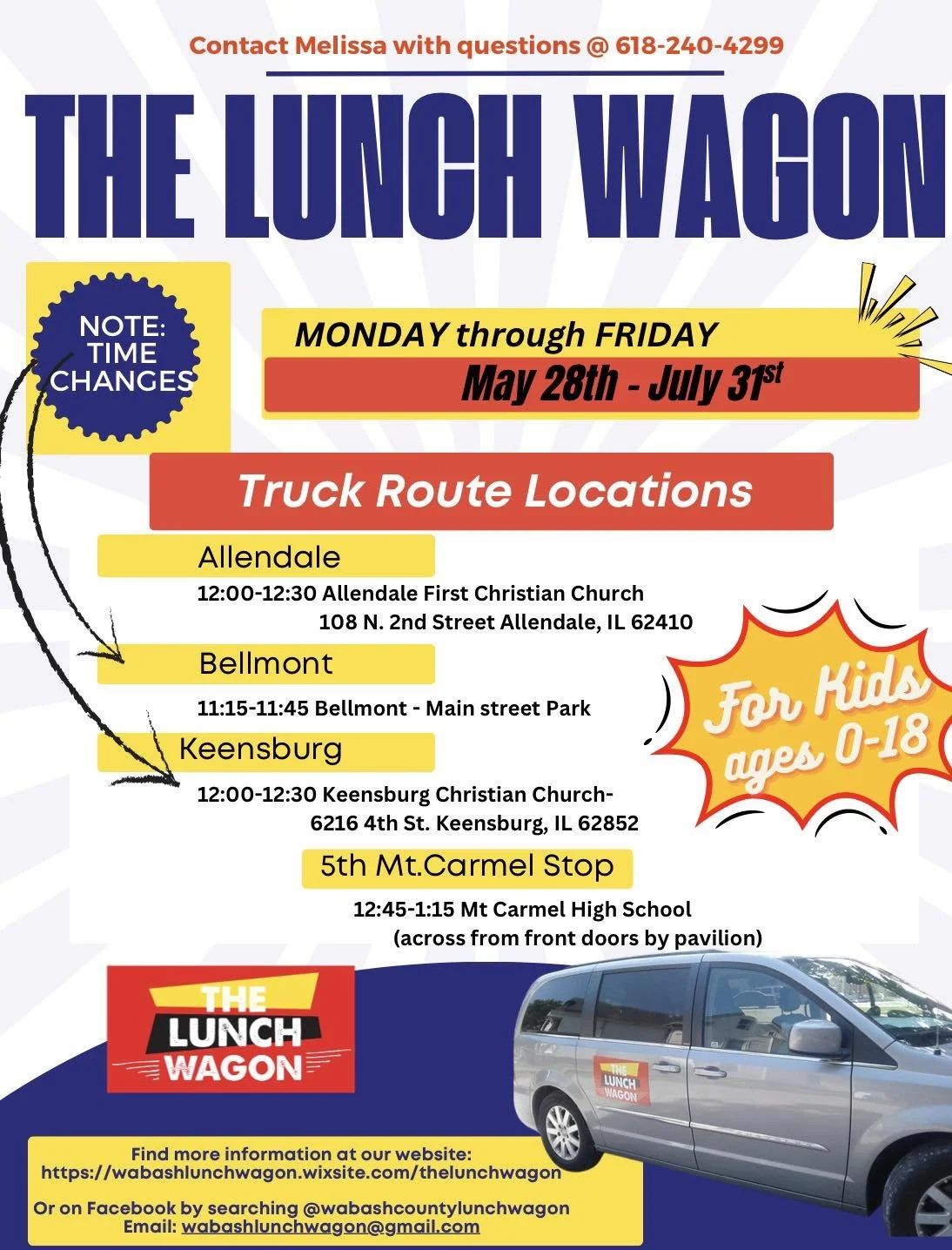
The Lunch Wagon begins service Thursday, May 28th, one day after the end of the school year in Wabash District 348. Meals will be served Thursday and Friday this week, then continue Monday through Friday through July 31st.

Stops in Mount Carmel include Cherry Street Estates at 10:30, Mount Carmel Elementary School at 11:15, Lambert Drive at noon, and the Mount Carmel Free Methodist Church on Poplar Street at 12:45. Meals will also be available at the Mount Carmel High School pavilion at 12:45.

Smith says families in Bellmont and Keensburg should note a schedule change this year. Bellmont meals will now be served from 11:15 to 11:45, while Keensburg service will run from noon to 12:30.

An additional serving location will again operate from the Allendale First Christian Church.

Smith says the Lunch Wagon program is specifically for children ages 0 to 18, but families needing additional food assistance are encouraged to ask volunteers for help connecting with other local resources.

Proposed Garbage Rate Increase Adjusted

The proposed garbage rate increase for Mount Carmel residents has been scaled back.

At Tuesday afternoon’s Mount Carmel City Council meeting, Garbage Commissioner Susan Zimmerman amended a previously proposed ordinance that would have increased garbage rates by one dollar this July and another dollar in July of next year.

Zimmerman told council members she now wants to move forward with only the initial one-dollar increase this year and then reassess the need for any additional increase next spring.

Zimmerman said the city will review the financial impact over the next several months before deciding whether another increase will be necessary in 2027.

Council members approved the amendment during discussion of the ordinance’s second reading.

Zimmerman also noted residents likely will not notice the increase until their August garbage bills.

Two weeks ago, Zimmerman told the council the increase was needed to help offset rising garbage contract costs and maintain services such as leaf pickup and brush pickup. Officials previously indicated the increase would provide only a narrow margin for covering future expenses.

Illinois grows millions of bushels of soybeans. Why aren’t we eating them?

Illinois grows millions of bushels of soybeans. Why aren’t we eating them?

More local infrastructure urgently needed for Illinois’ own crops, especially soybeans, to make it from farm to table 

By TARA SUN
Medill Illinois News Bureau
news@capitolnewsillinois.com

Article Summary

  • Illinois grows more soybeans than any other state, but almost none end up as food on Illinois plates.

  • With a trade war freezing exports to China — one of the biggest buyers of Illinois soybeans — the state faces an agricultural crisis, and pressure is growing on farmers to bring more soybeans to market as food instead of commodity products. 

  • For Illinois farmers, the math is tough: Food-grade soybeans require older genetics that yield 10-15 fewer bushels per acre, and commodity soybeans are more lucrative.

  • Still, some entrepreneurial companies are working to market soy products ranging from soy milk to tofu and more.

This summary was written by the reporters and editors who worked on this story.

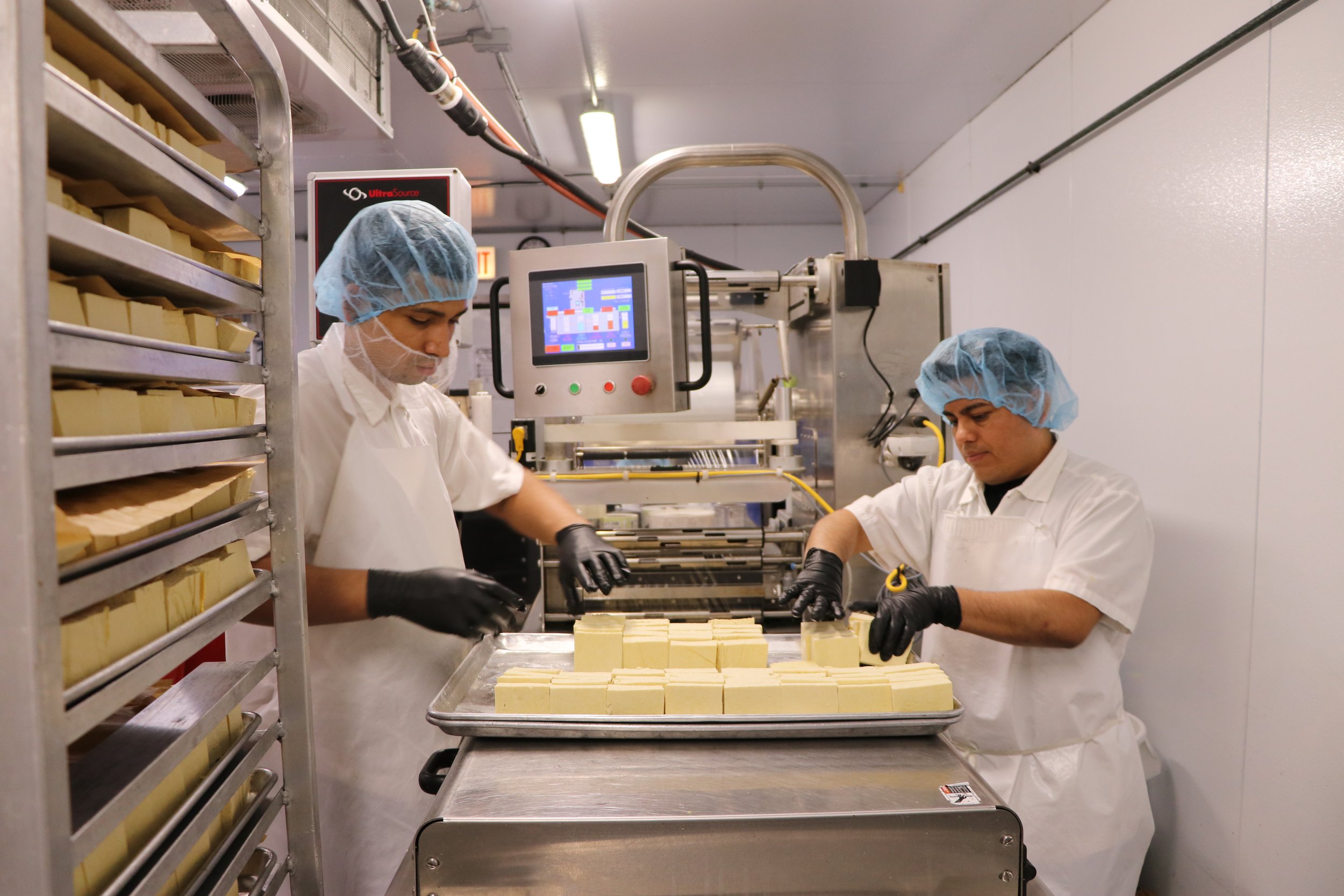
CHICAGO — Inside a factory on Chicago’s North Side, the smell of simmering soybeans drifts through the air. On a typical day, “I use about 4,000 pounds of dry beans,” Jenny Yang said. She and her team grind, cook and press thousands of pounds of soybeans into silky tofu and rich soy milk — the taste of home for Yang and for many who grew up with tofu on the table.

“She still makes it the same way — no preservatives, made mostly by hand,” said Bob Lum, a longtime friend of Yang who helps with the business. Her company, Phoenix Bean, has been making tofu and soy milk this way since she bought it in 2006. It is one of the few businesses in the state that uses Illinois food-grade, non-GMO, or non-genetically modified organism, soybeans, sourced directly from local farms like Janie’s Mill in Ashkum.

“I know them since back in the day, like at least 10, 15 years,” Yang said. “This is a good, very good partnership.”

Illinois grows more soybeans than any other state, harvesting more than 639 million bushels in 2025, well ahead of Iowa’s 595 million bushels and Minnesota’s 371 million bushels. Lawmakers designated the soybean as the official State Bean in 2025, effective Jan. 1, 2026, with Sen. Doris Turner, D-Springfield, who chairs the Senate Agriculture Committee, calling Decatur the “soybean capital of the world.”

But almost none of those millions of bushels end up as food on Illinois plates. According to the Illinois Soybean Association, 60% of soybeans grown in the state are exported; most of the remaining 40% are processed as animal feed, leaving the state reliant on imports for its soy food.

“Ninety-five percent of food consumed in the state of Illinois is imported,” said Rep. Sonya Harper, D-Chicago, chair of the House Agriculture and Conservation Committee, speaking of Illinois food crops. “If there were any type of natural disaster, Illinois only has enough food that will last us for three days.”

In 2025, with a trade war freezing exports to China — one of the biggest buyers of Illinois soybeans — Gov. JB Pritzker declared an “Agricultural Export Crisis” on Oct. 29 and directed state agencies to enhance domestic markets. For farmers and food producers, the pressure has made the need for local infrastructure more urgent than ever, raising the question of whether more of Illinois’ own crops, especially soybeans, can finally start feeding more Illinoisans.

Harper said more effort and massive investment are needed. She sponsored the Local Food Infrastructure Grant program, which provides local farmers with small grants for processing, storage and distribution. She worked closely with the Illinois Stewardship Alliance, a policy advocate for local food and farm communities, to build legislative momentum.

“We have some of the best soil, the best farmland,” Harper said. “No matter where you are, urban, suburban and rural — we need to be producing more food in the state.” 

She described local food production as a win-win that will help create jobs and generate revenue.

Her downstate colleague, Rep. Charlie Meier, R-Okawville, a farmer himself who raises about 1,000 acres of soybeans every year, noted that farmers follow price signals. 

“We are very conservative, and we do everything the same,” Meier said. “But at the same time, we must be able to change everything in a drop of a second, and we will go wherever the markets are.”

For Illinois farmers, the math is brutal. Food-grade soybeans require older genetics that yield 10 to 15 fewer bushels per acre. Jeff O’Connor, a northern Illinois farmer who has grown food-grade soybeans, said his commodity soybeans averaged in the low 70s bushels per acre last year. His food-grade soybeans, which use varieties more than a decade old, yielded in the low 60s.

Weed control is another issue. Unlike commodity soy, which allows for certain herbicides, food-grade soybeans are non-GMOs, so farmers can’t use any of those chemicals. Furthermore, fields often look unkept.

“You can’t do that again,” one landowner told O’Connor after a season of raising food-grade soybeans. “I don’t care if we made a little more money. They looked terrible.”

O’Connor, who has grown food-grade beans for large buyers like Danone, is planting none this year. In 2025, the premium for non-GMO, food-grade soybeans averaged $2.53 per bushel on top of the $10.50 commodity soybeans price, bringing the total to approximately $13.03 per bushel.

But that extra money, he said, no longer offsets the lower yield, the extra labor, the equipment cleaning, storage segregation and the weed pressure. For many Illinois farmers, switching from commodity soybeans to food-grade soybeans remains a hard sell.

The math is reflected across Illinois. Todd Main, the director of market development for the Illinois Soybean Association, confirmed this tension. While food-grade soybeans are a fast-growing sector, “it’s a relatively small portion of the overall market. Is it fast-growing? Yes,” he said. “But in volume, not so much.”

Main pointed to longer-term shifts in global demand. Despite the ongoing crisis with China’s market shrinking, he noted that the association has been exploring new markets in Africa, Southeast Asia and India for soybean exports. But those new trade relationships can take years to build. Under the trade truce announced at the Busan Summit in late 2025, China pledged to purchase 12 million metric tons of U.S. soybeans by year’s-end, with annual targets of 25 million metric tons through 2028.

Now, with the truce remaining in effect, no formal long-term purchase agreement has been signed. Returning from a summit to Beijing earlier this month, President Donald Trump said, “The farmers are going to be very happy. They’re (China) going to be buying billions of dollars of soybeans.”

The White House said China had agreed to buy at least $17 billion of U.S. agricultural products annually through 2028, on top of those soybean commitments. Beijing has not publicly confirmed the figure.

The lack of a stable export outlook has highlighted the need for better local infrastructure. Main pointed to a specific priority: bridges. An efficient network of roads, rails and waterways has long been the competitive advantage for U.S. soy in global markets. About 30% of county bridges in Illinois are load-restricted or in poor condition, Main said. “Every dollar we invest in those bridges, we get more than almost $5 back.”

That economic return comes from shorter travel times, less wear on vehicles and lower fuel costs. Gov. JB Pritzker announced a $50.6 billion, six-year infrastructure plan on Oct. 1, 2025 — the largest in state history — which includes $32.5 billion for state roads and bridges. Without those repairs, farmers face significant drawbacks in getting their beans to market.

The gap in Illinois is widening. Demand for soy milk and tofu is growing: Phoenix Bean is currently expanding its USDA-certified organic soybean products from Whole Foods shelves in the Midwest and Northeast to Sprouts shelves in California, distributing nationwide. 

“It’s very difficult to find an organic farmer,” Yang said.

Yet O’Connor and other Illinois farmers are turning away from growing food-grade soybeans.

“When we’re planting a crop here, we’re trying to decide which crop we’re going to lose the least money on,” said Meier. 

For him, farming is more than a business. “The farm is a member of the family. It’s been here for generations.” 

He emphasized that farming practices have improved dramatically, but the economic pressure remains. Until food-grade prices rise significantly, most farmers will stick with commodity soybeans.

For Harper, the Local Food Infrastructure Grant is a long-term investment, not a quick fix. The program’s $3.6 million is a fraction of what is needed. 

“Food prices are rising across Illinois and investing in local food infrastructure is essential,” she said. “But we are still far away from actual investment and implementation.”

Temporary relief for Illinois soybean farmers is scarce. The gap between what Illinois grows and what Illinois eats remains wide. Shifting Illinois soybean production toward the domestic food market seems difficult in the short term.

The question lingers: Can Illinois feed itself its own soybeans?

“You have to start somewhere,” Harper said.

Tara Sun is a graduate student in journalism with Northwestern University’s Medill School of Journalism, Media and Integrated Marketing Communications, and is a fellow in its Medill Illinois News Bureau working in partnership with Capitol News Illinois.

Capitol News Illinois is a nonprofit, nonpartisan news service that distributes state government coverage to hundreds of news outlets statewide. It is funded primarily by the Illinois Press Foundation and the Robert R. McCormick Foundation.

Workers at the Phoenix Bean factory in Chicago assemble blocks of fresh tofu coming off the production line. (Medill Illinois News Bureau photo by Tara Sun)

Former Republican strategist Collin Corbett files to run for governor as independent

Says he’s dissatisfied with direction of Republican Party

By BEN SZALINSKI
Capitol News Illinois
bszalinski@capitolnewsillinois.com

Article Summary

  • Former Republican strategist Collin Corbett filed to run for governor as an independent candidate.

  • Corbett said he’s seeking to bring a more moderate approach to the governor’s race compared to Gov. JB Pritzker and Republican nominee Darren Bailey.

  • He enlisted Carolyn Schofield, a former Republican candidate for lieutenant governor, as his running mate. 

  • Corbett said he believes he will raise more money than Bailey and can mount a more competitive candidacy than most third-party candidates.

This summary was written by the reporters and editors who worked on this story. 

SPRINGFIELD — Former Republican strategist Collin Corbett says he is hoping to bring a more balanced voice to the Illinois governor’s race after filing petitions to run for governor as an independent on Tuesday.

Corbett, of Palatine, is the founder of the political consulting firm Cor Strategies, which has helped Republican candidates run for office. He left the firm following the primary after expressing concerns the party supports violent immigration raids and no longer welcomes opposing opinions. He also ended his “Smoke-Filled Room” podcast.

“What I want to show is that there is a path for solutions — not the bickering, not the fighting,” Corbett told reporters after filing 37,000 signatures at the State Board of Elections. “People really want to see solutions that make their lives better. They're fed up with all the hatred and the infighting. And so if we can show that, I'm going to take that as a big win.”

Cor Strategies has most recently helped the campaigns of Republican Bryan Drew for comptroller, Sen. Darby Hills, R-Barrington Hills, and Republican Don Tracy for U.S. Senate, according to state and federal campaign records.

Corbett said he’s looking for more “balance” from the state’s leaders and criticized both President Donald Trump and Gov. JB Pritzker. 

“I will stand up and oppose the president when he's wrong,” Corbett said. “I've done it, even when I was a member of the Republican Party, I did it repeatedly. So I've proven that I'll do that, but you also need somebody in office who isn't there just to pick political fights with the president because they want to be president.”

Issues, challenges

On specific Statehouse issues, Corbett praised bipartisan bills to reform the state’s biometric privacy laws and recent push to pass legislation designed to keep the Chicago Bears in Illinois.

On abortion, which is often a top litmus test for voters, Corbett said “government shouldn’t be getting involved in women’s medical decisions.”

Corbett has enlisted Carolyn Schofield of Crystal Lake to be his running mate. Schofield is a former Republican McHenry County Board member who ran for lieutenant governor in 2022 alongside former Republican State Sen. Paul Schimpf. She also recently left her job as a staff assistant for the Illinois Senate Republican caucus. 

Corbett said he picked her because of her policy-focused role as vice chair of the Chicago Metropolitan Agency for Planning. 

Independents face hurdles just to get on the ballot in addition to a lack of support from a major party. Statewide independents and third-party candidates must file 25,000 valid signatures, while Democrats and Republicans need 5,000. Corbett says his internal polling shows he can do better than many third-party candidates who get just a few percentage points of the vote.

“This gives us a great chance to be able to bring forward our message to talk about the need for more balance in this state, more bipartisanship in this state,” Corbett said. “We've got Republicans and Democrats who are supporting us, which is excellent to see, and the data also says that we've got a better chance to beat JB Pritzker in a head-to-head race” than Republican nominee Darren Bailey.

Corbett’s candidacy faces an array of challenges, including building name recognition and raising enough money to do so.

“You're going to start to see a lot of positive developments on our fundraising,” he said. “It's not going to be too long before we pass the Republican candidate on fundraising. We'll never pass the Democratic candidate, but we're going to certainly have the funds to be able to compete.”

His campaign has reported raising $40,000 since May 1, according to State Board of Elections records. Bailey has raised $121,500 since April 1 in addition to $81,000 he had on hand at the end of March. Tracy, Corbett’s former client, is among Bailey’s recent donors.

“Illinois voters aren't interested in a vanity project from a failed political consultant that will only further JB Pritzker's presidential ambitions,” Bailey spokesperson Travis Akin said in an email. “Darren Bailey and Aaron Del Mar are running a solutions-oriented campaign that will turn our state around, put more money into the pockets of everyday families, make our streets more safe, and ensure Illinois becomes an economic powerhouse in our country.” 

Pritzker had $14.2 million on hand at the end of March. He spent more than $300 million in total on his first two campaigns.

Pritzker’s campaign declined to comment. 

Other candidates

Other independents filed to run for other offices, especially in the 4th Congressional District where incumbent Democratic U.S. Rep. Jesus “Chuy” Garcia ended his candidacy just before the petition filing deadline last fall. That made way for his chief of staff, Patty Garcia, to quickly file petitions and become the lone major party candidate on the ballot.

The maneuver sparked outrage and Chicago Ald. Byron Sigcho Lopez, organizer Mayra Macías and Lyons Mayor Chris Getty filed to run as independents in the district. 

Two candidates also filed to run for U.S. Senate. 

Three others, including Green Party candidate Griselda Romero of Lisle, filed to run for governor. 

In Illinois, people can challenge the veracity of petition signatures with the state elections board. If the challenge is deemed valid, the board can remove the candidate from the ballot. Illinoisans have until June 2 to challenge petitions. 

Capitol News Illinois is a nonprofit, nonpartisan news service that distributes state government coverage to hundreds of news outlets statewide. It is funded primarily by the Illinois Press Foundation and the Robert R. McCormick Foundation.  
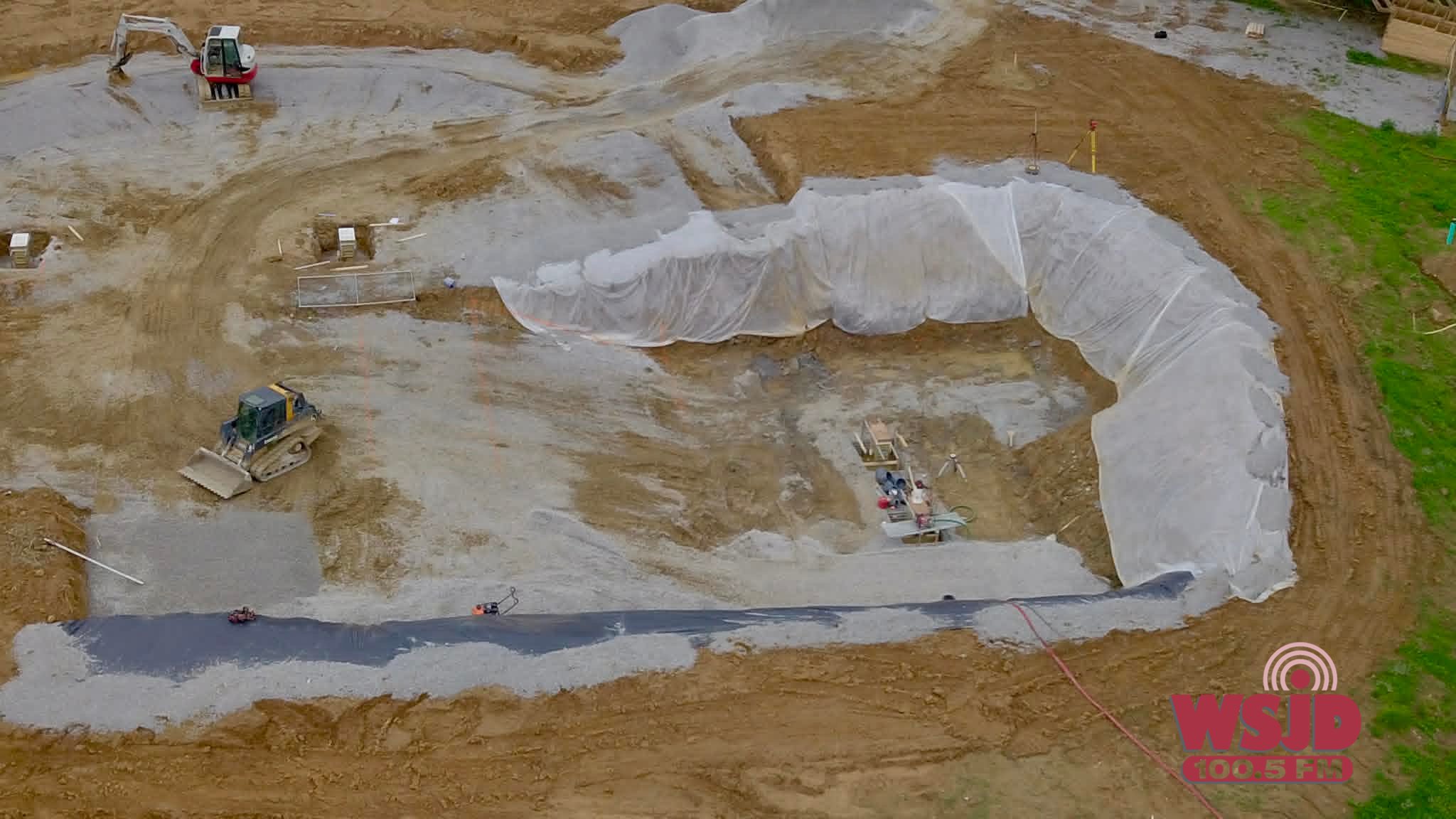

Collin Corbett, a former Republican political strategist, speaks to reporters outside the Illinois State Board of Elections in Springfield on Tuesday, May 26, 2026, after filing petitions to run for governor as an independent candidate. (Capitol News Illinois photo by Ben Szalinski)