LOCAL STUDENTS EARN A RUNNING START TOWARD COLLEGE AT IECC

Olney, Ill. — High school seniors across southeastern Illinois who have already taken college classes or explored entrepreneurship while still in school will soon have another opportunity waiting for them after graduation.

 Through Illinois Eastern Community Colleges’ new Running Start program, eligible students who participated in dual credit courses or the CEO entrepreneurship program will receive a three-credit tuition waiver they can use for a class at IECC after graduating from high school.

 For some students, it could mean stepping back onto campus just weeks after graduation, this time as a college student continuing the path they began while still in high school.

 Vice Chancellor of Institutional Outreach and Lincoln Trail College President Tona Ambrose said the program was created to recognize the initiative students have already shown by beginning college-level coursework early.

 “Students who complete dual credit courses or participate in CEO are already demonstrating college and career readiness,” Ambrose said. “The Running Start program recognizes that effort and encourages them to keep their educational journey going.”

 Students may use the tuition waiver for any three-credit class within one year of graduating from high school. The flexibility allows students to explore different academic or career interests while continuing their education locally.

 For some graduates, that might mean enrolling in a summer class soon after graduation. For others, it could be the class that helps them explore a career field, complete a general education requirement, or take the first step toward a certificate or degree.

 Ambrose said the program builds on the success of IECC’s partnerships with high schools throughout the district.

 “The Running Start program extends the impact of our dual credit and CEO partnerships by creating a clear next step for students,” she said. “It strengthens the pipeline from high school directly into college.”

 The program also highlights the collaborative work IECC and local school districts are doing to prepare students for the future.

 “Running Start reinforces the strong connection between IECC and the high schools we serve,” Ambrose said. “It also gives counselors, teachers and administrators another way to encourage students to continue their education locally.”

 Ambrose said the goal of the program is to help students maintain the momentum they have already built through their early college and career experiences.

 “Running Start sends a strong message that IECC recognizes students who take initiative in their education,” she said. “Most importantly, it shows them that the work they’ve already done can lead directly to new opportunities.”


SRO Updates District #348 School Board

Wabash District 348’s School Resource Officer says the school year has been a positive one across the district.

At Monday evening’s School Board meeting, Officer Eric Emmons said students and staff have continued building strong relationships with law enforcement since he began serving in the role in October. He said his focus has been not only on school safety and preparedness, but also on mentorship and being a visible, approachable presence for students.

Emmons told the board overall student behavior has been good, and when issues do arise, they are typically addressed quickly by school administrators.

He said he spends most of his time at the high school, but also works with the junior high and elementary school as needed. Emmons described his day as a mix of monitoring hallways, being present during arrivals and dismissals, and making himself available for students who may need help or simply want to talk.

He also told the board he believes each school would benefit from eventually having its own school resource officer.

In addition to his report, Emmons introduced the possibility of a new therapy dog program. He presented Poppy, his two-year-old goldendoodle, and explained that the dog has completed certification and temperament testing through the Pet Partners program.

Emmons said the therapy dog would not be a police K-9, but rather a voluntary resource to help students dealing with anxiety, stress, or other challenges. He said the program would come at no cost to the school district, with expenses covered personally, and suggested the district could consider a pilot program in the future.

School board members and administrators praised Emmons for his work, with Superintendent Dr. Chuck Bleyer calling him an “all-star.”

Mayor Joe Judge also voiced support, saying the city has seen the school resource officer program as a success and remains committed to working with the district on school safety and student support.

Registered Sex Offender taken into custody at Oakland City Primary School.

On March 19, 2026, at 10:47 a.m. East Gibson School Corporation School Resource Officer Donna Huber alerted officers that 47-year-old Branden Willis, a registered sex offender of Somerville had entered the office area of the Oakland City Primary School.  Officer Huber with the assistance of school administration stayed with Mr. Willis until additional law enforcement could arrive.  Once additional officers arrived on scene Mr. Willis was taken into custody without incident and transported to the Gibson County Detention Center where he is being charged with Unlawful Entry of School Property by a Serious Sexual Offender, a Level 6 Felony. 

Deputy Huber was assisted in her investigation by Oakland City Police Chief Tim Gaines, Oakland City University Police Chief Michael McGregor, and Deputy Wyatt Hunt.

West Virginia man arrested for auto theft

On March 18, 2026, at 12:35 p.m. Gibson County Central Dispatch received a report of a stolen vehicle that was stolen out of Harrison County, West Virginia being parked at the Flying J Truck Stop located at 12443 S US Highway 41 near Haubstadt.  Multiple law enforcement officers were dispatched to the scene and upon locating the vehicle, a Gray Hyundai Tucson, they found 27-year-old Joseph Fleming of Daniels, West Virginia in possession of the vehicle.  After a brief investigation Deputy Quinten Might placed Mr. Flemings into custody and transported him to the Gibson County Detention Center where he was charged with Auto Theft and Driving While Suspended Prior. 
 
Deputy Michael Owens and Haubstadt Town Marshal Jason Wright assisted Deputy Might in this investigation. 
 
All criminal defendants are to be presumed innocent until and unless proven guilty beyond a reasonable doubt in a court of law

Political will grows for data center regulations as POWER Act remains in committee

Lawmakers, stakeholders, the governor and feds all have indicated they’re open to regulation

Article Summary

  • The newly introduced POWER Act seeks to regulate new data centers built in Illinois and address concerns about their effects on energy prices, water and the environment.

  • Some Illinois cities and counties are already pursuing regulations, with Aurora being the most recent.

  • Calls for regulation are bipartisan, but the specifics are still being negotiated between lawmakers, data center companies and trade groups. 

  • The most popular proposal requires data centers to pay for their own energy generation and requires that energy come from renewable sources.

This summary was written by the reporters and editors who worked on this story.

By NIKOEL HYTREK
CAPITOL NEWS ILLINOIS
nhytrek@capitolnewsillinois.com

SPRINGFIELD — Managing data centers has been a growing issue around the U.S. as states balance economic development with community concerns about pollution, water supply and energy prices. 

That has led to different regulations nationwide from moratoriums on development permits to putting data centers in their own ratepayer class. Illinois legislators have proposed regulating data centers with the POWER Act, a bill that addresses concerns about prices, water and pollution by: 

  • Requiring data centers to pay for their own energy and the infrastructure to generate it, and requiring that energy to come from renewable sources.

  • Mandating transparency from data centers about their water use and water permits from the Illinois Environmental Protection Agency, which would manage how data centers handle wastewater and meet efficiency standards.

  • Requiring the IEPA to conduct assessments about how a data center would impact a community and mandating data center developers enter community benefits agreements that promote transparent engagement with the public. The community benefits agreements will be enforced by a coalition of residents, organizations and local government officials who will make up a community advisory board.

Democratic lawmakers sponsoring the bill call the regulations “commonsense” guardrails on a growing industry that impacts communities and electricity prices. 

“Obviously, we know that data centers can provide economic development. But on the other hand, I want to make sure that our environment is protected and our people are protected,” said Illinois House Majority Leader Robyn Gabel, D-Evanston. 

While data center backers say the economic benefits include job creation, capital investments and property tax revenue, environmentalists and consumer advocates say they are far outweighed by the risks for water resources and energy prices. 

The POWER Act thus far remains in committee. But Illinois has a history of passing large-scale energy packages, such as the Climate and Equitable Jobs Act and the Clean and Reliable Grid Act, as extensive amendments late in their regular or fall legislative session. The session is slated to adjourn on May 31. 

Growing need for rules

Aurora is one Illinois city already regulating data centers. The city in September implemented a 180-day moratorium on development that will expire in late March. 

The city set the pause so it could study the fiscal, environmental, stormwater and utility impacts on the community and come up with better rules and safeguards. 

In late February, Aurora proposed ordinances that would require developers to conduct and submit multiple studies dealing with noise, water consumption and energy needs. The ordinances also require future data centers to meet standards for noise, vibrations, water use and energy use. New and expanded data centers “will also need to install and operate either on-site renewable energy techniques or on-site resilience storage procedures.” 

The POWER Act has similar requirements, and negotiations on the bill are ongoing. Those conversations include municipalities and workforce, labor, manufacturing and environmental groups. 

“What we're asking for in this legislation are principles that I think, widely, people understand,” said state Sen. Ram Villivalam, D-Chicago. 

“Accountability protects our taxpayers and protects our environment. That's, I believe, entirely possible,” he continued.

Technology is an essential part of many people’s lives, and the data centers needed to support that technology will continue to exist and expand, Villivalam said. 

“We're not saying ‘no.’ We're saying this is going to continue. This is how we need to approach it,” he said.

Agreement between the governor and feds

Protecting consumers from paying for data centers’ energy needs is a key part of the POWER Act, and shifting the cost to the data centers has widespread, bipartisan support in Illinois and nationwide. 

During his annual budget address, Gov. JB Pritzker put the onus on PJM Interconnection, the electric grid operator that covers all or part 13 states from Illinois to the East Coast: “PJM must force data center developers to pay for capacity resources to power their operations to protect consumers from higher rates.”

Pritzker also proposed a two-year pause on tax credits for new data centers to compensate for rising demand and higher prices. Illinois has provided tax incentives for data centers since Pritzker signed bipartisan legislation in 2019. According to the state’s 2024 report, at least 27 data centers had received incentives totaling $983 million in estimated lifetime tax breaks and benefits. 

“With the shifting energy landscape, it is imperative that our growth does not undermine affordability and stability for our families,” Pritzker said. 

Pritzker has long advocated for attracting data centers to Illinois, especially given his focus on growing quantum computing, but he lately has said he also wants development to be controlled. 

In January, Pritzker joined the Trump administration and 12 other governors in the PJM service area to call for PJM to adopt six principles to lower electricity prices. One principle would require PJM to allocate the cost of “any new” capacity to data centers. 

Tech companies  in early March signed a voluntary, nonbinding “Ratepayer Protection Pledge” at the White House, agreeing to cover the majority of costs for data center energy, though the pledge does not include penalties or other enforcement language. Seven companies have signed, including Google, Amazon, Microsoft and Meta. President Donald Trump announced the pledge during his State of the Union address. 

In a separate letter, Pritzker and New Jersey Gov. Philip Murphy clarified to PJM that “implementation of these principles must also ensure that clean, cheap energy growth will not be sabotaged.”  

Cautious support from Republicans 

Illinois Republicans have also called for data centers to pay for their own energy generation, though their support for the POWER Act isn’t guaranteed and they don’t share a commitment that energy generation come from renewable sources.

“While data centers have become part of the broader energy discussion, they are not the primary driver of the rate increases families have been experiencing,” said Sen. Sue Rezin, R-Morris. “At the same time, I believe large energy users should pay their fair share and that our grid must remain secure and dependable.”

Rezin sits on the committees that will likely discuss the POWER Act and she said she’s open to “thoughtful, targeted proposals” for handling data centers, but she also wants to ensure companies aren’t dissuaded from investing in Illinois.

Her concern is similar to that of groups like the Illinois Manufacturers’ Association, which framed the POWER Act as “penalizing innovation” in a news release after it was announced. They also advocated for dealing with energy prices by pursuing an “all-of-the-above energy approach” to generation.

However, Gabel said she’s had conversations with groups like the IMA, and they’ve indicated they’re open to negotiation.

“I have spoken to both the IMA and the Data Center Coalition, and they both say that there's much in this bill that that they can work with,” she said. “There may be a few issues that we need more discussion about, but neither of those organizations felt like this was DOA.” 

Considering how many other states have data center regulations, Gabel said she thinks concerns about scaring away development are overblown.

“I’ve met with data centers, and they are open to this,” she said.

The Clean Jobs Coalition, a group of organizations committed to renewable energy favors the bill but also supports negotiation.

“We also know that data center development in Illinois to date has not delivered a fair deal for families, who have paid millions in tax incentives while subsidizing Big Tech’s utility costs,” the group said in a statement. “The POWER Act is an opportunity to reconcile that imbalance moving forward and will need further discussion and consideration among stakeholders.”

A big reason for the urgency, Gabel said, is that data centers built elsewhere in the PJM territory would impact what Illinoisans pay anyway, even if the centers aren’t built in Illinois. That’s because all states in that territory pull from the same energy pool.

“We feel like it’s our responsibility to put some guardrails around the development of these data centers,” she said. 

The bill language is now in the House Executive Committee, which meets Thursday at 10 a.m. and the Senate AI and Social Media Subcommittee, where senators will discuss multiple bills regulating data centers, though negotiations could come down to the wire if recent history is a guide.


Capitol News Illinois is a nonprofit, nonpartisan news service that distributes state government coverage to hundreds of news outlets statewide. It is funded primarily by the Illinois Press Foundation and the Robert R. McCormick Foundation.

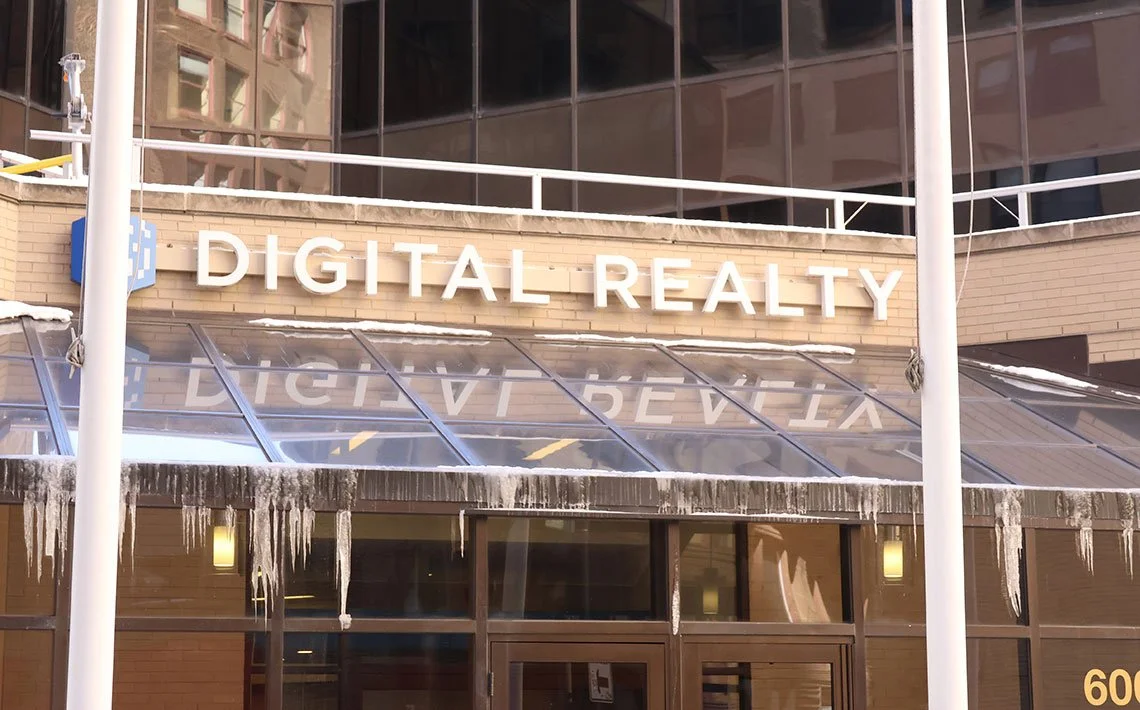
While the AI race sparked heightened interest in data centers, most of the centers in the state are multi-tenant retail centers — shared by numerous organizations and highly connected with telecommunications, cloud computing and other providers. The Digital Realty center on Chicago’s South loop is an example. (Medill Illinois News Bureau photo by Gabriel Castilho)

Bailey says campaign will focus on Chicago area after rough primary night in suburbs

Republicans seeking unity as party seeks to reverse decade of statewide losses 

By BEN SZALINSKI
Capitol News Illinois
bszalinski@capitolnewsillinois.com

Article Summary

  • Republican gubernatorial nominee Darren Bailey said his campaign will focus heavily on the Chicago area. 

  • Bailey heavily lost suburban counties in Tuesday’s primary that he won four years ago but said he intentionally focused on downstate in recent months. 

  • Bailey said he will also be trying to win over more moderate voters who don’t share views as conservative as his — two years after trying to primary a conservative downstate congressman from the right. 

  • The state Republican Party overall is also trying to present a more united front for the general election after the party has been bruised by internal divisions. 

This summary was written by the reporters and editors who worked on this story. 

NAPERVILLE — Tuesday night’s primary results show downstate farmer and former state lawmaker Darren Bailey will have his work cut out for him in the Chicago area as he tries for a second time to unseat Gov. JB Pritzker. 

He and other members began that work in earnest at a unity breakfast in Naperville on Wednesday morning – an area of the state that will be a focus for the statewide candidates as the primary results once again demonstrated the fault lines of Illinois’ electorate. 

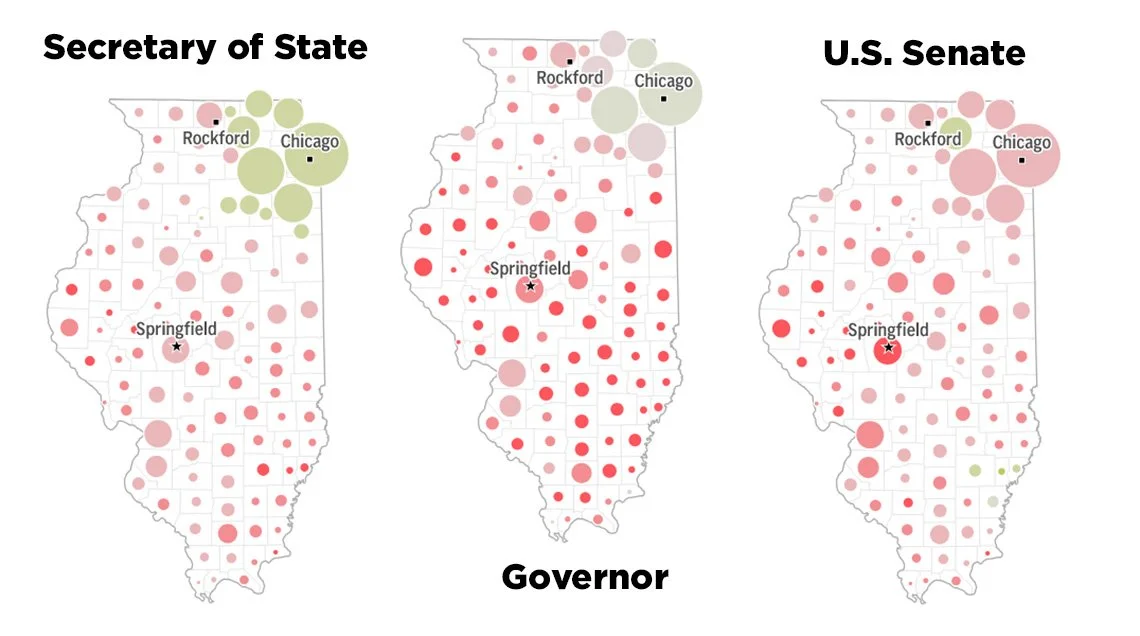
Bailey was trounced by conservative researcher Ted Dabrowski in Cook, Lake and DuPage counties, and is so far trailing him among the 290 GOP primary voters in Alexander County on the state’s southern tip. In the 2022 primary, Bailey won all but one county in the state against his well-funded competitor, Richard Irvin.

Dabrowski, a resident of north suburban Wilmette, has received 48% of the vote in Cook County to Bailey’s 31%. Four years ago, Bailey was the one who received 48% of the vote in the state’s most populous county. 

“As far as the primary was concerned, nothing went wrong,” Bailey told reporters. “We came up here, we spent time, but we knew the primary is won in the other counties, so we focused on that as part of the strategy. For the next eight months, get used to me because you're going to be seeing me up here almost every day.”

But the geographic divide was also evident in the race for the GOP’s secretary of state nomination, which pitted Joliet Junior College Trustee Diane Harris against Walter Adamczyk, a GOP committeeman for Chicago’s 29th Ward. 

Harris appeared poised to carry virtually all of the state’s counties outside 11 counties in the state’s northwest corner, which were carried by Adamczyk.

Bailey performed well with the base of Republican voters in the state. He received more than three-quarters of the vote in many of the state’s most rural counties and took home more than 90% of the vote in his home county of Clay. But statewide, Bailey has also underperformed the benchmarks he set four years ago when he received 57% of the vote, so far coming in at 53.5% this year with 95% of votes counted.

Turnout in the Republican primary also appears to be down overall from 2022, according to initial unofficial results, although ballots are still being counted. 

New campaign strategy

Another big question is whether Bailey can convince voters that this year will be different from 2022, when he lost to Pritzker by 12 points. Bailey’s opponents urged voters to reject him in the primary, arguing that a rematch will yield the same result. 

“We understand where we failed the last time and we're fixing those and we're getting into every ward and every area and every district of Chicago, and we're going to earn their respect and support,” Bailey said. 

Pritzker’s campaign is already taking swings at Bailey, launching a video saying “Darren Bailey is back and he's still too extreme for Illinois.” Bailey’s team hit back with their own digital ad highlighting questions that have been raised about Pritzker’s wealth. 

Asked about how his conservative views will play on the campaign trail this year, Bailey acknowledged he needs to broaden his appeal.

“I served as a state senator from very conservative districts, and we come up here up north and we find out that, you know, not everybody thinks the same,” Bailey said. “We're focusing on what people do agree on.”

A Republican has not won a race for a statewide office since 2014. 

Party unity

The other major challenge Bailey faces is competing with Pritzker’s vast personal wealth. The governor spent $300 million on his first two campaigns and he’s already dumped $25.5 million in his campaign coffers this year. 

“We don't have to match JB Pritzker dollar for dollar,” Bailey said. “What we need is people to get registered to vote, to show up to vote.”

Bailey said one of his wealthy primary opponents, Rick Heidner, has “stepped up to the plate” for an unspecified contribution. Heidner, who carried less than 9% of the vote, did not immediately return a request for comment.

Bailey chose running mate Aaron Del Mar, the Cook County Republican Party chair, largely in an effort to woo Chicago-area voters. Bailey also appears to have work to do convincing some of his opponents to support him in November.

“Right now, it's a time for healing, and there's been so much work, so much effort put not just by the candidates, but by all of their staff and by all their volunteers,” Del Mar, told reporters when asked if the other Republican opponents have committed to supporting Bailey’s ticket. “So, there's going to take a little bit of time to heal, and I want to offer grace to each and every one.”

Dabrowski issued a statement late Wednesday congratulating Bailey and wishing him well in the general election although he didn't attend the breakfast.

"The goal of defeating Pritzker and restoring the quality to life in Illinois has not changed," he said in the emailed statement. "I will not be the standard-bearer for this effort, but I will commit to the task that remains at hand."

Illinois Republican Party Chair Kathy Salvi did not speak to reporters following Wednesday’s breakfast. The state party has been plagued by internal divisions for several years over how much it should embrace President Donald Trump and conservative candidates.

Trump has performed poorly every time he’s been on Illinois’ ballot, and Bailey seemed to acknowledge that fact in his Tuesday night election speech. But the candidates who align themselves with the present often perform best in state primaries. 

“You’re going to hear JB Pritzker and his Democrat allies try to compare me to Donald Trump and use some pretty mean words while doing it,” he said. “Well, there are things that I agree with Donald Trump about, and there are things that I disagree with him about. I am my own man. But when Trump is right, we’re going to try to do those things in Illinois.”

The Republican Party’s divisions were further exposed in a downstate House race on Tuesday. In the 94th House District in western Illinois, Henderson County Republican Josh Higgins defeated Rep. Norine Hammond, R-Macomb, with 58% of the vote. Higgins was backed by the far-right Freedom Caucus.

Hammond was a member of House Minority Leader Tony McCombie’s leadership team, which the Freedom Caucus opposes. 

“Josh Higgins' victory is a loud and clear statement that the grassroots will no longer tolerate frauds in the Republican party, much less as a ‘leader’ of the Republican caucus,” the Freedom Caucus said in a statement. 

Capitol News Illinois is a nonprofit, nonpartisan news service that distributes state government coverage to hundreds of news outlets statewide. It is funded primarily by the Illinois Press Foundation and the Robert R. McCormick Foundation.

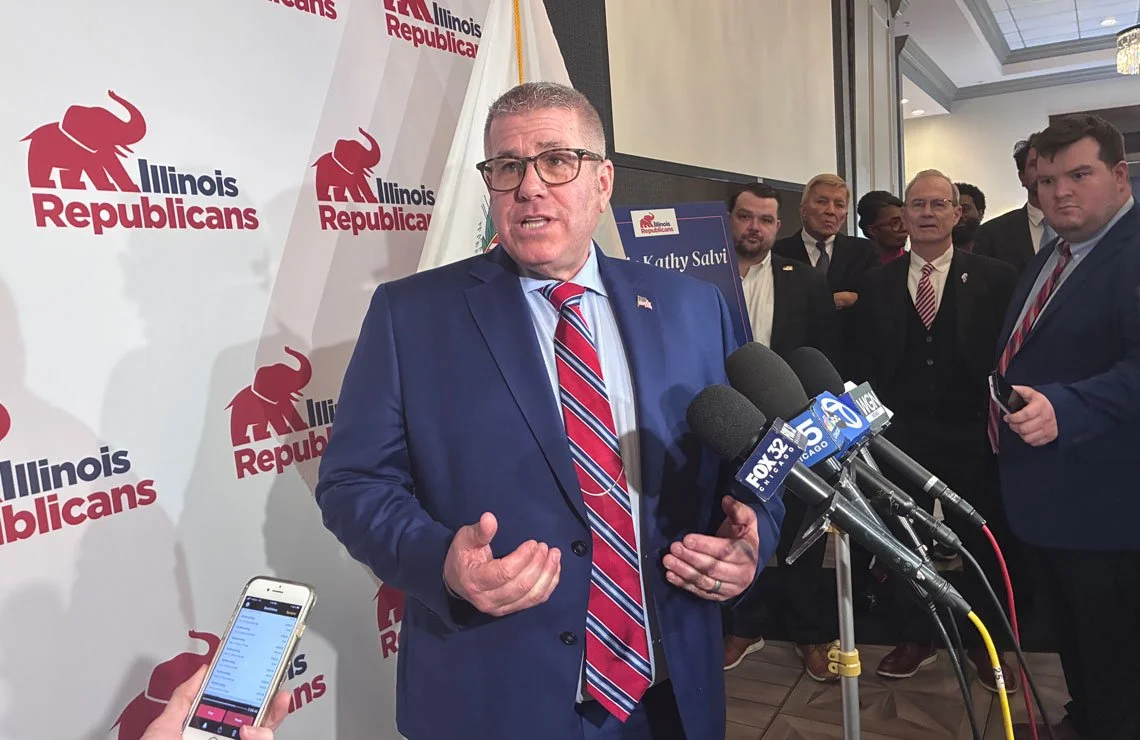
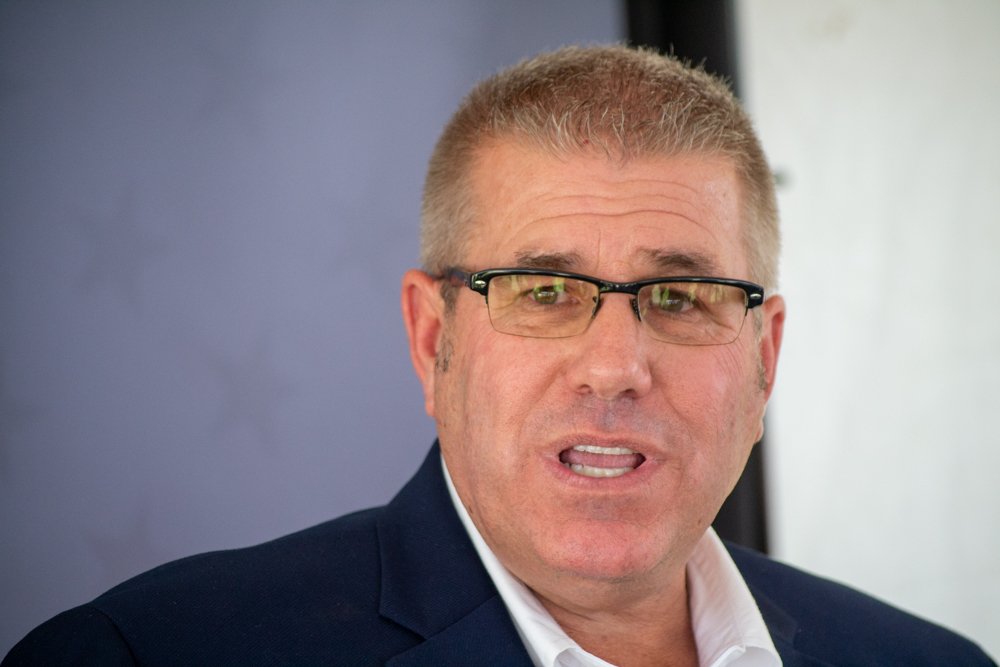
Republican nominee for governor Darren Bailey speaks to reporters following a Republican Party breakfast in Naperville on March 18, 2026. (Capitol News Illinois photo by Ben Szalinski)

Election results from the 2026 March primary reported by the Associated Press show differences in voters’ preferences between the Chicago area and downstate counties. (Capitol News Illinois illustration)

District Preps For Potential Statewide Cell Phone Ban In Schools

A possible statewide ban on student cell phone use is now on the radar for Wabash District 348.

During Monday night’s School Board meeting, Superintendent Dr. Chuck Bleyer told members it appears the Illinois State Board of Education and the Governor’s office are seriously considering implementing restrictions on cell phones in public schools.

To prepare, Bleyer announced plans to form a committee made up of parents, teachers, administrators, and the school resource officer to study the issue and develop a plan if a ban is enacted.

Bleyer said the district has faced ongoing challenges with cell phone use this school year, particularly at the high school level, while issues have been less significant in lower grades.

He noted opinions on the issue vary widely among parents, students, and staff, and the committee will help bring those perspectives together while researching possible solutions.

Bleyer said the district already has the authority to implement its own policy locally, but wants to be prepared in case the state moves forward with a mandate, which he says could take effect as early as the next school year.

Among the options being discussed are stricter policies, requiring phones to be stored away, or the use of locking pouches that restrict access during the school day.

Bleyer said the goal is to develop a clear, consistent policy across all grade levels and be ready to act once the state provides further guidance.

Illinois governor’s race will be a rematch in 2026

Former state senator who lost to Pritzker in 2022 wins GOP nomination for governor for second try

By PETER HANCOCK
Capitol News Illinois
phancock@capitolnewsillinois.com

Article Summary

  • Darren Bailey’s performance downstate helped him beat conservative researcher Ted Dabrowski for the GOP nomination for governor. 

  • The win sets Bailey up for a rematch against Gov. JB Pritzker, who beat him by over 12% in 2022.

  • While Dabrowski performed well in Chicago, downstate showed up in force for the former state senator and farmer from Xenia.

This summary was written by the reporters and editors who worked on this story.

This story will be updated after Darren Bailey’s election night victory speech

Darren Bailey celebrates with running mate Aaron Del Mar after securing the Republican nomination for governor in the 2026 general election. He will once again face Gov. JB Pritzker after losing by over 12 points in 2022. (Capitol News Illinois photo by Peter Hancock)  

SPRINGFIELD – Republican voters in Illinois have once again chosen former state Sen. Darren Bailey as their candidate for governor, giving him a second chance to unseat incumbent Democrat JB Pritzker in November.

Bailey, a farmer from southern Illinois and the party’s 2022 nominee, claimed victory Tuesday night in a four-way primary for the GOP nomination, defeating Ted Dabrowski, former head of the conservative policy website Wirepoints.

According to unofficial returns compiled by the Associated Press, Bailey had carried about 50% of the vote as about 8:35 p.m. when the race was called. Dabrowski garnered about 32%.

DuPage County Sheriff James Mendrick and businessman Rick Heidner, who spent more than $1 million of his own money on the campaign, each had under 10% when the race was called.

Four years ago, Bailey won the nomination with 57% of the vote in a crowded race that also featured Aurora Mayor Richard Irvin and venture capitalist Jesse Sullivan. 

In that campaign, Bailey had the endorsement of then-former President Donald Trump. But many observers noted he also had backhanded help from the Pritzker campaign, which viewed him as a weaker candidate than the better-financed Irvin.

Pritzker funded ads that, on the surface, appeared to criticize Bailey but which subtly targeted the GOP’s conservative base by asserting that Bailey was “too conservative” for Illinois.

Bailey went on to lose the general election, 55% to 42%, after Pritzker swept Cook County and most of the collar counties

Two years later, he tried unsuccessfully to unseat fellow Republican U.S. Rep. Mike Bost in the 12th District, narrowly losing that primary by less than 3,000 votes.

Bailey announced his plan to run for governor again in September, vowing to run a different campaign that would focus more on Chicago and its suburbs. That started with choosing Cook County Republican Party Chairman Aaron Del Mar as his running mate.

Darren Bailey will once again face Gov. JB Pritzker in the 2026 general election. The adversaries of 2022 both secured their parties’ nominations Tuesday night. (Capitol News Illinois file photo)

“Aaron definitely brings a whole bunch of stuff to the table,” Crystal Bell, a Bailey supporter from Beardstown, said in an interview Tuesday night. “The dynamic duo, is what I call them.”

Barely a month after announcing his candidacy, however, Bailey suffered a family tragedy that could have ended his campaign when his son Zacharay, daughter-in-law and two grandchildren were all killed in a helicopter crash in Montana.

But Bailey chose to stay in the race, “not for politics, but for every family trying to make it in a state that’s lost its way, for every parent who dreams of a better future for their children and for every Illinoisan who knows that we can do better.”

Although Trump did not issue a formal endorsement this time around, Bailey made it clear that he would model his administration after the current president, vowing to set up a DOGE-like commission to root out waste and inefficiency in state government.

Speaking to a ballroom full of supporters in Springfield Tuesday night, Bailey reiterated his pro-Trump message. 

Dabrowski, meanwhile, campaigned on the idea that he was the more electable candidate, arguing  that Bailey’s poor performance in the suburbs four years ago was an omen that he could never win a statewide general election.

“Victory runs through the suburbs,” Dabrowski said in his final TV ad of the primary campaign. “Darren Bailey is a disaster in the suburbs. It's why Pritzker wanted to run against him four years ago and does again.”

But Sheldon Schulte, a Bailey supporter from Vandalia, said Tuesday that if more southern Illinois Republicans had turned out in 2022, Bailey would have won the race.

“People do not get out and turn out,” he said in an interview. “I mean, all we needed was 15% more people in southern Illinois to show up and we would have won. They just won't get out and vote. They like to sit around a coffee shop and bitch. They don't want to get out and vote. I don’t understand.

Capitol News Illinois is a nonprofit, nonpartisan news service that distributes state government coverage to hundreds of news outlets statewide. It is funded primarily by the Illinois Press Foundation and the Robert R. McCormick Foundation.

Croke leads Democratic comptroller race as downstate voters dominate GOP primaries

Article summary

  • Rep. Margaret Croke — Gov. JB Pritzker’s hand-picked candidate for comptroller — held an election night lead of about 2.3% Tuesday night, although the Associated Press had not called the race as of 10 p.m.

  • For secretary of state Diane Harris of Joliet surged to a lead over Chicago Committeeman Walter Adamczyk, thanks to downstate voters. That race was also uncalled at 10 p.m.

  • The general election will be held Nov. 3, 2026.

This summary was written by the reporters and editors who worked on this story.

By NIKOEL HYTREK
Capitol News Illinois
nhytrek@capitolnewsillinois.com

This story will be updated as results become final.

SPRINGFIELD — As Gov. JB Pritzker’s hand-picked candidate cruised to a high-profile victory in the Democratic primary for U.S. Senate Tuesday night, another of his picks held a tight lead in the race for comptroller. 

State Rep. Margaret Croke, D-Chicago, held a 24,000-vote lead with 83 percent of votes reporting as of 10 p.m. — a roughly 2.4% advantage over state Sen. Karina Villa, D-West Chicago. The Associated Press had not called the race as of 10 p.m. We’ll update this story as results are finalized.

Croke has served in the Illinois General Assembly, representing Chicago’s North Side since 2021. She is a close ally to Gov. JB Pritzker, who endorsed her candidacy in early February. Her relationship with the governor goes back to 2017 when she worked with him on his first campaign and served on his transition team. 

If the results hold, she’d face Bryan Drew, a southern Illinois attorney, in the general election. He ran uncontested in the GOP primary.

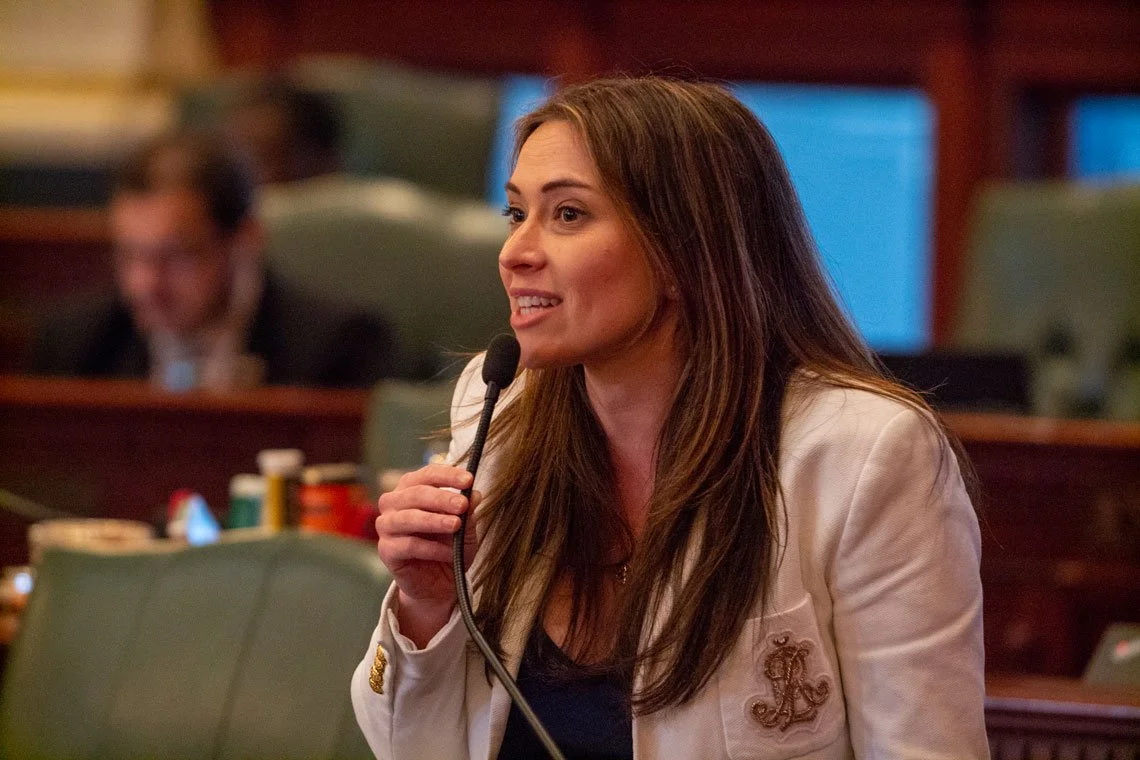
State Rep. Margaret Croke, pictured on the House floor, held a lead in the race to replace Susana Mendoza as comptroller on Tuesday night. The Associated Press had not called the race as of 10 p.m. (Capitol News Illinois photo by Jerry Nowicki) 

Previously, Croke was the deputy director at Illinois Department of Commerce and Economic Opportunity. In the Illinois House, Croke chairs the House Financial Institutions and Licensing Committee as well as the Tax Policy: Income Tax Subcommittee. 

Croke said she supports a graduated income tax, which would require a constitutional amendment to implement. Though the comptroller’s office would play no formal role in passing such an amendment, and the last time it was on the ballot in 2020, voters rejected it. 

On her website, Croke said she will follow outgoing Comptroller Susanna Mendoza’s lead in enforcing the Prevailing Wage Act, which requires state contractors working on public works projects to demonstrate they aren’t underpaying their workers. She will also allocate more resources to the Comptroller’s Prevailing Wage Office and work with the Department of Labor to ensure investigations are thorough and timely. 

She was also endorsed by House Speaker Emanuel “Chris” Welch and the Cook County Democratic Party. 

She was the top fundraiser in the primary. 

Trailing her was Villa, who has served in the General Assembly since 2019 and is regarded as the most progressive of the candidates. She was the only candidate without a background in finance. Instead, she’s said her social work career gives her the insight to understand what it means to balance budgets with services people rely on. 

Villa’s main focus is raising revenue for the state and suggested a state tax on digital advertising as well as trying again to pass a graduated income tax.

On her website, Villa says the comptroller’s office should “put our money where our values are” and voiced support for attracting jobs and investment in Illinois, ensuring contractors don’t have ties to Immigration Customs and Enforcement, or ICE, and for the Prevailing Wage Act, which requires state contractors working on public works projects to  demonstrate they aren’t underpaying their workers. 

Villa was endorsed by Senate President Don Harmon, the Chicago Teachers Union and U.S. Sen. Bernie Sanders, an independent from Vermont. She also had endorsements from U.S. Rep. Delia Ramirez and outgoing U.S. Rep. Jesús “Chuy” García.

Other candidates

Lake County Treasurer Holly Kim was the only candidate without legislative experience, but she has been the treasurer for Lake County since 2018, managing the money for the 3rd largest county in Illinois with more than 700,000 residents. Kim was endorsed by outgoing comptroller Susana Mendoza but was sitting third in the race as of Tuesday evening with less than a quarter of the vote. 

State Rep. Stephanie Kifowit, D-Oswego, has served in General Assembly since 2013, and she touted her work with House Democrats on the Illinois budget during the tenure of Gov. Bruce Rauner. A former Marine, Kifowit raised the least money of the candidates in the final quarter of 2025 and appeared slated to garner less than 10% of the vote.

Secretary of State

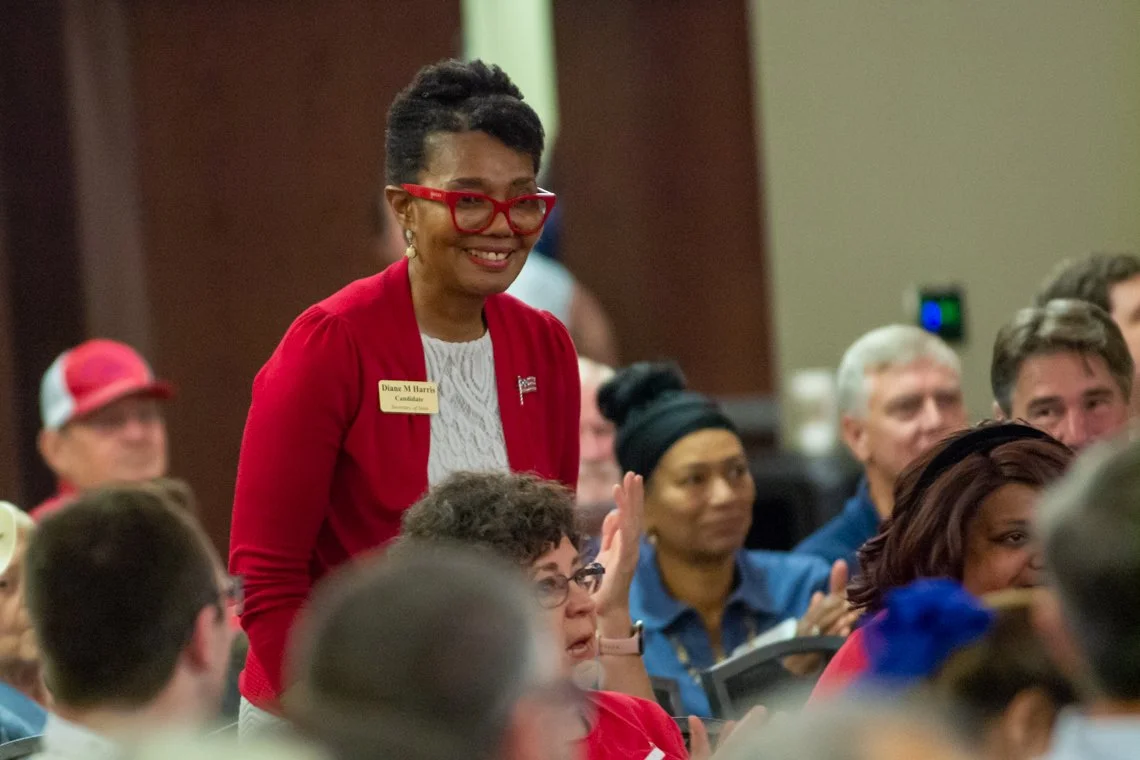
Diane Harris, of Joliet, held a lead in the race for the Republican nomination for secretary of state as of Tuesday evening. That race was also uncalled. (Capitol News Illinois photo by Jerry Nowicki)

Diane Harris of Joliet appeared poised to carry virtually of the state’s counties outside of Cook and its collars in the race for secretary of state. She’ll try to deny incumbent Democrat Alexi Giannoulias a second term in the November general election should the results hold. 

Her opponent is Walter Adamczyk, a GOP committeeman for Chicago’s 29th Ward. He outpaced Harris in the city and surrounding suburbs. Like in the race for the GOP governor nomination, which was won by downstate farmer Darren Bailey, voters outside of the Chicago region appeared to carry the day.

Harris has said her goal is to reduce fees for state stickers, vehicle titles and other vehicle service fees. She also wants to advocate for new rules of the road to better protect drivers and expand access to fast-lane kiosks in areas where DMV offices have closed.

For more than 30 years, Harris worked at Commonwealth Edison. Harris also served as an elected precinct committee member, vice chair of the Joliet Township Republicans and is the former chair of the Illinois Center Right Coalition. She has run for other offices before, including state senate and Joliet mayor.

Adamczyk’s main focus was improving services for veterans and lowering hurdles for honorably discharged vets by eliminating fees for licenses and reducing wait-times at secretary of state facilities. 

Treasurer

Max Solomon, who most recently ran for governor in 2024 among other unsuccessful attempts for public office over the years, ran as a write-in Republican candidate for Illinois Treasurer. That means his name didn’t show up on the GOP ballot, but voters could write it down to log their vote.   

Solomon is running against incumbent Michael Frerichs, a Democrat who was elected to the office in 2014. 

To be the nominee, Solomon would have to get 5,000 votes. The results likely won’t be known until tomorrow because the process for counting write-in candidates takes longer than traditional candidates. 

Sangamon County Clerk Don Gray said election judges keep an eye out for write-ins as they count ballots after polls close. Write-ins are then set aside to make sure they’re qualified. Qualified write-ins are indicated on paperwork that then goes back to election authorities .

“Write-in candidates get reconfirmed internally by professional staff and usually released the next morning or next day,” he said. 

If Solomon doesn’t receive 5,000 votes, the Republican State Central Committee can appoint someone to be the party’s general election nominee if that candidate meets standard ballot access requirements, including receiving 5,000 signatures.

Attorney general

Attorney General Kwame Raoul, the incumbent Democrat, is seeking a third term as Illinois’ chief law enforcement officer. He and his GOP challenger, Bob Fioretti, a former Chicago alderman who ran unsuccessfully for Cook County state’s attorney in 2024, both ran uncontested.   

Fioretti is a civil rights attorney and former alderman on the Chicago City Council. He switched to the Republican party “several years ago” because he said it better represents his values.

He said he wants to overturn or change the Safety, Accountability, Fairness and Equity-Today Act, or SAFE-T Act. 

When it comes to the federal government, Fioretti has said he would review state lawsuits against the Trump administration and withdraw from suits that impede law enforcement, target law-abiding gun owners and infringe on parental decision making.

Raoul was first elected AG in 2018. Before that, he served in the Illinois Senate, appointed to fill the seat left by Barack Obama, who was elected to the U.S. Senate in 2004.  

Capitol News Illinois is a nonprofit, nonpartisan news service that distributes state government coverage to hundreds of news outlets statewide. It is funded primarily by the Illinois Press Foundation and the Robert R. McCormick Foundation.