Stratton defeats Krishnamoorthi with help from Chicago, downstate voters

Former Illinois GOP Chair Don Tracy set to face Stratton in November 

By BEN SZALINSKI, BRENDEN MOORE & JENNA SCHWEIKERT
Capitol News Illinois
news@capitolnewsillinois.com 

Article Summary

  • Lt. Gov. Juliana Stratton won the hotly contested Democratic primary for U.S. Senate, defeating U.S. Reps. Raja Krishnamoorthi and Robin Kelly. 

  • Stratton performed better than expected in many downstate counties and the city of Chicago. 

  • Former Illinois Republican Party Chair Don Tracy won the Republican nomination for Senate and will face Stratton in November. 

  • Several primaries were decided on Tuesday night in Illinois’ five open congressional districts. 
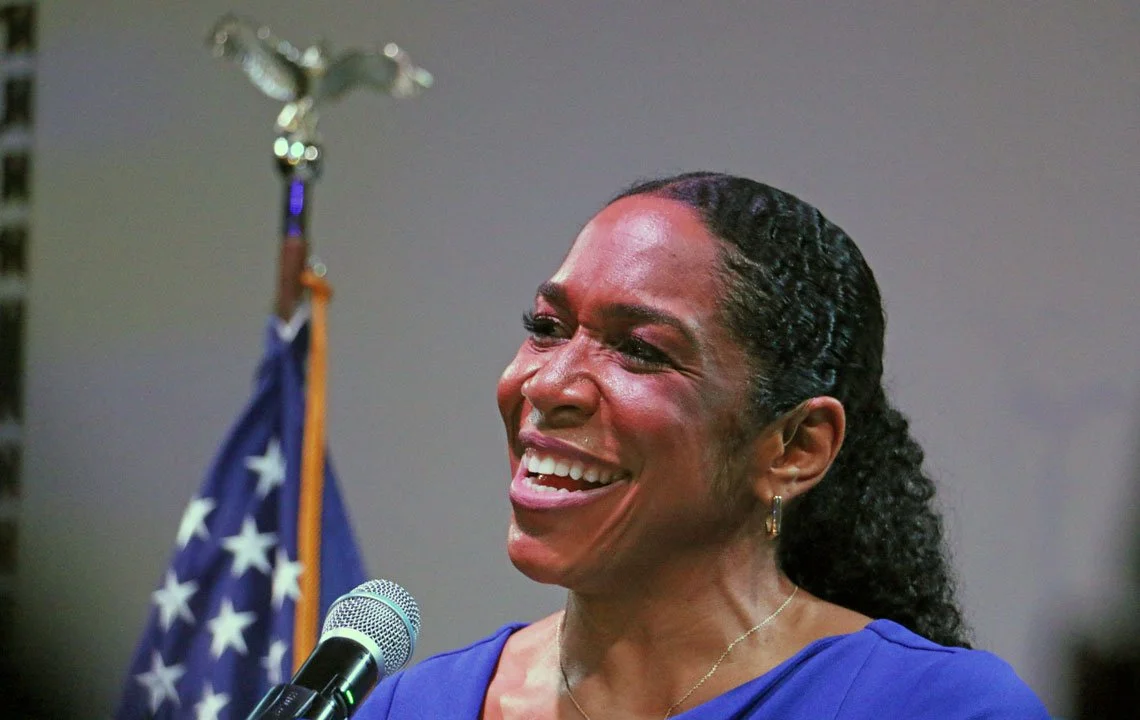
Lt. Gov. Juliana Stratton delivers a victory speech Tuesday night, shortly after 10 p.m., after securing the Democratic nomination for U.S. Senate in 2026. (Capitol News Illinois photo by Maggie Dougherty)

This summary was written by the reporters and editors who worked on this story. 

CHICAGO — Lt. Gov. Juliana Stratton rode a late wave of momentum to win the Democratic nomination for Illinois’ open U.S. Senate seat, toppling longtime frontrunner Rep. Raja Krishnamoorthi with the financial aid and political muscle of Gov. JB Pritzker and an outsider message that set her apart from her rivals with Washington experience.

With 82% of precincts reporting, Stratton had a 39.6% to 33.6% lead over Krishnamoorthi, a margin of about 50,000 votes out of more than 900,000 cast. Rep. Robin Kelly, D-Lynwood, was in third place with 18.5%. The Associated Press called the race for Stratton at 9:40 p.m. Tuesday evening.

“Eleven months ago, I made a promise to Illinois to be the fighter you deserve, to go to the mat fighting for you, and bring your voices with me to Washington,” Stratton told supporters on Chicago’s West Side. “I haven't forgotten that promise.”

Stratton received about 44% of the vote in Chicago to Kelly’s 25% and Krishnamoorthi’s 23%. She essentially fought suburban Cook County to a draw with Krishnamoorthi while he came out ahead in the suburban collar counties besides Will County, where Stratton led.

Stratton also led in many downstate counties, especially population centers in the Metro East, Springfield, Bloomington-Normal and Champaign-Urbana. 

“We never lost sight of what's most important, and that is courage, courage, inspired me to run,” Stratton said. “Courage powered this campaign, and courage will bring this fight straight to Donald Trump's door.”

Stratton pledged to continue calling for abolishing U.S. Immigration and Customs Enforcement Agency, raising the minimum wage and instituting Medicaid for All. 

“It's time for bold ideas, big dreams and real courage in Washington, and we won't wait a second longer,” Stratton said.

Across town at Krishnamoorthi’s event, the energy in the room was flat the entire night as results streaming on a large projector continually showed Stratton ahead. Eventually, the feed was cut off and replaced with a large “Raja” campaign logo.

While the Associated Press had yet to call the race, Krishnamoorthi took the stage shortly after 9:30 p.m. to announce that he’d called Stratton to concede the race.
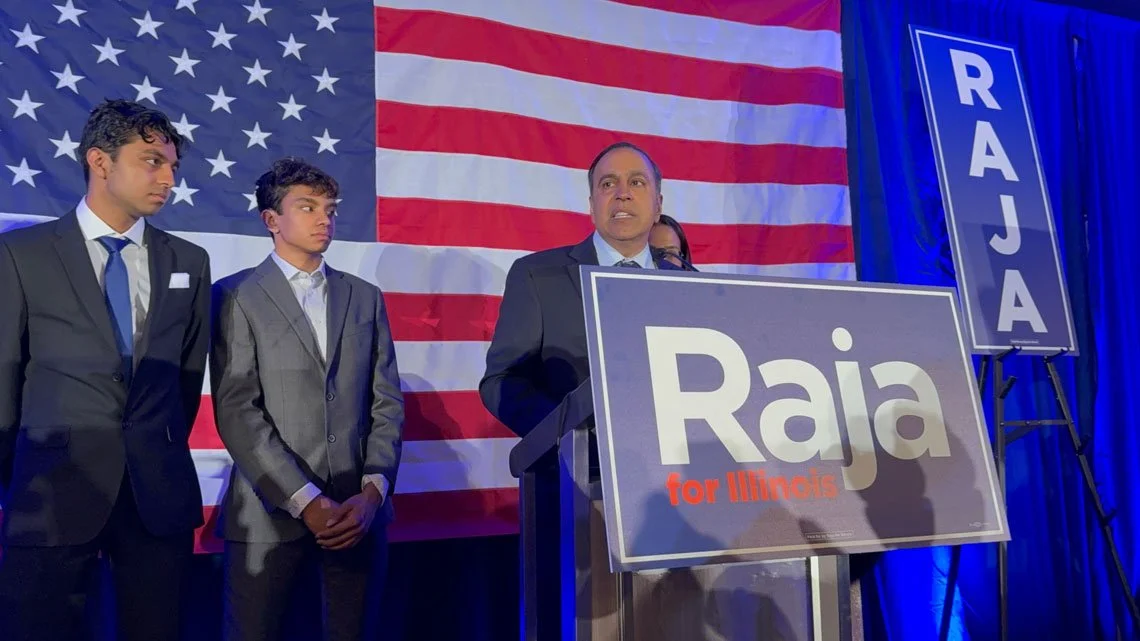
U.S. Rep. Raja Krishnamoorthi concedes defeat in the U.S. Senate Democratic primary to Juliana Stratton just after 9:30 p.m. (Capitol News Illinois photo by Brenden Moore)

“Obviously, this is not the result we sought,” a somber-looking Krishnamoorthi, flanked by his wife and two of his children, told supporters. “But unlike Donald Trump, I'm not going to question the outcome. I'm proud of the race we ran. And I'm honored at the support we received from every corner of the state, from Rockford to Cairo and from the Quad Cities to Decatur.”

Referencing an old Chicago machine phrase about excluding outsiders from party politics, Krishnamoorthi cast himself as the guy “nobody sent.” 

He thanked supporters “who had the courage to defy the party establishment and endorse the candidate with 29 letters in his name.” He also thanked his donors, whom he credited with enabling him to “compete against very wealthy interests,” a not-so-veiled reference to Gov. JB Pritzker, who largely bankrolled a super PAC that backed Stratton. 

End of long primary season

Tuesday night marked the conclusion of a lengthy and expensive primary campaign to replace Sen. Dick Durbin, who has held the seat since 1997, and did not make an endorsement in the race.

Krishnamoorthi spent years laying the groundwork for a Senate run. He made frequent stops across the state, from fundraisers for various county Democratic parties to official congressional events well outside the boundaries of his suburban congressional district.

He was also the most aggressive fundraiser in the Illinois congressional delegation, banking more than $19 million before he launched his Senate run in May 2025. 

He continued fundraising at a breakneck pace, allowing him to run television advertisements nonstop since last July — more than six months before any other campaign or outside political action committee got on the air. Krishnamoorthi’s campaign spent more than $27 million on ads.

The name recognition attained through his paid media blitz allowed Krishnamoorthi to build an early polling lead on his main rivals, Stratton and Kelly. However, Krishnamoorthi’s numbers eventually hit a ceiling, remaining stubbornly stuck in the mid-to-high 30s even as he continued to lead his opponents. 

Stratton entered the race with Pritzker’s endorsement. But after seven years as the self-funding billionaire’s No. 2, she struggled to fundraise on her own — a problem exacerbated by strict federal contribution limits to campaign committees.
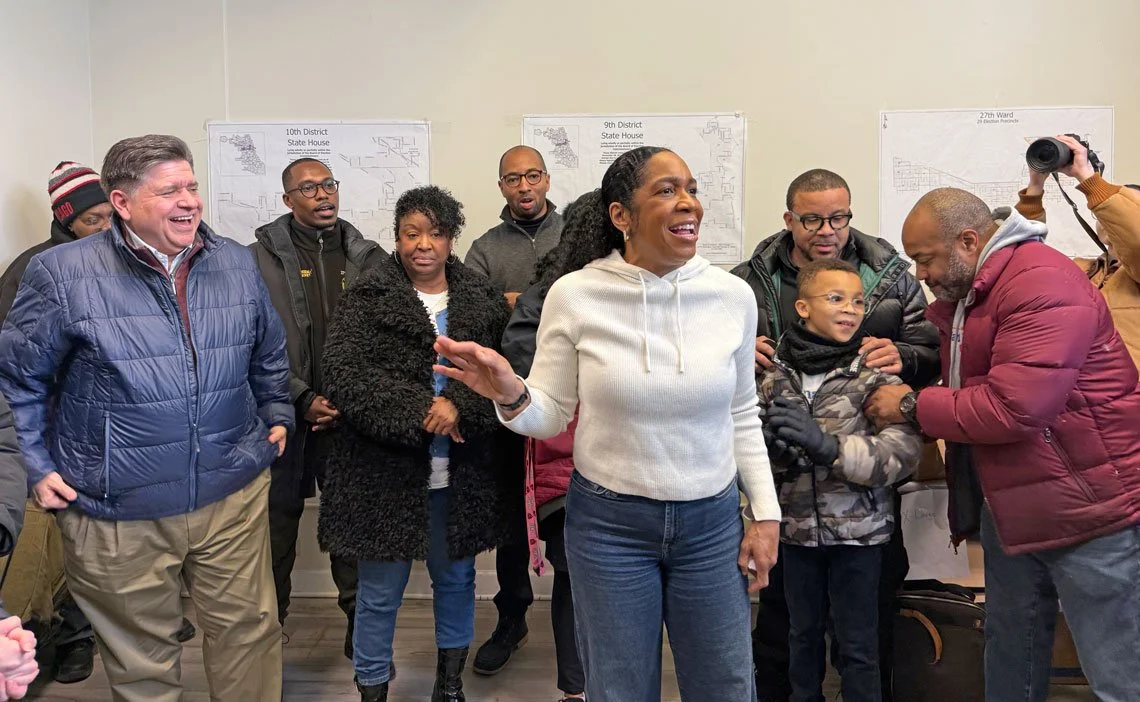
Gov. JB Pritzker and Lt. Gov. Juliana Stratton were in good spirits at Manny’s Deli in Chicago Tuesday afternoon — and for the remainder of the evening. Stratton became the Democrats’ nominee for U.S. Senate in 2026. (Capitol News Illinois photo by Brenden Moore)

She attempted to turn this weakness into a strength by pledging not to accept donations from corporate political action committees. She also made bold policy proposals like an hourly $25 minimum wage. 

But she really started gaining ground on Krishnamoorthi in January, when the Pritzker-funded Illinois Future PAC finally launched a long-expected ad campaign on her behalf. 

Unlike candidate committees, which are subject to strict contribution limits, PACs can raise unlimited sums, making it an attractive option for Pritzker to exert outsized influence on the race.

Krishnamoorthi simultaneously faced tough headlines over more than $90,000 in contributions from donors with ties to President Donald Trump, including nearly $30,000 from Shyam Sankar, the chief technology officer of Palantir, a company that holds a $30 million contract with ICE to help track individuals for deportation. Krishnamoorthi donated a sum equaling Sankar’s contributions to immigrant rights organizations.

This was around the same time Operation Midway Blitz dominated the headlines, drawing negative attention to federal immigration officers.  

Kelly has served in Congress since 2013 and previously served a stint as chair of the Democratic Party of Illinois before being ousted by Pritzker-backed Lisa Hernandez. She cast herself as a progressive in the race who could work across the aisle to get things accomplished. 

But Kelly also struggled to break out due to a lack of resources, always remaining a distant third place behind Krishnamoorthi and Stratton.

As Stratton gained in the polls, dark money PACs with ties to the cryptocurrency industry poured more than $10 million into ads against her. They also sought to boost Kelly, leading to accusations that the effort was meant to split the Black vote between Stratton and Kelly, who are both Black women. 

Stratton begins the general election as a heavy favorite to succeed Durbin, facing off against former Republican Party Chair Don Tracy. 

Seven other candidates were also on the ballot and received about 9% of the vote. 

Republican results

In the Republican primary for Durbin’s open Senate seat, Tracy received 40% of the vote as of 10 p.m. Tuesday evening. Tracy faced five other candidates in the primary race, which lacked the same attention as the Democratic primary with a field of lesser-known candidates with little political experience. 
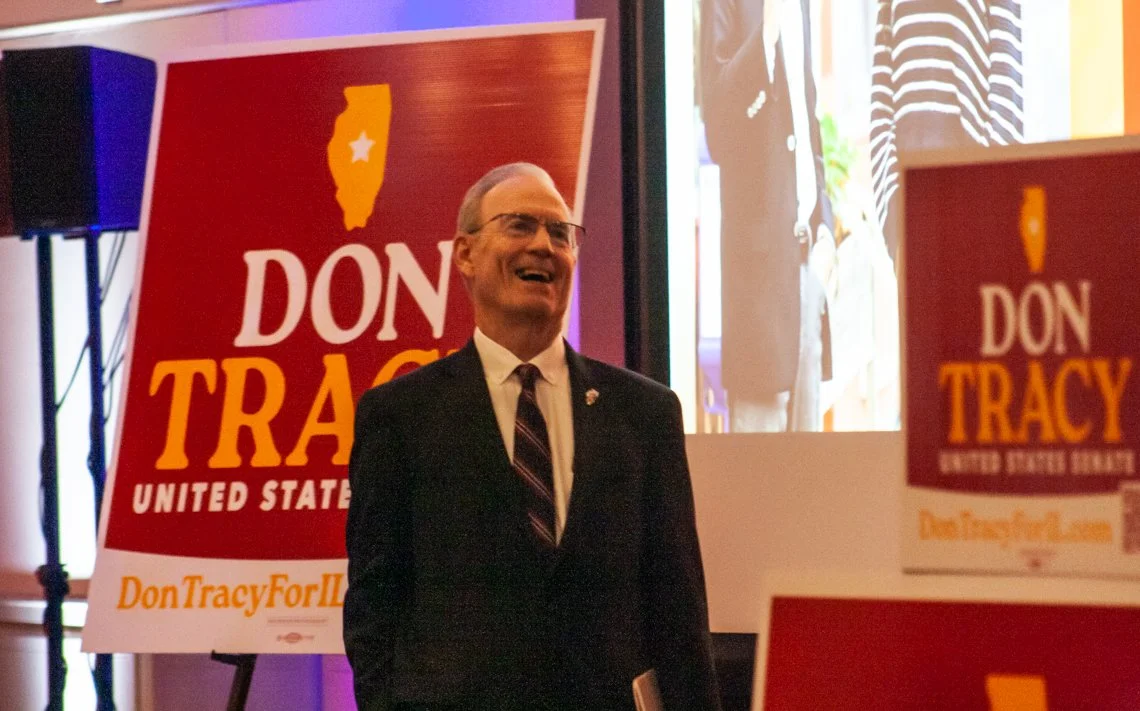
Don Tracy, the former chair of the state Republican Party, celebrates his nomination as the GOP’s candidate for U.S. Senate in 2026. (Capitol News Illinois photo by Jenna Schweikert)

“We stand before you tonight as the Illinois Republican nominee for the United States Senate. Thank you again for entrusting me with this important nomination,” Tracy said at his watch party in Springfield. “With your help, we'll deliver that underdog victory in November that will shock the nation and make Illinois better, more balanced and a stronger state.”

Tracy said his top priority will be reducing cost of living in key areas like energy and health care. The mood at the watch party was quiet initially, picking up as supporters watched results roll in. Kathy Salvi, the current Illinois Republican Party chair and the party’s failed Senate candidate in 2022, spoke to the growing crowd around 8 p.m.

“I am absolutely delighted to be here for you, Don,” Salvi said. “Everything that you stand for will elevate and bring hope and promise to Illinois.”

Of the five other candidates, Chicago attorney Jeannie Evans received about 22% of the vote, real estate manager Casey Chlebek received 11%, and the final three candidates received about 25% collectively.

Congressional results

Four of the five open congressional seats saw intense competition in their primary races this cycle, with dozens of candidates seeking rare open seats in Congress and an unprecedented $62 million contributed in direct campaign contributions and outside funding.

In the 9th Congressional District, Evanston mayor Daniel Biss won with about 30% of the vote as of 10 p.m. The contentious primary in one of the state’s most liberal districts gained national attention after candidates sparred over whether they aligned with the views of American Israel Public Affairs Committee and one candidate was charged by the federal government with conspiring to impede immigration agents. Biss, a former state senator who lost the 2018 gubernatorial primary to Gov. JB Pritzker, will face Republican John Elleson in the November general election.

In the 2nd Congressional District, Cook County commissioner Donna Miller beat nine candidates including state senator Robert Peters and former U.S. Rep. Jesse Jackson Jr. with 40% of the vote as of 10 p.m. Miller will face Republican Michael Scott Noack, who won his primary uncontested, in the general election. 

In the 7th Congressional District, state Rep. La Shawn Ford won the Democratic primary against 12 other candidates, with just under 25% of the vote as of 10 p.m. Ford will face the GOP primary winner Chad Koppie in November.

In the 8th Congressional District, former U.S. Rep. Melissa Bean won her primary with about 32% of the vote as of 10 p.m. and will face Republican nominee Jennifer Davis in November.

The 4th Congressional District is also open this fall but did not have a contested primary. The November election is expected to be a tense battle between Democratic nominee Patty Garcia and candidates who filed as independents. 

Capitol News Illinois is a nonprofit, nonpartisan news service that distributes state government coverage to hundreds of news outlets statewide. It is funded primarily by the Illinois Press Foundation and the Robert R. McCormick Foundation.


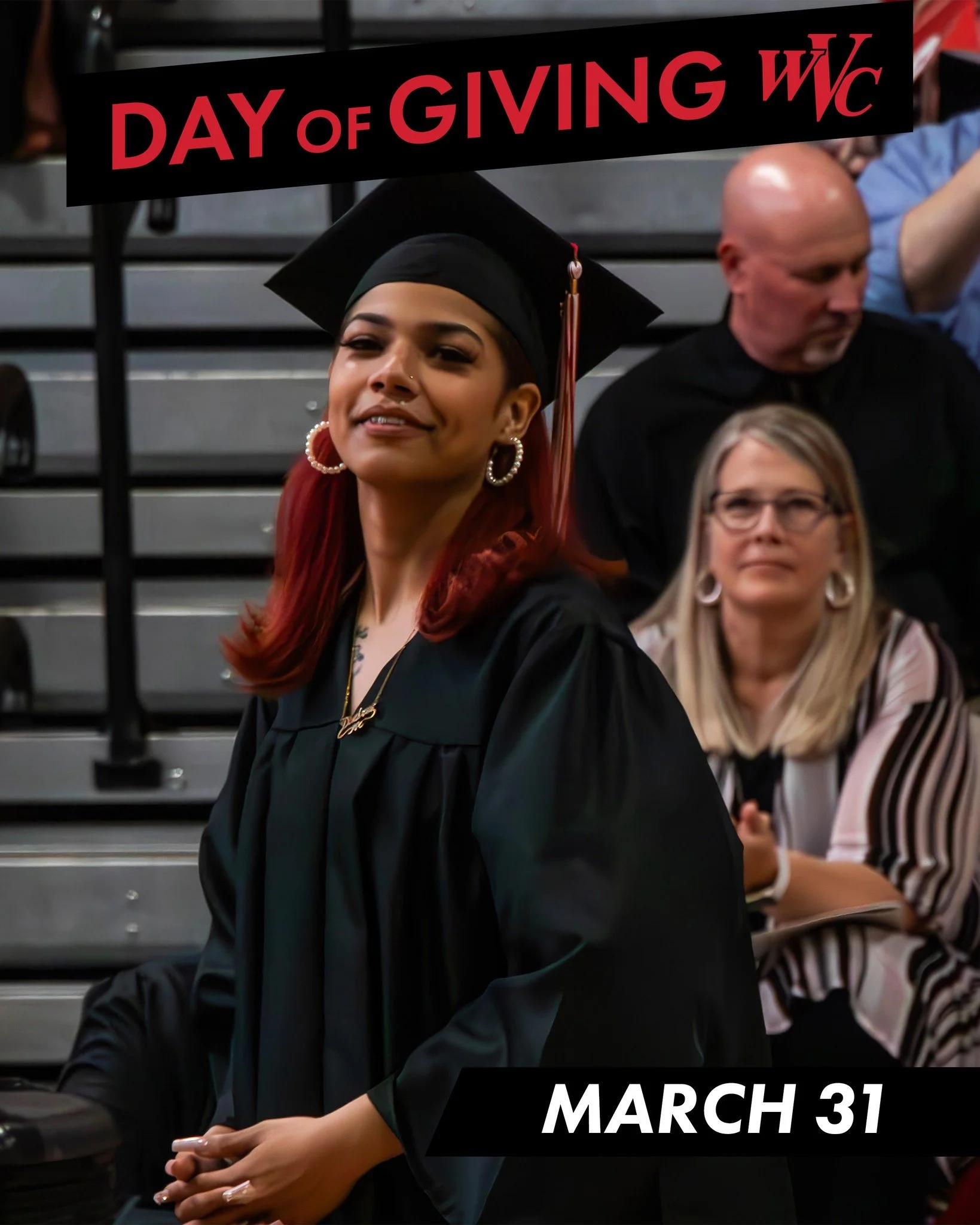
Four Campuses, One Mission: IECC Hosts First-Ever Day of Giving

Illinois Eastern Community Colleges will host its first-ever coordinated Day of Giving on March 31, inviting alumni, businesses, and community members to support student success across its four campuses.

The 24-hour event will feature fundraising efforts led by the foundations of Frontier Community College, Lincoln Trail College, Olney Central College, and Wabash Valley College. Each campus will focus on raising support for scholarships, programs, and initiatives that benefit students.

IECC Vice Chancellor of Institutional Outreach Tona Ambrose said the idea for a coordinated Day of Giving grew out of the district’s recent reorganization and a renewed focus on strengthening alumni engagement.

“IECC has wanted to establish an alumni community for years, and with the collaborative reorganization of our district two years ago, it seemed like the perfect time to create our first Day of Giving,” Ambrose said. “This event gives each of our college foundations an intentional opportunity to grow partnerships with alumni, businesses, and community supporters who care deeply about student success.”

While each campus will highlight its own priorities, Ambrose said holding the event on the same day creates a sense of shared purpose across the district.

“Each campus has unique needs and priorities, but we are united by a commitment to serving our students and communities,” she said. “A coordinated effort allows alumni and supporters to rally around the campus that means the most to them while still contributing to the broader IECC mission.”

Support from the college foundations plays an important role in helping students succeed. Donations often fund scholarships, campus programs, and improvements to facilities and learning environments.

“Foundation support has a direct and meaningful impact on students every day,” Ambrose said. “These gifts help make college more affordable, remove barriers that might otherwise prevent students from completing their education, and allow students to focus on learning and achieving their goals.”

Ambrose emphasized that even small gifts can make a difference for students.

“A modest scholarship might help a student purchase a textbook, pay for a certification exam, or cover part of their tuition,” she said. “When many people come together and contribute, even small amounts, the collective impact can be powerful.”

Beyond fundraising, the event is designed to strengthen connections between the colleges and the communities they serve. It will also help the district reconnect with alumni and expand its ability to stay in contact with graduates in the future.

“Launching a coordinated Day of Giving reflects IECC’s commitment to building strong relationships with our foundations, alumni, and the communities we serve,” Ambrose said. “We see it as the beginning of a new tradition that celebrates community generosity and will have a lasting positive impact on our students.”

Ambrose said the event is about more than a single day of giving.

“Day of Giving is about building a culture of connection and pride,” she said. “We want alumni, community partners, faculty, staff, and students to feel that they are all part of something bigger. When our colleges succeed, our communities succeed as well.”

Madison County judge finds name in Epstein files because of legal representation

As an associate at an Edwardsville law firm, he represented Epstein in a 2013 debt collection matter   

Article Summary 

  • Andrew Carruthers was an associate in the Edwardsville civil firm HeplerBroom when he was assigned a collection case related to Jeffrey Epstein in 2013. 

  • Carruthers, who was appointed to the bench eight years later, said Epstein “was completely unknown to us” when the firm accepted his business. 

  • Carruthers said he never met or communicated with the convicted sex offender Jeffrey Epstein, but acted as local counsel to enforce a judgment handed down in the Virgin Islands. 

  • Epstein’s plane made maintenance stops at a Metro East airport, including one in July 2001 with passengers Epstein and his co-conspirator, Ghislaine Maxwell and survivor of the sex-trafficking ring Virginia Roberts Guiffre.  

This summary was written by the reporters and editors who worked on this story. 

By BETH HUNDSDORFER 
Capitol News Illinois 
bhundsdorfer@capitolnewsillinois.com  

& JANELLE O’DEA

Illinois Answers Project

jodea@illinoisanswers.com

EDWARDSVILLE — A man wearing a sandwich board protesting outside of the Edwardsville courthouse last month revived sleeping worries and anxieties Madison County Judge Andrew Carruthers had hoped to leave in the past.

That single protester’s sign put on display what Carruthers already knew.

His name is in the Epstein files because he once represented Epstein on a collection matter more than a dozen years ago. 

In the 3 million documents that contained horrific descriptions of child sexual abuse, photographs and videos released in January by the U.S. Department of Justice regarding the disgraced child sex trafficker Jeffrey Epstein, there were legal filings signed by then-fledgling associate Carruthers. 

“I was assigned to serve as local counsel for attorneys in another jurisdiction seeking to enforce a civil money judgment for their client who, at the time, was completely unknown to us, just as he was unknown to most of the country 13 years ago,” Carruthers said in a statement he provided after speaking with reporters. 

It all began in 2013 with a collection matter, a foreign judgment for $250,000 that Epstein won in the U.S. Virgin Islands that had laid around for a couple of years. It was the result of a contract dispute over unfinished or subpar work at Little St. James, Epstein’s private island, as well as Epstein’s New York City townhouse. 

The Virgin Island lawyer needed Illinois representation to collect the debt on the business that was registered in Illinois. The Virgin Islands lawyer knew a partner at the Illinois-based HeplerBroom and asked for help.

Carruthers, then a new associate at the Edwardsville civil defense firm, was the “clean-up man” handling the extraneous minute legal matters that big civil clients bring to their legal firms — traffic tickets, wills, probate, small civil issues and collection matters.

There were no conflicts that prevented working on the case, so Carruthers filed the judgment in Lake County, near Chicago. He proceeded to try to collect the debt, always communicating through a lawyer in the Virgin Islands. 

Carruthers said he never met Epstein, never spoke to him, never even communicated in writing with him. He had no idea of his Florida conviction in 2008 of soliciting a minor for prostitution. 

Eventually, the debtor went bankrupt. Carruthers’ representation was over.

There’s hardly a mention of Carruthers’ firm HeplerBroom in the files, only canceled checks to them for $900, $1,300 and a wire transfer for $1,000. Carruthers eventually left the firm, moving on to the Madison County state’s attorney’s office’s civil division. 

In 2019, Epstein was indicted on federal charges related to an international sex trafficking ring involving minors. Carruthers said he found out who Epstein was and what he was accused of around the time everyone else did.

Two months after that indictment, authorities said Epstein died after hanging himself in his prison cell. 

Carruthers carried on with his legal career. 

In 2021, Madison County circuit judges appointed him as an associate judge. 

He is a utility player as judge, just as he had been at the law firm. Carruthers volunteered to restart a docket in nearby Granite City where he would hear traffic tickets, misdemeanors and ordinance violations. The location has been closed since the pandemic. He organized a food drive and read to schoolkids.

He presides over the busy asbestos and probate docket. Lawyers who appeared before Carruthers gave him a 91% rating in an Illinois State Bar Association judicial advisory poll. Associate judges must receive at least 65% to be recommended by the ISBA.  

In January, the Justice Department released its files, detailing Epstein’s associations. They  were wide-ranging, including entertainment moguls, titans of industry, tech giants, two U.S. Presidents, the British royals, an Israeli prime minister and, incidentally, a Madison County lawyer turned judge. 

What Carruthers had dreaded had come to pass: Finding out those court filings with his name on them are part of the infamous Epstein files.

Even bad guys need lawyers

Carruthers has worried, lost sleep. He’s a father to three teenage girls, a husband to a professor at a nearby university; a symbol in his local legal community. His family, his career and his reputation weighed heavily on his mind.

Attorneys know what it is to represent a client with an unsavory reputation, one expert said, but even bad guys need lawyers. 

“If every controversial client you had disqualified you, there would be very few lawyers who would be eligible to serve as judges,” said Carol Needham, a professor at St. Louis University School of Law who specializes in ethics.

An associate judge is elected by circuit judges. Circuit judges are elected by the voters. The Third Judicial Circuit, which includes Madison and Bond counties, has eight circuit judges. Carruthers is one of 13 associate judges who serve four-year terms.

The circuit judges will decide whether to return Carruthers to the bench in 2029. 

Carruthers isn’t the St. Louis area’s only distant tie to the now-deceased pedophile and financier. Epstein took trips through the St. Louis area and had at least one plane serviced in Cahokia, according to court documents and emails in the trove of files published by the U.S. Department of Justice. The trips included at least one flight with Virginia Giuffre and Ghislaine Maxwell that landed at the Downtown St. Louis Airport in Cahokia, about 10 minutes east of the Gateway Arch. 

The three came through Cahokia at least one time, on July 11, 2001, according to a court transcript of an interview with a private pilot, David Rodgers, who worked for Epstein. Giuffre was a trafficking victim of Epstein beginning when she was a teenager, and she grew up to become an outspoken survivor of the abuse committed by Epstein and Maxwell. She died by suicide in April 2025.

Maxwell was a close associate of Epstein and currently is serving a 20-year prison sentence in Texas for sex trafficking.  

Rodgers worked for Epstein as a private pilot for almost three decades. In the court transcript from a 2020 case against Maxwell, Rodgers confirmed the July 2001 flight from Teterboro, New Jersey, to Cahokia, Illinois. He also confirmed Maxwell, Giuffre, Epstein and a third unidentified person as passengers on the flight.

Rodgers at times flew the Boeing 727 now famously known as “The Lolita Express.” He denied ever witnessing Maxwell say or do anything to indicate she was helping Epstein traffic children and women. The flight to St. Louis was on Epstein’s Gulfstream jet, a different plane.  

“And nothing you saw or heard in the roughly 30 years you worked for Epstein ever gave you even the slightest hint that anything like that was going on; isn't that right?” a lawyer asked Rodgers.

“That’s correct,” he said. 

On other trips, Epstein’s Gulfstream jet also underwent renovations and repairs at the St. Louis Downtown Airport in Cahokia. Beginning in the late 1980s, Epstein began doing business with Midcoast Aviation, and through the 2000s, Epstein’s aircraft were painted, refurbished, serviced and fueled by Midcoast. The full-service aircraft company has operated under the name Jet Aviation since 2011.

Epstein spent at least a quarter of a million dollars on services from Midcoast and Jet Aviation. FedEx records show a Midcoast employee sending an 8-pound package to Epstein’s Zorro Ranch in New Mexico on July 14, 2001, three days after Epstein, Maxwell and Giuffre came through Cahokia. The package was addressed to “Shannon at Zorro Ranch.”

Jet Aviation declined to comment through a Zurich-based spokeswoman. 

Capitol News Illinois is a nonprofit, nonpartisan news service that distributes state government coverage to hundreds of news outlets statewide. It is funded primarily by the Illinois Press Foundation and the Robert R. McCormick Foundation.  


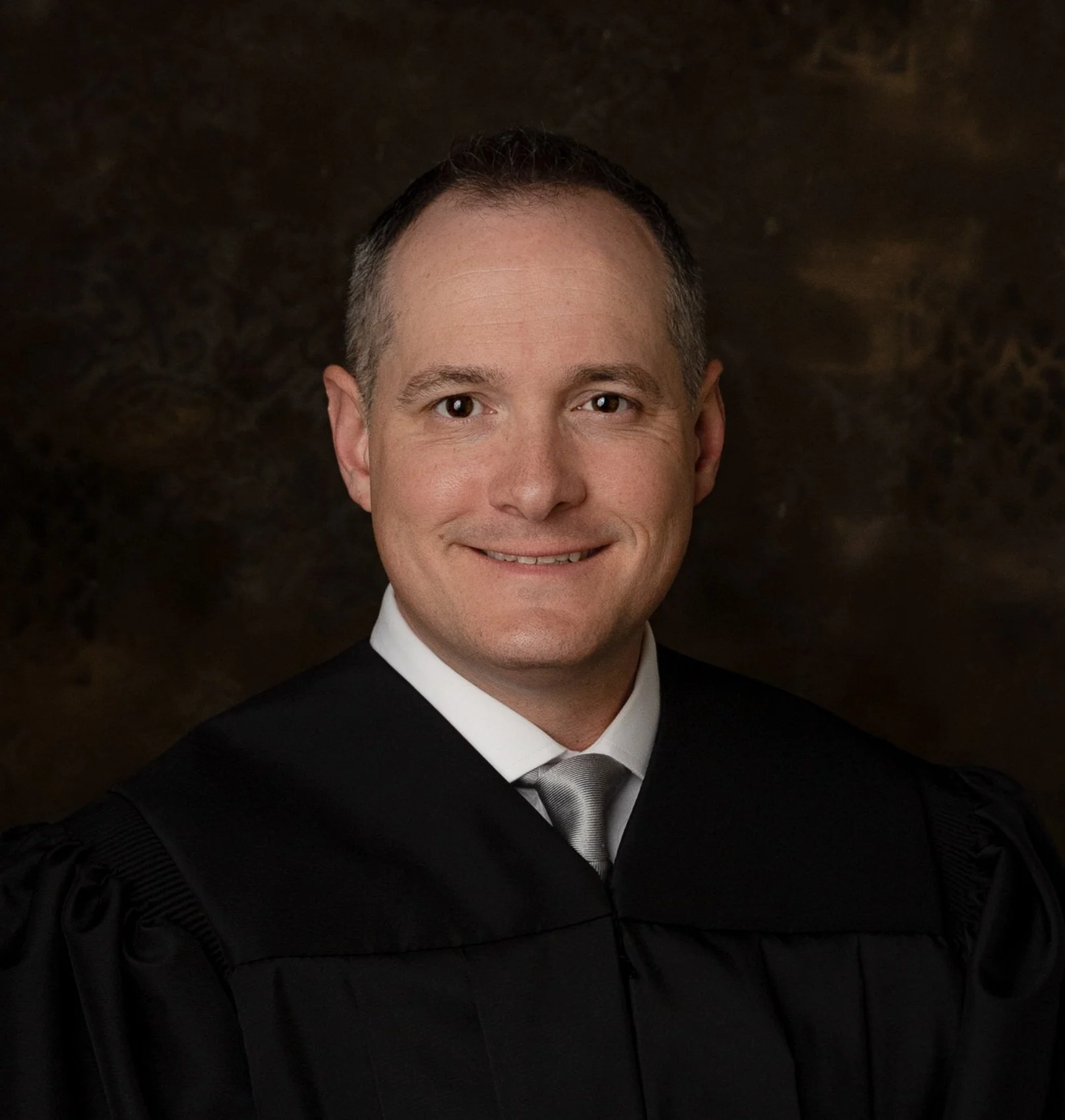
Madison County Associate Judge Andrew Carruthers found his name in the recently released U.S. Department of Justice files regarding Jeffrey Epstein, a sex offender accused of trafficking minors. Carruthers was assigned Epstein’s case in a collection matter in Lake County, Illinois, but said he never met him or communicated with him.  Photo: Provided

Illinois bill aims to address gender discrepancies in CPR training 

The legislation would mandate the use of female manikins in school programs 

By GEORGIA EPIPHANIOU 

Medill Illinois News Bureau 

news@capitolnewsillinois.com

Article Summary

  • Women are 27% less likely to receive bystander CPR due to fears of inappropriate touching or sexual assault accusations and repercussions. 

  • A bill, currently in a House committee, will mandate the use of female CPR dolls and chest covers for CPR training in secondary schools in Illinois. 

  • Illinois-based company WorldPoint and organization Illinois Heart Rescue have already taken steps to address the gender disparity in training by producing and supplying female manikins across state-led education programs.  

SPRINGFIELD — When someone experiences a heart attack, the emergency protocol is universal for all genders — first responders are supposed to place the patient on their back and their hands in the center of the chest, then push hard and fast.

Yet, women are 27% less likely to receive bystander CPR than men because of hesitancy to follow protocol, fueled by fears of inappropriate touching, exposing the chest or drawing accusations of sexual assault, according to the Journal of the American Heart Association.

House Bill 4788, sponsored by Rep. Maura Hirschauer, D-Batavia, aims to defeat this stigma, normalizing CPR performance on women by introducing female manikins in secondary school CPR training.

The idea for the legislation began with a Naperville High School student, senior Ashlynn Goldstein. "I had been CPR certified a lot of times — never in my life had I ever encountered a female manikin,” Goldstein said.

Her capstone project in high school examines why disparities exist in the performance of CPR between men and women, Illinois current statutes addressing CPR training, and how those policies are handled in schools.

"That was kind of where that idea of passing a bill for high schools came about, and Hirschauer took up the case,” said Goldstein, who drafted the bill with her teacher and proposed it to legislators.

The bill is currently assigned to the Education Policy Committee. It requires CPR training in secondary schools to include at least one female manikin for every two male versions, starting in the 2028-29 academic year.

Hirschauer, who said she is interested in “righting the wrongs of gender disparity,” emphasized the importance of introducing female manikins in high schools. 

“I'm always a fan of reaching people at their earliest. … So it felt like a really good way to capture a lot of people, and then a really good way to break down the stigma of CPR on a female if we're starting young,” she said. 

State Rep. Katie Stuart, D-Edwardsville, was added as a co-sponsor to the bill Thursday.

With every Illinois high schooler required to receive CPR training, Goldstein also sees an opportunity to reach a wider audience. 

“That is your next generation of adults,” Goldstein said. “They are the next people who are going into the workforce, going out into the world, and it's more effective with the younger ages versus older.”

In the U.S., 40 states and the District of Columbia require CPR training in schools before high school graduation. There are no laws embedding the use of female manikins in school training curriculums. Such training can make a difference.

A 2024 study by the American Heart Association Journal, surveying 112 participants who received CPR instruction on both male and female manikins, concluded that the training increased confidence in performing CPR on women. Although 28.4% initially reported feeling either slightly or very uncomfortable using the female manikin, 81.6% said they felt more confident performing CPR on women after practicing with it.

“To date, most CPR training programs in the United States and globally continue to use the standard flat-chested manikin since training materials with secondary sex characteristics such as breasts have been lacking,” according to a recent study in ScienceDirect

“Normalizing the female anatomy and allowing hands-on simulation practice with breasted manikins may reduce reluctance to perform (CPR) on women, dispel misconceptions and myths, and cultivate confidence among the public rescuers to engage in life-saving skills, regardless of gender,” the study said.

Bill faces hesitation over costs

Despite Hirschauer’s enthusiasm for the bill and the state’s past support of CPR training in schools, the bill faces headwinds.

The Illinois Principals Association expressed skepticism around the bill, citing concerns about burdening schools with the costs. 

“We have other things that are kind of pressing on that financial button, if you will, and we always share those concerns with legislators,” said Alison Maley, the government and public relations director of the principals association. 

Lauren’s Law, passed in Illinois in 2008, mandated CPR training in all of the state’s high schools but also became an example of how financial considerations can thwart good intentions. The law does not provide any additional funding for compliance, therefore making higher income districts better positioned to meet the requirements. 

To bridge the gap, Illinois Heart rescue, an organization committed to improving outcomes when people experience cardiac arrest beyond hospital settings, got involved. It provides training, manikins and automated external defibrillators to lower-resource districts and schools that would otherwise struggle to finance the training themselves.  

Illinois Heart Rescue has already introduced female manikins in their training programs. 

“We made the decision as a program to use breasted manikins in all of our classes,’’ Courtney Schwerin O'Reilly, executive director of Illinois Heart Rescue, said. “It was mildly controversial, but it was important to me that we had that representation.” 

Goldstein acknowledged the cost-related concerns in the drafting of her bill. Instead of compelling schools to purchase female manikins, which cost $800, the bill provides the option of installing chest covers on existing ones instead, which are priced at approximately $14 to $18. 

The marketplace has begun to recognize the need for change as well. WorldPoint, a global distributor and one of the industry’s largest suppliers of CPR manikins, has developed two innovative, three-in-one manikins — CPR Taylor and CPR Tommi — each designed to convert between adult male, adult female and child. The products are released in light and dark skin colors. 

“It shouldn't be an add on, it shouldn't cost more money, it shouldn't be its own additional purchase thereby making it more expensive,” said ShellyAmato, executive vice president of WorldPoint. “It should be standard. You get a male and you get a female with every manikin."

That fits into Goldstein’s goal of raising awareness on the issues surrounding CPR for women and seeing a broader impact in society. If the Illinois legislature can pass Hirschauer’s bill, perhaps it can serve as a model.

"My hope is, honestly, for other states to take inspiration from that,’’ she said. 

Georgia Epiphaniou is a graduate student in journalism with Northwestern University’s Medill School of Journalism, Media, Integrated Marketing Communications, and a fellow in its Medill Illinois News Bureau working in partnership with Capitol News Illinois.

Capitol News Illinois is a nonprofit, nonpartisan news service that distributes state government coverage to hundreds of news outlets statewide. It is funded primarily by the Illinois Press Foundation and the Robert R. McCormick Foundation.



The Illinois Heart Rescue seasonal training at Cubs CPR Day at Wrigley Field in Chicago. The organization provided female CPR manikins for the program. (Courtesy of Courtney Schwerin O'Reilly / Illinois Heart Rescue)


Carterville football coach on leave is subject of investigators’ subpoenas

Carterville football coach on leave is subject of investigators’ subpoenas

The Williamson County Sheriff’s Office and Illinois State Board of Education sent requests for personnel records of the employee

 By MOLLY PARKER

Capitol News Illinois

& JACKSON BRANDHORST 

Saluki Local Reporting Lab

Article Summary

  • Carterville High School teacher and football coach who is the subject of a criminal investigation is named in subpoenas served in the case.

  • The employee was placed on leave more than a year after the FBI received a tip about possible crimes.

  • The Illinois State Board of Education has also issued a subpoena seeking records related to the employee’s employment.

CARTERVILLE — The Williamson County Sheriff’s Office and Illinois State Board of Education have served subpoenas on the Carterville school district in southern Illinois seeking the personnel file and any disciplinary records of John J. Wakey, a Carterville High School teacher and assistant football coach who is under investigation for criminal sexual abuse.

The sheriff’s office served its subpoena on the district for Wakey’s records on Feb. 25, four days after announcing it had opened an investigation involving an unnamed Carterville school district employee accused of sexually abusing a former student.

Capitol News Illinois obtained the subpoenas under a Freedom of Information Act request.

Sheriff Jeff Diederich told CNI last week that his office has received numerous calls since making the announcement and believes there may be multiple victims.

A second subpoena from the sheriff’s office, issued the same day investigators sought Wakey’s personnel file, requests academic records for 17 former students whose names were redacted by the district, citing a privacy exemption under Illinois’ public record law. The subpoena does not indicate why investigators are seeking the former students’ records.

A subpoena is a legal public record that’s part of an official investigation. It does not indicate that wrongdoing has occurred, or detail any allegations, and Wakey — who has worked in the district for more than two decades — has not been charged with a crime. He did not respond to multiple calls and text messages to his cell phone seeking comment.

The district must provide the records by March 26 to Williamson County Deputy Mike Flaningam. The sheriff has confirmed that Flaningam, who joined the department on Jan. 1, 2025, and formerly served as the chief of police in Carterville, is the lead investigator on the sexual abuse case involving Wakey.

The Carterville school district previously announced that it placed the employee on administrative leave after receiving notification from the sheriff’s office on Feb. 20.  

On Friday, Diederich said the sheriff’s office did not have further comment about the subpoenas. Carterville Superintendent Sarah Barnstable had not responded to a list of questions about the matter as of Friday afternoon. 

Separate inquiry by state education board  

The Illinois State Board of Education has also issued a subpoena seeking records related to Wakey’s employment. ISBE served the district with the subpoena Monday — one business day after CNI and the Saluki Local Reporting Lab reported that an FBI tip that initially started the inquiry into the Carterville school employee had been made in November 2024 — nearly a year and a half before allegations became public — and the employee placed on leave. 

The state agency oversees education licensing in Illinois and is responsible for investigating allegations of misconduct involving licensed teachers. Such investigations are separate from criminal or child welfare investigations, though ISBE may obtain information from those agencies if they are involved in the case. Though the agency was made aware that CNI had obtained its subpoena in a public records request, ISBE spokesperson Lindsay Record said the agency still could not comment on or confirm whether any specific investigation was underway.

The ISBE subpoena, which is described as part of a “licensure investigation” of Wakey, also seeks emails, text messages, internal investigative reports, interview notes, witness statements and other records related to his employment. The district has been ordered to produce those materials to ISBE by April 16. 

Questions about reporting requirements 

An FBI spokesperson in Springfield told CNI last week that its National Threat Operations Center, which serves as a central intake for public tips regarding federal crimes, had received information about possible abuse by a Carterville school employee in November 2024. At the time, the spokesperson said the FBI determined it did not have jurisdiction to lead the investigation and turned it over to local law enforcement. 

Flaningam received the tip that same month from an FBI agent in Marion while he was still serving as the police chief in Carterville. The following month, city officials opted not to renew Flaningam’s contract; his employment with the city ended on Dec. 31, 2024. He was hired as an investigator in the sheriff’s office beginning the next day and transferred the case prior to his exit. Diederich said the case remained largely dormant for 15 months due to a lack of evidence. 

The announcement of the investigation has shaken Carterville, a southern Illinois community of about 5,800 people known in southern Illinois for its strong school system, as well as its high school football tradition. 

In the wake of the investigation, some parents and community members have questioned why the district did not make a report to the Illinois Department of Children and Family Services upon first learning about the FBI tip in November 2024. Educators are mandated reporters under Illinois law and must report suspected child abuse or neglect to the state’s child abuse hotline. 

Barnstable, the Carterville school superintendent, said the tip, as relayed to a district administrator in November 2024, was anonymous and unverified, and school officials did not have enough information to conduct their own investigation or file a report to DCFS. She did not respond to a question about which administrator received the report, and whether that individual notified anyone else, including the district’s attorney and school board members

Barnstable said the district took immediate action once law enforcement notified administrators on Feb. 20 that a former student had provided a formal statement. The sheriff’s office notified the district that it had made a report to DCFS at the same time, she said. 

It is not clear whether an earlier report would have triggered a child welfare investigation. Diederich said his office has not spoken with any alleged victims who are currently minors or enrolled in the district. The individuals who have come forward are former students who are now adults, and DCFS typically only investigates allegations of abuse and neglect involving victims under 18. Reports involving child victims of abuse who are now adults are generally referred to law enforcement, according to DCFS spokesperson Heather Tarczan. 

Public sanctions against educators, including license suspensions and revocations, are published on ISBE’s Educator Quality webpage

CNI and the Saluki Local Reporting Lab have also requested any disciplinary records related to Wakey through the Illinois Freedom of Information Act. Barnstable asked for an additional five days to respond to that request. 

She said the district intends to respond by March 19 — the date of the next Carterville school board meeting, where several parents have said they plan to address the investigation and the school’s handling of it.

This story was produced for Capitol News Illinois through the Saluki Local Reporting Lab, supported by grant funding from the SIU Foundation and the Illinois Press Foundation. 

Jackson Brandhorst is a student at Southern Illinois University Carbondale, and a senior member of the Daily Egyptian, SIU’s student newspaper. Brandhorst can be reached at jbrandhorst@dailyegyptian.com.

Capitol News Illinois is a nonprofit, nonpartisan news service that distributes state government coverage to hundreds of news outlets statewide. It is funded primarily by the Illinois Press Foundation and the Robert R. McCormick Foundation.


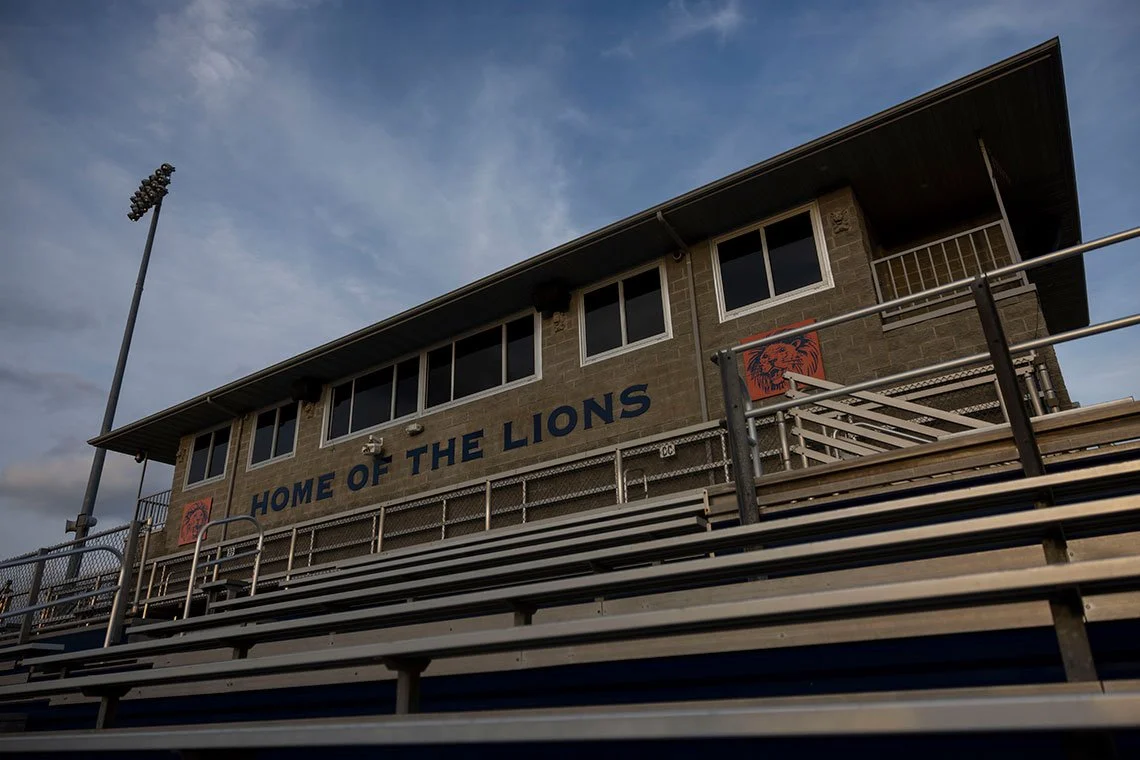
The sun sets on the press box of the Lion’s Field football stadium at Carterville High School on March 3, 2026, in Carterville, Illinois. (Photo by Lylee Gibbs)

Sports betting tax becomes battleground between Chicago and state lawmakers

Chicago’s hefty new 10.25% tax on sports betting is creating backlash in Springfield and prompting a legal battle

BY ERIKA TULFO
Medill Illinois News Bureau
news@capitolnewsillinois.com

Article Summary

  • Chicago’s new 10.25% tax on sports bets is facing bipartisan pushback in the Illinois General Assembly as lawmakers support bills that would block Chicago and other municipalities from setting their own sports wagering taxes.

  • Some Chicago officials worry whether the tax is straining the city’s relationship with the state, as state lawmakers float bills that would deduct Chicago’s tax revenue from its share of state funding.

  • Lawmakers and sports betting industry leaders both worry that Chicago’s steep tax would drive bettors to illegal markets.

This summary was written by the reporters and editors who worked on this story.


CHICAGO — Chicago's steep new tax on sports betting is creating a backlash in Springfield that could lead to new restrictions on whether municipalities should have the power to tax gambling revenue.


The highly contested tax charges sports betting businesses 10.25% on their net gambling revenue. The tax, which took effect Jan. 1, is in addition to the state’s existing levy on sports gambling, which includes per-bet fees. The combination gives Illinois one of the most severe betting tax structures in the country. 

As Illinois begins Problem Gambling Awareness Month, state representatives from both sides of the aisle say the tax will drive bettors to illegal markets, hurting revenues for Illinois. And some Chicago officials worry it could become a point of tension between the city and state legislators, hindering future collaboration on financial issues. 

“When we passed our sports betting law, it was never the intent of the legislature that there would be a patchwork of different rules and different tax rates in every municipality throughout the state,” Rep. Daniel Didech, D-Buffalo Grove, told Capitol News Illinois. “Now that Chicago has opened that door, I think we’re going to try to close it.” 

Didech, who serves as chairman of the Illinois House Gaming Committee and played poker professionally for over five years, filed House Bill 4171 in October with a long list of Democratic and Republican cosponsors. It passed committee in February, taking it one step closer to a vote.

The bill would negate Chicago’s tax and would be effective immediately if passed and signed into law. Didech said it was intended to maintain uniform, statewide regulations on sports gambling by preventing local governments from imposing their own taxes.

The Sports Wagering Act was passed in 2019, and the state raked in $429 million in tax revenues related to sports gambling in fiscal year 2025, according to the Commission on Government Forecasting and Accountability.

Illinois’ tax structure

Currently, Illinois ranks fifth in the U.S. and first in the Midwest in taxes collected on sports wagering, according to the Illinois Policy Institute

When sports betting became legal in the state, sportsbooks paid only a flat 15% tax on the revenue they earned. Now the tax rate is as high as 40% depending on a sportsbook’s revenue, while the state also enacted a 25- to 50-cent per-wager fee last year.

But the most recent data from the Illinois Gaming Board shows that the total number of bets placed fell by 15% from September to October last year after the per-wager tax was introduced.

Chicago identified the sports betting tax as a stream of “progressive revenue” in its 2026 Budget Overview, claiming it would help balance the budget without cutting essential services or raising costs for working families. The tax was passed on June 1, 2025, and city officials projected the measure would generate $26.2 million.

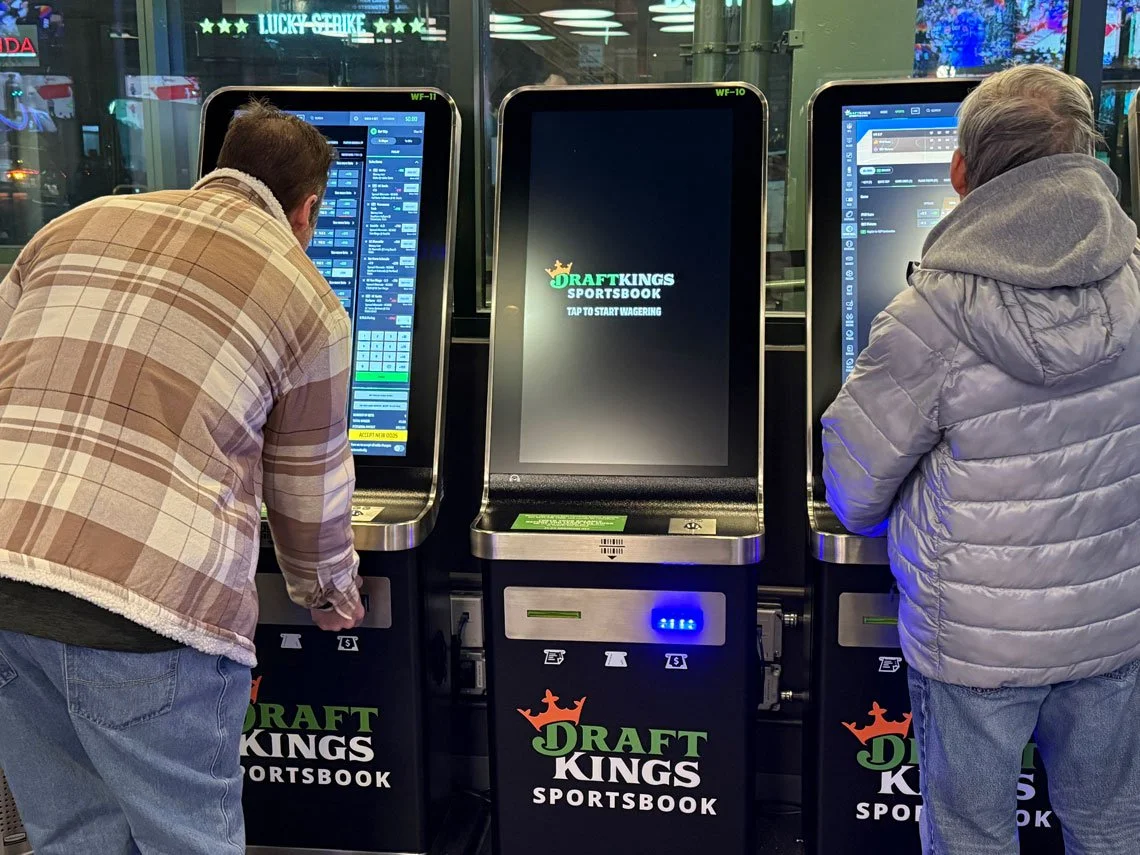
But the new city tax amplified growing tensions between Chicago and the Sports Betting Alliance, which represents major sportsbooks including DraftKings, FanDuel and BetMGM. 

The Alliance filed a lawsuit in December challenging the tax. The coalition argued that the Sports Wagering Act did not allow the city to impose its own sports betting taxes on top of the state's existing taxes. 

“The State — not the City — has sole authority to license and tax online sports wagering in the State of Illinois,” the lawsuit argued. “The Illinois Constitution reserves authority over licensing for revenue and income-based taxation to the State unless expressly delegated. The Illinois General Assembly has never authorized the City to impose licensing fees or income-based taxes on online sports wagering."

The city declined to comment, citing pending litigation.

A hearing is scheduled later this month. “Ultimately, we just have to continue to press the case,” Alliance president Joe Maloney said. 

Chicago and Springfield at odds

In the meantime, state lawmakers are taking aim at Chicago’s tax — and trying to prevent other municipalities from setting their own local sports betting taxes.

Sen. Patrick Joyce, D-Essex, filed Senate Bill 2760 in January, which seeks to penalize Chicago by taking the total amount the city gained from its sports wagering fee and deducting it from Chicago’s share of the Local Government Distributive Fund, one of the largest sources of state funding for cities and counties. That amount would then be redistributed to other municipalities following the fund’s allocation formula.

Joyce said in an interview that he, along with other members of the General Assembly, was open to sitting down with Chicago officials to discuss the bill.

He also filed Senate Bill 2800, a bill identical to Didech’s House version that denies home rule units the authority to regulate or tax sports wagering. 

The tax remains a divisive topic in Chicago, too. 

Chicago Ald. Gilbert Villegas, who opposed the new tax, said he was concerned it would cause a rift between the city and state lawmakers.

“I just think it was the wrong approach,” he said. “To do this with Springfield signaling that there was going to be huge opposition and a potential bill sends the wrong message from a city that is going to need to be down in Springfield making requests for different items.”

What does the tax mean for bettors?

Sportsbook operators have already been feeling the squeeze after the implementation of the state’s per-wager tax in September, which required them to pay 25 cents on each of the first 20 million bets placed, and 50 cents for each bet over that amount. 

Some betting operators, like FanDuel, have shifted the cost to customers by forcing them to pay a $0.50 per-bet fee. Other sportsbooks like BetRivers have responded to Illinois’ tax pressures by raising the minimum stake. The number of total bets placed in Illinois fell to 28.5 million in the fall from 33.6 million the year before.

Both the Sports Betting Alliance and state lawmakers worried that the city’s tax would drive Chicago bettors away from licensed sportsbooks and into illegal, unregulated markets.

But some avid sportsbook users, like Chicago-based social media content creator Sam Cantalupo, are continuing to stomach the cost.

Cantalupo is known for his sports betting analysis videos, which have garnered over 100,000 likes on his TikTok channel “djsammycaps.” While he has signed petitions opposing the city’s sports betting tax, he said that, at the end of the day, he is still willing to pay a higher price if an even heftier tax were imposed.

“If they raised it, honestly, I would probably have to suck it up and pay it,” he said.

Erika Tulfo is a graduate student in journalism with Northwestern University’s Medill School of Journalism, Media and Integrated Marketing Communications, and is a fellow in its Medill Illinois News Bureau working in partnership with Capitol News Illinois. 

Capitol News Illinois is a nonprofit, nonpartisan news service that distributes state government coverage to hundreds of news outlets statewide. It is funded primarily by the Illinois Press Foundation and the Robert R. McCormick Foundation.

Pritzker calls for setting new higher education attainment goals

Executive order creates new working group to recommend plans for increasing postsecondary attainment

By PETER HANCOCK
Capitol News Illinois
phancock@capitolnewsillinois.com

Article Summary

  • In 2025, Illinois fell short of meeting its previous goal of having 60% of its adult population earning either a college degree or high-quality postsecondary credential.

  • Recent studies have shown there are significant disparities in upward mobility in Illinois between people from different socioeconomic backgrounds.

  • A new working group created by a recent executive order signed by Gov. JB Pritzker is supposed to issue its recommendations by Dec. 1, 2026.

This summary was written by the reporters and editors who worked on this story.

SPRINGFIELD – Gov. JB Pritzker is calling on agencies in his administration to set goals for increasing the number of adults in the state with college degrees or other postsecondary credentials.

In an executive order issued Friday, Pritzker announced the formation of a working group that will review the state’s existing workforce development programs, consult with industry and labor groups as well as local economic development organizations, and recommend new higher education attainment goals.

That order comes on the heels of multiple reports showing the state has fallen short of previous goals for improving educational attainment and that many barriers still prevent people from lower-income backgrounds from completing college and climbing up the economic ladder.

In 2009, the General Assembly established the Illinois P-20 Council to make recommendations for developing a seamless and coordinated system of public education covering preschool through graduate and professional school. Among that group’s recommendations was that by 2025, at least 60% of the state’s adult population should have either a college degree or some other kind of high-quality postsecondary credential.

Past reports offer mixed review

But a report released this past October found the state appeared to be falling just short of that goal. In its biennial report “The State We’re In,” the nonpartisan research and advocacy group Advance Illinois reported that as of 2023, only about 57.4% of adults had finished a degree or credential program. That was still a significant improvement from 41% in 2008.

In his executive order, however, Pritzker cited workforce projections that indicate by 2031, more than 70% of all jobs will require education or training beyond high school.

Meanwhile, a pair of reports last year from the Illinois Workforce and Education Research Collaborative, or IWERC, found significant disparities exist in access to the benefits that are supposed to come with earning a college degree.

In a July report, the organization found college degrees do, in fact, lead to higher earnings overall. But even after earning a degree, students from lower-income family backgrounds tend to earn less than those from wealthier backgrounds, even when they earn similar degrees and go into similar careers.

And in a follow-up report in December, IWERC found that while some career pathways that don’t require college degrees can lead to good-paying jobs and upward mobility — including construction, manufacturing and wholesale trade — many of those pathways were promising only for men or for specific racial and ethnic groups.

Pritzker’s order

In his order, Pritzker highlighted statistics showing that since he came into office the state has taken steps to make college more affordable, such as increasing funding for Monetary Award Program and AIM HIGH grants. He also noted that the percentage of in-state undergraduate students at public universities paying no tuition or fees has risen to 44% in Fiscal Year 2025, up from 24% in 2018.

The new working group will consist of representatives from several state agencies, including the Board of Higher Education, Community College Board, State Board of Education, Student Assistance Commission, Department of Employment Security, Department of Commerce and Economic Opportunity and the Illinois Workforce Innovation Board.

It will also include advisory members from the departments of Human Services, Corrections and Public Health as well as the office of First Lady M.K. Pritzker.

The board is supposed to issue its recommendations to the governor by Dec. 1, 2026.

Capitol News Illinois is a nonprofit, nonpartisan news service that distributes state government coverage to hundreds of news outlets statewide. It is funded primarily by the Illinois Press Foundation and the Robert R. McCormick Foundation.

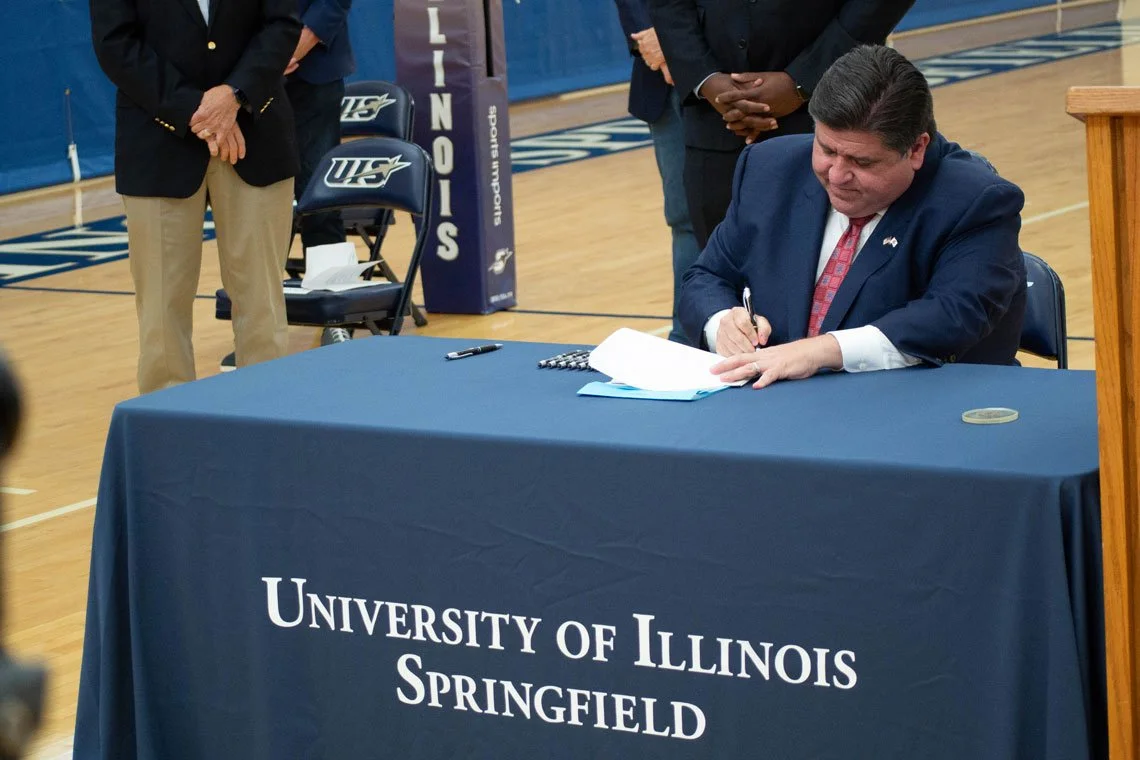
Gov. JB Pritzker signs legislation at the University of Illinois Springfield in 2021. (Capitol News Illinois photo by Jerry Nowicki)

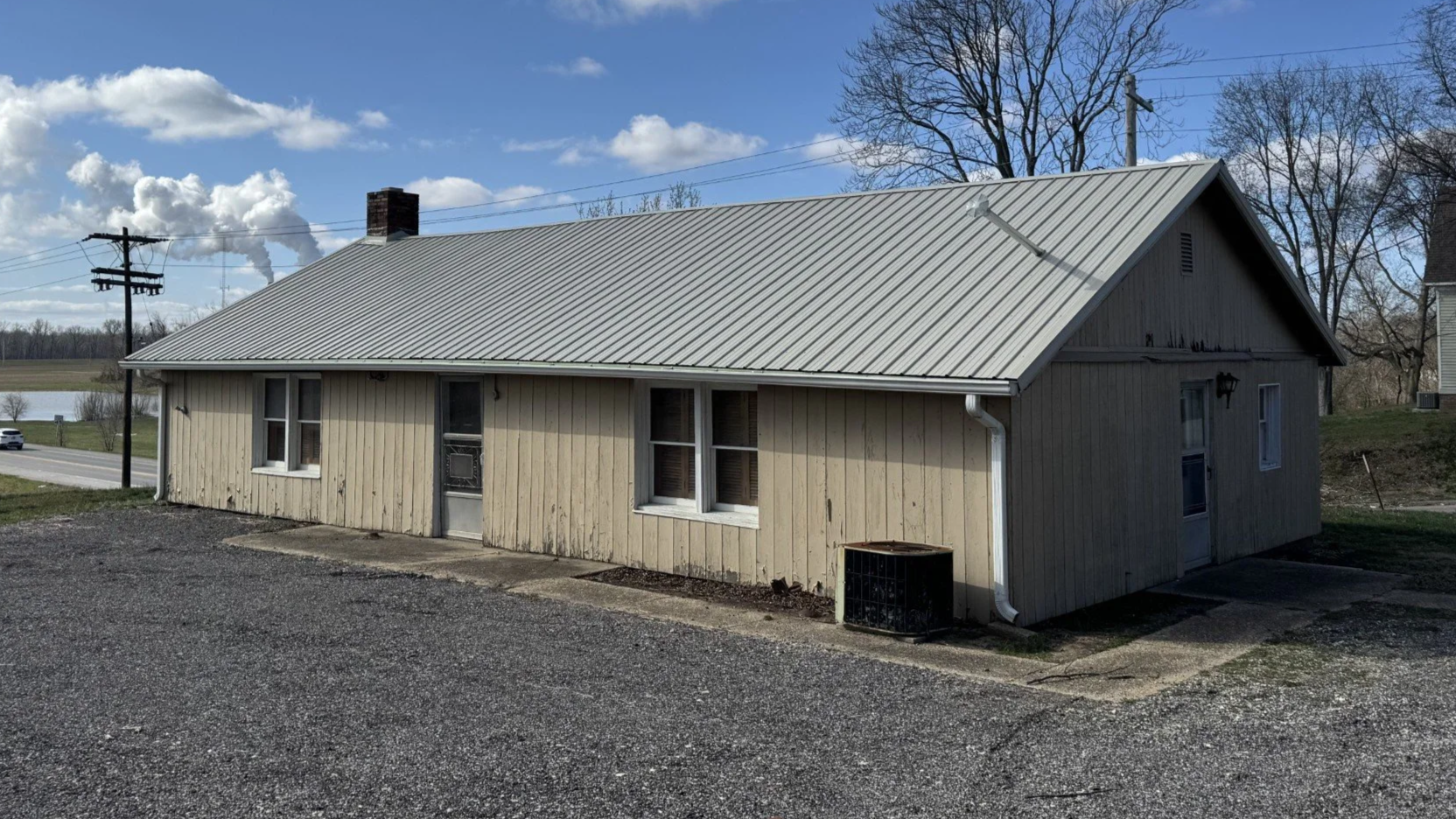
City Selling Former Girl Scout Cabin

The Mount Carmel City Council has agreed to sell the former Girl Scout cabin property at First and Walnut Streets for a new ice cream shop.

At Monday night’s council meeting, City Clerk Ryan Turner explained that the city received one proposal for the property from Jedidiah Wirth of Big Jon’s Lunch Box, who is interested in converting the site into an ice cream parlor.

Turner told the council Wirth has offered $10,000 for the property and plans to renovate the building, add outdoor seating, and expand parking on the site.

As part of the proposal, Wirth also requested additional land extending toward Chestnut Street to allow room for parking and other improvements. Turner said the city would need to survey and split the property, since the parcel currently includes other city-owned structures and land.

Council members discussed possibly marking the property boundaries for a better visual reference and whether an easement could be considered for some of the land.

Turner said the area currently isn’t used by the city except for mowing, and noted the property is located within a TIF district, meaning surveying costs would come from the city’s general fund.

After discussion, the council voted unanimously to approve the sale of the property to Wirth for the proposed ice cream shop project.

Regional Science Fair Competition Results 2026

BY SARAH DOUGHERTY | 8th Grade Science Teacher

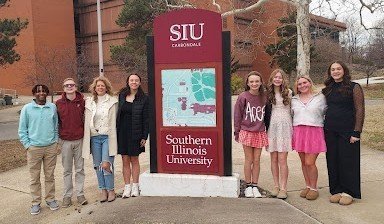
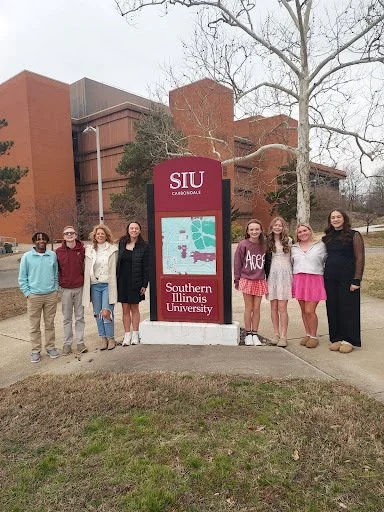
Mt. Carmel Junior High School was represented at the Regional Science Fair in Carbondale, IL, on February 24, 2026. Students secured the right to compete by earning the top scores at the local judging. Eli Wilcox, Matalei Greer, Kinley Mandrell, Addison Carmickle and Mia Dickerson competed individually. Andrew Hagerty and Annie Hagerty competed as a partner group. Students were judged on oral presentation skills, a visual display, a written report, and evidence of scientific process skills. Mount Carmel 8th Grade students competing were awarded a "Bronze" rating for Eli Wilcox, a “Silver” rating for Mia Dickerson and a “Gold “ rating for Matalei Greer, Addison Carmickle, Kinley Mandrell and Andrew and Annie Hagerty based on the scores received. Sarah Dougherty is their 8th-grade Science Fair Sponsor.

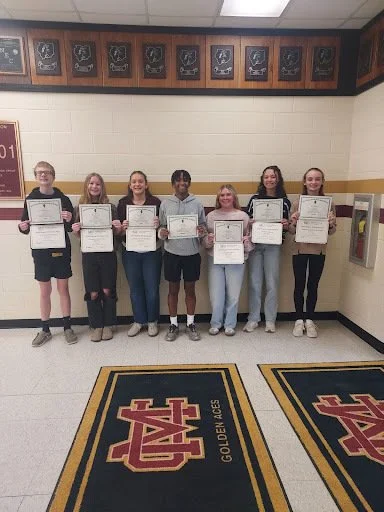
Our students were further rewarded for their efforts with their projects by bringing home several monetary awards sponsored by various departments from SIU Carbondale. Pictured L-R are Andrew and Annie Hagerty, who received a monetary award for the Outstanding STEM Project, sponsored by the STEM Education Research Center. Kinley Mandrell, who received a monetary award for the Outstanding Physics Award, was provided by the School of Physics. Eli Wilcox is shown with his certificate from the judges. Addison Carmickle, who received a monetary award for Overall Excellence provided by the School of Medicine. Matalei Greer, who received a monetary award for Overall Excellence sponsored by the Vice Chancellor for Diversity, Equity, and Inclusion. And Mia Dickerson, who received a monetary award for the Outstanding Zoology Project sponsored by the School of Biological Sciences, Microbiology. This was truly an exceptional achievement to have so many of our students recognized and rewarded for their various studies! Sarah Dougherty is their Science Fair sponsor.