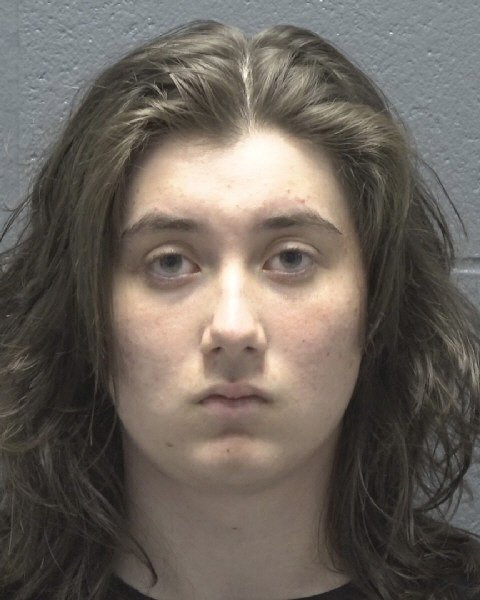
On August 22, 2026, at 6:32 p.m. Gibson County Deputy Eric Powell conducted a traffic stop on Gach Road after observing a Black 2006 Nissan Sentra speeding on US 41 near the Kings Mine Exit. Upon stopping and approaching the vehicle Deputy Powell detected multiple clues that the driver 18-year-old Alex Castro of Evansville might be under the influence. At that point Deputy Powell began a roadside OWI investigation. Once the inquiry was completed Deputy Powell placed Mr. Castro into custody and transported him to the Gibson County Detention Center where he was charged with Operating a Vehicle While Intoxicated, Possession of Marijuana, and Possession of Paraphernalia.
Deputy Quinten Might assisted Deputy Powell in his investigation.
All criminal defendants are to be presumed innocent until and unless proven guilty beyond a reasonable doubt in a court of law.
Motorcycle accident nets impaired driver
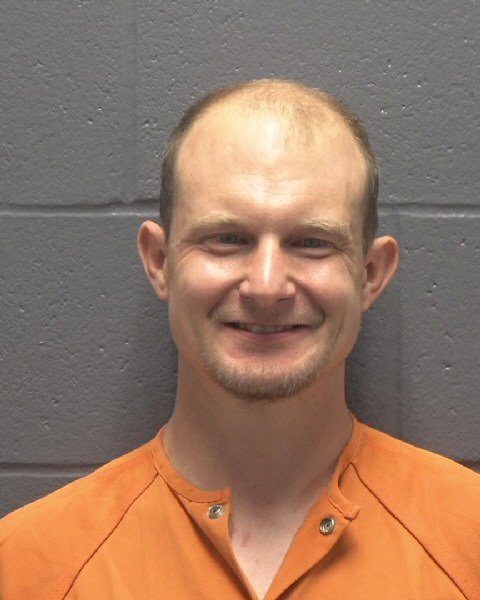
On August 23, 2026, at 4:24 p.m. Gibson County Central Dispatch received a 911 report of an accident involving a motorcycle on County Road 350 South near County Road 100 East. Upon arriving Deputy Wes Baumgart spoke with the driver of the Green 2023 Kawasaki KL6, Kody Scott age 34 of Princeton. While investigating the accident Deputy Baumgart detected the odor of alcohol coming from Mr. Scott and began a roadside DUI investigation. Once the investigation was completed Mr. Scott was transported to Deaconess Gibson for medical clearance and then to the Gibson County Detention Center where he was charged with Operating a Vehicle While Intoxicated.
Deputies Eric Powell and Wyatt Hunt assisted Deputy Baumgart in his investigation.
All criminal defendants are to be presumed innocent until and unless proven guilty beyond a reasonable doubt in a court of law.
Mt. Carmel Continues Effort to Recover Demolition Costs Through Sheriff's Sales
The City of Mt. Carmel continues working to recover a portion of the costs associated with demolishing unsafe properties.
City Attorney Derek McCullough reported that two properties are currently being sold through the Wabash County Sheriff's sale process. The properties are located at 413 North Market Street, where the city demolished a partially collapsed building several years ago, and 230 Hinde Street.
McCullough explained that when the city demolishes a dangerous structure, it places a lien on the property to recover demolition costs and attorney fees. If the property owner fails to satisfy the lien, the city files a foreclosure action, leading to a sheriff's sale.
He said the process often results in the city taking ownership of the property before it is later offered for sale through sealed bids.
McCullough acknowledged the city rarely recovers the full cost of demolition, noting the city often spends thousands of dollars removing unsafe structures but later sells the vacant lots for only a few hundred dollars. Even so, he said the effort remains an important public service that removes blighted and dangerous properties from the community.
McCullough added another property is expected to be headed to sheriff's sale soon, while three or four additional properties are currently in the demolition order process.
Judge Responds To Flock Camera Criticism
Questions about Mt. Carmel's use of Flock license plate recognition cameras were addressed during this month’s WSJD's Ask the Mayor program.
Mayor Joe Judge was asked who authorized the cameras and whether the city plans to continue using them amid concerns about how information collected by the system can be used.
Judge said the cameras were originally brought before the City Council by former Mt. Carmel Police Chief Mike McWilliams and were approved by commissioners. Judge said he believes grant funding was used to help pay for the cameras.
According to Judge, Police Chief Erin Peach is currently the only person within the department with access to the city's Flock camera system.
Judge said he believes some of the concerns circulating online about the cameras are based on false information. He said Mt. Carmel has only been asked to review camera information on a couple of occasions and that the system has assisted another law enforcement agency in apprehending a murder suspect.
Judge acknowledged that some residents remain strongly opposed to the technology because of privacy concerns. He compared the cameras to privately owned doorbell cameras that routinely record activity along streets and sidewalks.
As for whether the cameras will remain in Mt. Carmel long-term, Judge said that decision will ultimately be up to the City Council when the city's current three-year contract expires, which he believes will be sometime in 2027 or 2028.
Mt. Carmel Council Approves Purchase of New Tractor for Street Department
The Mt. Carmel City Council has approved the purchase and financing of a new tractor after the city's current machine suffered a major mechanical failure.
City Clerk Ryan Turner told council members the city's 2011 New Holland tractor, which has more than 8,000 hours of operation, experienced an engine failure that is not cost-effective to repair.
The tractor is used to mow the levee, large grassy areas near the ball fields, the practice field and other city properties.
Turner said replacing the engine would still leave the city with an aging tractor carrying only a one-year engine warranty. Instead, the city has been leasing a replacement tractor from New Holland in Albion while exploring purchase options.
The dealership agreed to forgive the repair bill on the damaged tractor and apply the lease payments toward the purchase of the replacement machine.
The council approved purchasing the new New Holland tractor for approximately $161,000, including the required dual wheels.
Council members also accepted financing through First National Bank of Allendale at a 4.65% interest rate over seven years. Turner said the longer repayment period was recommended because the department using the tractor does not generate significant revenue and the annual payment of about $27,500 will be easier to incorporate into future budgets.
Mayor Joe Judge noted the city paid about $112,000 for the original tractor in 2011, meaning the replacement cost has increased by roughly $49,000 over the past 14 years. The purchase and financing were both approved unanimously.
IECC Board Summary
The Board of Trustees of the Illinois Eastern Community College District No. 529 met Tuesday, August 18, 2026 at Olney Central College, Olney, Illinois.
The Board approved the minutes of the Board of Trustees regular meeting held on July 21, 2026.
The Board approved a Memorandum of Understanding with PREVAIL Illinois to provide confidential advisor services to students and employees who experience sexual violence at Lincoln Trail College, Olney Central College, and Wabash Valley College. The services will be provided at no cost to IECC.
A Memorandum of Understanding with Sexual Assault and Family Emergencies (SAFE) was authorized to provide confidential advisor services to students and employees who experience sexual violence at Frontier Community College. The services will be provided at no cost to IECC.
The Board approved the 2026 IECC Program Review Report, which evaluates career and technical programs, academic disciplines, and student support services based on quality, cost, need, equity, and performance. The review helps identify opportunities for curriculum updates, resource needs, and continued improvement of programs and services.
A Telecommunication Course Fee was approved for the Broadband Telecom program at Lincoln Trail College and the Electrical Distribution Systems program at Frontier Community College, effective Fall 2026. The fee will cover the actual cost of the American Traffic Safety Services Association flagger certification exam.
The Board approved eliminating the $3-per-credit-hour Apprenticeship Fee. The change will reduce administrative processes, simplify billing, and remove any unnecessary cost for student apprentices while supporting IECC’s commitment to students and regional workforce needs.
A clinical education agreement with the University of Southern Indiana’s Kinney College of Nursing and Health Professions was approved, providing opportunities for its nursing students to complete required practical learning and clinical experiences at IECC facilities.
Affiliation agreements with Peak Physical Therapy & Wellness and ROE #12 Storybrooke Pre-K were approved.
Policy 400.4 was updated to reflect changes in state law regarding paid leave and organ donation leave for eligible part-time employees. The revisions also clarify existing policy provisions and ensure alignment with current statutory requirements.
Trustee Browning & Trustee Ridgely were selected to serve as members of the Board Audit Committee, which provides oversight of the District’s annual audit and reviews the annual Audit Report with the District’s auditors.
The Fiscal Year 2027 Tentative Budget and accompanying Budget Resolution were approved. The budget reflects anticipated revenues and expenditures for the upcoming fiscal year, including $20.67 million in planned capital outlay. A public hearing and final budget adoption are scheduled for September 15, 2026, at Lincoln Trail College.
The Board declared approximately 1.21 acres of District-owned property adjacent to Frontier Community College unnecessary for Community College purposes and authorized its sale. The property will be marketed for student housing development, with conditions requiring the purchaser to use the property for student housing and begin construction within three months of closing.
Authorization was granted to purchase a NetApp FAS 2750 storage system from Keller Schroeder & Associates for $128,818.91. The replacement will modernize the District’s aging storage infrastructure and provide improved performance, resiliency, capacity, and data protection.
Funding is included in the approved FY2027 technology replacement budget.
Approval of employment was given for Destiny Nesler as Physical Therapy Assistant (PTA) Instructor, WVC; Gabriell Weber as TRIO Upward Bound Academic Counselor, WVC; Sydney Miller as TRIO Upward Bound Academic Counselor, LTC; Sam Romershausen as Information Systems Technician, WVC; Luis Rodriguez as Head Men’s & Women’s Soccer Coach, LTC; and Joe Hunt as O&M Team Lead, OCC, all effective August 24, 2026.
Pay increases were approved for eligible non-bargaining unit employees for Fiscal Year 2026-2027. Eligibility for increases will vary based on employees’ hire dates.
A special assignment was approved for Kinsey Whitaker to serve as Program Director for the Physical Therapy Assistant Program.
Retirement ratification was approved for Ken Pryor as Manager of Technology Infrastructure effective October 31, 2026.
The next regular meeting of the Board of Trustees will be Tuesday, September 15, 2026, at 6:15 p.m. at Lincoln Trail College, Robinson, IL.
Mt. Carmel Police Responded to 550 Incidents in July
The Mt. Carmel Police Department handled 550 incidents during the month of July, according to the monthly activity report released by Police Chief Erin Peach.
Officers issued 110 warnings, investigated six traffic accidents, and served one warrant during the month. Police also responded to 20 animal complaints, completed 15 mental health incident forms, and conducted 85 hospital security checks, 111 residential security checks, and 170 business security checks.
Traffic enforcement resulted in 24 arrests, including eight uninsured motor vehicle violations, six speeding arrests, four registration violations, three other moving violations, two suspended or revoked license cases, and one driver cited for having no valid license.
Criminal arrests included four domestic battery cases, four other criminal offenses, two resisting or obstructing an officer charges, two criminal trespass arrests, one assault, and one retail theft arrest.
Drug-related activity included one arrest for possession of methamphetamine, while alcohol-related arrests consisted of one unlawful consumption offense. There were no DUI arrests during the month.
The report also showed police investigated one sex assault transfer, recorded no missing persons, and reported no school resource officer incidents in July.
The department also issued 13 new golf cart permits, renewed six, completed two new bicycle registrations, and renewed one existing bicycle registration.
Data centers emerging as key issue in Illinois governor’s race
State lawmakers could tackle new regulations in fall veto session after the election
By MAGGIE DOUGHERTY
& BEN SZALINSKI
Capitol News Illinois
news@capitolnewsillinois.com
Article Summary
The emergence of a new class of data centers has garnered bipartisan opposition in communities across the state. What was once seen as an avenue for economic growth has become a political issue in Illinois, and one on which candidates from both sides of the aisle are hoping to distinguish themselves.
Democratic Gov. JB Pritzker once championed data centers as a driver of new jobs, signing a tax incentive program to bring more of them to the state.
But as data centers have scaled up, he’s paused state incentives and his position has evolved to one of “responsible growth.”
Republican candidate Darren Bailey has both criticized Pritzker’s pause of the tax incentive program and claimed credit for inspiring it.
He now says he would go further than Pritzker and pause all existing data center tax agreements.
This summary was written by the reporters and editors who worked on this story.
When Gov. JB Pritzker signed tax incentives for data centers into law in his first year as governor in 2019, Republicans and Democrats celebrated the plan as an economic driver.
“In today’s world, data centers are as critical a part of our infrastructure as our roads, trains and schools,” Pritzker said in October 2019. “With the legislation I signed into law, we are welcoming a surge of economic development, labor income, and good union jobs to Illinois.”
Now, eight years and nearly two full terms later, the governor has paused those incentives as the onset of data centers has stressed energy and water resources and public opinion has swiftly turned against the tech behemoths.
At the crux of the changing debate on data centers is the advent of artificial intelligence. The technology requires a new class of data center: hyperscale, always-on facilities that require massive amounts of energy.
“We weren’t talking about AI hyperscalers back in 2019,” Pritzker said at an unrelated news conference earlier this month. “I've already taken action. We've taken away the data center tax credits that existed, but it’s with the goal of getting legislation that will ensure that the people of Illinois, the businesses of Illinois, are not having burdened upon them higher electric rates, higher water rates, or having environmentally unsound practices by these data centers."
Polling conducted this spring on behalf of the Illinois Clean Jobs Coalition, which has led the push for data center regulations, showed Illinoisans from across the political spectrum favoring legislation that would require hyperscale data centers to bring their own energy and establish new reporting requirements on water use and environmental impacts.
Pritzker’s Republican opponent Darren Bailey has also evolved in his support of data centers. While seeking to seize on their unpopularity by blaming the governor for the incentives package, he’s making AI a major piece of his campaign strategy.
"To be anti-AI, anti-data center, that’s not what this is about at all,” Bailey said in an interview. “This is about protecting the people.”
Evolving tech landscape
The changing public perception of data centers tracks with the evolution of the industry — and that’s led political candidates to take notice.
“I think political candidates have sort of realized more within the last year or so just how important this issue is to voters because it goes so far beyond just energy bill impacts,” Illinois Environmental Council spokesperson Hannah Flath said. “Regardless of your political affiliation, regardless of where you live in the state of Illinois or across the country, you have a reason, at least one reason, to be concerned about data centers.”
Per the Clean Jobs Coalition survey, when respondents were asked whether they would support regulations on data centers “to minimize their impact on our utility bills, climate and water while still allowing them to be built,” 68% of respondents said they would somewhat or strongly support such legislation. Support was slightly stronger at 71% among Democrats and Independents, though 62% of Republicans also supported the idea.
Bailey told Capitol News Illinois that finding ways to regulate data centers falls back to one of the themes of his campaign: affordability. He said new utility regulations for the facilities will help lower Illinoisians’ utility bills while ending tax credits will lower property tax burdens as data centers cover a greater share.
He pointed to Pritzker’s signature on the 2019 law establishing a tax incentive program designed to attract data centers to Illinois. Bailey voted against it when he was a state representative. Though he opposed the original bill, he — and every other member of the Senate at the time — supported a law in 2021 that expanded it.
That program committed more than an estimated $650 million in tax exemptions to 34 data center projects before Pritzker put it on pause in June, according to the Department of Commerce and Economic Opportunity, after lawmakers failed to act on his request for new data center regulations in the spring session.
Pritzker celebrated the groundbreaking of several new data centers in Illinois before AI significantly burst onto the scene, including the opening of Meta’s data center in DeKalb in November 2023.
"It isn't an accident, though, that Meta and many other tech giants are seeing massive potential in our great state for data center growth,” Pritzker said that year. “Their decision to locate here is a reflection of the hard work that our General Assembly members and our administration have done to position our state to win this business."
A year later, he was present at the groundbreaking for CyrusOne in Aurora, where he said electricity in Illinois is “readily available and reliable.”
But by the beginning of this year, Pritzker’s focus shifted to new regulations as the industry evolved. The governor asked lawmakers in his February State of the State address to impose a two-year moratorium on new data center tax credits and further demanded data centers now supply their own electricity.
"We need to think critically about our future energy usage with the needs of Illinois households at the forefront,” Pritzker said at the time. “So, in the face of rising demand and surging prices, I’m proposing a two-year pause on authorization of new data center tax credits. With the shifting energy landscape, it is imperative that our growth does not undermine affordability and stability for our families.”
‘An essential service’
Advocates — including the same organizations that criticized the governor this spring for a “lack of engagement” on passing data center regulations — said no one, not even Pritzker, could have foreseen the challenges data centers would bring.
Andrew Rehn, policy director of the Prairie Rivers Network, said 2019 was “a different world” in terms of data centers.
While traditional data centers have existed for decades in Illinois, the new hyperscale data centers needed for AI require significantly more energy, water and space. Some of the largest proposals, Rehn said, would consume half the energy of the entire city of Chicago, and take up a space as big as Central Park.
“It feels like, well, why is this conversation new? And of course, the answer is generative AI,” Rehn said. “It’s not just that we’re aware of something that wasn’t there. It is that what they’re doing has changed, or the scale of what is happening has changed in a meaningful way.”
Advocates for the data center industry say they know public opinion views them unfavorably. Brad Tietz, director of Midwest government affairs for the Data Center Coalition, said in an interview much of that comes down to misconceptions, and that the industry should listen to communities and address their concerns.
“You can't discount the fact that the data center industry is providing an essential service that we all rely on as residents and businesses,” Tietz said. “And data centers bring significant economic benefits to the communities in which they locate.”
One such misconception that members of the data center industry point to is that all of Illinois’ new hyperscale data center proposals would support AI. Rather, most are still used for traditional cloud computing and digital business infrastructure. Specific concerns of running afoul of the state’s strong biometric privacy law have also preemptively kept some AI developers at bay, according to industry insiders.
Complicating the regulatory picture, a growing swath of the population would prefer full moratoriums on new hyperscale data centers to aggressive regulation.
Of the 21% polled who opposed the proposed regulations, more than half said they did so because they opposed hyperscale data centers being built at all.
“People want, at the very least, to see these regulations in place if they are going to welcome data centers — and the benefits that do come with them — to their local community,” Flath said.
Positions shift
Even nearly six months into the general election for governor, the data center debate continues to evolve.
Bailey seemed to initially balk at Pritzker’s incentives pause during a news conference responding to the State of the State address, as he listed the proposal among others from Pritzker that he disapproved.
“We heard about new fees on social media companies, new regulations on insurers, new spending initiatives and even a pause on data center tax incentives at a time when other states are competing aggressively for investment,” Bailey said.
But, speaking to Capitol News Illinois this month, Bailey argued his campaigning forced Pritzker to support more rigorous regulations. When asked to provide evidence of that, a spokesperson for Bailey pointed to social media posts he made in April — two months after Pritzker announced his proposal.
Alex Gough, spokesperson for Pritzker’s campaign, said the decision to pause the tax incentives program was not inspired by Bailey.
Bailey also claims Pritzker is personally benefiting from data center construction in Illinois, specifically Meta’s site in DeKalb.
“He owns 25% of Facebook. God bless him for that,” Bailey claimed of Pritzker while campaigning in Chicago last month.
Financial disclosure records show Pritzker does own stock in Meta, managed through his blind trust, and though it’s not clear how much, it’s nowhere near Bailey’s claim — A 25% stake in the company would be worth approximately $375 billion, over 87 times Pritzker’s estimated $4.3 billion net worth.
Meta CEO and founder Mark Zuckerberg owns roughly 13% of economic interest in the $1.5 trillion company and 61% voting power, according to its 2026 proxy statement. Other major investors include BlackRock and Vanguard, which each own around 6-7%.
State law also requires the governor to disclose every asset for which he, his wife or his children have direct beneficial ownership interest exceeding $10,000.
While Bailey voices concerns about data centers, his campaign often posts artificial intelligence-generated images on social media, including an image of a campaign button that said “say no to data centers,” which Facebook labeled as an AI image. He argued that doesn’t make his position on data centers inconsistent.
At a forum last month in Lake Zurich, Bailey said data centers are necessary, though he’s wary of tax incentives for them.
“We've got to have the data centers, in time. We had the race for space; we had the arms race,” Bailey said. “This new race is technology, and we cannot let China beat us in the race.”
Current policy positions
Pritzker also hasn’t adopted an anti-data center position, despite his support for more regulations.
“Illinois has an opportunity to continue leading in technological innovation and economic growth, but we also have a responsibility to protect working families and local communities as the data center industry rapidly expands,” Pritzker said in his June announcement directing the state to pause processing new data center tax incentives.
Pritzker said he wants data centers coming to Illinois to bring their own resources rather than depending on the same utilities and water residents and other businesses use.
“We’re not going to incentivize you. We’re going to tell you that you’ve got to bring energy with you if you’re going to come, and you’ve got to have closed-loop systems that make sure that you’re not contaminating our water or taking too much of our water,” Pritzker said at a forum on quantum last month, addressing data center developers.
The pause was designed to give lawmakers more time to pass new regulations when they return to session in November after the midterm election. But it also upset labor leaders who see the projects as a benefit to their unions.
“This pause does nothing to lower utility bills, protect the grid, or advance clean energy,” labor leaders said in a statement in June. “Instead, it will send billions of dollars in investment and thousands of union jobs to Indiana, Kentucky, and Ohio — states that sit on the same electrical grid, where those data centers will be built anyway, just without Illinois workers protected by nationally leading labor standards and without the clean energy requirements we’ve collaboratively fought to establish here.”
Upcoming legislation?
More recently, prominent labor leaders have circulated a proposal for a legislative framework that would restart the tax incentive program and reshape the state’s biometric privacy law to be more favorable to AI developers, while setting baseline transparency standards around the use of nondisclosure agreements.
The proposal calls for requiring binding community benefit agreements, closed-loop water cooling systems with incentives for use of treated wastewater, use of union labor agreements, and a bring-your-own-energy model, prioritizing grid interconnection for projects that support renewable energy development.
Pritzker said last week the idea is “not a bill” and declined to take a position on it. He said in June the state needs to focus on “responsible growth” for the industry that also protects the state’s resources.
Bailey wants to go a step further and pause tax incentives for all data center projects, even ones currently getting a break from the state, until there’s a greater understanding of their effects on water and electricity.
“I think we need to have an immediate halt because ultimately, if we continue on this path that we’re going on, energy prices are going to continue to skyrocket,” Bailey said.
He said “it’s a matter of making a better deal” that also addresses energy problems. And though he noted in February other states are also competing for data centers, he doesn’t think pausing tax exemptions will harm growth in Illinois.
“Everybody wants tax breaks, but these data centers are coming, and I really personally believe they’re going to ... build regardless,” Bailey said.
To solve the energy problems from data centers, Bailey agreed they should provide their own energy, but also advocated a rollback of the state’s landmark climate legislation to allow fossil fuel operators to continue generating energy. He added that data centers should also pay into a fund that would be given back to consumers as relief of their utility bills.
While the candidates battle over data centers on the campaign trail, Pritzker said last week that passing new regulations should be a priority when lawmakers return for their fall veto session.
“This has been going on for quite some time, but they need to come to a conclusion, and I believe that something should be voted on in the November veto session,” Pritzker said.
Capitol News Illinois is a nonprofit, nonpartisan news service that distributes state government coverage to hundreds of news outlets statewide. It is funded primarily by the Illinois Press Foundation and the Robert R. McCormick Foundation.
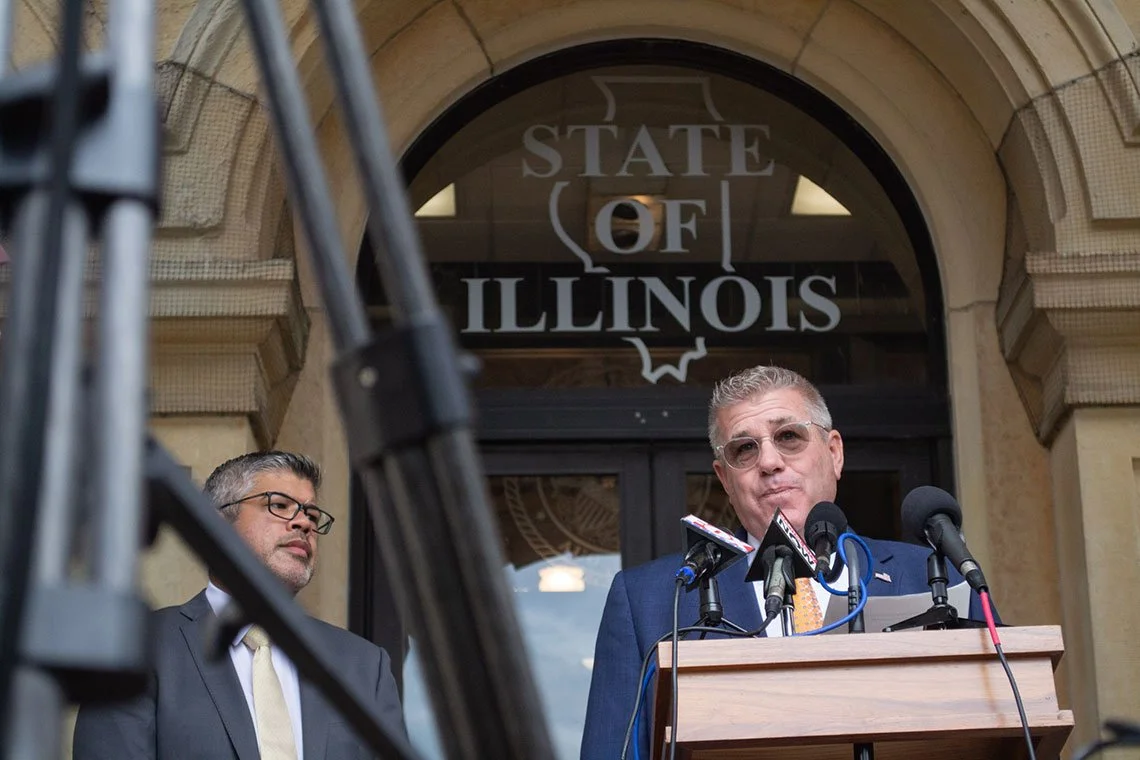
Republican candidate for governor Darren Bailey speaks at a news conference on the steps of the Capitol in August. (Capitol News Illinois photo by Jerry Nowicki)
Illinois Democrats focused on Trump as they seek third sweep of statewide races
Cloud of ethics issues forces Democrats to answer questions about trust in the party
By BEN SZALINSKI
& BRENDEN MOORE
Capitol News Illinois
news@capitolnewsillinois.com
Article Summary
Democrats slammed President Donald Trump as their common enemy during State Fair festivities in Springfield on Wednesday.
The state’s top leaders lined up to highlight ways they’ve fought Trump’s agenda, arguing voters should give them another term to continue executing their anti-Trump platform.
Party leaders also had to answer questions about ethics issues in the Illinois House, and many acknowledged they are issues that must be addressed.
This summary was written by the reporters and editors who worked on this story.
SPRINGFIELD — Though hundreds of Republican candidates will appear on the ballot in Illinois in November, the state’s Democrats are focused on a common opponent: President Donald Trump.
The party’s leaders gathered in Springfield on Wednesday for their annual Democrat Day at the Illinois State Fair and at a brunch with county party leaders where they attempted to draw contrasts between themselves and Republicans. Amid their various names for the country’s leader — such as the “Cheeto president” whose agenda is a “river of sewage” — Democrats patted themselves on the back as a model of governing success.
While the sense of urgency in confronting Trump and national Republicans was unmistakable, there was little evidence Democrats fear being dislodged as the state's dominant party. After a March primary election that featured several high-profile contests, the statewide general election campaign has largely been a sleepy affair. This was reflected in the focus of the speeches Democrats delivered to party faithful.
“We are only 19 months into Donald Trump’s term and what he and his MAGA Republicans are doing to this nation is disgraceful,” Gov. JB Pritzker said.
Pritzker and running mate Christian Mitchell invoked the names of their Republican opponents, Darren Bailey and Aaron Del Mar, respectively, only a handful of times. Lt. Gov. Juliana Stratton, the Democratic nominee for U.S. Senate, didn't utter her GOP opponent Don Tracy's name once. And none of the other statewide Democratic elected officials mentioned the names of the little-known Republicans running against them.
It's a reflection of the sheer dominance Democrats have built in Illinois, which Sen. Tammy Duckworth referred to as the "rebar" in the Midwestern blue wall. The party holds all statewide offices, supermajorities in the state legislature and 14 of 17 congressional seats.
And if anyone needed a reminder of the advantage Democrats have, Pritzker last week cut a $65 million check to his campaign fund, which will support his bid for a third term and help Democrats up and down the ticket. Bailey, who will rally with Republicans at the fairgrounds on Thursday, had just $127,990 in the bank at the end of June and has reported just $115,000 in contributions since.
Though Pritzker, speaking to reporters after the rally at the fairgrounds, suggested state Democrats wouldn’t be complacent despite the party having swept statewide offices in both 2018 and 2022.
“We’re fighting it out in every district, so it's not a one-party state,” Pritzker said. “We got battles going on toward the general election, and we'll see who wins. But I'm very proud of the fact that Democrats actually represent the working people of the state and are standing up for their rights and making sure that we're putting money in their pockets and lowering costs for them.”
‘Don’t toy with Illinois’
Democrats running for statewide office couldn’t wait to share with supporters what they’ve done to fight Trump during their tenure.
Attorney General Kwame Raoul touted his office's legal tussles with the Trump administration, including its successful efforts to beat back the president's attempt to deploy the National Guard to the streets of Chicago.
"Some may say 'Don't mess with Texas,' but we went all the way to the Supreme Court to tell Donald Trump, 'Don't toy with Illinois,'" Raoul said.
Minutes later, Duckworth told Raoul that "if you want to put that on a T-shirt and say ‘Don’t f---ing toy with Illinois,’ I’ll buy a dozen of them.” It was one of two expletives Illinois' soon-to-be senior senator deployed.
Though he’s unpopular in the state, Trump had his best performance in Illinois of his three campaigns in 2024. While he didn’t substantially receive more votes, many Democratic voters appeared to skip over Kamala Harris on the ballot. Democratic Party Chair Lisa Hernandez said her party isn’t taking the state’s dark blue leanings for granted.
“We're doing all we can to bring back the trust of the vote, based on what we saw in the last election,” Hernandez told Capitol News Illinois.
With Trump the focal point of Democratic campaigns, Pritzker argued there’s no daylight between the president and Bailey, who Trump endorsed four years ago but hasn’t so far this year.
"This is the government that Darren Bailey rooted for,” Pritzker said. “This is the vision that he and his Illinois Republicans want to impose on working families across Illinois. I think it’s instructive for us to put side-by-side two visions of Illinois.”
Pritzker got high praise from one prominent national politician on Wednesday: Massachusetts Democratic Sen. Elizabeth Warren, who keynoted the breakfast.
"JB Pritzker stood up and delivered a message directly to Donald Trump,” Warren said. “He said, ‘You come for my people, you come through me.’ And I thought that is leadership. JB Pritzker was showing some old school loyalty to the people of Illinois and showing that Democrats, or at least some Democrats, don’t back down from bullies.”
Fight over affordability
Democrats argued Trump’s Republican Party has only made life worse for Americans through “wars of choice” that have driven up gas and grocery prices.
“At a time when Donald Trump and MAGA Republicans and his entire freak show are demonstrating how the government can be distorted to satisfy the greed of the wealthy and the greed of Donald Trump’s own pockets, while robbing working families blind, Illinois Democrats are showing what it means to truly fight for the people,” Pritzker told supporters at the fair.
But as Democrats bashed Trump for rising prices, the Illinois Tollway on Wednesday morning approved a 57% increase on cars and 30% on trucks beginning next year. It will increase by inflation every two years after that without further public hearings or board votes. The rate increase will fund a capital program for the Tollway and was permitted by the transit reform bill lawmakers approved last year.
“We want to make sure that our roads are pothole-free, that we're making sure to build more so that we can build our economy across the state of Illinois,” Pritzker told reporters.
Bailey has suggested eliminating tolls, but Pritzker said that would only cause more downstate communities to foot the bill for Chicago area expressways. More broadly, Bailey has tried to say Pritzker’s criticism of Trump on cost-of-living issues rings hollow as Illinois has implemented dozens of new taxes during his governorship.
“We feel great about our record and that shows that we are deeply focused on the people of Illinois and will continue to be through Nov. 3,” Mitchell told Capitol News Illinois.
Ethics issues
Republicans are hoping to derail Democrats' electoral hopes by focusing on a series of alleged ethical lapses unearthed this summer.
Rep. Carol Ammons, D-Urbana, has pleaded not guilty to federal charges that she orchestrated a scheme to receive illegal cash kickbacks from her own campaign account and from local nonprofits for which she helped secure state grant funding.
House Speaker Emanuel "Chris" Welch, D-Hillside, didn’t attend any of the Democrat Day festivities on Wednesday.
He is under scrutiny for his handling of sexual harassment allegations against disgraced ex-Rep. Harry Benton, D-Plainfield, who resigned in July after a Legislative Inspector General report found he engaged in "a pattern and practice of inappropriate sexual conduct” that began soon after he took office in 2023.
Welch's office knew about an allegation against Benton but did not address it for several months. Welch then subsequently spent $1.4 million in support of Benton's reelection in 2024.
A Chicago Tribune report also highlighted Welch's behavior on social media, which included reacting to a former staffer’s Instagram photos with heart eyes and inviting her to a bar through an encrypted messaging app.
As Welch made the rounds to a series of fundraisers and receptions in downtown Springfield on Tuesday, mobile billboards circled the block airing an Illinois House Republican message highlighting posts Welch has liked on social media. Other billboards tied newly appointed Rep. Jessica Dixon Heitman, D-Plainfield, and Rep. Katie Stuart, D-Edwardsville, both in relatively competitive districts, to Welch.
Hernandez acknowledged the incidents could undermine trust with voters.
“I believe that the speaker is doing all he can and I think he is putting himself out there and doing what he (can) to put in place what we have learned based on the current incidents that we have to do better,” she said.
But other Democrats dismissed the notion that they will be punished at the ballot box for the ethical lapses.
"I mean, Republicans are always going to find something to run on where they are going after individual candidates for, you know, reasons that are outside of their control," said Rep. Margaret Croke, D-Chicago, the party's nominee for comptroller, referring to the Heitman and Stuart billboards. "But no, I think that we just have to continue to run on the things that people are hearing about right now: affordability, healthcare, education. And if we continue that message, we'll be successful in November."
Mitchell echoed those sentiments.
“Obviously those ethics issues should be dealt with,” Mitchell, a former representative, said. “Sounds like the House is trying to do that. We want to focus on the issues facing the voters in November, and when we do that, I think we'll win.”
Looking ahead
With Democrats heavily favored in all statewide contests, many are already looking ahead to the Chicago mayoral election next February.
Secretary of State Alexi Giannoulias and Comptroller Susana Mendoza are among several declared candidates challenging incumbent Mayor Brandon Johnson.
Mendoza ran unsuccessfully for mayor in 2019. She received criticism that year for seemingly having her eye on the Chicago City Hall while running for reelection as comptroller in 2018. This time, Mendoza opted against seeking reelection to her statewide office to focus on the mayor's race.
Giannoulias, on the other hand, is running for reelection and mayor simultaneously, for which Mendoza took a not-so-subtle jab, saying that voters "deserve a candidate who's going to be all in the position that they're asking you to support them for."
Giannoulias told reporters at the fairgrounds that he didn't hear Mendoza's remark, adding that his current role is "the best job in government" but that he wants to be "part of the solution" to the issues plaguing the state's largest city.
"And as I've said, when you're applying for a job, when you're interviewing for a job, which is what you do when you run for mayor, you don't quit the job you're in while you're interviewing for the next one," Giannoulias said.
Capitol News Illinois is a nonprofit, nonpartisan news service that distributes state government coverage to hundreds of news outlets statewide. It is funded primarily by the Illinois Press Foundation and the Robert R. McCormick Foundation.
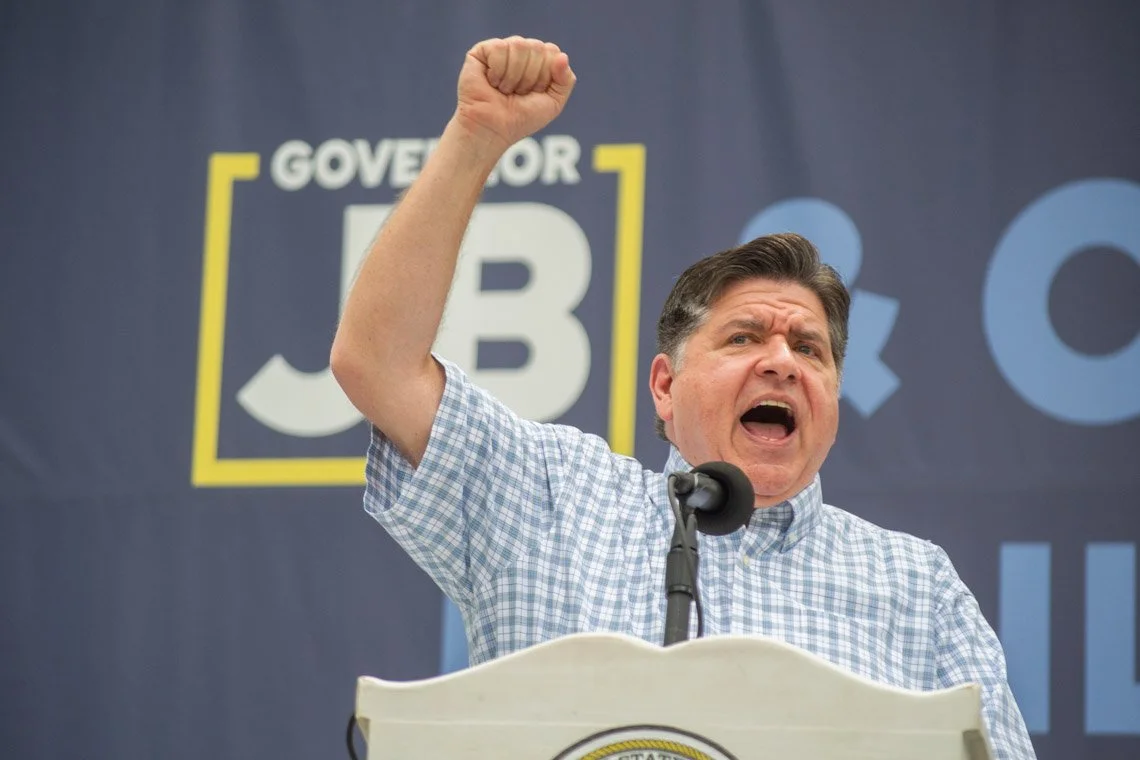
Gov. JB Pritzker fires up the crowd during Governor’s Day festivities at the Illinois State Fair on Aug. 19, 2026. (Capitol News Illinois photo by Jerry Nowicki)
In Illinois, Warren urges Democrats to unite behind all party nominees
Massachusetts senator delivers keynote in event honoring retiring Sen. Dick Durbin
By PETER HANCOCK
Capitol News Illinois
phancock@capitolnewsillinois.com
Article Summary
Massachusetts Sen. Elizabeth Warren delivered the keynote address at the Illinois Democratic County Chairs’ Association annual brunch in Springfield.
She called on Democrats to unite behind all the party’s candidates in the November midterm elections to take control of Congress and check the power of President Donald Trump.
Her speech came as left-leaning and self-described socialist candidates have been scoring upset victories in Democratic primaries around the country, prompting fear among some that the party is shifting too far to the left.
This summary was written by the reporters and editors who worked on this story.
SPRINGFIELD — U.S. Sen. Elizabeth Warren urged Illinois Democrats on Wednesday to unite behind all of the party’s nominees in the upcoming midterm elections so they can win control of Congress and block Republican President Donald Trump from advancing his agenda.
And to show she was serious, she announced she is putting $500,000 into the party’s coordinated campaign funds to elect Democrats to the U.S. House and Senate, plus another $100,000 to the Democratic National Committee to strengthen the party’s internal infrastructure.
“It is time to stop the handwringing and to invest in a key part of our Democratic infrastructure,” Warren, D-Massachusetts, told an audience of more than 2,000 Democrats gathered in Springfield. “And I am asking others to join me and do the same.”
Warren was the keynote speaker at the Illinois Democratic County Chairs’ Association brunch, an annual event that coincides with Governor’s Day at the Illinois State Fair. The focus of this year’s event was to celebrate Illinois’ retiring Sen. Dick Durbin while also showcasing the party’s slate of candidates in the November election.
But her speech came at the same time internal friction has been rising within the party as a new generation of young, left-leaning and self-identified socialist candidates have been rising to prominence around the country by defeating establishment-backed candidates in contested primaries.
Rise of the left
Just a day earlier, Angie Nixon, a little-known Florida state legislator and member of the Democratic Socialists of America, scored an upset victory over the more moderate, establishment-backed candidate Alex Vindman to win that state’s U.S. Senate primary.
And earlier this month, Abdul El-Sayed, a progressive candidate, edged out the more moderate U.S. Rep. Haley Stevens to win Michigan’s Senate primary.
Warren, who is often identified with the liberal wing of the Democratic Party, but whose message is usually more populist than socialist, admitted she has often been critical of party leaders for “meddling” in competitive primaries.
“I think it's wrong for the (party) to put a thumb on the scale when Democrats are choosing their nominee,” she said. “I think it's wrong to line up with big money, to drown out grassroots candidates. Wrong, and it weakens us.”
“But I know our job now,” she continued. “Democrats must win the Senate, and I am 100% behind our Democratic nominees everywhere, and I am 100% behind getting them the resources they need to win with.”
In his speech, Gov. JB Pritzker downplayed Democratic divisions.
“These days, it seems like the pundits and the naysayers want to stay in an endless loop of debate about the future of the Democratic Party to draw false and rigid divisions, to paint a picture of a fractured coalition,” Pritzker said. “If there's a divide in the national Democratic Party that exists, it's the one between team fight and team cave. And in Illinois, we've made our choice. We're on team fight.”
Still, the rise of self-identified socialist candidates has raised concern in some circles that the party may be shifting so far to the left that it is hurting its own chances to win in a general election, especially in a swing state like Michigan, which Trump narrowly won in 2024, or a conservative-leaning state like Florida, which Trump won by 13 percentage points.
Leading Illinois Democrats said Wednesday they remain confident of the party’s chances in November.
“I think Democrats are a big-tent party, and I think as many voices as we can get under the same umbrella is a good thing,” U.S. Sen. Tammy Duckworth said in an interview later in the day at the state fairgrounds. “We don’t want a homogenous party that is beholden to a single individual like the Republicans. I’m glad that we have diverse voices in our party so we can have many different perspectives.”
Lt. Gov. Juliana Stratton, who is running to succeed Durbin in the Senate, told reporters that she thinks Democrats still have a shot at winning control of the Senate.
“I think that it’s still in play and everybody is going to focus on these races over the next 76 days,” she said. We’re going to make sure that we are electing Democrats up and down the ticket in our own state but I’m also going to do everything I can to help Democrats win across this country.”
Honoring Durbin
Warren also took time to praise Durbin for his 30 years in the Senate, giving him credit for being an early supporter of legislation that would eventually bring her to national attention — creation of the Consumer Financial Protection Bureau.
That agency was created in 2010 as part of the Dodd-Frank Wall Street Reform and Consumer Protection Act, a legislative response to the 2008 financial crisis. Warren was still a Harvard law professor at the time and had been a vocal advocate of forming a government agency to protect consumers from predatory lending practices.
“Dick Durbin was the original sponsor of the Consumer Financial Protection Bureau,” she said. “He fought to make that agency happen, and I will forever be grateful.”
After the bill was signed into law, then-President Barack Obama named Warren to head a steering committee to get the new agency up and running. But she was not nominated to become the agency’s first director.
In 2012, Warren was elected to the Senate from Massachusetts, defeating incumbent Republican Scott Brown. Brown had won the seat in a special election in 2010 following the death of Sen. Ted Kennedy.
Durbin received several rounds of applause and said he’d remain involved, quipping that once politics is “in the blood,” it takes “embalming fluid" to get it out.
Capitol News Illinois is a nonprofit, nonpartisan news service that distributes state government coverage to hundreds of news outlets statewide. It is funded primarily by the Illinois Press Foundation and the Robert R. McCormick Foundation.
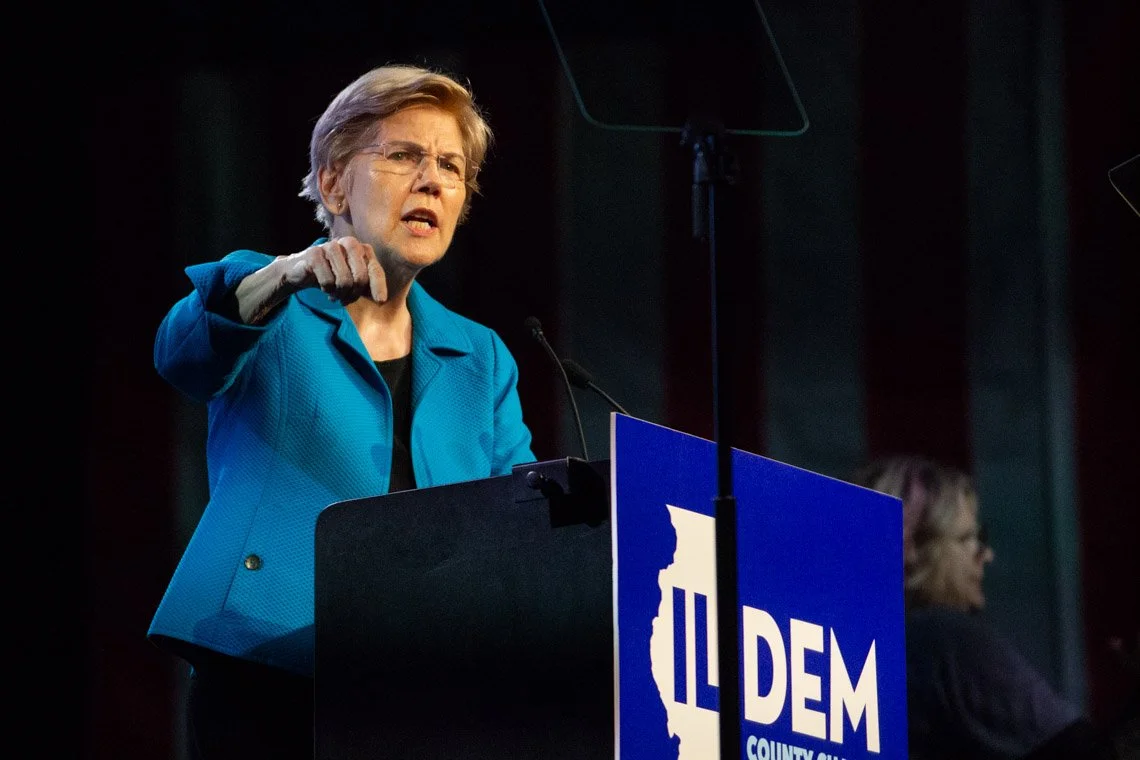
U.S. Sen. Elizabeth Warren, D-Massachusetts, gestures during her speech at the Illinois Democratic County Chairs’ Association brunch on Aug. 19, 2026, in Springfield. (Capitol News Illinois photo by Jerry Nowicki)