District #348 Teachers Bring New Writing Strategies Back to Classrooms

More than two dozen Wabash Community Unit School District #348 educators are bringing new ideas for teaching writing back to their classrooms after attending a professional development conference this summer.

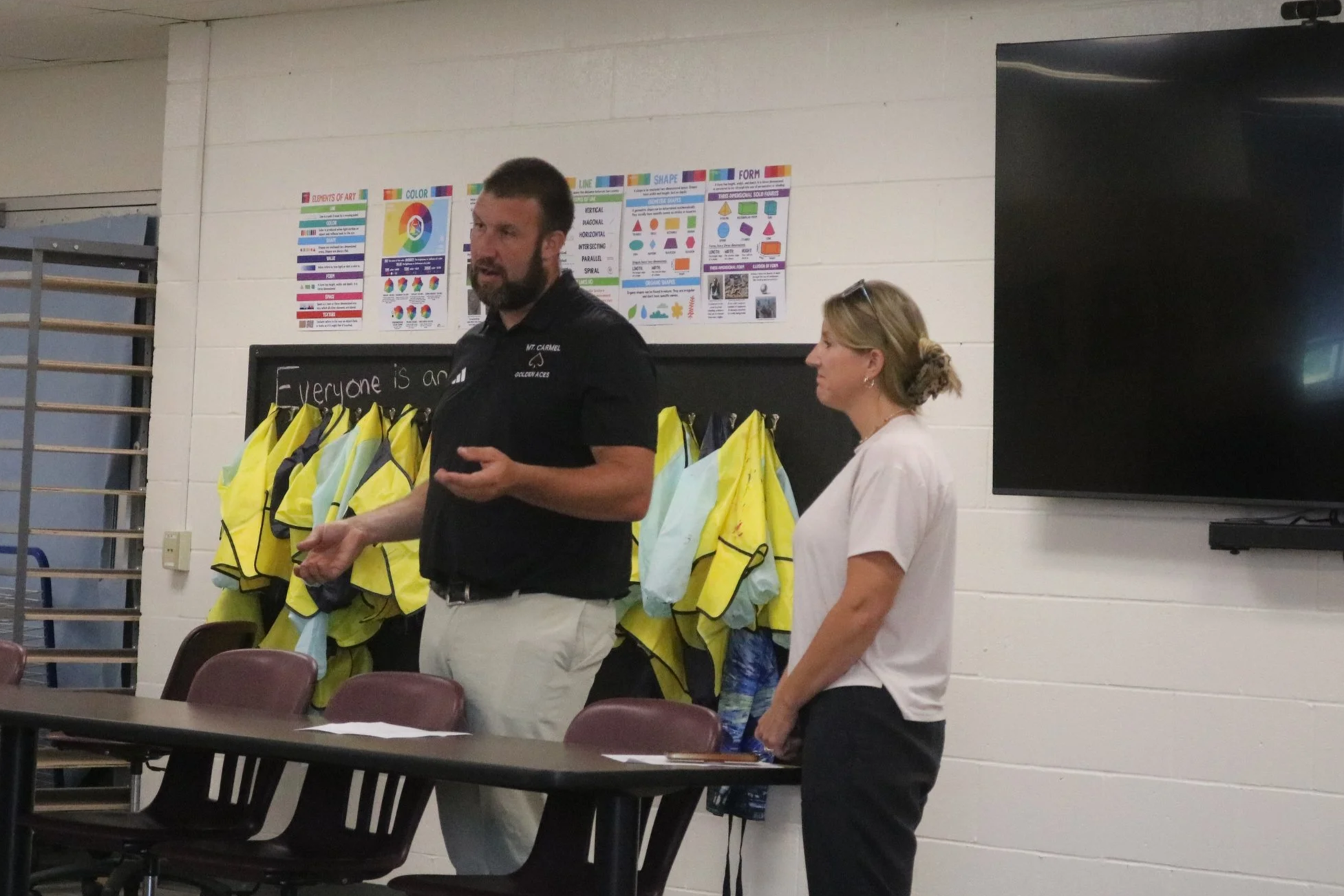
During the July school board meeting, Mount Carmel Junior/Senior High School Assistant Principal Logan Crum and sixth-grade English Language Arts teacher Meagan Steckler updated board members on the district's participation in the Smekens Writing Institute in Brownsburg, Indiana.

Crum said all district administrators and approximately 25 teachers from kindergarten through eighth grade attended the two-day conference, which was funded through the junior high school improvement grant.

He said district data has shown writing is an area where students need improvement, prompting the district to seek additional training.

Crum said the conference focused on helping teachers better engage students in writing, improve writing instruction, and encourage students to become more confident writers.

Steckler said the conference offered grade-level specific sessions, allowing teachers to focus on strategies most appropriate for their students. She said while the training was available virtually, attending in person allowed educators to collaborate with teachers from other schools and exchange ideas.

She added that participants received access to online resources from every conference session, allowing them to continue learning long after the event.

Steckler said one of the biggest benefits was learning practical writing strategies and mini-lessons that can easily be incorporated into the district's existing curriculum without requiring major changes to classroom instruction.

She also noted the same organization offers a reading conference, which district educators are already considering for future professional development.

Board members praised the training and discussed how many of the writing fundamentals taught decades ago, including organizing essays with introductions, body paragraphs and conclusions, continue to serve as the foundation for strong writing today.

ANOTHER DELAY IN FELONY CASE AGAINST FORMER DEPUTY

Yet another delay has been granted in the felony case against former Wabash County Sheriff's Deputy Chase Cheadle.

The case was back in Wabash County Circuit Court Thursday, but neither Cheadle nor Special Prosecutor Brian Towne appeared for the hearing.

Defense attorney Jonathan Turpin was the only party appearing in court. According to court records, Turpin told the court he had spoken with Towne and the two sides agreed to continue the case.

The next pretrial hearing is now scheduled for October 15th at 9:30 a.m.

The latest continuance follows a June hearing in which Turpin said he had received additional information from prosecutors and expected to file a motion related to that material. At the time, Turpin indicated the motion would likely involve an allegation of evidence spoliation.

Cheadle's case has faced repeated delays since charges were originally filed.

The former Wabash County Sheriff's Deputy and K-9 handler initially faced eight charges, including official misconduct, theft, cruelty to animals and animal owner duties. Two felony counts were later dismissed at the request of the special prosecutor.

The charges stem from the July 2024 death of Cheadle's police K-9, Kiki, who was found unresponsive. Cheadle resigned from the Wabash County Sheriff's Department the following month.

The case remains pending, with the next hearing now set for October 15th.

Schools Ready For 1st Day

Friday marks the first day of classes for students in Wabash Community Unit School District #348, and they’ll return to several improvements made across the district over the summer.

Superintendent Dr. Chuck Bleyer recently joined the WSJD Morning Show and said crews have been busy completing projects aimed at improving school facilities, safety and comfort.

One of the most noticeable changes is at Mount Carmel Elementary School, where the building’s old, heavy red entrance doors have been replaced.

New classroom windows have also been installed at the elementary school, replacing windows Bleyer said were no longer in good condition.

Another major improvement is air conditioning in the gymnasiums at both the elementary school and Mount Carmel High School.

Bleyer said the difference is significant, particularly during hot weather. The elementary gym is also used as a cafeteria, and in previous years temperatures could become uncomfortable for students and staff.

The superintendent said the new HVAC system should help students stay more comfortable and engaged throughout the school day.

The project also provides a security benefit. In the past, exterior doors sometimes had to be opened in an effort to circulate air through the elementary gym during extremely hot conditions. Bleyer said the new air conditioning eliminates the need to leave those doors open.

District #348 is also beginning the new school year with two new school buses.

Bleyer said the buses arrived last month and feature updated cameras, stop arms and other modern equipment. The district typically replaces a small number of buses at a time rather than purchasing a large portion of the fleet at once, allowing the expense to be spread out over several budget years.

Students return to classrooms across Wabash District #348 Friday as the 2026-27 school year officially gets underway.

Oakland City woman arrested for OWI

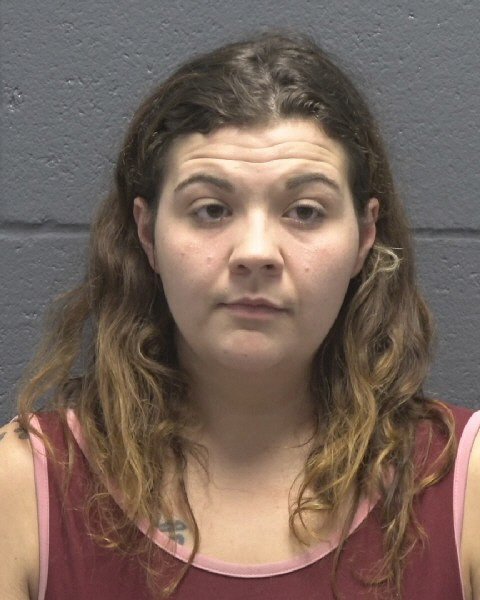
On August 10, 2026, at 9:12 p.m. Gibson County Deputy Eric Powell conducted a traffic stop on a Blue 2024 Hyundai for having a suspended license plate registration.  The vehicle was stopped near the intersection of Grove and Columbia in Oakland City, and when Deputy Powell approached the vehicle, he identified the driver as 29-year-old Tiffany Brown of Oakland City.  While speaking with Ms. Brown detected clues that Ms. Brown may be under the influence of an unknown intoxicant.  At that point he began a roadside OWI investigation.  Once the inquiry was completed Deputy Powell placed Ms. Brown into custody and transported her to the Gibson County Detention Center where she was charged with Operating a Vehicle While Intoxicated, Possession of Marijuana, and Possession of Paraphernalia. 
 
Deputies Wes Baumgart, Wyatt Hunt, and Sgt. Loren Barchett assisted Deputy Powell in his investigation.
 
All criminal defendants are to be presumed innocent until and unless proven guilty beyond a reasonable doubt in a court of law.

Single vehicle accident leads to OWI arrest

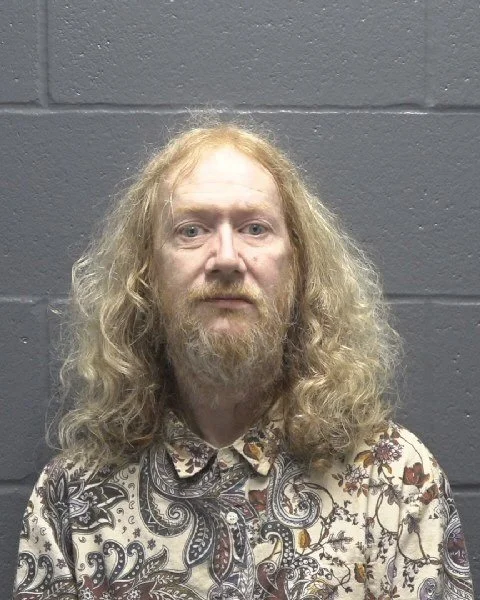
On August 11, 2026, at 8:54 p.m. the Gibson County Sheriff’s Office was notified of a property damage accident on County Road 225 North near County Road 100 West.   Upon arriving deputies found a Dark Blue 2021 Mazda CX% had left the roadway and struck a ditch.  Upon speaking with the driver Deputy Wyatt Hunt observed obvious clues of intoxication on the driver 52-year-old Brent McNeeley of Princeton.  At that point Deputy Hunt began a roadside DUI investigation that resulted in Mr. McNeeley being taken into custody and transported to the Gibson County Detention Center where he was charged with Operating a Vehicle While Intoxicated and Contributing to the Delinquency of a Minor. 
 
Deputies Michael Bates and Wes Baumgart assisted Deputy Hunt in his investigation.   
 
All criminal defendants are to be presumed innocent until and unless proven guilty beyond a reasonable doubt in a court of law.

Mt. Carmel Council Approves TIF Incentives for Scout Cabin Creamery and Pacific Press Technologies

The Mt. Carmel City Council has approved two Tax Increment Financing, or TIF, agreements aimed at supporting local business investment and job retention.

The council unanimously approved Ordinance 2154, formally authorizing a previously approved one-time $20,000 TIF grant for Scout Cabin Creamery, located at 229 West First Street. City Clerk Ryan Turner said the ordinance memorializes the council's earlier approval of the incentive.

Commissioners also approved Ordinance 2155, committing $75,000 in TIF assistance to Pacific Press Technologies for improvements at its facility at 714 North Walnut Street. Under the agreement, the funding will be paid over five years in annual installments of $15,000 to help offset the cost of a new roof.

Turner noted that while the total incentive is $75,000, the company's property tax contributions are expected to replenish those TIF funds within about a year.

Mayor Joe Judge said Pacific Press Technologies recently purchased the building after leasing it for several years, calling it a significant commitment to keeping the company and its jobs in Mt. Carmel. Judge added the company has introduced several new pieces of equipment that have been well received in the marketplace and is bringing back work that had previously been outsourced, creating additional skilled employment opportunities.

Mt. Carmel Police Offer Safety Reminders Ahead of Chamber Days

Chamber Days gets underway Wednesday in uptown Mt. Carmel, and local police are reminding residents to use extra caution during the four-day festival.

Mt. Carmel Police Chief Erin Peach joined WSJD's Morning Show last week and said streets in the uptown area are closed during the event, meaning motorists should plan alternate routes and allow additional travel time.

Peach said drivers should also expect increased pedestrian traffic throughout the festival, especially children and families walking between parking areas and the midway.

She said motorists need to pay particular attention around crosswalks and intersections, with additional bicycles and scooters also expected in the area.

Those attending Chamber Days are encouraged to lock their vehicles and secure or hide valuables before leaving them unattended.

Peach also encouraged parents to keep a close eye on their children and establish a plan in case family members become separated. She suggested talking with children beforehand about where to go and who to approach for help if they become lost.

The Mt. Carmel Police Department is located just a short distance from the Chamber Days midway and can also serve as a safe location for a child who becomes separated from their family.

Chamber Days begins Wednesday and continues through Saturday in uptown Mt. Carmel.

School funding stretched thin as costs rise, corporate revenue source shrinks

Despite $350M funding increases, overall ‘adequacy gap’ grows for 3rd straight year 

By PETER HANCOCK
Capitol News Illinois
phancock@capitolnewsillinois.com

Article Summary

  • The Illinois State Board of Education released details Friday of how it will distribute $9.3 billion in Evidence-Based Funding to public schools for the upcoming academic year.

  • That’s a $350 million increase above last year’s funding. But it is not enough to keep pace with rising costs and declining revenue from certain corporate and business taxes.

  • The figures show fewer districts will be funded at or above 90% of their adequacy target while the overall “adequacy gap” in school funding will grow to $6.8 billion.

  • At the current rate of annual increases in K-12 funding, ISBE estimates it will take at least 14 years to bring all districts up to adequate funding levels.

This summary was written by the reporters and editors who worked on this story.

SPRINGFIELD – Despite a $350 million increase in base funding for public schools this year, Illinois is falling further behind in its quest to bring all school districts up to adequate funding levels.

That’s according to new data from the Illinois State Board of Education, which announced Friday the details of how it will distribute $9.3 billion in Evidence-Based Funding dollars for public schools.

For the third consecutive year, the number of districts being funded at or above 90% of their “adequacy target” will fall while the overall “adequacy gap” — the amount of additional money it would take to bring all districts up to full adequacy — will increase.

According to the new distribution figures, only 292 of the state’s 850 elementary, high school and unit school districts will be funded at 90% or more of their adequacy target in fiscal year 2027, down from a peak of 327 in fiscal year 2024. 

And the overall adequacy gap this year will total $6.8 billion, up from $4.8 billion three years ago.

State Superintendent of Education Tony Sanders said that’s primarily due to three factors: rising costs; a decline in one source of corporate tax revenue; and an increase in the number of students identified as “low-income.”

Those factors aside, however, Sanders insisted the Evidence-Based Funding formula is serving its purpose.

“Every school district has received more school funding each year since EBF was enacted,” he said Friday during a media briefing about the numbers. “In other words, EBF is working.” 

Outside factors

Sanders said one of the biggest factors affecting school funding is a rapid decline since 2024 in a revenue stream known as “corporate and personal property replacement tax,” or CPPRT. That’s a tax the state began levying in 1979 on certain business entities. It replaced a tax on personal property such as machinery and equipment that was phased out under the 1970 Constitution.

The revenue is collected by the state but distributed to local units of government, including school districts, that used to receive personal property tax revenue. It is used in the EBF formula to calculate how much revenue a district is able to raise on its own and, thus, how close it is to meeting its adequacy target.

CPPRT revenue spiked between 2022 and 2024 amid the hyperinflation that occurred immediately following the COVID-19 pandemic, which was a boon for school districts that receive that money. But it has dropped precipitously since then, resulting in many districts moving further away from their adequacy target, Sanders said.

He also cited rising labor costs as another factor affecting schools. That includes increases both in the salaries teachers are paid and the number of teachers employed in Illinois schools.

“This data demonstrates that in Illinois we are paying our teachers better, which we need to be doing,” he said. “The increases in salary costs, though, do push districts further away from adequacy.”

Finally, Sanders said, the state started using a new method this year of counting low-income students in each district. That matters under the EBF formula, he said, because students from low-income households typically need more resources and therefore cost more to educate.

Moving target

Sanders said the EBF formula is designed to take into account changing circumstances like rising costs and demographic shifts. As a result, each district’s adequacy target is always a moving figure.

The net effect of all the changes this year, he said, is that most districts moved further away from their adequacy target, as did the state as a whole.

According to the data, the total statewide adequacy target this year — the total of all local, state and federal revenue it would take to adequately fund all schools in Illinois — grew $2.4 billion this year, to $31.5 billion.

“Let me reemphasize, though, that this is how EBF is designed to work,” Sanders said. “It is responsive to changing resources and increasing student needs.”

Robin Steans, executive director of Advance Illinois, an education advocacy group that pushed for passage of the EBF formula in 2017, agreed that the formula is working and that schools are still far ahead of where they were before the adoption of EBF.

“There is still more dollars available, particularly for all districts and for districts that are in the most need,” she said. “And we're closing equity gaps as we go. It's just we got an artificial bump (from CCPRT) and now that artificial bump is going away.”

But Stacy Davis Gates, president of the Illinois Federation of Teachers and the Chicago Teachers Union, said in a statement that the figures show lawmakers need to put more money into the formula above the minimum $300 million per year called for in the statute just to keep up with rising costs.

"Today's report should serve as a wake-up call," she said. "A child entering kindergarten today will graduate from a high school that is still underfunded. Our students are about to report to crumbling buildings, without the food, special education support, and transportation that they need to meet the minimum of a functional school day, let alone the quality school day our students deserve.”  

Sanders, however, said he does not intend to ask lawmakers for larger annual increases.

“The state board of education's commitment has always been to request the $300 million that statutorily requested for evidence-based funding,” Sanders said. “It’s really a function of the General Assembly and the governor to determine if there's additional resources that could be put towards public education. But we will continue our annual ask of $300 million in tier funding every year.”

The other $50 million that’s part of the annual increase goes to property tax relief grants. 


Capitol News Illinois is a nonprofit, nonpartisan news service that distributes state government coverage to hundreds of news outlets statewide. It is funded primarily by the Illinois Press Foundation and the Robert R. McCormick Foundation.  

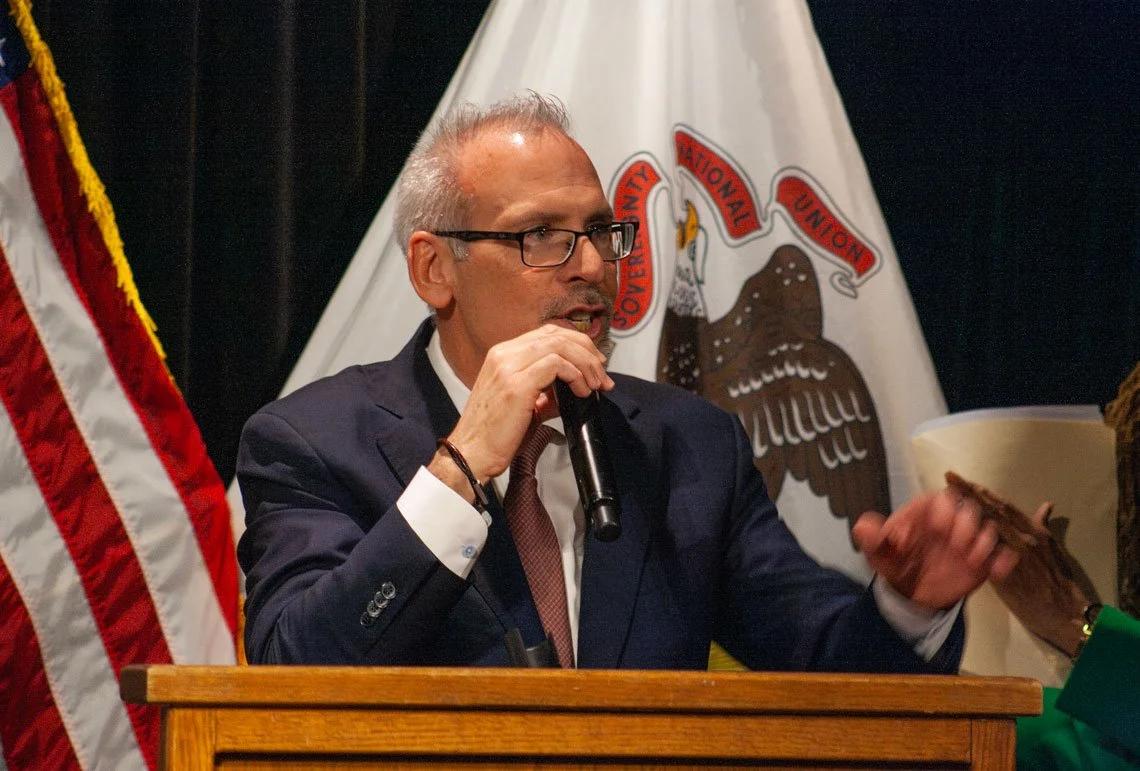
Illinois Supt. of Education Dr. Tony Sanders speaks at the Governor’s Mansion in Springfield in March 2026. (Capitol News Illinois photo by Jenna Schweikert) 


Illinois Back-to-School Tax Holiday Underway Through August 16

The Illinois Back-to-School State Tax Holiday runs through August 16. It waives the state sales tax on back-to-school necessities. This 10-day period is expected to provide an estimated $10 million in savings to online and in-store consumers on essential back-to-school items, including clothing, footwear, and school supplies. During the tax holiday, the state will waive its 5% sales tax on qualifying purchases. Any applicable local sales tax will continue to apply. Rob Karr is President and CEO of the Illinois Retail Merchants Association.

080326-BackToSchoolSalesEvent

Qualifying clothing and footwear with a retail selling price of less than $125 per item are eligible for the reduced tax rate. Examples of qualifying items include shirts, pants, dresses, shoes, and other everyday clothing items. Qualifying school supplies, including items such as notebooks, folders, binders, pens, pencils, and calculators, are also eligible for the reduced tax rate. There is no price limit on qualifying school supplies.

Wabash County Commissioners Renew Special Road Fund Tax Levy

The Wabash County Commissioners have approved the renewal of a special road fund tax levy that provides a key source of funding for county highway maintenance projects.

During Monday afternoon's meeting, Highway Engineer Dustin Bunting explained the Special Road Fund has been in place since 1981 and must be renewed every five years. He told commissioners the fund is vital to the Highway Department's operations because it pays for materials used to maintain county roads.

Bunting said the money is used to purchase salt and sand for winter operations, pavement striping, oil and chip materials, asphalt resurfacing, and soil cementing projects.

He emphasized the fund is restricted by law and can only be used for road construction and maintenance materials and the cost of applying those materials. It cannot be used for equipment purchases, employee salaries, or other department expenses.

Bunting also noted the tax levy applies only to the Wabash County Highway Department and does not provide funding for township road districts.

Following the discussion, commissioners unanimously approved Ordinance 622, renewing the Special Road Fund tax levy for another five years.