Mt. Carmel to Seek $600,000 OSLAD Grant for Lincoln Park Improvements

The City of Mt. Carmel is moving forward with plans to apply for a state grant that could fund major improvements at Lincoln Park.

During Monday afternoon's City Council meeting, City Clerk Ryan Turner said the city faces a tight deadline to complete its application for an Open Space Lands Acquisition and Development, or OSLAD, grant before the end of the month.

Turner said state requirements include holding a public hearing before the application can be submitted. The council agreed to schedule that hearing for Friday, August 14, at 10:00 a.m., allowing time for the required public notice.

Mayor Joe Judge said the city is eligible to apply for up to $600,000 through the grant program. If awarded, the city would qualify for a 90-10 matching grant, meaning Mt. Carmel would be responsible for only 10 percent of the project's cost.

Judge said the city will spend the next several days developing cost estimates for the proposed improvements. He noted the grant application will focus exclusively on Lincoln Park, as OSLAD funding is limited to one project area.

Aquatic Center Construction Moving Into Major Phase, Mayor Says

Construction of Mt. Carmel's new aquatic center continues to move ahead on schedule, with major structural work expected to be completed later this month.

Mayor Joe Judge updated the City Council Monday afternoon, saying the floors, splash pad piers, pump room and slide tank walls have all been completed. Crews are now installing rebar and spraying concrete into the pool walls, a process that eliminates air voids and creates stronger walls.

Judge said work began on that phase last week and will continue this week as crews complete the main pool walls and the toddler splash area.

Meanwhile, masonry crews are finishing the east side of the bathhouse before moving to the west side. Judge said he has been impressed with the pace of construction.

Looking ahead, gutter installation is scheduled to begin next week and is expected to take three to four weeks. Crews will also complete the remaining walls, establish deck elevations and install plumbing beneath the pool deck.

Judge said by the end of August, construction should shift into full-scale building and finish work as the project continues toward completion.

Employees, local lawmakers rally against layoffs, service cuts at Choate

State to cut about 250 jobs, eliminate program, mental health beds at the facility

Article Summary 

  • Dozens, including union leaders and state and local lawmakers, rally in support of workers at the Choate Mental Health and Developmental Center in Anna.

  • The facility, which has been at the center of controversy for years, is slated to lay off about half its staff, eliminate one program for people with intellectual and developmental disabilities and reduce the number of mental health beds.

  • The downsizing is part of a three-year plan first announced in 2023 which aimed to repurpose the facility in partnership with the Southern Illinois University School of Medicine.

This summary was written by the reporters and editors who worked on this story.

By JACKSON BRANDHORST 

Saluki Local Reporting Lab

Jackson Brandhorst, @jacksondothtml
ANNA — Union leaders, lawmakers and political candidates gathered alongside dozens of employees from the Choate Mental Health and Developmental Center on Tuesday to rally against the state’s plan to make dramatic cuts to staff and services at the downstate mental health facility.

One after another, they took the microphone on the back of a bright green pickup truck as signs and chants of “Save Choate” echoed through the streets of downtown Anna.

The Illinois Department of Human Services announced the changes in a July 23 letter to Choate staff. The three-year plan includes eliminating the state-run facility’s entire general residential program for people with intellectual and developmental disabilities, reducing the number of civil mental health beds, and laying off about 250 employees by March 2027.

“Shame on IDHS,” Ona “Tina” Rivero Winfield, president of the American Federation of State, County and Municipal Employees Local 141 told the crowd. “They sent us the memo — but where are they now?”

AFSCME — the union that represents the majority of Choate staff — organized Tuesday's rally to condemn the decision by IDHS, asking that it be reversed.

Choate currently serves 58 people across its general and forensic developmental disabilities programs and 75 mental health patients. The state-run mental health hospital employs roughly 524 people across its Anna campus and is one of the region’s largest employers. 

‘When we fight, we win’

Winfield said this is just the beginning of many rallies, vowing that AFSCME will continue to host them until the decision is reversed.

Accompanying Winfield was Jason Woolard, president of the Southern Illinois Central Labor Council, who warned that the ramifications of this decision would reach far beyond the facility.

“We cannot allow for this to happen at this facility,” Woolard said. “The residual impacts are going to be dramatic.”

Many who gathered worried about what would become of their jobs. 

Koda Leslie, a mental health technician who has worked at Choate for about a year and a half, said he expects to be among those laid off because of his lack of seniority.

“I felt distraught,” Leslie said of hearing the news. “I’m not sure what I’m going to do. People like me that don’t have a lot of seniority, we’re pretty much not gonna have a job. I expect to get laid off for sure."

Leslie said he hopes the weekly demonstrations continue to garner attention until the state changes course.

“Man, I just hope to see everybody coming out and supporting us next Tuesday, and every Tuesday after that,” Leslie said. “I’m hoping to see things change and that all of us get to keep our jobs.”

Sylvester “King Mo” Morse, a participant at Tuesday's rally, is not a Choate employee, but lives in Anna and has multiple personal ties to the facility. 

“My sister worked there, and my aunt worked there for 19 years,” Morse said, but that's not his only connection to Choate.

“When I was a kid, they said I was a problem, so they sent me to Choate to a school that used to help problem kids,” Morse said. “It helped me a lot. It made me become better and helped me get along with people. I believe that they’re just way more than Choate Mental Health."

Eddie Caumiant, AFSCME Council 31’s southern Illinois regional director, told demonstrators to make their opposition impossible for state leaders to miss.

“If the governor flies over in his helicopter, we want him to see us fighting him,” Caumiant said. “When we fight, we win.”

‘We need Choate’

Gov. JB Pritzker recently defended the IDHS decision during a July 28 news conference and bill signing, saying the staffing cuts follow the relocation of residents from Choate’s general developmental disabilities program. The downsizing of Choate’s developmental disabilities population followed reporting by Capitol News Illinois and ProPublica outlining the severe mistreatment of patients by staff and a culture of coverup that had persisted for years, despite state and federal regulators repeatedly citing problems and calling for improvements.

“Remember, the reason there are staff reductions is because we have literally moved the developmentally disabled residents there to better facilities,” Pritzker said. “At some point, you don’t need staff when there is nobody at that facility.” 

However, Choate employees and local officials argued Tuesday that the state should expand — not reduce — mental health services in southern Illinois, where they said jails, courts and treatment providers are already struggling to find beds for people in crisis.

Dozens of Choate Mental Health and Developmental Center employees, union leaders and politicians flooded the streets of Anna on Tuesday to protest the Illinois Department of Human Services' plan to lay off 250 workers and significantly downsize the state-run mental health hospital. (Jackson Brandhorst/Saluki Local Reporting Lab) 

IDHS plans to “phase down” all 75 civil mental health beds at Choate while adding beds at Madden Mental Health Center in Chicago. The agency said the shift, which is scheduled to be completed by March 2027, reflects that the “need for mental health beds is greater in northern Illinois.”

Jackson County Assistant State’s Attorney Travis Fleming, who handles mental health cases, told Capitol News Illinois that people are already waiting in the county jail for placement in the state’s forensic mental health system.

“We do have individuals waiting for transport for fitness sitting in our jail currently,” Fleming said.

Fitness restoration is a process for defendants who, because of mental illness, do not understand the legal proceedings against them or cannot work with their attorneys. Treatment is intended to help them understand the judicial process so they can participate in their own defense.

Homer “Chip” Markel, the Democratic candidate for Illinois House District 118, aimed his remarks directly toward Pritzker.

“Governor ... you should stand up and reverse the decision of IDHS,” Markel said.

State Sen. Paul Jacobs, a Republican from Pomona who represents Illinois’ 59th District, said that the demand for mental health treatment is not limited to Chicago or northern Illinois.

“We are in mental health crises across the state,” Jacobs said. “We need Choate.”

Union County State’s Attorney Tyler Tripp said that his office repeatedly encounters the lack of available treatment space.

“Illinois is in a mental health crisis, and what I always hear in my office is that we have no more room here,” Tripp said.

Tripp said that hundreds of forensic patients across Illinois are waiting in jails for appropriate treatment in a state mental health facility.

“There are hundreds of people sitting in jail with their mental health declining,” Tripp said. “State operations like Choate should not just remain open — they should be expanded.

“Any loss of a member of staff or any patient is unacceptable,” he added.

Tripp rejected the IDHS explanation that demand is greater in the northern part of the state.

“The need for mental health beds is greater than we can currently handle across the entire state — not just northern Illinois,” he said. 

Republican state Rep. Scott Doody, an Anna resident who represents Illinois’ 118th District, has repeatedly condemned the reductions at Choate, and did so again while addressing the crowd. 

“I’m here today to support you all,” Doody said. “Employees and patients aren’t just numbers published on a spreadsheet.” 

SIU reports unpublished 

IDHS said in its original letter that the changes at Choate are a result of the “success” of the state’s three-year plan, which aimed to repurpose the facility in partnership with the Southern Illinois University School of Medicine.

As part of that partnership, SIU evaluated how Choate’s campus, workforce and programs could be repurposed. Its initial recommendations included preserving and retraining existing employees, retaining and potentially expanding civil mental health services, adding forensic psychiatric care and converting unused space for step-down treatment, crisis services, housing and other community programs.

The first phase of SIU’s Choate Transformation Report, published July 14, 2023, said that two additional phases were planned. Phase 2, which was due Dec. 31, 2023, was expected to make recommendations concerning the safety of both people receiving care and Choate employees. Phase 3 was expected to make recommendations concerning Illinois’ statewide systems of care for people with developmental disabilities and serious mental illness over the following two to three years.

Neither Phase 2 nor Phase 3 appear to have been made public.

SIU School of Medicine’s 2020-25 Strategic Plan Progress Report, published July 3, 2025, said the university supported the “Choate Project” and worked with IDHS’ Division of Developmental Disabilities to advance workforce and care improvements.

An October 2024 IDHS announcement said the decision to add as many as 25 mental health beds at Choate was “informed by recommendations” from SIU. The agency said SIU continued to shape the transformation through campus repurposing recommendations, staff training initiatives and assessments of safety, patient care and workforce needs, but it did not attach the underlying reports, assessments or recommendations.

AFSCME workers decried the state's planned layoffs at Choate, the state-run mental health hospital and one of the region's largest employers. (Jackson Brandhorst/Saluki Local Reporting Lab)

IDHS’ 2026-2030 Strategic Planning Roadmap, released in May, also describes the Choate initiative as a three-year partnership with SIU. It lists four objectives: reducing the developmental disabilities population by 123, increasing mental health bed capacity, implementing safety enhancements and expanding support for community living.

Jacobs defended SIU’s role in the process and said the school’s work did not call for the cuts IDHS announced.

“SIU is not at fault for this,” Jacobs said. “In fact, their report was very thorough and clear.”

Winfield told the dozens of people lining the streets of downtown Anna that workers agreed to participate in SIU’s evaluation because they believed it could strengthen Choate.

“There is power in numbers,” Winfield said. “Three years ago they had us at the bargaining table telling us that they were going to repurpose Choate. We agreed to let SIU come in and evaluate the facility — and they actually made some great recommendations. They said that we should be expanding mental health services. They said that there is a need for us — and I’m here to tell you all that there absolutely is."

Culture of cruelty

The IDHS decision to reduce operations at Choate comes after decades of documented issues at the southern Illinois facility, including resident abuse, neglect, criminal investigations and repeated failures by employees and administrators to report or stop misconduct.

A 2022 investigation by Capitol News Illinois and ProPublica found that residents had been beaten, sexually assaulted, humiliated and dangerously neglected at Choate for roughly a decade. At least 26 employees have been arrested on felony charges connected to their work at the facility while they were entrenched in a “code of silence” in which workers withheld information, coordinated their accounts or protected colleagues accused of abuse.

In March 2023, Pritzker announced a three-year “transformation” plan that would move about 123 residents — roughly half of Choate’s population at the time — into community placements, family homes or other state-operated facilities. The state also promised stronger oversight, additional training, cameras in common areas and a partnership with the SIU School of Medicine to help determine how Choate’s remaining programs should operate.

Officials said at the time that the plan was not a closure and did not include layoffs. Choate’s general developmental disabilities population has since fallen from 199 residents at the beginning of the transformation to 16. IDHS now characterizes the elimination of those units and the phaseout of Choate’s civil mental health beds as the completion of that plan — though the layoffs mark a departure from the state’s original assurance that the restructuring would not cost employees their jobs.

AFSCME said the administration assured the union during the recent legislative session that its proposed fiscal year 2027 budget would not include layoffs. AFSCME responded to the announcement in a news release with comments from Council 31 Executive Director Roberta Lynch, who said that IDHS should have consulted with the union to develop a more rational plan that would be more fair to Choate’s employees and the individuals in their care.

“Had we been aware of the planned layoffs, we certainly would have opposed the budget as introduced,” Lynch said. “The AFSCME collective bargaining agreement with the state of Illinois includes well-defined rights for employees slated for layoff, and AFSCME intends to ensure that all such requirements are fully met if the department continues down this irresponsible path.”

Jackson Brandhorst is a student at Southern Illinois University Carbondale, and a senior member of the Daily Egyptian, SIU’s student newspaper. He can be reached at jbrandhorst@dailyegyptian.com.

Capitol News Illinois is a nonprofit, nonpartisan news service that distributes state government coverage to hundreds of news outlets statewide. It is funded primarily by the Illinois Press Foundation and the Robert R. McCormick Foundation.




Pritzker pens letter to Trump, seeking tariff refunds for Illinois families

Feds issued $100B in refunds to corporations, but there is no reprieve for consumers who paid higher prices

By MAGGIE DOUGHERTY
Capitol News Illinois
mdougherty@capitolnewsillinois.com 

Article Summary 

  • As the U.S. makes tariff refunds to corporations, Gov. JB Pritzker sends a letter to President Trump asking for refunds to Illinoisans.

  • The money reimbursed as of July was about 60% of the total $166 billion owed to U.S. companies.

  • Trump continues to impose a third round of tariffs on countries after the first two attempts were deemed illegal or unconstitutional.

This summary was written by the reporters and editors who worked on this story. 

CHICAGO — After the U.S. Treasury paid out $100 billion in tariff refunds to corporations at the end of last month, Gov. JB Pritzker wants to know where Illinois’ cut is.

In a letter sent to President Donald Trump on Thursday, Pritzker asked the president to send direct payments of $1,700 to Illinois families. He also encouraged Trump to stop seeking new ways to enforce tariffs and to support legislation that would require corporations to pass refund relief back to consumers.

“There is no portal to request a refund for a mother in Rockford buying groceries for her children,” Pritzker wrote. “There is no trade attorney representing a retiree in Carbondale paying off their mortgage. There is no check coming in for the farmer in Champaign who had to pay more for his equipment.”

Read the letter (PDF).

The money reimbursed as of July was about 60% of the total $166 billion owed to U.S. companies after the Supreme Court struck down the Trump administration’s use of the International Emergency Economic Powers Act, or IEEPA, in February, finding that the law did not authorize the president to unilaterally impose tariffs. 

The refunds for the unconstitutionally collected tariffs have so far reportedly included $2.2 billion to Apple and $600 million to Amazon, and Walmart says it is owed an estimated $2.4 billion in refunds. 

Those companies have made pledges to either issue partial refunds to customers who paid higher prices as a result of the tariffs, to generally cut prices, or to “reinvest” the money into U.S. manufacturing, but there is no mechanism to ensure that the higher costs passed on to consumers are routed back to them.

Pritzker encouraged Trump to support the Tariff Relief for Consumers Act, a bill that would require companies receiving refunds to lower prices paid by consumers on household goods that were affected by the illegal tariffs. 

However, the bill has seen no movement in Congress since it was introduced in March, and the process for determining the costs incurred by consumers would be made nearly impossible due to the multiple rounds and intermittent nature of the tariffs.

Trump himself said on social media late last year that “A dividend of at least $2000 a person (not including high-income people!) will be paid to everyone,” to return money collected from tariffs back to consumers, though no such checks materialized

Tariffs ongoing

But even while his administration is paying out refunds from the illegal tariffs levied last year, the Trump administration is still looking for new ways to get the courts to accept his approach to tariffs.

The initial round of tariffs levied illegally under the IEEPA framework ranged from 10-50% on nearly all U.S. global trading partners. Before Trump, no U.S. president had previously attempted to use IEEPA — designed to give the president the power to regulate international commerce in response to national security emergencies — to impose tariffs.

Hours after the court declared those tariffs illegal, the administration imposed a new 10% tariff under Section 122 of the Trade Act of 1974, a temporary, 150-day measure to be used in a balance-of-payments emergency, where the value of the U.S. dollar is at such a crisis level that the country cannot meet its international payment obligations.

The U.S. Court of International Trade in May ruled that Trump’s use of Section 122 tariffs was also illegal, but declined to issue nationwide relief.

But despite the repeated rulings, the administration took a third swing at new tariffs after the Section 122 tariffs expired last month, this time saying the tariffs are necessary to combat forced labor in global trade.

Twenty-five states, including Illinois, sued the administration on Monday over the new round, which imposes tariffs of 10-12.5% on 60 economies that provide over 99% of American imports. The states called the invocation of forced labor a “pretext to continue its illegal tariff scheme.”

“For the third time, I stand with my colleagues across the country to fight the Trump administration’s illegal tariffs,” Attorney General Kwame Raoul said in a statement announcing the lawsuit. “The Court of International Trade and the U.S. Supreme Court have already found the Trump tariffs to be unlawful, and we are confident we will prevail this third time.”

Acute pain in Illinois

A July report by the nonpartisan research Midwest Economic Policy Institute and the University of Illinois at Urbana-Champaign’s Project for Middle Class Renewal found even broader harms of the tariffs on six Midwest states, including Illinois.

The states make up 19% of U.S. manufacturing and 20% of agricultural outputs, making them particularly vulnerable to retaliatory tariffs from countries reacting to Trump’s tariff regime.

In Illinois, that translated to an average $2,200 increase in costs per household, 7,500 lost manufacturing jobs and a $5 billion drop in GDP, according to the report.

That pain was felt most acutely by low-income households. For those in the bottom 10% of households by income — those making $15,100 or less — the tariffs added an average $800 in costs for the year, meaning the new tariffs ate up 5% of income for Illinois’ poorest households. 

Pritzker’s letter to Trump this month followed an earlier one he sent in February after the Supreme Court ruled the tariffs illegal, attaching an invoice of $8.6 million and instructing Trump to, “Cut the check.”

The invoice “was past-due then,” Pritzker wrote in Thursday’s letter. “The invoice remains unpaid. Illinois families are still waiting.”

Capitol News Illinois is a nonprofit, nonpartisan news service that distributes state government coverage to hundreds of news outlets statewide. It is funded primarily by the Illinois Press Foundation and the Robert R. McCormick Foundation.

Illinois House begins investigation into indicted Rep. Carol Ammons 

llinois House begins investigation into indicted Rep. Carol Ammons 

Committee to consult federal prosecutor before taking more steps

By BEN SZALINSKI
Capitol News Illinois
bszalinski@capitolnewsillinois.com

Article Summary

  • An Illinois House committee investigating Rep. Carol Ammons, D-Urbana, met for the first time Thursday.

  • Ammons faces 10 federal corruption charges including wire fraud, lying to the FBI and conspiring to obstruct justice.

  • The House committee voted to reach out to the U.S. Attorney for the Central District of Illinois to ensure the House isn’t interfering with the federal investigation before the committee holds more meetings. 

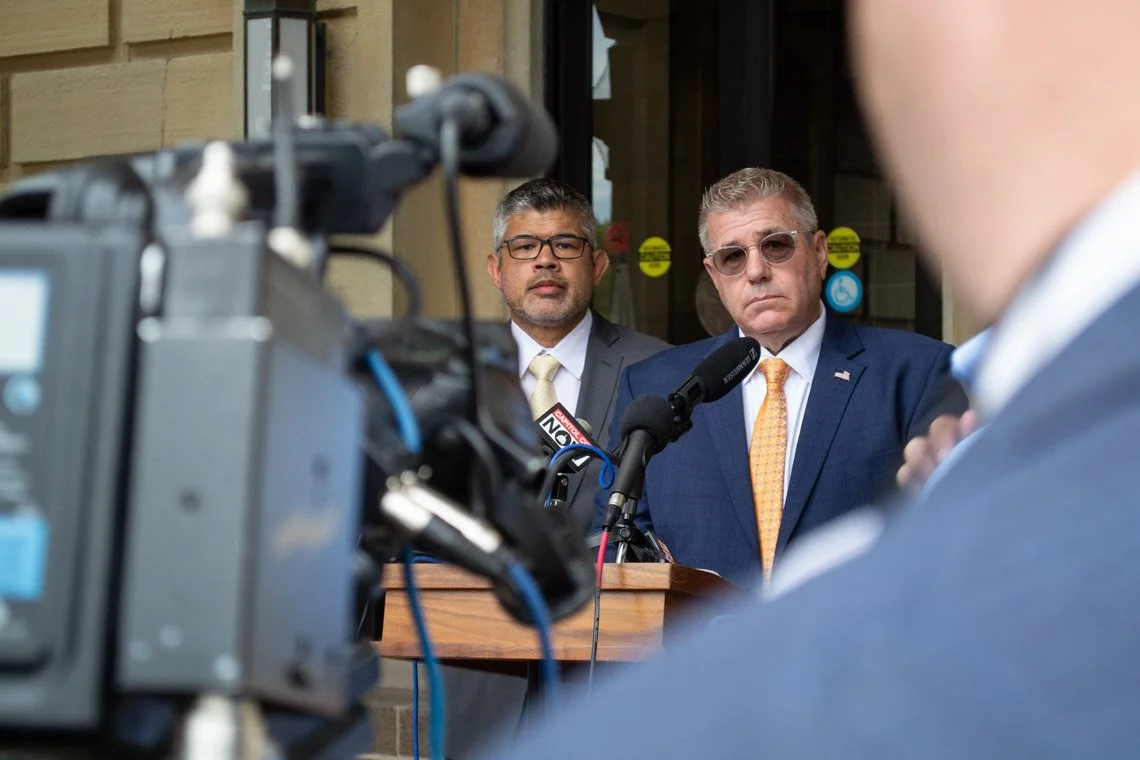
  • Republican candidate for governor Darren Bailey held a news conference in Springfield before the hearing, saying it shows a pattern among Democrats in recent decades. 

This summary was written by the reporters and editors who worked on this story. 

SPRINGFIELD — Illinois lawmakers on Thursday began investigating alleged misconduct by Rep. Carol Ammons, D-Urbana, that was outlined in a federal indictment.

Ammons pleaded not guilty on July 16 to 10 felony charges, including wire fraud, lying to the FBI and conspiring to obstruct justice. Her husband, Champaign County Clerk Aaron Ammons, also faces a conspiracy charge. Their daughter, Titianna Ammons, was not charged in the case despite being a key figure at the center of it, though she is facing separate federal unemployment fraud charges. 

AMMONS PHOTO

The House Special Investigating Committee was triggered by a Republican petition that largely mirrored the indictment, alleging Ammons engaged in inappropriate and illegal behavior. While the committee will decide whether the 11-year state representative engaged in conduct unbecoming of a legislator, it’s just the first step in a long process that could ultimately lead to her punishment. 

And after introducing the House Republicans’ charges against Ammons, the committee voted unanimously to consult with the U.S. Attorney for the Central District of Illinois to find out if the committee’s action would interfere with the federal investigation. The committee will not meet again or conduct a deeper investigation until the U.S. attorney responds. 

Past special investigating committees into former Gov. Rod Blagojevich, former Rep. Derrick Smith, and former Speaker Mike Madigan also contacted the investigating U.S. attorney before proceeding. 

The Ammons indictment

Federal prosecutors allege that starting in 2017, Ammons and her daughter “received financial benefits in excess of $100,000” via a scheme including illegal payments from the “Friends of Carol Ammons” campaign account and from payments made to Titianna Ammons by local nonprofits that received state grant funds arranged by the lawmaker.

Rep. Ammons declined through her attorneys to attend Thursday’s opening hearing because it was only going to be a procedural step, committee Chair Rep. Curtis Tarver, D-Chicago, said. The House rules give Ammons a right to attend each hearing, introduce her own evidence and testify to the committee. 

“As members of the Illinois House of Representatives, we are held to a higher ethical standard, and we must hold each other to that high ethical standard as we make sure to take care of this institution,” Rep. C.D. Davidsmeyer, R-Murrayville, said as he introduced the GOP’s petition to initiate the investigation. 

DAVIDSMEYER PHOTO

Eleven Republicans signed a slimmed down petition that tasks the committee with investigating five counts that Ammons abused state funds. Their initial petition contained nine charges, which included campaign finance law violations.

Davidsmeyer said the GOP decided to focus on violations related to state tax dollars, believing issues surrounding campaign contributions and lying to federal agents could be explored another time.

“This committee is not a court of law, and we are not judging innocence or guilt,” Tarver said. “Rather, we are tasked with inquiring into the underlying facts to determine whether reasonable grounds exist for the discipline to be pursued by the House.”

Trust in the process 

The committee is made up of three Democrats and three Republicans, but chaired by Tarver, a Democrat. 

“When one of our members is the subject of a criminal indictment based on allegations of a wire fraud, false statements to the FBI, and conspiracy to obstruct justice, there is a direct threat to the public trust in this very institution,” Tarver said. 

The last committee to investigate a lawmaker, the 2020 investigation into Madigan more than a year before he would be federally charged, was criticized by members of both parties for different reasons. Then-Rep. Chris Welch, the Hillside Democrat who led that committee, said courts were a better place to determine wrongdoing. Republicans bashed that characterization and the Democrats’ decision to conclude the committee’s work without finding Madigan engaged in unethical behavior. 

“The people of Illinois deserve answers, and above all, they deserve the truth,” Rep. Adam Niemerg, R-Dieterich, said. “This committee cannot become another Springfield exercise in delays, doublespeak excuses, and more political protections for insiders. Decades of scandal have destroyed the public's trust in state government.”

NIEMERG PHOTO

Rep. Adam Niemerg, R-Dieterich, speaks during the first hearing of the House Special Investigating Committee into Rep. Carol Ammons, D-Urbana, on Thursday, Aug. 6, 2026. (Capitol News Illinois photo by Peter Hancock)

Davidsmeyer voiced confidence in Tarver’s leadership. 

“I think Chairman Tarver will do a good job,” he told reporters. “I have a lot of respect for how he looks at things. We may not always agree, but we can at least have conversations on these things. So I think this should be a good committee. It will be a little bit more robust than the committee that was kind of swept under the rug for Speaker Madigan.” 

Campaign fodder

On the campaign trail, Republicans have been vocal about Ammons’ indictment and Welch’s handling of sexual harassment cases. 

The party’s nominee for governor, Darren Bailey, held a news conference at the Statehouse prior to Ammons’ hearing where he said, “the people of Illinois, they're ultimately responsible for this,” and called Gov. JB Pritzker “a jackass.”

BAILEY PHOTO 

Republican nominee for governor, Darren Bailey, takes questions from reporters at a news conference outside the Illinois Capitol on Thursday, Aug. 6, 2026. (Capitol News Illinois photo by Jerry Nowicki)

“Voters need to send better people here. Accountability and transparency will do that,” Bailey said. “What greater first steps can we take in Illinois with a new governor than to bring transparency and accountability to their own elected officials.”

Bailey and his running mate, Aaron Del Mar, called on lawmakers to respond to Ammons’ case by passing a law that makes nonprofits receiving at least $10,000 in state funds subject to open records laws.

“Serving in public office should not descend into an opportunity for personal benefit and it should never provide protection from accountability,” Bailey said. 

Bailey argued Pritzker has been “silent” on the issue, though the governor told the Illinoize newsletter that Ammons should resign from office, and if she’s exonerated, run for her seat again. Bailey also added the state’s Democratic leaders have failed to address corruption problems in their own party. 

“Sadly, these are not isolated political problems,” Bailey said. “In the last 25 years, more than 100 Democrats, ranging from governor, Congress, to legislators, aldermen, and county commissioners, have been indicted for crimes committed.” 

He cited other Democrat politicians who’ve been indicted or convicted for “using their office for personal gain,” including Madigan, state Sens. Martin Sandoval and Terry Link, and U.S. Rep. Jesse Jackson Jr.

“This is not just a culture of corruption that has been enabled through indifference. This is a systematic failure of leadership at the highest levels of government,” he said. 

State lawmakers have passed a handful of ethics bills under Pritzker, including new requirements for various disclosures lobbyists and politicians must file and banning lawmakers from holding fundraisers while they’re in session. But no major ethics bills designed to prevent public corruption have advanced since 2021

Peter Hancock contributed.

Capitol News Illinois is a nonprofit, nonpartisan news service that distributes state government coverage to hundreds of news outlets statewide. It is funded primarily by the Illinois Press Foundation and the Robert R. McCormick Foundation.
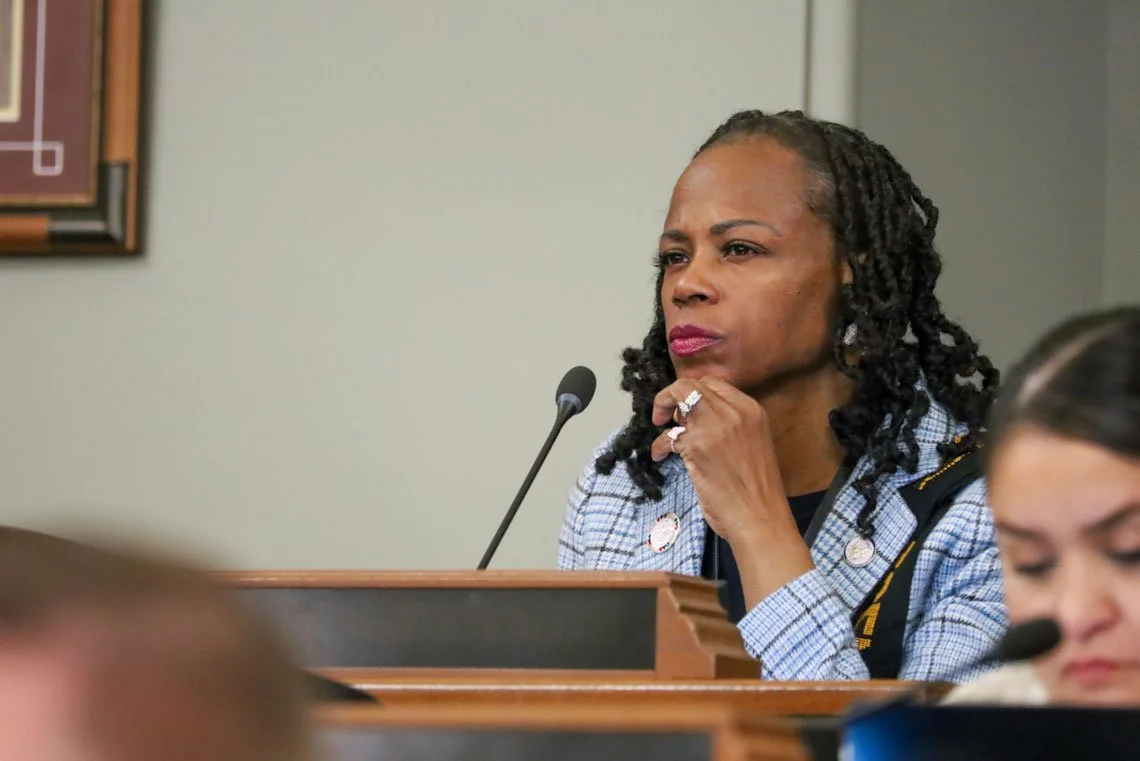


State Rep. Carol Ammons is pictured in a House committee in February 2025. (Capitol News Illinois photo by Andrew Adams)

Welch launches private working group to respond to sexual harassment, but it’s off to a rocky start

One Democrat says she worries the Democrat-only body is a ‘PR stunt’ 

By BRENDEN MOORE &

BEN SZALINSKI
Capitol News Illinois 
bmoore@capitolnewsillinois.com  

Article Summary  

  • House Speaker Emanuel “Chris” Welch wants to create a working group to improve how the General Assembly responds to sexual harassment.

  • Welch announced the closed-door, Democrat-only working group on Wednesday, but he didn’t name its members. A Welch ally, however, posted an apparent list of all appointees to his Facebook page. 

  • At least one lawmaker who appeared on that list has declined to participate in the working group, worrying that it is “lip service” or a “PR stunt.” Most other Democrats named in the social media post, including its chair Rep. Dagmara Avelar, D-Romeoville, aren’t commenting on it.

  • Republicans blasted Welch’s decision to use a closed-door process in the wake of former Rep. Harry Benton’s sexual harassment allegations.

This summary was written by the reporters and editors who worked on this story.  

SPRINGFIELD — In the wake of criticism over his office's handling of a sexual harassment complaint against a member and his own behavior on social media, Illinois House Speaker Emanuel "Chris" Welch is turning to one of his favorite tools to formulate policy solutions: a Democrat-only private working group.

"It's going to be ongoing work to continue to address the culture in Springfield," Welch told Capitol News Illinois this week, adding that he's assigned Rep. Dagmara Avelar, D-Romeoville — a member of his leadership team — to chair the group. "They've been charged. They have work to do. We're going to let them do that work. My working groups have proven to be successful, and I believe this one's going to be successful too." 

But it is already off to a rocky start. 

While Welch shared with Capitol News Illinois who would chair the group, his office hadn’t published the full list of lawmakers who’d be in it as of Thursday. Instead, the list was informally disclosed early Wednesday in a social media post by an outside political ally of Welch.

One of the members purportedly named to the group, Rep. Kelly Cassidy, D-Chicago, issued a statement Wednesday saying she would not participate in the working group after her name was leaked as being part of it. 

“Prior to agreeing to serve on the working group, I asked a series of questions in order to ensure that the group would offer more than lip service or a PR stunt. My questions were not answered,” she said in a statement. 

Cassidy said her name was "leaked as part of this process without my agreement."

“I’m disappointed, as I believe a working group on this topic could be necessary and important," Cassidy said. "But we have a responsibility to victims and survivors to ensure any such body is credible and effective, and I currently do not have confidence it will be."

Welch remains under pressure

Welch has struggled to manage the fallout from a Chicago Tribune report that revealed his office knew about a sexual harassment allegation made by a former district staffer against now-resigned Rep. Harry Benton, D-Plainfield, as early as April 2023 but did not address it with Benton until July of that year. The reporting was later confirmed by Legislative Inspector General Mike McCuskey's now-public report detailing allegations made against Benton.

The Tribune report also detailed Welch's own interactions, which included reacting to the former staffer’s Instagram photos with heart eyes and inviting her to a bar through an encrypted messaging app. She told the paper that the interactions made her "uncomfortable." Welch told CNI earlier this week that he was "embarrassed" by the interactions and apologized.

In addition to outside scrutiny, the speaker has faced pushback within his own caucus. In meetings with the various subcaucuses of the supermajority House Democratic caucus, the speaker was asked why he didn't address allegations when the staffer first brought them to his office's attention, members on those calls told CNI. He was also asked why he spent $1.4 million in 2024 to reelect Benton. 

Some, however, have defended Welch and sought to move the conversation away from the speaker’s actions and towards actions lawmakers can take to have better systems in place in the future. 

The formation of a working group is ostensibly a step in that direction. But many of the details surrounding it remain murky, as Welch’s spokespeople have not responded to requests to clarify the status of the group or provide an up-to-date list of members participating.

The social media post that led to Cassidy’s statement was written by political consultant and close Welch ally Maze Jackson. The list published to his page showed other members include Reps. Amy “Murri” Briel, D-LaSalle; Kam Buckner, D-Chicago; Lisa Davis, D-Chicago; Daniel Didech, D-Buffalo Grove; Gregg Johnson, D-East Moline; Norma Hernandez, D-Melrose Park; Theresa Mah, D-Chicago; and Suzanne Ness, D-Crystal Lake. 

CNI reached out via text message to all members named in the social media post as being part of the working group besides Davis and Briel. Only Ness provided a comment as of Thursday afternoon. 

“I am looking forward to being a part of the working group,” Ness said in a text message. “There are many opportunities for improvements that will help us create a harassment free environment for all who serve, work, lobby and advocate in the state of Illinois. I’m ready to do this important work.”

Davis and Hernandez were recently part of a panel on WGN-TV in Chicago that defended Welch’s handling of complaints. 

“I think I think he did what he could do in the power that he has in office now, given not actually having the proper process in place,” Hernandez said in the interview. “It is time for us to kind of figure out how we can create new systems and processes to protect our district offices, given what has happened with Representative Benton.”

Working group process

Working groups have been a go-to tool for Welch during his tenure as speaker. Basically, the all-Democrat groups are tasked with finding policy solutions to specific topics. This session, for example, House Democrats utilized a working group to formulate their package of bills regulating artificial intelligence. Past working groups have addressed issues like gun safety and criminal justice reform. 

Proponents say the working group process is an effective way to achieve consensus on complex public policy issues within a House Democratic caucus that is often divided on gender, racial, geographical and ideological lines. 

Critics, however, say working groups allow the supermajority to essentially circumvent the committee process by moving conversations that would otherwise take place behind closed doors. Though bills still need to pass through committees that include Republicans, critics argue it is cursory with most of the details already worked out among the smaller, all-Democratic working groups.

The Illinois House Republican Organization, in a statement, criticized the group, saying it "appears to be more about repairing the Speaker's political standing than repairing the culture of the Illinois House."

"If Speaker Welch were serious about reform, he would have created a bipartisan working group committed to meaningful change," they said. "Instead, he appointed an all-Democratic panel, shutting Republicans out of a conversation that should transcend party politics."

It is not clear when the committee will first meet, though it's expected that some reforms will be on the docket when lawmakers return to Springfield for the fall veto session in November and December. 

Capitol News Illinois is a nonprofit, nonpartisan news service that distributes state government coverage to hundreds of news outlets statewide. It is funded primarily by the Illinois Press Foundation and the Robert R. McCormick Foundation.
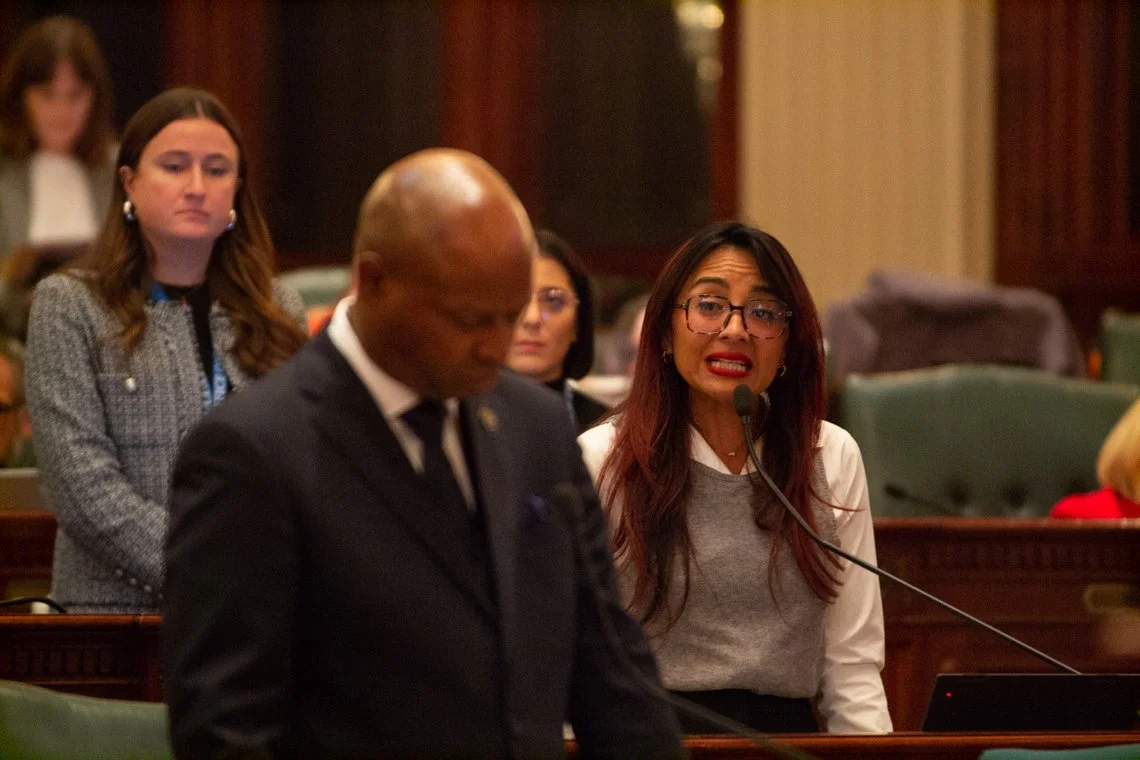
Rep. Dagmara Avelar, D-Romeoville, speaks on the House floor in October 2025, with House Speaker Emanuel “Chris” Welch in the foreground. Welch named Avelar to lead a private working group on sexual harassment policy in the House. (Capitol News Illinois photo by Jerry Nowicki)


Former SIU professor exposed for indecent act on campus pleads guilty to amended charge

He was ordered to pay $1,000 in fines after admitting he recorded himself masturbating in a lecture hall.

 Article Summary 

  •  A former SIU professor, who last year was accused of posting videos of himself masturbating on the SIU campus, pleaded guilty this week to a reduced charge of reckless conduct. 

  • The School of Medicine professor was arrested on March 17, 2025, just days after a social media post that generated more than 3 million views by the far-right Libs of TikTok account accused him of posting sexual videos of himself filmed on campus. The university fired him upon his arrest.

  • A Jackson County judge ordered him to pay $1,000 in fines and court fees. 

This summary was written by the reporters and editors who worked on this story. 

By JACKSON BRANDHORST
Saluki Local Reporting Lab

jbrandhorst@dailyegyptian.com.

The former Southern Illinois University professor accused last year of posting videos of himself masturbating in several places on campus pleaded guilty this week to a charge of reckless conduct after admitting he recorded himself doing so in a lecture hall hallway and posted it online.

Kyle Miller, a 35-year-old former professor at the SIU School of Medicine, was the subject of a March 2025 social media exposé led by extreme right-wing online influencer Chaya Raichik, who operates the popular Libs of TikTok account. The thread targeted Miller for sexual content Raichik alleged he was posting under the social media handle @Midwest0tter. 

The Libs of TikTok thread garnered more than 3 million views on Twitter/X, singling Miller out and directing national attention toward the university.

Raichik alleged that Miller had filmed himself masturbating in SIU lecture halls, offices, stairwells and hallways and posted the videos across several social media platforms. The thread included screenshots showing a man, who Raichik alleged to be Miller, in various states of undress in recognizable areas of the SIU campus. 

The thread came amid an onslaught of targeted social media campaigns from Raichik, who has posted multiple different exposés centered around sexual conduct from educators across the country, especially those who identify as LGBTQ+. It is unclear how she obtained the screenshots, or how she traced them to Miller. 

Raichik could not be reached for comment when the Daily Egyptian attempted to connect with her last year. Miller also did not respond to requests for comment after his arrest last year and after his plea hearing Wednesday.

Miller was arrested March 17, 2025, after an investigation by the Jackson County Sheriff's Office just days after the Libs of TikTok thread was posted. Following his arrest, Miller was fired from SIU and released from jail on March 19 under the condition that he was not allowed back on campus. 

Miller was originally charged with two counts of public indecency for sexual conduct and lewd exposure, both Class A misdemeanors. He pleaded not guilty, and a jury trial was initially scheduled for October 2025. At the request of Miller and his defense attorney, Christian Baril, the trial was postponed until December, then removed from the jury trial docket as the case returned to case-management proceedings, according to court records obtained by the Daily Egyptian. 

Nearly six months later, prosecutors made Miller a plea offer in which the two original public indecency charges would be amended to two counts of reckless conduct. Reckless conduct is also a Class A misdemeanor, but is not classified as a sex offense under Illinois law. Public indecency charges, however, are classified as a sex offense, and could require sex-offender registration upon a third or subsequent conviction. 

On Wednesday, Aug. 5, 2026, Miller entered a negotiated guilty plea to only the first count of reckless conduct. By doing so, he admitted to "endangering the safety of another person, by any means lawful or unlawful, in that he recklessly performed an act of sexual conduct and recorded himself masturbating in a hallway located in Pulliam Hall on the Campus of Southern Illinois University,” according to an amended information sheet detailing the charges to which Miller pleaded guilty. 

The amended charge does not identify any person whose safety was endangered or explain how Miller’s conduct endangered anyone. It also does not establish that Miller admitted to Raichik’s broader allegations involving other campus buildings and locations, nor does it identify Miller as being the operator of social media accounts under the name @Midwest0tter. 

The plea only applies to one instance in Pulliam Hall.  

The second reckless conduct charge was dismissed. Jackson County Judge Steven Bost ordered Miller to pay $1,000 in total fines and court costs. An SIU spokesperson said that Miller is no longer banned from campus. 

Jackson Brandhorst can be reached via email at jbrandhorst@dailyegyptian.com. The Saluki Local Reporting Lab is a collaboration with Capitol News Illinois.

Capitol News Illinois is a nonprofit, nonpartisan news service that distributes state government coverage to hundreds of news outlets statewide. It is funded primarily by the Illinois Press Foundation and the Robert R. McCormick Foundation.
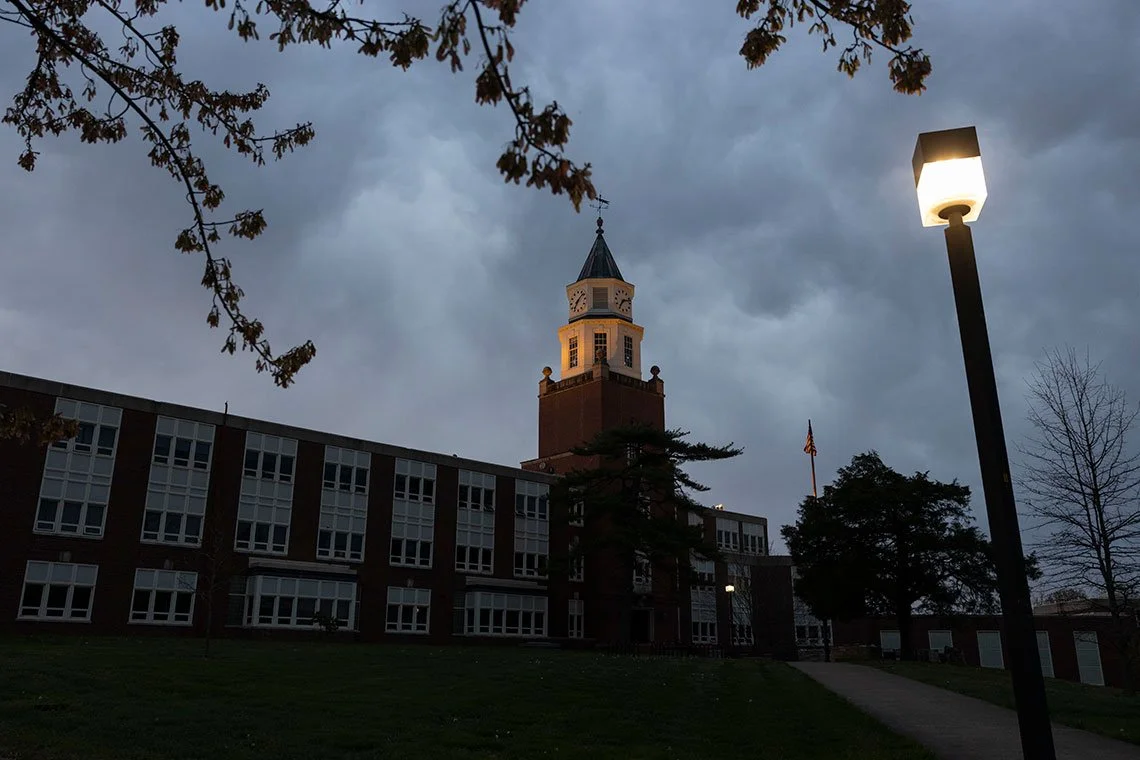

The SIU Carbondale campus is shown in this file photo from April 2025. (Lylee Gibbs/Saluki Local Reporting Lab) 


Four Managers and Supervisors Indicted for Failing to Evacuate Miners During Underground Fire, Conspiracy to Obstruct Investigators, and Falsifying Records

BENTON, Ill. – Ronald Dale Koontz, 69, of Hendersonville, Tennessee, Demitrios George Macropoulos, 38, of Buckeye, Arizona, Randy L. Nowland, 67, of Waltonville, Illinois, and Cory Taylor Humphrey, 37, of Prospect, Kentucky, have been charged with multiple crimes related to an underground fire that occurred in the MC#1 Mine in Franklin County, Illinois, in August 2021.

The indictment returned Tuesday charges Koontz, Macropoulos, Nowland, and Humphrey with conspiring to defraud the U.S. Mine Safety and Health Administration (MSHA) by concealing the fire and other hazards at the mine and taking steps to interfere with MSHA’s investigation of the fire and administration of safety-related orders in the aftermath of the fire. The Indictment charges the defendants with keeping miners underground and continuing to mine coal for all or portions of three shifts while unsuccessfully fighting a fire. The defendants are charged with failing to evacuate the mine and notify MSHA as required by mandatory safety standards under the Federal Mine Safety and Health Act (the Mine Act). Nowland and Humphrey are also charged under the Mine Act with falsification of records required to document mine hazards. Koontz and Macropoulos are charged with obstruction of an MSHA proceeding for entering the mine in violation of an MSHA safety order withdrawing miners from the mine. Koontz is further charged with obstruction for directing another supervisor to delete a record reflecting a telephone call he made. A fifth conspirator and former mine manager, Brandon Timothy Parsons, pleaded guilty to conspiracy to defraud MSHA on Aug. 28, 2025 in a related criminal proceeding filed in August 2025.

“As Congress has long recognized, a strong, productive coal industry depends on miners who feel safe and trust that their leaders are not putting them at unnecessary risk,” said Principal Deputy Assistant Attorney General Adam Gustafson of the Energy and Natural Resources Division. “Supporting MSHA’s work to protect coal miners is an important part of ENRD’s mission.”

“When people in positions of authority conceal deadly conditions and then cover up their actions, they put lives at risk and prevent federal authorities from doing the job the law requires them to do. That kind of obstruction is unacceptable,” said U.S. Attorney Steven D. Weinhoeft. “These charges hold accountable those who chose to protect the company’s financial interests over the safety of the people they are obligated to protect.”

As alleged in the Indictment, in August 2021, Koontz was the general manager of a company that provided oversight and services to the corporate operator of the MC#1 Mine. Macropoulos was the mine superintendent of the MC#1 Mine and Nowland and Humphrey were shift mine managers. On or about the afternoon of Aug. 13, 2021, an underground fire was ignited while mine personnel used cutting torches to cut collapsed steel beams in the mine. According to the Indictment, when the fire could not be extinguished within 10 minutes, rather than implementing the approved Mine Emergency Evacuation and Firefighting Plan, the defendants, and their co-conspirator Parsons, allegedly agreed that they would not evacuate miners or notify MSHA. Instead, the defendants are alleged to have directed coal mining to continue during ad hoc firefighting efforts through the morning of Aug. 14. Nowland and Humphrey are charged with signing records of required mine examinations, falsely certifying that no hazardous conditions existed in the mine.

On August 14th, Parsons tried to conceal the existence of the fire from those not already aware of it by evacuating the mine of hourly employees on the false pretense that a belt used to carry coal from underground to the surface was broken.  Members of the conspiracy, including Koontz, Macropoulos, and Parsons, are alleged to have then gone underground to continue their attempts to fight the fire.

Later that morning, MSHA received an anonymous tip about the fire and, by that afternoon, ordered that the mine be evacuated after inspectors confirmed the existence of the fire. Despite the evacuation order, over the next several days, it is alleged that conspirators re-entered the mine in violation of MSHA’s order on two occasions to assess the fire and manipulate the conditions underground to fool underground gas detectors so that MSHA would allow mining to resume. When MSHA began collecting portable gas detectors worn by miners during the fire as part of its investigation, a member of the conspiracy allegedly encouraged another co-conspirator to get rid of the portable gas detector he had worn. That co-conspirator concealed his portable gas detector away from the mine.

If convicted, the defendants each face possible incarceration. If found guilty, a federal district court judge will determine any sentence after considering the U.S. Sentencing Guidelines and other statutory factors.

Principal Deputy Assistant Attorney General Adam Gustafson of the Justice Department’s Energy and Natural Resources Division (ENRD), U.S. Attorney Steven D. Weinhoeft for the Southern District of Illinois, U.S. Department of Labor Office of Inspector General Anthony P. D’Esposito, Special Agent in Charge of the DOL-OIG Great Lakes Region Megan Howell, Assistant Director Jose A. Perez of the FBI Criminal Investigative Division, and Special Agent in Charge Ryan Presley of the FBI Springfield Field Office made the announcement.

The Department of Labor’s Office of Inspector General and FBI investigated the case.

Senior Trial Attorney Lana N. Pettus of ENRD’s Environmental Crimes Section and Assistant U.S. Attorney Kevin F. Burke for the Southern District of Illinois are prosecuting the case.

An indictment is merely an allegation. All defendants are presumed innocent until proven guilty beyond a reasonable doubt in a court of law.

Lions Club, County to Partner on Drainage Improvements at Froman Park

Drainage improvements and future upgrades at Froman Park were the focus of an extended discussion during Monday afternoon's Wabash County Commissioners meeting.

Jaleigh Peterson of the Wabash County Lions Club updated commissioners on the club's park improvement project, explaining plans to install drainage tile were abandoned after discovering underground oil lines near the proposed route.

Instead, county officials and the Lions Club are considering reshaping the existing roadway and adding drainage ditches to direct stormwater away from the park without disturbing the oil infrastructure. Commissioner Rob Dean said creating a dead-end road with a turnaround would reduce erosion, simplify maintenance and discourage vehicles from driving through the park.

Peterson also discussed long-term plans for the park, including a disc golf course and a permaculture demonstration area. She said the Lions Club has already received a $15,000 private donation and is exploring future grant opportunities through the Greater Wabash Regional Planning Committee that could help fund additional improvements aimed at enhancing quality of life in the community.

Commissioners voted to have Dean and Lions Club representatives meet to develop a final drainage plan before work begins.

The board also approved moving forward with the installation of up to three dusk-to-dawn LED lights at the park. Dean said the lights are intended to help deter vandalism, with estimated operating costs of about $20 per light per month. Final locations will be determined after the drainage plan is completed.

Mt. Carmel Moves to Ban Synthetic Kratom Product

The Mt. Carmel City Council has taken the first step toward banning the sale of a synthetic kratom product within the city.

During Monday afternoon's meeting, City Clerk Ryan Turner presented the first reading of Ordinance 2153, which would prohibit the sale of 7-OH, also known as 7-hydroxymitragynine, a synthetic kratom product.

Turner explained the ordinance applies only to the synthetic form of kratom. He said the natural leaf product is currently the subject of legal and legislative challenges because some groups argue it has legitimate medicinal uses.

Mayor Joe Judge said city officials contacted local retailers that had been selling the synthetic product, and all have now voluntarily removed it from their shelves. Turner added businesses have also removed advertisements promoting the product.

While the federal government is expected to enforce the nationwide ban on synthetic 7-OH products beginning this month, Turner said the city wants its own ordinance in place should future court decisions affect federal enforcement.

The ordinance received its first reading Monday and is expected to return to the council for final consideration at a future meeting.