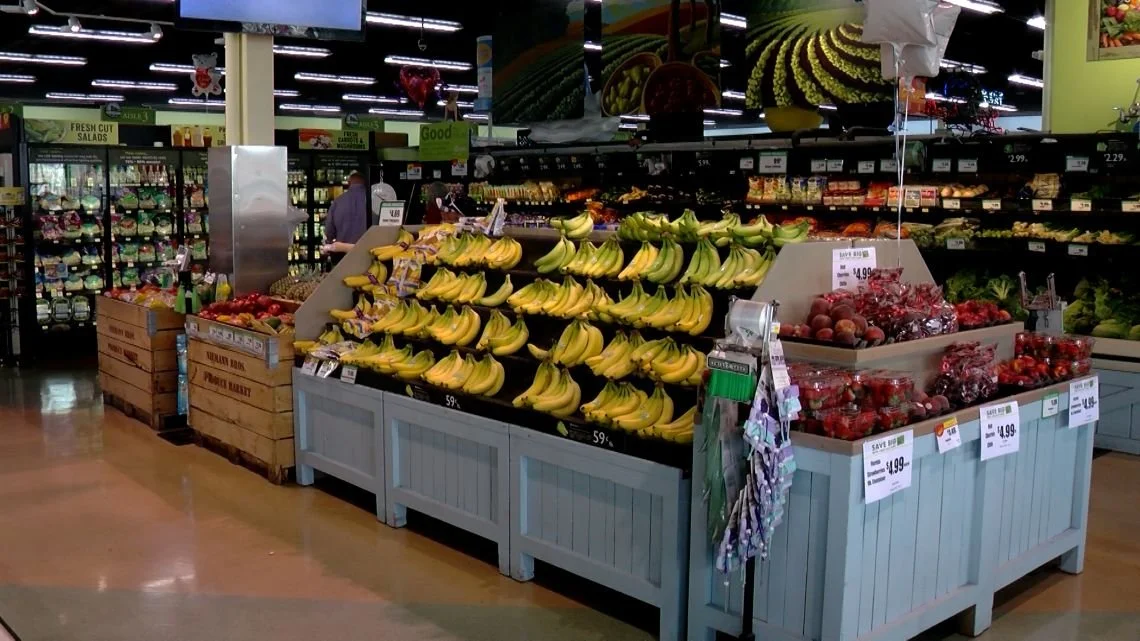
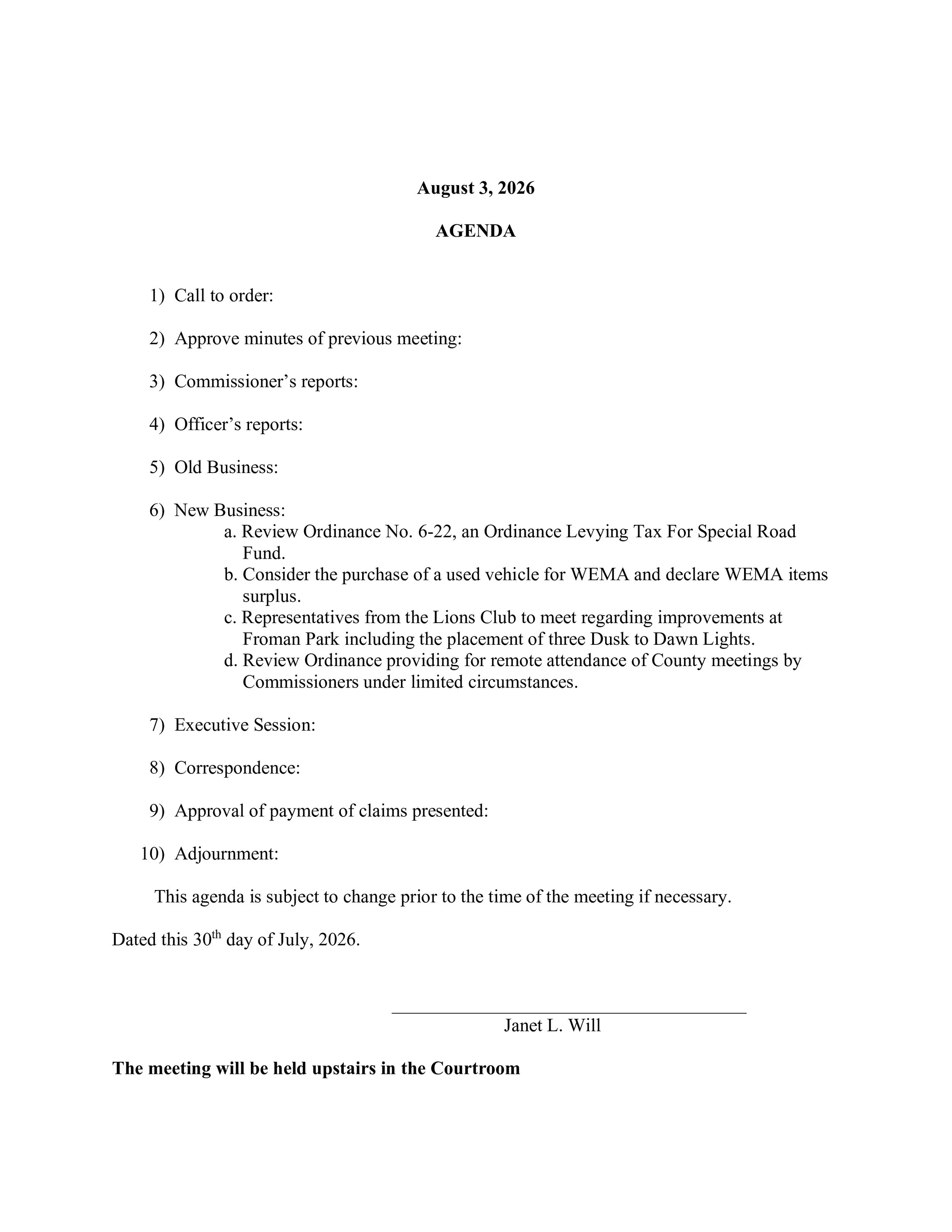
Mount Carmel officials continue their efforts to attract a new grocery store to the city.

During a recent "Ask the Mayor" program on WSJD, Mayor Joe Judge said the city is still actively recruiting grocery retailers and recently met with several companies at a trade show earlier this year.

Judge said he attended a grocery industry trade show in February and spoke with multiple grocery store representatives about locating in Mount Carmel. While no company has committed to the community yet, he says the city continues to pursue opportunities.

To help attract new businesses, Judge said Mount Carmel offers incentives through both its Tax Increment Financing District and Enterprise Zone programs. He also addressed recent social media comments suggesting the city only provides financial assistance to outside businesses.

Judge said that is simply not true, explaining that any business owner can apply for TIF assistance by presenting a business case. Applications are reviewed by consultants and attorneys before moving forward. He noted that some projects have not reached the City Council level because applicants either lost interest or decided not to proceed.

Judge added that the city is currently working with several other businesses that are considering locating in Mount Carmel. Economic development packages are being assembled for those prospects, and city officials remain hopeful some of those efforts will lead to new investment and job opportunities in the community.

For now, Judge says the search for a new grocery store remains ongoing.

WGH Reports Outstanding June Financial Performance

Wabash General Hospital posted one of the strongest financial months in its history, according to the June financial report presented Monday evening to the hospital's Board of Directors.

Finance Committee Chair Janet Storey reported the hospital generated $1,122,492 in operating income during June. Including non-operating revenue, total income for the month reached $1,343,302.

Storey said the hospital's year-to-date income now stands at $4,993,738. She also reported positive cash flow and said most financial indicators have improved compared to the same period last year.

While accounts receivable days increased to 51 days, Storey explained the change is tied to the timing of some receivables rather than collection issues. She said the hospital continues to collect its payments and remains below its 55-day benchmark.

Storey described June as "a super month," saying the hospital had an outstanding financial performance.

Chief Financial Officer Lynn Leek reported June was the second-highest revenue month in Wabash General Hospital's history, trailing only March.

Board member Rob Coleman reflected on the hospital's growth over the years, noting that when he first joined the board the hospital employed about 165 people. Today, he said, the workforce has grown to approximately 695 employees, including part-time staff and students, calling the growth over the past three decades "unbelievable."

WGH Board Approves Purchase of New Surgical Imaging System

The Wabash General Hospital Board of Directors approved the purchase of a new mobile C-arm imaging system during its meeting Monday evening to meet growing demand in the operating room.

Executive Vice President of Clinical Services and Chief Nursing Officer Kim Pearson told board members the hospital currently has three C-arms, with its oldest unit, a 2014 model, now dedicated to pain management procedures because of increased patient volume.

Pearson said orthopedic surgeons, along with other physicians, rely on the imaging systems during surgeries. As surgical and pain procedure volumes have grown, the hospital has experienced scheduling conflicts when multiple operating rooms require a C-arm at the same time.

The additional unit will allow the hospital to operate three surgical suites simultaneously while continuing pain management procedures without interruption.

The purchase price for the new C-arm is $188,214.50, a discounted price from the original cost of $249,300. Pearson said an annual service agreement, beginning after the first year, is expected to cost about $1,200 per month.

Board members unanimously approved the capital purchase request.

Illinois state elections board tells DOJ it follows federal law on voting integrity

Letter responds to Trump administration threats of criminal prosecution for noncitizen voting

By PETER HANCOCK
Capitol News Illinois
phancock@capitolnewsillinois.com

Article Summary

  • Illinois election officials said in a letter to the U.S. Department of Justice that they are complying with all federal requirements to maintain accurate and up-to-date voter registration rolls.

  • The letter is in response to an earlier threat by the Justice Department to prosecute state and local election officials for failing to keep noncitizens off the rolls or preventing them from voting.

  • The Trump administration has been trying to exert more federal control over U.S. elections, but courts so far have blocked many of those efforts.

This summary was written by the reporters and editors who worked on this story.  

SPRINGFIELD — The Illinois State Board of Elections told the U.S. Department of Justice this week it is complying with all federal laws governing voter registration and the maintenance of voter rolls, and it pushed back against threats by the Trump administration to prosecute state and local authorities for allowing illegal election activity.

“The Board and Illinois election authorities take very seriously their responsibility to maintain up-to-date and accurate voter registration records while ensuring that no eligible voters are disenfranchised by being mistakenly removed from the rolls,” Marni Malowitz, the state board’s general counsel, said in a letter Monday to the U.S. Department of Justice. “Illinois’s comprehensive list maintenance framework, consistent with the (National Voter Registration Act), ensures free and fair elections.”

Read the letter (PDF).

Malowitz’s letter was a response to a letter the Justice Department sent July 7 to top election administrators in all 50 states and Washington, D.C., threatening them with criminal prosecution for allowing noncitizens to remain on their voter rolls or to cast ballots.

That feds’ letter also demanded that state officials reply within five days by explaining in detail what procedures they use to regularly scrub their voter rolls of ineligible or inactive voters. 

Seeking federal control

Since President Donald Trump returned to office in 2025, his administration has made numerous attempts to exert more federal control over elections. Toward that end, Trump has frequently repeated disproven claims of widespread voter fraud in the 2020 election, which he lost to former President Joe Biden. 

In March 2025, Trump issued an executive order directing the Department of Homeland Security to work with other federal agencies in compiling a national list of confirmed U.S. citizens who are eligible to vote. 

He also has directed the Postal Service to pursue regulatory changes that would prohibit the transmission of mail-in ballots to or from anyone who is not on that list, although that effort has been stalled by multiple legal challenges.

Trump is also pushing for federal legislation that would require voters to show documentary proof of U.S. citizenship when registering to vote as well as photo identification before casting a ballot. However, the Safeguard American Voter Eligibility Act, or SAVE Act, has stalled in the Senate, where it does not have enough votes for passage.

Meanwhile, the administration is also suing Illinois and dozens of other states seeking access to their complete, unredacted statewide voter registration databases, including sensitive personal information such as dates of birth, Social Security numbers and driver’s license numbers.

As of Monday, July 27, federal judges in 17 district courts and one appellate court had ruled against the administration, finding DOJ does not have statutory authority to demand such records. No court has yet ruled in DOJ’s favor on the issue. A federal judge in Illinois, however, has not yet ruled on the state board’s motion to dismiss the case.

State board’s response

Responding to DOJ’s July 7 letter threatening prosecution, Malowitz began by noting that DOJ “does not identify any credible evidence of voter fraud or other impropriety in an Illinois election. Nor does it contain any allegation of a violation of federal law by an Illinois election official.”

The letter goes on to argue that the U.S. Constitution “assigns primary responsibility for federal elections to the States, subject only to preemption by Congress.”

In Illinois, the letter states, responsibility for administering elections lies with the State Board of Elections, an independent, bipartisan agency whose members “are not subject to oversight by or direction from public officials or political bodies.”

“Entrusting election supervision to an independent, bipartisan board exemplifies Illinois’s commitment to ensuring public confidence in elections,” the letter states. “The Board, through its bipartisan actions, safeguards against voter fraud, voter suppression, voter confusion, and public corruption.”

Among the federal laws Congress has passed that impose responsibilities on states, the letter notes, are the National Voter Registration Act of 1993 and the Help America Vote Act of 2002.

NVRA requires states to make voter registration widely available in places where people engage in other routine interactions with government, such as applying for or renewing their driver’s license or state identification card. 

It also provides a uniform voter registration application form that requires applicants to attest, under penalty of perjury, that they are U.S. citizens, over the age of 18 and meet the state’s residency requirements for voter eligibility.

HAVA also requires that mail-in voter registration forms include a line where applicants check a box to indicate whether they are a U.S. citizen.

The letter states that voter registration forms in Illinois comply with those standards and, “If an applicant does not make the required certification of citizenship, the voter registration application is denied.”

The letter also states that Illinois election officials routinely check their rolls against several state and federal data sources, including data from the Department of Corrections to identify voters who are incarcerated for felony convictions and records from the Illinois Department of Public Health to identify registered voters who have recently died. Illinois also participates in the multistate Electronic Registration Information Center, or ERIC, whose members share voter registration and motor vehicle information to track voters who move from one member state to another.

Finally, the letter states that local election authorities routinely update their lists by mailing direct notices to voters to determine whether registered voters are still living at the same address.

“Illinois’s multilayered approach to voter list maintenance is working,” Malowitz said in the letter to DOJ. “This commitment precludes establishing the specific intent and/or willfulness required for criminal liability under the laws cited in your letter.”

Capitol News Illinois is a nonprofit, nonpartisan news service that distributes state government coverage to hundreds of news outlets statewide. It is funded primarily by the Illinois Press Foundation and the Robert R. McCormick Foundation.  


Welch 'committed' to more funding for Chicago Public Schools — and the school board is banking on it

City schools’ budget for $150M that the state has not allocated

By BRENDEN MOORE
Capitol News Illinois 
news@capitolnewsillinois.com  

The Chicago School Board’s upcoming budget is banking on $150 million in funding that the state hasn’t allocated to prevent layoffs, but the request comes amid a tight budget landscape in Springfield.

The calls for further state aid to the Chicago Public Schools accelerated this week when House Speaker Emanuel “Chris” Welch, D-Hillside, told members of the Chicago Teachers Union that he's “committed” to supporting a supplemental budget bill that would increase funding for the district.

One day later, the Chicago School Board approved a budget that relies on the state chipping in another $150 million beyond what’s already been allocated. CPS is facing a budget hole of more than $700 million and the specter of laying off more than 1,000 district employees, including hundreds of teachers, to close it. 

“This should not be happening,” Welch said, holding a union flyer outlining the impacts. “I do think that the state of Illinois can do better (and) should do better. I’m going to keep fighting for you, so that we can get more revenue to get to CPS schools.”

Welch said he would “lead that effort in the veto session,” Welch said in a video posted to the union's social media accounts. Lawmakers return to Springfield from Nov. 17-19 and Dec. 1-3. 

It’s not clear what Welch’s plan is, and Gov. JB Pritzker told reporters on Friday he hasn’t discussed it with the speaker. 

“I only heard it yesterday,” Pritzker said. “I think I saw a clip of it on social media.”

Pritzker said while state funding is a “known quantity” for schools, the CPS decision to bank on unallocated funding creates uncertainty. 

“I would say I think it's of course challenging to face a budget where there's revenue that's expected that the speaker is planning to have a plan for, but we don't exactly know how,” he said.

An uphill battle in Springfield

Welch, Senate President Don Harmon and Pritzker have largely been aligned in their position of balancing the need for more education funding with budget realities. 

But his apparent change of tune comes as he has been working to fortify his standing with key allies in recent weeks amid criticism over how his office handled allegations of sexual harassment against ex-Rep. Harry Benton, D-Plainfield. 

The speaker has also faced scrutiny over his own interactions with a former female staff member on social media, which including reacting to posts with heart-eye emojis. 

That said, it remains unclear where the additional funds would come from. The $55.9 billion spending plan Pritzker signed into law in June, which relies on hundreds of millions of dollars in tax hikes to bring it into balance, leaves little wiggle room. 

 “We've increased education funding across the state of Illinois,” Pritzker said. “I want to do more, and we're not yet where we need to be. I want to do more, and at the same time, I'm a big believer in — and I think you've seen this — balanced budgets. You have to balance the budget, try to run a surplus, make sure you have priorities in order to fund the things that we really need for the people.”

CTU leaders and Chicago Mayor Brandon Johnson have long blamed the district's financial issues on insufficient funds coming from Springfield. CPS is at 73% adequacy under the state's evidence-based funding formula. 

The aim of EBF, now in its 10th year, is to improve both the adequacy and equity of school funding in Illinois. The law calls for increasing state K-12 education funding by $300 million every year with the goal of getting every district up to at least 90% adequacy. The district estimates that it would take an additional $985 million to reach 90% adequacy.

Despite the state pumping additional funding into schools every year besides COVID-impacted 2020, 63% of the state's school districts remain below their 90% target. And the Illinois State Board of Education estimates it will take at least $3 billion to bring them all up to it. 

To this point, CTU and Johnson have had little success in their advocacy in Springfield as lawmakers grapple with competing funding priorities and budget constraints that are only expected to grow amid federal spending cuts. 

An effort Welch championed this spring to place a question on the ballot authorizing a surtax on income over $1 million fell short. The earliest voters can have a say on the measure, which some estimate could raise up to $3.5 billion annually for the state, is now the 2028 election. 

And any effort to pass something in veto session with an immediate effective date would require three-fifths supermajorities.

Welch's office did not return a request for comment seeking clarification. 

Statewide education funding bill?

Many progressives who fought largely without success this spring to add a series of tax hikes on the ultrawealthy and corporations welcomed the push. 

“We took some things to the mat in May, and we need to continue doing that work all year-round, and we need to go back to the options we had on the table,” said Rep. Lindsey LaPointe, D-Chicago.

LaPointe, however, acknowledged that she doesn't “think enough work has gone on between the end of May and today yet.”

“Do I think there's a pathway to get there? I think my colleagues are on record saying that they care about K-12 education across the state,” LaPointe said. “My colleagues are on record supporting the evidence-based funding formula, and when you look at the reality that we are 10 years away from adequacy, yes, I think there is a pathway to get us closer to adequacy. But we all have to collectively do the actual work to get there.”

A spokesperson for Senate President Don Harmon, D-Oak Park said, “The Senate President looks forward to working with our allies and partners to identify resources, and he shared this with the IFT executive board earlier this week.”

Rep. Ann Williams, D-Chicago, told Capitol News Illinois that she was “pleased to hear that both Sen. Harmon and Speaker Welch have committed to pushing for more education funding.”

“That’s something that continues to be a priority for me,” Williams said. “I’m hopeful we can find more ways to direct revenue to the evidence-based funding formula which will benefit all schools.”

Several lawmakers reached by Capitol News Illinois made one thing clear: There is next-to-no chance a CPS-only funding bill passes the General Assembly. New school funding would have to be spread statewide. 

And even then, many suburban Democrats expressed skepticism that something could get done during veto session.

CPS funding history

In fiscal year 2025, CPS was classified as Tier 2 — second in the priority list for increased funding. That year, they got $25.8 million in “tier” funding — the amount of increase based on how far below adequacy a district is. 

In fiscal year 2026, they were dropped back to Tier 1 — the top priority for EBF funding. As a result, their new state funding tripled to $76 million, or 25% of all the new EBF money the General Assembly appropriated.

Pritzker earlier this week said the state was “making progress” on school funding, adding that “it’s never fast enough.”

Peter Hancock, Ben Szalinski and Jerry Nowicki contributed to this report. 

Capitol News Illinois is a nonprofit, nonpartisan news service that distributes state government coverage to hundreds of news outlets statewide. It is funded primarily by the Illinois Press Foundation and the Robert R. McCormick Foundation. 


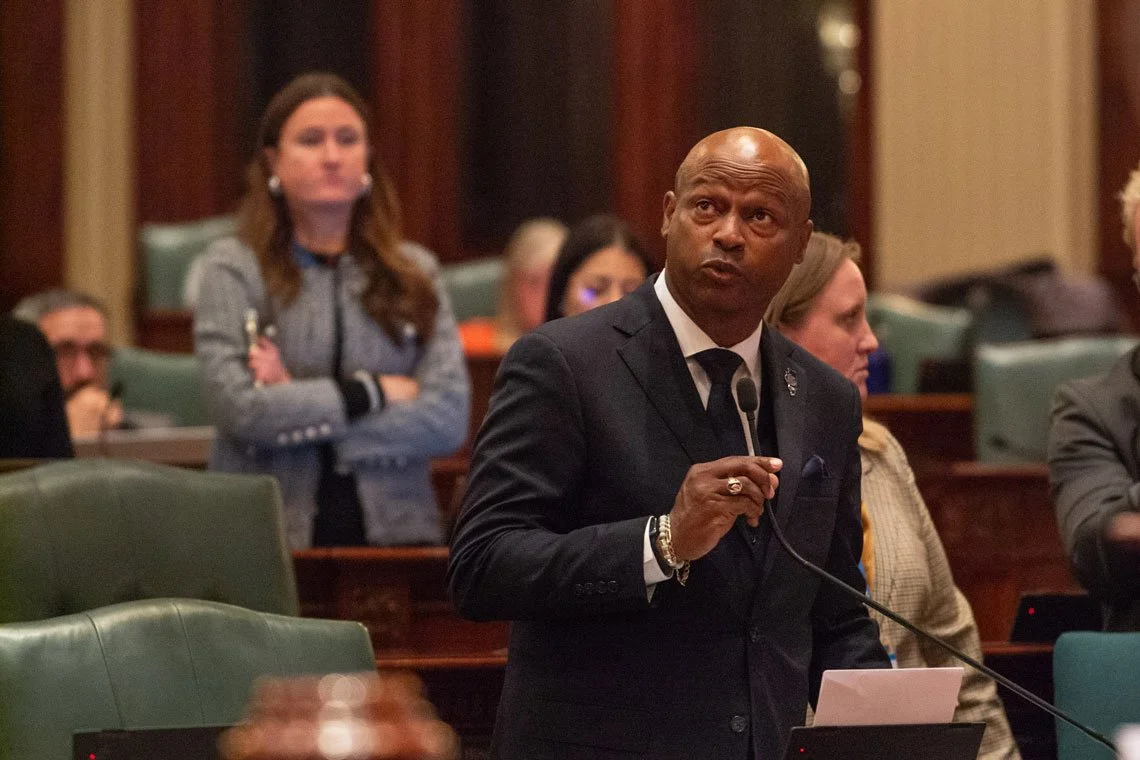
House Speaker Emanuel “Chris” Welch, D-Hillside, speaks on the floor. (Capitol News Illinois photo by Jerry Nowicki)

Report finds 'pattern and practice' of harassment by ex-Rep. Harry Benton

Speaker knew about 2023 incident but left it unaddressed for months

By BRENDEN MOORE,
BEN SZALINSKI
& JERRY NOWICKI
Capitol News Illinois 
news@capitolnewsillinois.com  

Article Summary  

  • A newly released report shows resigned Rep. Harry Benton engaged in a “pattern and practice of inappropriate sexual conduct” dating back to 2023 when he was first seated to the House. 

  • House Speaker Emanuel “Chris” Welch says the report “reaffirms” his office’s handling of the case, but he’s still facing calls to resign for not acting on a 2023 complaint sooner.

  • Welch spent $1.4 million for Benton's reelection campaign to his southwest suburban House seat in 2024, after the first allegation against him.

This summary was written by the reporters and editors who worked on this story.  

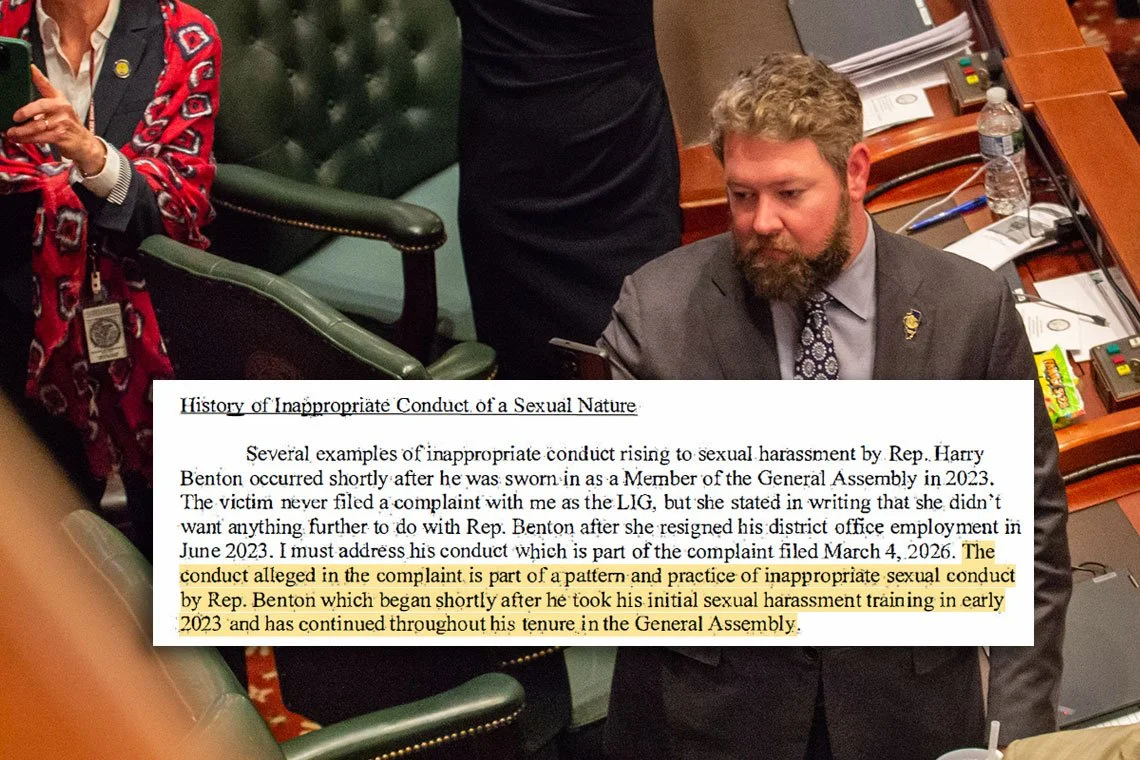
SPRINGFIELD —Disgraced ex-Rep. Harry Benton, D-Plainfield, violated state law by committing two acts of sexual harassment, according to a summary legislative inspector general report made public Friday afternoon. 

LIG Mike McCuskey said the instances were "part of a pattern and practice of inappropriate sexual conduct" by Benton that began soon after he took his initial sexual harassment training as a newly elected member in 2023. He said Benton "ignored common sense examples of what not to say and do."

"The fact that these violations are only misdemeanors and may be considered minor crimes by some does not mean they should be ignored," McCuskey wrote. "Others might argue that these are merely talking crimes at most. Those arguments don't stand up in today's society. People should not be treated as mere objects to tolerate other people's verbal pleasure or jokes."

The seven-page report also confirmed that House Speaker Emanuel "Chris" Welch's office knew about a sexual harassment allegation against Benton as early as April 2023 but did not address that allegation, made by a former district staffer, with Benton until July 2023. 

That allegation, first outlined in a Chicago Tribune report earlier this month, laid outside the LIG's one-year statute of limitations but was used to establish a pattern of behavior.

McCuskey said the staffer in 2023 sent a letter to Welch’s chief of staff detailing allegations against Benton, but said she was “leaning to just getting on the record and not doing much more with it.” 

The allegations said Benton “asked to stay at my friend’s condo with me in the city, put me in an extremely awkward position having to say no to him.” He also allegedly made comments like he was keeping her “off the pole” by hiring her and he once told her “don’t forget to wear something underneath that.”

“Had the speaker acted appropriately in 2023, we would not be here today. There would not have been additional allegations,” House Republican Leader Tony McCombie said at a news conference after the report was released. 

Despite his office's knowledge of the allegation, which Benton denied at the time, Welch spent $1.4 million for Benton's reelection campaign to his swingy southwest suburban House seat in 2024. And he would not boot Benton from the House Democratic caucus and strip him of his committee assignments until this February following the allegations that were ultimately founded in the report.

“Why would he spend 1.4 million dollars defending a flawed member instead of acting on the first complaint, why risk the integrity of the institution to protect a seat that would never have changed the Democratic supermajority?” McCombie asked. “This should be the moment ethics reform finally moves forward.”

Benton, who was elected in 2022, resigned in early July, just two days after McCuskey delivered his report to Welch, who quickly called for Benton's ouster, citing patterns of behavior that were "outrageous, unethical, and unbecoming of a member of the Illinois House of Representatives." 

He’s been replaced in office and on the ballot by Jessica Dixon Heitman, who was briefly Benton’s media and community outreach coordinator in 2023. She resigned from that position and told the Tribune after being appointed to replace Benton that it was “not a great fit” and her tenure there “is a hard thing to talk about.”

Gabby Shanahan, the Republican who will face her, faulted her for not coming forward, though Heitman was not in a position of power in Benton’s office. 

“I think she should have come forward,” Shanahan said. “This culture continues to perpetuate because people don't come forward when these things happen.”

Pressure on Welch

McCombie said Welch should resign. She echoed the call of Rep. Fred Crespo, one of Welch’s fellow Democrats — albeit one who Welch excommunicated from the Democratic caucus last year. Crespo, who Welch booted for leading his own budget negotiations, wrote an op-ed in the Chicago Tribune saying Welch didn’t adequately respond to the harassment claims.  

In a statement following the release of the report, Welch said it reaffirmed that his office "acted responsibly" by "following legal guidance, respecting the wishes of those who came forward, and taking decisive action as additional information established a pattern of misconduct." 

Rep. Kelly Cassidy, D-Chicago, a member of the Legislative Ethics Commission that voted to release the report, slammed Welch’s handling of the situation in a lengthy statement. She said Welch’s argument that the report shows he handled the 2023 situation appropriately “does not hold up to scrutiny.” 

“Had the speaker intervened meaningfully in 2023, he may have been able to prevent the victimization of the other two women, who were harassed in May 2025 and January 2026,” Cassidy said. 

Cassidy, who was a vocal critic of former Speaker Mike Madigan’s handling of sexual harassment issues, also said Welch needs to address his own reported conduct toward Benton’s former employee. But she did not call on Welch to resign. The woman at the center of the 2023 incident said Welch reacted to several of her Instagram post with a heart eyes emoji and invited her to a bar via an encrypted messaging app when she asked for career advice. 

“Even if the speaker did not intend to send flirtatious signals, or to generate pressure on a young woman he had already indicated he found attractive, the effect of his behavior was to make her uncomfortable,” Cassidy said. “I encourage the speaker to acknowledge that publicly and apologize to the woman for his conduct.” 

Founded allegations

The LIG complaint was sparked by an incident with a female lobbyist at a bar in Chicago. Benton, according to the report, allegedly told her "I might be a five, but I f--- like a 10." In a statement published alongside the report, the lobbyist said Benton also showed her photos on his phone of women he claimed to be sleeping with. 

According to a letter from Kat Bray, Welch's chief legal counsel, to McCuskey on Feb. 20, two House members made the speaker's office aware of the incident on Feb. 19. Benton was booted from the caucus the following week and a more detailed complaint was filed with the LIG on March 4. 

The report includes a previously undisclosed third instance of alleged sexual harassment by Benton. In an undated incident, a district director of a House member said Benton harassed her at a Springfield bar following Latino Unity Day festivities. Benton allegedly approached the woman, leaned over her and put his hand on her back, actions she said made her feel uncomfortable and were creepy. She backed away and another colleague stepped between the two. 

McCuskey found both claims to be founded. 

“It is very evident, as the LIG points out, that the initial pattern and practice of harassment and sexual harassment occurred almost immediately upon former Rep. Harry Benton assuming office,” LEC Chair Jeff Keicher, R-Sycamore, said during a news conference. 

Unfounded claims

McCuskey found three claims unfounded, including one claiming that Benton was hostile while attempting to get on stage with Gov. JB Pritzker at the Illinois State Fair in 2024 and another from December 2025 claiming that he harassed and was hostile to a staffer of the Illinois Federation of Teachers.

The third was an allegation that Benton had pictures on his cellphone of women he claimed to be involved with romantically. McCuskey dismissed the claim as hearsay, though the lobbyist in her statement confirmed that Benton had showed her photos on his phone matching that description. 

The lobbyist noted there were "inaccuracies" in McCuskey's report, something she attributed to him not recording the conversation or taking contemporaneous notes. While she called these "concerning," she said "the underlying facts remain the same."

"Harry Benton did make inappropriate sexual comments to me despite my protestations, and his resignation was appropriate," she wrote. 

McCuskey, in response, said there were "no inaccuracies" in the report. 

McCuskey's recommendation 

Ultimately, McCuskey recommended that Welch permanently remove Benton from the caucus and revoke committee assignments and support from the speaker's staff. He did not recommend that Welch pursue further discipline. 

Welch, in his response to McCuskey, indicated that he accepted all recommendations McCuskey made besides punishment. He then reiterated his call for Benton to resign, threatening to initiate expulsion proceedings against him if he didn’t.  

"This report must represent more than an accounting of what happened," Welch said in his statement. "It must serve as a catalyst for meaningful, structural change. If there are gaps in our policies, our laws, or our workplace practices, then it is our duty to close them. The work has already begun."

“He's had opportunity after opportunity as the speaker of the House to do that,” McCombie responded. “The House Republicans have repeatedly sent over reforms. Repeatedly asked for the committee to meet to discuss these things, and there's crickets over there. They do not want to have ethics reform that has been proven under his leadership.”

It's the first founded LIG report to be released since 2020.

Capitol News Illinois is a nonprofit, nonpartisan news service that distributes state government coverage to hundreds of news outlets statewide. It is funded primarily by the Illinois Press Foundation and the Robert R. McCormick Foundation.
Illinois Prisoner Review Board denies early release for Sean Grayson

Former Sangamon County Sheriff’s deputy serving 20 years for death of Sonya Massey

By PETER HANCOCK
Capitol News Illinois
phancock@capitolnewsillinois.com

Article Summary

  • The Illinois Prisoner Review Board voted unanimously Friday to deny former Sangamon County Sheriff's Deputy Sean Grayson’s application for compassionate release.

  • He is serving a 20-year sentence for second-degree murder for the 2024 killing of Sonya Massey.

  • Massey's family and the state's attorney who prosecuted Grayson opposed the release, arguing the judge took Grayson's health into account when sentencing him.

This summary was written by the reporters and editors who worked on this story.

SPRINGFIELD – Former Sangamon County Sheriff’s Deputy Sean Grayson will remain in prison, at least for the time being.

The Illinois Prisoner Review Board voted unanimously Friday to deny Grayson’s application for compassionate release. 

Grayson is serving a 20-year sentence for second-degree murder for the 2024 killing of Sonya Massey, an unarmed Black woman who had called authorities to report a possible prowler outside her home.

He had applied for release under Illinois’ Joe Coleman Act, citing his diagnosis of advanced cancer.

But the PRB denied that request following a hearing at which members of Massey’s family testified. They argued that Grayson’s condition was taken into account when he was sentenced in October and that he continues to show no remorse for his actions.

“I believe he received a compassionate sentence from the jury because of his condition,” Sontae Massey, Sonya’s cousin, told the review board. “But what about Sonya? She was condemned to the grave by this man and has no review board to grant her her God-given earthly life back.”

James Wilburn, Massey’s father, also said he did not believe Grayson deserved early release.

“People have said to me, you know, ‘He's dying. Maybe as an act of compassion, he should be able to die amongst his family and friends,’” Wilburn said. “My baby didn't have a chance to die amongst her family and friends.”

Massey’s murder

Massey was shot and killed in her home on July 6, 2024, after calling 911 to report a possible prowler on her property. 

According to police reports and body cam video presented in court, Grayson and another deputy responded to the scene but found no evidence of a prowler. While talking with Massey inside her home, Grayson asked her to remove a pot of boiling water from her stove. She did, but while moving the pot, she said to one of the officers, “I rebuke you in the name of Jesus.” Grayson then shot her three times, claiming later that Massey was about to attack him with the boiling water.

In his application for release, Grayson repeated that claim and expressed no remorse for his actions.

John Milhiser, the Sangamon County state’s attorney whose office prosecuted Grayson, argued against his release in a letter. He argued that Grayson had cancer when he shot Massey and the judge knew about his worsening condition when he sentenced him. 

“His temper and willingness to escalate minor misunderstandings into fatal encounters shows that he poses a danger to any person he comes into contact with,” Milhiser wrote in the letter. “To release Grayson under these circumstances would be a miscarriage of justice and an insult to Sonya Massey’s memory and family.”

Massey’s killing drew statewide and national attention because it touched on many critical issues confronting law enforcement, including race relations, how officers respond to people experiencing mental illness, and how officers are screened and trained for their jobs.

It also led to the resignation of former Sangamon County Sheriff Jack Campbell, who came under heavy criticism for hiring Grayson despite his troubled employment history with other law enforcement agencies.

Grayson’s history, response

Capitol News Illinois reported that before Grayson was hired in Sangamon County, he had worked at the Logan County Sheriff’s Department where he was repeatedly admonished for poor performance and inappropriate behavior.

The tragedy also occurred four years after the killing of George Floyd at the hands of Minneapolis police, which set off riots and protests across the country. And both of those killings were just part of a long string of killings of unarmed Black people at the hands of white police officers.

Donna Massey photo

“I've noticed that it's getting rampant with Black people being pulled over for being Black, even while they're walking or standing in their yard,” Donna Massey, Sonya’s mother, said at a news conference following Friday’s hearing. “It's getting rampant. It's not getting any better. So we do need to make Sean Grayson an example, because everybody keeps getting away with murder, and that's why they keep doing it.”

Massey’s killing prompted Illinois lawmakers to pass legislation in 2025 requiring law enforcement agencies to conduct more extensive background checks on prospective officers. That includes requesting copies of personnel files from the applicant’s previous employers. The law also requires law enforcement agencies to provide those records upon request from another agency.

In February 2025, the Sangamon County Board approved paying $10 million to settle a wrongful death claim brought by Massey’s family.

Massey’s family expressed relief Friday after the PRB voted to deny Grayson’s petition for release. 

Gov. JB Pritzker also released a statement praising the board’s decision.

“Sonya Massey’s family and loved ones remain in my thoughts today,” he said in the statement. “Her killing was a profound loss that can never be reversed. Sonya was innocent, unarmed, and calling law enforcement for help. It was a painful reminder that too many innocent Black Americans have faced this kind of violence — and they deserve justice.”

Sontae Massey said during the news conference after the hearing that his cousin’s death helped bring people in the Springfield community together to work for racial justice. But he said the Massey family, and the community at large, still have not healed.

“I think we're on the right track, but there's more to be done,” he said. “And we will continue to work as long as there's the specter of Sean Grayson, or anyone else that perpetrates these crimes, has the ability to get out on early release or just harm our community. So we will be out there working diligently.”

Under the law, Grayson can reapply for release at any time, as many times as he wants.

Capitol News Illinois is a nonprofit, nonpartisan news service that distributes state government coverage to hundreds of news outlets statewide. It is funded primarily by the Illinois Press Foundation and the Robert R. McCormick Foundation.  
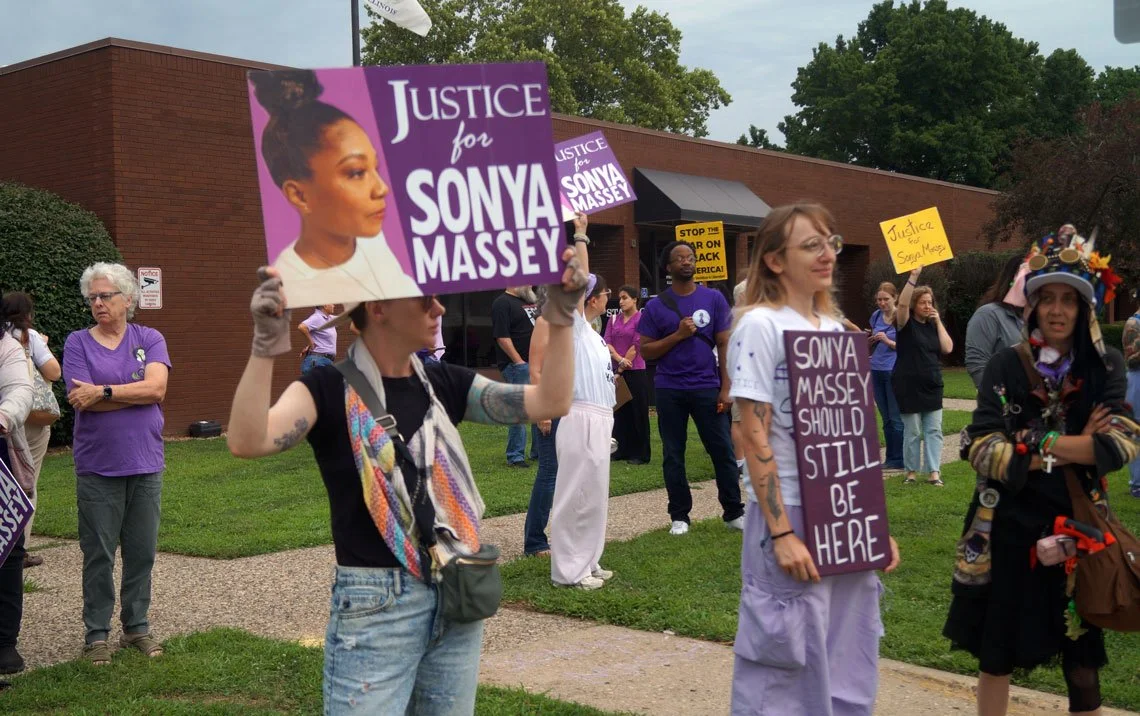

 Protesters outside the Illinois Prisoner Review Board building in Springfield call for rejecting early release of former Sangamon County Sheriff's Deputy Sean Grayson. (Capitol News Illinois photo by Peter Hancock)

Pritzker signs law regulating how social media platforms interact with children

Cracking down on social media algorithms one of governor’s top priorities this year

By BEN SZALINSKI
Capitol News Illinois
bszalinski@capitolnewsillinois.com

Article Summary

  • Gov. JB Pritzker signed the Children’s Social Media Safety Act — a bill designed to protect children online and limit their access to addictive social media algorithms.

  • The bill would require social media companies to verify a child’s age on the device’s operating system and use stricter features for minors like limiting location-sharing and nighttime notifications.

  • Supporters of the bill say limiting access to addictive algorithms that keep kids glued to their screens will help improve their mental health. 

  • The bill was generally opposed by tech groups. 

This summary was written by the reporters and editors who worked on this story. 

Gov. JB Pritzker signed sweeping regulations Friday aimed at social media companies and cracking down on “addictive algorithms” that keep kids glued to their screens. 

House Bill 5511, known as the Children’s Social Media Safety Act, imposes a series of requirements on social media companies and how they are to interact with users under 18 years old. The law, which will take effect in 2028, was one of Pritzker’s top priorities during the spring legislative session and received unanimous support in both chambers.

“Big social media companies have intentionally designed their platforms to keep kids online for as long as possible,” Pritzker said before signing the bill at an event in Chicago. “Their algorithms learn what captures a child's attention, which most often seems to be anger and euphoria, and then the algorithm keeps feeding them more of it. Why? The almighty dollar. They feed our kids an unrealistic picture of life and sell them products and agendas to achieve it.”

Under the law, social media platforms must confirm a user’s age through the device’s operating system. When devices are set up for children, parents would set the child’s age, which would automatically trigger certain restrictions required by the state. 

To limit the addictive nature of social media feeds, the law prohibits companies from using a minor’s viewing history or data stored on the device to determine what shows up in their feeds. Instead, feeds for minors will only be allowed to show information the user requested or searched for or was posted by a creator the user follows. Kids will also be able to see media that is a direct, private message to them.

“These are common sense protections,” Pritzker said. “They don't prevent young people from connecting with one another or their loved ones online. They don't censor anyone. They take decisions about children's online safety away from the companies and put it back in the hands of parents.”

Stronger default privacy settings are also required for minors, including shielding a minor’s precise location and limiting digital currency transactions. Social media sites and apps would also be prohibited from sending notifications to minors between 10 p.m. and 7 a.m.

“What we're seeing is shrinking attention spans, rising depression rates, and in kids, sacrificing sleep to scroll long past when they should be asleep, is a real danger,” House bill sponsor Rep. Jennifer Gong-Gershowitz, D-Glenview, said.

The Illinois attorney general’s office would enforce the law. Violators would be liable for fines up to $2,500 for each child for unintentional violations and up to $7,500 per child for intentional violations.

“It is important that we balance the guardrails that keep young people safe — guardrails that technology companies should have implemented from the very beginning,” Attorney General Kwame Raoul said. 

Raoul has joined lawsuits against both Meta and TikTok, alleging the companies have addictive designs that exploit children. 

The law was generally opposed by tech companies. During testimony in committees this spring, lobbyists for the companies raised concerns that the bill would violate First Amendment rights and potentially trigger lawsuits against the state. 

The final version of the bill was opposed by the Illinois Chamber of Commerce, Motion Picture Association, tech company advocacy organization TechNet, and the American Civil Liberties Union. 

“Innovation and child safety are not competing interests,” bill sponsor Sen. Willie Preston, D-Chicago, said. “You do not have to choose between technological progress and protecting children. The greatest innovations solve problems; they do not create them.”

Capitol News Illinois is a nonprofit, nonpartisan news service that distributes state government coverage to hundreds of news outlets statewide. It is funded primarily by the Illinois Press Foundation and the Robert R. McCormick Foundation.
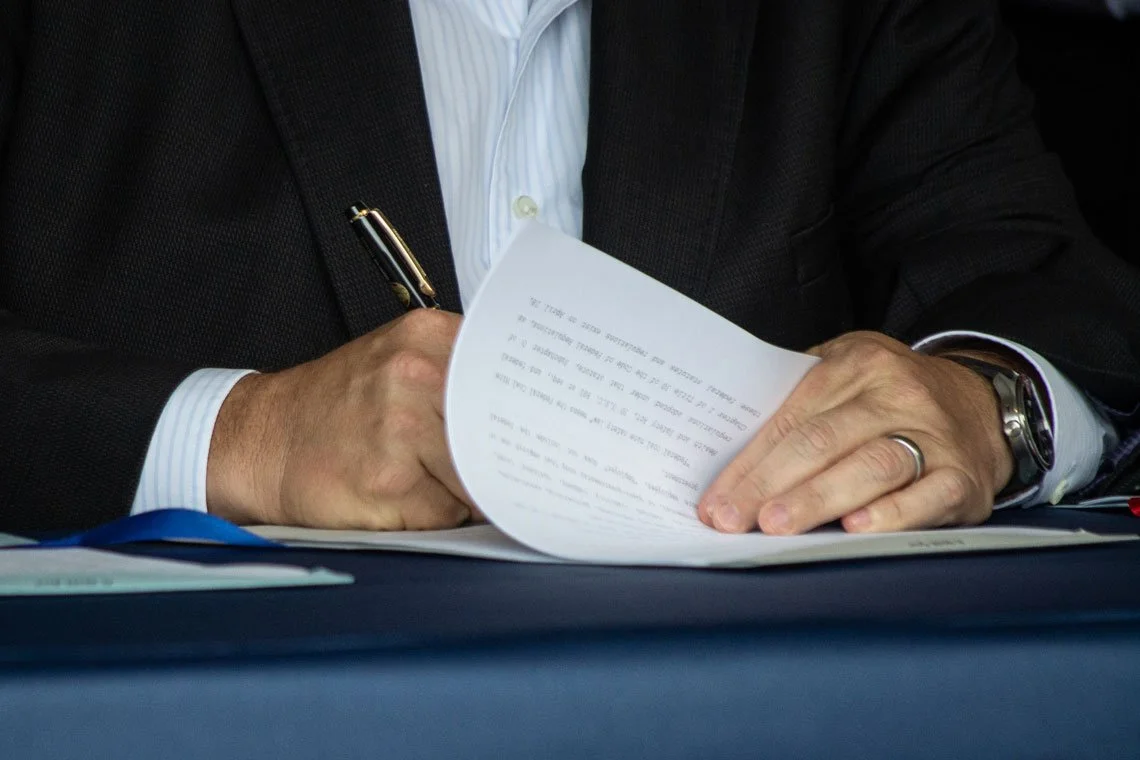

Gov. JB Pritzker signs a bill into law. (Capitol News Illinois file photo)

Illinois launches new program to provide food benefits to people who lost SNAP

Program established in budget is in response to federal reductions

By BEN SZALINSKI
Capitol News Illinois
bszalinski@capitolnewsillinois.com

Article Summary

  • Households that lost SNAP eligibility in recent months will become eligible for a one-time $400 payment from the state beginning Aug. 1.

  • State lawmakers appropriated $70 million in the fiscal year 2027 budget to create the FRESH program.

  • About 150,000 Illinoisians were expected to lose SNAP benefits beginning May 1 because of new work requirements for the program established by Congress.

This summary was written by the reporters and editors who worked on this story. 

A new state program took effect Saturday to provide food benefits to people who have recently become ineligible because of federal changes to the Supplemental Nutrition Assistance Program. 

The Families Receiving Emergency Support for Hunger, or FRESH, program kicked off Aug. 1 after state lawmakers appropriated $70 million in the fiscal year 2027 budget to establish a state food assistance program. The initiative allows households that lost their SNAP benefits earlier this year to receive a $400 one-time payment.

“At a time when the cost of groceries, gas, and utilities are all rising, Donald Trump and Republicans decided to strip food assistance from nearly 100,000 people,” Gov. JB Pritzker said in a statement. “In Illinois, we passed the FRESH program to help provide some relief for families kicked off food assistance, but no state can backfill the cruel and imminent cuts set in motion by Trump’s budget bill.”

About 150,000 Illinoisians were expected to lose food assistance benefits beginning May 1 after new work requirements established by Congress went into effect. About 1.5 million Illinoisians received SNAP benefits in June, according to the Illinois Department of Human Services. That includes 830,342 households. The number of beneficiaries in June was down 134,734 people compared to April.

Eligible households are those that lost benefits because of the federal changes and are automatically enrolled in the FRESH program. Recipients will receive the one-time payment to their Illinois Link card to use on food. 

People who lose SNAP coverage in the coming months will also receive payments until funding for the program runs out. 

Other financial impacts

The budget also included $55 million to hire 450 Department of Human Services employees, including staff to update state systems to comply with federal changes to SNAP and Medicaid eligibility.

Illinois, and most other states, are set to be on the hook for higher costs in the coming years because of the changes Congress made. 

Read more: Illinois food assistance error rate continues to grow as federal penalties loom 

Beginning in in October 2027, states will cover half of administrative costs for the program and many states will begin covering a portion of SNAP benefits. States with an error rate greater than 10% will have to cover 15% of the cost of benefits starting in fiscal year 2029. 

Illinois’ error rate was 14.7% in federal fiscal year 2025, according to the U.S. Department of Agriculture. That was up from 11.6% the year before. 

Illinois will have another year to produce a lower error rate, giving the state more time to rectify problems. As of now, the state could be on the hook for $700 million in new SNAP costs by the end of 2028 if nothing changes. 

Capitol News Illinois is a nonprofit, nonpartisan news service that distributes state government coverage to hundreds of news outlets statewide. It is funded primarily by the Illinois Press Foundation and the Robert R. McCormick Foundation.