Meeting is Monday at 4pm at City Hall.
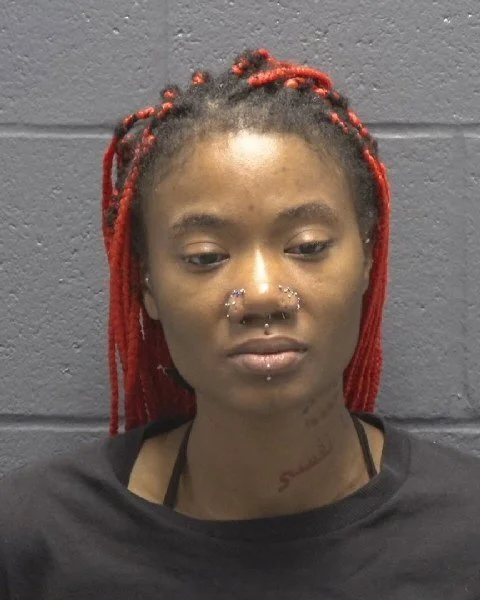
Carmel woman arrested for misuse of 911 services
On July 30, 2026, at 3:10 p.m. Gibson County Central Dispatch sent Deputy Wes Baumgart to the area of Faulkner Chevrolet located at 2843 West State Road 64 to speak with 32-year-old Jamericah Odum who requested a ride to Toyota. Upon locating Ms. Odum Deputy Baumgart suggested that she contact a ride service provider such as Lyft to transport her down there and went back in service.
Ms. Odum called 911 multiple times and was told each time if it was not an emergency to call the non emergency number. After the third time Deputies went back to Ms. Odum and placed her into custody and transported her to the Gibson County Detention Center where she was charged with Unlawful Use of 911 Service and Resisting Law Enforcement.
Deputies Wyatt Hunt, Eric Powell, and Aubrey McNeely assisted Deputy Baumgart in his investigation.
All criminal defendants are to be presumed innocent until and unless proven guilty beyond a reasonable doubt in a court of law.
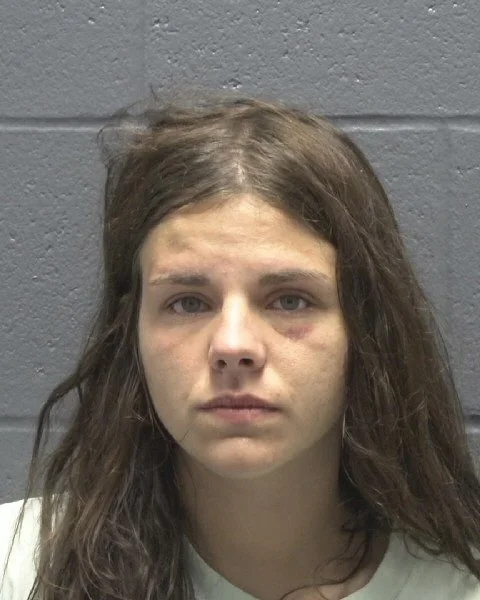
Accident leads to DUI arrest of Albion Woman
On July 29, 2026, at 8:22 p.m. Gibson County Central Dispatch received a 911 report of a accident with injuries on State Road 65 near Mill Street in Owensville. While enroute to the single vehicle crash dispatch advised that the driver’s was possibly intoxicated.
Upon arriving on scene Deputies began an accident investigation where they spoke with multiple witnesses and emergency service personnel. Deputy Wyatt Hunt spoke to 25-year-old Jaxyn Newkirk of Albion, Illinois and detected multiple clues that the driver was under the influence. At that point Deputy Hunt began a roadside DUI investigation that resulted in Ms. Newkirk being taken into custody and transported to the Gibson County Detention Center where she was charged with Operating a Vehicle While Intoxicated.
Deputy Hunt was assisted in his investigation by deputies Eric Powell, Aubrey McNeely, Wes Baumgart, and Sgt. Loren Barchett.
All criminal defendants are to be presumed innocent until and unless proven guilty beyond a reasonable doubt in a court of law.
Gochenour Named To 4-H Hall Of Fame
Illinois Extension Announces Local 4-H Hall of Fame Inductees
ALBION, Ill. – Illinois Extension serving Edwards, Lawrence, Richland, Wabash, and Wayne counties is proud to announce the five-county unit’s 2026 inductees to the Illinois 4-H Hall of Fame.
Counties are welcome to nominate individuals, couples, or family duos who meet the award criteria annually, but are not required to do so. The following inductees were selected for their outstanding contributions to their county 4-H programs:
Richard Gochenour, Wabash County: Gochenour has been instrumental in building, updating, and maintaining the horse arena at the Wabash County fairgrounds. Over the years, he’s helped install drainage tile and a new announcer’s booth to make the space more functional for 4-H and Junior Fair horse events. “I volunteer because I care about our community and the traditions that bring people together,” shared Gochenour.
Deb Weger, Lawrence County: Over the last 28 years, Deb Weger has served as the Russell Community 4-H Club leader. For decades, she’s not only supported 4-H members with general projects and livestock shows, but also ensured they understand the importance of leadership and community service. “She constantly encourages her kids to do their very best, reminding them that effort and heart matter just as much as the ribbon,” said Maisie McClure, Lawrence County 4-H program coordinator.
Lora Kocher, Richland County: Kocher is a former 4-H member and a third-generation club leader. She is very involved in her community and has a full-time career, yet still finds time to volunteer as the Country Clovers club leader for nine years and counting. Those who have worked with her note that she is passionate about 4-H, dependable, and always willing to help.
Shannon and Travis Mix, Wayne County: This duo spent nine years leading the 4-H Country Club before retiring as leaders in 2025. Their passion for supporting 4-H members and leadership through example shone through during their time as volunteers. “Their service has strengthened our program, expanded opportunities for youth, and fostered a positive, welcoming 4‑H community,” said Ryan Littlejohn, Wayne County 4-H program coordinator.
Inductees will be recognized at a ceremony during their county exhibit day at the Illinois State Fair on Aug. 15, in Springfield. To learn more about the Illinois 4-H Hall of Fame inductees, past and present, visit 4h.extension.illinois.edu/awards/4-h-hall-fame.
District #348 Board Approves Fees for New School Year
The Wabash Community Unit School District #348 Board of Education has approved student fees for the upcoming school year, including modest increases for school meals and student parking permits.
Superintendent Dr. Chuck Bleyer said breakfast and lunch prices are adjusted to comply with state and federal requirements.
Bleyer explained the district does not set meal prices arbitrarily. Instead, Illinois and federal guidelines require districts to maintain minimum price levels. He said District #348 has traditionally remained near the minimum allowed, resulting in periodic increases of about 10 cents to keep pace with the required formula.
Bleyer said failing to meet the required pricing could result in federal penalties that would force the district to subsidize the meal program with local taxpayer dollars.
The board also approved a $5 increase in the annual student parking permit, raising the cost from $15 to $20.
Bleyer said the fee had remained unchanged throughout his tenure as superintendent despite rising costs to maintain and repaint student parking lots. He noted that a reserved parking space for the entire school year is still a good value at $20.
Junior/Senior High School Principal Amy Duckworth told the board the campus has enough parking for students, with only about 20 spaces typically remaining open by the end of the school year. She said the senior parking lot near the main gym fills first, followed by other paved lots, while the gravel lot is generally the least popular.
Bleyer also noted the district will continue not charging registration fees and the driver's education fee remains unchanged at $75 for students.
He reminded families that students who qualify for free or reduced-price meals are encouraged to complete the required application, adding that the process is handled confidentially.
**Story has been updated to reflect there is still a Driver’s Ed fee of $75.**
City Council Hears Details Of Property Dispute
A dispute involving a mobile home at 330 McDowell Street was brought before the Mount Carmel City Council as residents Chris Lewis and his family sought additional time and assistance to resolve zoning and ownership issues that have left them unable to obtain water service.
Lewis told the council he recently purchased the mobile home and transferred the title into his name, but said he was unaware a special permit was required for the property. He said he and his family believed they were following the proper procedures and asked the city for additional time to work through the process.
City Clerk Ryan Turner explained the issue involves the fact that Lewis owns the mobile home but not the land on which it sits. Turner said city records show the person collecting lot rent is not listed as the property's legal owner, and the individual shown on the deed is deceased. He said city ordinances currently prohibit water service from being turned on under those circumstances.
Turner also told the council he has been in contact with the individual collecting rent and said the situation appears to be part of a pattern involving the property. He added that the city recently received correspondence from that individual seeking both rent payments and eviction.
Lewis told council members he and his family have faced financial hardship and were simply trying to establish a permanent residence so he could return to work. He said they were unaware of the legal complications involving the property and felt they had been misled during the purchase process.
Following discussion, Turner said he will consult with the city's attorney to determine what legal options, if any, are available. No action was taken by the council Monday, and the matter remains under review.
Indianapolis man arrested for theft of dog
On July 29, 2026, at 9:33 p.m. Gibson County Central Dispatch received a 911 report of a dog stolen from a vehicle at Pilot Travel Center located at 1042 East Warrenton Road near Haubstadt. Sergeant Loren Barchett arrived on scene and spoke with the victims who stated they were in the parking lot talking to a man who identified himself as Gregory Morton. The victims went in the convenience store and upon exiting they discovered their Mastiff was missing from their vehicle and the Red Kia Rio that Mr. Morton was driving was also gone from premises. At that point Sgt. Barchett began canvasing the area looking for the Mastiff and the Red Kia Rio. After a brief investigation Sgt. Barchett was contacted by a Vanderburgh County Deputy who had located the vehicle and the dog with the assistance of the victims at the Clarion Pointe located approximately 8 miles south of the Pilot. After a brief investigation 51-year-old Gregory Morton of Indianapolis was taken into custody and transported to the Gibson County Detention Center where he was charged with Theft.
All criminal defendants are to be presumed innocent until and unless proven guilty beyond a reasonable doubt in a court of law.

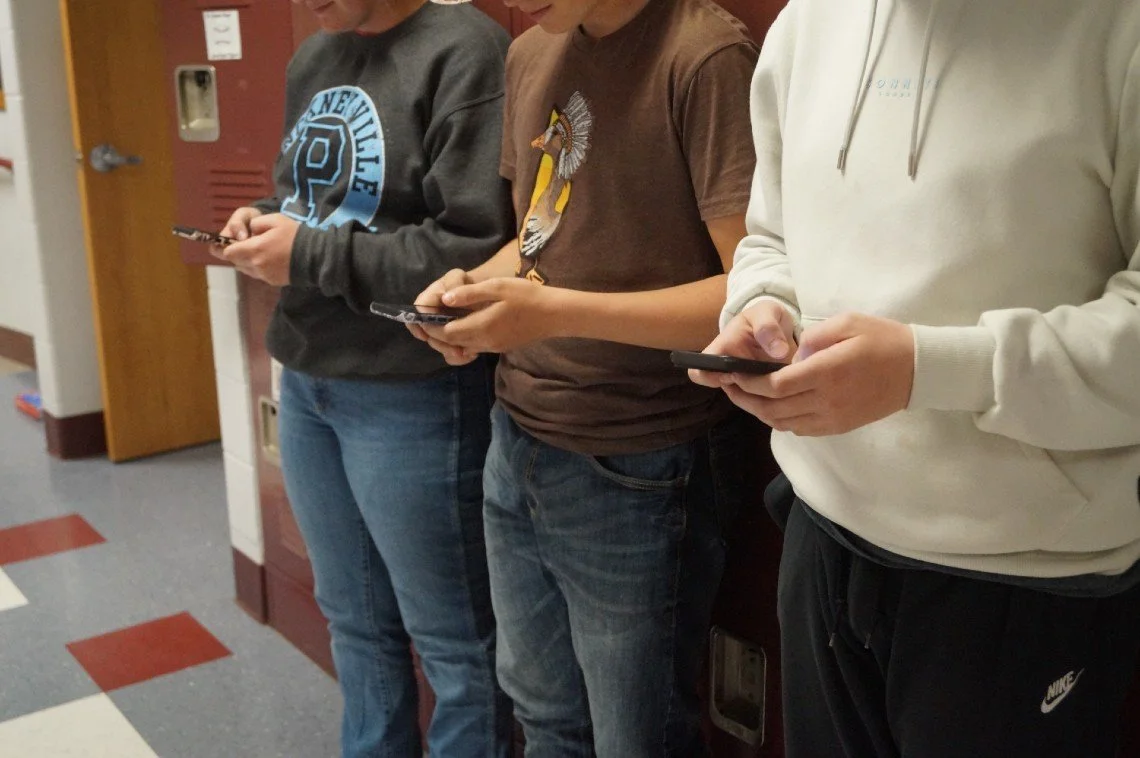
Pritzker signs school cellphone ban to avoid student distractions
New law restricts use of all electronic communication devices, with some exceptions
By PETER HANCOCK
Capitol News Illinois
phancock@capitolnewsillinois.com
Article Summary
A new law requires all districts to have policies banning cellphone use during school time in place before the 2027-2028 school year.
The law requires districts to make exceptions for students who need those devices for medical reasons, special education or certain other purposes.
Districts will not be allowed to enforce the policies by issuing fines, fees, suspensions or expulsions.
This summary was written by the reporters and editors who worked on this story.
Students in all Illinois public schools will soon have to abide by rules barring them from using cellphones or other personal electronic communication devices during school hours unless they have been given specific permission to use them.
Although many districts already have similar policies in place, Gov. JB Pritzker signed legislation Tuesday that will require all districts to have “bell-to-bell” device bans in place before the start of the 2027-2028 school year.
The goal, Pritzker said, is to eliminate the distractions that cellphones and other devices can create so students and teachers can focus their attention on learning.
“We want to make sure that every hour of school time can have the greatest possible positive impact,” Pritzker said at a bill signing ceremony at Elgin High School. “We're allowing every child to fully learn, participate, ask questions, and build the skills and interpersonal relationships that they need to thrive.”
Senate Bill 2427 requires districts to adopt policies that broadly restrict the use of “wireless communication devices” during school hours. Those include cellphones, laptops, tablets, gaming devices and “wearable” devices such as smartwatches. But they do not include devices that schools or teachers issue to students for educational purposes.
The law requires districts to make exceptions for devices that are needed for medical reasons, for special education purposes or for language translation if a student is an English language learner. Districts may also make exceptions on a case-by-case basis for students who are also caregivers for family members at home.
It also permits districts to exclude a high school student’s lunch and passing periods from the definition of “school time.”
The law also prohibits schools from using fines, fees, suspensions or expulsions to enforce the policies unless a student uses a regulated device to engage in some other type of gross disobedience or misconduct that would warrant such discipline.
“The reason we made the difference in high school is because you have a lot of students who do dual (high school and college) credit,” Sen. Cristina Castro, D-Elgin, the lead Senate sponsor of the bill, said during the ceremony. “Sometimes (they) go part of the day and then go to work. And also, you're giving them a little bit more responsibility.”
Suzanne Johnson, superintendent of the U-46 School District in Elgin, said her district implemented a cellphone ban last year. She said it requires elementary school students to leave their devices at home while middle school students have to place them in foam pouches during the school day and high school students are not allowed to use them during instructional time.
“While we did this to help students stay more focused in the classroom, we were pleased to see all the other benefits that followed,” she said. “While at first our students were probably hesitant and maybe not so pleased, they quickly adjusted to the new learning environment, and without the distraction of cellphones, students were more engaged, built stronger connections with one another, and once again, laughter and chatter filled our hallways, our cafeterias, and our classrooms.”
The law requires school districts to review their policies at least once every three years and to consult with teachers unions, administrators, parents and community members in making revisions.
Capitol News Illinois is a nonprofit, nonpartisan news service that distributes state government coverage to hundreds of news outlets statewide. It is funded primarily by the Illinois Press Foundation and the Robert R. McCormick Foundation.
Wabash General Hospital Names Full-Time Foundation Director
Wabash General Hospital has hired its first full-time executive director for the hospital foundation.
During Monday evening's Board of Directors meeting, President and CEO Karissa Turner announced that Sydney Raber joined the hospital on July 1 as the Foundation's full-time executive director.
Turner said the position marks an important milestone for the Foundation, which had previously been managed by staff members on a part-time basis. She credited former volunteers and employees, including Al Henagar, Jay Purvis, and most recently Danielle Stevens, for helping grow the Foundation over the years.
Turner emphasized that Stevens is not leaving the hospital. Instead, she will continue focusing on her responsibilities in marketing and business development after helping expand the Foundation's fundraising efforts.
Turner said one of the hospital's strategic goals was to grow the Foundation to the point where it could support a full-time executive director. She said that goal has now been achieved, with the Foundation providing funding for the position.
Turner called the addition of Raber one of the most exciting developments in the hospital's strategic plan, saying the new leadership will help support the Foundation Board and continue building on its fundraising and community outreach efforts.
The board Monday approved the appointment of Sandra Bryant to the Foundation board replacing Kathleen Gardner who resigned.
District #348 Preparing Local AI Guidelines Following State Guidance
Wabash Community Unit School District #348 will spend the coming school year developing its own approach to the use of artificial intelligence in the classroom.
During last week’s school board meeting, Superintendent Dr. Chuck Bleyer told board members the Illinois State Board of Education recently released its long-awaited guidance on artificial intelligence. He said the guidance is intentionally broad and leaves policy decisions up to local school districts.
Bleyer outlined the state's four guiding principles, which emphasize that teaching and learning should remain grounded in human relationships, schools serve academic, developmental and civic purposes, artificial intelligence should be used as a tool to support teaching and learning rather than as an end in itself, and that effective use requires deliberate local oversight.
Bleyer said the final point is the most significant because it gives local school boards the flexibility to determine how AI will be used in their own communities.
He compared the state's approach to its recent guidance on student smart device policies, saying the state is not attempting to micromanage districts but instead expects local officials to develop policies that fit their schools.
Bleyer said he believes the 2026-27 school year will be a significant one as artificial intelligence continues to evolve. He has already begun discussing the issue with district principals and plans to involve teachers as the district works to develop local guidelines for AI use in the classroom.