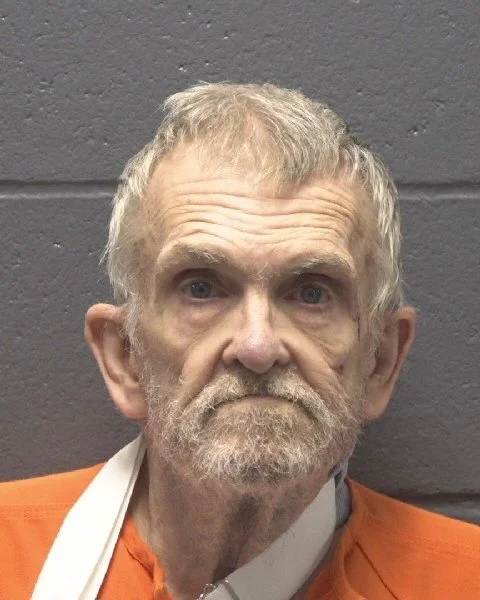
On July 23, 2026, at 7:14 p.m. Gibson County Central Dispatch received a report of a disturbance on Outer Lake Road east of Princeton involving a White Chevy Tahoe and two individuals. Sgt. Matthew Perry of the Princeton Police Department located one half of the disturbance and Deputy Wyatt Hunt located the Chevy Tahoe and the other half of the disturbance. After a brief investigation 66-year-old Larry Dunn of Petersburg was taken into custody and transported to the Gibson County Detention Center where he was charged with Criminal Recklessness With a Deadly Weapon and Resisting Law Enforcement.
Arresting Officer Wes Baumgart was assisted in his investigation by Deputies Wyatt Hunt, Aubrey McNeely, and Jim Tucker. Princeton Officers Logan Lashbrook, Jeremy Robb, and Sgt. Matt Perry also assisted in this investigation.
All criminal defendants are to be presumed innocent until and unless proven guilty beyond a reasonable doubt in a court of law.
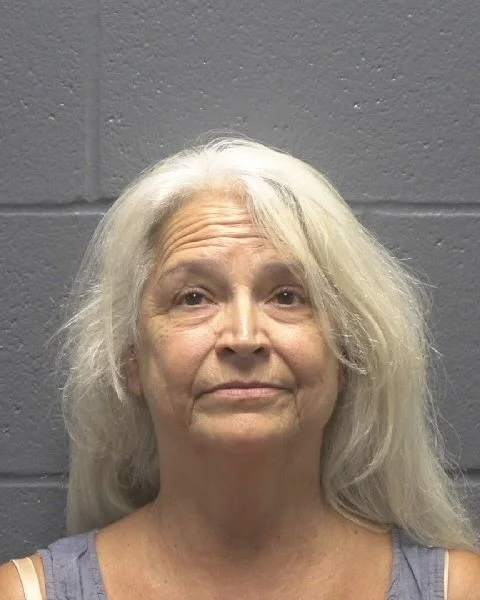
Arizona woman arrested for DUI
On July 23, 2026, at 3:54 p.m. Gibson County Deputy Wyatt Hunt conducted a traffic stop on a Blue 2010 Buick Lacrosse after observing an equipment violation on US 41 near County Road 100 North. Upon approaching the vehicle Deputies Wyatt Hunt and Aubrey McNeely observed clues that the driver, 66-year-old Robin Busing of Arizona may be under the influence. At that point Deputy Hunt began a roadside DUI investigation. Once the inquiry was completed Ms. Busing was taken into custody and transported to the Gibson County Detention Center where she was charged with Operating a Vehicle While Intoxicated.
The Gibson County Sheriff’s Office was assisted in their investigation by the Princeton Police Department.
All criminal defendants are to be presumed innocent until and unless proven guilty beyond a reasonable doubt in a court of law.
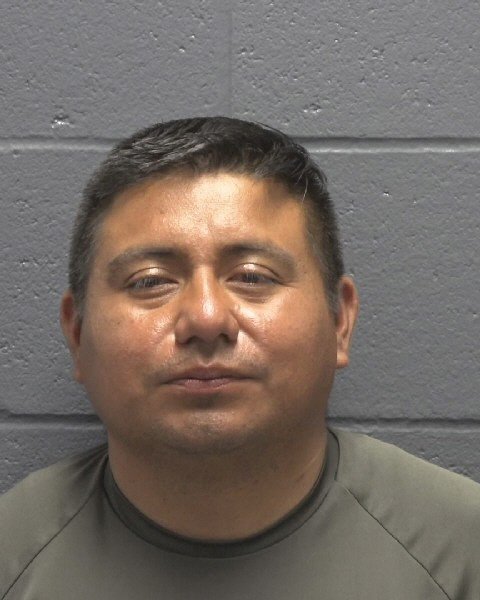
Traffic stop leads to DUI arrest
On July 25, 2026, at 1 a.m. Gibson County Deputy Michael Bates conducted a traffic stop on a White 2001 Chevrolet Silverado after observing the vehicle drive left of center multiple times as well as failing to yield the right of way to a vehicle while traveling on County Road 350 North and crossing US 41. Upon stopping the vehicle at the Trade Mart located at 502 W Grave Street in Patoka, Deputy Bates identified the driver as 36-year-old Heriberto Gutierrez of Patoka. While speaking with Mr. Guiterrez, Deputy Bates detected multiple clues that the driver was under the influence of alcohol. At that point Deputy Bates began a roadside DUI investigation. Once the inquiry was completed Mr. Guiterrez was taken into custody and transported to the Gibson County Detention Center where he was charged with Operating a Vehicle While Intoxicated.
Deputy Bates was assisted in his investigation by Deputy Levi Sims.
All criminal defendants are to be presumed innocent until and unless proven guilty beyond a reasonable doubt in a court of law.
911 call leads to arrest of Sullivan man
On July 24, 2026, at 7:13 p.m. Gibson County Central Dispatch received a 911 report of a disturbance of a parking situation at a facility in the 12000 block of South North Gate Drive near Haubstadt. Deputies with the Gibson County Sheriff's Office were dispatched to the scene where they discovered that the disturbance occurred when one driver asked another driver to move their vehicle and a weapon was brandished. During the investigation Deputies spoke with all the parties involved as well as reviewed surveillance footage of the area. Once the inquiry was completed 61-year-old Kenneth Bose of Sullivan, Indiana was taken into custody and transported to the Gibson County Detention Center where he was charged with Intimidation With a Deadly Weapon.
Arresting Deputy Wyatt Hunt was assisted in his investigation by Deputies Aubrey McNeely and Wes Baumgart.
All criminal defendants are to be presumed innocent until and unless proven guilty beyond a reasonable doubt in a court of law.
Mount Carmel Council Approves TIF Grants
The Mount Carmel City Council has approved two tax increment financing, or TIF, incentives while delaying action on a third request.
City Clerk Ryan Turner presented a $20,000 one-time TIF grant for Big Jon's Ice Cream, which recently purchased the former Girl Scout cabin. Turner said the funding was recommended by the city's TIF advisors after reviewing the project's eligible expenses and anticipated increase in property tax revenue. The TIF district currently has approximately $607,000 available. The council unanimously approved the grant.
The council also approved a $36,000 one-time TIF grant for 9th Street Auto Plaza. Turner said the business has invested roughly $300,000 in renovations since 2017 and is now seeking assistance to help pay for a new parking lot and upgraded lighting. Several funding options were considered, including payments spread over three or five years, but council members ultimately chose the one-time grant based on the city's established TIF reimbursement policy.
Meanwhile, the council tabled a request from Pacific Press Technologies for improvements to its facility. Turner said the company is seeking assistance with a $142,000 roof replacement project. Because Pacific's property generates approximately $60,000 annually in tax revenue, Turner said he would like additional time to discuss the company's long-term plans before recommending whether the city should provide a one-time grant or a multi-year reimbursement agreement.
The Pacific Press Technologies request is expected to return to the council for consideration at its next meeting.
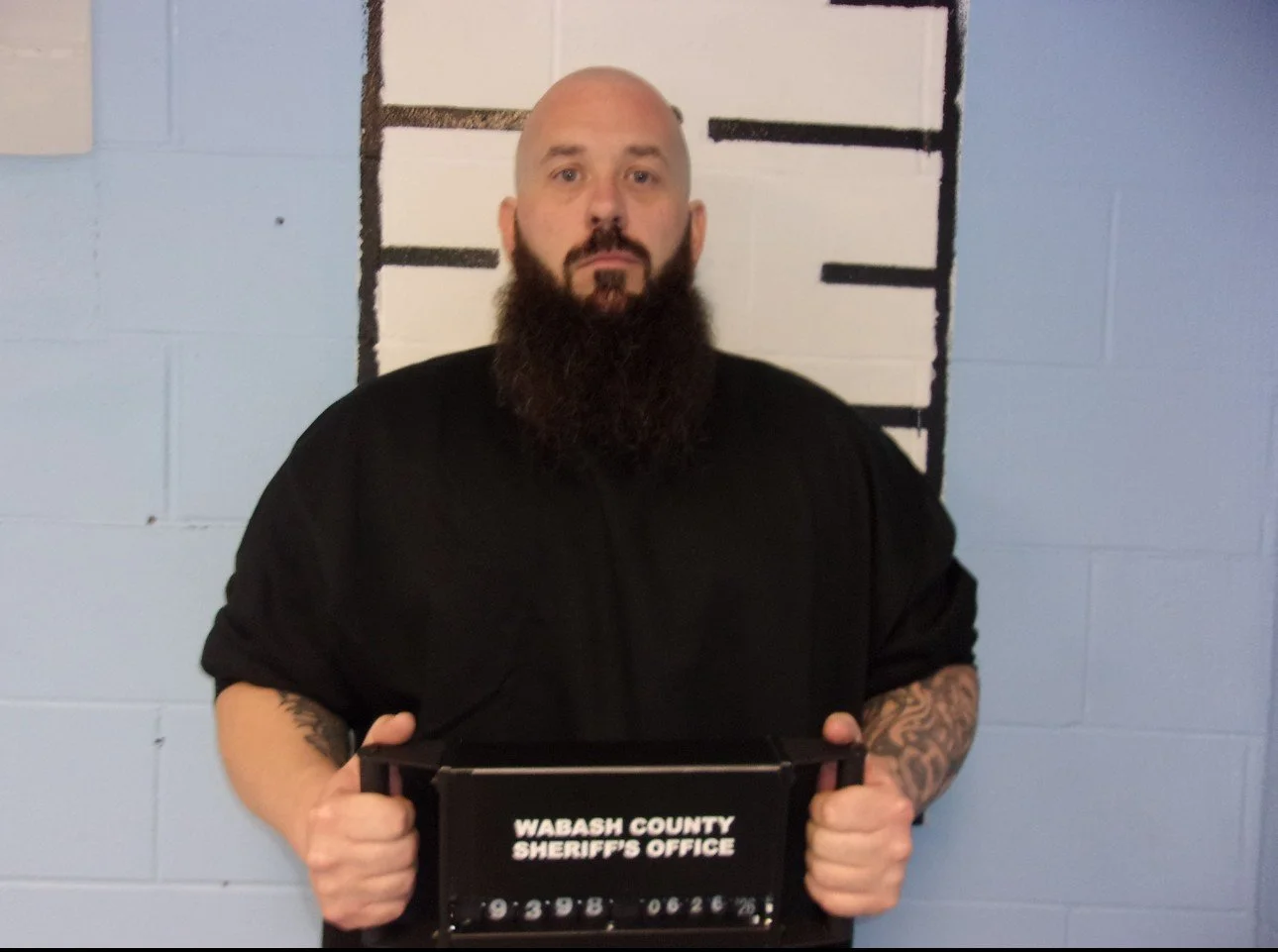
Wabash County Man to Be Sentenced Sept. 14 Following Appellate Court Resentencing Order
A Wabash County man convicted on multiple child pornography charges will be sentenced in September after appearing in court Monday morning for a resentencing hearing ordered by the Illinois Fifth District Appellate Court.
Thirty-eight-year-old Chad Covalt appeared in Wabash County Circuit Court with his attorney, Daniel Shinkle. Rather than imposing a new sentence Monday, the court ordered the Wabash County Probation Department to prepare a pre-sentence investigation. Sentencing is now scheduled for September 14 at 9:30 a.m.
Covalt was convicted in 2022 on 29 counts of child pornography following a bench trial and was originally sentenced by Judge William C. Hudson to 120 years in prison. At the time, Wabash County State's Attorney Kelli Storckman successfully argued the offenses occurred during two separate courses of conduct, resulting in consecutive 60-year prison terms.
Last October, the Illinois Fifth District Appellate Court upheld the vast majority of Covalt's convictions but ruled that two convictions could not stand under the "unit of prosecution" doctrine. The court vacated those two convictions and sent the case back to Wabash County for resentencing while affirming the remaining convictions.
Covalt was arrested in May 2021 after his ex-wife discovered child pornography images on his cellphone and turned them over to law enforcement.
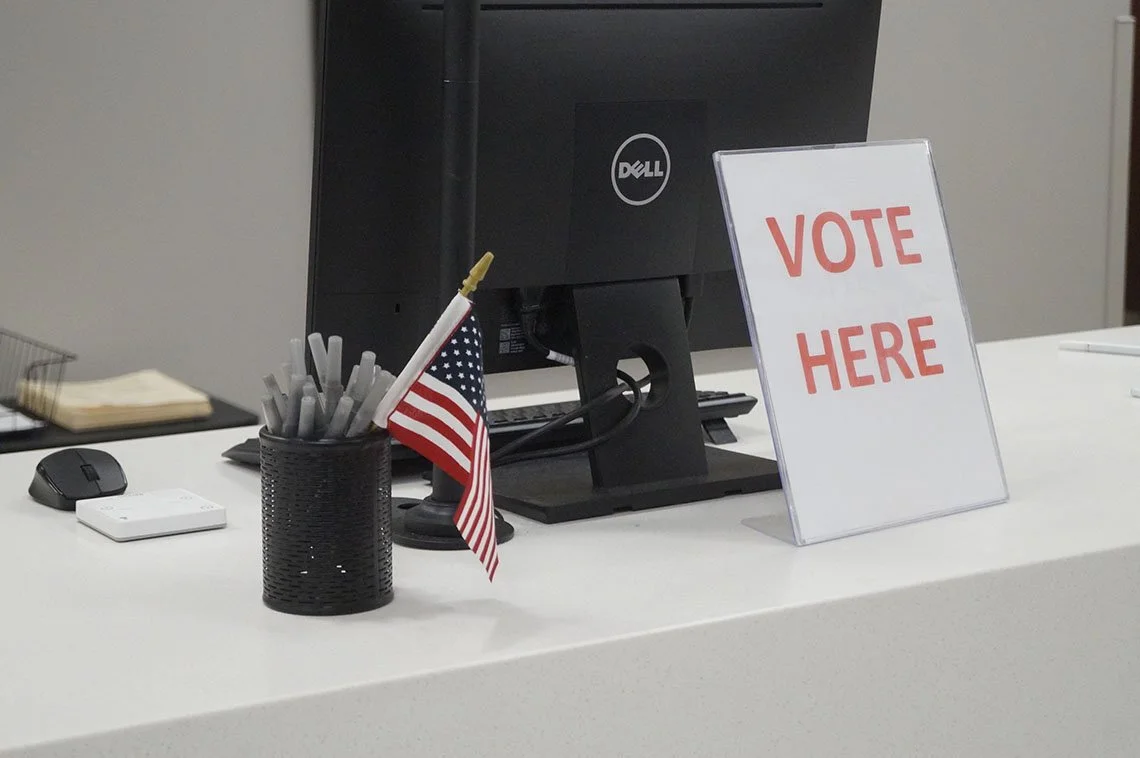
Here’s how Illinois election authorities guard against noncitizen voting
Officials say safeguards are in place prevent inadvertent registration
By PETER HANCOCK
Capitol News Illinois
phancock@capitolnewsillinois.com
Story Summary
Illinois officials say registration and voting by noncitizens is extremely rare.
As the U.S. Department of Justice threatens to prosecute state officials who fail to keep noncitizens off their voter rolls, New Jersey officials acknowledged a software glitch that inadvertently allowed about 6,600 noncitizens to register and fewer than 400 to vote.
Illinois experienced a similar glitch in 2019, which allowed 545 noncitizens to register and 15 to cast ballots, but officials say that issue was quickly resolved.
The primary duty of maintaining voter registration lists in Illinois rests with local election authorities, not the state.
This summary was written by the reporters and editors who worked on this story.
SPRINGFIELD – Illinois election officials said this week they believe the state’s voter registration are accurate and up to date and that safeguards are in place to prevent non-U.S. citizens from inadvertently becoming registered to vote.
Since 1982, Illinois State Board of Elections spokesperson Matt Dietrich said, only 10 noncitizens have been found to have voted in an Illinois election.
“That's 10 cases in 44 years.” Dietrich told Capitol News Illinois, referring to information published by the Heritage Foundation, a conservative-leaning think tank. “Every two years, you have approximately 5 to 6 million votes being cast. So, you're talking really about hundreds of millions of votes cast, with 10 prosecutions.”
The U.S. Department of Justice is currently suing the state board for access to a complete, unredacted copy of the state’s entire voter registration database. That would include sensitive information such as dates of birth, driver’s license numbers and partial Social Security numbers of all 8.3 million registered voters in Illinois.
The agency says it needs that information to ensure Illinois is complying with federal requirements to regularly scrub the database of people who should not be registered, including people who have died, moved to a different address or people who are found not to be U.S. citizens.
Similar lawsuits have been filed in dozens of other states and Washington, D.C. So far, judges in 15 of those cases have ruled against the department, finding it has no legal authority to demand access to states’ sensitive voter data. No judge has yet ruled in DOJ’s favor, although cases in Illinois and several other states are still pending.
DOJ has also threatened criminal prosecution of any state election official anywhere in the country if it finds noncitizens have been allowed to register or cast ballots.
Citizenship question
Under the National Voter Registration Act, also known as the “Motor Voter” law, voters are not required to show proof of U.S. citizenship when they register to vote. Instead, they attest, under penalty of perjury, that they are U.S. citizens when filling out their voter registration applications.
“And that attestation also contains language that tells them if they provide false information, they'll be subject to prosecution, deportation, and denial of entry to the country should they ever try to enter again,” Dietrich said.
According to the National Conference of State Legislatures, several states have passed laws requiring proof of citizenship to register. But courts have generally held that states do not have authority to enact additional requirements for registration in federal elections.
The U.S. Supreme Court has agreed to hear a case in its upcoming term that challenges an Arizona law requiring proof of citizenship. Meanwhile, a bill known as the SAVE America Act is pending before Congress. The Republican-backed bill is supported by President Donald Trump but is currently stalled in the Senate.
That bill would require people to show documentary proof of citizenship when they register to vote as well as photo identification when casting a ballot. It would also require states to take affirmative steps to identify noncitizens who are registered to vote and to delete those individuals from the voter rolls.
For most people, proof of citizenship could include a valid U.S. passport or a certified birth certificate paired with a photo ID. But critics argue it would impose significant burdens on certain individuals including married women or anyone who has ever changed their name, or people who were not born in a hospital and don’t have birth certificates.
Automatic registration
One way in which noncitizens can inadvertently become registered to vote is through automatic registration when applying for a driver’s license or state identification card.
That came to light Tuesday when New Jersey Gov. Mikie Sherrill acknowledged an estimated 6,600 noncitizens were inadvertently registered between June 2023 and June 2024 due to a software glitch at that state’s Motor Vehicle Commission.
“Our preliminary analysis shows fewer than 400 individuals who were newly registered for the first time because of the error voted,” Sherrill said in a statement. “They were registered as Democrats, Republicans and Unaffiliated voters and were scattered across the state.”
Illinois experienced a similar glitch in late 2019 when an estimated 545 noncitizens were mistakenly entered as registered voters due to a glitch in the automatic voter registration system that the state had adopted just two years earlier. Of those, 15 individuals were able to cast ballots, although three of those turned out to be citizens.
“That software glitch was fixed,” Dietrich said Tuesday.
He also said no prosecutions resulted from that error, and that then-Secretary of State Jesse White issued letters to all of the people who were mistakenly registered accepting responsibility for the error and advising them not to vote in any election.
“We, along with the secretary of state (Jesse White at that time), spoke to some legislative committees about this, explained what had happened,” he said. “The secretary of state really re-did that whole system and now, if you check ‘no’ on that attestation, you cannot go forward into the automatic voter registration. Your driver's license process can continue, but your information will not be forwarded to us. So we cleared that up.”
Voter list maintenance
Dietrich noted that in Illinois, the primary responsibility for keeping voter lists accurate and up-to-date rests with local election authorities, not the state.
Those include the county clerks in 101 of the state’s 102 counties. Cook County has a separate Board of Elections. And eight cities in Illinois – Bloomington; Chicago; Danville; East St. Louis; Galesburg; and Rockford – have their own municipal boards of elections.
“They are responsible for maintaining their own voter rolls locally, and what we do at the state board is we provide administrative assistance for them to do that,” Dietrich said.
John Ackerman, the county clerk in Tazwell County who often serves as a spokesperson for local election authorities, said the primary method local officials use to clean up their voter rolls is by direct mail to verify whether voters are still living at the same address.
In odd-numbered years, he said, his office mails a voter registration card to every registered voter in the county.
“If that should be bounced back or returned as undeliverable – they’re not forwardable – then that can help us initiate the process of removing an individual from our rolls,” he said.
In addition, he said, in even-numbered years, state law requires local authorities to send voters a reminder notice that they may apply for a mail-in ballot for state and federal elections.
“With that being a letter to all registered voters, a certified letter from our office, I utilize it to perform the purge as well,” Ackerman said. “So in my county, I'm actually accomplishing that every year, and there are other counties that have picked up and done that as well. But not all counties do that. At a minimum, every county is doing it every other year.”
In addition to direct mail verifications, Ackerman said, Illinois is among 26 states, plus Washington, D.C., that share voter registration and motor vehicle data through the Electronic Registration Information Center, or ERIC. That system also receives change-of-address information from the U.S. Postal Service as well as death notifications from the Social Security Administration.
Dietrich said that between new registrations, change of address notifications and death notices, local officials are constantly updating their registration rolls, and the most current lists are uploaded to the State Board of Elections nightly.
“Every day, the 108 local election authorities upload their own databases because every day, no matter how small your county is, someone else is registering, someone is being removed,” Dietrich said. “Things are changing every day, so that data gets uploaded to us nightly.”
Capitol News Illinois is a nonprofit, nonpartisan news service that distributes state government coverage to hundreds of news outlets statewide. It is funded primarily by the Illinois Press Foundation and the Robert R. McCormick Foundation.
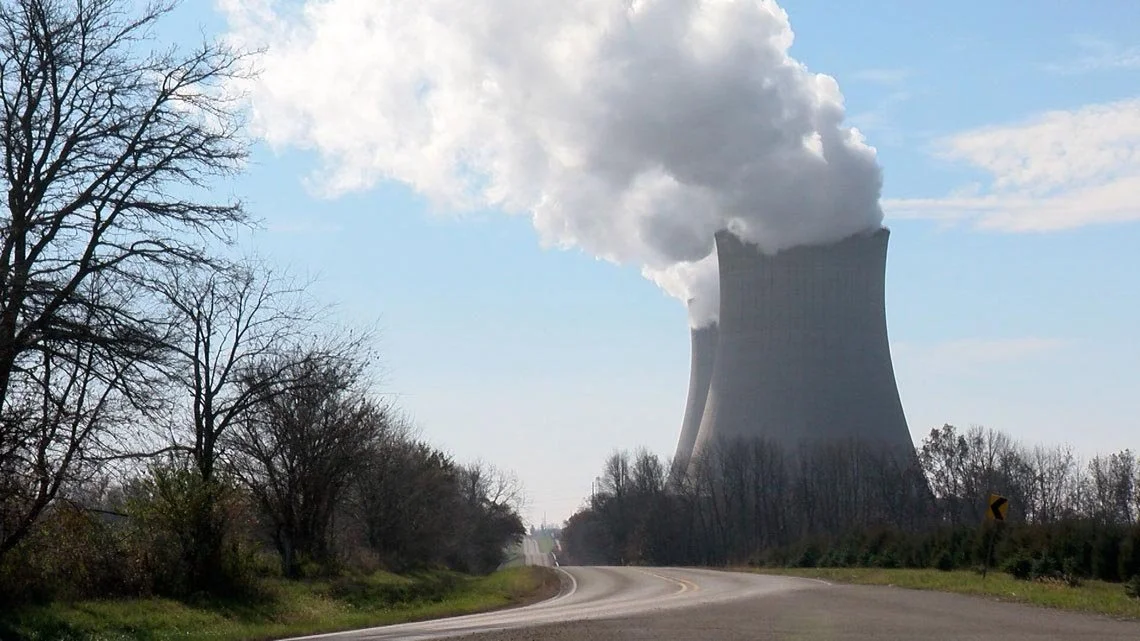
These 9 Illinois communities say they’re interested in new nuclear facilities
The state lifted its moratorium on new nuclear facilities, but development could still be decades away
By MAGGIE DOUGHERTY
Capitol News Illinois
mdougherty@capitolnewsillinois.com
Article Summary
After Illinois lifted its moratorium on construction of new nuclear power plants, Gov. JB Pritzker instructed state agencies to find out what communities would be interested in hosting new nuclear sites.
Nine came forward, including the six that already host nuclear power, and two that are transitioning from coal production. The final response came from a university’s nuclear research program.
But as the state looks to reopen nuclear development, environmental and consumer advocates question whether it could come online quickly and cheaply enough to stave off Illinois’ looming energy shortage and compete with renewables.
This summary was written by the reporters and editors who worked on this story.
CHICAGO — Illinois has opened the door to a new era of nuclear energy generation, but a question remains: Where would new nuclear power plants go?
It’s an issue that Gov. JB Pritzker directed state agencies to explore this spring, when he signed his first executive order of the year and as the state seeks to stave off projected energy shortfalls that could spur higher energy prices and jeopardize reliability in coming years.
The goal of the order was to bring at least two gigawatts more energy online, enough to power up to 2 million homes or 20 large data centers.
Illinois took its first official step back into nuclear energy when Pritzker signed the Clean and Reliable Grid Affordability Act this January, lifting a nearly four-decade ban on building new large-scale nuclear power plants.
Read more: Pritzker signs major energy reform bill amid projected shortages | What does Gov. JB Pritzker’s nuclear energy executive order do?
That moratorium was signed in 1987 by then-Gov. James Thompson as the U.S. looked for solutions to safely store radioactive nuclear waste. The same year, the passage of the federal Nuclear Waste Policy Act had tasked the U.S. Department of Energy with evaluating a potential site to bury all the nation’s nuclear waste deep underground.
Nevada’s Yucca Mountain was designated as the most promising location, but the plan was not well-received by residents of the Silver State, which did not have any commercial nuclear reactors of its own. Fulfilling a campaign promise, then-President Barack Obama cut funding to the project in 2009 and the following year his administration halted its license review, effectively killing the project.
Illinois’ ban on new nuclear plants was meant to last until the federal government implemented a solution for nuclear waste storage. Spent nuclear fuel is stored primarily onsite at the state’s six power plants in water-filled pools and dry storage casks, an indefinite extension of what was originally supposed to be a short-term solution. Those six plants host 11 reactors that still generate over half of the electricity produced in the state.
But nearly 40 years later and no closer to an answer, lawmakers lifted the ban on new large-scale nuclear plants; the state had previously lifted a moratorium in 2023 on construction of small modular reactors generating less than 300 megawatts, though there are none commercially available in the U.S.
“The executive order was an important acknowledgement that nuclear energy must be part of the Illinois future,” said Sen. Sue Rezin, R-Morris, who has long been a proponent of lifting the moratorium. “The conversation has shifted from whether we need nuclear to how we get the projects built.”
Nuclear communities
Now, as the state looks to kickstart nuclear development, it’s beginning conversations about where new plants would go.
To that end, Pritzker directed state agencies to begin soliciting interest from communities open to hosting new nuclear facilities, as well as developers who may consider building and operating them.
Ultimately, leaders from nine communities around the state expressed interest in bringing new nuclear reactors to town. The letters are not a definitive declaration that any specific nuclear proposal has been accepted or received zoning approval, but rather the beginning of further conversations.
About half of Illinois’ baseload power comes from nuclear generation, and Pritzker said at a quantum technology forum earlier this week that the prevalence of the technology has made finding sites for potential development easier in Illinois.
“We don’t have the problem where people are saying, ‘Well, I don’t know about nuclear … we don't want that near where we live,’” he said. “Guess what? We have 11, you know, we have major power plants all across northern Illinois, and people are like, ‘sure you can build another power plant nearby.’”
So, what communities are holding the door open to nuclear, and why?
FLOURISH MAP EMBED
Of the nine Illinois communities that responded, six are those that already host nuclear: the city of Marseilles and the counties of DeWitt, Grundy, Ogle, Rock Island and Will.
Two more are counties that have lived alongside large-scale power plants of another type: coal. Those are Peoria County, which saw its coal-fired power plant decommissioned in 2022, and Jasper County, which is set to see its coal plant decommissioned next year.
The final response came from the Illinois Nuclear Power Institute at the University of Illinois Urbana-Champaign, which is seeking a microreactor for research and workforce training purposes. The energy capacity generated by the reactor UIUC seeks, a maximum of 45 megawatts, would not contribute directly to the state’s energy utilization goals, but UIUC argued it would strengthen the state’s position as a national nuclear leader.
Bringing new nuclear to all nine sites would not be necessary to meet Pritzker’s two-gigawatt goal; that could likely be achieved by building just two new power plants. Constellation, the operator of all six of Illinois’ existing plants, estimated it could add 500 megawatts, a quarter of the total goal, to the grid through upgrades on current sites alone.
Jobs, taxes, energy
In their response letters, many of the communities mentioned the potential for new high-paying jobs and long-term tax base stability as economic development priorities that drew them to pursuing nuclear.
DeWitt County Board Chair Joe Witte said supporting the county’s existing relationship with Constellation, which has long operated the Clinton nuclear plant there and currently employs over 500 people, was also a priority.
“They’ve been a great economic partner,” Witte told Capitol News Illinois. “Beyond just the jobs, I think they've been a great community partner as far as supporting a lot of our nonprofits. They host a lot of events. They sponsor events like blood drives and local festivals.”
Those longstanding community partnerships, along with the economic impact and safety record at Clinton, have fostered goodwill and strong local support for nuclear projects, according to DeWitt County’s interest letter.
All the responses touted existing utility-scale infrastructure, skilled workforce bases and residents’ familiarity with living side-by-side with large-scale energy generation.
Officials from the counties ending coal production expressed pride in their regions’ roles in energy production. Both counties proposed the site of their coal power plants as potential locations to house new nuclear, as they have appropriate zoning, space, water resources and existing transmission lines.
Jasper County Board Chairman Jason Warfel said his community had been an energy producer for his entire lifetime. He doesn’t want to see that go away.
“We see this as an opportunity really to continue that legacy rather than losing our place in Illinois’ energy future,” Warfel told Capitol News Illinois. “With the advent of AI, these data centers, the amount of energy production that's being required now is concerning for individuals because the potential of blackouts, brownouts. Jasper County can be part of that solution.”
For Peoria County Administrator Scott Sorrel, it’s especially important for downstate counties to be part of the energy solution.
While ComEd customers in northern Illinois see energy prices set through auction by the grid administrator PJM, most Ameren Illinois customers in central and southern parts of the state rely on the Midcontinent Independent System Operator, or MISO.
Of Illinois’ six nuclear plants and 11 reactors, only Clinton's single reactor is on the MISO grid.
“MISO has a need for that power just as much as PJM does, and I think it behooves all of Illinois to not just think of the power needs within the PJM-Chicagoland area, but to look at the power needs across the entire state,” Sorrel told Capitol News Illinois. “All of us have needs to try and have affordable power for the buildings we work in and the homes we live in, and the more generation that can be brought online, whether it be solar, wind, nuclear, the better off we’re going to be.”
Time and money
DeWitt County’s Clinton plant is often cited as a top candidate for further nuclear development, as the current site is already owned by Constellation. It is the only single-reactor plant in the state, whereas the rest have two.
Constellation has also already obtained an early site permit from the U.S. Nuclear Regulatory Commission, which oversees nuclear plants. The preapproval effectively reserves the land for future nuclear development for the next two decades, with options to renew further, according to DeWitt County’s letter.
But even at a site with all the preapprovals lined up, it will take time to bring new nuclear energy online.
Jennifer Walling, CEO of the Illinois Environmental Council, an environmental advocacy group, estimated it would take 20 years to see a new large-scale nuclear plant materialize, or 10-15 years for small modular reactors that are still largely in development. And, she said, the cost could be high.
The last nuclear plant built in the U.S. was the Vogtle plant in Waynesboro, Georgia, which came online in 2023, seven years later than planned and $17 billion over budget. Ratepayers were on the hook for over $7.5 billion of that spending, raising residential energy bills by 10%.
To Walling, new nuclear doesn’t meet the urgency of Illinois’ energy needs, due to the financial and time constraints of building it. Three state agencies issued a report late last year that predicted shortfalls could hit northern Illinois by 2029 and the rest of the state by 2031 if the state doesn’t implement policy changes.
“You’re definitely looking at something that’s going to take a while, and this is a short-term crisis that's happening,” Walling said. “Any proposal to build new nuclear should really look deeply at how it's going to affect ratepayers. What is the real cost going to be?”
Meanwhile, environmental and consumer advocates say the opportunities for renewables and battery storage are outpacing what nuclear can offer on costs.
For example, a boom in solar development led Peoria County to approve 37 permits for solar farms from 2017 to 2024, bringing in new taxes to support local school districts. A single wind farm in Henry County brought over 200 jobs and was estimated to contribute over $25 million in property taxes.
And those projects can be faster to deploy; solar and battery storage projects can be built in 12-18 months, and wind projects about two years, according to the Wall Street Journal. The delay in getting renewable energy online, however, has largely happened at the grid operator level.
“Beginning to mid of my tenure in the General Assembly, people pretty much viewed renewables and environmentally sustainable energy as kind of an extra, kind of a nice thing, not a big business,” Rep. Ann Williams, D-Chicago, said. “But now wind and solar and storage are big business. They’re creating jobs. They’re giving back to communities.”
New tech, developer constraints
Many advocates of nuclear are hoping to see the emergence of small modular reactors, advanced reactors that are much smaller in scale than full-sized nuclear plants and can be pre-manufactured in factories and then shipped and installed on site. They generate around 300 megawatts of energy, nearly a third of traditional nuclear reactors.
Currently, there are only two small modular reactors, or SMRs, commercially operating in the world, one in Russia and one in China, though there are dozens more designs in development and four in advanced stages of construction, though none operating commercially for energy production in the U.S.
Consumer advocates aren’t optimistic they’ll materialize in time to be a silver bullet for Illinois.
“I would love for some new nuclear technology like SMRs to have a breakthrough, and suddenly we’re building nuclear reactors in three years and they’re cost competitive,” said Nick Wallace, an attorney with the Environmental Law & Policy Center. “That would be fantastic. The history of the nuclear industry makes me very skeptical that that’s going to happen because we haven't successfully built a new nuclear reactor on-budget and in a timely fashion in 40 years or something.”
Developers themselves are mixed on the issue. Of the three responses the state received, two were from companies proposing SMRs. One of those was NANO Nuclear Energy, which has entered formal agreements with the University of Illinois for the micro modular research reactor.
Another developer, Blue Energy Global Inc., submitted a letter outlining a proposal to bring 3-5 SMRs. The 24-page letter had over 170 redactions.
“As (SMRs) have yet to be deployed commercially in the U.S., considerable uncertainty exists about the construction cost, construction schedule, and operating costs of these new reactor technologies,” Constellation wrote in its letter. “Cost uncertainty creates substantial challenges to engaging customers and investors in new project development.”
Though Constellation’s letter made no commitments to building or expanding nuclear in Illinois, the company said it considered its existing six sites to be the most promising options for further development. The company said it would be feasible to build at least six gigawatts of new energy at those sites, far surpassing Pritzker’s two-gigawatt target.
The state agencies and partners tasked with reviewing the interest letters from developers and communities are mandated to issue a report with their findings and recommendations in August.
Rezin, who has been a major nuclear advocate, said Illinois is the right place for continued nuclear growth, pointing to the existing expertise in the state.
“We would not be here if it weren't for the world-class research institutions like Argonne National Lab and the University of Illinois,” Rezin said. “I am so proud of these experts, and we are very fortunate to have these experts right in our backyard.”
Capitol News Illinois is a nonprofit, nonpartisan news service that distributes state government coverage to hundreds of news outlets statewide. It is funded primarily by the Illinois Press Foundation and the Robert R. McCormick Foundation.
State to lay off hundreds at troubled southern Illinois mental health facility
Choate Mental Health and Developmental Center to reduce patient population, staff amid operational changes
Article Summary
About half of the staff of 524 employees will be laid off at the Choate Mental Health and Development Center in southern Illinois amid operational changes.
The Illinois Department of Human Services stated the changes are part of a three-year plan aimed at repurposing the facility.
There is now a greater need for mental health beds in northern Illinois, according to IDHS.
This summary was written by the reporters and editors who worked on this story.
By JACKSON BRANDHORST
Saluki Local Reporting Lab
jbrandhorst@dailyegyptian.com
ANNA — The Illinois Department of Human Services announced Thursday that the Choate Mental Health and Developmental Center in Anna will lay off staff and undergo several operational changes in the coming months, including the elimination of the state-run facility’s entire general residential program for people with intellectual and developmental disabilities.
According to the American Federation of State, County and Municipal Employees — the union that represents the majority of Choate staff — IDHS said it intends to lay off about 250 of the facility’s more than 500 employees over the coming months.
In a letter to Choate staff, IDHS said that the changes are a result of the “success” of the state's three-year plan, which aimed to repurpose the facility over three years in partnership with the Southern Illinois University School of Medicine.
According to the letter, IDHS plans to cease operations for the intellectual and developmental disabilities general units by Sept. 30. The department will also “phase down” 75 civil mental health beds at Choate while adding beds to the Madden Mental Health Center in Chicago.
This phase-down, says IDHS, which is planned to be completed by March 2027, is because the “need for mental health beds is greater in northern Illinois.”
In its letter, IDHS did not specify how many employees would face layoffs as a result of these reductions, but acknowledged that layoffs will occur.
“We will work with our labor partners to support employees,” the IDHS letter states. “This includes working closely with directly impacted staff who may be subject to the contractual layoff process.”
Choate currently serves 58 total general and forensic I/DD patients and an additional 75 mental health patients while employing roughly 524 people across its campus. Of those employees, 468 are represented by AFSCME Council 31.
AFSCME responded to the announcement in a news release with comments from Council 31 Executive Director Roberta Lynch, who said that IDHS should have consulted with the union to develop a more rational plan that would be more fair to Choate’s employees and the individuals in their care.
“Unfortunately, the department chose to forge ahead with a plan which will weaken services for the most vulnerable mentally ill individuals and upend the lives of hundreds of Choate employees and their families,” Lynch said.
Choate’s 40-bed forensic developmental disabilities unit will continue operations, as will the other IDHS administrative offices on the Choate campus.
Culture of cruelty
The IDHS decision to reduce operations at Choate comes after decades of documented issues at the southern Illinois facility, including resident abuse, neglect, criminal investigations and repeated failures by employees and administrators to report or stop misconduct.
A 2022 investigation by Capitol News Illinois and ProPublica found that residents had been beaten, sexually assaulted, humiliated and dangerously neglected at Choate for roughly a decade. At least 26 employees have been arrested on felony charges connected to their work at the facility while they were entrenched in a “code of silence” in which workers withheld information, coordinated their accounts or protected colleagues accused of abuse.
In March 2023, Gov. JB Pritzker announced a three-year “transformation” plan that would move about 123 residents — roughly half of Choate’s population at the time — into community placements, family homes or other state-operated facilities. The state also promised stronger oversight, additional training, cameras in common areas and a partnership with the SIU School of Medicine to help determine how Choate’s remaining programs should operate.
Officials said at the time that the plan was not a closure and did not include layoffs.
In February 2024, a newly installed security camera recorded an employee throwing a resident to the floor and punching him. The incident went unreported for 11 days and was discovered only after an anonymous letter prompted investigators to review the footage.
Choate’s general developmental disabilities population has since fallen from 199 residents at the beginning of the transformation to 16. IDHS now characterizes the elimination of those units and the phaseout of Choate’s civil mental health beds as the completion of that plan — though the layoffs mark a departure from the state’s original assurance that the restructuring would not cost employees their jobs.
AFSCME said the administration assured the union during the recent legislative session that its proposed fiscal year 2027 budget would not include layoffs.
“Had we been aware of the planned layoffs, we certainly would have opposed the budget as introduced,” Lynch said. “The AFSCME collective bargaining agreement with the State of Illinois includes well-defined rights for employees slated for layoff and AFSCME intends to ensure that all such requirements are fully met if the department continues down this irresponsible path.”
Legislators respond
State Sen. Terri Bryant, R-Murphysboro, called the IDHS decision a devastating blow to southern Illinois, saying in a news release that it will cost the region hundreds of jobs, uproot vulnerable patients and create chaos for families and employees.
“I have consistently advocated for Choate to continue serving our most vulnerable residents here in Southern Illinois,” Bryant said. “I am disappointed to see those calls ignored through this announcement. The people who depend on Choate deserve to be treated as individuals, not numbers on a spreadsheet.”
Republican state Sen. Paul Jacobs of Pomona also called the decision devastating, saying in a news release that he is disappointed that southern Illinoisans are being left to deal with the consequences of a state decision.
Newly appointed Republican state Rep. Scott Doody, an Anna resident who represents Illinois’ 118th District, condemned the IDHS decision in a press release Friday, calling on Pritzker and IDHS to immediately halt the implementation of these reductions.
"Taxpayers invested tens of millions of dollars to improve Choate's facilities, and they have decided to walk away from that investment and the employees, residents, and families who depend on Choate,” Doody said in the release.
"After years of promises to transform Choate, the administration's answer is now to eliminate services, relocate residents, and lay off hardworking employees. Southern Illinois deserves better.”
Jackson Brandhorst is a student at Southern Illinois University Carbondale, and a senior member of the Daily Egyptian, SIU’s student newspaper. Brandhorst can be reached at jbrandhorst@dailyegyptian.com.
Capitol News Illinois is a nonprofit, nonpartisan news service that distributes state government coverage to hundreds of news outlets statewide. It is funded primarily by the Illinois Press Foundation and the Robert R. McCormick Foundation.
Pritzker signs bills designating Emmett Till Day, requiring boater's liability insurance
The governor signed 78 bills last week, including two affecting teachers
By BRENDEN MOORE &
PETER HANCOCK
Capitol News Illinois
news@capitolnewsillinois.com
Article Summary
Gov. JB Pritzker signed the legislation designating July 25 as Emmett Till Day in Illinois. The governor signed the bill at Roberts Temple Church of God in Christ in Bronzeville, the site of Till's funeral, on what would have been his 85th birthday.
A new law will require companies such as cable, plumbing and other home service providers to provide at least one hour notice via phone call of their arrival at a residence if the service appointment window they provide is more than two hours.
The governor also signed a bill that creates a legal pathway for separated couples or roommates to go to court to fight for custody of a pet.
This summary was written by the reporters and editors who worked on this story.
SPRINGFIELD — July 25 is now officially Emmett Till Day in Illinois.
Gov. JB Pritzker signed legislation codifying the designation ahead of what would have been Till's 85th birthday. It was one of 78 bills the governor signed last week.
Till, a 14-year-old from Chicago, was kidnapped, beaten and brutally lynched by two white men while he was visiting family in Mississippi in 1955. It came after he allegedly whistled at a white female store clerk. The men accused of murdering Till were acquitted by an all-white, all-male jury, though they later confessed to a journalist the details of their crime.
Till's mother, Mamie Till-Mobley, held a public, open-casket funeral for her son, exposing his severely mutilated body in an event that served as a catalyst for the American Civil Rights Movement.
“In Illinois, we understand that we cannot build a more just future if we are unwilling to confront the injustices of our past,” Pritzker said. “This legislation ensures that Emmett Till and his mother Mamie Till-Mobley will never be forgotten, their legacy will continue to challenge us to be better, and their example will continue to inspire us to build a state and a nation that lives up to its highest ideals.”
Pritzker signed the legislation, House Bill 4323, at Roberts Temple Church of God in Christ in Bronzeville, the site of Till's funeral that was designated a national landmark by President Joe Biden in 2023.
Boater's insurance
Pritzker also signed Senate Bill 2972, which would require the owners of boats with at least a 50-horsepower engine or that are at least 21 feet long to obtain liability insurance.
Violations carry a fine of at least $500 but no more than $1,000. First-time offenders who obtain the required coverage by their court date will have their punishment reduced to a $100 fine and court supervision.
It takes effect Jan. 1, 2027.
Pet custody
The governor signed House Bill 4540, which creates a legal pathway for separated couples or roommates to go to court to fight for custody of an animal.
The bill's sponsor, Rep. Barbara Hernandez, D-Aurora, said pet custody is already a subject for divorce cases, but there was no existing legal mechanism for nonmarried cohabitants to determine custody of a pet that may be jointly owned.
The bill will allow courts to consider who has been responsible for caring for the pet, paying for vet visits, emotional bonds between a pet and human, the living environment and documentation on who bought the animal.
It takes effect Jan. 1, 2027.
Early high school credit
Seventh- and eighth-grade students soon will be able to take high school-level coursework and receive high school credit.
House Bill 4239, sponsored by Sen. Laura Ellman, D-Naperville, provides that middle school students may enroll in high school courses offered by the high school they would attend, provided the course is taught by a properly licensed teacher and can be taken at the student’s current school.
“Students learn at different paces, and our policies should reflect that,” Ellman said in a statement. “This law will ensure that motivated middle school students have clear, equitable access to high school coursework, without unnecessary barriers, while maintaining the high standards families expect.”
The law takes effect Jan. 1, 2027.
Teacher evaluations
Senate Bill 2913 clarifies that student growth can only be used as a factor in teacher evaluations if the district and the teachers — or their teachers union — agree to do so in advance.
Student growth factors were a required element in teacher evaluations until 2025 when the law was changed to say districts “may” incorporate those factors, subject to negotiation between the district and the teachers.
Under the new law, starting July 1, 2026, if the district and the teachers, or their collective bargaining unit, cannot agree on whether to use student growth data as a factor in evaluations, then the default policy will be not to use such data.
Teacher discipline
Teachers now have greater ability to challenge written warnings about alleged misconduct.
Under Senate Bill 2914, before a school board can vote to issue a written warning to a teacher for alleged misconduct, the teacher has a right to challenge the findings in the proposed warning, either in person or in writing. And if the board votes to issue the warning anyway, it allows the teacher to take the issue to binding arbitration.
The new law takes effect immediately.
Service windows
Illinois consumers will soon have new protections against lengthy service appointment windows.
Senate Bill 3066 will require companies such as cable, plumbing and other home service providers to provide at least one hour notice via phone call of their arrival at a residence if the service appointment window they provide is more than two hours.
If a company fails to provide the required notice and the customer isn't home when they arrive, they will be prohibited from charging fees associated with the missed appointment.
“I don’t think that people should be left holding the bag if a company failed to communicate with them,” said Sen. Christopher Belt, D-Swansea, the bill's sponsor. “If a service provider fails to follow the rules and shows up without proper notice, we shouldn’t be stuck paying extra fees.”
The bill takes effect Jan. 1, 2027.
Cash refunds
House Bill 4044 will prohibit retailers from limiting refunds on returns of unopened or unused merchandise to store credit. Instead, they must offer another form of refund, such as cash or the original payment method.
“This is about fairness and protecting the hard-earned dollars of working people by ensuring their right to a return is not arbitrarily restricted,” said Rep. Marcus Evans, D-Chicago, the bill's sponsor.
The bill does not cover medicine, medical equipment or food or beverage items.
Violations of the act will carry fines of up to $25. Businesses will be notified by a county state's attorney and if the violation is remedied within 30 days, no fine will be imposed.
Businesses cannot be fined more than $500 per year for violations.
The law takes effect July 1, 2027.
Capitol News Illinois is a nonprofit, nonpartisan news service that distributes state government coverage to hundreds of news outlets statewide. It is funded primarily by the Illinois Press Foundation and the Robert R. McCormick Foundation.
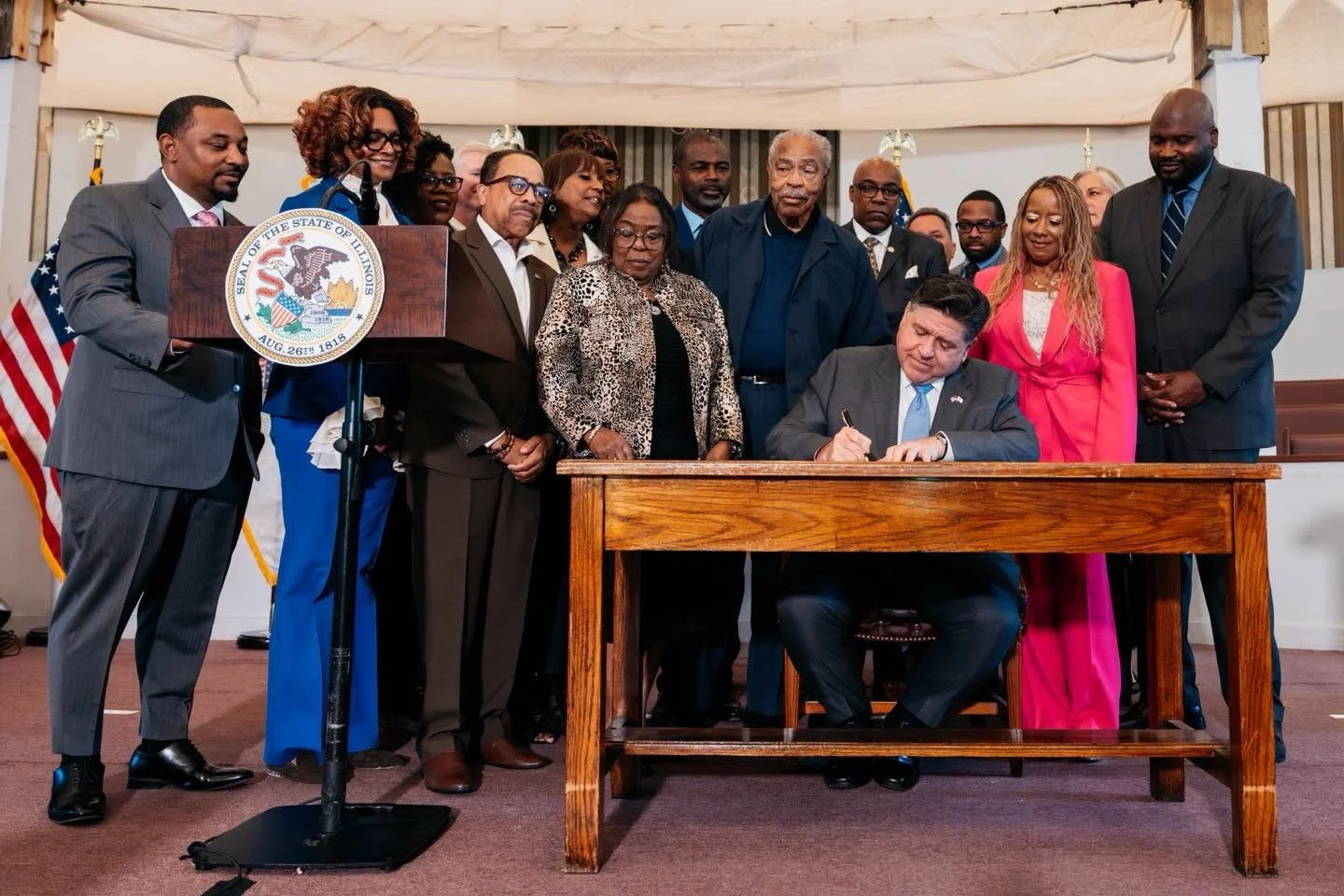
Gov. JB Pritzker signs a bill designating July 25 as Emmett Till Day in Illinois. (Photo courtesy state of Illinois)