Mt. Carmel Man Charged with Gun and Meth Felonies

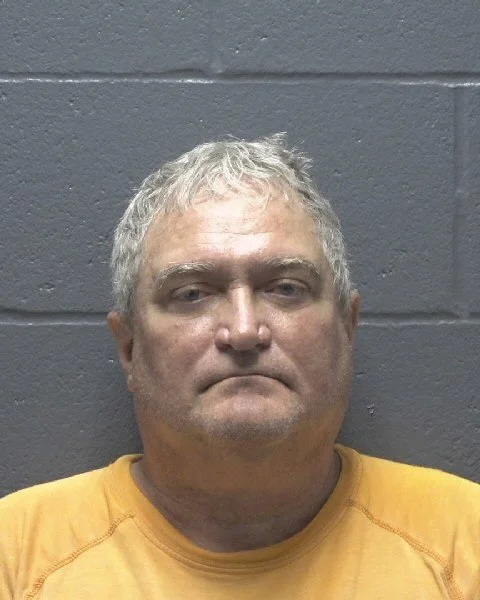
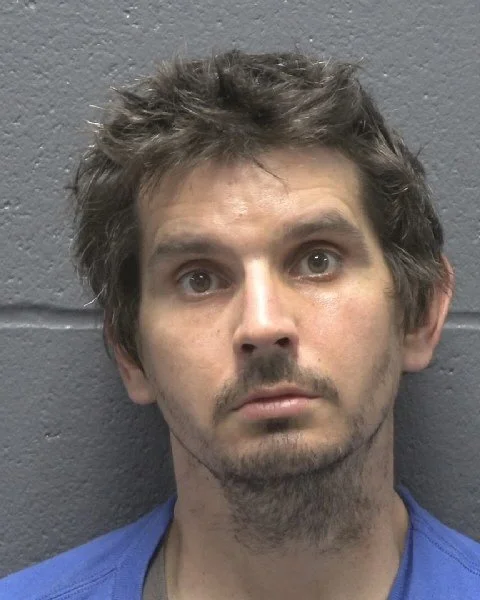
A 40-year-old Mt. Carmel man is facing multiple felony charges after prosecutors allege he illegally possessed a firearm, ammunition, and methamphetamine.

Brandon Siverly has been charged with three Class 3 felonies in Wabash County Circuit Court. According to court records, Siverly is accused of unlawful possession of a weapon by a felon after allegedly possessing a 9-millimeter pistol on June 21st despite a previous felony conviction in Indiana.

He is also charged with unlawful possession of firearm ammunition by a felon. Prosecutors allege Siverly possessed 9-millimeter ammunition on May 24th.

In a third count, Siverly is charged with possession of methamphetamine. Court records allege he possessed less than five grams of a substance containing methamphetamine on June 21st.

Siverly appeared in court last week, where he was advised of the charges and the potential penalties if convicted.

A preliminary hearing has been scheduled for July 14th at 9:30 a.m. A final pretrial conference is set for August 18th, with a jury trial scheduled to begin September 8th.

As with all criminal cases, the charges are allegations, and Siverly is presumed innocent unless proven guilty in a court of law.

Otwell man arrested for DUI

On June 28, 2026, at 4:16 p.m. Gibson County Deputy Eric Powell and Oakland City Officer Sergeant Michael McGregor were at the flood waters on State Road 64 near County Road 1275 East when they observed a Black Chevrolet Pick up drive past the high-water barricades and into the high water towards them.  Upon stopping the vehicle, they observed obvious clues that the driver was intoxicated.  At that point Deputy Powell began a roadside DUI investigation.  At the conclusion of his investigation he placed the driver, 57-year-old Ryan Powell of Otwell, into custody and transported him to the Gibson County Detention Center where he was charged with Operating a Vehicle While Intoxicated. 
 
Deputy Shawn Holmes and Oakland City Officer Ty Schmittler assisted Deputy Eric Powell and Officer Michael McGregor in their investigation. 
 
All criminal defendants are to be presumed innocent until and unless proven guilty beyond a reasonable doubt in a court of law.

Traffic stop leads to drug arrest

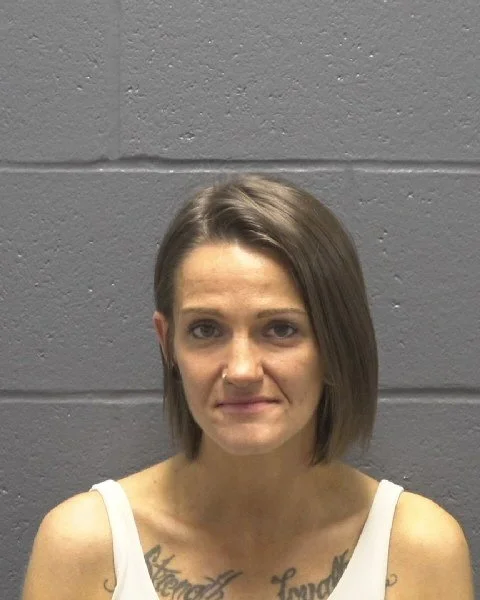
On June 28, 2026, at 11:21 p.m. Gibson County Deputy Eric Powell conducted a traffic stop on a White 2014 Lexus GS3 for disregarding the red light at the traffic light on US 41 at State Road 168.  Upon stopping the vehicle north of County Road 350 South Deputy Powell approached the vehicle and began a roadside investigation.  During the interaction Deputy Powell observed behaviors inside the vehicle that indicated possible criminal behavior may be taking place.  At that point he asked for additional units to come to the scene and a drug investigation was conducted.  At the conclusion of the investigation a passenger, 34-year-old Latisha Jackson of Boonville was taken into custody and transported to the Gibson County Detention Center.  Upon arriving at the detention center Ms. Garrett was charged with Possession of Paraphernalia,  Possession of Marijuana, and Possession of Methamphetamines. 
 
All criminal defendants are to be presumed innocent until and unless proven guilty beyond a reasonable doubt in a court of law.

Pike County man arrested for resisting law enforcement

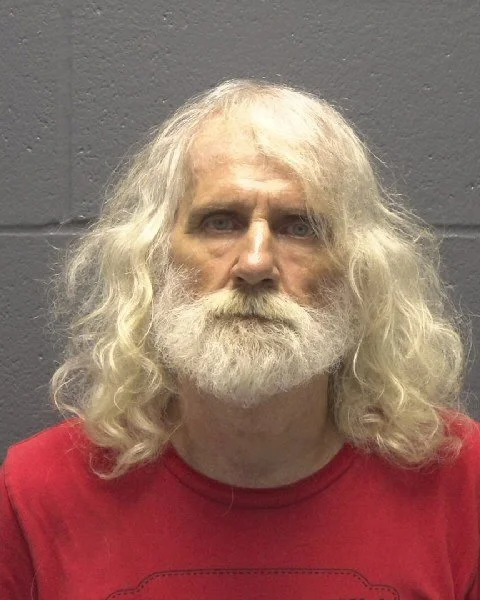
On June 28, 2026, at 10:39 P.M. Oakland City Officer Michael McGregor attempted to stop a Burgandy Toyota Tacoma on State Road 64 near the high water at the county line.  The vehicle fled into the water.  However, Deputy Eric Powell had made his way around the high water prior to this interaction to check the barricades and high-water signs on the Pike County Side.  Deputy Powell stopped two Burgandy vehicles.  Upon realizing the second vehicle was the Toyota Tacoma Deputy Powell had a verbal exchange with the driver before ordering him out at gun point.  The driver 65-year-old Terry Lee of Winslow was taken into custody and after a brief investigation he was transported to the Gibson County Detention Center where he was charged with two counts of Resisting Law Enforcement. 
 
All criminal defendants are to be presumed innocent until and unless proven guilty beyond a reasonable doubt in a court of law.

Mount Carmel man arrested for DUI

On June 30, 2026, at 5:58 p.m.  Gibson County Deputy Wes Baumgart conducted a traffic stop on an electric bicycle after observing multiple equipment violations and a moving violation while it traveled on County Road 100 North, West of US 41.  Upon approaching the vehicle Deputy Baumgart detected multiple clues that the driver, 33-year-old Justin Sims of Mount Carmel was under the influence.  At that point he began a roadside DUI investigation that resulted in Mr. Sims being taken into custody and transported to the Gibson County Detention Center.  Upon arriving at the detention center Mr. Sims was charged with Operating a Vehicle While Intoxicated. 
 
Sgt. Loren Barchet, Deputy Wyatt Hunt, and Deputy Jim Tucker assisted Deputy Baumgart in his investigation.
 
All criminal defendants are to be presumed innocent until and unless proven guilty beyond a reasonable doubt in a court of law.
 

2026 Wabash Co. Fair Queen & Princess Contestants

Fair Queen Contestant number one, Karrah Lewis. 

Hello, my name is Karrah Lewis, I'm the daughter of Michael and Brittany Lewis. I have many different hobbies including swimming, cooking, doing puzzles, going on walks, hanging out with friends and family, and golfing with my boyfriend. I also get the opportunity to babysit a 6 month old baby girl named Kayelani five days a week, while also working for Kevin List at Little Italy’s Pizza. 

My current plans for the future are to attend Wabash Valley College in the fall and get my Associate's degree in early childhood. After college, I plan to own and operate my own daycare. Children have been such a big part of my life: from growing up in a house with five younger sisters to being the oldest cousin. I’m participating in this contest because I would love to be in the legacy line of young women who have held the crown in Wabash County.  This is an opportunity to represent the community I was born and raised in; the place I will always consider home”. 

 I would also like to thank my sponsor JR’s Repair Service.

2026 Wabash Co. Fair Queen & Princess Contestants

Fair Queen Contestant number two, Addison Tennis

My name is Addison Tennis. I am 16 years old and I am secretary of the Allendale Twisters 4-H club. This will be my eighth year in 4-H. My parents are Jason and Carrie Tennis. I enjoy raising and selling my goats and showing them in 4-H, as well as helping on our families dairy farm and showing our cattle. In 2023 I was crowned fair princess. I enjoyed every minute of it and loved being able to represent the 4-H community. 

I am going to be a junior at Mount Carmel highschool and as of now plan to go to college to either be a physical therapist or PTA. Outside of school I play tennis and participate in FFA activities and competitions. I also enjoy working at Hocking’s Greenthumb greenhouse and planting flowers and vegetables of my own. 

I would love to be fair queen because I want to be a good role model that the young children in our community can look up to. I remember coming out to the fair when I was little and helping my brother show his cows. I always liked to watch the queens and princesses and said I wanted to be like them one day. They set an example for me that I will always remember and I would be honored to do the same. If I am chosen as queen I will do my very best to represent the 4-H and Junior fair program in the best way possible. 

I would like to thank Cafe 82:3 for sponsoring me!

2026 Wabash Co. Fair Queen & Princess Contestants

Fair Princess contestant number one, Abigail Hipsher 


Hi, my name is Abigail Hipsher. I am 15 and I'm the daughter of Justin and Amanda Hipsher. My dad works at the Wabash County Highway Department and my mom works at Allendale CCSD# 17 . 

My hobbies are hunting, fishing, photography , mudding , riding horses , and drawing .

My goals this year are to earn my chapter degree at Mt . Carmel FFA chapter and go out fo an officer position,  in the future I hope to go to college for welding or diesel mechanics. 

I would like to be a fair princess because I think it would be an awesome experience to get out of my comfort zone and to learn better leadership and communication. 

I would like to inspire the younger 4-h members to try new things and to express their best quality as well as having good sportsmanship.  

Thank you so much - David Brown Construction for being my sponsor- I appreciate you giving me this opportunity to compete!

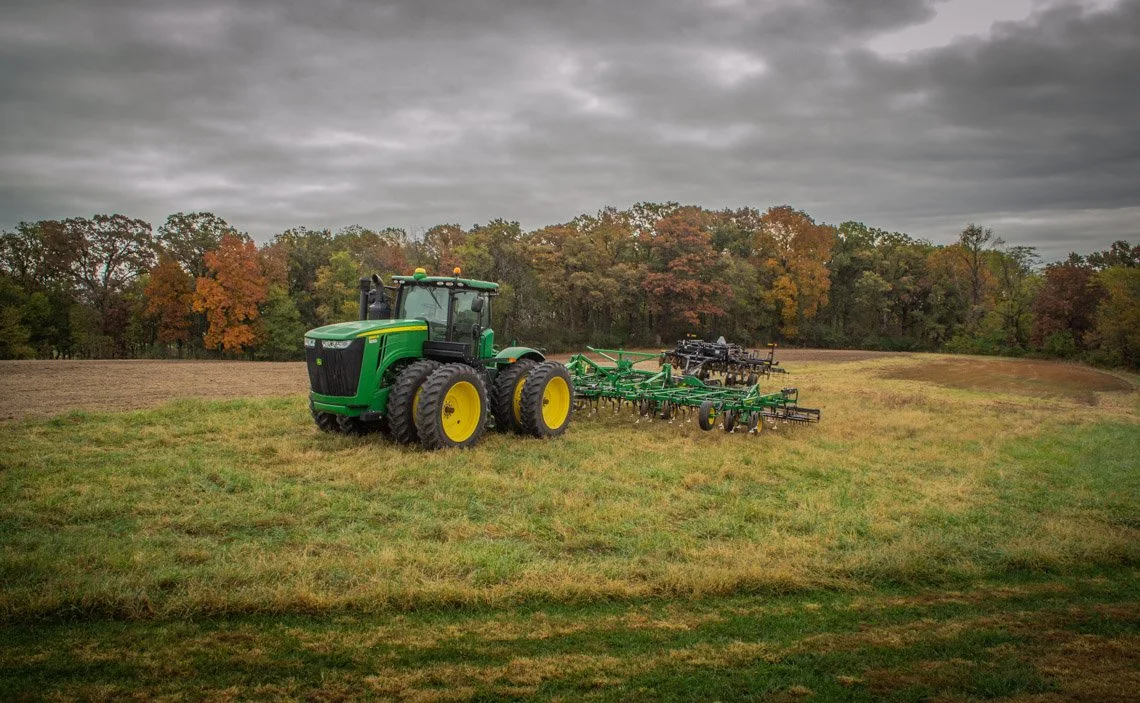
‘A real farm crisis’: Illinois farm bankruptcies rise for 3rd straight year

Rising land rent, an unstable export market and record farm debt are blamed 

By TARA SUN
Medill Illinois News Bureau
news@capitolnewsillinois.com

Article Summary

  • Family farm bankruptcies surged 46% nationwide in 2025. In the Midwest, filings jumped 70%. In Illinois, they rose 55%.

  • Total farm debt is forecast to hit a record $624.7 billion in 2026, as overhead costs like land rent and interest keep climbing.

  • Farmers bought a record 2.54 million crop insurance policies in 2025. But when the guaranteed revenue floor falls below production costs, farmers lose money on every bushel.

This summary was written by the reporters and editors who worked on this story.

SPRINGFIELD — With the growing season well underway in Illinois, farmers once again are struggling to turn an abundant harvest into survival.

In 2025, family farm bankruptcies surged 46% nationwide — reaching 315 filings and marking the third consecutive year of increases. The Midwest recorded 121 filings in 2025 — up 70% from the prior year.

The trend has only accelerated. In April alone this year, 62 Chapter 12 farm bankruptcies were filed nationwide – a 130% jump from the prior year and the highest monthly total since February 2020. The USDA projects total farm debt will rise 5.2% to a record $624.7 billion in 2026, with 330 bankruptcy cases filed.

“I’m scared about there being a real farm crisis,” said Eliot Clay, executive director of the Association of Illinois Soil and Water Conservation Districts. “This could come down to people being able to save their farms – just knowing that they could put it into some conservation easement or something. Like, they need anything that they can get.”

For Illinois, the crisis is playing out as lawmakers just finished a budget session that delivered few meaningful results for an industry under siege. Gary Asay, who has farmed in Illinois since 1976 and sold crop insurance for more than 20 years, sees clear reasons to worry.

“The increase in the number of bankruptcies and the increased buying of higher-level crop insurance are both signs of the stress that’s in the industry,” Asay said. “Farmers are under stress. They may be having to borrow more money. Therefore, they want more protection.”

Crop insurance, he pointed out, can’t fully protect farmers from losses. The most common policy, Revenue Protection, covers only up to 85% of projected revenue.

“Even with the best crop insurance coverage you can buy, if that coverage is below your cost of production, you can still lose money without even collecting,” Asay said.

In 2025, U.S. soybean production totaled 4.26 billion bushels, with the average yield per acre estimated at a record high 53.0 bushels per acre. Illinois alone harvested more than 639 million bushels in 2025.

Then, in February 2025, the U.S. imposed a 10% tariff on Chinese products. And China – once the world’s largest buyer of U.S. soybeans – stopped purchasing U.S. crops. Last September marked the first month since 2018 that imports from the U.S. fell to zero, according to China’s General Administration of Customs.

Farmers had entered the 2025 season with a smaller safety net after the projected price for the crop insurance guarantees fell by 8.7% that year. The drop meant less protection heading into the spring planting. But because yields were high, most farms still generated revenue above their guaranteed floor. Although farmers grew plenty, they sold every bushel for less than it cost to produce.

“A lot of farmers cannot sell their corn or soybeans at a profit right now, just because the price is so low,” Asay said.

Bankruptcies in agriculture rarely follow a single bad year. For U.S. farmers, the financial squeeze began well before 2025.

Real estate debt – tied to the land farmers rent or own – is expected to reach $404.3 billion in 2026, a reflection of the high cost of farmland that has squeezed so many operators.

“Overhead costs represent the largest cost component on the U.S. farm, accounting for nearly one-half of total costs during the 2020-24 period,” said Joana Colussi, a research assistant professor of agricultural economics at Purdue University, citing Purdue data. “Eighty percent of the farmers in the Midwest, they rent the land.”

Colussi has tracked the financial squeeze on farmers across the Midwest. When land prices rise, so does the rent – a fixed cost that farmers pay regardless of crop prices or yields. That leaves farmers searching for ways to keep operations going. “The way to continue being competitive is to try to reduce the costs,” she said.

Diversification into niche markets — non-GMO (genetically modified organism), organic or specialty crops — offers one path forward, though Colussi mentioned it’s not a quick fix

Farm crisis reminiscent of the 1980s.

Rep. Charlie Meier, R-Okawville, who is a farmer himself, described the current moment as reminiscent of the 1980s farm crisis. “There were massive bankruptcies in the ‘80s,” Meier said. “A lot, a lot of farms went under.”

The trigger now and then is the unstable export market. But the financial strain was already visible. In 2025, the Federal Reserve Bank of Chicago reported that 5.6% of farm loans were classified as having “major” or “severe” repayment problems — the highest since 2020. That means borrowers were falling behind on payments or reworking their loans. It’s an indicator that many farmers were struggling to repay old debt while borrowing more to plant the next crop.

Ahead of the 2026 legislative session, farm groups pushed for estate tax relief, one of the Illinois Farm Bureau’s top priorities, along with payouts for farmers to protect their land and programs that help them find new buyers for their crops. But in a tight budget year, those priorities stalled.

The Illinois Farm Bureau did not secure passage of the Family Farm Preservation Act, which would have raised the state’s estate tax exemption from $4 million to $6 million, reducing the tax burden on inherited farms and making it easier for young farmers to keep the land and operations intact.

State Rep. Sharon Chung, D-Bloomington, who serves on the House Agriculture Committee, was also unable to get a relatively small boost for farmers through this session. 

She pushed for a $10 million increase in funding for Soil and Water Conservation Districts through House Bill 4755. But the final Fiscal Year 2027 budget held funding at $4.5 million for the third straight year, far short of what advocates say districts need. These districts are trusted by local farmers because they work alongside them, offering advice on how to farm more efficiently at a lower cost.

Clay, the district’s executive director, said the biggest need is giving districts “the financial certainty that they can hire and keep people hired.” 

Without that, districts see constant turnover. That means farmers lose access to experienced local advisors who understand their land and can help them navigate conservation practices that might save money and keep them afloat.

“Agriculture is the No. 1 producer for our economy in Illinois,” Chung said. “Anything we can do to help prop that up is so important.”

Despite those unpassed bills, farmers did secure a few victories. The final budget included changes to the Farmland Assessment Law — extending a tax break for conservation practices through 2031 — and avoided cuts to key programs, including the Illinois Department of Agriculture, agricultural education and cover-crop incentives that enrich the soil.

While farmers had hoped Springfield could do more, they also recognized that forces shaping the industry go far beyond the influence of legislators: falling crop prices, an unstable export market and rising costs.

As farmers face mounting distress, the history of the 1980s hangs over the heartland.

“There’s just not enough room for error right now. Something that happened in the past can take down a farmer today,” Asay said.

Tara Sun is a graduate student in journalism with Northwestern University’s Medill School of Journalism, Media and Integrated Marketing Communications, and is a fellow in its Medill Illinois News Bureau working in partnership with Capitol News Illinois.

Capitol News Illinois is a nonprofit, nonpartisan news service that distributes state government coverage to hundreds of news outlets statewide. It is funded primarily by the Illinois Press Foundation and the Robert R. McCormick Foundation.


4th of July Firework Safety Tips From Indiana State Police

It’s that time of the year again! As we celebrate Independence Day, we’re also proudly honoring 250 years of the United States of America.  Whether you’re enjoying the summer weather, having a backyard BBQ, spending time with family and friends, and using fireworks are all some of the best ways to celebrate.  ISP Putnamville wants everyone to remain safe this July 4th, and safely handling fireworks is a priority.


Listed below are some safety tips that the Indiana State Police would like to provide when using fireworks to celebrate this July 4th:


  • Never let children handle, play with, or light any fireworks.

  • Never aim, point, or throw fireworks at another person.

  • Use extreme caution when lighting fireworks in the wind. Keep spectators where the wind is blowing smoke and debris away from them.

  • Never smoke or consume alcohol when lighting fireworks.

  • Store fireworks in a cool, dry place away from the reach of children.

  • Steer clear of others setting off fireworks. They can backfire or shoot off in the wrong direction.

  • Do not attempt to make or alter any fireworks or firework devices.

  • Always have a fire extinguisher or water supply, such as a hose or bucket of water, nearby.

  • Only light one firework at a time and never attempt to re-light or fix a "dud" firework.

  • After a firework has finished burning, douse it with plenty of water before throwing it away to prevent starting a trash fire.

  • Be considerate of individuals with PTSD and other types of medical conditions. The noise can cause severe stress and reaction in neighbors.

  • Think about pets. Animals have sensitive ears and can be very frightened or stressed by fireworks sounds.

  • Use fireworks outdoors, never indoors. 

Become more familiar with the state fireworks laws in Indiana. Throughout the year it is legal to set off fireworks from 9 a.m. to 11 p.m., but this may be limited further by local ordinances. 

  • On state holidays it is legal to set off fireworks from 9 a.m. to midnight, but this may be limited further by local ordinances.

  • The times on the following dates are protected in Indiana for consumer use of fireworks and may not be prohibited by local ordinance:

    • June 29 to July 3: from 5 p.m. until two hours after sunset;

    • July 4: from 10 a.m. to midnight;

    • July 5 to July 9: from 5 p.m. until two hours after sunset; and

    • December 31: from 10 a.m. to 1 a.m.

  • Fireworks can only be purchased by persons 18 years of age or older.

  • Fireworks use is limited to personal property, the property of someone who has approved the use of fireworks or a location designated specifically for the use of consumer fireworks. 

Please be sure to check local ordinances for any fireworks limitations that might exist in your area.

The Indiana State Police Post hopes that these few safety tips help you enjoy your 4th of July by safely celebrating with fireworks.