Lawmakers at the end of session try to appease both sides in drug pricing controversy

Bills address operation of federal 340B drug pricing program in Illinois

By PETER HANCOCK
Capitol News Illinois
phancock@capitolnewsillinois.com

Story Summary

  • The federal drug discount program gives nonprofit and public hospitals and clinics steep discounts on prescription drugs.

  • Hospitals and clinics accuse the drug industry of trying to restrict access to the discounts while drug manufacturers say the program is being abused by big hospital systems.

  • Illinois lawmakers passed legislation to ensure hospitals and clinics have access to the discounts but also called for an audit of how the program is being used in Illinois.

This summary was written by the reporters and editors who worked on this story. 

SPRINGFIELD — Illinois lawmakers gave hospitals and community health centers much of what they wanted this session by passing a bill that prohibits drug manufacturers from interfering with their access to discounted medications through a federal drug pricing program.

But they also gave drug companies what they wanted by passing another piece of legislation that calls on the Illinois Department of Insurance to conduct an audit to find out how much money these hospitals and clinics are making off that program, and what they are doing with the profits.

Both bills focus on the federal 340B drug pricing program. Although it is established under federal law, with tens of billions of dollars’ worth of healthcare revenue at stake nationwide, it has increasingly become the subject of state-level political battles as well.

Launched in 1992, the 340B program requires drug manufacturers that participate in Medicaid to provide outpatient medications at substantial discounts to providers that serve large numbers of uninsured, underinsured and Medicaid patients.

Those providers, in turn, typically mark up the price they charge their patients for the drugs and use the difference to support their operations.

As the Medicaid program has grown in recent years, so too has the 340B drug program. According to an analysis by KFF, a nonprofit health policy research, polling and news organization, the 340B program has mushroomed in size in recent years, growing from $2.4 billion in drug purchases nationally in 2005 to $66.3 billion in 2023.

That growth has resulted in heightened tensions between hospitals and clinics on one side, and the pharmaceutical industry on the other, with each side accusing the other of abusing or manipulating the program for their own benefit.

The 340B-eligible hospitals and clinics have accused drug companies of unfairly restricting their ability to contract with outside pharmacies to dispense the discounted drugs to their patients. That limits the volume of 340B-discounted drugs. 

Drug manufacturers, meanwhile, have accused hospitals and clinics of profiting off the system instead of passing the savings on to their patients or using the profit they make from the program to offset their cost of providing charity care.

The battle in Illinois over the 340B program began last year when, at the urging of federally funded community health centers, the Senate adopted an amendment to House Bill 2371. It was sponsored by Rep. Anna Moeller, D-Elgin, in the House and Sen. Dave Koehler, D-Peoria, in the Senate.

Passed in the final week of the 2025 session, it called for prohibiting drug manufacturers or any other party from interfering with the ability of a 340B-qualified hospital or clinic to acquire the discounted drugs.

That bill also prohibits drug companies from interfering with the hospitals’ and clinics’ ability to dispense the drugs through contract pharmacies. And it shields them from any requirement to disclose any of their cost or income data related to the program beyond what is required under state or federal law.

The bill passed the Senate on a 55-0 vote on May 29 and was sent back to the House for concurrence. But amid strong opposition from the industry lobbying group Pharmaceutical Research and Manufacturers of America, or PhRMA, it was initially not called for a vote, even though hospitals and clinics continued pushing for its passage.

Testifying before a House committee May 26, PhRMA lobbyist Peter Fotos said the bill effectively made it “illegal to ask for receipts.”

“Lawmakers should demand real transparency, real accountability, and a full understanding of the financial impact on state programs,” Fotos said. “We believe those questions must be mentioned before considering a bill to prohibit guard rails.”

It took the inclusion of a bill creating greater transparency around the program to bring the main bill over the finish line in the House by a vote of 113-1 in the waning hours of the session.

‘Transparency’ bill

House Bill 4327, which was described as a “transparency” bill, calls on the Illinois Department of Insurance to conduct an audit of the 340B program in Illinois to determine how much revenue hospitals and clinics are earning through the program and how that money is being used. It was sponsored in the House by Rep. Camille Lilly, D-Chicago, passing 106-8, and Koehler in the Senate, where it passed 57-0.

Specifically, it directs the department to gather information from the 340B-eligible hospitals and clinics about how much they pay and how much they’re reimbursed for the medications they acquire through the 340B program. The audit will also examine how much of the money they earn through that price spread is used to fund charity care or any other program that provides unreimbursed or subsidized care.

The bill also calls on those hospitals and clinics to provide demographic data about their patient population, including the percentage of people they serve who are members of “vulnerable communities.”  

Those are defined in the law as uninsured, underinsured and Medicaid patients, people who are billed on a sliding fee scale, racial and ethnic minorities, residents of rural or medically underserved areas, populations with high rates of chronic diseases or poor health outcomes that are linked to social determinants of health, and individuals who are elderly, disabled LGBTQ+ or “justice involved.”

The bill also calls for an examination of how the 340B program affects the cost of other healthcare programs such as Medicaid and state employee group health insurance plans.

And it calls on manufacturers covered by the program to report the aggregate amount of discounts they have provided under the program each year since 2020. 

Both bills cleared their final legislative hurdles during the final hours of the session. Afterward, groups representing hospitals and federally funded community health centers claimed victory.

“Today, our legislative champions stood strong in the face of intense industry pressure, to put patients first,” Ollie Idowu, president & CEO of Illinois Primary Health Care Association, a group that represents federally funded clinics, said in a statement. “Because of their courage and leadership, 1.5 million Illinoisans who rely on community health centers will continue to have access to the affordable medications and comprehensive services they need to live healthy lives.”

A.J. Wilhelmi, who leads the Illinois Health and Hospital Association, also issued a statement praising passage of HB 2371.

“Illinois now joins more than 20 other states that have enacted protections for the 340B program, safeguarding patients’ access to 340B medications and the healthcare services those savings support in communities across the state,” he said.

But PhRMA, which had urged passage of HB 4327 on its own, without HB 2371, issued a statement suggesting the 340B program needs broader national reforms.

“Across the country and here in Illinois, 340B is driving up costs for patients, taxpayers and employers instead of ensuring that these savings reach those who need them most,” PhRMA spokesman Will May said in a statement. “PhRMA will continue working with policymakers to advance solutions that protect patients.”

Capitol News Illinois is a nonprofit, nonpartisan news service that distributes state government coverage to hundreds of news outlets statewide. It is funded primarily by the Illinois Press Foundation and the Robert R. McCormick Foundation. 


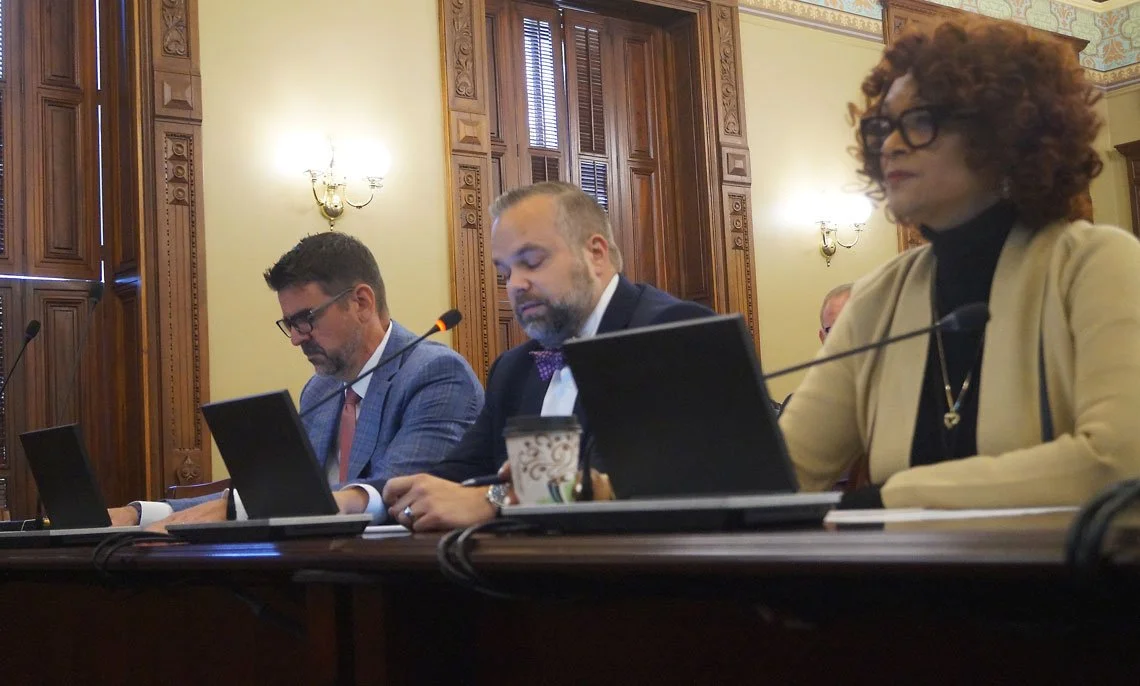
Rep. Camille Lilly, right, testifies before a House committee for passage of a bill calling for an audit of the federal 340B drug pricing program in Illinois. Also testifying were Peter Fotos, left, of Pharmaceutical Research and Manufacturers of America, and John Conrad of the Illinois Biotechnology Industry Organization. (Capitol News Illinois photo by Peter Hancock)

Pritzker’s spring wins come with caveats as BUILD, megaprojects bills stall 

The governor scored wins on junk fees, cellphones and insurance rates

By BRENDEN MOORE
Capitol News Illinois 
bmoore@capitolnewsillinois.com  

Article Summary  

  • As he campaigns for a third term as Illinois’ chief executive and weighs a possible 2028 Democratic presidential bid, Gov. JB Pritzker emerged from the legislative session achieving many but not all the goals he laid out in his State of the State address

  • But the governor was unable to muscle through the most far-reaching elements of his top legislative initiative: Building Up Illinois Developments, or BUILD, and couldn’t land the plane on a megaprojects bill that would have enabled the Chicago Bears to build a new stadium in Arlington Heights.   

  • The high-profile losses overshadowed some big wins, including a ban on junk fees, prohibition on cellphones in the classroom and another round of insurance reform.

This summary was written by the reporters and editors who worked on this story.  

SPRINGFIELD — Over his 7½ years in office, Gov. JB Pritzker has largely gotten his way in the Democratic-supermajority Illinois General Assembly. 

As he campaigns for a third term as Illinois’ chief executive and weighs a possible 2028 Democratic presidential bid, Pritzker emerged from the spring legislative session once again achieving many but not all the goals he laid out in his State of the State address in February. 

But there were some high-profile caveats that underscored the limits of his clout among his fellow Democrats who run the state legislature. 

The governor was unable to muscle through the most far-reaching elements of his top legislative initiative: Building Up Illinois Developments, or BUILD — a comprehensive plan to spur homebuilding and drive down housing costs. 

And he didn’t land the plane on a long-sought megaprojects bill that would have enabled the Chicago Bears to negotiate and lock in a lower property tax payment on a stadium in Arlington Heights. Its failure could result in the Monsters of the Midway hiking across the Indiana state line to a former industrial site near Wolf Lake in Hammond.

Lawmakers also failed to approve a pause Pritzker sought in the state’s data center tax credit, leading the governor to take executive action to freeze the program. 

Asked during a news conference after the session adjourned why some of his high-profile initiatives stalled in the General Assembly this spring, Pritzker argued that major policy wins often take years to materialize.

“I've proposed bills that may not have passed this session, but remember: A whole lot of things, and in fact, I made a list for myself so I could remind you all, a whole lot of things that were important take years to get done,” Pritzker said, proceeding to list his policy wins.

Indeed, many of the governor’s policy achievements this session were multi-year efforts, from granting the state more regulatory power to review homeowners’ and auto insurance rates to bans on junk fees and students’ use of cellphones in the classroom. 

And Pritzker said what’s past will be prologue, promising to keep fighting for BUILD and a solution that results in the Bears building their new stadium in Illinois. 

“Absolutely, I'm going to be campaigning on this,” Pritzker said of BUILD. “So, yes, it's a political issue. I believe that we need to do even more about housing in this state.”

BUILD falters

There was no initiative Pritzker fought harder for this year than BUILD. He promoted the plan on his social media accounts nearly every week, penned op-eds, hosted roundtables and appeared in social media videos with real estate influencers, among several methods. 

His political operation also boosted the “yes in my backyard” plan in a paid advertising campaign on social media platforms, a tactic that highlighted the Pritzker campaign’s belief that it would be good politics on top of good policy.

“Oh no, I mean, are you kidding me?” Pritzker said when asked if BUILD would be an election-year liability for him. “The question is, do you want to elect somebody who's actually for building more housing or somebody who doesn't have any plan at all?”

But the merits of the centerpiece policies of BUILD fell on deaf ears in Springfield.

Perhaps most controversial was a proposed statewide zoning law that would have permitted multi-unit housing by right on nearly all properties zoned for residential use. The aim was to spur the development of more “middle housing” such as two-flats, townhomes and fourplexes. 

The plan also called for the legalization of accessory dwelling units on all land zoned for residential use and establishing statewide timelines for inspections and reviews and allowing third-party inspectors if municipalities miss deadlines.

The plan was supported by the state’s real estate industry but fiercely opposed by the Illinois Municipal League, the organization representing the state’s cities and villages. 

The Illinois AFL-CIO also opposed the proposals, especially the third-party review component. The statewide labor organization viewed it as a “nonstarter” because it would allow work traditionally performed by government employees — often unionized workers — to be outsourced. 

As they poured through hours of testimony on the BUILD plan in hearings this spring, a bipartisan cadre of state lawmakers, many products of municipal government, expressed concerns about the preemption of local control and the one-size-fits-all nature of the proposal. Many said they hoped for a more collaborative approach, including input from local government leaders. 

“I applaud the governor’s office for making an attempt,” said Sen. Cristina Castro, D-Elgin, who chairs the Senate Executive Committee, during a hearing in the waning days of spring session. “And I mean it genuinely because I think there’s a lot of people in this room that want to solve this problem and see a holistic approach to it. But I also feel like we have to work together.”

That said, BUILD wasn’t a total bust. Pritzker secured $250 million in capital funding for grant programs that assist housing developers with sewer, stormwater, utility and other site prep work; fund middle housing development, and provide down payment and closing cost assistance to those who have faced institutional barriers to home ownership. 

It was the least controversial aspect of the program, not touching delicate topics like local zoning control or replacing unionized labor. 

Megaprojects falters

Pritzker’s desire to add a megaprojects mechanism to the state’s economic development toolkit long predates the Bears’ pursuit of a domed stadium in Arlington Heights. He’s often noted that 38 other states have some form of negotiated property tax payment for large developments.

But on the penultimate day of the spring session, Sen. Bill Cunningham, D-Chicago, delivered the bad news: The megaprojects concept, a version of which passed the House in April, did not have enough support to pass the Senate. 

The immediate focus was on the Bears, who announced last week that their board of directors “voted to advance” a stadium development in Hammond, Indiana.

But the governor, a former businessman who’s fashioned himself as the state’s chief marketing officer, warned that Illinois is “behind the curve” on the broader issue.

“They’ve always been negotiating about property taxes all across the country,” Pritzker said of large developments. “It’s just in Illinois where we have had a disorganized, dysfunctional endeavor forever, and now we’re trying to organize it and make it work, so that businesses will want to come.”

But the prospects of the tool being resurrected appear grim. Undoubtedly, there were Bears-specific concerns with the bill. But the statewide deployment of the tool, the potential impact it would have on revenue to local governments, and the property tax burden on surrounding residents and businesses may have done more to sink the bill.

And unlike BUILD, Pritzker took a more hands-off approach to megaprojects, putting together the “scaffolding of a deal” as he told reporters in April. But, a few weeks later in the waning days of the spring session, Pritzker said the bill was “in the legislature’s hands.”

In their hands, it died. Cunningham said the common sentiment in the Senate was that the megaprojects tool “further breaks an already broken property tax system.”

On the flip side of the coin, Sen. Seth Lewis, R-Bartlett, said Pritzker “did not show the Bears organization any sense of urgency or desire that lawmakers want to keep one of this state’s top economic engines in Illinois.”

“During this process we saw a complete lack of leadership by the governor, and if the Bears do indeed move to Indiana, it is a devastating loss, both economically and emotionally, that the Governor will own,” he said. 

Other losses

Beyond BUILD and megaprojects, Pritzker also came up short once again in his effort to allow some community colleges to offer four-year baccalaureate degrees.

Lawmakers also rejected Pritzker’s proposal to reduce the percentage of income taxes local governments receive from the Local Government Distributive Fund flat. Instead, the share remains the same and, because of increased income tax receipts, LGDF will increase this budget year.

And lawmakers did not take up legislation reforming the state’s data center policies despite Pritzker’s urging. A specific proposal, House Bill 5513, known as the POWER Act, would have required data centers to pay for and supply their own renewable energy, track and report water usage and enter community benefits agreements with municipalities.  

But the advocates behind the bill accused the governor’s office of failing to engage on the issue, which never received a floor vote.

As a result, Pritzker unilaterally directed the state’s Department of Commerce and Economic Opportunity to pause all new state tax incentives for data centers “while we continue working with the General Assembly and stakeholders on a comprehensive framework that protects affordability, safeguards our natural resources, and ensures responsible growth across Illinois.”

From 2020-24, there were 27 data centers that benefited by more than $983 million in promised tax relief from these incentives, according to a state report.

“These complex legislative issues take time, and I do think we're going to eventually get there,” said House Speaker Emanuel “Chris” Welch, D-Hillside. “And when we get there, it's going to be done right.”

Legislative wins

But Pritzker didn’t strike out this legislative session. In fact, the governor got much of what he asked for. 

A two-year effort to ban junk fees — the charges added to the total cost of ticketed events, hotels, tech and other goods and services — finally bore fruit this session. 

The bill, which would make it unlawful for any business to advertise, display or offer a price for goods or services that do not include all mandatory fees or surcharges before taxes, now just needs Pritzker’s signature.

And after falling short last year on one of the centerpieces of his 2025 State of the State address, Pritzker last month secured legislative approval of a ban on students using cellphones during class time.

And after stalling in last year’s fall session, legislation giving the state’s Department of Insurance authority to regulate premiums for homeowners and auto insurance got the green light. Pritzker first called for the homeowners insurance bill last summer after Bloomington-based State Farm Insurance, one of the largest homeowners' carriers in the nation, announced a 27.2% average rate increase across the state.

The governor was also successful in pushing a pair of social media initiatives. One would impose a tax on social media companies based on the number of users the platform has in Illinois. Another would require social media companies to verify a child’s age on the device’s operating system and use stricter features for minors like limiting location-sharing and nighttime notifications.

The state’s fiscal year 2027 spending plan also largely matches the blueprint Pritzker outlined in February, including raising revenue through the social media tax and lowering the cap on corporate net operating loss deductions for business. But it avoided incorporating more far-reaching revenue proposals pitched by progressives. 

Programs championed by Pritzker, including the Dolly Parton Imagination Library and the Illinois Medical Debt Relief Program, also continued to be funded. 

Lawmakers also authorized the two-year extension of the state’s pension buyout program. Though created during Gov. Bruce Rauner’s tenure, Pritzker has supported its extension three times now. Thus far, about $2 billion buyout payments have resulted in about a $2.6 billion reduction in the state’s long-term pension liabilities. 

Capitol News Illinois is a nonprofit, nonpartisan news service that distributes state government coverage to hundreds of news outlets statewide. It is funded primarily by the Illinois Press Foundation and the Robert R. McCormick Foundation.
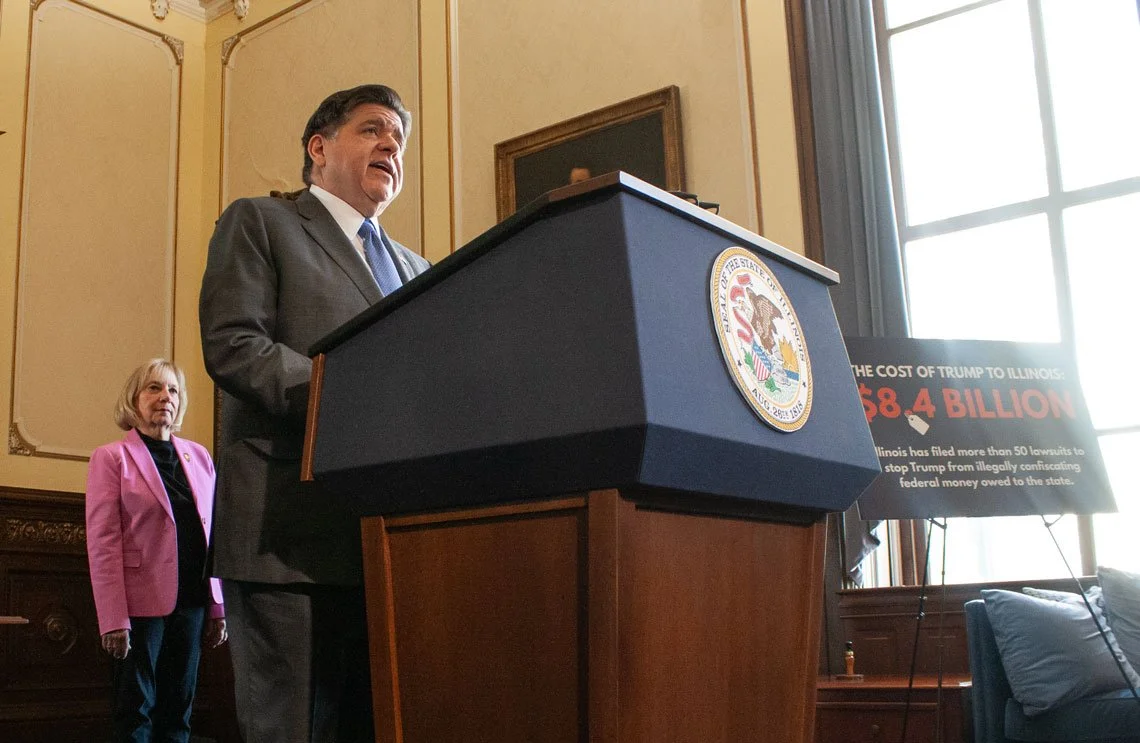
Flanked by state legislative leaders, Gov. JB Pritzker highlights accomplishment from the spring session. (Capitol News Illinois photo by Jenna Schweikert)


Raoul suggests underfunding of his office could make winning legal battles against Trump harder

Illinois attorney general says his office needs more state investment from state to do its job

By NIKOEL HYTREK
Capitol News Illinois
nhytrek@captiolnewsillinois.com

Article Summary 

  • Attorney General Kwame Raoul on Tuesday discussed the difficulty of working with the federal government at a City Club of Chicago event. He cited federal immigration enforcement efforts and withheld funding as reasons for the strained relationship. 

  • Despite the issues, Raoul said his office is standing up for Illinoisans by suing the federal government to reverse its actions and reclaim money owed to the state. 

  • Although the attorney general’s office has been successful in many lawsuits against the Trump administration, Raoul lamented his office didn’t receive new funding compared to last year.

This summary was written by the reporters and editors who worked on this story.

Illinois Attorney General Kwame Raoul says his office was underfunded by $10 million in the latest budget, and that could make it more difficult to fight legal battles against the Trump administration while still fulfilling its enforcement duties in the state.

Raoul spoke at a Tuesday event at the City Club of Chicago about the challenges of working with a federal government that has been hostile at times to Illinois. He also touted some of the state’s legal victories against the Trump administration and his efforts to work with the federal government on other issues.

But despite achievements that many legislative Democrats and the governor often celebrate, state lawmakers appear not to have rewarded Raoul’s team with increased funding.

“We can't do this type of work without adequate investment, and, you know, unfortunately, at approximately 3 a.m. in the morning a week ago Monday, we were shorted about $10 million from what our overall appropriation was for FY26 and I can't imagine why,” he said.

The attorney general’s office is funded by multiple sources in the budget. This year the total comes out to $184.5 million between all funds. Last year, the total funding amount was $194.5 million. 

The state budget passed on June 1 closely matches how much the state is expected to spend by the end of the current fiscal year on June 30, meaning the whole budget is essentially flat.

“I've been aggressive about going to the legislature in the seven and a half years that I've been in office to appeal for investment in this office,” he said. “Over the course of my seven and a half years, for every dollar of General Revenue Funds spent on the attorney general's office, we return $21. Anybody who has that in their portfolio is rich.” 

Last year, the General Assembly awarded the attorney general’s office $15 million more in operational expenses to compensate for the heavier workload.

In addition to representing Illinois in court, the attorney general’s office enforces multiple state laws dealing with issues like consumer protection, victim assistance, civil rights, and more.

Increased workload

Since President Donald Trump returned to the White House in January 2025 and unleashed federal immigration agents in states, Illinois has navigated a more-difficult relationship between the state and federal governments.

Raoul said that hostility sometimes gets in the way of work to pursue drug and gun trafficking, child sexual abuse material, and organized retail crime. Cracking down on those crimes is normally a collaboration between the state and the federal government, he said.

The hostility has led to more work for Raoul’s office. Between the start of Trump’s term and April 2026, the AG’s office filed 63 lawsuits against the Trump administration. Most of the cases dealt with federal funds being withheld, protecting money for critical Illinois programs.

“Not a single lawsuit have we filed because of a policy difference with the president of the United States or with the federal government,” Raoul said. “Every lawsuit we filed, we filed because what he (Trump) was trying to do, he was doing illegally and unconstitutionally.”

Raoul said the hostile dynamic was clearest in September 2025 with Operation Midway Blitz, the Trump administration’s Chicago-focused mass deportation campaign, and attempts to deploy the National Guard in city streets.

He said Illinois won the U.S. Supreme Court case to block Trump from deploying the National Guard to Chicago because the federal government overstepped during Midway Blitz with the often-violent tactics federal agents used to arrest people suspected of being in the country illegally. 

“Its reach was far beyond just a question of immigration enforcement or crime,” Raoul said. “It’s whether we're going to embrace a sort of an authoritarian approach of giving one man the ability to turn the country's military against whoever he wishes based on whatever he perceives.”

The Supreme Court ruled in favor of Illinois in the National Guard case in December.

Ultimately, Raoul said, lawsuits against the federal government have protected $8.6 billion in federal funding for Illinois. That includes money for childcare, disaster recovery and preparation, public health, scientific and medical research, and more. 

Despite the difficult relationship, Raoul said Illinois has been able to work with federal law enforcement in some cases to successfully combat retail theft and online crimes against children.  

“We have continued through all of this sort of conflict to collaborate on fighting crime, and it's something that should be applauded for these respective leaders,” he said.


Capitol News Illinois is a nonprofit, nonpartisan news service that distributes state government coverage to hundreds of news outlets statewide. It is funded primarily by the Illinois Press Foundation and the Robert R. McCormick Foundation.

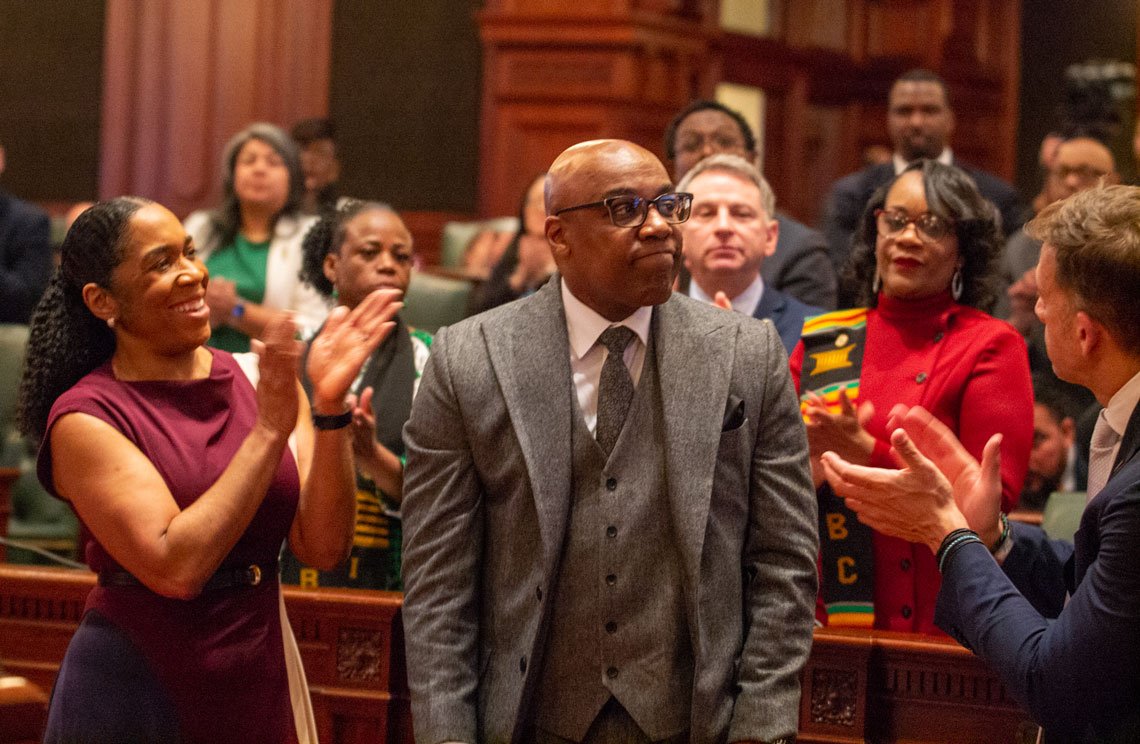
 Illinois Attorney General Kwame Raoul receives a round of applause during the governor’s 2026 budget address in February for his efforts suing the Trump administration. (Capitol News Illinois photo by Jerry Nowicki)

10K Illinois noncitizens to lose Medicaid coverage due to federal changes

State lawmakers pass bill that implements these new federal restrictions

By PETER HANCOCK
Capitol News Illinois
phancock@capitolnewsillinois.com

Story Summary

  • Last year, as part of the “One Big Beautiful Bill Act,” Congress cut off Medicaid eligibility to nearly all groups of noncitizens except lawful permanent residents, effective Oct. 1.

  • To comply with the new federal rules, state lawmakers passed legislation implementing that change in the state’s Medicaid program.

  • The change will affect an estimated 10,000 people in Illinois, most of whom are lawfully present in the country on humanitarian grounds.

  • Legislation that would have enabled most of those affected to keep their coverage beyond Oct. 1 stalled in the General Assembly due to budget pressures.

This summary was written by the reporters and editors who worked on this story. 

SPRINGFIELD – A bill that will soon head to Gov. JB Pritzker’s desk will officially remove an estimated 10,000 people from the state’s Medicaid program, leaving them without any form of health coverage.

That group is made up mainly of people who are not U.S. citizens but who are in the country legally, according to the Illinois Coalition for Immigrant and Refugee Rights. That includes refugees and asylum-seekers, many of whom came to the United States with pre-existing health conditions.

“If they are enrolled, then they still have Medicaid up until Oct.  1,” Edith Avila Hesser, ICIRR’s health justice and policy director, said in an interview. “This adds to the number of uninsured populations that we have here in the state of Illinois, and so obviously we will be working to educate this community about the resources that are available to them through community clinics like FQHCs (Federally Qualified Health Centers) and free and charitable clinics available throughout the state.”

Medicaid is a public health coverage program that is jointly funded by the federal government and the states.

In 2025, Congress amended the federal eligibility rules for Medicaid with passage of H.R. 1, commonly known as President Donald Trump’s “One Big Beautiful Bill Act.” It removed eligibility for nearly all noncitizens except lawful permanent residents, Cuban and Haitian entrants, and migrants from certain Pacific island nations known as the Compact of Free Association.

Illinois’ Medicaid bill

In order to comply with that change in federal law, Illinois lawmakers included language in this year’s annual Medicaid omnibus bill, Senate Bill 3365, removing most groups of noncitizens from eligibility under state law. 

They include, among others, immigrants who are honorably discharged U.S. veterans and their families, refugees and asylees, noncitizens identified as victims of trafficking, Amerasians from Vietnam, and American Indians born in Canada.

“We had to make that change to comply with H.R. 1 so that we didn't put our entire Medicaid program in jeopardy,” Rep. Anna Moeller, D-Elgin, who chairs the House working group that wrote the omnibus bill, said in an interview.

Although Illinois also provides health coverage outside the Medicaid system that is funded entirely with state dollars, the language in this year’s bill specifically states that it “shall not require any category of non-citizens or part thereof to be funded at state-only cost.”

For example, in 2020, Illinois launched a program to provide Medicaid-like coverage known as Health Benefits for Immigrant Seniors for noncitizens  age 65 and over, regardless of their immigration status. The following year, it expanded that program with Health Benefits for Immigrant Adults, which covered adults age 42 to 64, regardless of immigration status.

But the latter program was closed in 2025 amid budget and political pressure and enrollment in the seniors program has been limited while many of its enrollees have been shifted to other subsidized coverage programs.

Stalled programs

Illinois also participates in a limited program that provides health benefits to asylum applicants and victims of torture, trafficking and other serious crimes. And to minimize the impact of the upcoming change in eligibility rules, immigrant rights advocates introduced legislation this year to expand that program.

House Bill 4824, sponsored by Rep. Dagmara Avelar, D-Romeoville, and Senate Bill 3462, sponsored by Sen. Graciela Guzmán, D-Chicago, would have extended coverage under that program to several additional categories of noncitizens who are in the country for various humanitarian reasons. But neither of those bills was ever assigned to a substantive committee.

Moeller said budget pressures were the primary reason the bills were not considered this year, and she said that is not likely to change anytime soon.

“We're looking at enormous budget pressures next year because of the cuts in H.R. 1 to the Medicaid program, which is going to affect our overall budget,” she said. “Hopefully, at some point we can get many of the provisions that were contained in H.R. 1 overturned federally.”

Capitol News Illinois is a nonprofit, nonpartisan news service that distributes state government coverage to hundreds of news outlets statewide. It is funded primarily by the Illinois Press Foundation and the Robert R. McCormick Foundation. 


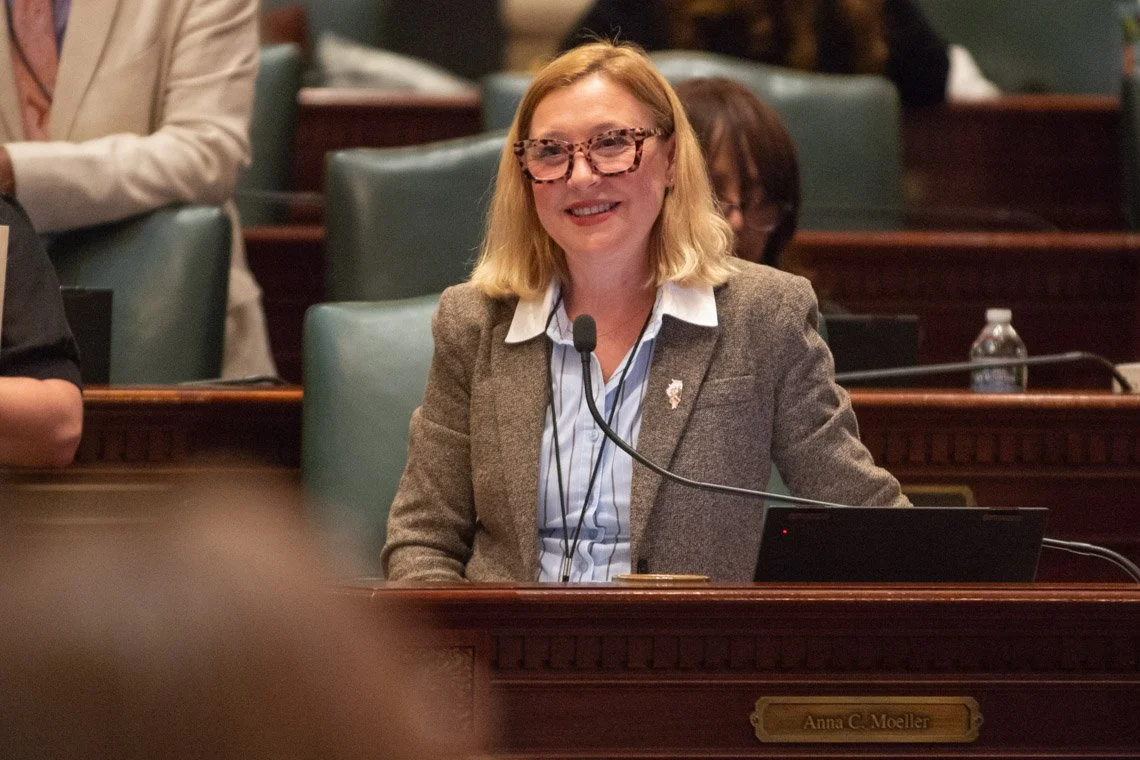
State Rep. Anna Moeller, D-Elgin, speaks on her Medicaid bill on the House floor on May 31, 2026. (Capitol News Illinois photo by Jerry Nowicki)

Bill creates gender-affirming, reproductive care protections for out-of-state foster placements

Republicans accuse majority party of ideological overreach

By HANNAH WEBSTER
Medill Illinois News Bureau
news@capitolnewsillinois.com

Article Summary

  • During the last week of the legislative session, the Illinois legislature passed a bill that would require the Department of Children and Family Services to make special considerations of reproductive and gender-affirming healthcare before an out-of-state foster placement. 

  • Youth age 8 or older would be able to object to out-of-state placements. 

  • Advocates argue that the legislation will secure legal protections for Illinois children if they are placed in other states.

  • Republican legislators fought the bill, arguing it infringes on other states and might deepen administrative burdens on DCFS.  

This summary was written by the reporters and editors who worked on this story.

SPRINGFIELD — A bill that would require the Illinois Department of Children and Family Services to consider access to reproductive and gender-affirming healthcare before placing foster children out of state passed the legislature during the last week of session. 

The legislation, if signed into law, will require that DCFS conduct individualized risk assessments before placing a foster child in another state. The assessment would specifically consider whether the youth or their caregiver could face criminal charges for healthcare that is legal in Illinois or whether the youth would lose access to healthcare that is legal in Illinois. 

Sponsored by Rep. Kelly Cassidy, D-Chicago, House Bill 4966, came amid federal policy changes that complicate access to reproductive services, including abortions and gender- and sexuality-related healthcare across state lines.  It’s also known as the SECURE Act, short for Safeguards to Ensure Continuity and Uphold Rights and Equity.

“House Bill 4966 is about ensuring that the youth in the care of the state of Illinois retain the rights of residents of the state of Illinois, regardless of where we have to place them,” Cassidy said in an April committee hearing

If DCFS found that a child may struggle to obtain healthcare in an out-of-state placement, the department must document a plan to mitigate that risk, such as coordinating with out-of-state or Illinois providers. If the department cannot do so, and the child does not want to be placed in that state, DCFS must decline the placement.  

According to DCFS, 68 foster children are currently placed in other states, though the agency didn’t break that number down by age. HB 4966 would only apply to children 8 years old or older. Cassidy said it’s also about giving children a say in where they’re placed.  

“In a state like ours, where foster youth lack the vital safeguard of a statutorily guaranteed right to client-directed legal representation in abuse and neglect proceedings, Illinois foster youth are at a serious disadvantage,” she said during House floor debate. 

Often, children placed outside of Illinois are sent to live with family members, said Nora Collins-Mandeville, director of the youth & family policy project at the ACLU of Illinois. The bill does not aim to restrict out-of-state placements, Collins-Mandeville said. Instead, it requires that DCFS attempt to plan ahead and requires obtaining the child’s support for a placement when the department cannot ensure access to certain kinds of healthcare. 

“We wanted to make sure that the child has not just a voice, but that people actually are listening to that voice,” Collins-Mandeville said.” So if the child is saying, ‘I don't want to go,’ and the department can’t mitigate that risk, the department cannot place that child in that situation.”

Republican opposition

Republicans pushed back against the bill, citing overreach beyond state lines. 

“This bill is basically set up to provide conflict between Illinois' most expansive laws dealing with gender-affirming care, abortion, those kinds of things, with states that may be somewhat more restrictive,” Rep. Steve Reick, R-Woodstock, said during floor debate. 

Rep. Jed Davis, R-Yorkville, who has frequently pushed for reform at DCFS, said in an interview that the department should prioritize existing responsibilities, rather than adopting new policies.  

“Before we start shoving all of our preferred philosophical beliefs onto a department, let’s make sure they can actually get their day-to-day operation job done adequately,” Davis said.  

As a foster parent for over a decade, Davis said he supports requiring risk assessments to keep children safe, but he opposed the bill. 

“It has some really good things in there,’’ he said. But, he added, “The root underneath the bill is very ideological and trying to bring the beliefs that are happening in the dome of Springfield, and push them onto neighboring states.” 

Collins-Mandeville said opponents of the bill frequently argued that it would “export Illinois laws” to other states. However, she said, the bill is instead aimed at ensuring “an Illinois child doesn't lose access to Illinois legal protections.” 

The bill would also require DCFS to protect a child from unnecessary and unapproved disclosure of any personal information that could be linked to the child’s sexual orientation or other protected characteristics like gender. It also establishes guidelines for the department to share that information if needed. 

The bill passed both the House 35-19 and Senate 74-30 with only Democratic support in the final days of the Illinois General Assembly’s session. The bill has an immediate effective date, though some of the administrative functions and rulemaking would happen over the next two years if it’s signed by the governor. 

Hannah Webster is an undergraduate student in journalism with Northwestern University’s Medill School of Journalism, Media, Integrated Marketing Communications, and a fellow in its Medill Illinois News Bureau working in partnership with Capitol News Illinois.

Capitol News Illinois is a nonprofit, nonpartisan news service that distributes state government coverage to hundreds of news outlets statewide. It is funded primarily by the Illinois Press Foundation and the Robert R. McCormick Foundation.

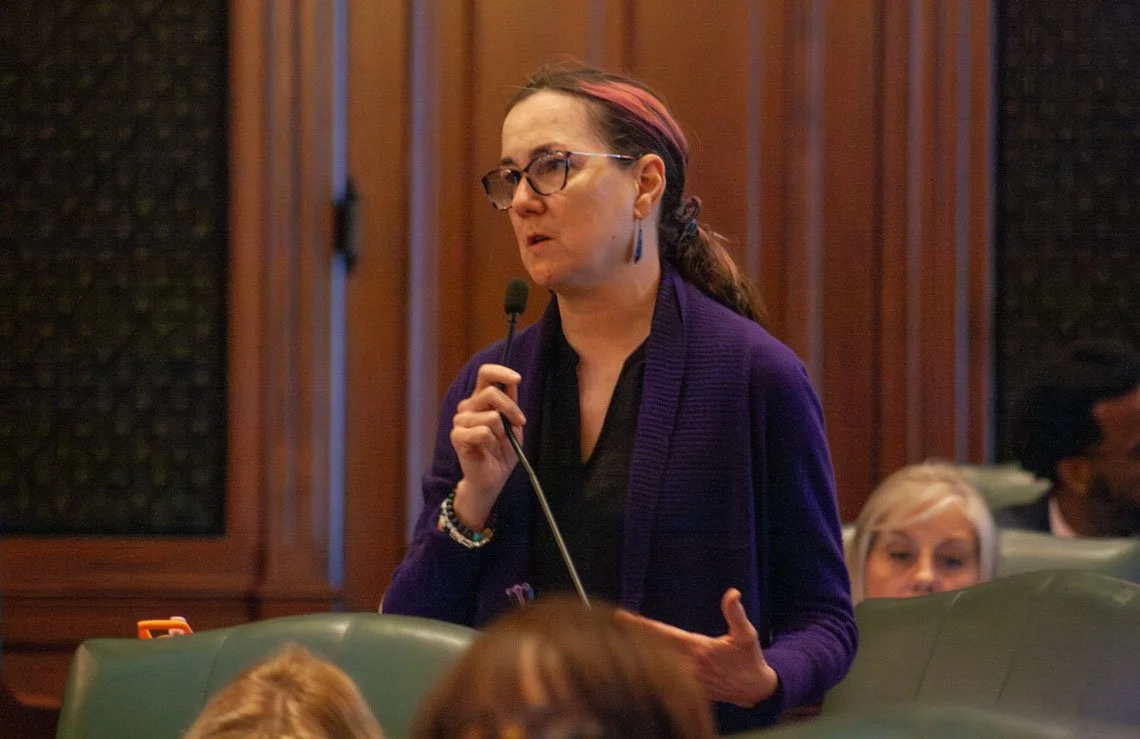
 State Rep. Kelly Cassidy, D-Chicago, on the House floor in April 2026. (Capitol News Illinois photo by Jenna Schweikert)

MCPD Officers Handle Nearly 500 Incidents In May

Based on the monthly activity summary released by Mt. Carmel Police Chief Erin Peach, officers responded to 493 incidents during the month of May. The report shows a wide range of law enforcement activity, including traffic enforcement, criminal investigations, security checks, and community policing efforts.

Traffic-related arrests included 11 cases involving uninsured motor vehicles, nine arrests for driving while license suspended or revoked, six registration violations, five speeding arrests, and four other moving violations.

Drug-related arrests totaled three, including one arrest each for possession of a controlled substance, possession of methamphetamine, and possession of drug paraphernalia. Alcohol-related arrests included two DUI cases.

Among other criminal arrests, officers reported three weapon offenses, three domestic battery arrests, two criminal damage to property cases, and one arrest each for burglary, vehicle theft, criminal trespass, and ordinance violations.

The department also issued 105 warnings, investigated eight traffic accidents, served two warrants, and handled one missing person case. Officers completed four sex assault or child abuse transfers and responded to 14 animal complaints and 13 mental health incidents.

Community policing efforts remained active, with officers conducting 68 hospital security checks, 49 residential security checks, 30 business security checks, and participating in six community relations events. The department also issued 17 new golf cart stickers, renewed eight others, and completed five new bicycle registrations.

Mayor Remembers Steven Haase, Requests Prayers for Grace Thacker

Mount Carmel Mayor Joe Judge opened Monday night’s City Council meeting by asking the community to keep two local families in their thoughts and prayers following recent tragedies involving young residents.

Judge first remembered 21-year-old Steven Haase, who lost his life in a grain bin accident last week in rural Wabash County.

The mayor described Haase as a young man who always carried a smile and never met a stranger.

Judge also extended prayers to Haase’s family, as well as the emergency responders, hospital personnel, EMTs, firefighters, law enforcement officers, and others who were involved in responding to the incident.

The grain bin emergency occurred June 1st near Friendsville Avenue and North 1550 Boulevard. Three people became trapped in a grain bin. Two were able to free themselves, while rescue crews worked for several hours to extricate Haase. He was later pronounced dead at the scene.

During the meeting, Mount Carmel Fire Chief Francis Speth thanked Patoka Township Fire and Rescue for assisting with the response. Speth said the department faced a busy morning, handling two additional calls while rescue operations were underway.

Despite the demands placed on emergency personnel, Speth said mutual aid and teamwork allowed the department to continue providing service to the community while crews remained committed to the grain bin rescue effort.

Judge also asked residents to keep Grace Thacker and her family in their prayers. Thacker was seriously injured in a separate accident within the past two weeks.

The mayor said updates shared by her family on social media indicate she is showing signs of progress in her recovery. Judge also noted that a fundraiser is being planned to help the family with expenses related to her ongoing medical care.

He encouraged the community to continue supporting both families during this difficult time.

Pool Project Making Quick Progress

Construction continues to move forward on Mt. Carmel's new aquatic center, with crews making steady progress on several key phases of the project.

At Monday afternoon's City Council meeting, Mayor Joe Judge reported that plumbing work has been completed in both the deep-end section of the pool and the splash pad area.

Judge said crews began installing rebar this week as work continues on framing the deep end. He expects the deep-end floor to be poured later this week or early next week, after which construction will shift to the pool walls.

The mayor noted that multiple crews are working in coordination on the project. As rebar installation progresses, other contractors continue staging materials and preparing for upcoming phases of construction.

Judge also reported that Garmong Construction remains active at the site and that architectural firm ADG is currently preparing a full-color rendering of the future bathhouse. The rendering is expected to provide residents with a clearer picture of what the completed facility will look like.

Meanwhile, fundraising efforts for the aquatic center continue. Judge reminded residents and businesses that sponsorship opportunities remain available, ranging from naming rights for portions of the facility to the purchase of commemorative bricks that will be incorporated into the sidewalk leading to the aquatic center.

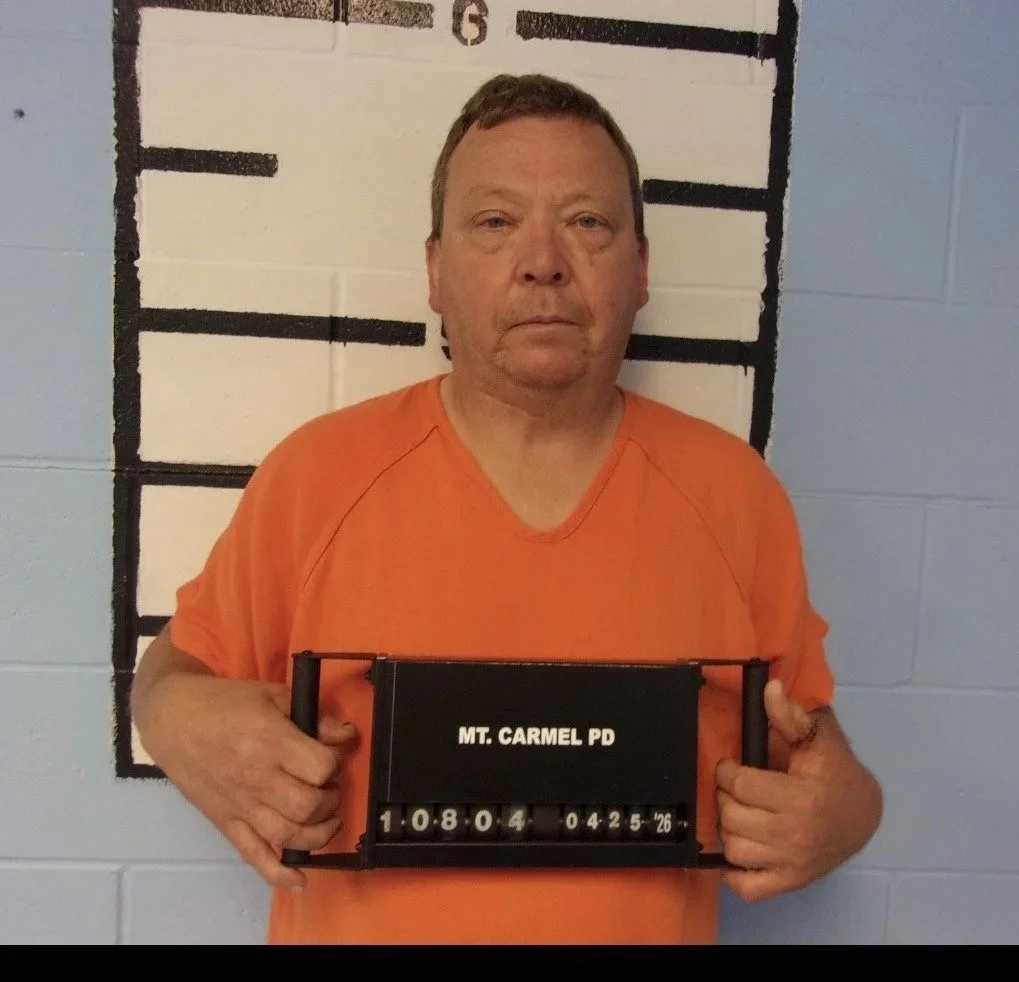
Mt. Carmel Man Pleads Not Guilty To Various Charges

A Wabash County man charged with multiple felony sex offenses involving a child remains in custody following a court hearing Monday afternoon.

Sixty-one-year-old Terry McGee appeared in Wabash County Circuit Court for a preliminary hearing. During the proceedings, McGee told the court he had retained a private attorney, but that attorney had not yet filed an appearance in the case or appeared in court. The court noted the attorney had been in contact with Public Defender William Easton, who continues to represent McGee at this time.

Following the preliminary hearing, the court found probable cause to proceed with the case. McGee waived formal arraignment and entered a plea of not guilty to all charges.

McGee also requested pretrial release. However, after hearing additional information presented by the State, the court denied the request. The judge found McGee's continued detention is necessary to prevent a real and present threat to a specific person or the community and determined that no combination of release conditions would adequately address that threat.

McGee is charged with six counts of aggravated criminal sexual abuse and three counts of criminal sexual assault. According to court records, the alleged victim is under the age of 10, and the alleged offenses are reported to have occurred between January 2024 and January 2026.

All previously scheduled court dates remain in place. McGee remains lodged in the Wabash County Jail pending further proceedings.

As with all criminal cases, McGee is presumed innocent unless proven guilty in a court of law.

Judge Explains City Code Enforcement Process

Mount Carmel Mayor Joe Judge is reminding residents that the city's tall grass enforcement process is complaint-driven and not the result of city employees actively searching for violations.

During a recent appearance on WSJD, Judge said Code Enforcement Officer Heath Reed investigates properties only after a complaint is received from a resident.

Judge noted that when a property owner receives a letter regarding tall grass, it means someone has contacted City Hall about the condition of the property. The city has an ordinance regulating grass height, but property owners are given 15 days after receiving a notice to address the issue.

The mayor explained that during periods of rapid growth, grass can become significantly taller during that 15-day window, making some properties appear worse by the time action can be taken.

Residents with concerns about tall grass, junk, debris, or standing water are encouraged to contact City Hall and request a work order or leave a message for Reed. Judge emphasized that such complaints are handled through the code enforcement process rather than by the mayor's office.

In addition to tall grass, Reed also investigates nuisance conditions that can create health and safety concerns, including standing water that may attract mosquitoes. Judge cited examples such as discarded toilets holding water and neglected swimming pools.

Judge also referenced a recent complaint involving a vacant property across from Wabash General Hospital. Because of the excessive grass height, the city proceeded with mowing the property and will bill the owner for the work.

The mayor said the city's goal is to address complaints fairly while helping maintain neighborhood appearance and public health standards.