
Bill creates gender-affirming, reproductive care protections for out-of-state foster placements

Republicans accuse majority party of ideological overreach

By HANNAH WEBSTER
Medill Illinois News Bureau
news@capitolnewsillinois.com

Article Summary

  • During the last week of the legislative session, the Illinois legislature passed a bill that would require the Department of Children and Family Services to make special considerations of reproductive and gender-affirming healthcare before an out-of-state foster placement. 

  • Youth age 8 or older would be able to object to out-of-state placements. 

  • Advocates argue that the legislation will secure legal protections for Illinois children if they are placed in other states.

  • Republican legislators fought the bill, arguing it infringes on other states and might deepen administrative burdens on DCFS.  

This summary was written by the reporters and editors who worked on this story.

SPRINGFIELD — A bill that would require the Illinois Department of Children and Family Services to consider access to reproductive and gender-affirming healthcare before placing foster children out of state passed the legislature during the last week of session. 

The legislation, if signed into law, will require that DCFS conduct individualized risk assessments before placing a foster child in another state. The assessment would specifically consider whether the youth or their caregiver could face criminal charges for healthcare that is legal in Illinois or whether the youth would lose access to healthcare that is legal in Illinois. 

Sponsored by Rep. Kelly Cassidy, D-Chicago, House Bill 4966, came amid federal policy changes that complicate access to reproductive services, including abortions and gender- and sexuality-related healthcare across state lines.  It’s also known as the SECURE Act, short for Safeguards to Ensure Continuity and Uphold Rights and Equity.

“House Bill 4966 is about ensuring that the youth in the care of the state of Illinois retain the rights of residents of the state of Illinois, regardless of where we have to place them,” Cassidy said in an April committee hearing

If DCFS found that a child may struggle to obtain healthcare in an out-of-state placement, the department must document a plan to mitigate that risk, such as coordinating with out-of-state or Illinois providers. If the department cannot do so, and the child does not want to be placed in that state, DCFS must decline the placement.  

According to DCFS, 68 foster children are currently placed in other states, though the agency didn’t break that number down by age. HB 4966 would only apply to children 8 years old or older. Cassidy said it’s also about giving children a say in where they’re placed.  

“In a state like ours, where foster youth lack the vital safeguard of a statutorily guaranteed right to client-directed legal representation in abuse and neglect proceedings, Illinois foster youth are at a serious disadvantage,” she said during House floor debate. 

Often, children placed outside of Illinois are sent to live with family members, said Nora Collins-Mandeville, director of the youth & family policy project at the ACLU of Illinois. The bill does not aim to restrict out-of-state placements, Collins-Mandeville said. Instead, it requires that DCFS attempt to plan ahead and requires obtaining the child’s support for a placement when the department cannot ensure access to certain kinds of healthcare. 

“We wanted to make sure that the child has not just a voice, but that people actually are listening to that voice,” Collins-Mandeville said.” So if the child is saying, ‘I don't want to go,’ and the department can’t mitigate that risk, the department cannot place that child in that situation.”

Republican opposition

Republicans pushed back against the bill, citing overreach beyond state lines. 

“This bill is basically set up to provide conflict between Illinois' most expansive laws dealing with gender-affirming care, abortion, those kinds of things, with states that may be somewhat more restrictive,” Rep. Steve Reick, R-Woodstock, said during floor debate. 

Rep. Jed Davis, R-Yorkville, who has frequently pushed for reform at DCFS, said in an interview that the department should prioritize existing responsibilities, rather than adopting new policies.  

“Before we start shoving all of our preferred philosophical beliefs onto a department, let’s make sure they can actually get their day-to-day operation job done adequately,” Davis said.  

As a foster parent for over a decade, Davis said he supports requiring risk assessments to keep children safe, but he opposed the bill. 

“It has some really good things in there,’’ he said. But, he added, “The root underneath the bill is very ideological and trying to bring the beliefs that are happening in the dome of Springfield, and push them onto neighboring states.” 

Collins-Mandeville said opponents of the bill frequently argued that it would “export Illinois laws” to other states. However, she said, the bill is instead aimed at ensuring “an Illinois child doesn't lose access to Illinois legal protections.” 

The bill would also require DCFS to protect a child from unnecessary and unapproved disclosure of any personal information that could be linked to the child’s sexual orientation or other protected characteristics like gender. It also establishes guidelines for the department to share that information if needed. 

The bill passed both the House 35-19 and Senate 74-30 with only Democratic support in the final days of the Illinois General Assembly’s session. The bill has an immediate effective date, though some of the administrative functions and rulemaking would happen over the next two years if it’s signed by the governor. 

Hannah Webster is an undergraduate student in journalism with Northwestern University’s Medill School of Journalism, Media, Integrated Marketing Communications, and a fellow in its Medill Illinois News Bureau working in partnership with Capitol News Illinois.

Capitol News Illinois is a nonprofit, nonpartisan news service that distributes state government coverage to hundreds of news outlets statewide. It is funded primarily by the Illinois Press Foundation and the Robert R. McCormick Foundation.
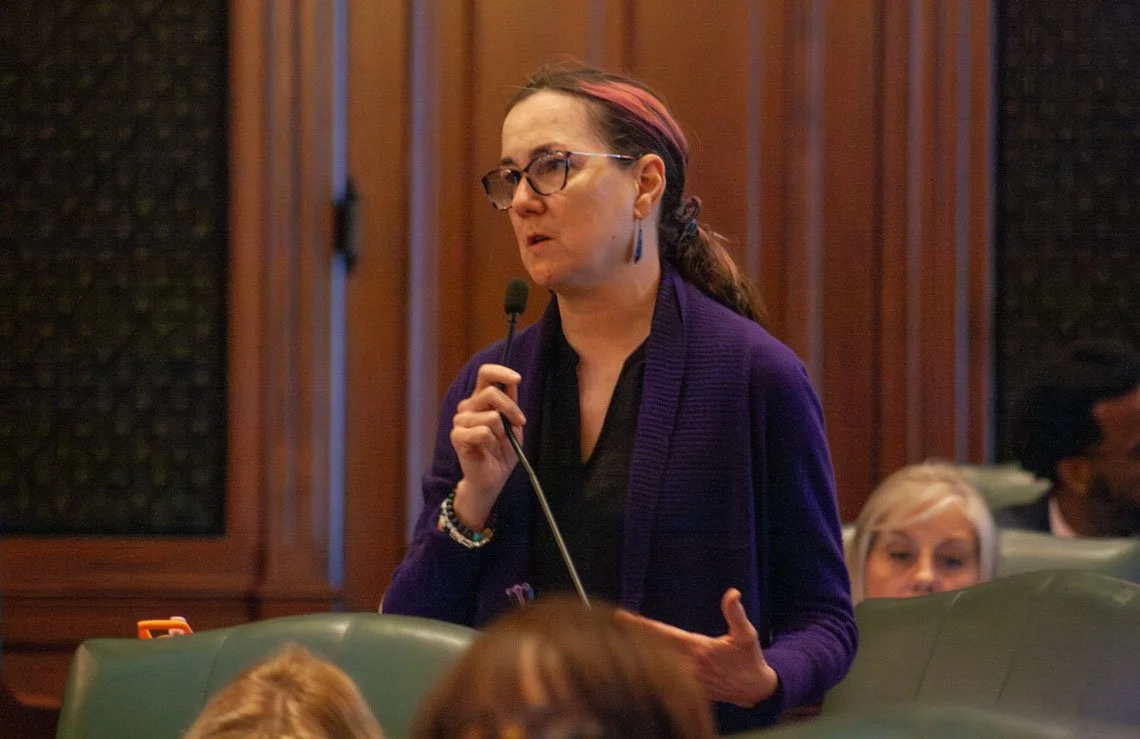
 State Rep. Kelly Cassidy, D-Chicago, on the House floor in April 2026. (Capitol News Illinois photo by Jenna Schweikert)

MCPD Officers Handle Nearly 500 Incidents In May

Based on the monthly activity summary released by Mt. Carmel Police Chief Erin Peach, officers responded to 493 incidents during the month of May. The report shows a wide range of law enforcement activity, including traffic enforcement, criminal investigations, security checks, and community policing efforts.

Traffic-related arrests included 11 cases involving uninsured motor vehicles, nine arrests for driving while license suspended or revoked, six registration violations, five speeding arrests, and four other moving violations.

Drug-related arrests totaled three, including one arrest each for possession of a controlled substance, possession of methamphetamine, and possession of drug paraphernalia. Alcohol-related arrests included two DUI cases.

Among other criminal arrests, officers reported three weapon offenses, three domestic battery arrests, two criminal damage to property cases, and one arrest each for burglary, vehicle theft, criminal trespass, and ordinance violations.

The department also issued 105 warnings, investigated eight traffic accidents, served two warrants, and handled one missing person case. Officers completed four sex assault or child abuse transfers and responded to 14 animal complaints and 13 mental health incidents.

Community policing efforts remained active, with officers conducting 68 hospital security checks, 49 residential security checks, 30 business security checks, and participating in six community relations events. The department also issued 17 new golf cart stickers, renewed eight others, and completed five new bicycle registrations.

Mayor Remembers Steven Haase, Requests Prayers for Grace Thacker

Mount Carmel Mayor Joe Judge opened Monday night’s City Council meeting by asking the community to keep two local families in their thoughts and prayers following recent tragedies involving young residents.

Judge first remembered 21-year-old Steven Haase, who lost his life in a grain bin accident last week in rural Wabash County.

The mayor described Haase as a young man who always carried a smile and never met a stranger.

Judge also extended prayers to Haase’s family, as well as the emergency responders, hospital personnel, EMTs, firefighters, law enforcement officers, and others who were involved in responding to the incident.

The grain bin emergency occurred June 1st near Friendsville Avenue and North 1550 Boulevard. Three people became trapped in a grain bin. Two were able to free themselves, while rescue crews worked for several hours to extricate Haase. He was later pronounced dead at the scene.

During the meeting, Mount Carmel Fire Chief Francis Speth thanked Patoka Township Fire and Rescue for assisting with the response. Speth said the department faced a busy morning, handling two additional calls while rescue operations were underway.

Despite the demands placed on emergency personnel, Speth said mutual aid and teamwork allowed the department to continue providing service to the community while crews remained committed to the grain bin rescue effort.

Judge also asked residents to keep Grace Thacker and her family in their prayers. Thacker was seriously injured in a separate accident within the past two weeks.

The mayor said updates shared by her family on social media indicate she is showing signs of progress in her recovery. Judge also noted that a fundraiser is being planned to help the family with expenses related to her ongoing medical care.

He encouraged the community to continue supporting both families during this difficult time.

Pool Project Making Quick Progress

Construction continues to move forward on Mt. Carmel's new aquatic center, with crews making steady progress on several key phases of the project.

At Monday afternoon's City Council meeting, Mayor Joe Judge reported that plumbing work has been completed in both the deep-end section of the pool and the splash pad area.

Judge said crews began installing rebar this week as work continues on framing the deep end. He expects the deep-end floor to be poured later this week or early next week, after which construction will shift to the pool walls.

The mayor noted that multiple crews are working in coordination on the project. As rebar installation progresses, other contractors continue staging materials and preparing for upcoming phases of construction.

Judge also reported that Garmong Construction remains active at the site and that architectural firm ADG is currently preparing a full-color rendering of the future bathhouse. The rendering is expected to provide residents with a clearer picture of what the completed facility will look like.

Meanwhile, fundraising efforts for the aquatic center continue. Judge reminded residents and businesses that sponsorship opportunities remain available, ranging from naming rights for portions of the facility to the purchase of commemorative bricks that will be incorporated into the sidewalk leading to the aquatic center.

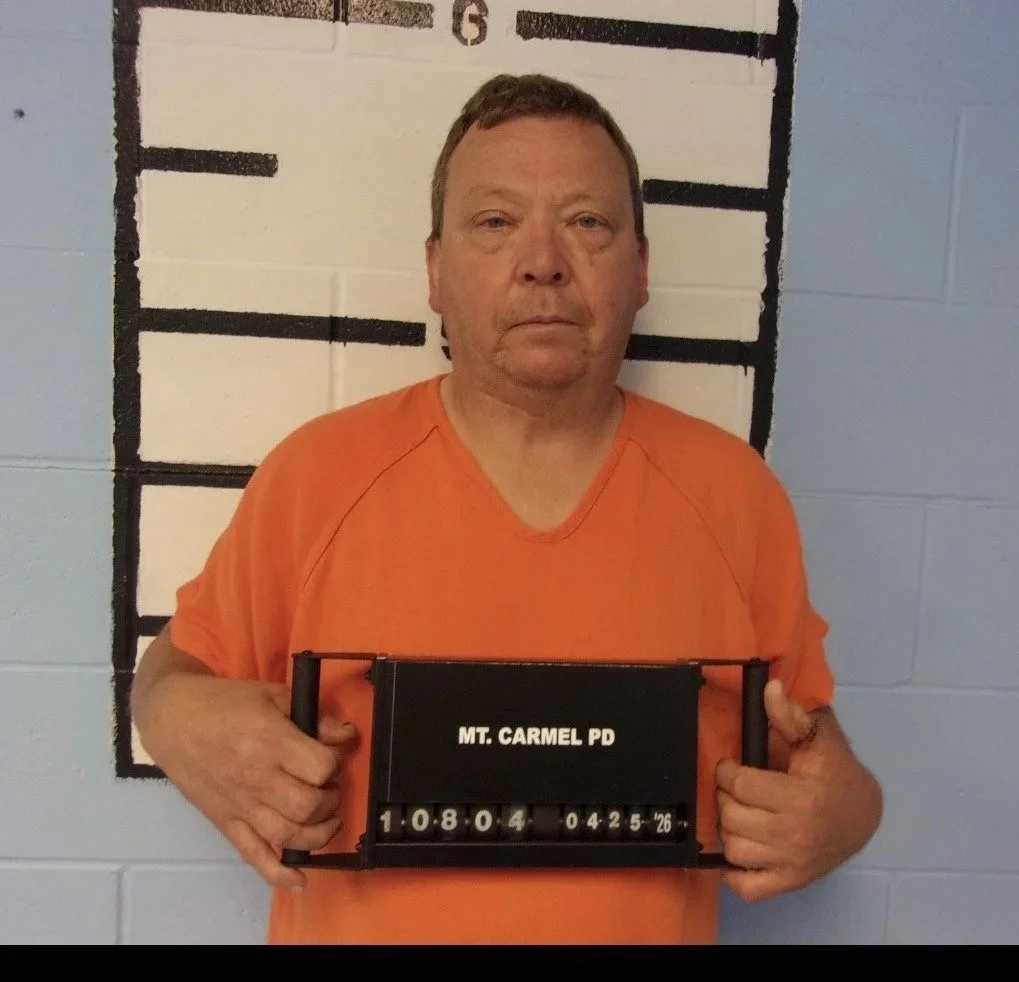
Mt. Carmel Man Pleads Not Guilty To Various Charges

A Wabash County man charged with multiple felony sex offenses involving a child remains in custody following a court hearing Monday afternoon.

Sixty-one-year-old Terry McGee appeared in Wabash County Circuit Court for a preliminary hearing. During the proceedings, McGee told the court he had retained a private attorney, but that attorney had not yet filed an appearance in the case or appeared in court. The court noted the attorney had been in contact with Public Defender William Easton, who continues to represent McGee at this time.

Following the preliminary hearing, the court found probable cause to proceed with the case. McGee waived formal arraignment and entered a plea of not guilty to all charges.

McGee also requested pretrial release. However, after hearing additional information presented by the State, the court denied the request. The judge found McGee's continued detention is necessary to prevent a real and present threat to a specific person or the community and determined that no combination of release conditions would adequately address that threat.

McGee is charged with six counts of aggravated criminal sexual abuse and three counts of criminal sexual assault. According to court records, the alleged victim is under the age of 10, and the alleged offenses are reported to have occurred between January 2024 and January 2026.

All previously scheduled court dates remain in place. McGee remains lodged in the Wabash County Jail pending further proceedings.

As with all criminal cases, McGee is presumed innocent unless proven guilty in a court of law.

Judge Explains City Code Enforcement Process

Mount Carmel Mayor Joe Judge is reminding residents that the city's tall grass enforcement process is complaint-driven and not the result of city employees actively searching for violations.

During a recent appearance on WSJD, Judge said Code Enforcement Officer Heath Reed investigates properties only after a complaint is received from a resident.

Judge noted that when a property owner receives a letter regarding tall grass, it means someone has contacted City Hall about the condition of the property. The city has an ordinance regulating grass height, but property owners are given 15 days after receiving a notice to address the issue.

The mayor explained that during periods of rapid growth, grass can become significantly taller during that 15-day window, making some properties appear worse by the time action can be taken.

Residents with concerns about tall grass, junk, debris, or standing water are encouraged to contact City Hall and request a work order or leave a message for Reed. Judge emphasized that such complaints are handled through the code enforcement process rather than by the mayor's office.

In addition to tall grass, Reed also investigates nuisance conditions that can create health and safety concerns, including standing water that may attract mosquitoes. Judge cited examples such as discarded toilets holding water and neglected swimming pools.

Judge also referenced a recent complaint involving a vacant property across from Wabash General Hospital. Because of the excessive grass height, the city proceeded with mowing the property and will bill the owner for the work.

The mayor said the city's goal is to address complaints fairly while helping maintain neighborhood appearance and public health standards.

County Board Holds Brief Meeting

Monday afternoon's meeting of the Wabash County Commissioners was a brief affair, with little business on the agenda and few county officials in attendance.

County Clerk Janet Will was the only elected county office holder present for the meeting. Treasurer Angela Broster, who was absent, was the only other office holder to submit a report.

Commission Chairman Tim Hocking reported that last week's Board of Review sessions were completed successfully, with commissioners noting the process went smoothly and most issues were resolved without difficulty.

Broster's report noted that mobile home tax bills were mailed this past Wednesday and will be due August 7th. Residents may make payments at the Treasurer's Office or use the drop box outside the courthouse. Broster also reported that excess fees totaling $38,866.40 from the 2024-25 tax cycle were transferred to the county's general fund.

Commissioners also completed their required six-month review of closed session minutes and voted to keep those records sealed.

The board heard a brief presentation from Kevin Kern regarding the Hope Trust conference scheduled for July. Kern encouraged county officials to attend sessions focused on employee health insurance and benefit costs.

In correspondence, Will reported that Animal Control handled 14 dogs, 12 skunks, nine raccoons, one snake, and one bat during May while logging 1,650 miles. She also informed commissioners that the Circuit Clerk's audit had been completed and filed with the County Clerk's Office.

With no old business and no executive session needed, the commissioners adjourned after a relatively short meeting.

MCFD Receives FEMA Funding For Turnout Equipment

The Mount Carmel Fire Department has been awarded federal funding to help replace critical firefighter safety equipment.

During the most recent City Council meeting, Fire Chief Francis Speth announced the department recently received a FEMA grant that will fund the purchase of five complete sets of turnout gear.

Speth said the grant is valued at approximately $25,700 and will provide firefighters with new protective equipment used when responding to fires and other emergency incidents.

The chief noted that receiving the gear will take some time. Firefighters must first be measured for proper sizing, and the manufacturing process is expected to take four to five months. Speth estimated it could be around six months before the new gear is delivered and placed into service.

Turnout gear includes the specialized coats, pants, boots, helmets, and other protective equipment firefighters wear while operating in hazardous conditions.

Speth said the FEMA funding will help ensure Mount Carmel firefighters have access to modern, properly fitting safety equipment without placing additional costs on local taxpayers.

The chief made the announcement as part of his report to the council and said there were no other major updates from the fire department.

Champ Closing Continues To Impact Local Jobless Rates

The latest unemployment figures from the Illinois Department of Employment Security show the continued impact of the Champion Laboratories closure in Albion, although Edwards County's jobless rate improved significantly from the previous month.

Edwards County posted the highest unemployment rate in the region at 11 percent in April, down from 14.9 percent in March but well above the 3.2 percent rate recorded a year ago. The county's unemployment rate has increased 7.8 percentage points over the past year.

Wabash County's unemployment rate stood at 4.6 percent in April, an improvement from 5.7 percent in March but up from 3 percent one year ago. Lawrence County recorded a 4.6 percent unemployment rate, while Richland County came in at 3.9 percent. Wayne County posted a rate of 5.2 percent.

Across the Olney-Mount Carmel labor market area, total nonfarm payroll employment declined by 950 jobs compared to April of last year.

The largest losses occurred in the manufacturing sector, which shed 650 jobs, reflecting the impact of the Champion Laboratories closure in Edwards County. Additional declines were reported in private education and health services, trade, transportation and utilities, government, financial activities, leisure and hospitality, and professional and business services.

The only sector posting year-over-year job growth was natural resources and mining, which added 25 jobs. Employment levels remained unchanged in construction, information services, and other services.

Despite recent improvements from March levels, unemployment rates throughout the area remain above where they were a year ago, with Edwards County continuing to experience the most significant effects from the loss of manufacturing jobs.

Cell-phone ban, loosening foreign language requirements among education bills to pass

Lawmakers expand in-state tuition, amend child care licensing

By PETER HANCOCK
Capitol News Illinois
phancock@capitolnewsillinois.com

Article Summary 

  • Several educations measures were among the hundreds of bills that cleared the General Assembly before it adjourned on June 1. 

  • Schools will have to adopt policies next year banning cell phones in the classroom under a bill Gov. JB Pritzker says he will sign. 

  • Another measure allows students to fulfill foreign language requirements by taking career and technical education courses. 

  • Lawmakers also expanded in-state tuition and amended child care licensing laws. 

This summary was written by the reporters and editors who worked on this story.

Gov. JB Pritzker says he intends to sign legislation imposing a statewide ban on cell phones and other wireless communication devices during instructional time in public schools and charter schools.

Although many districts in Illinois have already adopted more stringent bans of their own, Senate Bill 2427 would require all school boards to adopt policies that at least meet a minimum standard, beginning in the upcoming 2026-2027 school year.

That includes prohibiting students from using wireless devices during the regular school day, including instructional time, recess, lunch and time passing between classes. But it does not include before- and after-school activities or off-campus learning activities.

The bill provides a variety of exceptions to the ban such as when their use is needed for the student’s health management, for special education purposes or because the student is also a caregiver for a family member.

Wireless communication devices are defined as any portable wireless device that can provide voice, messaging or other data communication between two or more parties. That includes cell phones, tablet computers, laptop computers, gaming devices and wearable devices such as smart watches.

“Every parent and educator knows the damage that unchecked screen time and social media can do to our children and how disruptive they can be in school,” Pritzker said in a statement. “The bipartisan support for this effort reflects the urgency educators and families across Illinois feel.”

The bill prohibits schools from using fines, fees or law enforcement officers to enforce the ban. 

The bill passed the House in April, 102-3. The Senate concurred in the House version of the bill Sunday, 55-2.


Foreign language requirement

Students entering high school in 2028 will not necessarily have to complete two years of foreign language as a condition of graduating, under another bill headed to Pritzker’s desk. Instead, they’ll have the option of taking a foreign language or an approved career and technical education course.

Senate Bill 3070 was one of at least two bills lawmakers considered in the final days of the legislative session that would amend the foreign language requirement that lawmakers approved in 2021. It is scheduled to take effect for students entering ninth grade in the 2028-2029 school year.

Another proposal, a Senate amendment to House Bill 4795, would have canceled the foreign language requirement entirely. It passed the Senate unanimously on Saturday but was not taken up in the House.

In debate over both bills, supporters said they supported the concept of emphasizing foreign languages as part of the high school curriculum. But they conceded there simply aren’t enough foreign language teachers available in Illinois to make the classes available to every student in every high school.

“What we’re finding is that teacher shortage is still a big challenge in our state and we do not have enough foreign language teachers, and we want to put more effort in workforce development while we’re building that pool,” Senate Majority Leader Kimberly Lightford, D-Westchester, said on the Senate floor. 

SB 3070 passed the Senate Tuesday, May 28, by a vote of 58-0. It passed the House Sunday, May 31, on a vote of 117-0 with four members voting “present.”


Childcare licensing 

A bill that paves the way for the new Department of Early Childhood to take over the licensing and regulation of childcare facilities cleared the Senate Saturday and will soon be considered by the House.

The bill has been the subject of intense debate and negotiation since the session began. It’s considered must-pass legislation because the authority already scheduled under current law to transfer to the new agency on July 1. The new bill spells out many of the rules for how the agency is to carry out that authority.

For example, under the bill, the term “day care,” as it relates to the care of children, will be changed in all statutes to “early care and education.” It also changes the word “facility” to “provider.”

House Bill 3595 sets out standards for the types of providers that have to be licensed in order to operate. It also defines the types of smaller providers that are exempt from licensing requirement but which still must register with the state as “recognized alternative providers” whose employees still must undergo background checks.

It also spells out the types of programs that are exempt from any licensing or registration requirements, such as in-home providers who serve three or fewer children, school-based extracurricular programs, activities sponsored by park districts and providers that are attached to retail shopping facilities, health spas or churches that provide care for only a few hours a day while the parent remains on the premises.

The bill passed the Senate on Saturday 50-7, and the House 80-33 on Sunday.


In-state tuition expansion

More students could qualify for in-state tuition at Illinois colleges and universities under a bill that will soon be sent to Gov. JB Pritzker.

House Bill 5093 would loosen one of the requirements for paying in-state tuition by making it available to students who attended Illinois high schools for at least three years, even if they established residency outside the state before enrolling.

If approved by Pritzker, the bill would take effect immediately.

The bill marks the latest in a series of measures Illinois has enacted in recent years aimed at making higher education more affordable for Illinois residents and more attractive to nonresidents.

Nationwide, many states, including Illinois, have allowed their institutions to enter reciprocal agreements with neighboring states to offer either in-state or discounted out-of-state tuition. Illinois is also one of several states that offers in-state tuition to noncitizens who are residents of the state and graduate from local high schools, regardless of their legal status as immigrants.

In recent months, however, the Trump administration has begun suing states over such policies as part of its immigration enforcement crackdown.

During debate on the bill, Republicans in both chambers tried to renew arguments against offering in-state tuition to noncitizens. But supporters of the bill noted that none of the public colleges or universities in Illinois had expressed opposition.

“It isn’t just one group who would benefit from this measure,” Sen. Celina Viallanueva, D-Chicago, the bill’s chief Senate sponsor, said in a statement. “DACA, low-income, first generation, minority and transgender students would no longer have to worry about facing higher tuition costs just for moving away before enrolling in college — a choice that youth rarely get a say in.” 

The bill passed the Senate on Saturday, 38-19. It passed the House Sunday, 70-40.

Capitol News Illinois is a nonprofit, nonpartisan news service that distributes state government coverage to hundreds of news outlets statewide. It is funded primarily by the Illinois Press Foundation and the Robert R. McCormick Foundation.

Most public school students in Illinois will no longer be allowed to use their cell phones in school next year under legislation that Gov. JB Pritzker says he intends to sign. (Capitol News Illinois photo by Peter Hancock)