Illinois’ ‘swipe fee’ law on the brink after another delay, adverse court ruling

Banks get upper hand in yearslong fight after federal rule changes, court interpretation

By JERRY NOWICKI
Capitol News Illinois
jnowicki@capitolnewsillinois.com

Article Summary 

  • The legislative and judicial branches dealt a pair of blows to a state law banning “swipe fees” being applied to the tax and tip portion of a debit or credit card transaction. 

  • Lawmakers delayed the ban for another year, until July 1, 2027. 

  • But a federal judge also issued a permanent injunction against it, citing federal rules that were recently rewritten by the Office of the Comptroller of the Currency. 

  • The injunction only applies to national banks, federal savings associations, payment networks and out-of-state banks. It doesn’t apply to state-chartered institutions, causing further uncertainty. 

  • The latest moves leave Illinois’ first-in-the-nation law in both legislative and judicial limbo.

This summary was written by the reporters and editors who worked on this story.

SPRINGFIELD — An Illinois law banning “swipe fees” on taxes and tips — already delayed twice by lawmakers — appears to be on life support after a federal judge that once permitted it issued a permanent injunction against it this week. 

U.S. District Judge Virginia Kendall issued the injunction just hours after the General Assembly approved a further one-year delay to the Interchange Fee Prohibition Act — subject of the ongoing “Credit Card Chaos” advertising campaign — before adjourning its spring session. 

It’s the latest development in a yearslong fight between retailers and financial institutions about a fee that’s levied on every credit and debit card transaction. 

Each time a shopper swipes their credit or debit card, it sets off a complicated string of payments between banks. The retailer’s bank pays an “interchange fee,” typically around 1-2% of the transaction cost, to the consumer’s bank. The fees include both a set amount and a percentage of the transaction, but the credit card companies, namely Visa and Mastercard, control how they’re calculated.

The Illinois law would have prohibited financial institutions from applying the fee to the tax and tip portion of bills. Banks and retailers have estimated it would affect $120 million to $200 million in revenue or more each year — to the benefit of retailers and chagrin of banks. Illinois would be the only place where such a law was implemented. 

The law was slated to take effect July 1 after already being postponed from its 2025 effective date. If Gov. JB Pritzker signs the latest delay, its effective date would be July 1, 2027.

But it’s Kendall’s Monday ruling that casts the measure into further doubt.

Judicial history

Kendall in February ruled that the law could take effect, based largely on her interpretation of administrative rules written by the federal Office of the Comptroller of the Currency, an independent subsection of the U.S. Treasury. 

Kendall had ruled that because the fees are set by third parties — the card companies — they’re not preempted by the federal laws and regulations that give banks wide latitude to determine their own fees. 

But the OCC, in a pair of April filings, rewrote the language at question and issued an order specifically preempting Illinois’ law. 

“Although the OCC believes that (Section) 7.4002 (the section discussed in the lawsuit) already allows national banks to impose fees that are set by a third party, the OCC is revising (Section) 7.4002 to make that explicit and resolve any uncertainty about the scope of the regulation,” the agency wrote in the filing in direct response to Kendall’s ruling. 

Read the filings: Preemption of Illinois law | Restatement of National Banking Act

At the time, the case was before the 7th Circuit Court of Appeals. But the court sent it back to Kendall for a reinterpretation of the new OCC filings. Addressing that change, Kendall wrote this week: “It is obvious from the face of the new rule that the modified language tees up an express conflict with the IFPA.”

Ultimately, Kendall decided Illinois’ law is now preempted by the federal rules, at least as it pertains to national banks, federal savings associations, payment networks and out-of-state banks. 

The Electronic Payments Coalition — the bank-backed entity that’s been running the “Credit Card Chaos” ads — welcomed the ruling. But they warned it further creates an unlevel playing field. 

“Even with this decision, credit unions and Illinois-chartered banks remain subject to IFPA, creating ongoing uncertainty and the risk of inconsistent treatment for parties in the same transaction,” the group said in a statement. 

Kendall had previously issued a similar injunction on a portion of the law regarding data collection, applying it to only some financial entities. 

What happens next isn’t immediately clear, but further judicial review is almost guaranteed, with both sides weighing their legal options. 

Legislative history, debate

The law was enacted two years ago at the behest of the Illinois Retail Merchants Association. 

Pritzker and lawmakers in 2024 agreed to raise about $101 million in revenue to plug a budget hole by putting a $1,000 monthly cap on the “retailer’s exemption,” a tax break retailers claim for being the state’s de facto sales tax collectors.

Late in the legislative process, IRMA successfully lobbied for the long-sought tax and tip exemption to alleviate the financial impact of the exemption cap for retailers.  

The financial institutions argue the electronic payment system as it exists today can’t segregate the tax and tip portion of a transaction, which could result in “credit card chaos” in Illinois if the law was to become effective.

Instead of complying, according to the coalition’s literature, the card companies could just stop processing cards altogether in Illinois. They could also stop processing tax and tip portions or require two separate swipes for the subtotal and the tax and tip portion of bills.

“Electronic payments rely on a highly interconnected network that requires a uniform national standard,” the Electronic Payments Coalition said in a statement. “We will continue working through the courts and with policymakers to ensure that all participants in the payments system are treated consistently, so the customers they serve will also be protected from the harm IFPA will cause.”

But Rob Karr, president and CEO of IRMA, has forcefully disputed the “chaos” claim. 

“This industry had had two years to figure this out. Instead of using their vast resources to solve problems, they're doing all they can to distract, distort, delay and demonize,” Karr testified in a House committee over the weekend. 

The Merchant Payments Coalition, a group of retailers and similar businesses that advocates on credit and debit card issues, argued the new rule gives financial institutions dangerously broad fee-setting authority.

“The revised language could apply broadly to numerous categories of consumer financial charges, including late fees, overdraft or over-limit fees, annual card fees, ATM fees and similar charges,” the MPC said in a statement. “By eliminating the expectation of independent competitive pricing, the rule risks encouraging industry-wide fee standardization at the expense of consumers and merchants alike.”

While Kendall said Illinois’ law is indeed preempted for certain institutions, she also faulted the OCC for using emergency authority to implement new rules. And she criticized the order specifically preempting Illinois’ law, writing that much of the logic contained in it “perches atop the catch-all justification of this is how things are done around here.”

“What the Order’s argument overlooks, however, is that the IFPA does not impede national banks’ ability to participate in card networks, nor does it require them to engage in “costly negotiations” to maintain that participation,” Kendall wrote. “Instead, it reduces the portion of a transaction upon which a fee could be calculated.” 

Capitol News Illinois is a nonprofit, nonpartisan news service that distributes state government coverage to hundreds of news outlets statewide. It is funded primarily by the Illinois Press Foundation and the Robert R. McCormick Foundation.
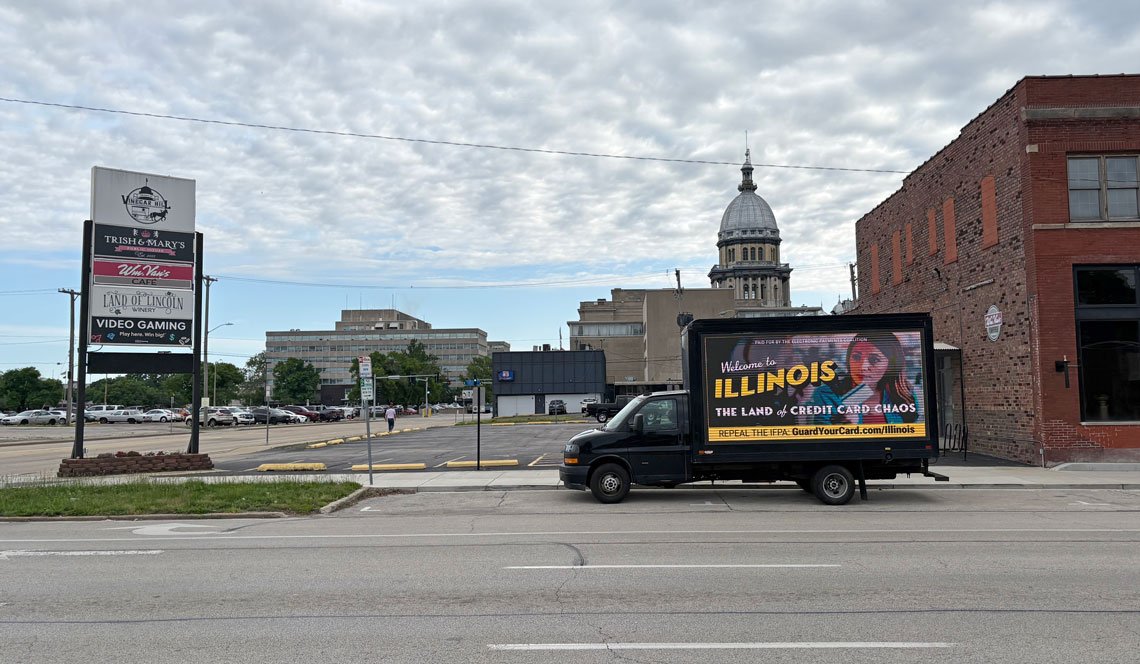
A “Credit Card Chaos” ad appears on a drivable billboard a few blocks from the Illinois Capitol during the legislature’s final stretch. The Illinois law that it targets suffered a pair of setbacks this week. (Capitol News Illinois photo by Jerry Nowicki)
Illinois bill limits how social media companies can target feeds to children

Article Summary

  • A bill to protect children online and limit their access to addictive social media features passed both chambers on Monday and will soon head to the governor’s desk.

  • The bill is an initiative from Gov. JB Pritzker, and he has indicated he’ll sign it. Pritzker first raised the idea in his February budget address, saying it was a top concern he’s heard from Illinoisans.

  • The bill would require social media companies to verify a child’s age on the device’s operating system and use stricter features for minors like limiting location-sharing and nighttime notifications.

This summary was written by the reporters and editors who worked on this story.

SPRINGFIELD — Lawmakers on the final day of the General Assembly passed a bill to regulate how minors interact with social media and other online platforms to make them less addictive.

The goal of House Bill 5511, the Children’s Online Social Media Safety Act, is to prevent children under the age of 18 from being exposed to harmful content and addictive features by requiring social media companies to confirm a user’s age through the device’s operating system.

The bill doesn’t prevent children from downloading or using social media apps. During device set-up, parents would set the child’s age, which would adjust certain design features in apps such as algorithmic feeds, the visibility of the child’s profile and what media can be shown to them.

The bill passed the Senate unanimously on Monday with a vote of 57-0. It passed the House a second time on Monday with a 113-0 vote.

Gov. JB Pritzker proposed the bill during his February budget address, and he celebrated its passage on Monday and said he would sign it.

“I am proud the Illinois General Assembly passed the Children’s Online Social Media Safety Act, marking an important milestone in our efforts to improve kids’ safety and privacy online, mitigate the harmful effects of social media on mental and physical health, and prevent financial scamming,” Pritzker said in a statement.

Efforts to pass some kind of measure in Illinois have been ongoing for a few years.

“This legislation is about recognizing a simple reality: children are not miniature adults,” Sen. Willie Preston, D-Chicago, the bill’s sponsor, said at a Saturday committee meeting. “These platforms invest billions of dollars into capturing attention, maximizing engagement, keeping users online for as long as possible. When that system is directed at developing minds, the consequences will be and have proven to be devastating and sadly irreversible.”

The bill previously passed the House in April with a bipartisan vote of 82-27. The Senate version mainly increased privacy protections for minors and altered definitions to target the most harmful platforms.

“While this legislation is not perfect, lawmakers cannot continue waiting for the perfect solution while technology continues to evolve around us,” Sen. Sue Rezin, R-Morris, said in an emailed statement.

She helped work on some of the bill’s language and has advocated for youth social media protections for years.

What’s in the bill

The bill prohibits social media companies from using a minor’s viewing history or data stored on the device to determine what shows up in their feeds.

Instead, feeds for minors will only be allowed to show information the user requested or searched for, or was posted by a creator the user follows. Youths will also be able to see media that is a direct, private message to them.

Under the bill, platforms would be required to establish some default privacy settings for minors, shield a minor’s precise location and limit digital currency transactions. Social sites and apps would also be prohibited from sending notifications between 10 p.m. and 7 a.m.

The Illinois Attorney General’s office would enforce the law, which takes effect in 2028, if signed. Violators would be liable for fines up to $2,500 for each child for unintentional violations and up to $7,500 per child for intentional violations.

Lobbyists for tech companies raised concerns that the bill may violate the First Amendment and warned that it will likely face lawsuits. But the governor’s office said in a Saturday committee that the bill’s language is modeled after legislation in other states that have survived court challenges.

Rep. Jennifer Gong-Gershowitz, the House sponsor, said she doubted social media companies would ever be completely on board.

“I’m not sure we’re ever going to get complete neutrality from social media companies that are going to be asked to comply with this act in order to keep our kids safe from addictive algorithms that are frankly designed to keep them glued to these devices,” she said on the House floor. “But this is an incredibly important measure to address the most dangerous features of these devices, which is that they’re designed to be addictive to children.”

Nationwide effort

As of April, at least 19 states have laws regulating social media for children on the books, though many have been blocked or tied up in court because tech companies claim they violate the First Amendment and privacy rights.

In March, a New Mexico jury determined that Meta, the parent company of Facebook and Instagram, had knowledge the platform harmed children’s mental health and concealed information about child sexual exploitation on its platforms. The company was fined $375 million for violating New Mexico’s  youth social media law.

Capitol News Illinois is a nonprofit, nonpartisan news service that distributes state government coverage to hundreds of news outlets statewide. It is funded primarily by the Illinois Press Foundation and the Robert R. McCormick Foundation.

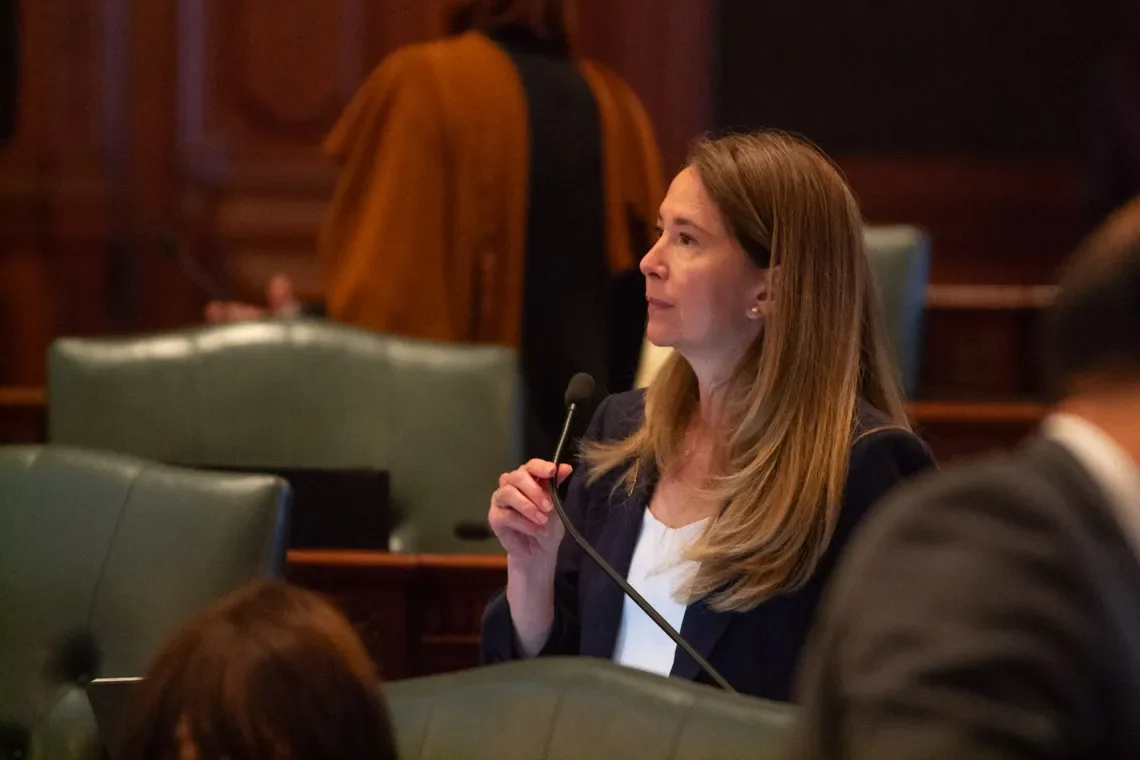
Rep. Jennifer Gong-Gershowitz speaks on the House floor on May 21, 2026. (Capitol News Illinois photo by Jerry Nowicki)
Detention centers, exoneree restitution, foster care protections among final bills to pass 

Dozens of bills passed on the final session days — here are some of the most significant

By NIKOEL HYTREK & JENNA SCHWEIKERT
Capitol News Illinois
news@capitolnewsillinois.com 

Article Summary

  • As lawmakers put their final touches on the budget, they passed dozens of other bills in a late-night session that are now heading to the governor.

  • Among those bills are protections for kids in foster case, limitations on new detention centers and higher restitution for exonerees.

  • Also included is a bill aimed at giving high schoolers the chance to register to vote in school, named for voting rights activist Rev. Jesse Jackson Sr.

This summary was written by the reporters and editors who worked on this story. 

SPRINGFIELD — Nearly 400 bills cleared both chambers of the General Assembly this session, with more than 150 of them moving in the session’s final week. 

Aside from the $56 billion budget package, the wide range of bills would limit where the federal government can build immigrant detention centers, regulate plastic pellets and increase exoneree restitution, among others. 

The measures all await a signature from Gov. JB Pritzker before they can become law. 

Exoneree restitution

House Bill 3663 would increase the amount of money paid to people who have been wrongfully imprisoned in Illinois and bring the state in line with federally recommended minimum standard set in 2004. 

The Court of Claims would now be able to award an exoneree up to $50,000 for each year wrongfully spent in prison and $25,000 for each year wrongfully on parole, probation or a sex offender registry with no upward cap. The court could also pay out associated attorney fees and costs.

The previous system set specific payouts based on the range of years served, with a maximum total payout of $199,150 that’s hit once a person has served at least 14 years wrongfully. 

It unanimously passed both chambers of the General Assembly on Sunday and Monday. 

The bill is the product of years of work by the Illinois Innocence Project. 

Detention center limitations 

House Bill 5024 would ban the construction or operation of new immigration detention centers within 1,500 feet of any home, school, day care center, park, forest preserve, cemetery or place of worship.

Sponsored by House Speaker Emanuel “Chris” Welch, D-Hillside, the bill passed along party lines in both chambers. Welch’s district includes the neighborhood of Broadview, the location of a detention center that was the focal point of some protests during Operation Midway Blitz last summer. 

The bill is not retroactive, so it won’t apply to Broadview or any existing detention centers. 

It received heavy criticism from Republicans who called it a political stunt. The federal government is generally exempt from state and local zoning restrictions, so the bill is likely to face legal challenges.

Plastic pellet protections

House Bill 4418 creates the Plastic Pellets Pollution Control Act, which takes a step toward controlling the amount of plastic that ends up in Illinois waterways. 

The bill makes Illinois the first Great Lakes state to classify plastic pellets as pollutants. 

It instructs the Illinois Environmental Protection Agency to implement a program to control plastic pellets, which are a byproduct of plastic production that frequently end up in Illinois waterways through spills. The pellets are a major source of microplastics as they break down. 

The measure doesn’t specifically spell out what the plan would entail but gives the IEPA one year to implement the requirements to be included in National Pollutant Discharge Elimination System permits.

Republicans generally criticized the broad authority the measure gives to the IEPA.

The bill passed the Senate with a 44-13 vote. It passed the House in April with a vote of 69-33.

Foster placement

Lawmakers passed a bill to protect the personal information of children in foster care, especially if they’re placed out of state.

House Bill 4966, known as the Safeguards to Ensure Continuity and Uphold Rights and Equity, or SECURE, Act, would strengthen nondiscrimination protections for youth in the care of the Department of Child and Family Services and establish that Illinois children placed in out-of-state homes are under the jurisdiction of Illinois and should receive the same services and care they would have in Illinois. 

The bill would require DCFS to protect a child from unnecessary and unapproved disclosure of any personal information that could be linked to the child's sexual orientation or other protected characteristics like gender. It also establishes guidelines for the department to share that information if needed. 

The bill would also give children age 8 years and above some input into their placement if that child expects they might be mistreated or wouldn’t be able to access certain healthcare like gender-affirming care or reproductive services.

“Beyond the fact that this federal administration is hell-bent on rolling back civil rights protections, the SECURE Act is necessary because youth in care deserve to have their rights protected and their voices heard,” Rep. Kelly Cassidy, D- Chicago, the House sponsor of the bill, said.

Republicans in floor debate mainly argued the bill might make placements more difficult and strain DCFS resources if the department has to find homes that will affirm a child’s sexual orientation or gender identity.  

The measure passed the Senate with a 35-19 vote on Friday, and it passed the House Sunday 75-40. 

Mandated reporters 

House Bill 4911 would expand the list of mandated reporters to include investment advisers, certain dealers, salespersons and branch managers of financial institutions. It is intended to expand reporting of financial exploitation and other forms of abuse or neglect of older adults.

Those individuals could also place a 15-day hold on a transaction if they suspect financial exploitation. The bill passed unanimously in both chambers.

Reports would be provided to the Department of Human Services and the Department of Healthcare and Family Services. The state’s Department on Aging and Department of Financial and Professional Regulation would set minimum training standards for financial institution employees. 

Construction site sanitary facilities 

Senate Bill 3465 would require construction sites with 10 or more employees and at least one woman to provide sanitary facilities for people “who are menstruating, lactating, or both” and defines the minimum hygienic standards for those facilities. Sites must also provide lactation stations for employees upon request.

The bill was inspired by a similar one in Washington and is meant to help women access appropriate sanitary facilities without having to leave the work site and be docked pay, Rep. Theresa Mah, D-Chicago, said.

The bill passed both chambers along party lines, as Republicans criticized the bill for capturing a wider population of people — anyone who menstruates and any woman despite age — than they thought was necessary.

Nonprofit investment fund 

Senate Bill 2968, an initiative of state treasurer Michael Frerichs, would establish a state-run investment fund for nonprofits to receive grants from. 

Pritzker vetoed a version of the legislation last summer out of concern that extremist groups could access the fund.

Eligible nonprofits must be based in Illinois, have a certain tax status and provide recent audited financial statements or charitable filings. They must also have a purpose or mission meeting specified nonprofit categories and not be on state suspension lists, which should exclude any extremist groups.

“Nonprofits are on the front lines every day, helping families, strengthening neighborhoods, and meeting critical needs in communities across Illinois,” Frerichs said in a statement. “At a time when federal funding cuts are creating uncertainty for many organizations, Illinois is stepping up.”

It passed the House 75-36 and the Senate 41-16. 

High school voter registration

House Bill 4339 would require high schools to offer eligible students the opportunity to register to vote. The bill, however, creates no consequences if a school does not offer that opportunity.

The bill is named for the Rev. Jesse Jackson Sr., a voting and civil rights activist who died earlier this year. The bill passed with bipartisan support in both chambers.

It passed the Senate 41-12 and the House 77-24. 

Capitol News Illinois is a nonprofit, nonpartisan news service that distributes state government coverage to hundreds of news outlets statewide. It is funded primarily by the Illinois Press Foundation and the Robert R. McCormick Foundation.

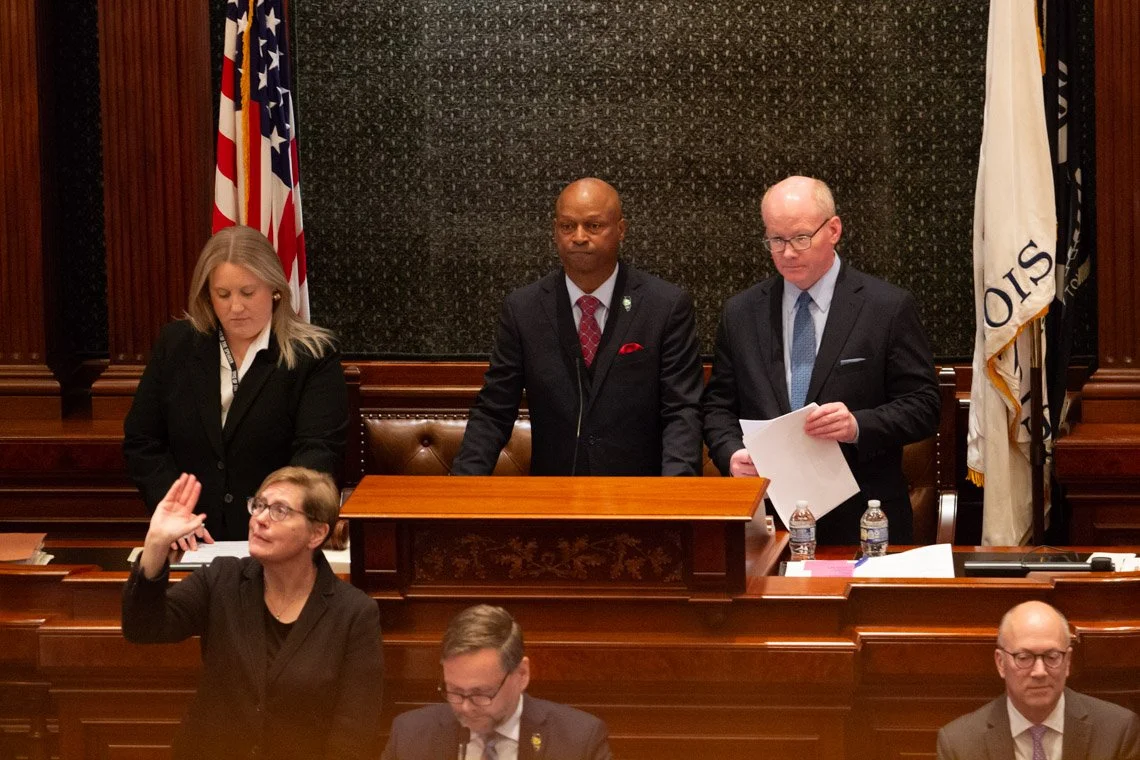
Speaker Emanuel “Chris” Welch, D-Hillside, and Senate President Don Harmon, D-Oak Park, preside over a joint session of the House and Senate on May 27, 2026. (Capitol News Illinois photo by Jerry Nowicki)

Community Turns Out In Force To Help WGH Celebrate #75

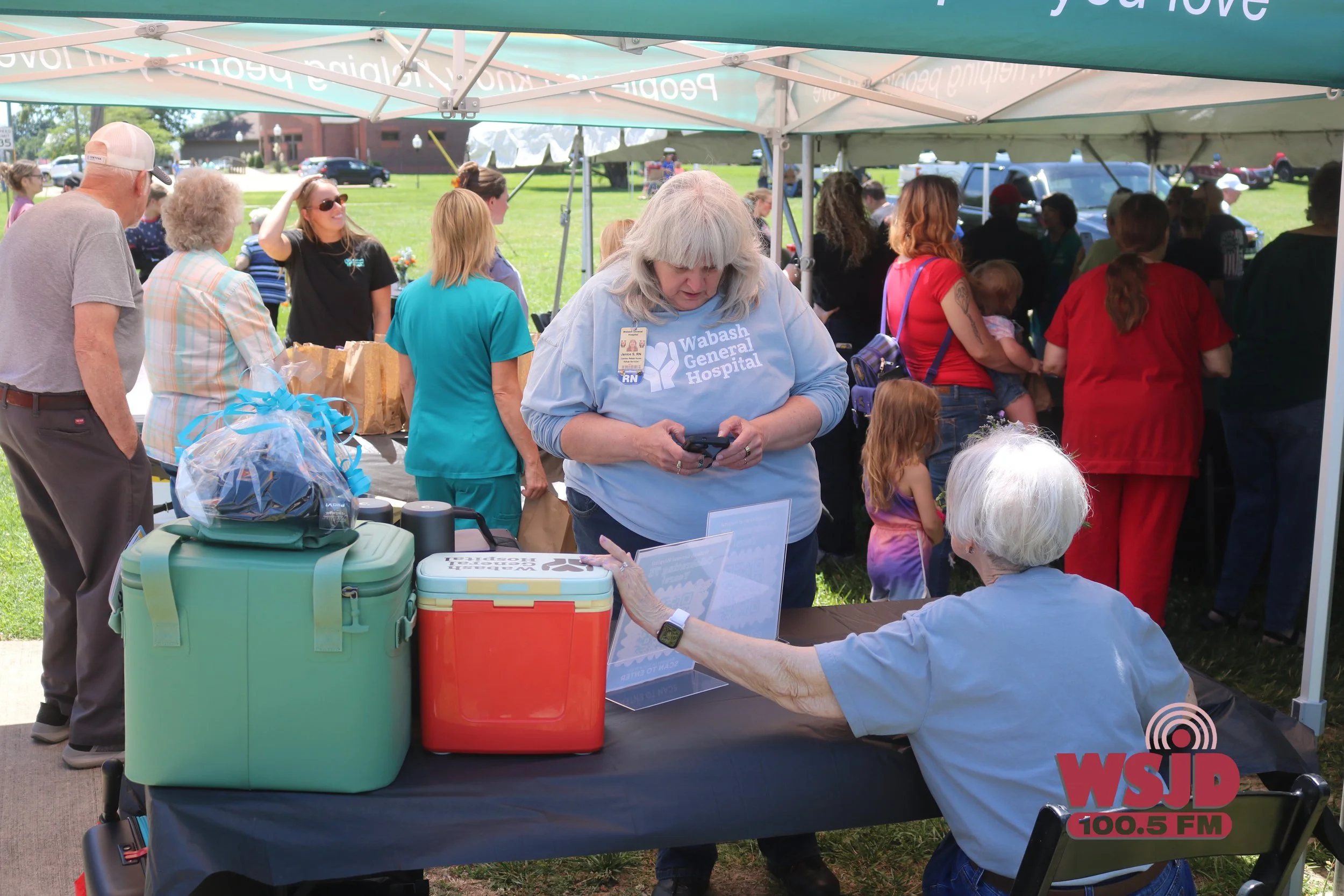
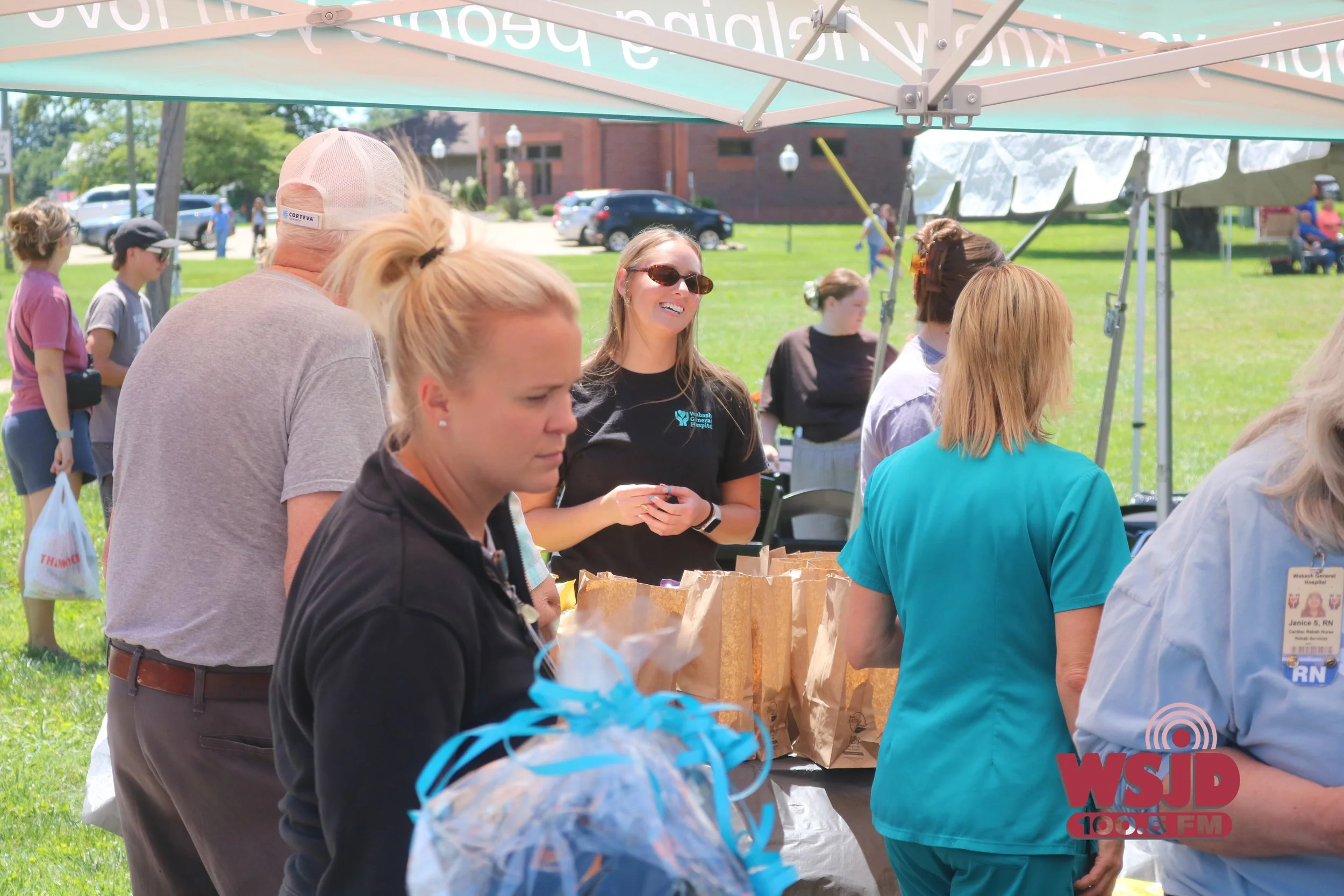
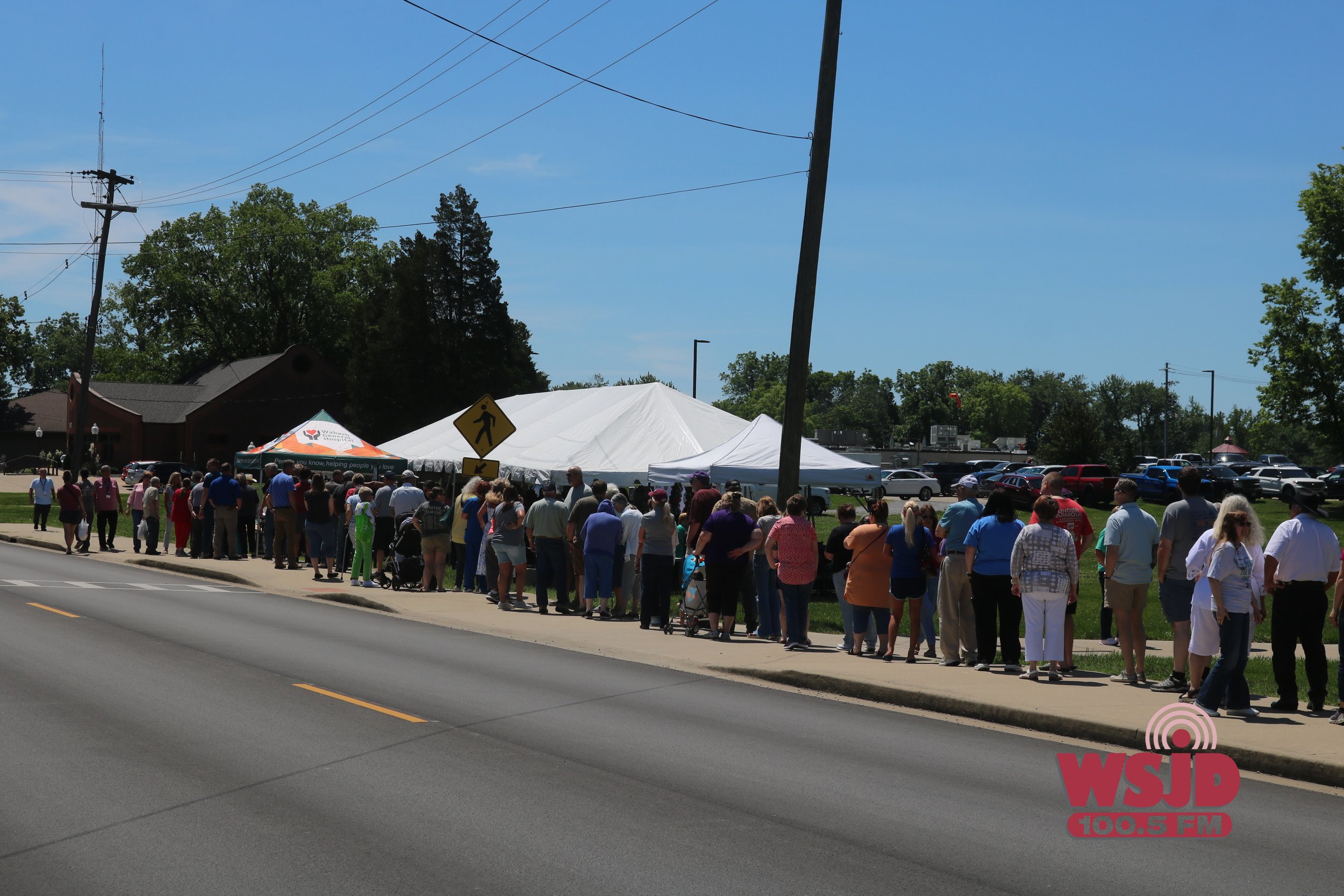
A large crowd turned out Wednesday as Wabash General Hospital celebrated its 75th anniversary with a community lunch and open-house style gathering on the hospital campus.

Visitors enjoyed smoked pork chop sandwiches prepared by Mike Wilson, along with cupcakes, cookies, and refreshments as hospital employees, community members, and local leaders came together to mark the milestone.

Wabash General Hospital President and CEO Karissa Turner said the anniversary is a special moment for both the hospital and its staff.

Turner said she feels blessed to serve as the hospital's CEO during the milestone year and reminded employees that their responsibility is to ensure the hospital remains successful for generations to come.

She said the strong turnout reflects the community's appreciation for the hospital and its employees.

Turner praised the hospital staff for their dedication and compassion, noting that many residents frequently tell her the care they receive at Wabash General Hospital is different from what they experience elsewhere.

She added that healthcare can be challenging work, making it especially meaningful to see so many community members come out to show their support.

Turner also thanked residents for continuing to utilize hospital services and support hospital events. She noted that ticket sales for Friday night's WGH Soirée have been strong, with only about 20 tickets remaining as of Wednesday afternoon.

Wabash General Hospital first opened its doors in 1951 and today employs hundreds of people while providing a wide range of healthcare services throughout the region. The anniversary celebration honored both the hospital's history and its commitment to serving the community for years to come.

Sellers Found Guilty On Both Counts By Wabash County Jury

A former Mt. Carmel man has been found guilty in Wabash County Circuit Court of sexually abusing a child more than two decades ago.

After approximately 90 minutes of deliberations, a jury returned guilty verdicts at 6:10 Wednesday evening against 45-year-old Joseph Sellers of Janesville, Wisconsin. Jurors found Sellers guilty on two Class 2 felony counts of criminal sexual abuse.

The convictions stem from incidents that occurred between 1997 and 2000 when the victim was under the age of 9 and Sellers was 17 and 18 years old.

Sentencing has been scheduled for August 11th at 10:45 a.m. Sellers faces a prison term of three to seven years on each conviction.

Sellers took the stand in his own defense Wednesday afternoon, denying the allegations. He told jurors it was "impossible to remember something that never happened." Sellers testified he was close to the victim's father, whom he described as a spiritual mentor, and became emotional while stating he would never do anything to harm him or his family.

Sellers said he attended church with the victim's family in Mount Carmel and served as a youth minister intern. He testified he was an influential member of the church before leaving to attend Southern Illinois University Edwardsville following a stint in the Illinois Army National Guard.

During closing arguments, Wabash County State's Attorney Kelli Storckman argued the case was more than a "he said, she said" situation because testimony indicated Sellers admitted to touching the victim. Storckman questioned what motive the victim would have to pursue charges after all these years and said jurors would have to believe multiple witnesses conspired against Sellers in order to find him not guilty.

Defense attorney Monroe McWard argued that while child sexual abuse is a serious crime, convicting an innocent person would be even worse. McWard pointed to what he described as inconsistencies in the victim's testimony and statements to police and criticized investigators for failing to pursue information he said could have cleared Sellers.

Following the verdict, McWard said the defense was disappointed with the outcome.

"I think the evidence was against the verdict and in favor of him being acquitted," McWard told WSJD. "We certainly are looking forward to doing an appeal for him."

McWard acknowledged the challenges of defending a case involving allegations that are nearly 30 years old and were not reported until years later.

"Very difficult. Yeah. Very, very difficult," he said.

Asked whether there was one piece of evidence that may have swayed the jury, McWard said it was impossible to know.

"It is difficult to imagine with the jury looking at a case over 20 years. It's hard to identify exactly which part the jurors held their hat on," he said.

Storckman declined to comment on the verdict when contacted by WSJD, citing the fact that a second criminal case remains pending against Sellers.

Sellers also faces separate charges in another Wabash County case. He is charged with two counts of predatory criminal sexual assault of a child, Class X felonies that carry substantially greater penalties upon conviction.

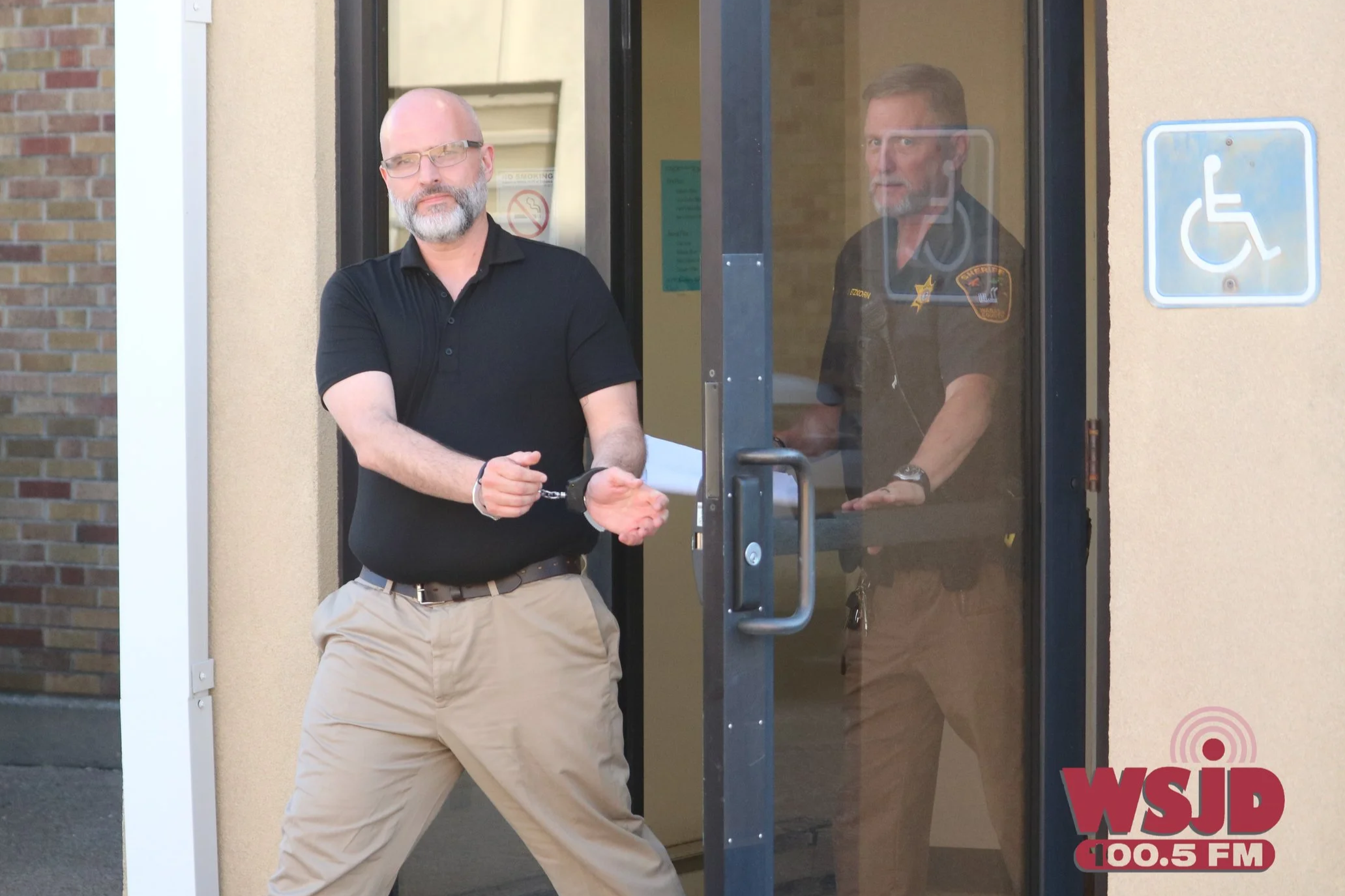
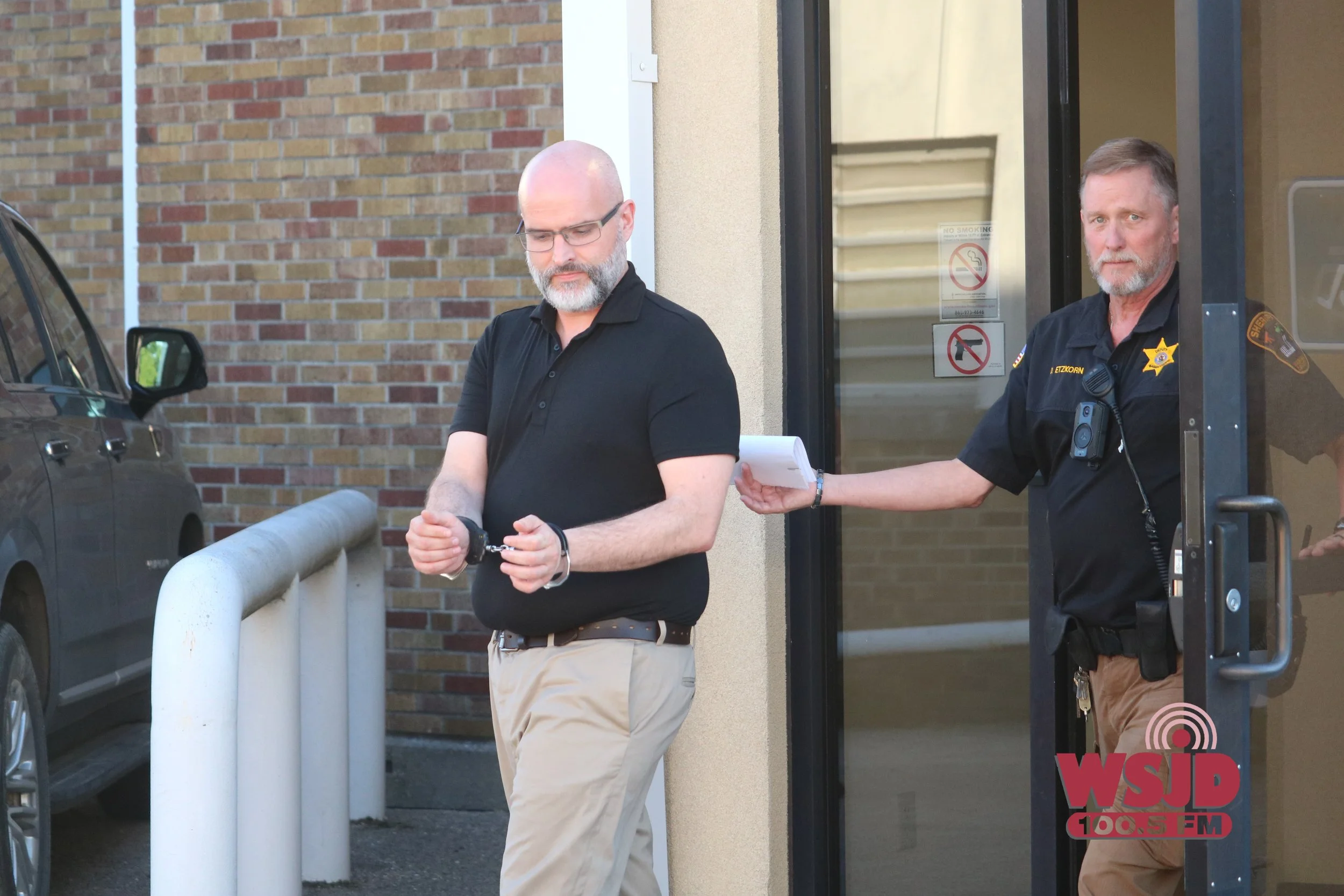
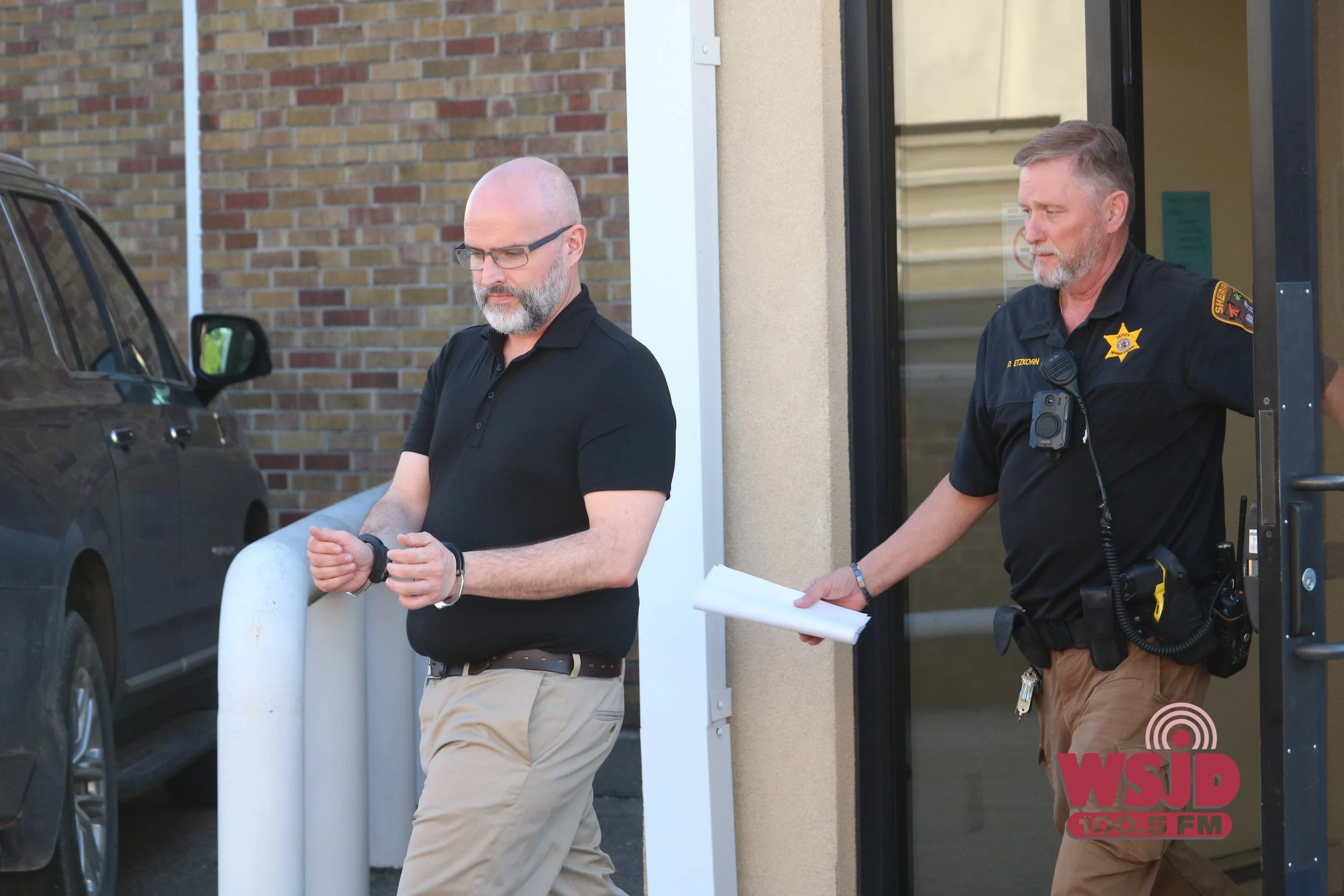
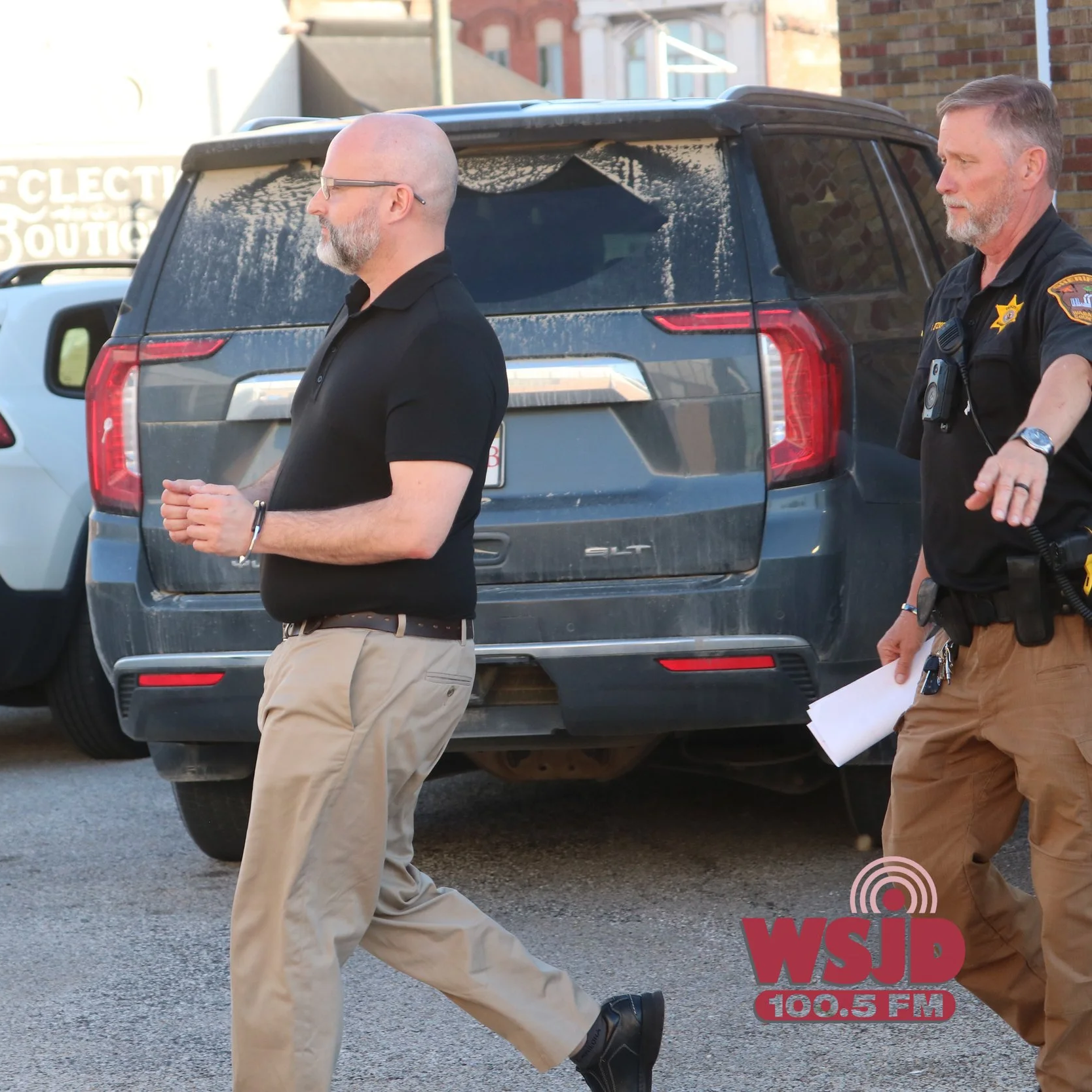
Joseph Sellers is led from the Wabash County Courthouse to the Wabash County Jail following his Wednesday night conviction. Judge William C. Hudson revoked Sellers’ $12,500 cash bond and ordered taken to jail pending his August sentencing.

Jurors Hear More Testimony In Trial Of Former Mt. Carmel Man

Testimony continues today in Wabash County Circuit Court in the trial of a former Mount Carmel man charged with multiple child sex offenses.

One of the witnesses called by the prosecution Wednesday morning was Illinois State Police Special Agent Steve Perry, who led the investigation into allegations against 45-year-old Joseph Sellers of Janesville, Wisconsin.

During testimony, Perry told jurors he completed his investigation and presented the case to then-Wabash County State's Attorney Cassandra Goldman in July 2020. However, no charges were filed before Goldman left office in December of that year. The case was later reviewed by current State's Attorney Kelli Storckman, who filed charges against Sellers in 2021.

During cross-examination, defense attorney Monroe McWard questioned Perry about the timeline, suggesting that if the evidence against Sellers had been strong, Goldman would have filed charges during the several months she remained in office after receiving the case.

McWard also raised questions about a potential conflict of interest, noting that Perry attended the same church as both the alleged victim and the church member who first contacted authorities regarding the allegations. Perry acknowledged attending the church but maintained his investigation was conducted professionally.

The trial began Tuesday with opening statements. Prosecutors allege Sellers repeatedly abused a young girl while the two attended the same church in Mount Carmel during the late 1990s and early 2000s. The alleged victim testified Tuesday.

Sellers faces two counts of predatory criminal sexual assault of a child and two counts of aggravated criminal sexual abuse. He has pleaded not guilty to all charges.

The trial is expected to continue through the remainder of the week.


WGH Hosting Anniversary Bash Wednesday

Wabash General Hospital is inviting the community to help celebrate a major milestone as the hospital marks its 75th anniversary tomorrow.

The celebration will take place from 11 a.m. to 1 p.m. across from the WGH Orthopaedics and Sports Medicine building on College Drive. Visitors can enjoy smoked pork chop sandwiches with chips, delicious cupcakes, cookies provided by Wabash Valley FS, and free drinks while helping commemorate three-quarters of a century of local healthcare service.

The anniversary marks a journey that began in 1948 when Wabash County voters overwhelmingly approved the creation of a hospital authority and later backed a bond issue to make the project a reality. Construction of the original hospital began in 1949, and thousands gathered for its dedication on June 3, 1951. The new facility featured 52 beds, 18 bassinets, and a full range of medical departments.

Over the decades, Wabash General Hospital has expanded through new facilities, services, and technology, including the opening of a new hospital in 1983, the addition of ambulance paramedic services in 2002, designation as a Critical Access Hospital in 2003, and the construction of a new medical office building in 2022.

Today, Wabash General Hospital is Wabash County's largest employer and offers a wide range of healthcare services throughout the region. Hospital officials say the anniversary celebration is an opportunity to thank the community for its support while honoring the generations of healthcare professionals, volunteers, and patients who have been part of the hospital's history.

Testimony Begins In Trial Of Former Mt. Carmel Man

Opening statements were heard Tuesday morning in Wabash County Circuit Court in the trial of a former Mount Carmel man charged with multiple child sex offenses.

A jury was selected and seated Monday evening ahead of the trial of 45-year-old Joseph Sellers of Janesville, Wisconsin. Sellers, a former Mount Carmel resident, moved away in 1999 to join the U.S. Army.

During her opening statement, Wabash County State's Attorney Kelli Storckman told jurors the alleged victim and Sellers attended the same church and that Sellers' mother babysat the child. Storckman said evidence will show the alleged abuse occurred while the child sat on Sellers' lap as he played video games.

Storckman argued the incidents happened repeatedly, causing the alleged victim to believe the behavior was normal. She described the case as being about "opportunity and secrets," noting that although the alleged acts occurred in the late 1990s and early 2000s, they were not reported until 2019 when another church member learned of the allegations and contacted authorities.

Defense attorney Monroe McWard told jurors there is no objective evidence proving the state's case. McWard also criticized investigators, claiming they failed to pursue information that could have demonstrated Sellers' innocence.

The alleged victim, now 25 years old, was the first witness called by the prosecution.

Sellers is charged with two counts of predatory criminal sexual assault of a child and two counts of aggravated criminal sexual abuse. Court records indicate the allegations involve incidents that allegedly occurred between September 1997 and October 2000 involving a 7-year-old girl and a 10-year-old boy.

Sellers has pleaded not guilty to all charges. The trial is expected to continue through the remainder of the week.

As with all criminal cases, Sellers is presumed innocent unless proven guilty in a court of law.

'We didn’t have time’: Pritzker, leaders defend adjourning without Bears deal

Arlington Heights mayor disappointed by Springfield’s inaction

By BRENDEN MOORE &

BEN SZALINSKI
Capitol News Illinois 
news@capitolnewsillinois.com  

Article Summary  

  • Gov. JB Pritzker acknowledged Monday that the Chicago Bears may be on their way to Indiana. But he and Democratic leaders defended their decision not to move a bill incentivizing them to stay.

  • The leaders say they’re ready to continue working on the issue throughout the summer. But its unclear when, if at all, they’d return to the Capitol for a vote.

  • They made the comments at a news conference in the governor’s office hours after the General Assembly adjourned the legislative session without a deal. 

  • A last-minute pitch that passed the Senate would have allowed large municipalities in Cook County to compete to lure the team to a publicly owned stadium.

This summary was written by the reporters and editors who worked on this story.  

SPRINGFIELD — Hours after Illinois lawmakers failed to approve a stadium incentives structure aimed at keeping the Chicago Bears in Illinois, Gov. JB Pritzker acknowledged that the “pride and joy of Illinois” may take a deal to build a football palace in Indiana.

That said, Pritzker and the leaders of the House and Senate defended their processes and priorities at a news conference Monday morning, about five hours after they adjourned an all-night session. They told reporters that a combination of the late emergence of bill language in the Senate, along with their own red lines to not hand out taxpayer dollars to a football team valued at nearly $9 billion, kept it out of the end zone.

“That might happen,” Pritzker said of the team taking a stadium deal to build across the state line, where Hoosier lawmakers have pledged $1 billion in public subsidies. 

“But the reality is: I wasn't willing to give up billions of dollars of taxpayer money in order to give it to a billionaire-owned family or team... as much emotional connection as many of us have to the Bears and to keeping them in the city of Chicago or the state of Illinois,” he added.

At the same time, Pritzker said he would work with House lawmakers over the summer on a stadium package and his “hope is that we'll be able to provide something for the Bears.”

Pritzker said a special session this summer would be up to the legislative leaders, though House Speaker Emanuel “Chris” Welch, D-Hillside, told Capitol News Illinois early Monday morning that he wasn’t considering it.

‘It came late’

A bipartisan vote on a hastily crafted bill in the Senate around 3:30 a.m. Monday morning gave late life to hopes the legislature would pass a bill giving the Bears property tax certainty. Unlike a long-discussed structure for a negotiated property tax payment on a privately owned stadium in Arlington Heights, the bill would have allowed five Cook County municipalities that have populations over 70,000 to set up a local stadium authority. 

This would have enabled the Bears to avoid paying property taxes altogether on a new stadium, whether it be on a site they currently own in Arlington Heights or in Chicago, where Mayor Brandon Johnson has fought to keep the team. 

But the House adjourned about an hour later without taking up the bill. 

It was a late-arriving amendment, even in Springfield where lawmakers are accustomed to working through the night at the end of May each year. They’re often up late awaiting thousand-page amendments to bills that have been negotiated for days or months.  

But in this instance, the language was essentially novel when it arrived on lawmakers’ desks.

“I respect the Senate president’s processes over there,” Welch said. “You know, that’s the legislative process — the sausage making. It came over late … we didn’t have time to digest it. We didn’t have time to find out what other folks thought of it. We need to have some feedback from our members before asking them to vote for it on the floor, particularly in the wee morning hours.”

Senate President Don Harmon, D-Oak Park, said he felt both chambers worked well together throughout the session, even on issues beyond the Bears, but lawmakers ultimately had “no appetite” to provide public funding for the team, despite many being Bears fans.

Pritzker added that neither he nor his staff read the 145-page bill because “it came late.”

“Things happen, and we had a whole lot of things that were foisted upon the state that they were dealing with yesterday,” Pritzker said. “But indeed, the speaker is going to work hard to make sure that the House is making progress.”

‘A fumble’

The proposal was a drastic pivot from the PILOT concept discussed for more than three years. Instead, the structure mimics the mechanics of most modern stadium deals, including the offer the Bears have on the table from Indiana.

This switch-up seemed to come as a surprise to two of the entities it would impact the most: the village of Arlington Heights and the Bears.   

Arlington Heights Mayor Jim Tinaglia blasted the legislature’s inaction.

“The Village of Arlington Heights has spent the past five years working diligently to prepare for the redevelopment of Arlington Park,” Tinaglia said in a statement. “We are truly disappointed with the outcome from the spring legislative session yet again. Although we recognize that these discussions are complex and involve many stakeholders, this is clearly a fumble for the State of Illinois.”

Minutes after he filed the bill Sunday evening, Sen. Bill Cunningham, D-Chicago, the Senate’s lead negotiator on the stadium issue, told reporters that the Bears “are now just seeing it” and that he was “looking forward to hearing their response.”

In a statement after the House adjourned Friday morning, the Bears did not address the merits of the Senate bill but reiterated that they “remain on the late spring/early summer timeline” to decide on their future home.

Reporters quizzed Pritzker later Monday about how much he was involved in negotiations on the bill. He received criticism from some lawmakers and observers for a far more hands-off approach to this year’s legislative session in general.

While the governor said he has been intimately involved throughout the process, including several meetings in his Capitol office “throughout the weekend,” he didn’t want to give the Bears special treatment. And seeking “to table set,” Pritzker said the stadium issue was not the most important thing on lawmakers’ agenda, but rather “working to survive” President Donald Trump’s administration.

“Literally, billions of dollars have been taken away from people in our state,” Pritzker said. “We've seen these massive tariffs that are affecting people at the grocery store, when they go buy a car, everything else in their lives. Costs are going up, and then we've got this war that's raised the cost of gasoline for everybody... We're trying to defend the working families of Illinois.”

‘Still time’

The House sponsor of the legislation, Rep. Kam Buckner, D-Chicago, said in a statement the House’s decision not to take up the issue is “the reality of trying to move something of this size.”

“There is still time to answer questions, refine concepts, build consensus, and continue discussions with the Bears and all the stakeholders involved” he said. “The legislative pathway remains open.”

Chicago Mayor Brandon Johnson said in a statement Monday that he is “grateful” senators passed a bill that would give the city a chance to retain the team and that the city already has a publicly owned site managed by the framework in the Senate’s legislation.

“While questions remained about the legislation’s design, legislators ultimately reached the same conclusion the City reached in 2024: the strongest proposal for a new stadium centers public ownership, the use of a sports authority and a commitment to public infrastructure,” Johnson said in a statement.

Under the Senate bill, a municipal stadium authority would have the power to issue revenue bonds to fund stadium construction that can be backed through local tax revenue along with private contributions. 

The Bears have pledged to finance an Illinois project privately and Pritzker and state lawmakers have long ruled out state subsidies for direct stadium construction. That said, the provision would open the door for local governments to do that.

Pritzker said “that is a choice that people at the local level can make if they want.”

“For example, Arlington Heights and Chicago want to compete in order to have a stadium, and you may recall that the mayor of Chicago held a big press conference with the Bears announcing a $2.5 billion stadium that he had no money to pay for,” Pritzker said, referring to a 2024 plan for a public lakefront stadium that would have required $800 million in state-backed bonds for stadium construction. 

“So somehow that was going to have to get paid for,” Pritzker said. “And that's not something I was willing to do and, indeed, the amount of money that the state is willing to put up is money that we would put up for a business in the state of Illinois for infrastructure alone, not building a stadium.”

As for the megaprojects tool nixed by the Senate: “We still need that, by the way,” Pritzker said, reiterating his charge that Illinois is “behind the curve” given how 38 other states have a statewide mechanism for large developers to negotiate property taxes.

“They've always been negotiating about property taxes all across the country,” Pritzker said. “It's just in Illinois where we have had a disorganized, dysfunctional endeavor forever, and now we're trying to organize it and make it work, so that businesses will want to come.”

Capitol News Illinois is a nonprofit, nonpartisan news service that distributes state government coverage to hundreds of news outlets statewide. It is funded primarily by the Illinois Press Foundation and the Robert R. McCormick Foundation.


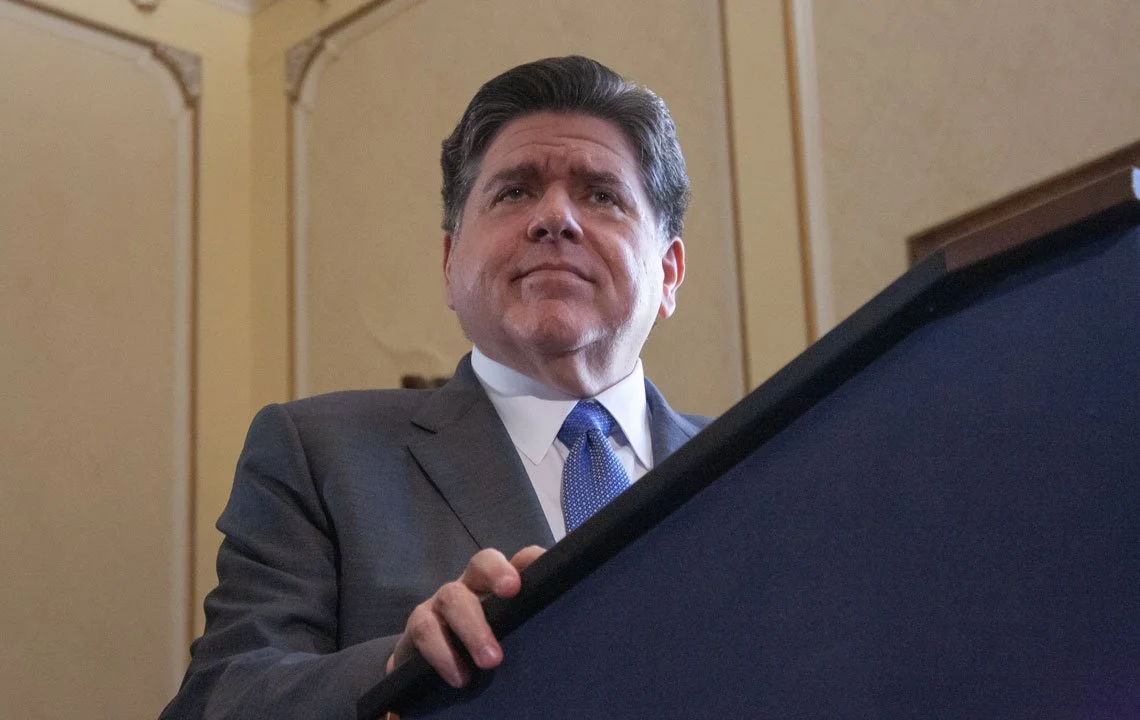
Gov. JB Pritzker responds to reporters’ questions at a morning news conference on June 1. Pritzker said a Bears deal is not off the table, but still a long way from fruition. (Capitol News Illinois photo by Jenna Schweikert)