Kindergarten Teachers Bring Back New Classroom Strategies from Conference

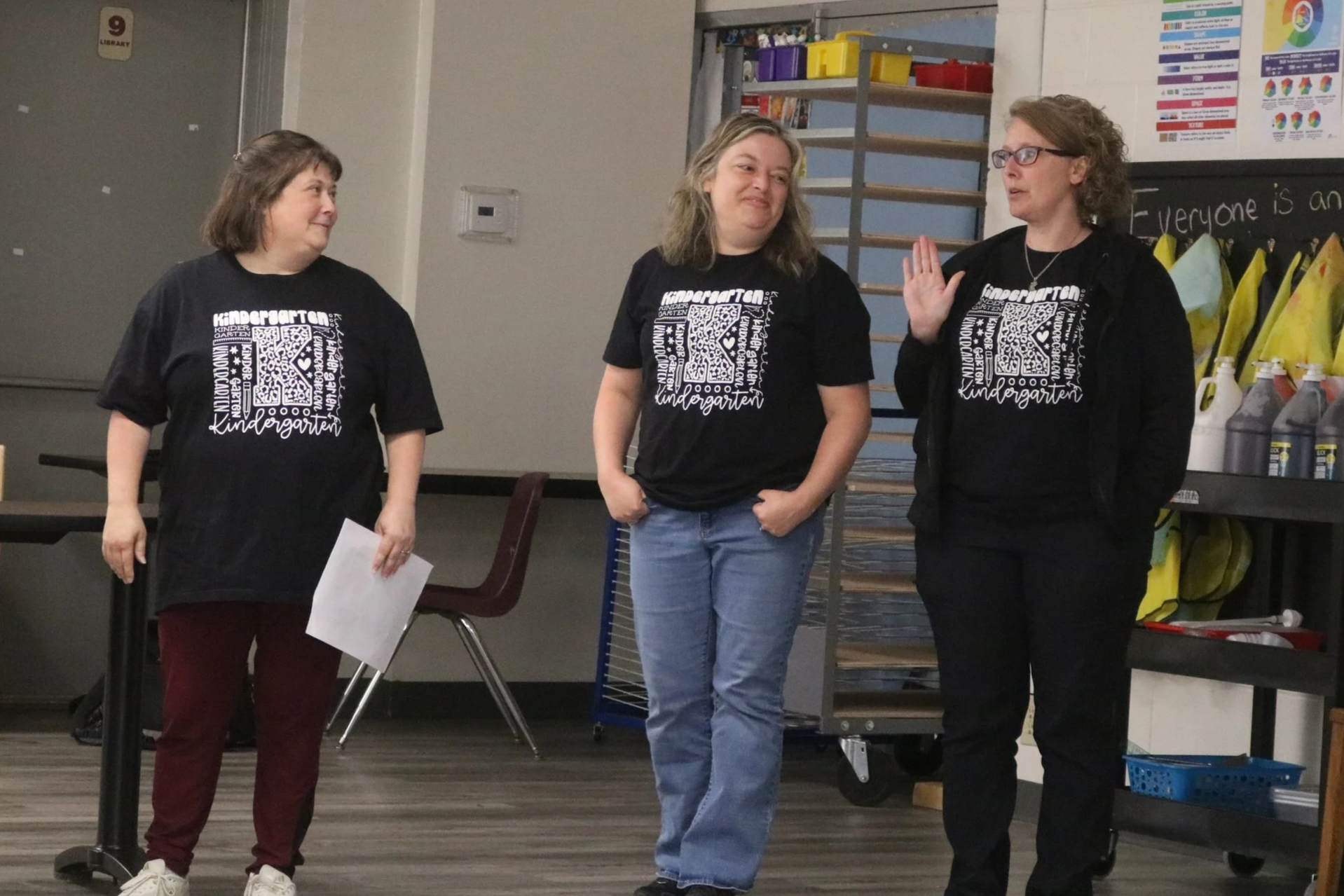
Kindergarten teachers at Mt. Carmel Elementary School are bringing new ideas back to the classroom after attending a recent conference.

At the April Wabash District #348 School Board meeting, teacher Julie Hagerty told board members that kindergarten and transitional kindergarten staff traveled to Schaumburg in early March for the “Pump It Up” Primary Conference.

Hagerty says the group attended a variety of breakout sessions focused on reading, math, science, social studies, classroom management, and hands-on learning techniques.

She says teachers made a point to attend different sessions and then share what they learned with one another, allowing them to bring back a wide range of new strategies for their students.

Hagerty says the conference also emphasized incorporating more hands-on and play-based learning in the classroom, along with new ideas for STEM activities already being used on Fridays.

In addition to the educational sessions, the teachers also used the trip as a team-building opportunity.

Hagerty says the experience has already had a positive impact, with teachers continuing to introduce fresh ideas and techniques in their classrooms.

School officials say professional development opportunities like this help enhance instruction and benefit students across the district.

Kiwanis to Dedicate New Shelter House in Mt. Carmel Wednesday

The Mt. Carmel Kiwanis Club is inviting the community to a special dedication ceremony for its new shelter house in Mount Carmel.

The new facility is located on Park Road, across from the golf course pond. The public is invited to attend the dedication on Wednesday, May 6th from 4 to 6 PM, with a ribbon cutting scheduled promptly at 4 PM.

As part of the event, Mike Wilson of Wabash Valley Service Company will be serving pork chop sandwiches for a free-will donation. Proceeds will go toward helping offset the cost of the shelter house project.

Kiwanis officials say the project was made possible thanks to the support of numerous local businesses, individuals, and the efforts of City of Mt. Carmel crews.

The community is encouraged to stop by, see the new shelter house, and take part in the dedication.

Chiropractic Services Performing Well For WGH

At Monday evening’s meeting of the Wabash General Hospital Board of Directors, members heard a detailed report on the hospital’s chiropractic services program.

VP of Professional Services Andrew Kleinschmidt said the service line was first explored in 2022 and officially launched in 2023 with the addition of Dr. Lawrence Speir. Due to strong demand, the hospital later added a second provider, Dr. Jason Sigler, who returned to the area after practicing in Texas.

Kleinschmidt reported the program has grown rapidly, with patient visits increasing each year and now totaling more than 7,000 annually. He said chiropractic care has been well received by the community, with high patient satisfaction and strong feedback.

He also noted Wabash General is one of only a few critical access hospitals in Illinois offering chiropractic services, and the program has proven to be both low-cost and financially beneficial. Over a three-year period, the service has generated more than one million dollars in net income.

Kleinschmidt said the hospital will continue to evaluate opportunities for growth while ensuring the service remains aligned with patient needs and community partnerships.

District #348 School Board Votes To Keep Same Meeting Times

The Wabash District 348 School Board has set its meeting schedule for the coming year.

At their April meeting, board members approved dates and times that will remain consistent with the current schedule.

Most regular meetings will continue to be held at 5 p.m., with a couple of summer meetings scheduled for 10 a.m.

Before the vote, board members discussed whether a later start time might make meetings more accessible for working parents, particularly those commuting from outside the area.

However, several members noted that attendance has not typically been affected by meeting time and that those interested in board business often find ways to stay informed.

Some also pointed out the benefit of earlier meetings, allowing members to complete business and return home at a reasonable hour.

The board ultimately approved the schedule as presented.

School officials say the consistent meeting times help maintain continuity for administrators, staff, and the community.

Accountability Commission refers federal agents for investigation, possible prosecution for conduct last fall

Cook County state’s attorney’s office to review evidence with local law enforcement

By MAGGIE DOUGHERTY
Capitol News Illinois
mdougherty@capitolnewsillinois.com 

Article Summary 

  • The Illinois Accountability Commission voted to approve its final report on Thursday, creating a record of misconduct by federal immigration agents amid Operation Midway Blitz.

  • The 204-page report provides recommendations for accountability and policies to prevent harm in the future. 

  • The commission is also sending letters to relevant local law enforcement agencies where they believe there is reason to believe agents may have violated policy or broken the law. 

  • The Cook County state’s attorney's office says it will review the evidence compiled by the commission with local law enforcement.

This summary was written by the reporters and editors who worked on this story. 

(Editor’s note: This story has been updated.)

CHICAGO — A state board unanimously voted Thursday to approve a 204-page report detailing its investigations into misconduct by on-duty federal immigration agents amid Operation Midway Blitz.

It is also sending letters to local law enforcement agencies for potential prosecution of the agents. The letters are not determinations of guilt, but requests for further investigation by the relevant agencies. 

“Where that record establishes reasonable cause to believe that misconduct may have occurred, we implore those responsible to ensure that this information is reviewed and that it is handled in an appropriate fashion,” said Patricia Brown Holmes, vice chair of the body.

The Illinois Accountability Commission, created by Gov. JB Pritzker through executive order last October, was tasked with forming a public record to document the impact of the federal immigration campaign on Chicago communities, but also to produce recommendations for harm reduction and prevention of future abuses.

To inform its report, the commission conducted 16 investigations for which it interviewed over 60 people, reviewed nearly 100 hours of body camera footage from 250 videos, and reviewed hundreds of hours more of footage from security cameras, personal devices and social media, according to commission officials.

It also held seven private neighborhood listening sessions and five public hearings, featuring testimony from law enforcement experts, community advocates and everyday Chicagoans. 

“Documenting this was easy,” Commission Chair Rubén Castillo said. “The record is overwhelming; the video tapes are overwhelming. They’re devastating. They’re shameful. They’re brutal.”

Prosecution referrals

One of the referrals letters names Border Patrol agents Benito Nuñez, Carlos Chavira and Jesus Guillen, who the commission said used an intentional, high-speed car-ramming maneuver in Chicago’s East Side neighborhood after being repeatedly instructed to stop by supervisors. 

Body camera footage released by the commission shows the agents proceeded to use teargas on a street of onlookers in the Far Southeast Side neighborhood, including more than a dozen Chicago police officers who had explicitly asked agents not to deploy the gas.

Others name Border Patrol agent Charles Exum, who shot Chicago teacher’s aide Marimar Martinez five times last October and then bragged about it over text, and Border Patrol agent Timothy Donahue, who made headlines for aggressive conduct in Evanston last Halloween.

Donahue and his partner, agent Thomas Parsons, are accused of denying medical care to a man they violently arrested that day in Evanston. The pair also showed up in the commission’s report on a Little Village raid where they are accused of conducting “roving raids” based on race rather than targeted evidence of wrongdoing.

In some cases, the commission was unable to identify specific agents involved. For example, a military-style raid on a South Shore apartment building references approximately 300 agents who may have broken agency policy or criminal law.

In total, the incidents reviewed by the commission identify 16 agents by name but refer to hundreds more in the abstract.

The commission says that’s due to its limited powers, which do not include the authority to issue subpoenas. That’s why it says law enforcement agencies should carry forward the cases, including the Cook County state’s attorney’s office.

The commission’s materials were transmitted to the Cook and Kane County state’s attorneys offices, as well as the Chicago, Evanston, Franklin Park and Elgin police departments.

Disputed path forward

Cook County State’s Attorney Eileen O’Neill Burke has drawn fire for her inaction investigating crimes of federal agents, and a Cook County judge is currently reviewing arguments on a petition to appoint a special prosecutor to lead these investigations in her place.

Under Illinois law, special prosecutors can be appointed to oversee a particular case when a state’s attorney has a conflict of interest. Petitioners in the case have argued that O’Neill Burke has a conflict of interest due to a “political alliance” with federal law enforcement. A ruling on the special prosecutor case is expected May 11.

Castillo, in his personal capacity, is a member of that coalition seeking a special prosecutor.

“We need courage, and we need a state’s attorney with courage, or if not, she should step out of the way,” Castillo said. “I say that plainly, and I say that on the basis of 25 years of being a judge.”

The state’s attorney’s office, though, has said that its authority is limited and that O’Neill Burke has avoided prosecutions or making “political statements” about ICE enforcement to mitigate the risk of those prosecutions being overturned on appeal.

According to O’Neill Burke’s office, statute prevents the office from prosecuting cases before it receives a completed investigation from a law enforcement agency. To date, it says no local agencies have brought cases against any on-duty immigration officials.

However, the office now says it looks forward to receiving the report and will review it with local law enforcement partners.

“There is no doubt that Operation Midway Blitz has traumatized and harmed our communities,” the office said in a statement, adding that it commended the bravery of witnesses who shared testimony with the commission.

The commission was asked Thursday whether it has considered referring cases directly to Illinois Attorney General Kwame Raoul as an alternative. 

However, for cases to reach Roaul’s desk, it would require that the AG’s office be invited onto the case by the relevant state’s attorney. The practice is not common and generally only occurs when there is a conflict of interest or when the case is complex enough to require additional resources.

In Springfield, Republican lawmakers have called for amending state law to increase coordination between local law enforcement and federal immigration officials, arguing that greater cooperation could have lessened the impact of Midway Blitz. 

Sen. Chapin Rose, R-Mahomet, on Thursday called for repealing much of the state’s TRUST Act, which prohibits law enforcement from working with federal immigration agents in civil immigration cases. He appeared alongside Joe Abraham, the father of 20-year-old Katie Abraham, who was killed last year in a drunken driving accident in Urbana by a Guatemalan man residing in the U.S. without legal status.

“No family should ever have to experience this kind of loss,” Abraham said. “If speaking out can help prevent even one family from going through this pain, then it’s worth it. Public safety should come first, and law enforcement agencies should be able to work together to stop dangerous criminals before more innocent lives are lost.”

‘It could have been her’

Members of the commission shared personal reflections on the body’s work after voting to approve the report, with many saying they were especially moved by the testimony shared by Marimar Martinez.

“This young woman looks just like my daughter. Like that could have been my daughter. Another American citizen. ... Same color hair, same complexion,” Commissioner Ric Estrada said, appearing emotional. “And it was just on my mind. I’m like, ‘that could have been her.’ It should be no one.” 

It was a sentiment shared by other commissioners, with Commissioner Cindy Sam calling Martinez’s testimony “overwhelming” and “hard to listen to.” 

The work also struck close to home, literally, for Commissioner Jimmy Arce, who said his parents live only two blocks from the location where Border Patrol agents shot Silverio Villegas Gonzalez, the only fatality at the hands of on-duty federal agents that occurred in Chicago during the immigration enforcement campaign.

Commissioner Aurora Austriaco, an immigrant and naturalized U.S. citizen herself, became tearful when speaking, saying she related personally to the accounts shared by witnesses.

Commissioners said they hoped other states would follow Illinois’ lead, calling it an example for the nation.

“The issuance of this report is not the end, it is the beginning,” Castillo said. “We need a reckoning to occur.”

Capitol News Illinois is a nonprofit, nonpartisan news service that distributes state government coverage to hundreds of news outlets statewide. It is funded primarily by the Illinois Press Foundation and the Robert R. McCormick Foundation.

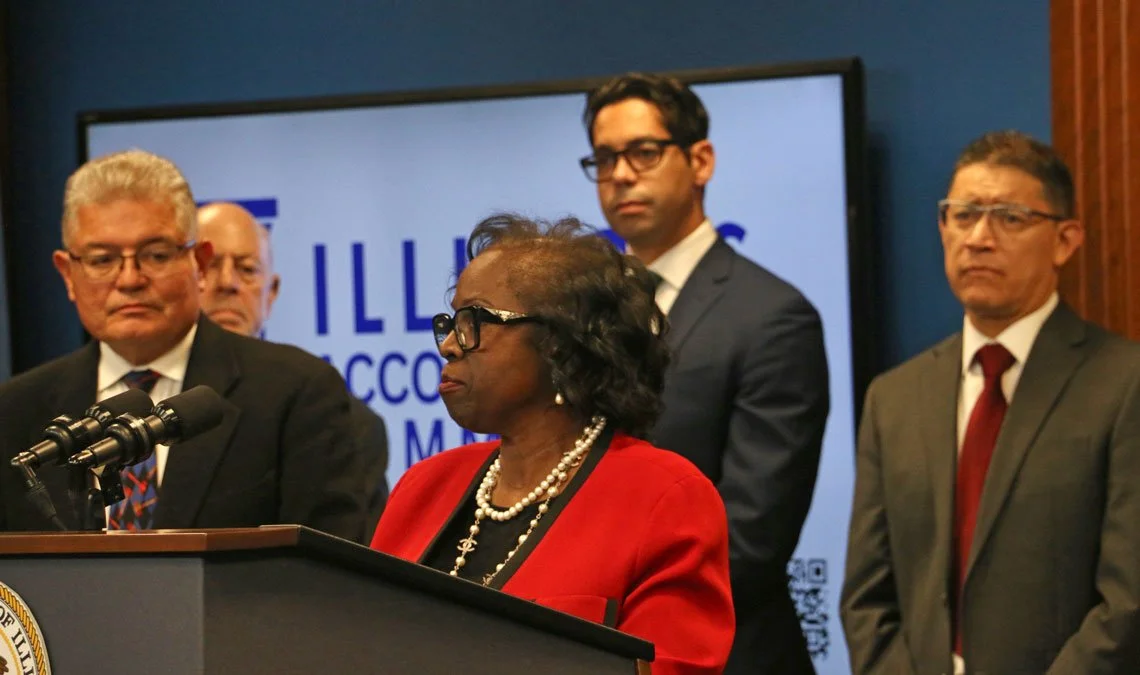
The Illinois Accountability Commission Vice Chair Patricia Brown Holmes announced on April 30, 2026, that the commission is sending referral letters to appropriate law enforcement agencies for investigations of federal agents where the commission has determined reasonable cause to believe those agents violated agency policy, state or federal criminal law, or individual human rights. (Capitol News Illinois photo by Maggie Dougherty)

Senate committee passes bill to protect prescription info for trans, abortion patients

The bill would exclude certain prescriptions from a statewide database 

Article Summary 

  • A new bill would preserve the privacy of transgender and abortion patients by removing testosterone from the state’s Prescription Monitoring Program and prohibiting the state from adding abortion drugs and other gender-affirming care medications to the program. It would not remove prescription information from a patient’s medical records.

  • The program exists to curb opioid abuse, and lawmakers say prescriptions for testosterone and estrogen are important medical treatments and should be treated differently. 

  • Abortion medications are not controlled substances, and they also have multiple medical uses outside of abortion care. Prohibiting their addition to the program is a preemptive measure. 

  • Bill sponsor Sen. Adriane Johnson, D-Buffalo Grove, said the bill is important for maintaining patient privacy and ensuring people get the care they need.

This summary was written by the reporters and editors that worked on this story. 

By NIKOEL HYTREK
CAPITOL NEWS ILLINOIS
nhytrek@capitolnewsillinois.com

A bill to strengthen privacy protections for transgender and abortion patients passed a Senate committee Wednesday in a 9-4 partisan vote. 

Senate Bill 4834, would remove testosterone from the state’s Prescription Monitoring Program, which otherwise exists to protect against misuse of addictive controlled substances. It would also prohibit the Department of Human Services from adding estrogen, abortion medications mifepristone and misoprostol, and drugs commonly referred to as hormone suppressants to the program. 

The state’s Prescription Monitoring Program was established in the 1980s to prevent people from getting multiple prescriptions of addictive medications by going to different doctors. The program monitors prescriptions for controlled substances used as painkillers such as oxycodone and morphine.

The program also requires dispensers to submit records for people who have been prescribed certain controlled substances. 

SB 4834 would also purge IDHS records of the prescribing or dispensing of testosterone. That information would still be part of a patient’s medical records. 

State Sen. Adriane Johnson, D-Buffalo Grove, the sponsor of the bill, said medical privacy is an essential right to protect. 

“It’s no secret that the transgender community has been the target of hate for years,” she said in a Thursday news conference. “It’s not difficult to image that this data could be used to target transgender individuals who take testosterone.” 

Testosterone was classified as a Schedule III controlled substance in the 1990 Anabolic Steroids Control Act to crack down on performance enhancing drug use in sports. But the hormone has several medical uses for treating low testosterone levels, breast cancer patients, muscle atrophy and hormone replacement therapy for trans people. It can be addictive when misused, but gender affirming care is normally monitored closely by doctors. 

“Tracking individuals for seeking hormone replacement therapy undermines both medical confidentiality and personal freedom,” Johnson said. “Everyone deserves the ability to make informed healthcare choices without unnecessary intrusion.”

Abortion medication included

The bill also protects abortion patients’ access to abortion medication — both mifepristone and misoprostol. Those drugs are not considered controlled substances, but Louisiana in 2024 reclassified them as such so the state could restrict patients from obtaining the pills for abortions. The bill preempts potential similar action in Illinois.

Those drugs also have important medical uses for managing miscarriages, inducing labor and treating postpartum hemorrhage. Experts have voiced concerns that increased oversight and scrutiny could deter doctors from prescribing the pills because abortion is already severely restricted in Louisiana. 

“A patient's medical information is deeply personal, and protecting it is essential to preserving trust between individuals and their healthcare providers,” Johnson said. 

If patients are concerned about having their prescriptions monitored, she said, they might avoid doctors or forgo care.

Johnson said her bill is “a complement” to one passed by the House on April 16, which would create the Reproductive Health Records Privacy Act and automatically segregate abortion-related services and treatment from digital medical records.

Republicans pushed back on the bill, arguing that testosterone and abortion medication prescriptions are important for monitoring. 

“Medical organizations are aware of this bill,” said Michael Ziri, with Planned Parenthood Illinois Action during the Wednesday committee hearing.  “They have shared no concerns with us. We reached out to the State Medical Society. They shared no concerns with us.”

Johnson said pharmacists will still be able to advise patients about potential drug interactions because the information is only being removed from the state’s database, and it will stay in a patient’s medical records. 

“These medications are lifesaving, and we should not unnecessarily surveil individuals who are prescribed with them,” she said.


Capitol News Illinois is a nonprofit, nonpartisan news service that distributes state government coverage to hundreds of news outlets statewide. It is funded primarily by the Illinois Press Foundation and the Robert R. McCormick Foundation.

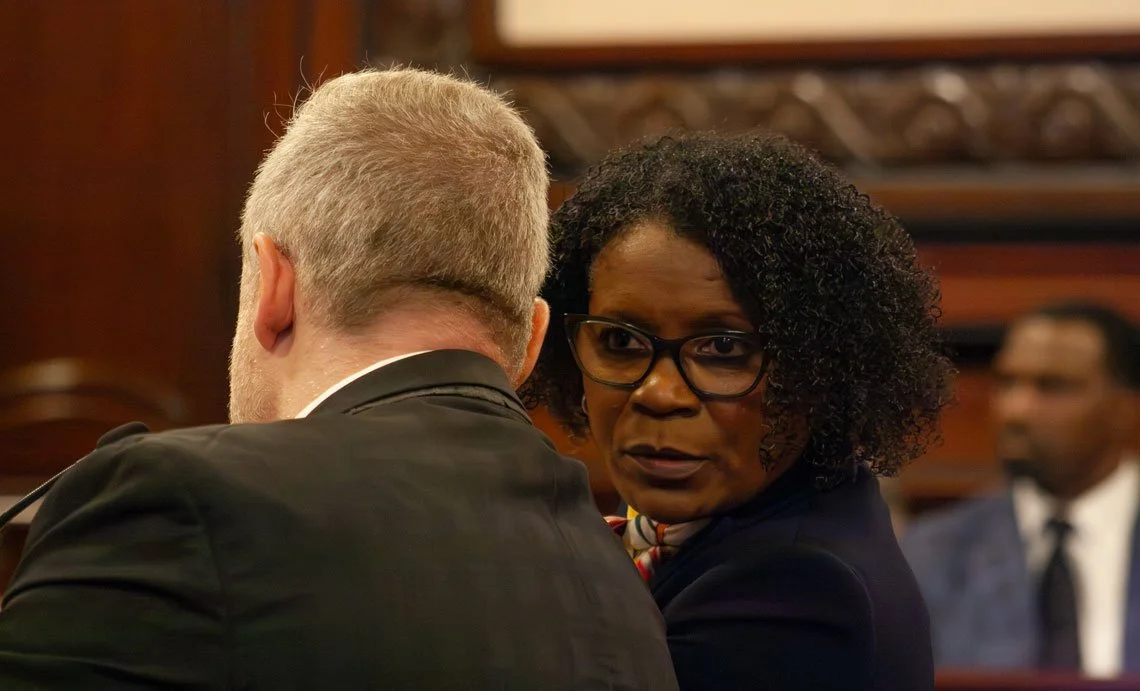
 State Sen. Adriene Johnson talks to Planned Parenthood Illinois Action lobbyist Michael Zirir during a Senate committee hearing on Wednesday, April 29, 2026. (Capitol News Illinois photo by Jenna Schweikert)

SAFE-T Act back in spotlight after killing of Chicago Police officer

Pritzker, Republicans point fingers over blame for alleged killer’s release

By BEN SZALINSKI
Capitol News Illinois
news@capitolnewsillinois.com

Article Summary

  • The SAFE-T Act is once again making headlines after a man on pretrial release was charged for the murder of Chicago Police Officer John Bartholomew. 

  • Republicans are calling for changes to the law to make it easier to detain someone before trial. 

  • Republican candidate for governor Darren Bailey proposed changes to electronic monitoring rules but said his plan would not call for returning to the use of cash bail. 

  • Gov. JB Pritzker blamed the judge in the case for deciding to release the man accused of the murder despite a history of violent crimes. 

This summary was written by the reporters and editors who worked on this story. 

SPRINGFIELD — The SAFE-T Act is again generating controversy following the killing of a Chicago Police officer whose alleged shooter critics of the law say was only out of jail because of the state’s pretrial laws. 

While Republicans say the law needs to be changed to make it easier to hold a person in custody while they await trail, others say the judge who allowed the suspect’s release had the authority to detain him but made the wrong decision. 

Gov. JB Pritzker said the judge should have ordered the detention of Alphanso Talley — a man with a violent criminal history who is charged with shooting and killing Chicago Police Officer John Bartholomew at a hospital on the city’s North Side on April 25. 

The law creates a presumption of pretrial release and directs the justice system to order the least restrictive method of ensuring someone attends their trial. But it also lets prosecutors petition judges to detain individuals who they believe are a risk to the public or of fleeing prosecution.  

Talley had previously served time in prison and been convicted of crimes such as aggravated armed robbery and battery of a correctional officer. 

According to WGN, Talley was granted pretrial release by a Cook County judge over prosecutors’ objections while he faced armed carjacking charges. He was put on electronic monitoring, but he stopped showing up to court in March and his monitor went silent. A warrant was issued for his arrest, but he remained out of jail. 

“The reality of the SAFE-T Act is stark,” House Republican Leader Tony McCombie, R-Savanna, said at a news conference on Wednesday. “Individuals with extensive criminal histories or active charges are being released and committing crimes, serious crimes in their communities.”

McCombie and Senate Republican Leader John Curran, R-Downers Grove, are proposing a specific solution in response to Bartholomew’s killing. They want people who are on electronic monitoring pretrial and commit a new crime to automatically have pretrial release revoked until the case is resolved. 

Since the law’s early days, its Republican opponents repeatedly called for giving judges full discretion to keep dangerous suspects detained. 

Pritzker told reporters in Chicago on Wednesday that judicial decisions have led to many of the high-profile releases of people who’ve gone on to commit violent crime.

“In most of the cases where Republicans have complained about the SAFE-T Act, it’s actually been the bad decision by an elected judge in Illinois, or no hearing at all because the prosecutor didn’t bring it to the judge, and that has been a reason why somebody gets let out,” Pritzker said. 

In many instances, proponents have argued, repeat offenders could have been out on bail under the previous system. 

State lawmakers passed the SAFE-T Act in January 2021 as part of a series of initiatives led by the Illinois Legislative Black Caucus in response to civil unrest and racial justice conversations following the 2020 murder of George Floyd.

On the campaign trail 

Pritzker’s Republican opponent this fall, former Sen. Darren Bailey of Clay County, held a news conference at the Statehouse on Thursday to call for the SAFE-T Act’s repeal. However, some of his proposals mirror the existing Pretrial Fairness Act — the portion of the SAFE-T Act that deals with pretrial procedures and is the subject of much of the criticism over the law. 

Bailey outlined his six-point proposal in a news conference. It would keep the no-cash bail system and require judges to evaluate a person’s criminal history, compliance with supervision and risk to victims. It would also allow judges to order detention of people who are deemed a public safety threat or flight risk before trial. All of those are components of the current law.

“If a judge believes that someone is more likely than not to be a danger to the community, they stay in jail,” Bailey said. 

Sen. Elgie Sims, D-Chicago, an architect of the SAFE-T Act, said he hopes other Republicans also come to realize the state is better off without cash bail.

“Certainly, it's recognition that that the policy is working,” Sims said of Bailey’s proposal. “And the (cash bail) policy was certainly never about safety. It was always about the access to wealth.”

Bailey’s more specific changes to the law would create a presumption of detention for repeat violent offenders, while the current law requires prosectors to prove a person must be detained. He also wants changes to electronic monitoring rules to end free movement requirements. 

“It's basically the honor system. That ends,” Bailey said. “Violent offenders will be supervised by real law enforcement, people with the authority to act when something goes wrong, and if you violate your monitor, even once, you're back in front of a judge within 48 hours – no loopholes, no excuses, no second chances.”

Pritzker also said he believes people should be “immediately apprehended” if they violate mandatory supervised release terms. 

Legislative deliberations 

McCombie and Curran say their proposal is common sense. 

“This is saying that if you get a get-out-of-free-jail card, and you get a second chance, and you mess that up by committing another felony while on release, you don't get any more chances,” Curran said. 

Despite chatter from some top Democrats earlier this year that lawmakers could consider changes to the SAFE-T Act, nothing is immediately being considered in Springfield.

“If there is something that we need to work through, we certainly can evaluate that to see how that works,” Sims said. 

Cook County court records show 83% of people who have been released pretrial have not committed new crimes. Six percent have been charged with new violent crimes while 11% have been charged with new nonviolent crimes.

Sims said the tragedy involving Bartholomew doesn’t mean the law needs to be tossed aside. 

“I wish that folks who were the purveyors of fear who want to just trot these issues out – the one-offs – they would take time to delve into the policy and how things are working,” Sims said. “And that's what you see from folks, from academicians to practitioners, they're showing that we are making progress.”

Capitol News Illinois is a nonprofit, nonpartisan news service that distributes state government coverage to hundreds of news outlets statewide. It is funded primarily by the Illinois Press Foundation and the Robert R. McCormick Foundation.



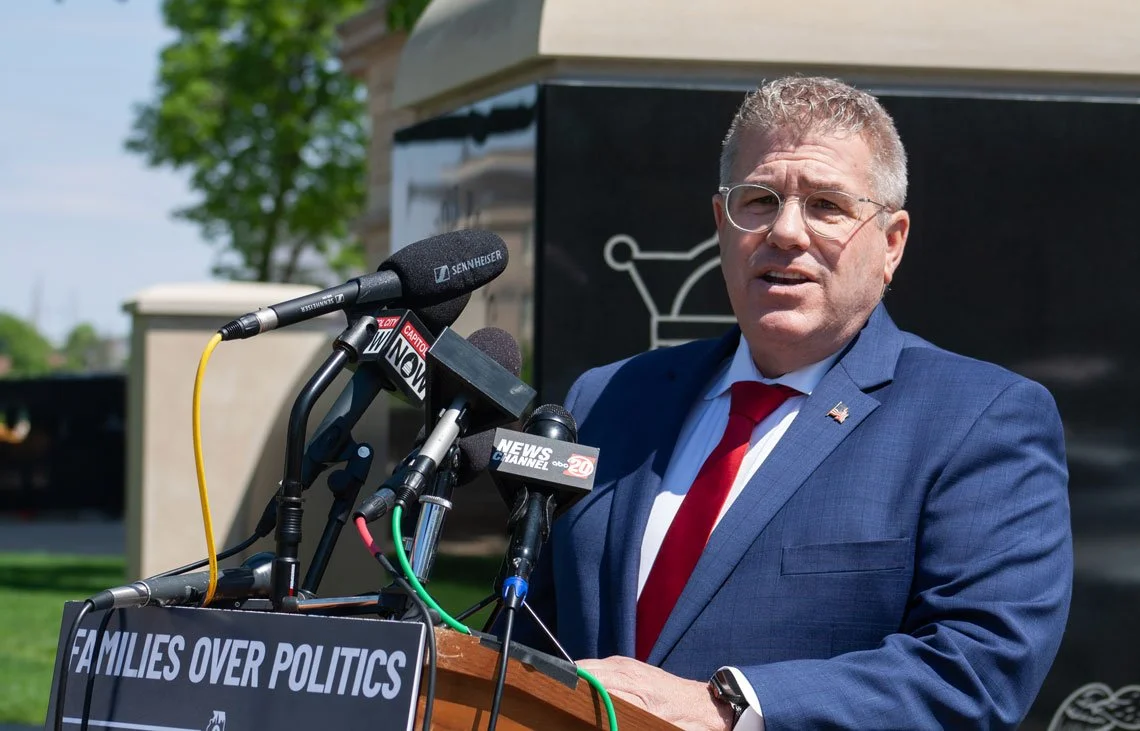
Republican candidate for governor Darren Bailey holds a news conference at the Illinois Peace Officers Memorial outside the Capitol in Springfield on Thursday, April 30, 2026. (Capitol News Illinois by Jenna Schweikert)

INOGA/IPRB Safety Day Held at Wabash Valley College

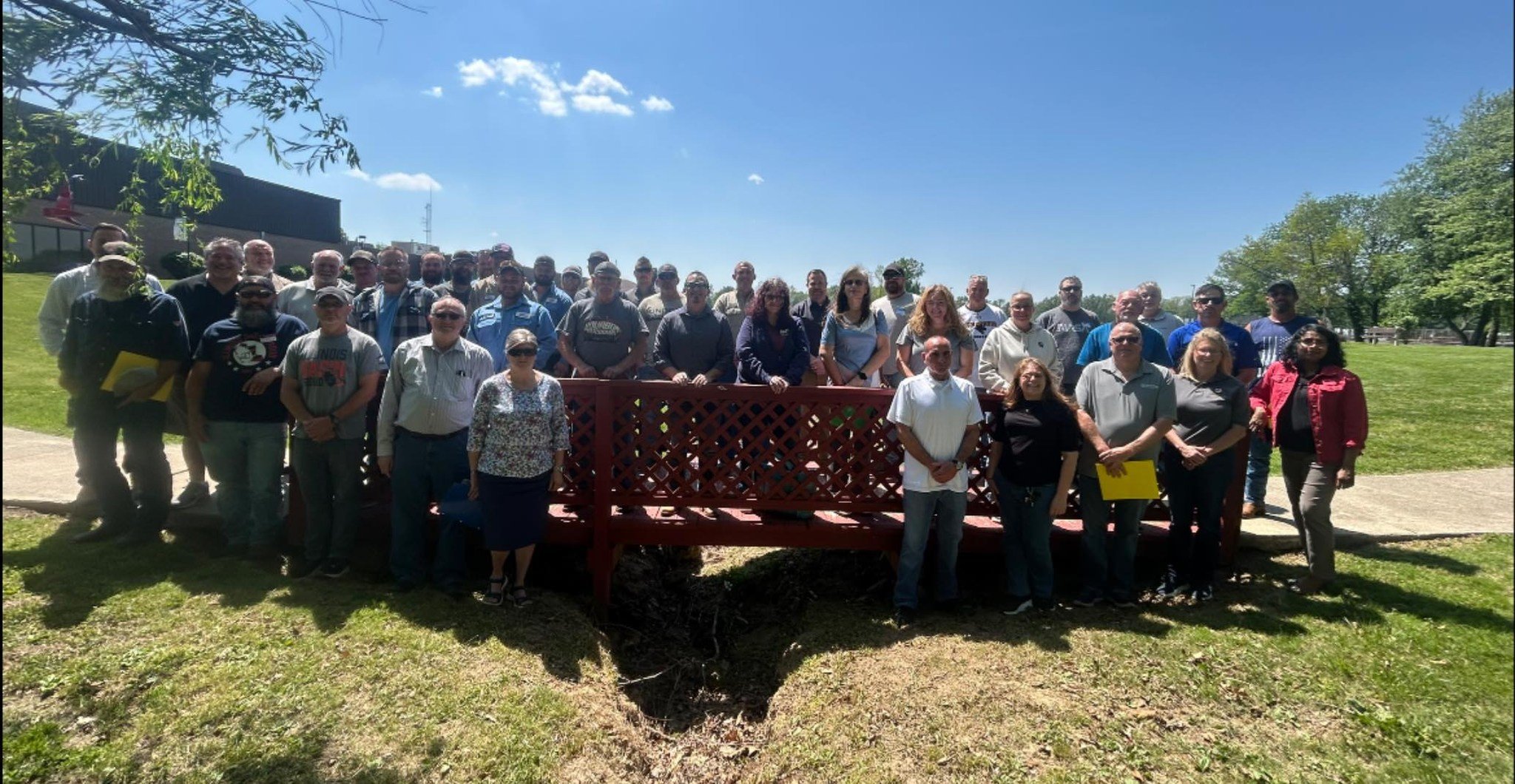
Approximately 50 Illinois Basin oil industry professionals attended the Indiana Oil & Gas Association/IPRB Safety Day event held at Wabash Valley College on April 23. Attendees earned training certifications after attending four highly informative and comprehensive workshops during this all-day event (see details below). IPRB looks forward to continued collaboration with INOGA to promote a culture of safety in the Illinois Basin!

Jasper Man Arrested for Intimidation Against an Elected Official

Dubois County - Thursday, April 30, 2026, officers from the Indiana State Police Jasper Post arrested a Jasper man after he allegedly sent threatening statements on a social media platform to Micah Beckwith, the Indiana Lieutenant Governor. 

Indiana State Police First Sergeant Detective Rob Gardner of the Jasper State Police Post was contacted regarding social media posts made on Meta Platforms Inc. (formerly Facebook) and messages making threats towards Indiana Lieutenant Governor Beckwith.  These threats were allegedly committed by Joshua Wasson, age 24, of Jasper, Indiana.

Indiana State Police Lieutenant Brock Werne and Trooper Andrew Recker immediately opened a case. As a result of the investigation, Wasson was interviewed at his place of employment. While retrieving items associated with the investigation, in Wasson’s vehicle, suspected marijuana and paraphernalia were also located. Wasson was arrested and transported to the Dubois County Jail where he is currently being held without bond.    

The investigation was conducted by Indiana State Police Lieutenant Brock Werne, Trooper Andrew Recker, and Trooper Jon Villanueva.

Arrested and Charges: Joshua Wasson, 24, Jasper

  • Intimidation (Against a Public Official) – Level 6 Felony

  • Possession of Marijuana – Class B Misdemeanor

  • Possession of Paraphernalia – Class C Misdemeanor

Pair Face Class X Drug Charge

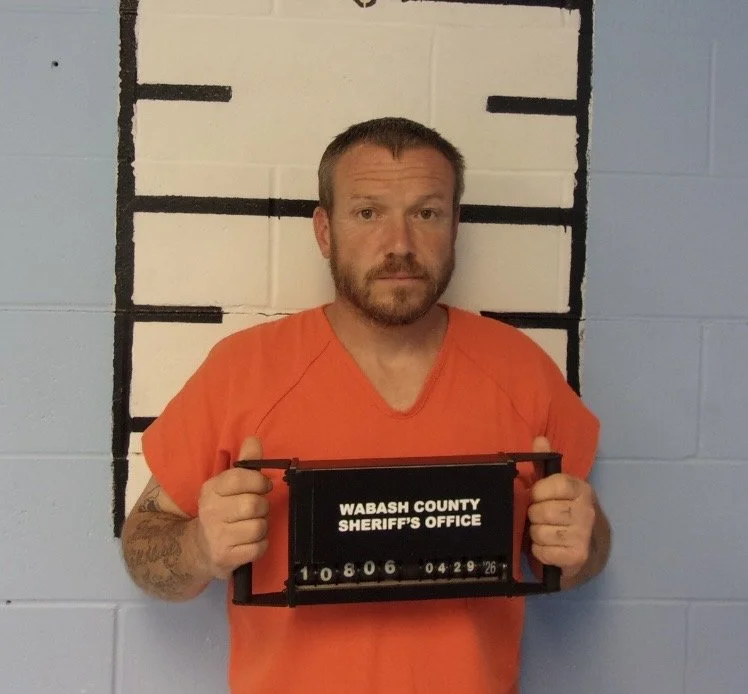
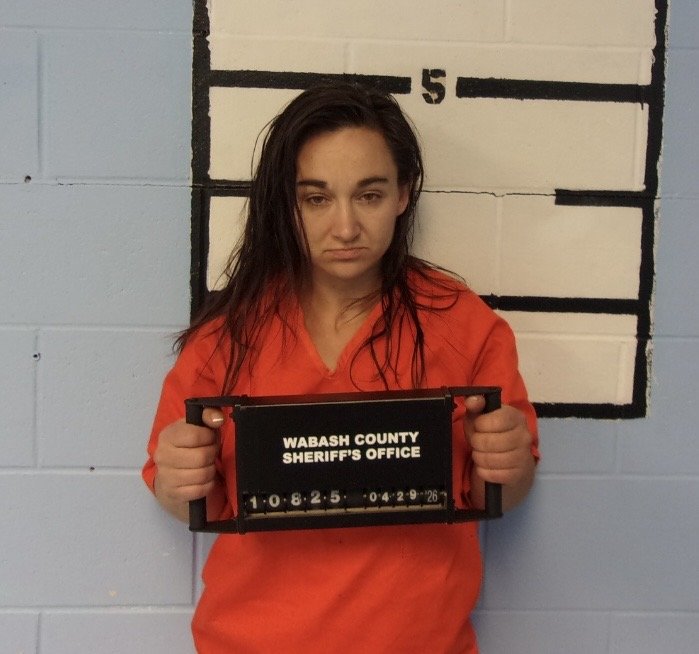
Charges have been filed this week in Wabash County Circuit Court against two individuals following a Tuesday arrest.

Wabash County State’s Attorney Kelli Storckman has charged 45 year old Jonathan Acord of Washington, IL and 31-year-old Sally Spivey of Albion with Class X felony possession of methamphetamine with intent to deliver.

Both Acord and Spivey are currently being held in the Wabash County Jail. Storckman has filed a petition requesting pretrial detention.

Spivey’s first court appearance is scheduled for June 30th.

A Class X felony in Illinois carries a potential prison sentence of 6 to 30 years, along with a possible fine of up to $100,000.