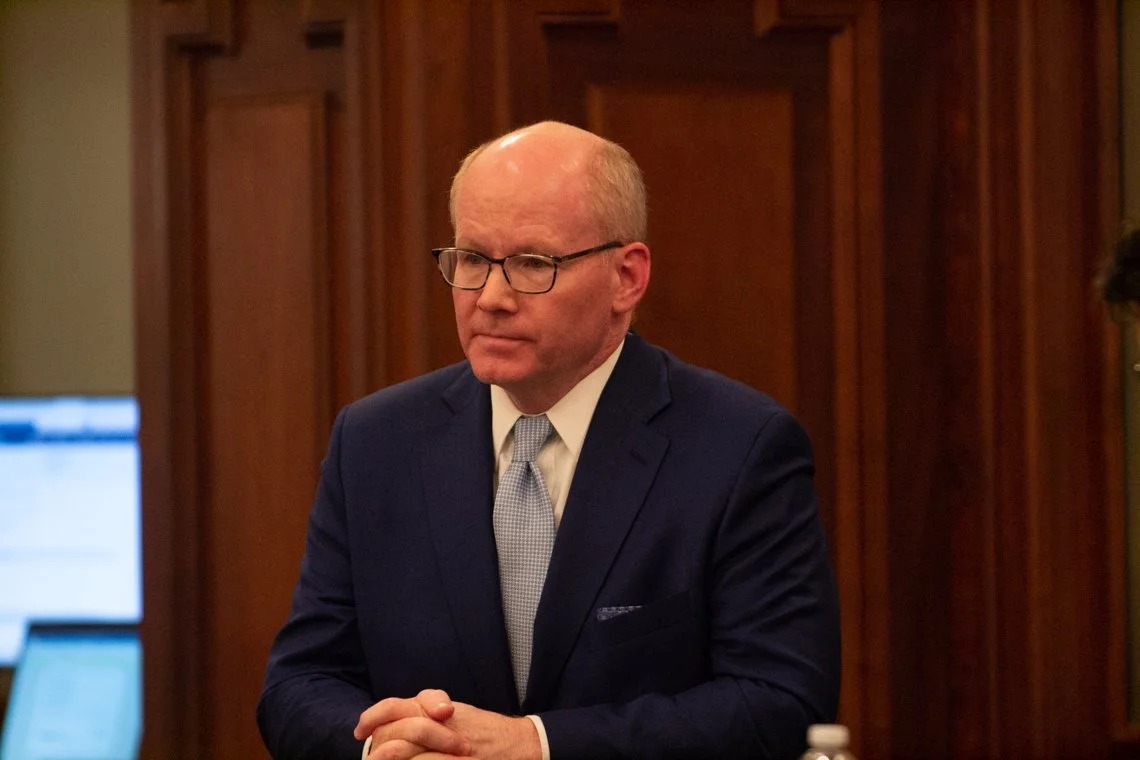
Senate committee passes bill to protect prescription info for trans, abortion patients

The bill would exclude certain prescriptions from a statewide database 

Article Summary 

  • A new bill would preserve the privacy of transgender and abortion patients by removing testosterone from the state’s Prescription Monitoring Program and prohibiting the state from adding abortion drugs and other gender-affirming care medications to the program. It would not remove prescription information from a patient’s medical records.

  • The program exists to curb opioid abuse, and lawmakers say prescriptions for testosterone and estrogen are important medical treatments and should be treated differently. 

  • Abortion medications are not controlled substances, and they also have multiple medical uses outside of abortion care. Prohibiting their addition to the program is a preemptive measure. 

  • Bill sponsor Sen. Adriane Johnson, D-Buffalo Grove, said the bill is important for maintaining patient privacy and ensuring people get the care they need.

This summary was written by the reporters and editors that worked on this story. 

By NIKOEL HYTREK
CAPITOL NEWS ILLINOIS
nhytrek@capitolnewsillinois.com

A bill to strengthen privacy protections for transgender and abortion patients passed a Senate committee Wednesday in a 9-4 partisan vote. 

Senate Bill 4834, would remove testosterone from the state’s Prescription Monitoring Program, which otherwise exists to protect against misuse of addictive controlled substances. It would also prohibit the Department of Human Services from adding estrogen, abortion medications mifepristone and misoprostol, and drugs commonly referred to as hormone suppressants to the program. 

The state’s Prescription Monitoring Program was established in the 1980s to prevent people from getting multiple prescriptions of addictive medications by going to different doctors. The program monitors prescriptions for controlled substances used as painkillers such as oxycodone and morphine.

The program also requires dispensers to submit records for people who have been prescribed certain controlled substances. 

SB 4834 would also purge IDHS records of the prescribing or dispensing of testosterone. That information would still be part of a patient’s medical records. 

State Sen. Adriane Johnson, D-Buffalo Grove, the sponsor of the bill, said medical privacy is an essential right to protect. 

“It’s no secret that the transgender community has been the target of hate for years,” she said in a Thursday news conference. “It’s not difficult to image that this data could be used to target transgender individuals who take testosterone.” 

Testosterone was classified as a Schedule III controlled substance in the 1990 Anabolic Steroids Control Act to crack down on performance enhancing drug use in sports. But the hormone has several medical uses for treating low testosterone levels, breast cancer patients, muscle atrophy and hormone replacement therapy for trans people. It can be addictive when misused, but gender affirming care is normally monitored closely by doctors. 

“Tracking individuals for seeking hormone replacement therapy undermines both medical confidentiality and personal freedom,” Johnson said. “Everyone deserves the ability to make informed healthcare choices without unnecessary intrusion.”

Abortion medication included

The bill also protects abortion patients’ access to abortion medication — both mifepristone and misoprostol. Those drugs are not considered controlled substances, but Louisiana in 2024 reclassified them as such so the state could restrict patients from obtaining the pills for abortions. The bill preempts potential similar action in Illinois.

Those drugs also have important medical uses for managing miscarriages, inducing labor and treating postpartum hemorrhage. Experts have voiced concerns that increased oversight and scrutiny could deter doctors from prescribing the pills because abortion is already severely restricted in Louisiana. 

“A patient's medical information is deeply personal, and protecting it is essential to preserving trust between individuals and their healthcare providers,” Johnson said. 

If patients are concerned about having their prescriptions monitored, she said, they might avoid doctors or forgo care.

Johnson said her bill is “a complement” to one passed by the House on April 16, which would create the Reproductive Health Records Privacy Act and automatically segregate abortion-related services and treatment from digital medical records.

Republicans pushed back on the bill, arguing that testosterone and abortion medication prescriptions are important for monitoring. 

“Medical organizations are aware of this bill,” said Michael Ziri, with Planned Parenthood Illinois Action during the Wednesday committee hearing.  “They have shared no concerns with us. We reached out to the State Medical Society. They shared no concerns with us.”

Johnson said pharmacists will still be able to advise patients about potential drug interactions because the information is only being removed from the state’s database, and it will stay in a patient’s medical records. 

“These medications are lifesaving, and we should not unnecessarily surveil individuals who are prescribed with them,” she said.


Capitol News Illinois is a nonprofit, nonpartisan news service that distributes state government coverage to hundreds of news outlets statewide. It is funded primarily by the Illinois Press Foundation and the Robert R. McCormick Foundation.
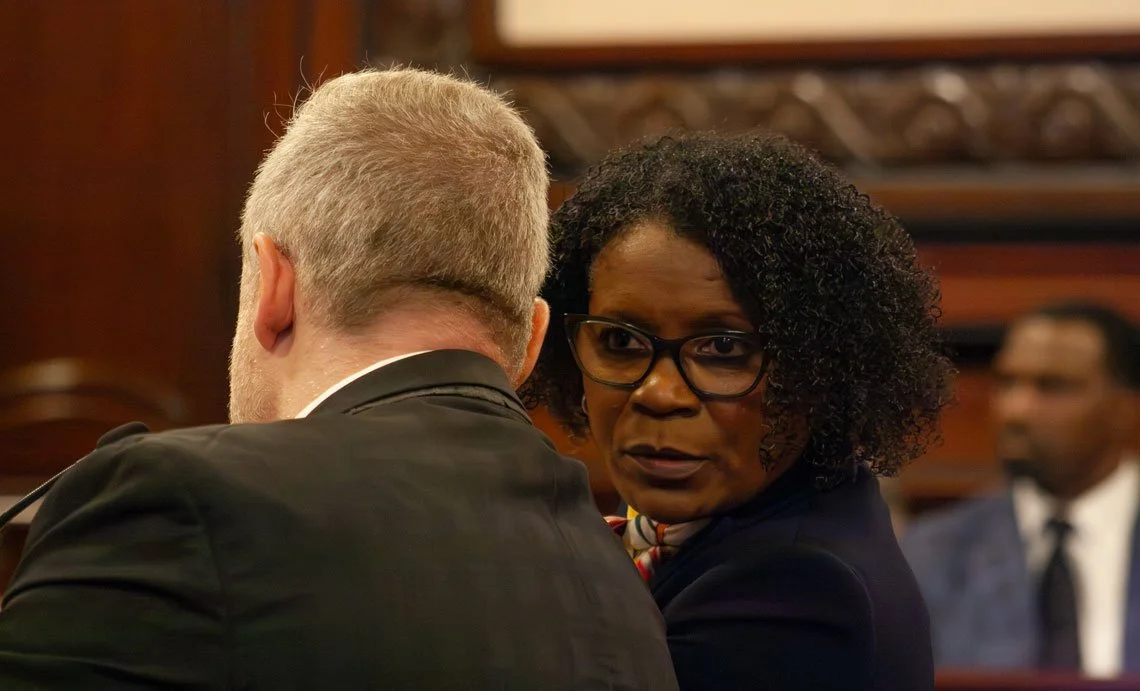
 State Sen. Adriene Johnson talks to Planned Parenthood Illinois Action lobbyist Michael Zirir during a Senate committee hearing on Wednesday, April 29, 2026. (Capitol News Illinois photo by Jenna Schweikert)
SAFE-T Act back in spotlight after killing of Chicago Police officer

Pritzker, Republicans point fingers over blame for alleged killer’s release

By BEN SZALINSKI
Capitol News Illinois
news@capitolnewsillinois.com

Article Summary

  • The SAFE-T Act is once again making headlines after a man on pretrial release was charged for the murder of Chicago Police Officer John Bartholomew. 

  • Republicans are calling for changes to the law to make it easier to detain someone before trial. 

  • Republican candidate for governor Darren Bailey proposed changes to electronic monitoring rules but said his plan would not call for returning to the use of cash bail. 

  • Gov. JB Pritzker blamed the judge in the case for deciding to release the man accused of the murder despite a history of violent crimes. 

This summary was written by the reporters and editors who worked on this story. 

SPRINGFIELD — The SAFE-T Act is again generating controversy following the killing of a Chicago Police officer whose alleged shooter critics of the law say was only out of jail because of the state’s pretrial laws. 

While Republicans say the law needs to be changed to make it easier to hold a person in custody while they await trail, others say the judge who allowed the suspect’s release had the authority to detain him but made the wrong decision. 

Gov. JB Pritzker said the judge should have ordered the detention of Alphanso Talley — a man with a violent criminal history who is charged with shooting and killing Chicago Police Officer John Bartholomew at a hospital on the city’s North Side on April 25. 

The law creates a presumption of pretrial release and directs the justice system to order the least restrictive method of ensuring someone attends their trial. But it also lets prosecutors petition judges to detain individuals who they believe are a risk to the public or of fleeing prosecution.  

Talley had previously served time in prison and been convicted of crimes such as aggravated armed robbery and battery of a correctional officer. 

According to WGN, Talley was granted pretrial release by a Cook County judge over prosecutors’ objections while he faced armed carjacking charges. He was put on electronic monitoring, but he stopped showing up to court in March and his monitor went silent. A warrant was issued for his arrest, but he remained out of jail. 

“The reality of the SAFE-T Act is stark,” House Republican Leader Tony McCombie, R-Savanna, said at a news conference on Wednesday. “Individuals with extensive criminal histories or active charges are being released and committing crimes, serious crimes in their communities.”

McCombie and Senate Republican Leader John Curran, R-Downers Grove, are proposing a specific solution in response to Bartholomew’s killing. They want people who are on electronic monitoring pretrial and commit a new crime to automatically have pretrial release revoked until the case is resolved. 

Since the law’s early days, its Republican opponents repeatedly called for giving judges full discretion to keep dangerous suspects detained. 

Pritzker told reporters in Chicago on Wednesday that judicial decisions have led to many of the high-profile releases of people who’ve gone on to commit violent crime.

“In most of the cases where Republicans have complained about the SAFE-T Act, it’s actually been the bad decision by an elected judge in Illinois, or no hearing at all because the prosecutor didn’t bring it to the judge, and that has been a reason why somebody gets let out,” Pritzker said. 

In many instances, proponents have argued, repeat offenders could have been out on bail under the previous system. 

State lawmakers passed the SAFE-T Act in January 2021 as part of a series of initiatives led by the Illinois Legislative Black Caucus in response to civil unrest and racial justice conversations following the 2020 murder of George Floyd.

On the campaign trail 

Pritzker’s Republican opponent this fall, former Sen. Darren Bailey of Clay County, held a news conference at the Statehouse on Thursday to call for the SAFE-T Act’s repeal. However, some of his proposals mirror the existing Pretrial Fairness Act — the portion of the SAFE-T Act that deals with pretrial procedures and is the subject of much of the criticism over the law. 

Bailey outlined his six-point proposal in a news conference. It would keep the no-cash bail system and require judges to evaluate a person’s criminal history, compliance with supervision and risk to victims. It would also allow judges to order detention of people who are deemed a public safety threat or flight risk before trial. All of those are components of the current law.

“If a judge believes that someone is more likely than not to be a danger to the community, they stay in jail,” Bailey said. 

Sen. Elgie Sims, D-Chicago, an architect of the SAFE-T Act, said he hopes other Republicans also come to realize the state is better off without cash bail.

“Certainly, it's recognition that that the policy is working,” Sims said of Bailey’s proposal. “And the (cash bail) policy was certainly never about safety. It was always about the access to wealth.”

Bailey’s more specific changes to the law would create a presumption of detention for repeat violent offenders, while the current law requires prosectors to prove a person must be detained. He also wants changes to electronic monitoring rules to end free movement requirements. 

“It's basically the honor system. That ends,” Bailey said. “Violent offenders will be supervised by real law enforcement, people with the authority to act when something goes wrong, and if you violate your monitor, even once, you're back in front of a judge within 48 hours – no loopholes, no excuses, no second chances.”

Pritzker also said he believes people should be “immediately apprehended” if they violate mandatory supervised release terms. 

Legislative deliberations 

McCombie and Curran say their proposal is common sense. 

“This is saying that if you get a get-out-of-free-jail card, and you get a second chance, and you mess that up by committing another felony while on release, you don't get any more chances,” Curran said. 

Despite chatter from some top Democrats earlier this year that lawmakers could consider changes to the SAFE-T Act, nothing is immediately being considered in Springfield.

“If there is something that we need to work through, we certainly can evaluate that to see how that works,” Sims said. 

Cook County court records show 83% of people who have been released pretrial have not committed new crimes. Six percent have been charged with new violent crimes while 11% have been charged with new nonviolent crimes.

Sims said the tragedy involving Bartholomew doesn’t mean the law needs to be tossed aside. 

“I wish that folks who were the purveyors of fear who want to just trot these issues out – the one-offs – they would take time to delve into the policy and how things are working,” Sims said. “And that's what you see from folks, from academicians to practitioners, they're showing that we are making progress.”

Capitol News Illinois is a nonprofit, nonpartisan news service that distributes state government coverage to hundreds of news outlets statewide. It is funded primarily by the Illinois Press Foundation and the Robert R. McCormick Foundation.


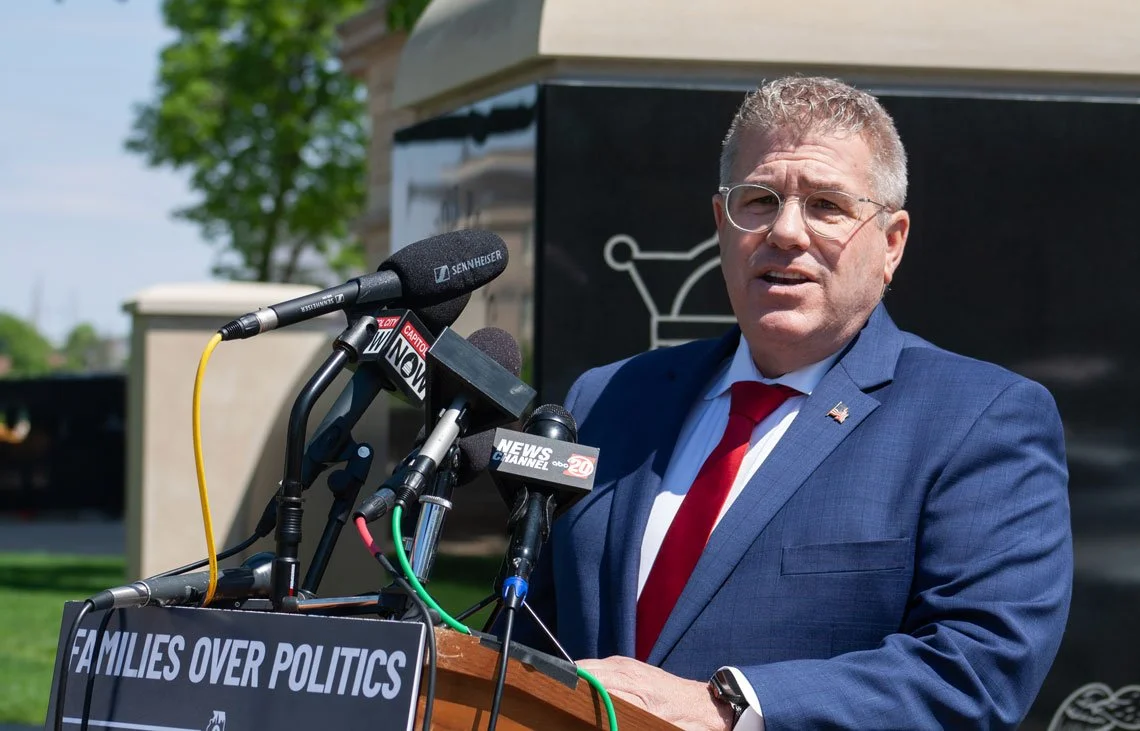
Republican candidate for governor Darren Bailey holds a news conference at the Illinois Peace Officers Memorial outside the Capitol in Springfield on Thursday, April 30, 2026. (Capitol News Illinois by Jenna Schweikert)

INOGA/IPRB Safety Day Held at Wabash Valley College

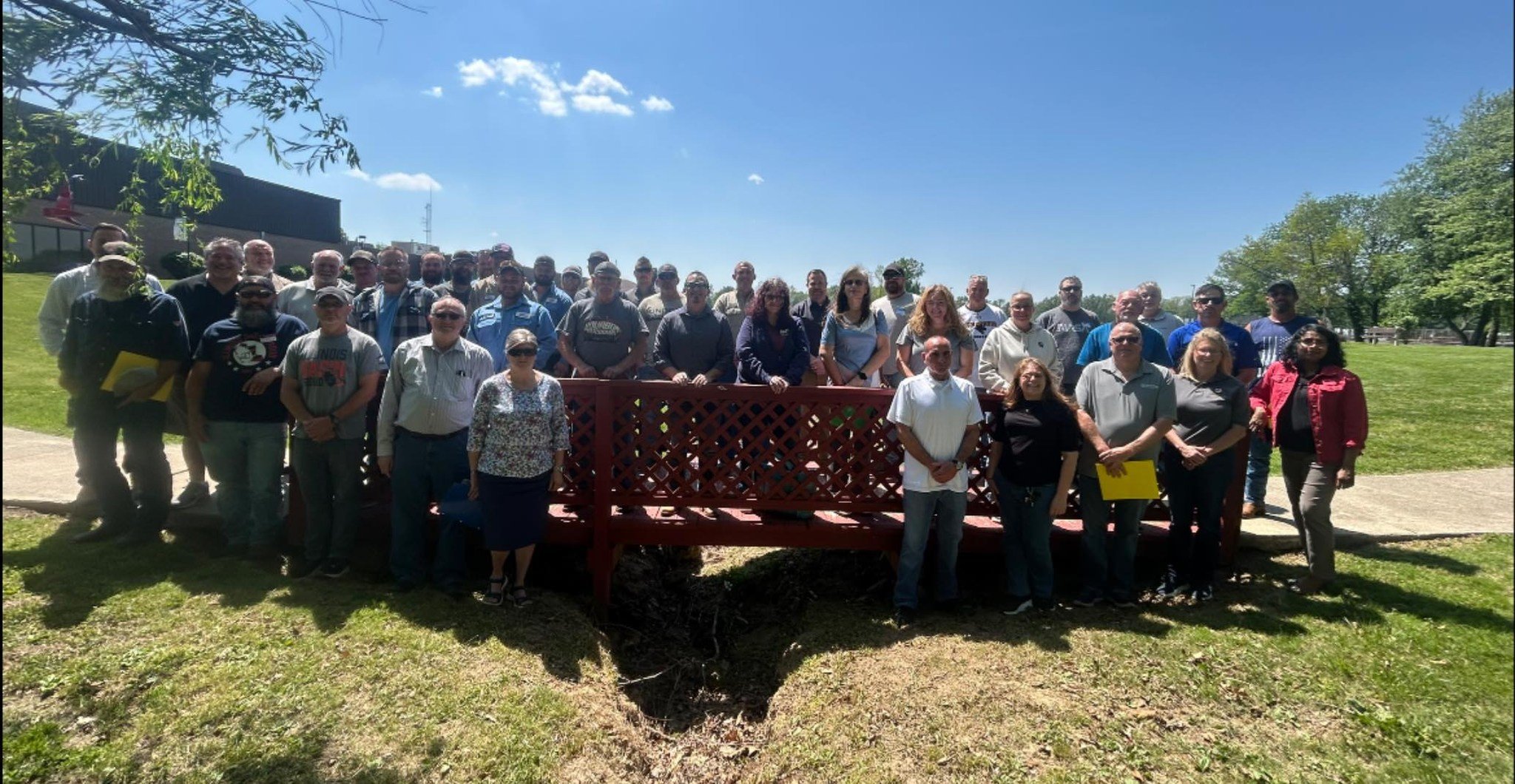
Approximately 50 Illinois Basin oil industry professionals attended the Indiana Oil & Gas Association/IPRB Safety Day event held at Wabash Valley College on April 23. Attendees earned training certifications after attending four highly informative and comprehensive workshops during this all-day event (see details below). IPRB looks forward to continued collaboration with INOGA to promote a culture of safety in the Illinois Basin!

Jasper Man Arrested for Intimidation Against an Elected Official

Dubois County - Thursday, April 30, 2026, officers from the Indiana State Police Jasper Post arrested a Jasper man after he allegedly sent threatening statements on a social media platform to Micah Beckwith, the Indiana Lieutenant Governor. 

Indiana State Police First Sergeant Detective Rob Gardner of the Jasper State Police Post was contacted regarding social media posts made on Meta Platforms Inc. (formerly Facebook) and messages making threats towards Indiana Lieutenant Governor Beckwith.  These threats were allegedly committed by Joshua Wasson, age 24, of Jasper, Indiana.

Indiana State Police Lieutenant Brock Werne and Trooper Andrew Recker immediately opened a case. As a result of the investigation, Wasson was interviewed at his place of employment. While retrieving items associated with the investigation, in Wasson’s vehicle, suspected marijuana and paraphernalia were also located. Wasson was arrested and transported to the Dubois County Jail where he is currently being held without bond.    

The investigation was conducted by Indiana State Police Lieutenant Brock Werne, Trooper Andrew Recker, and Trooper Jon Villanueva.

Arrested and Charges: Joshua Wasson, 24, Jasper

  • Intimidation (Against a Public Official) – Level 6 Felony

  • Possession of Marijuana – Class B Misdemeanor

  • Possession of Paraphernalia – Class C Misdemeanor

Pair Face Class X Drug Charge

Charges have been filed this week in Wabash County Circuit Court against two individuals following a Tuesday arrest.

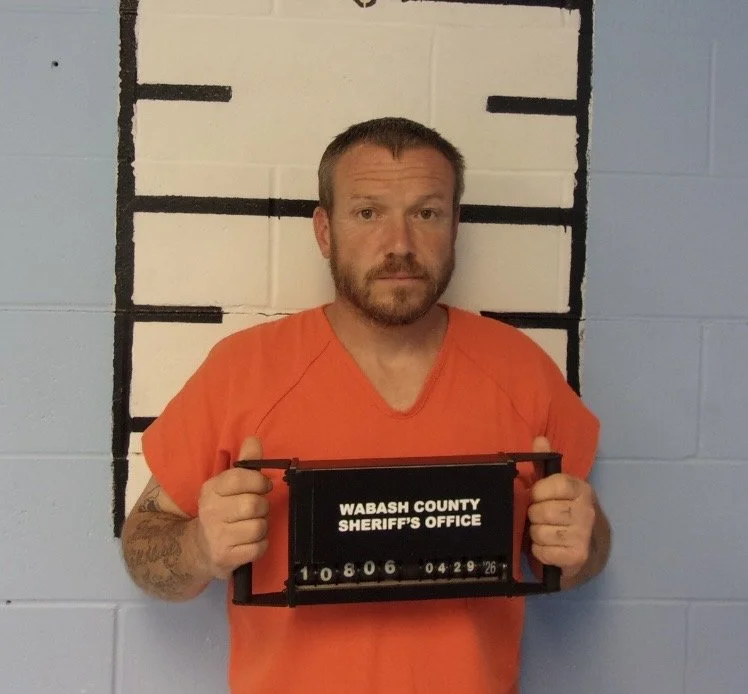
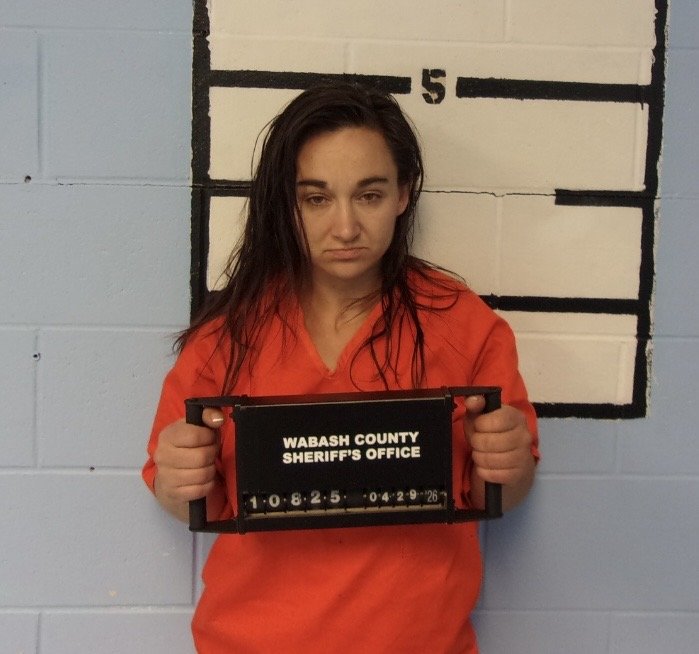
Wabash County State’s Attorney Kelli Storckman has charged 45 year old Jonathan Acord of Washington, IL and 31-year-old Sally Spivey of Albion with Class X felony possession of methamphetamine with intent to deliver.

Both Acord and Spivey are currently being held in the Wabash County Jail. Storckman has filed a petition requesting pretrial detention.

Spivey’s first court appearance is scheduled for June 30th.

A Class X felony in Illinois carries a potential prison sentence of 6 to 30 years, along with a possible fine of up to $100,000.

911 call leads to Battery arrest

On April 30, 2026, at 7:39 p.m. Gibson County Central Dispatch received a report of a physical disturbance in the 5300 block of South 175 East near Fort Branch.  Upon arriving at the residence law enforcement separated the parties involved and began an investigation into the incident.  At the conclusion of the investigation 44-year-old Sausha Tooley of Fort Branch was taken into custody and transported to the Gibson County Detention Center where she was charged with Battery.
 
Arresting Officer Wes Baumgart was assisted in his investigation by Princeton Officer Logan Lashbrook. 
 
All criminal defendants are to be presumed innocent until and unless proven guilty beyond a reasonable doubt in a court of law.

City Council Hears Update on 4th Celebration

At Monday afternoon’s Mount Carmel City Council meeting, Mayor Joe Judge provided an update on the city’s upcoming America 250 celebration.

Judge said planning for the event is coming together well, with a full week of activities scheduled.

The mayor noted the celebration will feature seven days of events, offering something for all ages throughout the community. He said a complete schedule of activities is expected to be released next week.

Judge also recognized a group of local high school students for their contribution to the celebration. He thanked Brianna Witsman’s class for designing the official America 250 Mount Carmel logo, which will also be unveiled next week.

City officials say more details about the week-long celebration will be shared soon as planning continues.

Illinois lawmakers punt remap amendment after SCOTUS Voting Rights Act ruling

House-approved amendment sought to rewrite redistricting guidelines

By BEN SZALINSKI
& PETER HANCOCK
Capitol News Illinois
news@capitolnewsillinois.com

Article Summary

  • Senate President Don Harmon, D-Oak Park, said the Senate will not move forward with a constitutional amendment rewriting the state’s redistricting rules after a ruling by the U.S. Supreme Court on Wednesday.

  • The nation’s high court invalidated Louisiana’s congressional district over racial gerrymandering, opening the door for other potential challenges to maps drawn on racial lines.

  • The ruling undermines a provision in the federal Voting Rights Act that has been interpreted to prohibit splitting large minority groups into multiple districts to dilute voting power. Illinois lawmakers sought to add that provision to the state constitution. 

  • The proposed amendment passed the House last week after House Speaker Emanuel “Chris” Welch said he feared the U.S. Supreme Court could eliminate racial protections. 

This summary was written by the reporters and editors who worked on this story. 

SPRINGFIELD — Illinois lawmakers are not planning to pursue a constitutional amendment on redistricting after a key U.S. Supreme Court ruling on Wednesday.

Senate President Don Harmon, D-Oak Park, told Capitol News Illinois that Senate Democrats decided not to call an amendment that passed House last week after the U.S. Supreme Court dealt a hefty blow the federal Voting Rights Act. If approved by voters, it would have rewritten the state’s redistricting rules. 

“We want to spend a little bit of time unpacking the Supreme Court decision to make sure we get it right and protect the voting rights of Illinois residents,” Harmon said. “It's much better and much more important to get this correct than to do it quickly. The worst thing that would happen is if we rushed and there were unintended consequences that undermine people's voting rights.”

But that means the matter will have to wait until at least 2028, as lawmakers faced a May 3 deadline to approve constitutional amendments for voters to consider in November.

The proposed amendment would have inserted a provision from the Voting Rights Act into the state constitution to specifically direct lawmakers to consider race in drawing district lines. 

The Voting Rights Act provision has long been interpreted as a ban on splitting large minority groups into multiple legislative districts to dilute their voting power. 

The U.S. Supreme Court, however, struck down Louisiana’s congressional map on Wednesday, ruling a district drawn to consolidate Black voters was illegally gerrymandered based on race. While the decision did not broadly eliminate the section of the Voting Rights Act, dissenting liberal Justice Elena Kagan suggested it is “all but a dead letter.” 

Racial intent

David Becker, founder and executive editor of the nonpartisan Center for Election Innovation and Research, called the decision a “radical” change in the way voting rights cases are now reviewed.

“When I woke up this morning, we had a functional Voting Rights Act,” he said during a media briefing on the case Wednesday. “And unfortunately, I can't say that anymore.”

Prior to Wednesday’s decision, he said, plaintiffs in voting rights cases only had to show that a set of maps had the effect of diluting a minority group’s voting strength, not that there was a specific intent to discriminate.

Wednesday’s decision, he said, reverses that standard and provides what he called “a clear roadmap” for how a state legislature can engage in racial gerrymandering without it being declared illegal.

“All it has to do is to be very careful about talking about intent,” he said. “Don't talk about intent at all. Couch everything in partisanship. And then it can't even be really reviewed because racial effects aren't going to be enough to establish a violation, even if those racial effects are stark.”

Illinois reaction

Illinois House Speaker Emanuel “Chris” Welch, D-Hillside, said fear that the court would strike down protections for racial groups inspired him to pursue the constitutional amendment. While the court did not go that far, the ruling that lawmakers cannot draw maps based on race affirmed many Democrats’ fears. 

Read more: House approves redistricting amendment, fearing federal Voting Rights Act will be eliminated

“The decision by the Supreme Court today on the Voting Rights Act is an abomination,” Gov. JB Pritzker told reporters in Chicago. “It is an attack on a crown jewel of our democracy.” 

Illinois’ proposed amendment would’ve established a priority list stating what factors lawmakers should consider in the redistricting process. It stated they should draw districts “to be substantially equal in population; to ensure that no citizen is denied an equal opportunity to participate in the political process and to elect representatives of his or her choice on account of race; to create, where practical, racial coalition or influence Districts; to be contiguous; and to the extent practicable, to be compact.”

Harmon said the ruling “highlights how much the court would frown upon race being a predominant factor in drawing districts.”

The Illinois Voting Rights Act, which was established in 2011, requires lawmakers to create “crossover” districts where minority groups are a large enough share of the population to potentially elect their preferred candidate and “influence” districts where a racial minority is large enough to sway the outcome of an election toward their preferred candidate. 

Political fight 

House Republicans argued last week that the amendment was in response to a lawsuit they filed last year that sought to overturn the state’s legislative maps by alleging dozens of districts failed to meet a decades-old Illinois Supreme Court precedent that defined an appropriately compact map. The Illinois Supreme Court ultimately tossed the lawsuit, ruling it was filed too late.

They said the proposed constitutional amendment would give Democrats more leeway to draw heavily gerrymandered districts that snake around communities. 

“This Supreme Court decision addresses the very gerrymandering efforts the Democrats are hoping to codify into Illinois law with this Constitutional Amendment,” the Illinois Freedom Caucus, a group of far-right Republicans, said in a statement. “(House Joint Constitutional Amendment 28) is now, very clearly, unconstitutional.” 

New congressional maps are not in General Assembly Democrats’ plans for now either. The possibility was floated last year as other states began redrawing their boundaries to increase partisan representation in Congress, but talks in Illinois faded after Indiana Republicans decided not to attempt a mid-decade remap.

“I think we have an excellent congressional map that reflects the communities of interest across the state,” Harmon said. “I'm not sure that we could, and if we could, whether we should draw a district that leans more one way or the other.” 

Capitol News Illinois is a nonprofit, nonpartisan news service that distributes state government coverage to hundreds of news outlets statewide. It is funded primarily by the Illinois Press Foundation and the Robert R. McCormick Foundation.


Senate President Don Harmon, D-Oak Park, said state lawmakers need more time to evaluate a U.S. Supreme Court ruling before proceeding with a constitutional amendment. (Capitol News Illinois photo by Jerry Nowicki)

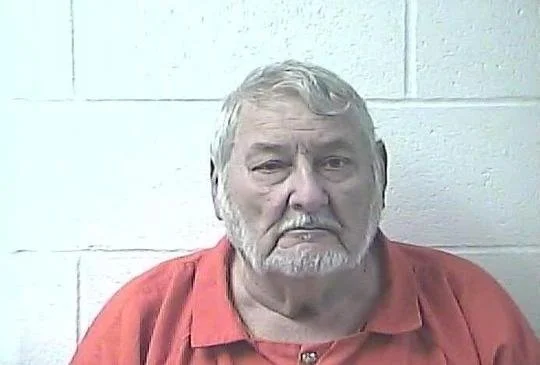
ILLINOIS STATE POLICE MAKES ARREST IN 42-YEAR HOMICIDE COLD CASE AND SEEKS THE PUBLIC’S ASSISTANCE

JOPPA – An Illinois State Police (ISP) Division of Criminal Investigation (DCI) Zone 7 homicide investigation resulted in the arrest of 76-year-old George E. Bradfield of Owensboro, Kentucky after an extensive investigation that spanned over four decades.

 On March 30, 1984, the body of 26-year-old Lisa Ann Carnes was discovered in a field in rural Massac County. She died as the result of a single gunshot wound. On April 22, 2026, the Massac County State’s Attorney’s Office charged Bradfield with five counts of Murder.

 The Massac County Sheriff’s Office, the Owensboro (KY) Police Department, the FBI Behavioral Analysis Unit, and Parabon NanoLabs Inc., with funding from EWU Media LLC, assisted with the investigation.

 ISP is continuing its investigation and is seeking the public’s assistance. ​ If you have information about this incident or about Bradfield, please contact ISP.

 Tips or information about this case or Bradfield can be submitted via email directly to ISP at ISP.CRIMETIPS@illinois.gov, or by calling ISP at 618-542-1486 and 618-542-2171 ext. 1202. Individuals providing information can remain anonymous.

Ordinance Violations Can Be Costly Warns City Attorney

City Attorney Derek McCullough reminded residents about local ordinances involving e-bicycle, golf cart, and side by side permits and animals running at large at Monday’s City Council meeting.

McCullough said while the base fines for violations are relatively small, the total cost can quickly increase once state-mandated assessments and court fees are added. He noted that a citation for an unregistered e-bicycle, golf cart, or side by side can end up costing more than 200 dollars if it goes through the court system.

He added the same applies to dogs running at large, where initial fines may be minimal but total costs rise significantly with additional fees.

McCullough encouraged residents to avoid those expenses by making sure e-bikes, golf carts, and side by sides are properly permitted and dogs are kept on a leash, emphasizing that compliance can save both time and money.