State Permitting Continues To Slow Pool Work

At Monday afternoon’s Mount Carmel City Council meeting, Mayor Joe Judge provided an update on progress at the city’s new aquatic center.

Judge said crews with Landmark Aquatics were on site Monday and are beginning work, with pool tiling expected to get underway this week. He added the project is awaiting final approval from the State of Illinois before moving into full construction mode, which could happen later this week or early next week.

The mayor expressed frustration with delays at the state level, noting the approval process has taken longer than expected. Judge said while he understands staffing challenges, the timeline has slowed progress on the project.

Despite the delays, Judge said work is now moving forward on site, with hopes the project will soon receive the necessary approvals to continue full construction.

New Ambulance Agreement Approved By WGH Board

The Wabash General Hospital Board of Directors approved an updated ambulance service agreement with Wabash County at their April meeting held on Monday.

President and CEO Karissa Turner said the agreement replaces the hospital’s original contract with the county, which dates back to 1993 and had not been updated since. She said the review was prompted by the hospital’s ongoing expansion plans.

The new agreement is structured as a one-year term that automatically renews, with provisions allowing termination either by mutual agreement or by the hospital.

Turner emphasized the importance of the long-standing partnership, noting the hospital’s paramedics and EMTs work closely with emergency room staff, assist with patient transfers, and provide additional support such as IV starts. She added the service offers paramedic-level care to county residents.

Hospital officials also noted the ambulance service operates at an annual loss of around $400,000, with the county contributing just over $100,000 through tax revenue.

Following discussion, the board approved the agreement, allowing Turner to formally sign the updated contract with the county.

WGH Board Hears Update On Strategic Plan

At Monday evening’s meeting of the Wabash General Hospital Board of Directors, President and CEO Karissa Turner provided a first quarter update on the hospital’s strategic plan.

Turner highlighted several areas of progress, including community outreach efforts. She said the hospital hosted two free foot care clinics in April, serving 107 patients in Mount Carmel and 79 in Olney.

In terms of quality and patient experience, Turner reported the hospital is performing in the 85th percentile for its “provider would recommend” score.

She also noted improvements in services, including the addition of a new CT scanner and expanded availability of MRI services.

On the workforce side, Turner announced Wabash General Hospital has been named one of the Best Places to Work in Illinois for 2026, with final rankings to be released May 7th.

Financially, the hospital continues to show growth, with cash and investments increasing by 2.6 million dollars since the end of 2025. Days cash on hand has also risen to 174, moving closer to the hospital’s goal of 205.

Turner said the report reflects the first quarter of the hospital’s new strategic plan cycle.

#348 School Board Sets Special Meeting

WABASH CUSD #348

BOARD OF EDUCATION SPECIAL MEETING

Wabash CUSD #348 District Office

Wednesday May 6, 2026

5:00 p.m.

AGENDA

1. Call to order / Roll call

2. Executive Session pursuant to Section 2(c)(1) of the Open

Meetings Act: “The appointment, employment, compensation,

discipline, performance, dismissal of specific employees, or

student discipline.”

3. Employment

4. Adjourn

City Opened Senior Center As Storm Shelter

The Wabash County Senior Center was opened as a storm shelter last night as severe weather moved through the area.

During Monday afternoon’s Mount Carmel City Council meeting, Mayor Joe Judge thanked city employees who stepped in to staff the shelter, noting many worked additional hours beyond their regular shifts.

Judge said the city no longer relies on volunteers to operate the shelter, and he expressed appreciation for those willing to come in and help during severe weather events.

The mayor also addressed questions about the facility’s policy on animals. He said pets are allowed, but must be kept in kennels due to health regulations, as the senior center also operates as a restaurant and must be ready for service the following day.

Judge added the policy also considers the safety and comfort of all individuals using the shelter, noting some people may be uncomfortable around animals.

He emphasized the senior center is not a full-scale storm shelter, but rather the basement is used as a temporary safe location during severe weather situations.

‘It’s not for her’: DHS dedicated Midway Blitz in her name.  Her mother says she would have hated it 

Illinois Accountability Commission hears final two days of testimony into misconduct by federal immigration officials

By MAGGIE DOUGHERTY
Capitol News Illinois
mdougherty@capitolnewsillinois.com 

Article Summary 

  • The mother of a young woman to whom the Trump administration dedicated Operation Midway Blitz testified to the Illinois Accountability Commission on Monday, saying her daughter would not have wanted this legacy.

  • The testimony comes in the penultimate public hearing of the commission ahead of a Thursday deadline to provide findings and recommendations to Gov. JB Pritzker.

  • Since its formation last October, the commission says it has conducted 16 in-depth investigations into federal agent misconduct, based on over 60 interviews and hundreds of hours of body camera, surveillance camera and private citizen footage.

This summary was written by the reporters and editors who worked on this story. 

CHICAGO — The Trump administration dedicated Operation Midway Blitz in a press release to 20-year-old Katie Abraham, who was killed last year in a drunken driving accident in Urbana by a Guatemalan man residing in the U.S. without legal status. 

But her mother said the administration never sought her permission to use her daughter’s name in furtherance of its political agenda, an association she says her daughter would not want. 

Denise Lorence, Abraham’s mother, testified Monday during one of the final two hearings of the Illinois Accountability Commission, a body created by Gov. JB Pritzker last fall to document misconduct of federal agents amid the Chicago area immigration enforcement campaign. 

“Katie would have hated it, and she would have hated having her name continuing to be used by politicians, publicly and on social media,” Lorence told commissioners. “The Trump administration preyed on her name and used it in a vile way.”

Abraham’s father, Joe Abraham, has been supportive of President Trump’s immigration enforcement campaign, appearing beside the president as he promoted his domestic agenda in the White House last June. 

He and his current wife were featured in a video released by the Department of Homeland Security, voicing support for increased border security funding. Abraham also penned an op-ed in the Chicago Tribune, criticizing Illinois lawmakers for undermining federal immigration policy.

“If even just one life is saved because of her story, then I know my Katie would be proud that I spoke up,” Abraham wrote. “As parents, we all process grief in different ways. The best way I know to honor my daughter is to help prevent other families from living this nightmare.”

The immigration enforcement campaign conducted last fall detained roughly 3,800 people and deported nearly 2,500, the majority of whom had no criminal record, according to an analysis by the Chicago Tribune

It’s not how her daughter would want to be remembered, Lorence said, arguing that DHS should have consulted both parents. 

“It’s not for her,” Lorence said. “Having my daughter’s legacy associated with this violent government operation and their political agenda, instead of the light and positivity that she contributed to this world is inexcusable, and she would want nothing to do with it.”

DHS did not respond to a request for comment regarding the use of Abraham’s name in connection with Operation Midway Blitz. 

Sixteen investigations

The testimony from Abraham’s mother was featured in the second-to-last hearing to be held by the commission before it submits a final report with its recommendations to Pritzker on Thursday. 

Since the commission was formed last October, it has conducted 16 in-depth investigations in Chicago based on interviews with over 60 eyewitnesses, nearly 100 hours of federal agent body camera footage and hundreds of hours of footage from surveillance cameras, personal devices and social media.

It also conducted seven commissioner-led private group listening sessions in different neighborhoods, according to a news release.

 Read more: Accountability Commission hears testimony about excessive force by ICE agents. Felt like a ‘war zone’ | ‘A crisis for the nation’: ICE accountability commission continues to seek solutions | A city blanketed in fear: Accountability Commission hears shocking testimony about ICE

The investigations included the fatal shooting of Silverio Villegas Gonzales, a Mexican father of two fatally shot by an Immigration and Customs Enforcement agent during a September traffic stop in Franklin Park, and the shooting of Marimar Martinez, a teacher’s aide who was shot five times by a Border Patrol agent in October. 

Martinez is expected to testify tomorrow with her lawyer, as is former Illinois House Minority Leader Jim Durkin.

Capitol News Illinois is a nonprofit, nonpartisan news service that distributes state government coverage to hundreds of news outlets statewide. It is funded primarily by the Illinois Press Foundation and the Robert R. McCormick Foundation.
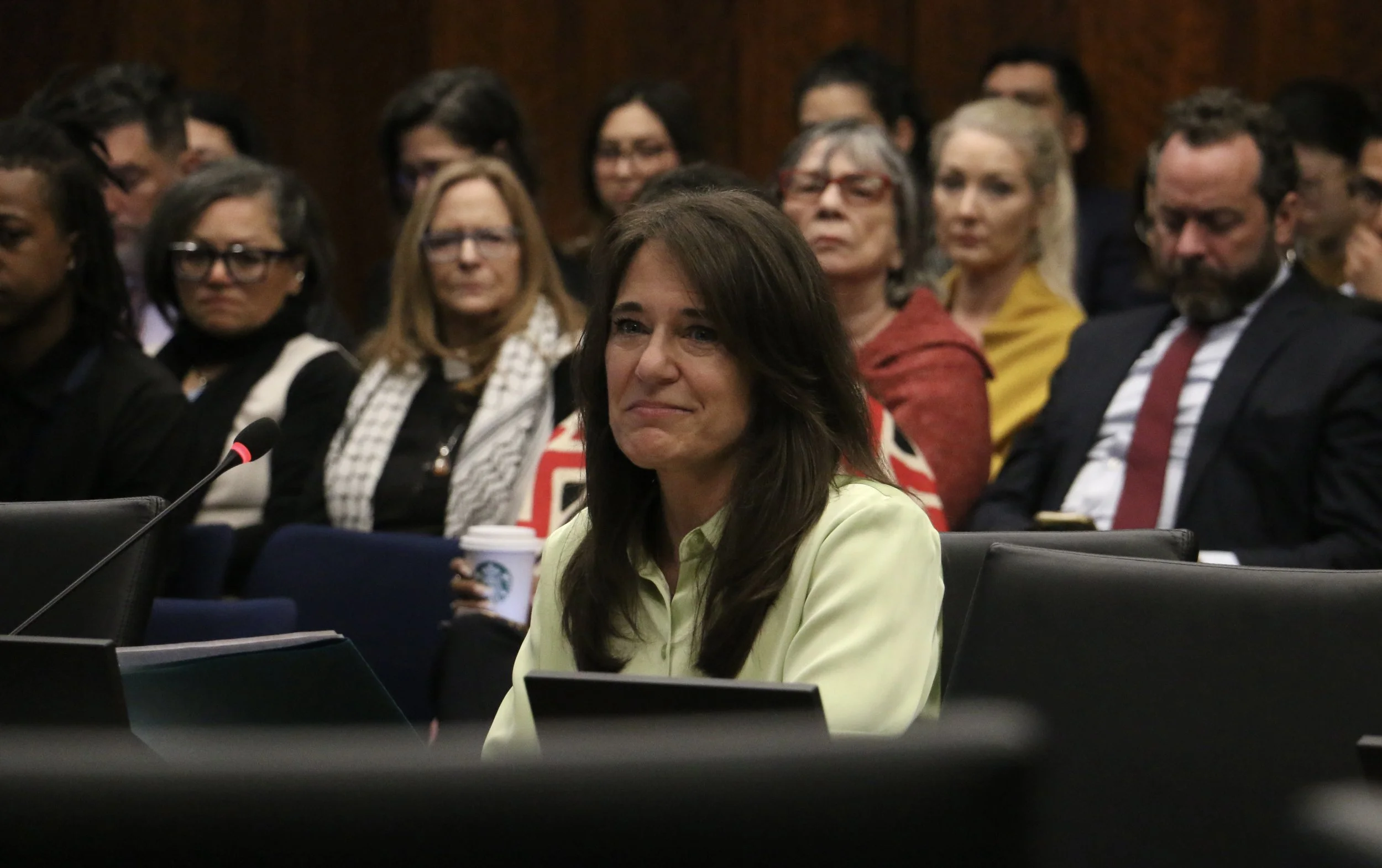
Denise Lorence, mother of Katie Abraham, says during an April 27 hearing of the Illinois Accountability Commission that her daughter should be remembered as the “empathetic and caring person she was,” not used to further the Trump administration’s political aims. (Capitol News Illinois photo by Maggie Dougherty) 

Federal agency casts further uncertainty on Illinois’ credit card ‘swipe fee’ law

Measure slated for a May appellate court hearing prior to July 1 effective date 

By JERRY NOWICKI
Capitol News Illinois
jnowicki@capitolnewsillinois.com

Article Summary 

  • The federal Office of the Comptroller of the Currency published two filings last week stating federal law prohibits states from regulating credit and debit card “swipe” fees. 

  • An Illinois law that would prohibit financial institutions from charging those fees on the tax and tip portion of credit card bills is tied up in the courts, slated for a May 13 hearing.

  • The state law is scheduled to take effect July 1, but one OCC filing would stop its implementation. 

  • It’s the latest development in a two-year legislative fight between banks and retailers that will affect hundreds of millions of dollars in revenue for each of the industries. 

This summary was written by the reporters and editors who worked on this story.

A federal agency says Illinois can’t limit credit card swipe fees for federally chartered banks, even though a federal judge earlier this year ruled that it could. 

Two interim filings posted last week by the Office of the Comptroller of the Currency, an independent subsection of the U.S. Treasury Department, represent the latest twist in a two-year legislative fight between banks and retailers.

Read the filings: Preemption of Illinois law | Restatement of National Banking Act

One of the filings specifically preempts the state’s first-of-its-kind Interchange Fee Prohibition Act, throwing the policy into further uncertainty by creating a second legal front and added pressure on state lawmakers amid an ongoing appellate court case. 

Interchange or “swipe fees” are automatically applied to debit and credit card transactions, redirecting about 1-2% or more of a transaction’s cost from the merchant to the banks, credit unions and card companies. The fees include both a set amount and a percentage of the transaction, but the credit card companies, namely Visa and Mastercard, control how they’re calculated. 

Read more: ‘Credit card chaos’? Financial institutions bet big on repeal of first-of-its-kind Illinois law

Illinois lawmakers passed the Interchange Fee Prohibition Act as part of the state budget in May 2024 to prohibit financial institutions from charging such fees on the tax and tip portion of credit and debit card transactions. 

At stake is more than $100 million annually between retailers and banks, as exempting tax and tips from interchange fees would reduce the banks’ cut of swipe fees by 10% or more. 

Banks have since warned of impending “credit card chaos.” They say the current system only asks for the total amount of a transaction, meaning consumers might have to do multiple swipes or pay cash to cover the tax and tip portion of transactions. Retailers say they’re bluffing and can implement the changes with mere software upgrades. 

Given the pending court case and a hard push from financial institutions, lawmakers are considering pushing back the state law beyond its July 1 effective date that was already delayed by a year.

Reaction to the filings

The financial institutions praised the OCC’s filings but warned they create a piecemeal legal landscape by only applying to banks that are federally chartered. Smaller state-chartered institutions would still be subject to the law.

A joint statement from the Illinois Bankers Association, Illinois Credit Union League, American Bankers Association and America's Credit Unions urged similar application to national credit unions. 

“They (the filings) reinforce the firm legal foundation of our ongoing appeal and underscore that Illinois’ misguided law is unlawful and should not be implemented,” the statement read. “The OCC’s actions should also send a strong signal to other states to follow the law and not repeat Illinois' mistake.”

Rob Karr of the Illinois Retail Merchants Association accused the Trump administration of trying “to evade the law, undermine the legal system and threaten the very consumers they purport to serve.”

IRMA was heavily involved in the Illinois law’s passage, which was a concession to retailers after the state capped a tax exemption merchants claim for serving as the state’s de facto sale tax collectors. 

 “We are confident the courts will make the final decision in this matter — not an agency operating at the behest of big banks and credit card companies,” Karr said in a statement. 

The case has been tied up in court for two years. The law was initially set to take effect in July 2025, but lawmakers pushed it back a year to allow time for implementation and to allow the court challenge to play out. 

A U.S. district judge sided with the retailers and the state in February. Judge Virgina Kendall ruled that the National Banking Act prohibits states from regulating fees charged by banks — but swipe fees are set by third parties, namely card companies. Because of that, the state has the authority to regulate, she ruled. 

But the banks quickly appealed to the 7th Circuit Court of Appeals, and arguments are slated for May 13. Some believe the matter could even come before the U.S. Supreme Court.

The latest filings

This is not the first time the Office of the Comptroller of the Currency weighed in on the issue. It did so under President Joe Biden as well in a 2024 legal filing, referring to the Illinois law as “bad policy” and “unworkable.”

Addressing that point, Kendall wrote: “That may well be true. But even the Office of the Comptroller does not meaningfully contest that the third parties set the fees.”

She also warned that national banks “could shield a vast amount of their otherwise regulatable activities from State regulation by hiding behind third-party entities like the credit card companies.” 

The OCC rebutted that line in one of the two recent filings that applied to the National Banking Act more broadly.  

The interim final rule explicitly states “national banks may charge non-interest charges or fees, even when such charges and fees are set by or in consultation with third parties.”

Doug Kantor, of the National Association of Convenience Stores, said the ruling goes far beyond interchange fees.  

“The OCC rules endorse price fixing of fees banks charge, including not just swipe fees but a wide range of consumer fees,” he said in a statement. 

The OCC issued “interim final” filings, meaning they can go into effect June 30 and bypass the standard process for proposed rules. The public can submit comments, but ultimately it would require a vote of Congress or an act of a court to repeal the final rule and order.

Capitol News Illinois is a nonprofit, nonpartisan news service that distributes state government coverage to hundreds of news outlets statewide. It is funded primarily by the Illinois Press Foundation and the Robert R. McCormick Foundation.

7th Circuit upholds ex-Speaker Madigan’s conviction of bribery, other corruption

Appellate panel rejects arguments weeks after new trial, prison release ordered for ComEd defendants

By HANNAH MEISEL
Capitol News Illinois
hmeisel@capitolnewsillinois.com 

Article Summary 

  • The 7th Circuit Court of Appeals has upheld all of ex-Illinois House Speaker Michael Madigan’s bribery and other corruption convictions, writing in a 29-page ruling Monday that the once-powerful speaker facilitated changes to state law “all because ComEd funneled money to the right people.”

  • The ruling comes after a separate appellate panel swiftly ordered the release from prison and a new trial for two people convicted of bribing Madigan in a related trial.

  • Madigan is serving out his 7 ½-year sentence in a West Virginia federal prison.

This summary was written by the reporters and editors who worked on this story. 

CHICAGO — A federal appeals court on Monday upheld the 10 guilty verdicts that sent former Illinois House Speaker Michael Madigan to prison, finding no errors in the way the jury was instructed or the “mountain of evidence” the government used to prosecute the influential Democrat during his lengthy bribery trial.

The ruling comes a little over two weeks after the three-judge panel heard arguments from the high-profile legal team Madigan hired last summer to handle his appeal. And while another 7th Circuit panel earlier this month swiftly ordered the release from prison and a new trial for two people convicted of bribing Madigan in a related trial, the judges who heard the former speaker’s appeal were unconvinced of the similar arguments.

Read more: 7th Circuit orders release, new trial for two ‘ComEd Four’ defendants | Madigan’s high-powered appeals team urges 7th Circuit to overturn speaker’s conviction

“Madigan insists that this was run-of-the-mill politics,” Judge Michael Scudder, an appointee of President Donald Trump wrote for the panel. “But a jury of twelve Illinois residents saw the evidence differently. So do we.”

Following a four-month trial, that jury delivered a split verdict in February 2025, ultimately convicting Madigan on 10 of 23 corruption counts, acquitting him on seven and deadlocking on another six. The biggest convictions of the multi-pronged trial, including bribery, were linked to electric utility Commonwealth Edison, which saw a streak of legislative wins in Springfield beginning in 2011.

Prior to then, the utility had been facing dire financial straits and had even gotten close to declaring bankruptcy in the previous decade, according to testimony from former ComEd officials during both Madigan’s trial and the 2023 “ComEd Four” trial.

Read more: Madigan Trial in Review | Michael Madigan: The Rise and Fall

But 2011 was also the year two key Madigan allies began long-term relationships with ComEd. Democratic fundraiser Victor Reyes’ law firm inked what ultimately became a multi-year contract with the utility worth $1.8 million, while recently retired Chicago Ald. Frank Olivo, of Madigan’s native 13th Ward on the city’s South West Side, began receiving $4,000 in monthly checks filtered through a longtime ComEd contract lobbyist, despite doing no work.

During the next eight years, the number of Madigan-allied no-work ComEd subcontractors grew to five, totaling $1.3 million over the time period, while utility officials were pressured to hire, or at least interview, others recommended by the speaker.

And under a few new laws negotiated by ComEd during that time, the utility not only recovered from their financial turmoil, but began to thrive. 

The 7th Circuit Panel’s ruling Monday echoed what federal prosecutors said both during trial and the appeals arguments earlier this month. 

“Michael Madigan spent nearly a decade leveraging his power as one of the highest-ranking public officials in Illinois in exchange for over $3 million of financial benefits for his close political allies,” the 29-page opinion said. “The linkage was clear and far from fleeting. He repeatedly facilitated changes to state law impacting countless energy consumers in northern Illinois, all because ComEd funneled money to the right people.”

Scudder’s opinion was joined by 7th Circuit Judges Nancy Maldonado, an appointee of President Joe Biden, and Frank Easterbrook, the most senior judge on the court, appointed by President Ronald Reagan.

Madigan is serving out his 7 ½-year sentence in a West Virginia federal prison.

Read more: Madigan guilty of bribery as split verdict punctuates ex-speaker’s fall | Ex-Speaker Madigan sentenced to 7 ½ years in prison for bribery, corruption | Ex-Speaker Madigan reports to West Virginia prison to begin 7 ½-year sentence

Madigan felled by FBI cooperators

In her appeals arguments, Madigan lawyer Amy Saharia drilled down on what defense lawyers argued just as often in the course of the trial: That despite hundreds of hours of wiretapped phone calls, hundreds of other pieces of evidence and testimony from dozens of witnesses, prosecutors never produced evidence of a quid pro quo agreement.

Madigan’s legal team tried to poke holes in the government’s theory of a “stream of benefits” prosecutors said the speaker received from ComEd, which negated the need for any agreement of a specific “official action” Madigan would take for a specific benefit. 

But the panel did not buy it, saying there “did not have to be” an “agreement signed at a sit-down meeting.”

“The jury could reasonably infer from this mountain of evidence that Madigan conspired to receive bribes,” the ruling said. “The jury received overwhelming circumstantial evidence that Madigan agreed to help ComEd at a price in 2011 and then stayed the course through early 2019.”

It was in early 2019 when FBI agents approached ComEd executive Fidel Marquez, who immediately agreed to act as a government mole and secretly record conversations with others who orchestrated the contracts for Madigan allies.

Read more: Former ComEd exec-turned-FBI mole in Madigan probe sentenced to probation

The appeals panel pointed to one of those conversations between Marquez and his predecessor John Hooker, a longtime ComEd executive who’d become a contract lobbyist for the utility in his retirement. At the time, Marquez and others involved were worried about how to handle the no-work subcontractor arrangements with ComEd’s new CEO, a former federal prosecutor.

“‘You’re not going to do something for me, I don’t have to do anything for you,’” Hooker said in a February 2019 conversation, speculating on the speaker’s thought process, adding that Madigan would never say it outright.

“These were not the views of strangers,” the 7th Circuit panel wrote. “And the jury was allowed to rely on them (and other like evidence) to draw conclusions about Madigan’s knowledge and intent.”

Madigan’s dealings with another FBI cooperator, then-Chicago Ald. Danny Solis, resulted in the rest of his convictions. Prosecutors alleged Madigan agreed to perform “official action” in exchange for bribes in the form of business for his property tax appeals firm, including an alleged scheme to help get Solis appointed to a state board in exchange for introductions to high-powered real estate developers.

As laid out in trial, Madigan never ended up recommending Solis to newly elected Gov. JB Pritzker, but the 7th Circuit panel on Monday said that didn’t matter, as “the jury heard evidence that Madigan did indeed plan to make the recommendation,” including asking for Solis’ resume and taking notes on Solis’ preferred appointments.

“The government presented evidence that Madigan understood the weight of his recommendation,” the panel wrote. “He confidently told Solis to ‘just leave it in my hands’ and said that Solis would ‘come in as Pritzker’s recommendation.’ We will not disturb these convictions.”


Capitol News Illinois is a nonprofit, nonpartisan news service that distributes state government coverage to hundreds of news outlets statewide. It is funded primarily by the Illinois Press Foundation and the Robert R. McCormick Foundation.
Former Illinois House Speaker Michael Madigan leaves Chicago's Dirksen Federal Courthouse after a jury convicted him on 10 of 23 corruption charges on Feb. 12, 2025. (Capitol News Illinois photo by Andrew Adams)

Drought causing ongoing concerns, legislative hearings about Illinois water supply 

Large data centers are the latest high-end water users in state 

Article Summary

  • Months of drought and hot temperatures have impacted water levels in Illinois, leading to concerns about water supply. 

  • Those concerns are furthered by the development of data centers, particularly in regions with depleted aquifers. 

  • Water supplies vary across the state because different regions rely on different sources, and some water is easier to access than in other regions. 

  • Advocates say Illinois needs a clear picture of who’s in charge of overseeing water usage and a focused plan for how to manage it. 

This summary was written by the reporters and editors who worked on this story.

By NIKOEL HYTREK
Capitol News Illinois

nhytrek@capitolnewsillinois.com

Drought and hot temperatures have burdened Illinois since last summer, and despite rain improving conditions this spring, the long-term lack of precipitation and high temperatures have impacted water supplies across the state.

Sullivan, a small city southwest of Decatur, declared a water emergency in February that’s expected to last until June. Bloomington recently ended its severe drought proclamation and eased restrictions on water use, but residents are encouraged to continue being judicious. The Illinois Department of Natural Resources has delayed opening Heidecke Lake near Morris to boating because of low water levels. 

As local governments confront water challenges, regional droughts have called attention to lax or nonexistent water management policies in Illinois. State lawmakers have caught on, too, especially as they consider how to regulate data centers, a new type of high-end water user that’s been spreading across the state.

Trent Ford, the Illinois state climatologist, said water monitoring and management can be tricky.

“It is definitely a really, really complex thing with water systems in Illinois,” Ford said. “You know, there's always this overarching kind of perception of water abundance, in some cases overabundance. But that's definitely not the case. That's only a perception. It's a mirage of abundance.”

He said rain in 2026 has improved topsoil moisture, but months of drought mean the dryness has impacted deeper layers of soil and water. Critical rivers like the Sangamon, the Mackinaw, the Kankakee, the Iroquois and the Mason, “are still way below where they normally are this time of the year,” he said, though he expects those levels to improve.

Lawmakers in Springfield, meanwhile, are only in the early phases of considering statewide water use plans, mostly discussing the problem in nonvoting subject matter hearings. The onset of data center development, however, has at least brought the conversations to the forefront. 

“There's several agencies that touch on this, and then you've got local control that does things,” Sen. Rachel Ventura, D-Joliet, said. “You've got the multi-state and multi-country water compact of the Great Lakes. So this is not just something that you can easily introduce and then be done.

“The goal of course is to make sure that our state is safeguarding water so people can have quality of life.”

Water monitoring

Illinoisans rely on lakes, rivers, shallow groundwater and deep groundwater, but measuring water supply can be difficult because it depends on the region of the state and the structure of the ground beneath the surface. 

“Underneath our feet gets really complicated really fast,” said Daniel Abrams, a principal research scientist at the Illinois Water Survey. “Being able to understand that is critical. And we're looking at all kinds of ways to image and improve that.”

The Water Survey is not a government agency, but it works with the Illinois Department of Natural Resources to conduct research and monitor water supply by using wells that measure groundwater levels and data mapping tools that visualize Illinois’ hydrology. The Water Survey also advises municipalities and counties about managing water.  

The Water Survey does important research, but the lack of state regulatory authority over water makes its task difficult.

Abrams said water supply modeling is a crucial tool for water management, but it’s not perfect, and he and his team are always looking for more data — particularly about water use.

“One of the data sources that right now we have is annual demand,” he said. “But the more we start thinking about drought, the more we start thinking about those peak demand conditions.” 

Shallow aquifers and surface water sources are more susceptible to drought in the short term, but they rebound quickly after rain, Abrams explained. The opposite is true of deep aquifers like the Mahomet Aquifer in central Illinois or the deep sandstone aquifer system in northern Illinois. That means drought and overuse have different effects depending on the location. 

More frequent reporting from municipalities, irrigators and industries would give the Water Survey a better idea of how seasonal demand works and the condition of aquifer levels, he said. 

“Getting information on a quarterly basis or a monthly basis would make our models more accurate and could help us better understand things like impacts of drought to our water supply,” said Jenna Shelton, director of the Illinois Water Survey.

The Illinois Water Inventory Program collects reports about withdrawals, but it doesn’t have a full picture of that demand because of missing data. 

Since 2010, the Water Use Act of 1983 requires annual water usage reports for “all high-capacity wells or intakes pumping 70 gallons per minute or more (100,000 gallons/day).” Systems of wells and intakes that have a combined pumping rate of 70 gallons per minute or greater also fall under the requirement.

Those high-capacity entities include public water suppliers like municipalities, industrial-commercial facilities, wildlife and recreation operations and agriculture irrigators. 

Multiple sources told Capitol News Illinois that enforcement of reporting requirements across the state is lax.

“We are not a government agency, you know, we cannot really enforce the industries, farmers to report water use every year to us,” said Zhenxing “Jason” Zhang, a principal research scientist at the Water Survey who leads state and regional water supply planning. “We don’t get 100% compliance.” 

Water use reporting is key to understanding what the state will need in the future and how to plan for it, he said. Without that information, resource planning is more difficult.

Management and planning

Nora Beck, an employee at the Chicago Metropolitan Agency for Planning, or CMAP, said the state needs to update its rules about who’s in charge of water resources so the state can better manage them.

“Everything legislative has been sort of piecemeal over time,” she said. 

CMAP does water supply planning for northeast Illinois, where many supply issues exist because people outside of Chicago and its immediate suburbs rely on hard-to-replenish aquifers where water levels have dropped dramatically.

A 2018 report from the Water Survey, for example, projected Joliet would be unable to meet water demands by 2030 if it continued using the aquifer, so the city is in the process of moving to Lake Michigan as a source.

Illinois has a limit for how much water it’s allowed to draw from the lake because of the Great Lakes–St. Lawrence River Basin Water Resources Compact — an agreement between eight states and two Canadian provinces concerning water quality and withdrawals from the Great Lakes. That limit doesn’t exist for groundwater, Beck said. 

Beck said approximately 80% of the people CMAP serves rely on Lake Michigan for water, but the rest rely on groundwater sources. 

“We have a water budget, basically, for the Lake Michigan properties,” she said. “The remaining 20% are mostly on groundwater sources where there's not a clear budget. Any user can pump as much as they want.” 

Ventura, the senator from Joliet, has been involved in water policy since she worked as a naturalist for Georgia State Parks and Historic Sites.  

She said looking at each water region in Illinois separately and streamlining oversight authority would be smart approaches to management. Ventura also suggested the state should mimic the Great Lakes Water Compact to create water use agreements across Illinois.

“Having that regional study is still really important,” Ventura said. “And then looking at things like refilling aquifers or having a long-term plan for access to water, I think is important for everyone in our state.”

There’s no single agency that manages water use in Illinois, either, she said. The IDNR, IEPA and the Illinois Department of Agriculture all manage water to different degrees, and with different focuses.

Of the three agencies, the IDNR shoulders the most responsibility for water supply and works with groups like CMAP, the State Water Plan Task Force and the Water Survey to do regional planning and monitoring. But at a February hearing on groundwater, a representative from the IDNR said the agency faces serious staffing shortages that limit its ability to monitor usage and enforce reporting. 

Since 2024, CMAP has worked with IDNR, Illinois-Indiana Sea Grant and the Northwest Water Planning Alliance to develop a water sustainability plan for five counties in northeastern Illinois. Beck said a statewide version of that could be helpful.

Beck has also discussed governance strategies with Freshwater Society, a Minnesota initiative to better manage drinking water. Minnesota is currently developing updated rules for groundwater governance.

“I don't think we need to copy directly from another state,” Beck said. “But I think it's important to note that these other states are recognizing that they need to upgrade their groundwater governance, and they're improving it in ways.” 

Other solutions

Ventura has introduced or cosponsored legislation to give the Illinois Department of Agriculture more authority over some withdrawals, and a bill to put more restrictions on private companies buying water from municipalities. But those measures have stalled. 

She also has a data center regulation bill that would require the facilities to file water use reports and monitor discharged water for pollutants, a provision that could become part of a broader data center regulatory bill. 

The POWER Act, a widely debated data center regulatory bill, has several water-related provisions, including requirements for usage, efficiency and water quality monitoring. 

“We are looking at, you know, hundreds, thousands, millions of people who need access to water and what that looks like for the future as we move into things like data centers and other climate concerns,” Ventura said.


Capitol News Illinois is a nonprofit, nonpartisan news service that distributes state government coverage to hundreds of news outlets statewide. It is funded primarily by the Illinois Press Foundation and the Robert R. McCormick Foundation.

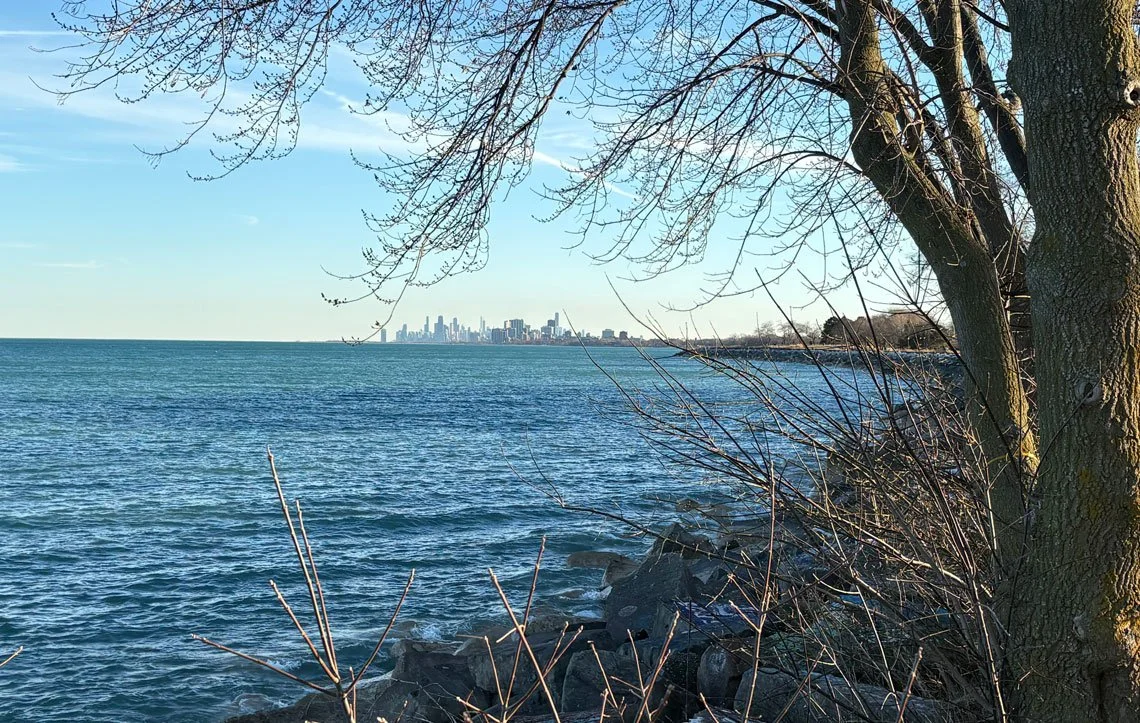
The Chicago skyline as pictured across Lake Michigan from Evanston. (Capitol News Illinois photo by Jerry Nowicki)

Mt. Carmel Man Sentenced to Prison After Probation Violation

Wabash County State’s Attorney Kelli Storckman reports a Mount Carmel man has been sentenced to prison following a probation violation.

Forty-nine-year-old Steven B. Foote has been sentenced to three years in the Illinois Department of Corrections, followed by six months of mandatory supervised release.

Foote had originally been placed on probation in November of 2025 after a domestic battery conviction. However, a subsequent probation revocation hearing found he failed to comply with the terms of that probation.

Authorities say Foote did not report to his probation officer as required and also committed a new offense, public indecency, after an incident in which he exposed himself while in the drive-thru of a local restaurant.

As a result of those violations, the court revoked Foote’s probation and imposed the prison sentence.