Commissioners Table Revisions To Solar Ordinance

At last week’s meeting of the Wabash County Commissioners, board members agreed to table action on an updated county solar ordinance.

Board Chairman Tim Hocking said the county recently received a draft of the revised ordinance from Bellwether, reflecting changes required to comply with a new state law passed in January. Hocking noted commissioners have not yet had sufficient time to fully review the document.

He also said the board would like to seek input from State’s Attorney Kelli Storckman before moving forward, to ensure the ordinance meets all legal requirements under the updated state statute.

Commissioners agreed to table the item to a future meeting, giving members additional time to review the proposed changes. Hocking added the board is aware of the updates and will continue working toward compliance with the new state law.

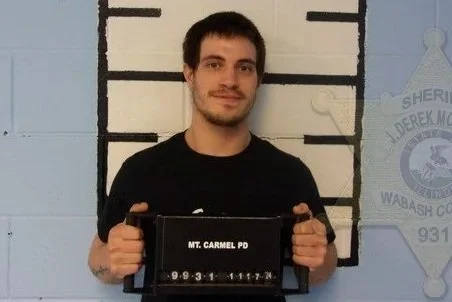
Wabash County Jury Trial for Hunter Ingram Delayed to July; Defense Cites Witness Issue

In Wabash County Circuit Court, the scheduled May 4th jury trial of Hunter Ingram has been vacated.

Ingram was back in court last week for a final pre-trial hearing. During that hearing, the state indicated it was ready for trial. However, the defense, represented by attorney Roger White, moved to continue the case, citing the possible unavailability of a potential expert witness. Court records show no witness list has been filed and witnesses have not been disclosed by the defense.

The court also noted that Ingram’s continued detention is necessary to avoid what was described as a real, specific, and present threat to the community.

Judge William C. Hudson granted the defense motion to delay over the objection of Wabash County State’s Attorney Kelli Storckman.

A new schedule has now been set, with a pre-trial hearing on May 18th at 9:00, a final pre-trial on June 15th at 9:00, and a jury trial scheduled for July 6th.

Ingram, 27, is charged with criminal sexual assault and aggravated criminal sexual abuse stemming from an alleged incident in November 2024 at a residence in the 600 block of West 6th Street in Mount Carmel. He has entered a not guilty plea and remains held in the Wabash County Jail.

Commissioners Hear Report From County Highway Engineer

At Monday afternoon’s meeting of the Wabash County Commissioners, Highway Engineer Dustin Bunting provided an update on several ongoing projects and funding matters.

Bunting said the county is still awaiting additional information from IDOT regarding the bridge bundling pilot program, noting he hopes to have an update by next month’s meeting. He also reported the county’s annual oil and chip letting was held April 10th, with bids coming in at what he described as reasonable levels. Stone prices increased slightly from last year, while oil prices remained steady.

On the maintenance side, Bunting said county crews have nearly completed ditching work and have finished shoulder repairs. Crews are now preparing for road patching, replacing entrance culverts, and gearing up for mowing season ahead of Memorial Day weekend.

Bunting also attended a recent Greater Wabash Regional Planning Commission meeting focused on a statewide Comprehensive Safety Action Plan in partnership with IDOT. The initiative aims to reduce traffic fatalities to zero through a combination of infrastructure improvements, education, and community-based solutions.

In response to questions about state funding, Bunting said changes at the state level are not expected to impact local motor fuel tax revenues. However, he noted there could be some effect on “needy” and consolidated county funding due to shifts in how interest-based funds are allocated.

Judge Admonishes Defendant For Violating Rules At Treatment Facility

A judge is warning a defendant to follow the rules of his court-ordered treatment program or face jail time.

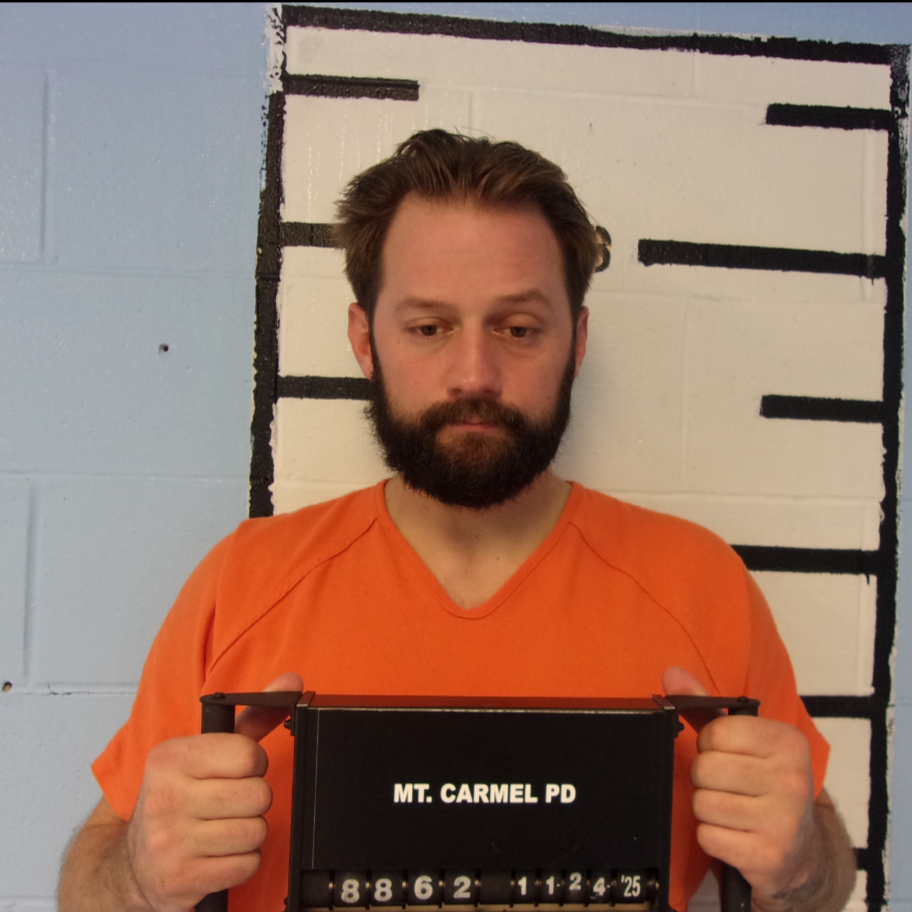
During a status hearing Thursday, Judge Denton Aud sternly admonished 34-year-old Jeremy Birkla for violating rules at the House of Victory Recovery Center in Vincennes. The facility had notified the court of the violations.

Judge Aud told Birkla he must fully comply with the program’s requirements moving forward or he will be remanded back to the Wabash County Jail.

Birkla had previously been granted permission in February to enter long-term treatment for alcoholism under strict conditions, which also resulted in his scheduled jury trial being vacated.

He faces multiple charges, including aggravated domestic battery, unlawful restraint, and interference with the reporting of domestic violence stemming from alleged incidents last November.

A pre-trial hearing in the case is now set for May 28th.

IECC Board Summary-April 2026

The Board of Trustees of the Illinois Eastern Community College District No. 529 met Tuesday, April 21, 2026 at Frontier Community College, Fairfield, Illinois.

The Board approved honoring Jerry Cox’s longstanding support of IECC by naming the new Frontier Community College athletic facility the Jerry Cox Athletic Center and its competition floor the Jerry Cox Court, recognizing his significant donations and ongoing commitment to student success.

Minutes of the Board of Trustees regular meeting held on March 24, 2026 and special meeting held on April 7, 2026 were approved.

The Board approved fee updates effective Fall 2026, including the elimination testing fee which will save students approximately $177, and redistributing a $40 lab fee in the Medical Assistant program evenly across two courses without changing total program cost.

A new three-year agreement with Assessment Technologies Institute (ATI) to continue providing nursing students with testing, remediation, and NCLEX preparation through a cost-recovery fee assessed to first-year RN students was approved.

The Board waived a second reading and approved revisions to the following policies:

• Assessment Policy 800.4 – minor revisions that include the establishment of an annual report to the Board of Trustees summarizing assessment activities and outcomes.

• Tuition Waivers Policy 500.14 was updated to eliminate tuition waivers for specified counties and Indiana students in designated counties.

A first reading of Trustee Onboarding and Orientation Policy 100.44 was presented. This new policy, developed at the Board’s direction, establishes a structured onboarding and orientation process for new Trustees. The policy will be considered for approval at next month’s meeting.

The Board accepted the 2025 IECC 403(b) Plan report, summarizing plan participation, investment options, and total assets of approximately $6.9 million, in fulfillment of fiduciary oversight responsibilities.

The Board approved a transfer of a donated, uninhabitable property at 402 E. Locust in Robinson to the City of Robinson.

The Board authorized administration to proceed with the full disposition and potential sale of the Garden Valley Apartments property following the end of a temporary arrangement with a local property owner.

Approval of employment was given for Adam McInter as TRIO Upward Bound Academic Counselor at LTC effective June 1, 2026 and Vanessa Stevens as OCC Custodian effective April 27, 2026.

New employment contracts were approved for Chancellor Ryan Gower; LTC President/Vice Chancellor of Institutional Outreach Tona Ambrose; OCC President/Vice Chancellor of Business Operations Chris Simpson; and FCC President/Vice Chancellor of Business & Industry Sharmila Kakac.

A change in status was approved for Cassandra Goldman from Dean of Students to Vice Chancellor of Student Affairs, and WVC President-Designate effective July 1, 2026.

The Board approved an externship through the Perkins Grant as a special assignment for Nursing Instructor Brittany Ochs.

Resignation ratification was approved for Cody Gifford as FCC Custodian effective April 24, 2026..

Retirement ratification was approved for Dr. Matthew Fowler as WVC President and Vice Chancellor of Student Affairs effective June 30, 2027.

The next regular meeting of the Board of Trustees will be Tuesday, May 19, 2026, at 6:15 p.m. at Lincoln Trail College, Robinson, IL.

Cheadle Case Delayed For Two More Months

The felony case against former Wabash County Sheriff’s Deputy Chase Cheadle has been delayed once again.

On Wednesday, Special Prosecutor Brian Towne notified the court he would be unable to attend yesterday’s scheduled pre-trial conference. As a result, the case has been continued for another two months and is now set for June 18th in Wabash County Circuit Court.

The case has seen repeated delays since late 2024. Cheadle, a former K-9 handler with the sheriff’s department, originally faced eight charges, including official misconduct, theft, cruelty to animals, and animal owner duties. Five of those charges were felonies.

In June of last year, two felony counts including theft and one count of official misconduct were dismissed at the request of the special prosecutor.

Cheadle, who is 31 years old, was arrested following an investigation into the July 2024 death of his police K-9, Kiki, who was found unresponsive. He resigned from the sheriff’s department the following month.

The case remains pending as it moves toward its next court date in June.

Transportation providers, schools, state officials ease school bus driver shortage

The secretary of state adjusted hiring requirements as schools and transportation providers worked to grow the workforce

Article Summary

  • In response to the nationwide school bus driver shortage, a partnership emerged between Illinois schools, transportation providers and the secretary of state.

  • While the secretary adjusted hiring requirements, schools and transportation providers offered flexible hours and sign-on bonuses to attract a larger workforce.

  • First Student, the largest school transportation provider in the country, said the efforts have stabilized the workforce.

This summary was written by the reporters and editors who worked on this story.

By JENNA SCHWEIKERT 
Capitol News Illinois 
jschweikert@capitolnewsillinois.com 

A nationwide school bus driver shortage, driven by the COVID-19 pandemic, persists in some parts of the country. But in Illinois, efforts to attract new demographics of bus drivers and make hiring easier have paid off.

Illinois school districts and transportation providers partnered with the secretary of state’s office to increase hiring and retention in the school bus driver workforce. 

First Student, the largest nationwide school transportation provider, initiated the connection with Secretary of State Alexi Giannoulias.

The shortage, the worst in decades, began in 2020 as a significant part of the bus driver workforce — elderly retirees — were among the most-affected by the virus, according to Leslie Norgren, vice president of consulting at First Student.

In a nationwide survey conducted in 2025 by the Associated Press-NORC Center for Public Affairs Research, a nonpartisan research organization, and HopSkipDrive, a school rideshare company, 80% of school administrators said school bus driver shortages were a problem in their district.

Eighty-three percent of respondents said staff in their districts had to take time away from their core duties to drive school buses or manage car lines at least a few times a year. Fifty-four percent did so weekly over the period.

And 90% said they faced a growing number of students who qualify for free school transportation amid a diminishing workforce and strict financial constraints.

According to its website, First Student is hiring for about 40 part-time driver positions across the state, from Chicago and its suburbs down to Carbondale.

But Norgren said that for now, the market has stabilized and there is no longer a shortage of bus drivers in Illinois. 

“A lot of districts in Illinois outsource their transportation, and that's always been a model in Illinois, because that's what we do, right? That's our core business and our expertise,” Norgren said. “We tend to be much stronger on the recruiting and retention side than at school districts whose core business is educating students.”

In Chicago’s public school district, only about 5.5% of 315,000 students are eligible for bus service under state law, according to a spokesperson for the district. To be eligible for bus service under Illinois law, kids must live more than 1.5 miles from their school or be in danger on their school route.

But that number is growing: An increase in the district’s “most vulnerable” students, those with disabilities and those in temporary living situations, is contributing to an ongoing labor shortage in the district, according to the spokesperson.

But CPS has addressed the shortage by raising driver wages, coordinating with vendors including First Student, assisting with access to public transportation, adjusting school transportation schedules and advocating for adjustments to state tests and certifications, according to the district’s spokesperson.

Spokespersons for the Decatur and Peoria public school districts declined to comment on their efforts to address the shortage. Springfield Public Schools did not respond to a request for comment.

Removing hiring barriers

Giannoulias has worked with companies like First Student and school districts across the state to reduce legislative and administrative barriers to hiring.

 “We’re focused on removing unnecessary barriers while keeping safety at the center of everything we do,” Giannoulias said in a statement. “Our children who depend on bus services in urban, small-town and rural communities must have bus drivers who are not only reliable, but have passed required testing that will keep them as safe as possible on their way to and from school.

“By ensuring the process is accessible and aligned with our core safety values, Illinois will have more reliable and qualified school bus drivers," Giannoulias said.

In one major change, Giannoulias adjusted training requirements to better reflect which type of vehicle drivers operate and petitioned the federal government to waive the requirement of an under-the-hood exam.

In the exam, drivers had to identify the engine components, which doesn’t make sense today because school bus depots have mechanics and techs to do that work, Norgren said. 

“They (state officials) were critical in getting that exemption in Illinois for drivers, so that helped a lot (to) open up the workforce,” Norgren said. “They helped us streamline our training, so that training was more pertinent based on the vehicle you drive.”

Giannoulias also expanded access to the commercial driver’s licensing process by adding exams administered in Spanish and allowing certain farm truck licensees to also operate school buses. 

Throughout the process, safety remained a top priority, Giannoulias and Norgren said.

“We do believe that it's important that the safety standards are met for all drivers transporting students regardless of the vehicle type,” Norgren said. “All of that is very important to the standards that we're offering and that we believe all student transportation should meet.”

Changing the workforce

While working with Giannoulias to ease hiring requirements, First Student also worked to attract and retain drivers and build a more diverse workforce in terms of age, and added sign-on bonuses to attract a larger workforce, Norgren said.

“We've raised pay and benefits. We offer more flexible schedules,” Norgren said of First Student. “The last thing I would say is more education and training for our drivers as they come into the workforce. So, right, you're creating that culture of value and care for the students.”

In Illinois, First Student operates over 6,000 buses that provide specialized and standard home-to-school transportation to hundreds of districts including Elgin, Urbana, Springfield and Rockford. In some districts, like Galesburg and Westville, the company partnered with the school district to upgrade equipment by providing electric school buses.

These changes are expected to stay in place to continue increasing and diversifying the workforce, Norgren said.

“We see these as structural changes that are long term and help the industry and directly address the challenges … as the labor market changes,” Norgren said.

Capitol News Illinois is a nonprofit, nonpartisan news service that distributes state government coverage to hundreds of news outlets statewide. It is funded primarily by the Illinois Press Foundation and the Robert R. McCormick Foundation.
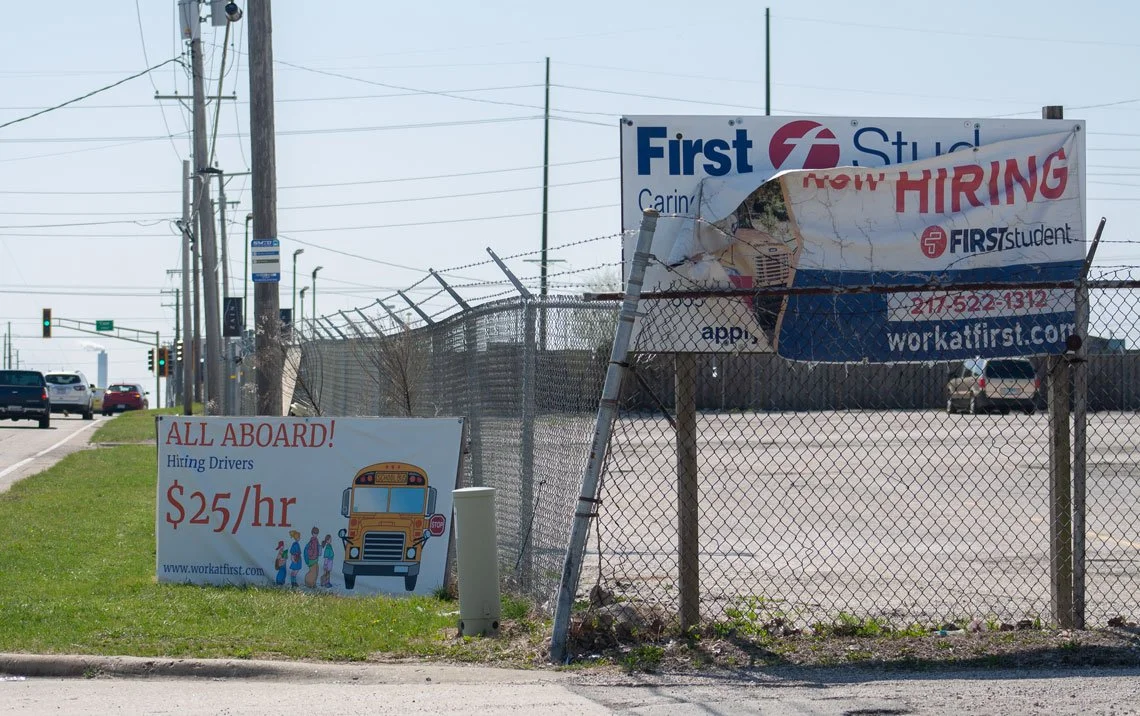
A hiring sign at First Student’s bus depot in Springfield has been posted for months. (Capitol News Illinois photo by Jenna Schweikert)

Lawmakers eye water use transparency requirements for data centers

Knowing how much water data centers use would help communities 

Article Summary 

  • Data centers’ impact on water resources is one of the biggest concerns about the facilities, and it was the main topic of the final hearing about data center regulations in a House committee on Wednesday. 

  • The hearing revolved around the need for transparency, and lawmakers heard from water resource groups and a data center industry representative about the best way to do it.  

  • The data center industry is opposed to the current regulation being considered and argues that other high-end water users should be subject to the same requirements for planning and reporting water use.

  • Lawmakers said conversations about water management should continue. Members of the Senate have already held hearings about groundwater supplies and resource management.

This summary was written by the reporters and editors who worked on this story.

By NIKOEL HYTREK
CAPITOL NEWS ILLINOIS
nhytrek@capitolnewsillinois.com

SPRINGFIELD — Lawmakers emphasized the need for transparency about how much water data centers use to cool their facilities at the final of three data center-focused hearings in the House Executive Committee.

Undisclosed water use is one of the most common complaints about data centers, particularly for the large, hyperscale facilities that support artificial intelligence that are proliferating across Illinois.  

“We talk a lot about energy, and people express concerns about, ‘Are we utilizing energy? Are we going to have enough resources there?’ We have a plan,” said Democratic Rep. Ann Williams of Chicago, who chaired the committee on Wednesday. “I think that same process needs to happen with water and how much of it already exists versus what we need to put in place with the influx of users.”

The amount of water a data center uses can vary widely and depends on factors like its size, outside temperatures and how it cools its servers, but one facility can use as much as a small city in a day.

Helena Volzer, senior source water policy manager for the Alliance for the Great Lakes, and Andrew Rehn, the climate policy director of the Prairie Rivers Network touted the POWER Act, a regulation bill currently under consideration in the General Assembly, as the best mechanism to manage water use by data centers. 

Volzer said one of the major benefits of the POWER Act is that it begins to address what she described as haphazard water management planning in Illinois.

“There's really not much in the way of water use reporting or evaluating whether or not the watershed can handle a proposed water use before that water use occurs,” she said of current state regulations. 

Climate change, Volzer added, is threatening water sources with hotter, drier summers and more droughts. 

“The connection between groundwater and surface water means that surface water resources can become stressed if groundwater becomes depleted,” she said. “With simultaneously competing demand for water from agriculture, industry, data centers and residential use, communities in Illinois are facing complex tradeoffs in managing primary water supplies.”

The POWER Act requires data centers to produce plans for water use, scarcity and sustainability. It also requires data centers to use the most water efficient cooling method — using closed loop cooling as a baseline for efficiency — and to report that usage four times a year to the Illinois Power Agency and to a publicly accessible website.

The POWER Act also requires data centers to submit their plans for review from the Illinois Water Survey, a nongovernment group that monitors water supplies across the state. 

Rehn said the frameworks in the POWER Act will give residents more clarity on how much water data centers use and assuage fears if that amount is lower than they expected.

“We are asking for a plan that's just a document that says, ‘here's what we're going to do,’” he said. “I personally think transparency will shed daylight and let folks be more comfortable if the water usage is indeed that low. That seems like an easy thing to do.”

Pushback

Brad Tietz, the Midwest policy director for the Data Center Coalition, pushed back on the planning requirements, arguing that data center developers already work closely with utilities and municipalities to make plans and ensure the facilities will have the cooling resources they need. 

The data center industry opposes the POWER Act on the grounds that it singles out one industry when there are others that use a lot of water and aren’t under the same scrutiny. 

Compared to agriculture, some manufacturing and golf courses, he said, data centers are much more water efficient.

Tietz also said data center cooling methods are constantly evolving, and innovations include building near water treatment plants or using cooling methods that involve non-potable water, recycled water or air.

He said those methods are possible in Illinois, especially given its cooler temperatures, which could allow data centers to use air cooling outside of summer months. He acknowledged that some of those methods require more energy, and the choice depends on the hardware in the facility. 

“Cooling data centers involves inherent tradeoffs,” Tietz said. “Air cooling tends towards higher energy use, while liquid and evaporative methods typically require more water. Selecting a cooling technology therefore becomes a matter of balancing energy consumption and water usage.”

Lawmakers said those developments don’t change the need for transparency about how data centers operate in communities. 

Rep. Theresa Mah, D- Chicago, said she didn’t understand why the industry objected to making project plans public. 

“I live in a community where there's a data center nearby and it's been important for my constituents and myself to know what's happening there and to have that transparency,” she said. “It seems like it just makes sense for everywhere else in the state as well.” 

Williams said managing water needs in Illinois requires information about large water users to be available for everyone and data centers are a good place to start. 

“I know every data center company is different, but what's the objection to providing that upfront transparency?” Williams asked. “This is a new large user. I get what you're saying. There are other users out there, certainly that there have been for some time, but with this influx of new users, it seems like planning would be helpful.”

Democrats in the Senate have held hearings about statewide groundwater management and are considering how to approach the issue.

Capitol News Illinois is a nonprofit, nonpartisan news service that distributes state government coverage to hundreds of news outlets statewide. It is funded primarily by the Illinois Press Foundation and the Robert R. McCormick Foundation.

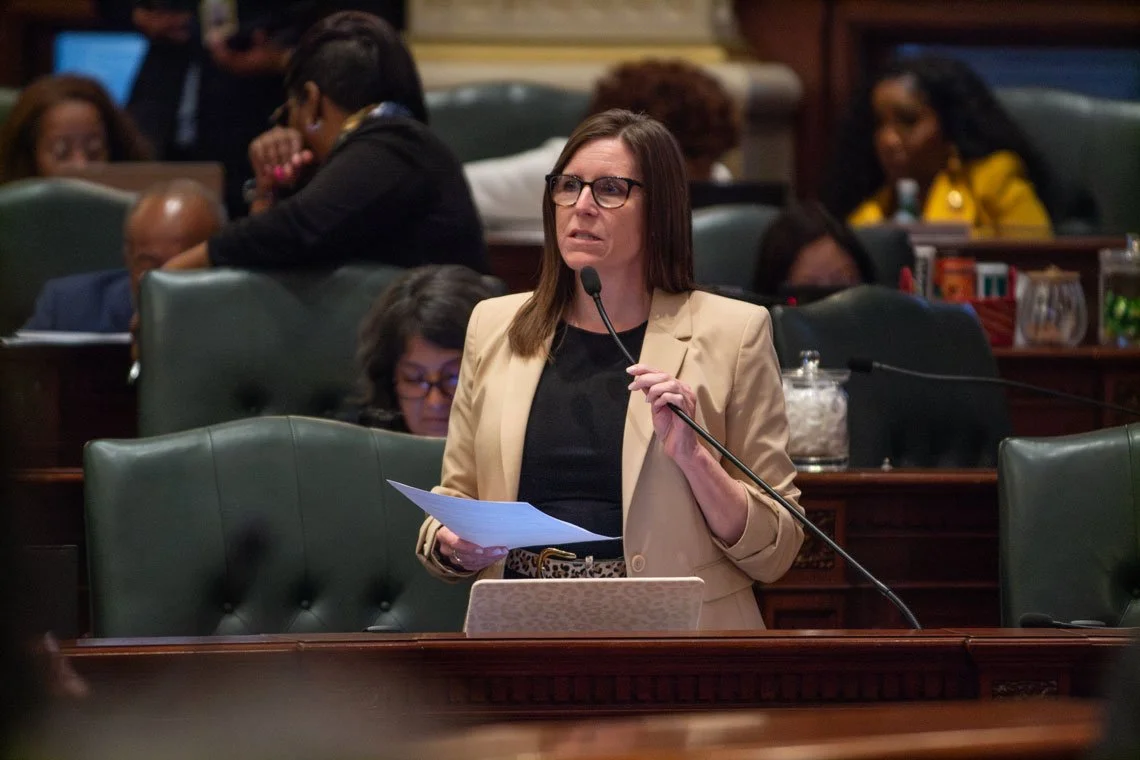
State Rep. Ann Williams, D-Chicago, speaks in favor of a megaprojects bill on the Illinois House floor on Aprill 22, 2026. (Capitol News Illinois photo by Jerry Nowicki)

Millionaire tax amendment fails to gain enough support from House Democrats

Proposal would’ve imposed 3% tax on income over $1 million

By BEN SZALINSKI
Capitol News Illinois
bszalinski@capitolnewsillinois.com

Article Summary

  • It’s looking increasingly likely that Illinois voters will not see an amendment about creating a “millionaire tax” on the ballot in November.

  • House Speaker Emanuel “Chris” Welch said the proposal did not have enough votes to pass the House, which isn’t scheduled to return to Springfield before the May 3 deadline for putting a constitutional amendment on the ballot. 

  • The proposed millionaire tax would have created a 3% tax on income over $1 million and the revenue would have gone to property tax relief and K-12 education. 

  • Illinois has a flat income tax in the constitution and voters rejected a proposal in 2020 to implement a graduated income tax structure.

This summary was written by the reporters and editors who worked on this story. 

SPRINGFIELD — A “millionaire tax” proposal floated in the Illinois House failed to gain enough traction in Springfield this week, making it increasingly unlikely that voters will be asked to approve the measure in November. 

House Speaker Emanuel “Chris” Welch, D-Hillside, confirmed to reporters on Wednesday night that the constitutional amendment proposed by Rep. La Shawn Ford, D-Chicago, was not going to be called for a vote this week. The House is not scheduled to be in after Thursday before the May 3 deadline to put constitutional amendments on the November ballot. 

“Everyone knows it needs a lot more work,” Welch said. “There were a lot of questions that people had and they deserve to have those answers to those questions.”

Increasing taxes on millionaires was a priority for Welch and many progressives in Springfield, but the speaker said it didn’t have the votes to pass the House. Constitutional amendments require a 71-vote super majority in the chamber and the proposal was deeply unpopular with Republicans, meaning at least 71 of the House’s 78 Democrats would need to push it out to the Senate. 

“We were very close, very close,” Welch said. “But close is not enough and we’re committed to getting it right. We’re going to continue to work towards it.”

It could be a few years before lawmakers revisit the concept. The next deadline for approving constitutional amendments is early May 2028, six months ahead of the presidential election. 

How it would work

Illinois’ constitution mandates a flat tax rate regardless of income. Voters would have to approve an amendment changing that to tax millionaires more. 

Under the amendment being floated in Springfield, income over $1 million would be taxed at 3%. It would be the first time under the current constitution that a specific tax rate on income would be included in the guiding document, which has led some people to question if that’s a smart choice given that the value of money changes over time and the constitution cannot be easily changed. 

The state’s current 4.95% tax rate is dictated by lawmakers. 

The amendment also called for splitting revenue from the millionaire tax equally between a property tax relief fund and K-12 education. There was also disagreement among lawmakers about exactly where the revenue should go. 

A study published by researchers at the Illinois Economic Policy Institute and the University of Illinois at Urbana-Champaign last month found the tax would generate $3.8 billion in its first full year and $4.2 billion by 2030 — revenue estimates the researchers labeled as “conservative.” 

The nonpartisan Commission on Government Forecasting and Accountability pegged the number at $2.1 billion annually but cautioned that it could fluctuate greatly by year. About 1% of people in Illinois would pay the tax.

Political will 

The proposal was more specific than a proposed amendment in 2020 that would’ve allowed a graduated tax structure in the state. But that was rejected by voters, and even though 61% of voters signaled support for the millionaire tax in 2024 in a nonbinding referendum, some lawmakers were still skeptical a binding amendment would get voters’ blessing. 

“The message that was very clear to me after the last effort was the voters weren’t quite ready for that,” Senate President Don Harmon, D-Oak Park, told reporters last week. “So we’re going to have to do some serious evaluation here before advancing anything right now.”

The bill passed out of a House committee on Tuesday on a party line vote.

“They do not trust Illinois government with more money,” Rep. Amy Elik, R-Godfrey, said in the committee. “They don’t trust that it’s really doing to go to these things and there’s nothing in this language that’s going to guarantee that.”

Even Gov. JB Pritzker, who was the cheerleader of the 2020 amendment and spent millions of dollars supporting it, wasn’t pressuring lawmakers to approve a new amendment this year. He had said he continues to support the concept but it will be up to the legislature if they want to place it on the ballot. Amendments don’t require the governor’s signature after passing the legislature. 

Welch also told reporters he hopes to get support from business groups for the amendment in the future. Multiple business groups, who also opposed the 2020 amendment, registered their opposition to this year’s proposal. 

Voters may still see an amendment on redistricting in November, however, after the House approved one on Wednesday. The Senate must still approve it by the end of next week for it to appear on the ballot. 

Capitol News Illinois is a nonprofit, nonpartisan news service that distributes state government coverage to hundreds of news outlets statewide. It is funded primarily by the Illinois Press Foundation and the Robert R. McCormick Foundation.


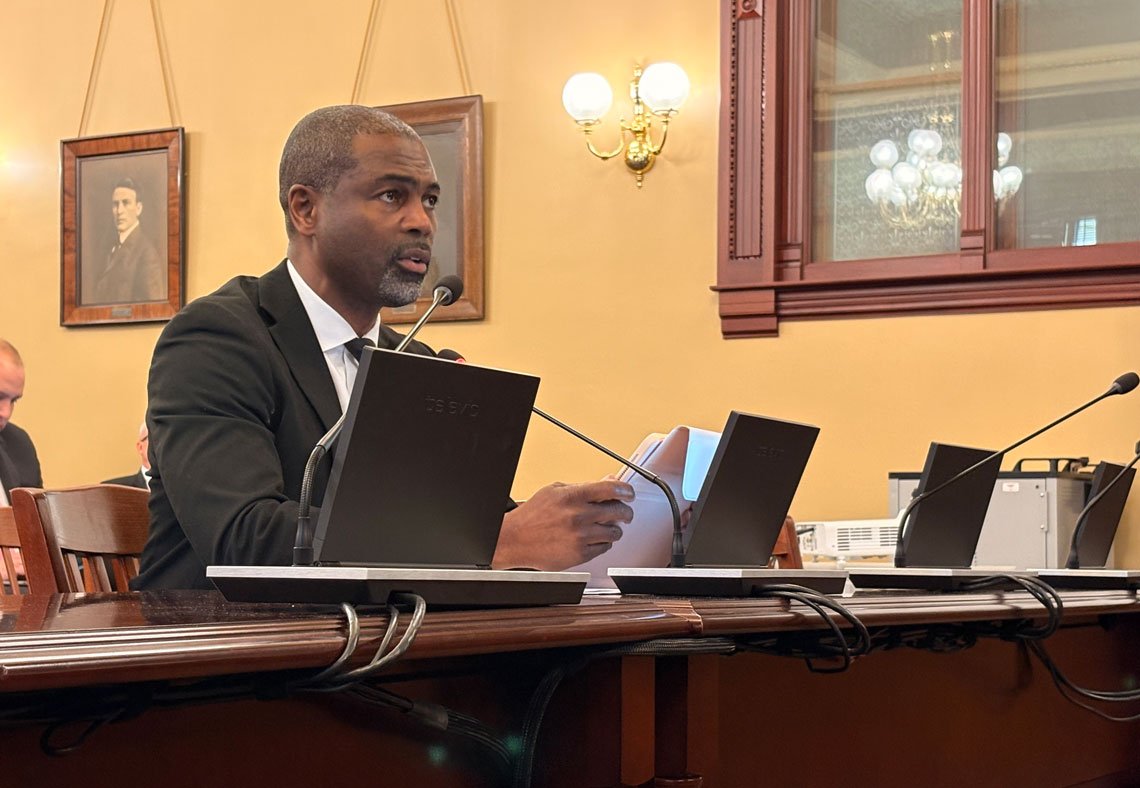
Rep. La Shawn Ford, D-Chicago, presents a proposed constitutional amendment to implement a tax on millionaires to the House Revenue and Finance Committee on April 21, 2026. (Capitol News Illinois photo by Jerry Nowicki)