Evansville Man Sentenced To Max

Wabash County State’s Attorney Kelli Storckman reports an Evansville man has been sentenced to prison following multiple convictions earlier this year.

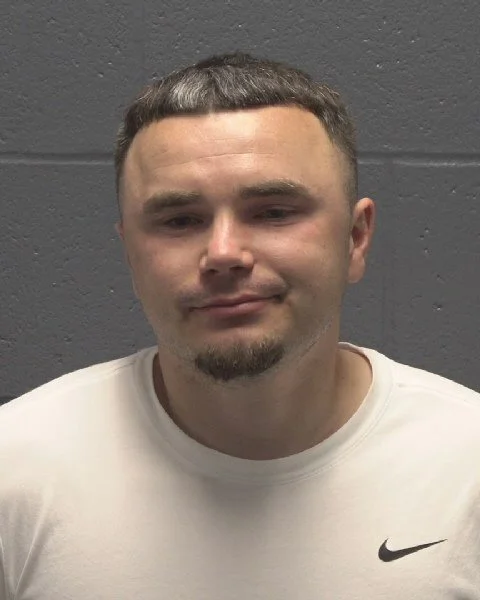
Thirty-three-year-old Devin Brittain was sentenced April 20th in Wabash County Circuit Court after being found guilty by a jury in January of aggravated domestic battery, aggravated battery, aggravated battery of a peace officer, and two counts of criminal damage to property.

Judge William Hudson imposed the maximum sentence on the two most serious charges, sentencing Brittain to seven years in the Illinois Department of Corrections on each count. The sentences will run concurrently, with the domestic battery charge requiring 85 percent to be served and the battery of a peace officer charge requiring 50 percent.

Upon release, Brittain will be subject to four years of mandatory supervised release. A restitution hearing in the case has been scheduled.

The State’s Attorney’s Office also thanked the officers and agencies involved in the investigation and prosecution of the case.

Mt. Carmel Man Gets 3 Years Tacked On To Prison Sentence

Wabash County State’s Attorney Kelli Storckman has announced the sentencing of a Mount Carmel man in connection with failing to report to serve a prison sentence.

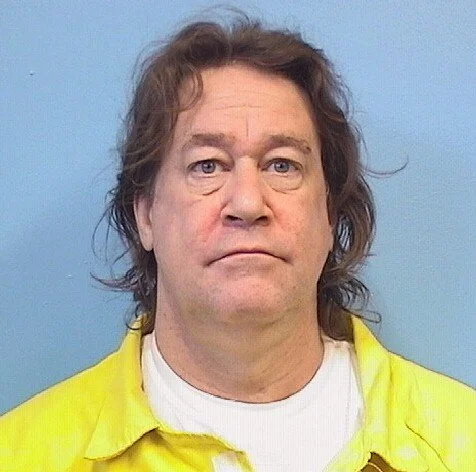
55 year-old Donald Scott Baird has been sentenced to three years in the Illinois Department of Corrections, followed by six months of mandatory supervised release, after being convicted of Failure to Report to a Penal Institution.

The sentence will run consecutive to a previously imposed five-year prison sentence stemming from a 2024 methamphetamine possession case.

Authorities say Baird was ordered in May of 2025 to report to the Wabash County Jail to begin serving that sentence but failed to do so, leading to a warrant being issued for his arrest.

Following an extended search, the Wabash County Sheriff’s Office located and apprehended Baird in Mount Carmel in July of 2025 after receiving a Crimestoppers tip. Deputies say he attempted to evade law enforcement but was taken into custody without incident.

Baird appeared in Wabash County Circuit Court on April 20th, where a judge ordered the new three-year sentence to be served after completion of his existing term.

State’s Attorney Storckman says her office takes failure to report seriously and will continue to pursue those cases to ensure accountability and uphold the integrity of the justice system.

IDOC Photo

IECC ANNOUNCES LEADERSHIP TRANSITION AT WVC; GOLDMAN NAMED PRESIDENT-DESIGNATE

Olney, IL – Illinois Eastern Community Colleges (IECC) announces that Dr. Matt Fowler, President of Wabash Valley College and IECC Vice Chancellor of Student Affairs, has formally notified the Board of Trustees of his intent to retire and not to seek renewal of his current contract, which expires on June 30, 2027.

 Dr. Fowler’s career with IECC spans more than 25 years, beginning in 1999 as a faculty member. Over that time, he has served in a variety of roles, including Dean of Instruction and, since 2007, President of Wabash Valley College. His tenure reflects a long-standing commitment to student success, institutional stability, and service to the communities of southeastern Illinois.

 “Serving this institution and the district has been one of the greatest honors of my professional life,” said Dr. Fowler. “I have been fortunate to work alongside exceptionally talented faculty, staff, and administrators who bring both expertise and passion to their work every day.”

 Dr. Fowler also reflected on his experience working with district leadership and the Board of Trustees.

 “Throughout my tenure, I have appreciated the opportunity to work with district leadership and the Board in support of our shared mission,” he said. “The collaboration, support, and collective focus on students have strengthened our colleges and the communities we serve.”

 In addition, Dr. Fowler noted the value of collaboration with colleagues across the IECC system.

 “The shared leadership, collective problem-solving, and mutual support among my colleagues across the district have provided invaluable perspective and strengthened our institutions as a whole,” he said.

 IECC Chancellor Ryan Gower, Ph.D., expressed appreciation for Dr. Fowler’s leadership and long-term service.

 “Matt has provided steady, experienced leadership at Wabash Valley College for nearly two decades,” said Dr. Gower. “He understands the work at a very deep level, and I am grateful for the opportunity to work alongside him. He has been a strong leader for Wabash Valley College and played an important role at the district level as our first Vice Chancellor for Student Affairs, helping to establish and shape that division.”

 As part of this transition, IECC has named Cassandra Goldman, current Dean of Students, as Vice Chancellor of Student Affairs and President-Designate for Wabash Valley College. Goldman will begin working alongside Dr. Fowler on July 1, 2026 in this new role, providing a unique opportunity for continuity in leadership and a deliberate, hands-on transition.

 Goldman brings a combination of public service and higher education leadership to the role. She previously served as the elected Wabash County State’s Attorney, where she led complex legal operations and worked closely with law enforcement, the courts, and the broader community.

 Since joining IECC, Goldman has served in progressively responsible leadership roles. She began as Director of the International Program, where the program experienced significant growth and development under her leadership. She was later promoted to Dean of Students, where she serves as the division’s second-in-command and oversees key student support areas including the Learning Commons, Campus Advocacy Center, and College and Career Center.

 In her current role, Goldman manages a wide range of student-facing operations, including complex student matters, housing-related issues, and day-to-day campus concerns. 

 “Cassandra has demonstrated strong leadership and a deep commitment to our students and our mission,” said Dr. Gower. “This time of transition allows her to work side-by-side with Matt, learning the full scope of campus operations and leadership responsibilities. That kind of continuity is rare, and it positions Wabash Valley College and our Student Affairs division for continued success.”

 Goldman expressed appreciation for the opportunity and the transition ahead.

 "I am truly honored by the trust placed in me by the Board and the Chancellor, and I am excited for what lies ahead. This opportunity is especially meaningful to me because of my personal connection to Wabash Valley College. As a graduate of WVC, I have experienced firsthand the impact this institution can have on students and families. That connection makes this role deeply personal, and it strengthens my commitment to serving our students and the broader community. WVC has a proud history, and I look forward to helping carry that legacy forward while continuing to support student success at every level."

 Dr. Fowler will continue in his current role during the transition period, ensuring stability and continuity as IECC prepares for the next chapter of leadership at Wabash Valley College.


Summer Projects Approved By School Board

The Wabash District #348 School Board has approved several summer maintenance projects.

At Monday night’s meeting, Superintendent Dr. Chuck Bleyer presented plans totaling more than 90-thousand dollars in improvements at district buildings.

At Mt. Carmel Elementary School, the board approved just over 12-thousand dollars to reseal and restripe the parking lot.

Meanwhile, at the grade school, the largest portion of the work includes more than 62-thousand dollars for the replacement of six doors.

Additional projects include just over 7-thousand dollars for new awnings and more than 11-thousand dollars in restroom renovations aimed at improving cleanliness and updating aging facilities.

Bleyer says the projects were reviewed and approved by both the Building and Grounds Committee and the Finance Committee prior to the board’s vote.

Funding for the improvements will come from the district’s one-percent sales tax fund, which is designated for facility upgrades and maintenance.

WGH/County Agree On New Ambulance Service Pact

At Monday afternoon's meeting of the Wabash County Commissioners, Wabash General Hospital President and CEO Karissa Turner spoke about an updated ambulance service agreement between the hospital and the county.

Turner said the new agreement replaces an outdated version that dates back to the early 1990s, when the hospital first began managing the county’s ambulance service. She explained that portions of the old agreement referenced facilities and equipment that are no longer relevant, as the service has grown and evolved over the years.

Turner noted the current ambulance building has been outgrown, with vehicles now being parked at the hospital’s maintenance building and in nearby lots. She said changes over time, including the addition of 24/7 staffing and overnight accommodations, have reduced available space and created the need for a larger, more suitable facility.

She added that future hospital construction plans and ongoing parking challenges have also made the current location less practical. While a new ambulance building is being considered, Turner said no final decisions have been made on a location.

Turner emphasized the hospital values its long-standing partnership with the county, noting the agreement allows for coordinated care between emergency room staff and paramedics, as well as continued operation of paramedic-level services and training programs in the community.

Following discussion, commissioners approved the updated agreement, allowing the partnership to continue moving forward.

#348 Board Hears Update On Proposed Legislation To Ban Phones/Devices In Schools

Illinois lawmakers are moving closer to new rules on cell phone use in schools, and Wabash District #348 is keeping a close eye on the situation.

At Monday evening’s school board meeting, Superintendent Dr. Chuck Bleyer updated members on proposed legislation in Springfield that would require districts to adopt policies restricting mobile device use during the school day.

Bleyer says the bill has passed the Illinois House with strong support and is expected to move forward, with implementation now targeted for the 2027–2028 school year.

However, Bleyer says the current version of the legislation leaves much of the decision-making up to local school districts.

He noted District #348 already has policies in place limiting cell phone use, and says schools often impose stricter controls than students experience outside the classroom.

Bleyer also told the board a district committee, now referred to as the mobile devices council, is working to review and possibly strengthen current policies.

He says one of the biggest challenges will be finding the right balance, especially in areas like hallways, lunch periods, and open campus policies.

Bleyer adds the issue goes beyond the classroom, calling it a broader community and cultural challenge as schools work to manage student device use moving forward.

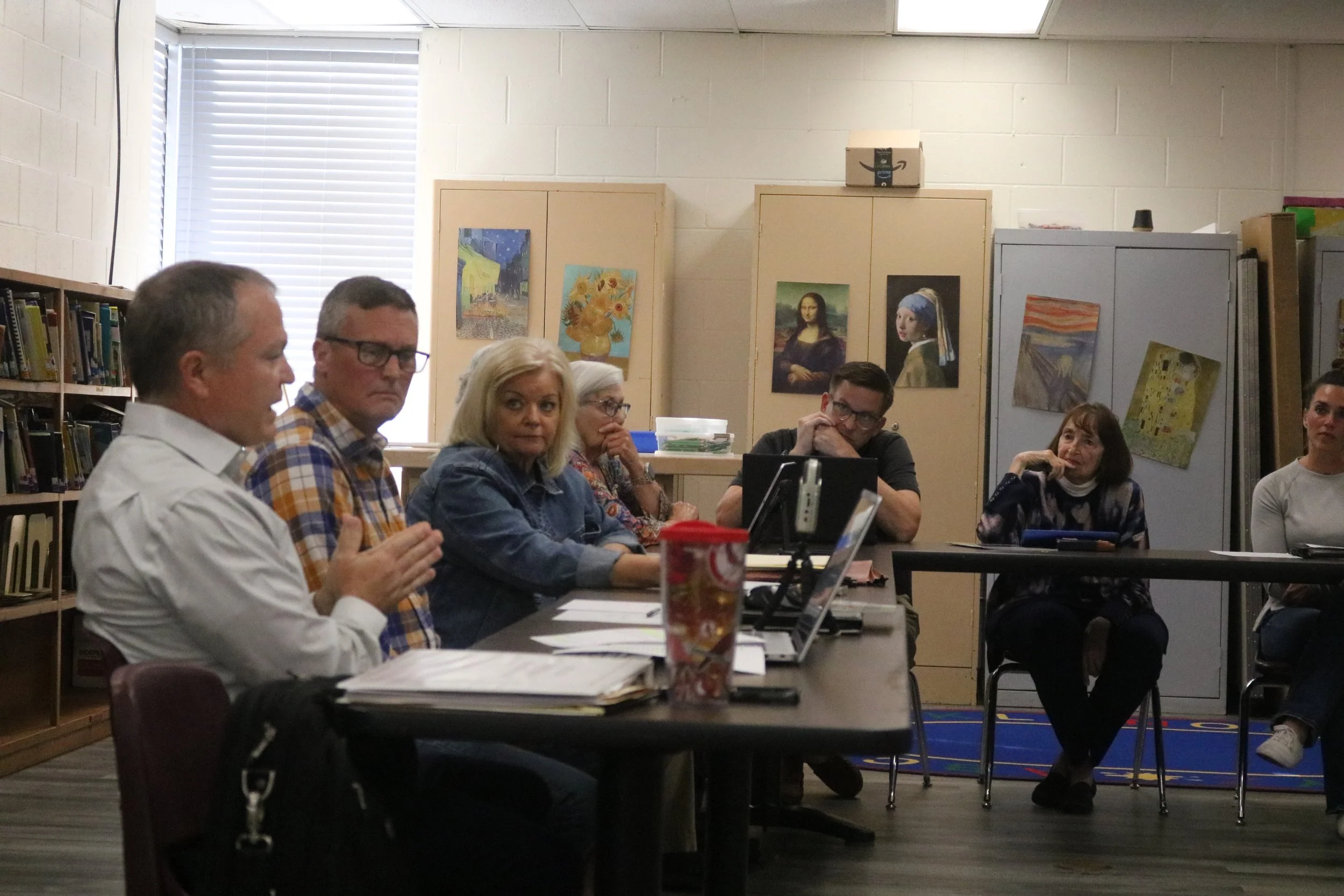
Members of the District #348 school board listen to Superintendent Dr. Chuck Bleyer as he discusses the status of legislation banning cell phone use in schools.

Governor JB Pritzker has said he will sign legislation banning cell phones in schools.

Barbara Flynn Currie, 40-year veteran of Illinois House, trailblazer for women in Springfield, die

s
First woman majority leader remembered as ‘the original Illinois progressive’

By HANNAH MEISEL
Capitol News Illinois
hmeisel@capitolnewsillinois.com 

Article Summary 

  • Former Illinois House Majority Leader Barbara Flynn Currie, who served 40 years in the General Assembly, died Thursday at 85.

  • Currie was first elected to the House in 1978, at a time when women made up only a small minority of the legislature. After 18 years in Springfield, Currie was promoted to House Majority Leader, the first woman to hold the second-in-command role.

  • Currie retired from the General Assembly in 2019 but was then appointed to head the Illinois Pollution Control Board, a post she held until her death.

This summary was written by the reporters and editors who worked on this story. 

CHICAGO — Barbara Flynn Currie, a 40-year veteran of the Illinois House and the first woman to serve as the second-in-command majority leader of the chamber, died Thursday. She was 85.

Currie, who is tied for the second-longest-serving legislator in Illinois' modern era behind imprisoned ex-Speaker Michael Madigan, retired from the Illinois House in early 2019 but remained involved in state government and politics, including serving as the head of the Illinois Pollution Control Board, a post she held until her death. She maintained relationships with colleagues who grieved her death on Friday.

State Rep. Curtis Tarver, D-Chicago, who was elected in 2018 to replace Currie after she announced she wouldn’t seek a 21st term, was emotional as he summarized her legacy as a “trailblazer” in a speech on the House floor in Springfield. He said she “raised her children first, finished her degree later, in what she described as ‘doing it on the motherhood plan.’”

“That mattered,” Tarver said. “It shaped how she saw people, how she approached policy and how she understood their real lives behind the decisions we make in this chamber.”

Currie, whose father taught at the University of Chicago, grew up in Hyde Park and graduated from its laboratory high school in 1958. But the next year, she withdrew from her university studies at the U of C and married her husband David, a recent graduate, whom she followed to Harvard Law School. In the early 1960s, the couple moved back to Chicago when David began teaching at the U of C’s law school. 

While raising young children, Currie finally obtained her undergraduate degree in 1968 before working on the campaign of activist and lawyer Michael Shakman to be elected delegate to the 1969-70 constitutional convention. As she told the University of Chicago’s alumni magazine in 2019, it was Shakman who encouraged her to run for an open House seat in 1978. 

When Currie arrived in Springfield as a newly minted legislator in January 1979, it was to a Capitol — and by extension, a state government — run almost exclusively by men. According to transcripts of House proceedings at the time, she was referred to as “Mrs. Currie” more than a third of the times she was called on to speak on the House floor during her first term; in modern times, representatives are almost exclusively referred to by their titles.

Women comprised roughly 13% of the legislature in those days, and as Currie told the U of C’s magazine in 2019, the few women who were in public office “generally inherited the job.”

But Tarver noted Friday that there are now 78 women in the General Assembly, which account for roughly 44% of the Illinois House and Senate, a statistic that can be directly traced back to Currie, he said. Madigan’s appointment of Currie to majority leader in 1997 was not popular, but Tarver said she’d earned it “through preparation, discipline, and most importantly, intellect.”

“She did not inherit it,” he said. “She built the path.”

House Majority Leader Robyn Gabel, D-Evanston, who is now the second woman to serve in that role, broke down in tears Friday as she asked the House for a moment of silence “to honor my friend, my mentor and my role model for over 30 years.”

Gabel expounded on Currie’s example of serving “with dignity ... humility” and her example of how “to dedicate your life to something larger than yourself.”

“Her leadership in the General Assembly helped guide the state through some of the most difficult moments,” she said. “The impeachment, actually.”

Gabel was referring to the impeachment proceedings of ex-Gov. Rod Blagojevich in early 2009, for which Currie had been appointed chair of the House committee to investigate the governor after his December 2008 arrest by FBI agents. Blagojevich wouldn’t be indicted until April 2009, but in the weeks after his arrest, the Democratic governor declined to resign.

In addition to shaking down people, including children’s hospital leaders, for campaign donations, Blagojevich was accused of attempting to sell president-elect Barack Obama’s U.S. Senate seat. Before his 2004 election to Congress, Currie worked extremely closely with Obama as her state House district comprised half of the district he represented in the Illinois Senate.

Heather Wier Vaught, an attorney in the speaker’s office at the time who worked on the impeachment effort, recalled that when Madigan formed the bipartisan committee, many in Springfield expected a quick process wherein articles of impeachment were drafted and Blagojevich swiftly removed from office.

But from the outset, Currie made clear that the committee’s work would be “a very solemn experience” and that “every i was dotted and every t was crossed,” Wier Vaught, who is now a Springfield lobbyist, said.

Wier Vaught said Currie and the committee had to invent the process “from scratch,” because the state constitution didn’t specifically lay it out and Blagojevich was the first constitutional officer impeached in Illinois. 

“A lot of us on staff — we never worked harder, we never worked so many hours as we did those weeks because she was so insistent we did everything right,” she said, including giving Blagojevich a chance to defend himself. Ultimately, he declined to testify.

“She didn’t just treat it as a political exercise,” Wier Vaught said of the impeachment proceedings. “It was important to her that it not look like a clown show and that it be a legitimate process.”

Wier Vaught pointed to Currie’s same seriousness in leading the post-impeachment negotiations on campaign finance reform, along with other matters like criminal justice reform, which she said Currie championed “before it was cool.”

Another former Democratic House staffer-turned-lobbyist, Liz Brown, agreed, calling Currie “the original Illinois progressive.”

Currie was often criticized as being too close to Madigan and what many referred to as his “Democratic Machine.” But from Brown's vantage point during a near-decade on staff, she said she saw Currie “work within the system” to change it.

“If you look at all the bills that passed under Madigan that had any progressive bent, that was Barbara,” Brown said. “There wouldn’t be any progressive wins without her pushing back on Madigan.”

But Currie was also a pragmatist, Brown said, and a master negotiator with an acerbic wit.

She also recalled Currie going to bat for her personally when she wanted to leave staff to become a lobbyist in 2009. Brown said that key Madigan deputies told her flat-out no — “this isn’t the year you become a lobbyist.”

According to Brown, Currie stepped in, “physically pushed me” into the office of the senior staffer and said simply: “she’s becoming a lobbyist.” 

When the message back was that Brown “wouldn’t be getting any help from the speaker’s office,” Currie retorted that “she won’t need any.” 

Brown said the episode was another example of Currie working within the system to change it.

“You had to earn her respect,” she said. “But if you earned it, she had your back for life.”


Capitol News Illinois is a nonprofit, nonpartisan news service that distributes state government coverage to hundreds of news outlets statewide. It is funded primarily by the Illinois Press Foundation and the Robert R. McCormick Foundation.


Evansville man arrested for DUI

On April 17, 2026, at 3:21 p.m. Gibson County Deputy Eric Powell conducted a traffic stop on US 41 near County Road 1200 South after observing a Ford F150 failing to maintain its travel lane on multiple occasions. Upon approaching the vehicle Deputy Powell observed multiple clues that the driver 32-year-old Cole Fike of Evansville was under the influence. At that point Deputy Powell began a roadside DUI investigation. At the conclusion of the investigation Mr. Fike was taken into custody and transported to the Gibson County Detention Center where he was charged with Operating a Vehicle While Intoxicated.
 
Deputy Wyatt Hunt assisted in this investigation.
 
All criminal defendants are to be presumed innocent until and unless proven guilty beyond a reasonable doubt in a court of law.