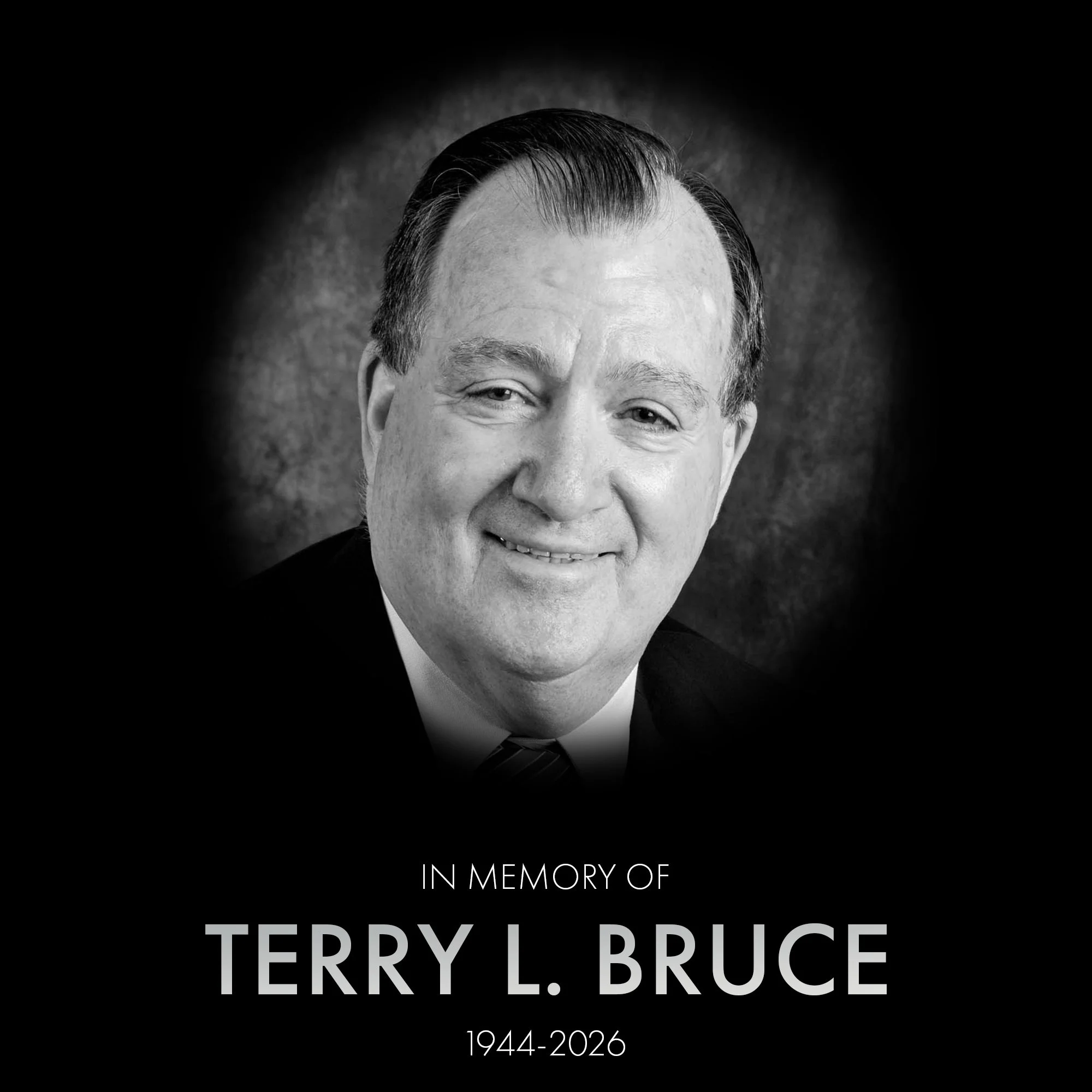
ILLINOIS EASTERN COMMUNITY COLLEGES HONORS THE LIFE AND LEGACY OF FORMER CEO TERRY L. BRUCE

Olney, Ill.  –  Illinois Eastern Community Colleges mourns the death of former Chief Executive Officer Terry L. Bruce, who passed away on April 17, 2026. Mr. Bruce’s decades of leadership and public service left a lasting mark on the institution, the region, and the Illinois community college system.

 Bruce served as CEO of Illinois Eastern Community Colleges from 1996 until his retirement in 2019. Over those 23 years, he helped guide the district through a period of significant transformation while maintaining a strong commitment to students, employees, and the communities served by IECC.

 In addition to his leadership at IECC, Bruce served on the Illinois Community College Board, including as Vice Chair. Earlier in his career served in both the Illinois Senate and the U.S. House of Representatives. Throughout his public life, he played an important role in advancing education and public service in southern Illinois.

 “Mr. Bruce’s impact on IECC and on community colleges in Illinois is difficult to fully capture,” said Dr. Ryan Gower, Chancellor of Illinois Eastern Community Colleges. “His influence is woven into what we do every day. He cared deeply about access to education and about strengthening the communities of District 529, and that commitment continues to shape this institution.”

 Beyond his professional accomplishments, Mr. Bruce was known for his character and the way he connected with others.

 “For those who knew Mr. Bruce and worked closely with him, what stood out most was how deeply he cared about people,” Gower said. “He believed in giving second chances, and I saw him extend those opportunities time and again. He believed in helping people move forward in their lives, and that showed up in how he led this institution and how he conducted himself personally. He made a difference in the lives of many people.”

 The Board of Trustees, faculty, and staff of IECC extends its deepest condolences to the Bruce family and to all who knew and worked with him.


House approves Pritzker initiative to regulate social media algorithms

Plan seeks to make children’s social media feeds less addictive 

By BEN SZALINSKI
Capitol News Illinois
bszalinski@capitolnewsillinois.com

Article Summary

  • The Illinois House voted on bipartisan lines to pass the Children’s Social Media Safety Act.

  • The bill is designed to limit children’s access to social media algorithms that the courts have ruled and scientists have warned are addictive.

  • It would require platforms to use stricter default settings for minors, including  limiting location sharing, digital currency transactions and nighttime notifications. 

  • Gov. JB Pritzker proposed the bill and said addictive social media feeds are one of the top concerns parents ask him to address. 

This summary was written by the reporters and editors who worked on this story. 

SPRINGFIELD — A bill to regulate social media companies and the features they make available to minors is advancing in the Statehouse.

A bipartisan group of lawmakers in the House voted 82-27 to pass House Bill 5511, also known as the Children’s Social Media Safety Act. Gov. JB Pritzker proposed the bill, which is designed to make social media scrolling less addictive for children. 

“What this bill is really designed to address is the weaponization of your data, your personal habits in a way that keeps kids glued and addicted to the screen,” bill sponsor Rep. Jennifer Gong-Gershowitz, D-Glenview, said.

The bill does not limit social media use to certain ages but does require platforms to allow users setting up an account to input their age, which would trigger certain settings on the device for users under 18 years old.

The bill mandates that information used to generate a social media feed cannot be “persistently associated with the user’s device” and based on content the user previously shared or interacted with. Users must follow the creator of the content or person who shares it to see the content in their feed. Additional content could only be provided to the user when they search for it. 

The bill would also require social media platforms to have default privacy settings for minors that would stop addictive feeds, location sharing and transactions with digital currency. Platforms would also be prohibited from sending notifications to minor users between 10 p.m. and 7 a.m.

Companies that violate the law would have to pay fines.

The changes would take effect in 2028, and despite cracking down in some areas, Gong-Gershowitz said there won’t be restrictions on the content kids see.

"This bill does not include any content moderation or allow parents to monitor what children are doing online,” Gong-Gershowitz said. “It simply targets a harmful design feature like addictive algorithms that are designed to keep kids online. Children can still see the same content.” 

Pritzker, some Republicans back it

Pritzker called on lawmakers during his February State of the State address to advance regulations.

“Everywhere I go, parents tell me one of their deepest concerns is the impact social media is having on their kids,” Pritzker said in his address. “It’s a challenge unique to this generation. And it is made worse by the perverse incentive that social media companies seem to have to keep kids scrolling no matter what the cost to their physical and mental health.”

Read more: Lawmakers advance Pritzker’s cell phone ban, social media regulations

Tackling children’s addictions to social media has been a bipartisan priority in Springfield in recent years and nine House Republicans joined Democrats in advancing the measure to the Senate. 

“Up until this point, we haven’t had a lot of guardrails when it comes to social media use in our state,” Rep. Nicole La Ha, R-Lemont, told Capitol News Illinois. “Being a mom of school aged children, I think it’s really important that we start to have those conversations.” 

La Ha said she is looking forward to using parental controls to make sure the content her kids see on their feeds is appropriate for their age. 

Other Republicans said they supported the concept of the bill but would vote against it until more changes were made in the Senate. 

Pritzker is also pushing lawmakers to tax social media companies based on the number of users they have in Illinois.

Capitol News Illinois is a nonprofit, nonpartisan news service that distributes state government coverage to hundreds of news outlets statewide. It is funded primarily by the Illinois Press Foundation and the Robert R. McCormick Foundation.
Jennifer Gong-Gershowitz, D-Glenview, takes a picture of the vote board in the Illinois House after the passage of a bill in May 2023. (Capitol News Illinois photo by Jerry Nowicki)

Latin American history, pet custody bills advance in Springfield ahead of deadline

Lawmakers moving dozens of measures as legislature enters final 6-week stretch

By PETER HANCOCK,
BEN SZALINSKI
& JENNA SCHWEIKERT
Capitol News Illinois
news@capitolnewsillinois.com

Article Summary

  • Lawmakers entered their final six-week stretch by moving dozens of bills from one chamber to the other. 

  • They require the teaching of Latin American education, change child care worker background check processes, address pet custody disputes and ban speculative ticket sales. 

  • It’s an important step for the bills, but they will all still need approval from the other chamber and a signature from the governor to become law.

This summary was written by the reporters and editors who worked on this story. 

SPRINGFIELD — Public school teachers in Illinois may soon have to add Latin Americans to the list of ethnic groups whose contributions to American history and culture must be taught in class.

The new curriculum mandate is one of dozens of measures that have advanced in the General Assembly this week ahead of a Friday deadline for moving bills from one chamber to the other. The deadline is a key milestone in the legislature’s annual push toward its May 31 adjournment.   

The Illinois House voted Wednesday to pass House Bill 4372, which would amend a portion of the school code that defines how United States history is taught in schools. 

That law already requires history classes to include the study of contributions from “African Americans and other ethnic groups, including but not restricted to, Native Americans, Polish, Lithuanian, German, Hungarian, Irish, Bohemian, Russian, Albanian, Italian, Czech, Slovak, French, Scots, Hispanics, Asian Americans, etc.”

The bill would insert “Latin Americans” in that list, just before “Hispanics.”

Rep. Eva-Dina Delgado, the bill’s lead sponsor, said the term “Latin American,” or “Latine,” is more inclusive than “Hispanics” because it encompasses people from all of South America, including Brazil, and not just people from Spanish-speaking backgrounds.

Some Republicans, including Rep. Brad Halbrook, of Shelbyville, called the bill a mandate on local schools that would ultimately raise people’s property taxes.

“We have the highest real estate property taxes in the nation,” he said. “This could continue to increase our property taxes when our residents or constituents or citizens are asking from some level of relief.”

But Rep. Laura Faver Dias, D-Grayslake, argued that American history education too often centers on the study of white males. “That isn’t history,” she said. “That’s a fairy tale, and this mandate will not raise your property taxes.”

The bill passed  74-34. It next moves to the Senate for consideration. If it becomes law, it would take effect in the 2027-28 school year.

Child care worker background checks

The Illinois House passed legislation this week that takes another step in transferring authority over early childhood education and services to the new Department of Early Childhood.

House Bill 5099 would transfer the responsibility for conducting criminal background checks for child care workers to the new agency from the Department of Children and Family Services, beginning in 2027.

Gov. JB Pritzker called for creation of the new agency in 2024 to consolidate a vast array of programs and services currently spread across several agencies under one roof. Those range from managing a nearly $750 million block grant program for preschools around the state to the licensing and regulation of child care facilities and workers.

The new agency is scheduled to become fully operational in the upcoming fiscal year, which begins July 1. Its budget, still being negotiated in the General Assembly, is expected to total $4.4 billion from all funds, including $2 billion in general revenue funds. Most of that represents money currently allocated to other agencies.

Many lawmakers have been especially focused on the issue of background checks, saying they frequently hear from constituents who complain about the time it takes to complete them. But Rep. Joyce Mason, D-Gurnee, the bill’s lead sponsor, said she’s optimistic the process will improve under the new agency.

“Under the new system, background checks will stay with the individual rather than with the center or location, so that will allow them to move from location to location, or even employer to employer,” she said. “It will also allow them to do background checks in advance of getting a position, so their background check can be ready by the time they're hired, rather than then waiting a month before their background check goes through and they can work.”

The bill passed unanimously out of the House. It now awaits action by the Senate before being sent to Pritzker’s desk for his signature.

Speculative ticket ban

Hours after a federal judge ruled that Ticketmaster’s parent company operated a monopoly on event ticket selling, the House passed House Bill 4984 to ban speculative ticket selling.

Speculative tickets are event tickets that sellers offer even though they don’t have a certainty of obtaining that ticket. Consumers often don’t know they’ve bought one, and could lose out on thousands of dollars in travel and hotel purchases for an event they can’t attend.

“There's apparently an Usher concert that's going to be happening in Chicago,” Rep. Nabeela Syed, D-Palatine, said. “There are event ticket resellers attempting to sell these tickets on the basis that they might somehow obtain them without a clear pathway of doing so.” 

The bill passed unanimously and now moves to the Senate.

Pet custody

House Bill 4540 would create a legal pathway for separated couples or roommates to go to court to fight for custody of an animal. 

Custody of pets is already an item for debate in divorce cases for married couples, but bill sponsor Rep. Barbara Hernandez, D-Aurora, said nonmarried cohabitants also need a way to determine custody of a pet that may have been jointly owned. 

"If you are in a long-term relationship and you break up in an amicable way, then you might not need this,” Hernandez said. “However, there are certain cases —  we've seen it a lot in domestic violence cases — where they use the animal as leverage and unfortunately those are the situations that we’re trying to prevent.” 

The bill would allow courts to consider who has been responsible for caring for the pet, paying for vet visits, emotional bonds between a pet and human, the living environment and documentation on who bought the animal. 

The bill passed the House 72-38 and now heads to the Senate.

Construction bathrooms

Senate Bill 3465 would require construction sites with 10 or more workers and a worker who menstruates to have a separate bathroom on site for the woman to use. Menstrual hygiene products would also have to be available for free. Accommodations would also have to be available for lactation. 

“Women and anyone who menstruates have a right to care for their bodies in a dignified and sanitary way,” bill sponsor Sen. Graciela Guzmán, D-Chicago, said in a statement. “Whether in the office or on the job site, we need common sense accommodations for those who menstruate and those who are lactating."

The bill passed the Senate 37-14 with Republicans arguing the bill would raise already high construction costs. It now moves to the House.

Female CPR

House Bill 4788 would require students in secondary schools to have the opportunity to learn CPR on breasted manikins to simulate the live-saving practice on women. 

“People with breasts are 27% less likely to receive bystander CPR than people without breasts,” bill sponsor Rep. Maura Hirschauer, D-Batavia, said. “And largely due to this disparity, men have a 23% higher likelihood of survival after a cardiac arrest.” 

The bill passed 73-38, with Republicans expressing concerns about the cost of purchasing supplies for school districts. The bill now heads to the Senate. 

Prescription hormone therapy

Under House Bill 5492, insurance providers would have to cover up to a year of hormone therapy when prescribed. The bill came out of situations in which insurers were denying claims for yearlong supplies of medication, said bill sponsor Rep. Katie Stuart, D-Edwardsville.

“I get frustrated with insurance companies when they don't let patients and doctors work together for what's the best way to access care,” Stuart said. “Pharmacists have the authority to dispense the full 12 months, that already exists.”

The bill passed 74-37 along party lines.

Lions, tigers and bears

The House passed a bears bill, but it does not involve the football team. House Bill 4255 would ban traveling animal acts from using cougars, jaguars, leopards, lions, tigers, bears and primates. State law already bans acts with elephants. The bill passed 75-33 and awaits Senate consideration.

Capitol News Illinois is a nonprofit, nonpartisan news service that distributes state government coverage to hundreds of news outlets statewide. It is funded primarily by the Illinois Press Foundation and the Robert R. McCormick Foundation.


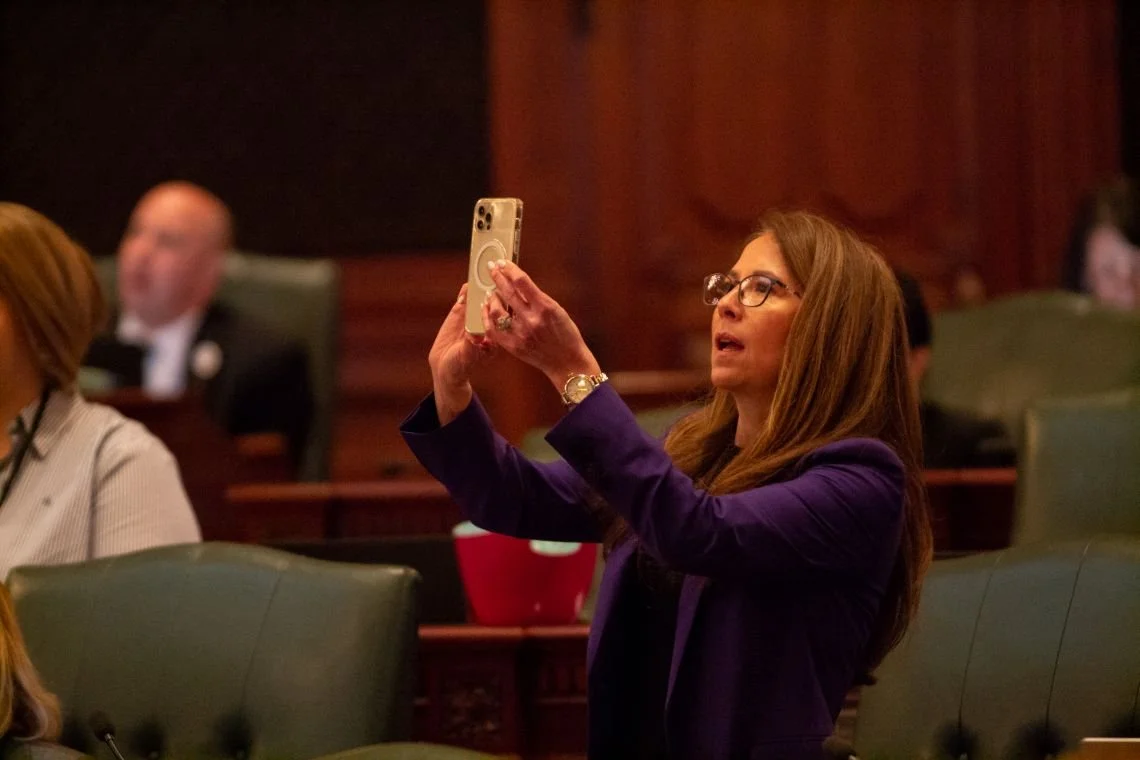
State Rep. Eva-Dina Delgado speaks on the House floor on Wednesday, April 15. (Capitol News Illinois phot by Peter Hancock)

Judge Updates Pool Project

Mount Carmel’s new aquatic center project is still moving forward, but facing delays tied to state approval, according to Mayor Joe Judge.

During last week’s “Ask The Mayor” segment on WSJD, Judge said the city is currently waiting on final approval from the Illinois Department of Public Health after a last-minute request to relocate a deck drain.

Judge says that approval could come any day now, and once it does, work is expected to ramp up quickly.

He noted that contractors are currently on standby, but ready to move in fast. Landmark, the aquatics contractor, plans to bring in three crews, while Garmong, which is handling construction of the bathhouse, will have two crews on site.

Judge acknowledged frustration with the pace of progress so far, saying much of the delay is due to the State of Illinois permitting process, which can take months compared to other states.

In the meantime, local crews have been preparing the site, including work on entrances and parking areas.

Despite the delays, Judge says the goal of having the aquatic center ready around Homecoming in September is still in reach, though it may be close.

Once construction resumes, residents can expect to see rapid progress as multiple crews begin work simultaneously.

Wabash Valley College to Celebrate 2026 Commencement Ceremony on May 15

Mount Carmel, IL — Wabash Valley College (WVC) will celebrate the achievements of its graduating students during the 2026 Commencement Ceremony on Friday, May 15, at 7:00 p.m.

The ceremony will take place on campus, with doors opening at 6:00 p.m.

For those unable to attend in person, the ceremony will be live streamed online. The live stream will be produced by WVC’s Radio/TV program and aired on YouTube via News Channel 15 at: https://www.youtube.com/@my15news

A direct link to the live stream, along with additional commencement details, will be available on the WVC graduation webpage: https://www.iecc.edu/wvc/graduation

Wabash Valley College looks forward to celebrating the hard work, dedication, and accomplishments of its graduates and thanks the families, faculty, staff, and community members who have supported students throughout their college journeys.

For the latest commencement updates and information, visit www.iecc.edu/wvc/graduation.

GOP governor candidate Darren Bailey moves into Chicago apartment 

Bailey seeking to center campaign around attracting Chicago area, moderate voters

By BEN SZALINSKI
Capitol News Illinois
bszalinski@capitolnewsillinois.com

Article Summary

  • Republican gubernatorial nominee Darren Bailey has moved into an apartment in Chicago as he seeks to improve his outreach to voters in the state’s most populous region. 

  • Bailey lived in a Michigan Avenue skyscraper during his failed 2022 campaign. He said he wants to more intentionally focus on winning votes in the Chicago area this year.

  • Bailey also openly condemned remarks by President Donald Trump this week attacking the pope. Bailey said his request for Trump to apologize shows he can speak his own mind.

This summary was written by the reporters and editors who worked on this story. 

SPRINGFIELD — Darren Bailey isn’t just trying to win over voter — he wants this year's campaign to be an impressive experience for Chicago residents.

Speaking to Capitol News Illinois on Wednesday before taking the stage at the annual Illinois Gun Owners Lobby Day in Springfield, the Republican nominee for governor said he’s moved into an apartment on Chicago’s near South Side that will serve as a sort of “headquarters” for his Chicago-area campaign operation. 

It’s not an entirely unusual move for Bailey, a former state lawmaker and farmer from Clay County — about four hours south of the city. He lived in the building formerly known as the John Hancock Center on Michigan Avenue four years ago with a similar goal, though it didn’t pay off as he lost the race by 12 percentage points to Gov. JB Pritzker. He only received about 15% of the vote in the city.

Bailey hasn’t always been fond of Chicago. Four years ago, he called the city a “hellhole” – a statement he said he no longer believes. This year's move is part of Bailey’s promise to focus more on getting to know voters in the city and suburbs.

Bailey said this doesn’t mean he’s forgotten about downstate voters who propelled him to the party’s nomination for a second time last month.

“I feel like our base knows and understands because I communicated that continually as we were visiting within the last several months telling them that, you know, you're not going to see a lot of us after the primary,” Bailey said. 

Read more: Bailey says campaign will focus on Chicago area after rough primary night in the suburbs

Bailey said he hopes a donor will help cover the apartment’s cost. State law generally prohibits using campaign funds for homes but allows some gray area for candidates and public officials to “defray” costs. It’s common for state legislators, for example, to use campaign funds to pay for a hotel or apartment in Springfield. 

Apartment rent in the South Loop neighborhood starts around $2,000 per month, according to real estate group Downtown Apartment Collective

Gov. JB Pritzker’s campaign said voters shouldn’t believe that Bailey’s changed his mind about the city.

"Darren Bailey has spent his entire career demonizing Chicago and the people who live here,” Pritzker spokesperson Alex Gough said in a statement. “He can change his address, but that doesn’t change the facts. Darren Bailey is the same extreme, unsuccessful, and totally unqualified candidate he’s always been. When Illinois voters reject Donald Trump’s lapdog for the third time this fall, hopefully he gets the message."

Balancing a message

Bailey’s efforts to appeal to Chicago voters have included striking a softer tone. He’s also insisted that his message will be reflective of his own thoughts and not those of other Republicans. That includes President Donald Trump, who endorsed Bailey in 2022 and voiced confidence in Bailey’s candidacy again this year.  

On Monday, Bailey called out the president’s social media message bashing Pope Leo XIV’s condemnation of the war in Iran. Bailey wrote in his own post that Trump should apologize. Supporters of Bailey and the president lit up the comment section criticizing him for daring to say Trump was wrong.

“I've always said that when I see something wrong, I'll call it out, and I believe I always have, so I felt the necessity to say this is not right what happened here, and I believe an apology would go a long way in rectifying this,” Bailey said. 

Bailey said he’s still open to receiving Trump’s endorsement this year but doesn’t feel it would influence his race. He said calling out the president’s comments on the pope also give him an opportunity to say, “I am my own individual; I'm here to represent you without any outside influence.”

“I believe that my base of supporters will understand that and respect that,” Bailey said.

Bailey is still quick to pull the trigger on blaming problems in Illinois on Pritzker. Asked about rising gas prices since Trump launched the war in Iran, Bailey argued high costs for gas, utilities, property taxes and other areas were a problem before the recent spike in gas prices. 

“I believe there is an awakening and to pivot and throw all this stuff on President Trump – that's JB Pritzker’s talking points,” Bailey said. 

While he’s been focusing on addressing suburban voters, Wednesday’s focus while speaking to fellow gun owners was about shoring up support from his base. 

“If you truly are concerned about your Second Amendment rights, get out and vote because there's an apathy that exists here as well,” Bailey said. 

Capitol News Illinois is a nonprofit, nonpartisan news service that distributes state government coverage to hundreds of news outlets statewide. It is funded primarily by the Illinois Press Foundation and the Robert R. McCormick Foundation.
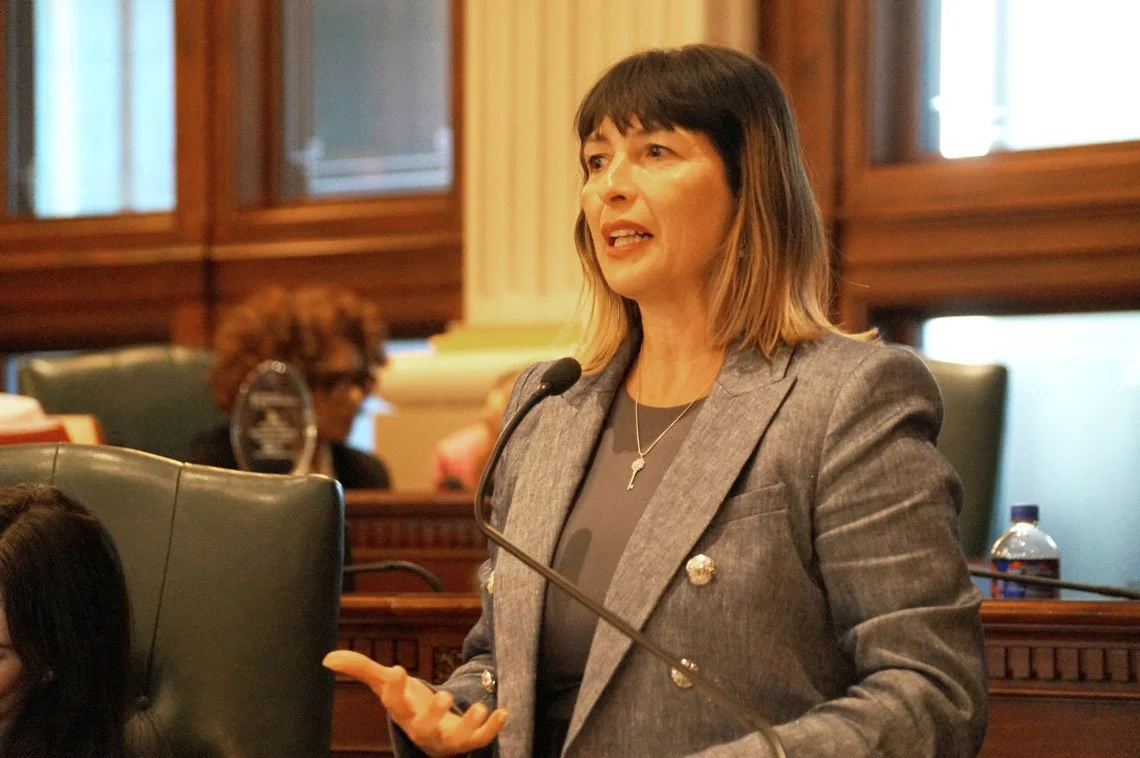
Darren Bailey speaks to reporters at a Springfield hotel on March 17, 2026, after winning the Republican nomination for governor for a second time. (Capitol News Illinois photo by Peter Hancock)

‘Credit card chaos’? Financial institutions bet big on repeal of first-of-its-kind Illinois law

Ad campaign highlights 2-year fight between retailer and finance lobbies

By JERRY NOWICKI
Capitol News Illinois
jnowicki@capitolnewsillinois.com

“Credit cards may not work for sales tax or tips starting July 1.” 

By now, you’ve heard that claim, but whether it’s true depends on who you ask. 

The ads — funded by the Electronic Payments Coalition of banks, credit unions and card companies — argue that Illinois lawmakers must repeal the state’s first-in-the-nation Interchange Fee Prohibition Act, slated to take effect July 1. That law prohibits financial institutions from charging “swipe,” or interchange, fees on the tax and tip portions of consumer bills and bans them from making up the fees elsewhere.

If it’s not repealed? “Credit card chaos” may ensue, the ads warn. 

While the financial institutions are quick to cite a list of things that could hypothetically happen if the law isn’t repealed, it’s harder to pin down what’s being done and by who to comply with the law two years after it was signed. 

“The global payment system is not set up to where any one party to a transaction can make this happen on their own,” Ashley Sharp, of the Illinois Credit Union Association said at a Capitol news conference Wednesday. “There are multiple parties to every electronic transaction.”

The financial institutions are adamant that the global payment system as it exists today can’t discern the difference between tax, tips and total, and it would need to be retooled at a heavy cost to banks, card companies, merchants, point-of-sale companies and more. 

Instead of complying, they say, the card companies could decide to stop serving Illinois or drastically alter the way the consumer interacts with merchants at the point of sale. 

An alternate reality

But as with all matters in Springfield, there’s another big-monied and powerful group on the other side of the issue. The Illinois Retail Merchants Association says the credit card companies already track all the information they need, and it’s a “complete fabrication” to say that it would take more than a mere coding change to implement the state law. 

Take your restaurant receipt, for example. 

“You have the subtotal, the sales tax, the tip, if it's applicable, and then the grand total, right? All they have to do is move their fee from the grand total to the subtotal,” Rob Karr, president of IRMA, said.

While card networks operate in over 200 countries with as many different laws, they say the only information the card processors ask for in any of them is the grand total. The receipt example, they say, erroneously conflates the point of sale with the actual processing of payments. 

In short, the two sides present starkly different realities — a muddying of the water that’s not uncommon at the Capitol. 

But there is one concrete truth: The financial institutions have a lot to lose, and not just in Illinois. 

The tax and tip prohibition would shave approximately 10% off the revenue that banks and credit unions receive from retailers via interchange fees — a transfer of wealth likely to number in the hundreds of millions. It would also create massive noncompliance fines. 

And then there’s the issue of precedent. The banks challenged the law but lost in court. Absent a successful appeal, the remaining battlefields would be other state legislatures.

If the card companies implement Illinois’ law, they’d be providing a blueprint for states across the nation to emulate — driving potential revenue loss into the billions. 

Thus far, Ben Jackson of the Illinois Bankers Association said, it hasn’t opened the floodgates, although some 30 states are considering similar action. 

Still, it’s no wonder then, that the Electronic Payments Coalition has pulled out all the stops in its seven-figure ad campaign to repeal the law. 

How we got here

To fully understand the ongoing slugfest between banks and retailers, you have to go back to May 2024.

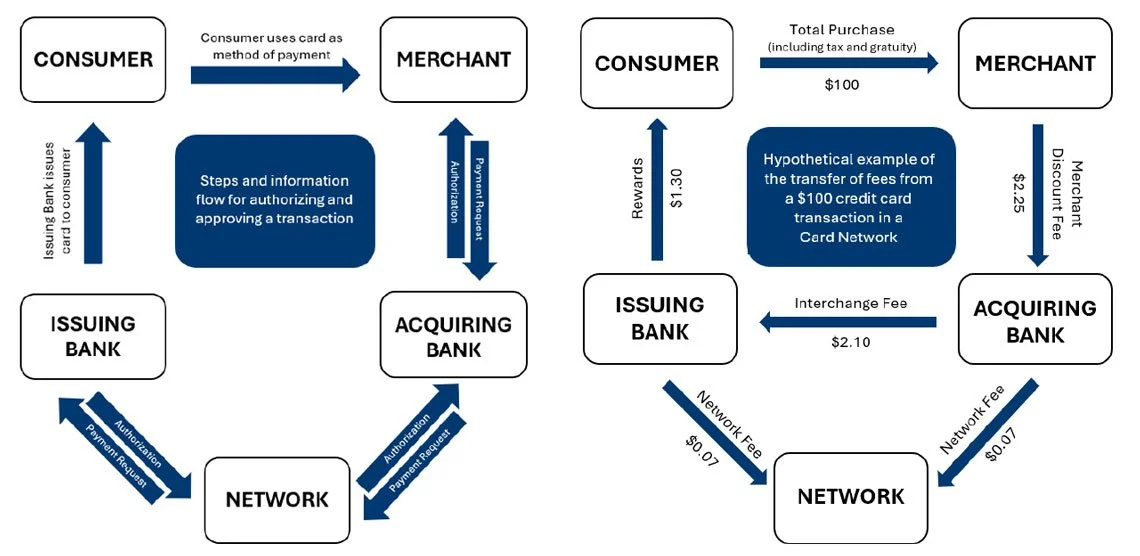
But first, an explanation of interchange fees. Each time a shopper swipes their credit or debit card, it sets off a complicated string of payments between banks. The retailer’s bank pays an “interchange fee,” typically around 1% to 2% of the transaction cost, to the consumer’s bank. The fees include both a set amount and a percentage of the transaction, but the credit card companies, namely Visa and Mastercard, control how they’re calculated.

 Illustrations from court documents show how credit and debit transactions move through the system and how interchange fees are applied. (Images from court documents)

The financial institutions say interchange fees help fund credit card reward programs and security upgrades and provide compensation for bearing the risk of fraud. The hit to interchange revenue, Jackson said, would inevitably lessen reward program offerings. Sharp said credit unions, as not-for-profit cooperatives, use the revenue to offer lower rates to customers. 

But the fees have long drawn the ire of retailers and small businesses, which sometimes pass the costs directly to consumers via a surcharge on bills.

It comes down to this: The retailers don’t think they should have to pay a fee on the tax and tip portion of a transaction that they don’t keep. And the financial institutions say if they’re handling those funds, they should be compensated for doing so via interchange fees. 

As for the Illinois law’s passage, it was, as the ads claim, tucked into the budget two years ago, giving little time for the bankers et al to mount an opposition campaign.

Gov. JB Pritzker and lawmakers agreed to raise about $101 million in revenue to plug a budget hole by putting a $1,000 monthly cap on the “retailer’s exemption,” a tax break retailers claim for being the state’s de facto sales tax collectors. 

But the retailers weren’t going to take that lying down, and IRMA successfully lobbied for the long-sought tax and tip exemption. 

After the law passed, the financial institutions quickly sued. 

To avoid uncertainty as the case played out, lawmakers delayed the measure’s effective date from July 1 last year to the same date this year. 

U.S. District Judge Virginia Kendall ultimately determined in February that Illinois is within its right to regulate the fees. She partially rejected a portion of the law that prohibited banks from sharing certain data, which the credit unions say creates different rules for different institutions and further uncertainty. 

The case is now pending appeal, and the legislative process is starting anew.

This time, the financial institutions have mounted a dual front in the court of public opinion.

The cost of compliance

Karr estimated the prohibition would bring in “north of $200 million” for retailers — essentially letting them pocket that sum instead of transferring it to the banks. A study by the Electronic Payments Coalition pegged the number at $118 million, estimating that about 40% of the interchange windfall would go to the 40 largest retailers.

Even so, Karr said, the largest retailers are subject to the $1,000 monthly retailer exemption cap that accompanied the swipe fee ban, while smaller retailers don’t reach that mark. Add in their cut on reimbursed swipe fees, and it amounts to what Karr calls “the largest small business relief that Illinois has ever passed.” 

But Jackson argued the cost of retailers complying could eat up any benefits for smaller retailers. 

As for compliance, Kendall wrote in her February opinion that “It is an open question whether the transaction process could adapt to the impact of the IFPA in time.”

“The Interchange Fee Provision is indisputably disruptive, requiring additional investments, hires, and new procedures to replace the current process for authorizing and settling debit and credit card transactions,” she wrote.

The financial institutions argue it can’t all be done by July 1. Kendall said the parties involved know what’s required of them. 

“But those procedural changes are the product of an ecosystem built by Payment Card Networks and financial institutions to facilitate consumer transactions,” she wrote. “And these entities understand the onus of IFPA compliance is on them.”

Per the coalition, compliance “would require coordination across the industry and regulators worldwide,” including with the International Organization for Standardization. It would also require more data collection, creating privacy concerns, they say. 

Those global changes would require testing and certification of new equipment. Depending on their card companies or point-of-sale vendors, retailers may need to invest in new equipment, software and training.

Banks and credit unions may also have to add staff to process rebates under the law. It allows retailers or their processing companies to petition their financial institutions for reimbursement on fees charged on tax and tips within 180 days of a transaction. 

If financial institutions don’t comply within 30 days, the law provides for civil penalties of $1,000 per each transaction — and hundreds of millions of these transactions happen annually.

So will that chaos come to fruition? 

Instead of complying, according to the coalition’s literature, the card companies could just stop processing cards altogether in Illinois. They could also stop processing tax and tip portions or require two separate swipes for the subtotal and the tax and tip portion of bills. 

Such claims aren’t uncommon in the legislature’s annual adjournment push. 

Sports betting companies, for example, threatened to leave Illinois when the state raised its gambling taxes in the same budget cycle that yielded the interchange fee prohibition two years ago. Instead, they adapted, because Illinois has a lot of bettors — and there’s even more card users. 

Karr accused the coalition of ulterior motives in their use of hypothetical language.

“There is no need for chaos,” he said. “The only chaos is if the credit card companies impose it themselves on their consumers.”

Ultimately, lawmakers will have to weigh how compelling the arguments are, if the courts don’t intervene first. 

It’s possible that the 7th Circuit appellate court — or even the U.S. Supreme Court — gives the banks a win. But oral arguments are slated for May 13, meaning the appellate court might not rule by the time the law is slated to take effect. 

Adding a new wrinkle on Wednesday, the federal office of the Comptroller of the Currency, a subset of the U.S. Treasury Department, appeared poised to issue an order preempting Illinois’ law. It hadn’t been published as of late Wednesday, making its impact unclear.

“While the office has failed to explain their reasoning or allow public review, it’s clear the goal is an end-run around the legal process after a judge recently upheld the law,” Karr said. 

As for the legislative prospects, state Rep. Margaret Croke, D-Chicago, says she’s seen enough to be concerned. The Democratic nominee for comptroller is sponsoring a bill to fully repeal Illinois’ interchange fee prohibition.

But as of last week, she said she wasn’t planning to move it. Instead, she finds it more likely that lawmakers once again delay the law’s implementation. 

“If this is a policy that the state of Illinois decides they’re going to want to have, then we need to make sure we’re doing it properly,” she said.  

Jerry Nowicki is the editor-in-chief of Capitol News Illinois, a nonprofit, nonpartisan news service that distributes state government coverage to hundreds of news outlets statewide. It is funded primarily by the Illinois Press Foundation and the Robert R. McCormick Foundation.

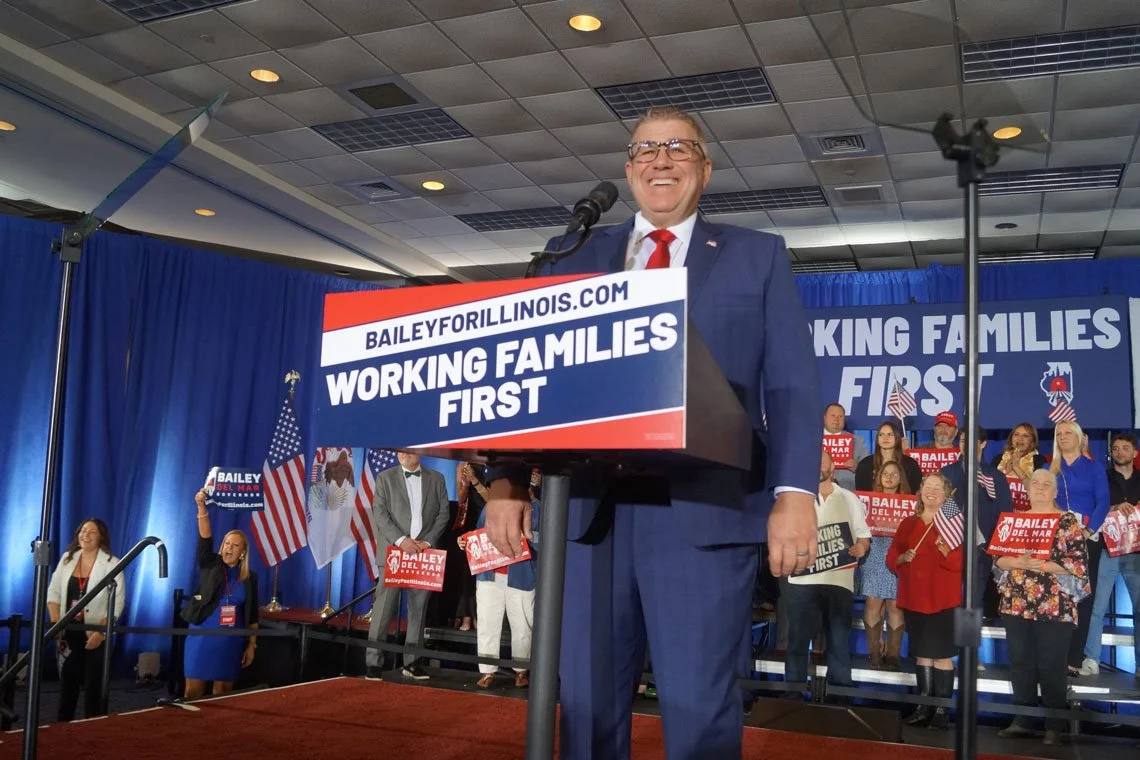
Rob Karr, president of the Illinois Retailer Merchants Association, speaks at a news conference in the governor’s office in 2022. (Capitol News Illinois photo by Jerry Nowicki)

3D printed homes, an abandoned $590,000 deposit, the FBI: What really happened in this small town?

 Two men promised a $1.1 million 3D printer could fix Cairo, Illinois’, housing crisis. More than a year later, the one duplex it printed still isn’t finished. And the more we asked questions, the weirder things got.

By MOLLY PARKER

Capitol News Illinois

Mparker@capitolnewsillinois

Article Summary

  • Two men promised a $1.1 million 3D printer could fix Cairo, Illinois’ housing crisis. More than a year later, the one duplex it printed still isn’t finished.


  • There have been no new homes built in Cairo, Illinois, in at least 30 years. Residents have grown wary of outsiders with big ideas for the poor Delta town.


  • Developers said God sent them to Cairo. Plans called for one donated duplex and then 29 more over the next three years, with no details on how they would be funded.

This summary was written by the reporters and editors who worked on the story.  

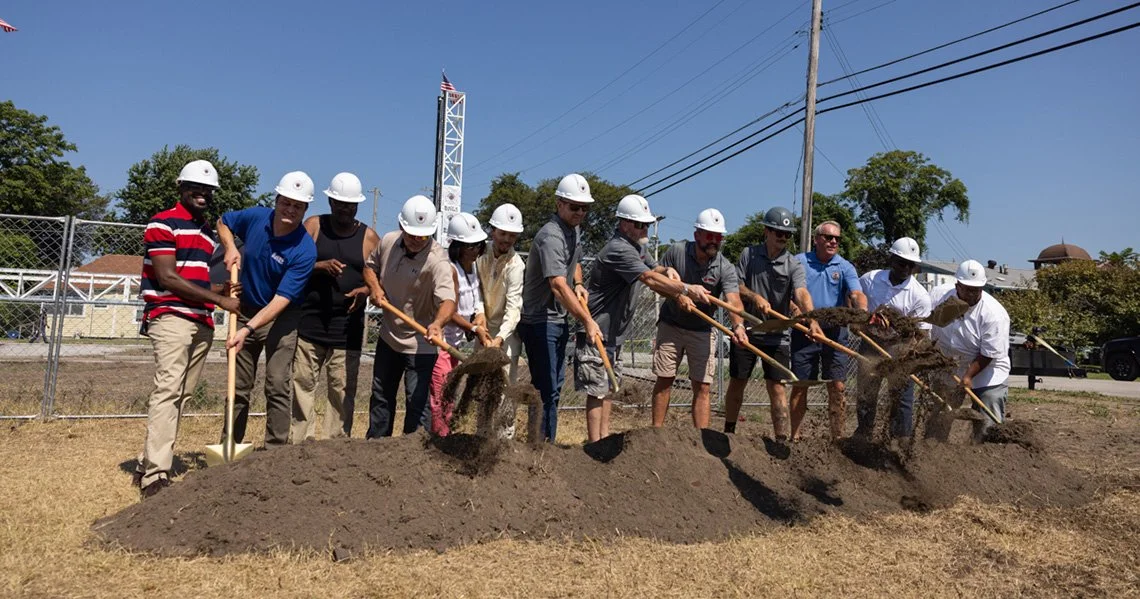
State and city officials break ground on the Cairo, Illinois, 3D-printed duplex project in August 2024. (Julia Rendleman for Capitol News Illinois)   

This article was produced for ProPublica’s Local Reporting Network in partnership with Capitol News Illinois. Sign up for Dispatches to get our stories in your inbox every week.

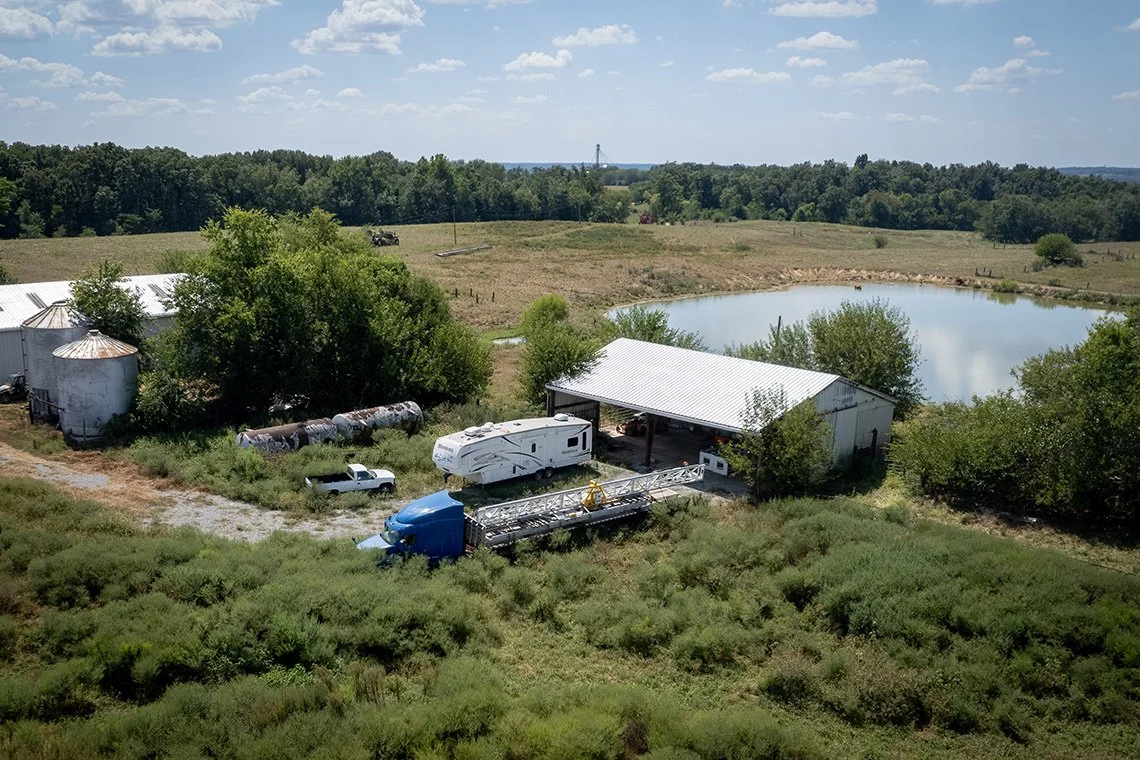
CAIRO —Outside a repair shop in rural southeastern Illinois, the parts of a massive 3D construction printer sat disassembled on a flatbed trailer, weeds climbing the wheels.

The $1.1 million investment wasn’t meant to end up there, abandoned.

Two local men had taken out a loan from a tiny bank to buy the printer, promising it would spark an affordable-housing revival across hard-pressed southern Illinois. Their first stop was Cairo, at the state’s southern tip — a historic river town beset by the loss of jobs and safe housing, now home to fewer than 2,000 mostly Black residents.

In August 2024, after months of negotiations, the city finalized a deal with their company, Prestige Project Management Inc., to build 30 duplexes. Days later, the printer arrived and crews assembled it on a vacant corner lot at 17th Street and Dr. Martin Luther King Jr. Avenue. 

More than 100 people showed up for the groundbreaking. Children clutched cotton candy and popcorn. Pallets of Amazon giveaways spilled from a truck. Behind a chain-link fence, the towering printer hummed to life, two American flags clipped to its steel legs, laying down the base of what was billed as the first new home built in Cairo in at least 30 years. The crowd cheered.

Kaneesha Mallory pressed against the fence. She had grown up in Cairo, moved away, then returned after her daughter was born. Living in a cramped one-bedroom public housing unit across town, she imagined a bedroom her 6-year-old could finally call her own.

Mayor Thomas Simpson called the project “just the beginning.” State Sen. Dale Fowler, whose district incorporates some of Illinois’ most destitute counties, described it as an “extraordinary project” — the start of more development to come. His nonprofit organization, which serves low-income children and families, had secured a $40,000 donation to help pay for the event.

More than 100 people gathered to watch a massive 3D printer lay down the walls of Cairo’s first home built in 30 years. (Julia Rendleman for Capitol News Illinois)

Mallory couldn’t bring herself to leave while her future seemed to be taking shape. She stayed in the August heat so long that she fainted and was taken to the emergency room by ambulance.

Crews worked overnight to avoid the heat. Within about a month, the walls went up. Interior work followed.

But then the work stopped before the duplex was finished. The owners would later say cracks — dozens of them — had begun running through the walls and that they needed to make sure the structure was sound. The printer disappeared.

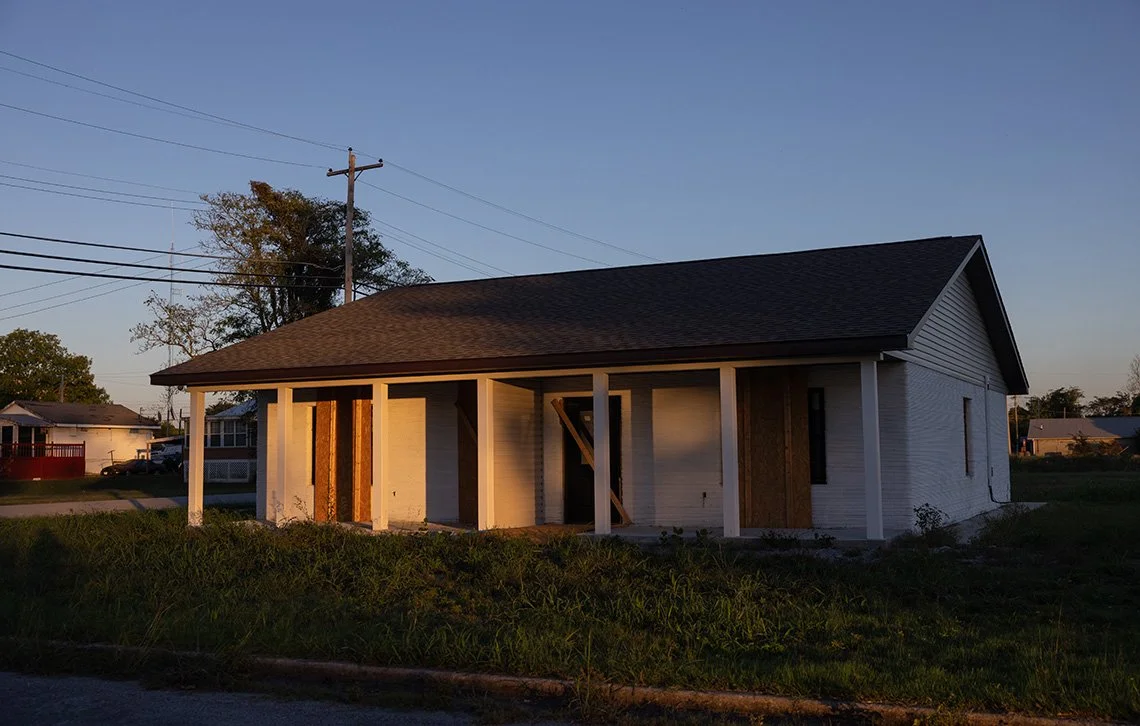
A year later, no one had moved into the duplex. It stood alone in a wide lot along a sun-bleached road.

As I began to examine what happened, the story grew more complicated.

I learned that before the 3D printer arrived in Cairo, the Prestige owners had forfeited about $590,000 as a deposit for a different printer when they ended up canceling the order, a fact that would quickly turn the atmosphere tense as I pressed the company’s owners, the bank, Fowler and others for answers. 

I also learned that not long after the groundbreaking, several employees left Prestige around the same time a spray of anonymous emails hit inboxes across the region. The emails called the Cairo duplex project little more than a publicity stunt and alleged fraud tied to Prestige’s other construction projects.

I also wasn’t the only one asking questions. I discovered that the FBI has launched an investigation into Prestige led by an agent in southern Illinois who specializes in white-collar and public corruption investigations. To date, there have been no charges filed or arrests made, and Prestige’s owners deny any wrongdoing. 

Over the past eight months, the more questions I asked, the more public officials distanced themselves from the project and the company. The broader housing plan — the one that had fueled speeches and celebration — started to look increasingly uncertain.

I was determined to know: Was this simply another failed pitch to this dirt-poor delta town — or something more?

“God sent us”

Jamie Hayes, who inherited a Ford dealership from his father, and Erik Burtis, who had long supplied labor to coal mines, founded Prestige in 2021 in Harrisburg, Illinois, a town of fewer than 8,000 people about 80 miles northeast of Cairo. 

It is one of seven companies Hayes has started since 2020, three of them co-owned with Burtis, according to Illinois business records. The two, who were business partners since 2012, have taken on an eclectic mix of projects: school construction management, solar farm fencing and the 3D printing venture. Hayes provides the capital; Burtis runs the day-to-day operations. 

Burtis said he landed on 3D printing in early 2023 after asking his son Josh, who works for the company, to find out what was hot in construction. He reported back that it was 3D construction — based on trends in Europe. “Usually we’re five, maybe six, seven years behind what happens there,” Burtis said. 

Burtis said God then laid it on his heart to start building in Cairo by donating the first home his company would print. Fowler, the state senator whose district office is in the same building as Prestige, said he listened to Burtis’ plan as they drove to Cairo to meet with town officials a few years ago. Fowler said he suggested building a duplex instead of a single home so two families could benefit. Burtis was moved by that idea.

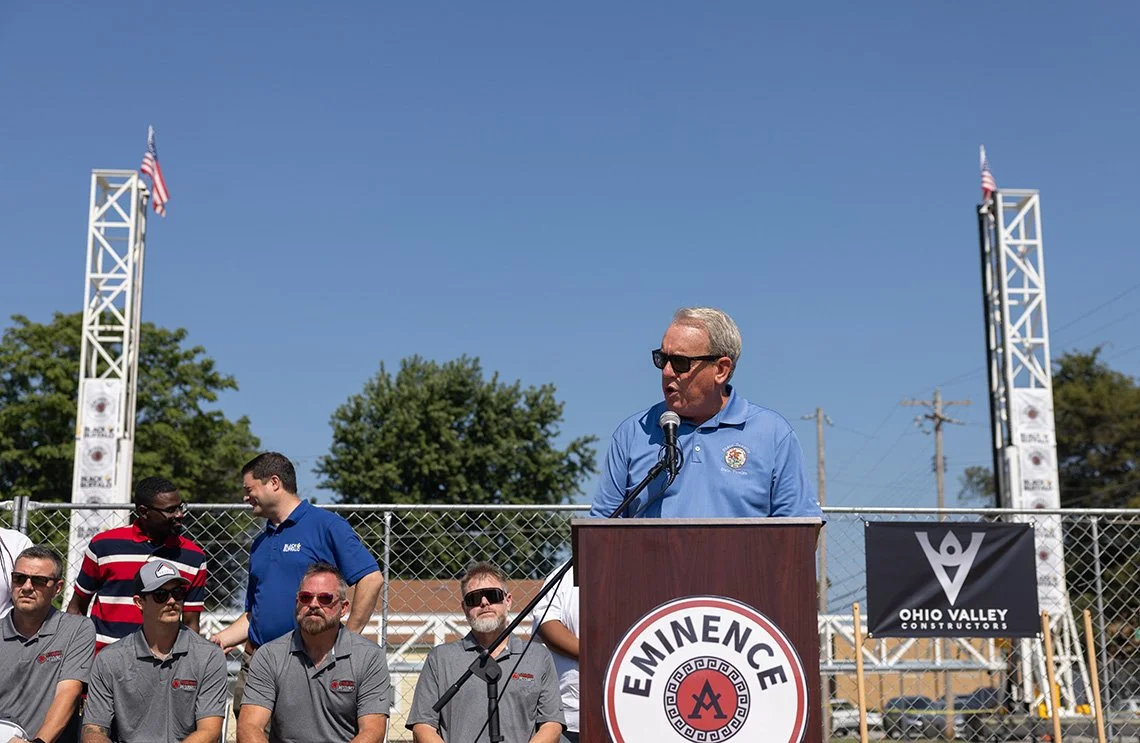
Illinois state Sen. Dale Fowler addresses the crowd at the groundbreaking. Prestige owners Erik Burtis and Jamie Hayes (seated from right to left) look on, alongside Burtis’ son Josh. (Julia Rendleman for Capitol News Illinois)

“He literally started tearing up,” Fowler said. He told me the story in August as we talked in the back booth of a local barbecue restaurant. 

“Did you cry, too?” I asked.

“Yeah,” Fowler said. “I’m about to right now just thinking about it.”

Cairo’s housing crisis is rooted in a long and complicated history. In 1972, the U.S. Commission on Civil Rights visited the town and documented how racism had harmed Black families, including through neglect of their segregated public housing. Those problems only worsened over time.

I grew up nearby and have reported on Cairo’s housing problems for more than a decade. In 2015, I documented how conditions in those once-segregated developments had withered into mice-infested slums, overrun with mold and contaminated with lead, while federal overseers looked the other way.

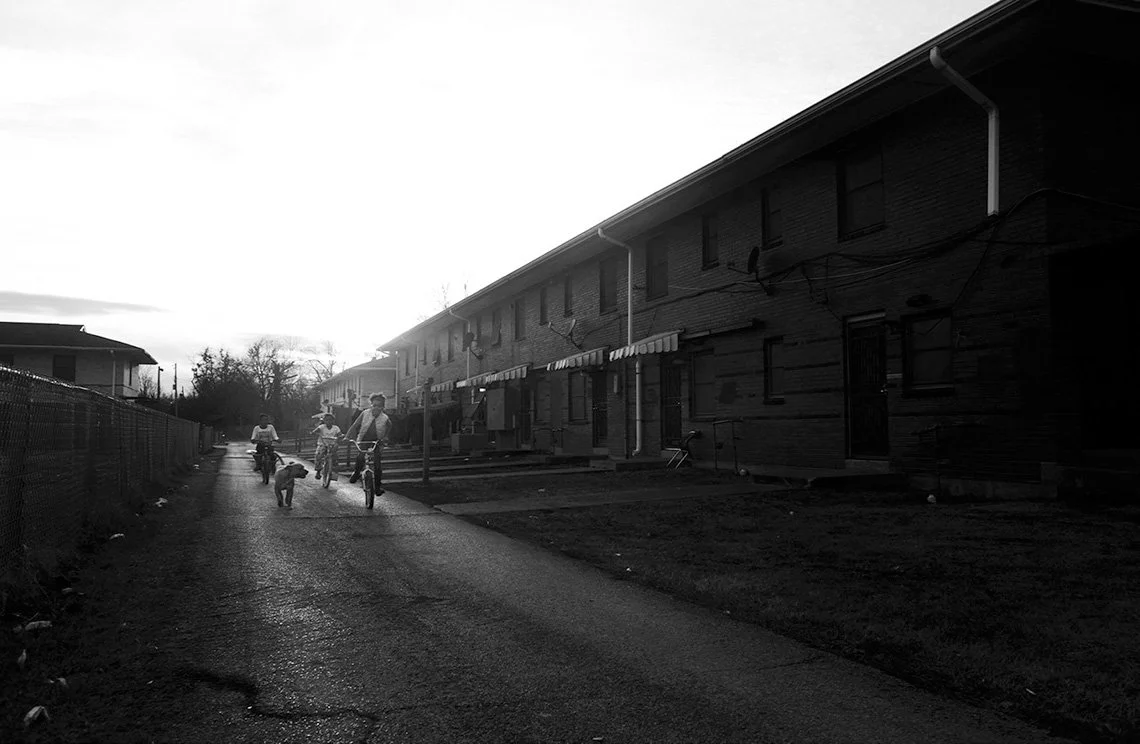
Children ride bikes through Cairo's Elmwood housing complex in 2017. (Isaac Smith/The Southern Illinoisan)

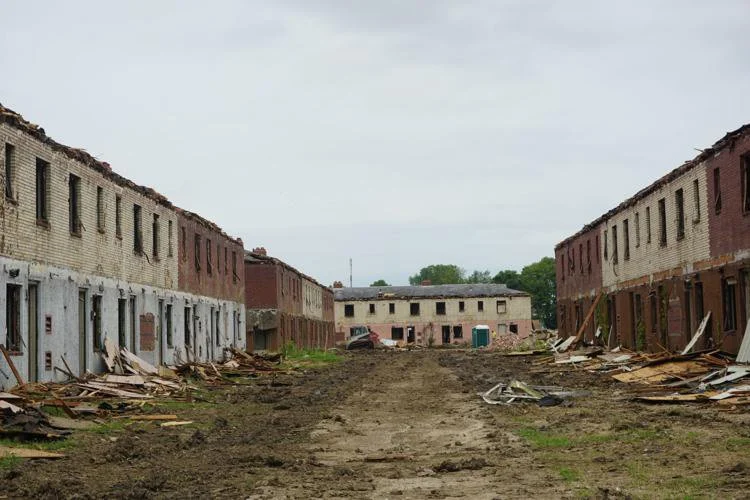
The McBride Place housing complex partway through demolition in 2019. (Molly Parker/The Southern Illinoisan)

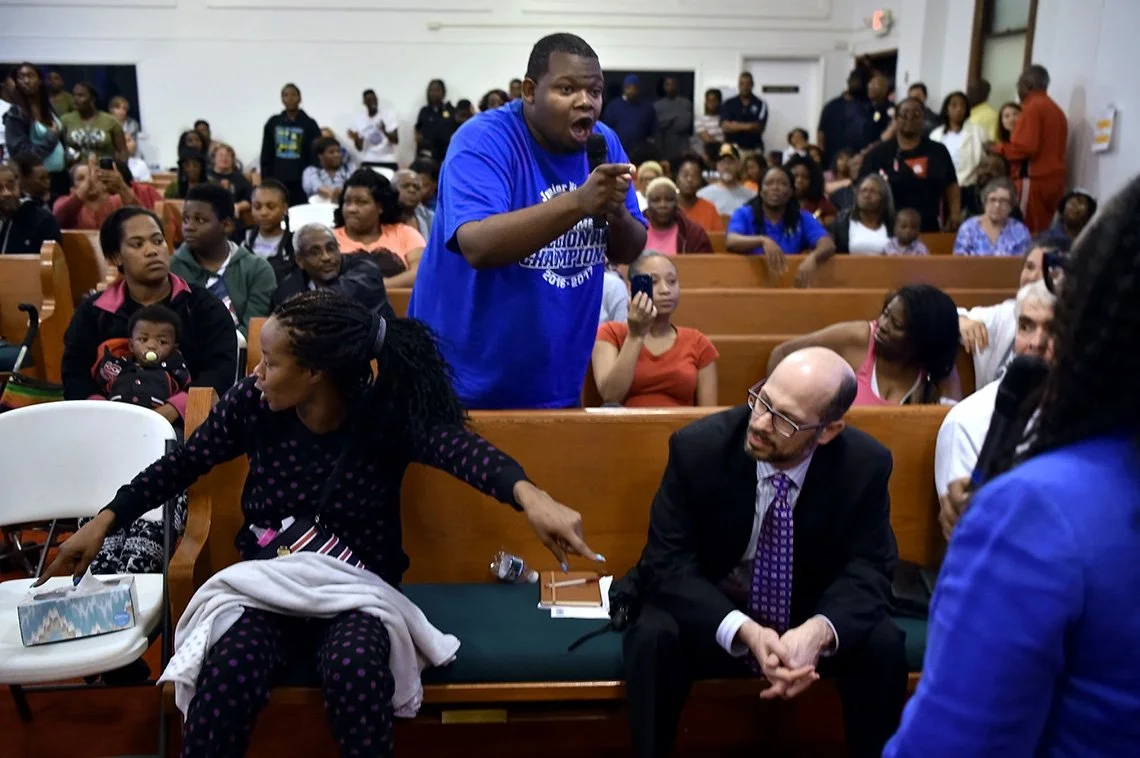
Kevin McAllister demands answers in 2017 from the U.S. Department of Housing and Urban Development during a residents’ meeting before the demolition of the McBride Place and Elmwood Place public housing. (Richard Sitler/The Southern Illinoisan via AP)

In 2016, the U.S. Department of Housing and Urban Development took over the local housing authority and then demolished those apartment homes, displacing nearly 400 residents. In 2022, HUD evacuated another high-rise for seniors, then home to about 60 people. In less than five years, more than 300 apartment units were razed, accelerating the county’s decline into one of the fastest-shrinking places in America

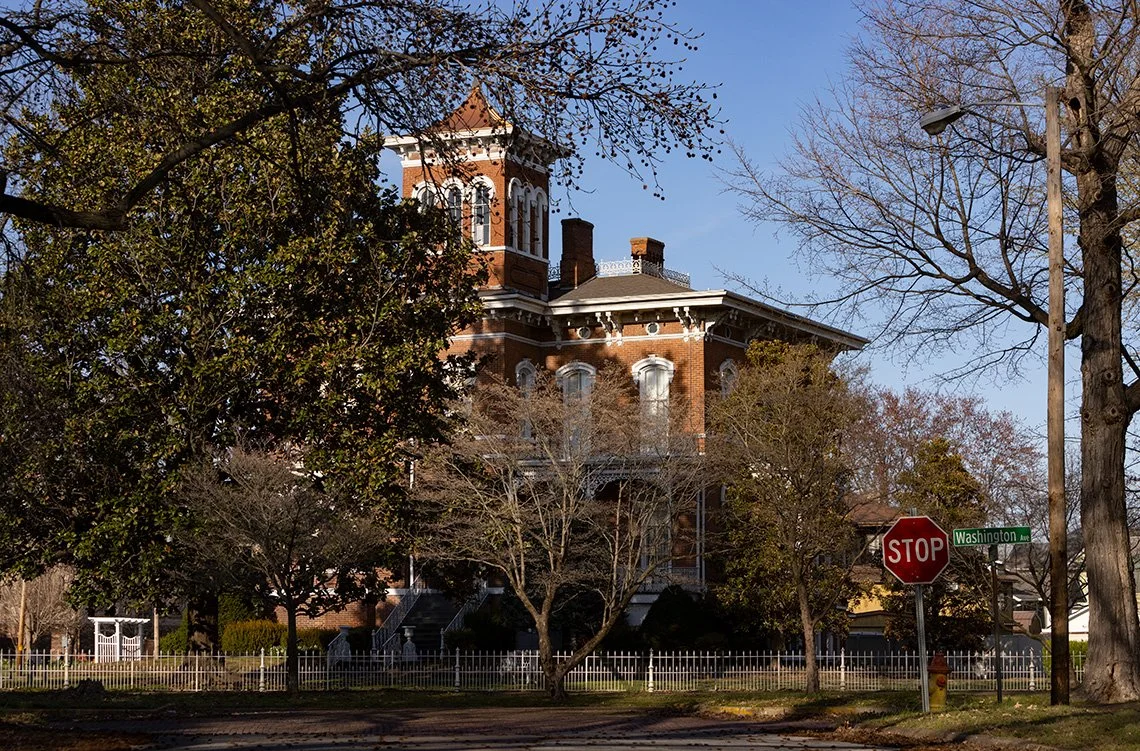
Cairo had seen ambitious promises before the 3D printer arrived. At the confluence of the Ohio and Mississippi rivers, it draws entrepreneurs who see unrealized potential in its vacant storefronts and magnolia-lined streets of dilapidated mansions built by river barons in another era. Some come to help, others to take advantage — it can be hard to tell. Residents have grown wary of outsiders with big ideas. 

Magnolia Manor, built in 1869, is one of several mansions lining Washington Avenue in Cairo. (Julia Rendleman)

City Council member Connie Williams, a retired school principal, said city leaders had warned the Prestige owners not to make promises they couldn’t keep.

“We kept saying to them, ‘Look, we’ve had enough people come through Cairo talking all this crazy stuff and then back out,’” she said. “And they were just like, ‘No, no, oh no, that’s not us. We are here. God sent us.’”

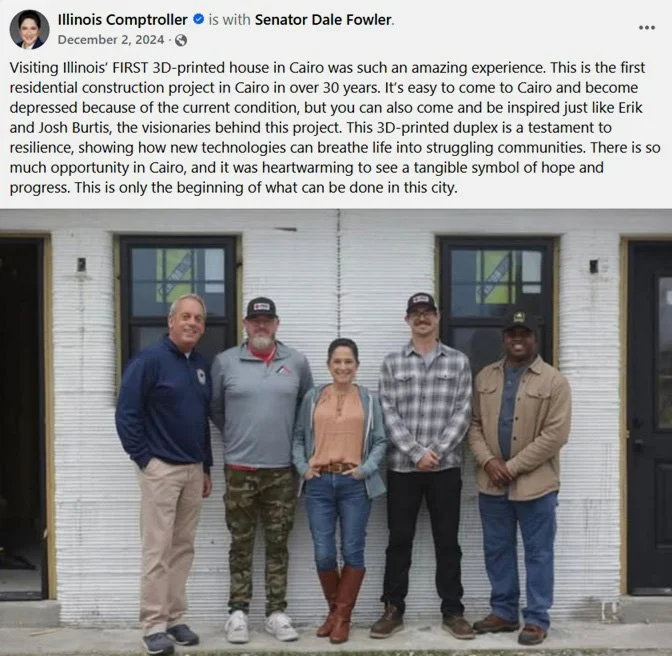
The project attracted attention from Illinois’ top powerbrokers: Gov. JB Pritzker met privately with Burtis and Fowler in Harrisburg. Fowler also invited staff from U.S. Sen. Tammy Duckworth’s office to learn about the project. Illinois Comptroller Susana Mendoza toured the unfinished duplex and praised the effort on social media. 

To help manage the project in Cairo, the company hired Bucky Miller, a broad-shouldered lineman with a baritone voice. He said part of his job was to craft development plans and an agreement with city officials. Miller regularly drove 300 miles round trip from his home near St. Louis to meet with city officials. He told residents at a housing task force meeting that he took the job after reading about the decades of failed promises made to Cairo, and “because of what I’m good at: keeping my word.” 

But he had no experience developing affordable housing, and neither did anyone else at Prestige. Burtis acknowledged the inexperience but said he planned to partner with developers who would secure financing and hire his company to handle construction. 

Before the party, an unraveling 

The block party in August 2024 — kids clutching cotton candy, everyone in a jubilant mood — made it look like everything was on track. But I have now learned that significant parts of the project already were shaky even before the printer squeezed out the first cement.

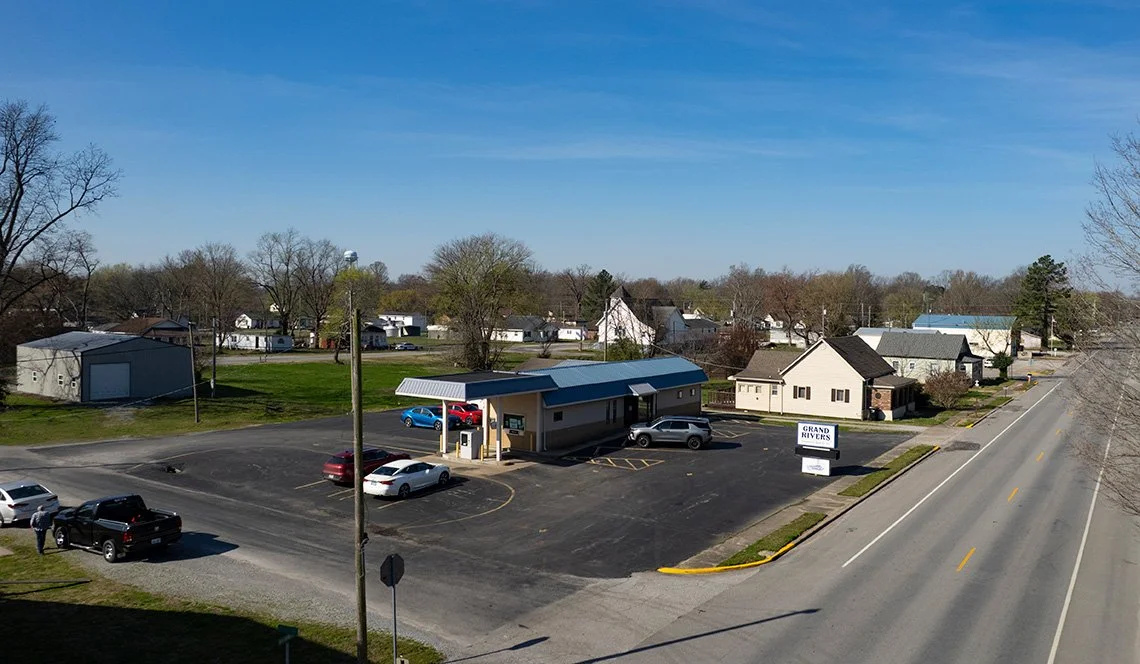
One big problem was acquiring the printer to begin with. In October 2023, Grand Rivers Community Bank approved the $1.1 million loan to purchase the printer — a big bet for the rural lender in Karnak, Illinois, population 450, about 25 miles north of Cairo. The loan was nearly double the bank’s single-customer limit, requiring another regional bank to join in. 

Grand Rivers Community Bank approved a $1.1 million in October 2023 loan for a 3D printer purchase. (Julia Rendleman for ProPublica)

That month, Grand Rivers sent half the cost of the printer, about $590,000, to Peri 3D Construction, which operated out of Texas, to purchase one of its most expensive models. Their agreement stated that delivery of the printer would occur six months “at the earliest” from receipt of the deposit. The exchange of funds triggered Peri 3D to commission a large-scale commercial printer from COBOD International, a Danish company that bills itself as the world’s leader in 3D construction printing technology. 

By January 2024, Hayes and Burtis said, they had become impatient. It had been only three months, but they said they’d given Cairo their word they’d start building that spring and felt the printer wasn’t progressing fast enough. Hayes said, “‘Here we go again’ is what Cairo is thinking.”

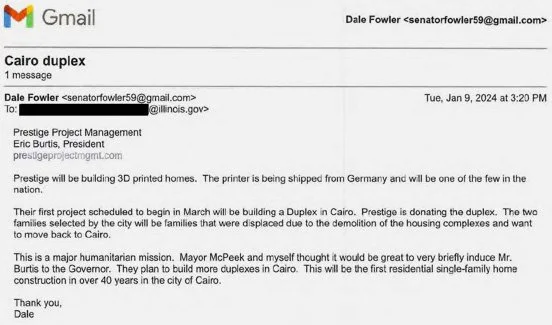
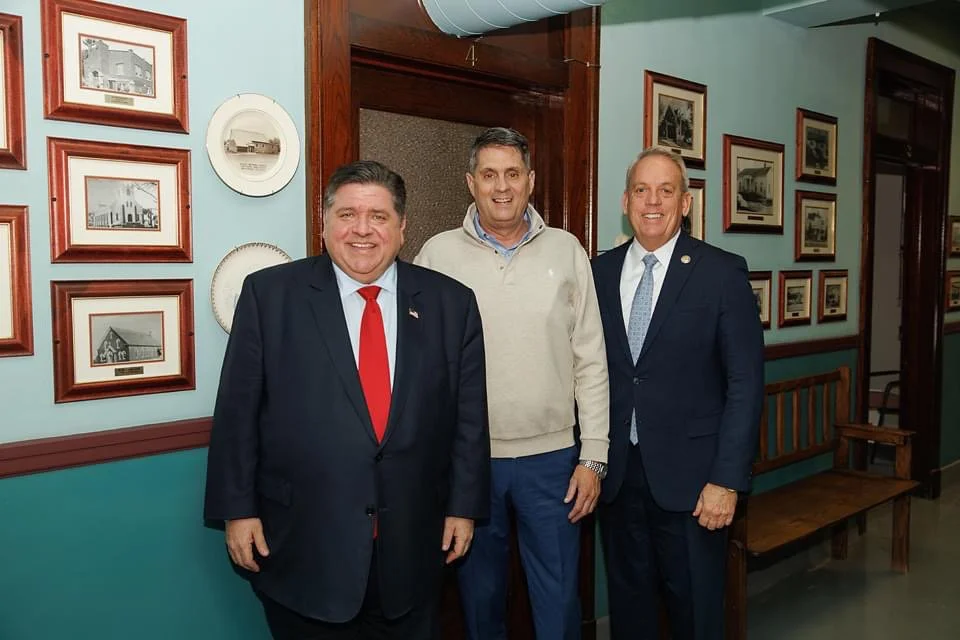
Fowler emailed the governor’s office a few days ahead of a visit Pritzker had scheduled that month in southern Illinois, calling the new 3D printer business “a major humanitarian mission” and asking for an opportunity to introduce the governor to Burtis, records show. Fowler and Burtis met with Pritzker at Harrisburg City Hall and discussed with Pritzker whether he had contacts in Germany, where Peri is headquartered, who could help speed production, according to Burtis. A Pritzker spokesperson said the governor’s office took no action after the meeting. 

Fowler sent an email in January 2024 requesting a meeting with Gov. JB Pritzker to discuss the 3D-printed homes. (Obtained by Capitol News Illinois and ProPublica)

 From left: Illinois Gov. JB Pritzker poses for a photo with Harrisburg Mayor John McPeek and Fowler. During a January 2024 meeting at Harrisburg City Hall, Fowler talked up the Cairo 3D printer project to the governor. (Courtesy of Harrisburg Mayor John McPeek)

Days later, a Peri 3D sales rep emailed Burtis’ son that the printer was on track for delivery that April. 

Then, shortly after, Burtis and other Prestige employees traveled to Las Vegas to a concrete industry expo. Fowler said that Prestige paid for him to come along and that he agreed because he wanted to see demonstrations of the 3D printer technology. He did not report the trip on his annual economic disclosure form; he amended the form after I asked him about it last year. 

Burtis said a COBOD engineer at the expo told them that their printer was only 10% complete, though a COBOD executive said it did not have any engineers present at the expo that year. While there, Burtis also met with one of the few other potential printer suppliers, Black Buffalo 3D. That New Jersey-based company said it had printers available that it could deliver right away, according to Burtis. 

Shortly after the conference, Prestige tried to cancel the order for the original printer. Peri 3D did not appear to respond to Prestige’s requests, according to an email exchange that Hayes shared with me. 

Two months later, Prestige’s lawyer sent a letter to Peri 3D saying the company’s request had been “blown off” and proposed Peri 3D keep about $60,000 — 10% — and return the rest. When Peri 3D responded in April, just as the printer was due, it said none of the $590,000 deposit would be returned. Prestige did not write back, according to email records the company provided.

Burtis and Hayes hadn’t yet spent about $500,000 of their loan. Hayes told me they were ultimately “no worse for the wear” since Black Buffalo 3D agreed to sell a printer for what they had left. 

“If I get 10 grand for a car,” Hayes said. “Say I pay 5 grand for a car and I don’t get my money back, but I can buy another car that does the same exact thing, and I only pay another 5 thousand. What do I give a shit if I can get back and forth to work?”

He called the bank. 

“We don’t need any more money,” Hayes said he told them. “Can we get this taken care of?”

The bank agreed and wired the remaining funds to Black Buffalo 3D in April 2024.

A flimsy plan

Getting the printer to Cairo was one problem — it wouldn’t arrive until August 2024. Getting it to make sense financially was entirely different. 

For months before the printer arrived, Miller, the Prestige employee managing the project in Cairo, had been telling city leaders that Prestige would secure financing to build the remaining 29 homes after donating the first duplex.

But city attorney Rick Abell said he couldn’t get straight answers about how the development would be paid for or what it might look like. 

Typically, housing tax credits are used to build affordable housing in the U.S. But acquiring those is a highly competitive process that can take years to complete, a process that would be made even more challenging using an unproven construction technology and in a rural community. There’s no record that Prestige applied for any housing program funding. 

Phillip Matthews, who chaired the town’s housing task force, said he repeatedly asked for a project rendering but “never got it.” That was strange, Matthews said, “because normally, when a company determines they’re going to develop a piece of property, they have designs.”

Abell and city officials grew frustrated with the lack of clarity around the deal. 

Weeks before the kickoff party, city officials visited Prestige’s office in Harrisburg. According to Abell and Matthews, Burtis told them Cairo would need to come up with the financing to build the other homes.  

The city did not have that kind of money.  

Simpson, the mayor, was perplexed. He said Burtis offered to help the city apply for grants for a fee but offered no specifics. “I’ve been getting grants for all kinds of stuff, but there’s nothing for building housing,” Simpson said. 

Burtis would later say that Miller had made unauthorized promises that Prestige would secure financing for the project; Miller disputes this. 

Despite the uncertain financing, the city wrote up a contract: Cairo would sell a vacant lot to Prestige for $1. Prestige would build one duplex, manage it for 18 months and then transfer ownership back to the city. The contract called for 29 more over the next three years, with no details on how they would be funded. 

The mayor signed the contract, hopeful the project would build momentum in a place that hadn’t experienced much. 

Cairo’s last hope: Not “some big serious whatever”

I first met Hayes, the Harrisburg car dealer who co-founded Prestige, in early September 2025, more than a year after Cairo’s 3D printer party. At the time, I didn’t know about the abandoned $590,000 deposit or that there had never been a real plan for additional housing. I didn’t know Prestige and its suite of sister companies had drawn the attention of the FBI.  

But I had already visited the defunct printer in the middle of nowhere late last summer. A former Prestige employee had sent me a Google pin to show me where it had been parked for nearly a year.

After the 2024 Cairo duplex celebration, the 3D printer was parked at this country repair shop in Galatia, where parts of it sat outside on a flatbed trailer for more than a year. (Julia Rendleman for ProPublica)

So I was taken aback when Hayes told me the printer, the size of a small garage when assembled, was stored on his lot.  

I asked if he’d show it to me, a request that seemed to take him by surprise. Outside, we walked past rows of vehicles to the back lot. There was no printer — just heat shimmering off blacktop and a long chain-link fence.

He squinted into the sun, looked at me and shrugged. “I don’t see it, do you?” 

He’d later tell me it had been there at one point, and he didn’t realize it was gone. That strange episode would set the stage for the interviews that followed. 

Over many weeks, we’d spend hours talking in the corner office of his car dealership in Muddy, Illinois — population 40, a fading patch of coal country just outside Harrisburg near the Indiana border.

With an easy, elastic charm, Hayes slid between humor and confession, candor and confusion. He told me Prestige was named after the fictional do-nothing company in the Will Ferrell comedy “Step Brothers.” “It’s just stupid,” he said. “I’m not like some big serious whatever.”

Eventually, he’d blame everyone else — including both printer suppliers — for what happened: the stalled project, the cracks and the fact that Cairo still has no new housing. 

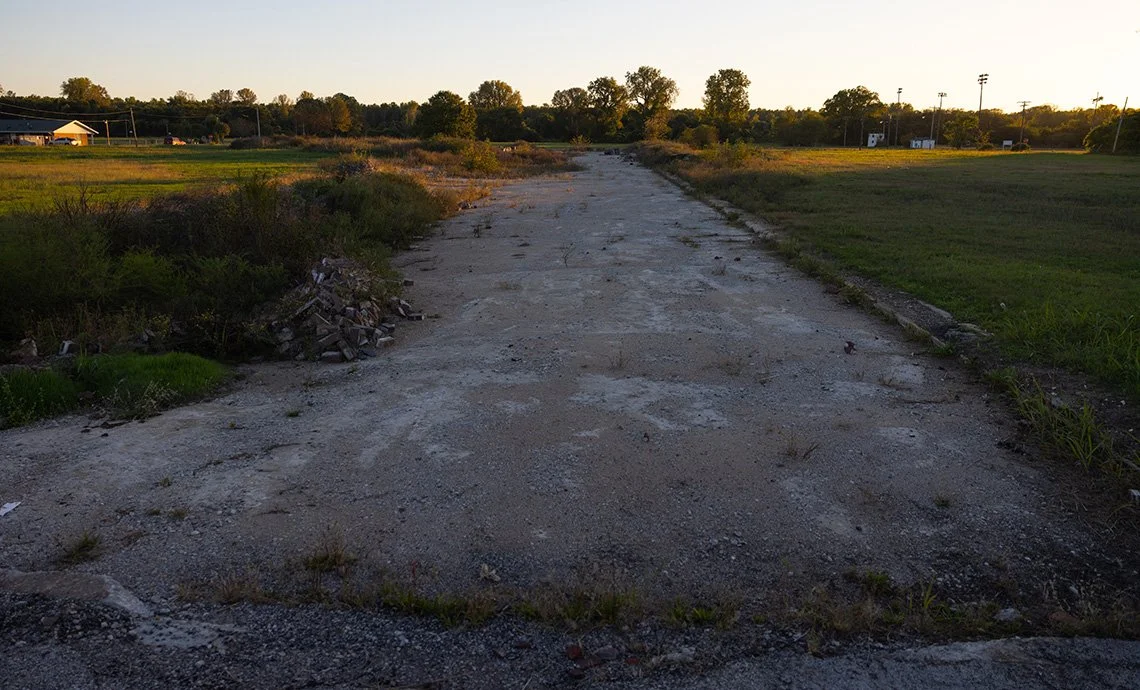
In August 2024, Cairo signed an agreement with Prestige for the company to build one duplex it would donate, plus another 29 homes over the next three years if the city could secure funding. Two years later, the lot in the center of town where the homes were to be built remains empty. (Julia Rendleman for ProPublica)

Hayes told me Prestige had sued Peri 3D to recover its printer deposit. But for weeks he was vague about it. He said he hadn’t seen the lawsuit and didn’t know where it was filed — “nowhere around here,” he told me. 

He flew into a rage when I told him the Peri 3D salesperson they’d worked closely with had called his company “shady.” At that point, he promised to find out where it was filed, but over multiple visits, he’d tell me he still hadn’t located it. 

I found the lawsuit during a records search at the Saline County Courthouse, steps from Prestige’s office. It turned out that Prestige had filed the suit in early 2025, just as Peri 3D was laying off its U.S. staff. Prestige claimed in the lawsuit that it signed a “mock document,” not a real contract, and that it never received the language Peri 3D later claimed made clear the deposit was nonrefundable. 

Five months later, in August, a judge ruled in Prestige’s favor after Peri 3D failed to respond to the lawsuit. In Saline County, where the poverty rate hovers around 20%, nearly double the statewide rate, the lost money stood out. “That’s a lot of money,” the judge remarked, according to a court transcript. 

“It’s a bad situation,” Prestige’s lawyer said. The judge replied, “I guess good luck trying to collect it.” 

Before I could tell Hayes that I had located the lawsuit, he texted me that afternoon: “Looks like we did sue and won!!!” he wrote. “Who’s the shady one now?” (He later said he couldn’t tell me where the lawsuit had been filed because he’d largely left the business to Burtis to manage.)

Still, he said he was resigned to the fact that they’d likely never collect their money — and to date they haven’t. 

Burtis said they can’t locate anyone from Peri 3D. When I followed up with Hayes this month, he acknowledged that the contract made the deposit nonrefundable and said he regrets not reading the fine print. “Every time I’ve done that, I’m like, you know what, gahhh, why do I get screwed? Next time I’m going to read through everything,” he said. 

Burtis said Prestige owes the bank roughly $13,000 a month under the terms of its 10-year lending agreement to pay for the original $1.1 million printer; over the full term, the company would pay more than $400,000 in interest. Prestige can’t afford the note; Hayes said he’s paying it out of one of his other business accounts. 

In an emailed statement from its German headquarters, Peri 3D said in October that it had conducted business “in accordance with the terms and conditions” of its contract with Prestige but would “investigate the matter diligently in the coming weeks.” When I followed up recently, the company declined to comment further. COBOD said it had not been delayed in constructing the printer and that it had no knowledge of a lawsuit since its contractual obligation was to Peri 3D and not Prestige.  

As I continued to ask Hayes questions, he told me the state senator could vouch for the deal. 

“Ask Dale Fowler if there’s any-f**king-thing going wrong,” he said. 

A modern-day Daniel

When I reached out to Fowler in October, he wasn’t vouching for much. He described Burtis and Hayes as acquaintances and himself as “just a guy that wants to help people.” He scoffed at Hayes’ claim that he could speak to any of their business dealings. And he said his role with the Cairo duplex project was minimal, limited to that of a cheerleader. 

His attempts to distance himself from the housing plan and company struck me as odd.

The month after Prestige secured a loan for the printer, Fowler’s office emailed promotional materials for Prestige’s 3D printing business to the Illinois Housing Development Agency and touted the project before the state poverty commission he sat on, public records show. 

He brought other top state officials into the orbit as well. Three months after Cairo’s duplex block party, Fowler led Mendoza, the comptroller, on a tour of the property with Burtis and his son. In since-deleted social media posts, she called them “visionaries.” A Mendoza spokesperson said Fowler asked if she wanted to tour the duplex, but she was not otherwise involved with the company or its owners, and they’ve received no state funding. The posts were removed after I asked the spokesperson if Mendoza had been aware that FBI agents had delivered a subpoena to Prestige’s office just days before her tour. 

 In a since-deleted Facebook post, Illinois Comptroller Susana Mendoza, center, poses in front of the 3D-printed duplex with, from left, Fowler, Erik and Josh Burtis, and Cairo Mayor Thomas Simpson. (Screenshot by Molly Parker/ Capitol News Illinois)

Fowler didn’t tell me, but I’d later also find out he’d convened Duckworth’s staff to a meeting with Prestige’s owners and the president of Grand Rivers Community Bank in early 2023 — 18 months before the 3D groundbreaking party in Cairo. A Duckworth spokesperson said the senator’s office had just revived discussions about how to address Cairo’s housing crisis when Fowler reached out and that the office did not have additional involvement with the company. 

People in Cairo also saw Fowler as key to the deal and reached out to him after it became clear the duplex had been left unfinished. 

“When it fell through, we were all calling Sen. Fowler personally, because he brought them here,” said Williams, the council member. According to Williams, Fowler told Cairo officials he was oblivious to Prestige’s business dealings. 

Since its founding in September 2021, Prestige has been Fowler’s largest source of campaign donations, not including those from political action and other committees. The company, and others owned by Burtis and Hayes, gave him $22,000 between May 2022 and August 2024. Its final donation of $6,500 was made to Fowler five days after the groundbreaking party for the 3D-printed duplex. Fowler said he doesn’t track who donates to his campaign; he and Burtis said the donation was for Prestige co-sponsoring a golf fundraiser two months earlier. 

Fowler, a decadelong state senator who plays a key role shaping his caucus’ legislative priorities as a Republican assistant leader, announced last summer that he wouldn’t seek reelection, citing a 10-year term limit pledge; his term expires in January. 

Fowler also told me in October that he had no knowledge of the federal probe of Prestige and had never been approached by investigators. “Are they grabbing for straws?” he said of the FBI. 

Fowler said he’d known Hayes and Burtis for decades and doesn’t believe they’ve done anything wrong. 

Still, he said he’d taken some unfair heat over the ordeal — “guilty by affiliation, I guess.” 

But Fowler told me it wasn’t the first time he’d been criticized as an elected official, leading him to believe in his “spiritual soul” that he is the modern-day Daniel. In the Old Testament, Daniel was a virtuous believer thrown into the lion’s den by his enemies. But angels closed the lion’s mouth, saving Daniel, while his enemies ended up being “chomped, mutilated, by the lions.” Fowler said the story put him “at peace.” 

“I’ve never told this to anyone,” he added. “I’ve never told this to my wife.”

The FBI comes knocking 

Not long after I began digging into what happened to the duplex in Cairo, I learned the FBI was also looking into Prestige’s broader business dealings. 

Within weeks of the block party, six employees — more than half Prestige’s staff — quit. Then Prestige received a federal grand jury subpoena asking for its financial records, Hayes and Burtis said. 

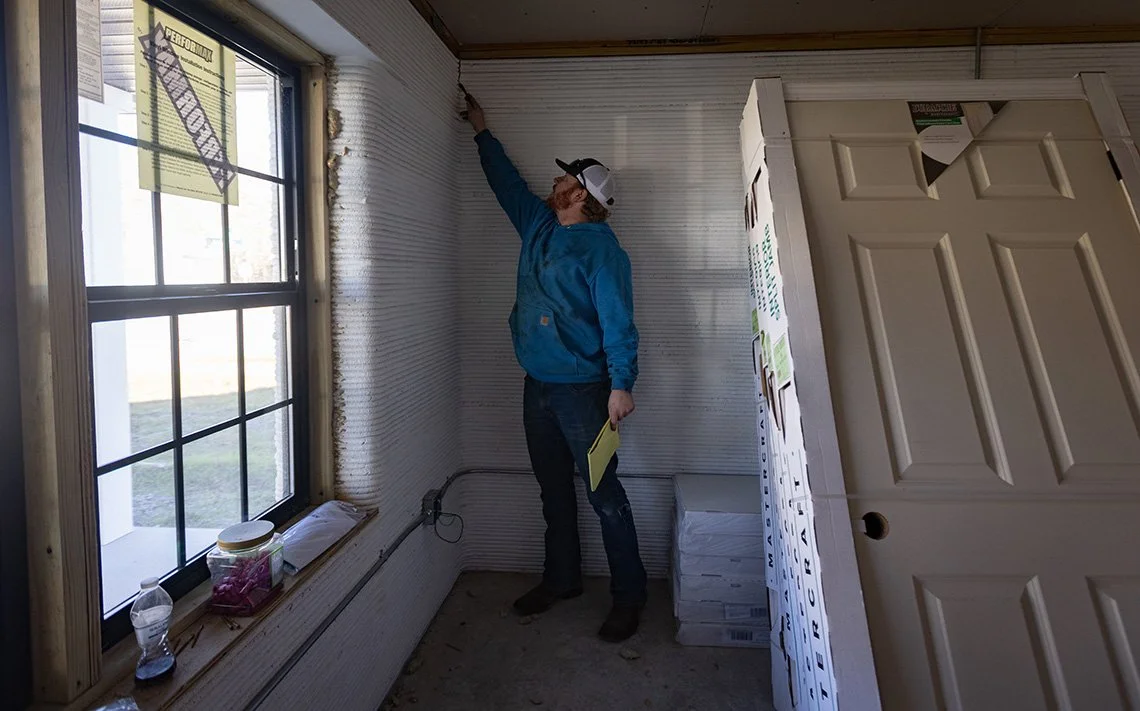
 Ryan Moore, then a Prestige employee, points to a crack in the duplex in December, one of dozens the company says caused it to stop work. Prestige said it waited a year for its printer supplier to provide a crack remediation plan. When one wasn’t provided, the company used hydraulic cement. (Julia Rendleman for ProPublica)

The FBI has also subpoenaed two school districts and the city of Harrisburg for their contracts with and payments to Prestige for work unrelated to the duplex project, according to records obtained under the Illinois Freedom of Information Act. The FBI declined to comment on the status of its investigation. 

Harrisburg Mayor John McPeek said the city did two projects with Prestige, though he said Fowler had encouraged the city to use the company more. A school district in Eldorado, one of those subpoenaed, ousted the former superintendent in September, in part for failing to get school board approval for about $2 million in payments to Prestige and related companies, public records show. The district declined to comment, and the former superintendent did not respond to requests for comment. 

Miller, the Prestige employee who hyped the 3D printing project to Cairo residents, was one of the employees who quit. When we first met up late last summer, he told me he had become an FBI whistleblower. 

Miller told me he’d been taken advantage of, sent to Cairo to sell a false promise the company had no intentions of standing behind. He also told me about a flurry of anonymous emails sent via Proton, an encrypted email service, that accused Prestige of fraud not long after Cairo’s block party. The emails went out to various businesses and schools that had contracted with Prestige.

I, too, had received a Proton email about Prestige. It wasn’t anonymous like the others, but was instead from someone claiming to be a COBOD executive. It directed me to open a DropBox file, but the link didn’t work. That executive told me she’d been impersonated; the company said it takes the matter “very seriously.”

At one point, Miller claimed to me that he was the one who sent the Proton emails — under instructions from the FBI, in an attempt to drum up investigatory leads. The FBI declined to comment, though three law enforcement experts told me this would be highly unlikely. Miller later changed his story, saying he hadn’t sent the emails. 

Burtis initially refused to answer my calls, texts and knocks on his door, but he called me back in October and said he wanted to talk. 

“For some reason, I woke up today, and after praying, it was like, ‘You need to go ahead and talk to her,’” he said. Tears streaked his face. His aunt sat beside him, taking notes on a legal pad. He blamed Miller for trying to ruin his company and for spreading unfounded rumors about him and Hayes. Miller did not respond when I asked him about Burtis’ claims.

Burtis also said he and Hayes have fully cooperated with the FBI, handing over all the financial records requested in the subpoena, though he said they’d never been interviewed by agents. “If I was really in trouble, don’t you think I’d have been handed an indictment by now?” Burtis said. 

His son Josh, who had been put in charge of the 3D printing venture, said the construction issues had been disappointing, but they had been keeping the city updated. Hayes said he’d been fully transparent with me and investigators. 

As I asked questions last fall, the printer sat outside on the flatbed, though some parts of it recently moved to Hayes’ car lot.

The cracked house remained abandoned. 

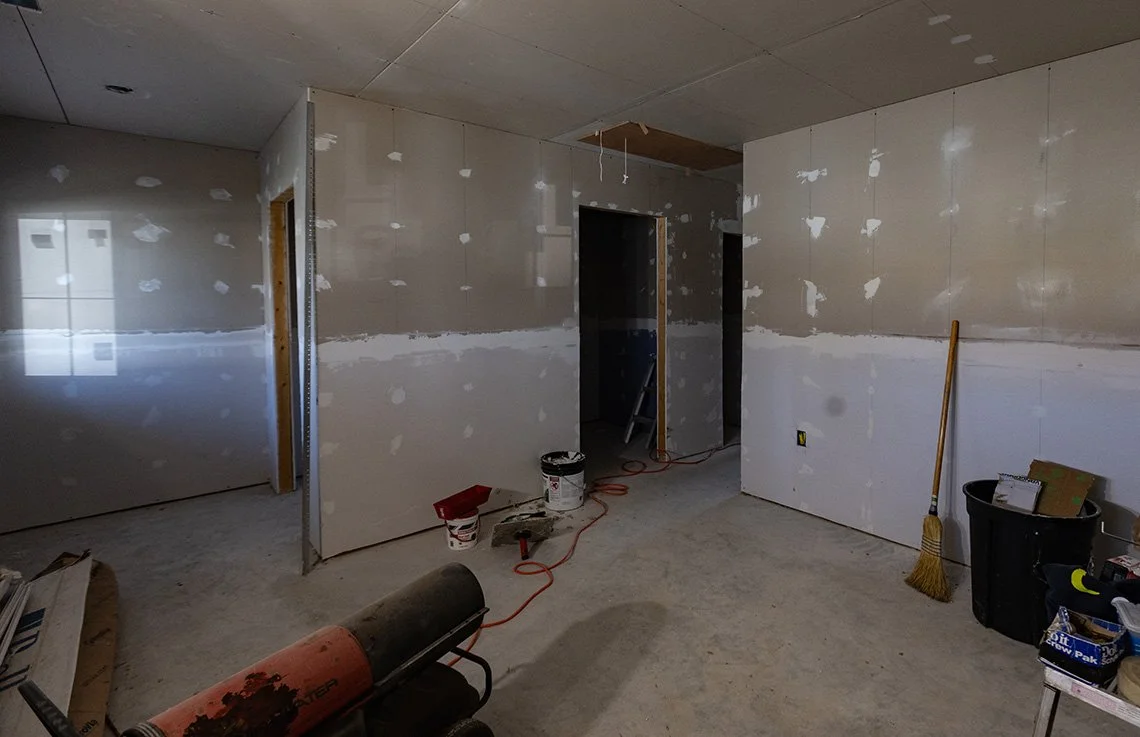
Crews began working again on the duplex last fall after reporters started asking questions, but it remains unfinished. (Julia Rendleman for ProPublica)

Hayes said the concrete “ink” that came with the Black Buffalo 3D printer was faulty and that’s why the printer has been idle since. Black Buffalo 3D said it has offered Prestige a new concrete solution and to find a buyer for the printer if Prestige no longer wants it. 

Prestige and Black Buffalo told me in a joint email in September that they would return to Cairo by the end of October to fix the cracks, which they said were nonstructural. But Black Buffalo never showed up, saying its engineer couldn’t sign off on a repair plan without city permits, which don’t exist because they aren’t required. The company, which has sold only two printers in the U.S. since its founding in 2020, filed for bankruptcy in December. 

Burtis later said he engaged his own engineering firm to sign off on a remediation plan to fill the cracks with a hydraulic cement, though he declined to share that plan or the company name. Crews were recently working on the duplex; Burtis said the cabinets they ordered did not fit. 

Once the duplex is finished, Burtis said, he plans to turn the keys over to the city. Simpson said he will be ready. Still optimistic, the mayor said he hopes someone else will eventually follow through and build homes in Cairo.

Abell, Cairo’s city attorney, said the failed venture has never sat right with him. “I’ve seen a lot of deals fall through,” Abell said. “But we always knew why. Here, we got nothing.”

“Even today,” he added, “I probably have a lot more questions than I’ve got answers.”

While some questions remain unanswered, one set of facts is undisputed: When HUD began dismantling housing here a decade ago, officials promised there would be an effort to build back. Today, the only thing that has been built is one duplex, still unfinished.

Mallory, the mother who’d hoped to have a two-bedroom home one day, said she is tired of waiting, as much as Cairo has always felt like home. In mid-March, she applied for a housing assistance program in Chicago. She worries Cairo can’t give her daughter all she needs to thrive. “I want more for her,” she said. “I thought I was going to be able to get a two-bedroom apartment.”

But in the end, she sighed, with the kind of resignation that comes from being disappointed too many times, it was just “a bunch of broken promises.”

Kaneesha Mallory, who shares a one-bedroom apartment with her 6-year-old daughter, had hoped to move into the duplex. (Julia Rendleman for ProPublica)

Julia Rendleman contributed reporting to this story. Mollie Simon of ProPublica contributed to research.

Capitol News Illinois is a nonprofit, nonpartisan news service that distributes state government coverage to hundreds of news outlets statewide. It is funded primarily by the Illinois Press Foundation and the Robert R. McCormick Foundation.


Device that helps make space travel possible named ‘Coolest Thing Made in Illinois’

The NASA Standard Initiator won the annual ‘Makers Madness’ competition

Article Summary 

  • Chemring Energetic Devices, a Downers Grove-based company that engineers and manufactures devices for NASA, won the title of Coolest Thing Made in Illinois as part of the annual “Makers Madness” competition held by the Illinois Manufacturers’ Association. 

  • The devices, NASA Standard Initiators, have been used in space flight going back to the 1970s and are crucial to maneuvering, separation and staging. 

  • The NSIs triumphed over a field of more than 100 entries and after nearly 167,000 votes were cast. 

This summary was written by the reporters and editors who worked on this story.

By NIKOEL HYTREK
CAPITOL NEWS ILLINOIS
nhytrek@capitolnewsillinois.com

SPRINGFIELD – Astronauts just returned from their first voyage around the moon since 1972 and a device built by an Illinois company helped fuel the mission’s success. 

Created and manufactured in Downers Grove, the NASA Standard Initiator, or NSI, is a small electrically activated pyrotechnic device that initiates propulsion by sparking a chain reaction of heat and pressure in space flight. 

“Anytime you have a space launch, anytime you have a separation activity, particularly in space, you need something to push that away and get something to light that initiating event. And that's what that device does,” said Steven Hill, president of Chemring Energetic Devices Inc. 

Chemring and the NSI won the 2026 “Makers Madness” contest on Wednesday, being named “The Coolest Thing Made in Illinois” for 2026. The competition is held annually by the Illinois Manufacturers’ Association.

“The NASA Standard Initiator helped make Artemis II’s historic mission possible and literally took Illinois innovation to the moon,” said Gov. JB Pritzker, who presented the award at the Illinois Governor’s Mansion in Springfield. “Illinois’ remarkable investors are shaping the world’s future every day, and our state’s thriving manufacturing sector continues to power that progress.”

Artemis II wasn’t Chemring’s first trip to space. The device is also on the Mars lander and Atlas satellite launchers. Hill said the company’s involvement in space goes back to the Apollo missions. 

“The founders of the company, many years ago, were in the ordnance business,” Hill said. “And when you think about space, you need something that's highly reliable, that's going to work every time. And that's about the chemistry, that's about the energetic material. And then using the electrical signal to go off and start that device. That's what the company wanted to go off and do, and that's how they got the first contract with NASA.”

The devices are fully engineered and manufactured in Illinois. Hill said 80 NSIs are used for space launches and Chemring is the only manufacturer of the product that’s qualified by NASA.

“As the only provider of NSI initiators to NASA, Chemring Energetic Devices is proud to contribute to humanity’s most ambitious achievements,” said Karen Kern, the principal contracts manager for Chemring. 

In addition to its contract with NASA, Chemring works with Elon Musk’s SpaceX, Jeff Bezos’ Blue Origin and United Launch Alliance. 

Chemring also manufactures similar devices for aircraft ejection seats, called Cartridge Actuated Devices and Propellant Actuated Devices, or CAD/PADs and flight suit testers. 

“When you think about pilots going out to the flight deck, you see them in their flight suits. They have to test the pressure in those suits,” Hill said. “We built a tester system that goes off and evaluates whether or not that can be effectively used.” 

Chemring’s NSI bested a field of more than 100 other Illinois-manufactured products. Over eight weeks, 167,000 votes were cast to narrow the field down to four finalists. 

“This year’s winner is truly out of this world and represents the very best of Illinois manufacturing, embodying the creativity and innovation that is the hallmark of our incredible industry,” Mark Denzler, president and CEO of the Illinois Manufacturers’ Association, said. 

Last year’s winner was the Aerial Firefighting Helicopter Refill Pump, which provides water for aerial firefighting teams. 

Other finalists for the 2026 competition included:

  • The John Deere Combine, manufactured in East Moline.

  • Duck Skimmer, a floating weir skimmer used to take the surface layer off the water to remove duck weed, water meal and other pollutants. It’s manufactured by Elastec in Carmi.

  • Aerapy PPR HVAC UV System, a system that disinfects the air with ultraviolet light, reducing airborne pathogens. This technology is manufactured in Aerapy in St. Charles. 

Capitol News Illinois is a nonprofit, nonpartisan news service that distributes state government coverage to hundreds of news outlets statewide. It is funded primarily by the Illinois Press Foundation and the Robert R. McCormick Foundation.

The NASA Standard Initiator is a small but crucial part of space flight. The electrically activated devices fuel propulsion by igniting other components in space systems. NASA has worked with Chemring to manufacture these devices since the 1970s. (Capitol News Illinois photo by Nikoel Hyrtrek)

Steven Hill, president of Chemring Energetic Devices, accepts the award for The Coolest Thing Made in Illinois as part of the annual Makers Madness competition hosted by the Illinois Manufacturers’ Association. (Capitol News Illinois photo by Nikoel Hyrtrek)

Frozen Opens Tonight At MCHS

Opening night is here for the Mt. Carmel High School production of Disney’s Frozen: The Broadway Musical.

Curtain goes up tonight at 7 p.m. in the MCHS auditorium, with additional evening performances set for Friday and Saturday at 7. Matinee shows are scheduled for 2 p.m. on Saturday and Sunday.

Tickets are going fast. Only single seats remain for tonight’s opening performance and Sunday’s matinee. The best availability right now is for the Saturday afternoon show. Tickets can be purchased online at https://app.arts-people.com/?show=310770.

Senior Karly Mandrell stars as Elsa. She’s the daughter of director Kim Mandrell, and recently talked with us about what it’s like performing under her mom’s direction.

KARLY MANDRELL FROZEN 2026

Organizers encourage anyone planning to attend to secure tickets soon for one of the remaining performances.