On April 13, 2026, at 2:09 p.m. law enforcement officers were on routine patrol in Oakland City near the intersection of Jackson and Morton Street when they observed what appeared to be disturbance. Deputy U.B. Smith made contact with the female while other law enforcement made contact with the male involved in the incident. While speaking with the female she attempted to give Deputy Smith a false name in order to conceal her identity. Deputy Bryan Small approached Deputy Smith and the female and identified her as 32-year-old Samantha Hudspeth of Centertown, Kentucky. Upon realizing that she had been identified Ms. Hudspeth began to run from the scene. After a brief foot pursuit Ms. Hudspeth was taken into custody. Upon being prepared for transport to the Gibson County Detention Center illegal drugs were found on Ms. Hudspeth’s person. At the conclusion of the investigation Ms Hudspeth was transported to the Gibson County Jail where she was charged with Resisting/Fleeing Law Enforcement, Possession of Methamphetamines, Possession of a Legend Drug, and Possession of Paraphernalia.
Arresting Officer Deputy Smith was assisted by Deputy Bryan Small, Deputy Wyatt Hunt, and Oakland City Officer Ty Schmittler
All criminal defendants are to be presumed innocent until and unless proven guilty beyond a reasonable doubt in a court of law.

Lawmakers grill Department of Corrections after audit shows dozens of failures
Findings: Department violated state’s purchasing process, allows overtime pay for employees on leave
By BEN SZALINSKI & MAGGIE DOUGHERTY
Capitol News Illinois
news@capitolnewsillinois.com
Article Summary
Illinois lawmakers say the Illinois Department of Corrections must fix a slew of errors that were revealed in a recent audit.
The audit found the department allows people to take a vacation day but show up to work on the same day and receive overtime pay.
Auditors also found the department has bypassed the state’s purchasing process for a faster “emergency” model on numerous purchases in recent years.
Other findings found the agency failed to properly report sex offenders to local police agencies.
Corrections officials also updated a legislative oversight committee on its progress implementing a rule allowing them to scan and digitize prison mail. It showed an increase of illegal drugs found in jails since the scanning program was implemented.
This summary was written by the reporters and editors who worked on this story.
SPRINGFIELD — Illinois lawmakers are fed up with the state Department of Corrections after another audit found the it has ignored state spending rules and failed to fix many mistakes that have languished for years.
The Legislative Audit Commission, a bipartisan commission of state lawmakers that reviews audits of state agencies, demanded answers from Corrections Director LaToya Hughes on Tuesday. An audit of her department in fiscal years 2023 and 2024 that was released in September revealed 40 shortcomings at the agency, making it one of the worst in the state.
The department allowed employees to earn overtime hours while working during paid leave, violated state purchasing rules and failed to maintain a list of paroled inmates who moved to other state facilities, according to the audit.
“I don’t know why the two worst-run departments in the state are the ones that deal with lives of people ... We are being fleeced – the taxpayers,” commission co-chair Sen. Chapin Rose, R-Mahomet, said. “You are putting people’s lives at risk.”
The audit revealed numerous problems that could cost the state millions of dollars or jeopardize public safety.
“There is literally nothing that you guys can say that I would believe,” Rose said. “And honestly, it’s about the safety of people in the state and the safety of the men and women that work there.”
The commission did not vote to accept the findings of the audit, meaning the department will have to return to answer more questions from lawmakers on their progress addressing the problems.
Overtime pay
Auditors took issue with how the department allows employees to earn overtime. Eighty percent of the employees reviewed by auditors recorded overtime on the same days they also received paid leave. Employees who took time off were still coming to work and getting paid for both their time off and having the hours they worked that day counted as overtime.
“Someone could take 37.5 hours, or 40 hours depending on what their schedule is, they could take a week’s vacation, they could come in and work a four-hour shift and that four hours would be paid in overtime even though they haven’t been in the office?” asked Rep. Amy Elik, R-Godfrey.
Hughes, who took over the department in 2023 and was confirmed by the Senate the month after the audit was released, said Elik’s assessment was correct and blamed the practice on DOC’s union contract.
Auditors wrote in their assessment that the problem has persisted since 2014 despite prior commitments from the department to address the issue. The Department of Corrections had a $2.1 billion budget in FY24 and overtime cost the state $150 million.
The department is also behind the times on timekeeping.
“The department at one point in time did attempt to digitize the timekeeping process,” Hughes said. “They were unable to do so at the time so that process is still a manual process.”
Purchasing issues
The department has also resorted to more frequently using the state’s emergency procurement process, according to the audit, which allows it to circumvent the slower bidding process for contracts and purchases.
The department spent millions on new vehicles through the emergency process in early 2023. It was not clear why all vehicles were purchased outside the normal bid process.DOC chief administrator Jared Brunk said the department’s vendor for vehicles wasn’t able to make an order for vans through their contract and the department made the decision to buy them under an emergency designation.
The department also made a $692,640 emergency purchase for sliced bread in mid-2023, a product typically made by the department itself at Illinois River Correctional Center in Fulton County.
“Isn’t it foreseeable that you need sliced bread to feed inmates?” Rose asked.
Brunk said DOC ran into a supply chain issue at the time and decided to purchase the bread instead.
Public safety
Other revelations in the audit pertained to possible public safety issues.
Auditors found the department did not have a list of people on parole or mandatory supervised release who became residents of state facilities run by the departments of public health, human services or health care and family services.
More than 15,000 people are in DOC custody on parole or supervised release and the department is required to notify local police agencies when a person under those release conditions is living in their community.
State law requires DOC to supervise sex offenders on mandatory supervised release and report to police agencies on their compliance with release conditions. But the department has failed to do so.
In addition, some people in DOC custody were improperly labeled as violent sexual offenders, despite having not committed such a crime. Alyssa Williams, assistant DOC director, blamed state’s attorneys and courts for not providing pushed back
“It’s sort of the ultimate irony that you’re housing people accused of violating the state law and then you guys are violating the state law,” Rose said.
Mail scanning update
Corrections staff also provided an update to a legislative oversight committee on a recently adopted rule that allows the department to scan and digitize incoming mail and books.
The rule, which faced pushback from families of those in custody and their advocates, was introduced following a number of illegal substance exposures in correctional facilities left DOC staff hospitalized.
Critics argued mail scanning would intrude on privacy of those in custody and deprive them of the comfort that physical mail can provide. Some also said the department had not done enough to prove that exposures were coming in via the mail, and the rule would fail to improve safety for staff and those incarcerated.
On Tuesday, the department released its first data comparing drug exposures before and after the rule change in a report to the Joint Committee on Administrative Rules, and critics of mail scanning say the data confirms their concerns.
That data shows little change in the rate of exposures in the six months preceding and following the ruling, instead showing an increase in total drug discoveries from 392 to 414. Discoveries in cells and on people also increased, with nearly 40 more incidents of in-cell drug discoveries made.
The report also showed a slight decrease in mail discoveries and five fewer instances of alleged drug exposures, from 133 in the six months before the rule change to 128 after.
“The numbers just aren’t there to justify this amount of work and keeping the actual mail away from the people who are in custody,” Rep. Dave Vella, D-Rockford, said.
He asked DOC officials to explain the numbers and if they were exploring other ways drugs were getting into facilities, such as through prison staff and visitors.
DOC Chief Compliance Officer Michael Crum answered that the newness of the rule implementation could account for the trend, as contraband substances could have entered prisons before the rule change and then been found later.
Crum also said that visitor and staff searches were of “utmost importance” and said, “it is certainly a multifactored approach, with mail being just one piece of it."
To prison reform advocates like the John Howard Association, this is confirmation that mail is not the primary way contraband enters prisons.
“This underscores what has been clear from the beginning, drugs mostly enter prisons through people who enter and exit the facilities and until more is done to crackdown on this the problem will persist,” JHA Executive Director Jennifer Vollen-Katz said in a statement.
Capitol News Illinois is a nonprofit, nonpartisan news service that distributes state government coverage to hundreds of news outlets statewide. It is funded primarily by the Illinois Press Foundation and the Robert R. McCormick Foundation.
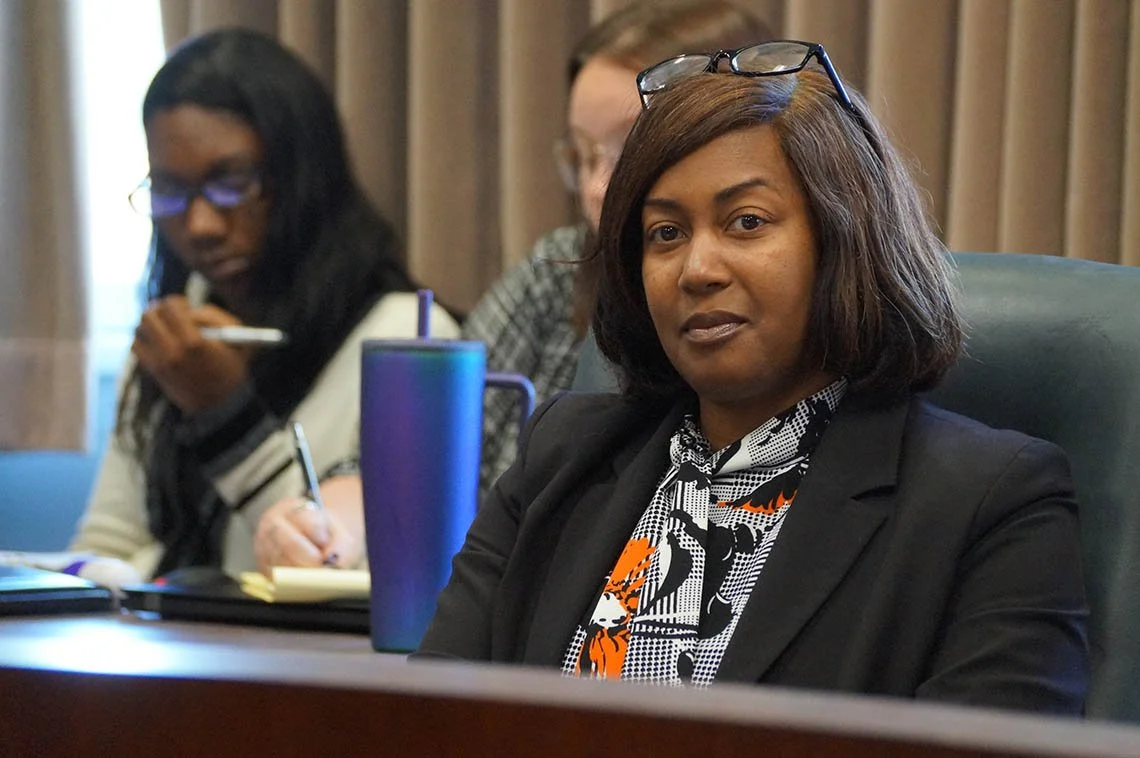
Illinois Department of Corrections Director LaToya Hughes was confirmed as department director in October and has led it since 2023. (Capitol News Illinois photo by Peter Hancock)
Will this be the year the state legislature approves a cellphone ban in schools?
Illinois is one of only eight states with no statewide restrictions on cellphones in classrooms
Article Summary
The Illinois House is once again considering a bill that would restrict cellphone use in public and charter schools
In its most recent version, the bill would require elementary and middle schools to implement a bell-to-bell ban, while high schools could allow students to use their cellphones during breaks and lunch.
Through this bill, lawmakers aim to increase student engagement and address concerns about youth mental health.
Illinois is one of eight states that have no restrictions on cellphone use in schools.
This summary was written by the reporters and editors who worked on this story.
By SAM FREEMAN
Medill Illinois News Bureau
news@capitolnewsillinois.com
SPRINGFIELD — After the Latin School of Chicago passed a cellphone ban, students, who typically would be glued to their phones on their way to class, looked up, interacted with their peers and were more immersed in school, officials said.
The Latin School of Chicago first restricted cellphone use for the 2024-25 school year, and a year later, revised it to a total ban during school hours. Since then, students recognize increased engagement, both during instructional time and breaks.
“I’m grateful for the phone ban. I’ll take a more-connected community over the minor conveniences of a cellphone any day,” Scarlet Gitelson, the editor-in-chief of the student-run paper The Fulcrum, said in an op-ed.
As the Illinois legislature once again considers a statewide cellphone ban in schools, it looks to success stories like the Latin School to propose a bill aimed at addressing mental health and enhancing student success.
A push to regulate in Illinois
Illinois is one of only eight states that have no statewide restrictions on the use of cellphones in public schools.
An amendment to Senate Bill 2427, which passed the Illinois House Education Committee unanimously on March 25, would require all Illinois public and charter schools to adopt policies restricting student use of cellphones, tablets and other devices during class time.
The bill still needs approval from the full House, where it’s not subject to a Friday deadline for final action, because a previous version already passed the Senate 55-0 last year. Because it was amended in the House, however, the Senate will need to approve the amended version before it can head to Gov. JB Pritzker, who’s been pushing for the measure for two years.
“There’s real harm being done, and it’s interfering with our ability to give children the most productive educational environment possible. It’s time to get cellphones out of the classroom,” Pritzker said in his February State of the State speech.
The line drew bipartisan applause.
Under the bill, elementary and middle schools would be required to implement a bell-to-bell ban while high schools could allow their students to use their devices during lunch and breaks. The policy for high schools would vary according to school district.
Read more: Lawmakers advance Pritzker’s cell phone ban, social media regulations
Last year, the bill didn’t receive a House vote due to concerns about enforcement and exceptions.
The revised version includes a list of exceptions, including medical necessity, individualized education programs and for English learners accessing materials. It also limits disciplinary actions, such as suspension or expulsion. And it prohibits enforcement through fines, fees or law enforcement action.
If the bill is passed and signed by the governor, policies would need to be implemented by the 2027-28 school year. But school districts that already have cellphone restrictions in place have until 2030-31 to ensure their policies conform with state requirements.
Prioritizing academic success
Currently, 42 states and Washington, D.C., have laws or policies that either prohibit or limit student cellphone use, or require individual districts to either ban or limit their use.
“There are a lot of different states that have introduced this bill, and I think it is passed with a broad bipartisan support because they recognize the importance of banning these devices with some exceptions, of course, so that way students are successful,” said Sen. Cristina Castro, D-Elgin.
These policies, though varied by state, are aimed at improving focus and reducing bullying.
According to the Pew Research Center, approximately 72% of high school teachers say phone distractions are a major problem, compared to 33% of middle school teachers and 6% of elementary school teachers.
These distractions are proven to negatively impact student success and mental health. A 2023 survey of adolescents showed that 51% reported using social media for more than three hours per day. Social media use by adolescents is associated with higher rates of anxiety and depression, according to the National Library of Medicine.
Social media use has become a major issue among adolescents, with thousands of lawsuits alleging that addictive platform designs harm children’s mental health. In a landmark court ruling in late March, Meta and YouTube were found liable on all counts of using addictive design features that harmed young users and created mental health problems.
Cellphone use is also linked to cyberbullying. According to KFF, nine in 10 public schools reported instances of cyberbullying in the 2023-24 school year. Cyberbullying can lead to emotional distress, depression and suicidal ideation. It’s also more likely to be experienced by females and LGBT+ adolescents.
“I think taking as many distractions off the table for students will allow them to focus on their studies as well as their teachers and professors in the classroom,” Castro said. “So they get their undivided attention, and it'll have great student success outcomes.”
How are bell-to-bell bans implemented?
A cellphone ban would require devices to be placed in “secure and accessible” storage, like backpacks, desk storage, lockers or pouches. Although the bill does not require districts to purchase additional storage options, some teachers unions worry about costs for implementation, or added responsibility to teachers.
“Schools already have the authority to set cellphone policies, but what they cannot do is fund themselves or the cellphone lockers or pockets that will be required to enforce this unfunded mandate,” the Illinois Federation of Teachers said in a news release. The union represents 105,000 teachers and paraprofessionals throughout Illinois.
Peoria’s District 150, which already has a policy restricting cellphone use, spent $250,000 on Yondr pouches.
Yondr bags lock automatically when the top is snapped together, and they can only be unlocked when tapped against a magnetic base. They typically cost between $20 and $30 per student.
To assist with implementing the policy, a number of states with similar legislation offered grants. For example, New York allocated $13.5 million in funding for the implementation of its ban, specifically for lockable pouches.
Illinois’ bill does not allocate funds for implementation.
“Only the governor can ultimately meet the state’s funding obligation,” said Cindi Oberle-Dahm, executive vice president of the Illinois Federation of Teachers.
Sam Freeman is a graduate student in journalism with Northwestern University’s Medill School of Journalism, Media and Integrated Marketing Communications, and is a fellow in its Medill Illinois News Bureau working in partnership with Capitol News Illinois.
Capitol News Illinois is a nonprofit, nonpartisan news service that distributes state government coverage to hundreds of news outlets statewide. It is funded primarily by the Illinois Press Foundation and the Robert R. McCormick Foundation.
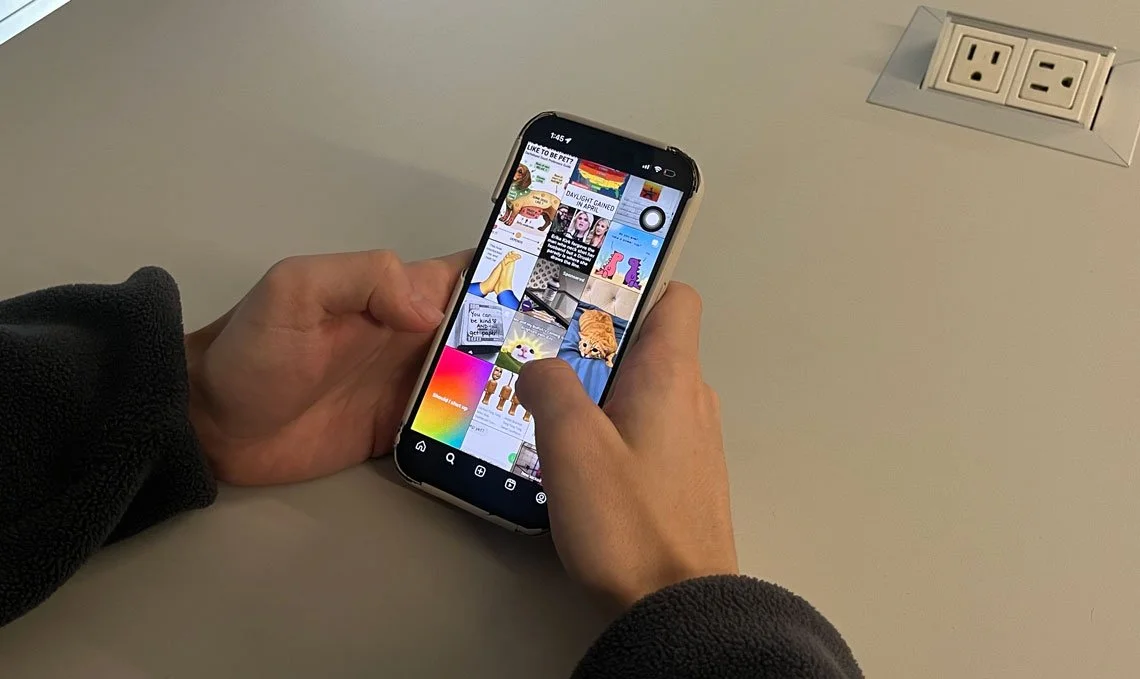
A student uses his phone in school. (Medill Illinois News Bureau photo by Sam Freeman)
Costs of state employee health benefits continue steep rise
Overall cost of health plans expected to rise 9%, to $4.6 billion
By PETER HANCOCK
Capitol News Illinois
phancock@capitolnewsillinois.com
Article Summary
State employee health care costs have been rising steadily for several years due to growth in the state’s workforce and general health care inflation.
Next year’s projected increase will bring the total growth rate per participant since 2018 to 45.7%.
Employee premiums will also go up next year under terms of collective bargaining agreements.
This summary was written by the reporters and editors who worked on this story.
SPRINGFIELD – Health insurance costs are expected to take a bigger bite out of the state’s budget and out of state employees’ pocketbooks next year.
Officials from the Department of Central Management Services told a legislative panel Tuesday they expect to see an increase of $380 million, or 9%, in total costs to the system in fiscal year 2027. That would bring total expenses paid by all funding sources to about $4.6 billion.
That would be a slightly lower rate of inflation than the state has seen in recent years. Costs increased this fiscal year by an estimated $402.8 million, or 10.5%, over fiscal year 2025. That year was almost 15% higher than fiscal year 2024.
CMS Director Raven DeVaughn said the increases have been due to several factors, including growth in the state’s workforce. Since 2019, she said, the state has added about 10,000 employees. She said the health plan now covers about 470,000 lives, including employees, retirees and qualifying dependents.
But DeVaughn also cited general inflation in the health care industry as a contributing factor.
“Certainly, there's the general idea of inflation that we are all just fighting through as a country,” she said. “We can't quite point to one specific thing that has increased our liabilities.”
According to CMS data, the average cost per participant is expected to grow 8.3% next year, to $12,051. That would represent a 45.7% increase over fiscal year 2018.
As an employer, the state offers its employees a variety of different health benefit plans. They are funded through a combination of state funds, employee premiums, prescription drug rebates and other miscellaneous revenues.
The state’s general revenue fund is the largest single source of funding, accounting for about 62% of the system’s total revenues. That cost is expected to rise 12.8%, to $2.8 billion in the upcoming fiscal year. Contributions from the road fund are expected to decline 10%, to $155.5 million, while funding from university funds is expected to remain even at $45 million.
Member contributions are expected to increase $30 million, or 4.9%, to $637 million. Member contributions make up about 14% of the system’s total revenues.
Premiums, which are largely a function of collective bargaining agreements, are expected to rise $8 per month for employees and $4 per month for all dependents in both fiscal year 2026 and 2027, the last year of the current labor contract.
Capitol News Illinois is a nonprofit, nonpartisan news service that distributes state government coverage to hundreds of news outlets statewide. It is funded primarily by the Illinois Press Foundation and the Robert R. McCormick Foundation.
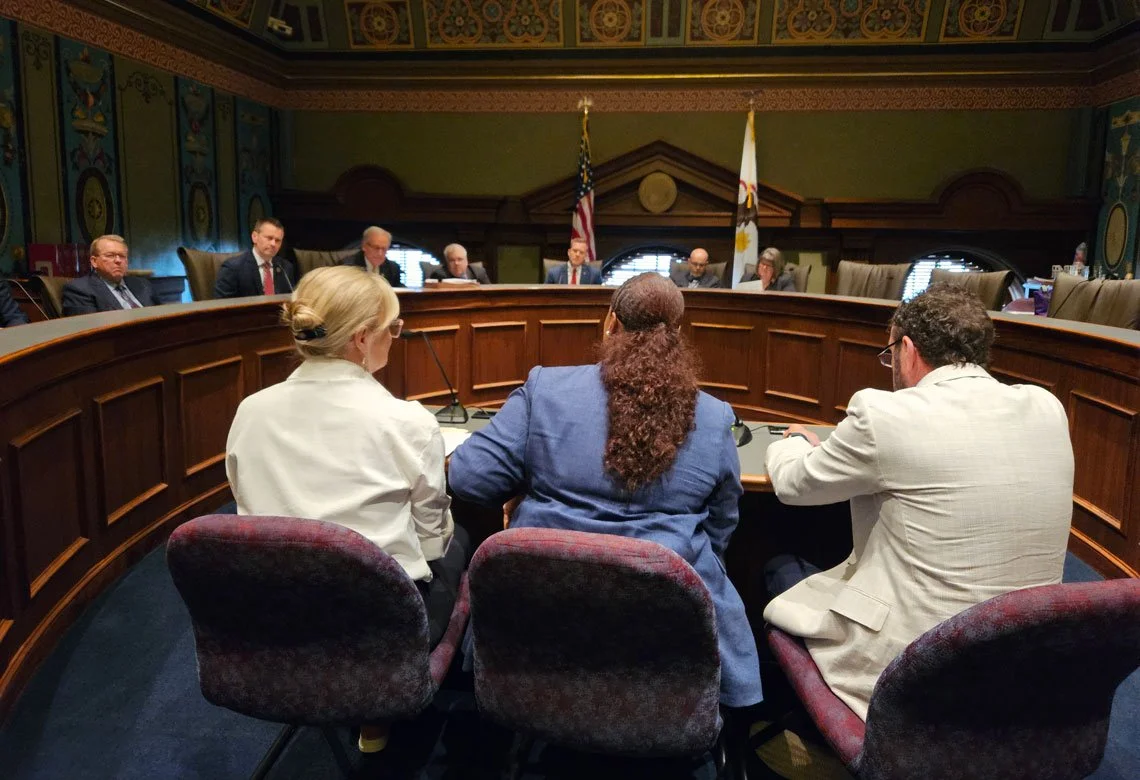
Officials from the Department of Central Management Services testify before the legislative Commission on Government Forecasting and Accountability about expected cost increases next year in the state employee group health insurance system. (Capitol News Illinois photo by Peter Hancock)
Amid artificial intelligence explosion, lawmakers debate best path to regulate
Illinois lawmakers recognize the harms of AI while hearing testimony on dozens of bills
Article Summary
While artificial intelligence industry donors spent big in Illinois primary elections, lawmakers continue debating the best way to regulate the industry.
Previous bills and hearings suggest that legislators are primarily concerned about privacy and consumer protection, although they still respect the need for innovation.
As lawmakers continue negotiations with many conflicting interests, the path forward, and whether a federal executive order preempts their ability to regulate the technology, is unclear.
This summary was written by the reporters and editors who worked on this story.
By JENNA SCHWEIKERT
Capitol News Illinois
jschweikert@capitolnewsillinois.com
As the artificial intelligence industry rapidly expands, state legislators appear poised to continue imposing regulations on the technology.
Committees in both chambers of the Illinois General Assembly have heard bills that would implement various restrictions and give recommendations on the use of AI in state government and certain industries. The state already has some laws in place, but legislators raised concerns about the harm AI may still be causing consumers.
On April 9 and 10, the Senate held two virtual subject matter hearings on nearly 50 bills about AI and consumer protection, privacy, education and data centers.
Sen. Mary Edly-Allen, D-Libertyville, pointed to social media as an example of what happens when government does not place guardrails on new technology.
“If we got social media wrong, and we did, we cannot afford to get AI wrong,” Edly-Allen said. “Will we act on the lessons we have already learned?”
Industry stakeholders recommended lawmakers let the federal government take control of regulating AI, while acknowledging concerns about its impact. The president, however, declared via executive order in December that he is not in favor of broad AI regulations.
AI advocates also recommended Illinois mirror other states’ laws to prevent a complicated system for companies who operate in many locations.
“Our core concern is creating a patchwork environment, making Illinois a compliance outlier,” said Jarrett Catlin, state AI policy advisor at TechNet, a national technology policy advocacy group. “We need to create clear incentives for responsible behavior without prescribing a one-size-fits-all compliance regime.”
The “patchwork” argument echoes the president’s executive order, which declares that companies must be “free to innovate without cumbersome regulation,” and that state regulation “thwarts this imperative.”
In the hearings, the senators emphasized that they did not want to hinder development and business in the state but are deeply concerned about the lack of guardrails currently in place, particularly around chatbots and minors.
“This isn't about stifling innovation … but you need to have guardrails to protect minors,” said Sen. Sue Rezin, R-Morris. “This bill is about ensuring that as technology moves faster than the law, we don't leave consumer protections in the dust, especially when it comes to minors.”
Current and proposed statutes
Illinois already has some laws targeting AI use in image manipulation and intellectual property, according to Andrew Cunningham, senior director of government relations for the Illinois Chamber of Commerce. And broader legislation can be applied to AI usage, as has been done to AI meeting tools under the Biometric Information Privacy Act.
“In many ways, our state laws are adaptive, and bad actors using AI, or any technology, irresponsibly are not operating without potential legal ramifications,” Cunningham said in a statement to Capitol News Illinois.
Ketan Ramakrishnan, a Yale law professor, testified at the Senate hearings on the use of tort law to hold AI companies accountable. Tort is a branch of civil law that allows individuals to seek compensation for harm done to them by a company or individual.
“A lot of these early chatbot suits that you're seeing are being brought through the common law in various states,” Ramakrishnan said. “These absolutely are not enough, as these systems become more powerful, but they provide an essential basis for other laws that might be passed.”
During the Senate hearings, lawmakers echoed concerns that these laws were not enough, especially when it comes to chatbots. They claimed the terms of service exempt those companies from being held liable for incorrect or harmful information the chatbots may share.
“Large corporations shouldn't be allowed to hide behind a computer algorithm,” Rezin said. “If AI gives advice that causes consumers to lose their life savings or suffer an injury, the company that deployed the AI must be held responsible.”
The Chamber of Commerce is also currently working with the Illinois Department of Human Rights on implementation of a bill passed in 2024 that prohibits employers from using AI for recruitment, hiring and other employment-related decisions in ways that could result in discrimination of a protected class like gender or race.
“Unfortunately, because rules have not been adopted to implement this act, despite a Jan. 1 effective date, compliance and interpretation for businesses on such a new topic can be extraordinarily cumbersome,” Cunningham said, adding that this is a good example of how new technology is difficult to regulate and broad legislation can be difficult to implement.
Outside spenders, economic interests
As lawmakers consider these regulations, industry donors spent millions supporting “pro-AI” candidates in the midterm primary elections, with mixed results in statewide and national races. And just days before the primary election on March 17, human resource professionals from across Illinois descended upon the Capitol to meet with lawmakers about the use of AI in business and employment.
“Illinois is one of 19 states in the country who has started to try to regulate, to some extent, the use of AI,” said Emily Dickens, chief administrative officer for the Society of Human Resource Management.
A growing number of businesses have begun implementing AI in daily tasks, from generative AI in marketing campaigns to AI programs that analyze large data sets.
Cunningham said that while AI is playing an “increasingly important” role for businesses, its adoption is still in the early stages, with many companies navigating how to apply it.
“There is certainly growth in the hard and soft tech innovation sector when it comes to AI, but today many small businesses are relying more and more on AI to compete in today’s economy and expand their presence with limited budgets,” Cunningham said. “AI is also helping mid-sized and larger businesses with product development, cybersecurity, and tough fixes in our supply chain.”
Dickens emphasized that AI can be used to supplement work, but responsible use should recognize the necessity of humans: “There’s a balance between the innovation … and making sure that you are not excluding people from the workforce who are talented and want the dignity of work.”
That’s where HR comes in, she said.
“People will need a more nuanced and technical skill set” to use AI, Dickens said. “It's the difference between going in with the whole army and going in with Navy SEALs.”
“HR is what's been missing, because HR has to hire, HR has to train,” Dickens said. “HR is right in the middle, and we are the connector to education and employment.”
While any proposed bills are still a long way from becoming law, lawmakers remain deep in negotiations with AI industry stakeholders.
The question of whether and how Trump might impose his innovation-first agenda on the states also remains. He revoked Biden-era AI policies within days of taking office in January 2025, but The Department of Justice has made no move to sue states for their AI regulations — yet. With many conflicting interests, the path forward is still a long one.
Capitol News Illinois is a nonprofit, nonpartisan news service that distributes state government coverage to hundreds of news outlets statewide. It is funded primarily by the Illinois Press Foundation and the Robert R. McCormick Foundation.
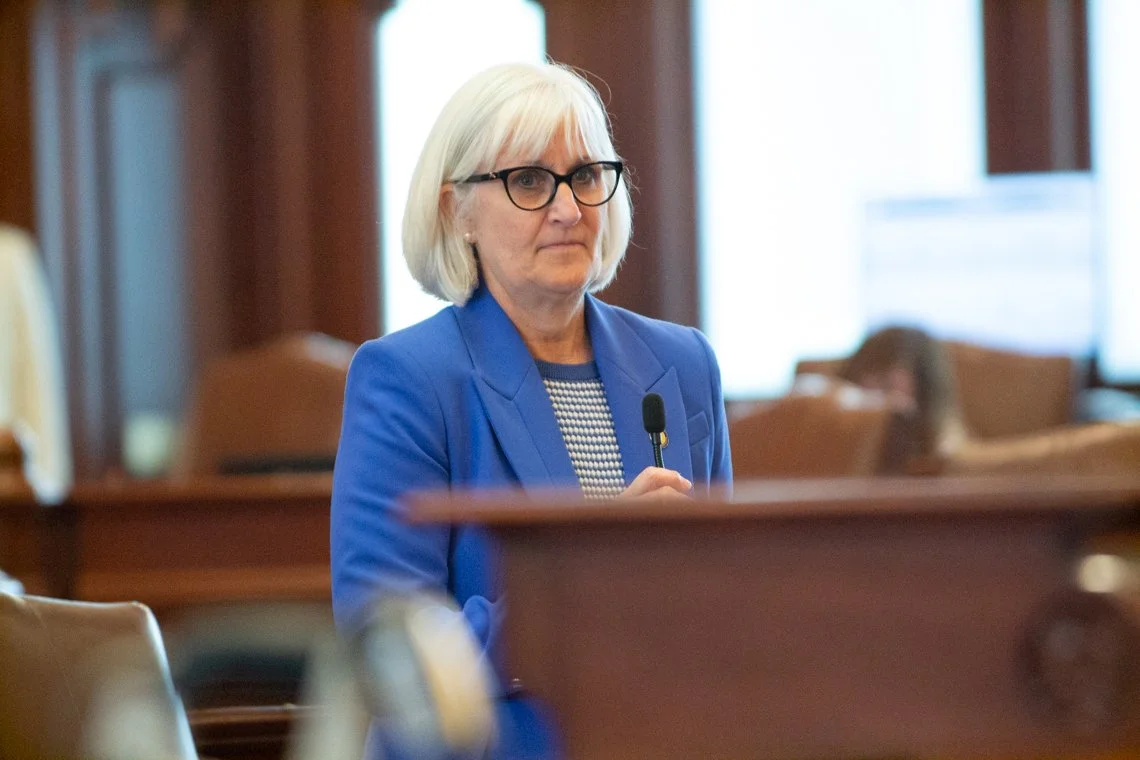
State Sen. Mary Edly-Allen on the Senate floor. (Capitol News Illinois photo by Jerry Nowicki)
America 250 Committee To Meet This Evening
The America 250 Committee in Mount Carmel will meet this evening at 5 p.m. at City Hall as planning continues for a major community celebration marking the nation’s 250th anniversary.
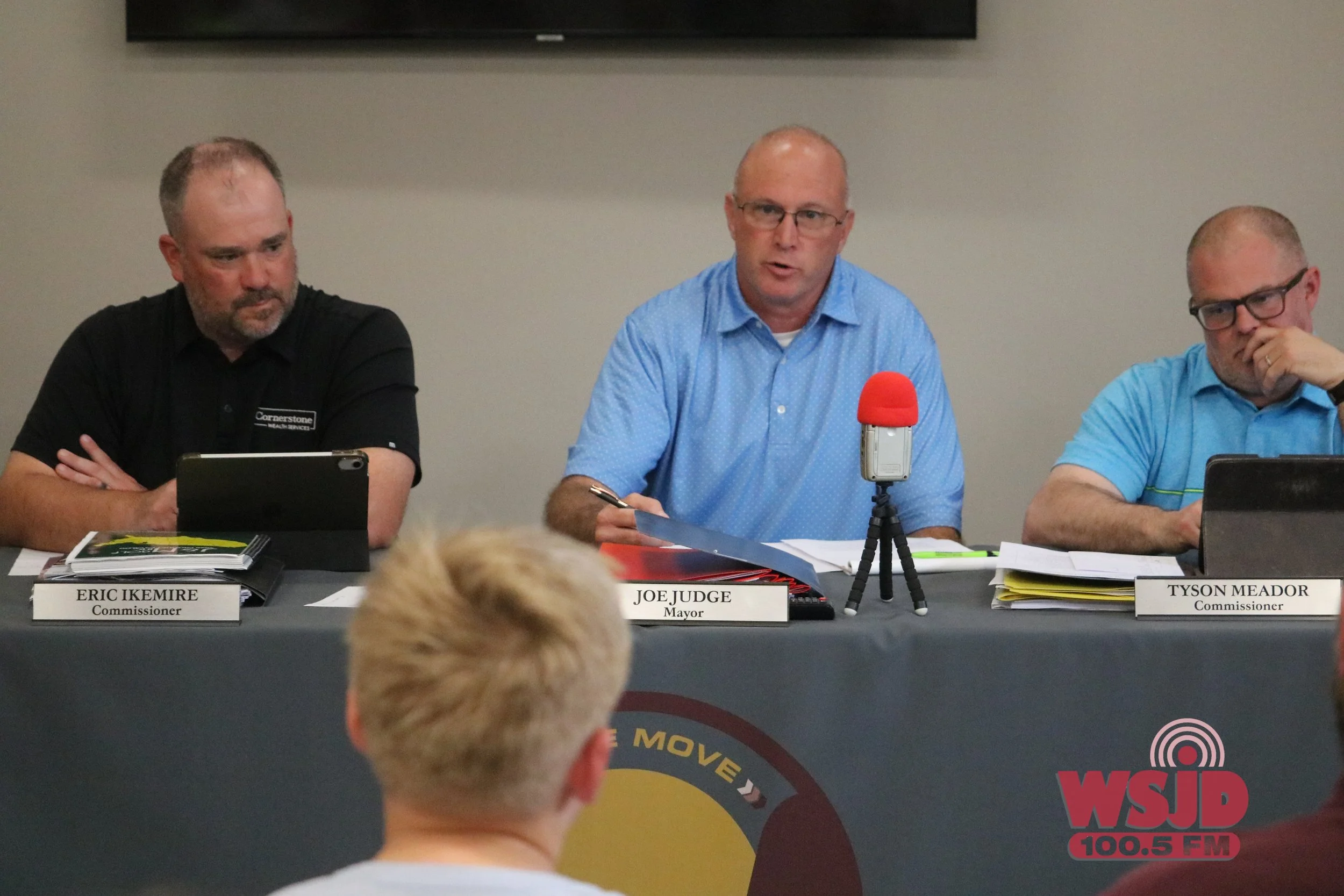
Mayor Joe Judge shared an update during last week’s “Ask the Mayor” segment on WSJD, saying the committee is working through a number of ideas, including events along Market Street.
Judge says the city has already secured its Fourth of July fireworks, with plans for an extended show this year. Organizers are also working to bring in a larger concert than usual around the holiday.
The committee is aiming to expand the celebration into a full week of activities—potentially starting on a Saturday and running through the following Sunday.
Plans also include coordinating events like Touch-A-Truck with local Shop with a Cop and Shop with a Firefighter groups, along with the traditional Rotary Corn Day to wrap up the festivities.
Tonight’s meeting will continue shaping what is expected to be a packed schedule of events to celebrate America 250 in Mount Carmel.
Council Approves Student's Proposal For Crosswalk Warning Sign
At Monday afternoon’s Mt. Carmel City Council meeting, the council approved a new safety improvement near the Grade School sparked by an idea from a local student.
The council gave the green light to install a flashing pedestrian crosswalk sign at the intersection of Oak and Poplar Streets. Mayor Joe Judge says recent traffic studies confirmed the need for additional warning at the busy crossing.
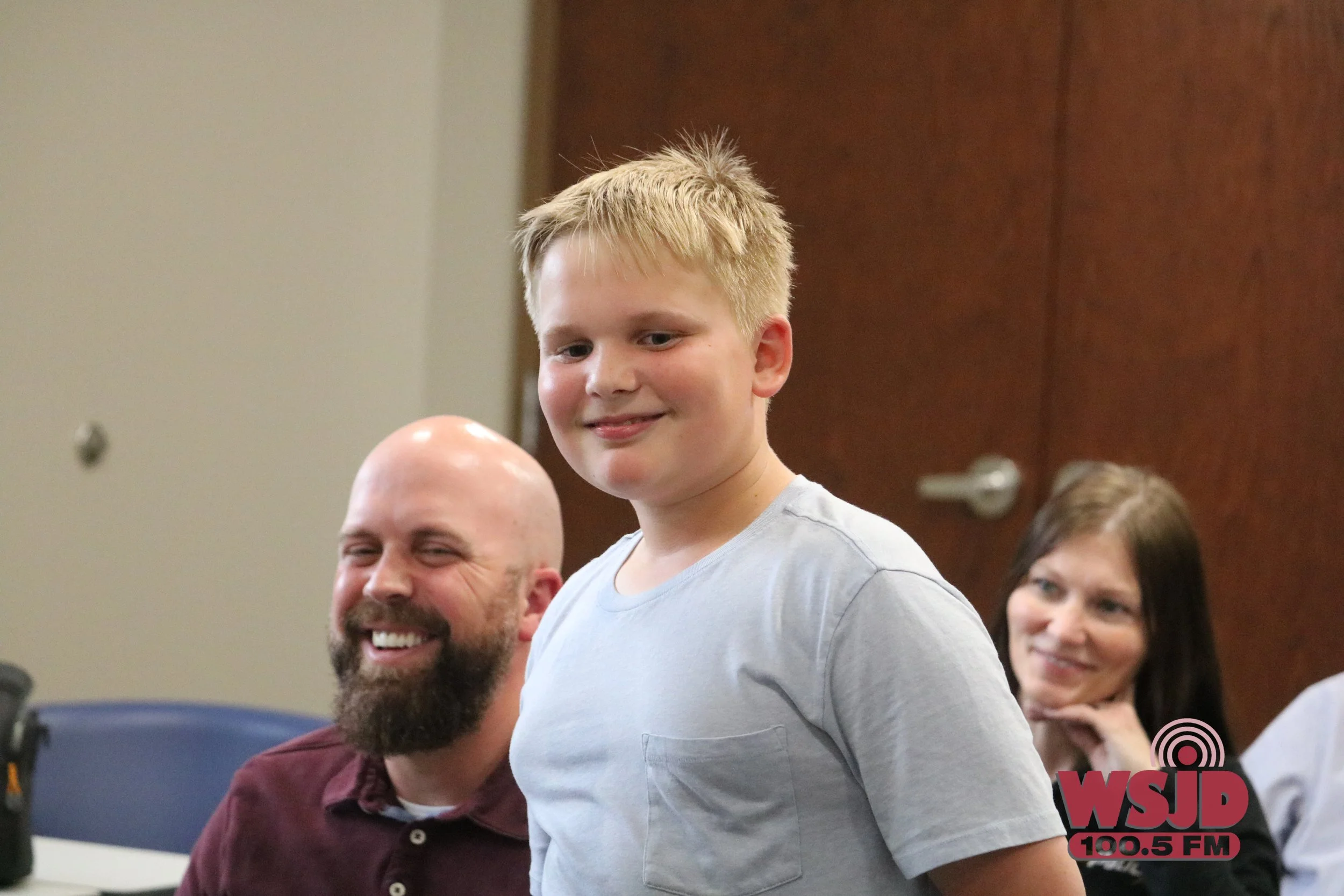
The idea was first brought to the council back in February by Mt. Carmel Grade School fourth grader Jonah Bisby. Jonah spoke during a council meeting, sharing concerns about cars not yielding to students and pedestrians at the intersection he frequently uses while riding his bike to school.
He proposed a rectangular rapid flashing beacon system and even came prepared with research, cost estimates, and a visual example.
Mayor Judge and council members praised Jonah at the time for his initiative, and now say they’re pleased to move forward with the project.
City officials say the new flashing crosswalk sign is expected to improve visibility and safety for students and pedestrians in the area.

Road closure planned for State Road 67 in Knox County
KNOX COUNTY Ind. – The Indiana Department of Transportation announces a road closure for State Road 67 in Knox County.
Beginning on or around Monday, April 27, crews will close State Road 67 near Bruceville. This closure will occur over the South Fork of Smalls Creek.
This road closure will allow for a bridge deck overlay project and approach construction. This work is expected to last through the end of May, depending on the weather.
The official detour for this project is State Road 550 to U.S. 150. Local traffic will have access up to the point of closure. INDOT encourages drivers to consider safety for all by slowing down, using extra caution and driving distraction-free when travelling in and around all work zones.

U.S. Attorney’s Office announces results of “Operation Big Muddy”
The operation targeted violent fugitives with felony warrants and netted 21 arrests
FAIRVIEW HEIGHTS, Ill. – The U.S. Attorney’s Office for the Southern District of Illinois announced today the results of a warrant enforcement operation led by the U.S. Marshals Service and its task force law enforcement partners.
The warrant enforcement operation targeted violent fugitives with felony warrants and identified gang members in the southern counties of the Southern District of Illinois. The coordinated effort was executed over three days by law enforcement officials with the U.S. Marshals Service Southern District of Illinois Great Lakes Regional Fugitive Task Force. The operation resulted in 21 arrests and seized 4 firearms and 12 grams of narcotics.
“The U.S. Marshals led this successful operation to remove dangerous fugitives from our local communities,” said U.S. Attorney Steven D. Weinhoeft. “This operation highlights law enforcement at its best. Thanks to the strong leadership of the U.S. Marshals this coordinated operation ensures that these violent fugitives will be brought to justice, all while strengthening partnerships and public safety throughout the Southern District of Illinois.”
Building on its successful “Operation Safe Christmas”, this operation resulted in the arrests of dangerous fugitives. One fugitive, arrested in Edwardsville, Illinois, is charged with three counts of aggravated murder and three counts of murder related to a 1992 fire in Napoleon, Ohio. Another fugitive, arrested in Creal Springs, Illinois, is charged with Crimes Against Persons in Williamson County, Illinois.
“Operation Big Muddy, though executed over just two working days, showcased the precision and effectiveness of the Great Lakes Regional Fugitive Task Force in the Southern District of Illinois. The operation strategically targeted the most dangerous offenders, including those wanted for homicide, major drug trafficking, weapons violations, and other violent crimes. Its success underscores not only the task force’s commitment to public safety, but also the strength of its partnerships—without the dedication and collaboration of our law enforcement partners, these results would not have been possible” said U.S. Marshal David C. Davis.
The U.S. Marshals Service Southern District of Illinois Great Lakes Regional Fugitive Task Force consists of participating agencies from the Illinois State Police, Belleville Police Department, Granite City Police Department, Alton Police Department, ATF Chicago, Homeland Security Investigations, Illinois Department of Corrections – Parole, St. Clair County Sheriff’s Department, Madison County Sheriff’s Department, Jefferson County Sheriff’s Department and the Effingham County Sheriff’s Department.
IECC Releases 2026 Summer Camps and 2026–2027 Community Education Catalog
Illinois Eastern Community Colleges (IECC) is excited to announce the release of its 2026 Summer Camps and 2026–2027 Community Education Catalog, offering engaging learning opportunities for students of all ages across the district.
This summer, IECC will offer a wide variety of hands-on camps designed for elementary through high school students. Led by IECC faculty and community experts, the camps focus on creativity, exploration, and career discovery in a fun and supportive environment.
Camp highlights include:
· STEM and technology camps such as LEGO Battle Bots, 3D Printing, and Broadband: From Cell Towers to Smartphones
· Creative arts experiences including Origami, Drawing, Watercolor, and Canvas Painting
· Career exploration camps like Forensic Science, Culinary Conquest, Cosmetology, and Media Production
· Unique learning opportunities such as Sign Language, Mandarin Chinese, and Theater Tech
These camps help students build confidence, strengthen problem-solving skills, and gain early awareness of possible career paths while enjoying hands-on learning experiences.
Community Education Supports Lifelong Learning
Beyond summer programs, IECC’s Community Education offerings continue year-round, supporting lifelong learning and strengthening local communities through accessible and meaningful classes.
Community Education programs include:
· Personal enrichment classes such as art, sewing, woodworking, and fitness
· Workforce and career development programs, including the SkillForge Manufacturing Skills Lab
· Music ensembles, book clubs, and community groups
· Online courses in areas like computer skills, languages, and game development
Whether individuals want to learn a new skill, explore a hobby, advance their careers, or connect with others, IECC’s Community Education programs offer something for everyone.
Registration Information
Registration is available through Student Services at each IECC campus. Full details, including course descriptions and schedules, can be found in the Community Education Catalog at www.iecc.edu/communityed.