Edwards County 4-H participates in 4-H Green Communities Tree Program for fourth year

ALBION, Ill. – Over the last five years, Edwards County 4-H has planted 100 oak trees across Edwards County as part of the 4-H Green Communities Tree Program. The program was established in 2022 as a partnership between Illinois 4-H and the Association of Illinois Soil and Water Conservation Districts Forestry Committee with the goal of increasing Illinois’ oak tree population while emphasizing the importance of tree conservation.

 The program utilizes local Soil and Water Conservation Districts and County 4-H programs to distribute and plant trees statewide each spring. County 4-H programs must apply to participate, and Edwards County 4-H has been fortunate to be selected each year they’ve applied.

 The Village of West Salem was overjoyed to be selected as the 2026 location for the project and determined to plant trees at Four Corners Park. The park is located at the intersection of Church and Albion streets, encompassing all four corners of the adjoining blocks, hence the name Four Corners Park. Village Clerk Cindy Fuerst shared that, according to locals, the park once had several large trees that are no longer there.

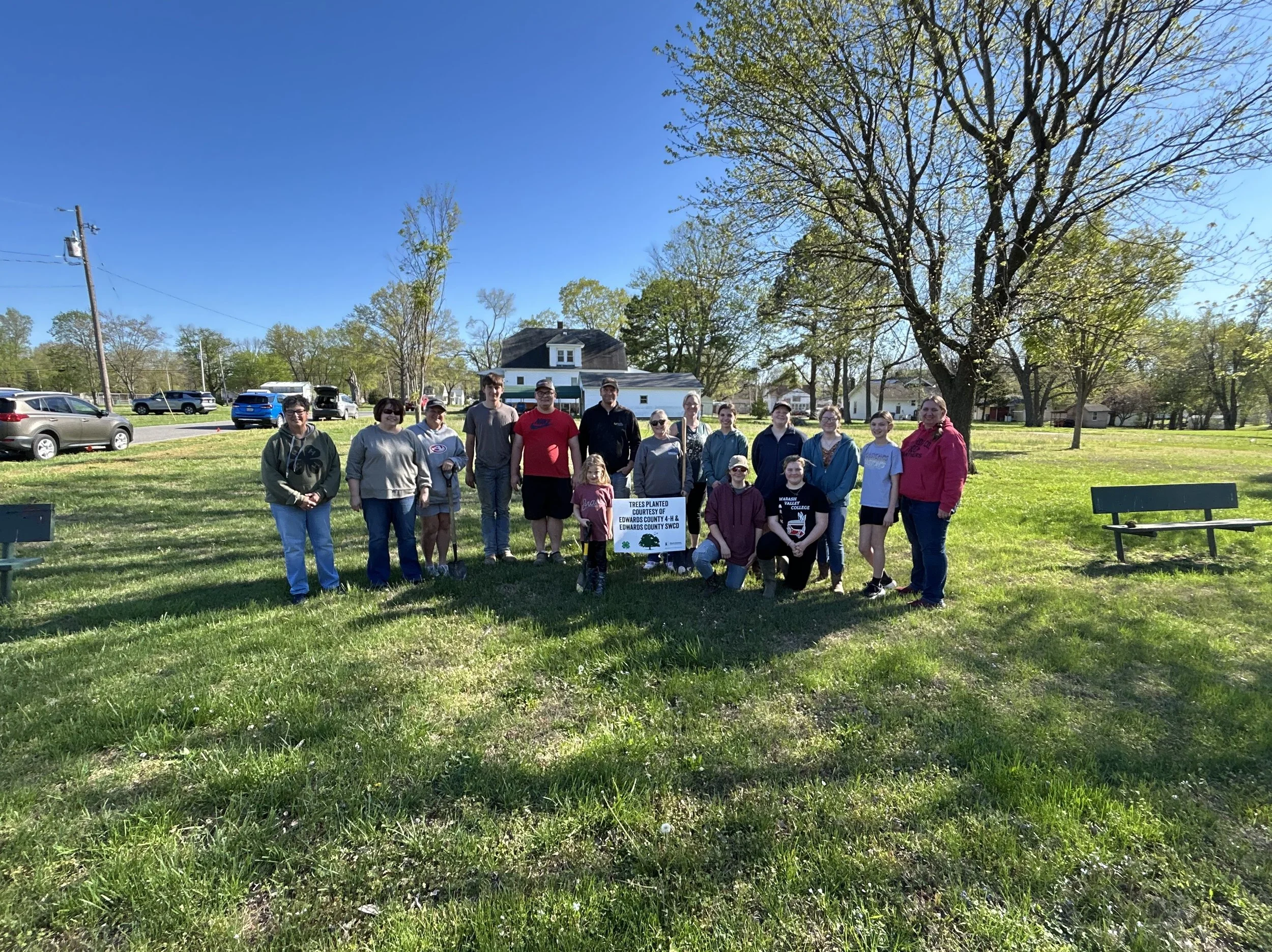
 On Monday, April 6, Edwards County 4-H members and leaders, along with representatives from the Edwards County SWCD, gathered to plant the trees. The group planted 25 oak trees, creating an oak tree savanna. Since 2022, oak trees have been planted at the Edwards County K-12 school in Albion, the former school in Bone Gap, and Roy M. Luthe Memorial Park in Albion.

 Edwards County 4-H would like to thank the Edwards County SWCD for assisting with the program and the Village of West Salem, which will continue to care for the trees as they become established. For more information about Edwards County 4-H, contact the Edwards County Extension Office at 618-445-2934 or visit extension.illinois.edu/elrww.

For young people looking to take over Illinois farms, the costs can be steep

High input costs, a hefty estate tax and an older generation reluctant to retire are among the barriers young farmers face

By REBECKA PIEDER

Medill Illinois News Bureau

news@capitolnewsillinois.com

Article summary:

  • Expensive equipment and high cost of land make it difficult for young farmers to start farming. 

  • The Illinois estate tax creates a heavy burden for families trying to pass down farms between generations. A bill in the legislature seeks to raise the tax exemption to $6 million, from $4 million.

  • Tariffs and geopolitical disruptions have also increased costs for Illinois farmers in recent years.

  • Improved equipment and reluctance to retire means older farmers are holding on longer, leaving fewer opportunities for younger people.

This summary was written by the reporters and editors who worked on this story.

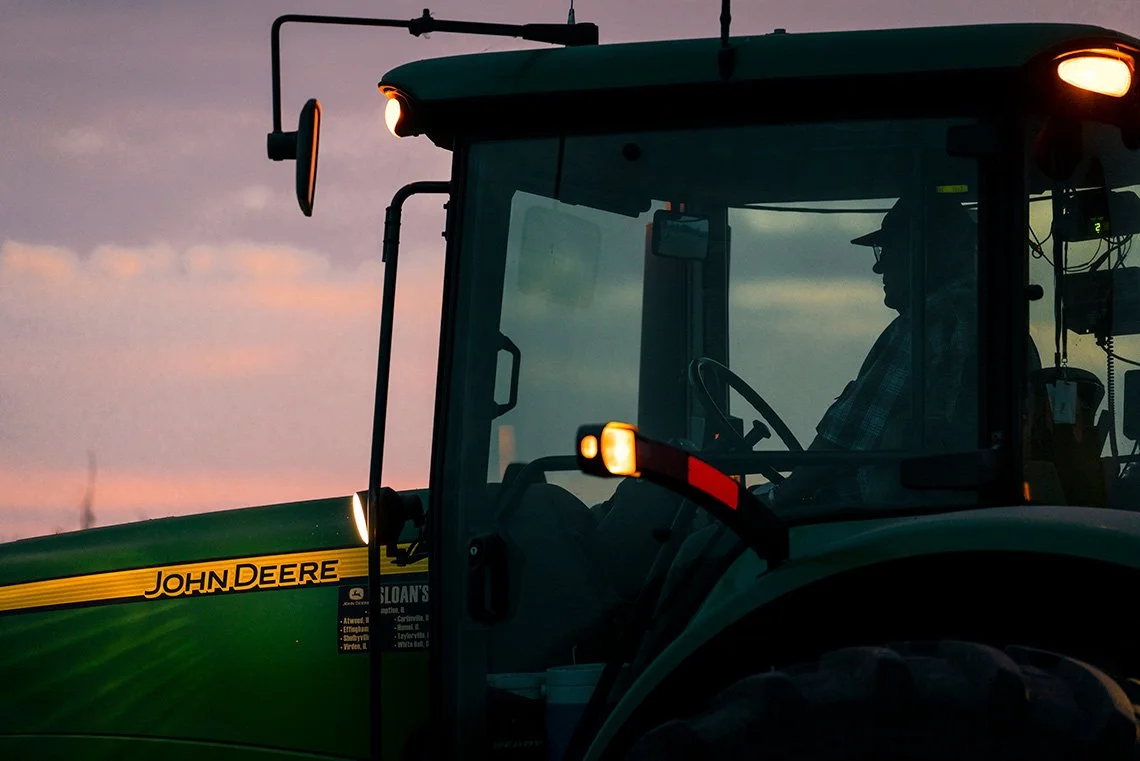
A farmer works into the evening hours in Macon County, Illinois. (Photo courtesy of Muirhead Farms)


Brock Seymour was 5 the first time he drove a combine. It was pouring rain, and his grandfather had jumped out to fetch the grain cart, leaving him to drive across the field.

“I'll never forget that,” Seymour said. “When he got down out of the combine, he said, ‘Just drive straight, buddy.’”

From that point on, Seymour knew he wanted to be a farmer. Growing up on the family farm in Shipman, Illinois, Seymour took on responsibility early, helping with operations at 13 and by his early 20s, learning the business side of running a farm.

Now 26, he represents the fifth generation on his family’s land. With his grandparents entering their late 70s, those responsibilities are shifting into conversations about succession.

His path is a familiar one for young farmers in Illinois, many of them fifth- or sixth-generation stewards of Midwestern farms. Yet, less than 9% of Illinois farmers are below the age of 35, and the average age of a farmer in Illinois is over 58, according to the U.S. Department of Agriculture’s 2022 agriculture census

If you ask farmers why that is, the reasons for the stats are varied. For any young farmer, not least those without access to inherited land, there are the high costs of getting started. This includes land, equipment and fertilizer, none of which are cheap

For those looking to continue their family legacy, there is a hefty estate tax associated with taking over the business and the land. But there’s also a sense of some in the older generation not wanting to pass the torch, and because of improved equipment quality, they don’t have to just yet.

While the U.S. Department of Agriculture has programs in place to support young farmers, including low-interest loans; the threshold to entry remains high, said Garrett Williams, 26, chair of the Illinois Farm Bureau’s young leader committee.

“I do think that the rising costs of inputs and the buy-in on assets and ground is probably a relatively high barrier,” Williams said. “For young farmers, especially those with families, it can be a challenge.”

Farming is capital-intensive; there are equipment costs, fertilizer costs, and the price of land and labor. A combine alone can cost more than $1 million. Tariffs and geopolitical disruptions have already increased costs for Illinois farmers in recent years, according to the Illinois Soybean Association. Now, conflict in the Middle East is adding new pressures, with fertilizer prices at risk of climbing toward levels not seen since Russia’s 2022 invasion of Ukraine, which also upended global supply chains.

Read more: Illinois soybean farmers welcome federal aid, but fear long-term trade damage

“People just don't realize how much money it takes to start from scratch,” said Lance Muirhead, a seventh-generation corn and soybean farmer in Cerro Gordo, Illinois. “If you don't have some kind of financial backing, it's extremely expensive to be a farmer.”

Even if you are fortunate enough as a young farmer to inherit farmland from your parents or grandparents, the financial burdens remain through taxation, Muirhead, 29, said. 

‘Land rich and cash poor’

Illinois is one of a dozen states that imposes a so-called "death tax" — a state-level estate tax on inherited assets, separate from federal taxes. While Congress raised the federal estate-tax exemption to $15 million through the One Big Beautiful Bill Act, farmers in Illinois still face state-level taxes if they reach the $4 million threshold. That means that once an estate exceeds $4 million, the entire value is subject to taxation.

With land and equipment becoming more valuable, it’s easy to reach that $4 million limit, Williams said.

The Family Farm Preservation Act, which would have raised the estate tax threshold to $6 million, included key priorities for the Illinois Farm Bureau. The measure would allow for the 96% of farms that are family owned to stay intact when passed down between generations, without having to sell off land or assets, according to the farm bureau.

“Farmers, we have a tendency to be land rich and cash poor,” Williams said. “I think that's the general sentiment. Any taxes incurred on inherited assets can be very difficult. It can be cumbersome on the young farmer to come up with that cash to keep those acres and keep that equipment for the operation.”

The prices of both land and equipment have risen for farmers over the past decade, increasing the value of estates. 

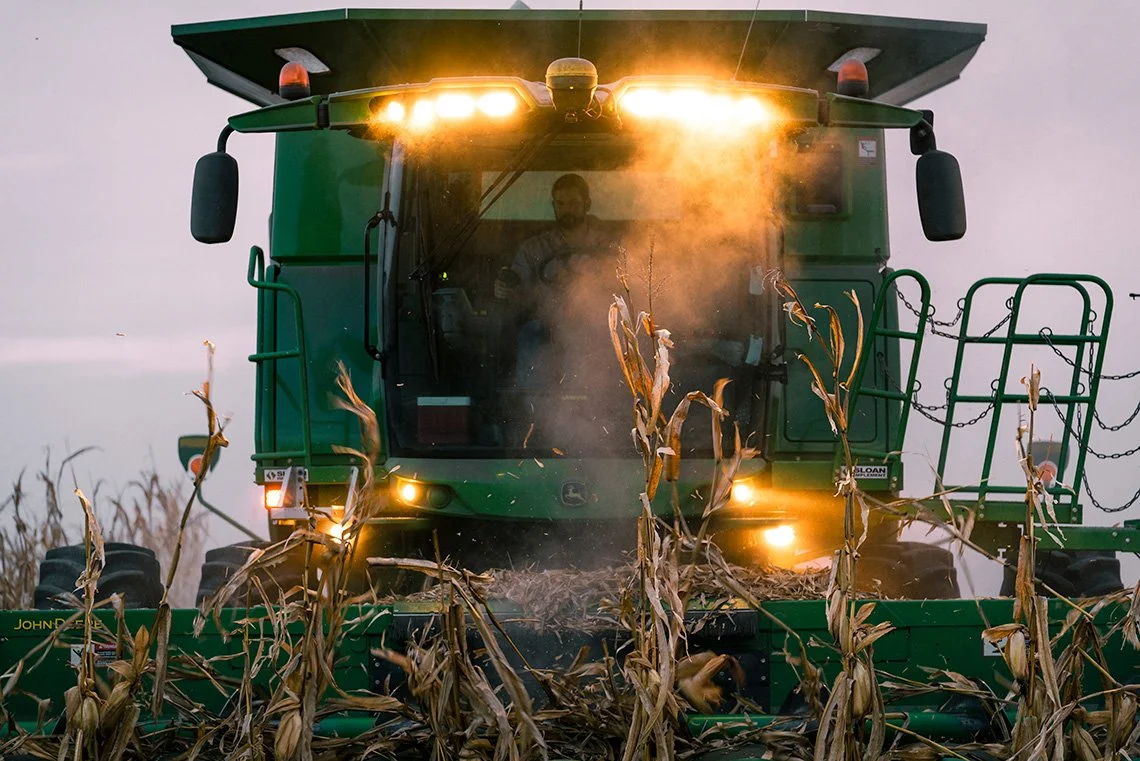
Lance Muirhead, 29, harvests corn on his family's farm in Macon County, Illinois. One of a few young farmers in an aging industry, Muirhead has been farming since 2018. (Photo courtesy of Muirhead Farms)

“You know, the price of land has skyrocketed,” Muirhead said. “I see a lot of family farms that could be passed down to the next generation. But once they're inherited, they have to go pay all this tax and sell two-thirds of the farm to be able to keep one-third in the family. And that's just not right.”

The Family Farm Preservation Act (contained in Senate Bill 2921 and House Bill 4600) did not pass the previous legislative session due to fiscal concerns over reducing state revenue while trying to resolve a budget deficit. Now, a new bill, Senate Bill 1688, is currently awaiting assignment to a Senate committee. Sponsored by Sen. Doris Turner, D-Springfield, who chairs the Senate Agriculture Committee, the bill seeks to raise the tax exemption to $6 million.

Turner echoed fiscal concerns about lost revenue for the state, saying “It's the money. That's the big piece.”

However, she hopes this time there is enough momentum for the bill to pass. It’s been awaiting a committee assignment since February 2025.

“We're working really hard with all of the stakeholders,” Turner said. “Hopefully we get it over the finish line.” 

Sen. Terri Bryant, R-Murphysboro, is among 29 cosponsors on the bill, which has bipartisan support in both the House and Senate. 

“You can get to $4 million really fast when a combine costs $1 million,” Bryant said. “So we need to get rid of that and bring it in line with the federal government. We’re pushing for it really hard.”

“I don’t know anyone who is against it,” added Sen. Sally Turner, R-Beason.

Estate tax revenues have “increased significantly in recent years,” according to a January Commission on Government Forecasting and Accountability report. Between fiscal year 2012 and fiscal year 2020, receipts averaged more than $300 million annually. And in recent years, they’ve gone north of $600 million. Some growth can be attributed to a sharp rise in asset valuations.

Gov. JB Pritzker said in March that changes to the estate tax have not been a priority, though he added: “I do think it’s something that I could support as long as it includes the kind of tax break that I think is appropriate to preserving small farms and small businesses.”

I think there are people who look at me and think (an) estate tax cut is not something that Pritzker should be the advocate for,” Pritzker said, acknowledging his billionaire status. “But I understand, very much so, how impactful it is in a negative way on farmers and on small businesspeople.”

The combined impact of high costs and estate taxes can lead young farmers to delay formally buying into the family farm until they have gained enough capital. As a result, these transitions often happen later in life, according to the University of Illinois’ farmdoc daily, a website that offers research-based analysis for farmers, market analysts, policymakers and more.

A reluctance to step aside

Financial barriers are only part of the challenge facing new farmers. While agriculture has long required significant capital, some experts say older farmers are holding onto their operations longer, leaving fewer opportunities for the next generation. 

Kevin Brooks, a farm management commercial agriculture educator with University of Illinois Extension, said transitions within family farms can be difficult to navigate, leading some to delay succession planning altogether. 

“A lot of fathers that are running on farms don’t want to give up that control,” Brooks said. “People don’t like to talk about their impending demise. They don’t want to talk about slowing down and retiring. There’s that work ethic of wanting to stay at it.”

This puts younger farmers in a bind, having to play the waiting game until the older generation is ready to pass the torch, said Seymour, the Shipman farmer. 

“Maybe when I get that age, I'll be the same way. I don't know,” Seymour said. “I can't speak for the older generation, but they've put blood, sweat and tears into the ground. And I think they just have a hard time being able to hang them up and, you know, smoothly pass it on.”

In recent decades, farming equipment has gotten considerably more advanced, making it more comfortable to farm and less demanding physically. This has allowed people to stick with it longer, Brooks said.

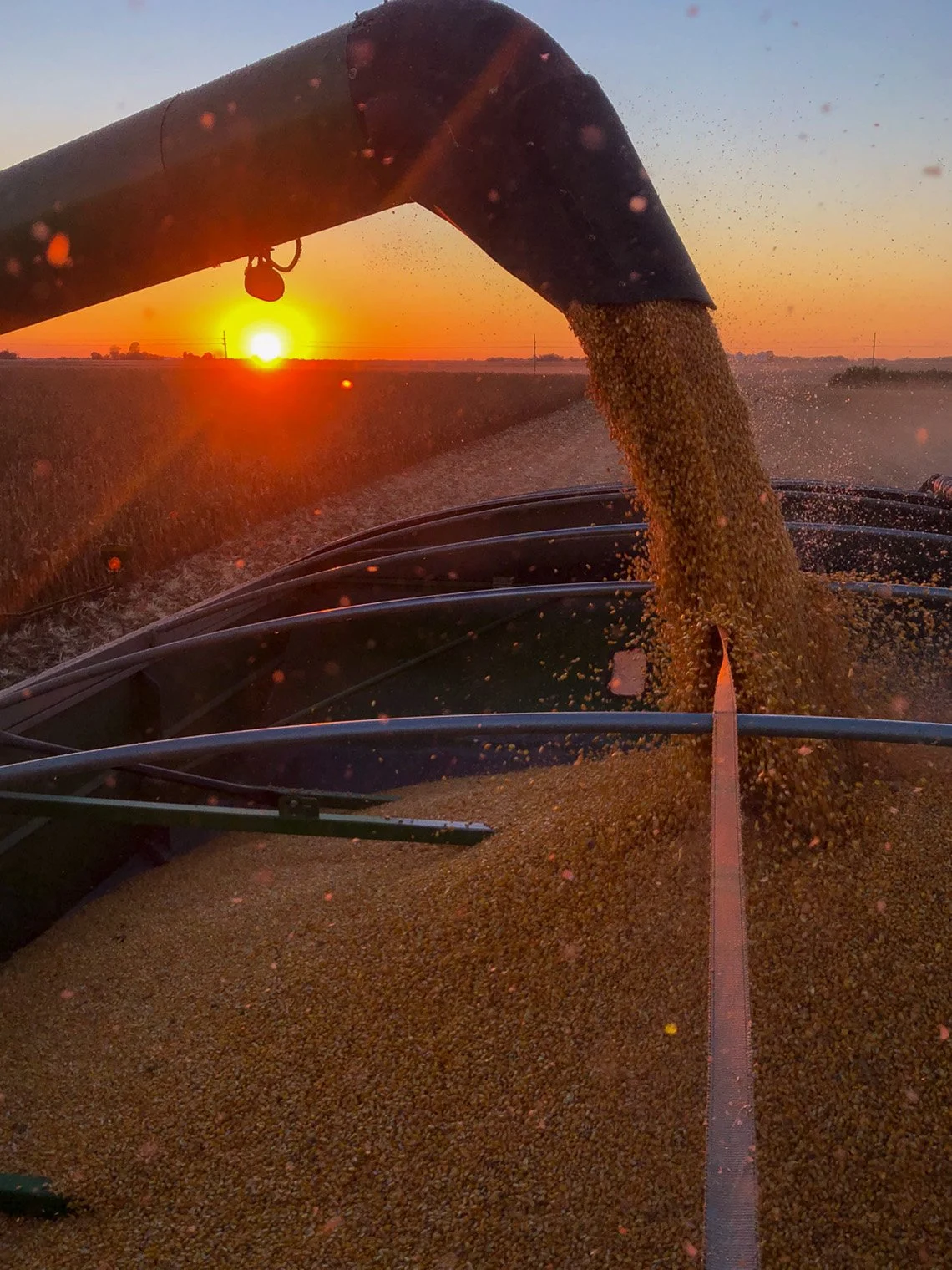
Grain pours into a cart at sunset on the Seymour family farm in Shipman, Illinois. (Photo courtesy of Brock Seymour)

“To an extent, the boomer generation hung on for a long time. And I don't blame them. They get a bad rap,” said Muirhead, the Cerro Gordo farmer. “They went out in open-air cab tractors and farmed with four-row planters. Then they got better equipment, air conditioning, air ride suspension, and auto steer. They put in the work, and they get to reap the benefits of that. I don't blame them.”


Last year, the Farmland Transition Commission Act, Senate Bill 2372, was signed into law, creating a new body within the Illinois Department of Agriculture tasked with reviewing the barriers to acquiring farmland for people aged 25 to 40. It was championed by Sen. Sally Turner. As part of the act, she is working with the state agriculture department to create a webpage where younger people can get useful information on entering farming.

“Young farmers see all the roadblocks,” Turner said. “From problems with tariffs, the low prices of corn and beans, and everything on top of it. But there's different avenues that can help you as a farmer, like low-interest loans if you wanted to try and buy a piece of ground. All those things are out there.”

For young farmers in Illinois, the challenges are hard to ignore, including longer term concerns about South American competition impacting soybean farmers in the state. But knowing that previous generations have overcome similar obstacles instills confidence.

"To see anybody struggle, it's not encouraging, but to see them get through it has the opposite effect," Muirhead said. "If you work hard enough or smart enough, you'll get through the bad times."

Brock Seymour has been working full time at his family farm for the past few years. The estate tax concerns him, and lifting the threshold would give him and his family more breathing room, he said. As with any family business, navigating succession planning and generational divides can be challenging, but Seymour is optimistic about the future.

“Now there's hard times. I'm not going to lie,” Seymour said. “As a farmer, you know, you're gambling. But to see how Grandpa has built the foundation gives me confidence that I can do the same.”

Rebecka Pieder is a graduate student in journalism with Northwestern University’s Medill School of Journalism, Media and Integrated Marketing Communications, and is a fellow in its Medill Illinois News Bureau working in partnership with Capitol News Illinois.

Capitol News Illinois is a nonprofit, nonpartisan news service that distributes state government coverage to hundreds of news outlets statewide. It is funded primarily by the Illinois Press Foundation and the Robert R. McCormick Foundation.

City Council Approves TIF Funding For Restaurant In Former Pizza Hut Location

There’s new movement on a pair of restaurant locations in Mt. Carmel.

During Friday’s Ask the Mayor segment on WSJD, Mayor Joe Judge provided updates on two long-awaited projects along West 9th Street.

Judge says the owners of Mid Point Café in Lawrenceville are planning to open a new location at the former Pizza Hut site at 9th and Walnut.

Then, at Monday’s City Council meeting, officials approved 50-thousand dollars in TIF funding to support that project, with a target opening date of August.

Meanwhile, next door at the former Long John Silver’s location, set to become Rockin’ Chicken, Judge says progress is finally being made after months of little activity.

He says the owner has completed work on another project in Evansville and has now turned attention to the Mt. Carmel site, with construction underway, including a new front deck and additional roof work expected soon.

Judge says both projects are moving forward and are positive signs for local business growth.

Commissioners Hear Details Of 1st Music In The Park Concert Of 2026

Plans are coming together for another Music in the Park event in Mt. Carmel.

At Monday afternoon’s City Council meeting, Mike Harris received approval to close the 300 block of Market Street on the evening of June 13th.

The closure will coincide with a concert at Merchants Park featuring a Bob Seger tribute band.

Harris says organizers are also working with Evan Watters to bring a car show to Market Street ahead of the concert, giving residents even more to enjoy before the music begins.

In addition to food trucks, Harris says efforts are underway to attract an even larger crowd to this year’s first concert.

City leaders say the concert series continues to be a popular draw for both residents and visitors to the community.

Patoka man arrested for violating a restraining order

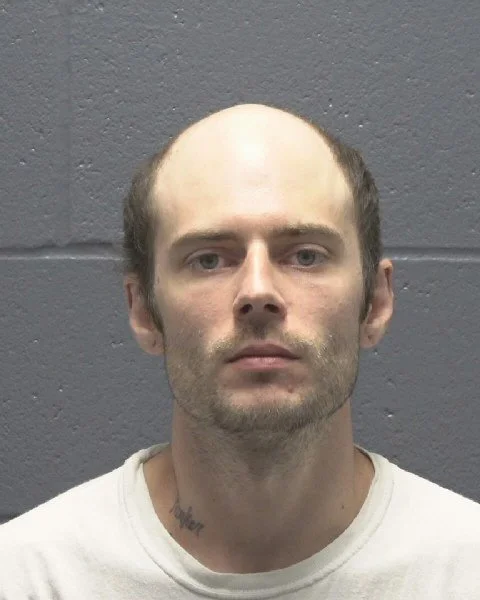
On April 10, 2026, at 9:56 p.m. Gibson County Deputies responded to a residence in the 200 block of South Town Hall Street in Patoka to investigate a possible restraining order violation.  Upon arriving, Deputies observed 31-year-old Axl Boes of Patoka walking with another person out of the residence.  After a brief investigation it was confirmed that Mr. Boes did in fact have a restraining order placed on him prohibiting him from contacting the person he was with in a direct or indirect manner.  At the conclusion of the investigation Deputy Wes Baumgart placed Mr. Boes in custody and transported him to the Gibson County Detention Center where he was charged with Invasion of Privacy. 
 
Deputy Bart Wagner assisted in this investigation.   
 
All criminal defendants are to be presumed innocent until and unless proven guilty beyond a reasonable doubt in a court of law.

City Hall Workers Facing Unruly Conduct

Mount Carmel Mayor Joe Judge is asking residents to show respect when conducting business at City Hall.

During Friday’s Ask the Mayor segment on WSJD, Judge addressed recent incidents involving verbal abuse toward city employees.

Judge says multiple situations in recent weeks have involved residents yelling, using profanity, and acting disrespectfully toward staff members over utility bills.

He emphasized that City Hall employees are not responsible for unpaid balances and should not be subjected to that type of behavior.

Judge says while the city understands financial pressures are increasing, residents must take responsibility for their accounts and treat employees with common courtesy.

He also outlined the city’s billing policies, noting water bills are due monthly, with additional time often provided before service disconnection.

The mayor says the city has implemented new automated notification systems to alert residents of high usage, potential leaks, or pending shutoffs.

Judge adds those efforts are designed to help residents avoid costly issues and prevent service interruptions.

He says the city is doing everything it can to assist customers, but respect and accountability must go both ways.

City Still Looking For Mosquito Sprayer Applicator

The City of Mt. Carmel is still working to line up a mosquito sprayer as the season gets off to an early start.

During Friday’s Ask the Mayor segment on WSJD, Mayor Joe Judge said the city has been advertising for the position as mosquito activity has already picked up in mid-April.

Judge acknowledged the process may have ideally started earlier, but says efforts began in early March to find someone qualified to handle the job.

He says the city reached out to workers in other communities, but scheduling and travel made it difficult, with some only able to spray late at night—something the city wants to avoid.

Judge also noted there is a specific window when spraying is most effective.

In the meantime, the mayor says he has even begun the certification process himself as a backup plan if no one steps forward.

That certification requires passing a State of Illinois applicator’s license.

City officials say they are working to get the program in place as soon as possible as mosquito concerns continue to grow.

Commissioners Hear Report From Highway Engineer

At Monday’s meeting of the Wabash County Commissioners, County Highway Engineer Dustin Bunting reported several ongoing projects and updates within the department.

Bunting said the county’s annual oil and chip letting is scheduled for this Friday at 10:30 a.m. at his office. He also noted that a compliance review technician from IDOT District 7 is expected to visit later this month for the county’s annual review of Motor Fuel Tax and township bridge funds. Bunting said those reviews are routine and typically do not result in any issues.

In funding news, Bunting reported that IDOT has released preliminary federal funding allocations for fiscal year 2027, which are comparable to last year. The county is set to receive just over $308,000 in federal Surface Transportation Program funds, along with more than $41,000 in state matching funds and approximately $21,000 for local bridge projects.

Bunting also told commissioners he will attend mandatory bridge inspection refresher training next week in Springfield.

Meanwhile, highway department crews have remained busy with ditch work, shoulder repairs, and pipe replacements across the county.

Bunting also shared that a recent equipment incident involving a trailer transporting a mini excavator resulted in a wheel breaking loose. Fortunately, no injuries were reported, and the trailer has since been repaired.

WVC Instructors Recognized with Student Senate Awards

Wabash Valley College (WVC) is proud to recognize three instructors who were selected by students to receive this year’s Student Senate instructor awards. The honors are based on student nominations and reflect the strong connections instructors build with students inside and outside the classroom.

From the student body nominations, Student Senate selected the following instructors for this year’s awards:

· Transfer Instructor of the Year – Rich Poskin

· Career and Technical Education Instructor of the Year – Megan Bunnage

· Adjunct Instructor of the Year – Terrance McGee

“This recognition reflects an outstanding commitment to student success, excellence in teaching, and meaningful contributions to the WVC academic community,” said Dr. Cathy Rob, IECC Vice Chancellor of Academic Affairs.

Dr. Rob added that, “These instructors support IECC’s mission, values, and standards for excellence by inspiring enthusiasm for learning and student engagement in their classes.”

The award recipients are known for their dedication to helping students succeed, whether they are preparing to transfer, enter the workforce, or balance school with work and family responsibilities.

These instructors will be recognized at the WVC graduation ceremony. Wabash Valley College also extends appreciation to all instructors who serve students every day. To all the WVC instructors, thank you for your dedication to teach, motivate and inspire your students on a daily basis!

For more information about Wabash Valley College, visit www.iecc.edu/wvc.

Commissioners Approve One Request, Table Another From Market St. MTC

At Monday’s meeting of the Wabash County Commissioners,  a representative from Market Street MTC appeared to request funding support for two of their ongoing community programs.

Terry Beckerman explained that Market Street MTC, a 501(c)(3) organization focused on improving the downtown business district, is continuing its Murals and Art program. Beckerman told commissioners the group has already completed murals, with more planned this summer, along with additional art-related events. He noted the cost of projects can be significant, citing one mural at just over $5,000, and requested $500 in support to help offset expenses.

However, commissioners chose to table that request for at least two weeks after discussion revealed the county’s tourism board was not unanimous in its recommendation. Commissioners said they would seek additional clarification before taking action.

Beckerman also presented a separate request of $2,500 to support the “Music at the Park” concert series. He said the program, which began in 2020, typically features four tribute band concerts each year and draws crowds of around 400 to 450 people, with even larger attendance during homecoming weekend.

Beckerman added that Harris Insurance covers roughly half of the program’s costs, with the organization working to secure funding for the remainder. He emphasized the concerts not only provide local entertainment but also help draw visitors to the community.

Following discussion, commissioners approved the $2,500 request for the Music at the Park program using hotel-motel tax funds.