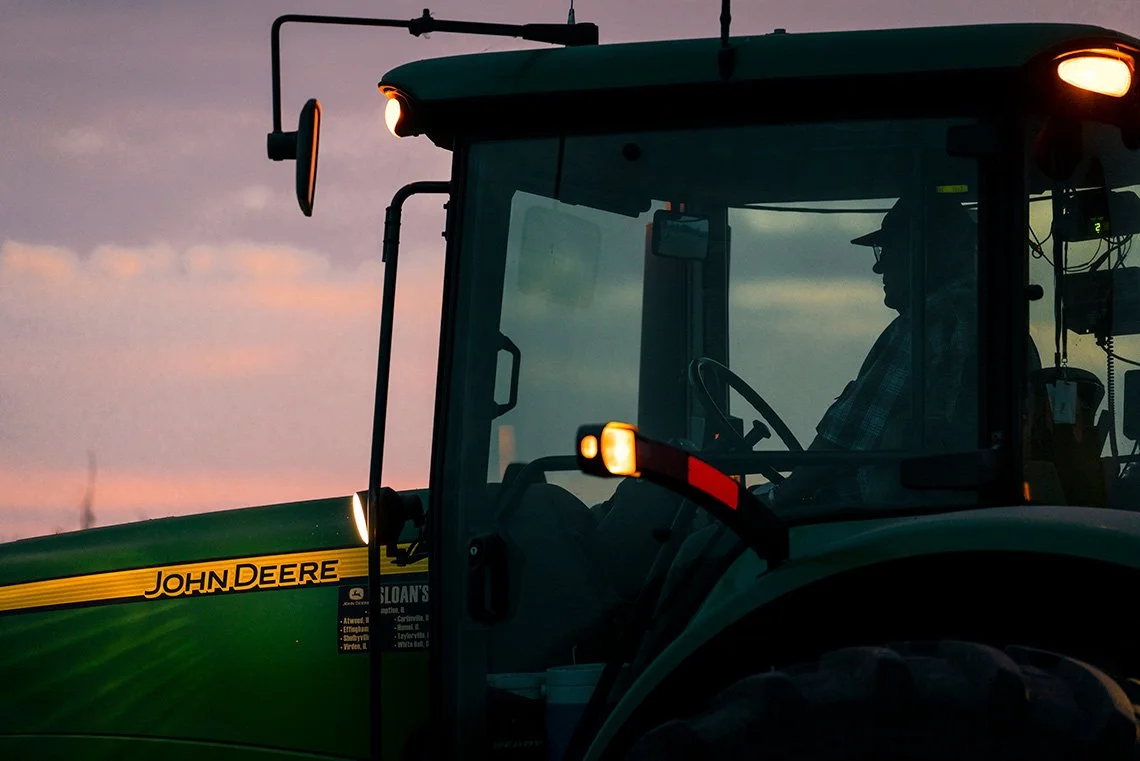
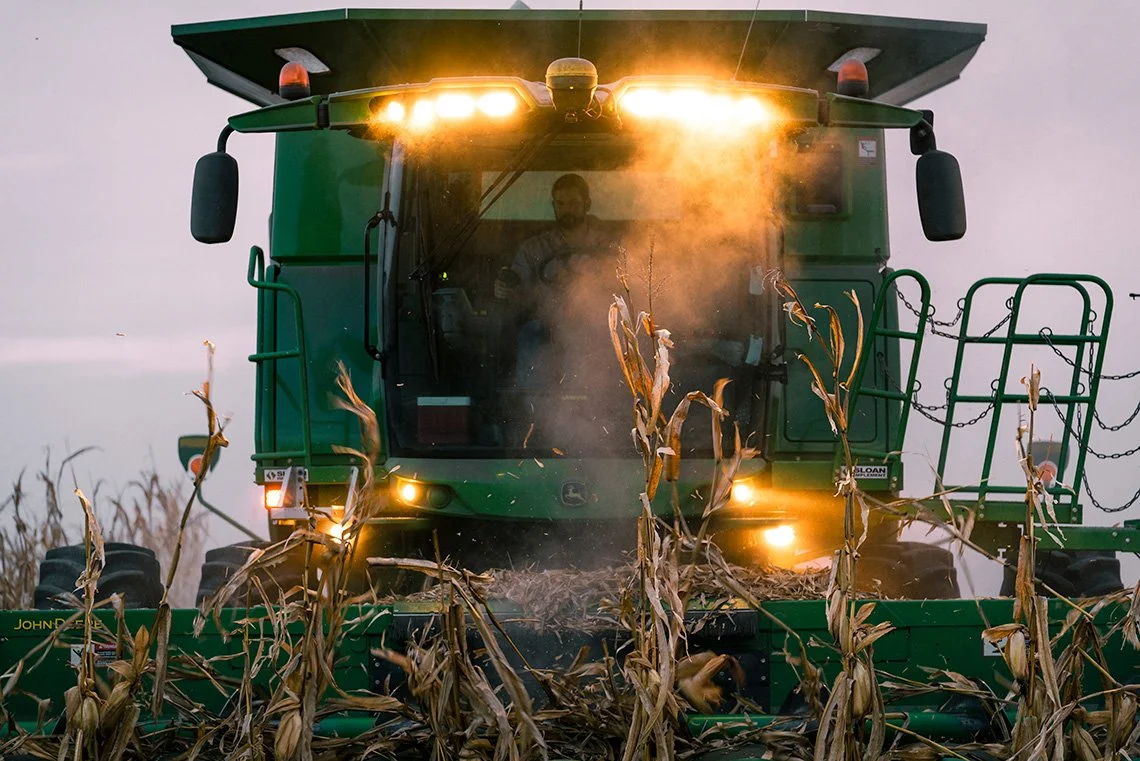
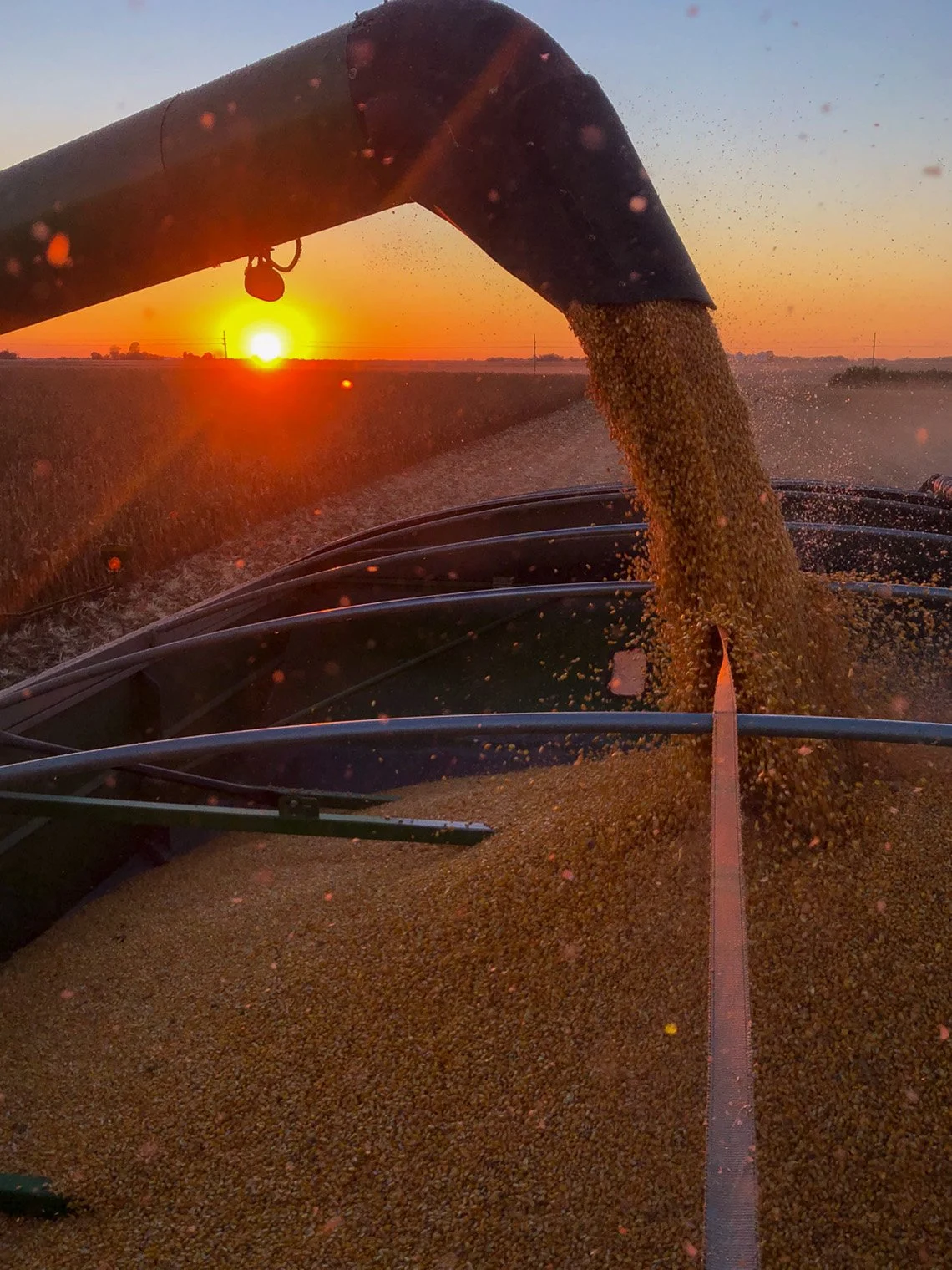
Brock Seymour was 5 the first time he drove a combine. It was pouring rain, and his grandfather had jumped out to fetch the grain cart, leaving him to drive across the field.
“I'll never forget that,” Seymour said. “When he got down out of the combine, he said, ‘Just drive straight, buddy.’”
From that point on, Seymour knew he wanted to be a farmer. Growing up on the family farm in Shipman, Illinois, Seymour took on responsibility early, helping with operations at 13 and by his early 20s, learning the business side of running a farm.
Now 26, he represents the fifth generation on his family’s land. With his grandparents entering their late 70s, those responsibilities are shifting into conversations about succession.
His path is a familiar one for young farmers in Illinois, many of them fifth- or sixth-generation stewards of Midwestern farms. Yet, less than 9% of Illinois farmers are below the age of 35, and the average age of a farmer in Illinois is over 58, according to the U.S. Department of Agriculture’s 2022 agriculture census.
If you ask farmers why that is, the reasons for the stats are varied. For any young farmer, not least those without access to inherited land, there are the high costs of getting started. This includes land, equipment and fertilizer, none of which are cheap
For those looking to continue their family legacy, there is a hefty estate tax associated with taking over the business and the land. But there’s also a sense of some in the older generation not wanting to pass the torch, and because of improved equipment quality, they don’t have to just yet.
While the U.S. Department of Agriculture has programs in place to support young farmers, including low-interest loans; the threshold to entry remains high, said Garrett Williams, 26, chair of the Illinois Farm Bureau’s young leader committee.
“I do think that the rising costs of inputs and the buy-in on assets and ground is probably a relatively high barrier,” Williams said. “For young farmers, especially those with families, it can be a challenge.”
Farming is capital-intensive; there are equipment costs, fertilizer costs, and the price of land and labor. A combine alone can cost more than $1 million. Tariffs and geopolitical disruptions have already increased costs for Illinois farmers in recent years, according to the Illinois Soybean Association. Now, conflict in the Middle East is adding new pressures, with fertilizer prices at risk of climbing toward levels not seen since Russia’s 2022 invasion of Ukraine, which also upended global supply chains.
Read more: Illinois soybean farmers welcome federal aid, but fear long-term trade damage
“People just don't realize how much money it takes to start from scratch,” said Lance Muirhead, a seventh-generation corn and soybean farmer in Cerro Gordo, Illinois. “If you don't have some kind of financial backing, it's extremely expensive to be a farmer.”
Even if you are fortunate enough as a young farmer to inherit farmland from your parents or grandparents, the financial burdens remain through taxation, Muirhead, 29, said.
‘Land rich and cash poor’
Illinois is one of a dozen states that imposes a so-called "death tax" — a state-level estate tax on inherited assets, separate from federal taxes. While Congress raised the federal estate-tax exemption to $15 million through the One Big Beautiful Bill Act, farmers in Illinois still face state-level taxes if they reach the $4 million threshold. That means that once an estate exceeds $4 million, the entire value is subject to taxation.
With land and equipment becoming more valuable, it’s easy to reach that $4 million limit, Williams said.
The Family Farm Preservation Act, which would have raised the estate tax threshold to $6 million, included key priorities for the Illinois Farm Bureau. The measure would allow for the 96% of farms that are family owned to stay intact when passed down between generations, without having to sell off land or assets, according to the farm bureau.
“Farmers, we have a tendency to be land rich and cash poor,” Williams said. “I think that's the general sentiment. Any taxes incurred on inherited assets can be very difficult. It can be cumbersome on the young farmer to come up with that cash to keep those acres and keep that equipment for the operation.”
The prices of both land and equipment have risen for farmers over the past decade, increasing the value of estates.