University funding overhaul bill advances in House despite U of I opposition

Legislation would create a need-based formula for universities similar to one used for K-12 schools

By PETER HANCOCK
Capitol News Illinois
phancock@capitolnewsillinois.com

Story Summary

  • The bill calls for annual increases in university funding of $135 million each year over the next several years, with priority for new money given to schools that are currently the most underfunded.

  • The model is like the Evidence-Based Funding model that Illinois has used for K-12 public schools since 2018.

  • A similar bill failed to pass out of a Senate committee last year due in part to opposition from the University of Illinois System, which continues to oppose the plan.

This summary was written by the reporters and editors who worked on this story. 

SPRINGFIELD — A bill that would overhaul the way Illinois funds its public universities advanced out of a House committee Thursday and could face a vote by the full House soon, despite continued opposition from the University of Illinois System, the state’s flagship institution.

House Bill 1581, titled the “Adequate and Equitable Public University Funding Act,” would establish a needs-based formula for distributing new funding for universities similar to the Evidence-Based Funding mechanism that has been sued for K-12 school funding since 2018.

It calls for increasing university funding in Illinois by about $135 million each year over the next 15 years. That new funding would be distributed under a formula that sets an adequacy target for each institution and gives priority for new funding to those institutions furthest away from their target.

Rep. Carol Ammons, D-Urbana, the bill’s lead House sponsor, said funding for the plan would be subject to legislative appropriations each year while HB 1581 merely establishes a policy under which the new money would be distributed.

“The purpose of this is to establish a funding formula that gives us a baseline that will allow us to build an adequate system for the future,” she told the committee. “This process looks at real consequences, real students, real institutions, some of which are so far from adequacy at 40% to 43% funded from the state.”

The proposal came from a commission lawmakers established in 2021 to develop a new funding system for state universities, some of which were nearly decimated financially by the two-year budget impasse that ran from 2015 to 2017 during former Gov. Bruce Rauner’s administration.

Public universities generally have three main sources of revenue for their day-to-day operations: state funding; student tuition and fees, and federal funding. Many also have sizeable endowment funds that receive charitable donations from alumni and other philanthropists, but those funds are usually restricted for specific purposes.

In Illinois, as in most states, state funding used to make up the largest single source of a university’s total funding, followed by tuition and fees. Federal funds, not including student financial aid such as Pell grants, typically account for only about 10% to 12% of a university’s total revenue.

But since around the 1980s, according to the National Center for Education Statistics, as higher education costs have risen, states have not kept pace, forcing universities to rely more heavily on tuition and fees.

Jay Gatrell, president of Eastern Illinois University in Charleston, told the committee that trend has had a disproportionate impact on smaller regional universities compared to larger flagship universities.

“The reality is that regional public universities serve a significantly greater proportion of low-income, first-generation and underserved students than our nation's flagship campuses do,” he said. “For that reason, higher education funding like the K 12 model should account for these disparities.”

According to estimates provided to the committee, if the proposed formula were being used today, EIU would be ranked as one of the neediest universities in the state, with funding currently at only 49% of its adequacy target. Only Western Illinois University in Macomb, at 48% of its adequacy target, would rank lower.

U of I is most-adequately funded

The University of Illinois Urbana-Champaign campus, currently at 89% of its adequacy target, is considered the most adequately funded school under the proposed model and would therefore be last in line for new funding.

Nicholas Jones, executive vice president for the U of I System — which also includes campuses in Chicago and Springfield — said that would be unfair to an institution that serves 53% of all public university students in Illinois.

“Equity and adequacy are shared goals, but the proposed equitable funding legislation does not achieve equity or adequacy,” he said. “Instead, it redistributes resources in ways that under-resource the state's strongest public universities, those that drive Illinois' workforce development, anchor the research enterprise and empower economic competitiveness.”

The bill passed the House committee that deals with higher education appropriations by a vote of 12-4. The vote came as House members were working hard to meet a Friday deadline for House bills to pass out of committees.

As that deadline approached, many bills passed out of various committees with a verbal understanding that they would be brought back for further amendments before being voted on by the full House. But Ammons said she expects no further substantive amendments to the higher education funding bill, adding, “But I'm open to talk to anyone who wants to talk to me.”

Capitol News Illinois is a nonprofit, nonpartisan news service that distributes state government coverage to hundreds of news outlets statewide. It is funded primarily by the Illinois Press Foundation and the Robert R. McCormick Foundation. 
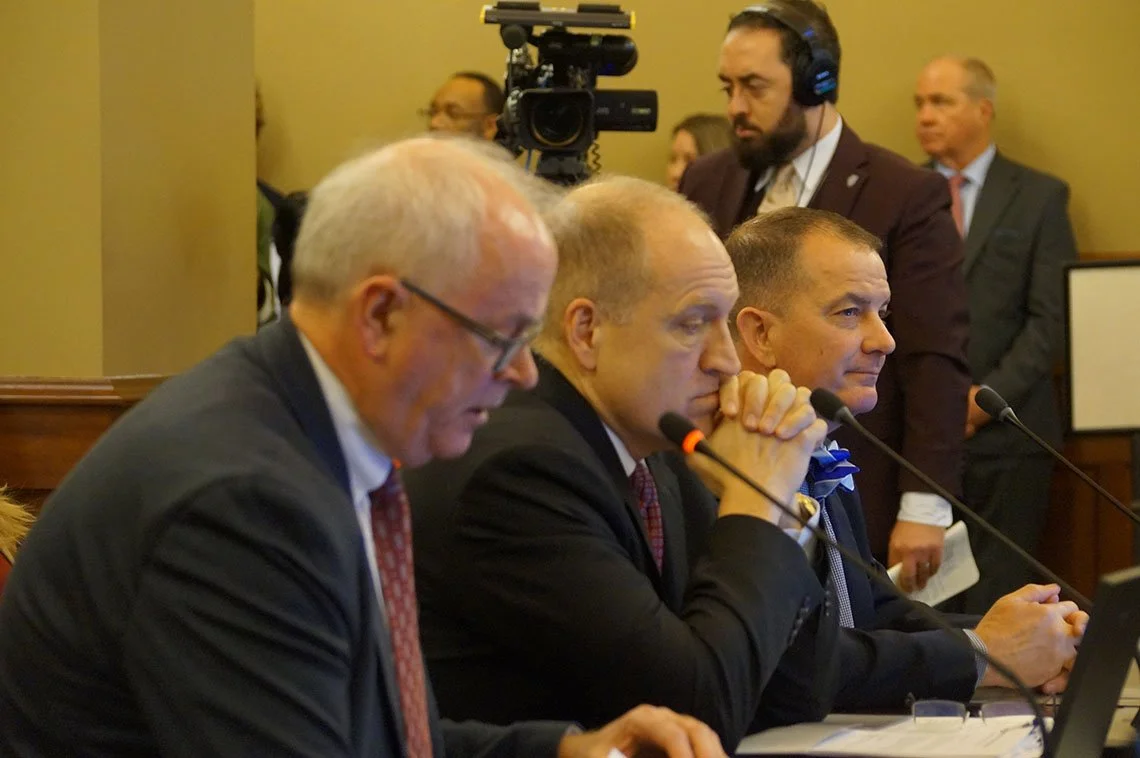

Nicholas Jones, left, executive vice president of the University of Illinois System, testifies before a House Committee opposing a bill to overhaul the way Illinois funds public universities. Also testifying in favor of the bill are Southern Illinois University System President Daniel Mahoney, center, and Eastern Illinois University President Jay Gatrell. (Capitol News Illinois photo by Peter Hancock)
Police shut down illegal dental office in Granite City operated by immigrants

The cash-only operation came to light after a patient complained about a root canal gone bad

Article Summary 

  • Prosecutors charged two Venezuelan dentists with operating an unlicensed dental practice out of a Granite City home. 

  • Idania Moreno-Paal worked as a dentist in Venezuela, then came to the United States in 2022, records show. 

  • She and Rodolfo J. Figuera, of Rolling Meadows, face felony charges of practicing medicine without a license, a felony. 

  • Police said they found money, dental equipment and a cache of extracted human teeth during a search of the home. Moreno-Paal, her husband and four children no longer live there.

This summary was written by the reporters and editors who worked on this story. 

By BETH HUNDSDORFER 
Capitol News Illinois 
bhundsdorfer@capitolnewsillinois.com  

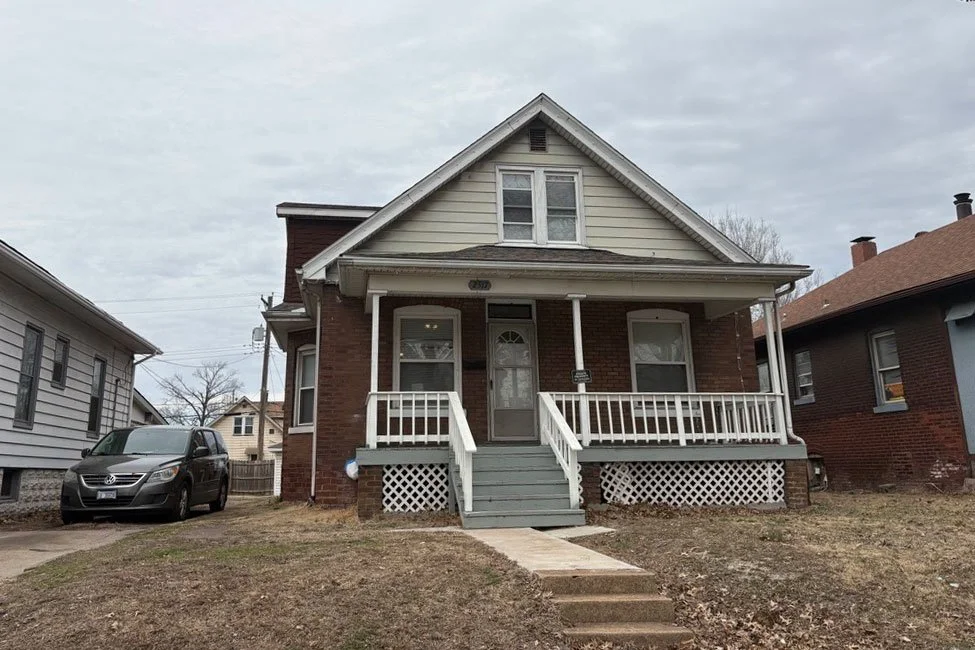
GRANITE CITY — In a small, two-story brick house on a one-way residential street a couple of blocks from the police station, a bootleg dental practice operated, marketed through an encrypted app to the Hispanic community, authorities said.

Clients seeking dental care were led up the back stairs of a house in the 2500 block of Iowa Street and into a darkened room where there were dental chairs, suction hoses, dental surgical tools, orthodontics equipment and an X-ray machine. Cash was the expected payment for services.

It isn’t clear how long this went on. Residents in the working-class neighborhood didn’t notice anything unusual, they said, except for a few more cars parked on the street. 

“This is a pretty quiet street. We don’t have any problems here,” said a woman who lives nearby and didn’t want to be identified. 

For at least a year and half, the house operated as an underground dental practice upstairs until it was shut down last fall, according to a police report.

After a four-month investigation by Granite City police, prosecutors charged Idania J. Moreno-Paal, 41, and Rodolfo Figuera, 59, with felony practicing medicine without a license.

Moreno-Paal, of Granite City, and Figuera, of Rolling Meadows, near Chicago, both practiced as dentists in Venezuela before emigrating to Mexico, then to the United States.

Moreno-Paal, her husband Salvador Francisco Tabacco-Campos and their four children lived in the house, while upstairs she performed everything from cleanings to extractions and even braces, police said, in exchange for cash.

Figuera, who patients knew as “The doctor” would come to the Metro East to treat patients and paid Moreno-Paal to use her home for his appointments, according to a police report. He did not live in Granite City, and his whereabouts are unknown.

According to police, Moreno-Paal and her husband fled Venezuela into Mexico. In 2022, both had been granted temporary protected status work visas to enter the U.S. Tabacco-Campos “possibly owned and operated a pharmacy in Venezuela, according to the police report.

The illegal dentist office has since been shut down, and the whereabouts of Moreno-Paal and her family are unknown. Neither Moreno-Paal nor Figuera had been booked into the Madison County Jail or made a court appearance.

The U.S. Department of Homeland Security did not respond to a request seeking information about the family and Figuera immigration status, including whether they’ve been deported.

A root canal gone bad

The operation came to police attention in mid-October after a 33-year-old woman reported that she experienced an infection that spread and caused fluid to leach from her ears after a root canal went awry.

The woman spoke to police through a translator and told them she was suffering from a toothache in her rear molar and didn’t have dental insurance. Several of the woman’s co-workers referred her to Moreno-Paal, who she learned was a dentist in her home country of Venezuela.

The woman told police she contacted Moreno-Paal through the encrypted phone app “What’s App” in Spanish.

When the woman arrived at around 7:30 p.m. on a Saturday night, Moreno-Paal let her up the stairs and put her in a chair. The woman told police that Moreno-Paal gave her a pill and she lost consciousness and awoke after receiving a root canal. She left after Moreno-Paal gave her a pack of pills and told her to take one every eight hours. The woman told police she paid $850 in cash and left. 

Two days later, she returned to the Granite City house suffering from pain and swelling.

Moreno-Paal and a man, later identified as Figuera, proceeded to surgically extract the infected tooth.

The infection did not abate. The woman was treated in two local emergency rooms. Eventually, the infection relented, but then the hospital bills came.  

The woman went to Hoyleton Youth and Family Services seeking financial assistance with the medical bills, according to police reports. 

A Hoyleton worker contacted Granite City police. Two days later, Granite City police executed a search warrant on the house. 

According to a police report documenting the search, they found a container with human teeth inside, dental equipment, narcotics, six cell phones, notes and ledgers, bank statements and $1,254 in cash. 

A violation of the TRUST Act?

In their report, Granite City police noted that they conducted a records check through the Department of Homeland Security regarding Moreno-Paal, Tabacco-Campos and their four children.

The Illinois TRUST Act, signed into law in 2017, regulates local law enforcement interactions with federal immigration agents. It prohibits them from holding individuals solely on immigration detainers, stopping people based on perceived status, or sharing nonpublic information without a judicial warrant.

At the time, the TRUST Act was one of nation’s strongest state-level due-process protections for immigrants, designed to shield them from being deported while interacting with local police.  

Granite City police did not respond to requests for comment about the case or whether they assisted Immigration and Custom Enforcements agents. The Illinois attorney general’s office also did not respond.

In a May 2022 interview with a Mexican newspaper, Excelsior, Moreno-Paal told a reporter she did not want to go to the United States initially because she could not practice dentistry without going back to school.

Something changed after that.  Moreno-Paal and her husband, Tabacco-Campos, both were issued temporary visitor drivers licenses in February 2023 — six months before they filled out paperwork applying for an occupancy permit for the house on the Iowa Street. 

A man who spoke only in Spanish answered the door at the house earlier this month and said he now resided at the home and the dentist’s family no longer lived there. He didn’t know their current whereabouts and pointed to a mailbox stuffed with mail addressed to the couple.

After the search warrants were executed in October, Granite City detectives Noe Marquez and Brandon Shellenberg brought Moreno-Paal in for an interview. She denied the amount of income that she derived from the practice, according to a police report documenting the interview. When detectives confronted her with bank statements and wire transfers, she told them what she was doing with the money.

“She explained the money was for a home she purchased back in Venezuela,” according to the report. 

Moreno-Paal told the detectives she purchased the medications found in the home from local Mexican grocery stores, the report stated. 

The neighbor who lived down the street told a reporter that she didn’t know the couple’s whereabouts either but noted there have been other people living at the house since the search warrant was executed in October.

“It should be noted the above incident was not reported to the Illinois Department of Professional Regulation at the completion of this report in order for further criminal investigation to be completed,” the police report stated.

The department has no reports on file regarding Moreno-Paal and Figuera, according to the agency’s spokesperson.Capitol News Illinois is a nonprofit, nonpartisan news service that distributes state government coverage to hundreds of news outlets statewide. It is funded primarily by the Illinois Press Foundation and the Robert R. McCormick Foundation.  

The house in the 2500 block of Iowa Street in Granite City where an illegal dental office operated. (Capitol News Illinois photo by Beth Hundsdorfer)

INDOT cuts ribbon on new I-64 welcome center in southwest Indiana

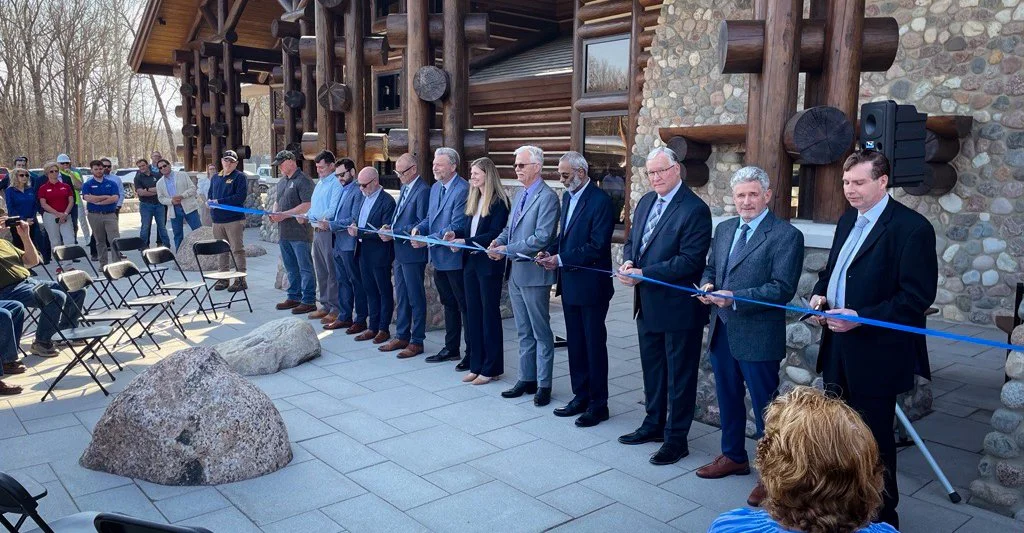
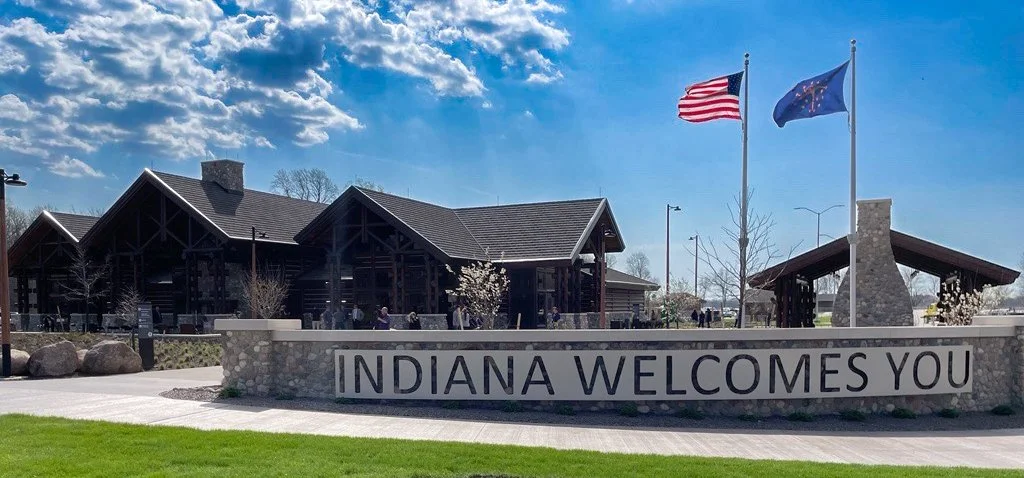
POSEY COUNTY, Ind. – Earlier today, the Indiana Department of Transportation joined public officials and contracting partners for a ceremonial ribbon cutting to mark the opening of the newly constructed Black River Welcome Center on eastbound I-64 near mile marker 7 in Posey County.

The new welcome center is inspired by the boyhood home of President Abraham Lincoln. Interactive exhibits feature historical information about the 16th president. Also featured are former presidents from Indiana, Benjamin Harrison (23rd president) and William Henry Harrison (9th president). Visitors will be able to utilize additional interactive exhibits and design elements that highlight southern Indiana.

“The new Black River Welcome Center showcases the very best of Indiana, our history, our hospitality, and our commitment to serving travelers,” said Gov. Mike Braun. “Opening this facility as our nation approaches its 250th anniversary gives visitors a meaningful opportunity to connect with Indiana’s role in shaping America’s story.”

Other amenities at the welcome center include an adult recreation area, children's playground, and dog park. Increased semi-truck parking will also be available, with 75 spaces in total, an increase of 60 spaces from the previous welcome center. Through INDOT's long-term rest area and welcome center improvement plan, the agency will add more than 1,200 truck parking spaces, nearly doubling capacity statewide.

"INDOT is committed to providing safe, informative environments where travelers can rest and recharge through our Rest Area and Welcome Center Improvement Plan,” said INDOT Commissioner Lyndsay Quist. “Giving motorists a place to take a break is just another way INDOT is working to make our roadways safer.”

The statewide improvement plan includes more than $600 million in federal funding for improvements to 21 rest areas and welcome centers to be completed by the end of Fiscal Year 2034. Improvements include modernizing facilities, constructing new buildings, and improving parking. Learn more about the plan and construction timeline here.

Construction of the Black River welcome center began in 2023 and was led by prime contractor Garmong Construction Services of Terre Haute. The new welcome center opened to the public after the event.

City Taking Action Against Dilapidated Properties

Mount Carmel officials say efforts to address nuisance and abandoned properties are ongoing, but the process can take time.

At last Monday’s City Council meeting, City Attorney Derek McCollough reported that the city has recently completed foreclosure proceedings on two properties where buildings had previously been demolished.

McCollough explained that when the city tears down unsafe structures, it places a lien on the property to recover demolition and legal costs. Those liens have now gone through the court system, and sheriff’s sales are expected within the next six weeks.

He added that several additional properties are currently in the pipeline as the city continues working to clean up blighted areas.

Mayor Joe Judge said the process is often more complex than residents may realize. He noted the city must first determine ownership and provide proper legal notification before taking action.

Judge said in some cases, especially with bank-owned properties, it can take months—or even more than a year—to identify the responsible party and move forward.

He emphasized the importance of following proper procedures, noting that rushing the process could leave the city financially responsible for demolition costs.

Judge thanked residents for their patience and said the city remains committed to addressing nuisance properties as efficiently as possible while following legal requirements.

WGH Board Approves AI Technology

Wabash General Hospital is taking a step forward in technology, as its Board of Directors approved the use of artificial intelligence to improve patient care and efficiency.

During Monday evening’s meeting, hospital officials outlined plans to adopt DAX AI, a Microsoft Copilot-based system that integrates with the hospital’s Epic medical records platform. The technology uses “ambient listening” to automatically document patient visits, allowing physicians to focus more on face-to-face interaction rather than typing notes.

Hospital leaders say the system will reduce after-hours paperwork—often referred to as “pajama time”—by about 24 percent, while also allowing providers to see more patients each month.

Officials emphasized the move is not intended to replace staff, but to shift duties toward more patient-facing roles and improve overall workflow.

The system has been piloted for several months with six providers, who reported positive results.

The board unanimously approved moving forward with the technology, with a cost of about 595 dollars per provider, per month.

Indiana State Police InvestigateDouble Fatality on SR 66 near Reo, Driver Arrested

Spencer County – Tuesday evening, March 24, at approximately 5:50 p.m., Indiana State Police and Spencer County Sheriff’s Office responded to a head-on collision that resulted in a double fatality and two injuries.

According to Trooper Lauer, the driver of a 2019 Chevrolet Colorado pickup truck was traveling westbound on SR 66 east of CR 400 West when for unknown reasons drove left of center and collided into a 2014 Toyota Corolla that was traveling eastbound. The driver of the Toyota, Larry Lindsey, 54, of Rockport, and a passenger in the rear seat, Barry Morris, 64, of Whitesville, KY, were pronounced dead at the scene. A second passenger in the Toyota, Jonathan Hurm, 49, of Owensboro, KY, was transported to Ascension St. Vincent Hospital in Evansville, but was later transferred to Ascension St. Vincent Hospital in Indianapolis for his injuries.  The driver of the Chevrolet Colorado was identified as Lindsey Baxter, 29, of Evansville, IN.  Baxter was taken to Ascension St. Vincent Hospital in Evansville where he was treated and released. 

The Spencer County Prosecutor’s Office issued a felony arrest warrant for Baxter. Wednesday afternoon, March 25, at approximately 1:00 p.m., Indiana State Police Drug Enforcement Section arrested Baxter at his residence in Evansville without incident. He is currently being transported to the Spencer County Jail.

Baxter is charged with the following offenses:

  • 2 Counts of Operating a Vehicle While Intoxicated causing Death, Level 4 Felony

  • 1 Count of Operating a Vehicle While Intoxicated causing Serious Bodily Injury, Level 5 Felony


SR 66 was closed for approximately 2 ½ hours while this crash was being investigated.

Investigating Officer: Trooper Jacob Lauer, Indiana State Police

Assisting Agencies: Spencer County Sheriff’s Office, Spencer County EMS, Warrick County EMS, Ohio Twp. Fire Department, Luce Fire Territory, and INDOT

Wabash District #348 Moves Toward Streamlined Federal Funding Plan Approval

The Wabash District #348 School Board reviewed several key planning documents tied to federal funding during Monday night’s meeting.

District Curriculum Director Michael Brewer told board members the district is preparing its consolidated district plan, which serves as a single application covering multiple federal grants.

Brewer explained the updated process streamlines what used to be separate applications, combining information for up to 12 different federal programs into one comprehensive planning document. He said the plan outlines a wide range of information about each school and the district as a whole, and will be presented for approval in April.

As part of that process, the board reviewed several supporting documents this month, including school-wide plans for each building tied to Title I funding.

Brewer said those plans outline how each school will meet academic standards, provide resources, support at-risk students, and implement instructional strategies. Because all district buildings meet the threshold for school-wide Title I programs, he said the district has more flexibility in how funds are used to support students.

The board also reviewed a new district-wide parent involvement policy, which is now required as part of the consolidated plan.

Brewer said the policy provides a general framework for engaging families, while each individual school outlines its own specific efforts, such as PTO programs, school events, and parent-teacher conferences.

Board members discussed the ongoing challenge of increasing parent involvement, particularly at higher grade levels, though Brewer noted the district continues to explore ways to improve engagement.

The documents reviewed Monday will be incorporated into the final consolidated district plan, which is expected to come before the board for approval next month.

Wabash General Bringing Mobile MRI On-Site Full-Time to Boost Patient Access

Wabash General Hospital is making a change to its mobile MRI services in an effort to improve access and stability for patients.

During Monday evening’s board meeting, President and CEO Karissa Turner announced the hospital will transition away from its current shared MRI service agreement and instead bring the mobile unit to Mount Carmel on a more permanent basis.

Turner said the hospital will continue using the same mobile MRI unit, but it will now be parked at Wabash General Hospital full-time under a new agreement for up to 36 months, with the option to end the contract after 24 months.

She said the move is designed to provide greater consistency in MRI services, especially as the hospital continues to expand orthopedic care.

The change will also significantly increase availability. Turner says the hospital expects to add around 100 additional MRI appointment slots per month, with expanded hours that could eventually include six or even seven days a week.

Hospital officials noted the current setup involves travel time between facilities, which limits availability. Having the unit on site full-time will eliminate those delays and allow for more efficient scheduling.

Turner also said the updated agreement includes a software upgrade to the MRI unit and will slightly increase the monthly lease cost.

The transition is expected to take place in mid-April.

Hospital leaders say the move is a key step in improving patient access while preparing for future plans to bring MRI services permanently in-house.

Riverview Ramble Approved By City Council

The Riverview Ramble is returning to Mount Carmel for a sixth year.

During last Monday’s City Council meeting, Mount Carmel Public Utility President and CEO David James requested permission to host the 2026 Riverview Ramble on the last Saturday in October, which falls on Halloween, October 31st.

James told the council the annual race continues to draw participants from across the region. He said 150 runners from eight different states took part in last year’s event.

Since the race began in 2021, James noted the Riverview Ramble has generated more than $37,000 in donations to local charitable organizations in Mount Carmel.

James asked the council for approval to move forward with this year’s event, which has become a growing community tradition.

Council members expressed support for the race and its impact, noting both the economic benefit of bringing visitors to town and the continued contributions to local charities.

Aaron Tippin to Headline 170th Gibson County Fair

Princeton, Indiana – July 10, 2026 at 8:00 PM

The Gibson County Fair, known for its long-standing tradition of bringing nationally recognized entertainment to Southwest Indiana, is proud to announce Aaron Tippin as the headline performer for the 170th Gibson County Fair.

Tippin will take the stage on Friday, July 10, 2026, at 8:00 PM at the Gibson County Fairgrounds in Princeton, Indiana, delivering a high-energy performance filled with patriotic anthems and country music favorites.

With a career spanning more than three decades, Aaron Tippin has earned six gold albums and one platinum album, along with more than 30 charted singles. His signature hits include:
“You’ve Got to Stand for Something,”
“There Ain’t Nothing Wrong with the Radio,”
“Workin’ Man’s Ph.D.,”
“Kiss This,” and
“Where the Stars and Stripes and the Eagle Fly.”

Known for his authentic, blue-collar roots and unwavering dedication to God, country, and family, Tippin continues to connect with audiences across generations. His powerful voice and high-energy performances have made him one of country music’s most enduring artists.

Event Details

  • Admission to Fairgrounds: $8

  • Grandstand Seating: FREE

  • Trackside / Beer Garden Admission: $10

  • Beer Garden Opens: 6:00 PM

Opening Act:
Jimmy DeTalente & Kevin Minnis

  • Performing until 7:30 PM

  • Returning after the concert

Guests are encouraged to bring lawn chairs for trackside seating.


Location

Gibson County Fairgrounds
709 N Embree St.
Princeton, IN 47670