Wabash County Tax Sale This Friday

The Wabash County Treasurer’s Office is reminding residents of several important deadlines ahead of this week’s delinquent tax sale.

Treasurer Angela Broster reports that the delinquent tax sale list for real estate and mobile homes was officially published in the newspaper on Saturday, March 14th.

Broster says her office is no longer accepting personal checks for tax payments. Instead, payments must be made by cashier’s check, money order, or cash when paying in person at the Treasurer’s Office. The deadline to pay with a credit card has passed.

The final day to make payments before the tax sale is Thursday, March 26th.

The annual Wabash County Tax Sale is scheduled for Friday, March 27th at 10 a.m. in the courtroom.

Anyone with questions about their tax bill is encouraged to contact the Treasurer’s Office at 618-262-5262.

Toyota Kicks Off a Milestone Year with a $1 Billion Investment in Kentucky and Indiana

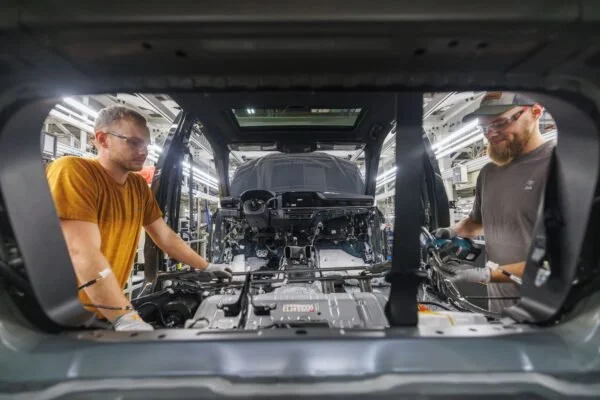
GEORGETOWN, Ky. (March 23, 2026) — It was 1986. Bon Jovi and Madonna filled the airwaves. Halley’s Comet whizzed overhead, and the Chicago Bears shuffled their way to a championship. Toyota also took a bold new step into U.S. operations, as it broke ground in Kentucky and set the stage for millions of vehicles rolling off the line, starting with the Toyota Camry sedan.

Today, Toyota celebrated 40 years at its Kentucky plant – the company’s largest manufacturing plant in the world. To commemorate the occasion, Toyota announced a $1 billion investment across its Kentucky and Indiana operations, affirming the company’s commitment to meet growing customer demand and offer a diverse vehicle line up. The announcement is part of Toyota’s November 2025 commitment to invest up to $10 billion in its U.S. plants over the next five years.

“Toyota’s investment in the U.S. is for the long-term, tied to our philosophy of building where we sell and buying where we build,” said Mark Templin, executive vice president and chief operating officer, Toyota Motor North America. “We have created a tremendous value chain for nearly 70 years. Our teams have contributed to world-class design, engineering, and assembly of more than thirty-five million cars and trucks for our customers in the U.S.”

The investment includes:

  • Toyota Kentucky: $800 million to further Toyota’s multi-pathway approach to electrification by preparing the plant for its second battery electric vehicle. The investment also allows the plant to increase capacity for the assembly of the Camry and RAV4.

  • Toyota Indiana: $200 million to increase capacity for the Grand Highlander, one of Toyota’s most popular SUVs. With this investment, Grand Highlander joins the assembly of the family-favorite Sienna minivan in the facility’s East Plant while continuing assembly alongside the Lexus TX in the West Plant.

Kentucky Governor Andy Beshear was all smiles celebrating with Toyota team members in the Blue Grass state.

“Kentucky changed for the better 40 years ago when Toyota chose to make Georgetown its New Kentucky Home, and I am proud to say that partnership and success continues today as we celebrate this remarkable milestone together,” said Gov. Andy Beshear. “Toyota Kentucky is Toyota’s largest vehicle manufacturing plant in the world, producing over 14 million vehicles since its doors opened and benefiting Kentuckians through good jobs and a strong economy. We are grateful to our great Toyota partners and look forward to building on years of success for generations to come.”

Additionally, Toyota Kentucky announced millions in new grant funding further solidifying the company’s commitment to career readiness and community engagement.

  • $4 million supporting Driving Possibilities. The grants awarded by the Toyota USA Foundation, supported by additional funds from Toyota Kentucky, will expand STEM learning and resources in Scott and Fayette County Schools. When combined with the original Toyota USA Foundation grants, the total investment in the program is more than $11 million in the Commonwealth.

Driving Possibilities is a national STEM (Science, Technology, Engineering, Math) education initiative that brings together community, education leaders, local and national nonprofits, and industry partners. The aim of the initiative is to co-create programs to strengthen communities and prepare young people for future careers. Driving Possibilities is funded by the Toyota USA Foundation, with additional support provided by Toyota Motor North America (TMNA) and Toyota Financial Services (TFS).

  • $400,000 to support the Manufacturing Engineering program at Eastern Kentucky University, helping to advance the next generation workforce.

A cornerstone of American manufacturing and jobs, Toyota has much to celebrate in 2026. Five of the company’s U.S. manufacturing facilities are marking major anniversaries this year including:

ADDITONAL QUOTES

Kerry Creech: “For Toyota, manufacturing has always been about more than building vehicles, it’s about investing in people,” said Kerry Creech, president of Toyota Kentucky. “Ensuring customer satisfaction and safety starts with each team member on the production line. Our 10,000 team members are the heart of Toyota. We will continue to invest in them and in our future workforce.”

Jason Puckett: “Today’s announcement reflects the company’s commitment to meeting customer demand and the belief in our team to get it done,” said Jason Puckett, president of Toyota Indiana. “For thirty years, Toyota Indiana has led the charge into the future by putting our customers first, delivering quality vehicles, and remaining committed to our values. I’m proud to celebrate this incredible milestone with our 7,300 team members who have helped contribute to decades of quality in the Hoosier state.”

911 call leads to arrest of Owensville man

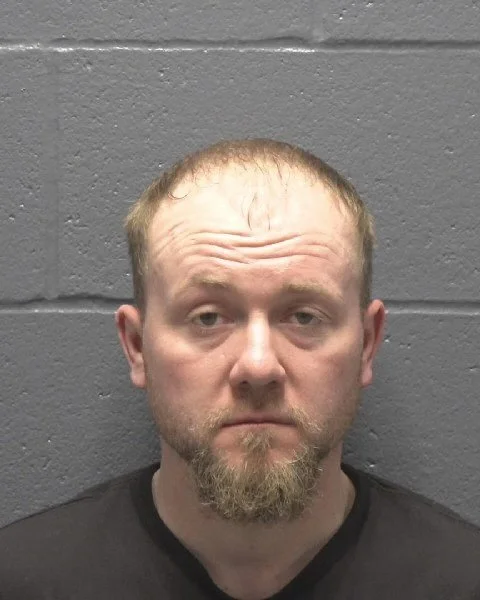
On March 21, 2026, at 5:04 p.m. Gibson County Central Dispatch received a 911 report of a physical disturbance that was occurring in the 4900 block of South County Road 350 West.  Upon arriving law enforcement officers learned that the parties had separated and began an investigation into the incident.  After speaking with all parties involved and documenting evidence at the scene Deputy Wyatt Hunt placed 33-year-old Logan Neufelder of Owensville into custody and transported him to the Gibson County Detention Center.  Upon arriving at the detention center Mr. Neufelder was charged with Battery (Felony) and Criminal Confinement.
 
Deputy Hunt was assisted in his investigation by Deputy Bart Wagner and Sgt. Loren Barchett.  Also assisting in the investigation was Indiana Conservation Officer Matt Clark and Owensville Town Marshal Rodger Leister.    
 
All criminal defendants are to be presumed innocent until and unless proven guilty beyond a reasonable doubt in a court of law.

Haubstadt man arrested for DUI

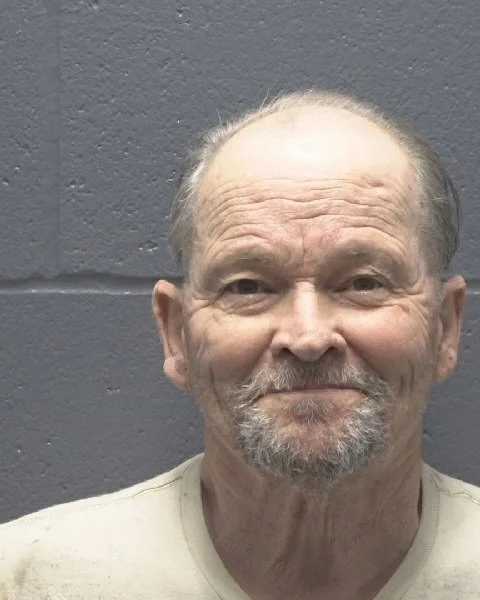
On March 20, 2026, at 7:57 p.m. law enforcement officers were on a traffic stop on US 41 near County Road 925 South.  While on the stop Deputy Wes Baumgart heard a commotion behind his vehicle and observed an older male standing in the middle of Southbound traffic on US 41.  Haubstadt Officer Jason Marceaux physically pulled the person from the roadway and back to his vehicle.  Deputy Baumgart approached the vehicle and identified the male as 72-year-old Mark Thomson of Haubstadt.  While speaking with Mr. Thomson Deputy Baumgart detected the odor of an alcoholic beverage coming from him and began a roadside DUI investigation.  At the conclusion of the investigation Mr. Thomson was taken into custody and transported to the Gibson County Detention Center where he was charged with Operating a Vehicle While Intoxicated. 
 
All criminal defendants are to be presumed innocent until and unless proven guilty beyond a reasonable doubt in a court of law.

Patoka woman arrested for DUI

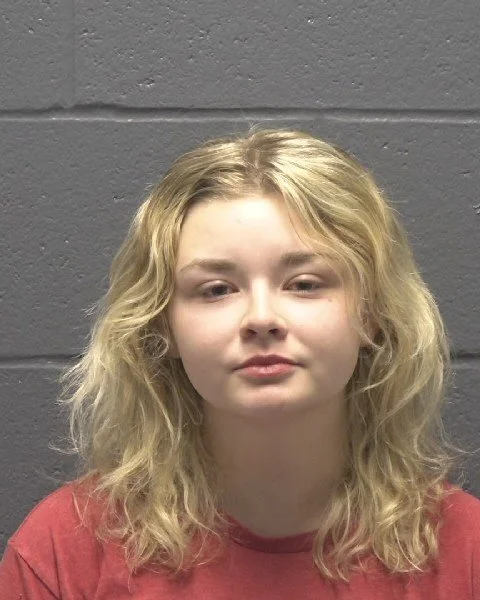
On March 20, 2026, at 6:32 p.m. Gibson County Deputy Wyatt Hunt conducted a traffic stop on a Blue 2019 Buick Encore after observing it speeding on North Main Street in Princeton.  Upon approaching the vehicle Deputy Hunt detected the odor of an alcoholic beverage coming from the driver 21-year-old Shawna Shoultz of rural Patoka.  At that point Deputy Hunt began a roadside DUI investigation that resulted in Ms. Shoultz being taken into custody and transported to the Gibson County Detention Center.  Upon arriving at the detention center the driver was charged with Operating a Motor Vehicle While Intoxicated. 
 
Deputy Hunt was assisted in his investigation Sgt. Loren Barchett, Deputy Wes Baumgart, and Princeton Officer Matthew Perry. 
 
All criminal defendants are to be presumed innocent until and unless proven guilty beyond a reasonable doubt in a court of law.
 

GCSO investigates accident with injuries on SR 64 at CR 550 E

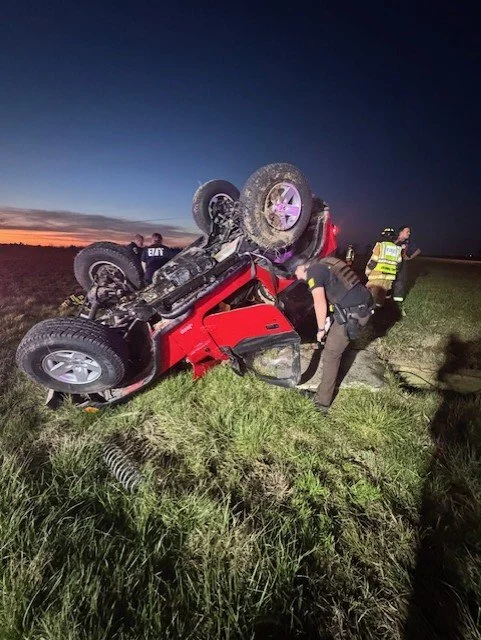
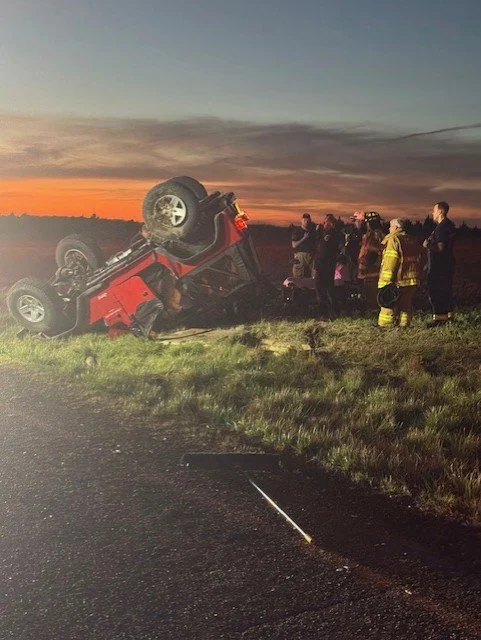
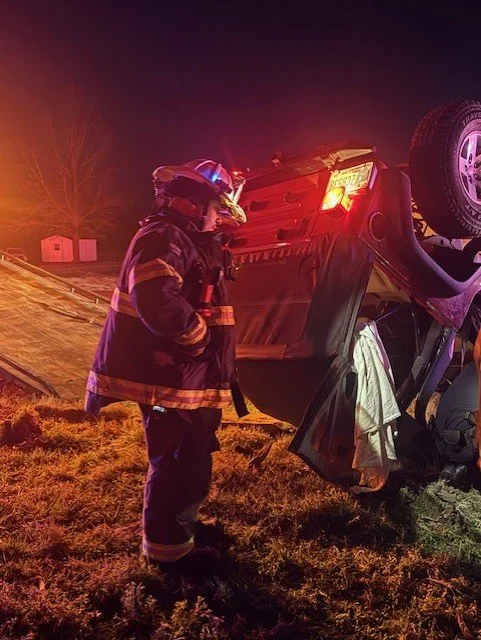
On March 21, 2026, at 6:47 p.m. Gibson County Central Dispatch received a report of a two-vehicle accident where one vehicle had flipped over, and two occupants were still in the vehicle at the intersection of State Road 64 and County Road 550 East.  Multiple emergency service crews were dispatched to the scene, and a medical helicopter was placed on standby until the patients could be assessed by a Gibson County Ambulance Crew.
 
Sgt. Loren Barchett investigated the accident and determined that a White 2011 Chevy Silverado was Eastbound on State Road 64 and attempted to turn North onto County Road 550 East when it struck a Westbound Red 2000 Jeep Wrangler.  The driver and passenger of the Jeep Wrangler were stuck in the overturned vehicle but extricated by fire crews.  Both the driver and passenger were taken to an Evansville area hospital for non-life-threatening injuries.
 
The Gibson County Sheriff’s Office was assisted in their investigation by Officers with the Oakland City Police Department, Princeton Police Department, and Indiana Conservation Office.  Francisco Fire, Patoka Township, East Gibson Fire, and multiple crews from the Gibson County Ambulance Service also assisted in this incident. 

Proposed bill would require Illinois high schools to offer voter registration 

Named after the late Rev. Jesse Jackson, the act aims to increase youth voter registration

BY AMY L. WONG
Medill Illinois News Bureau
news@capitolnewsillinois.com 

Article Summary

  • A proposed bill that would require every Illinois high school to provide students with a chance to register to vote by the time they graduate passed a House committee unanimously this week. 

  • The lead sponsor of the legislation, state Rep. Kimberly Du Buclet, said she was partly inspired by the legacy of the late Rev. Jesse Jackson. 

  • Nonprofits such as Illinois Collaboration on Youth and Chicago Votes strongly support the bill. 

  • Critics raise concerns about potential administrative burden on schools. 

This summary was written by the reporter and editors who worked on this story.

CHICAGO — A proposed bill bearing the name of the late Rev. Jesse Jackson would require high schools to offer a voter registration opportunity for all eligible students graduating from Illinois high schools.

House Bill 4339, also known as the Rev. Jesse Jackson Sr. Young Voter Empowerment Act,  had 28 co-sponsors, all Democrats, when it cleared the House Ethics and Elections Committee unanimously on March 18.The lead sponsor, state Rep. Kimberly Du Buclet, D-Chicago, said the bill is intended to increase youth voter registration rates. 

“This bill is nonpartisan, meaning it’s not about picking a party or picking a candidate. It’s just about getting people involved,” Du Buclet said. “It’s not about Democrats, it’s not about Republicans. It’s just giving our students the information and helping them get registered to vote early.”

Du Buclet said she plans to speak to Republicans to see if she can gain bipartisan support. 

But some in the GOP said the party is reluctant to add more unfunded mandates to school districts. Rep. Jeff Keicher, R-Sycamore, said in an interview he also thought the act was “somewhat duplicative” since Illinois provides an opportunity for everyone to register to vote when they visit driver’s service facilities for their license.   

“All I hear from schools on a bipartisan basis is ‘stop with the mandates,’” Keicher said. “‘We need to teach kids and you keep throwing additional things on our plate.’”

The measure does not provide funding or any guidelines for its implementation, leaving some to worry that school districts could make registration drives partisan.

Keicher added he’s not sure the bill would affect turnout.  

“I’m a firm believer in voting and registering to vote,” he said. “I think everybody who is legally registered should vote, but our problem is turnout, not registration.” 

According to a Tufts study released in April 2025, 41% of Illinoisans aged 18-29 voted in the 2024 presidential election. Nationally, Illinois ranks on the lower end for voters participating from that age group, with Minnesota at the highest at 62% and Oklahoma at the lowest with 33%. 

A companion bill in the Senate, Senate Bill 1786, is awaiting a committee vote. 

Support for the Bill

Chicago Votes, a nonpartisan nonprofit, supports the act. Frederique Desrosiers, the policy and advocacy director at Chicago Votes, said a strength of the legislation is that it applies to all of Illinois, which addresses some of the gaps in voter engagement efforts. 

“One of the reasons why I think this bill is so important is because a lot of times voter registration efforts focus … on downtown Lakeshore campuses, and a lot of times young people who live on the South and West Sides aren’t really folded into the conversation and not really encouraged and engaged,” Desrosiers said.

Franklin Hughes, a freshman at Dominican University and a student leader at Chicago Votes, said he supports the act and emphasized the importance of high schools offering students a chance to register to vote on school grounds. 

“Voting is a gateway to having a voice in decisions that impact young people’s lives, and yet, many of us want to engage and don’t always know how or when, and that’s why it’s so important that schools and youth spaces become trusted places,” Hughes said. “This bill meets young people where we already are and gives us a real pathway to participate in our democracy.”

Read more: High schoolers flood state Capitol to advocate for drug abuse prevention bills 

Andrea Durbin, Chief Executive Officer at Illinois Collaboration on Youth, said that if the youth do not vote, those in power may not prioritize their needs since voting is a method for constituents to communicate their concerns. 

“We need to make sure, especially if young people are exercising that right and that power, (that) if they flex that muscle, people will pay attention,” she said. 


Rev. Jesse Jackson’s Legacy

Jackson, who died on Feb. 17, was a national voice for civil and voting rights and a civic leader based in Chicago for six decades. In 1972, Jackson organized voter registration drives and encouraged Black Americans to vote. 

Former Presidents Barack Obama, Joe Biden and Bill Clinton attended his public memorial in early March. Obama said during his speech that Jackson helped create the political climate for what would be the future president’s campaign success. 

“It was because of that path that he had laid, because of his courage, his audacity, that two decades later, a young Black senator from Chicago’s South Side would even be taken seriously as a candidate of the presidential nomination,” Obama said.

Du Buclet said Jackson’s advocacy for youth voter registration and legacy in the civil rights movement encouraged her to sponsor the Rev. Jesse Jackson Sr. Young Voter Empowerment Act. 

“The Reverend Jesse Jackson Sr. was such a trailblazer in fighting for voting rights, particularly for children, for young people,” Du Buclet said. “One of the things that was his vision was that students graduated with a diploma in one hand and a voter registration card in the other hand. That was part of my inspiration for the bill, just to try and fulfill his vision and keep the voting rights vision and efforts going forward.”


Amy L. Wong is a graduate student in journalism with Northwestern University’s Medill School of Journalism, Media, Integrated Marketing Communications, and fellows in its Medill Illinois News Bureau working in partnership with Capitol News Illinois. 

Capitol News Illinois is a nonprofit, nonpartisan news service that distributes state government coverage to hundreds of news outlets statewide. It is funded primarily by the Illinois Press Foundation and the Robert R. McCormick Foundation. 


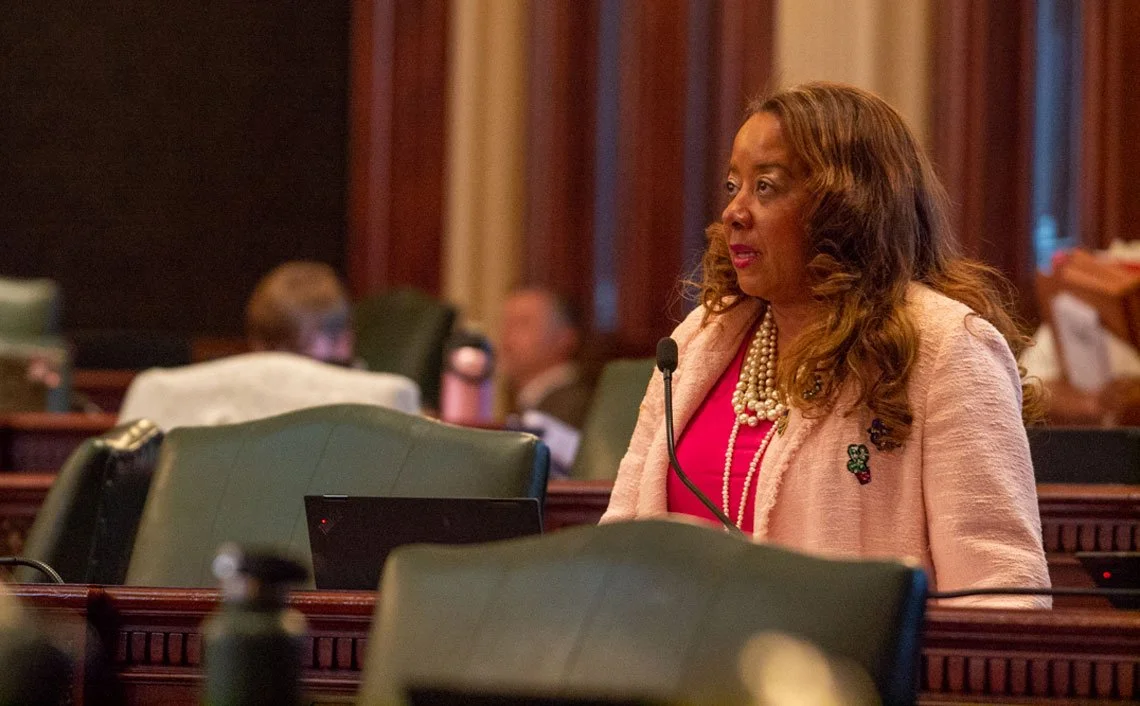
State Rep. Kimberly Du Buclet is the lead sponsor of the Rev. Jesse Jackson Sr. Young Voter Empowerment Act requiring high schools to offer voter registration. (Capitol News Illinois photo by Jerry Nowicki)

Lawyers say D.C. court’s decision striking down large-capacity magazine ban should be applied to Illinois  

Raoul’s office argues a federal appeals court isn’t bound by the decision

By PETER HANCOCK
Capitol News Illinois
phancock@capitolnewsillinois.com

Story Summary

  • An appellate court in Washington, D.C., struck down a law in the district that banned large-capacity magazines, and lawyers challenging a similar law in Illinois say the appellate court should take the decision into account.   

  •  Attorney General Kwame Raoul’s office argues the 7th Circuit Court of Appeals is not bound by decisions of the D.C. court, which is similar to a state’s supreme court.

  • At issue before the 7th Circuit is a constitutional challenge to the Protect Illinois Communities Act, a sweeping ban on assault-style weapons and large-capacity magazines.

This summary was written by the reporters and editors who worked on this story. 

SPRINGFIELD — A recent decision from a local appellate court in Washington, D.C., striking down a ban on large-capacity magazines could have an impact on a pending case challenging a similar ban in Illinois.

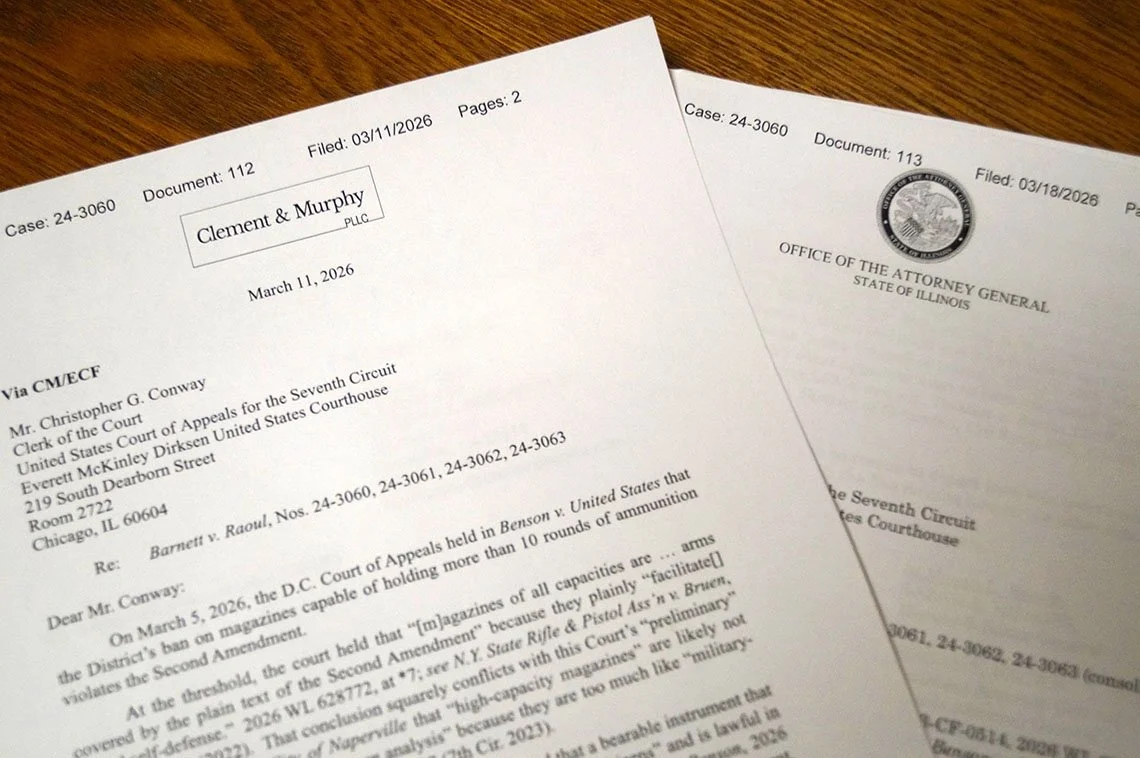
In a memo filed March 11 with the 7th U.S. Circuit Court of Appeals in Chicago, lawyers for the gun industry asked a three-judge panel hearing the Illinois challenge to consider the case of Tyree Benson. His conviction for violating a local ordinance banning large-capacity magazines was recently overturned by the Washington, D.C., Court of Appeals on Second Amendment grounds.

But Attorney General Kwame Raoul’s office responded Wednesday, arguing the 7th Circuit is not bound by decisions of the D.C. court — the equivalent of a state supreme court. It also described the Benson decision as an “outlier that conflicts with every other appellate court to have addressed the issue.”

At issue before the 7th Circuit is a constitutional challenge to the Protect Illinois Communities Act, or PICA, a sweeping ban on assault-style weapons and large-capacity magazines. 

Illinois lawmakers passed that ban during a lame duck session in January 2023 following a mass shooting the previous summer at a Fourth of July parade in Highland Park that left seven people dead and dozens more injured or traumatized.

The convicted gunman in that shooting used a Smith & Wesson M&P15 semiautomatic rifle and multiple 30-round magazines.

In November 2024, a federal judge in East St. Louis sided with gun rights advocates and the gun industry and struck down the Illinois law as unconstitutional. The state has appealed that decision to the 7th Circuit, which heard oral arguments in September but has not yet rendered a decision. The law remains in effect while the appeal is pending.

Many legal observers say the case is likely to end up before the U.S. Supreme Court, which has never issued a definitive ruling on assault weapons bans. The court did, however, deny requests to issue preliminary injunctions blocking the law from being enforced while legal challenges proceeded.

Shifting standards

In other Second Amendment cases in recent years, the court has taken a more expansive view of the right to bear arms and has been broadly skeptical of state and local laws that seek to limit that right.

In 2008, the court ruled in District of Columbia v. Heller that the Second Amendment protects an individual’s right to bear arms, as opposed to a collective societal right to maintain a militia. In striking down an ordinance banning the possession of handguns in the district, the court also said the Second Amendment protection extends to “all instruments that constitute bearable arms, even those that were not in existence at the time of the founding.”

More recently, in 2022’s New York State Rifle & Pistol Association v. Bruen decision, the court went further by saying the Second Amendment gives all Americans the right to bear “commonly used” arms in public. It also said that to pass constitutional muster, a law limiting the right to bear arms had to be “consistent with the Nation’s historical tradition of firearm regulation.”

Benson decision

In the case of Tyree Benson, the Washington, D.C., court ruled 2-1 that magazines of any capacity are “arms” covered by the Second Amendment. It also said large-capacity magazines in particular “are ubiquitous in our country, numbering in the hundreds of millions, accounting for about half of the magazines in the hands of our citizenry, and they come standard with the most popular firearms sold in America today.”

Erin Murphy, an attorney for a firm representing several plaintiffs in the Illinois case, argued in the memo that the popularity of large-capacity magazines put them in the same category as handguns, which the Supreme Court said in the Heller decision could not be banned.

But Assistant Attorney General Megan Brown argued in a reply memo that relying on the popularity of a particular weapon or device to determine whether it’s constitutionally protected represented a kind of circular logic that the 7th Circuit rejected when it denied a motion to block enforcement of the assault weapons ban in 2023.

The 7th Circuit has not indicated when it intends to issue a decision.


Capitol News Illinois is a nonprofit, nonpartisan news service that distributes state government coverage to hundreds of news outlets statewide. It is funded primarily by the Illinois Press Foundation and the Robert R. McCormick Foundation. 


Companies could be on the hook for work-related activities before and after shifts start, court rules

Companies could be on the hook for work-related activities before and after shifts start, court rules

The Illinois Supreme Court ruled state wage law does not include certain federal exclusions 

Article Summary

  • Illinois’ wage law does not include federal exclusions that would shield companies from having to pay employees for pre-and post-shift activities, the state high court ruled.

  • The ruling is based on a civil suit brought against Amazon by two former employees after they were not compensated for pre-shift health screenings during the COVID-19 pandemic.

  • Amazon argued the court should follow federal regulations, but the employees said they were entitled to compensation because state law does not include those regulations.

  • The case will now return to the U.S. Court of Appeals for the Seventh Circuit.

This summary was written by the reporters and editors who worked on this story.

By JENNA SCHWEIKERT
Capitol News Illinois 
jschweikert@capitolnewsillinois.com 

SPRINGFIELD — Illinois law does not specifically shield companies from having to pay employees for time spent completing required pre- and post-work activities, the state Supreme Court unanimously ruled.

Although federal regulations exclude that requirement, the court found Illinois’ wage law does not include any similar provisions. That means employers could be required to compensate employees for required activities outside of the normal work day.

The U.S. Court of Appeals for the Seventh Circuit asked the state’s high court to decide if state law includes the federal regulation found in the Fair Labor Standards Act. The question originates from a civil suit brought against Amazon by two former employees, although the court’s ruling is not an official ruling in that case. 

In the opinion, Justice David Overstreet wrote that the court’s goal was to determine the legislature’s intent at the time Illinois’ 1971 Minimum Wage law was enacted, emphasizing that the court aimed to adhere to the plain language of the law.

“We must refrain from departing from the statute’s plain language by reading into it exceptions, limitations, or conditions that conflict with the express language of the statute,” Overstreet wrote. 

Justice Overstreet delivered the court’s opinion, with Chief Justice P. Scott Neville and Justices Lisa Holder White, Joy Cunningham, Elizabeth Rochford, and Mary O’Brien concurring. Justice Sanjay Tailor did not take part in the decision.

Johnson v. Amazon

In 2020, Amazon required its employees to complete 10-15-minute pre-shift health screenings to avoid transmission of COVID-19. Two employees, Lisa Johnson and Gale Miller Anderson, later sued the company in the Cook County circuit court, arguing they should have been compensated for that time under federal and state law. 

Amazon requested the case be moved to federal court in the U.S. District Court for the Northern District of Illinois and moved to dismiss the case, arguing they were not required to pay Johnson and Anderson based on federal exemptions for preliminary work activities in the Fair Labor Standards Act.

The federal court approved the dismissal under federal and state statutes, finding that federal law had frequently been used to interpret Illinois’ Minimum Wage Law. 

Johnson and Anderson appealed, this time arguing they were entitled to compensation only under state law, which does not include those federal exemptions. Amazon, in reply, said federal law supported the district court’s conclusion that the exclusions apply to state law.

The Seventh Circuit asked the Illinois Supreme Court to settle the question, who then found that Amazon could not rely on federal regulations to inform Illinois’ minimum wage law because the General Assembly chose not to include the specific exclusions on preliminary activities.

A plain reading of the law “reveals that the General Assembly did not signify any intention to incorporate the preliminary and postliminary activities exclusions,” Overstreet wrote, referencing a subsection of the wage law that includes a list of exceptions. 

“Notably, four of these exceptions incorporate by reference specific provisions of the FLSA, regulations of the United States Department of Labor (USDOL), or both,” Overstreet wrote. 

“The General Assembly delegated the authority to define ‘hours worked’ to IDOL (the Illinois Department of Labor). In turn IDOL adopted a definition of ‘hours worked’ that necessarily includes preliminary and postliminary activities, explicitly encompassing all time that an employee is required to be on an employer’s premises.”

The case will now return to the Seventh Circuit court. Pending that decision, or any action by the legislature, Illinois employers may soon have to compensate employees for that extra time spent preparing for a shift.

Capitol News Illinois is a nonprofit, nonpartisan news service that distributes state government coverage to hundreds of news outlets statewide. It is funded primarily by the Illinois Press Foundation and the Robert R. McCormick Foundation. 


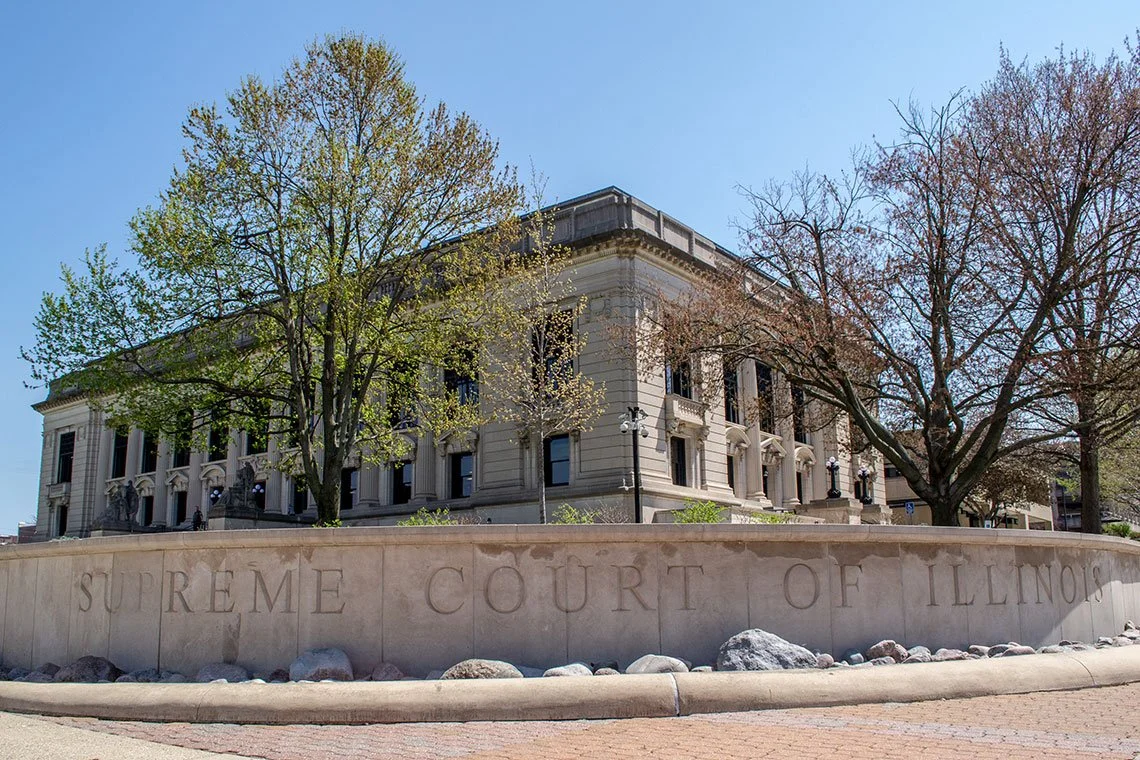
The Illinois Supreme Court is pictured in Springfield. (Capitol News Illinois file photo)


‘Illinois farmers can feed Illinois’: State grant program offers assistance

With advocates estimating that as much as 95% of food consumed in Illinois is imported, a state program aims to support the local supply chain.

By REBECKA PIEDER
Medill Illinois News Bureau
news@capitolnewsillinois.com

ARTICLE SUMMARY:

  • Illinois food producers and businesses can apply for a share of $3.6 million through the Illinois Department of Agriculture as part of a grant program to support local food infrastructure systems.

  • Policymakers and advocates stress the importance of the program to support the critical infrastructure needed to facilitate local food systems.

  • The deadline for applications is March 27, and applicants have to pre-register at the IDOA website.

SPRINGFIELD — Illinois food producers and businesses can apply for a share of $3.6 million in state grant funding through March 27 as part of a program to reduce Illinoisians’ reliance on food from out of state. 

The Local Food Infrastructure Grant program, through the Illinois Department of Agriculture, supports small agricultural operations and food producers working with cold storage, processing equipment, refrigerated transportation and distribution systems.

The grant program is currently open for applications, and applicants must complete a pre-registration before applying. Funds will be distributed in June.

Information on the application process can be found on the Department of Agriculture’s website.

The grant program is designed to support the infrastructure needed to make locally grown food more accessible in Illinois.

"When we say farm-to-home food, we forget about the critical infrastructure in between," Sen. David Koehler, D-Peoria, said in a release announcing this year’s funding. "This investment ensures that our food makes it from farm to local food processor and distribution safely and cleanly to your plates at home."

The Illinois Stewardship Alliance, a local food and farm advocacy group, administered the program in its first year in 2023. The idea for the legislation came after alliance members identified a lack of sufficient infrastructure to feed their surrounding communities, said Molly Pickering, policy director at the Illinois Stewardship Alliance.

“We believe Illinois farmers can feed Illinois, but we need programs and policies to support these farmers,” she said.

Policies like the Local Food Infrastructure Grant program benefit Illinois by removing barriers that keep local businesses from serving their communities, Pickering said.

“We know that in Illinois, 95% of the food that we eat is imported from out of state," she said. “That means every time we spend money on food, all that money is flowing to corporations and companies out of state. It's not staying in our communities. It's not being reinvested in our communities.” 

Following the passage of the Local Food Infrastructure Grant Act, the Illinois Department of Agriculture took over administration. The state appropriated $2 million in fiscal year 2025 to the Department of Agriculture to administer the grants, though the program faced implementation delays. The unused funds have been added to this year’s cycle.

"Local food doesn't move itself," Liz Moran Stelk, executive director of the Illinois Stewardship Alliance, which helped launch the program, said in a news release. "Farmers across Illinois are ready to meet growing demand for locally produced food, but they need the infrastructure to do it."

Here’s how the grants can help

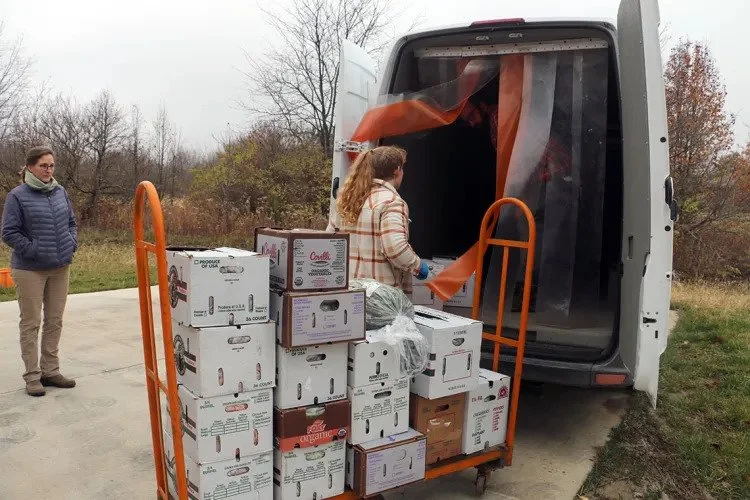
Previous grant recipients have shown what that infrastructure can look like in practice. Sola Gratia Farm, a nonprofit farm in Urbana, used funding to purchase a refrigerated delivery van and processing equipment, allowing it to expand deliveries to schools, food pantries and neighborhood markets. 

In McLean County, Funks Grove Heritage Fruits & Grains invested in grain handling and processing equipment, improving product quality and reducing waste. Recipients have described how the grants made a huge difference in opening business opportunities.

“Everyone benefits when we empower our local farmers,” Sen. Doris Turner, D-Springfield, a supporter of the program, said in a news release. “By fortifying the food system, we are supporting our local farmers and mitigating food insecurity. This funding will expand access to fresh, local foods, strengthen the local economy and grow the food supply chain.”

The Illinois Stewardship Alliance is pushing for a more permanent funding solution, rather than relying on year-to-year appropriations. "That hasn't materialized yet, but we're going to keep advocating for that, and so are our members," Pickering said.

Rebecka Pieder is a graduate student in journalism with Northwestern University’s Medill School of Journalism, Media and Integrated Marketing Communications, and is a fellow in its Medill Illinois News Bureau working in partnership with Capitol News Illinois.

Capitol News Illinois is a nonprofit, nonpartisan news service that distributes state government coverage to hundreds of news outlets statewide. It is funded primarily by the Illinois Press Foundation and the Robert R. McCormick Foundation.

Traci Barkley, director of Sola Gratia Farm, watches as staff load produce into the farm’s refrigerated delivery van, which was purchased with the support of funding from the Illinois’ Local Food Infrastructure Grant program. (Capitol News Illinois photo by Maggie Dougherty)