Sports betting tax becomes battleground between Chicago and state lawmakers

Chicago’s hefty new 10.25% tax on sports betting is creating backlash in Springfield and prompting a legal battle

BY ERIKA TULFO
Medill Illinois News Bureau
news@capitolnewsillinois.com

Article Summary

  • Chicago’s new 10.25% tax on sports bets is facing bipartisan pushback in the Illinois General Assembly as lawmakers support bills that would block Chicago and other municipalities from setting their own sports wagering taxes.

  • Some Chicago officials worry whether the tax is straining the city’s relationship with the state, as state lawmakers float bills that would deduct Chicago’s tax revenue from its share of state funding.

  • Lawmakers and sports betting industry leaders both worry that Chicago’s steep tax would drive bettors to illegal markets.

This summary was written by the reporters and editors who worked on this story.


CHICAGO — Chicago's steep new tax on sports betting is creating a backlash in Springfield that could lead to new restrictions on whether municipalities should have the power to tax gambling revenue.


The highly contested tax charges sports betting businesses 10.25% on their net gambling revenue. The tax, which took effect Jan. 1, is in addition to the state’s existing levy on sports gambling, which includes per-bet fees. The combination gives Illinois one of the most severe betting tax structures in the country. 

As Illinois begins Problem Gambling Awareness Month, state representatives from both sides of the aisle say the tax will drive bettors to illegal markets, hurting revenues for Illinois. And some Chicago officials worry it could become a point of tension between the city and state legislators, hindering future collaboration on financial issues. 

“When we passed our sports betting law, it was never the intent of the legislature that there would be a patchwork of different rules and different tax rates in every municipality throughout the state,” Rep. Daniel Didech, D-Buffalo Grove, told Capitol News Illinois. “Now that Chicago has opened that door, I think we’re going to try to close it.” 

Didech, who serves as chairman of the Illinois House Gaming Committee and played poker professionally for over five years, filed House Bill 4171 in October with a long list of Democratic and Republican cosponsors. It passed committee in February, taking it one step closer to a vote.

The bill would negate Chicago’s tax and would be effective immediately if passed and signed into law. Didech said it was intended to maintain uniform, statewide regulations on sports gambling by preventing local governments from imposing their own taxes.

The Sports Wagering Act was passed in 2019, and the state raked in $429 million in tax revenues related to sports gambling in fiscal year 2025, according to the Commission on Government Forecasting and Accountability.

Illinois’ tax structure

Currently, Illinois ranks fifth in the U.S. and first in the Midwest in taxes collected on sports wagering, according to the Illinois Policy Institute

When sports betting became legal in the state, sportsbooks paid only a flat 15% tax on the revenue they earned. Now the tax rate is as high as 40% depending on a sportsbook’s revenue, while the state also enacted a 25- to 50-cent per-wager fee last year.

But the most recent data from the Illinois Gaming Board shows that the total number of bets placed fell by 15% from September to October last year after the per-wager tax was introduced.

Chicago identified the sports betting tax as a stream of “progressive revenue” in its 2026 Budget Overview, claiming it would help balance the budget without cutting essential services or raising costs for working families. The tax was passed on June 1, 2025, and city officials projected the measure would generate $26.2 million.

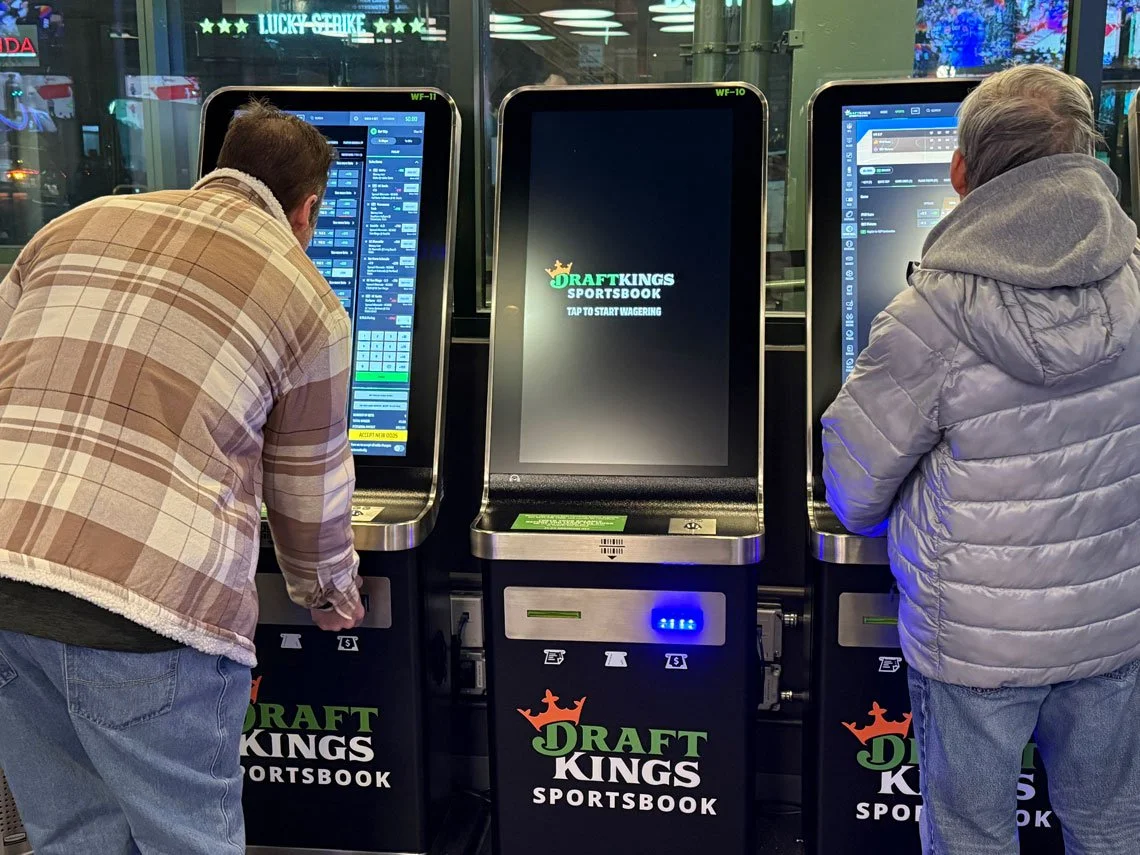
But the new city tax amplified growing tensions between Chicago and the Sports Betting Alliance, which represents major sportsbooks including DraftKings, FanDuel and BetMGM. 

The Alliance filed a lawsuit in December challenging the tax. The coalition argued that the Sports Wagering Act did not allow the city to impose its own sports betting taxes on top of the state's existing taxes. 

“The State — not the City — has sole authority to license and tax online sports wagering in the State of Illinois,” the lawsuit argued. “The Illinois Constitution reserves authority over licensing for revenue and income-based taxation to the State unless expressly delegated. The Illinois General Assembly has never authorized the City to impose licensing fees or income-based taxes on online sports wagering."

The city declined to comment, citing pending litigation.

A hearing is scheduled later this month. “Ultimately, we just have to continue to press the case,” Alliance president Joe Maloney said. 

Chicago and Springfield at odds

In the meantime, state lawmakers are taking aim at Chicago’s tax — and trying to prevent other municipalities from setting their own local sports betting taxes.

Sen. Patrick Joyce, D-Essex, filed Senate Bill 2760 in January, which seeks to penalize Chicago by taking the total amount the city gained from its sports wagering fee and deducting it from Chicago’s share of the Local Government Distributive Fund, one of the largest sources of state funding for cities and counties. That amount would then be redistributed to other municipalities following the fund’s allocation formula.

Joyce said in an interview that he, along with other members of the General Assembly, was open to sitting down with Chicago officials to discuss the bill.

He also filed Senate Bill 2800, a bill identical to Didech’s House version that denies home rule units the authority to regulate or tax sports wagering. 

The tax remains a divisive topic in Chicago, too. 

Chicago Ald. Gilbert Villegas, who opposed the new tax, said he was concerned it would cause a rift between the city and state lawmakers.

“I just think it was the wrong approach,” he said. “To do this with Springfield signaling that there was going to be huge opposition and a potential bill sends the wrong message from a city that is going to need to be down in Springfield making requests for different items.”

What does the tax mean for bettors?

Sportsbook operators have already been feeling the squeeze after the implementation of the state’s per-wager tax in September, which required them to pay 25 cents on each of the first 20 million bets placed, and 50 cents for each bet over that amount. 

Some betting operators, like FanDuel, have shifted the cost to customers by forcing them to pay a $0.50 per-bet fee. Other sportsbooks like BetRivers have responded to Illinois’ tax pressures by raising the minimum stake. The number of total bets placed in Illinois fell to 28.5 million in the fall from 33.6 million the year before.

Both the Sports Betting Alliance and state lawmakers worried that the city’s tax would drive Chicago bettors away from licensed sportsbooks and into illegal, unregulated markets.

But some avid sportsbook users, like Chicago-based social media content creator Sam Cantalupo, are continuing to stomach the cost.

Cantalupo is known for his sports betting analysis videos, which have garnered over 100,000 likes on his TikTok channel “djsammycaps.” While he has signed petitions opposing the city’s sports betting tax, he said that, at the end of the day, he is still willing to pay a higher price if an even heftier tax were imposed.

“If they raised it, honestly, I would probably have to suck it up and pay it,” he said.

Erika Tulfo is a graduate student in journalism with Northwestern University’s Medill School of Journalism, Media and Integrated Marketing Communications, and is a fellow in its Medill Illinois News Bureau working in partnership with Capitol News Illinois. 

Capitol News Illinois is a nonprofit, nonpartisan news service that distributes state government coverage to hundreds of news outlets statewide. It is funded primarily by the Illinois Press Foundation and the Robert R. McCormick Foundation.
Pritzker calls for setting new higher education attainment goals

Executive order creates new working group to recommend plans for increasing postsecondary attainment

By PETER HANCOCK
Capitol News Illinois
phancock@capitolnewsillinois.com

Article Summary

  • In 2025, Illinois fell short of meeting its previous goal of having 60% of its adult population earning either a college degree or high-quality postsecondary credential.

  • Recent studies have shown there are significant disparities in upward mobility in Illinois between people from different socioeconomic backgrounds.

  • A new working group created by a recent executive order signed by Gov. JB Pritzker is supposed to issue its recommendations by Dec. 1, 2026.

This summary was written by the reporters and editors who worked on this story.

SPRINGFIELD – Gov. JB Pritzker is calling on agencies in his administration to set goals for increasing the number of adults in the state with college degrees or other postsecondary credentials.

In an executive order issued Friday, Pritzker announced the formation of a working group that will review the state’s existing workforce development programs, consult with industry and labor groups as well as local economic development organizations, and recommend new higher education attainment goals.

That order comes on the heels of multiple reports showing the state has fallen short of previous goals for improving educational attainment and that many barriers still prevent people from lower-income backgrounds from completing college and climbing up the economic ladder.

In 2009, the General Assembly established the Illinois P-20 Council to make recommendations for developing a seamless and coordinated system of public education covering preschool through graduate and professional school. Among that group’s recommendations was that by 2025, at least 60% of the state’s adult population should have either a college degree or some other kind of high-quality postsecondary credential.

Past reports offer mixed review

But a report released this past October found the state appeared to be falling just short of that goal. In its biennial report “The State We’re In,” the nonpartisan research and advocacy group Advance Illinois reported that as of 2023, only about 57.4% of adults had finished a degree or credential program. That was still a significant improvement from 41% in 2008.

In his executive order, however, Pritzker cited workforce projections that indicate by 2031, more than 70% of all jobs will require education or training beyond high school.

Meanwhile, a pair of reports last year from the Illinois Workforce and Education Research Collaborative, or IWERC, found significant disparities exist in access to the benefits that are supposed to come with earning a college degree.

In a July report, the organization found college degrees do, in fact, lead to higher earnings overall. But even after earning a degree, students from lower-income family backgrounds tend to earn less than those from wealthier backgrounds, even when they earn similar degrees and go into similar careers.

And in a follow-up report in December, IWERC found that while some career pathways that don’t require college degrees can lead to good-paying jobs and upward mobility — including construction, manufacturing and wholesale trade — many of those pathways were promising only for men or for specific racial and ethnic groups.

Pritzker’s order

In his order, Pritzker highlighted statistics showing that since he came into office the state has taken steps to make college more affordable, such as increasing funding for Monetary Award Program and AIM HIGH grants. He also noted that the percentage of in-state undergraduate students at public universities paying no tuition or fees has risen to 44% in Fiscal Year 2025, up from 24% in 2018.

The new working group will consist of representatives from several state agencies, including the Board of Higher Education, Community College Board, State Board of Education, Student Assistance Commission, Department of Employment Security, Department of Commerce and Economic Opportunity and the Illinois Workforce Innovation Board.

It will also include advisory members from the departments of Human Services, Corrections and Public Health as well as the office of First Lady M.K. Pritzker.

The board is supposed to issue its recommendations to the governor by Dec. 1, 2026.

Capitol News Illinois is a nonprofit, nonpartisan news service that distributes state government coverage to hundreds of news outlets statewide. It is funded primarily by the Illinois Press Foundation and the Robert R. McCormick Foundation.


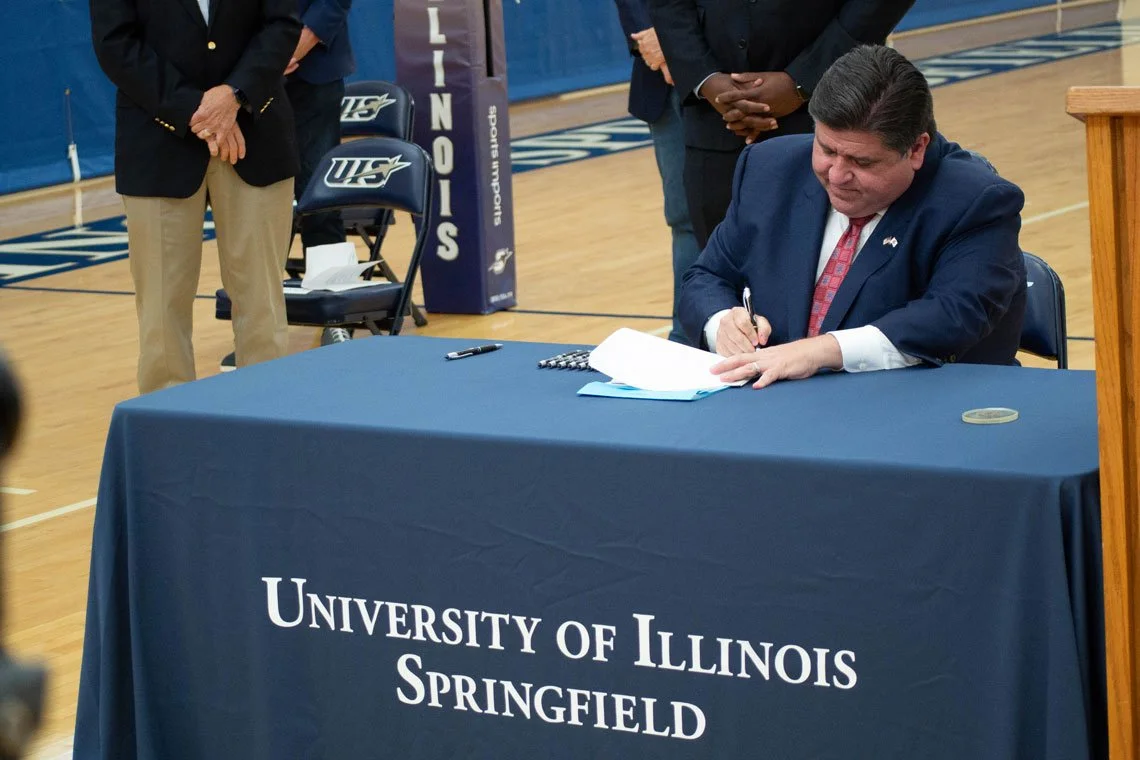
Gov. JB Pritzker signs legislation at the University of Illinois Springfield in 2021. (Capitol News Illinois photo by Jerry Nowicki)

City Selling Former Girl Scout Cabin

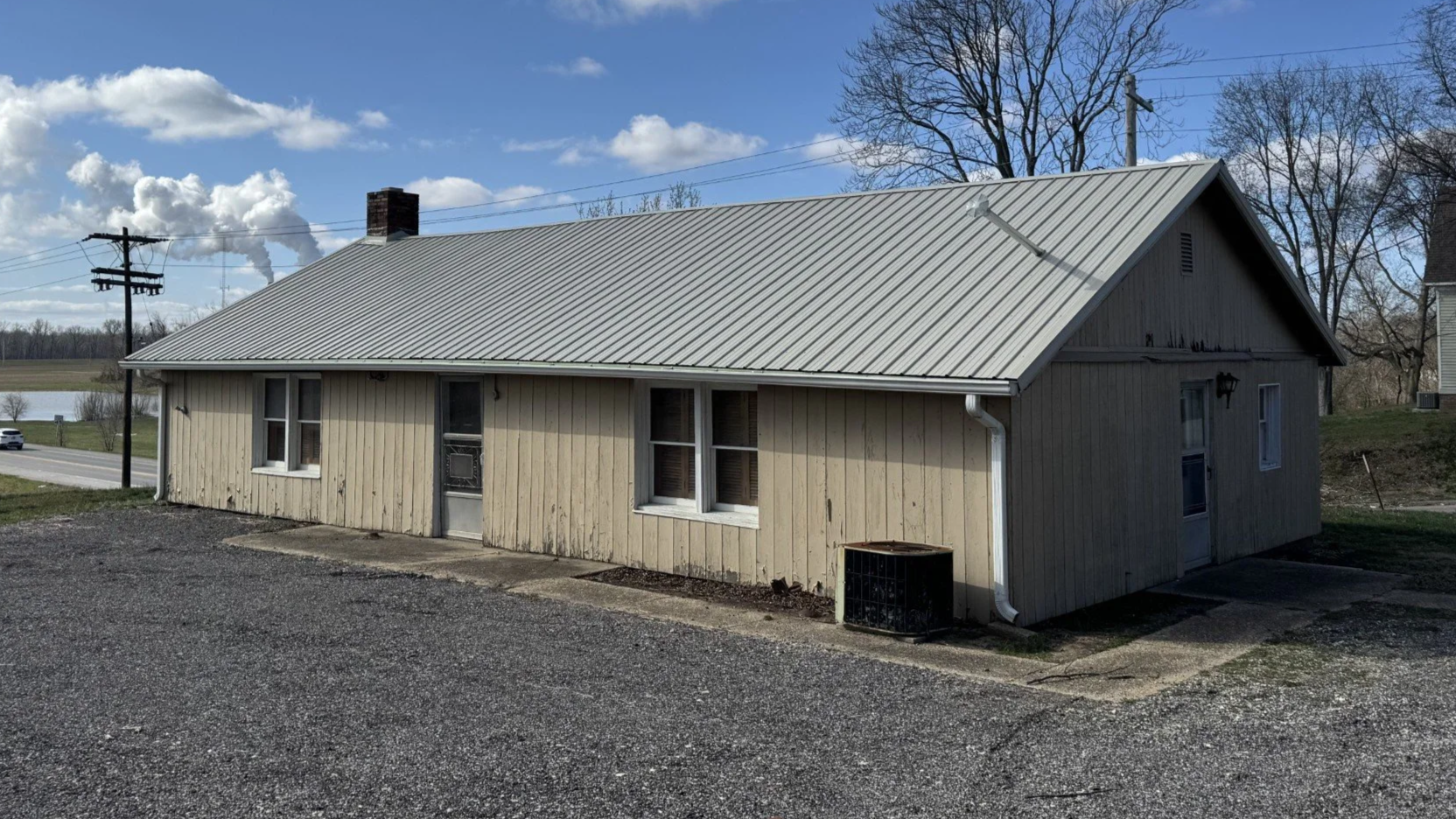
The Mount Carmel City Council has agreed to sell the former Girl Scout cabin property at First and Walnut Streets for a new ice cream shop.

At Monday night’s council meeting, City Clerk Ryan Turner explained that the city received one proposal for the property from Jedidiah Wirth of Big Jon’s Lunch Box, who is interested in converting the site into an ice cream parlor.

Turner told the council Wirth has offered $10,000 for the property and plans to renovate the building, add outdoor seating, and expand parking on the site.

As part of the proposal, Wirth also requested additional land extending toward Chestnut Street to allow room for parking and other improvements. Turner said the city would need to survey and split the property, since the parcel currently includes other city-owned structures and land.

Council members discussed possibly marking the property boundaries for a better visual reference and whether an easement could be considered for some of the land.

Turner said the area currently isn’t used by the city except for mowing, and noted the property is located within a TIF district, meaning surveying costs would come from the city’s general fund.

After discussion, the council voted unanimously to approve the sale of the property to Wirth for the proposed ice cream shop project.

Regional Science Fair Competition Results 2026

BY SARAH DOUGHERTY | 8th Grade Science Teacher

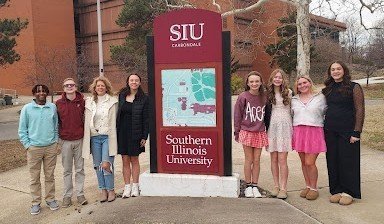
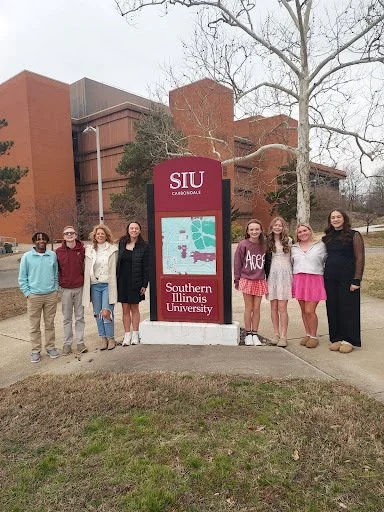
Mt. Carmel Junior High School was represented at the Regional Science Fair in Carbondale, IL, on February 24, 2026. Students secured the right to compete by earning the top scores at the local judging. Eli Wilcox, Matalei Greer, Kinley Mandrell, Addison Carmickle and Mia Dickerson competed individually. Andrew Hagerty and Annie Hagerty competed as a partner group. Students were judged on oral presentation skills, a visual display, a written report, and evidence of scientific process skills. Mount Carmel 8th Grade students competing were awarded a "Bronze" rating for Eli Wilcox, a “Silver” rating for Mia Dickerson and a “Gold “ rating for Matalei Greer, Addison Carmickle, Kinley Mandrell and Andrew and Annie Hagerty based on the scores received. Sarah Dougherty is their 8th-grade Science Fair Sponsor.

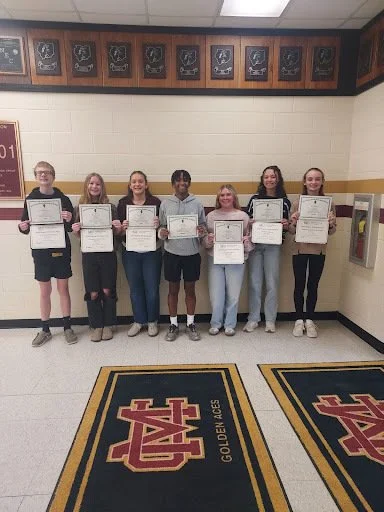
Our students were further rewarded for their efforts with their projects by bringing home several monetary awards sponsored by various departments from SIU Carbondale. Pictured L-R are Andrew and Annie Hagerty, who received a monetary award for the Outstanding STEM Project, sponsored by the STEM Education Research Center. Kinley Mandrell, who received a monetary award for the Outstanding Physics Award, was provided by the School of Physics. Eli Wilcox is shown with his certificate from the judges. Addison Carmickle, who received a monetary award for Overall Excellence provided by the School of Medicine. Matalei Greer, who received a monetary award for Overall Excellence sponsored by the Vice Chancellor for Diversity, Equity, and Inclusion. And Mia Dickerson, who received a monetary award for the Outstanding Zoology Project sponsored by the School of Biological Sciences, Microbiology. This was truly an exceptional achievement to have so many of our students recognized and rewarded for their various studies! Sarah Dougherty is their Science Fair sponsor.

Extension & 4-H Thriving In Wabash County

The Wabash County Commissioners recently heard an annual update from the University of Illinois Extension office, highlighting expanded services, new programs, and the recent loss of federal SNAP-Ed funding.

Extension staff presented commissioners with a new county snapshot outlining 4-H programs, local foods initiatives, and community outreach efforts. Officials noted that SNAP education services ended last month after federal grant funding was cut.

Extension representatives highlighted expanded office hours in Wabash County, now open five days a week, along with the addition of a new meeting space for 4-H clubs and workshops. The office also partnered with the Wabash County Health Department to install a community blessing box outside the health department, stocked by local 4-H clubs with food, clothing, and hygiene items.

A major success story shared with commissioners was the first year of the “Hunters Feeding Illinois” program in the county. The program allows hunters to donate legally harvested deer to participating processors. This year, Charlie’s Deer Processing and Legacy Meats signed on, resulting in 83 deer donated. That equaled nearly 2,700 pounds of venison — providing more than 10,700 servings of lean protein to local food pantries.

Extension officials say they hope to continue the self-sustaining program through local donations despite the loss of SNAP-Ed funding.

Wabash County 4-H Coordinator Tori Thompson also reported expanded programming in local schools, including STEM activities and teamwork education at area grade schools, St. Mary’s, Allendale, and the high school.

Allendale Twister 4-H Club member Addison Tennis also addressed commissioners, sharing how 4-H has helped her build responsibility, leadership skills, and even launch a goat-raising business.

Commissioners praised the efforts and the strong community impact of local Extension and 4-H programs.

Major Accident Investigation Team investigates serious bodily injury accident

On March 14, 2026, at 3:54 a.m. Gibson County Central Dispatch received a 911 report of an accident with injuries on Interstate 69 near the 34-mile marker.  Upon arriving on scene emergency service personnel found that the driver of the vehicle had been ejected and was in critical condition.  Deputy Levi Sims requested that the Major Accident Investigation Team, a taskforce between the Princeton Police Department and Gibson County Sheriff’s Office, be dispatched to the scene to conduct a thorough investigation into the incident. 
 
Preliminary findings indicate that a Black 2014 Ford Fusion was Northbound on Interstate 69 and left the roadway entering the median between north and southbound traffic.  The vehicle ramped a small ditch and then flipped multiple times.  During the crash the driver a 22-year-old male was ejected from the vehicle.  The driver was assessed on scene by emergency service personnel and transported to an area hospital for further treatment.
 
The Major Accident Investigation team was assisted in their investigation by East Gibson Fire Territory, The Gibson County Ambulance Service, and Oakland City Police.
 
This is an ongoing investigation. 
 
 
All criminal defendants are to be presumed innocent until and unless proven guilty beyond a reasonable doubt in a court of law.
 

Arkansas man sentenced to 17+ years for robbing Maryville motel

EAST ST. LOUIS, Ill. – A district judge sentenced an Arkansas man to 210 months’ imprisonment after he admitted to robbing a motel in Maryville at gunpoint.

Rickey Martin, Jr., 36, pleaded guilty in November to one count of Hobbs Act robbery and one count of brandish and use of a firearm during a crime of violence. Following imprisonment, he will serve three years of supervised release. The judge also ordered Martin to pay $1,440 in restitution.

“Gun violence will not be tolerated,” said U.S. Attorney Steven D. Weinhoeft. “All thieves lack honor, but armed robbers embody a special evil, because they use violence and intimidation to take what they have neither earned, created, nor deserved, from the innocent people who have.”

According to court documents, Martin admitted to robbing the owner of a motel in Maryville in May 2023. He brandished a firearm loaded with an extended magazine and forcefully stole the victim’s wallet and cash from the motel.

“The Maryville Police Department is grateful for the strong partnership between us and our local and federal law enforcement partners that helped bring this case to a successful conclusion,” said Maryville Police Chief Tony Manley. “Investigations like this show that when agencies work together and share information, we can hold offenders accountable and protect our community.”

Shortly after the robbery, Martin used the victim’s credit cards at a gas station and a fast-food restaurant.

“The sentence imposed in this case reflects the serious consequences violent offenders face when they commit violent crimes using firearms,” said ATF Chicago Field Division Special Agent in Charge Christopher Amon. “ATF, the U.S. Attorney’s Office, and our law enforcement partners remain steadfast in ensuring that those who commit acts of violence are held accountable.”

ATF and the Maryville Police Department led the investigation. Assistant U.S. Attorney Ali Burns prosecuted the case.

Haubstadt man arrested on Level 3 Felony after investigation

On March 15, 2026, Gibson County Detective Jennifer Loesch was contacted by law enforcement who were stationed at Deaconess Gateway about an infant who was being treated for what appeared to be a non-accidental head injury.  The law enforcement officer informed Detective Loesch that the injury was believed to have happened in the 5200 block of East 1150 South near Haubstadt in Gibson County. 
 
Detective Sergeant Roger Ballard went to Deaconess Gateway and began an investigation into the incident.  During the incident Detective Ballard spoke with the child’s mother and Child Protective Services while plans were made to fly the child to a children’s hospital elsewhere in the state for treatment of near fatal injuries.
 
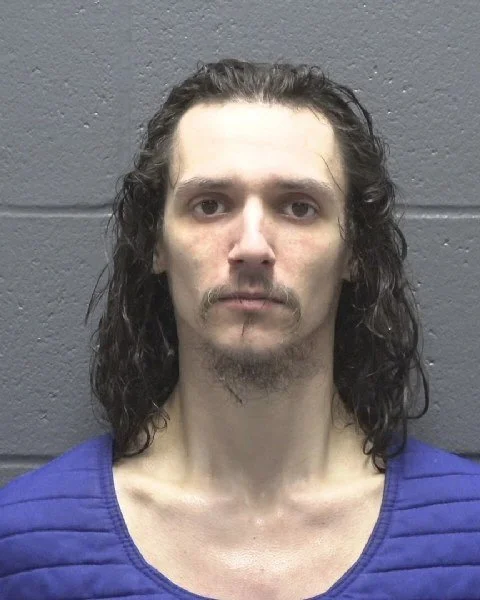
Elsewhere Detectives Loesch, Indiana State Trooper Detective William Campbell, and a DCS caseworker went to the residence to speak with the father 23-year-old Zachary Rogers of Haubstadt.  Mr. Rogers was taken to the Gibson County Sheriff’s Office where an audio and video recorded interview was conducted.  During the interview Mr. Rogers admitted to being the cause of the infant’s injuries. 
 
At the conclusion of the investigation Mr. Rogers was booked into the Gibson County Detention Center on preliminary charges of Neglect Resulting in Serious Bodily Injury a Level 3 Felony. 
 
Arresting Officer:  Deputy Jennifer Loesch
Assisting Officers:  Sgt. Roger Ballard, ISP Detective William Campbell, Gibson County Sheriff’s Office. 

All criminal defendants are to be presumed innocent until and unless proven guilty beyond a reasonable doubt in a court of law.

Tuesday Is Primary Election Day In Illinois

Primary Election Day is Tuesday across Illinois, with polls open from 6 a.m. until 7 p.m.

Locally in Wabash County, voters will see just one contested race on the ballot. Five candidates are seeking the Republican nomination for Wabash County Commissioner. Those candidates are Mary Sweppy, Missy Judge, David Brown, Jayden Pettyjohn, and Jaleigh Peterson.

The winner of that Republican primary will run unopposed in the November general election, as Democrats did not field a candidate for the position.

Elsewhere in the region, voters in the Illinois 116th House District will decide the Republican nominee for State Representative, where incumbent Dave Severin is facing a primary challenge from Angela Evans.

Statewide, Illinois voters will also be selecting party nominees for U.S. Senator, Governor, and several other constitutional offices as part of Tuesday’s primary election.

Again, polls will be open from 6 a.m. until 7 p.m. Tuesday. Election officials remind voters that anyone in line at 7 p.m. will still be allowed to cast a ballot.

Mount Carmel woman arrested for DUI

On March 15, 2026, at 1 a.m. Gibson County Deputy Michael Bates conducted a traffic stop on a Black 2013 Chevy Cruze for speeding on US 41 near State Road 168.  Upon stopping the vehicle Deputy Bates detected the odor of burnt Marijuana coming from inside the vehicle and observed clues that the driver 19-year-old Evie Tice of Mount Carmel may be under the influence.  At that point he began a roadside DUI investigation.  Once the inquiry was completed Deputy Bates placed Ms. Tice in custody and transported her to the Gibson County Detention Center where she was charged with Operating a Vehicle While Intoxicated- Endangerment.
 
Deputy Zach Lienemann and Princeton Officers Logan Lashbrook and Sgt. Ben Kiesel assisted in this investigation. 
 
All criminal defendants are to be presumed innocent until and unless proven guilty beyond a reasonable doubt in a court of law.