IECC Board Summary

The Board of Trustees of the Illinois Eastern Community College District No. 529 met Tuesday, January 20, 2026 at Lincoln Trail College, Robinson, Illinois.

Program Director of Institutional Assessment & Effectiveness Brandon Weger introduced a governance-focused Key Performance Indicator framework that organizes Board-level questions around IECC’s four institutional pillars and connects those questions to clear performance areas and initial metrics to guide accountability and planning.

The Board approved the minutes of the Board of Trustees regular and special meetings held on December 9, 2025.

An agreement between Southern Illinois University (SIU) and IECC for continuation of the Motorcycle Rider Program was approved by the Board.

Affiliation agreements were approved by the Board with Crawford County Cares & Middle Tennessee School of Anesthesia.

The Board waived a second reading and approved the following policies:

• Employee Code of Conduct Policy 400.38 is a new policy to strengthen governance, promote consistent expectations across the District, and support IECC’s mission and values.

• Employee Disciplinary Policy 400.39 is a new policy to support employee corrective action when appropriate, while also protecting the rights of employees and interests of the institution.

The Board approved proposed transfer pathways as a key step in the district’s transition to a Guided Pathways model, providing clearer routes and stronger support for students beginning Fall 2026.

Approval of employment was given for Ronald Banta as Maintenance Worker/O&M Team Lead, OCC effective January 26, 2026.

Resignation ratifications were approved for Avery Miller, Custodian, OCC effective December 11, 2025 and Cori Stringfellow as Nursing Instructor, WVC effective January 6, 2026.

The next regular meeting of the Board of Trustees will be Tuesday, February 17, 2026, at 6:15 p.m. at Olney Central College, Olney, IL.

Latest Jobless Rates Mixed In SE Illinois

Unemployment rates for November show mixed results across southeastern Illinois, with job losses reported in the Mt. Carmel–Olney labor market region.

According to the latest figures, total nonfarm payrolls in the region declined by 375 jobs in November 2025 compared to November of last year. Employment gains were reported in Private Education and Health Services, which added 100 jobs.

Year over year, payroll totals were unchanged in the Information and Professional-Business Services sectors. However, job losses were recorded across several industries, including Trade, Transportation and Utilities, down 100 jobs. Financial Activities fell by 75 jobs, while Leisure and Hospitality, Manufacturing, and Other Services each lost 50 jobs. Construction and Government were each down 25 jobs, along with Natural Resources and Mining.

Looking at county unemployment rates for November, Wabash County reported a rate of 4.1 percent, up from 3.2 percent a year ago. Edwards County’s rate increased to 4 percent from 3.4 percent. White County rose to 4.7 percent, compared to 4 percent last November. Lawrence County posted a 5 percent unemployment rate, up from 4.2 percent, while Wayne County increased to 4.6 percent from 3.8 percent. Richland County’s rate climbed to 4 percent, compared to 3.3 percent a year earlier.

State labor officials note that while some sectors continue to add jobs, overall employment challenges remain across the region.

Oakland City woman arrested

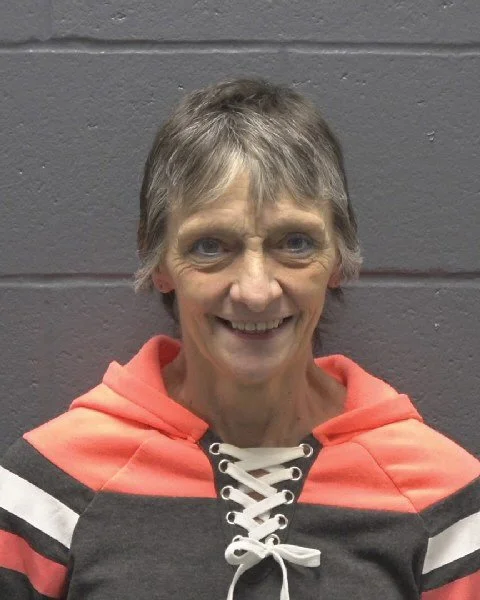
On January 16, 2026, at 9:52 p.m. law enforcement went to 695 South State Road 57 near Oakland City to serve an arrest warrant on 57-year-old Diane Moade.  Law enforcement surrounded the residence and gave multiple loud and clear orders for Ms. Moade to come out and comply with law enforcement.  Ultimately law enforcement entered the residence and took her into custody. She was transported to the Gibson County Detention Center where she was booked in on the arrest warrant as well as a new charge of resisting law enforcement.
 
Deputies Wes Baumgart, U.B. Smith and Shawn Holmes assisted Deputy Wyatt Lashbrook in the investigation of this incident. 
 
All criminal defendants are to be presumed innocent until and unless proven guilty beyond a reasonable doubt in a court of law.

Evansville man arrested for traveling 114 mph on US 41

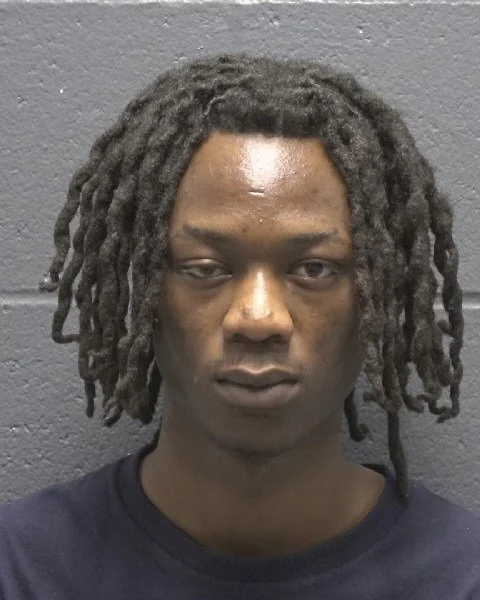
On January 16, 2026, at 10:39 p.m. Gibson County Deputy Erick Powell clocked a vehicle traveling at 114 mph on US 41 near County Road 650 South.  Upon catching up to the vehicle, an Orange 2012 Ford Mustang Deputy Powell and Fort Branch Officer Darrell Parker conducted a Felony Traffic stop.  Upon placing the driver 19-year-old Wensley Demosthenes into custody Deputy Powell transported him to the Gibson County Detention Center after observing clues that the driver may be under the influence to conduct an OWI investigation.  Once the investigation was completed Mr. Demosthenes was booked in on charges of Reckless Driving and Operating a Vehicle While Intoxicated.   
 
All criminal defendants are to be presumed innocent until and unless proven guilty beyond a reasonable doubt in a court of law.

Newburgh man arrested for OWI

On January 16, 2026, at 11:19 p.m.  Gibson County Deputy Michael Bates observed a Silver 2004 GMC Envoy traveling 45 mph in a 30-mph zone on South Main Street in Princeton.  Upon stopping the vehicle near Illinois Street Deputy Bates approached the vehicle and immediately detected the odor of burnt Marijuana. At that point he began a roadside OWI investigation that resulted in the driver, 33-year-old Terry Ealum of Newburgh being taken into custody and transported to the Gibson County Detention Center.  Once Mr. Ealum arrived at the detention center, he was charged with Operating a Vehicle While Intoxicated and Possession of Marijuana. 
 
Princeton Officers Jackie Wood and Lincoln Edwards assisted Deputy Bates in his investigation.     
 
All criminal defendants are to be presumed innocent until and unless proven guilty beyond a reasonable doubt in a court of law.
 

Recent postal service changes could disrupt mail-in voting, county clerks warn

Thousands of votes could be invalidated if not received in time

By JENNA SCHWEIKERT
& NIKOEL HYTREK
Capitol News Illinois 
jschweikert@capitolnewsillinois.com 
 nhytrek@capitolnewsillinois.com

Article Summary

  • New USPS rules may disrupt vote-by-mail processes in the 2026 election, Illinois county clerks warned.

  • The rules change the postmarking and transportation processes, potentially disenfranchising voters who follow previous guidelines.

  • County clerks recommend that voters mail their ballots no later than a week before Election Day.

This summary was written by the reporters and editors who worked on this story.

EAST PEORIA — New postal service changes to postmarking and transportation rules could disrupt mail-in voting in the 2026 election, Illinois county clerks warn.

Ahead of the March primary election, county clerks are telling voters not to rely on past processes and to mail their ballots as early as possible, no later than one week before Election Day.  

Clerks from around the state discussed how to educate voters at the annual Illinois Association of County Clerks and Recorders Conference on Thursday in East Peoria.

One new rule, which took effect Dec. 24, states that the date a postmark is applied to a piece of mail may not reflect the day it was received by the Postal Service.

Currently, 14 states, including Illinois, will accept mail-in ballots if they are received within a certain period after Election Day if they are postmarked on or before Election Day. 

Clerks warned that uncertainty about when ballots will now be postmarked necessitates voters to act earlier. The way postmarks are applied is not changing, the USPS says. Mail is only postmarked at distribution centers, and that will remain the same.

But in an effort to improve mail delivery efficiency, some localities’ mail may be sent to a different distribution center than in the past, which can increase the amount of time it takes for the USPS to receive and then postmark mail at these centers.

“It’s a question mark of when will it actually get through a distribution center. So I’m advising my voters to make sure that they get their vote-by-mail ballot in the mail no less than a week before Election Day,” John Ackerman, the Tazewell County clerk, said. 

In the city of Peoria, for example, the distribution center is in Peoria. Tazewell County’s center, Ackerman said, is in Champaign, although Peoria is geographically closer. 

To educate voters about the change, he said, his office will include yellow index cards with the recommendation in the vote-by-mail packets se


nt to voters. 

Voters can also request a manual postmark from their local post office or drop off their ballot at the election official’s office. 

But if election officials can’t rely on postmarks to reflect accurate dates, a number of mail-in ballots that were mailed prior to Election Day may not be counted at all clerks said. 

Ballots also will no longer be automatically considered priority mail, increasing the amount of time it will take to deliver the mail.

“We've utilized that successfully over the years to make sure that all those ballots not only are delivered, but they are received in time. Changing that status dramatically changes how that will impact us as well,” Ackerman said.

These changes will be most felt during the recount process, when candidates are “scrambling,” Ackerman said. 

The clerks generally agreed this could change the outcome of a race. 

Clerks also said they are concerned about changes impacting voter trust in elections, especially because voter guidance is now going to be different depending on the county’s location and distribution center.  

“We’ve told all of our voters, get your vote-by-mail ballot in your box by Election Day to be postmarked for Election Day, we will process it now. We're ripping the rug out from underneath that,” Ackerman said. “That leads to distrust. When you can't give a solid date, you can't give a solid answer, when you can't reply back to them with facts, when it's left for interpretation. That erodes the trust that we've been trying to rebuild.”

In the past, when this potential change was proposed, the clerks said they were able to speak to federal lawmakers to advocate for its reversal.

In late September 2025, a delegation of clerks traveled to Washington, D.C., to meet with lawmakers and staff about changes to federal funding for election infrastructure and learned lawmakers didn’t know about the potential changes, Ackerman said. 

“They were all unaware that this change was going to take effect. They were unaware, in my opinion, of the impacts it would have on vote by mail,” he said. 

This time, however, clerks didn’t know the changes were proposed until days before they were implemented.

“It is our goal to get to the public being 100% trusting of our system, but that's something we've strived diligently to do to repair that relationship, and I think this hurts that,” Ackerman said.

To be sure your vote has been counted, voters can call their county clerk’s office, or some counties offer ballot tracking online.

County clerks emphasized that voting by mail is still safe and secure, but it might take more work and planning.

Kathy Michael, the McLean County clerk, said voters can request to have their ballot manually postmarked at the post office when they return it. 

“Just mail it early or go into the post office. I don't want to say it's that simple. I don't want to make it simple, but that's all you have to do,” she said. “Don't be discouraged and not do it and not vote. … Get it postmarked, and you can go off on your vacation and not worry about it.”

Capitol News Illinois is a nonprofit, nonpartisan news service that distributes state government coverage to hundreds of news outlets statewide. It is funded primarily by the Illinois Press Foundation and the Robert R. McCormick Foundation. 


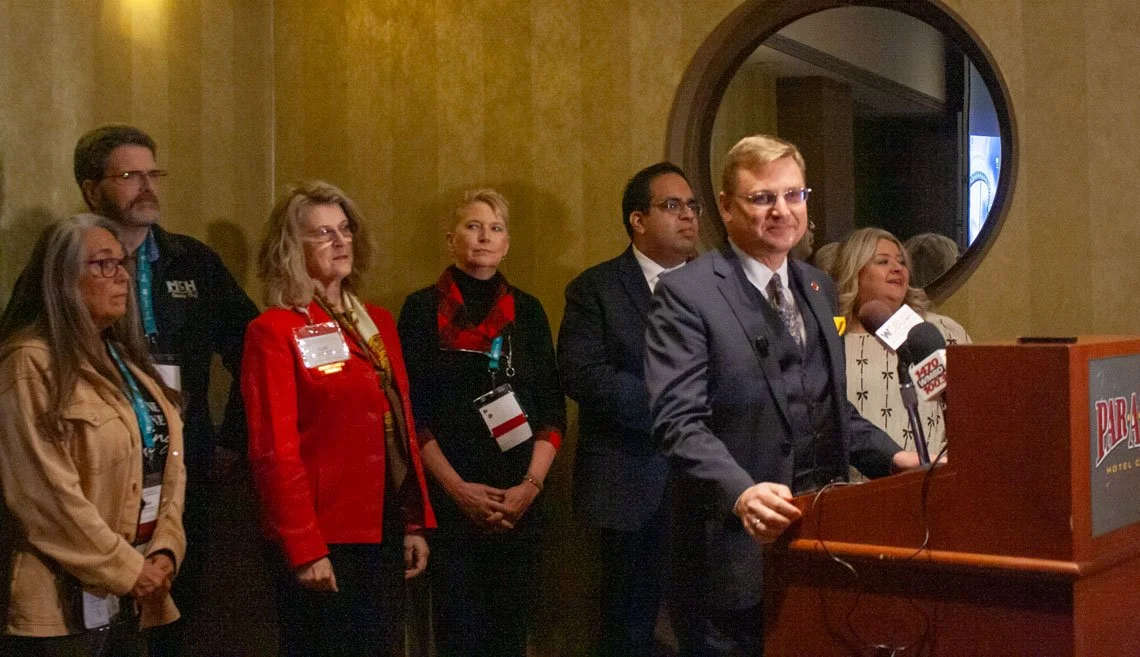
Tazewell County Clerk John Ackerman speaks at a news conference in Peoria. Tazewell traveled to Washington, D.C., with three other clerks in September 2025 to meet with federal lawmakers to advocate against the USPS changes. (Capitol News Illinois photo by Jenna Schweikert)

Few fireworks as Illinois GOP governor hopefuls share stage for first time

The four Republican candidates trained their fire on Gov. JB Pritzker and Illinois’ immigration policies

By BRENDEN MOORE
Capitol News Illinois 
bmoore@capitolnewsillinois.com  

Article Summary  

  • The candidates emphasized ending Illinois’ sanctuary policies and criticized state spending on migrants, while also highlighting cost-of-living concerns such as property taxes and energy prices.

  • Electability in Chicago and the suburban collar counties loomed large, with Ted Dabrowski and others questioning Darren Bailey’s past performance even as Bailey urged Republicans to rally behind a shared “affordability” message.

  • Rick Heidner faced pointed questions from rival Ted Dabrowski over past donations to Democratic candidates. Heidner said his contributions to Chicago Mayor Brandon Johnson and former Cook County State’s Attorney Kim Foxx were a “huge mistake.”

This summary was written by the reporters and editors who worked on this story.  

WASHINGTON, Ill. — Far ahead of his Republican primary opponents in the most recent public polling, Darren Bailey told a half-filled central Illinois auditorium in that he expected to be “the punching bag.”

Instead, Bailey walked away relatively unscathed from a candidate forum Thursday evening as the four Republican candidates for governor struck a conciliatory tone with one another. The four candidates preached unity after years of intraparty conflict, called for an end to the state’s robust protections for immigrants and took aim at Democratic Gov. JB Pritzker while pitching themselves as the most electable candidate in a general election.

It was the first time the candidates — Bailey; former conservative think tank president Ted Dabrowski; video gambling mogul Rick Heidner; and DuPage County Sheriff James Mendrick — shared a stage. It comes just a few weeks ahead of the kickoff to early voting, and two months before Republicans choose a nominee to take on Pritzker, who is seeking a third term, in November.

“We've got to make sure that we commit ourselves right here — that on March 18, we stick together and we work together,” Bailey, the party’s 2022 nominee, said.

The fireworks were few and far between, with the candidates largely in alignment on their conservative visions for the state. Dabrowski took a few swings, suggesting Bailey, who lost to Pritzker by 12.5 percentage points and more than 500,000 votes in 2022, did not have enough appeal to win in the vote-rich Chicago suburbs. He also suggested Heidner’s past donations to Democrats were at odds with conservative values.

Winning in Chicago area

The Illinois GOP hasn't won a statewide election in more than a decade, has been relegated to the superminority in the state legislature, holds just three of the state’s 17 congressional seats and occupies just two of the seven Illinois Supreme Court seats.

That reality framed the forum’s opening question: how the candidates planned to reverse the party’s fortunes in the suburban collar counties — once GOP strongholds that have drifted away as the party’s grown more rigid in its conservativism on social issues like abortion and gun rights. President Donald Trump also remains deeply unpopular in the northeast corner of the state.

“I know, and I feel confident that all of us are going to do well downstate,” Dabrowski said. “The question is going to be: Who can do well enough in Cook County and in the suburbs?”

Dabrowski, a resident of Wilmette and the son of immigrants from Poland and Ecuador, suggested that he could appeal to voters from Chicago’s wealthier North Shore communities to the patchwork of ethnic enclaves in the city and suburbs.

He said this sets him apart from Bailey, a farmer from downstate Xenia who lost all but one of the suburban collar counties while referring to Chicago as a “hellhole” over the course of his failed 2022 campaign.

Mendrick said his election as sheriff of the state’s second-most populous county is proof of his viability in this race. Both he and Dabrowski also suggested Republicans would appeal in Chicago’s African American community over the issue of immigration. 

“They're all flipping red,” Mendrick said. “They're all going with Trump. The sanctuary state (policy) is driving them.”

However, a poll conducted by Emerson College earlier this month found Trump with an 82% disapproval rating among the state’s Black voters. By contrast, 71% approve of Pritzker’s job performance. Immigration ranked a distant sixth in terms of what the group believes are the most important issues facing the state. Mendrick added, however, that he’s “always ignored the polls.”

Whether it’s shown in a poll or an anecdote from the campaign trail, the top issue on voters’ minds is cost of living. The candidates criticized the state’s high property tax rates and each suggested implementing caps — though they were vague on how they would fill in funding gaps that could create for school districts and other local taxing bodies.

Bailey said that if they focus on that issue and can get Republican voters who’ve sat out past elections to the polls, they have a chance.

“We've got the message: affordability,” Bailey said. “Our property taxes are too high, energy costs are too high. We need more police officers on the streets. We need to repeal the SAFE-T Act. We need to improve education for our children. And people all over the state agree and believe in that. That's how we will win in November.”

Ending sanctuary status

However, none of the candidates appeared willing to move off their conservative positions to win over voters despite Illinois’ Democratic lean. Dabrowski suggested instead that “Democrats are going to meet us” due to “extreme” policies from Pritzker, then listing off topics such as transgender girls having access to girl’s bathrooms and sports.

The state’s immigration policy was also front-and-center, with the candidates criticizing state spending in recent years on health care for undocumented immigrants and to address the migrant crisis caused by the busing of migrants from border states like Texas to Chicago in 2023 and 2024.

“We're being washed out with a dependent society,” Mendrick said.

A February 2025 audit found the state had spent over $1.6 billion on an immigrant health care programs from 2021 through 2024. Lawmakers and the governor ended the program that provided Medicaid-like benefits to immigrants aged 42-64 in the current fiscal year. The state also paused enrollment in an ongoing program serving immigrants age 65 and older. 

Heidner, who jumped into the race in late October but whose campaign had been radio silent up until this week, added that undocumented people are “coming here and then just feeding off of us.”

The state’s TRUST Act, signed by then-Gov. Bruce Rauner, a Republican, in 2017, generally prohibits state and local law enforcement from assisting the federal government with immigration enforcement unless a federal criminal warrant is presented. All four said they support repealing the law and would withhold state funds from cities like Chicago that maintain sanctuary ordinances.

“We can't be a sanctuary state,” Heidner said. “I'm on board with President Trump. I mean, we cannot house the world when we can't take care of all our own citizens.”

They signaled support for Trump’s crackdown on illegal immigration. A targeted campaign in the Chicago region last year led to the arrests of 4,500 people in the country without authorization. But it also led to violent clashes between armed, masked federal agents and protesters.

Dabrowski said that Pritzker was “the one fomenting a lot of this problem in Illinois” by not cooperating with federal immigration authorities and by describing them as “jackbooted thugs,” among other names. There was no mention of language utilized by Trump, who has referred to protestors as “insurrectionists” and “domestic terrorists.” 

“If we would have opened our doors for ICE to come in, they would have been in and out of here probably six to eight weeks to get the worst of the worst out of here,” Heidner added. 

Dem donations ‘huge mistake’

Though chummy with one another for most of the night, Dabrowski took Heidner to task for campaign donations to prominent Democrats, including a $25,000 contribution to Chicago Mayor Brandon Johnson in 2023 and a $2,500 donation in 2015 to Kim Foxx, who was running for and later elected Cook County state’s attorney.

“I still can't square up the values with giving money to somebody like Brandon Johnson and Kim Foxx, who have such different values, I think, from what we're saying here — and I think that's something that maybe needs to be answered,” Dabrowski said.

Heidner, who operates businesses in the city of Chicago, said he supported Paul Vallas in the 2023 mayoral election but agreed to help Johnson pay off some campaign debt.

“It was like cutting my arm off,” Heidner told the audience.

As for Foxx, the two-term state’s attorney who was one of the chief supporters of the state law that ended cash bail, Heidner had no defense, calling it a “huge mistake.”

“That one there I really can't even forgive myself for, so I apologize for that,” Heidner said. 

Though Bailey leads in recent polling, Dabrowski and Heidner have raised more cash. Heidner has donated more than $1.25 million to his campaign while Dabrowski has raised more than $1.5 million, mostly from a series of large donors.

Dabrowski said he’s the one who can compete financially with Pritzker in a general election — but also will be principled.

“There's too many people who are breaking off and doing things with Democrats,” Dabrowski said. “We have to be principled with the conservative values that we all need and trust.”

Bailey, however, said that Republican voters should give him another shot.

“I have been that steadfast rock for you since 2019,” Bailey said. “I've stood, I've not wavered in my convictions, I've been your voice, and I intend to, hopefully, continue to be that voice of reasoning to all of Illinois, and especially the Democrat Party. We can win Illinois. We have the blueprint.”

Dabrowski support grows

Earlier in the day, more than a dozen current and former central Illinois Republican lawmakers endorsed Dabrowski, touting his credentials as a conservative policy wonk. They said they believe he can raise the money and build the broad support needed to end the party’s decadelong shutout from elected statewide office. 

“There's one person who has the best chance to get Illinois back on track as our governor, and that same person has the best chance to beat JB Pritzker,” said state Rep. Travis Weaver, R-Peoria, referring to Dabrowski. “When you thoughtfully consider who has the ability to win new voters, repair our state, attract support statewide and unite our party, the choice is clear, period.”

Dabrowski also added support from state Sens. Li Arellano, R-Dixon; Chris Balkema, R-Channahon; Sue Rezin, R-Morris; and Sally Turner, R-Beason; and state Reps. Regan Deering, R-Decatur; Bill Hauter, R-Morton; Kyle Moore, R-Quincy; Brandun Schweizer, R-Danville; and Dennis Tipsword, R-Metamora. 

It furthers the consolidation of establishment support around Dabrowski — and away from the party’s 2022 gubernatorial nominee, Bailey. 

Capitol News Illinois is a nonprofit, nonpartisan news service that distributes state government coverage to hundreds of news outlets statewide. It is funded primarily by the Illinois Press Foundation and the Robert R. McCormick Foundation.

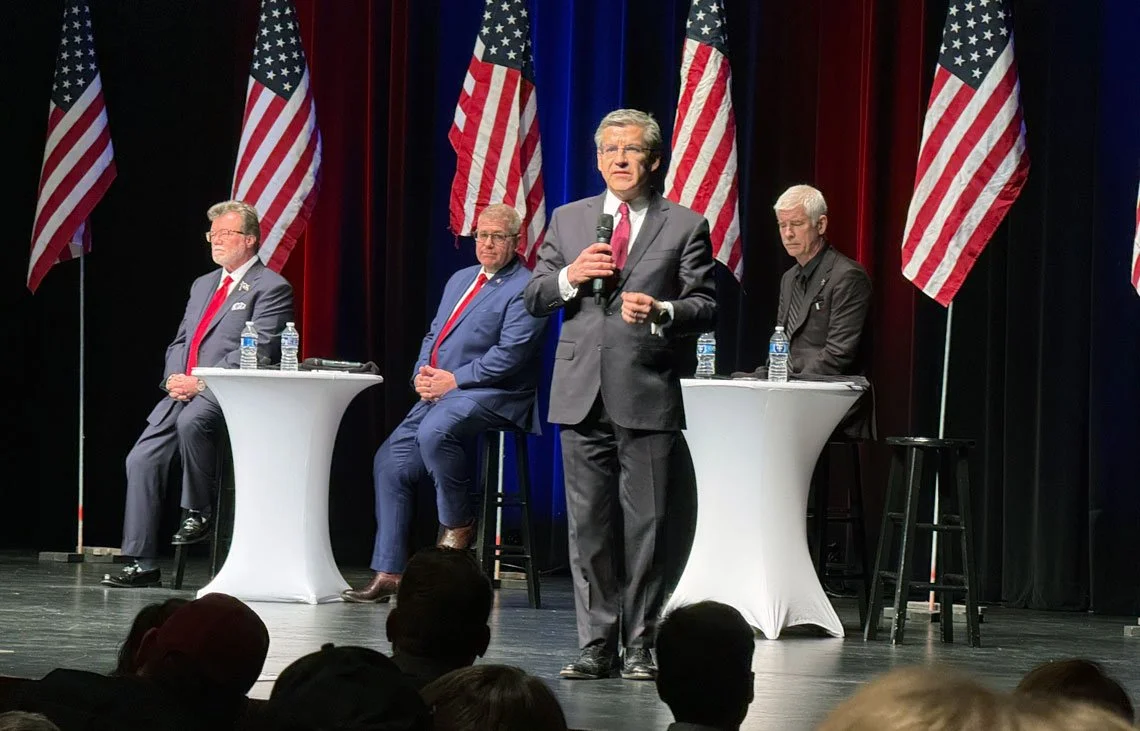
Ted Dabrowski pitches his candidacy for governor as his primary opponents – video gambling mogul Rick Heidner, former state Sen. Darren Bailey and DuPage County Sheriff James Mendrick – listen during a forum sponsored by the Tazewell County Republican Party on Jan. 15, 2026. (Capitol News Illinois photo by Brenden Moore)