Illinois ‘Clean Slate’ law allows automatic sealing of nonviolent criminal records

Advocates say measure could affect 1.7M Illinoisians, allow people to reenter workforce

By MAGGIE DOUGHERTY
Capitol News Illinois
mdougherty@capitolnewsillinois.com 

Article Summary 

  • Illinois will begin a process to automatically seal criminal records for millions of adults in the state, after Gov. JB Pritzker signed the ‘Clean Slate’ Act on Friday.

  • Critics objected to the estimated $18 million price tag associated with implementation, but proponents cheered the passage and said the bill will generate nearly $5 billion in economic impact to the state by allowing workforce reentry. 

  • The state is required to create a taskforce to oversee the first five years of the process, with automated sealing set to begin in 2029. 

This summary was written by the reporters and editors who worked on this story. 

CHICAGO — Over 1.7 million Illinois adults will be eligible to have their nonviolent criminal records automatically sealed after Gov. JB Pritzker on Friday signed the long-debated ‘Clean Slate’ Act.

House Bill 1836 will require law enforcement agencies and circuit clerks to begin systematically sealing eligible criminal records by 2029. Existing law already allows people to apply for qualifying records to be sealed for certain crimes. The new law doesn’t add to the list of eligible offences, but rather streamlines and automates the process, removing legwork for those with records.

Of the 2.2 million Illinois adults with a past arrest or conviction, advocates estimate that 1.74 million, or 79%, could have their records partially or fully sealed because of the legislation.

Convictions for more serious offenses like sexual violence against minors, DUIs, reckless driving, cruelty to animals and serious violent crimes, including any that qualify for sex offender registration remain ineligible for sealing. 

Law enforcement, courts and other relevant agencies will still have access to sealed records, but the public and private background check entities will not. Automatic sealing will apply to convictions as well as dismissed or reversed charges and arrests.

Rep. Jehan Gordon-Booth, D-Peoria, chief sponsor of the bill in the House, said the project was a personal one for her. Gordon-Booth recounted how an infraction from her youth was weaponized against her in her first run for office.

“I was given the chance to move beyond my mistake and to manifest my potential in service of my community, and I want the millions of other people in this state to have the same exact opportunity,” Gordon-Booth said. "This law is not about charity. It’s not about forgiveness. This is about justice. This is about redemption."

The legislation passed 39-17 in the Senate and 80-26 in the House during the fall veto session.

Yearslong process

Clean Slate proposals have been brought up by legislators for several years but only gained enough momentum to finally pass last year with the support of business groups including the Illinois Retail Merchants Association and Illinois Manufacturers Association. 

Read more: Illinois criminal justice advocates tout ‘Clean Slate’ legislation as ‘economic boon’ | ‘Clean Slate’ Act to seal nonviolent criminal records loses in race against time | ‘Clean Slate’ Act passes after failing to clear legislature in past years

The bill faced criticism largely from Republican lawmakers who felt that more exemptions from automatic sealing were necessary and objected to the removal of a requirement that applicants pass a drug test.  

However, proponents of the bill called drug tests and other administrative parts of the record-sealing process a hurdle that prevented many eligible Illinoisians from even applying. They pointed to a study finding that only 10% of those eligible to have records sealed in Illinois actually go through the process to do so.

Part of that process includes a backlog of record-sealing petitions, resulting in long wait times for applicants. Clean Slate Illinois, an advocacy group dedicated to ending permanent punishments for eligible persons, estimated it would have taken 154 years to clear the conviction backlog absent from this bill.

Critics also took issue with the price tag for circuit clerks to implement automated sealing procedures, estimated to cost $18 million. That cost, which does not account for implementation in Cook County, will be phased in over five years. 

Democratic lawmakers said appropriations bills could be filed in future sessions to cover the cost, but Sen. Terri Bryant, R-Murphysboro, said during bill discussion that she feared it would ultimately result in a property tax increase for local governments.

Advocates of the bill say the cost will be recovered through the economic impact of giving millions of Illinoisians a second chance to participate in society and opening new opportunities for employment, voting and secure housing.

Although a 2021 amendment to the Illinois Human Rights Act prohibits employers from discriminating based on criminal convictions, many say they continue to face employment challenges due to their records. 

For example, Pritzker pointed to data from advocates showing that 94% of employers and 90% of landlords use background checks to screen out applicants with records.

“For too long, we have been shutting doors for Illinoisians that are coming home from incarceration, nonviolent offenders trying to properly reenter society, get back on their feet and be law-abiding, productive members of society,” Pritzker said. “It’s a policy guided by punishment rather than rehabilitation.”

The Clean Slate Initiative — a bipartisan organization that seeks to pass automatic record sealing laws across the U.S. — estimates that sealing records will infuse $4.7 billion of lost wages back into the state’s economy annually.

Reducing barriers to employment also helps reduce recidivism, according to Kane County State’s Attorney Jamie Mosser. 

“We know that the one anti-crime tool that we have, the most effective one, is when people have jobs,” Mosser said.

The law now instructs the state to convene a task force dedicated to overseeing implementation of the bill over the next five years and producing an annual report detailing progress. 

Beginning Jan. 1, 2029, Illinois State Police will be responsible for notifying circuit clerks quarterly about records subject to Clean Slate. Circuit clerks will be responsible for sealing electronically held records within 90 days of notice from ISP.

Clerks will automate sealing of records created between 1970 and 2028 in three waves, with the final wave to be sealed by Jan. 1, 2034.   

Capitol News Illinois is a nonprofit, nonpartisan news service that distributes state government coverage to hundreds of news outlets statewide. It is funded primarily by the Illinois Press Foundation and the Robert R. McCormick Foundation.
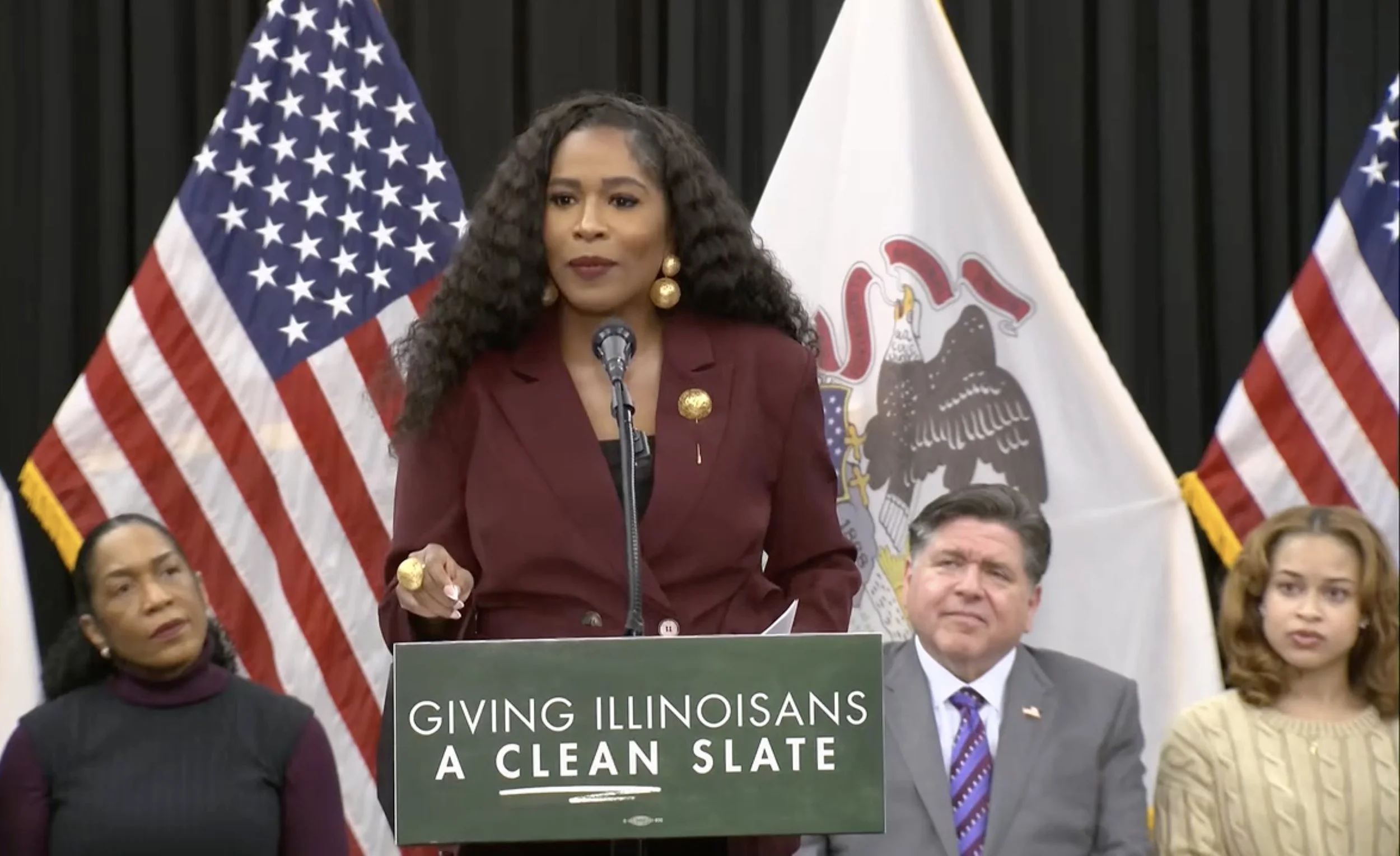
State Rep. Jehan Gordon-Booth, D-Peoria, speaks about the Clean Slate legislation she championed at a Jan. 16, 2026, bill signing ceremony. (Screenshot from Illinois.gov)
Illinois lawmakers’ 2026 theme: affordability

Democrats seeking to capitalize on Trump-driven chaos during election year session

By BEN SZALINSKI
Capitol News Illinois
bszalinski@capitolnewsillinois.com

Article Summary

  • Illinois lawmakers will be focusing on affordability issues this spring, House Speaker Emanuel “Chris” Welch said. 

  • Welch said he is interested in raising revenue through a tax on millionaires, increasing insurance regulations in the state and addressing energy supply problems caused by data centers.

  • House Republican Leader Tony McCombie said she’s worried Democrats will try raising taxes but also shared the speaker’s concerns about data centers. 

  • A new stadium for the Chicago Bears is low on Democrats’ lists of priorities. 

This summary was written by the reporters and editors who worked on this story.

SPRINGFIELD — House Speaker Emanuel “Chris” Welch says this spring’s election-year legislative session will be squarely focused on tackling Illinois voters’ priorities. 

“We're going to focus on things that help folks in their household budget,” Welch told Capitol News Illinois. “We're going to focus on things that help create good jobs, wage growth and opportunity. We're going to help our small businesses continue to grow and succeed.”

“Affordability” will be the word of the year, and Welch said members of his House Democratic caucus will be making decisions about their priorities through that lens. 

A recent poll by Emerson College and WGN News showed the economy was by far the top concern for Illinoisan, with 40% of the 1,000 likely primary voters surveyed naming it their top priority. 

“I certainly hope it doesn't mean another push for a progressive income tax or a tax on retirement,” House Republican Leader Tony McCombie, R-Savanna, told Capitol News Illinois. 

Welch said he would like to see a graduated income tax enacted in Illinois, although he didn’t commit to making a constitutional amendment a legislative priority.  

“Our job as a state is to help people and to address a lot of the systemic issues that we have here in Illinois,” Welch said. “We need revenue to address it.”

Raising revenue 

Last year, 61% of Illinois voters signaled support for a tax on millionaires that would fund unspecified property tax relief when asked in an advisory referendum. Illinois has a flat tax enshrined in the state constitution, which means voters would have to approve an amendment to make it happen. 

Welch said several members of his caucus are pushing for it, but the plan likely doesn’t have the votes quite yet. Gov. JB Pritzker has also said it won’t be a priority for him this spring, though members of the General Assembly are welcome to lead the charge. 

Read more: Despite mounting budget pressure, graduated income tax remains political longshot

McCombie argued such a tax won’t address the affordability problem. 

“When the Democrats say that their initiatives are for affordability of Illinois, that scares me because affordability means more revenue, which means more taxes,” McCombie said. 

She speculated Democrats might wait to address any perceived revenue problems during the “lame duck” session in January 2027, after the election is over and before new lawmakers are sworn in, to avoid angering voters in November. 

Lawmakers have faced tighter budgets in the last two years and resorted to targeted tax increases to boost revenue and continue growing spending. The challenge for lawmakers this spring will be closing a potentially multi-billion dollar deficit for fiscal year 2027 that begins on July 1. 

The governor’s budget office in October projected the deficit would be $2.2 billion for FY27, although state revenues have outperformed expectations since then. Recent revenues numbers through December show that revenue is up 5% in the first six months of FY26 compared to FY25. But remains high over what federal funding Illinois will receive.

It's not unusual for lawmakers to face such a projected deficit when budgeting for a new year, as the governor’s office’s report is based on current spending and taxing policies. But since it was published, lawmakers in the fall approved a bill that decouples state and federal tax code in certain areas, muting some revenue-negative effects of recent federal legislation. 

Responding to the feds

Over the last year, the Trump administration has cut off certain funding streams to Illinois and threatened many others. 

In the last two weeks alone, the administration threatened to eliminate mental health funding, other types of health care funding over the state's policies on gender identity, and overall federal funding to Illinois because of its sanctuary policies. 

“With all of the funding cuts that the administration has taken away from us, it has been probably the most challenging year of my governorship because we can’t replace the federal funding,” Pritzker told reporters in Pontiac on Wednesday. “It’s too large, and I think the federal government doesn’t understand the damage that they’re doing.”

Though the cuts are often struck down by the courts, they have kept the state’s budget in constant limbo. McCombie spun the blame for the cuts onto Pritzker’s anti-Trump rhetoric.

“I don't know if it's retribution, but it's certainly rhetoric, and certainly we’re being targeted,” McCombie said. “I wish the governor of Illinois was like other governors in other states that were Democrat leaning and worked with the president.”

States will also have to take on more spending following Congress’ passage of the One Big Beautiful Bill Act last summer. 

The state’s cost to provide food assistance could rise by $700 million, while cuts to health care programs could push added costs to the state into the billions. 

Most of those changes won’t be felt until FY28 and Welch said that means lawmakers have some time to evaluate them.

“We're going to address the things that we have right in front of us, things that we can control now,” he said. “We'll continue to try to plan as best we had can. But I do think it is an advantage that you can tackle these things year to year.”

Insurance regulation

Welch said part of this spring’s agenda will be picking up unresolved initiatives from the fall, which includes insurance reform. The issue has become a top concern for Pritzker, Welch and Senate President Don Harmon, D-Oak Park, since State Farm increased homeowners insurance rates in Illinois by 27% last summer.

Read more: State leaders seek more transparency from insurance companies

The leaders have said they want to pass legislation that would give the Illinois Department of Insurance more power to regulate insurance rates, hoping it leads to lower costs.

“We ought to have more transparency from our insurance companies, especially when they’re coming to ask for such an enormous increase and hike in insurance premiums from their customers,” Pritzker told reporters in Normal last week.

Data centers 

Lawmakers could also consider further energy policy changes despite passing a major bill in the fall that they hope will eventually lower utility costs. Issues with supply and costs persist, particularly as power-hungry data centers continue to spring up around the state. 

Read more: As state regulators warn of impending energy shortfalls, capacity prices rise again

“We're hoping that we can get something done on it,” Welch said. “It's a pretty complicated issue ... We got to address a whole wide range of concerns.” 

Data centers have been the beneficiaries of tax incentives from the state and McCombie suggested the state should tighten requirements to receive them. The data center tax breaks passed with bipartisan support in Pritzker’s first term. According to the state’s 2024 report, 27 data centers had received incentives totaling an estimated $983 million in tax breaks and benefits.

“If an investor comes to a community, or investor comes to the state of Illinois, what is your plan for energy?” McCombie said. “You're going to have to have a plan for energy. I think that's an important piece that's been missing.”

Where the Bears rank

With lawmakers focused on cost of living and other issues, the Chicago Bears’ request for $800 million in infrastructure funding and property tax breaks for their stadium project in Arlington Heights is low on the General Assembly’s list of priorities. 

“If, for some reason, circumstances were to change, and all of a sudden members are hearing that the Bears should be a top priority, it would be my job to listen to that,” Welch said. 

Read more: Illinois House speaker calls Bears stadium ask ‘insensitive’ amid budget pressures

Illinois might have a competitor for its “pride and joy.” Indiana Gov. Mike Braun said during his State of the State address on Wednesday that he is “working hard” to bring the team to Northwest Indiana. NFL Commissioner Roger Goodell also joined team executives for tours of stadium sites in Arlington Heights and Hammond, Indiana, the Chicago Tribune reported.

“I think they're just using it as leverage,” Welch said. “You know, I think they know that Indiana is a state that doesn't support working families. They don't believe in labor rights. It's a very different state than the state of Illinois, and I think Chicago is very much a part of their identity.”

McCombie said many members of her caucus hope the Bears can reach a deal on a public-private partnership to stay in Illinois and move to Arlington Heights. She’s also taking the Bears’ threat to move to Indiana seriously. 

“How embarrassing would it be if the Chicago Bears went to Indiana or any surrounding state?” McCombie said.


Capitol News Illinois is a nonprofit, nonpartisan news service that distributes state government coverage to hundreds of news outlets statewide. It is funded primarily by the Illinois Press Foundation and the Robert R. McCormick Foundation.


Illnesses Still On The Rise

The Wabash County Health Department is reporting a continued increase in respiratory illnesses across the county.

Administrator Judy Wissel says cases are well above normal levels and have not yet peaked, meaning numbers are expected to continue rising. She says the illnesses being reported include influenza, COVID-19, and RSV.

Wissel urges residents to take precautions to help slow the spread. The Illinois Department of Public Health recommends that anyone with a fever stay home and avoid exposing others. People are also advised to wait at least 24 hours after a fever has subsided before returning to work, school, or public activities.

Health officials also stress the importance of good hand hygiene, including frequent handwashing, as respiratory illnesses continue to circulate at high levels.

Mt. Carmel Woman Gets 4 Years In Prison On Child Abuse Charge

A Mt. Carmel woman has been sentenced to prison following a child abuse investigation.

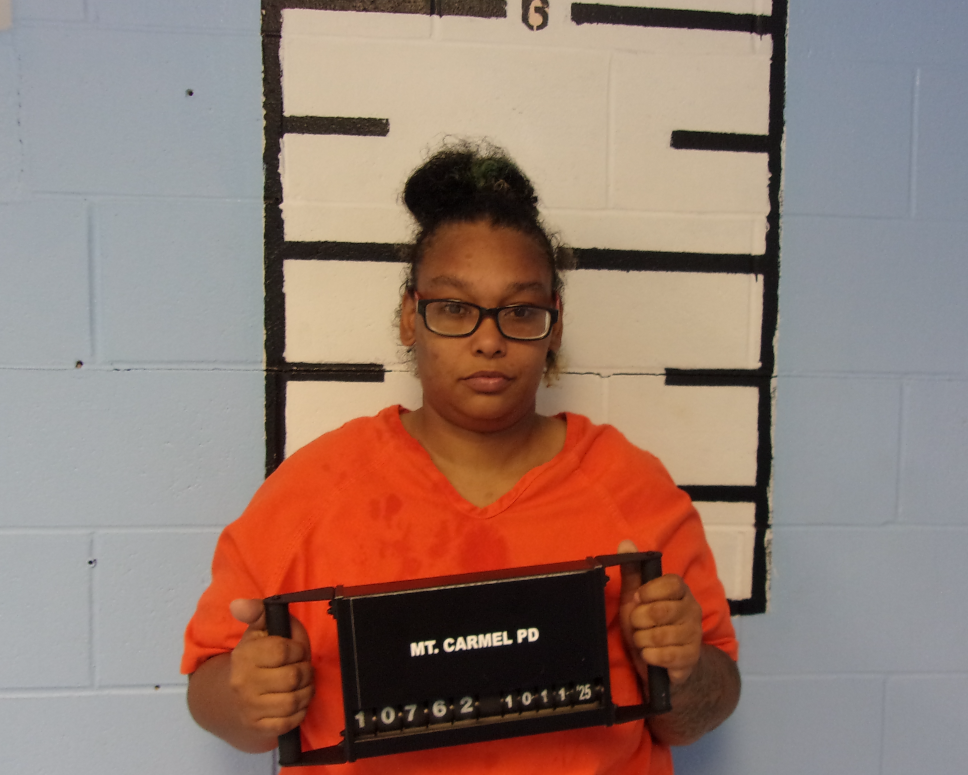
Wabash County State’s Attorney Kelli Storckman announced that on January 13th, 33-year-old Tameeka L. Donohoo of Mt. Carmel was sentenced to four years in the Illinois Department of Corrections.

The case stems from an incident on October 10th of last year, when the Mt. Carmel Police Department responded to a request to remove a foster child from a residence in Mt. Carmel following a reported dispute. During that response, officers observed injuries on the foster child.

The Guardian Center later conducted forensic interviews with the minor victim and additional child witnesses. Based on the investigation, authorities determined Donohoo caused injury to the child during an act of discipline.

Following her release from prison, Donohoo will be subject to six months of mandatory supervised release and will be required to register with the Violent Offender Against Youth Registry.

Chrisney Man Arrested For Domestic Battery

Perry County – On Sunday, January 11th, 2025, the Indiana State Police and the Tell City Police Department responded to a residence in Tell City for a suspected domestic battery. When officers arrived, they spoke to a female victim. The male had already left the residence. Due to visible injuries, the victim was treated by EMS personnel but refused further medical treatment. The victim told officers, she believed her ex-husband was going to his parent’s residence in Chrisney.

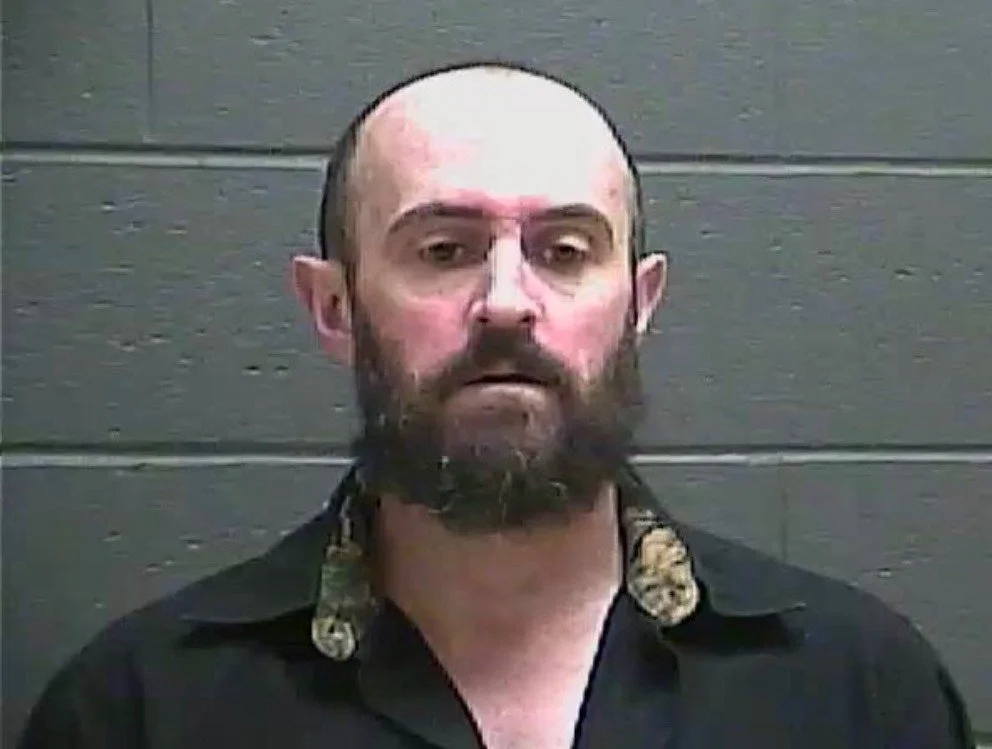
Preliminary investigation revealed the victim was at her residence when she and her ex-husband, Daniel Taylor, began arguing about marital property. The victim was choked and struck several times around the head by Taylor, knocking her to the ground. Taylor left in a pickup truck as the victim called 911.

A short time later, Officers with the Indiana State Police and Spencer County Sheriff’s Office located Taylor at a residence in Chrisney. Taylor was arrested without incident and was transported to the Perry County jail where he is being held on bond.

Arrested and Charges-
• Daniel E. Taylor, 40, Chrisney, IN

  1. Domestic Battery-W/Prior Unrelated Conviction for Battery Against Same Family or Member - Level 5 Felony                     
  2. Strangulation - Level 6 Felony

Arresting Officer – Sergeant Teresa Vaal
Assisting Officers – Sergeant George Wooten, Trooper Adam McBeth, & Trooper Levi Hupp
Assisting Agencies – Spencer County Sheriff’s Office & Tell City Police Department

Illinois, 4 other states targeted for $10B child care funding freeze win restraining order

The lawsuit comes days after the administration announced the funding freeze

By NIKOEL HYTREK
Capitol News Illinois
nhytrek@capitolnewsillinois.com

Article summary

  • A judge on Friday granted five states’ request for a temporary restraining order that will prevent the Trump administration from freezing $10 billion to their states for child care and family services programs.

  • Attorney General Kwame Raoul and attorneys general from California, Colorado, Minnesota and New York sued the administration in the Southern District of New York. 

  • The attorneys general assert the freezing of funds is unlawful and politically motivated, citing political statements from President Donald Trump and the lack of specific accusations. 

  • The Department of Health and Human Services claims the funds are being frozen because of concerns about widespread fraud, but it has provided no evidence or specific claims. 

This summary was written by the reporters and editors who worked on this story.

Editor’s note: This story was updated to reflect a judge’s late Friday issuance of a temporary restraining order, which occurred shortly after this story was originally published. 

Illinois and the four other Democratic-led states that were subject to the Trump administration’s freeze on $10 billion in federal funding for child care and family services secured a restraining order on Friday in their lawsuit seeking to block the move. 

The restraining order, issued by Judge Arun Subramanian in the Southern District of New York, means the freeze can’t take effect while the full case plays out, unless an appellate court overturns the stay.

Illinois Attorney General Kwame Raoul called the freeze, which includes about $1 billion for child care programs in Illinois, “callous,” and stressed that it targeted only Democratic-led states.   

“There is no justification for this attempted funding freeze,” Raoul said in a statement praising the order.  “It is a cruel and illegal attempt by the Trump administration to play politics with the lives of children and low-income families.”

The U.S. Department of Health and Human Services announced late Tuesday that it was freezing the distribution of funds for Illinois, California, Colorado, Minnesota and New York because of concerns about fraud, although it didn’t provide evidence or cite specific claims. The department called for those states to submit additional documentation in two weeks in order to receive the money. 

Raoul joined his counterparts from the other four states in filing the suit Thursday against HHS and its secretary, Robert Kennedy Jr. 

“Congress enacted this critical funding to support families and help working parents access child care, and the president does not have the authority to withhold it in this way,” Raoul said in a Thursday statement. 

The 41-page lawsuit asked the court to immediately stop the freeze and order the release of funds. 

‘Disfavored by the Trump administration’

The lawsuit accuses the administration of targeting Democratic states for political reasons, documenting several statements from President Donald Trump going back to December that specifically mention Illinois, California, Minnesota and New York. The statements include vague claims about fraud and attacks on the respective governors. 

At a Friday news conference, all five attorneys general said the administration did not offer any evidence or specific allegations of fraud in the letters they received. 

“If the president was serious about rooting out fraud, his administration would be investing more resources in partnering with states and supporting states’ efforts to root out fraud and abuse,” Raoul said. “But the real motivation behind this action is to punish Democrat-led states like Illinois that are disfavored by the Trump administration.”

The news release from HHS stated the funds will remain frozen until HHS’s Children and Family Services division reviews documents requested from the states and finds they are following federal requirements.

“Families who rely on child care and family assistance programs deserve confidence that these resources are used lawfully and for their intended purpose,” said Deputy Secretary Jim O’Neill. “This action reflects our commitment to program integrity, fiscal responsibility, and compliance with federal requirements.” 

Gov. JB Pritzker released a statement Tuesday emphasizing that Illinois already has anti-fraud policies and reporting requirements for programs like this. Raoul said the same thing on Friday.

“We, on the local level, regularly partner with federal agencies investigating fraud and abuse to investigate and prosecute on a case-by-case basis,” Raoul said. “This approach of, without any specific evidence, threatening to freeze funds, is inconsistent with what we do on a normal basis to make sure that funds are appropriately being administered.”

Read more: Trump freezes $10B in social service, child care funding for Illinois, 4 other blue states

The freeze impacts three programs: the Child Care and Development Fund; Temporary Assistance for Needy Families, or TANF; and the Social Services Block Grant program. Those programs fund several Illinois programs that serve hundreds of thousands of Illinoisans  

Raoul said he can’t provide an exact date for when federal funds Illinois has already received might run out, only saying the date is “fairly imminent.”

The lawsuit also claims that the two-week deadline to submit documents is unreasonable, and many of the requested documents involve individuals’ sensitive personal information.


Capitol News Illinois is a nonprofit, nonpartisan news service that distributes state government coverage to hundreds of news outlets statewide. It is funded primarily by the Illinois Press Foundation and the Robert R. McCormick Foundation.

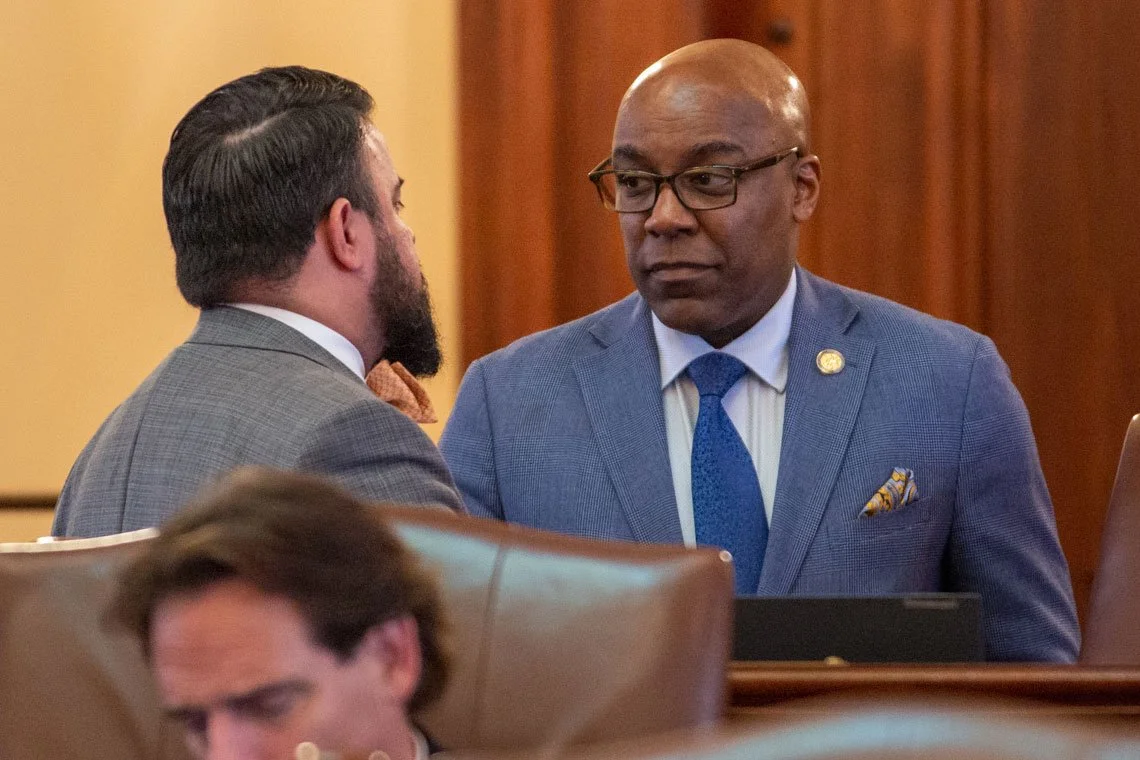
Illinois Attorney General Kwame Raoul is pictured on the floor of the Illinois Senate on May 30, 2025. (Capitol News Illinois photo by Jerry Nowicki)

Oversight panel OKs rule on digitized prison mail in Illinois with new changes

The rule now makes exceptions for certain photos, privileged mail and used books

By MAGGIE DOUGHERTY
Capitol News Illinois
mdougherty@capitolnewsillinois.com 

Article Summary 

  • A state legislative committee allowed the Department of Corrections to make permanent an emergency rule to scan prison mail, with some new carveouts.

  • The committee praised IDOC for its stakeholder engagement, but prison reform and legal rights advocates expressed disappointment with the decision.

  • Committee members warned the department against future use of the emergency rulemaking process and advised that there will likely be more work to do on this issue.

This summary was written by the reporters and editors who worked on this story. 

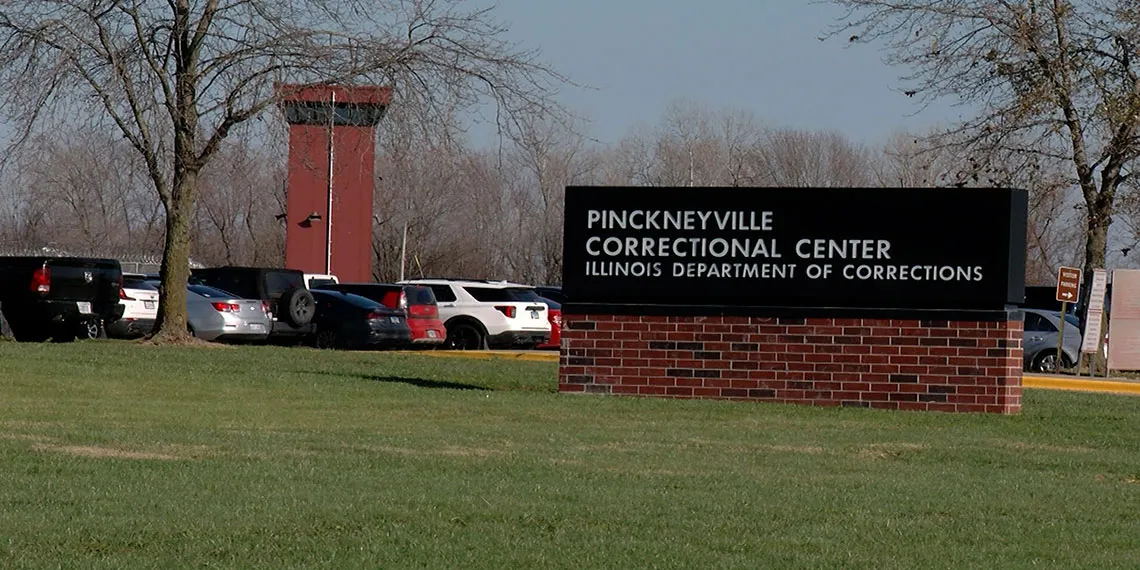
CHICAGO — A state legislative oversight committee Friday permitted the Illinois Department of Corrections to formally adopt permanent rules that allow it to scan and digitize mail of those in custody, in a blow to prison reform advocates.

The rule was originally introduced under pressure from Republican legislators and the IDOC workers’ union after a series of substance exposures in the fall of 2024 left correctional staff hospitalized. The policy has been in effect on an emergency basis since August.

The department sought to make the rule permanent, describing it as a necessary safety precaution to keep drugs and dangerous substances from being smuggled into prisons via the mail, while critics said little evidence supports the rule, and that it violates the civil rights of incarcerated people. 

Reading letters from loved ones on a tablet, they said, was not the same as being able to hold the real thing. Prison monitoring groups and legal advocates also raised data privacy concerns about the use of third-party vendors and protections for legal mail sent by attorneys.

The Joint Committee on Administrative Rules, which oversees administrative rulemaking, issued an objection to the rule in September, telling the department it needed to implement feedback from incarcerated people, families, attorneys and other stakeholders if it wanted to adopt the rule permanently.

Read more: Under emergency rule, Illinois prisons can begin withholding physical mail | Oversight panel objects to new Illinois prison mail policy | Inmate families, advocates speak against mail scanning program

After a period of public comment and engagement with stakeholders, the department introduced amended rules, including some exceptions for photographs and used books, as well as clarifications for legal mail. Photographs must be unopened and sent directly from a vendor. Those in custody can also receive a physical printout of their mail upon request, at no cost to the individual, under the amended rules.

JCAR decided Friday that the department had done enough to warrant instituting the rule permanently, citing the public engagement and changes implemented.

But advocates for the incarcerated expressed dissatisfaction with the decision, saying they did not see substantive changes reflected in the final rules. 

“We are deeply disappointed with the permanent rules for mail scanning in the IDOC,” a representative for Restore Justice Illinois told reporters. “This practice lacks any empirical data demonstrating its effectiveness, severely compromises the privacy and timeliness essential to the legal mail process, and erodes the dignity, humanity, and safety of people who are incarcerated in Illinois.”

Data availability

Critics of the policy pointed to a line in IDOC’s initial rule proposal, which asks the department to list any published studies, reports or sources of underlying data upon which the rule is based. The reply read: “None.”

“So the proposed changes are not fact-based, they are reactionary and based on guesses,” read a public comment submitted to and anonymized by the department. “IDOC is impacting my life negatively and unnecessarily, again, without having anything factual to base it on.”

Advocates called on IDOC to wait until more data is available to prove that illegal or dangerous substances are arriving through mail, rather than via other sources like staff or in-person visits. 

“It has never been clear that mail scanning will address the concerns that IDOC used to justify beginning this process months ago,” Benjamin Ruddell, director of criminal justice policy at the ACLU of Illinois told Capitol News Illinois. “Rather, the available evidence strongly suggests that mail scanning has not worked to reduce contraband or promote safety in prisons in the states where it has been implemented.”

A law signed by Gov. JB Pritzker last August will require IDOC to collect and publish annual data on contraband found in its facilities, including the source of entry into facilities. The bill passed unanimously in the Senate and with only one dissenting vote in the House, from Rep. John Cabello, R-Machesney Park. That data collection will begin in July, with the first report published by August 2027.

In its analysis of comments, though, IDOC said it was “confident in its understanding of sources of contraband entering the facilities.”

Emergency rulemaking

While the committee permitted IDOC to adopt this specific emergency rule as a permanent one, JCAR members issued a stern warning to the department against resorting to emergency rulemaking processes in the future.

“Our committee wants to make it crystal clear that the further use of emergency rules for these type of occasions needs to be ended,” JCAR co-Chair Rep. Ryan Spain, R-Peoria, told department officials. “What we want to see moving forward on any rulemaking is that you use the permanent rule making process.”

Both Restore Justice and the ACLU of Illinois expressed gratitude toward JCAR members and staff for their emphasis on meaningful stakeholder engagement and for their objection to IDOC’s use of emergency rulemaking. 

The ACLU vowed to continue monitoring the department’s implementation of the rule. 

Committee co-Chair Sen. Bill Cunningham, D-Chicago, also advised the department that more work would likely be needed to keep the rule in effect.

“I don’t know that this is the final word on this matter,” Cunningham said. “As you know, there are a number of people in the state who just philosophically are opposed to this, and I have a feeling you will be spending time in front of the larger General Assembly over the next couple of months dealing with proposed legislation on this matter that might take this policy in a different position.”

Capitol News Illinois is a nonprofit, nonpartisan news service that distributes state government coverage to hundreds of news outlets statewide. It is funded primarily by the Illinois Press Foundation and the Robert R. McCormick Foundation.