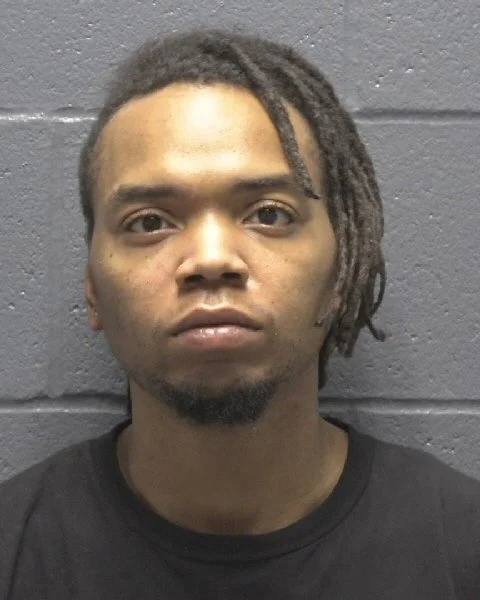
On January 16, 2026, at 11:19 p.m. Gibson County Deputy Michael Bates observed a Silver 2004 GMC Envoy traveling 45 mph in a 30-mph zone on South Main Street in Princeton. Upon stopping the vehicle near Illinois Street Deputy Bates approached the vehicle and immediately detected the odor of burnt Marijuana. At that point he began a roadside OWI investigation that resulted in the driver, 33-year-old Terry Ealum of Newburgh being taken into custody and transported to the Gibson County Detention Center. Once Mr. Ealum arrived at the detention center, he was charged with Operating a Vehicle While Intoxicated and Possession of Marijuana.
Princeton Officers Jackie Wood and Lincoln Edwards assisted Deputy Bates in his investigation.
All criminal defendants are to be presumed innocent until and unless proven guilty beyond a reasonable doubt in a court of law.
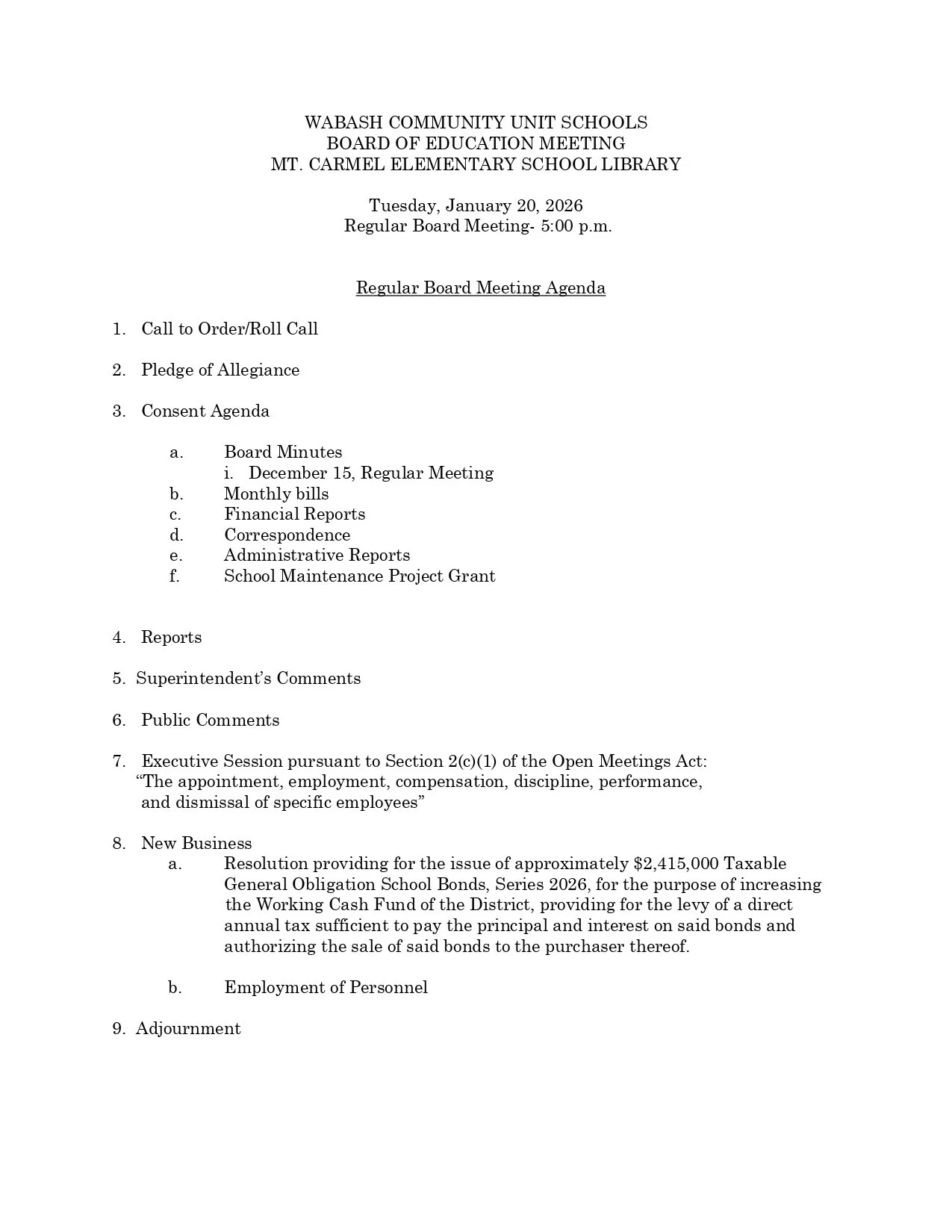
Wabash District #348 School Board Agenda
Meeting is this evening at 5pm.
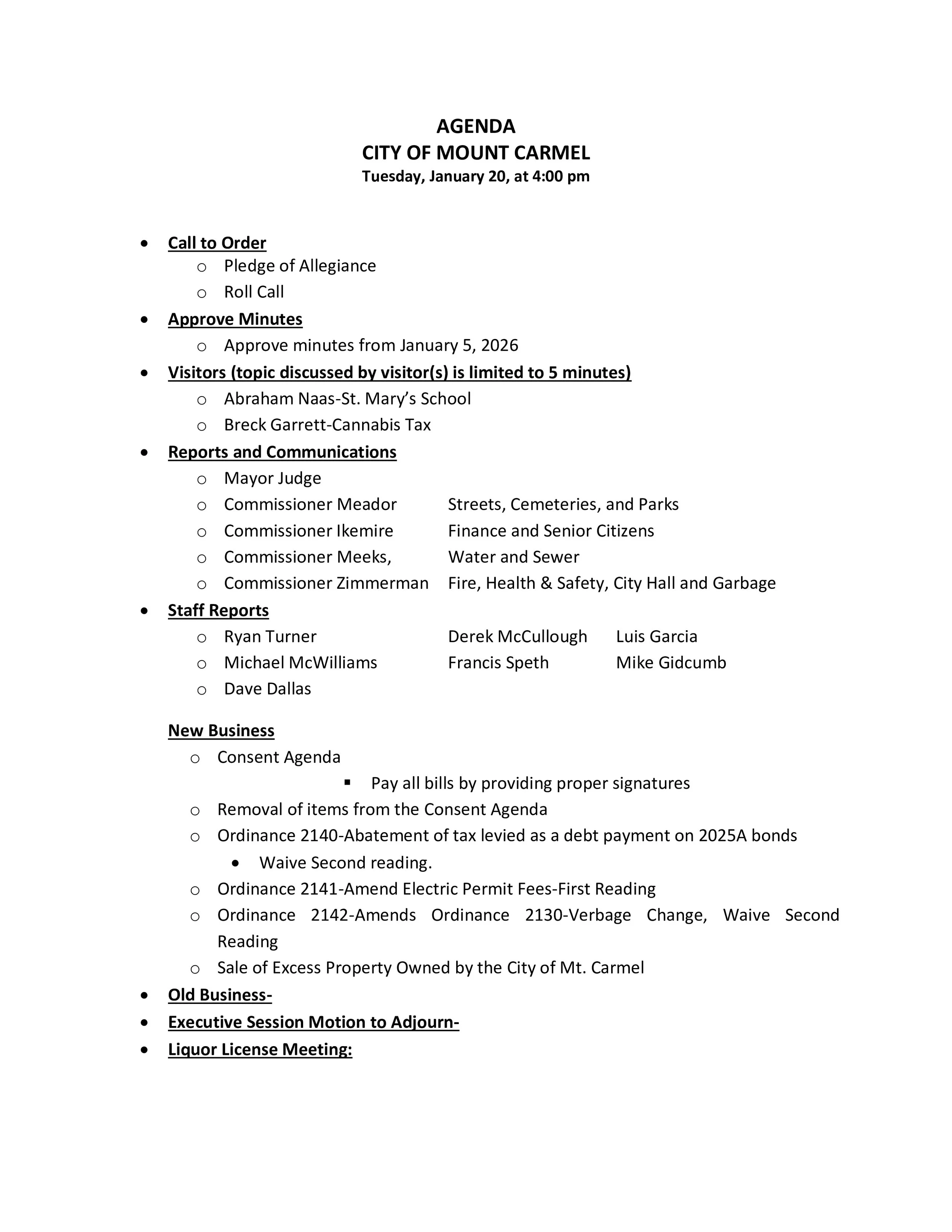
Mt. Carmel City Council Agenda
Meeting is today at 4pm.
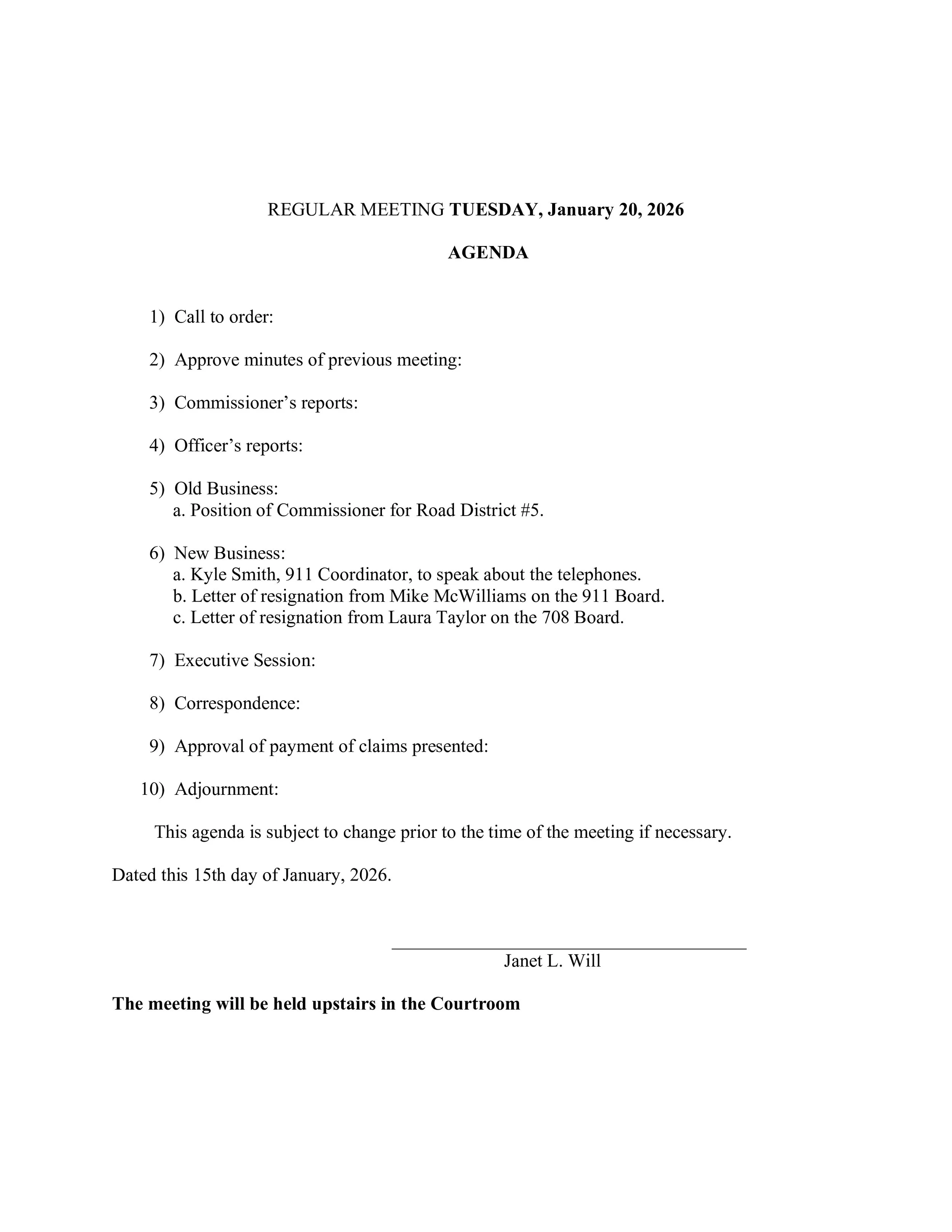
Wabash County Commissioner Agenda
Meeting is this afternoon at 4:30pm.
Recent postal service changes could disrupt mail-in voting, county clerks warn
Thousands of votes could be invalidated if not received in time
By JENNA SCHWEIKERT
& NIKOEL HYTREK
Capitol News Illinois
jschweikert@capitolnewsillinois.com
nhytrek@capitolnewsillinois.com
Article Summary
New USPS rules may disrupt vote-by-mail processes in the 2026 election, Illinois county clerks warned.
The rules change the postmarking and transportation processes, potentially disenfranchising voters who follow previous guidelines.
County clerks recommend that voters mail their ballots no later than a week before Election Day.
This summary was written by the reporters and editors who worked on this story.
EAST PEORIA — New postal service changes to postmarking and transportation rules could disrupt mail-in voting in the 2026 election, Illinois county clerks warn.
Ahead of the March primary election, county clerks are telling voters not to rely on past processes and to mail their ballots as early as possible, no later than one week before Election Day.
Clerks from around the state discussed how to educate voters at the annual Illinois Association of County Clerks and Recorders Conference on Thursday in East Peoria.
One new rule, which took effect Dec. 24, states that the date a postmark is applied to a piece of mail may not reflect the day it was received by the Postal Service.
Currently, 14 states, including Illinois, will accept mail-in ballots if they are received within a certain period after Election Day if they are postmarked on or before Election Day.
Clerks warned that uncertainty about when ballots will now be postmarked necessitates voters to act earlier. The way postmarks are applied is not changing, the USPS says. Mail is only postmarked at distribution centers, and that will remain the same.
But in an effort to improve mail delivery efficiency, some localities’ mail may be sent to a different distribution center than in the past, which can increase the amount of time it takes for the USPS to receive and then postmark mail at these centers.
“It’s a question mark of when will it actually get through a distribution center. So I’m advising my voters to make sure that they get their vote-by-mail ballot in the mail no less than a week before Election Day,” John Ackerman, the Tazewell County clerk, said.
In the city of Peoria, for example, the distribution center is in Peoria. Tazewell County’s center, Ackerman said, is in Champaign, although Peoria is geographically closer.
To educate voters about the change, he said, his office will include yellow index cards with the recommendation in the vote-by-mail packets se
nt to voters.
Voters can also request a manual postmark from their local post office or drop off their ballot at the election official’s office.
But if election officials can’t rely on postmarks to reflect accurate dates, a number of mail-in ballots that were mailed prior to Election Day may not be counted at all clerks said.
Ballots also will no longer be automatically considered priority mail, increasing the amount of time it will take to deliver the mail.
“We've utilized that successfully over the years to make sure that all those ballots not only are delivered, but they are received in time. Changing that status dramatically changes how that will impact us as well,” Ackerman said.
These changes will be most felt during the recount process, when candidates are “scrambling,” Ackerman said.
The clerks generally agreed this could change the outcome of a race.
Clerks also said they are concerned about changes impacting voter trust in elections, especially because voter guidance is now going to be different depending on the county’s location and distribution center.
“We’ve told all of our voters, get your vote-by-mail ballot in your box by Election Day to be postmarked for Election Day, we will process it now. We're ripping the rug out from underneath that,” Ackerman said. “That leads to distrust. When you can't give a solid date, you can't give a solid answer, when you can't reply back to them with facts, when it's left for interpretation. That erodes the trust that we've been trying to rebuild.”
In the past, when this potential change was proposed, the clerks said they were able to speak to federal lawmakers to advocate for its reversal.
In late September 2025, a delegation of clerks traveled to Washington, D.C., to meet with lawmakers and staff about changes to federal funding for election infrastructure and learned lawmakers didn’t know about the potential changes, Ackerman said.
“They were all unaware that this change was going to take effect. They were unaware, in my opinion, of the impacts it would have on vote by mail,” he said.
This time, however, clerks didn’t know the changes were proposed until days before they were implemented.
“It is our goal to get to the public being 100% trusting of our system, but that's something we've strived diligently to do to repair that relationship, and I think this hurts that,” Ackerman said.
To be sure your vote has been counted, voters can call their county clerk’s office, or some counties offer ballot tracking online.
County clerks emphasized that voting by mail is still safe and secure, but it might take more work and planning.
Kathy Michael, the McLean County clerk, said voters can request to have their ballot manually postmarked at the post office when they return it.
“Just mail it early or go into the post office. I don't want to say it's that simple. I don't want to make it simple, but that's all you have to do,” she said. “Don't be discouraged and not do it and not vote. … Get it postmarked, and you can go off on your vacation and not worry about it.”
Capitol News Illinois is a nonprofit, nonpartisan news service that distributes state government coverage to hundreds of news outlets statewide. It is funded primarily by the Illinois Press Foundation and the Robert R. McCormick Foundation.
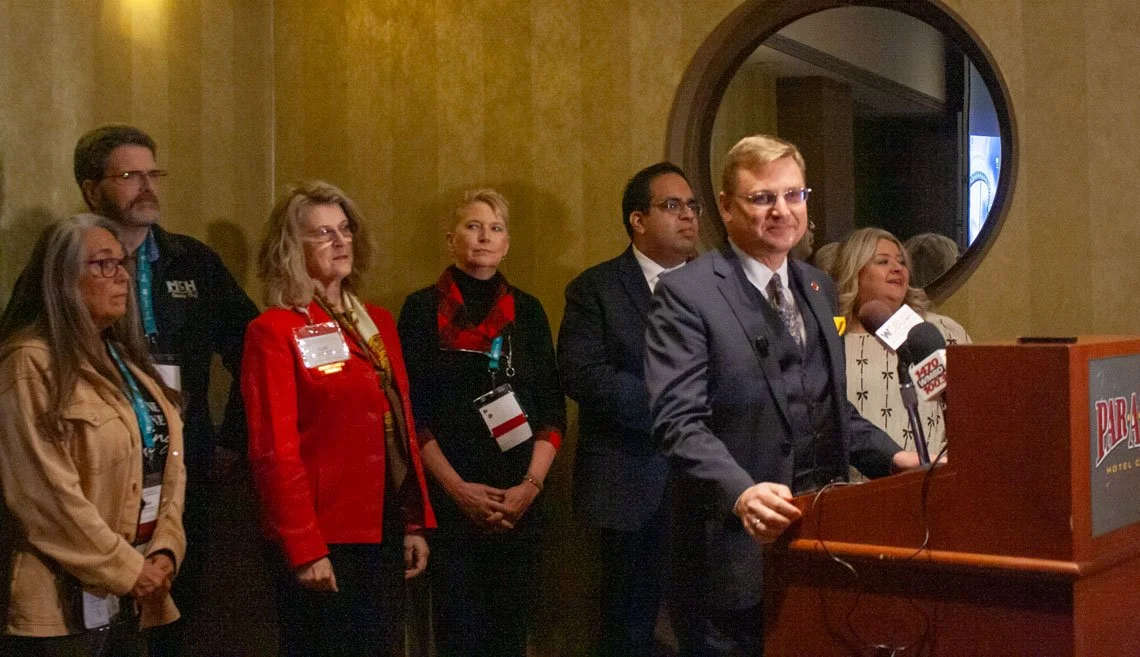
Tazewell County Clerk John Ackerman speaks at a news conference in Peoria. Tazewell traveled to Washington, D.C., with three other clerks in September 2025 to meet with federal lawmakers to advocate against the USPS changes. (Capitol News Illinois photo by Jenna Schweikert)
Few fireworks as Illinois GOP governor hopefuls share stage for first time
The four Republican candidates trained their fire on Gov. JB Pritzker and Illinois’ immigration policies
By BRENDEN MOORE
Capitol News Illinois
bmoore@capitolnewsillinois.com
Article Summary
The candidates emphasized ending Illinois’ sanctuary policies and criticized state spending on migrants, while also highlighting cost-of-living concerns such as property taxes and energy prices.
Electability in Chicago and the suburban collar counties loomed large, with Ted Dabrowski and others questioning Darren Bailey’s past performance even as Bailey urged Republicans to rally behind a shared “affordability” message.
Rick Heidner faced pointed questions from rival Ted Dabrowski over past donations to Democratic candidates. Heidner said his contributions to Chicago Mayor Brandon Johnson and former Cook County State’s Attorney Kim Foxx were a “huge mistake.”
This summary was written by the reporters and editors who worked on this story.
WASHINGTON, Ill. — Far ahead of his Republican primary opponents in the most recent public polling, Darren Bailey told a half-filled central Illinois auditorium in that he expected to be “the punching bag.”
Instead, Bailey walked away relatively unscathed from a candidate forum Thursday evening as the four Republican candidates for governor struck a conciliatory tone with one another. The four candidates preached unity after years of intraparty conflict, called for an end to the state’s robust protections for immigrants and took aim at Democratic Gov. JB Pritzker while pitching themselves as the most electable candidate in a general election.
It was the first time the candidates — Bailey; former conservative think tank president Ted Dabrowski; video gambling mogul Rick Heidner; and DuPage County Sheriff James Mendrick — shared a stage. It comes just a few weeks ahead of the kickoff to early voting, and two months before Republicans choose a nominee to take on Pritzker, who is seeking a third term, in November.
“We've got to make sure that we commit ourselves right here — that on March 18, we stick together and we work together,” Bailey, the party’s 2022 nominee, said.
The fireworks were few and far between, with the candidates largely in alignment on their conservative visions for the state. Dabrowski took a few swings, suggesting Bailey, who lost to Pritzker by 12.5 percentage points and more than 500,000 votes in 2022, did not have enough appeal to win in the vote-rich Chicago suburbs. He also suggested Heidner’s past donations to Democrats were at odds with conservative values.
Winning in Chicago area
The Illinois GOP hasn't won a statewide election in more than a decade, has been relegated to the superminority in the state legislature, holds just three of the state’s 17 congressional seats and occupies just two of the seven Illinois Supreme Court seats.
That reality framed the forum’s opening question: how the candidates planned to reverse the party’s fortunes in the suburban collar counties — once GOP strongholds that have drifted away as the party’s grown more rigid in its conservativism on social issues like abortion and gun rights. President Donald Trump also remains deeply unpopular in the northeast corner of the state.
“I know, and I feel confident that all of us are going to do well downstate,” Dabrowski said. “The question is going to be: Who can do well enough in Cook County and in the suburbs?”
Dabrowski, a resident of Wilmette and the son of immigrants from Poland and Ecuador, suggested that he could appeal to voters from Chicago’s wealthier North Shore communities to the patchwork of ethnic enclaves in the city and suburbs.
He said this sets him apart from Bailey, a farmer from downstate Xenia who lost all but one of the suburban collar counties while referring to Chicago as a “hellhole” over the course of his failed 2022 campaign.
Mendrick said his election as sheriff of the state’s second-most populous county is proof of his viability in this race. Both he and Dabrowski also suggested Republicans would appeal in Chicago’s African American community over the issue of immigration.
“They're all flipping red,” Mendrick said. “They're all going with Trump. The sanctuary state (policy) is driving them.”
However, a poll conducted by Emerson College earlier this month found Trump with an 82% disapproval rating among the state’s Black voters. By contrast, 71% approve of Pritzker’s job performance. Immigration ranked a distant sixth in terms of what the group believes are the most important issues facing the state. Mendrick added, however, that he’s “always ignored the polls.”
Whether it’s shown in a poll or an anecdote from the campaign trail, the top issue on voters’ minds is cost of living. The candidates criticized the state’s high property tax rates and each suggested implementing caps — though they were vague on how they would fill in funding gaps that could create for school districts and other local taxing bodies.
Bailey said that if they focus on that issue and can get Republican voters who’ve sat out past elections to the polls, they have a chance.
“We've got the message: affordability,” Bailey said. “Our property taxes are too high, energy costs are too high. We need more police officers on the streets. We need to repeal the SAFE-T Act. We need to improve education for our children. And people all over the state agree and believe in that. That's how we will win in November.”
Ending sanctuary status
However, none of the candidates appeared willing to move off their conservative positions to win over voters despite Illinois’ Democratic lean. Dabrowski suggested instead that “Democrats are going to meet us” due to “extreme” policies from Pritzker, then listing off topics such as transgender girls having access to girl’s bathrooms and sports.
The state’s immigration policy was also front-and-center, with the candidates criticizing state spending in recent years on health care for undocumented immigrants and to address the migrant crisis caused by the busing of migrants from border states like Texas to Chicago in 2023 and 2024.
“We're being washed out with a dependent society,” Mendrick said.
A February 2025 audit found the state had spent over $1.6 billion on an immigrant health care programs from 2021 through 2024. Lawmakers and the governor ended the program that provided Medicaid-like benefits to immigrants aged 42-64 in the current fiscal year. The state also paused enrollment in an ongoing program serving immigrants age 65 and older.
Heidner, who jumped into the race in late October but whose campaign had been radio silent up until this week, added that undocumented people are “coming here and then just feeding off of us.”
The state’s TRUST Act, signed by then-Gov. Bruce Rauner, a Republican, in 2017, generally prohibits state and local law enforcement from assisting the federal government with immigration enforcement unless a federal criminal warrant is presented. All four said they support repealing the law and would withhold state funds from cities like Chicago that maintain sanctuary ordinances.
“We can't be a sanctuary state,” Heidner said. “I'm on board with President Trump. I mean, we cannot house the world when we can't take care of all our own citizens.”
They signaled support for Trump’s crackdown on illegal immigration. A targeted campaign in the Chicago region last year led to the arrests of 4,500 people in the country without authorization. But it also led to violent clashes between armed, masked federal agents and protesters.
Dabrowski said that Pritzker was “the one fomenting a lot of this problem in Illinois” by not cooperating with federal immigration authorities and by describing them as “jackbooted thugs,” among other names. There was no mention of language utilized by Trump, who has referred to protestors as “insurrectionists” and “domestic terrorists.”
“If we would have opened our doors for ICE to come in, they would have been in and out of here probably six to eight weeks to get the worst of the worst out of here,” Heidner added.
Dem donations ‘huge mistake’
Though chummy with one another for most of the night, Dabrowski took Heidner to task for campaign donations to prominent Democrats, including a $25,000 contribution to Chicago Mayor Brandon Johnson in 2023 and a $2,500 donation in 2015 to Kim Foxx, who was running for and later elected Cook County state’s attorney.
“I still can't square up the values with giving money to somebody like Brandon Johnson and Kim Foxx, who have such different values, I think, from what we're saying here — and I think that's something that maybe needs to be answered,” Dabrowski said.
Heidner, who operates businesses in the city of Chicago, said he supported Paul Vallas in the 2023 mayoral election but agreed to help Johnson pay off some campaign debt.
“It was like cutting my arm off,” Heidner told the audience.
As for Foxx, the two-term state’s attorney who was one of the chief supporters of the state law that ended cash bail, Heidner had no defense, calling it a “huge mistake.”
“That one there I really can't even forgive myself for, so I apologize for that,” Heidner said.
Though Bailey leads in recent polling, Dabrowski and Heidner have raised more cash. Heidner has donated more than $1.25 million to his campaign while Dabrowski has raised more than $1.5 million, mostly from a series of large donors.
Dabrowski said he’s the one who can compete financially with Pritzker in a general election — but also will be principled.
“There's too many people who are breaking off and doing things with Democrats,” Dabrowski said. “We have to be principled with the conservative values that we all need and trust.”
Bailey, however, said that Republican voters should give him another shot.
“I have been that steadfast rock for you since 2019,” Bailey said. “I've stood, I've not wavered in my convictions, I've been your voice, and I intend to, hopefully, continue to be that voice of reasoning to all of Illinois, and especially the Democrat Party. We can win Illinois. We have the blueprint.”
Dabrowski support grows
Earlier in the day, more than a dozen current and former central Illinois Republican lawmakers endorsed Dabrowski, touting his credentials as a conservative policy wonk. They said they believe he can raise the money and build the broad support needed to end the party’s decadelong shutout from elected statewide office.
“There's one person who has the best chance to get Illinois back on track as our governor, and that same person has the best chance to beat JB Pritzker,” said state Rep. Travis Weaver, R-Peoria, referring to Dabrowski. “When you thoughtfully consider who has the ability to win new voters, repair our state, attract support statewide and unite our party, the choice is clear, period.”
Dabrowski also added support from state Sens. Li Arellano, R-Dixon; Chris Balkema, R-Channahon; Sue Rezin, R-Morris; and Sally Turner, R-Beason; and state Reps. Regan Deering, R-Decatur; Bill Hauter, R-Morton; Kyle Moore, R-Quincy; Brandun Schweizer, R-Danville; and Dennis Tipsword, R-Metamora.
It furthers the consolidation of establishment support around Dabrowski — and away from the party’s 2022 gubernatorial nominee, Bailey.
Capitol News Illinois is a nonprofit, nonpartisan news service that distributes state government coverage to hundreds of news outlets statewide. It is funded primarily by the Illinois Press Foundation and the Robert R. McCormick Foundation.
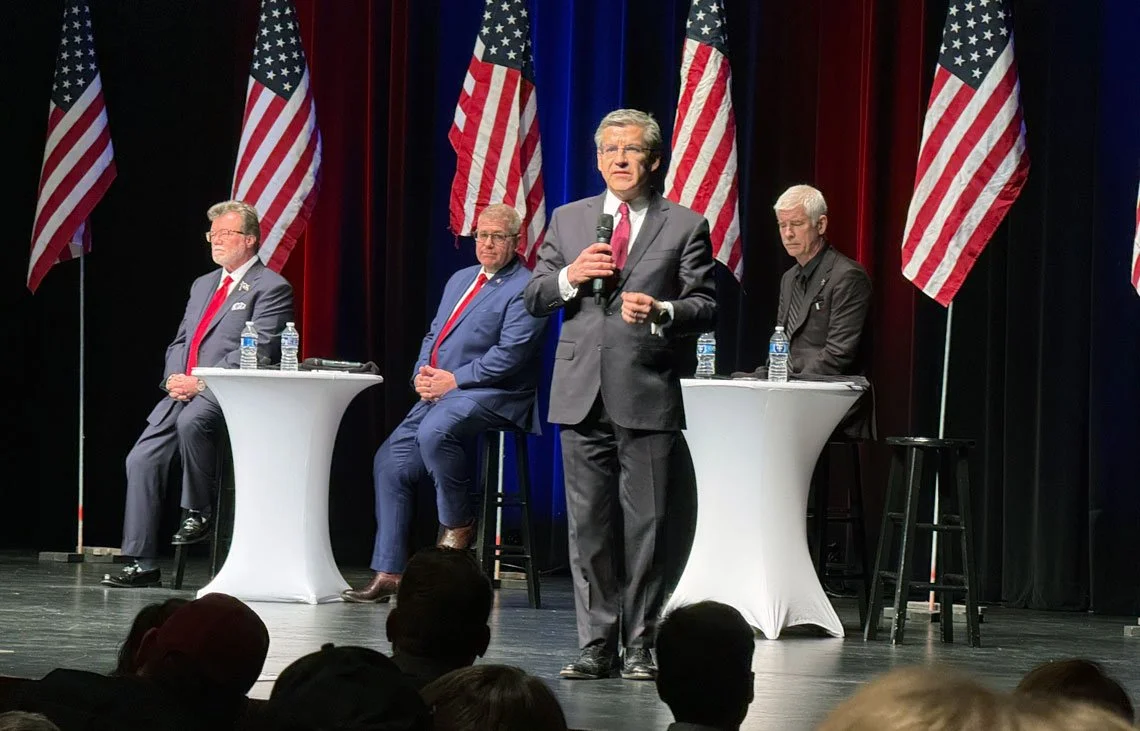
Ted Dabrowski pitches his candidacy for governor as his primary opponents – video gambling mogul Rick Heidner, former state Sen. Darren Bailey and DuPage County Sheriff James Mendrick – listen during a forum sponsored by the Tazewell County Republican Party on Jan. 15, 2026. (Capitol News Illinois photo by Brenden Moore)
Illinois ‘Clean Slate’ law allows automatic sealing of nonviolent criminal records
Advocates say measure could affect 1.7M Illinoisians, allow people to reenter workforce
By MAGGIE DOUGHERTY
Capitol News Illinois
mdougherty@capitolnewsillinois.com
Article Summary
Illinois will begin a process to automatically seal criminal records for millions of adults in the state, after Gov. JB Pritzker signed the ‘Clean Slate’ Act on Friday.
Critics objected to the estimated $18 million price tag associated with implementation, but proponents cheered the passage and said the bill will generate nearly $5 billion in economic impact to the state by allowing workforce reentry.
The state is required to create a taskforce to oversee the first five years of the process, with automated sealing set to begin in 2029.
This summary was written by the reporters and editors who worked on this story.
CHICAGO — Over 1.7 million Illinois adults will be eligible to have their nonviolent criminal records automatically sealed after Gov. JB Pritzker on Friday signed the long-debated ‘Clean Slate’ Act.
House Bill 1836 will require law enforcement agencies and circuit clerks to begin systematically sealing eligible criminal records by 2029. Existing law already allows people to apply for qualifying records to be sealed for certain crimes. The new law doesn’t add to the list of eligible offences, but rather streamlines and automates the process, removing legwork for those with records.
Of the 2.2 million Illinois adults with a past arrest or conviction, advocates estimate that 1.74 million, or 79%, could have their records partially or fully sealed because of the legislation.
Convictions for more serious offenses like sexual violence against minors, DUIs, reckless driving, cruelty to animals and serious violent crimes, including any that qualify for sex offender registration remain ineligible for sealing.
Law enforcement, courts and other relevant agencies will still have access to sealed records, but the public and private background check entities will not. Automatic sealing will apply to convictions as well as dismissed or reversed charges and arrests.
Rep. Jehan Gordon-Booth, D-Peoria, chief sponsor of the bill in the House, said the project was a personal one for her. Gordon-Booth recounted how an infraction from her youth was weaponized against her in her first run for office.
“I was given the chance to move beyond my mistake and to manifest my potential in service of my community, and I want the millions of other people in this state to have the same exact opportunity,” Gordon-Booth said. "This law is not about charity. It’s not about forgiveness. This is about justice. This is about redemption."
The legislation passed 39-17 in the Senate and 80-26 in the House during the fall veto session.
Yearslong process
Clean Slate proposals have been brought up by legislators for several years but only gained enough momentum to finally pass last year with the support of business groups including the Illinois Retail Merchants Association and Illinois Manufacturers Association.
Read more: Illinois criminal justice advocates tout ‘Clean Slate’ legislation as ‘economic boon’ | ‘Clean Slate’ Act to seal nonviolent criminal records loses in race against time | ‘Clean Slate’ Act passes after failing to clear legislature in past years
The bill faced criticism largely from Republican lawmakers who felt that more exemptions from automatic sealing were necessary and objected to the removal of a requirement that applicants pass a drug test.
However, proponents of the bill called drug tests and other administrative parts of the record-sealing process a hurdle that prevented many eligible Illinoisians from even applying. They pointed to a study finding that only 10% of those eligible to have records sealed in Illinois actually go through the process to do so.
Part of that process includes a backlog of record-sealing petitions, resulting in long wait times for applicants. Clean Slate Illinois, an advocacy group dedicated to ending permanent punishments for eligible persons, estimated it would have taken 154 years to clear the conviction backlog absent from this bill.
Critics also took issue with the price tag for circuit clerks to implement automated sealing procedures, estimated to cost $18 million. That cost, which does not account for implementation in Cook County, will be phased in over five years.
Democratic lawmakers said appropriations bills could be filed in future sessions to cover the cost, but Sen. Terri Bryant, R-Murphysboro, said during bill discussion that she feared it would ultimately result in a property tax increase for local governments.
Advocates of the bill say the cost will be recovered through the economic impact of giving millions of Illinoisians a second chance to participate in society and opening new opportunities for employment, voting and secure housing.
Although a 2021 amendment to the Illinois Human Rights Act prohibits employers from discriminating based on criminal convictions, many say they continue to face employment challenges due to their records.
For example, Pritzker pointed to data from advocates showing that 94% of employers and 90% of landlords use background checks to screen out applicants with records.
“For too long, we have been shutting doors for Illinoisians that are coming home from incarceration, nonviolent offenders trying to properly reenter society, get back on their feet and be law-abiding, productive members of society,” Pritzker said. “It’s a policy guided by punishment rather than rehabilitation.”
The Clean Slate Initiative — a bipartisan organization that seeks to pass automatic record sealing laws across the U.S. — estimates that sealing records will infuse $4.7 billion of lost wages back into the state’s economy annually.
Reducing barriers to employment also helps reduce recidivism, according to Kane County State’s Attorney Jamie Mosser.
“We know that the one anti-crime tool that we have, the most effective one, is when people have jobs,” Mosser said.
The law now instructs the state to convene a task force dedicated to overseeing implementation of the bill over the next five years and producing an annual report detailing progress.
Beginning Jan. 1, 2029, Illinois State Police will be responsible for notifying circuit clerks quarterly about records subject to Clean Slate. Circuit clerks will be responsible for sealing electronically held records within 90 days of notice from ISP.
Clerks will automate sealing of records created between 1970 and 2028 in three waves, with the final wave to be sealed by Jan. 1, 2034.
Capitol News Illinois is a nonprofit, nonpartisan news service that distributes state government coverage to hundreds of news outlets statewide. It is funded primarily by the Illinois Press Foundation and the Robert R. McCormick Foundation.
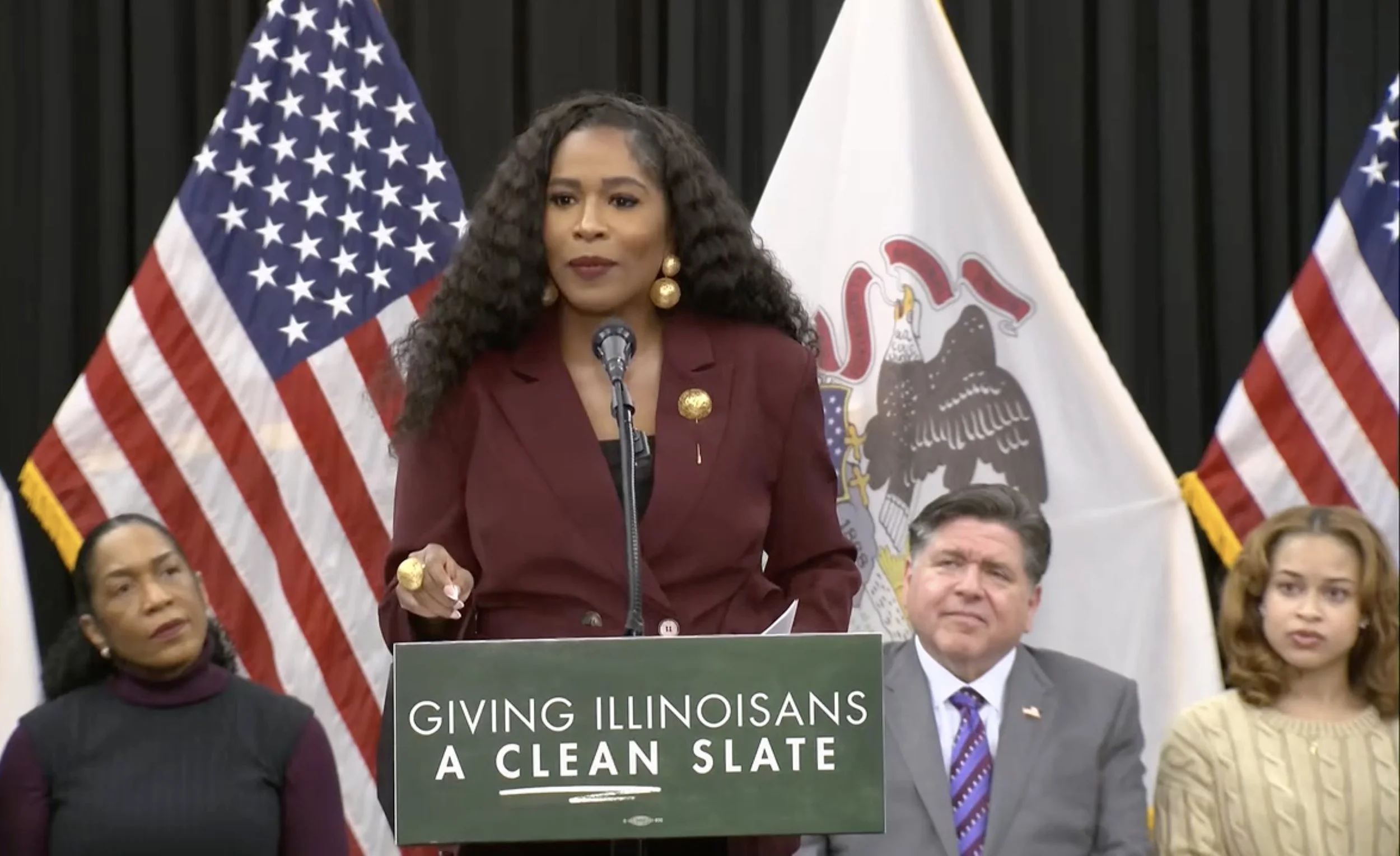
State Rep. Jehan Gordon-Booth, D-Peoria, speaks about the Clean Slate legislation she championed at a Jan. 16, 2026, bill signing ceremony. (Screenshot from Illinois.gov)
Illinois lawmakers’ 2026 theme: affordability
Democrats seeking to capitalize on Trump-driven chaos during election year session
By BEN SZALINSKI
Capitol News Illinois
bszalinski@capitolnewsillinois.com
Article Summary
Illinois lawmakers will be focusing on affordability issues this spring, House Speaker Emanuel “Chris” Welch said.
Welch said he is interested in raising revenue through a tax on millionaires, increasing insurance regulations in the state and addressing energy supply problems caused by data centers.
House Republican Leader Tony McCombie said she’s worried Democrats will try raising taxes but also shared the speaker’s concerns about data centers.
A new stadium for the Chicago Bears is low on Democrats’ lists of priorities.
This summary was written by the reporters and editors who worked on this story.
SPRINGFIELD — House Speaker Emanuel “Chris” Welch says this spring’s election-year legislative session will be squarely focused on tackling Illinois voters’ priorities.
“We're going to focus on things that help folks in their household budget,” Welch told Capitol News Illinois. “We're going to focus on things that help create good jobs, wage growth and opportunity. We're going to help our small businesses continue to grow and succeed.”
“Affordability” will be the word of the year, and Welch said members of his House Democratic caucus will be making decisions about their priorities through that lens.
A recent poll by Emerson College and WGN News showed the economy was by far the top concern for Illinoisan, with 40% of the 1,000 likely primary voters surveyed naming it their top priority.
“I certainly hope it doesn't mean another push for a progressive income tax or a tax on retirement,” House Republican Leader Tony McCombie, R-Savanna, told Capitol News Illinois.
Welch said he would like to see a graduated income tax enacted in Illinois, although he didn’t commit to making a constitutional amendment a legislative priority.
“Our job as a state is to help people and to address a lot of the systemic issues that we have here in Illinois,” Welch said. “We need revenue to address it.”
Raising revenue
Last year, 61% of Illinois voters signaled support for a tax on millionaires that would fund unspecified property tax relief when asked in an advisory referendum. Illinois has a flat tax enshrined in the state constitution, which means voters would have to approve an amendment to make it happen.
Welch said several members of his caucus are pushing for it, but the plan likely doesn’t have the votes quite yet. Gov. JB Pritzker has also said it won’t be a priority for him this spring, though members of the General Assembly are welcome to lead the charge.
Read more: Despite mounting budget pressure, graduated income tax remains political longshot
McCombie argued such a tax won’t address the affordability problem.
“When the Democrats say that their initiatives are for affordability of Illinois, that scares me because affordability means more revenue, which means more taxes,” McCombie said.
She speculated Democrats might wait to address any perceived revenue problems during the “lame duck” session in January 2027, after the election is over and before new lawmakers are sworn in, to avoid angering voters in November.
Lawmakers have faced tighter budgets in the last two years and resorted to targeted tax increases to boost revenue and continue growing spending. The challenge for lawmakers this spring will be closing a potentially multi-billion dollar deficit for fiscal year 2027 that begins on July 1.
The governor’s budget office in October projected the deficit would be $2.2 billion for FY27, although state revenues have outperformed expectations since then. Recent revenues numbers through December show that revenue is up 5% in the first six months of FY26 compared to FY25. But remains high over what federal funding Illinois will receive.
It's not unusual for lawmakers to face such a projected deficit when budgeting for a new year, as the governor’s office’s report is based on current spending and taxing policies. But since it was published, lawmakers in the fall approved a bill that decouples state and federal tax code in certain areas, muting some revenue-negative effects of recent federal legislation.
Responding to the feds
Over the last year, the Trump administration has cut off certain funding streams to Illinois and threatened many others.
In the last two weeks alone, the administration threatened to eliminate mental health funding, other types of health care funding over the state's policies on gender identity, and overall federal funding to Illinois because of its sanctuary policies.
“With all of the funding cuts that the administration has taken away from us, it has been probably the most challenging year of my governorship because we can’t replace the federal funding,” Pritzker told reporters in Pontiac on Wednesday. “It’s too large, and I think the federal government doesn’t understand the damage that they’re doing.”
Though the cuts are often struck down by the courts, they have kept the state’s budget in constant limbo. McCombie spun the blame for the cuts onto Pritzker’s anti-Trump rhetoric.
“I don't know if it's retribution, but it's certainly rhetoric, and certainly we’re being targeted,” McCombie said. “I wish the governor of Illinois was like other governors in other states that were Democrat leaning and worked with the president.”
States will also have to take on more spending following Congress’ passage of the One Big Beautiful Bill Act last summer.
The state’s cost to provide food assistance could rise by $700 million, while cuts to health care programs could push added costs to the state into the billions.
Most of those changes won’t be felt until FY28 and Welch said that means lawmakers have some time to evaluate them.
“We're going to address the things that we have right in front of us, things that we can control now,” he said. “We'll continue to try to plan as best we had can. But I do think it is an advantage that you can tackle these things year to year.”
Insurance regulation
Welch said part of this spring’s agenda will be picking up unresolved initiatives from the fall, which includes insurance reform. The issue has become a top concern for Pritzker, Welch and Senate President Don Harmon, D-Oak Park, since State Farm increased homeowners insurance rates in Illinois by 27% last summer.
Read more: State leaders seek more transparency from insurance companies
The leaders have said they want to pass legislation that would give the Illinois Department of Insurance more power to regulate insurance rates, hoping it leads to lower costs.
“We ought to have more transparency from our insurance companies, especially when they’re coming to ask for such an enormous increase and hike in insurance premiums from their customers,” Pritzker told reporters in Normal last week.
Data centers
Lawmakers could also consider further energy policy changes despite passing a major bill in the fall that they hope will eventually lower utility costs. Issues with supply and costs persist, particularly as power-hungry data centers continue to spring up around the state.
Read more: As state regulators warn of impending energy shortfalls, capacity prices rise again
“We're hoping that we can get something done on it,” Welch said. “It's a pretty complicated issue ... We got to address a whole wide range of concerns.”
Data centers have been the beneficiaries of tax incentives from the state and McCombie suggested the state should tighten requirements to receive them. The data center tax breaks passed with bipartisan support in Pritzker’s first term. According to the state’s 2024 report, 27 data centers had received incentives totaling an estimated $983 million in tax breaks and benefits.
“If an investor comes to a community, or investor comes to the state of Illinois, what is your plan for energy?” McCombie said. “You're going to have to have a plan for energy. I think that's an important piece that's been missing.”
Where the Bears rank
With lawmakers focused on cost of living and other issues, the Chicago Bears’ request for $800 million in infrastructure funding and property tax breaks for their stadium project in Arlington Heights is low on the General Assembly’s list of priorities.
“If, for some reason, circumstances were to change, and all of a sudden members are hearing that the Bears should be a top priority, it would be my job to listen to that,” Welch said.
Read more: Illinois House speaker calls Bears stadium ask ‘insensitive’ amid budget pressures
Illinois might have a competitor for its “pride and joy.” Indiana Gov. Mike Braun said during his State of the State address on Wednesday that he is “working hard” to bring the team to Northwest Indiana. NFL Commissioner Roger Goodell also joined team executives for tours of stadium sites in Arlington Heights and Hammond, Indiana, the Chicago Tribune reported.
“I think they're just using it as leverage,” Welch said. “You know, I think they know that Indiana is a state that doesn't support working families. They don't believe in labor rights. It's a very different state than the state of Illinois, and I think Chicago is very much a part of their identity.”
McCombie said many members of her caucus hope the Bears can reach a deal on a public-private partnership to stay in Illinois and move to Arlington Heights. She’s also taking the Bears’ threat to move to Indiana seriously.
“How embarrassing would it be if the Chicago Bears went to Indiana or any surrounding state?” McCombie said.
Capitol News Illinois is a nonprofit, nonpartisan news service that distributes state government coverage to hundreds of news outlets statewide. It is funded primarily by the Illinois Press Foundation and the Robert R. McCormick Foundation.
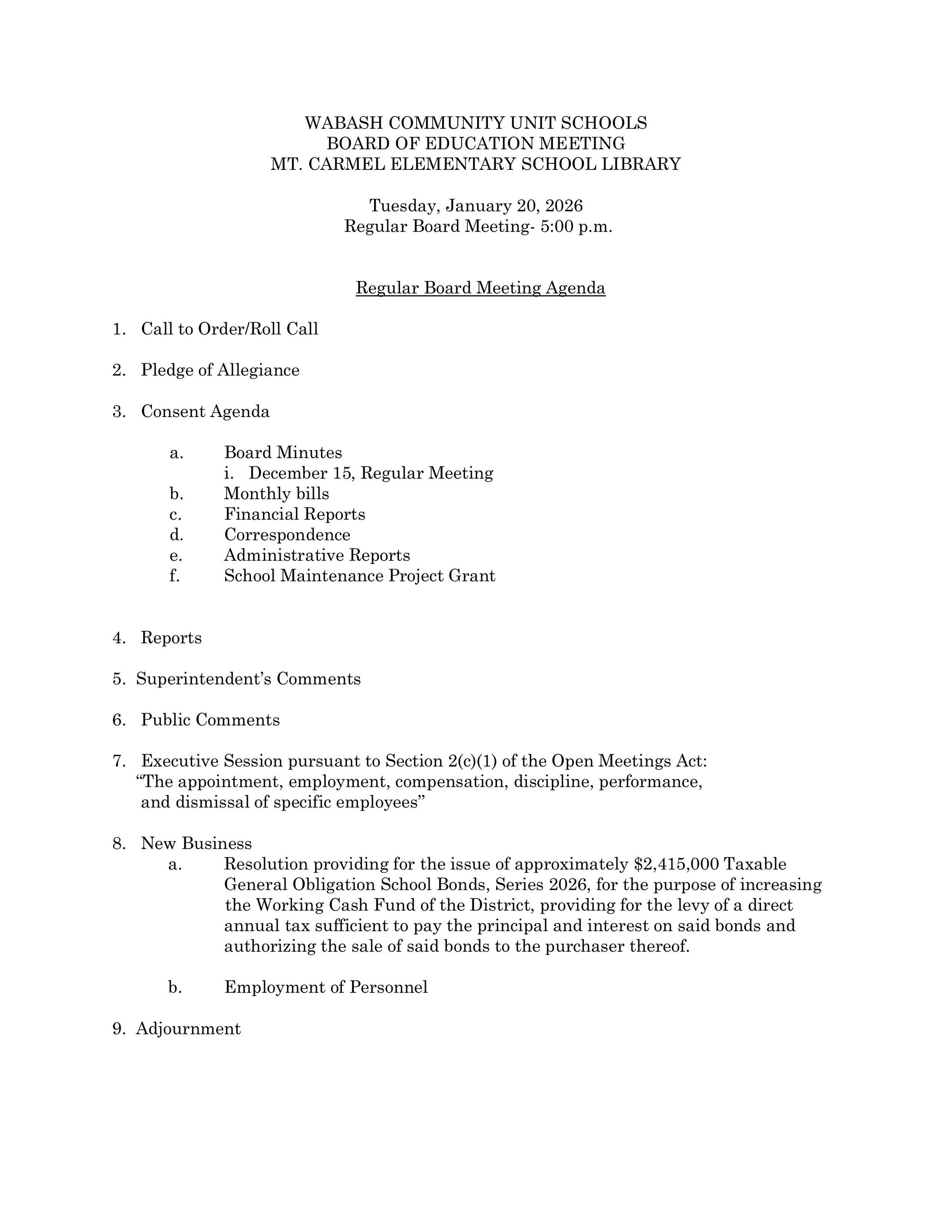
Wabash District #348 School Board Agenda
MLK holiday on Monday pushes the meeting back one day.
Allendale 2nd Quarter Honor Roll
Congrats to everyone that made the Honor Roll!