In-Custody Death at Richland County Jail

Olney, IL – The Richland County Sheriff’s Office is reporting an in-custody death that occurred at the Richland County Jail early this morning.

At approximately 5:55 a.m., correctional staff discovered 62-year-old Donald Pollock unresponsive in his cell. Pollock was unconscious and not breathing. Life-saving measures were immediately initiated, and emergency medical services were contacted. Despite these efforts, Pollock was pronounced deceased.

Pollock had been booked into the Richland County Jail the previous evening at approximately 8:00 p.m. on low-level firearms and drug-related charges.

The Illinois State Police have been contacted and will conduct an independent investigation into the circumstances surrounding Pollock’s death. Additionally, the Richland County Coroner’s Office will perform an autopsy to determine the cause of death.

At this time, no additional information can be provided out of respect for the Illinois State Police’s independent investigation. Updates will be shared as they become available.

Trump administration ends reimbursements for Illinois food programs

USDA funds are part of nearly $2 billion being withheld from Illinois, Pritzker says

By BEN SZALINSKI
Capitol News Illinois
bszalinski@capitolnewsillinois.com 

SPRINGFIELD — The Trump administration has stopped reimbursing Illinois for a program designed to help farmers and supply fresh food to Illinois food banks. 

The Illinois Department of Agriculture announced Tuesday that changes to federal funding mean Illinois is missing reimbursements for costs for the Local Food Purchase Assistance Program, or LFPA, and can no longer run the Resilient Food Systems Infrastructure Program, or RFSI.

The state agency said the federal U.S. Department of Agriculture has told states it will not reimburse them for any costs for the programs dating back to when Trump took office on Jan. 20. 

LFPA, which funds the Illinois-EATS program, uses federal funding to buy fresh products from farmers at a fair market value, then distributes the food to communities via food pantries and other similar programs designed to help people in need for no additional cost. All the food produced as part of Illinois’ program comes from socially disadvantaged farmers, including those the federal government defines as “new farmers.” 

More than 170 farmers have supplied food to 883 locations in Illinois through Illinois-EATS. 

Brenda Stewart, a farm owner in Pembroke Township in Kankakee County, received grant funding through the state. She told Capitol News Illinois she is most worried about the people who depend on her farm and the grant program to eat healthy.

“We’re still going to grow our food, we’re still going to provide what we can to our community, but not on the scale if they were able to receive,” Stewart said.

Pembroke Township has no grocery store and many residents are on food stamps, Stewart said. She said IL-EATS and her farm provide many of the residents one of their only avenues for fresh and healthy food.

The USDA approved $43 million for Illinois to carry out the program for several years, but the state is still missing $17.8 million, according to the Illinois Department of Agriculture. The state and USDA announced a partnership for the program in 2022.

The state has also not received $6.5 million for the RFSI grant program. The program is designed to improve capacity for food processors and distributors and improve access to better distribution markets. The state has established a grant program based on funding from the federal government and was in the process of selecting winners. 

There was no explanation for why reimbursements submitted after Jan. 19 were stopped, according to the state, and reimbursement claims have been returned. 

USDA did not return a request for comment Tuesday afternoon. 

“That program made the difference, and I would say to Elon Musk and President Trump, this is saving lives. This is teaching our babies how to eat fresh vegetables and how it helps their medical conditions,” Stewart said.

Read more: Pritzker says federal funds still being withheld; warns of further spending cuts

News that the two programs are on an indefinite hold comes a week after Gov. JB Pritzker and Illinois’ Democratic members of Congress sent a letter to the White House Office of Management and Budget asking why the Trump administration was withholding $1.9 billion from Illinois state agencies, nonprofits and businesses. 

“These are federal funds that were passed by Congress, signed into law, and promised to Illinois,” the letter stated. “State agencies, small businesses, nonprofit organizations, and everyday citizens across Illinois — including in rural communities — are still having trouble accessing allocated federal funding.”

A federal judge issued another ruling last week prohibiting the Trump administration from blocking distribution of federal funding. 

The end of funding for the programs comes as Illinois farmers face new tariffs imposed on three of the state’s largest trading partners and retaliatory tariffs against American goods. Illinois farmers exported nearly $14 billion of agricultural products in 2023, according to the Illinois Farm Bureau. 

“Illinois farmers’ products – from grains and feed, corn, soybeans, ethanol, beef, pork, and more – rely on access to foreign markets and will undoubtedly be impacted by these new tariffs either through increased prices or decreased market access,” Illinois Farm Bureau President Brian Duncan said in a statement. “This uncertainty coupled with an already struggling farm economy has farmers worried as we head into planting season.”


Capitol News Illinois is a nonprofit, nonpartisan news service that distributes state government coverage to hundreds of news outlets statewide. It is funded primarily by the Illinois Press Foundation and the Robert R. McCormick Foundation. 
With electricity price spikes coming, environmental and industry groups pitch reform

Officials hope to pass energy package this spring 

By ANDREW ADAMS
Capitol News Illinois
aadams@capitolnewsillinois.com

Illinois faces potential energy shortfalls and all-but-guaranteed price spikes for northern Illinois this summer, consumer and environmental advocates say.

Lawmakers and advocates in Springfield have proposed bills that they say would address their concerns — but it’s unclear whether they’re likely to pass by the General Assembly’s expected May 31 adjournment. 

Rising electricity demand from data centers has put pressure on the grid at the same time the federally regulated grid operators face a backlog in approving renewable energy projects. This has created concerns there won’t be enough energy-generating resources like power plants and solar panel installations in the coming years. 

Read more: State official: renewable investments ‘best thing’ to lower energy costs

On Tuesday, environmentalists made their pitch for how to bolster the state’s grid and implement new consumer protections. The plan comes from the Illinois Clean Jobs Coalition, a group of consumer and environmental advocates that has backed several major energy bills, including the Climate and Equitable Jobs Act. That law set Illinois’ goal to shut down all power plants using fossil fuels by 2050. 

The ICJC proposal, contained in twin House and Senate bills, offers several provisions aimed at stabilizing volatile electricity prices and increasing grid reliability. It’s a broader proposal than when the group announced an early version in its platform last spring

The bill would bump up the energy efficiency targets for the state’s major utility companies, increase their minimum spending on low-income efficiency programs and create “time of use” electric rates that offer electric customers lower rates at times of day with lower demand and higher rates at times of high demand.

Ameren Illinois, the utility for downstate, would have its energy efficiency targets increased more to match the already higher targets for ComEd, according to Kari Ross, Natural Resource Defense Counsel energy affordability advocate. 

A utility official raised concerns about the financial impact of that proposal. 

“It is essential that the financing costs of running energy efficiency programs is fully considered and Ameren Illinois’ ability to fund reliability improvements at reasonable interest rates is not put at risk,” Ameren spokesman Tucker Kennedy said in a statement to Capitol News Illinois. 

These elements were discussed — although ultimately abandoned — in negotiations around a package of energy legislation passed earlier this year. That bill was signed into law on Feb. 19.  

Read more: Worried about grid reliability, state officials seek to boost renewables, energy storage | Lawmakers give small boost to renewable developments, delay broader reform

The bill would also put new requirements on electric utilities and data center operators. Data centers — large facilities housing hundreds or thousands of computers that are constantly running — draw massive amounts of electricity and have been blamed for rising electric demand. 

Gov. JB Pritzker has made promoting high-tech industries, including data centers, a major plank in his economic development platform in recent years. During his time in office, dozens of data centers have opened in Illinois. 

Under the proposal, utilities would need to adopt rules requiring data center operators to cover the costs associated with their increased demand. The Illinois Environmental Protection Agency also would be directed to institute environmental standards for the growing industry. 

“It's no secret that these vast energy hungry facilities are coming to our neighborhoods, and while they promise progress, economic benefits and technological advancements, they also pose risks to the electric grid and place a huge pollution burden on neighborhoods that are already surrounded by toxic industry,” Gina Ramirez, a representative of the Southeast Environmental Task Force, said Tuesday.

Read more: Pritzker touts Illinois’ economic development at data center groundbreaking

The lead sponsor of the bill said it’s being considered by a working group made up of members of the House and Senate alongside advocates.

“We have learned a lot in the last few years because we worked on these comprehensive energy bills in a similar format to when we started on CEJA, so we're getting good at it,” Rep. Anne Williams, D-Chicago, said. “We have a bicameral group. We have the governor's office very heavily involved in the discussions. I think we're to the point that we agree about the problem. We agree about the topics that we need to focus on moving forward.” 

She and other advocates say this is an issue they intend to address this spring. 

Industry groups back battery storage  

Last week, lawmakers introduced a different proposal that would incentivize the development of energy storage. 

Proponents say the nascent technology can store energy generated by solar and wind energy at times of low demand so it can be used later at times of high demand, even if the sun isn’t shining and the wind isn’t blowing. 

The proposal would empower the Illinois Power Agency, which manages electricity procurement and planning, to begin procuring electricity from energy storage facilities. The agency would also be required to develop a “storage procurement plan” in a somewhat similar fashion to its renewable energy plan. 

It also lays out requirements for utilities to develop a plan to use “virtual power plants.” That’s a term for a system of resources like rooftop solar or house-scale batteries to be used to put energy into the grid. 

“Illinois energy demands will outpace our supply as early as 2030,” bill sponsor Sen. Bill Cunningham, D-Chicago, said last week. “Battery storage is needed to reduce that probability and the expense. Illinois residents are already experiencing the consequences of energy shortfalls.” 

Cunningham noted that “by the middle of the year,” customers in northern Illinois will see a $10 to $30 increase in monthly bills. 

Rep. Marcus Evans, D-Chicago, is sponsoring a House version with support from Rep. Barbera Hernandez, an Aurora Democrat who introduced a previous iteration of the proposal last year.

The bill is backed by at least six clean energy industry groups, including the Solar Energy Industries Association and American Clean Power — two powerhouse national lobbying organizations. 

“Energy demand in Illinois is rising fast, and solar and storage are the fastest technologies to develop and deploy,” Andrew Linhares, SEIA’s senior manager for the central region, said in a statement. “Investing in energy storage will not only strengthen the power grid, it will strengthen the state economy through good jobs, private investment, and reduced consumer costs.”

Battery storage has been a fiercely debated topic in Springfield in recent months. The ICJC proposal also contains an initial procurement round for energy storage at the Illinois Power Agency and requirements for a virtual power plant program. 

Both the ICJC reform package and the industry-backed battery storage bill await hearings in the Senate Energy and Public Utilities Committee before it can be considered by the full Senate. The House versions of the bills have not been assigned to committee. 

Capitol News Illinois is a nonprofit, nonpartisan news service that distributes state government coverage to hundreds of news outlets statewide. It is funded primarily by the Illinois Press Foundation and the Robert R. McCormick Foundation. 

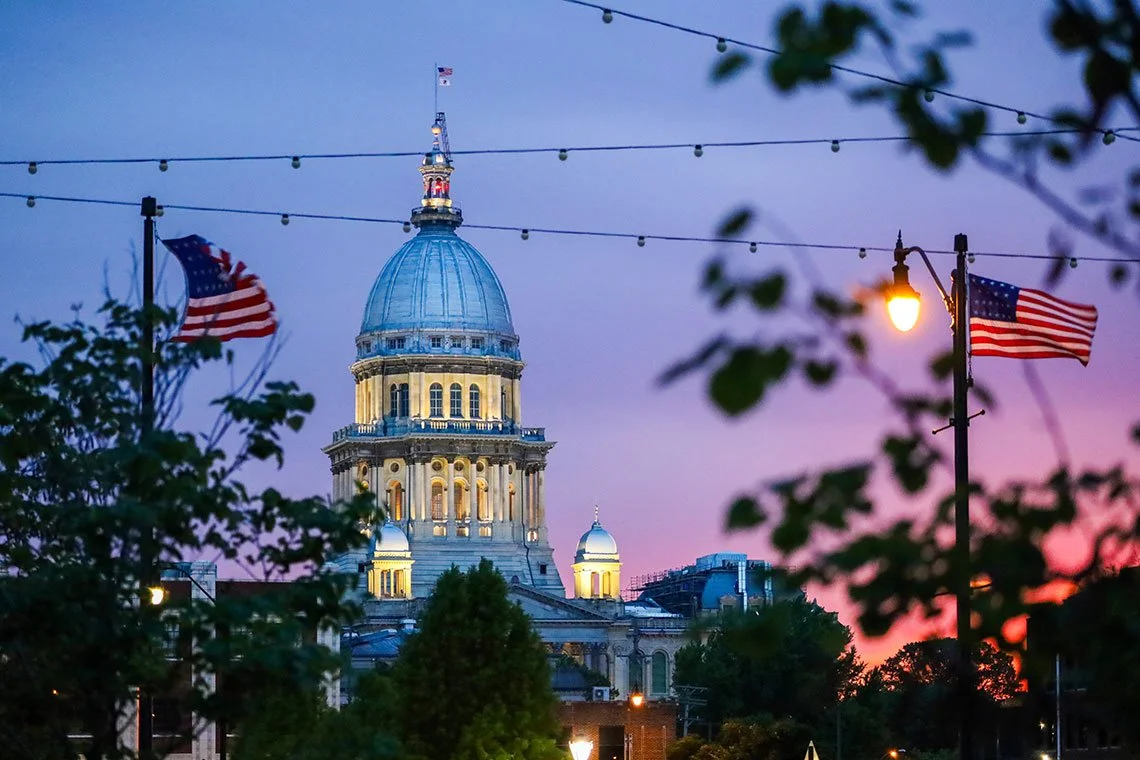
The Illinois Capitol in Springfield pictured in May 2024. (Capitol News Illinois file photo) 

Weinhoeft Appointed as Interim U.S. Attorney for the Southern District of Illinois

FAIRVIEW HEIGHTS, Ill. – U.S. Attorney General Pamela Bondi has appointed Steven D. Weinhoeft to serve as Interim U.S. Attorney for the Southern District of Illinois. Weinhoeft, returns to the role he held from 2018 to 2022, bringing decades of experience in federal law enforcement and complex litigation to the position.

“I am honored and excited to return to this role to serve the people of the Southern District of Illinois,” said Weinhoeft. “I look forward to working with Attorney General Bondi, our talented team, and our law enforcement partners to uphold the rule of law with integrity and resolve.”

Weinhoeft has served in the U.S. Attorney’s Office for the Southern District of Illinois since February 2008, holding multiple leadership roles, including United States Attorney (2018–2022), First Assistant U.S. Attorney, Chief of the Criminal Division, and Supervisor of the Organized Crime Drug Enforcement Task Force and Dangerous Drugs Division.

Weinhoeft has built a career spanning nearly 29 years. Before joining the U.S. Attorney’s Office, he spent more than a decade at the Sangamon County (Ill.) State’s Attorney’s Office, including serving as its First Assistant State’s Attorney and Chief of the Criminal Division. He has significant trial experience, and his expertise includes broad areas of state and federal law, including violent crime, multi-district and international drug conspiracies, public corruption, national security, and complex financial crimes. He has technical experience serving as the office’s criminal Computer Hacking and Intellectual Property Coordinator. He also serves as the Digital Asset Coordinator with specialized expertise in cryptocurrency and blockchain issues.

The Southern District of Illinois covers 38 counties in southern Illinois and serves approximately 1.2 million people. The district has offices in East St. Louis, Benton, and Fairview Heights.

As U.S. Attorney, Weinhoeft will again serve as the chief federal law enforcement official representing the United States in all civil and criminal litigation. His appointment took effect on Feb. 28, 2025, and he was formally sworn into the position by Chief United States District Judge Nancy J. Rosenstengel at a ceremony Monday.

County Commissioners Introduced To New Owners Of Friendsville Mine Solar Project

Plans for a 5,000 acre solar farm in Wabash County are still on despite a change in ownership of the company overseeing the project. At Monday’s Wabash County Commissioner meeting, John Jones of R3 Renewables said his company had sold a majority interest to RWE Clean Energy….

Matthew Spaccapaniccia of RWE says his company has operations around the world specializing in a variety of energy forms…

Spaccapaniccia said he hopes the new necessary applications will be submitted to local officials sometime this fall. In May of 2022, plans were announced to build a 5,000-acre solar farm on previously mined coal properties, such as former Friendsville Mine.

Laundromat To Locate On Market Street

A former video gaming business on Market Street will soon be home to a new laundromat. Bobby Arora of Wabash Laundry, LLC was at yesterday’s city council meeting to his company’s plan to use a Rural Business Development to fund the laundromat at 516 Market Street, which formerly was home to Rockstar Gaming Lounge. Mayor Joe Judge said the city is assisting Wabash Laundry with the grant process…

Judge called it a win-win saying the money would act as an incubator in helping other businesses in the future.

Illinois bill aims to add more oversight of homeschooling 

Following a ProPublica and Capitol News Illinois investigation, an Illinois lawmaker has introduced legislation that would require families to tell their public school districts if they are homeschooling.

By Molly Parker
& Beth Hundsdorfer
Capitol News Illinois

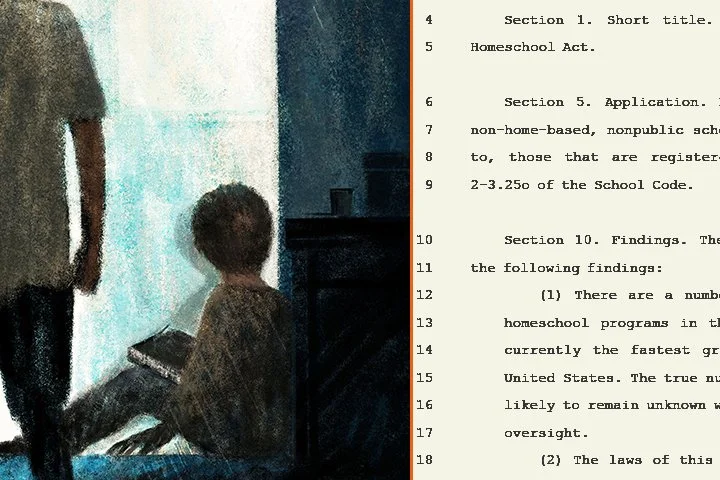
A new Illinois bill aims to add some oversight of families who homeschool their children, a response to concerns that the state does little to ensure these students receive an education and are protected from harm.

The measure, known as the Homeschool Act, comes after an investigation by Capitol News Illinois and ProPublica last year found that Illinois is among a small number of states that place virtually no rules on parents who homeschool their children. Parents don’t have to register with any state agency or school district, and authorities cannot compel them to track attendance, demonstrate their teaching methods or show student progress.

Under the new bill, families would be required to tell their school districts when they decide to homeschool their children, and the parents or guardians would need to have a high school diploma or equivalent. If education authorities have concerns that children are receiving inadequate schooling, they could require parents to share evidence of teaching materials and student work.

Illinois Rep. Terra Costa Howard, a Democrat from a Chicago suburb who is sponsoring the legislation, said she began meeting with education and child welfare officials in response to the news organizations’ investigation, which detailed how some parents claimed to be removing their children from school to homeschool but then failed to educate them.

Read more: “No Schoolers”: How Illinois’ hands-off approach to homeschooling leaves children at risk

The investigation documented the case of L.J., a 9-year-old whose parents decided to homeschool him after he missed so much school that he faced the prospect of repeating third grade. He told child welfare authorities that he was beaten and denied food for several years while out of public school and that he received almost no education. In December 2022, on L.J.’s 11th birthday, the state took custody of him and his younger siblings; soon after, he was enrolled in public school.

“We need to know that children exist,” said Costa Howard, vice chair of the Illinois House’s child welfare committee. The legislation is more urgent because the number of homeschooled children has grown since the pandemic began, she said. “Illinois has zero regulations regarding homeschooling — we are not the norm at all.”

The most recent numbers available at the time of the news organizations’ investigation showed nearly 4,500 children were recorded as withdrawn from public school for homeschooling in 2022 — a number that had doubled over a decade. But there is no way to determine the precise number of students who are homeschooled in Illinois, because the state doesn’t require parents to register.

The bill would require the state to collect data on homeschooling families. Regional Offices of Education would gather the information, and the state board would compile an annual report with details on the number, grade level and gender of homeschooled students within each region.

Read more: Illinois lawmaker calls for strengthening protection for homeschooled children

Homeschool families and advocates said they will fight the measure, which they argue would infringe on parental rights. Past proposals to increase oversight also have met swift resistance. The sponsor of a 2011 bill that would have required homeschool registration withdrew it after hundreds of people protested at the Illinois State Capitol. In 2019, a different lawmaker abandoned her bill after similar opposition to rules that would have required curriculum reviews and inspections by child welfare officials.

The Home School Legal Defense Association, which describes itself as a Christian organization that advocates for homeschool freedom, said it plans to host virtual meetings to educate families on the bill and ways they can lobby against it.

Kathy Wentz of the Illinois Homeschool Association, which is against homeschool regulations, said she is concerned about the provision that would allow the state to review education materials, called a “portfolio review” in the legislation. She said visits from education officials could be disruptive to teaching.

“There is nothing in this bill to protect a family’s time so they can actually homeschool without interruptions,” Wentz said. She pointed to a 1950 Illinois Supreme Court ruling establishing that homeschooling qualified as a form of private education and that the schools were not required to register students with the state.

The bill would require all private schools to register with the state.

The Capitol News Illinois and ProPublica investigation found that it’s all but impossible for education officials to intervene when parents claim they are homeschooling. The state’s child welfare agency, the Department of Children and Family Services, doesn’t investigate schooling matters.

Under the proposed law, if the department has concerns about a family that says it is homeschooling, the agency could request that education officials conduct a more thorough investigation of the child’s schooling. The new law would then allow education officials to check whether the family notified its district about its decision to homeschool and compel parents to turn over homeschool materials for review.

The increased oversight also aims to help reduce truancy and protect homeschooled students who lose daily contact with teachers and others who are mandated to report abuse and neglect, Costa Howard said. Some truancy officials said that under existing law they have no recourse to compel attendance or review what students are learning at home when a family says they are homeschooling.

Jonah Stewart, research director for the Coalition for Responsible Home Education, a national organization of homeschool alumni that advocates for homeschooling regulation, said the lack of oversight in Illinois puts children at risk. “This bill is a commonsense measure and is critical not only to address educational neglect but also child safety,” Stewart said.


Disturbance leads to arrest of Princeton man on multiple charges

On March 1, 2025, at 10:22 a.m. Gibson County Central Dispatch received a 911 report of a disturbance in the 200 block of West Vine Street in Patoka.  Multiple law enforcement officers from the Gibson County Sheriff’s Office and Princeton Police Department were dispatched to the scene.  Upon arriving on the scene Deputy Quinten Might met 31 year old Frankie Doughty of Princeton in front of the residence.  While speaking with Mr. Doughty he voluntarily surrendered to Deputy Might.  At that point Deputy Might placed Mr. Doughty into custody and then made contact with a victim in the disturbance.  Upon speaking with the victim Deputy Might contacted detectives with the Gibson County Sheriff’s Office and they began a thorough investigation into the incident. 
 
At the conclusion of their investigation Mr. Doughty was placed into custody and transported to the Gibson County Jail where he was charged with:
 
Battery-Serious Bodily Injury
Battery- W/ Prior Conviction
Battery- In Presence of a Child
Intimidation With a Deadly Weapon
Strangulation
Interference With the Reporting of a  Crime.
 
This is an active and ongoing investigation.
 
Arresting Officer Deputy Quinten Might
Assisting Officers were Deputies Bryan Small, Jennifer Loesch, and Sgt. Roger Ballard.  Also assisting in this investigation were Princeton Officers Craig Zurliene, Brandt George, and Jordan Smith.
 
All criminal defendants are to be presumed innocent until, and unless proven guilty beyond a reasonable doubt in a court of law.

Mount Carmel woman arrested on DUI charge

On February 28, 2025, at 10:58 p.m. Gibson County Deputies Eric Powell and Shawn Holmes conducted a traffic stop on a White Volkswagen after observing erratic driving behavior on US 41 near State Road 168.  Upon stopping the vehicle on State Road 168 just west of Casey’s General Store Deputy Powell identified the driver as 29 year old Eden Pellacer of Mount Carmel.  Upon speaking with Ms.  Pellacer Deputy Holmes detected the odor of an alcoholic beverage coming from the driver.  At that point he began a roadside DUI investigation.  Once the investigation was completed Deputy Holmes placed Ms. Pellacer into custody and transported her to the Gibson County Jail where she was charged with Operating a Vehicle While Intoxicated an A Misdemeanor.
 
Deputy Holmes was assisted in his investigation by Deputies Eric Powell, Wyatt Hunt, and Levi Sims.  Also assisting were Fort Branch Officer Lewis Jerrell and Haubstadt Officer Bryan Munnier.
 
All criminal defendants are to be presumed innocent until, and unless proven guilty beyond a reasonable doubt in a court of law.