Supreme Court declines to review Carbondale abortion clinic ‘bubble zone’ ordinance

Case could have overturned similar protections nationwide 

By CARLY GIST
For the Saluki Local Reporting Lab 

CARBONDALE — The U.S. Supreme Court this week declined to review a case challenging a since-repealed Carbondale ordinance intended to create a buffer between anti-abortion activists and those seeking reproductive care. 

Carbondale officials declined to comment and have given no indication they plan to reinstate the ordinance, though anti-abortion activists vowed to fight it again if they do. 

The case, Coalition Life v. City of Carbondale, sat on the Supreme Court’s schedule for four months before justices declined to take it up, effectively ending the case.

After the Dobbs v. Jackson Women’s Health Organization decision ending federal abortion protection, Republican-led states tightened abortion restrictions, while Illinois moved in the opposite direction, becoming a safe haven for abortion services. Three clinics opened in Carbondale, a small southern Illinois college town with direct access to multiple southern and Midwestern states and an Amtrak stop. 

Carbondale quickly became one of the closest options for patients traveling from across the region — but it also drew anti-abortion protesters and self-described sidewalk counselors who aim to dissuade women from seeking abortions. 

During a January 2023 Carbondale City Council meeting, residents and abortion rights activists decried what they called disruptive behavior outside clinics as patients and staff tried to enter. The council then voted unanimously to amend its disorderly conduct ordinance, making it illegal to come within 8 feet of a person without their consent within a 100-foot radius of a medical facility.

Following the enactment of this “buffer zone,” Coalition Life, an anti-abortion organization based in St. Louis, sued the City of Carbondale, claiming the ordinance was an infringement on free speech. Two lower courts had previously dismissed the challenge, citing Hill v. Colorado, a 2000 Supreme Court ruling that upheld a similar Colorado law.

In July, Coalition Life petitioned the Supreme Court to review the Carbondale case in hopes of overturning the Hill decision. Three days earlier, the Carbondale City Council rescinded the ordinance, but Coalition Life pressed forward with its petition, saying nothing would otherwise stop the city from reinstating it.

Though the case did not receive the four votes necessary for a review, Justices Samuel Alito and Clarence Thomas wanted to hear it, along with a similar case from Englewood, New Jersey. Thomas wrote, “a majority of this Court recently acknowledged that Hill ‘distorted [our] First Amendment doctrines.’” He noted that several justices have described Hill as “absurd,” “defunct,” and “erroneous.”

The justices argued that since Dobbs v. Jackson, any justification for buffer zones has been weakened.

“Hill has been seriously undermined, if not completely eroded, and our refusal to provide clarity is an abdication of our judicial duty,” Thomas wrote. “...I would have taken this opportunity to explicitly overrule Hill. For now, we leave lower courts to sort out what, if anything, is left of Hill’s reasoning, all while constitutional rights hang in the balance.”

Coalition Life Executive Director Brian Westbrook said this week his organization is “frustrated that the Supreme Court did not take up the case” but also is “very thrilled with Justice Thomas’ dissenting opinion.” 

Mayor Carolin Harvey and City Attorney Jamie Snyder declined to comment on the Supreme Court’s decision not to take up a review. 

Regardless, Andrea Gallegos, executive administrator of Alamo Women’s Clinic, said it represents a win for patients and reproductive care clinics. 

“Anti abortion protestors use harmful rhetoric and impede on patient privacy and safety everyday,” she said. “Any protections that cities can provide is vital.” 

Over a 2 ½ year period since the Dobbs decision, Carbondale police had responded to more than 250 calls at the city’s three reproductive health clinics, according to police records obtained by the Saluki Local Reporting Lab. 

Though some were requests for medical assistance and other miscellaneous calls, the total included more than 60 reports of public disturbances, safety concerns and traffic issues, including disorderly conduct, suspicious activity, people in the roadway and requests for traffic enforcement. Nearly 100 calls — the vast majority —  were requests for extra police presence around the clinics. Gallegos said safety and security is at the forefront of Alamo’s values, and the organization will continue to respect patients’ decisions and provide protections. 

“We know that (Coalition Life) and others alike will never stop,” she said. “We know that they are always planning their next move on the infringement of the rights of our patients. We will move forward with continuing to provide care and helping to dismantle their misinformation campaigns.” 

Westbrook said Coalition Life will continue its sidewalk counseling while monitoring the City Council’s next move.

“The city council should know loud and clear that if they plan to put yet another bubble zone in place in Carbondale, we will be right back in court,” he said. 


This story was produced for Capitol News Illinois through the Saluki Local Reporting Lab, supported by grant funding from the Pulitzer Center, the Illinois Press Foundation and the SIU Foundation.

Capitol News Illinois is a nonprofit, nonpartisan news service that distributes state government coverage to hundreds of news outlets statewide. It is funded primarily by the Illinois Press Foundation and the Robert R. McCormick Foundation.  


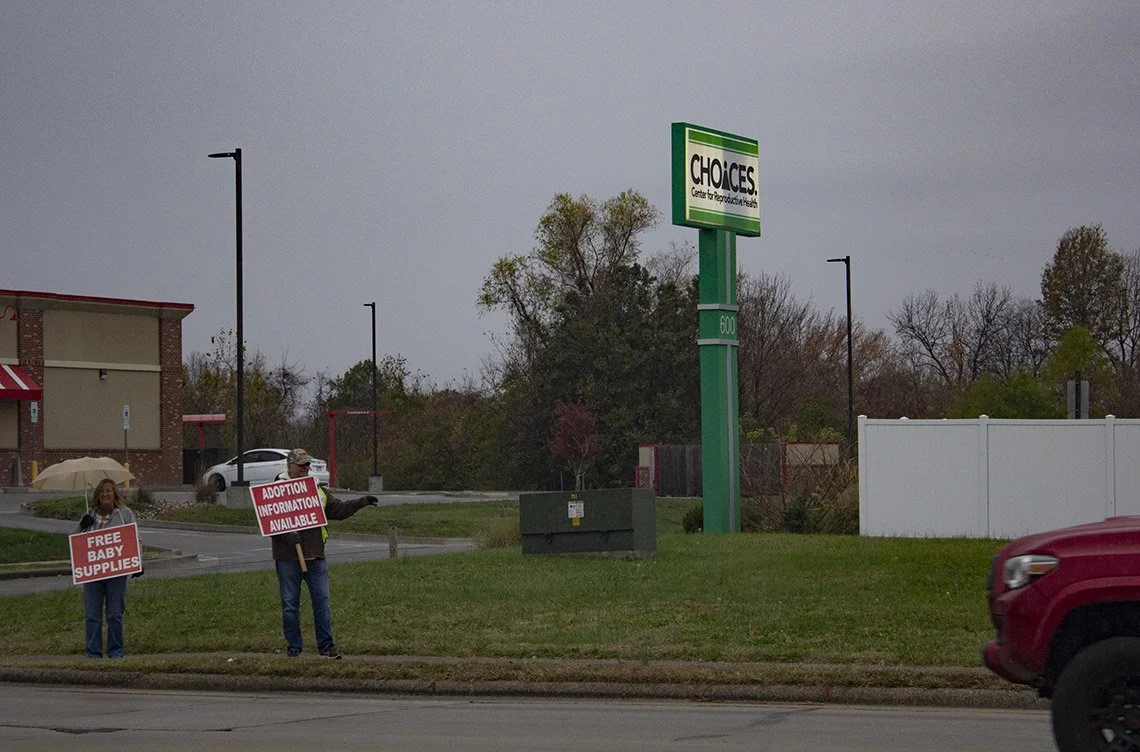
Anti-abortion activists display signs and wave at passing cars on a rainy morning in November in front of CHOICES Center for Reproductive Health in Carbondale. (Saluki Local Reporting Lab photo by Carly Gist)

WGH Foundation Event Reaches Impressive Mark

Next week’s Wabash General Hospital Foundation’s Soiree is already a financial success. At Monday’s hospital board meeting, foundation executive director Danielle Stevens said the event has already raised more than $100,000. The Soiree generates money for the foundation’s medical scholarship program. A few tickets remaining available for the Soiree set for Friday, March 7th at the Anderson Building.

County Commissioners Donate To Local Events

A change has been made in the way the Wabash County hotel/motel tax fund helps local events. Instead of Chamber and Merchant’s representatives attending multiple county commissioner meetings throughout the year requesting the funding, the yearly funding was taken care of at last week’s meeting. Chamber executive director Lesley Hipsher’s requests for $7,500 for Ag Days in addition to $3,000 for the Christmas Uptown celebration.

Trump to implement new tariffs on Illinois’ largest trading partners as state faces uncertainty over economic projections

April taxes could provide revenue boost 

By BEN SZALINSKI
Capitol News Illinois
bszalinski@capitolnewsillinois.com 

SPRINGFIELD — As the Governor’s Office of Management and Budget Director Alexis Sturm warned a House committee that uncertainty about President Donald Trump’s economic and administrative policies could affect Illinois revenue, the president announced new tariffs will take effect Tuesday on imports from some of Illinois’ top trading partners. 

After initially pausing implementing 25% tariffs on products from Canada and Mexico, Trump announced in a social media post Thursday morning that tariffs will begin on March 4. In addition, he said the U.S. will add another 10% tariff on Chinese goods. 

The president alleged drugs were still coming into the United States at “unacceptable levels.” 

Meanwhile in the Illinois Statehouse, Sturm told the House Revenue and Finance Committee that revenue projections in Gov. JB Pritzker’s introduced budget account for the possibility of tariffs affecting the economy.

“There’s a lot of uncertainty in our outlook based on what’s going on at the national level regarding tariffs, tax policy, what the Federal Reserve is going to do,” Sturm said. 

Read more: Trump tariffs could impact hundreds of billions of dollars of trade in Illinois

The governor’s $55.2 billion budget is based on the December S&P Global forecast that projected stable economic growth and considered some of Trump’s top economic policies, including tariffs and tax cut extensions, would be implemented, Sturm said. 

After the governor’s budget office in November projected flat revenue growth for fiscal year 2026 based on the September S&P forecast, the December forecast caused state officials to revise their forecast upward by $1.8 billion in the upcoming fiscal year.

Read more: Pritzker calls $55.2B budget ‘responsible and balanced’ – but warns Trump policies could upend it

There’s also a risk that Trump’s administration pulls back federal funding states are expecting. The current fiscal year budget for the state expects to receive upwards of $20 billion in federal funding, but earlier this week, Pritzker wrote a letter to the federal Office of Management and Budget saying the federal government is withholding $1.9 billion that has already been promised to Illinois.

Read more: Pritzker says federal funds still being withheld; warns of further spending cuts

“There’s no real way to prepare for that,” Sturm said. “Obviously we are watching closely what’s going on at the national level, but I think the governor has tried to make clear that this state at this level of operations can’t cover any decisions that the federal administration or Congress makes to reduce its payments to Illinois.”

Asked whether there are any spending cut plans for downturns in revenue projections, Sturm the governor’s office doesn’t have a backup plan.  

“At this point, no,” Sturm said. “I think the important thing to watch is what happens in April.”

Sturm hinted there could be some good news for state finances when income tax revenue is reported at the end of April. She said state officials are expecting a “pretty significant April tax payment,” which could cause state officials to reevaluate their revenue projections for the current fiscal year.

Personal income tax receipts for the state are up 8% for the fiscal year through January, according to the non-partisan Commission on Government Forecasting and Accountability

But new tariffs on imported goods could add more uncertainty to the state’s economy. 

IMPORT PARTNERS

Illinois received $127.8 billion of imports from China, Canada and Mexico in 2023, according to the Department of Commerce and Economic Opportunity. Canada is Illinois’ largest partner for both imports and exports, with the state receiving $65.6 billion of goods from the country in 2023.

Illinois is highly dependent on oil and gas from Canada, meaning consumers could be in line for higher energy and gas prices due to Trump’s tariffs. About 72% of Illinois’ imports, or $47.4 billion, from Canada in 2023 was oil and gas, according to DCEO.

China had the second-highest volume of imports to Illinois in 2023, with $43.9 billion worth of goods, including $27.2 billion of computers and electronics.

CANADIAN ENERGY

Illinoisans might end up paying more for alcohol and cars if tariffs are implemented on Mexican goods. Illinois received $18.3 billion of imports from Mexico in 2023, including $5.9 billion of beverages and tobacco and $2 billion of transportation equipment.

China, Canada and Mexico received $37.9 billion of exports from Illinois in 2023, nearly half of the state’s exports for the year. This included a combined $3 billion in agricultural goods to China and Mexico and nearly $4 billion of machinery to Canada. 

Canada’s proposed targeted tariffs include penalties on American exports of food and metal products, according to the Canadian Broadcasting Company. Illinois sent $3.2 billion of food and primary metal manufacturing products to Canada in 2023.


Capitol News Illinois is a nonprofit, nonpartisan news Service that distributes state government coverage to hundreds of news outlets statewide. It is funded primarily by the Illinois Press Foundation and the Robert R. McCormick Foundation.
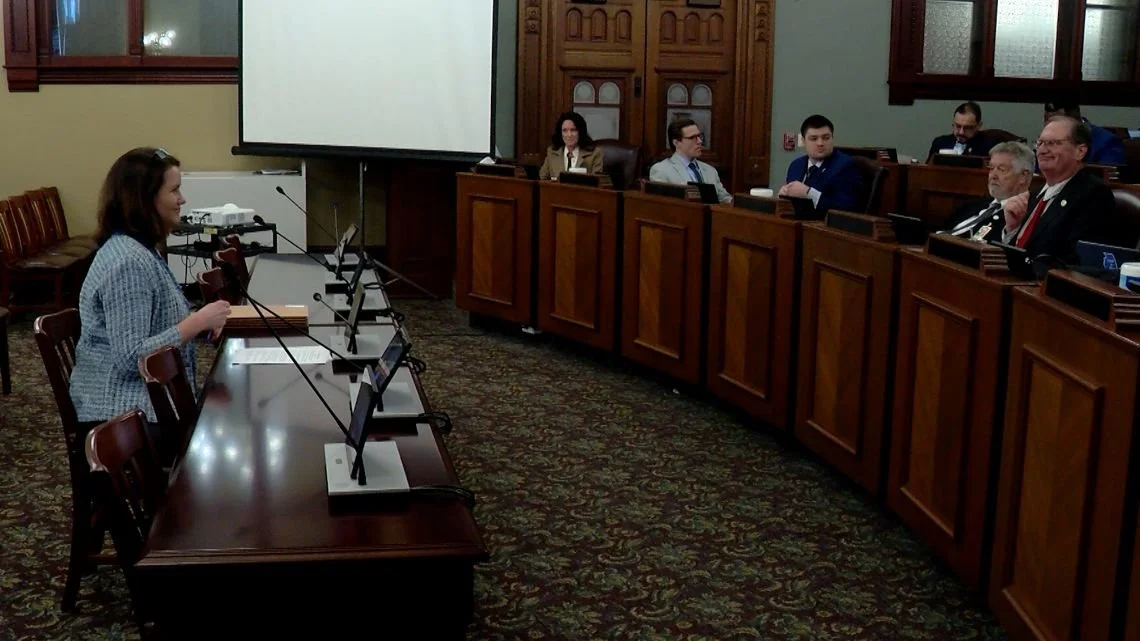
Governor’s Office of Management and Budget Director Alexis Sturm speaks to the House Revenue and Finance Committee in Springfield on Thursday, Feb. 27, 2025. (Capitol News Illinois photo by Andrew Campbell)


Legislation aims to help first-time homebuyers

Bill would create tax deductible accounts to save for down payments

By PETER HANCOCK & JADE AUBREY
Capitol News Illinois
news@capitolnewsillinois.com

SPRINGFIELD – As the cost of housing continues to rise, Illinois realtors are pushing legislation to make it easier for first-time homebuyers to save for a down payment.

Senate Bill 148 would enable Illinois residents to open a special kind of savings account that could only be used to pay eligible costs for the purchase of a single-family residence. Deposits into those accounts would be deductible from state income taxes with some limitations.

The deductions would be limited to $5,000 per year for individuals and $10,000 per year for joint accounts, up to maximum aggregate amounts of $25,000 per individual and $50,000 for joint accounts over a 10-year period.

The accounts would be available to Illinois residents who have not owned or purchased, either individually or jointly, a single-family residence during the prior 10 years. That would include both first-time and “second-chance” buyers – people who may have purchased a home previously and now want to get into the ownership market again.

“When you look at the median sales price of a home in Illinois in 2024, it was almost $300,000,” Sen. Christine Castro, D-Elgin, said during a news conference Thursday. “That's 8% higher than in 2023 and almost 40% then higher than in 2019. So you see the rapid (rising) cost of homes.”

Jim Clayton, senior director of state government affairs for the trade group Illinois Realtors, said the bill is one of several initiatives the industry has introduced this year to help alleviate the burden of rising home prices.

The bill has been assigned to the Senate Revenue Committee and is awaiting further action.

Senate Republicans push property tax relief measures

Senate Republicans are urging passage of a handful of bills they say are aimed at providing property tax relief to Illinois homeowners, something they say Democratic Gov. JB Pritzker did not address in his budget proposal last week.

“He talked about affordable housing,” Sen. Jil Tracy, R-Quincy, said during a Statehouse news conference Thursday. “And yes, that's very necessary. First-time homeowners are facing difficulties in buying homes, because what you have to consider most of all is, can you make the property tax payment? You can't address affordable housing unless you first address what's going on with Illinois's high property tax and high property tax amounts.”

Sen. Chapin Rose, R-Mahomet, is sponsoring Senate Bill 2246, which would put a cap increases in the assessed valuation of residential property to the rate of inflation over the previous 12 months. He said it would help bridge the rapidly increasing gap between what senior homeowners collect from Social Security and the increasing amounts they’re being charged for property taxes.

“This is real, this is hurting people, and it's all scalable,” he said. “Whether you live in $100,000 home or $200,000 home or $4,000 home, it's becoming unaffordable.”

The bill has not yet been assigned to a committee.


Capitol News Illinois is a nonprofit, nonpartisan news service that distributes state government coverage to hundreds of news outlets statewide. It is funded primarily by the Illinois Press Foundation and the Robert R. McCormick Foundation. 


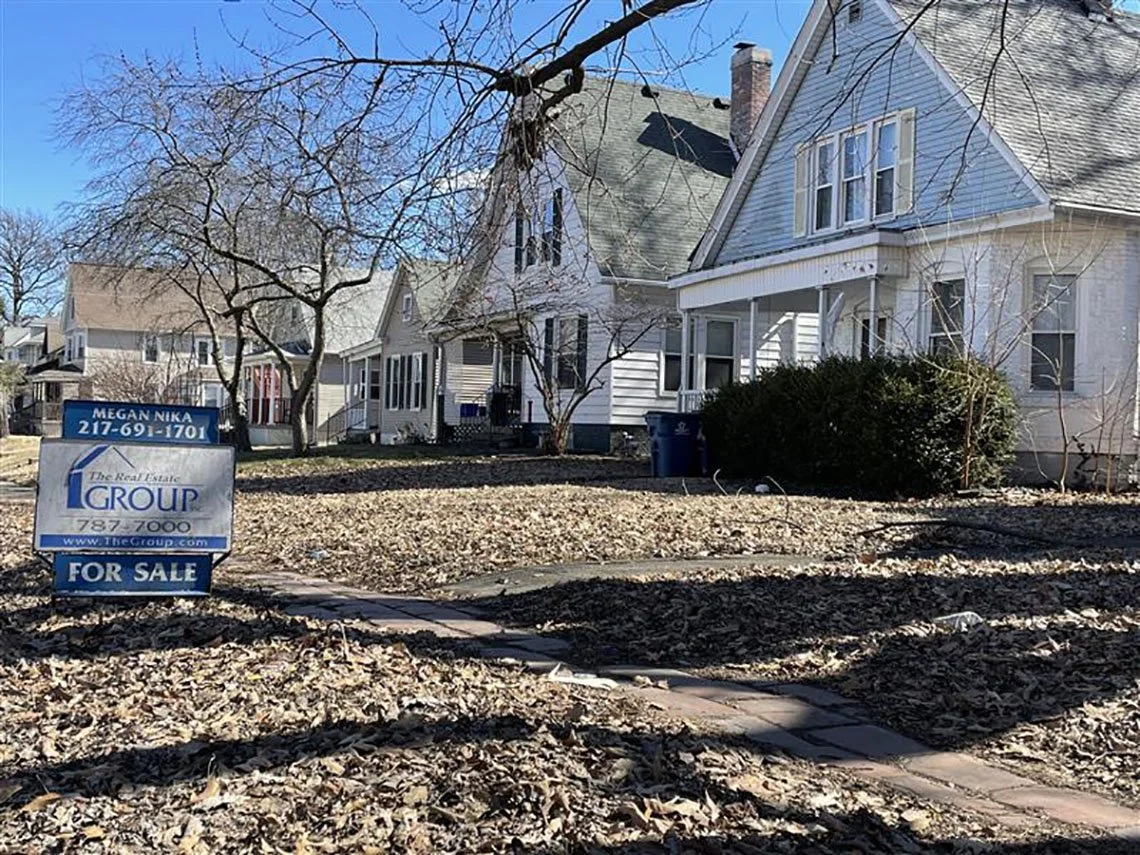
A bill pending in the General Assembly would allow first-time home buyers to set up tax-deductible savings accounts to save up for their down payment. (Capitol News Illinois photo by Andrew Campbell)

Owensville man arrested on confinement charge

On February 26, 2025, at 5:42 a.m. Gibson County Central Dispatch received a 911 report of a disturbance that appeared to be occurring in a moving vehicle.  Communications Officers Shannon Gibson had to make contact with the female multiple times due the connection abruptly being lost.  Communications Officer Gibson Continued investigating the location of the female all the while repeatedly reestablishing phone connections and relaying information to officers on the road.  Deputy U.B. Smith began an investigation into the owner of the phone number, and was able to identify the caller.  During this time the victim contacted Gibson County Central Dispatch and advised that she was at home and ok.
 
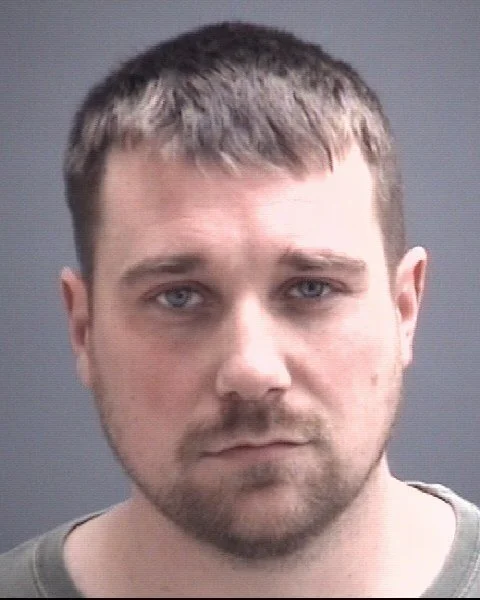
At that point Communications Officer Gibson dispatched all county units to the victim’s residence to investigate the incident.  At that point statements and evidence were collected on scene that indicated 35 year old Jared Wilson of Owensville was the suspect in the crimes of Criminal Confinement and Interference in the Reporting of a Crime.  At that point Deputy U.B. Smith went to Mr. Wilson’s location and collected a statement from him.  Once the investigation was concluded Mr. Wilson was taken into custody and transported to the Gibson County Jail where he was charged with Criminal Confinement and Interference in the Reporting of a Crime.      
 
Assisting Deputy Smith in his investigation was Deputy Michael Bates and Sgt. John Fischer. 
 
All criminal defendants are to be presumed innocent until, and unless proven guilty beyond a reasonable doubt in a court of law.
 

Fort Branch man arrested for DUI

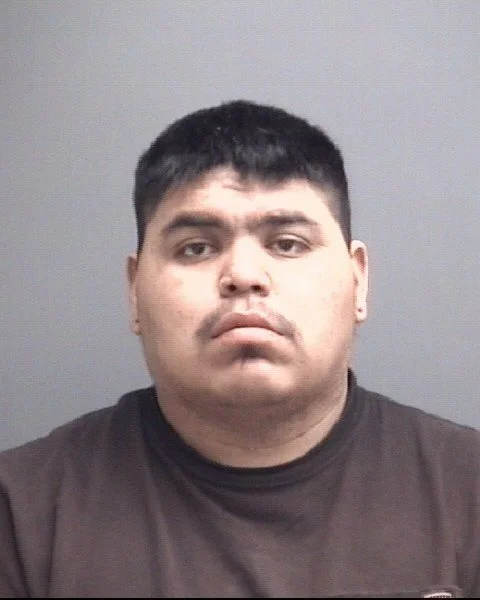
On February 23, 2025, at 8:20 p.m. Gibson County Deputy Shawn Holmes conducted a traffic stop on a Black 2024 Chevy Equinox for speeding on US 41 near Fort Branch.  Upon conducting the stop on County Road 800 South near US 41 Deputy Holmes identified the driver as 33 year old Logan Schmitt of Fort Branch.  During the roadside encounter Deputy Holmes detected the odor of alcohol coming from the driver and began a roadside DUI investigation.  At the conclusion of the investigation Mr. Schmitt was taken into custody and transported to the Gibson County Jail where he was charged with Operating a Vehicle While Intoxicated.   
 
All criminal defendants are to be presumed innocent until, and unless proven guilty beyond a reasonable doubt in a court of law.

Arizona man arrested on DUI charge

On February 23, 2025, at 2:59 a.m. Gibson County Central Dispatch received a 911 report of a possible impaired driver on US 41.  Communications Officer Bethney Anthis was able to get a detailed description of the vehicle and was able to advise county and state units that the vehicle, a White pickup with a yellow tool box in the back was swerving all over US 41.  Ultimately officers were not able to find the vehicle at that time due to call volume and lack of available units. 
 
However during routine patrol Deputy Sims located a vehicle matching the description stopped on US 41 near Interstate 64 at 3:42 a.m.  Upon approaching the vehicle, a White 2004 Chevy Silverado Deputy Sims found the driver unconscious and behind the wheel of the running vehicle.  Deputy Sims attempted to wake the driver by knocking on the window, but the driver would not wake up.  At that point Deputy Sims opened the vehicle door and again tried to wake the driver using a sternum rub.  After no response to the sternum rub Deputy Sims requested a Gibson County Ambulance be dispatched to the scene for assistance.  After multiple sternum rubs were administered the driver regained consciousness.  At that point Deputy Sims was able to identify the driver as 25 year old Brandon Tacheene of Cameron, Arizona.  While speaking with Mr. Tacheene Deputy Sims detected multiple clues that the driver was under the influence of alcohol.  At that point Deputy Sims began a roadside DUI investigation which resulted in Mr. Tacheene being taken into custody and transported to the Gibson County Jail where he was charged with Operating a Vehicle While Intoxicated. 
 
Deputy Michael Bates assisted Deputy Sims in the investigation of this incident.
 
All criminal defendants are to be presumed innocent until, and unless proven guilty beyond a reasonable doubt in a court of law.

Evansville man arrested for Reckless Driving

On February 22, 2025, at 3:12 p.m. Deputy Eric Powell observed a Silver Toyota Tacoma traveling Southbound on Interstate 69 in excess of 100 mph.  Deputy Powell was able to stop the vehicle near State Road 168 and upon approaching the vehicle he identified the driver as 23 year old Kelvin Rivera of Evansville.  During a brief roadside investigation Mr. Rivera was taken into custody and transported to the Gibson County Jail where he was charged with Reckless Driving and Operator Never Having Received a Valid License.  Three other individuals inside the vehicle were released at the scene. 
 
Deputy Powell was assisted in his investigation by Deputies Shawn Holmes, Wyatt Hunt, Riley Farmer, James Tucker, and Sgt. Loren Barchett. 
 
All criminal defendants are to be presumed innocent until, and unless proven guilty beyond a reasonable doubt in a court of law.

Former employee sentenced to federal prison for embezzling more than $135,000 from Dupo School District


EAST ST. LOUIS, Ill. – A judge sentenced a Waterloo woman to 15 months’ incarceration, requiring three months in the Federal Bureau of Prisons and 12 additional months in community confinement, for embezzling more than $135,000 from Dupo Community Unit School District #196 while employed by the district.

Linda J. Johnson, 58, pleaded guilty in federal court to one count of theft from a federally funded program. In addition to imprisonment, Johnson was ordered to pay $135,566.80 in restitution to Dupo Community Unit School District #196 and the Ohio Casualty Insurance Company.

According to court documents, Johnson committed the embezzlement while employed in an administrative support role in the superintendent’s office between 2016 and 2022.

In this position, Johnson was responsible for depositing cash and checks into the district’s activities account intended to support student athletics, clubs and extracurriculars. She stole donations and funds raised to support yearbook, cheer, dance, vending machines, trivia nights, science clubs, ROTC and more.

To conceal her crime, Johnson drafted bank deposit slips reflecting the correct amount of cash and checks received, but later she prepared a second set of fraudulent deposit slips that only accounted for the checks, while she kept the cash.

Johnson committed 165 fraudulent transactions, and the loss to the school district was $135,566.80. OCIC incurred a portion of the loss after issuing a Public Official Bond insuring Johnson’s duties as the bookkeeper.

District officials said the sentencing holds Linda Johnson responsible for severely violating public trust, for the crime directly harmed students, staff and the Dupo School District. The district is resolute in its commitment to safeguarding district resources and ensuring accountability. The district extends sincere gratitude to the U.S. Attorney’s Office, FBI and Dupo Police Department for their work on this case. The district believes the court's decision sends a clear message that such actions will not be tolerated in schools.

The Dupo Police Department and the FBI Springfield Field Office contributed to the investigation, and Assistant U.S. Attorney Steve Weinhoeft prosecuted the case.