Wabash County Board Agenda

REGULAR MEETING Monday, March 3, 2025

AGENDA

1) Call to order:

2) Approve minutes of previous meeting:

3) Commissioner’s reports:

4) Officer’s reports:

5) Old Business:

a, Phase 4 of the HVAC project.

6) New Business:

a. Resolution No. 2025-10, State’s Attorney Appellate Prosecutor Program.

b. Tara Buerster from the University of Illinois Extension Service.

c. Matthew Spaccapaniccia with RWE Clean Energy to introduce RWE, the solar project and himself as the Developer.

7) Executive Session:

8) Correspondence:

9) Approval of payment of claims presented:

10) Adjournment:

Another Delay In Case Of Former Deputy

There’s been yet another continuation in the court case of former Wabash County Sheriff’s Deputy Chase Cheadle. Yesterday, Cheadle was due in court for a preliminary hearing but special prosecutor Brian Towne and defense attorney Jonathan Turpin agreed to continue the case until April. Now,  Cheadle’s preliminary hearing is set for April 10th. It’s now the fourth straight month, dating back to November 14th that Cheadle’s preliminary hearing has been delayed. Cheadle, who was the sheriff’s department’s canine handler, faces four charges of official misconduct, 1 count of Theft, 1 count of Cruelty to animals, and 2 counts of Animal owner duties. Five of the eight charges are felonies. Cheadle found Kiki unresponsive last July and was arrested following an investigation. He resigned from the sheriff’s department on August 8th.  

2025 IL Junior High Regional Science Fair Competition

Competion Results
SARAH DOUGHERTY | 8th Grade Science Teacher

Mt. Carmel Junior High School represented at the Regional Science Fair in Carbondale, IL, on February 25, 2025. Students secured the right to compete by earning the top scores at the local judging. Lucy Hall, Josie James, and Greyson Roberts competed individually. Luis Bohorquez-Atencio and Dani Arano competed as a partner group. Students were judged on oral presentation skills, a visual display, a written report, and evidence of scientific process skills. All Mount Carmel 8th-grade students competing were awarded the highest level "Gold" ranking based on the scores received, AND they all received a bid to compete in the State Science Fair held at the University of Illinois in May.

Pictured L-R: Sarah Dougherty, 8th Grade Science Teacher, Lucy Hall, Josie James, Greyson Roberts, Luis Bohorquez- Atencio and Dani Arano.

Students receiving special recognition or awards at the Region 08 Science Fair held at SIU Carbondale on February 25, 2025, included (pictured L-R) Dani Arano and Luis Bohorquez-Atencio, who won a monetary award from the Office of Vice Chancellor for Diversity, Equity, and Inclusion. Greyson Roberts is pictured with his and Josie James (not pictured) “Gold “ ranking certificate. Lucy Hall also won a monetary award from the Office of Vice Chancellor for Diversity, Equity, and Inclusion. These students ALL punched their ticket to continue to compete at the State Science Fair.

Wabash Valley College Announces Mireya Rose as Student Trustee for 2025-2026 Term

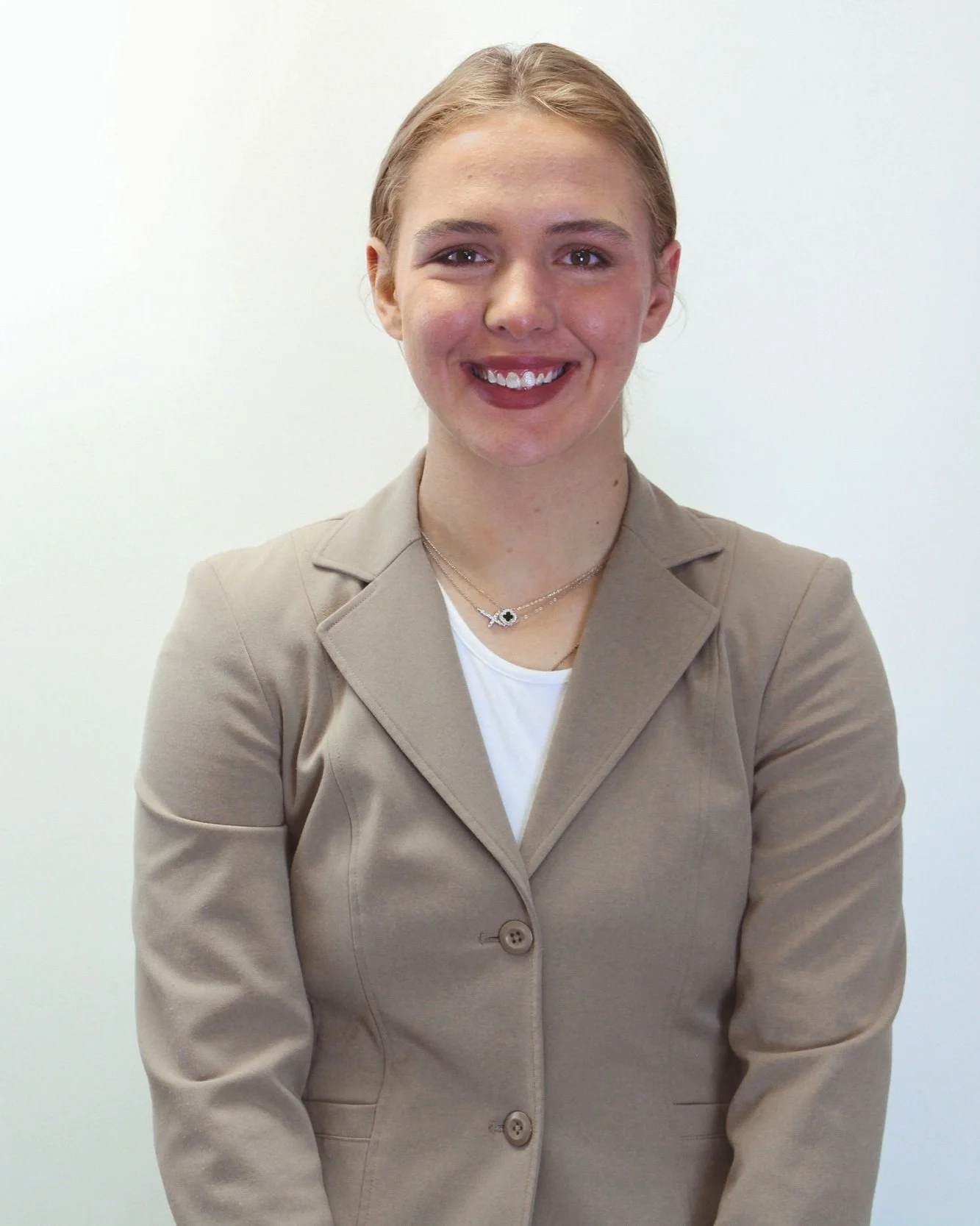
Mt. Carmel, IL – Wabash Valley College (WVC) is proud to announce that Mireya Rose has been elected as the Student Trustee for the 2025-2026 term. This prestigious position rotates annually among the four Illinois Eastern Community Colleges (IECC) campuses—Frontier Community College, Lincoln Trail College, Olney Central College, and WVC.

As Student Trustee, Rose will serve as a vital representative for the student body, acting as a liaison between students and the Board of Trustees. She will also lead as the president of the IECC Student Advisory Board, working to enhance student engagement, advocate for student interests, and foster collaboration among all IECC campuses.

A transfer student from Centralia, Illinois, Rose brings a wealth of leadership experience to the role. She has previously served as a team captain on various sports teams and was a student ambassador at her former college. Rose is currently catcher on the WVC Softball team. Passionate about public speaking, she sees this as her first formal leadership position and an opportunity to make a lasting impact.

Rose believes that creating a fun and engaging environment is key to keeping students motivated—a philosophy she has applied throughout her leadership experiences. Whether in sports, student organizations, or campus initiatives, she strives to make involvement enjoyable and rewarding for her peers.

“I’m excited to take on this leadership role and be a strong voice for students, especially for athletes and those living on campus,” said Rose. “I want to encourage more student engagement and show that being involved in campus life is a privilege.”

Her outgoing personality and dedication to student involvement make her well-suited for the role. She is eager to bring fresh ideas to campus, including tailgate-style events before games, themed athletic nights, and increased promotion of student activities to boost participation and school spirit.

Rose’s one-year term will officially begin with the April Board of Trustees meeting and conclude in March 2026.

Illinois banned life sentences for young offenders—but not for those already behind bars

A bill to make youth sentencing reforms retroactive stalled last session, but lawmakers are trying again this year.

By Ethan Holder, Julia Rendleman and Molly Parker

Photographs by Julia Rendleman 

For Capitol News Illinois, WSIU and the Saluki Local Reporting Lab

This story was supported by the Pulitzer Center. 

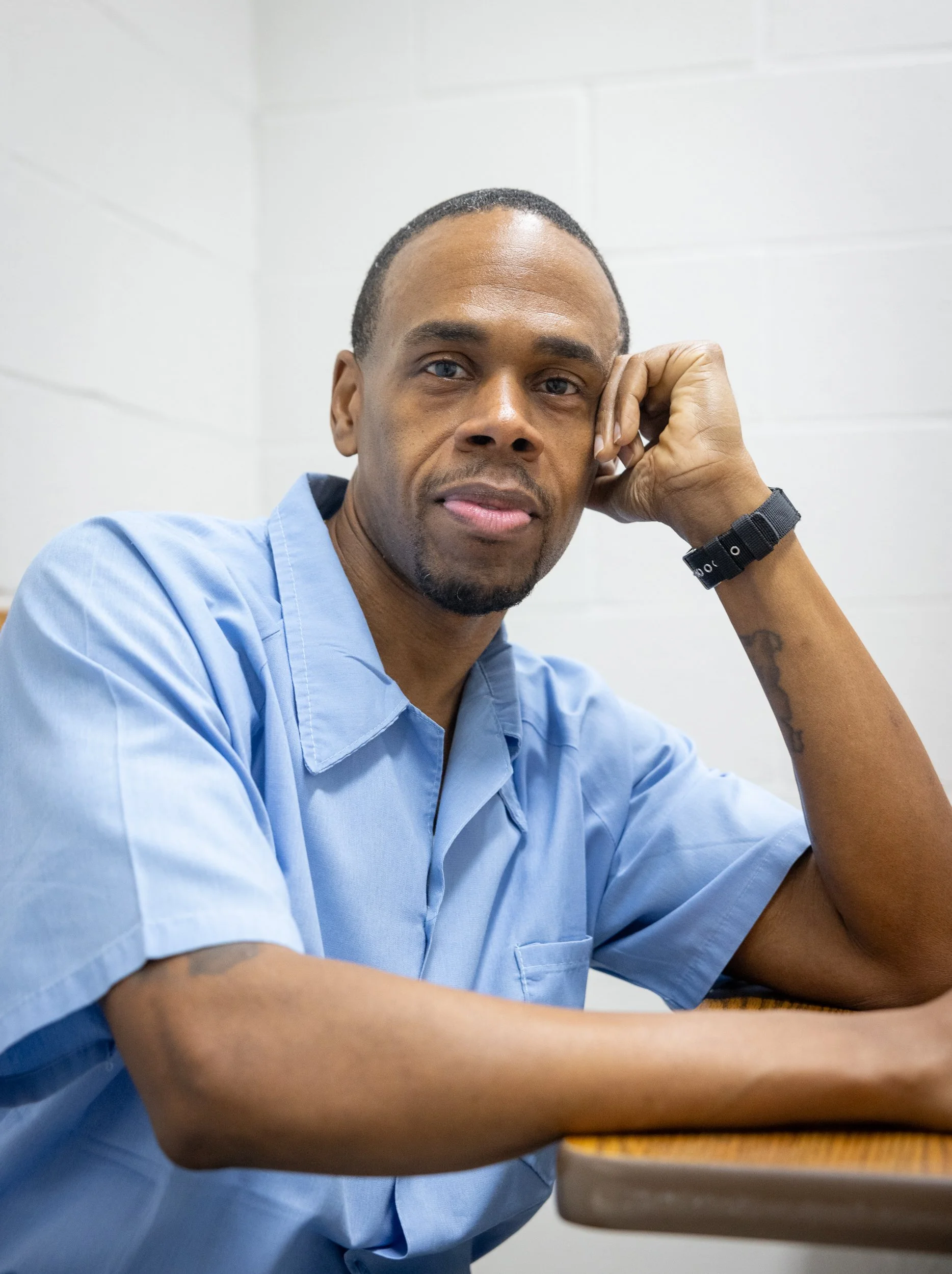
Cleodious “J.R.” Schoffner Jr. sits in a visitor’s room at Lawrence Correctional Center, a small, cinderblock box with a guard posted outside the heavy metal door. His lanky, 6-foot frame is swallowed by baggy prison blues, and a faded lotus flower tattoo—inked by a fellow inmate—peeks from his shirt. Schoffner entered into custody in 1997 at the age of 20. Now 48, Schoffner has spent 28 years—more than half his life—behind bars. And unless the law changes, he will likely die here. 

“They didn't have to do what they did to me—put me in prison for the rest of my life and just throw me away like that,” he said in a December interview. 

The Illinois Department of Corrections lists Schoffner as serving life sentences for two murder convictions. The truth is more complicated. In 1998, in the tiny southern Illinois town of Tamms, Schoffner was convicted as an accomplice to a robbery that left two dead and another seriously injured. Though Schoffner has maintained that he had no idea his cousin Glen would rob the store—let alone kill anyone—the state built its case on the theory that he helped plan and carry out the crime. A jury agreed.

It was undisputed that Schoffner didn’t physically kill anyone. He had no weapon, and Glen Schoffner confessed to the murders. Yet both were convicted of two counts of first-degree murder—J.R. Schoffner under the state's broad “accountability theory” that holds accomplices such as lookouts and getaway drivers to the same standards as the gunman if a death occurs in the course of certain crimes, including armed robbery. 

For nearly three decades, Schoffner has fought for a second chance. Lawmakers now agree that young offenders deserve one. With the passage of legislation in 2019 and 2023, Illinois banned life sentences without the possibility of parole for most youthful offenders under 21 at the age of their offenses. But these laws aren't retroactive, and Schoffner and dozens like him sentenced as young adults over previous decades, weren't included. 

At sentencing, Judge Stephen Spomer acknowledged the gravity of the crime but lamented Schoffner's sentence. “To compare this defendant’s culpability with that of Glen Schoffner’s culpability is a tragedy in my mind,” Spomer said, according to court transcripts reviewed by the Saluki Local Reporting Lab, WSIU and Capitol News Illinois. 

But the judge’s hands were tied by decades of tough-on-crime laws that had been sweeping the nation. Illinois, at the forefront of that movement, had enacted particularly harsh penalties against accomplices, abolished parole and established strict sentencing guidelines by the time Schoffner stood trial. In short, state law mandated Schoffner serve a life sentence. 

For Schoffner, it felt like a death sentence.  

“It wasn't until they sentenced me, and they said ‘a life without the possibility of parole’ – that's when they broke me,” he said, his voice wavering. “That's when they just broke me. And I just laid my head on the table, and I remember my dad coming up there and telling me, ‘Lift your head up. You know we're gonna keep fighting.’”

 A tragedy in a sleepy town

In 1997, he was living in rural Pulaski, working odd jobs – at a lumber yard and for his dad’s landscaping business

On April 10, his cousin, Glen Schoffner, pulled up and asked him to go for a ride. J.R. recently told reporters that he had immediately felt something was off—Glen was driving erratically and appeared drunk. They argued, and J.R. asked to be dropped off, but instead, they continued to the D&M Quick Stop in Tamms, a store catering to guards from the new supermax prison next door.

Inside, Glen pulled a gun and shot the store owner at close range. He then turned the gun on two customers—he executed one in the bathroom and wounded another, Norma Johnson, with a shot in the leg and stuffed her in the trunk of a car. 

J.R. says he was terrified and had no choice but to comply, insisting he didn’t know about the robbery and that he played no role in the violence. But Johnson, the surviving victim, testified that while she couldn’t see her attackers at all times, she believed J.R. participated in her beating while Glen was in another part of the store, court records show.

With Johnson still in the trunk, Glen sped off. J.R. told reporters that he grabbed the steering wheel to make the car crash and save Johnson’s life. After the wreck, they fled on foot. A friend picked them up, and at his house, Glen changed clothes. That friend testified that he also gave J.R. a change of clothes, and police later said J.R. was arrested wearing an outfit that matched that description.

J.R. said he ran to his father’s house, and his father called the police to report what happened. They were shocked when J.R. was arrested and charged with murder. Glen was caught the next day after a high-speed chase that ended in a crash with a deputy.

A tough-on-crime era

Schoffner opted to go to trial—a risky decision.

Illinois abolished parole in 1978, becoming one of the first states to do so. In its place, lawmakers introduced determinate sentencing, ensuring inmates served a set portion of their terms. During this tough-on-crime era, the state also mandated life without parole or the death penalty for individuals convicted of multiple first-degree murders. Sentencing laws continued to grow even harsher. By the time Schoffner stood trial in 1998, truth-in-sentencing laws—bolstered by federal incentives under the Clinton administration—had further limited early release and extended prison terms.

As a result, prisons swelled throughout the 1980s and 1990s, disproportionately incarcerating young Black men like Schoffner. Overcrowding led to violence, poor medical care and costly lawsuits. By 2013, Illinois’ prison population peaked at nearly 50,000, straining taxpayer resources and pulling funding from schools and social services.

Recent bipartisan efforts have tried to reverse some of these policies, and the prison population now sits at about 30,000, though the number remains higher than it was in the early 1980s. Black inmates still make up a disproportionate share. More than half of the state’s inmates are Black, while Black people make up less than 15% of the state’s population. 

Today, Illinois remains one of 17 states without discretionary parole. Only two groups can seek it: those sentenced before parole was abolished in 1978 and youthful offenders sentenced after 2019.

Tamara Kang, an assistant professor of psychology at Southern Illinois University in Carbondale, says young offenders should be treated differently than adults in the justice system.

“Their planning, impulse control, and all of that is still in development until the age of 20,” Kang said. “The majority of people are adolescent-limited offenders, meaning they will age out of crime.”

Youth sentencing reform

A series of U.S. and Illinois Supreme Court rulings have reshaped juvenile justice over the last 20 years. In 2005, the U.S. Supreme Court banned juvenile death sentences. In 2012, it ruled that life without parole for juveniles required a case-by-case review considering the child’s history and potential for rehabilitation. The Illinois Supreme Court later decided that ruling applies retroactively, and the U.S. Supreme Court affirmed it in 2016.

Illinois is one of 28 states that has banned juvenile life sentences without the possibility of parole. In just over half of these states, the law applies retroactively. Illinois is not one of them. 

Sen. Rachel Ventura, a Democrat from Joliet, introduced a bill in the previous legislative session that would have made the ban on life without parole retroactive, but it failed. Republican Sen. Seth Lewis, of Bartlett, co-sponsored the measure. Though he declined an interview, a spokesperson said he "still agrees with the concept" but believes the bill’s language needs revisions. The spokesperson did not specify what changes he had in mind.

Not everyone supports expanding these reforms. Some lawmakers and crime victim advocates worry about who might be released and the potential risk to society. They also express concerns about forcing survivors to relive traumatic events. But Ventura says the bill simply gives people a chance to petition for release. Even when courts have ordered new sentencing hearings for juveniles, not all of the defendants have received reduced sentences. Some remain incarcerated.

“The truth of it is, petitioning the board is not the same thing as being released by the board. So, I think we have to keep that in mind,” Ventura said.

Lindsey Hammond, policy director for Restore Justice, which advocates for criminal justice reform, said she’s hopeful the bipartisan effort will get another chance this legislative session. In 2023, her organization estimated that about 80 people would become eligible for parole over a decade. The bill that failed would have allowed people serving life sentences to petition for parole after serving 40 years. A new measure, House Bill 3332, would allow individuals convicted of murder under the age of 21 to petition for parole after serving 20 or 30 years, depending on the circumstances of their case.

“Everyone deserves the opportunity to learn from their mistakes,” Hammond said. “This is ultimately about redemption, and redemption is not a partisan issue. It is something that people from both sides of the aisle believe in. Grace and mercy—we grow and change as we get older, and none of us are the people we were when we were younger.”

Marsha Levick, chief legal officer of the Juvenile Law Center, a national nonprofit that advocates for youth rights in the justice system, said states should raise the age threshold for juvenile offenders—giving young people more consideration before they are treated as adults, and make these changes retroactively. 

But Levick said one area demands immediate attention: young people convicted under felony murder or accomplice liability doctrines, like Schoffner. 

“We are one of the only countries in the world that still convicts people under a felony murder or accomplice liability doctrine,” she said. “But yes, we do it, and pretty much every state does it. It is reviled by the criminal defense bar for both young people and adults. It's just a ridiculous way of imposing liability that holds them accountable in the same way that you would hold the person accountable who was directly involved in the killing.”

Despite widespread criticism, Levick said the U.S. remains committed to the practice. “As a country, it's been very hard to get rid of.”

Natural life

Schoffner maintains his innocence and has spent the past 28 years behind bars studying the law, filing appeals and helping others fight their cases. He earned a two-year degree in paralegal studies and works in the prison law library. There, he estimates he has helped at least 15 inmates win their release.

“If J.R. was not right there with me at that point in time, I would still be in jail until 2027, because that was my out date,” said Justin Cavette, a former inmate serving time for gun crimes who Schoffner assisted. 

The law library has become both an outlet and a lifeline. It also helps him hold onto hope. If he ever secures his freedom, he plans to continue helping others navigate the legal system as a paralegal.

The lotus flower tattoo on his chest has come to symbolize his time in prison.

“A lotus flower comes up every morning from the murky water, and it leaves no mud stains. And then in the evening, it goes back into the murky water. And I kind of liken that to myself,” Schoffner said. “Because every morning I wake up and I look at those walls and look at everything that I'm faced with, it's like being in that murky water. And then when I go into my element, being in that law library and being able to help other people and help myself at the same time, then it's like that mud is wiped off. And then I gotta go back into that mud in the evening time.”

Schoffner’s appeals and clemency petition to the governor—all unsuccessful to date—argue that his trial was fundamentally flawed. He claims in court filings and clemency petitions that jurors fell asleep during testimony, that his natural life sentence violates the proportionate penalties clause of the Illinois constitution, that his attorney failed to provide an adequate defense and that the court suppressed witness testimony that could prove his innocence. As part of a clemency petition, the friend recanted his prior testimony that he gave Schoffner a change of clothes. Glen, his cousin, also admitted to falsely implicating Schoffner under police pressure; in a sworn affidavit, he claimed he testified against J.R. because police had threatened him with the death penalty if he didn’t.

All the appeals have been unsuccessful. 

Norma Johnson, the only survivor of the 1997 robbery, gave damning testimony at trial, telling jurors that Schoffner helped Glen with the robbery and beat her in the store. She died in 2010. Her daughter, Kim Noble would sign an affidavit in 2021 stating that her mother had spent years privately admitting her testimony was false—that she had been coerced into securing a conviction.

“As Glen went back to beat and stab my mother, Cleodious [J.R.] kept telling Glen to stop attacking her and made several attempts to stop Glen. She explained to the state that if it had not been for constant pleas from Cleodious telling Glen to ‘stop,’ Glen would have killed her in the store,” Noble wrote in the affidavit.

In 2020, Schoffner’s attorney delivered what seemed like good news: He believed Schoffner’s release was imminent. The optimism stemmed from a case involving Antonio House, who was sentenced to life without parole at age 19 for his role as an accomplice. A panel of the Chicago-based First District Appellate Court had ruled that House’s mandatory life sentence "shocks the moral sense of the community," raising the possibility that similar cases—including Schoffner’s—could be reconsidered.

Schoffner’s mother, Dorothy, 68, prepared for his homecoming. Christmas was always his favorite holiday, so she decorated. She strung plastic holly across the mantel, placed two small evergreens on either side of the hearth, and set up a full-sized tree by the front door—the first thing he would see when he walked in.

In 2021, the Illinois Supreme Court overturned parts of the appellate court’s ruling and sent  House’s case to the trial court, finding that the lower court had improperly ruled on his sentencing challenge without fully developing an evidentiary record of how his age related to his crime. House has since been released.

Schoffner argued that the higher courts’ decisions should have set a precedent for his case. The judge had previously noted that Schoffner’s case was on point with House’s and had delayed ruling on one of his appeals until the House decision was finalized. However, after that ruling, the judge ultimately denied Schoffner’s petition on a technicality, citing an untimely filing.

More than four years later, the decorations remain. Dorothy refuses to take them down. Someday, she says, her son will come home. She will be ready.

Ethan Holder, a recent Southern Illinois University graduate, reported this story for WSIU and the Saluki Local Reporting Lab. Julia Rendleman and Molly Parker reported for the Saluki Lab and Capitol News Illinois. The Lab’s reporting work in Alexander County is financially supported by the Pulitzer Center on Crisis Reporting. 


Cleodious “J.R.” Schoffner, 48, sits in a visitation cell at Lawrence Correctional Center Dec. 16, 2024 in Sumner, Illinois. Schoffner. is serving a natural life sentence - he was sentenced at 20 under Illinois’ “accountability theory” which holds accomplices to the same standards as those who directly committed serious crimes. (Julia Rendleman)

Pritzker positions himself at forefront of Trump opposition by invoking Nazis’ rise to power

Governor quest to project pragmatic progressivism present in budget, other policy proposals 

By HANNAH MEISEL
Capitol News Illinois
news@capitolnewsillinois.com 

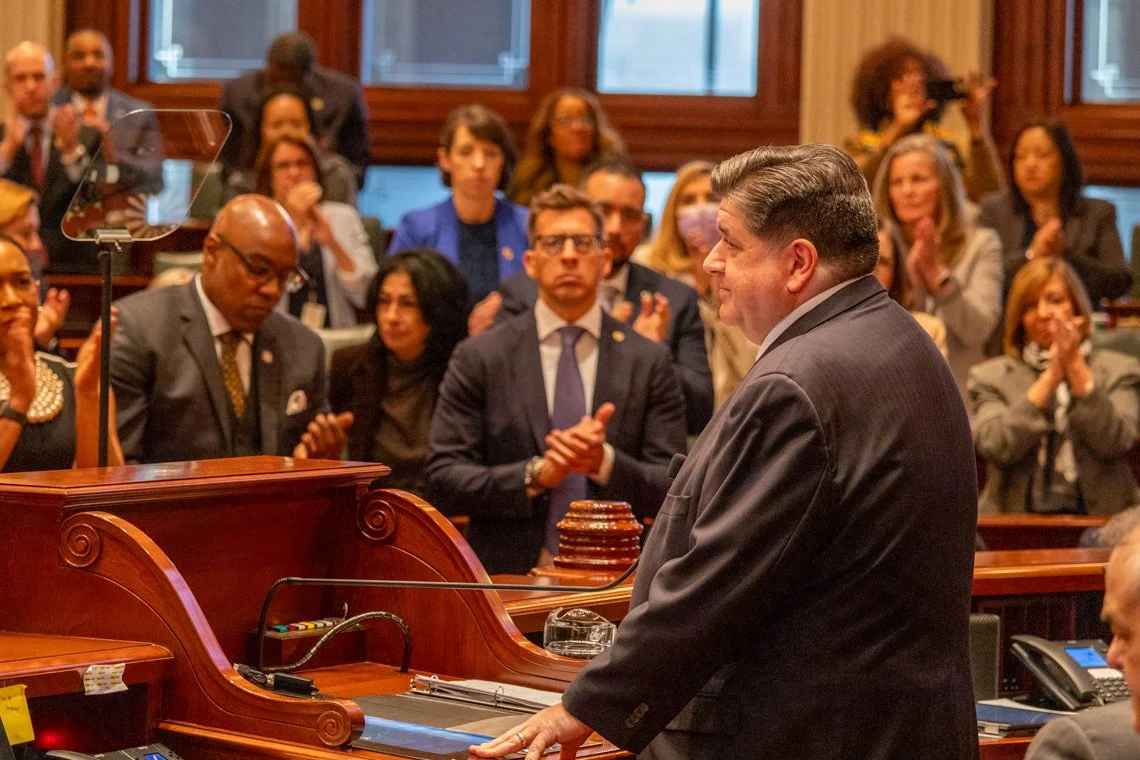
SPRINGFIELD – A month into President Donald Trump’s second term in the White House, Gov. JB Pritzker last week warned that the breakneck pace at which the Trump administration has been remaking federal policy could be a harbinger of something darker.

“It took the Nazis one month, three weeks, two days, eight hours and 40 minutes to dismantle a constitutional republic,” the governor said near the end of his annual combined State of the State and Budget Address on Wednesday.

Pritzker’s speech to a packed Illinois House chamber marked the start of the usual monthslong process of crafting a new state budget for the coming fiscal year. More than any budget or policy proposal, though, the governor used his annual public address to take aim at Trump in a way other high-profile Democrats have largely shied away from: discussing the rise of Adolf Hitler.

“The seed that grew into a dictatorship in Europe a lifetime ago didn’t arrive overnight,” he said. “It started with everyday Germans mad about inflation and looking for someone to blame.” 

Pritzker, Illinois’ third Jewish governor whose ancestors fled religious persecution in Ukraine in the late 1800s, said he didn’t “invoke the specter of Nazis lightly” but cited his experience working with survivors to help found the Illinois Holocaust Museum in suburban Skokie as basis for his warning message.

“I’m watching with a foreboding dread what is happening in our country right now,” he said. “The authoritarian playbook is laid bare here: They point to a group of people who don’t look like you and tell you to blame them for your problems. I just have one question: What comes next?” 

Read more: Pritzker emerging as one of Trump’s most vocal Democratic critics

As the governor presented his seventh budget proposal last week, he nodded to the very real possibility that it could all be blown up by the Trump administration and a Republican-controlled Congress. 

Read more: Pritzker calls $55.2B budget ‘responsible and balanced’ – but warns Trump policies could upend it 

“For all the Illinoisans watching at home, let me be clear: this is going to affect your daily lives,” Pritzker said. “Our state budget can’t make up for the damage that is done to people across our state if they succeed.” 

Instead of his usual post-Budget Address whistle-stop tour of Illinois promoting his agenda, the governor spent Tuesday in the U.S. Capitol with Illinois’ congressional delegation “to press the Trump admin on the more than $1.8 billion they are withholding from Illinoisans,” according to a social media post from a spokesman.

It’s unclear whether Pritzker’s fiery rhetoric will help him pass the budget blueprint and legislative agenda he laid out last week in Springfield. But it did garner him national attention, including on The Rachel Maddow Show and earning millions of ‘likes’ on TikTok

The governor insisted he wasn’t “speaking up in service to my ambitions – but in deference to my obligations.”

But the spotlight moment comes as years of speculation over the governor’s political future as a presidential candidate may come to a head later this year as Pritzker decides whether to run for a third term as governor in 2026. 


‘On the federal chopping block’

The second-term governor went on to urge political leaders to “be strong enough to learn from” history in order to prevent repeating it.

But Pritzker also cited more recent history, drawing parallels between Trump’s move to slash federal spending and a budget fight that crippled much of Illinois government under his predecessor, Republican Gov. Bruce Rauner.

This year marks a decade since Rauner’s political fight with Democratic majorities in the General Assembly launched the state into a two-year budget impasse that decimated social services in Illinois. It also ballooned Illinois’ unpaid bill backlog to $17 billion and earned the state multiple credit downgrades.

“Here in Illinois,10 years ago we saw the consequences of a rampant ideological gutting of government,” Pritzker said. “It genuinely harmed people. Our citizens hated it. Trust me: I won an entire election based in part on just how much they hated it.” 

Pritzker, who is now the nation’s second-wealthiest elected official after Trump, said in his speech Wednesday that tech billionaire Elon Musk – the richest person on earth – plans to “steal Illinois’ tax dollars and deny our citizens the protection and services they need.” 

“They say they’re doing it to eliminate inefficiencies,” Pritzker said of Musk’s so-called “Department of Government Efficiency.” “But only an idiot would think we should eliminate emergency response in a natural disaster, education and healthcare for disabled children, gang crime investigations, clean air and water programs, monitoring of nursing home abuse, nuclear reactor regulation, and cancer research.” 

Despite campaign promises to not touch entitlement programs, Trump has endorsed congressional Republicans’ plans to shrink federal spending to pay for an extension the president’s 2017 tax cuts over the next decade at a cost of $4.5 trillion. Advocates worry the GOP framework would leave Congress little choice but to gut Medicaid, a joint program between states and the federal government that supports 3.3 million Illinoisans who are either low-income, have disabilities or meet other qualifications for benefits.

Illinois is one of 40 states plus the District of Columbia that have adopted Medicaid expansion programs authorized under the Affordable Care Act that extend Medicaid coverage to low-income childless adults who don’t otherwise qualify for the program.

But like other states, Illinois has a trigger law in place that would effectively cancel its Medicaid expansion program if federal reimbursement falls below 90%, making it likely more than 700,000 Illinoisans would lose health coverage if congressional Republicans target ACA expansion first.

Pritzker warned Medicaid cuts would mean rural hospitals in Illinois would be shuttered.

Meanwhile the governor said popular programs like Meals on Wheels “are on the federal chopping block” as the Trump administration briefly blocked routine federal payments for many services last month.

Read more: ‘Blatantly unlawful’ federal spending freeze sends state scrambling

Even so, Pritzker last week presented no contingency plans for federal funds potentially disappearing. Instead, he proposed a $55.2 billion budget that would see discretionary spending – including state programs targeted at everything from economic development to violence prevention – grow at about 1% from the current fiscal year, which ends June 30. 

Fixed costs, including pension payments, K-12 education spending and state employee health care costs – drive the rest of the $2 billion in spending growth from this year’s enacted budget

Read more: Pritzker’s budget office projects $3.2B deficit in early look at upcoming fiscal year | Pritzker must address multi-billion-dollar deficit amid federal funding uncertainty

Reaction to invoking Nazi history

While some members of the General Assembly’s influential Latino and Black caucuses were less than thrilled with Pritzker’s budget proposal, some in his own party praised the framework – including moderate members who held up last year’s late night budget vote in protest. 

Read more: Black, Latino lawmakers criticize Pritzker’s proposed budget 

But reactions were mixed when it came to the governor invoking the rise of the Nazis in 1930s Germany. Many Democrats clapped when Pritzker urged learning from history to avoid repeating it.

Rep. Bob Morgan, D-Deerfield, who co-chairs the General Assembly’s Jewish Caucus, and whose great-grandparents perished in the Holocaust, was among them.

“I think we are seeing some ignoring of those rising elements of extremism and hate,” he said. “The confidence that white supremacists feel to march in state capitals around the country is relatively recent, and it's absolutely happening, and I think we have to call it out … That was the lesson I've always taken from the Holocaust – it’s that people didn't speak up.”

To critics’ ears, however, Pritzker’s speech signaled he has his eye on the White House in 2028.  

The governor was vetted as a possible running mate for former Vice President Kamala Harris’ presidential run last summer. He’s also expanded his political influence in recent years, spending big for Democrats in other states and even launching a nationwide “dark money” 501(c) organization focused on progressive policies, starting with abortion protections. 

Read more: With budget proposal and fiery address, Pritzker paints himself as progressive pragmatist | In primetime DNC speech, Pritzker leans into role of benevolent billionaire 

Rep. Ryan Spain, R-Peoria, warned that the governor’s rhetoric may put Illinois squarely in the Trump administration’s crosshairs. 

“He is not going to be running against Donald Trump in 2028 and he needs to understand that as soon as possible, because there's a lot at risk for the state of Illinois by continuing to play the part of antagonizer to the president of the United States,” he said. 

Even Democrats who had previously been more outspoken in their opposition to Trump have been more muted since the president’s inauguration last month. 

California Gov. Gavin Newsom, who just last summer made references to the spread of fascism in 1930s Europe in his 2024 State of the State speech, needs federal disaster funding to help the state recover from January’s devastating wildfires. Earlier this month Newsom met with Trump about disaster relief, thanking the president and his administration for their assistance.

Trump has directly threatened funding to blue states in the last month, including directly to Maine Gov. Janet Mills last week over her state’s laws aimed at protecting transgender people from discrimination.

Federal funding to Illinois has also been threatened in Trump’s second term. Though courts blocked the president’s 2017 attempt to withhold funding from “sanctuary cities,” an executive order the president issued on his first day back in office calls for the same halt to funding on any local government that has enacted policies restricting local law enforcement agencies from cooperating with federal immigration enforcement actions.

And earlier this month, Trump’s Department of Justice sued Chicago, Cook County and Illinois over their “sanctuary” laws.

Read more: Illinois locked in legal battles with Trump administration over immigration policy

Illinois’ senior U.S. Sen. Dick Durbin, with whom Pritzker has publicly disagreed with over politics in the past, last month was roundly criticized for saying he didn’t know who would be leading Democrats’ charge against Trump. 

“I can’t answer that. Give us a little time,” he told Semafor. “This is brand new.” 

Pritzker on Wednesday used his bully pulpit to challenge his fellow Democrats, who are facing intraparty criticism for failing to do much to stop or slow the Trump administration’s consolidation of power.

Read more: Pritzker emerging as one of Trump’s most vocal Democratic critics

“There are people – some in my own party – who think that if you just give Donald Trump everything he wants, he’ll make an exception and spare you some of the harm,” Pritzker said, launching into an abbreviated version of a story he’s told publicly several times about the early weeks of the COVID-19 pandemic in March 2020. 

In the governor’s telling, he offered to praise Trump on Sunday news shows in exchange for N95 masks and ventilators. But when the supplies arrived, the crates were instead filled with surgical masks and broken BiPAP machines, which are most commonly used to treat sleep apnea and other breathing disorders. 

“Going along to get along does not work,” he said. “Just ask the Trump-fearing red state governors ... Those Trump state – red state governors are dealing with the same cuts that we are, and I won't be fooled twice.” 

Aside from accusations that Pritzker used inflammatory comparisons to grow his national platform, some Republicans said they were offended Wednesday. Six GOP House members left their desks on the House floor, walking toward the back exit when the governor began talking about the 1978 Nazi march on Skokie. 

Though most of them were members of the ultraconservative “Illinois Freedom Caucus,” Rep. Jeff Keicher, R-Sycamore, one of the more moderate Republicans in the General Assembly, said his walkout was spurred by “emotional frustration” borne of what he felt was a sort of cognitive dissonance in Pritzker’s speech.

“We still have all this money to spread all over the place,” Keicher said of Pritzker’s spending plan, even as social services in Illinois face persistent funding challenges. Keicher cited ongoing state funding challenges to services including domestic violence shelters, nursing homes and “a seven-year backlog” for adults seeking ” for developmental disabilities services.developmental disabilities services in Illinois – though the state’s official estimate has fallen to roughly five years.

"And then I hear the governor lay into what he's calling Illinois Nazis, and the way that we slip into Nazism is by having high inflation,” he continued. “As a man who has stood up repeatedly in his public role and defended the plight of Israel and Jews in this country – to be called a Nazi is beyond the pale.” 

David Shyovitz, the director of Northwestern University’s Crown Family Center for Jewish and Israel Studies and an associate professor of history, said careful study of how Hitler consolidated power through “constitutional means” – “basically uprooting and eventually eliminating any legal impediments that stood in their way” – can be instructive.  

But he said Nazi Germany is not the only example of strongmen leaders seizing power, and pointed to Hungarian Prime Minister Viktor Orbán, whom Trump has said he personally admires. 

While Shyovitz said invoking Hitler has a “certain rhetorical thrust,” he said there is a risk to “devaluing what made that historical period so horrible” and warned that overuse, particularly in online discourse, could zap it of its power. 

“As a historian, I think it's appropriate for us to try and learn from the historical past and apply it in the present,” Shyovitz said. “As a voter, I would be worried that using that example is going to end up alienating the very people that you need to convince.” 


‘It’s not a scare tactic’

Rep. Terra Costa Howard, D-Glen Ellyn, the chair of the New Democrats caucus, a group of more than 20 more moderate Democrats in the Illinois House, agreed. She said she understood why Pritzker would choose to invoke Nazism because “it is the only reference in modern times that people can connect to.” 

But she said Democrats will see more success messaging against Trump if they put the focus on the ways in which decisions from the White House affect Americans. 

Read more: Trump tariffs could impact hundreds of billions of dollars of trade in Illinois 

“If we lose Medicaid dollars, everybody knows somebody in a nursing home,” Costa Howard said. “That is going to have a direct impact to people we know and love in our community. People are not making that connection. We need to explain what that is. It's not a scare tactic. It is a reality. And that is what people need to hear.” 

In an op-ed for MSNBC and a longer podcast interview with one of its hosts published Monday, Pritzker agreed with Costa Howard’s assertion, saying Democrats should focus on “affordability” instead of expending the party’s rhetorical power on “threats to democracy.” 

To that end, the governor also backed an array of legislative proposals in his speech last week, including cracking down on pharmaceutical benefit managers in an attempt to hold down prescription drug costs. Pritzker’s campaign last week also put out a poll showing that of Trump’s recent moves, Illinoisans are most concerned about rolling back former President Joe Biden’s initiative to lower drug costs. 

Another Pritzker-backed idea would build on last year’s Healthcare Protection Act, requiring insurers to reimburse travel costs to get to medical appointments at certain distances and barring insurance companies from spending less than 87% of premiums on health care services. 

Read more: Pritzker signs health insurance reform measures 

Another affordability-focused proposal would have Illinois follow 24 other states that already allow community colleges to offer baccalaureate degrees. As proposed, the program would authorize community colleges in Illinois to offer four-year degrees specifically tailored to meet the employment needs of their communities, including in fields like health care, early childhood education or advanced manufacturing. 

Read more: Pritzker to call for expansion of 4-year degree offerings at some community colleges 

Rep. Fred Crespo, D-Hoffman Estates, said he’s “excited” about that proposal after having twice passed legislation in the House to allow Harper College in Palatine to offer nursing degrees, only to see the bills die in the Senate. 

“So getting the governor's backing on this – I'm hoping really moves the needle because I think really that that's where the future of education is,” he said, noting that enrollment in Illinois’ community colleges has increased more than the national average in recent years. 

Pritzker’s other proposals range from progressive priorities like further expanding abortion care availability and protections to ideas that could appeal to voters in both parties, including banning cell phones during instructional time in Illinois schools. At least 11 other state legislatures have passed legislation on school cell phone use in the last two years. 

Improving and then selling off unused state property, lowering the petition signature threshold for a township consolidation ballot question and regulating cryptocurrency ATMs are also on the governor's list. 

Bridgette Fox and Jade Aubrey contributed. 


Capitol News Illinois is a nonprofit, nonpartisan news service that distributes state government coverage to hundreds of news outlets statewide. It is funded primarily by the Illinois Press Foundation and the Robert R. McCormick Foundation.


Republic Garbage Truck Rollover- 1 injured

On 02.24.25 at approximately 1:40 p.m. The Wabash County Sheriff's Office responded to the area of 2306 E 1200 RD. , Allendale. (The portion of Bridgeport Blacktop north of Highway 11) The 911 call was reported to be an overturned garbage truck on the east side of the roadway down the embankment with the driver unaccounted for. 

While emergency units were in route the caller advised the driver had been located in the wooded area just north of the crash site. (30 yards)  During the crash investigation it was found the garbage truck was north bound on E 1200 Rd, proceeding through the "S" curves when the truck ran off the shoulder of the roadway to the right. The truck overturned and the driver was ejected from the vehicle. 

Emergency crews worked to stabilize the driver, 40-year-old Jason A. Miller of Olney, then moved him up the embankment to the Wabash General Ambulance. WGAS relocated to the parking lot of Weber Seed Service where a landing zone was set up for StatFlight. StatFlight transported Miller to an Evansville area hospital with major injuries.

The Sheriff's Office was assisted by the Lawrence Co. Sheriff's Office, Wabash General Ambulance Service , Allendale Rural Fire Protection District and Sully's Towing. The roadway was closed until about 8 p.m. The north bound lane was also closed for some time today as crews completed clean up. No citations were issued. 

'25-'26 District #348 School Calendar Adopted

The 2025-26 Wabash District #348 school calendar will look different in a few ways than the current school year. Superintendent Dr. Chuck Bleyer said input into crafting the calendar came from a variety of viewpoints and that resulted in some noticeable changes….

The first day of classes next year for students will be Thursday, August 14th and the last day slated for May 20th if no snow days are needed and May 28th if all snow days are used. Christmas break will be December 22nd through January 5th. Spring break next year will be the week of March 30th. As Bleyer pointed out, there will be school on Monday and Tuesday of Thanksgiving Week.


As federal deadline approaches, Illinois Secretary of State urges residents to “Get Real”

Deadline for federally compliant ID May 7

By JADE AUBREY
Capitol News Illinois
jaubrey@capitolnewsillinois.com 


With a deadline approaching for U.S. citizens to obtain Real IDs, Illinois Secretary of State Alexi Giannoulias is urging Illinois residents to “Get Real.”

Real ID is a federally-standardized identification card that requires stricter proof of identity to obtain than the regular state driver’s licenses or ID cards. All Drivers Services facilities in Illinois are issuing Real IDs, except for mobile units and express facilities.

Last May, Giannoulias’ office launched the “Get Real Illinois” campaign to raise awareness about the requirements and deadline of the Real ID implementation. During a news conference Tuesday, he continued to urge Illinoisans to obtain the new ID soon, as a federal deadline approaches.

On May 7, state-issued driver’s licenses will no longer be accepted as a valid form of identification for domestic flights or at certain federal facilities such as military bases or federal courthouses. Although U.S. citizens will need a Real ID to visit those facilities, they will not need a Real ID to fly domestically if they have a valid passport.

A Real ID is signified by a gold star on the upper right corner of the ID card. 

“We know for sure that as May 7 approaches, demand for Real ID drivers’ licenses and state IDs will inevitably increase,” Giannoulias said. “What we don't want are crazy, unmanageable lines at our facilities and major issues for individuals and their families at our airports.”

He said the news conference aimed to “clear up confusion” over the technicalities of the Real ID.

“Since the new administration has taken over in D.C., we've seen an influx of people who are confused about what real ID means and think they need it as a form of identification,” Giannoulias said. “And our point that we're trying to hammer home today is that that's not the case. You do not need a Real ID to drive a vehicle.”

Other qualms about the new identification have arisen, including issues around gender identity and the likelihood of the May 7 deadline holding firm. Although Giannoulias didn’t directly address the first issue, he said multiple times that Illinoisans should use their own discretion to decide if the Real ID is right for them.

“I don't want to discourage anyone from getting a Real ID, but the fact is that not everyone needs a Real ID on May 7, and in some cases, might not ever need one,” Giannoulias said.

However, he did address growing skepticism that the deadline won’t hold firm.

“I know many of you are asking yourselves, after years of blown deadlines, delays and extensions, why should we trust the Department of Homeland Security,” he said. “The reasons for the delays have run the gamut, ranging from partisan politics to a lack of coordination among the federal government and various states.”

In direct response to the terrorist attacks of 9/11, Congress passed the REAL ID Act in 2005, which established “minimum security standards for state-issued driver's licenses and identification cards.” The effective date of the law has been extended multiple times, most recently to 2025 due to the COVID-19 pandemic.

“Now I get asked on a regular basis, is this real ID deadline for real this time,” Giannoulias said. “The one thing that's different this time around is that TSA just recently published a ‘final rule,’ rejecting the option for another extension and requiring the regulation to finally take effect.”.

TSA’s final rule, which they published on Jan. 13, 2025, stated the agency will begin enforcing the law on May 7, taking what they call a “phased enforcement approach” to implement enforcement until May 2027.

The Secretary of State’s website has an interactive checklist where Illinoisans can find out what documents they need to obtain a Real ID. The required documents include proof of identity, proof of full Social Security number, and two documents providing proof of current address.


Capitol News Illinois is a nonprofit, nonpartisan news service that distributes state government coverage to hundreds of news outlets statewide. It is funded primarily by the Illinois Press Foundation and the Robert R. McCormick Foundation.

Illinois Secretary of State Alexi Giannoulias exits the House chambers in the Illinois Capitol. (Capitol News Illinois photo by Jade Aubrey)

Lawmakers weigh whether to legalize ‘medical aid in dying’

Doctors, disability activists split on support for the controversial procedure 

By ANDREW ADAMS
Capitol News Illinois
aadams@capitolnewsillinois.com

CHICAGO — Lawmakers are considering legalizing a controversial medical practice that proponents say could ease suffering for the terminally ill. 

It’s sometimes called “assisted suicide,” although physicians and advocates for the practice prefer the term “medical aid in dying,” or MAID. 

While Compassion & Choices — a group that advocates for medical aid in dying policies — found a majority of Illinois voters supported legalizing MAID in a 2023 poll, some critics call the process “barbaric.” 

The measure, contained in Senate Bill 9, is being backed by Sen. Linda Holmes, D-Aurora, who told her Senate colleagues at a hearing Friday that she supports the proposal because of her parents’ deaths. Both her mother and father died after extended battles with cancer. 

“You think the toughest thing you go through is watching somebody die, and you know what? It’s not,” Holmes said. “It’s not as tough as watching somebody you love suffer and there’s nothing you can do to ease that suffering. That is the hardest thing I’ve ever gone through.”

Holmes’ proposal would legalize MAID — a process where a doctor prescribes but does not administer a lethal combination of drugs — for patients whose doctors determine have less than six months to live due to a terminal illness. The patient then administers the drugs on their own at a time of their choosing. 

The bill contains several safeguards to prevent abuse, according to its proponents, including a waiting period to receive a prescription, a requirement that the patient receive a terminal diagnosis from two doctors, a requirement that patients prescribed lethal medication have sufficient “mental capacity.” 

Friday’s meeting of the powerful Senate Executive Committee was a “subject matter” hearing, meaning no vote was taken. The bill will need more committee hearings, a vote in both legislative chambers and approval by the governor before becoming law. 

Ten other states and Washington, D.C., have all legalized some form of medical aid in dying. Oregon was the first state to legalize MAID in 1994. 

Advocates for the proposal include patients with terminal illnesses, people whose loved ones used the procedure in other states and doctors who specialize in end-of-life care. 

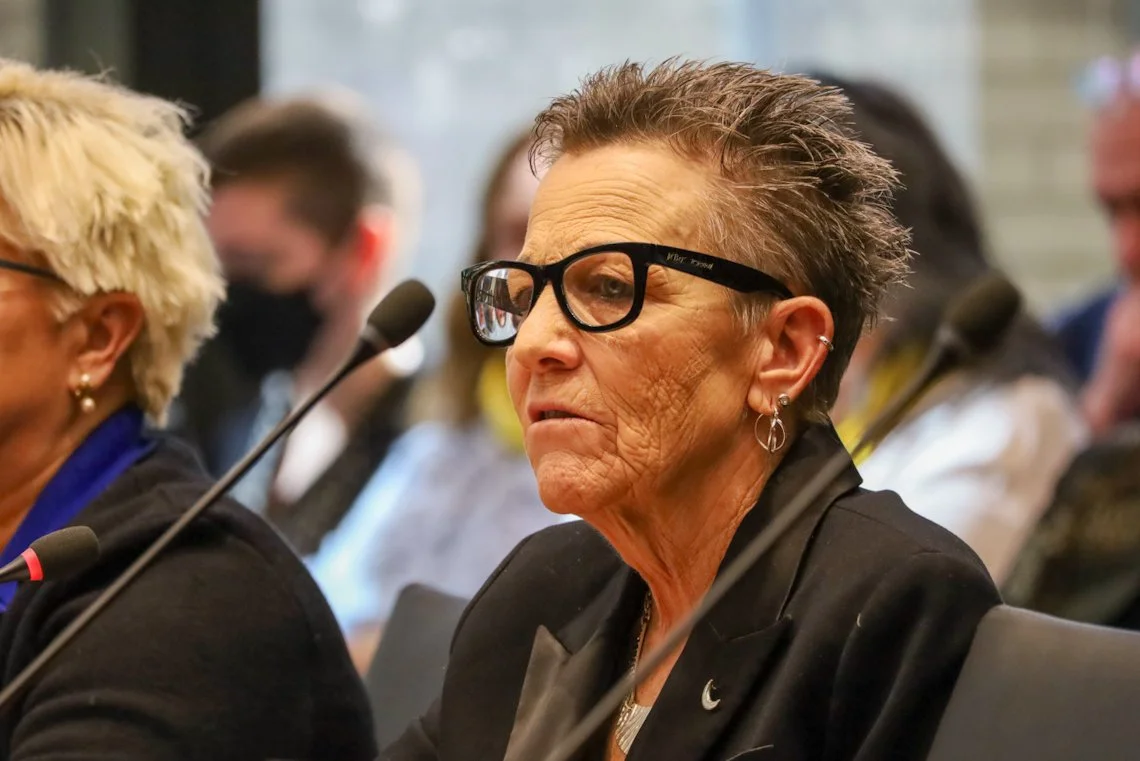
In 2022, Deb Robertson of Lombard was diagnosed with neuroendocrine carcinoma — a rare and aggressive form of liver cancer. She asked lawmakers to give her “permission” to take her own life. 

“It would give me the option to die peacefully and on my own terms,” Robertson said. “There’s a level of comfort in that.” 

Diana Barnard, a doctor in Vermont who offers MAID prescriptions, said most patients have “a very clear understanding” of what’s an acceptable quality of life as they approach death. 

“We have now 27 years of national experience with the practice that really shows these laws are working well,” Barnard said. 

But the medical practice is controversial among doctors and disability activists. 

Benjamin German, a doctor on the West Side of Chicago, said the "problem” with the bill was its safeguards. 

“For some of my patients, these safeguards will be just tight enough for lawmakers to assume things will be okay and amply generous to allow abuse to happen,” German said. “People and organizations looking for ways to exploit this law, I fear, will find a way.” 

Disability advocates, meanwhile, say they worry about medical professionals mischaracterizing illnesses as terminal, misdiagnosing people or pushing vulnerable or marginalized people to consider ending their own life. 

“As someone with a disability myself – I use a wheelchair – I can say firsthand that my life is often viewed as something to pity and not something to cherish,” Riley Spreadbury, an independent living advocate from Joliet, said. “It’s sentiments like these that make me incredibly concerned regarding Senate Bill 9.”

MAID is also opposed by groups that express a “consistent life ethic,” meaning they object to abortion, capital punishment, assisted suicide, and euthanasia. Those groups include the Catholic Church and non-religious groups such as Illinois Right to Life.   


Capitol News Illinois is a nonprofit, nonpartisan news service that distributes state government coverage to hundreds of news outlets statewide. It is funded primarily by the Illinois Press Foundation and the Robert R. McCormick Foundation.
Deb Robertson, a Lombard woman facing a terminal cancer diagnosis, speaks in favor of legislation that would allow doctors to prescribe lethal medication to dying patients. (Capitol News Illinois photo by Andrew Adams)