
On February 26, 2025, at 5:42 a.m. Gibson County Central Dispatch received a 911 report of a disturbance that appeared to be occurring in a moving vehicle. Communications Officers Shannon Gibson had to make contact with the female multiple times due the connection abruptly being lost. Communications Officer Gibson Continued investigating the location of the female all the while repeatedly reestablishing phone connections and relaying information to officers on the road. Deputy U.B. Smith began an investigation into the owner of the phone number, and was able to identify the caller. During this time the victim contacted Gibson County Central Dispatch and advised that she was at home and ok.
At that point Communications Officer Gibson dispatched all county units to the victim’s residence to investigate the incident. At that point statements and evidence were collected on scene that indicated 35 year old Jared Wilson of Owensville was the suspect in the crimes of Criminal Confinement and Interference in the Reporting of a Crime. At that point Deputy U.B. Smith went to Mr. Wilson’s location and collected a statement from him. Once the investigation was concluded Mr. Wilson was taken into custody and transported to the Gibson County Jail where he was charged with Criminal Confinement and Interference in the Reporting of a Crime.
Assisting Deputy Smith in his investigation was Deputy Michael Bates and Sgt. John Fischer.
All criminal defendants are to be presumed innocent until, and unless proven guilty beyond a reasonable doubt in a court of law.

Fort Branch man arrested for DUI
On February 23, 2025, at 8:20 p.m. Gibson County Deputy Shawn Holmes conducted a traffic stop on a Black 2024 Chevy Equinox for speeding on US 41 near Fort Branch. Upon conducting the stop on County Road 800 South near US 41 Deputy Holmes identified the driver as 33 year old Logan Schmitt of Fort Branch. During the roadside encounter Deputy Holmes detected the odor of alcohol coming from the driver and began a roadside DUI investigation. At the conclusion of the investigation Mr. Schmitt was taken into custody and transported to the Gibson County Jail where he was charged with Operating a Vehicle While Intoxicated.
All criminal defendants are to be presumed innocent until, and unless proven guilty beyond a reasonable doubt in a court of law.
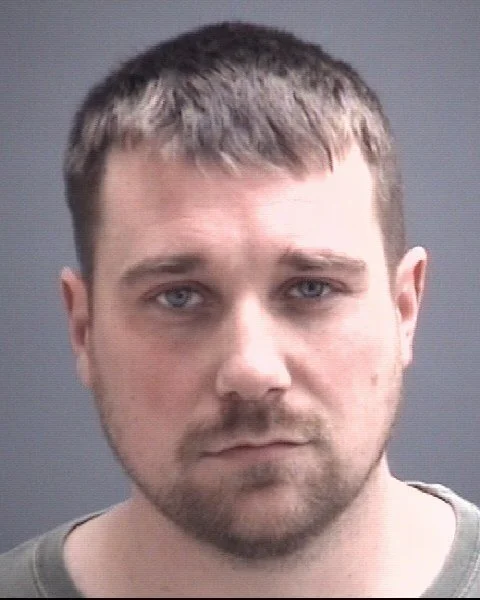
Arizona man arrested on DUI charge
On February 23, 2025, at 2:59 a.m. Gibson County Central Dispatch received a 911 report of a possible impaired driver on US 41. Communications Officer Bethney Anthis was able to get a detailed description of the vehicle and was able to advise county and state units that the vehicle, a White pickup with a yellow tool box in the back was swerving all over US 41. Ultimately officers were not able to find the vehicle at that time due to call volume and lack of available units.
However during routine patrol Deputy Sims located a vehicle matching the description stopped on US 41 near Interstate 64 at 3:42 a.m. Upon approaching the vehicle, a White 2004 Chevy Silverado Deputy Sims found the driver unconscious and behind the wheel of the running vehicle. Deputy Sims attempted to wake the driver by knocking on the window, but the driver would not wake up. At that point Deputy Sims opened the vehicle door and again tried to wake the driver using a sternum rub. After no response to the sternum rub Deputy Sims requested a Gibson County Ambulance be dispatched to the scene for assistance. After multiple sternum rubs were administered the driver regained consciousness. At that point Deputy Sims was able to identify the driver as 25 year old Brandon Tacheene of Cameron, Arizona. While speaking with Mr. Tacheene Deputy Sims detected multiple clues that the driver was under the influence of alcohol. At that point Deputy Sims began a roadside DUI investigation which resulted in Mr. Tacheene being taken into custody and transported to the Gibson County Jail where he was charged with Operating a Vehicle While Intoxicated.
Deputy Michael Bates assisted Deputy Sims in the investigation of this incident.
All criminal defendants are to be presumed innocent until, and unless proven guilty beyond a reasonable doubt in a court of law.
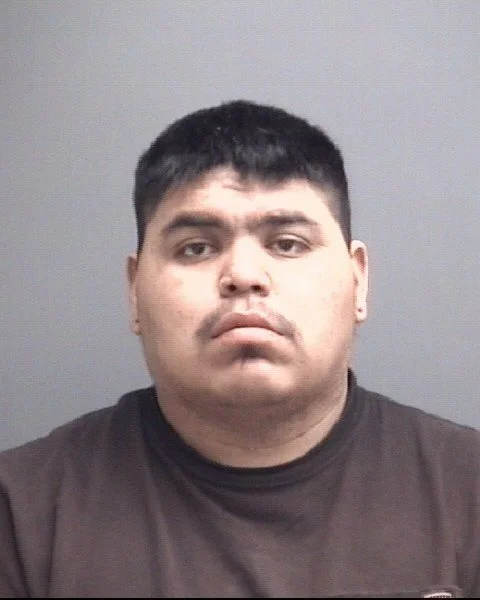
Evansville man arrested for Reckless Driving
On February 22, 2025, at 3:12 p.m. Deputy Eric Powell observed a Silver Toyota Tacoma traveling Southbound on Interstate 69 in excess of 100 mph. Deputy Powell was able to stop the vehicle near State Road 168 and upon approaching the vehicle he identified the driver as 23 year old Kelvin Rivera of Evansville. During a brief roadside investigation Mr. Rivera was taken into custody and transported to the Gibson County Jail where he was charged with Reckless Driving and Operator Never Having Received a Valid License. Three other individuals inside the vehicle were released at the scene.
Deputy Powell was assisted in his investigation by Deputies Shawn Holmes, Wyatt Hunt, Riley Farmer, James Tucker, and Sgt. Loren Barchett.
All criminal defendants are to be presumed innocent until, and unless proven guilty beyond a reasonable doubt in a court of law.
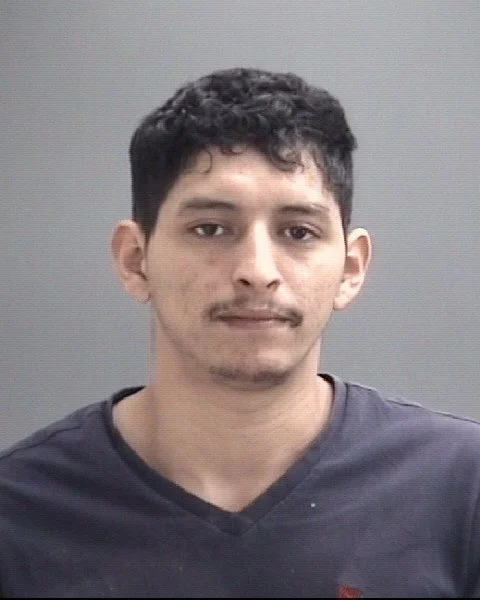
Former employee sentenced to federal prison for embezzling more than $135,000 from Dupo School District
EAST ST. LOUIS, Ill. – A judge sentenced a Waterloo woman to 15 months’ incarceration, requiring three months in the Federal Bureau of Prisons and 12 additional months in community confinement, for embezzling more than $135,000 from Dupo Community Unit School District #196 while employed by the district.
Linda J. Johnson, 58, pleaded guilty in federal court to one count of theft from a federally funded program. In addition to imprisonment, Johnson was ordered to pay $135,566.80 in restitution to Dupo Community Unit School District #196 and the Ohio Casualty Insurance Company.
According to court documents, Johnson committed the embezzlement while employed in an administrative support role in the superintendent’s office between 2016 and 2022.
In this position, Johnson was responsible for depositing cash and checks into the district’s activities account intended to support student athletics, clubs and extracurriculars. She stole donations and funds raised to support yearbook, cheer, dance, vending machines, trivia nights, science clubs, ROTC and more.
To conceal her crime, Johnson drafted bank deposit slips reflecting the correct amount of cash and checks received, but later she prepared a second set of fraudulent deposit slips that only accounted for the checks, while she kept the cash.
Johnson committed 165 fraudulent transactions, and the loss to the school district was $135,566.80. OCIC incurred a portion of the loss after issuing a Public Official Bond insuring Johnson’s duties as the bookkeeper.
District officials said the sentencing holds Linda Johnson responsible for severely violating public trust, for the crime directly harmed students, staff and the Dupo School District. The district is resolute in its commitment to safeguarding district resources and ensuring accountability. The district extends sincere gratitude to the U.S. Attorney’s Office, FBI and Dupo Police Department for their work on this case. The district believes the court's decision sends a clear message that such actions will not be tolerated in schools.
The Dupo Police Department and the FBI Springfield Field Office contributed to the investigation, and Assistant U.S. Attorney Steve Weinhoeft prosecuted the case.
Wabash County Board Agenda
REGULAR MEETING Monday, March 3, 2025
AGENDA
1) Call to order:
2) Approve minutes of previous meeting:
3) Commissioner’s reports:
4) Officer’s reports:
5) Old Business:
a, Phase 4 of the HVAC project.
6) New Business:
a. Resolution No. 2025-10, State’s Attorney Appellate Prosecutor Program.
b. Tara Buerster from the University of Illinois Extension Service.
c. Matthew Spaccapaniccia with RWE Clean Energy to introduce RWE, the solar project and himself as the Developer.
7) Executive Session:
8) Correspondence:
9) Approval of payment of claims presented:
10) Adjournment:
Another Delay In Case Of Former Deputy
There’s been yet another continuation in the court case of former Wabash County Sheriff’s Deputy Chase Cheadle. Yesterday, Cheadle was due in court for a preliminary hearing but special prosecutor Brian Towne and defense attorney Jonathan Turpin agreed to continue the case until April. Now, Cheadle’s preliminary hearing is set for April 10th. It’s now the fourth straight month, dating back to November 14th that Cheadle’s preliminary hearing has been delayed. Cheadle, who was the sheriff’s department’s canine handler, faces four charges of official misconduct, 1 count of Theft, 1 count of Cruelty to animals, and 2 counts of Animal owner duties. Five of the eight charges are felonies. Cheadle found Kiki unresponsive last July and was arrested following an investigation. He resigned from the sheriff’s department on August 8th.
2025 IL Junior High Regional Science Fair Competition
Competion Results
SARAH DOUGHERTY | 8th Grade Science Teacher
Mt. Carmel Junior High School represented at the Regional Science Fair in Carbondale, IL, on February 25, 2025. Students secured the right to compete by earning the top scores at the local judging. Lucy Hall, Josie James, and Greyson Roberts competed individually. Luis Bohorquez-Atencio and Dani Arano competed as a partner group. Students were judged on oral presentation skills, a visual display, a written report, and evidence of scientific process skills. All Mount Carmel 8th-grade students competing were awarded the highest level "Gold" ranking based on the scores received, AND they all received a bid to compete in the State Science Fair held at the University of Illinois in May.

Pictured L-R: Sarah Dougherty, 8th Grade Science Teacher, Lucy Hall, Josie James, Greyson Roberts, Luis Bohorquez- Atencio and Dani Arano.
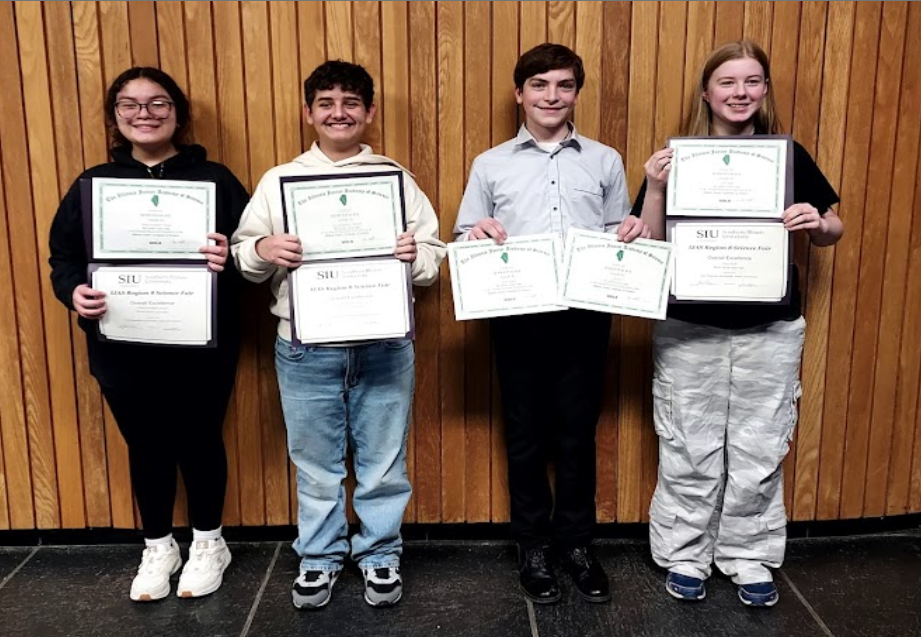
Students receiving special recognition or awards at the Region 08 Science Fair held at SIU Carbondale on February 25, 2025, included (pictured L-R) Dani Arano and Luis Bohorquez-Atencio, who won a monetary award from the Office of Vice Chancellor for Diversity, Equity, and Inclusion. Greyson Roberts is pictured with his and Josie James (not pictured) “Gold “ ranking certificate. Lucy Hall also won a monetary award from the Office of Vice Chancellor for Diversity, Equity, and Inclusion. These students ALL punched their ticket to continue to compete at the State Science Fair.
Wabash Valley College Announces Mireya Rose as Student Trustee for 2025-2026 Term
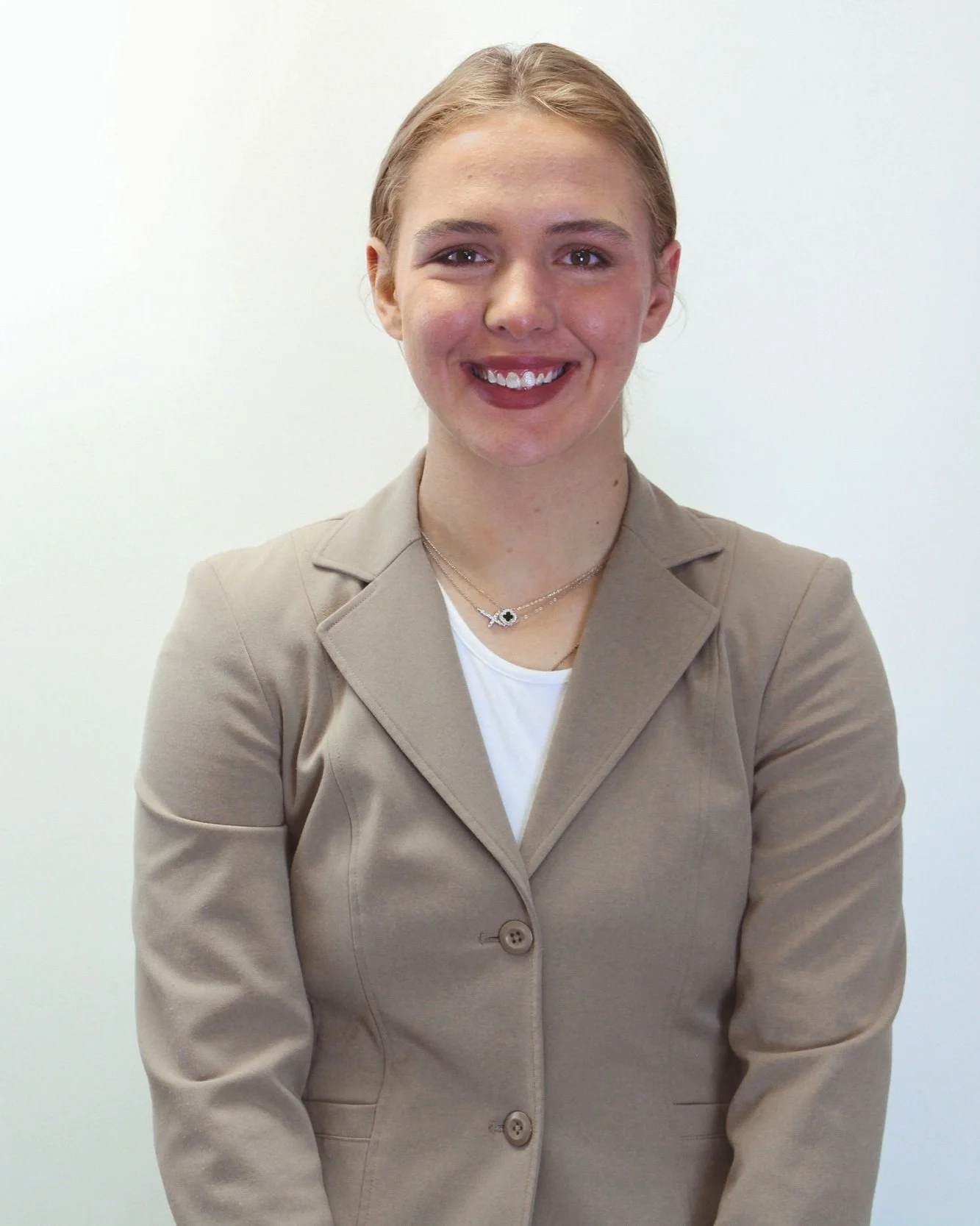
Mt. Carmel, IL – Wabash Valley College (WVC) is proud to announce that Mireya Rose has been elected as the Student Trustee for the 2025-2026 term. This prestigious position rotates annually among the four Illinois Eastern Community Colleges (IECC) campuses—Frontier Community College, Lincoln Trail College, Olney Central College, and WVC.
As Student Trustee, Rose will serve as a vital representative for the student body, acting as a liaison between students and the Board of Trustees. She will also lead as the president of the IECC Student Advisory Board, working to enhance student engagement, advocate for student interests, and foster collaboration among all IECC campuses.
A transfer student from Centralia, Illinois, Rose brings a wealth of leadership experience to the role. She has previously served as a team captain on various sports teams and was a student ambassador at her former college. Rose is currently catcher on the WVC Softball team. Passionate about public speaking, she sees this as her first formal leadership position and an opportunity to make a lasting impact.
Rose believes that creating a fun and engaging environment is key to keeping students motivated—a philosophy she has applied throughout her leadership experiences. Whether in sports, student organizations, or campus initiatives, she strives to make involvement enjoyable and rewarding for her peers.
“I’m excited to take on this leadership role and be a strong voice for students, especially for athletes and those living on campus,” said Rose. “I want to encourage more student engagement and show that being involved in campus life is a privilege.”
Her outgoing personality and dedication to student involvement make her well-suited for the role. She is eager to bring fresh ideas to campus, including tailgate-style events before games, themed athletic nights, and increased promotion of student activities to boost participation and school spirit.
Rose’s one-year term will officially begin with the April Board of Trustees meeting and conclude in March 2026.
Illinois banned life sentences for young offenders—but not for those already behind bars
A bill to make youth sentencing reforms retroactive stalled last session, but lawmakers are trying again this year.
By Ethan Holder, Julia Rendleman and Molly Parker
Photographs by Julia Rendleman
For Capitol News Illinois, WSIU and the Saluki Local Reporting Lab
This story was supported by the Pulitzer Center.
Cleodious “J.R.” Schoffner Jr. sits in a visitor’s room at Lawrence Correctional Center, a small, cinderblock box with a guard posted outside the heavy metal door. His lanky, 6-foot frame is swallowed by baggy prison blues, and a faded lotus flower tattoo—inked by a fellow inmate—peeks from his shirt. Schoffner entered into custody in 1997 at the age of 20. Now 48, Schoffner has spent 28 years—more than half his life—behind bars. And unless the law changes, he will likely die here.
“They didn't have to do what they did to me—put me in prison for the rest of my life and just throw me away like that,” he said in a December interview.
The Illinois Department of Corrections lists Schoffner as serving life sentences for two murder convictions. The truth is more complicated. In 1998, in the tiny southern Illinois town of Tamms, Schoffner was convicted as an accomplice to a robbery that left two dead and another seriously injured. Though Schoffner has maintained that he had no idea his cousin Glen would rob the store—let alone kill anyone—the state built its case on the theory that he helped plan and carry out the crime. A jury agreed.
It was undisputed that Schoffner didn’t physically kill anyone. He had no weapon, and Glen Schoffner confessed to the murders. Yet both were convicted of two counts of first-degree murder—J.R. Schoffner under the state's broad “accountability theory” that holds accomplices such as lookouts and getaway drivers to the same standards as the gunman if a death occurs in the course of certain crimes, including armed robbery.
For nearly three decades, Schoffner has fought for a second chance. Lawmakers now agree that young offenders deserve one. With the passage of legislation in 2019 and 2023, Illinois banned life sentences without the possibility of parole for most youthful offenders under 21 at the age of their offenses. But these laws aren't retroactive, and Schoffner and dozens like him sentenced as young adults over previous decades, weren't included.
At sentencing, Judge Stephen Spomer acknowledged the gravity of the crime but lamented Schoffner's sentence. “To compare this defendant’s culpability with that of Glen Schoffner’s culpability is a tragedy in my mind,” Spomer said, according to court transcripts reviewed by the Saluki Local Reporting Lab, WSIU and Capitol News Illinois.
But the judge’s hands were tied by decades of tough-on-crime laws that had been sweeping the nation. Illinois, at the forefront of that movement, had enacted particularly harsh penalties against accomplices, abolished parole and established strict sentencing guidelines by the time Schoffner stood trial. In short, state law mandated Schoffner serve a life sentence.
For Schoffner, it felt like a death sentence.
“It wasn't until they sentenced me, and they said ‘a life without the possibility of parole’ – that's when they broke me,” he said, his voice wavering. “That's when they just broke me. And I just laid my head on the table, and I remember my dad coming up there and telling me, ‘Lift your head up. You know we're gonna keep fighting.’”
A tragedy in a sleepy town
In 1997, he was living in rural Pulaski, working odd jobs – at a lumber yard and for his dad’s landscaping business
On April 10, his cousin, Glen Schoffner, pulled up and asked him to go for a ride. J.R. recently told reporters that he had immediately felt something was off—Glen was driving erratically and appeared drunk. They argued, and J.R. asked to be dropped off, but instead, they continued to the D&M Quick Stop in Tamms, a store catering to guards from the new supermax prison next door.
Inside, Glen pulled a gun and shot the store owner at close range. He then turned the gun on two customers—he executed one in the bathroom and wounded another, Norma Johnson, with a shot in the leg and stuffed her in the trunk of a car.
J.R. says he was terrified and had no choice but to comply, insisting he didn’t know about the robbery and that he played no role in the violence. But Johnson, the surviving victim, testified that while she couldn’t see her attackers at all times, she believed J.R. participated in her beating while Glen was in another part of the store, court records show.
With Johnson still in the trunk, Glen sped off. J.R. told reporters that he grabbed the steering wheel to make the car crash and save Johnson’s life. After the wreck, they fled on foot. A friend picked them up, and at his house, Glen changed clothes. That friend testified that he also gave J.R. a change of clothes, and police later said J.R. was arrested wearing an outfit that matched that description.
J.R. said he ran to his father’s house, and his father called the police to report what happened. They were shocked when J.R. was arrested and charged with murder. Glen was caught the next day after a high-speed chase that ended in a crash with a deputy.
A tough-on-crime era
Schoffner opted to go to trial—a risky decision.
Illinois abolished parole in 1978, becoming one of the first states to do so. In its place, lawmakers introduced determinate sentencing, ensuring inmates served a set portion of their terms. During this tough-on-crime era, the state also mandated life without parole or the death penalty for individuals convicted of multiple first-degree murders. Sentencing laws continued to grow even harsher. By the time Schoffner stood trial in 1998, truth-in-sentencing laws—bolstered by federal incentives under the Clinton administration—had further limited early release and extended prison terms.
As a result, prisons swelled throughout the 1980s and 1990s, disproportionately incarcerating young Black men like Schoffner. Overcrowding led to violence, poor medical care and costly lawsuits. By 2013, Illinois’ prison population peaked at nearly 50,000, straining taxpayer resources and pulling funding from schools and social services.
Recent bipartisan efforts have tried to reverse some of these policies, and the prison population now sits at about 30,000, though the number remains higher than it was in the early 1980s. Black inmates still make up a disproportionate share. More than half of the state’s inmates are Black, while Black people make up less than 15% of the state’s population.
Today, Illinois remains one of 17 states without discretionary parole. Only two groups can seek it: those sentenced before parole was abolished in 1978 and youthful offenders sentenced after 2019.
Tamara Kang, an assistant professor of psychology at Southern Illinois University in Carbondale, says young offenders should be treated differently than adults in the justice system.
“Their planning, impulse control, and all of that is still in development until the age of 20,” Kang said. “The majority of people are adolescent-limited offenders, meaning they will age out of crime.”
Youth sentencing reform
A series of U.S. and Illinois Supreme Court rulings have reshaped juvenile justice over the last 20 years. In 2005, the U.S. Supreme Court banned juvenile death sentences. In 2012, it ruled that life without parole for juveniles required a case-by-case review considering the child’s history and potential for rehabilitation. The Illinois Supreme Court later decided that ruling applies retroactively, and the U.S. Supreme Court affirmed it in 2016.
Illinois is one of 28 states that has banned juvenile life sentences without the possibility of parole. In just over half of these states, the law applies retroactively. Illinois is not one of them.
Sen. Rachel Ventura, a Democrat from Joliet, introduced a bill in the previous legislative session that would have made the ban on life without parole retroactive, but it failed. Republican Sen. Seth Lewis, of Bartlett, co-sponsored the measure. Though he declined an interview, a spokesperson said he "still agrees with the concept" but believes the bill’s language needs revisions. The spokesperson did not specify what changes he had in mind.
Not everyone supports expanding these reforms. Some lawmakers and crime victim advocates worry about who might be released and the potential risk to society. They also express concerns about forcing survivors to relive traumatic events. But Ventura says the bill simply gives people a chance to petition for release. Even when courts have ordered new sentencing hearings for juveniles, not all of the defendants have received reduced sentences. Some remain incarcerated.
“The truth of it is, petitioning the board is not the same thing as being released by the board. So, I think we have to keep that in mind,” Ventura said.
Lindsey Hammond, policy director for Restore Justice, which advocates for criminal justice reform, said she’s hopeful the bipartisan effort will get another chance this legislative session. In 2023, her organization estimated that about 80 people would become eligible for parole over a decade. The bill that failed would have allowed people serving life sentences to petition for parole after serving 40 years. A new measure, House Bill 3332, would allow individuals convicted of murder under the age of 21 to petition for parole after serving 20 or 30 years, depending on the circumstances of their case.
“Everyone deserves the opportunity to learn from their mistakes,” Hammond said. “This is ultimately about redemption, and redemption is not a partisan issue. It is something that people from both sides of the aisle believe in. Grace and mercy—we grow and change as we get older, and none of us are the people we were when we were younger.”
Marsha Levick, chief legal officer of the Juvenile Law Center, a national nonprofit that advocates for youth rights in the justice system, said states should raise the age threshold for juvenile offenders—giving young people more consideration before they are treated as adults, and make these changes retroactively.
But Levick said one area demands immediate attention: young people convicted under felony murder or accomplice liability doctrines, like Schoffner.
“We are one of the only countries in the world that still convicts people under a felony murder or accomplice liability doctrine,” she said. “But yes, we do it, and pretty much every state does it. It is reviled by the criminal defense bar for both young people and adults. It's just a ridiculous way of imposing liability that holds them accountable in the same way that you would hold the person accountable who was directly involved in the killing.”
Despite widespread criticism, Levick said the U.S. remains committed to the practice. “As a country, it's been very hard to get rid of.”
Natural life
Schoffner maintains his innocence and has spent the past 28 years behind bars studying the law, filing appeals and helping others fight their cases. He earned a two-year degree in paralegal studies and works in the prison law library. There, he estimates he has helped at least 15 inmates win their release.
“If J.R. was not right there with me at that point in time, I would still be in jail until 2027, because that was my out date,” said Justin Cavette, a former inmate serving time for gun crimes who Schoffner assisted.
The law library has become both an outlet and a lifeline. It also helps him hold onto hope. If he ever secures his freedom, he plans to continue helping others navigate the legal system as a paralegal.
The lotus flower tattoo on his chest has come to symbolize his time in prison.
“A lotus flower comes up every morning from the murky water, and it leaves no mud stains. And then in the evening, it goes back into the murky water. And I kind of liken that to myself,” Schoffner said. “Because every morning I wake up and I look at those walls and look at everything that I'm faced with, it's like being in that murky water. And then when I go into my element, being in that law library and being able to help other people and help myself at the same time, then it's like that mud is wiped off. And then I gotta go back into that mud in the evening time.”
Schoffner’s appeals and clemency petition to the governor—all unsuccessful to date—argue that his trial was fundamentally flawed. He claims in court filings and clemency petitions that jurors fell asleep during testimony, that his natural life sentence violates the proportionate penalties clause of the Illinois constitution, that his attorney failed to provide an adequate defense and that the court suppressed witness testimony that could prove his innocence. As part of a clemency petition, the friend recanted his prior testimony that he gave Schoffner a change of clothes. Glen, his cousin, also admitted to falsely implicating Schoffner under police pressure; in a sworn affidavit, he claimed he testified against J.R. because police had threatened him with the death penalty if he didn’t.
All the appeals have been unsuccessful.
Norma Johnson, the only survivor of the 1997 robbery, gave damning testimony at trial, telling jurors that Schoffner helped Glen with the robbery and beat her in the store. She died in 2010. Her daughter, Kim Noble would sign an affidavit in 2021 stating that her mother had spent years privately admitting her testimony was false—that she had been coerced into securing a conviction.
“As Glen went back to beat and stab my mother, Cleodious [J.R.] kept telling Glen to stop attacking her and made several attempts to stop Glen. She explained to the state that if it had not been for constant pleas from Cleodious telling Glen to ‘stop,’ Glen would have killed her in the store,” Noble wrote in the affidavit.
In 2020, Schoffner’s attorney delivered what seemed like good news: He believed Schoffner’s release was imminent. The optimism stemmed from a case involving Antonio House, who was sentenced to life without parole at age 19 for his role as an accomplice. A panel of the Chicago-based First District Appellate Court had ruled that House’s mandatory life sentence "shocks the moral sense of the community," raising the possibility that similar cases—including Schoffner’s—could be reconsidered.
Schoffner’s mother, Dorothy, 68, prepared for his homecoming. Christmas was always his favorite holiday, so she decorated. She strung plastic holly across the mantel, placed two small evergreens on either side of the hearth, and set up a full-sized tree by the front door—the first thing he would see when he walked in.
In 2021, the Illinois Supreme Court overturned parts of the appellate court’s ruling and sent House’s case to the trial court, finding that the lower court had improperly ruled on his sentencing challenge without fully developing an evidentiary record of how his age related to his crime. House has since been released.
Schoffner argued that the higher courts’ decisions should have set a precedent for his case. The judge had previously noted that Schoffner’s case was on point with House’s and had delayed ruling on one of his appeals until the House decision was finalized. However, after that ruling, the judge ultimately denied Schoffner’s petition on a technicality, citing an untimely filing.
More than four years later, the decorations remain. Dorothy refuses to take them down. Someday, she says, her son will come home. She will be ready.
Ethan Holder, a recent Southern Illinois University graduate, reported this story for WSIU and the Saluki Local Reporting Lab. Julia Rendleman and Molly Parker reported for the Saluki Lab and Capitol News Illinois. The Lab’s reporting work in Alexander County is financially supported by the Pulitzer Center on Crisis Reporting.
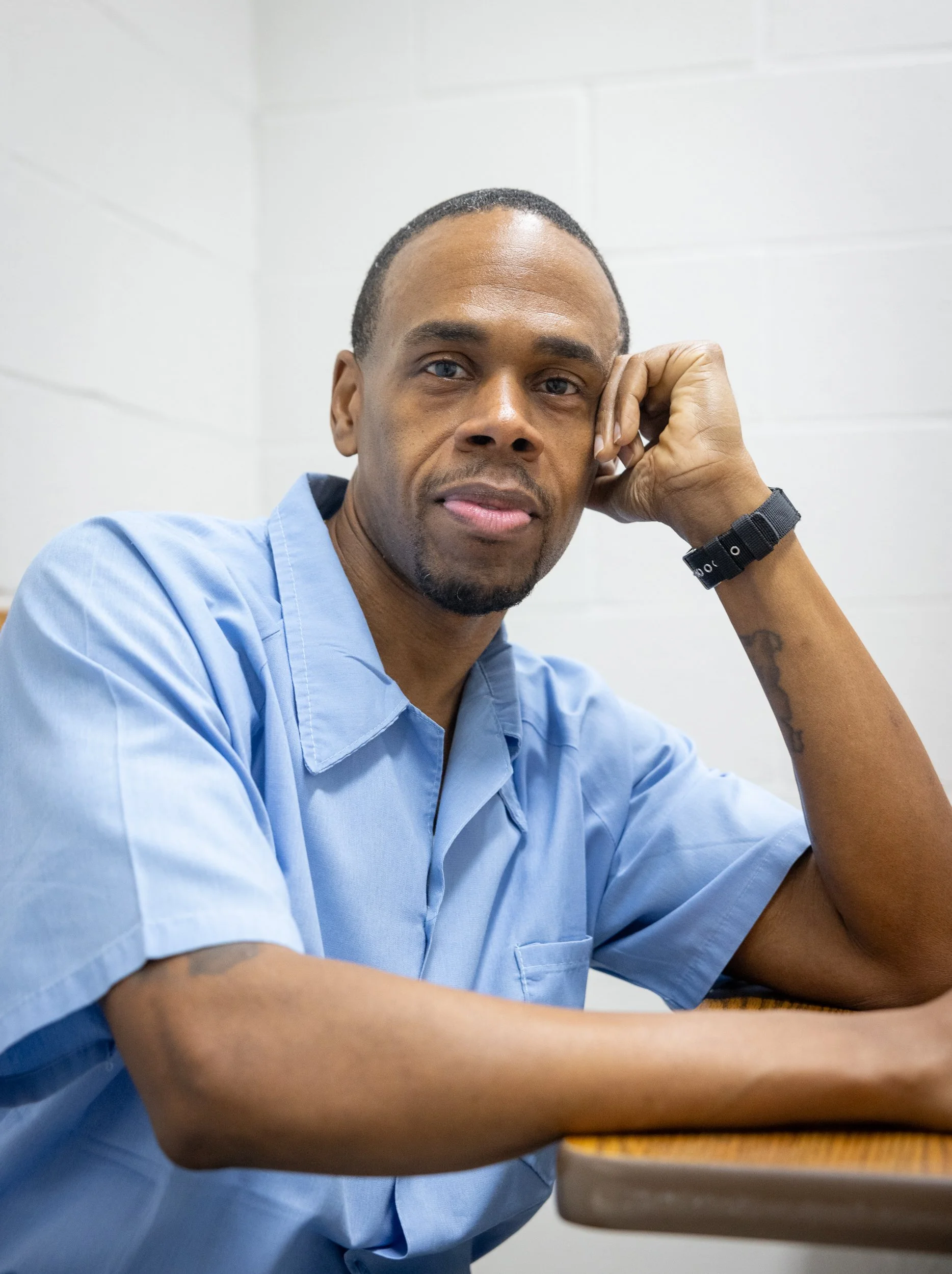
Cleodious “J.R.” Schoffner, 48, sits in a visitation cell at Lawrence Correctional Center Dec. 16, 2024 in Sumner, Illinois. Schoffner. is serving a natural life sentence - he was sentenced at 20 under Illinois’ “accountability theory” which holds accomplices to the same standards as those who directly committed serious crimes. (Julia Rendleman)