Unemployment Nearly Back To Pre-Pandemic Levels In SE Illinois

Unemployment rates in southeastern Illinois have almost returned to the levels we saw before the pandemic hit in the Spring. At that point, Wabash County and other counties in the state saw their jobless rates skyrocket over 20% when lockdowns on many businesses were imposed. But the latest figures released for November show Wabash County’s jobless rate stood at 4.1%, just one percentage point above the 3.1% mark recorded in November of last year. Wabash County’s rate last month was the third lowest in southern Illinois just trailing the 3.5% rate in Hamilton County and the 4% figure in White County. 


Total nonfarm employment decreased by -900 compared to November 2019. 

Employment gains were posted in Natural Resources and Mining (+25). 

Employment declined in Manufacturing (-250), Leisure and Hospitality (-250), Educational and Health Services (-175), Other Services (-125), Government (-100), Financial Activities (-25), Professional and Business Services (-25), and Construction (-25).  No employment changes were reported in Trade, Transportation and Utilities, and Information 

Judge Makes Appointments To Parks Advisory Board

Mt. Carmel Mayor Joe Judge is reviving and revamping some neglected city boards.

At Monday’s City Council meeting, Judge announced he was restarting the parks advisory board which was first started in 1947, but has fallen by the wayside several years ago. Judge said the five member board will consist of parks commissioner Tom Meeks, Rick Andrews representing the pickleball courts, Doug McPhersonn representing the golf course, and citizen M. C. Deming. Judge said a person for the fifth is being considered and will be announced once the pick is finalized.

Another board Judge is bringing back is an ethics board that he said appointments will be announced soon. He also said vacancies on the airport board and TIF board will be filled soon. The Mayor said other city established boards, such as the library board and zoning board, are in good shape. 

Wabash County Board Of Commissioners Agenda

REGULAR MEETING Monday, January 4, 2021 – 4:30 P.M.

AGENDA

1) Call to order:

2) Approve minutes of previous meeting:

3) Commissioner’s reports:

4) Officer’s reports:

5) Old Business:

a. Intergovernmental Agreement regarding the phone system in the county, city and 911 building.

6) New Business:

7) Executive Session:

8) Correspondence:

9) Approval for payment of claims presented:

10) Adjournment:

This agenda is subject to change prior to the time of the meeting if necessary. Dated this 30th day of December, 2020. ______________________________________

Janet L. Will

The meeting will be held upstairs in the Courtroom because of the COVID19 restrictions limiting distancing and number of attendees. The number of people is limited to ten (10) and masks will be required.

IL General Assembly Looks Forward To 2021

Because of COVID-19, the Illinois Legislature could take up the ability to legislate remotely in the new year, but some have concerns it could limit accountability and taxpayer participation.

Democrats at the Illinois statehouse have a variety of priorities for the new year, including criminal justice reform, clean energy legislation and other issues. But because of COVID-19, some have continued concerns from meeting in person.

A bill filed this month by state Rep. Ann Williams, D-Chicago, could make legislating remotely happen.

State Rep. Chris Welch, D-Hillside, said lawmakers tried to allow that when they met briefly in May.

“It was our colleagues on the other side of the aisle who killed that motion,” Welch said. “I’m not in favor of coming down here in person. I just spent two weeks in my basement because of COVID-19.”

State Rep. Tim Butler, R-Springfield, also spent time in isolation because of the virus. He said it’s ridiculous to blame the failure of remote legislation this spring on minority Republicans when Democrats have a supermajority.

Regardless, Butler said the incoming legislature needs to address the pandemic and provide oversight.

“That has to be at the top of our list,” Butler said. “Also, we’ve got to figure out this budget mess that Democrats have put us in.”

The budget passed in May by Democrats was based on a progressive income tax constitutional amendment that voters rejected and federal aid that never materialized.

In the face of Gov. J.B. Pritzker announcing $711 million in expense cuts, state Rep. Will Guzzardi, D-Chicago, said lawmakers have to end what he called corporate loopholes to plug the state’s $4 billion budget gap.

“We will fight to make sure that those immensely wealthy and profitable corporations pay their fair share to our state before we go after services that people need,” Guzzardi said.

Butler said majority Democrats need to address the state’s continued population loss.

“We need to unleash business to be able to create good jobs for the people of Illinois, which in turn would help revenues coming into this state because if we have a larger tax base to draw from, then it’s going to help the coffers of Illinois, without raising taxes,” Butler said.

There’s a lame-duck session possible before the 102nd General Assembly is seated the second week of January. The first order of business for the House will be to elect the next speaker. That’s expected to be contentious as House Speaker Michael Madigan no longer has majority support.

District #348 Prepares For Return To In-Person Instruction Next Week

From Wabash District #348 Superintendent Dr. Chuck Bleyer: As we approach the second semester of the 2020-21 school year, this is a reminder that January 4th is a remote learning day and January 5th is scheduled for returning to in-person instruction. If your child opted to be a remote learner in the first semester but now wants to return to in-person instruction, you are required to contact the school office one day in advance. As usual, Wabash CUSD #348 will be maintaining all COVID-19 safety precautions and will continue to work with the Wabash County Health Department to make the best decisions when considering safety factors. We at District #348 are looking forward to the second semester of this school year. Thank you, and as always, stay safe and Go Aces!

Costs Of New Mt. Carmel Water Plant To Be Unveiled Next Month

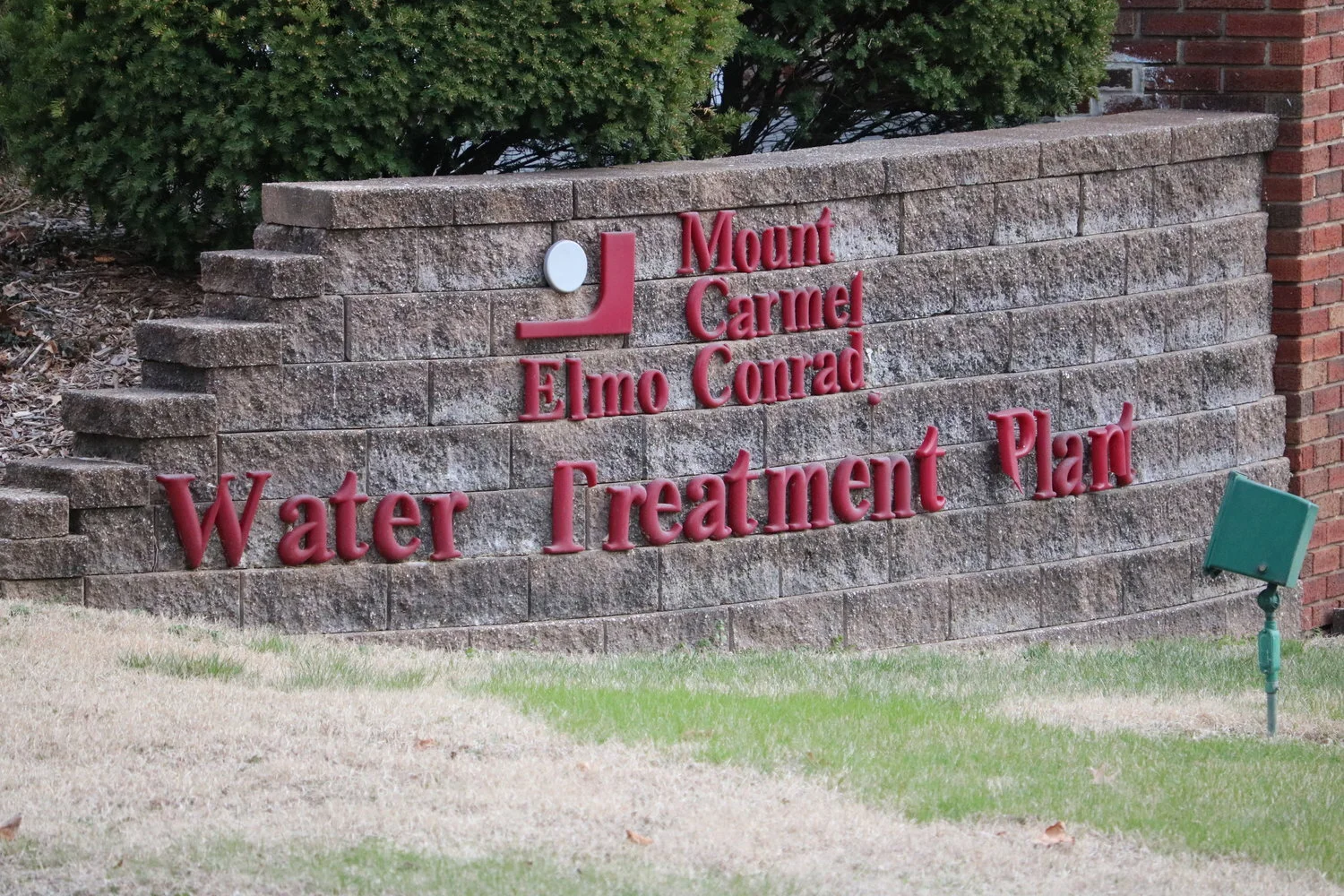
We should find out next month how much water rates will go up as the city of Mt. Carmel proceeds with plans to build a new water treatment facility. The idea of a new water plant has been in the works for 5 years, but no concrete price tags and how much it will cost water customers have ever been offered. But at Monday’s City Council meeting, water commissioner Justin Dulgar floated one possibility….

Dulgar said expenses being incurred in planning for the new water are eating through a balance in the water fund. Once the city’s loan application with the EPA is approved, Dulgar said those bills will be reimbursed. He said the future of Mt. Carmel’s water supply depends on this project…

 A final city council vote on officially moving forward with the new water plant is expected within the next month according to Dulgar.

WSJD File Photo

WSJD File Photo

Illinois Law Enforcement Coalition issues Safe Communities and Law Enforcement Modernization Strategy

SPRINGFIELD – A coalition representing Illinois law enforcement leadership and rank-and-file officers has issued a 15-point plan in a Safe Communities and Law Enforcement Modernization Strategy. The proposal is designed to build trust and stronger relationships between law enforcement and the communities they serve.

            The Illinois Fraternal Order of Police (FOP) State Lodge, FOP Labor Council, FOP Chicago Lodge 7, Illinois Sheriffs’ Association and the Illinois Association of Chiefs of Police have formed the Illinois Law Enforcement Coalition and have been working on these strategies since summer to improve community safety and enhance the trust.

            “The Coalition members all support modernization that would improve the criminal justice system for all Illinoisans and create a better trained law enforcement community,” said Illinois Association of Chiefs Executive Director Ed Wojcicki. “As law enforcement professionals, we want to take the leading role in modernizing policing and keeping our communities safe.”

            The Coalition's Safe Community and Police Modernization Strategy for 2021 includes the following 15 points:

            Voices of crime victims:  Coalition members continue to be outspoken advocates for crime victims. Without the dedication, hard work and compassion of law enforcement professionals, most victims would never experience justice.

            Co-responder model pilot projects: Having law enforcement access to a social worker or mental health professional would be very beneficial in specific incidents. There are many parts of the state where this is not only a financial issue, but also one of finding available social workers.

            Mental health services: We support additional resources for mental health services and other resources that might provide an alternative to arrest, but these resources should not be used to reduce law enforcement funding. We also need more de-escalation and crisis intervention training for law enforcement officers to better handle these situations.

            Funding for community resources: Provide adequate state funding for local agencies such as, but not limited to, local mental health and substance abuse providers, social workers, and county and municipal jails.

            Recognize Illinois’ leadership in reforms: Here is a partial list of the training already required for Illinois officers on a regular basis: Use of force; civil rights; legal updates; cultural competency; procedural justice (voice, fairness, transparency, impartiality); human rights; sexual assault trauma-informed response.

            Training and funding for training: Provide adequate state funding for all training requirements, including the academies, and for the additional costs incurred by agencies when other officers are taking the training.

            Body cameras: We continue to support the use of body cameras, and we have recommended several major changes in state law that would eliminate burdensome impediments and costs that now cause many departments not to use them.

            Get rid of bad cops: Strengthen Illinois policies and procedures regarding the dismissal and decertification of sworn officers, with appropriate due process. Expand the list of offenses that lead to automatic decertification and prohibit truly bad cops either in Illinois or from other states from job hopping from one department to the next.

            Use of force reporting: The FBI has developed a national database for all local agencies to report use of force for officer-involved shootings, and we support mandating participation by all agencies in this database.

            Reporting misconduct: We support developing use of force reporting forms to include when an officer actively points a weapon, actively points a taser, or goes hands on beyond normal handcuffing.

            Collective bargaining: We support an expedited collective bargaining arbitration process. This would alleviate the issues that allow cases to drag on for a long time. Due process must be provided to law enforcement officers as it is to anyone.

            Use of force standardized policy: A national consensus policy on the use of force from the International Association of Chiefs of Police has been used by many organizations and would provide a sound starting point in Illinois.

            School Resource Officers: Many school districts in the state are adding School Resource Officers and believe in their value, in many cases because of the threat of an increase in school shootings. Any decision on maintaining School Resource Officers and funding them should remain at the local level.

            Officer wellness and support: We continue to support efforts to promote officer wellness and have been actively working with the new suicide prevention task force.

            Recruitment: Agencies continue to look for ways to develop staff that represent the diversity of the communities they serve. Local governments and community leaders must share the responsibility of recruiting diverse law enforcement agencies.

            “Coalition members support law enforcement modernizations that will improve the criminal justice system for all Illinoisans. The Coalition is willing to work with anyone interested in solving the complex policy issues surrounding the modernization movement here in Illinois,” said FOP State Lodge President Chris Southwood. “At the same time, we will not violate two important basic principles: Law enforcement modernization can’t end up harming the safety of the public we serve, or the safety of the officers charged with protecting the public.”

            In addition to the Coalition's 15-point plan, its members have identified six major areas of concern that appear to be at the top of the list in many police reform discussions.

            Execution of Warrants: No-knock warrants are seldom granted now, but they are a necessary tool depending on the circumstances. Serving warrants is one of the most dangerous activities required of law enforcement professionals, because very often those being served resort to violence.

            “Militarization”: Most of the “military equipment,” or surplus government equipment, being procured by departments is furniture and other office equipment. In addition, untrained citizens think they are seeing “tanks” when in fact it is heavy duty equipment and many of these tools are essential in saving lives and rescuing innocent civilians.

            Sworn affidavits: We support the right of people to file a complaint against an officer, but we oppose eliminating the sworn affidavit that must accompany a complaint. There would be too many frivolous complaints and “revenge” complaints if this were eliminated, a situation that existed before the sworn affidavit law was created.

            Qualified immunity: Many people and politicians mistakenly believe that qualified immunity makes it impossible to sue a police officer or department. That is absolutely not true. If it is not part of a total package that would include eliminating immunity for state’s attorneys, judges and state legislators, then it can be only be seen as a clear attack on law enforcement specifically. 

            Detainment and corrections: Detainees are now provided access to phone calls under state law. We already post this information in jails. We would continue to oppose expanding this “access to phone calls” for a variety of safety reasons.

            Reform of bail system: Safeguards must be in place so that judges can determine whether a person under arrest is a threat to society and the likelihood that the person would actually show up in court. Also, too much focus on an arrested person’s rights reduces or eliminates the rights of victims and the legitimate fears that crime victims have about becoming the victims of crimes again.

            “The Illinois Law Enforcement Coalition has been working on strategies to improve community safety and to enhance the trust and support of the community members we serve,” said Illinois Sheriffs' Association Executive Director Jim Kaitschuk. “The Coalition members all support reforms that would improve the criminal justice system for all Illinoisans.”
 

11.jpg

County Board Approves $5,000 For Shelter House At City Park

Wabash County Commissioners have approved a request to give the Mt. Carmel Rotary Club $5,000 to aid in the building of the new shelter house and restrooms at the City Park. The money comes from the hotel-motel tax fund and was recommended by the Wabash County Tourism Board.

Photo Credit: Mt. Carmel Rotary ClubThis photo shows where the former shelter house was torn down in advance of the new shelter house being built.

Photo Credit: Mt. Carmel Rotary Club

This photo shows where the former shelter house was torn down in advance of the new shelter house being built.

WGH Submitting Parking Proposal To Zoning Board

Wabash General Hospital officials are planning to make another run at additional parking for Dr. S. B. Jani’s office on Oak Street. Earlier this year, a plan for more parking was pulled from a board of zoning appeals meeting because of concerns of neighbors in the Oak Meadow subdivision. Wabash General President/CEO Karissa Turner told the board that revised plans have been submitted to neighbors….


Turner said the plan is to submit the proposal to the city’s board of zoning appeals at their February meeting.