14 of 16 precincts reporting.
Our election night coverage on WSJD is brought to you by:
Wabash General Hospital
First National Bank
White Family Trust
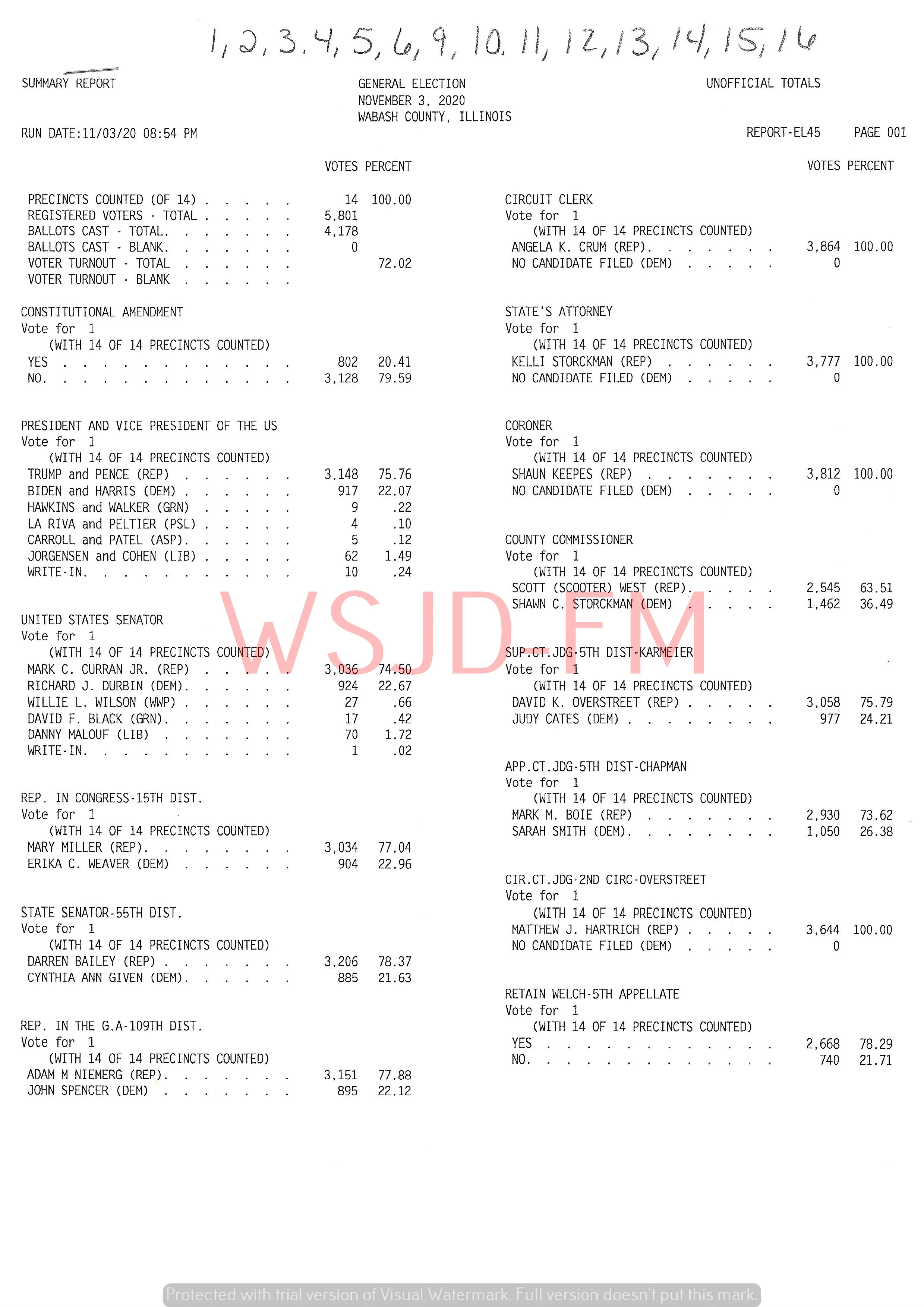
14 of 16 precincts reporting.
Our election night coverage on WSJD is brought to you by:
Wabash General Hospital
First National Bank
White Family Trust

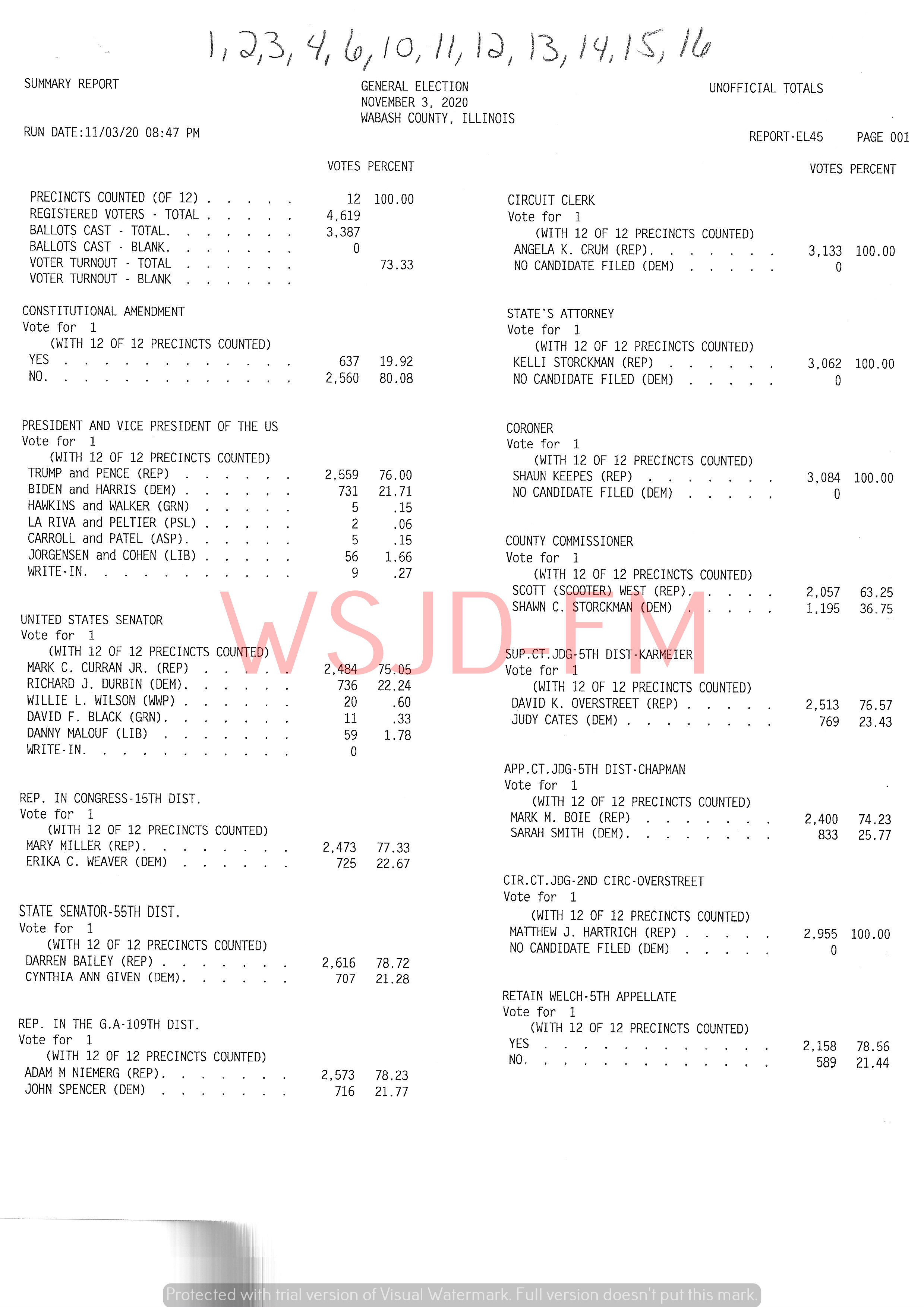
12 of 16 precincts reporting.
Our election night coverage on WSJD is brought to you by:
Wabash General Hospital
First National Bank
White Family Trust

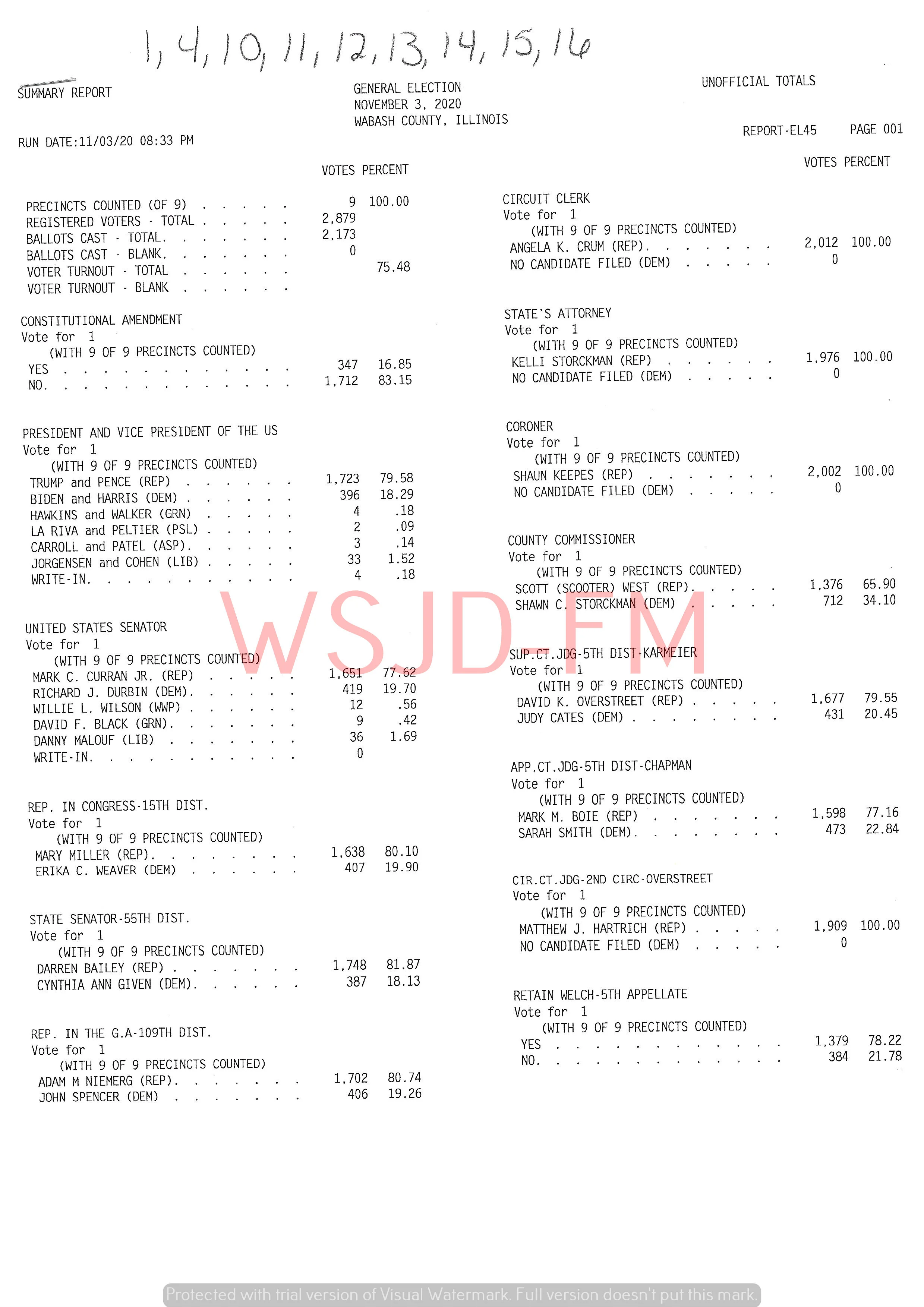
9 of 16 precincts reporting.
Our election night coverage on WSJD is brought to you by:
Wabash General Hospital
First National Bank
White Family Trust
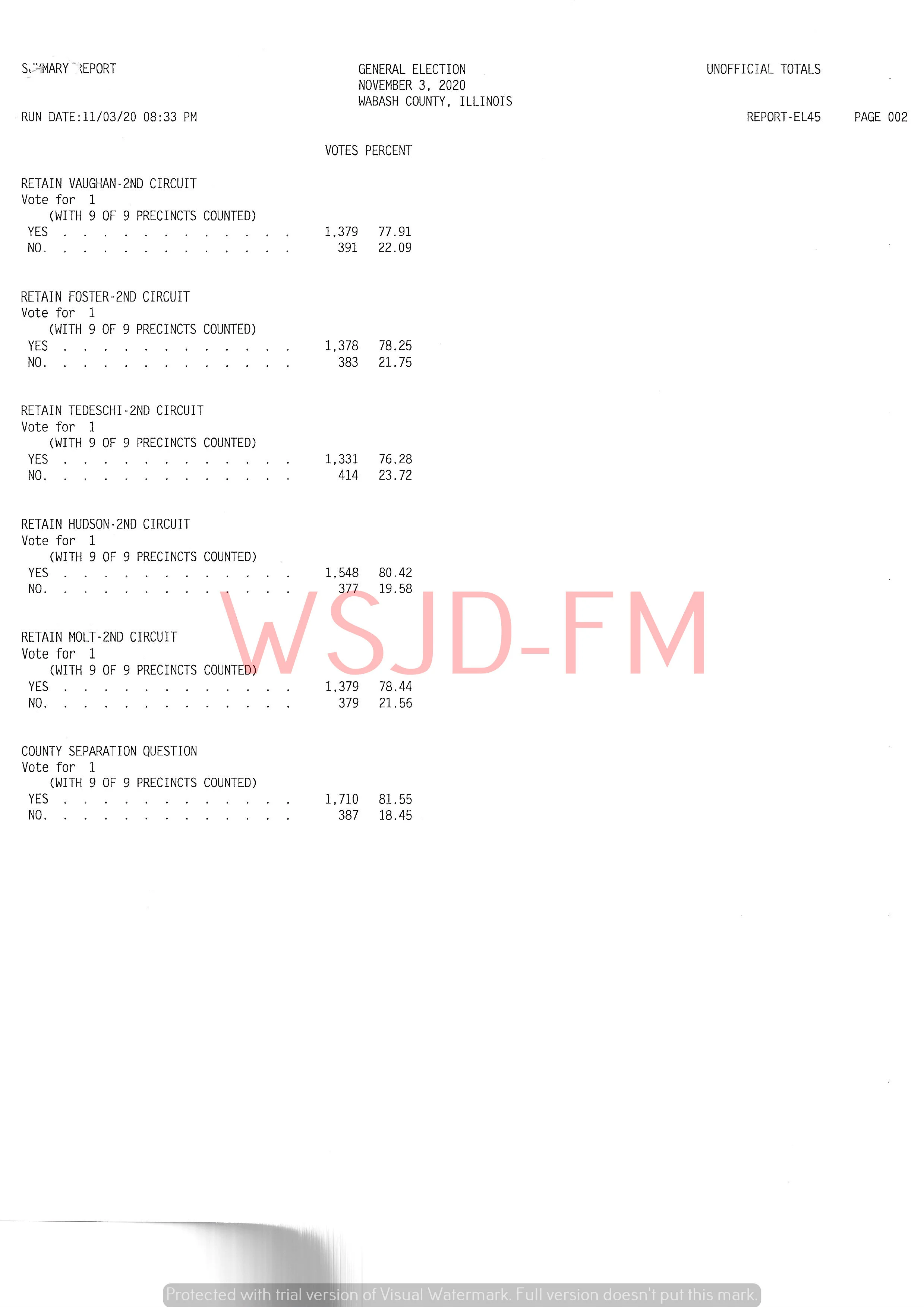
8 of 16 precincts reporting.
Our election night coverage on WSJD is brought to you by:
Wabash General Hospital
First National Bank
White Family Trust
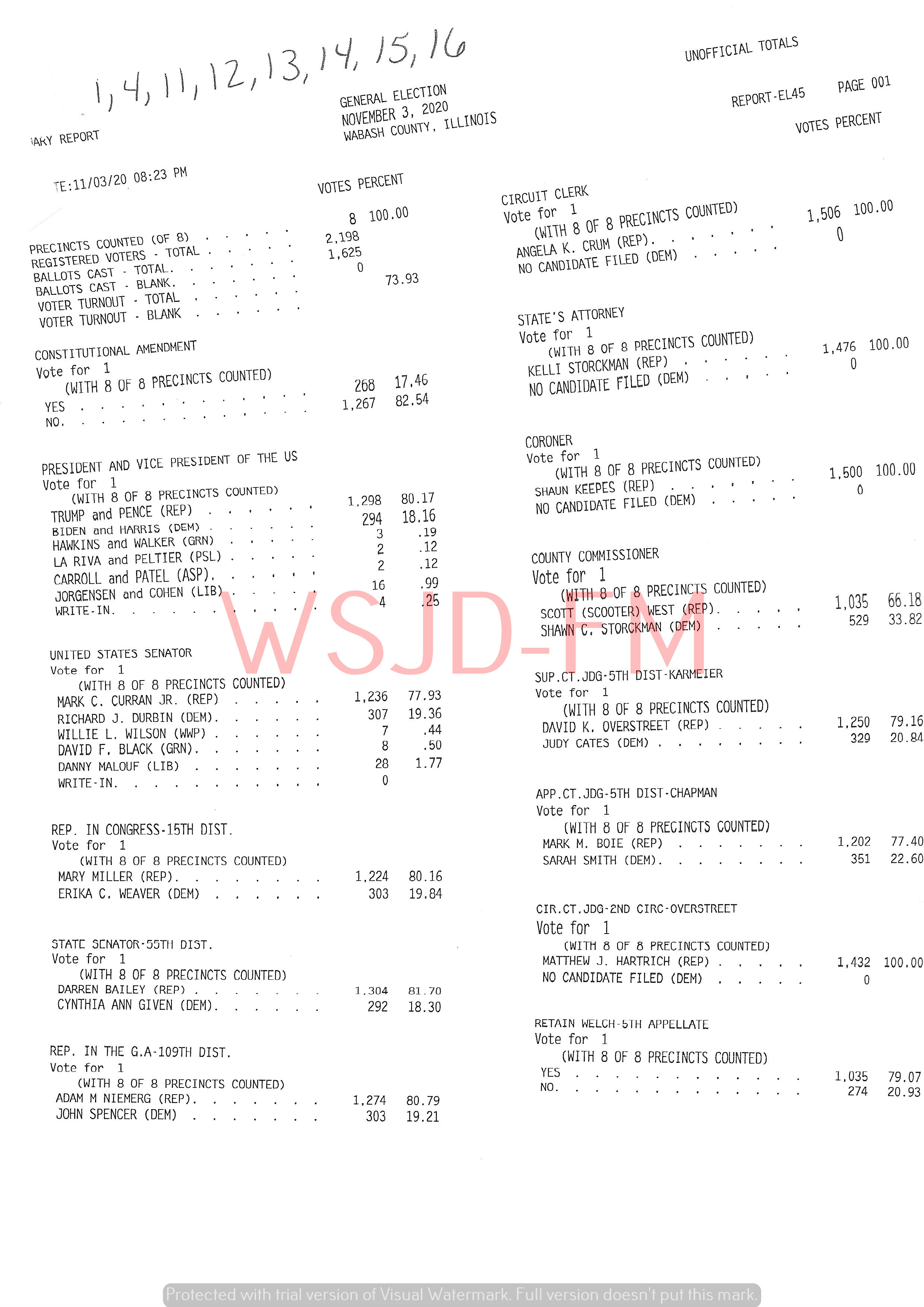
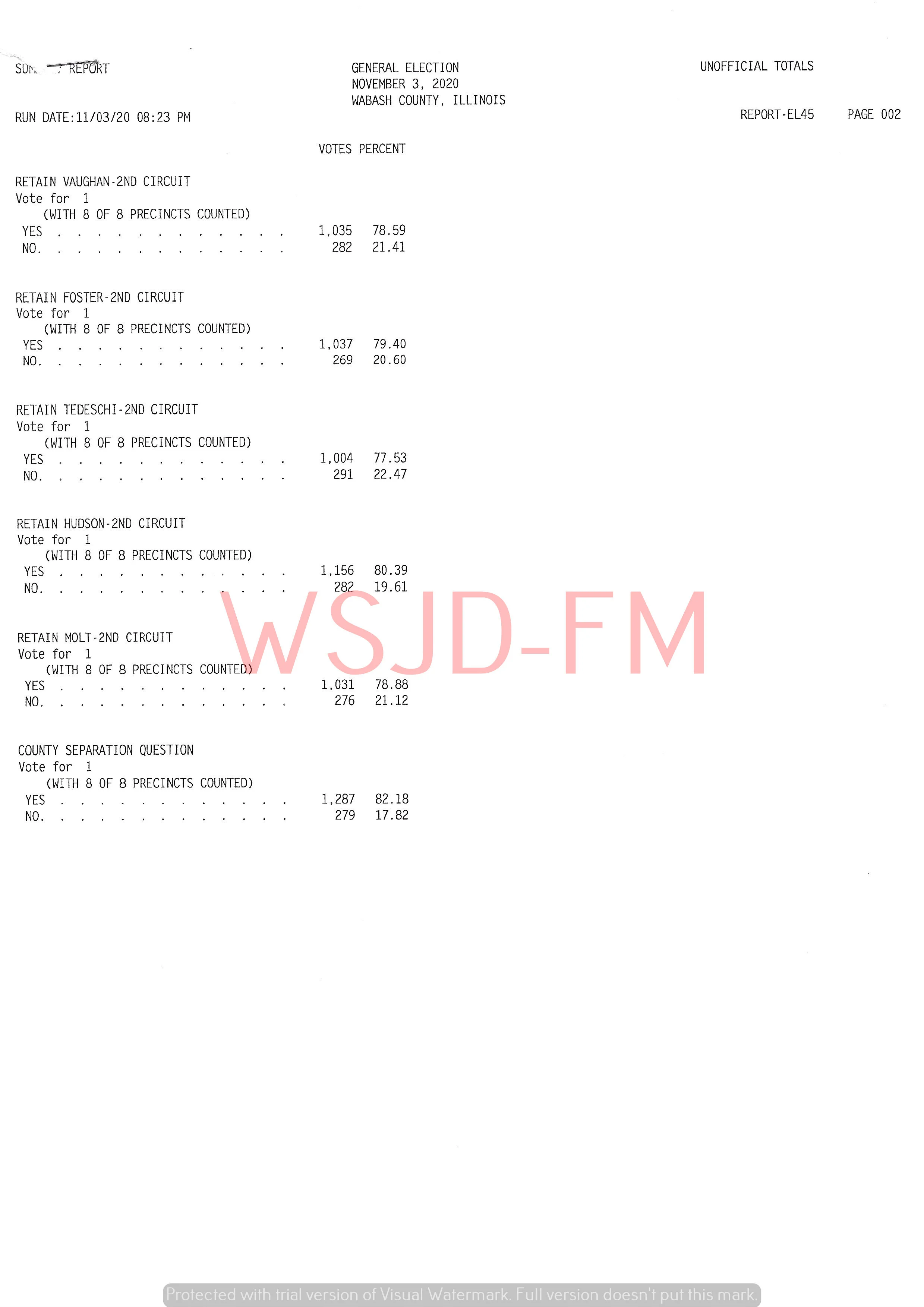
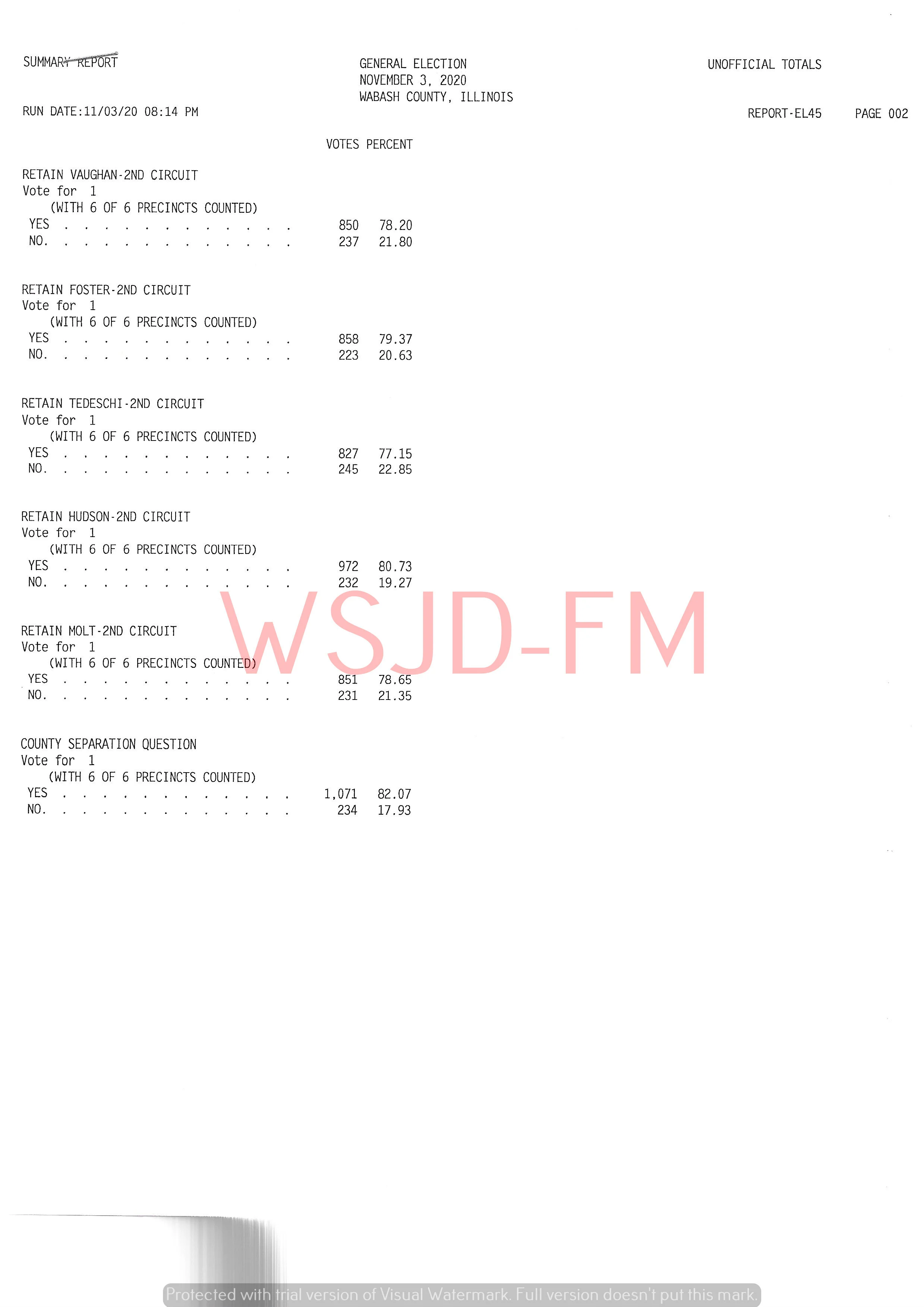
6 of 16 precincts reporting.
Our election night coverage on WSJD is brought to you by:
Wabash General Hospital
First National Bank
White Family Trust
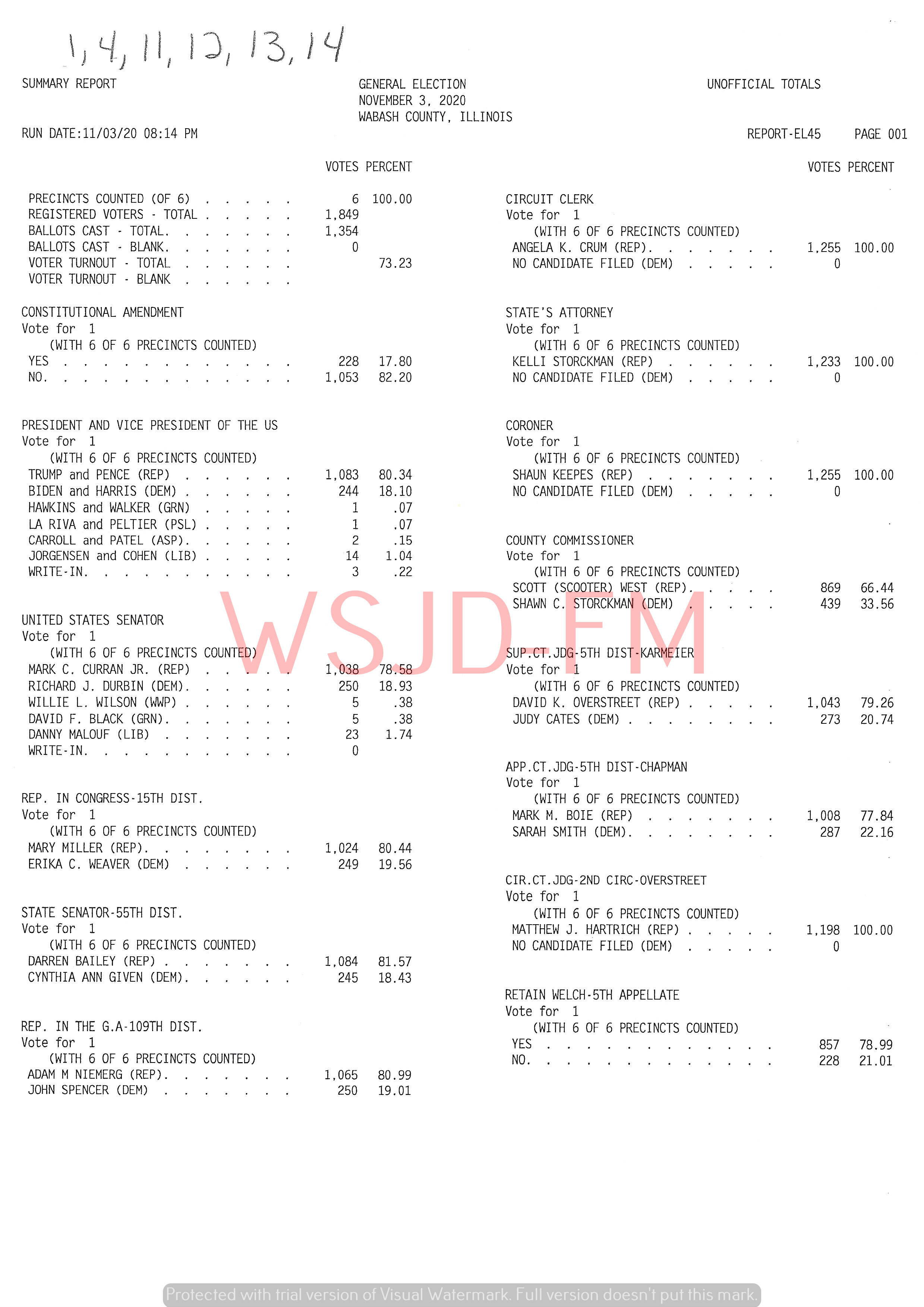
4 of 16 precincts reporting.
Our election night coverage on WSJD is brought to you by:
Wabash General Hospital
First National Bank
White Family Trust


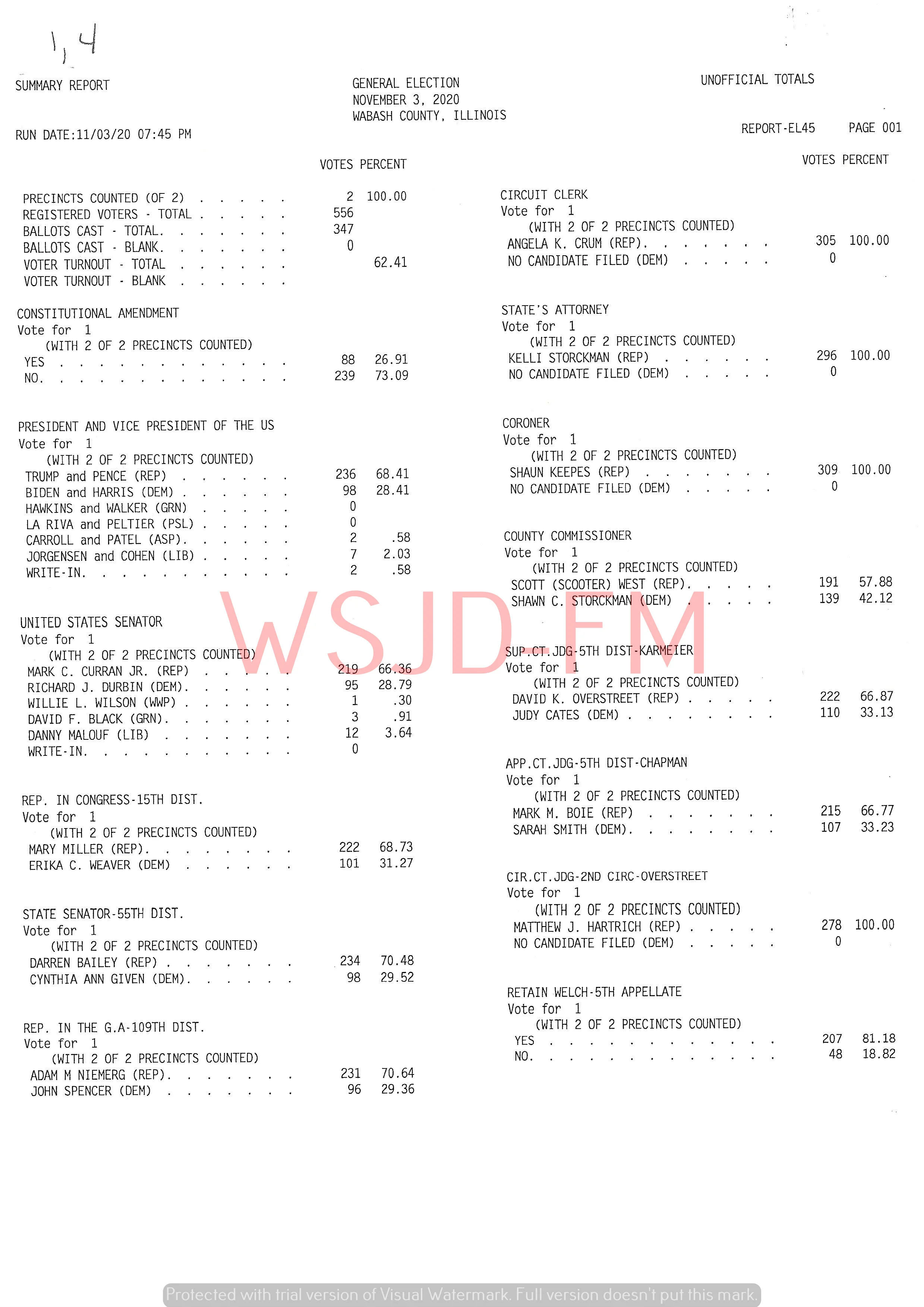
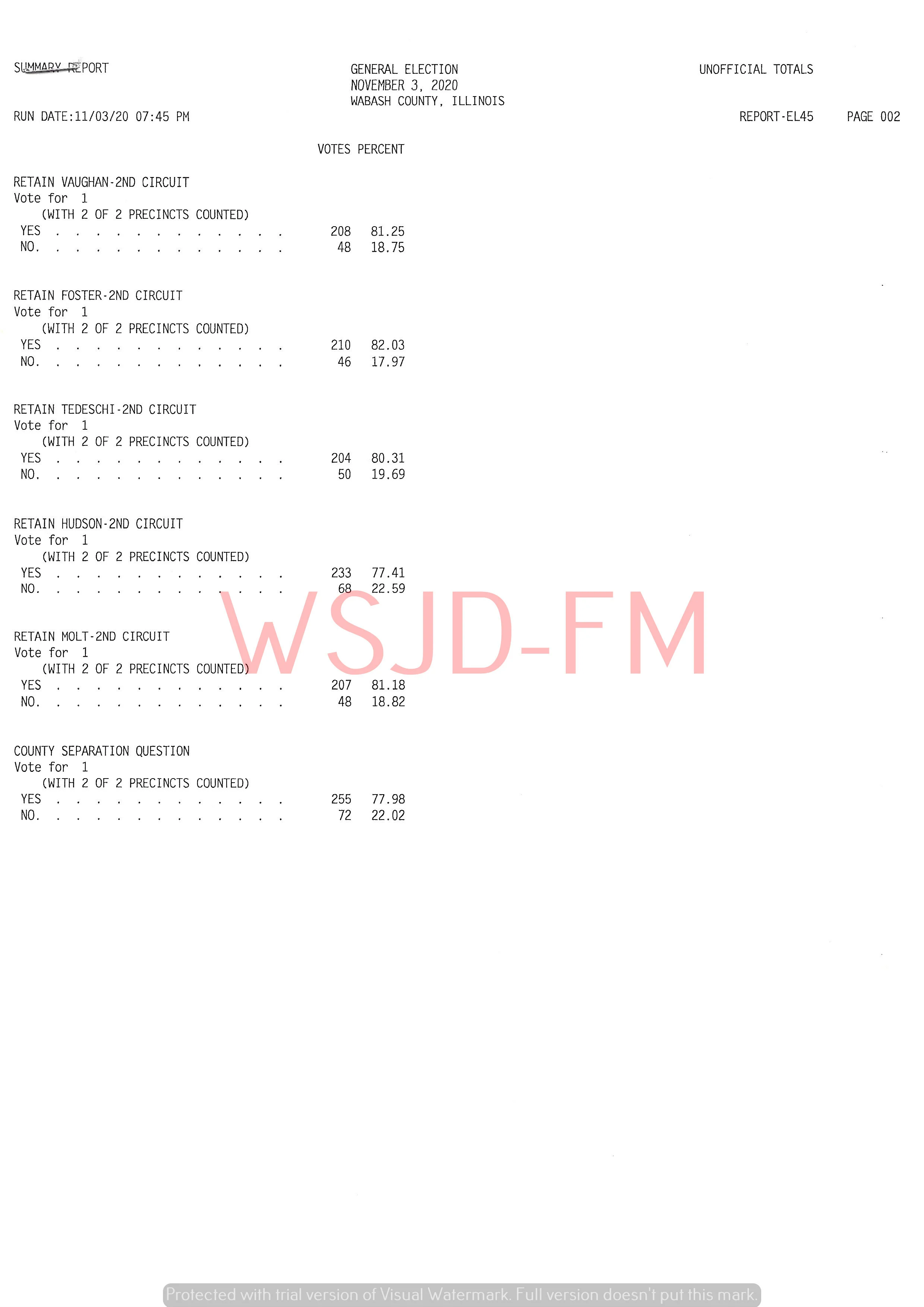
2 of 16 precincts reporting.
Our election night coverage on WSJD is brought to you by:
Wabash General Hospital
First National Bank
White Family Trust
The Illinois Emergency Management Agency and the Illinois Department of Aging want to make sure the elderly population is prepared for a disaster.
More than two million seniors live in Illinois and should know what to do when a disaster happens, IEMA spokesman Rebecca Clark said.
“Ready Illinois serves as a one-stop shop for all Illinois residents to educate themselves on the hazards that exist in Illinois and how to properly prepare their family, business, community or organization for each hazard,” she explained, adding that seniors and their families can visit the website for information.
“Regardless of your age or where you live, hazard mitigation and preparedness are the key tools to reduce or eliminate losses to life or property,” Clark said. “Start with the basics, educate yourself about the hazards in your area. Make a plan, build a kit and create a support network.”
Director for the Illinois Department on Aging Paula Basta agreed with Clark’s assessment.
“When we talk about National Preparedness Month, we talk about disasters in a more general sense,” Basta said. “The COVID-19 pandemic is obviously a national public health crisis that caught many off guard. So with National Preparedness Month, we are highlighting how important it is for older Illinoisans and their caregivers to set aside time to think about a plan, and to be prepared for future potential emergencies.”
The four tips that can help older Illinoisans prepare for a disaster or emergency discussed in detail by Basta revolve around one, creating a support network.
”This is a great time to get to know your neighbors. Identify family, friends and others who can assist you during an emergency. Studies show 46% of individuals will rely on their neighbors immediately following a disaster or emergency,” Basta said. “Also, take a moment to identify the various services available in your area. In addition to the 211 system in many communities, IDoA can connect older adults and their caregivers with trustworthy local support resources. Learn more by using the department’s Provider Profile search tool.“
Financial preparedness also is important, since a disaster can disrupt mail service for days or weeks. If you depend on Social Security or other regular benefits, switching to electronic payments is a simple, important way to protect yourself financially before a disaster, Basta said.
“Stores and pharmacies may be closed immediately following a disaster, so it is important to keep critical supplies, including food and medication, in an emergency supply kit,” she said. “Don’t wait until the last minute to have your medications refilled. Talk to your pharmacist and healthcare insurer to see if your insurance plan offers a more affordable mail-order option. Some insurers are also allowing early refills and extending the term of a prescription from a 30-day supply to a 90-day supply.”
Additionally, if you rely on others to help fill your weekly medication boxes or remind you to take your medications, consider the Automated Medication Dispenser Program (AMD). AMD is a service provided under IDoA’s Community Care Program.
“Emergency food supplies can be built over time, as to not be a cost burden to seniors. Consider picking up one extra can of food each time you visit the grocery store. Or find senior food resources online at https://eat-move-save.extension.illinois.edu/,” Basta said.
Learning how to utilize new technology is also important in the quest to better prepare to be ready to handle a disaster.
”Access and use of technology by older Americans is important to building and keeping socially connected. A study by Michigan State University found technology use reduces feelings of loneliness and resulted in better self-rated health, fewer chronic conditions and lower depression,” Basta said. “Not only can smartphones and tablets/computers help you connect with family and friends, but these devices can also offer ways to receive emergency alerts and notifications about impending weather or hazards.“
Illinois Care Connections can provide technology devices such as iPads or Tablets to participants thanks to a $1.7 million grant through the CARES Act. You can learn more about this program’s eligibility requirements at their website.
More than 3.5 million people have already voted in Illinois before the polls open Tuesday and there could be hundreds of thousands of mail-in votes coming when the polls close.
There are more than 8.3 million registered voters in Illinois, up from about 8 million in the 2016 General Election. The latest report Monday afternoon from the Illinois State Board of Elections showed 1,785,747 people voted at a designated early voting location and 1,759,245 mail-in ballots have already been returned.
A total of 3,544,992 votes had already been cast in Illinois with a 42.6 percent turnout before the polls officially opened Tuesday morning. That approaches total voter turnout in non-presidential years, like in the 2014 General Election where there was around 50 percent overall turnout. The 2018 turnout was more than 57 percent. The 2016 presidential General Election turnout in Illinois was 70.56 percent.
Early vote options were expanded several years ago. Mail-in voting was expanded this year because of the COVID-19 pandemic.
Sangamon County Clerk Don Gray said local polling places will be open, and despite nearly the entire state having COVID-19 mitigations in place, voters should have confidence it’s safe.
“Because our health professions are [confident],” Gray said. “Our leaders are comfortable, even within the rollback of the mitigations, polling places were exempted from those mitigations because we’ve been paying attention and preparing for it since March.”
But, even after the polls close Tuesday, there still could be some big unknowns. Illinois State Board of Elections spokesman Matt Dietrich said there could be at least 400,000 mail-in ballots that have yet to be received.
Local authorities have until Nov. 17th to count those, as long as the mail-in ballot is postmarked Nov. 3.
Dietrich acknowledged not every outstanding ballot mailed out will be returned and converted to a vote.
“But when you have that kind of volume out there it does stand to reason that a significant number will arrive and will be voted after election day,” Dietrich said.
The latest report Monday showed 586,709 mail-in ballots that have yet to be received statewide. Another report of outstanding vote-by-mail ballots that haven’t been received will be published sometime Tuesday.
“We won’t have the number for all the ballots cast until every vote-by-mail ballot is tabulated and every provisional ballot is tabulated by Nov. 17,” Dietrich said.
At the close of election day, it’s possible there are still several hundred thousand ballots in transit. That could impact the outcome of statewide races, like the income tax change or U.S. Senate.
Gray doesn’t foresee many problems locally.
“Any real close elections, and we’re talking really close elections, here locally certainly they’re going to be unresolved for at least a two-week process,” Gray said.
The polls close at 7 p.m. Tuesday. Nov. 17 is the day all of the state's 108 local election authorities have to complete counting. They're required to transmit the totals to ISBE by Nov. 24. The state elections board then meets on Dec. 4 to certify the vote.
As regions across the state adjust to added restrictions aimed to reduce the spread of COVID-19, Gov. J.B. Pritzker said more stringent policies will be put in place if positivity rates continue to climb.
On Wednesday, Pritzker will have ordered the entire state’s bar and restaurant industry to prohibit indoor service because of COVID-19.
Further mitigation could include prohibiting some retailers from indoor service.
Tier I of Phase 4 of the governor’s COVID-19 plan prohibits indoor service at bars and restaurants.
“Nothing we can do will immediately reduce the positivity rates or hospitalizations but our resurgence mitigations are designed to have an impact over several weeks as long as everyone takes some responsibility for making, social distancing and following the CDC and [Illinois Department of Public Health] guidelines,” Pritzker said Monday.
Some restaurants are staying open for indoor service despite the ban. More than 20 restaurants and bars in Springfield announced they’re staying open and have sued the governor.
“Based on prior court rulings, we and our attorneys believe the Governor lacks the authority to implement these restrictions,” The Corner Pub & Grill out of Springfield said on its Facebook page. “In addition, the Governor has presented no scientific evidence or data whatsoever, that restaurants are a source of the spread of COVID-19 anymore than any other type of business.”
The lawsuit filed Friday seeks a declaratory judgment and injunctive relief. A hearing date has yet to be set.
East Peoria’s mayor said the city won’t be enforcing the mitigation.
“We will continue to support the rights of all members of the business community to remain open,” Mayor John Kahl said on Facebook. “The businesses of East Peoria have done their part throughout these challenging times and not a single one of them has been found by the Health Department to pose a risk to public health.”
Other communities also aren’t enforcing the governor’s orders, allowing bars and restaurants to operate with distancing and mask requirements.
State Rep. Joe Sosnowski, R-Rockford, said businesses are staying open in his region with proper spacing and masks.
“And what we’ve seen is a large number of restaurants have continued to offer indoor dining and they have continued to do so safely with no issues of spread,” he said.
If Tier I mitigations don't work, the governor's plan calls for Tier II and Tier III mitigations, which are more restrictive. Tier II of Phase 4 includes prohibiting indoor service at nonessential businesses.
Sosnowski’s Rockford region is in Tier II. He said that under Tier II mitigations, the governor could suspend nonessential in-person shopping at retail stores, but that hadn't been implemented as of Monday. Sosnowski said that option should be used.
“Two things, one we shouldn’t be telling any business they’re not essential,” Sosnowski said. “But No. 2, I hope we’re not going to continue to go down this draconian path of trying to close down businesses.”
Illinois Retail Merchants Association President and CEO Rob Karr said early on in the pandemic, there were too many unknowns. But things have changed.
“We have already communicated numerous times that there should be no distinction between essential and non-essential retail,” Karr said. “It was one thing early in the pandemic when nobody knew anything, but now we know better.”
“We know that a bookstore, an apparel store, a craft store, can operate at the same safety guidelines as for example a grocery store or a big box [store] so there’s no need to differentiate,” he said.
Karr said there’s no data indicating COVID-19 is less likely to be spread at a big box store that sells groceries than a clothing store or book store.
Tier III mitigations include suspending all non-essential retail along with salon and personal care operations and suspends elective surgeries and procedures. To reverse out of the tiers, the governor has said a region would have to reduce its positivity rate to 6.5 percent or lower.