Travelers flocked to the ‘Middle of Everything’ last year, generating over $88 billion in economic impact

The state welcomed 115 million visitors who spent over $50 billion

By MAGGIE DOUGHERTY
Capitol News Illinois
mdougherty@capitolnewsillinois.com 

Article Summary 

  • Illinois had a good year for tourism in 2025, with over 115 million visitors spending over $50 billion — breaking records, according to the governor's office. 

  • The total economic impact of tourism was up to $88 billion, fueled in part by the state’s ‘Middle of Everything’ campaign.

  • The state’s Department of Commerce and Economic Opportunity announced it is expanding its focus on outdoor recreation activities through a dedicated unit within its tourism office.

This summary was written by the reporters and editors who worked on this story. 

CHICAGO — Illinois tourism reached new peaks last year, breaking records on visitor spending and generating over $88 billion in total economic impact, Gov. JB Pritzker's office announced. 

The growth was driven by around 115 million domestic and international tourists, who spent $50.2 billion while traveling in Illinois — an increase of 3.5% from the year before, and marking the first time the state has surpassed the $50 billion threshold for visitor spending.

"We’re in the Middle of Everything and there's something here for everyone — from the beaches of Lake Michigan to the rolling prairies of Southern Illinois,” said Lt. Gov. Juliana Stratton. “Illinois has a rich history, culture, and natural beauty and we’re excited to welcome people from near and far to enjoy it all.”

Read more: ‘Hidden gem’: Growing number of visitors discovering southern Illinois as travel destination

The spending also produced nearly $5 billion in direct state and local tax revenues for Illinois communities and $372 million in hotel tax revenue. 

According to a news release from the governor’s office, the state’s ‘Middle of Everything’ tourism campaign helped generate an additional 2.8 million trips and $904 million in visitor spending last year.

Illinois’ tourism industry was also supported by over $3.3 million in state grants in fiscal year 2025, helping to promote projects like the state’s Route 66 centennial celebrations and the Illinois America 250 campaign. 

Read more: Illinois unveils plans to celebrate 250 years of American independence | ‘More than just a road’: Illinois communities celebrate Route 66’s centennial

The state’s Department of Commerce and Economic Opportunity says it is expanding its focus on outdoor recreation activities with a dedicated unit within its tourism office.

Outdoor recreation activities have been the primary draw for tourism to the southern part of the state in recent years, with visitors taking advantage of hiking, cycling, rock climbing, and ziplining in Shawnee National Forest — and wine tasting at vineyards along five wine trails. 

Capitol News Illinois is a nonprofit, nonpartisan news service that distributes state Illinois Press Foundation and the Robert R. McCormick Foundation.


State audit finds child protection agency made progress, but was still noncompliant with 2020 law 

DCFS points to improvements in two-year period since 2022 audit

Article Summary 

  • An audit found several documentation lapses by the Department of Children and Family Services, including failures to provide evidence of routine healthcare for children in state custody.

  • DCFS was still not in compliance with a 2020 law named for 2-year-old Ta’Naja Barnes, who died of neglect after agency returned her to her mother. 

  • The agency was also failing to complete home safety checklists that identify possible risks and dangers in the child’s home. 

  • Auditors also found the agency failed to provide documentation of aftercare services for families when kids were returned home. 

This summary was written by the reporters and editors who worked on this story. 

By BETH HUNDSDORFER  
Capitol News Illinois 
bhundsdorfer@capitolnewsillinois.com  

Two-year-old Ta'Naja Barnes’ 2019 death was so horrific that legislators passed a law in her honor to ensure the Department of Children and Family Services would provide abused and neglected kids with continued support services once they’re returned to their parents.

When she died, Ta’Naja was filthy and had a body temperature too low to measure. Just months before her death, DCFS returned Ta'Naja’s care to her mother and her mother's boyfriend, who pleaded guilty to criminal charges related to the toddler’s death. 

On Wednesday, state auditors released their second audit finding DCFS has made progress but failed to comply with Ta’Naja’s Law nearly six years after it went into effect. The 109-page audit conducted by Illinois Auditor General Christopher Meister covered 2023 to 2024.

Audit finds modest progress, continued issues

Under the law that went into effect in January 2020, home safety checklists must be completed within 24 hours before a child returns home. The checklists, a tool to evaluate a home for physical hazards, environmental risks, and basic living necessities before or during an open child welfare case, are required by law and the agency’s own policies. They should be completed again within five days after a child is returned home, then monthly until the child’s case is closed. 

One of the key findings was that DCFS provided only 18% of the required home safety checklists in a sample of 50 cases. 

While that is an improvement from the previous audit in 2022 when auditors found DCFS only provided 2% of required home safety checklists for the same sample size, it still falls short of the full implementation the legislature mandated six years ago. 

As part of the reunification process, DCFS must also present an aftercare plan to the juvenile court to determine what services would support the family. Those services can include counseling, case management, physical, behavioral and mental health services, and substance abuse services. They can also include linking families to community resources like food pantries, housing, employment training and continuing education programs.

DCFS policy states that 30 days before a child is scheduled to return home, department officials hold a meeting to determine services and develop an aftercare plan. The plan is presented for approval to the court so services will be in place when the court orders the child to be returned home.

Those services should continue for at least six months after the child is returned home. 

In 13% cases surveyed, auditors could not find evidence of at least six months of aftercare services provided to the family after reunification. That's down from 58% of cases tested during the prior audit period. 

The department said in a statement it “has continued to make progress” since the two-year period included in the audit. 

“Additionally, of the recommendations from the original audit, three were fully implemented and two were partially implemented,” according to an emailed statement from DCFS.

The audit also found that the agency failed to provide documentation for routine healthcare for children in their care. In 50 cases sampled, auditors could not find supporting documentation for 16% of required physical examinations; 29% of required vision screenings; 63% of required hearing screenings; and 51% of required dental examinations and cleanings. Auditors also found that in 10% of cases, there were delays in obtaining mental health services for a child with an identified need. 

The audit also cited persistent vacancies in child protection, intact family services, and permanency with an overall vacancy rate of 13%.

A history of noncompliance

The audit made six recommendations that the agency:

  • Require caseworkers to complete home safety checklists. This recommendation is repeated from the 2022 audit. 

  • Provide at least six months of aftercare services to families once a child is returned home. This recommendation is repeated from the 2022 audit. 

  • Provide routine medical care and screenings, including mental health assessments for kids in care. This recommendation is repeated from the 2022 audit.

  • Ensure that children receive age-appropriate immunizations. This recommendation is repeated from the 2022 audit.

  • Accurately fill out the completion date in the service plan. This recommendation is repeated from the 2022 audit.

  • Provide adequate staff to meet caseload demands and provide enough supervisors to ensure quality employee work and guidance. 

State audits have repeatedly scrutinized DCFS for slow rollout, poor documentation, and initial failures in fully implementing safety and aftercare mandates, prompting ongoing state oversight and compliance monitoring.

Current DCFS Director Heidi Mueller was named to head the agency in February 2024, taking over for embattled former director Marc Smith. She is the 16th director in the last 21 years.

The agency has faced severe leadership churn, with multiple acting, interim, and permanent directors stepping in due to resignations, retirements, and pressure from systemic agency scandals.

Twanka Davis, Ta’Naja’s mother is serving a 20-year prison sentence after pleading guilty to murder charges. Davis’ boyfriend, Anthony Myers, also was convicted in Ta’Naja’s death and sentenced to 30 years in prison.

Davis gave birth to a third child in prison. That child was taken into custody after birth. Another sibling was taken into DCFS custody after Ta’Naja’s death.

Capitol News Illinois is a nonprofit, nonpartisan news service that distributes state government coverage to hundreds of news outlets statewide. It is funded primarily by the Illinois Press Foundation and the Robert R. McCormick Foundation.  


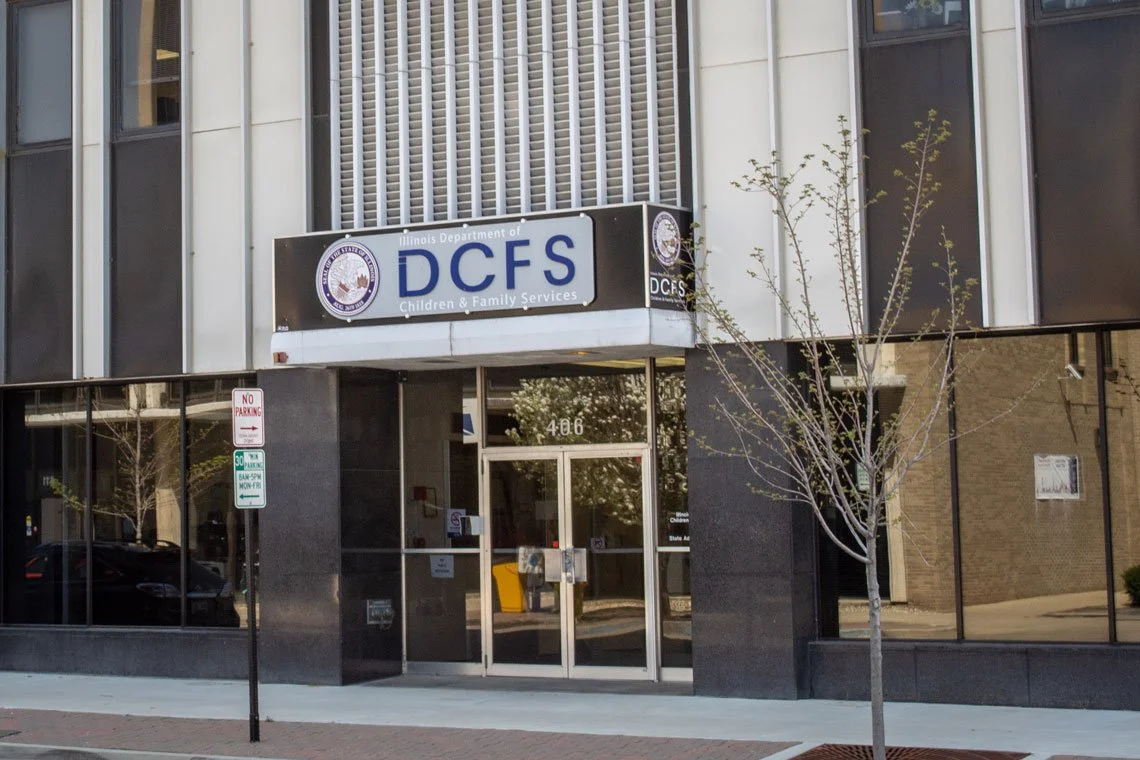
The Department of Children and Family Services building in Springfield. (Capitol News Illinois file photo)

Illinois regulators propose expansion to self-exclusion program for compulsive gamblers

The changes could open new ways to self-ban through mail, online or through provider referrals

BY CASEY TONER AND MAGGIE DOUGHERTY

Article Summary

  • The Illinois Gaming Board approved new rules Thursday that would expand enrollment options for its voluntary self-exclusion program. The program allows problem gamblers to ban themselves from casinos, sportsbooks and other forms of legalized betting.

  • The new rules would create new exclusion duration options and allow the IGB to explore new channels for signup, such as notarized mail, provider referral or an online portal, if approved through the legislative rulemaking process required of state agencies.

  • The Gaming Board also passed a resolution to bring the state’s massive video gambling network into the self-exclusion program by installing identity card readers at all gaming locations. However, the timeline for implementation could take more than a year.

This summary was written by the reporters and editors who worked on this story.

This story is a collaboration between Illinois Answers Project and Capitol News Illinois.

Illinois gambling regulators are looking to make it easier for compulsive gamblers to ban themselves from legal gambling under rules proposed Thursday afternoon.

The changes proposed by the Illinois Gaming Board, which could take years to fully implement, would expand the enrollment options for the self-exclusion list. Nearly 16,000 people have signed up for the list, which allows people to bar themselves from sports betting, casinos and other forms of legalized betting.

The list does not apply to the state’s massive network of more than 50,000 slot machines — a gap that IGB officials

According to a study commissioned by the state, an estimated 383,000 Illinois adults have a gambling problem, and another 761,000 are at risk of developing one. 

An Illinois Answers Project and Capitol News Illinois investigation found that for every $100 the state collected from gambling tax revenues last year, it spent less than 6 cents on addiction treatment. The report exposed holes in the state’s patchwork of treatment resources, including obstacles with the state’s self-exclusion program. 

Addressing roadblocks to self-exclusion

For now, gamblers can only sign up for the self-exclusion list to ban themselves for terms of five years or more. Experts say that roadblock prevents many people from seeking help.

Applicants to the list can visit one of 32 in-person sites in Illinois, half of which are casinos, which for compulsive gamblers may invite additional temptation and discourage signup. Outside Chicago, the options are scarce with only five options that aren’t casinos sanctioned by the Gaming Board.

“Illinois offers no notarized mail alternative, no treatment provider pathway and no online portal presently in operation as offered in comparable jurisdictions,” said Illinois Gaming Board administrator Marcus Fruchter while introducing the rules.

“Research shows that shame, embarrassment, stigma and procedural friction at the point of entry are among the barriers most consistently reported by persons who considered but did not complete self-exclusion enrollment.”

A separate proposed rule looks to add new six-month, one-year and three-year exclusion options, with automatic re-enrollment but the option to opt out of the program at any time. 

People on the five-year or indefinite exclusion tiers would still need to take the step of obtaining an affidavit or letter from a certified gambling addiction counselor. The letter would require the counselor to confirm the individual is no longer a problem gambler, a high bar to pass.

Alyssa Wilson, a Fresno State University associate professor who studies gambling, said she thought “Illinois could really do a lot” if they stopped the minimum five-year term for exclusion. She said shorter “cool-off” periods could reduce barriers for people seeking gambling addiction help.

A third proposed rule would prohibit gambling companies from directing targeted marketing at people coming off the self-exclusion list for a period of 12 months or more.

The IGB voted unanimously to move forward with all three proposed rule changes, which will now go to the General Assembly’s Joint Committee on Administrative Rules for public comment and review, a process which could take six months to a year.

Gambling’s rapid growth

Available gambling options have exploded since the state’s self-exclusion list took effect in 2002. Gamblers in Illinois lost more than $2.5 billion at casinos and the lottery that year, less than a third of the $7.8 billion they lost last year at casinos or on slot machines, the lottery and sportsbetting.

Read more: Addicted to gambling in Illinois: ‘Someone has decided they can make money off you’ | What Compulsive Gamblers Know

“Legalized gambling has grown significantly in Illinois and across the country,” Fruchter said. “This expansion, particularly in the aftermath of the 2019 Gaming Expansion Law, necessitates corresponding updates to the self-exclusion program.”

The changes would not apply to the state lottery’s self-exclusion list, which operates independently.

Nor would they apply to the Illinois Gaming Board’s involuntary exclusion list, which the Chicago Sun-Times reported contained only 34 publicly listed names. The Illinois Gaming Board has the power to ban people, including those convicted of illegal gambling, from entering casinos, but not sports wagering or video gambling.

Video gambling, which now inhabits all corners of the state from gas stations to carryout restaurants, was not around when the state’s self-exclusion list was created, and the machines have never been integrated. Their absence has left users of Illinois’ largest legal gambling market without an option to self-exclude.

FLOURISH MAP: https://public.flourish.studio/visualisation/29062378/ 

The IGB passed a resolution Thursday affirming its commitment to changing that.

The resolution declared the board’s intent to use identity card readers installed at video gaming locations, which would prohibit those on the self-exclusion list from playing. 

Fruchter said the self-exclusion list will be implemented through the 9,000 slot machine locations statewide and move the state to a cashless system.  

The state currently has a $162 million, 10-year contract with LNW Gaming, which builds slot machines and table games, to upgrade the state’s terminals for self-exclusion among other features. The company has a Dec. 31, 2027, contractual deadline to complete the transition to the upgraded system, with fines for delays.

The Gaming Board also passed a rule to bring fantasy contests under its regulatory umbrella, as required by recent amendments to the Sports Wagering Act. Fantasy sports, though a legally distinct category from sports gambling under Illinois law, are now legally required to be included in the voluntary self-exclusion program and require players to be at least 21 years old.

Capitol News Illinois is a nonprofit, nonpartisan news service that distributes state government coverage to hundreds of news outlets statewide. It is funded primarily by the Illinois Press Foundation and the Robert R. McCormick Foundation. 


A Chicago bus stop advertises the state’s gambling addiction helpline. (Capitol News Illinois photo by Maggie Dougherty)

For scuba diving enthusiasts, Mermet Springs is ‘the best place in the Midwest’

Thirty years ago, an Illinois Secretary of State Police DiveTeam investigator set out to turn an abandoned rock quarry into a first-class dive destination. Today, it draws hundreds to southern Illinois each year to explore what’s submerged in its crystal-clear waters. 

Article Summary 

  • Mermet Springs is one of only two dive spots in Illinois that offers a full-service diving experience and training, from night diving to open water, advanced and instructor certification. 

  • Glen Faith, a former Illinois Secretary of State Police investigator who led search-and-rescue missions across southern Illinois, founded Mermet Springs Inc. in 1996, and operates it with his wife, PJ Faith. 

  • The abandoned rock quarry in rural Massac County gives divers an opportunity to explore submerged treasures, including airplanes, a school bus, a pickup truck, a motorcycle and a train car.

This summary was written by the reporters and editors who worked on this story. 

Editor’s Note: This is part of a series of stories about news and events happening in and around the Shawnee National Forest in southern Illinois.

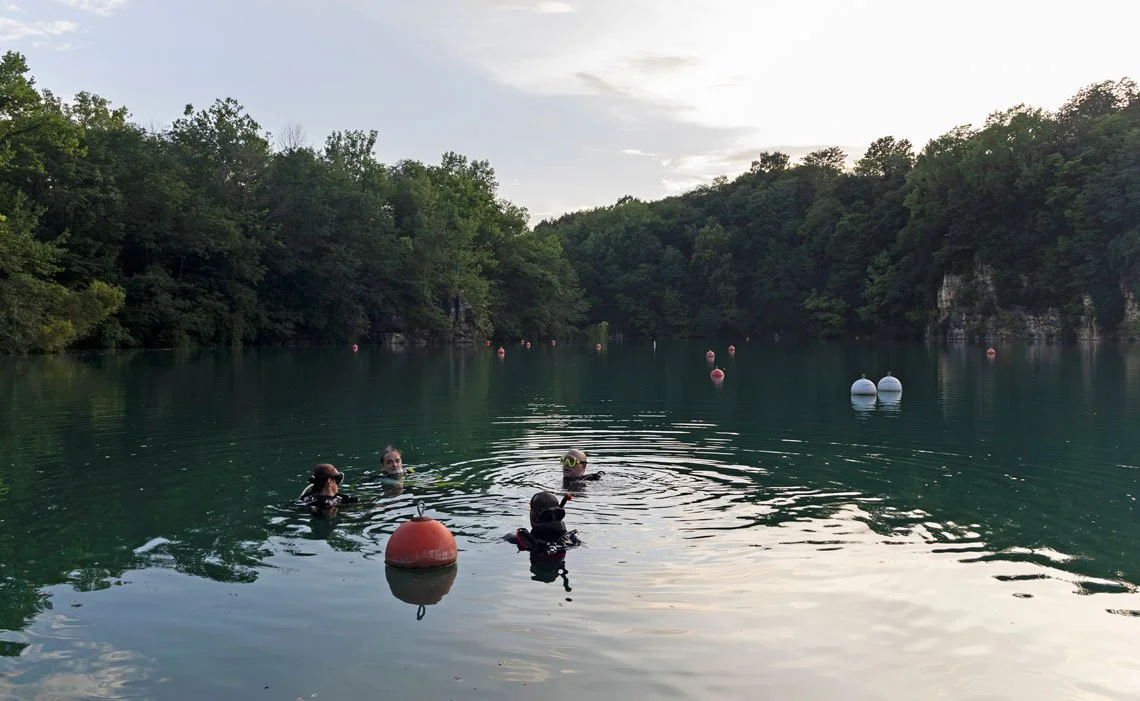
Divers from Great American Divers in St. Charles, Missouri, practice at Mermet Springs on July 17, 2026, in Belknap, Illinois. (Peyton Cook for the Saluki Local Reporting Lab)

BY PEYTON COOK

Saluki Local Reporting Lab 

BELKNAP, Ill. — Sometimes a person doesn’t just discover a place. It discovers them, too.

For Glen Faith, that place was an abandoned rock quarry in rural Massac County in far southern Illinois. He would eventually transform it into Mermet Springs Inc., a scuba diving destination that draws hundreds of divers every year for recreation and training. 

But Faith’s life underwater began years earlier. 

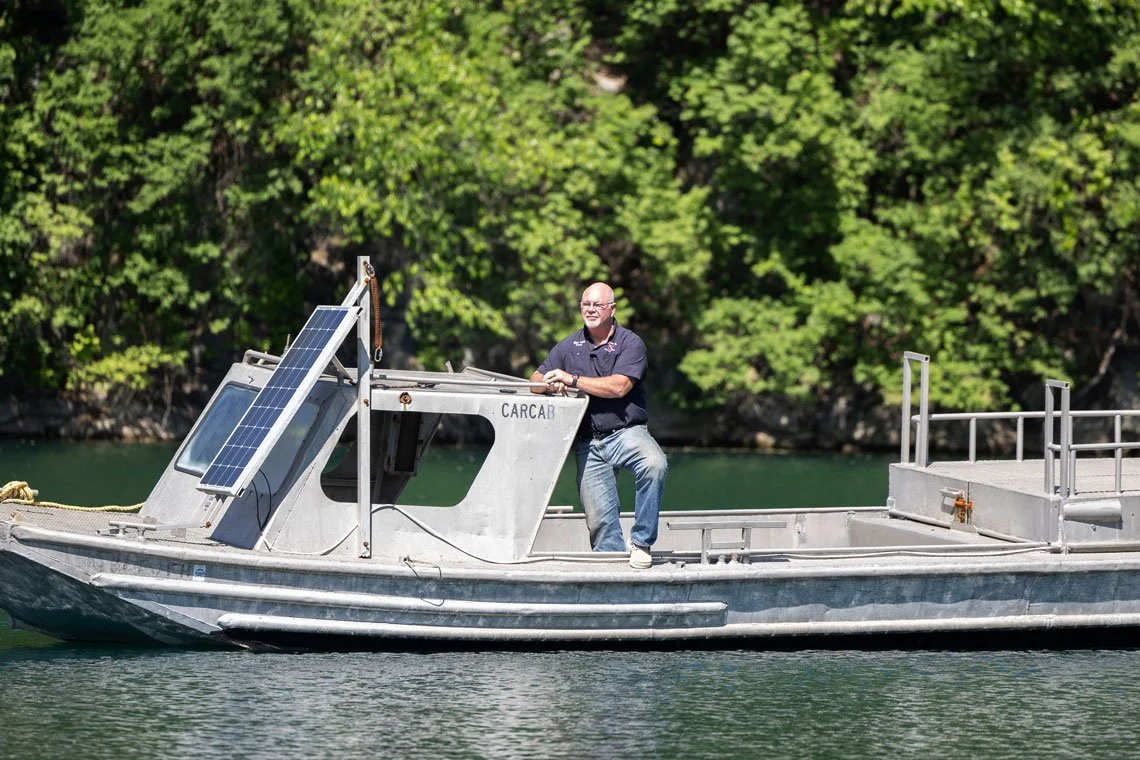
Co-owner of Mermet Springs Glen Faith poses for a portrait on the training boat stationed in the middle of the quarry April 23, 2026, at Mermet Springs in Belknap, Illinois. (Peyton Cook for the Saluki Local Reporting Lab)

A certified diver for over 40 years, he got his start in 1987 after joining the Illinois Secretary of State Police as an investigator, and volunteering for its dive team. Working out of the agency’s Marion office at the time, Faith helped conduct underwater search-and-rescue missions across southern Illinois, recovering bodies, guns, drugs and other evidence.

The work introduced Faith to scuba diving. It became a lifelong passion.

Originally of Joliet, Faith first came to southern Illinois as a student, earning a bachelor’s degree in administration of justice from Southern Illinois University Carbondale in 1985. 

A few years after starting his job in law enforcement, he learned from a neighbor about an old quarry just up the road from his home in Vienna, a piece of private property that divers would sometimes sneak onto to explore. 

“He told me about it and I drove straight down here in my police car and drove in the gate and found what is now Mermet Springs,” Faith said.

The quarry, which operated from about 1956 to 1972, had been long abandoned by the time Faith arrived at that gate of untapped opportunity, still early in his police career. He was immediately drawn to the place. 

“The water was blue and crystal clear and it was just amazing because diving on a rescue team, you dive in muddy ponds and creeks and rivers,” Faith said. “This was almost like the ocean compared to what I’d been diving in.” 

But there was one problem. The owner, Adley Schmidt, wasn’t too keen on divers sneaking onto his property. Faith had heard all the stories about how he was known to run them off. So he tried a different approach. He knocked on Schmidt’s door and asked for his permission to dive in the quarry. 

“We ended up becoming good friends,” Faith said. “I ended up getting permission from him to come in here and to scuba dive.”

Starting a business

A few years later, Faith decided he wanted to start his own business and open up the quarry to others. Schmidt wasn’t ready to sell, so they worked out a long-term leasing arrangement — and that is how Mermet Springs Inc. got its start in 1996. 

“That was more than 30 years ago now,” he said of the business he now co-operates with his wife, PJ Faith. 

Today, the Faiths can be found there nearly every day. They advertise Mermet Springs as a full-service dive center and open-water destination, offering scuba instruction for everyone from the beginning open-water diver to aspiring instructors. The property includes a dive shop that offers rental equipment and repairs, and the business organizes group trips to some of the world’s best scuba destinations. Certified open-water divers can also enjoy the quarry outside of classes, while those who are not certified must dive with a buddy.

“I love that it’s a diving location that gives people the opportunity to not only dive, but to see and explore the world,” Faith said. He also loves that it brings families together and draws people to southern Illinois from across the region and country.

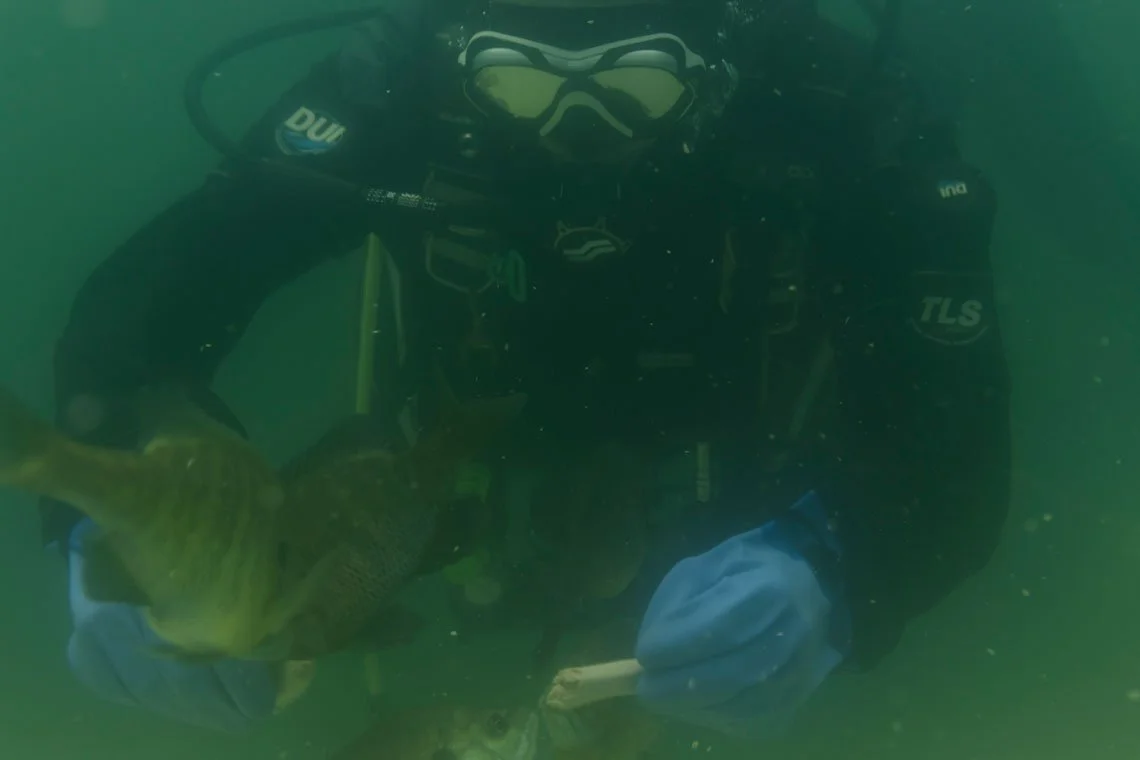
Employee Logan Murphy feeds hotdogs to the fish at the quarry May 11, 2026, at Mermet Springs in Belknap, Illinois.

iver Andrew Lucca lifts his buoyancy control device above the water to let out air and descend into the water April 25, 2026, at Mermet Springs in Belknap, Illinois. (Peyton Cook for the Saluki Local Reporting Lab)

It’s also a great boost to regional tourism efforts. 

“Mermet Springs is a wonderful asset to the region, and complements the other soft adventure offerings across the area,” said Carol Hoffman, executive director of the Southernmost Illinois Tourism Bureau. “It is a much-needed part of our outdoor infrastructure, which is good for visitors and community members alike.” 

After leasing the quarry, it took about one year to have it ready to host divers starting only on the weekends.

When it first opened it would average about 10-12 people a day. The numbers have grown much higher since then.

“This past weekend,” Glen Faith said during an interview at the property in August, “it was a little slower, but we still had over 100 people a day.”

Crystal clear water

The old limestone quarry offers a unique diving experience. Limestone is a rock composed primarily of calcium carbonate, which can help neutralize and remove impurities from the water, making conditions suitable for dive training.

The water’s clarity also makes it the perfect place for divers to find and explore the many attractions the Faiths have submerged at Mermet Springs.

Most famous among them: the wingless Boeing 727 that Faith paid $1 to purchase and that was featured in a scene shot underwater for the film “U.S. Marshals.” Faith laughs talking about how expensive that $1 plane really was — the real cost was in transporting it to rural southern Illinois.

The quarry also includes two submerged Cessna airplanes, a school bus, pickup truck, motorcycle and train car.

Mermet Springs is one of only two dive spots in Illinois and offers a variety of diving options and training from night diving to open water, advanced and instructor certification. 

Unlike many quarries, it is also open year-round, allowing for certification such as a dry suit, which is required for diving in much cooler temperatures.

“We use local pools, and right now we have more than 25 instructors,” Faith said. “We’ve got training classes that are going almost every day.”

Prices vary by the service, but divers pay $25 a day and non-divers $8 to enter, according to the website.

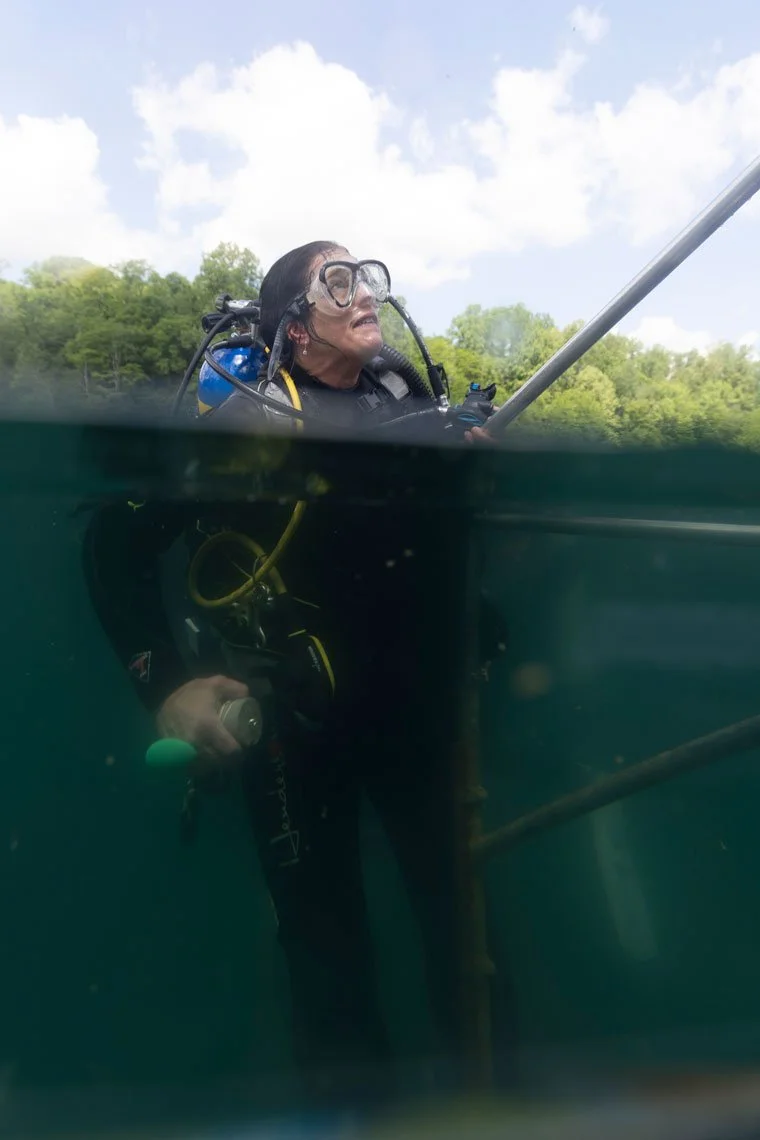
Owner of Great American Divers Heather Kiswani steps on the stairs holding a weight attached to an easter egg she found for an underwater easter egg hunt hosted April 25, 2026, at Mermet Springs in Belknap, Illinois. (Peyton Cook for the Saluki Local Reporting Lab)

Open water certification is the most basic scuba training one can do. It starts with practicing skills in the pool and a written test. Once completed it is moved to the quarry where they review the skills and pass a test to be officially certified. 

Divers can be certified starting at age 10 — and it is common for families to have generations of divers. 

“It is a safe, fun and controlled environment,” Heather Kiswani said, owner of Great American Divers, located in St. Charles, Missouri, who frequently visits Mermet Springs. “They run a very, very good organization down there. Glen is amazing, his wife PJ is amazing.”

Safety a priority

Faith said they take safety very seriously at Mermet Springs. 

“We have an underwater recall system,” Faith said, describing a radio system that can be heard throughout the entire quarry. “I can do recalls if we were to have a lightning storm or a lost diver, things like that.”

All of their instructors “practice and speed-dress until they can be dressed and ready to help with the rescue in 2.5 minutes or less,” Faith said. 

A Great American Diver employee helps owner Heather Kiswani up the stairs after a dive event April 25, 2026, at Mermet Springs in Belknap, Illinois. (Peyton Cook for the Saluki Local Reporting Lab)

The quarry can provide all the gear one may need with additional upgrades if desired. On Thursdays, they offer a discount: Anyone who helps clean the submerged items has their entrance and air fee waived. 

They also offer multiple trips a year for a set price where everything is included. They then travel with the group and scuba dive together. Jessa Shoemaker, who is a part of the office staff, traveled with owner PJ Faith to Little Cayman in the Cayman Islands in April for a women-only trip. 

“We had women from ages 18 all the way up to 80, and everybody interacted with everybody,” Shoemaker said. “Above water was just as much fun as below the water," PJ Faith said.

The Great American Divers shop has been going since 1996. Kiswani said they travel there about two to three times a month.

“Glen has it set up so well for training. There’s underwater attractions there so divers don’t get bored,” she said. 

 Students and instructors from Louisville dive shop stand together and talk through a dive for an open water class April 25, 2026, at Mermet Springs in Belknap, Illinois. (Peyton Cook for the Saluki Local Reporting Lab)

For Glen Faith, his ownership of Mermet Springs Inc. also represents a full-circle moment. As he once worked on a law enforcement dive team, today he helps train firefighters and others so they can be certified to conduct underwater search-and-rescue missions.

“It’s not just a training platform and then diving into the murky green water,” Kiswani said. “He’s just got it set up so well for training that it really is the best place in the Midwest to go to train.”

Allen Jones looks toward his son Adrian Jones, who is taking off his fins before stepping out of the Mermet Springs quarry on July 17, 2026, at Mermet Springs in Belknap, Illinois. The father and son got certified together almost a year ago. (Peyton Cook for the Saluki Local Reporting Lab)

The Saluki Local Reporting Lab is a special project of the SIU School of Journalism and Advertising and is designed to give students from diverse backgrounds practical reporting experience while providing news coverage to underserved communities.

Capitol News Illinois is a nonprofit, nonpartisan news service that distributes state government coverage to hundreds of news outlets statewide. It is funded primarily by the Illinois Press Foundation and the Robert R. McCormick Foundation. 


Birth to Five Illinois Updates Mt. Carmel City Council on Regional Early Childhood Resources

Birth to Five Illinois continues working to connect families across southeastern Illinois with child care and early childhood resources.

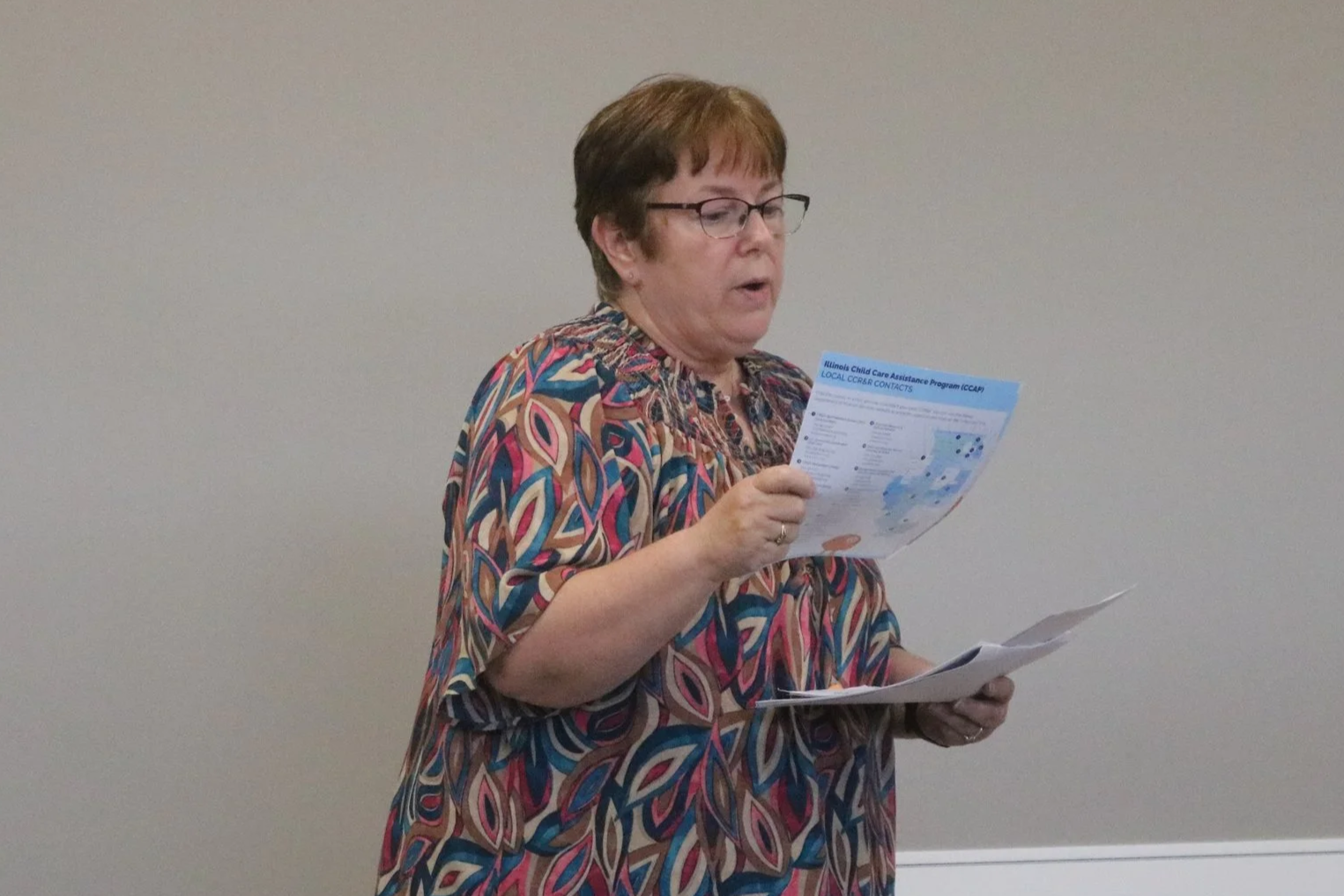
Region 20 Council Manager Janice Crow provided an update during Monday afternoon’s Mt. Carmel City Council meeting.

Crow said Birth to Five Illinois operates across 39 regions statewide, with Region 20 covering nine southeastern Illinois counties, including Wabash County. Over the past four years, the organization has worked to build and promote the SI Families resource hub, which connects parents and caregivers with information about services available in their communities.

Crow stressed that Birth to Five Illinois does not directly provide the services listed on the hub. Instead, it serves as a central location where families can find contact information and learn how to access available programs.

One program Birth to Five Illinois continues to promote is the Child Care Assistance Program. Crow said working families and parents attending school may qualify for assistance to reduce their child care costs. She noted that the monthly income eligibility level for a family of four has increased from $6,028 last fiscal year to $6,188 this year.

Crow said child care availability remains a significant concern across the region.

Region 20 currently has four communities without either a licensed child care center or licensed child care home. Birth to Five Illinois is working with Project CHILD, the region’s Child Care Resource and Referral agency, to promote license-exempt child care options that could allow relatives, neighbors or others to provide care after completing the required process.

Crow said families are also increasingly searching for child care outside traditional daytime hours, including evenings, weekends and overnight care.

Over the past three years, Birth to Five Illinois Region 20 has distributed nearly 5,200 pieces of information aimed at connecting parents, caregivers and community organizations with the SI Families Hub.

The organization’s councils also released a new “Changes in Early Childhood” report in June. Crow said the report highlights continued efforts to improve access to resources and collaboration among community organizations, while also identifying gaps in early childhood education and care, including the need for additional programs and retaining child care teachers.

Crow encouraged city officials and residents to explore the SI Families Hub and report any missing or incorrect information so the resource can remain up to date.

Wabash County is represented on the regional councils by Pam Oliver with Wabash Community Unit School District 348’s Preschool for All and Prevention Initiative programs. Crow praised Oliver for helping Birth to Five Illinois better understand the needs and resources available locally.

Janice Crow presents information on Birth To Five Illinois to the Mt. Carmel City Council on Monday.

District 348 Adds New Student Support Program at Mt. Carmel Grade School

Mt. Carmel Grade School is adding another layer of support this year aimed at helping students who may be at risk of falling behind or eventually leaving school.

Principal Brianna Foster introduced the Alternative Learning Opportunities Program, or ALOP, during the recent Wabash District 348 School Board meeting.

Foster said the program has been used successfully in other parts of Illinois, and Regional Office of Education Number 20 is funding two student success coaches this year. District 348 was among the first districts asked to participate.

April Taylor, an ROE employee, has been assigned full-time to Mt. Carmel Grade School and will work with students beginning as early as third grade.

Students can be referred for additional support based on four primary areas: academics, social-emotional needs, behavior and attendance. Taylor can work with approximately 30 students at a time, providing consistent, one-on-one coaching, setting goals and monitoring their progress.

Foster said teachers, administrators and the school counselor will work together to identify students who could benefit from the program, with Taylor also communicating regularly with teachers and parents.

Foster said the ultimate goal is straightforward — provide targeted intervention early to help students succeed and remain in school.

The program is still in its beginning stages, with the district currently identifying students and integrating Taylor into the grade school.

Foster said she is excited about the opportunity, calling ALOP another layer of support that offers students more individualized attention.

Mt. Carmel Staff Provides Updates on Airport, Fire Equipment and City Projects

Mt. Carmel city staff provided updates on several projects and department activities during Monday afternoon’s City Council meeting.

Mt. Carmel Municipal Airport Manager Luis Garcia reported that work has been completed on the road at the entrance to the airport.

Mayor Joe Judge thanked those involved in making the project possible, including those who worked with the city and Lawrence County engineers. Judge said the road work came at no cost to the City of Mt. Carmel, the airport or Lawrence County, calling the work a “very nice donation.”

Mt. Carmel Police Chief Erin Peach reported it has been business as usual for the police department.

Fire Chief Frances Speth reported the department has experienced several radio issues. Speth said a radio problem in one of the department’s fire engines has been repaired, while the department is still waiting on a company to address issues with two command radios.

City employee Mike Hannah reported crews have spent considerable time over the past couple of weeks cleaning equipment at the city park.

Crews have power washed and scrubbed equipment, including areas in Kiddie Land, removing sap and other buildup. Employees have also been cleaning the roofs of park shelter houses.

Hannah said there are also a couple of trees at the park that need attention, including one overhanging a shelter house.

City Attorney Dave Dallas also reported that work has started on additional parking across the street from City Hall. The parking project is expected to be completed in approximately 10 days.

Orio Chowder Tradition Returns Saturday

A longtime local tradition returns Saturday as the annual Orio Chowder gets underway with around 1,200 gallons of chowder in the recipe.

Wabash Presbyterian Church Pastor Kevin McGinnis recently joined us on the WSJD Morning Show to talk about the event, which begins long before customers arrive tomorrow morning.

McGinnis said volunteers begin showing up tonight around midnight, and before long the grounds are filled with activity as crews prepare 11 kettles of chowder at a time.

Automatic stirring equipment has made the process easier on volunteers over the years, although some hand stirring is still required before the chowder comes off the kettles.

This year's chowder is 30 dollars per gallon, with containers provided. Drive-thru carryout service begins at 6:30 Saturday morning, allowing customers to remain in their vehicles while volunteers load their chowder.

And chowder isn't the only attraction.

The sandwich line is expected to open around 10:30 Saturday morning, with food available into the afternoon.

A softball tournament is also planned, along with washers beginning around 11 a.m. and horseshoes at approximately 1 p.m. The church grounds offer plenty of parking and shaded seating under several tents.

McGinnis said additional volunteers are always welcome, whether it's helping with the chowder, washing dishes or assisting with other jobs throughout the day.

For those traveling from Mt. Carmel, organizers suggest taking Bridgeport Road from Route 1 to Highway 11, turning left and then following the Orio church signs.

The annual Orio Chowder is tomorrow, with drive-thru carryouts beginning at 6:30 a.m. Chowder is 30 dollars per gallon, and containers are provided.

Mt. Carmel Council Approves Wabash Valley College Foundation Property Sale

The City of Mt. Carmel is moving closer to completing the sale of surplus city-owned property to the Wabash Valley College Foundation, while officials are also preparing to sell additional surplus equipment.

City Clerk Ryan Turner provided several updates during Monday afternoon’s Mt. Carmel City Council meeting.

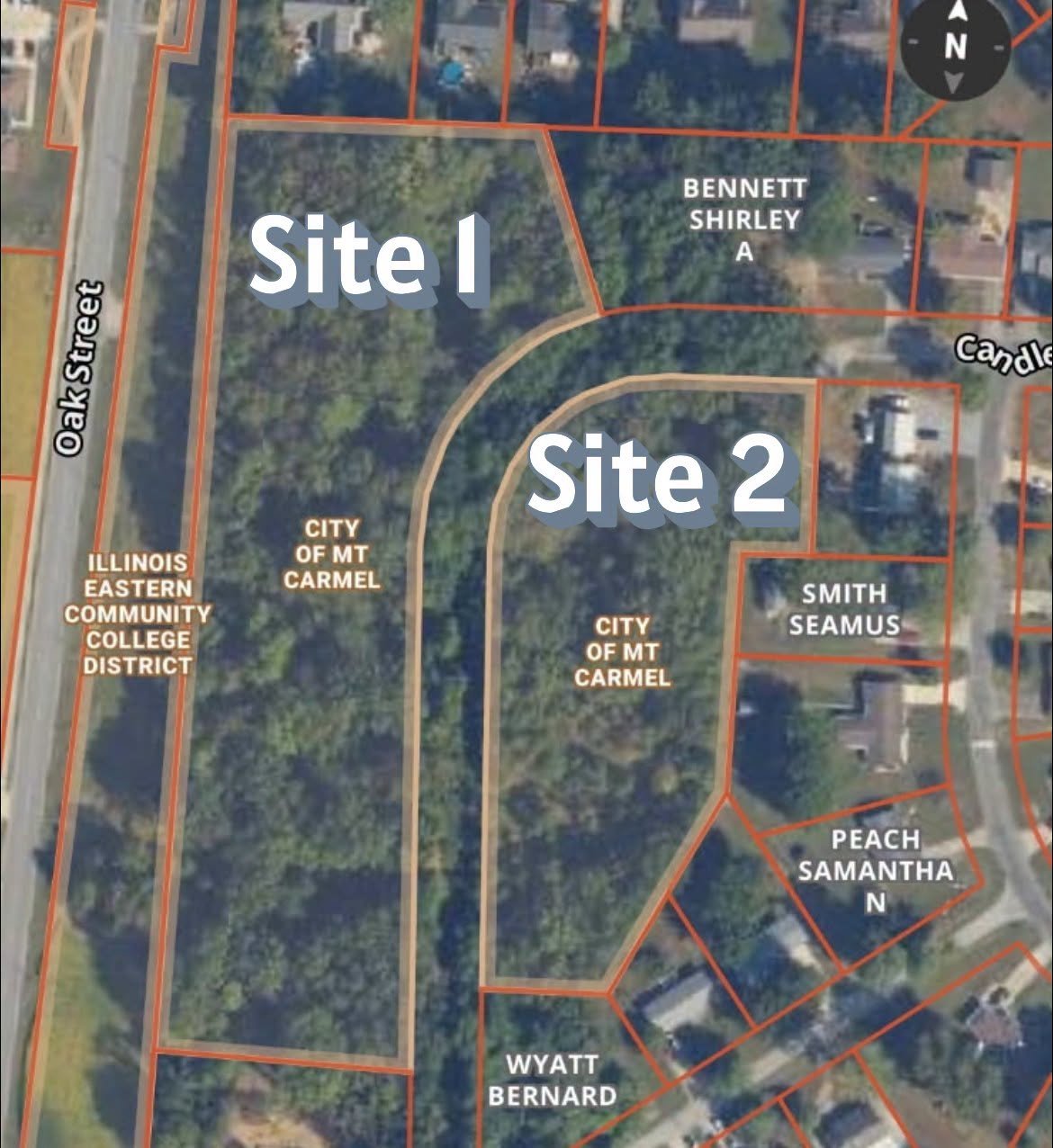
The council unanimously approved an ordinance authorizing the sale of surplus real estate to Wabash Valley College Foundation for $60,000. Turner said the city hopes to close on the transaction as early as next week. The two tracts are located just off of Oak Street in the Wolfe Addition. (See Photo)

The council also heard the first reading of Ordinance 2157, which would authorize the city to purchase two parcels located behind the Super 8 motel for $10,000.

Turner said the city previously owned the two lots before transferring them as part of a trade in which no money changed hands. The current owner is now looking to dispose of the additional property while retaining ownership of the hotel and has offered the two parcels back to the city.

The ordinance will return to the council for a second reading in two weeks.

Turner also reported the city has received payment for a mobile home located on city-owned property outside Mt. Carmel that was previously sold. The buyer has requested more than 30 days to remove the mobile home. Turner said some issues at the site appear to have been resolved, and the structure is expected to be moved.

Under new business, Turner announced the city will soon accept bids on two surplus police squad cars. One of the vehicles is currently located at the Mt. Carmel Municipal Airport and will be brought back before the vehicles are offered for sale.

Turner said the city is reviewing its inventory for other surplus property that is no longer needed.

“If it’s not making us money, if we’re not using it, we’re selling it,” Turner told the council.

The city is also preparing to address a long-vacant home at 114 North Market Street.

Turner said Mt. Carmel has now taken possession of the property, which sits on a hill and has been vacant for a number of years.

The city plans to seek bids to demolish the house and haul away the debris. Turner said officials initially considered using equipment purchased by the city last year to handle the demolition internally. However, because of the terrain, trees and other challenges at the property, officials believe contracting the demolition will be the better option.

Indiana Parole Violator Taken Into Custody in Wabash County

An Indiana man wanted on a parole violation warrant has been taken into custody in Wabash County.

Wabash County Sheriff Derek Morgan reports deputies arrested 45-year-old Kenneth W. Fitzgerald of Plainfield, Indiana, at approximately 7:32 Wednesday evening.

Fitzgerald was wanted on an Indiana Department of Corrections parole warrant issued September 30th of last year following an alleged failure to comply with the requirements of his parole.

Authorities say Fitzgerald was taken into custody without incident.

During the investigation, 43-year-old Maryann Fitzgerald of Cowling was cited for obstructing a peace officer.

The Wabash County Sheriff’s Office was assisted by the Mt. Carmel Police Department.

Kenneth Fitzgerald will remain in custody pending further proceedings related to the Indiana Department of Corrections warrant.

All persons are presumed innocent unless and until proven guilty in a court of law.

45-year-old Kenneth W. Fitzgerald