Wabash General Hospital Board Approves Rural Health Grant Proposal

The Wabash General Hospital Board of Directors has approved moving forward with a proposal tied to a new federal Rural Health Transformation Grant program.

President and CEO Karissa Turner outlined the opportunity, explaining the funding is part of the federal rural health initiative included in the "One Big Beautiful Bill Act." She said Illinois is expected to receive approximately $193 million over five years, with funding divided among several rural healthcare programs.

Turner said Wabash General has already submitted an application for the first-year planning grant, which is expected to provide about $290,000 to each eligible critical access hospital. She noted the planning grant is required before hospitals can apply for larger implementation grants in years two through five.

The board unanimously approved up to $170,000 to hire Innovative Funding Partners to assist with grant administration, reporting, a new community health needs assessment, and development of the hospital's Rural Health Transformation Plan. The expense will only be incurred if Wabash General receives the planning grant and will be paid using grant funds.

Turner said hospital officials believe expanding existing service lines, rather than creating entirely new programs, offers the best long-term strategy once the temporary grant funding expires. She noted services such as the hospital's federally qualified health center and behavioral health programs could be strengthened through the grant while providing a sustainable model beyond the five-year funding period.

Illinois State Board of Education issues AI guidance, written with help from AI

Document intended to help schools, districts navigate complex issues around emerging technology

By PETER HANCOCK
Capitol News Illinois
phancock@capitolnewsillinois.com

Story Summary

  • The Illinois State Board of Education recently released a guidance document intended to help schools and districts make decisions about whether and how to use artificial intelligence in classrooms and school operations.

  • Illinois lawmakers called for the guidance amid growing concerns about the misuse of AI and the harmful effects it can have on student learning.

  • The 409-page document includes a disclosure that some of the content was developed with the use of AI tools like ChatGPT. One advocate says that disclosure is a good example of how AI can be used ethically.

This summary was written by the reporters and editors who worked on this story. 

SPRINGFIELD – The Illinois State Board of Education released new guidelines recently on how schools should and should not use artificial intelligence in K-12 education.

One of the most notable aspects of the AI guidelines, however, is that it was written with help from popular AI programs including ChatGPT, Claude and Gemini.

Bill Curtin, Illinois policy director for the nonprofit advocacy group Teach Plus, one of the groups that pushed for the guidance, called that an example of how AI should be treated in academic fields.

“Upfront, they said, ‘We did use AI,’ and they were very clear and specific about how they used AI,” Curtin told Capitol News Illinois. “And that actually builds trust because these days you can look at almost anything that anyone writes and wonder if it's AI. It's much better when, upfront, you say: ‘We did use AI, and here's where, and here's where the human element is really still seen in this guidance.’”

Growing concerns over AI

The guidance was issued after the General Assembly passed legislation in 2025 requiring ISBE to develop guidelines on using AI in education. Senate Bill 1920 came amid growing concern about students using AI programs like ChatGPT to help them with research or even to write essays.

At the same time, teachers and administrators were also looking for guidance on constructive ways they could use AI for things like developing lesson plans or grading students’ work.

A 2024 survey of Illinois educators conducted by Teach Plus and the Illinois Digital Educator Alliance, or IDEA, found a common concern that misuse of AI could threaten student learning. Respondents also expressed concerns that AI systems could endanger student privacy and expose them to inaccurate or even harmful information.

“Schools are behind,” one educator responding to the survey said. “Students utilize AI often, and we have nothing in place. It is a bit like the Wild West right now.”

The legislation directed ISBE to develop guidance that would include, among other things, “specific ways artificial intelligence can be used at the district, school and classroom levels to inform teaching and learning practices.”

It also called for guidance on “best practices for developing student literacy in artificial intelligence and engaging students in age-appropriate discussions on the responsible and ethical use of artificial intelligence.”

ISBE guidance

That guidance was released on July 9. The 409-page document was developed with input from a blue-ribbon panel of experts in education, technology and public policy. But it also includes a note saying, “Initial drafts for this guidance used AI (ChatGPT primarily but, to a lesser extent, Claude and Gemini).”

It goes on to say that after initial language was crafted, the authors used AI prompts to find links and verification that outside resources were publicly verifiable and available.

The note also says AI was used to generate and edit graphic figures used in the document. And it says AI was used to polish the text by asking questions such as “what might be missing from this section,” or “what would be clearer in this section.”

And in places where AI was used to generate information, the note says that information was vetted outside of AI.

The guidance itself, however, emphasizes that teaching and learning are shaped by human relationships and experiences, and that artificial intelligence is only a tool to inform teaching and learning, not a substitute for human interaction.

 “Our responsibility is to help schools navigate new technologies in a way that strengthens instruction, protects students, and builds trust for informed AI use between districts and the families and communities they serve,” State Superintendent of Education Tony Sanders said in a statement.

The document itself is dense with academic and education-related language. And while it does not lay out rules or mandates about how schools and districts should use AI, it does offer some practical advice for teachers and other professionals who are considering using AI in the classroom or in school operations.

For example, one section on selecting AI applications offers a list of questions teachers might ask before choosing an AI product such as “What is the learning problem I’m solving — and is AI the right tool for that problem?” And, “If AI were unavailable tomorrow, what would I do instead — and is that actually better for the learning goal?”

But when it comes to preventing students from using AI as a tool to cheat, Curtin said that’s an issue teachers have confronted since the advent of pocket calculators and personal computers.

“Students have always found ways to cheat, and teachers have always responded,” he said. “That's a practice-level issue. They're going to, given enough time to catch up and learn AI, find ways to adapt in the classroom to make sure that students are still learning. That's a practice issue, not a policy one.”

“A policy issue,” he continued, “is putting together the framework by which teachers can develop the skills and ethics and mindsets in students where they can really be successful and use it ethically.”

Capitol News Illinois is a nonprofit, nonpartisan news service that distributes state government coverage to hundreds of news outlets statewide. It is funded primarily by the Illinois Press Foundation and the Robert R. McCormick Foundation. 

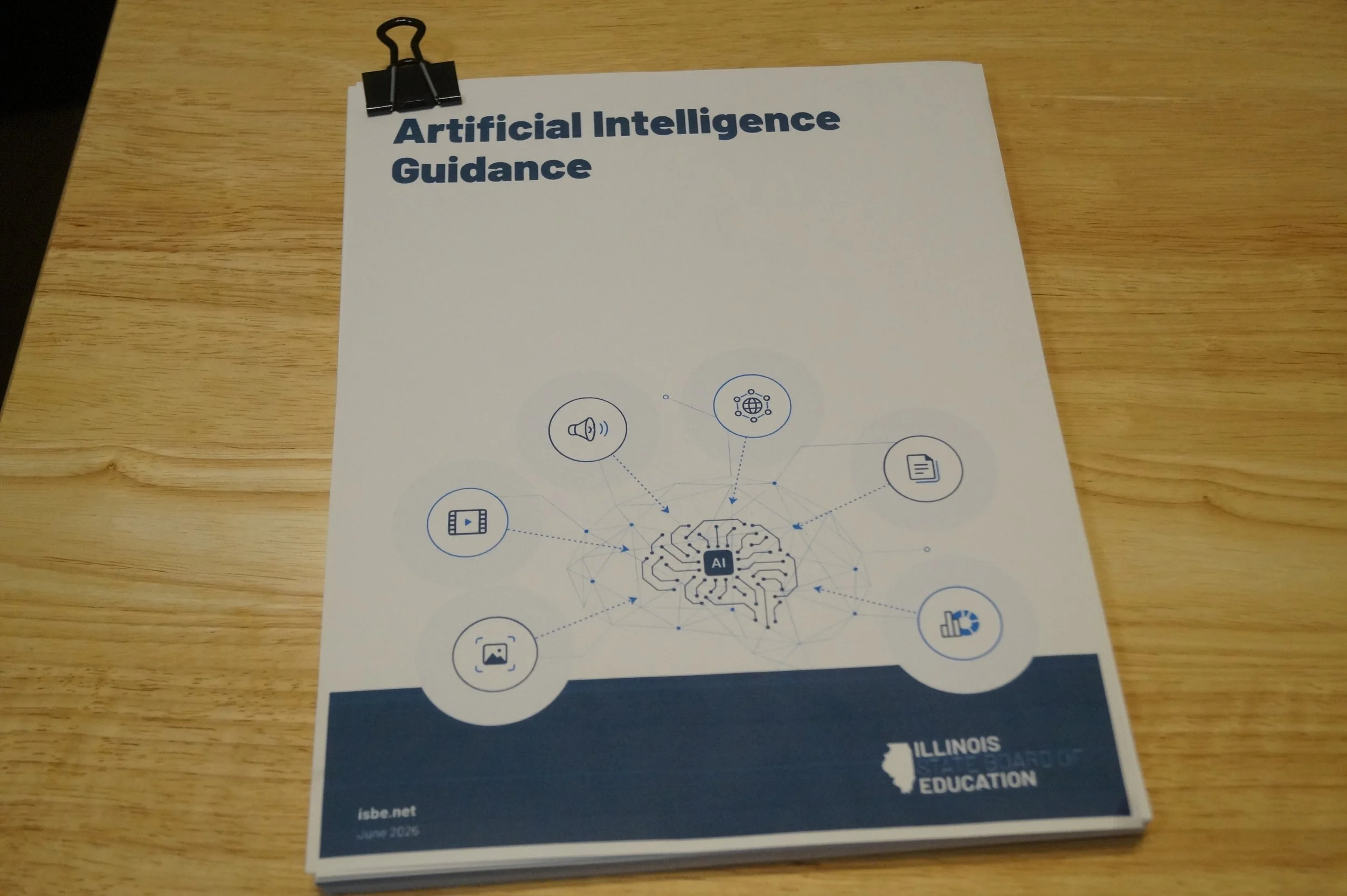
The Illinois State Board of Education has released a 409-page document offering guidance to schools and districts about the use of artificial intelligence in  K-12 education. (Capitol News Illinois photo by Peter Hancock)

Lawrence Co. Correctional employees admit to depriving inmate of civil rights

BENTON, Ill. – A Correctional Officer and Correctional Lieutenant employed at Lawrence Correctional Center appeared in federal court Tuesday to admit to conspiring to deprive a restrained inmate of civil rights. 

Craig Muhs, 28, and Ethan Yates, 30, each pled guilty to conspiring to violate an inmate’s civil rights during an incident occurring on July 31, 2025, and during the ensuing investigation.  Muhs was employed as a Correctional Officer at Lawrence Correctional Center.  Yates was employed as a Correctional Lieutenant, charged with supervising other staff.  Lawrence Correctional Center is a maximum-security state prison staffed by employees of the Illinois Department of Corrections.  

According to court documents, the incident arose from a mistaken belief that the inmate had assaulted a female employee.  Yates and Muhs admitted to participating in a six-person conspiracy in which the inmate, who was restrained in a mobility chair with leg shackles and hand cuffs, was struck in the face, head, and body.  The victim was also pepper sprayed in the genital region and experienced a sensation of asphyxiation after an employee poured water over the cloth spit hood covering the victim’s mouth and nose.  The victim received numerous injuries, including an orbital fracture requiring reconstructive surgery.

“These maximum-security correctional officers have a difficult and dangerous job, and I stand behind the men and women who work every day in these dangerous conditions surrounded by dangerous people,” said United States Attorney Steven D. Weinhoeft. “By their own admissions, these two officers crossed the line into vigilantism after mistakenly believing the inmate had assaulted a female employee. Prison guards simply cannot be allowed to physically abuse a restrained inmate, and other guards who are present must protect a defenseless inmate from this type of unjustified abuse.”

Muhs and Yates both admitted to striking the restrained inmate, failing to intervene when other employees severely abused the victim, failing to submit required reports regarding the incident, and failing to obtain appropriate medical attention for the victim. 

“ISP takes allegations of abuse very seriously and is committed to thorough investigations and accountability,” said Illinois State Police Director Brendan F. Kelly.

Under federal law, officers must not only refrain from the use of excessive force, but also have a duty to intervene if a fellow officer uses excessive force. Charges of deprivation of civil rights carry potential sentences of 10 years.

Muhs’s sentencing is scheduled for November 9, 2026 at 11:00 AM. Yates’s sentencing is scheduled for November 12, 2026 at 10:30 AM.  Both sentencings will be held at the Benton Courthouse before Chief Judge Yandle. 

Illinois State Police is leading the investigation, and Assistant U.S. Attorney Kevin Burke is prosecuting the case.


No Dog Swims At New City Pool

The popular end-of-season Dog Swim will not return when Mount Carmel's new aquatic center opens.

During Friday's Ask the Mayor program on WSJD, Mayor Joe Judge said the event will no longer be possible because of the design and operating requirements of the new facility.

JOE JUDGE NO MORE DOG SWIMS

The annual Dog Swim has been a favorite event for many pet owners over the years and served as a fundraiser for the Wabash County Animal Shelter Buddies.

Construction on the new Mount Carmel aquatic center is continuing, with city officials expecting the facility to open for the 2027 swimming season.

Photo credit: Wabash County Animal Shelter Buddies from 2019 Dog Swim.

Pritzker signs new laws on birth control, AI regulations, play-based learning

Pritzker signs new laws on birth control, AI regulations, play-based learning

Governor signed 31 bills Friday as he continues evaluating measures

By BEN SZALINSKI
Capitol News Illinois
bszalinski@capitolnewsillinois.com 

Article Summary

  • Gov. JB Pritzker signed 31 new laws on Friday. 

  • One includes a controversial measure that allows minors to receive birth control without a parent’s consent. 

  • Others ban certain ingredients from cosmetics, prohibit school administrators from using AI to evaluate teachers, and expand access to ovarian cancer screenings. 

  • Pritzker also signed a bill to conform the state’s property tax laws to the 2023 Tyler v. Hennepin County U.S. Supreme Court decision. 

This summary was written by the reporters and editors who worked on this story. 

SPRINGFIELD — Gov. JB Pritzker signed 31 new laws on Friday as he continues evaluating measures passed in the spring session, including bills banning certain ingredients from cosmetics and correcting the state’s property tax laws.

Access to birth control 

Senate Bill 3341 allows minors to receive birth control without permission from their parents or another adult. With Illinois’ new law, half of states now allow minors to access birth control on their own. 

During debate on the bill in the Senate, Republicans objected and said it cuts parents out of important decisions concerning their children. They also worried minors won’t fully understand complications from birth control.

Cosmetic ingredients

House Bill 3409 bans manufacturing and selling cosmetic products with 11 different ingredients that are considered harmful substances or forever chemicals. The law specifically bans manufacturers from intentionally including those ingredients in their products. 

“For too long, the cosmetics industry has operated without the kind of oversight we apply to food, medicine and drinking water,” bill sponsor Sen. Mattie Hunter, D-Chicago, said in a statement.

Many of the ingredients are already banned in cosmetics sold in the European Union. Illinois’ law takes effect in July 2028, but it does not outline penalties for manufacturers and sellers that fail to comply.

Property taxes

House Bill 4537 brings Illinois into compliance with the 2023 Supreme Court decision Tyler v. Hennepin County that regulates property tax debt sales. 

Now, if a homeowner has their property seized and sold for failing to pay debt, they will receive any surplus funds left over from the auction. 

Illinois is the last state to comply with the 2023 Supreme Court decision, which found that selling a property over unpaid debt without returning surplus to the owner was a violation of the property owner’s rights. 

States quickly began complying, but the Illinois bill that ultimately passed in May took years of negotiations. In Cook County, the legislature voted on multiple occasions to postpone tax sales while lawmakers came up with a more permanent solution that Pritzker signed last week.

Teacher evaluations

Senate Bill 2909 prohibits school administrators from using artificial intelligence to evaluate teachers. Likewise, teachers also cannot use AI to meet performance requirements. The bill does not prohibit teachers or school administrators from using AI in other forms of work, however. 

“I’m in favor of exploring AI as a tool for basic organization and streamlining simple aspects of modern work, but this technology is not capable of effectively carrying out judgement-based tasks this complex,” bill sponsor Rep. Mary Beth Canty, D-Arlington Heights, said in a statement.

Play-based learning

House Bill 4577 implements a definition of play-based learning into state law for kindergarten classes. The concept was already required for kindergarten classes; the new law just made it more specific. 

It describes “teacher-initiated play” as teacher-led activities that are “aligned to learning goals or standards,” and “student-initiated play” as activities chosen by the child to “build, pretend, create, move, or explore in an environment intentionally curated by a teacher to align with learning goals or standards.”

“Play-based learning is essential in helping children develop strong cognitive and social-emotional skills that help prepare them for early learning grades,” bill sponsor Rep. Laura Faver Dias, D-Grayslake, said in a statement. “We want our children to succeed, and that means incorporating the best teaching style possible for their age.”

Cancer screenings

House Bill 4203 expands the definition of someone “at risk” for ovarian cancer to include people who have reached high levels on certain blood tests. It also expands annual screenings to more specifically include ultrasound, MRIs, and other imaging rather than only “surveillance tests” like under previous law. The law takes effect in 2028.

Expulsions

School districts are prohibited from expelling students in kindergarten through second grade under House Bill 3772, unless state law would otherwise require it. 

Voter registration

House Bill 4339 requires high schools to provide all eligible graduating students an opportunity to register to vote. The bill is named after the Rev. Jesse Jackson, who died earlier this year and was known for his work registering young people to vote. 

Read more: Proposed bill would require Illinois high schools to offer voter registration

Many high schools already provide voter registration opportunities to students. The bill also doesn’t outline how schools should implement the new requirement, which led some Republicans to oppose it over fears schools could make voter registration partisan. 

Unlike many other states, Illinois voters do not register with a specific party. The new law takes effect immediately, but it doesn’t create penalties for schools that don’t comply. 

Court reminders

House Bill 4428 requires pretrial service agencies to send defendants three text message reminders about their court date. The courts must keep those messages as part of their records. Supporters of the bill say they believe it will help more people show up to their mandatory court dates. The law takes effect immediately.

Capitol News Illinois is a nonprofit, nonpartisan news service that distributes state government coverage to hundreds of news outlets statewide. It is funded primarily by the Illinois Press Foundation and the Robert R. McCormick Foundation.

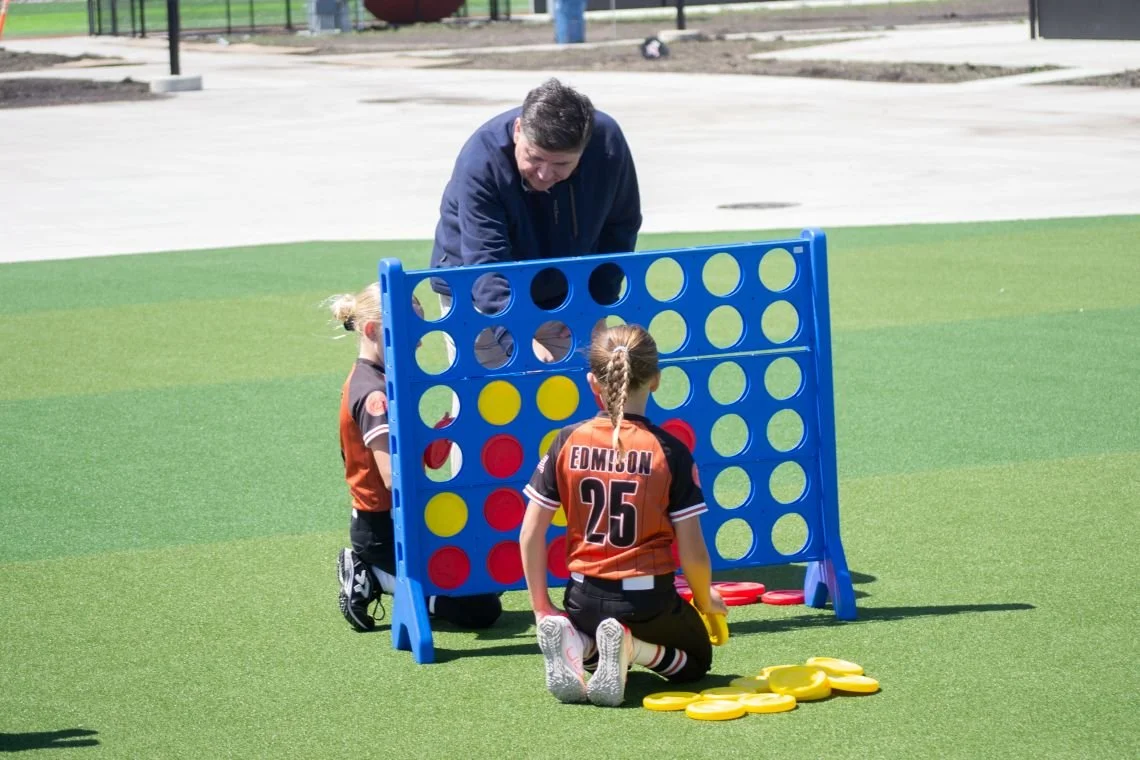
Gov. JB Pritzker plays Connect 4 with children following an event to open a new sports park in Springfield on April 28, 2026. (Capitol News Illinois photo by Jerry Nowicki)

Busy Week For Road Projects

Mount Carmel residents are being reminded of upcoming street maintenance work scheduled later this week.

Mike Hannah told the city council that the city's annual oil and chip program is scheduled for Thursday and Friday July 16th and 17th.

Hannah said fog sealing will follow next week on July 23rd and 24th.

To help residents prepare, the city has placed signs in affected areas and door hangers are being distributed to homes located along streets included in the project.

Meanwhile, Highway Engineer Dustin Bunting reports that oiling of Maud Road is scheduled for today and tomorrow July 14 and 15. He also said Friendsville Avenue from Wabash Valley College to Friendsville is underway this week in an effort to preserve the roadway until funding becomes available for a full resurfacing project.

Bunting said the county recently partnered with Lawrence County to use a DuraPatcher machine to smooth rough approaches on two bridge structures north of Baumgart Farms and south of Friendsville. While the repairs have improved the ride, Bunting said a permanent fix will require additional funding.

He added that the county plans to again seek state funding for a Friendsville Avenue resurfacing project after an earlier application was unsuccessful.

Highway crews have also remained busy patching roads, maintaining oil-and-chip surfaces during the recent heat, and clearing a few downed trees following heavy storms. Despite more than 11 inches of rain in some areas, Bunting said the county avoided any major washouts or significant damage to roads and drainage structures.

Library Board Appointments Approved

The Mount Carmel City Council approved two appointments to the Mount Carmel Public Library Board during their recent meeting.

At the recommendation of the library board, council members unanimously approved the appointment of Ashley Bishop Cushman to serve as vice president of the board. City officials noted that Cushman already serves on the library board, and the action formalizes her new leadership role.

The council also unanimously approved the reappointment of Nancy Price to another term on the Mount Carmel Public Library Board after her previous term expired.

Both appointments were approved without opposition following recommendations from the library board.

City Council Closes TIF District 4

The Mount Carmel City Council has approved an ordinance officially closing the city's TIF District 4.

During last week’s meeting, City Clerk Ryan Turner said the tax increment financing district, located along Illinois Route 1 North across from Cherry Hills, never saw any development after it was created.

Turner said the district still contains a small amount of money, which will be distributed to the various taxing bodies once the closure process is completed by the city's financial advisors. That includes the City of Mount Carmel, local schools, the hospital district and other taxing agencies that normally receive property tax revenue.

Turner said he expects the remaining TIF districts currently being closed to be finalized within the next month, although the city's advisors are experiencing some delays.

The additional revenue returned to the city was not included in the current budget and will be placed into the general fund.

With the closure of TIF District 4, Mount Carmel will have just two active tax increment financing districts remaining-TIF 6, which contains about $650,000, and TIF 7, which holds approximately $1.7 million. Turner said those funds continue to support economic development projects throughout the city.

The council unanimously approved the ordinance to terminate TIF District 4.

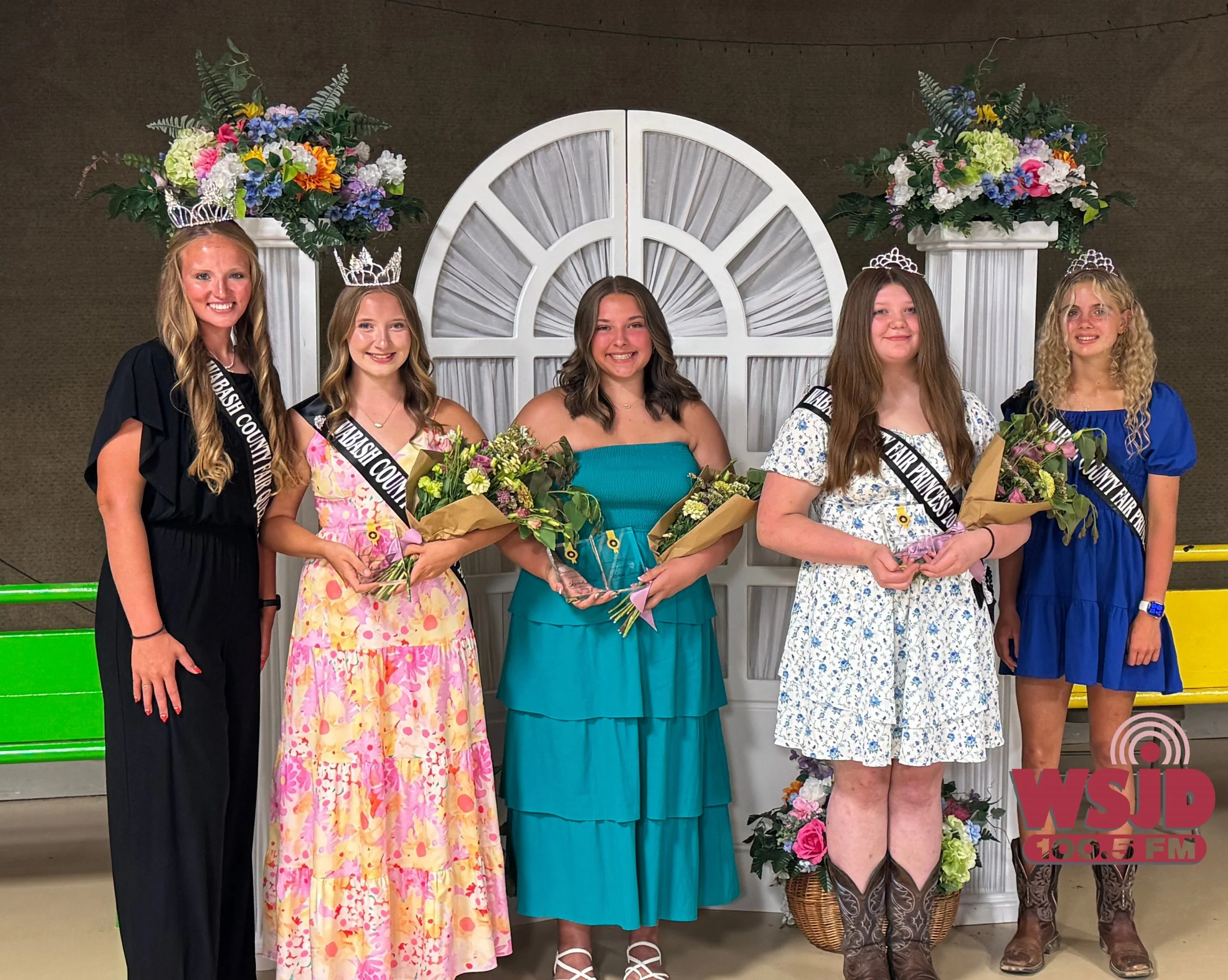
Tennis & Hipsher Crowned Fair Queen & Princess

The 2026 Wabash County 4-H and Junior Fair officially got underway Sunday evening as a large crowd packed the skating rink for the annual Ice Cream Social, music by the Bates Girls, and the crowning of the Fair Queen and Fair Princess.

Fifteen-year-old Abigail Hipsher was crowned the 2026 Wabash County Fair Princess. She is the daughter of Justin and Amanda Hipsher. Abigail enjoys hunting, fishing, photography, horseback riding, drawing and spending time outdoors. She is active in the Mt. Carmel FFA Chapter and hopes to earn her chapter degree while pursuing a future career in welding or diesel mechanics. Hipsher said she wanted to serve as Fair Princess to step outside her comfort zone, develop leadership and communication skills, and encourage younger 4-H members to try new things while demonstrating good sportsmanship.

Crowned the 2026 Wabash County Fair Queen was Addison Tennis, the daughter of Jason and Carrie Tennis. A member and secretary of the Allendale Twisters 4-H Club, Tennis is in her eighth year of 4-H and was crowned Fair Princess in 2023. She raises and shows goats, helps on her family's dairy farm, participates in Mount Carmel High School FFA activities and plays tennis. She plans to attend college to become a physical therapist or physical therapist assistant. Tennis said serving as Fair Queen is an opportunity to be a positive role model for younger 4-H members, just as past queens inspired her when she was growing up.

Ingram Found Not Guilty

28-year-old Hunter Ingram of Mount Carmel has been found not guilty of one count of criminal sexual assault and one count of aggravated criminal sexual abuse stemming from an alleged incident in November 2024.

It took the Wabash County jury about two hours and twenty minutes to clear Ingram of the charges.

When court resumed Friday morning, Wabash County State's Attorney Kelli Storckman formally rested the prosecution's case. Defense attorney Roger White then rested the defense without calling Ingram to testify or presenting any witnesses or additional evidence.

During closing arguments, White spent approximately an hour and 15 minutes urging jurors to find his client not guilty. He argued the prosecution's case was based largely on circumstantial evidence and claimed there were too many inconsistencies in witness testimony for jurors to find Ingram guilty beyond a reasonable doubt.

Storckman, in her closing argument, walked jurors through the evidence presented during the three-day trial. She argued the DNA evidence, physical evidence recovered from the scene, and witness testimony, when considered together, overwhelmingly supported the charges and were more than sufficient to return guilty verdicts.

Judge William C. Hudson then instructed the jury on the law before sending the panel to begin deliberations at 2:43pm.