New Illinois driving test age requirements start July 1

The 2025 law raises mandatory driving test age for older drivers

Article Summary

  • Beginning July 1, only drivers aged 87 and older will be required to take a driving test annually to renew their license.

  • Drivers 79 and older will still be required to take a vision test, and immediate family can report cognitive or physical health issues.

  • The law comes after a 2023 report showed older drivers are involved in the least number of crashes compared to any other age group.

This summary was written by the reporters and editors who worked on this story.

By JENNA SCHWEIKERT 
Capitol News Illinois 
jschweikert@capitolnewsillinois.com 

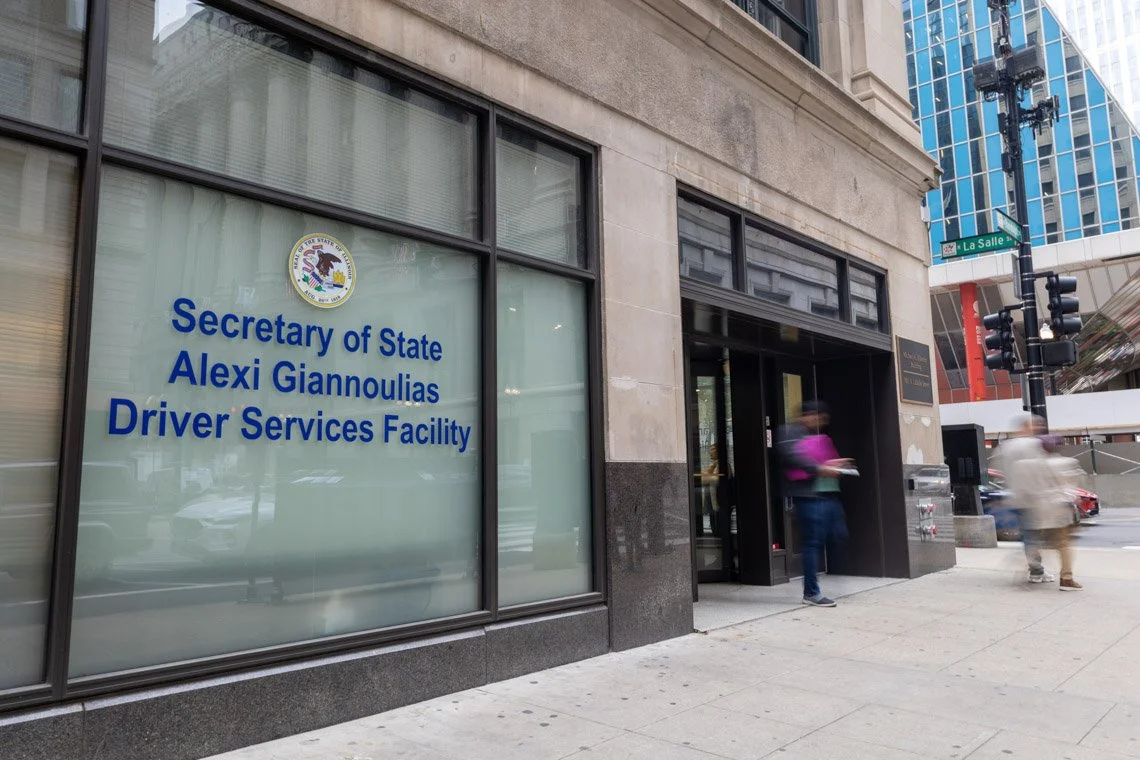
A law taking effect July 1 will raise the age at which older drivers must take a driving test to renew their license.

The 2025 law, titled the Road Safety and Fairness Act, also creates a process for immediate family members to report cognitive or physical health declines to the state for review. 

The minimum age for a driving test will be raised from 79 to 87, although drivers 79 and older will still be required to take a vision test, and if they have a driving violation, a written test. 

Drivers between the ages of 81 and 86 must renew in-person every two years. The law for drivers aged 87 and older — annual license renewal with both a vision and driving test — will not change.

In 2022, the General Assembly and the secretary of state worked to adjust license requirements through emergency rulemaking power and a later trailer bill, amid a pandemic-driven backlog of license renewals. 

Illinois still has one of the strictest renewal requirements for older drivers. But a 2023 report from Illinois Secretary of State Alexi Giannoulias shows drivers aged 75 and older are involved in the least number of crashes compared to any other age group.

The Road Safety and Fairness Act passed the General Assembly with bipartisan support in May 2025 and was signed by Gov. JB Pritzker in August. 

Capitol News Illinois is a nonprofit, nonpartisan news service that distributes state government coverage to hundreds of news outlets statewide. It is funded primarily by the Illinois Press Foundation and the Robert R. McCormick Foundation. 

Illinois food assistance error rate continues to grow as federal penalties loom

State plans to hire hundreds of employees to meet federal requirements

By BEN SZALINSKI
Capitol News Illinois
bszalinski@capitolnewsillinois.com

Article Summary

  • Illinois’ SNAP error rate in federal fiscal year 2025 was 14.7%, which is up from 11.6% the year before. 

  • The state’s error rate is mostly attributed to overpayments of benefits and is four percentage points higher than the national rate. It is also the fifth-highest in the country. 

  • A new federal law requires states with error rates over 10% to pay a greater portion of SNAP benefits beginning as soon as October 2027. 

  • Illinois lawmakers appropriated more than $100 million in the new state fiscal year 2027 budget to pay for higher administrative expenses required by the federal government and hire new staff in hopes of reducing the error rate. 

This summary was written by the reporters and editors who worked on this story. 

Data released Wednesday by the U.S. Department of Agriculture shows Illinois’ payment error rate for food assistance continues to grow with federal penalties set to take effect in about a year. 

The data shows Illinois made errors on 14.7% of Supplemental Nutrition Assistance Program payments in federal fiscal year 2025. That includes 13.3% of all payments being higher than they should have been. 

The error rate is higher than the 11.6% rate of the previous fiscal year. The continuing growth comes as the federal government is set to impose new penalties beginning in October 2027 on states with high error rates on SNAP payments. For Illinois, the penalty could cost about $700 million.

The federal government defines an erroneous payment as one that is $57 higher or lower than it should have been. Only Alaska, Delaware, Georgia, New Mexico, and the District of Columbia had higher error rates than Illinois in FY25. 

“Illinois’ SNAP error rate has skyrocketed because of years of mismanagement, and our most vulnerable will be paying the price,” House Republican Leader Tony McCombie, R-Savanna, said in a statement. “This isn’t about taking benefits away from families who legitimately need assistance. It’s about making sure the program is administered properly, and taxpayer dollars are protected. Fraud, waste, and abuse have no place in government.”

Gov. JB Pritzker told reporters at an unrelated event in Chicago on Thursday that the FY25 error rate largely accounts for months in the fiscal year before the president signed the law in July 2025 and doesn’t reflect steps the state has taken to rectify the problem.

“The reality is that when you have an error rate — just want to be clear with everybody — this is not some sort of waste, fraud, and abuse issue,” Pritzker said.

Pritzker claimed the state has lowered the error rate below the FY24 level but was not able to provide a specific number.

Federal changes 

Illinois and most other states will have to cover a greater portion of costs for SNAP under the One Big Beautiful Bill Act, also known as H.R. 1, based on the state’s error rate.

Beginning in federal fiscal year 2028 that begins in October 2027, many states will begin covering a portion of SNAP benefits. States with an error rate greater than 10% will have to cover 15% of the cost of benefits starting in fiscal year 2029. The delayed implementation gives the state another year to lower its error rate and potentially pay for a smaller portion of the benefits. 

States with lower error rates would cover a smaller portion of the benefits and those with an error rate under 6% will not have to cover any benefits. The national error rate is 10.6% and has declined for two straight years.

“They're setting a new bar at 6% and saying, ‘if you can't get to 6%, we're going to take SNAP away or charge you a whole bunch of money,’” Pritzker told reporters last August. “How do they want us to get to 6%? By cutting people off of SNAP.”

Illinois is one of 20 states with an error rate of at least 10%, and the state is expected to pay about $700 million to cover the cost of benefits because of the penalty. 

The state FY27 budget signed earlier this month calls for spending $55 million to hire 450 new employees at the Department of Human Services, including to help update the state’s systems to comply with federal changes to SNAP and Medicaid eligibility.

“HR1 is a deliberate effort by the federal government, for the first time, to push the federal food program’s benefits costs on the states, stop customers from receiving SNAP food benefits, and let families go hungry,” DHS spokesperson Rachel Otwell said in an email. “Illinois has launched an aggressive, multi-year effort to improve payment accuracy and protect taxpayers from future fiscal exposure.”

Otwell added that “minor errors” by beneficiaries account for the majority of faulty payments.

DHS plans to implement new technology, increase reviews of people’s eligibility, train more staff to recognize common errors, and improve communication with SNAP recipients about what information they need to report to the state and when.

Also beginning in federal fiscal year 2027, which begins in October 2026, states will have to cover 75% of administrative costs for SNAP, rather than 50%. Illinois lawmakers appropriated $100 million for administrative expenses in state FY27, which begins July 1. That’s up from $60 million in FY26.

The state provided benefits to about 1.5 million people in May, according to the Illinois Department of Human Services. That was about 88,500 fewer people than in April. About 150,000 Illinoisians were expected to lose food assistance benefits beginning May 1 after new work requirements prescribed in H.R. 1 went into effect. 

The new state budget established the Families Receiving Emergency Support for Hunger, or FRESH Program, for people who have lost or seen their SNAP benefits reduced. They would be eligible for a one-time $400 payment. The program is scheduled to last just one year and is estimated to cost about $70 million.

Capitol News Illinois is a nonprofit, nonpartisan news service that distributes state government coverage to hundreds of news outlets statewide. It is funded primarily by the Illinois Press Foundation and the Robert R. McCormick Foundation.
Ingram Trial Set to Begin July 6 Following Pretrial Rulings

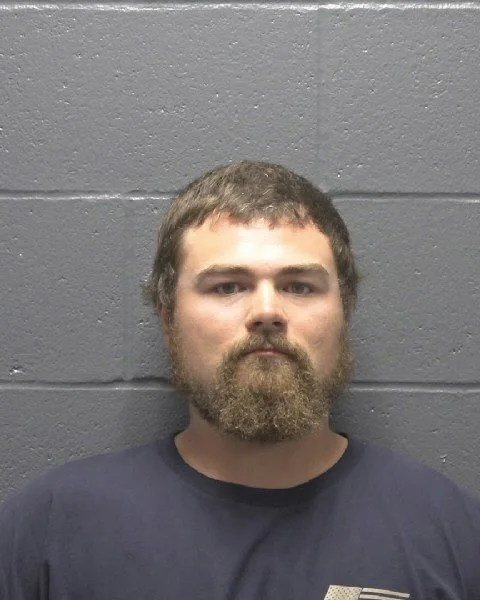
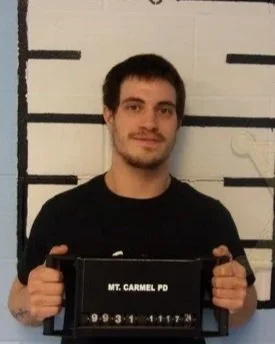
The upcoming sexual assault trial of 28-year-old Hunter Ingram remains on schedule following a series of pretrial rulings in Wabash County Circuit Court Monday.

During the hearing, Judge William C. Hudson granted part of the State's motion in limine and denied a defense motion seeking to use certain evidence for impeachment purposes. However, the judge also ruled that prosecutors will be prohibited from introducing evidence concerning the alleged victim's prior sexual history.

The court also denied another defense motion seeking to exclude evidence. Hudson found that evidence identified by the prosecution under Illinois statute 115-7.3 may be presented at trial, ruling that its probative value is not substantially outweighed by the danger of unfair prejudice.

In another development, a motion filed by prosecutors to bar a defense expert witness was declared moot after the defense withdrew the expert from its witness list.

Jury selection is scheduled to begin July 6 at 9 a.m., with opening statements and testimony set to begin July 8 by agreement of both parties.

Hudson also ruled that Ingram will remain in custody, finding his continued detention is necessary to avoid a real, specific, and present threat to the community.

Ingram is charged with criminal sexual assault and aggravated criminal sexual abuse stemming from an alleged incident on November 17, 2024, at a residence in the 600 block of West 6th Street in Mt. Carmel. The charges resulted from an investigation by the Mt. Carmel Police Department.

Ingram has pleaded not guilty and has remained in the Wabash County Jail since his arrest in November 2024.

McGee Trial Delayed Until August; Remains in Wabash County Jail

The jury trial for a Wabash County man facing multiple felony sex charges involving a child has been postponed.

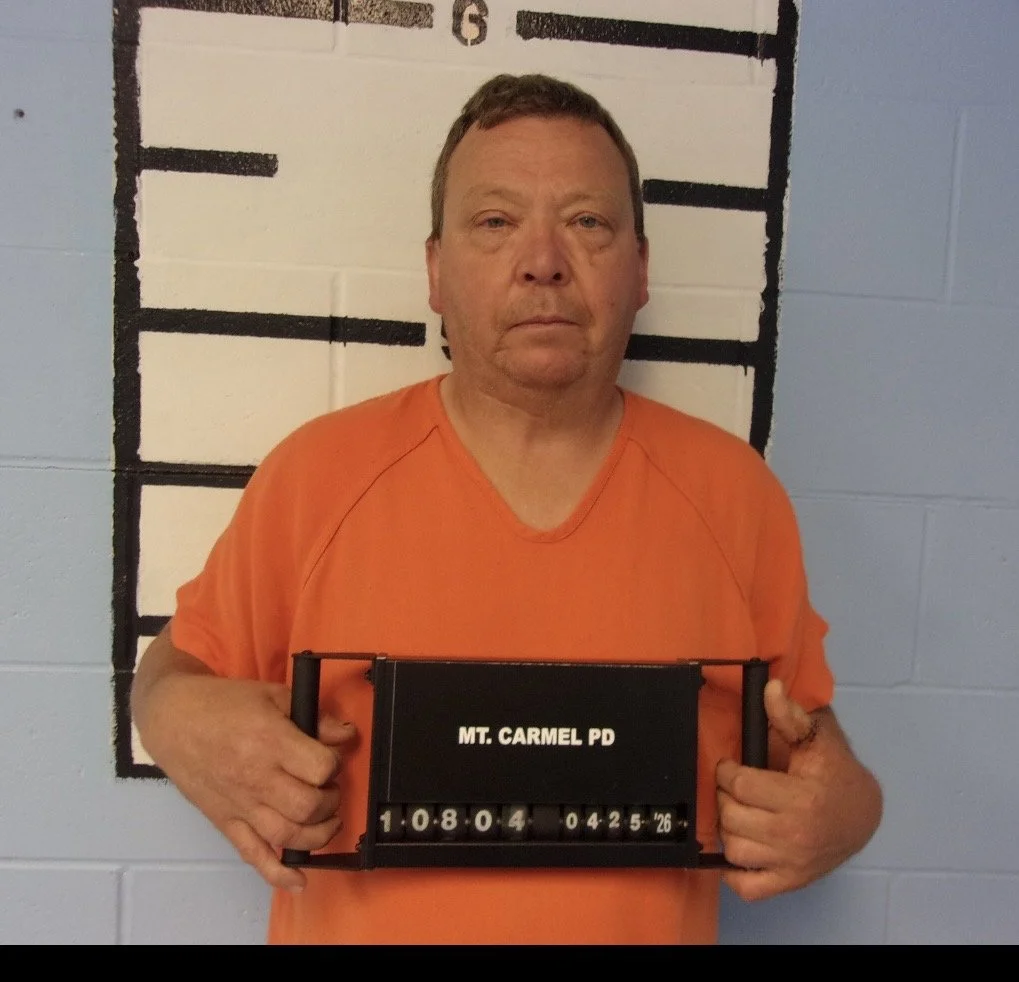
Sixty-one-year-old Terry McGee appeared in Wabash County Circuit Court Tuesday with Public Defender William Easton. At the request of the defense, the jury trial originally scheduled for July 6th was vacated and rescheduled for August 3rd. The delay is being attributed to the defense.

A final pretrial conference is now scheduled for July 20th at 10:30 a.m. The court ordered both sides to file witness and exhibit lists, along with any pretrial motions, by that date.

During Tuesday's hearing, the court also considered McGee's motion requesting a furlough for medical appointments. A written order outlining the court's ruling will be entered separately.

Judge William C. Hudson again ruled that McGee will remain in custody, finding his continued detention is necessary to prevent a real and present threat to a specific person or the community and that no combination of release conditions would adequately address that threat.

McGee is charged with six counts of aggravated criminal sexual abuse and three counts of criminal sexual assault. Court records allege the offenses involved a child under the age of 10 and occurred between January 2024 and January 2026.

McGee has pleaded not guilty to all charges. As with all criminal defendants, he is presumed innocent unless proven guilty in a court of law.

City Council Sells Vacant Lot, Puts Additional Properties Up for Bid

The Mt. Carmel City Council addressed several property matters during Monday afternoon's meeting, approving the sale of one surplus parcel while moving forward with plans to market additional city-owned properties.

The council accepted the lone bid of $505 from Tom and Paula Garrett for city-owned property at 115 Chestnut Street. City officials noted the vacant lot is not being used by the city and requires ongoing maintenance, making the sale a practical option.

The council also authorized City Clerk Ryan Turner to advertise for bids on two wooded parcels in the Wolf Subdivision that the city purchased in 2021. The lots, measuring approximately 3.4 acres and just over 2 acres, have already been surveyed. Officials discussed the possibility of subdividing the land into smaller lots in the future but agreed to first see what interest exists in the larger parcels before spending money on additional surveying.

In another action, the city will also seek bids for a surplus mobile home located across from Big R Farm & Home on Route 1st West. The successful bidder will be required to move the structure from the property.

The council also approved purchasing back a small parcel of land near the Super 8 hotel for $10,000 using Tax Increment Financing funds. Mayor Joe Judge said the property had previously been exchanged with a developer during discussions about a proposed mental health facility. Reacquiring the lot will give the city ownership of the entire area behind the hotel and eliminate the possibility of future development that could require the city to construct a new access road.

"Things Going Good" With Pool Construction

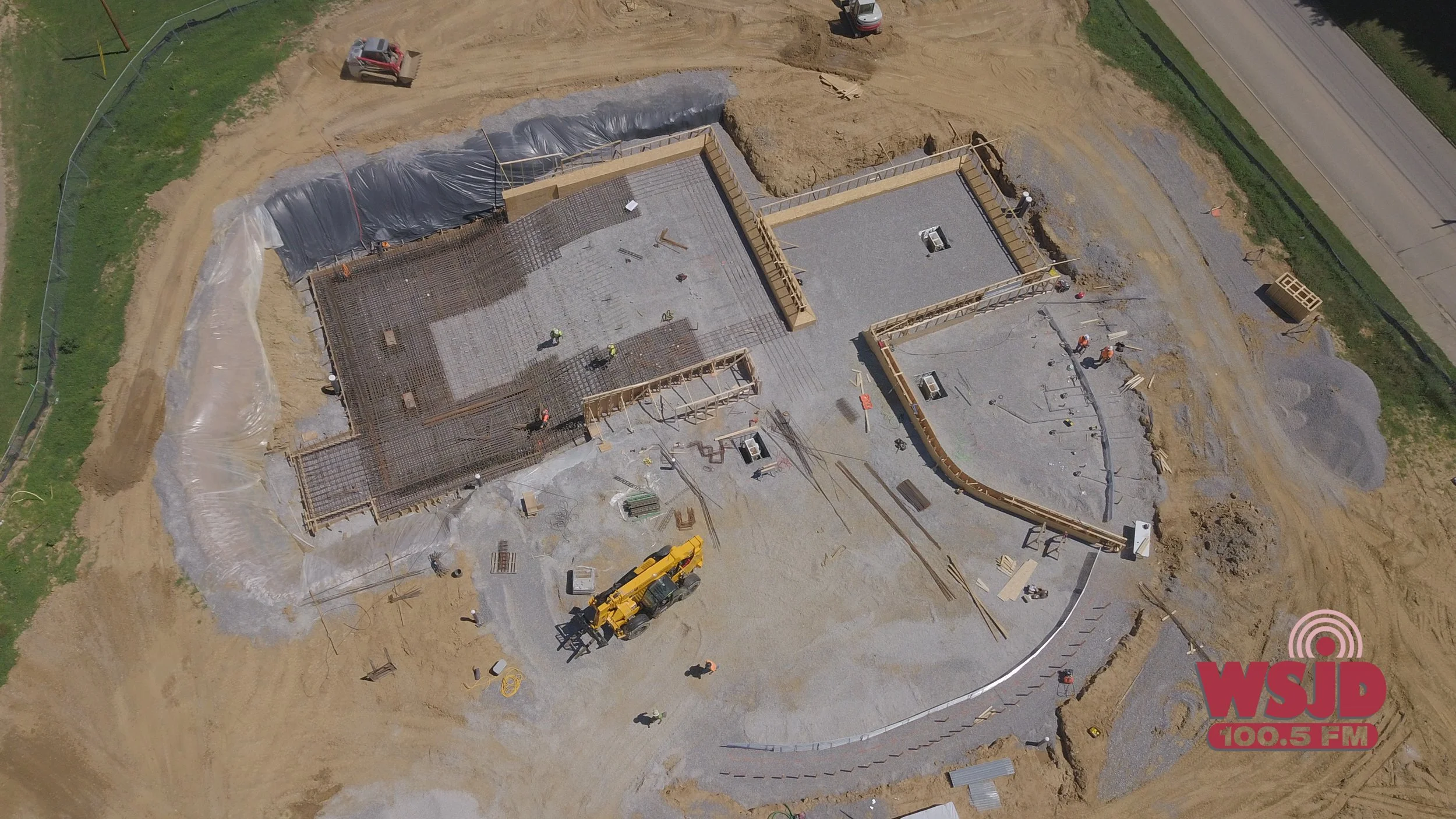
Construction of Mount Carmel's new aquatic center continues to move ahead at an accelerated pace, with major concrete work expected to begin this week.

During Monday afternoon's City Council meeting, Mayor Joe Judge said crews are continuing rebar work and are expected to begin pouring concrete for the pool later this week.

Judge said the project is "coming together really fast," adding that footers for the new bathhouse have now been completed.

The mayor said residents should begin seeing walls go up on the bathhouse within the next three weeks, marking one of the most visible stages of construction.

Judge noted the contractor has accelerated the construction schedule and said the project remains on track for completion by the end of the year.

"So things are going good," Judge told the council.

Earlier this month, city officials reported that excavation and site preparation were progressing steadily and that many of the major components for the project had already been delivered.

If construction remains on schedule, the new aquatic center is expected to open for the 2027 summer season.

Traffic stop leads to drug arrest

On June 19, 2026, at 8:24 p.m. Gibson County Deputy Michael Bates conducted a traffic stop on a Silver Mitsubishi Eclipse for speeding on US 41 near County Road 925 South.  Upon approaching the vehicle Deputy Bates identified the driver as 30-year-old Gilbert Davis of Owensville.  While speaking to Mr. Davis, Deputy Bates detected clues that Mr. Davis may be in possession of illegal drugs.  At that point he began a roadside drug investigation that once completed resulted in Mr. Davis being taken into custody and transported to the Gibson County Detention Center.  Upon arriving at the detention center, he was charged with Possession of Methamphetamines and Possession of Paraphernalia. 
 
Deputy Bates was assisted in his investigation by Deputies U.B. Smith, Wyatt Lashbrook, and Sgt. Loren Barchett.
 
All criminal defendants are to be presumed innocent until and unless proven guilty beyond a reasonable doubt in a court of law.
 

911 call leads to arrest of Fort Branch man

On June 19, 2026, at 9:59 p.m. Gibson County Central Dispatch received a 911 report of a suspicious person standing on multiple porches in the 500 block of North Main Street in Fort Branch.  Upon receiving the call dispatch sent multiple officers to the area after receiving a detailed description from the caller.  Shortly after arriving officers located 42-year-old Gregory Bennett of Fort Branch and began an investigation into the incident.  After collecting statements from witnesses and positively identifying Mr. Bennett as the subject who had been on the porches, he was placed into custody and transported to the Gibson County Detention Center where he was charged with Public Intoxication. 
 
Arresting Officer, Deputy Shawn Holmes, was assisted in his investigation by Sgt. Loren Barchet and Deputy Wyatt Lashbrook.  Owensville Town Marshal Rodger Leister and Princeton Officer Jackie Wood also assisted in this investigation.
 
All criminal defendants are to be presumed innocent until and unless proven guilty beyond a reasonable doubt in a court of law.

Traffic stop nets impaired driver

On June 19, 2026, at 10:53 p.m. Gibson County Deputy Wyatt Lashbrook conducted a traffic stop on a Black 2003 Chevrolet Silverado for an unsafe start in Fort Branch and speeding on County Road 225 W as it traveled south from State Road 168.  Upon approaching the vehicle the driver, 28-year-old Bryce Lloyd, admitted to having drank alcohol.  At that point Deputy Lashbrook began a roadside DUI investigation.  Once that inquiry was completed Mr. Lloyd was placed into custody and transported to the Gibson County Detention Center where he was charged with Operating a Vehicle While Intoxicated. 
 
Princeton Officer Jackie Wood assisted in this investigation.
 
All criminal defendants are to be presumed innocent until and unless proven guilty beyond a reasonable doubt in a court of law.