Plans Announced For Emergency Simulation In August

Wabash District #348 students and staff will take part in a countywide emergency response exercise when school resumes in August.

During Monday morning's Board of Education meeting, Superintendent Dr. Chuck Bleyer reported that the district is working with Wabash County emergency management officials to conduct a large-scale emergency simulation on August 24th.

Bleyer said the exercise will involve multiple agencies, including law enforcement, firefighters, ambulance services, hospital personnel, and other first responders. While details are still being finalized, the event is expected to be held at one of the district's school buildings and will likely be conducted as a half-day exercise.

The superintendent stressed that the simulation will not be a real emergency and said the district will make every effort to notify the public in advance. He plans to begin reminding residents about the exercise in July to avoid confusion.

School Resource Officer Eric Emmons is coordinating the event.

Bleyer said a similar exercise was held several years ago and provided valuable training opportunities for both school personnel and emergency responders.

While the exact scenario has not yet been determined, Bleyer said it will likely involve some type of emergency response situation. He noted that organizers are still deciding what type of incident will be simulated and how the exercise will be structured.

The primary purpose of the drill is to allow first responders to practice their response procedures in a school setting, while giving district staff an opportunity to observe and assist.

Students are scheduled to begin the 2026-27 school year on August 14th, with teachers reporting August 12th.

Southern Illinois man convicted in federal case involving 3D-printed guns  

Federal prosecutor said Yaroslav Vishnevski operated a “mini gun factory” while he described himself as a hobbyist

By MOLLY PARKER
Capitol News Illinois
mparker@capitolnewsillinois.com

Article Summary 

  • A federal jury this week found Yaroslav Vishnevski, 33, of Harrisburg, who used a 3D printer and other readily accessible tools to manufacture firearms at his home, guilty of five gun-related charges.  

  • Tom Leggans, an assistant U.S. Attorney for the Southern District of Illinois, described Vishnevski’s house as a “mini gun factory” in closing arguments. 

  • State and federal authorities across the country have struggled to regulate 3D-printed firearms.

  • Authorities said they searched Vishnevski’s home and seized the illegal weapons after New York customs officials intercepted a package containing two silencers from China. He intends to appeal. 


This summary was written by the reporters and editors who worked on this story. 

BENTON — A federal jury this week found a Harrisburg man guilty of five gun-related charges tied to what prosecutors described as a small-scale gun manufacturing operation run from his southern Illinois home that included guns made with a 3D printer.  

During a May 2024 search of property in Harrisburg belonging to Yaroslav Vishnevski and his then-wife, federal agents seized two unregistered homemade short-barreled rifles, silencers and two additional modified firearms that he illegally possessed, prosecutors said.

Investigators also recovered what they described as a workshop for making and modifying weapons, including three 3D printers, a Ghost Gunner milling machine, and a drill press with firearm-specific jigs. They also hauled off nearly 80 pounds of aluminum shavings that prosecutors said were a byproduct of machining gun components.

“The evidence shows that he was running a mini gun factory out of his house,” Tom Leggans, an assistant U.S. Attorney for the Southern District of Illinois, told the jury on Tuesday afternoon during closing arguments of the two-day trial in Benton.

The trial offered a rare glimpse into the growing world of home gun-making — and the challenges facing law enforcement as readily available 3D printers and other tools enable the production of increasingly sophisticated privately made firearms that often can’t be traced, earning them the nickname “ghost guns.” The legality of 3D printing firearms varies by federal and state laws. The term “ghost gun” is often used to describe a variety of unserialized firearms.

Not all are 3D-printed, but unserialized 3D-printed firearms are often described using that term. Under federal law, privately made firearms may be legal, even without a serial number, though certain firearms and explosives are subject to registration and other requirements.

Ryan Propst, a special agent with the Illinois State Police Firearms Investigations Unit, testified that customs officials in New York contacted his agency after intercepting a package containing two silencers mailed from China to Vishnevski.

Propst said agents executed a search warrant at Vishnevski’s home after he accepted the package, which was delivered under surveillance.

Vishnevski did not testify at trial. His attorney, Joshua Richards, argued that he was a firearms hobbyist who made and modified the weapons solely for himself. At the time, Vishnevski had a valid Illinois Firearm Owner’s Identification card and concealed-carry license and had no prior criminal record. 

“My client liked to tinker with guns, and he liked to make guns with his 3D printer,” Richards told the court, adding that he “tried to follow the law as he understood it.”

The jurors, most of whom identified themselves as gun owners during jury selection, deliberated for about 30 minutes before returning guilty verdicts on all five remaining counts.

He was found guilty of failing to satisfy federal registration and taxation requirements before manufacturing or possessing two short-barreled rifles, a shotgun and silencers subject to those rules, as well as for possessing an imported shotgun with an obliterated serial number. The government had previously dismissed a sixth charge.

Vishnevski vows to appeal

Vishnevski, 33, had been on home confinement at his mother's residence near Boston while awaiting trial. He was taken into custody following the verdict and is being held at the Franklin County Jail in Benton pending sentencing.

He vowed to fight the jury’s guilty verdicts. 

“I am surprised that people do not value their own Second Amendment rights,” Vishnevski texted. “The Constitution is the foundation of this country, and the Second Amendment is an inherent natural right. The Founding Fathers couldn't have made it more clear: ‘not to be infringed.’ The government has no place to trespass on a founding principle of this nation.”

Vishnevski, communicating with Capitol News Illinois by text message from jail, said he believes he was under government surveillance long before the raid on his home and alleged he was targeted because of his Ukrainian background. After his arrest, Vishnevski said a Homeland Security officer questioned him about his views on Ukraine and any associations he had with people living there.

Vishnevski moved from Ukraine to Greece at age 6 and immigrated to the United States with his parents at age 7. He is now a U.S. citizen.

He graduated magna cum laude from Boston University in 2014 with a degree in biochemistry and molecular biology.

Vishnevski said he then completed Air Force officer training and enrolled at the St. Louis University School of Medicine under orders to serve as an Air Force physician after graduation. He left the program before earning his degree and was later transferred to the Individual Ready Reserve. Vishnevski and his wife moved to Harrisburg in 2020, attracted by the opportunities and freedoms he believed the small town could offer them.

According to a forensic evaluation conducted after his arrest and provided to Capitol News Illinois, Vishnevski told a psychologist that registration requirements and expanding gun regulations were eroding constitutional protections, particularly with respect to privately made firearms. He described himself as a person who wanted to be prepared: He maintained a bunker, emergency food supplies and a stockpile of firearms for what he described as security reasons.

“I am not a crazy person,” he told the psychologist, according to the report, adding that most people, if given the opportunity, would want to be financially secure, self-sufficient and prepared for emergencies. He compared his preparations to the contingency planning undertaken by governments.

3D-printed guns test law enforcement

State and federal authorities across the country have struggled to regulate 3D-printed firearms.

In a 2021 audit, the U.S. Department of Justice's Office of the Inspector General criticized the Bureau of Alcohol, Tobacco, Firearms and Explosives' efforts to monitor 3D-printed guns. While ATF had identified only a small number of criminal cases involving 3D-printed guns, auditors said the figure likely understated their use because ATF had no way for law enforcement agencies to specifically report whether a recovered firearm had been made using a home 3D printer, and because many lack serial numbers, thus earning them the nickname "ghost guns."

Jeffrey Bodell, an ATF firearms enforcement officer who specializes in 3D-printed firearms, testified during the trial that he has spent the past year and a half operating a federal testing lab that 3D prints firearms almost daily from publicly available designs to better understand how they work and what federal laws they fall under.

Illinois has some of the nation's strictest gun laws. In 2022, Gov. JB Pritzker signed legislation banning most unmarked homemade firearms, or “ghost guns.” The Illinois law requires privately made firearms to be serialized through a federally licensed dealer. Vishnevski, however, was prosecuted under federal law, not Illinois' ghost-gun statute. He said he rejects the term “ghost gun” because it attempts to tie gun-making hobbyists to criminal activity. 

Federal law does not explicitly prohibit people from making firearms with a 3D printer.

Instead, federal law requires certain weapons regulated under the National Firearms Act to be registered in the National Firearms Registration and Transfer Record maintained by the ATF and taxed, regardless of whether they are made or modified at home or purchased from a federally licensed dealer. Those include machine guns, silencers, destructive devices, rifles with barrels under 16 inches, shotguns with barrels under 18 inches and firearms with an overall length under 26 inches. 

‘A place that valued freedom’

The property authorities described as a “mini gun factory” sits in a quiet, unassuming neighborhood in Harrisburg, just a few blocks from the town square. For Vishnevski, he said it represented his chance to stake out a piece of the American dream.

Property records show that he and his then-wife each purchased one of two small, nearly identical white homes on East Logan Street in 2019 and 2020, paying $29,000 for both. One was purchased in his name, which was rented as an Airbnb, and the other in her name. A fifth-wheel camper parked between the two houses was also rented out as an Airbnb at times, he said.

Vishnevski said he liked the idea of living in a small town where his money could go farther — and it was close enough to family of his then wife, whom he met online while in medical school. 

“Homes were affordable. I could buy them with the money I saved. Taxes were low,” he texted. “It seemed like a place that valued freedom where I could establish independence.”

Aside from attending medical school on an Air Force scholarship, Vishnevski had worked at a variety of jobs: at a pharmaceutical company, for a collections company, as a security guard and in an ophthalmologist's office, according to the forensic evaluation conducted by DOJ while he was jailed in Chicago. He told the psychologist he was dissatisfied with repetitive work and had been fired or “induced” his firing by not doing it.

At one point, he started his own computer business, refurbishing computers and selling equipment. He also reported earning significant income through cryptocurrency investments, in addition to his Airbnb business in Harrisburg.

Neighbor: ‘He got carried away’

Ron Crutchfield, a retired Harrisburg High School history teacher who lives across the street, said the homes had fallen into disrepair and he was pleased that Vishnevski and his wife bought them and fixed them up. Crutchfield said he didn’t meet Vishnevski until a few years after he moved to town, but the two have since grown close.

Crutchfield attended the trial and later told a reporter that he does not believe Vishnevski intended to do anything wrong.

“He fell into a hobby and the hobby happened to be weapons, and I think he got carried away. He kept trying to perfect his weapons,” Crutchfield said. “He probably should have been an engineer as opposed to trying to be a doctor.”

“It was unfortunate,” he added. “It got out of control.”

Despite the years between them, Crutchfield said they developed a close friendship over time. Sometimes, he said, Vishnevski would make him 3D-printed trinkets such as dragon figurines because he knew Crutchfield liked dragons.

Crutchfield said authorities questioned him about whether he had purchased any guns from Vishnevski. He said he had not, but he came to believe authorities suspected Vishnevski was trafficking firearms or were suspicious that he was involved in activity much broader than what he was ultimately charged with and found guilty of.

Vishnevski believed he’d been watched for years

Vishnevski also believed the government had been interested in him long before the May 2024 raid on his home. He shared with CNI dozens of pages of notes, screenshots, photographs, recordings and other documents that he said support his claims of innocence and show a pattern of scrutiny predating the investigation.

Among the events he pointed to is the purchase of a Ghost Gunner 3 machine for about $3,000 in August 2023. The desktop milling machine is marketed for manufacturing firearm components. Not long afterward, Vishnevski said, Banterra Bank notified him that it was closing his account. An audio recording he provided appears to show a bank representative describing his account activity as "risky" but declining to elaborate when he asked her how that determination was made.

Vishnevski viewed the closure as evidence of outside scrutiny or government involvement months before he ordered the metal tubes from China that he described as fuel filters and federal prosecutors said were intended to function as firearm silencers.

The provided records also alleged an employee at a different bank questioned his wife about their marriage and finances, accused him of possible money laundering related to cryptocurrency proceeds he had transferred to her, and restricted access to funds in her account.

Based on phone calls reviewed as part of his forensic evaluation, the report noted Vishnevski believed some residents of Harrisburg viewed him suspiciously because he was born in Ukraine. According to the evaluation, he reported that he’d heard people in the community had referred to him as a "Ukrainian terrorist" and that authorities may have viewed him as either a terrorist or a gun dealer.

The investigation and prosecution, he said, carried significant personal and financial consequences. After the raid, he could no longer rent out properties he owned through Airbnb; his homes, he said, fell into disrepair while he was jailed. His wife filed for divorce, and he said she later experienced homelessness. Among the materials he shared were videos of her in distress filmed inside one of their homes. 

Many of the documents reflect Vishnevski's belief that authorities and others were monitoring him. He created videos of packages delivered to his home with small tears that he believed showed postal workers had opened them. He identified people he suspected were cooperating with investigators and filed official complaints against numerous individuals, including a federal ATF agent, a nurse practitioner, the Harrisburg postmaster and his first attorney. He has prepared outreach to civil rights attorneys for a potential legal claim against the government, claiming he can show their actions have resulted in close to $1 million in economic damages to him. 

Following the raid, two orders of protection were filed against him. The first, filed in September 2024 by that nurse practitioner at Eldorado Primary Care, was granted on an emergency basis but later dismissed. A second petition, filed in December 2024 by an individual employed by both the Egyptian Health Department and Point Blank Range in Harrisburg, an indoor shooting range, was granted and remains in effect after an unsuccessful appeal by Vishnevski.

After the second order of protection was sought, Vishnevski’s bond was revoked and he spent eight months in jail awaiting trial. He remained jailed until August 2025, when he was released to live with his mother, Ruzhena Vishnevski, in Massachusetts. While awaiting trial, he was permitted to work and took a job at the Audi dealership where she also works. She traveled to southern Illinois this week to attend the trial.

After the verdict, his mother texted a reporter that she believed the case was a setup and described the prosecution as an effort to "make him a criminal."

"He was good for community," she wrote. "Now he's in jail, houses all damaged, without people. They made bonuses to catch such a terrorist."

Sentencing has been set for Sept. 24 at the federal courthouse in Benton.

Capitol News Illinois is a nonprofit, nonpartisan news service that distributes state government coverage to hundreds of news outlets statewide. It is funded primarily by the Illinois Press Foundation and the Robert R. McCormick Foundation.
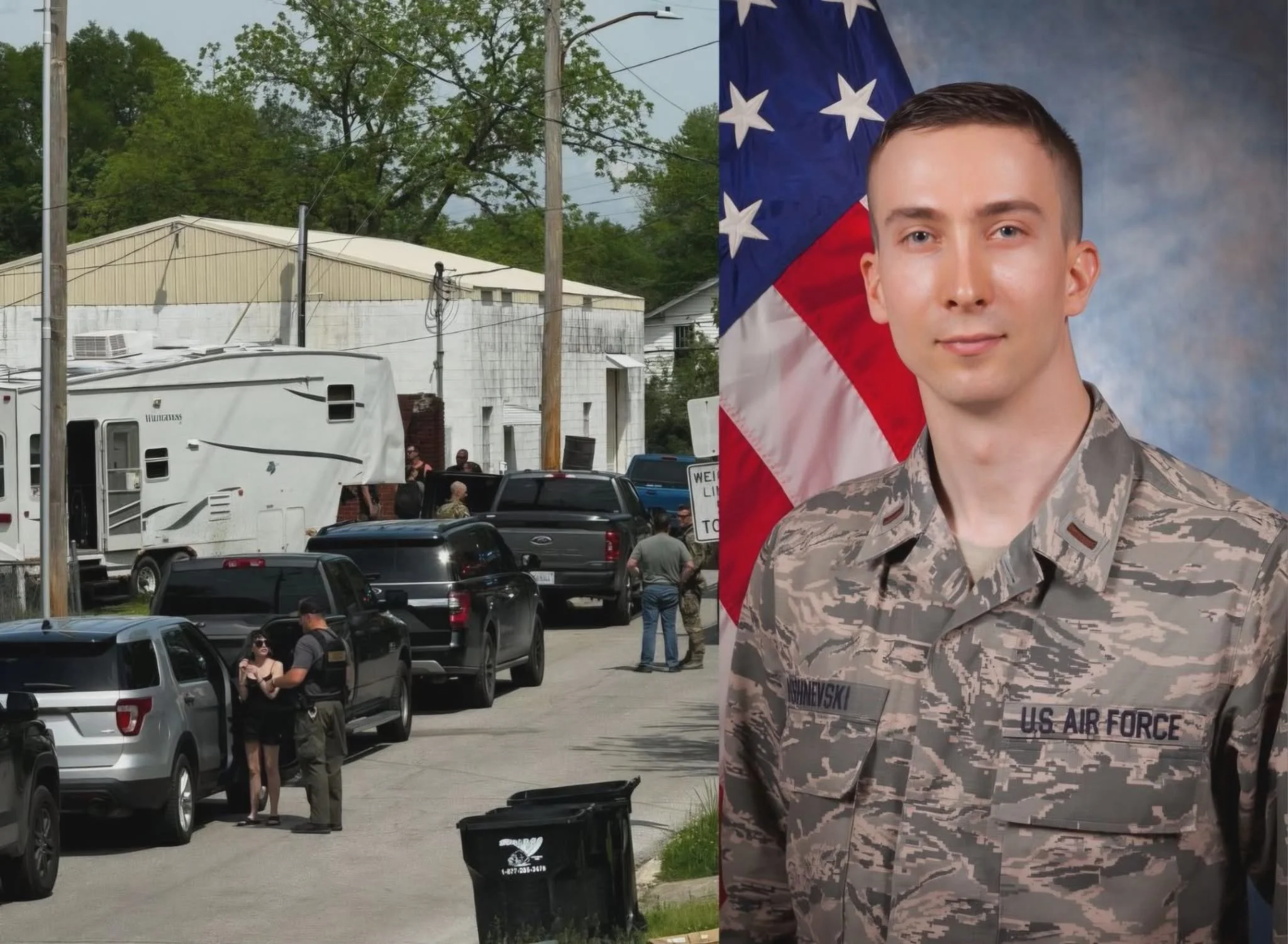
Police raided the Harrisburg, right, in May 2024 after customs officials in New York intercepted a package addressed to him that prosecutors said contained two silencers.

Illinois lawmakers seek to streamline contracting for service providers

Amid federal funding uncertainty, nonprofit groups are pushing for greater efficiency

Article Summary

  • The Illinois General Assembly passed a bill that would address concerns from service providers that contract with the state.

  • Providers cite frequent delays in receiving contracts and late pay for their services.

  • This legislation comes as federal cuts threaten funding sources, leaving the state looking to fill the gaps.  

This summary was written by the reporters and editors who worked on this story.

By HANNAH WEBSTER
Medill Illinois News Bureau
news@capitolnewsillinois.com

CHICAGO — Community Assistance Programs, a Chicago-based nonprofit providing employment training and job placement, typically has to wait several months for payment from the state. 

Through a government contract, the organization has served more than 2,000 people per year in Illinois. But the state, in return, has not always made that easy, CEO Sheryl Holman said. Late payments and contract delays have created significant barriers for businesses like hers. 

In February, Holman submitted a bill to the state for contracted services provided the month before. The state finally paid the nonprofit in April, she said. 

“It’s like everything’s against you doing this,” Holman said. 

Community Assistance Programs is not the only organization expressing frustration with the state’s contracting processes. According to a 2023 survey of human services government contractors by the Health and Human Services Coalition of Illinois, a group of Illinois human services providers, at least 25% of state contracts were not paid on a timely, ongoing basis. 

The issue was especially prevalent for nonprofit contractors with small budgets and those serving or led by people of color, the survey found. 

“The most unconscionable thing is that the poorest neighborhoods were the ones that were not getting paid on time,” said Holman, referencing the survey. “So it puts some agencies out of business, because they can’t weather it.”

During the state’s two-year budget impasse that spanned parts of 2015-2017, Illinois’ backlog of unpaid bills ballooned to over $16 billion. But over the past nine years, it’s been whittled down, routinely hovering about $1.5 billion to $2 billion. A representative from the Illinois Comptroller’s office, which processes and pays vouchers, said the office typically pays within 14-15 business days. 

But the Comptroller’s office only tracks them based on the date received. Bills can be further delayed if the state agency involved in the contract doesn’t send them to the comptroller’s office in a timely fashion. 

House Bill 4340 aims to address delays occurring at the agency level. It does so by stating that agencies must send vouchers to the comptroller “within 30 calendar days of receipt” of a “proper” bill or invoice from a contractor. Agencies would also have 30 days to notify contractors of defects in a bill or invoice. 

In addition to late payments, contractors have also faced delays in receiving state contracts. According to the Health and Human Services Coalition study, over half of the respondents said that in fiscal year 2023, they did not receive their contracts before the start of the year. Late contracts can prevent organizations from providing services right away. 

Lauren Wright, executive director of Chicago nonprofit Illinois Partners for Human Service, said the government contractor survey was focused on finding “the biggest hurdles” in the contracting process for community-focused nonprofits dealing with the state. And, she said, what they found was there were barriers “at all stages of the process.”

State Sen. Mike Halpin, D-Rock Island, sponsor of the reform bill, said he hopes the package will “make government easier to work with,” especially for small nonprofit agencies. 

“Many of these nonprofits are, rightfully so, hyper-focused on the mission and the services that they provide, and it can be overly burdensome for them to try to apply for state grants, because of the paperwork delays and getting approval, delays in getting the money in hand,” Halpin said. “And so they face challenges that are different from some of the bigger vendors or bigger contractors that do business with the state.”

Legislative package

Aside from the measure addressing voucher delays, HB 4340 also requires that contacts be issued within 60 days of the start of the fiscal year or 60 days after the required documentation has been completed and makes changes to the Court of Claims process, the channel through which contractors can seek out late payments. 

If signed, HB 4340 will require that the court confirm, reject or notify the vendor of any issues for claims under $2,500 within 60 days of being notified of the claim by the attorney general. For claims $2,500 and over, the window is 90 days. The bill also raises the cap on awards that can be temporarily paid from the General Revenue Fund from $50,000 to $100,000. 

Halpin said that the bills required negotiations between contractors and state agencies. 

“We have to strike a balance between maintaining convenience and participation on the part of the organizations, but without compromising the integrity and the transparency and the responsibility that we have as a state to make sure that taxpayer money going out the door, goes out in an appropriate way,” he said. 

In a statement to Capitol News Illinois before the bill was passed, a spokesperson from Gov. JB Pritzker’s office said the office will monitor and review the legislation’s budgetary impacts. 

“Any legislation that requires additional state resources will be carefully reviewed with budgeteers to understand the fiscal impact,” the spokesperson said in a statement. 

The spokesperson did not respond to a question about contractors’ reports of delays in contracting and payment. 

Federal uncertainty

Since President Donald Trump began his second term, key sources of funding for human service providers have undergone significant cuts. The coalition pushed for the contracting reforms contained in HB 4340 as Illinois nonprofits grapple with the repercussions of these federal funding cuts.

At an April panel hosted by the Civic Federation, a nonprofit government research organization, Wright and other nonprofit leaders discussed how organizations in Illinois are navigating these changes.

Jewish United Fund Chief Impact Officer Emily Sweet said these changes are forcing organizations to make difficult decisions about which services to continue offering. She said the cuts have also encouraged organizations to collaborate with similar providers and search for new ways to collaborate. 

At the panel, Wright explained that even without an influx of state money, there are things the state can do to help human services providers during this difficult time. Among them, she said, are the state efficiencies the contracting bills would create. 

“And providers already know how to be efficient, because they have been stretching the dollar more than anyone for decades,” Wright said. 

Hannah Webster is an undergraduate student in journalism with Northwestern University’s Medill School of Journalism, Media, Integrated Marketing Communications, and a fellow in its Medill Illinois News Bureau working in partnership with Capitol News Illinois.

Capitol News Illinois is a nonprofit, nonpartisan news service that distributes state government coverage to hundreds of news outlets statewide. It is funded primarily by the Illinois Press Foundation and the Robert R. McCormick Foundation.

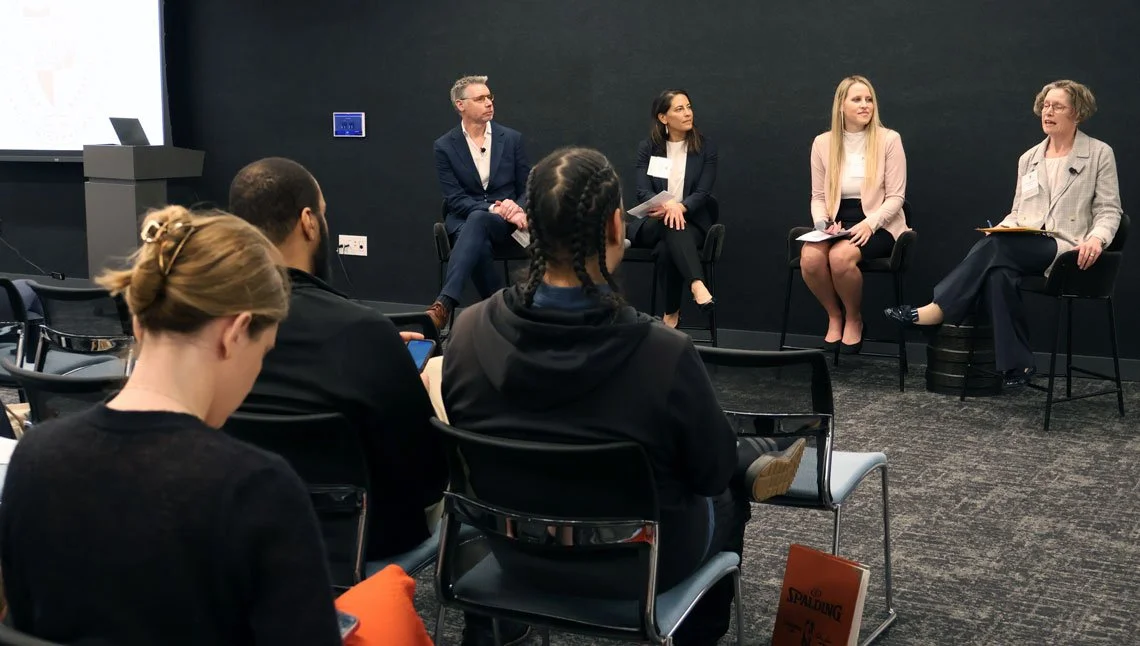
IMAGE: Representatives from Illinois nonprofits discussed the impacts of federal funding cuts on human services at an April Civic Federation panel in Chicago. 

(Medill Illinois News Bureau photo by Hannah Webster)


Small food assistance nonprofits eligible for new state grant program

Funding is open to food assistance organizations without full-time employees

Article Summary

  • Illinois Treasurer Michael Frerichs announced a new grant for small nonprofits addressing food insecurity.

  • The program is open to organizations that don’t have full-time employees and were ineligible for the last round of grants in the program.

  • The grants come as thousands of Illinoisans are losing access to federal food assistance, placing more strain in local food pantries.

This summary was written by the reporters and editors who worked on this story.

By JENNA SCHWEIKERT 
Capitol News Illinois 
jschweikert@capitolnewsillinois.com 

Small volunteer groups that provide food assistance to Illinoisans in need could be eligible for a new round of grant money under a program announced this week.  

The Charitable Trust Hunger Relief Grant program will provide grants of up to $5,000 to 10 nonprofit organizations that don’t have full-time employees to purchase food for those in need. Applications opened June 1 and will remain open through July 31, Illinois Treasurer Michael Frerichs announced Wednesday. 

The announcement comes as food assistance groups experience increased need due to cuts to federal food assistance, including the Supplemental Nutritional Assistance Program. Feeding America, the country’s largest domestic hunger-relief organization,  states that for every meal the organization provides, SNAP provides nine.

“Hunger and food insecurity is a hidden epidemic afflicting children who cannot ask for help and adults who find it difficult to ask for help as they juggle two or more jobs,” Frerichs said in a statement June 10. “Small, local food pantries and soup kitchens are prepared to help these innocent lives because they see those suffering in the shadows. That is why we created this desperately needed hunger relief program, as these organizations try to help people get food as affordability remains a major concern.”

The hunger relief program is part of a larger charitable trust fund, created in 2007, that helps small nonprofits with annual budgets of $1 million or less and at least one full-time employee. 

The fund is supported by fees paid by larger nonprofit corporations when they file annual incorporation reports with the Illinois Secretary of State. This round, however, is open to organizations without full-time employees who did not previously qualify.

An 11-member committee, made up of appointees from state government agencies and private citizens, oversees management of the funds and selects grant recipients. 

Capitol News Illinois is a nonprofit, nonpartisan news service that distributes state government coverage to hundreds of news outlets statewide. It is funded primarily by the Illinois Press Foundation and the Robert R. McCormick Foundation. 


Illinois distributes first $25M to local pharmacies to help them compete 

The funding was generated by a fee levied on pharmaceutical middlemen.

By MAGGIE DOUGHERTY
Capitol News Illinois
mdougherty@capitolnewsillinois.com 

Article Summary 

  • Gov. JB Pritzker announced nearly $25 million in funding to support 434 independent pharmacies across the state.

  • The funding, established through bipartisan legislation signed by Pritzker last year, is generated through fees levied on pharmacy benefit managers, the pharmaceutical middlemen responsible for negotiating drug pricing plans between drug developers and employer insurance plans.

  • Eligible pharmacies in rural and medically underserved communities will receive over $56,000 on Friday, aimed at keeping doors open and expanding services.

This summary was written by the reporters and editors who worked on this story. 

CHICAGO — Gov. JB Pritzker announced Friday that 434 Illinois pharmacies will receive nearly $25 million in support, the first distribution of annual funding established through legislation he signed last year.

The fund was designed to assist pharmacies most at risk of closure or financial strain, especially those in rural and low-income communities with limited healthcare access. The pot was split equally between all eligible applicants, with each pharmacy receiving $56,892. 

“Local pharmacies are often one of the most accessible and affordable points of care for working families, seniors, and Medicaid patients — providing medications, vaccinations, and trusted health care services,” Pritzker said in a news release. 

The money was established under bipartisan legislation Pritzker signed last July. The bill, known as the Prescription Drug Affordability Act, put new regulations on pharmacy benefit managers, or PBMs, companies that are responsible for negotiating drug prices between employer health insurance plans and pharmaceutical drug companies.

They have been the target of intense scrutiny in recent years, facing accusations of steering patients toward their own affiliated pharmacies and designing healthcare pricing formulas that boost their own profits rather than patient savings, including a lawsuit from the Federal Trade Commission against the three largest PBMS for their alleged use of anticompetitive practices to artificially inflate insulin prices.

The legislation prohibited PBMs from steering customers toward large pharmacies in which they have a financial interest — often to the detriment of smaller independent pharmacies — and required they pay a fee based on the number of individuals in the state enrolled in the PBM’s plans. 

At the time the legislation passed, a lobbying organization representing the PBMs criticized the bill as “misguided” and said it would have little to no impact on high prescription drug prices set by “Big Pharma.”

Read more: Pritzker signs health care legislation

The first $25 million in fees collected were placed in a special fund for independent pharmacies, which can use the money to support existing operations, as well as expansions of business hours and new offerings, such as telepharmacy services, remote consultations and medication delivery.

But the funding is not constrained to specific spending options, allowing pharmacies to use it however they see fit. For a Sav-More pharmacy in Virden, Illinois, that looks like a new parking lot.

“Limitations with parking, the lack of a drive-through, and space constraints have made it difficult to expand the services our community deserves,” said Sav-Mor Pharmacies President David Falk. 

The funding has allowed the Virden location to partner with Carlinville Hospital to construct a new 3,500 square-foot facility next to a new clinic, featuring “ample parking, modern technology, (and) a drive-through,” and employing additional staff.

“This project would not have been possible without the vision and commitment of Governor Pritzker and his administration,” Falk said, adding that PBM reimbursement practices had hindered independent pharmacies like Sav-More.

The program, administered by the Department of Commerce and Economic Opportunity and the Illinois Retail Merchants Association, granted funding to pharmacies in 252 cities scattered across 94 of the state’s 102 counties. 

Prioritized were pharmacies in rural or medically underserved communities and small independent pharmacies with fewer than 10 locations.

A full list of pharmacies receiving the support can be found here: https://dceo.illinois.gov/content/dam/soi/en/web/dceo/downloads/illinois-pharmacy-support-program.xlsx 

Capitol News Illinois is a nonprofit, nonpartisan news service that distributes state government coverage to hundreds of news outlets statewide. It is funded primarily by the Illinois Press Foundation and the Robert R. McCormick Foundation.

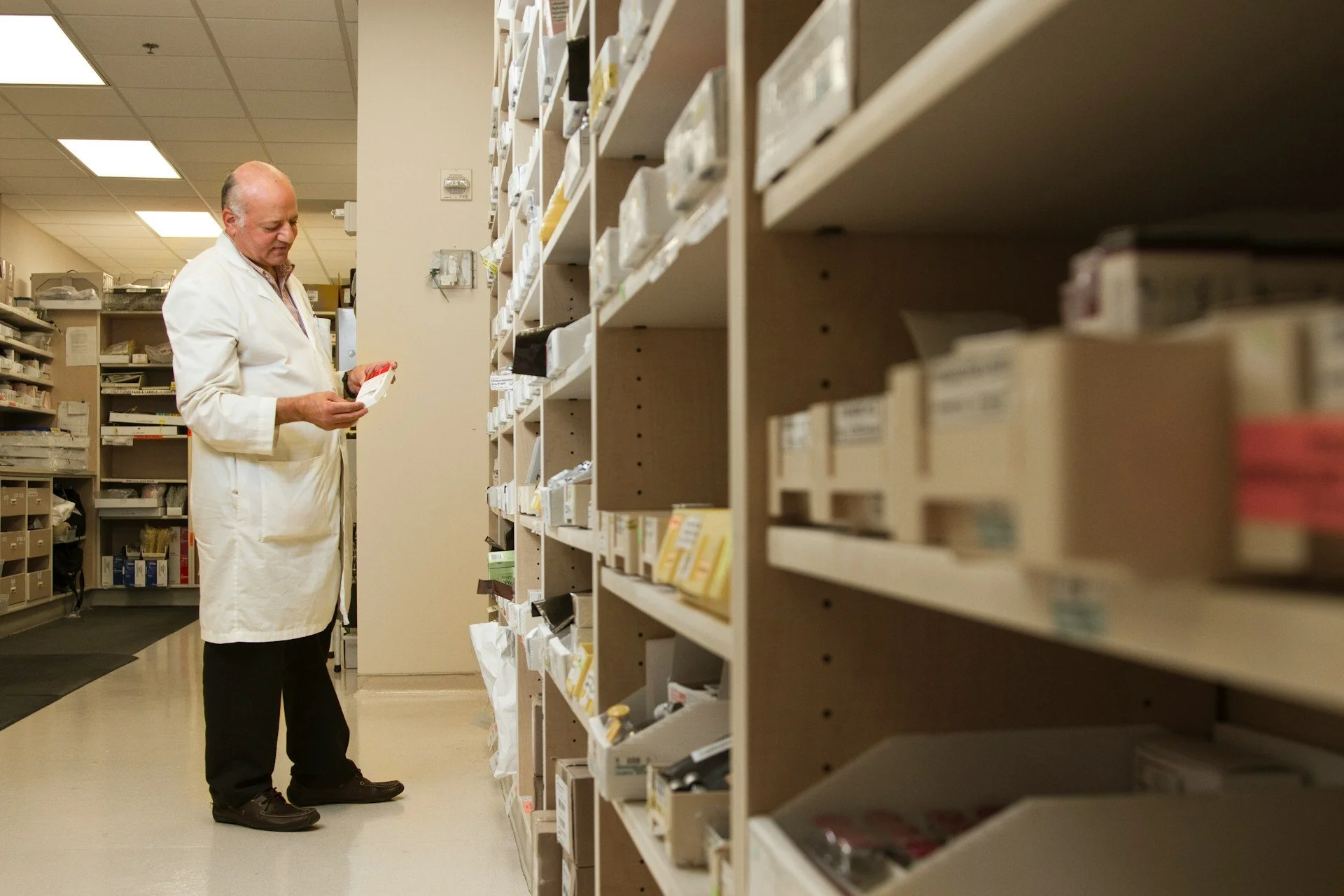
Over 430 pharmacies in rural and medically underserved areas across Illinois received funding from a $25 million fund on June 12, 2026, to keep their doors open and broaden healthcare services. (Photo courtesy of the National Cancer Institute via unsplash.com)

New state program will expand access by libraries to digital databases for research, education

The program makes digital information available to all Illinoisans.

By NIKOEL HYTREK
Capitol News Illinois
nhytrek@captiolnewsillinois.com

Article Summary

  • The Secretary of State’s office announced a program to give all Illinoisans access to a large number of online informational and educational databases through their library.

  • The state entered a contract with a digital library resource program that includes more than 50 databases with e-books, peer-reviewed journals, magazines, newspapers and research databases. 

  • The program’s goal is to close a longstanding gap for access to information, making it available to people regardless of their local library’s budget.

  • Databases include a variety of topics like business, hobbies, wellness, technology and more.

This summary was written by the reporters and editors who worked on this story.

Illinoisans now will have access to a large collection of high-quality digital information and educational resources for free by going to their local library or the Illinois State Library’s website. 

The Illinois Reliable Information Sources, or IRIS, program was announced Tuesday by Secretary of State Alexi Giannoulias. The state entered a contract with EBSCO Information Services — a digital library resource program used by universities, schools and libraries — to provide access to more than 50 of their databases to all Illinois residents.

It could not be immediately determined how much money went into program. 

While it’s common for libraries to have resources for research, not all libraries are able to pay for these kinds of services. 

“Access to reliable information should not depend on a person’s ZIP code or the financial resources of their local library,” Giannoulias said in a news release. “This investment will ensure every Illinois resident has access to educational, professional and personal enrichment resources while helping libraries stretch limited budgets and better serve their communities.” 

The new service includes free access to online databases with e-books, peer-reviewed journals, magazines, newspapers and research databases. Those collections include a diverse range of topics such as business, education, health, technology, science and more. 

The program is also available for academic libraries, which means students and educators will be able to use these databases for research projects and instruction. 

Libraries that already subscribe to other digital information services will be able to use this program and redirect the subscription money to other needs.

Illinois libraries are funded by a mix of property taxes and state and federal grants. Librarians have said it’s often difficult to decide what to prioritize when budgets get tight, and many Illinois libraries have reported they don’t offer online database subscriptions.

As part of last year’s budget implementation bill, Giannoulias advocated for expanded eligibility for Equalization Aid Grants to support more public libraries across the state. That effort increased the number of libraries receiving these grants from 17 to 108. 

According to the Reaching Across Illinois Library System, a regional library system that serves libraries in northern and west-central Illinois, approximately one million Illinoisans live without access to public library services, and this program will cover them, too.

“This statewide database will have a profound impact on libraries,” Amy Byers, library director for Chatham Public Library and former president of the Illinois Library Association, said. “It will help us expand services and continue to provide great resources to our patrons without having to weigh the option of having good, quality online resources.”


Capitol News Illinois is a nonprofit, nonpartisan news service that distributes state government coverage to hundreds of news outlets statewide. It is funded primarily by the Illinois Press Foundation and the Robert R. McCormick Foundation.


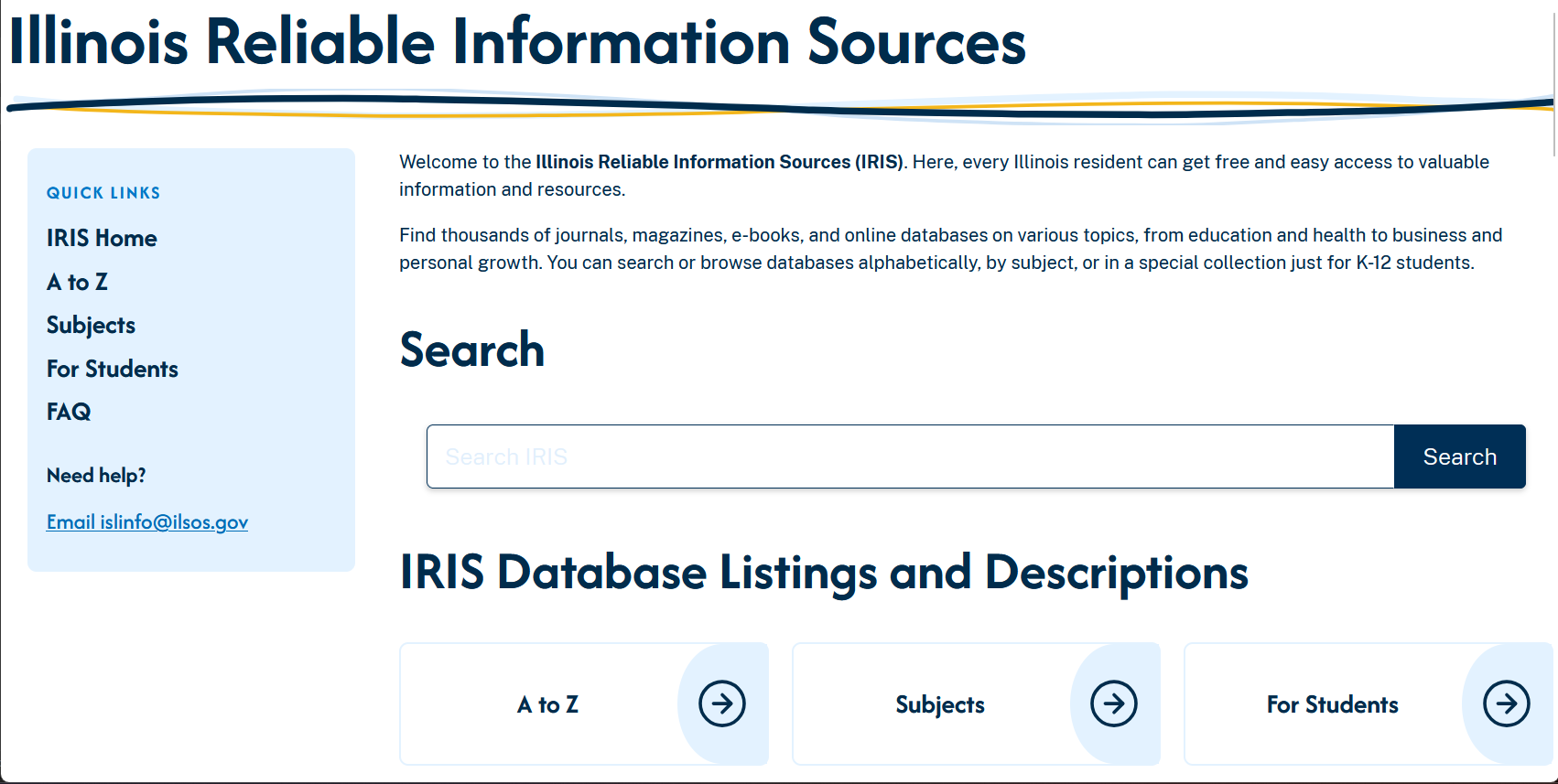
 The homepage for the Illinois Reliable Information Sources, or IRIS, program, a new source for finding digital informational and research databases through your local library or the State Library website. (courtesy Illinois State Library)  


New WCEA Contract Calls For Big Raise In First Year

The Wabash District #348 Board of Education approved a new three-year collective bargaining agreement Monday morning with the Wabash County Education Association, which represents the district's non-certified employees.

The agreement covers secretaries, nurse secretaries, bus drivers, custodians, cooks, aides, assistants, paraprofessionals, and parent coordinators and educators.

Superintendent Dr. Chuck Bleyer praised both negotiating teams following the board's approval of the contract.

Bleyer said the negotiations went extremely well and described the process as positive and professional. He noted that union representatives sent a message thanking the district's negotiating team for the manner in which discussions were conducted.

Under the new agreement, employees will receive a 20 percent wage increase during the first year of the contract, followed by 2 percent raises in each of the next two years.

Bleyer said the district made a significant investment in employee pay and believes the new contract is already having a positive impact on recruitment efforts.

He told board members the district has begun seeing new hires come on board and feels the improved compensation package is helping attract qualified employees.

The newly approved agreement will remain in effect for the next three years.

Bellmont Man Faces July Trial Date

A Bellmont man facing multiple child pornography charges remains in custody as his case moves toward trial.

Twenty-eight-year-old Gage Hoffman appeared in Wabash County Circuit Court Monday morning for a pre-trial conference. During the hearing, the court confirmed Hoffman's jury trial will begin July 6th.

A final pre-trial conference has been scheduled for June 22nd.

Hoffman remains lodged in the Wabash County Jail.

The case has expanded significantly since charges were first filed. Last month, Wabash County State's Attorney Kelli Storckman filed eight additional Class 2 felony child pornography charges against Hoffman, bringing the total number of counts against him to 15.

Hoffman was originally charged on May 4th with seven Class X felonies involving alleged child sexual abuse material. Court records allege several offenses occurred between July of 2024 and March of 2025. Five of the original charges involve alleged victims under the age of 13, while two involve alleged victims under the age of 18.

The charges stem from an investigation that began after Wabash County Sheriff's deputies executed a search warrant at a Bellmont residence on April 29th. Investigators reportedly recovered electronic evidence connected to the alleged possession and dissemination of child sexual abuse material.

The investigation remains ongoing with assistance from the Mt. Carmel Police Department and the Illinois Attorney General's Office.

"Shrek The Musical" Hits The Stage This Week

The Wabash District #348 School Board received a preview Monday morning of this week's junior production of "Shrek the Musical."

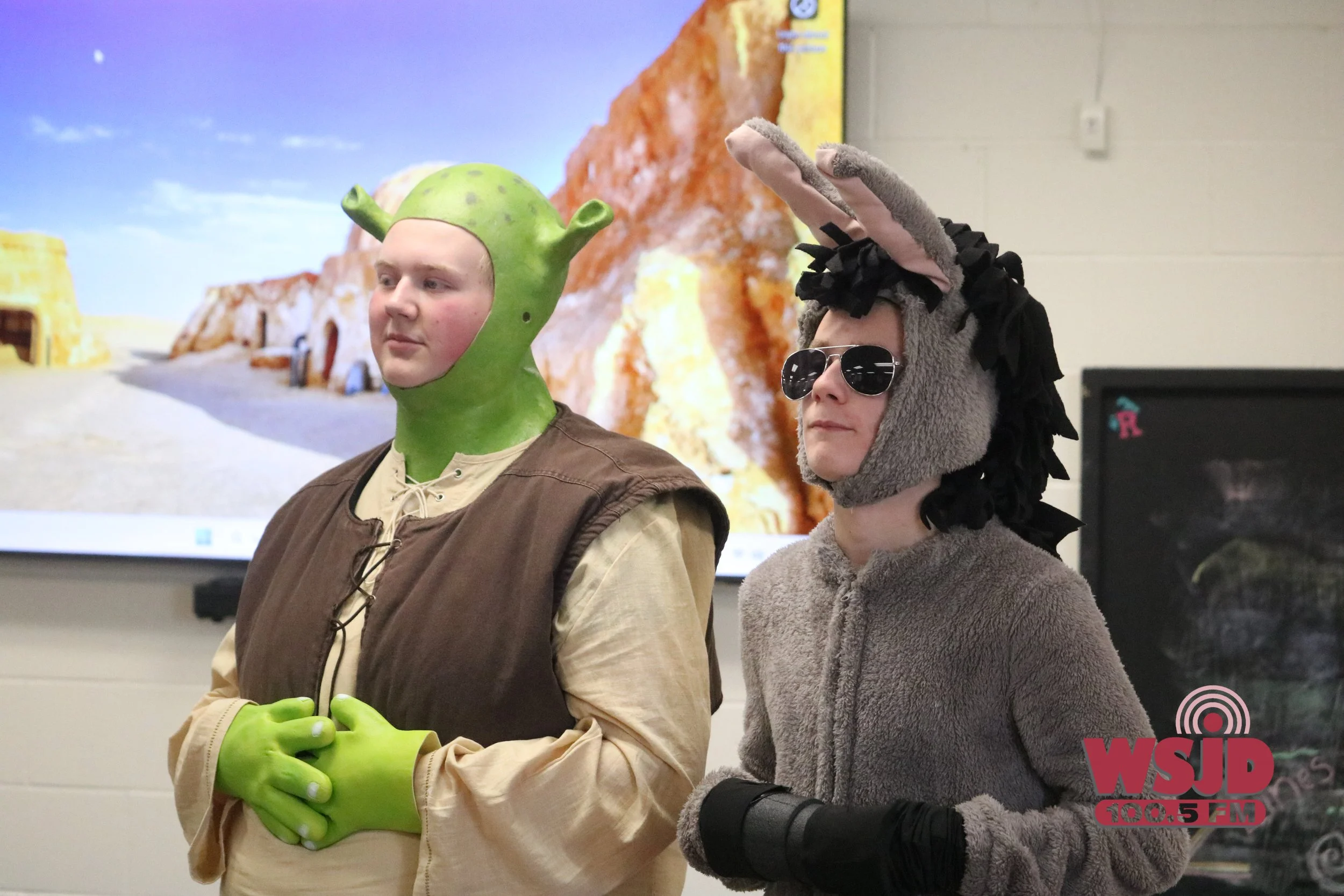
Mt. Carmel Junior High music director Ellen Wall appeared before the board accompanied by two of the show's lead performers, Reese Macer and Andrew Haggerty, who portray Shrek and Donkey.

Wall said the cast has been preparing for the production since the start of the second semester. Since school ended, the students have continued rehearsing daily from 9 a.m. to 1 p.m. to get ready for opening night.

The production features 43 students who have just completed grades five through nine, along with numerous volunteers helping behind the scenes.

Performances are scheduled for Thursday, Friday, and Saturday at 7 p.m. in the Mt. Carmel High School Auditorium.

Wall praised the students for their dedication, responsibility, and enthusiasm throughout the rehearsal process, saying they represent the future of the community in a positive way.

The junior production is designed to introduce younger students to theater and encourage them to participate in the high school's larger musical productions in the future. The show has been adapted into a shorter format, running about an hour with an intermission, while remaining true to the story and humor of the popular animated film.

During the board meeting, Macer explained that while putting on the Shrek costume takes only a few minutes, the green makeup and prosthetics require considerably more preparation. Wall added that both lead actors have fully embraced their roles, joking that everyone now refers to them simply as Shrek and Donkey.

Tickets are available through the District 348 website and can be purchased using a QR code posted online.

Wall encouraged the community to attend, calling the production a fun, family-friendly show filled with junior high humor and plenty of laughs.

Rockin' Chicken Drops Plans To Open In Mt. Carmel

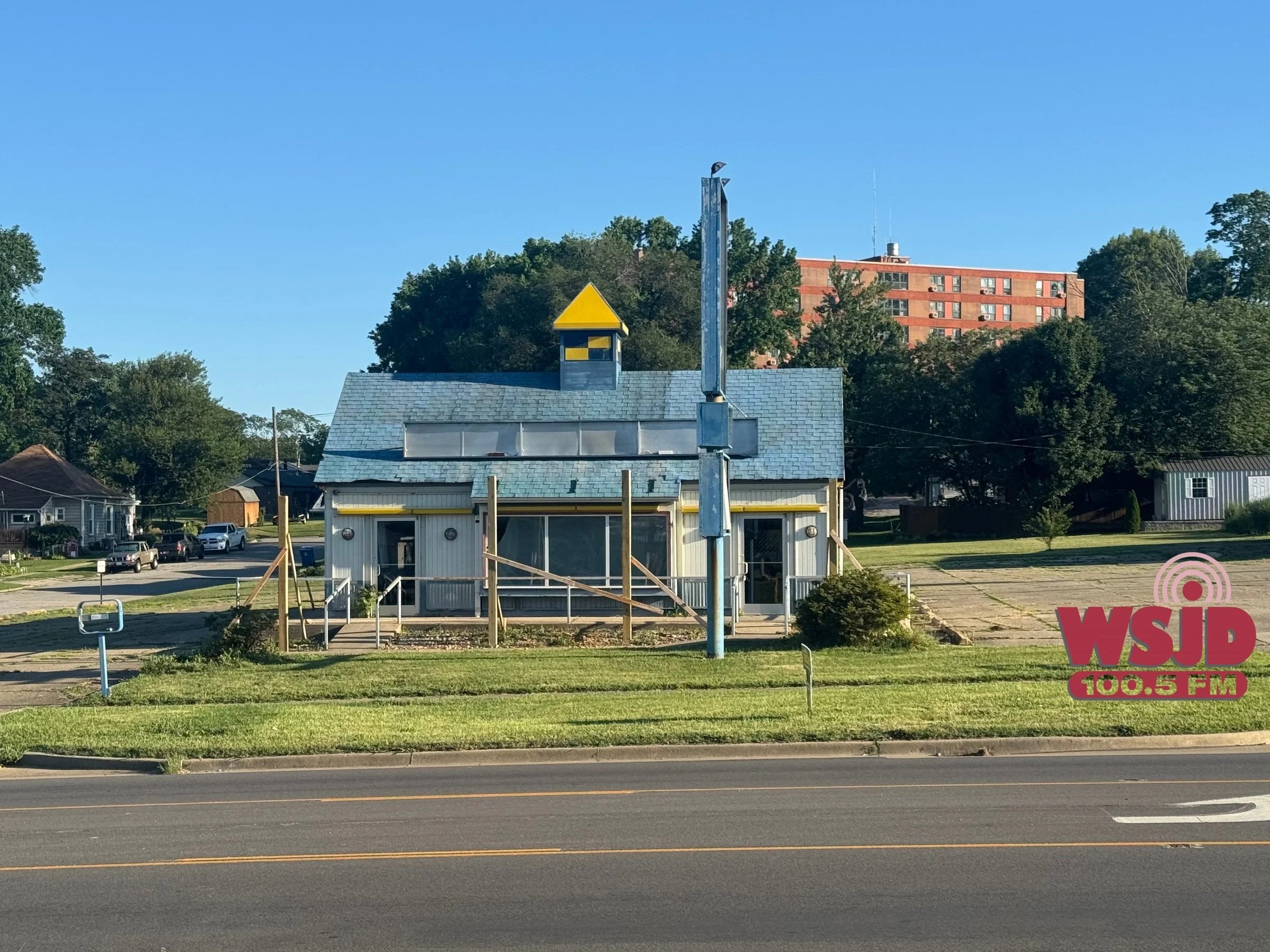
Plans to bring a Rockin’ Chicken restaurant to the former Long John Silver’s building in Mt. Carmel have officially fallen through.

During Friday’s “Ask the Mayor” program on WSJD, Mayor Joe Judge confirmed that Rockin’ Chicken owner Steve Waddle has decided not to move forward with the project.

Judge said Waddle’s son had been expected to take over the restaurant operation, but ultimately decided not to enter the restaurant business. As a result, Waddle has chosen to scale back his expansion plans and focus on a single location.

The Rockin’ Chicken concept had been slated for the former Long John Silver’s building on West 9th Street. In November 2024, the Mt. Carmel City Council approved $40,000 in Tax Increment Financing funds to help support the estimated $225,000 renovation project, with plans at the time calling for a Fall 2025 opening.

Judge said the property is now listed for sale and has already attracted interest from multiple prospective buyers. According to the mayor, the building was shown several times last week, and several interested parties are expected to have architects evaluate the property in the coming days.

While some residents have suggested the building should be demolished, Judge disagrees.

He says the structure still has “good bones” and believes the block construction provides a solid foundation for future redevelopment.

Judge also noted that the city’s TIF agreement requires repayment of the incentive funds. He said the building is currently listed for $95,000, and the first $40,000 from any sale will be returned to the city under the terms of the legal agreement.