"Shrek The Musical" Hits The Stage This Week

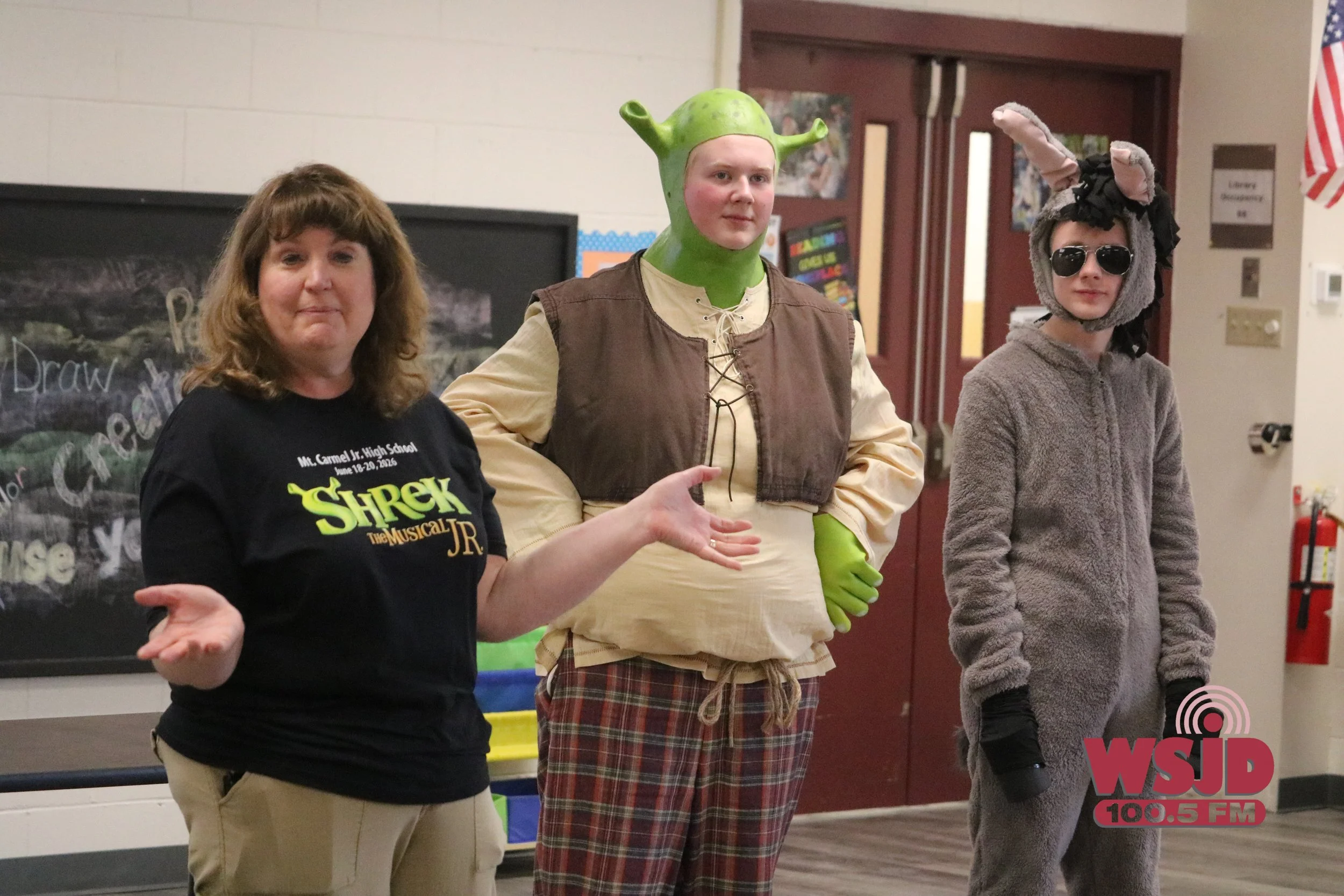
The Wabash District #348 School Board received a preview Monday morning of this week's junior production of "Shrek the Musical."

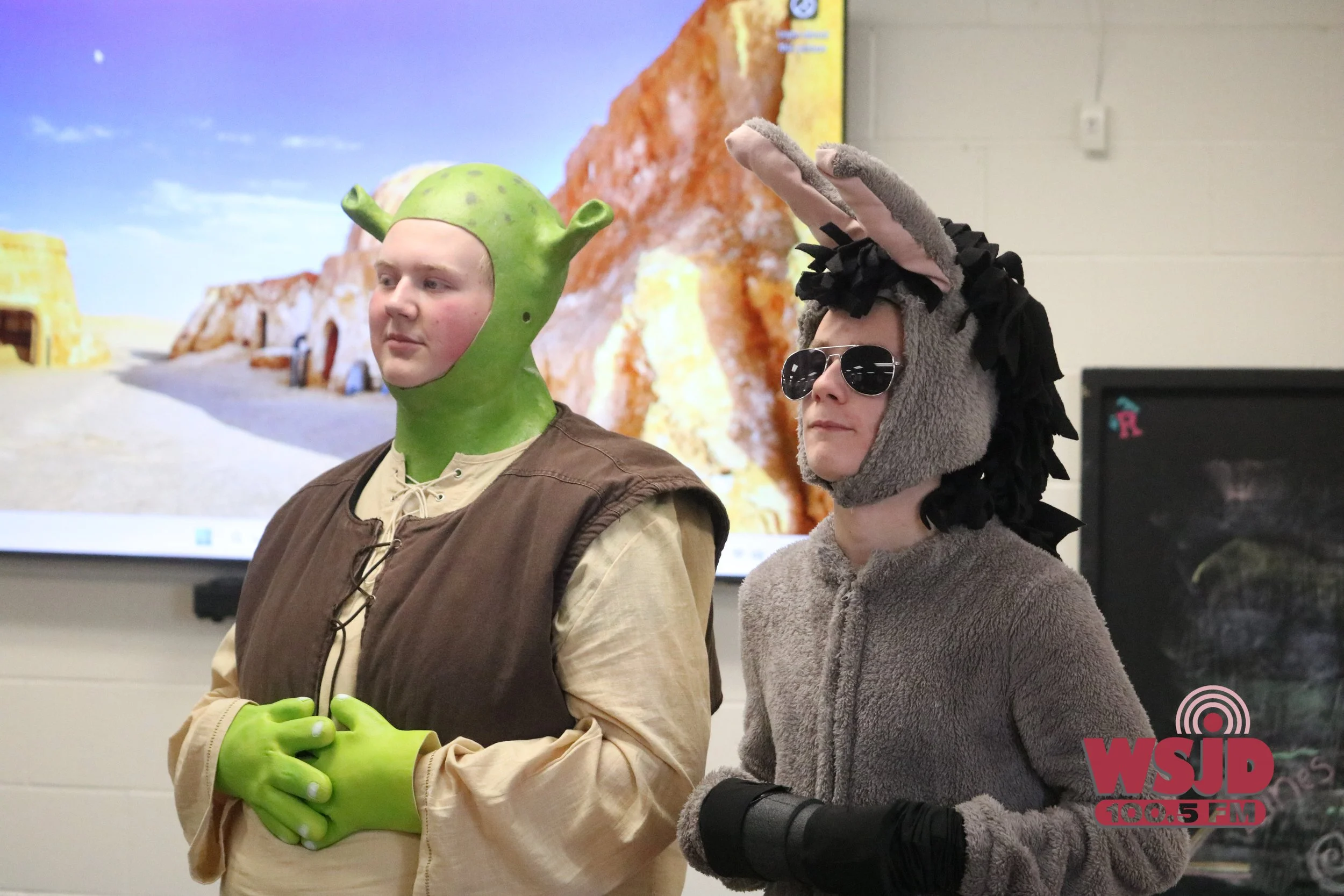
Mt. Carmel Junior High music director Ellen Wall appeared before the board accompanied by two of the show's lead performers, Reese Macer and Andrew Haggerty, who portray Shrek and Donkey.

Wall said the cast has been preparing for the production since the start of the second semester. Since school ended, the students have continued rehearsing daily from 9 a.m. to 1 p.m. to get ready for opening night.

The production features 43 students who have just completed grades five through nine, along with numerous volunteers helping behind the scenes.

Performances are scheduled for Thursday, Friday, and Saturday at 7 p.m. in the Mt. Carmel High School Auditorium.

Wall praised the students for their dedication, responsibility, and enthusiasm throughout the rehearsal process, saying they represent the future of the community in a positive way.

The junior production is designed to introduce younger students to theater and encourage them to participate in the high school's larger musical productions in the future. The show has been adapted into a shorter format, running about an hour with an intermission, while remaining true to the story and humor of the popular animated film.

During the board meeting, Macer explained that while putting on the Shrek costume takes only a few minutes, the green makeup and prosthetics require considerably more preparation. Wall added that both lead actors have fully embraced their roles, joking that everyone now refers to them simply as Shrek and Donkey.

Tickets are available through the District 348 website and can be purchased using a QR code posted online.

Wall encouraged the community to attend, calling the production a fun, family-friendly show filled with junior high humor and plenty of laughs.

Rockin' Chicken Drops Plans To Open In Mt. Carmel

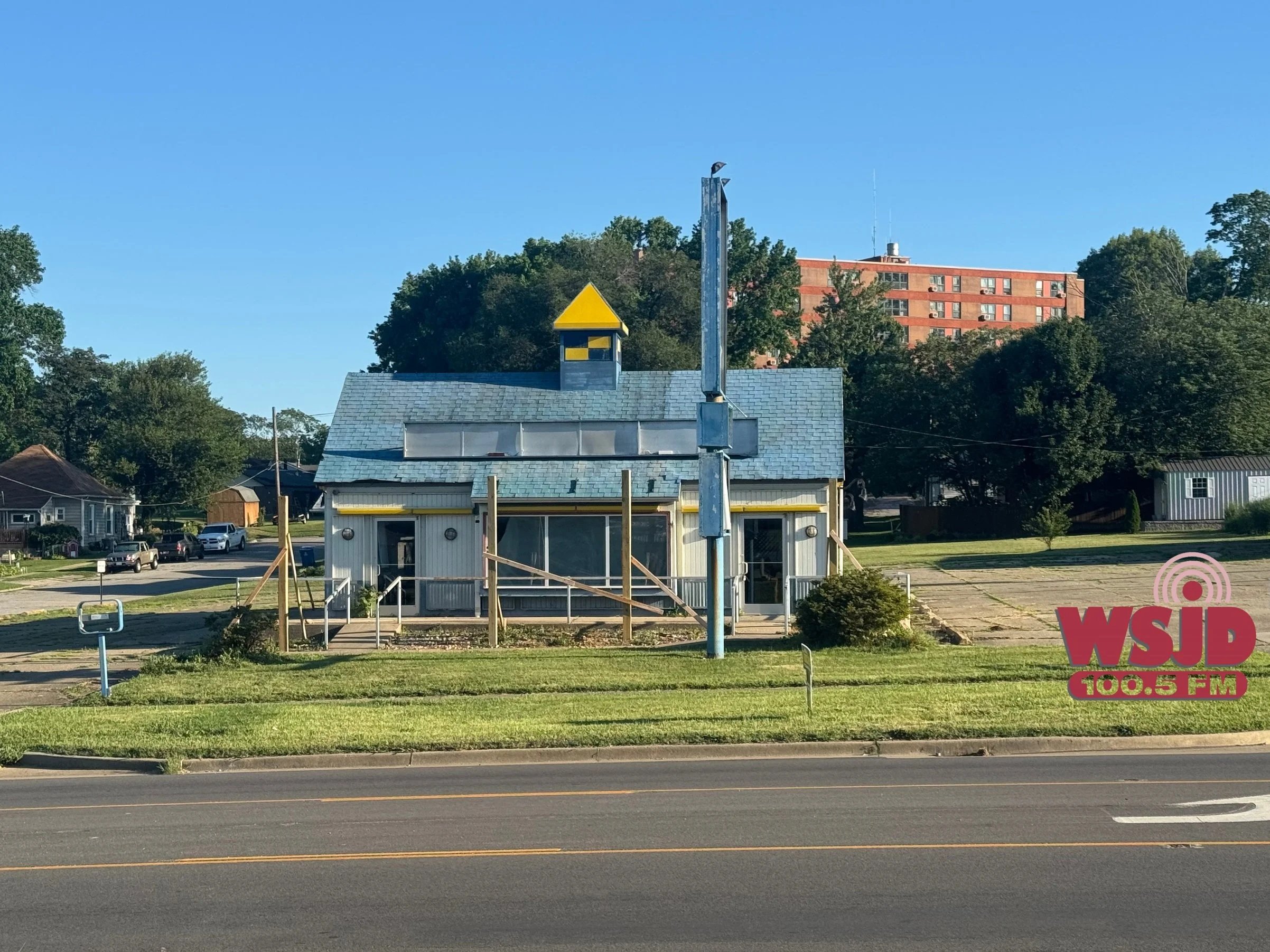
Plans to bring a Rockin’ Chicken restaurant to the former Long John Silver’s building in Mt. Carmel have officially fallen through.

During Friday’s “Ask the Mayor” program on WSJD, Mayor Joe Judge confirmed that Rockin’ Chicken owner Steve Waddle has decided not to move forward with the project.

Judge said Waddle’s son had been expected to take over the restaurant operation, but ultimately decided not to enter the restaurant business. As a result, Waddle has chosen to scale back his expansion plans and focus on a single location.

The Rockin’ Chicken concept had been slated for the former Long John Silver’s building on West 9th Street. In November 2024, the Mt. Carmel City Council approved $40,000 in Tax Increment Financing funds to help support the estimated $225,000 renovation project, with plans at the time calling for a Fall 2025 opening.

Judge said the property is now listed for sale and has already attracted interest from multiple prospective buyers. According to the mayor, the building was shown several times last week, and several interested parties are expected to have architects evaluate the property in the coming days.

While some residents have suggested the building should be demolished, Judge disagrees.

He says the structure still has “good bones” and believes the block construction provides a solid foundation for future redevelopment.

Judge also noted that the city’s TIF agreement requires repayment of the incentive funds. He said the building is currently listed for $95,000, and the first $40,000 from any sale will be returned to the city under the terms of the legal agreement.

Traffic stop results in arrest of one

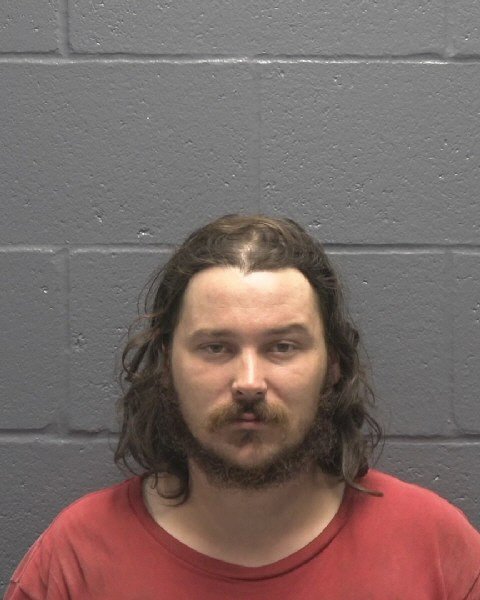
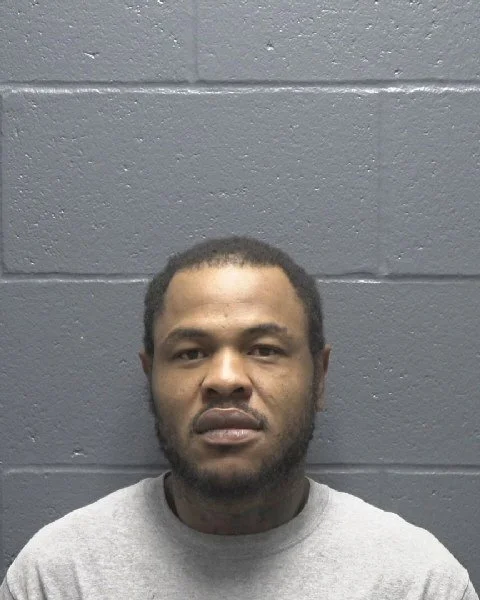
On June 11, 2026, at 12:08 a.m. Oakland City Officer Michael McGregor and Michael Bates initiated a traffic stop in the 9800 block of East 450 South on a four-wheeler after it was observed speeding.  Upon approaching the vehicle, the driver was identified as 27-year-old Cordale Georges of Buckskin.  While speaking with Mr. Georges, Deputy Michael Bates, a Drug Recognition Expert detected multiple clues that the driver was under the influence of an unknown intoxicant and attempted an OWI investigation.  After multiple attempts to gain cooperation Mr. Georges was taken into custody and transported to the Gibson County Detention Center by Deputy Bates.  Upon arriving at the detention center Mr. Georges was charged with Operating a Vehicle While Intoxicated/ Refusal, Possession of Marijuana, and Possession of Paraphernalia. 
 
All criminal defendants are to be presumed innocent until and unless proven guilty beyond a reasonable doubt in a court of law.

Owensville man arrested on Mischief charge

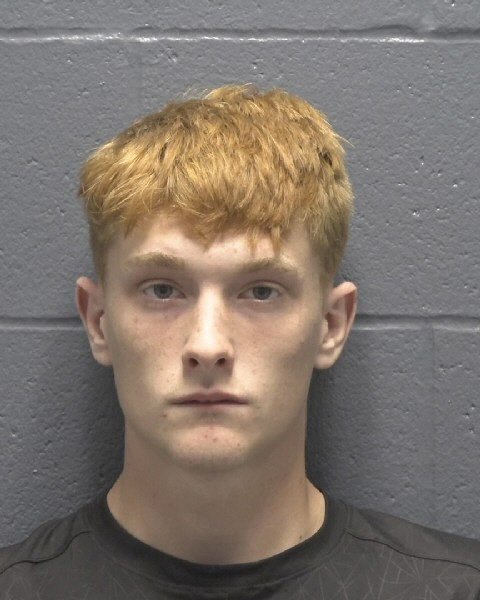
On June 9, 2026, at 11:55 a.m. law enforcement officers were dispatched to a disturbance in the 9000 block of South County Road 1075 West.  Detective Sergeant Roger Ballard arrived on scene and observed obvious signs that a disturbance had recently occurred.  At that point Sgt. Ballard spoke with the victim and other witnesses on scene.  During the investigation the suspect, 18-year-old Tristan Mobley of rural Owensville returned to the scene.  Sgt. Ballard conducted an interview with Mr. Mobley before placing him into custody and transporting him to the Gibson County Detention Center.  Upon arriving at the detention center, Mr. Mobley was charged with Criminal Mischief and Criminal Recklessness. 
 
Sgt. Ballard was assisted in his investigation by Deputies U.B. Smith and Jim Tucker.  Fort Branch Officer Darrell Parker, Haubstadt Officer Jason Wright, and Owensville Officer Steven Parker also assisted in this investigation. 
 
All criminal defendants are to be presumed innocent until and unless proven guilty beyond a reasonable doubt in a court of law.

Evansville man arrested for Reckless Driving

On June 6, 2026, at 2:14 a.m. Gibson County Deputy Michael Bates conducted a traffic on US 41 near State Road 168 after observing a White 2018 Chevy Cruze traveling 103 mph in a 60-mph zone.  After a brief investigation Deputy Bates placed the driver, 37-year-old Patrick Charles of Evansville, into custody and transported him to the Gibson County Detention Center where he was charged with Reckless Driving and Possession of Marijuana.  Mr. Patrick was also issued citations for Driving While Suspended and Unsafe Lane Movement. 
 
Deputy Levi Sims assisted Deputy Bates in his investigation. 
 
All criminal defendants are to be presumed innocent until and unless proven guilty beyond a reasonable doubt in a court of law.

Council Officially Increases Garbage Rate By $1/month

It's now official.. Mount Carmel residents will soon pay an extra dollar per month for garbage service.

The Mount Carmel City Council on Monday approved a garbage rate increase that was first introduced last month by Garbage Commissioner Susan Zimmerman.

Under the approved ordinance, residential garbage rates will increase by one dollar per month. The adjustment comes as city officials continue to deal with rising costs associated with trash collection services.

When the proposal was initially presented, it included a second one-dollar increase scheduled to take effect next July. However, city officials have since scrapped that portion of the plan.

Instead, the council will re-evaluate the city's garbage fund and collection costs next spring before deciding whether any additional rate changes are necessary.

City leaders have said the increase is intended to help keep the garbage fund financially stable while avoiding larger rate hikes in the future.

The new rate increase will take effect July 1st.

IECC BOARD OF TRUSTEES SELECTS DR. TIMOTHY L. TAYLOR AS NEXT CHANCELLOR

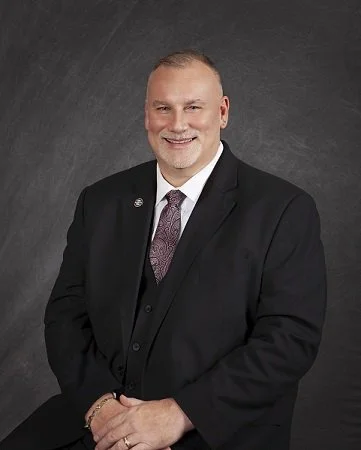
 The Illinois Eastern Community Colleges Board of Trustees is expected to affirm the appointment of Dr. Timothy L. Taylor as the next Chancellor of Illinois Eastern Community Colleges at its June 16, 2026, meeting at Olney Central College. Dr. Taylor, who currently serves as President of Shawnee Community College, would assume the chancellorship on August 15, 2026, pending Board approval.

 The selection follows several months of transition planning by the Board of Trustees to ensure a smooth leadership transition following Chancellor Ryan Gower's retirement on June 30.

 Dr. Taylor brings more than two decades of community college leadership experience to the position, including service as President of Shawnee Community College and previous leadership roles within Illinois Eastern Community Colleges. Throughout his career, he has been recognized for his commitment to student success, workforce development, institutional effectiveness, strategic planning, and the mission of rural community colleges.

 Board Chair Gary Carter said Dr. Taylor's experience, leadership style, and understanding of the region made him the clear choice to lead the institution into its next chapter.

 "Tim understands our communities, our mission, and the important role community colleges play in creating opportunity," said Carter. "Over the past several years, Illinois Eastern Community Colleges has undertaken significant work to strengthen and position the institution for the future. The Board believes Tim has the experience, judgment, and leadership skills necessary to build upon that foundation and continue advancing IECC as one institution serving students and communities across all four campuses."

 During his tenure at Shawnee Community College, Dr. Taylor led initiatives focused on strengthening institutional effectiveness, improving financial stability, enhancing strategic planning and accountability systems, expanding partnerships with schools and employers, securing investments in facilities and infrastructure, and increasing opportunities for students throughout the region.

 Taylor said he is honored by the opportunity to serve Illinois Eastern Community Colleges and excited about the future of the institution.

"I am honored by the confidence the Board of Trustees has placed in me," said Taylor. "Illinois Eastern Community Colleges has a proud history of serving students and communities throughout southeastern Illinois. The institution is well-positioned for the future, and I look forward to working alongside the Board, employees, students, and community partners to build upon the strong foundation already in place. Together, we will continue expanding educational opportunities, strengthening our communities, and ensuring IECC remains responsive to the changing needs of the region we serve."

 Board Chair Gary Carter also expressed appreciation for Dr. Gower's decade of leadership at IECC and more than thirty-one years of service to higher education.

 "Ryan's tenure as Chancellor has transformed IECC," Carter said. "He led the institution through the COVID-19 pandemic, a successful accreditation reaffirmation, the implementation of Guided Pathways, the creation of the Center for Excellence in Teaching and Learning, and the construction of seven new facilities across the district. He championed investment in our campuses, our employees, and our students. Most importantly, he led Illinois Eastern's transformation from a multi-college system into a single college operating across four campuses under a unified leadership structure and shared vision. His leadership has positioned IECC well for the future. The Board and I are grateful for Ryan's service and wish him and Tracey every happiness in retirement."

 Illinois Eastern Community Colleges serves southeastern Illinois through Frontier Community College in Fairfield, Lincoln Trail College in Robinson, Olney Central College in Olney, and Wabash Valley College in Mount Carmel.

Commissioners Deliver Reports At City Council Meeting

Mount Carmel city commissioners provided updates on street, utility, fire, and financial operations during Monday’s City Council meeting.

Streets and Parks Commissioner Tyson Meador reported that the first section of the new sidewalk project along Park Road, from North Drive to Erin Drive, has been completed.

Meador said city crews also spent the past two weeks performing maintenance on street department trucks and equipment, filling potholes throughout the city, continuing street sweeping operations, and beginning preparation work for this summer’s chip-and-seal street program. Crews have also been working to secure the flags displayed along Market Street.

Finance Commissioner Eric Ikemire reported a relatively quiet two-week period financially. The city recorded revenues totaling $25,357, primarily from miscellaneous sources, while expenses totaled $187,571.

Water and Sewer Commissioner Tom Meeks reported that screw pump number four has been installed at the wastewater treatment plant. However, crews are working to resolve issues with drive belts breaking on the new equipment. Meeks said the city plans to try heavier-duty Kevlar belts in hopes of correcting the problem.

Meeks also noted that water department crews have responded to several leaks over the past two weeks and have logged overtime hours due to numerous JULIE utility locate requests. In addition, crews completed maintenance on various pieces of equipment while the water plant continued normal daily operations.

Fire and Garbage Commissioner Susan Zimmerman reported that the Mount Carmel Fire Department responded to 15 incidents during the past two weeks.

Zimmerman also reminded residents about the upcoming Touch-A-Truck event scheduled for Saturday, June 27, from 10 a.m. to 2 p.m. Vehicles and equipment will be on display beginning at 10 a.m., with hamburgers and other food items expected to be served starting around 11 a.m.

She added that garbage collection continues to operate on its normal schedule.

Lawmakers at the end of session try to appease both sides in drug pricing controversy

Bills address operation of federal 340B drug pricing program in Illinois

By PETER HANCOCK
Capitol News Illinois
phancock@capitolnewsillinois.com

Story Summary

  • The federal drug discount program gives nonprofit and public hospitals and clinics steep discounts on prescription drugs.

  • Hospitals and clinics accuse the drug industry of trying to restrict access to the discounts while drug manufacturers say the program is being abused by big hospital systems.

  • Illinois lawmakers passed legislation to ensure hospitals and clinics have access to the discounts but also called for an audit of how the program is being used in Illinois.

This summary was written by the reporters and editors who worked on this story. 

SPRINGFIELD — Illinois lawmakers gave hospitals and community health centers much of what they wanted this session by passing a bill that prohibits drug manufacturers from interfering with their access to discounted medications through a federal drug pricing program.

But they also gave drug companies what they wanted by passing another piece of legislation that calls on the Illinois Department of Insurance to conduct an audit to find out how much money these hospitals and clinics are making off that program, and what they are doing with the profits.

Both bills focus on the federal 340B drug pricing program. Although it is established under federal law, with tens of billions of dollars’ worth of healthcare revenue at stake nationwide, it has increasingly become the subject of state-level political battles as well.

Launched in 1992, the 340B program requires drug manufacturers that participate in Medicaid to provide outpatient medications at substantial discounts to providers that serve large numbers of uninsured, underinsured and Medicaid patients.

Those providers, in turn, typically mark up the price they charge their patients for the drugs and use the difference to support their operations.

As the Medicaid program has grown in recent years, so too has the 340B drug program. According to an analysis by KFF, a nonprofit health policy research, polling and news organization, the 340B program has mushroomed in size in recent years, growing from $2.4 billion in drug purchases nationally in 2005 to $66.3 billion in 2023.

That growth has resulted in heightened tensions between hospitals and clinics on one side, and the pharmaceutical industry on the other, with each side accusing the other of abusing or manipulating the program for their own benefit.

The 340B-eligible hospitals and clinics have accused drug companies of unfairly restricting their ability to contract with outside pharmacies to dispense the discounted drugs to their patients. That limits the volume of 340B-discounted drugs. 

Drug manufacturers, meanwhile, have accused hospitals and clinics of profiting off the system instead of passing the savings on to their patients or using the profit they make from the program to offset their cost of providing charity care.

The battle in Illinois over the 340B program began last year when, at the urging of federally funded community health centers, the Senate adopted an amendment to House Bill 2371. It was sponsored by Rep. Anna Moeller, D-Elgin, in the House and Sen. Dave Koehler, D-Peoria, in the Senate.

Passed in the final week of the 2025 session, it called for prohibiting drug manufacturers or any other party from interfering with the ability of a 340B-qualified hospital or clinic to acquire the discounted drugs.

That bill also prohibits drug companies from interfering with the hospitals’ and clinics’ ability to dispense the drugs through contract pharmacies. And it shields them from any requirement to disclose any of their cost or income data related to the program beyond what is required under state or federal law.

The bill passed the Senate on a 55-0 vote on May 29 and was sent back to the House for concurrence. But amid strong opposition from the industry lobbying group Pharmaceutical Research and Manufacturers of America, or PhRMA, it was initially not called for a vote, even though hospitals and clinics continued pushing for its passage.

Testifying before a House committee May 26, PhRMA lobbyist Peter Fotos said the bill effectively made it “illegal to ask for receipts.”

“Lawmakers should demand real transparency, real accountability, and a full understanding of the financial impact on state programs,” Fotos said. “We believe those questions must be mentioned before considering a bill to prohibit guard rails.”

It took the inclusion of a bill creating greater transparency around the program to bring the main bill over the finish line in the House by a vote of 113-1 in the waning hours of the session.

‘Transparency’ bill

House Bill 4327, which was described as a “transparency” bill, calls on the Illinois Department of Insurance to conduct an audit of the 340B program in Illinois to determine how much revenue hospitals and clinics are earning through the program and how that money is being used. It was sponsored in the House by Rep. Camille Lilly, D-Chicago, passing 106-8, and Koehler in the Senate, where it passed 57-0.

Specifically, it directs the department to gather information from the 340B-eligible hospitals and clinics about how much they pay and how much they’re reimbursed for the medications they acquire through the 340B program. The audit will also examine how much of the money they earn through that price spread is used to fund charity care or any other program that provides unreimbursed or subsidized care.

The bill also calls on those hospitals and clinics to provide demographic data about their patient population, including the percentage of people they serve who are members of “vulnerable communities.”  

Those are defined in the law as uninsured, underinsured and Medicaid patients, people who are billed on a sliding fee scale, racial and ethnic minorities, residents of rural or medically underserved areas, populations with high rates of chronic diseases or poor health outcomes that are linked to social determinants of health, and individuals who are elderly, disabled LGBTQ+ or “justice involved.”

The bill also calls for an examination of how the 340B program affects the cost of other healthcare programs such as Medicaid and state employee group health insurance plans.

And it calls on manufacturers covered by the program to report the aggregate amount of discounts they have provided under the program each year since 2020. 

Both bills cleared their final legislative hurdles during the final hours of the session. Afterward, groups representing hospitals and federally funded community health centers claimed victory.

“Today, our legislative champions stood strong in the face of intense industry pressure, to put patients first,” Ollie Idowu, president & CEO of Illinois Primary Health Care Association, a group that represents federally funded clinics, said in a statement. “Because of their courage and leadership, 1.5 million Illinoisans who rely on community health centers will continue to have access to the affordable medications and comprehensive services they need to live healthy lives.”

A.J. Wilhelmi, who leads the Illinois Health and Hospital Association, also issued a statement praising passage of HB 2371.

“Illinois now joins more than 20 other states that have enacted protections for the 340B program, safeguarding patients’ access to 340B medications and the healthcare services those savings support in communities across the state,” he said.

But PhRMA, which had urged passage of HB 4327 on its own, without HB 2371, issued a statement suggesting the 340B program needs broader national reforms.

“Across the country and here in Illinois, 340B is driving up costs for patients, taxpayers and employers instead of ensuring that these savings reach those who need them most,” PhRMA spokesman Will May said in a statement. “PhRMA will continue working with policymakers to advance solutions that protect patients.”

Capitol News Illinois is a nonprofit, nonpartisan news service that distributes state government coverage to hundreds of news outlets statewide. It is funded primarily by the Illinois Press Foundation and the Robert R. McCormick Foundation. 


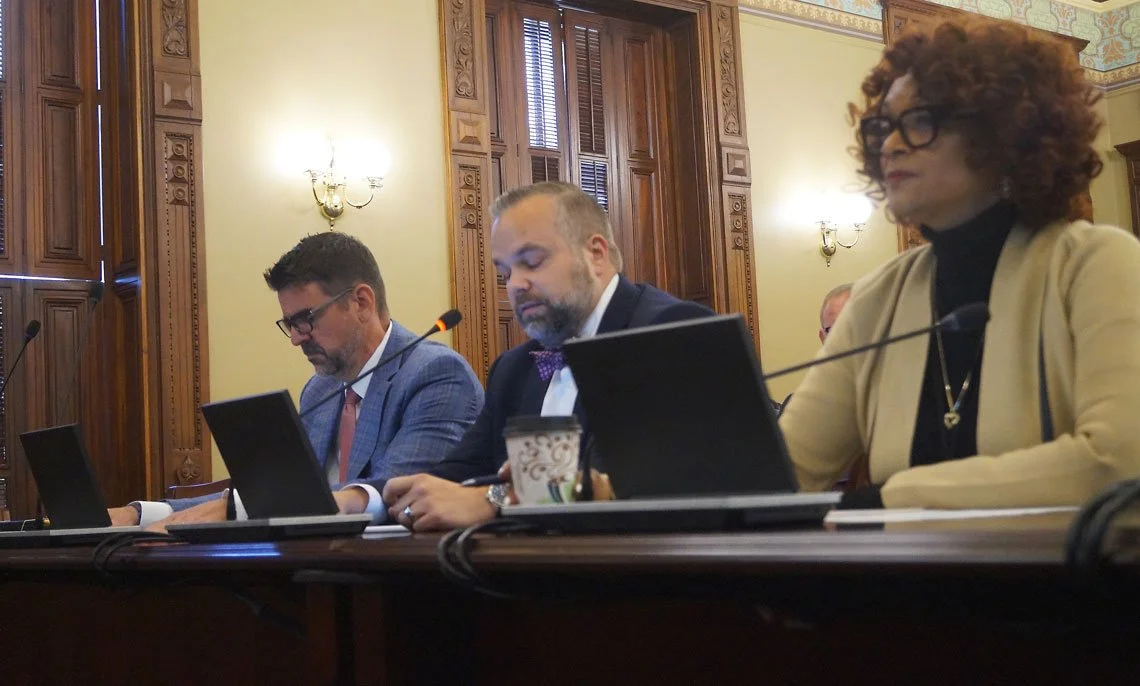
Rep. Camille Lilly, right, testifies before a House committee for passage of a bill calling for an audit of the federal 340B drug pricing program in Illinois. Also testifying were Peter Fotos, left, of Pharmaceutical Research and Manufacturers of America, and John Conrad of the Illinois Biotechnology Industry Organization. (Capitol News Illinois photo by Peter Hancock)

Pritzker’s spring wins come with caveats as BUILD, megaprojects bills stall 

The governor scored wins on junk fees, cellphones and insurance rates

By BRENDEN MOORE
Capitol News Illinois 
bmoore@capitolnewsillinois.com  

Article Summary  

  • As he campaigns for a third term as Illinois’ chief executive and weighs a possible 2028 Democratic presidential bid, Gov. JB Pritzker emerged from the legislative session achieving many but not all the goals he laid out in his State of the State address

  • But the governor was unable to muscle through the most far-reaching elements of his top legislative initiative: Building Up Illinois Developments, or BUILD, and couldn’t land the plane on a megaprojects bill that would have enabled the Chicago Bears to build a new stadium in Arlington Heights.   

  • The high-profile losses overshadowed some big wins, including a ban on junk fees, prohibition on cellphones in the classroom and another round of insurance reform.

This summary was written by the reporters and editors who worked on this story.  

SPRINGFIELD — Over his 7½ years in office, Gov. JB Pritzker has largely gotten his way in the Democratic-supermajority Illinois General Assembly. 

As he campaigns for a third term as Illinois’ chief executive and weighs a possible 2028 Democratic presidential bid, Pritzker emerged from the spring legislative session once again achieving many but not all the goals he laid out in his State of the State address in February. 

But there were some high-profile caveats that underscored the limits of his clout among his fellow Democrats who run the state legislature. 

The governor was unable to muscle through the most far-reaching elements of his top legislative initiative: Building Up Illinois Developments, or BUILD — a comprehensive plan to spur homebuilding and drive down housing costs. 

And he didn’t land the plane on a long-sought megaprojects bill that would have enabled the Chicago Bears to negotiate and lock in a lower property tax payment on a stadium in Arlington Heights. Its failure could result in the Monsters of the Midway hiking across the Indiana state line to a former industrial site near Wolf Lake in Hammond.

Lawmakers also failed to approve a pause Pritzker sought in the state’s data center tax credit, leading the governor to take executive action to freeze the program. 

Asked during a news conference after the session adjourned why some of his high-profile initiatives stalled in the General Assembly this spring, Pritzker argued that major policy wins often take years to materialize.

“I've proposed bills that may not have passed this session, but remember: A whole lot of things, and in fact, I made a list for myself so I could remind you all, a whole lot of things that were important take years to get done,” Pritzker said, proceeding to list his policy wins.

Indeed, many of the governor’s policy achievements this session were multi-year efforts, from granting the state more regulatory power to review homeowners’ and auto insurance rates to bans on junk fees and students’ use of cellphones in the classroom. 

And Pritzker said what’s past will be prologue, promising to keep fighting for BUILD and a solution that results in the Bears building their new stadium in Illinois. 

“Absolutely, I'm going to be campaigning on this,” Pritzker said of BUILD. “So, yes, it's a political issue. I believe that we need to do even more about housing in this state.”

BUILD falters

There was no initiative Pritzker fought harder for this year than BUILD. He promoted the plan on his social media accounts nearly every week, penned op-eds, hosted roundtables and appeared in social media videos with real estate influencers, among several methods. 

His political operation also boosted the “yes in my backyard” plan in a paid advertising campaign on social media platforms, a tactic that highlighted the Pritzker campaign’s belief that it would be good politics on top of good policy.

“Oh no, I mean, are you kidding me?” Pritzker said when asked if BUILD would be an election-year liability for him. “The question is, do you want to elect somebody who's actually for building more housing or somebody who doesn't have any plan at all?”

But the merits of the centerpiece policies of BUILD fell on deaf ears in Springfield.

Perhaps most controversial was a proposed statewide zoning law that would have permitted multi-unit housing by right on nearly all properties zoned for residential use. The aim was to spur the development of more “middle housing” such as two-flats, townhomes and fourplexes. 

The plan also called for the legalization of accessory dwelling units on all land zoned for residential use and establishing statewide timelines for inspections and reviews and allowing third-party inspectors if municipalities miss deadlines.

The plan was supported by the state’s real estate industry but fiercely opposed by the Illinois Municipal League, the organization representing the state’s cities and villages. 

The Illinois AFL-CIO also opposed the proposals, especially the third-party review component. The statewide labor organization viewed it as a “nonstarter” because it would allow work traditionally performed by government employees — often unionized workers — to be outsourced. 

As they poured through hours of testimony on the BUILD plan in hearings this spring, a bipartisan cadre of state lawmakers, many products of municipal government, expressed concerns about the preemption of local control and the one-size-fits-all nature of the proposal. Many said they hoped for a more collaborative approach, including input from local government leaders. 

“I applaud the governor’s office for making an attempt,” said Sen. Cristina Castro, D-Elgin, who chairs the Senate Executive Committee, during a hearing in the waning days of spring session. “And I mean it genuinely because I think there’s a lot of people in this room that want to solve this problem and see a holistic approach to it. But I also feel like we have to work together.”

That said, BUILD wasn’t a total bust. Pritzker secured $250 million in capital funding for grant programs that assist housing developers with sewer, stormwater, utility and other site prep work; fund middle housing development, and provide down payment and closing cost assistance to those who have faced institutional barriers to home ownership. 

It was the least controversial aspect of the program, not touching delicate topics like local zoning control or replacing unionized labor. 

Megaprojects falters

Pritzker’s desire to add a megaprojects mechanism to the state’s economic development toolkit long predates the Bears’ pursuit of a domed stadium in Arlington Heights. He’s often noted that 38 other states have some form of negotiated property tax payment for large developments.

But on the penultimate day of the spring session, Sen. Bill Cunningham, D-Chicago, delivered the bad news: The megaprojects concept, a version of which passed the House in April, did not have enough support to pass the Senate. 

The immediate focus was on the Bears, who announced last week that their board of directors “voted to advance” a stadium development in Hammond, Indiana.

But the governor, a former businessman who’s fashioned himself as the state’s chief marketing officer, warned that Illinois is “behind the curve” on the broader issue.

“They’ve always been negotiating about property taxes all across the country,” Pritzker said of large developments. “It’s just in Illinois where we have had a disorganized, dysfunctional endeavor forever, and now we’re trying to organize it and make it work, so that businesses will want to come.”

But the prospects of the tool being resurrected appear grim. Undoubtedly, there were Bears-specific concerns with the bill. But the statewide deployment of the tool, the potential impact it would have on revenue to local governments, and the property tax burden on surrounding residents and businesses may have done more to sink the bill.

And unlike BUILD, Pritzker took a more hands-off approach to megaprojects, putting together the “scaffolding of a deal” as he told reporters in April. But, a few weeks later in the waning days of the spring session, Pritzker said the bill was “in the legislature’s hands.”

In their hands, it died. Cunningham said the common sentiment in the Senate was that the megaprojects tool “further breaks an already broken property tax system.”

On the flip side of the coin, Sen. Seth Lewis, R-Bartlett, said Pritzker “did not show the Bears organization any sense of urgency or desire that lawmakers want to keep one of this state’s top economic engines in Illinois.”

“During this process we saw a complete lack of leadership by the governor, and if the Bears do indeed move to Indiana, it is a devastating loss, both economically and emotionally, that the Governor will own,” he said. 

Other losses

Beyond BUILD and megaprojects, Pritzker also came up short once again in his effort to allow some community colleges to offer four-year baccalaureate degrees.

Lawmakers also rejected Pritzker’s proposal to reduce the percentage of income taxes local governments receive from the Local Government Distributive Fund flat. Instead, the share remains the same and, because of increased income tax receipts, LGDF will increase this budget year.

And lawmakers did not take up legislation reforming the state’s data center policies despite Pritzker’s urging. A specific proposal, House Bill 5513, known as the POWER Act, would have required data centers to pay for and supply their own renewable energy, track and report water usage and enter community benefits agreements with municipalities.  

But the advocates behind the bill accused the governor’s office of failing to engage on the issue, which never received a floor vote.

As a result, Pritzker unilaterally directed the state’s Department of Commerce and Economic Opportunity to pause all new state tax incentives for data centers “while we continue working with the General Assembly and stakeholders on a comprehensive framework that protects affordability, safeguards our natural resources, and ensures responsible growth across Illinois.”

From 2020-24, there were 27 data centers that benefited by more than $983 million in promised tax relief from these incentives, according to a state report.

“These complex legislative issues take time, and I do think we're going to eventually get there,” said House Speaker Emanuel “Chris” Welch, D-Hillside. “And when we get there, it's going to be done right.”

Legislative wins

But Pritzker didn’t strike out this legislative session. In fact, the governor got much of what he asked for. 

A two-year effort to ban junk fees — the charges added to the total cost of ticketed events, hotels, tech and other goods and services — finally bore fruit this session. 

The bill, which would make it unlawful for any business to advertise, display or offer a price for goods or services that do not include all mandatory fees or surcharges before taxes, now just needs Pritzker’s signature.

And after falling short last year on one of the centerpieces of his 2025 State of the State address, Pritzker last month secured legislative approval of a ban on students using cellphones during class time.

And after stalling in last year’s fall session, legislation giving the state’s Department of Insurance authority to regulate premiums for homeowners and auto insurance got the green light. Pritzker first called for the homeowners insurance bill last summer after Bloomington-based State Farm Insurance, one of the largest homeowners' carriers in the nation, announced a 27.2% average rate increase across the state.

The governor was also successful in pushing a pair of social media initiatives. One would impose a tax on social media companies based on the number of users the platform has in Illinois. Another would require social media companies to verify a child’s age on the device’s operating system and use stricter features for minors like limiting location-sharing and nighttime notifications.

The state’s fiscal year 2027 spending plan also largely matches the blueprint Pritzker outlined in February, including raising revenue through the social media tax and lowering the cap on corporate net operating loss deductions for business. But it avoided incorporating more far-reaching revenue proposals pitched by progressives. 

Programs championed by Pritzker, including the Dolly Parton Imagination Library and the Illinois Medical Debt Relief Program, also continued to be funded. 

Lawmakers also authorized the two-year extension of the state’s pension buyout program. Though created during Gov. Bruce Rauner’s tenure, Pritzker has supported its extension three times now. Thus far, about $2 billion buyout payments have resulted in about a $2.6 billion reduction in the state’s long-term pension liabilities. 

Capitol News Illinois is a nonprofit, nonpartisan news service that distributes state government coverage to hundreds of news outlets statewide. It is funded primarily by the Illinois Press Foundation and the Robert R. McCormick Foundation.
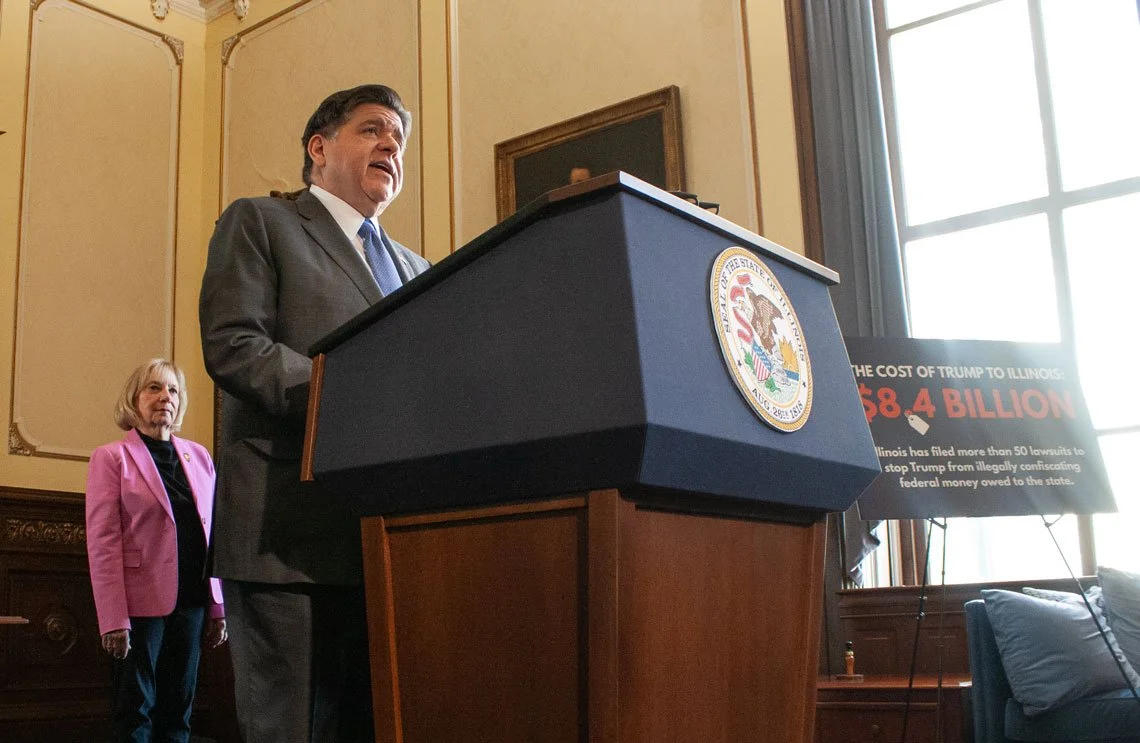
Flanked by state legislative leaders, Gov. JB Pritzker highlights accomplishment from the spring session. (Capitol News Illinois photo by Jenna Schweikert)