Ex-residents of apartment building targeted in massive immigration raid seek millions in damages

Feds claimed Venezuelan gang had ‘taken over’ Chicago complex

By HANNAH MEISEL
Capitol News Illinois
hmeisel@capitolnewsillinois.com 

Article Summary 

  • Immigrant rights groups have filed federal tort claims against the U.S. Department of Homeland Security over the Sept. 30, 2025, immigration raid on an apartment complex in Chicago’s South Shore neighborhood.

  • Roughly 300 immigration agents stormed the building in a middle-of-the-night raid in the early weeks of “Operation Midway Blitz” this past fall, ultimately arresting 37 people allegedly without warrants.

  • The 18 former residents who filed claims this week are seeking $5 million each in damages for agents’ alleged actions, including marching them outside in various states of undress and restraining them with zip ties. Those zip-tied outside the building for hours included undocumented immigrants and U.S. citizens alike — allegedly including children, though DHS denies that.

  • After the raid, the building’s already-poor condition deteriorated further, leaving residents essentially homeless when a Cook County judge deemed the apartment complex uninhabitable in November.

This summary was written by the reporters and editors who worked on this story. 

CHICAGO — In a series of federal tort claims filed this week, immigrant rights groups took the first step in suing the Trump administration on behalf of 18 former residents of a Chicago apartment building that became the site of a surreal middle-of-the-night military-style immigration raid in September.

The raid, which began after midnight on Sept. 30, 2025, unfolded in dramatic fashion as immigration agents rappelled down from a Black Hawk helicopter onto the building’s roof in Chicago’s South Shore neighborhood. Some of the roughly 300 total agents who orchestrated the raid deployed flashbang grenades and broke down doors without warrants, allegedly holding residents at gunpoint or using other types of force to march them outside in their pajamas or various states of undress.

By dawn, dozens of residents — children and adults, undocumented immigrants and U.S. citizens alike — shivered in the parking lot, their wrists and, in some cases, ankles restrained with zip ties. The Department of Homeland Security denies children were “handcuffed or restrained” during the raid but acknowledged some juveniles were taken into custody “for their own safety” to ensure they “were not being trafficked, abused, or otherwise exploited.”

The former residents, which include two U.S. citizens, are seeking millions of dollars in damages for federal agents’ actions during the raid. The legal filings, made public on Wednesday, describe residents’ screams in both fear and pain — including one man who suffered multiple dog bites from a K9 agent. The filings also detailed residents’ embarrassment at being filmed by a professional camera crew despite not being fully dressed. The footage would ultimately become highly produced promotional video for DHS used on social media.

“The U.S. government has no right to inflict this level of emotional distress and property damage and then just walk away — seeking compensatory damages is a necessary step toward righting the wrong these members of our communities, including families with young children, experienced that night,” said Allena Martin, senior litigation attorney at the Chicago-based National Immigrant Justice Center.

Read more: The real story behind the midnight immigration raid on a Chicago apartment building | ‘I lost everything’: Venezuelans were rounded up in a dramatic midnight raid but never charged with a crime

The chaotic night, just a few weeks into “Operation Midway Blitz,” marked a major flashpoint in the mass deportation campaign. Top White House immigration policy advisor Stephen Miller justified the raid claiming the building was a “Tren de Aragua complex filled with TdA terrorists,” referring to the violent Venezuelan gang. 

But not one of the 37 residents arrested in the raid has been charged with a crime, despite the Trump administration’s claims that two of the arrestees were “confirmed” members of Tren de Aragua.

Instead, the 18 residents who filed claims this week — one of whom was detained outside the building a week prior to the raid — claim they and their neighbors were “targeted based on race and ethnicity.” 

In the aftermath, many of the 37 people arrested remained in immigration detention for weeks or months. A number of them have been deported or have asked for voluntary departure.

In response to a request for comment, DHS sent the same statement it’s issued for months, saying the raid “was performed in full compliance of the law,” and touting the arrests of immigrants with criminal records. Two of those arrested, including a U.S. citizen, allegedly had active warrants out for them.

In addition to the NIJC, three other major immigrant rights groups are behind the effort, including the Mexican American Legal Defense and Educational Fund, the University of Chicago Immigrants’ Rights Clinic and the Chicago-based MacArthur Justice Center.


“We should not live in a country where the federal government can use violations of the Constitution as propaganda and get away with it,” Jonathan Manes, senior counsel at MacArthur Justice Center, said. “This raid was a nightmare turned into reality. It put federal agents’ abuse of power on full display while leaving the Chicago community traumatized.”

A traumatic night

Though civilians can sue state and local law enforcement officers for alleged civil rights violations, federal law enforcement officers are exempt. Instead, those who believe they were harmed by federal agents or other employees can file complaints under the Federal Tort Claims Act, which allows for compensation for death, injury, property damage or emotional distress. 

The 18 former residents are seeking $5 million each, plus property damages.

The federal government has six months to respond or settle a claim within six months. If an agency does neither — or denies a tort claim — filers can then sue in federal court, where individual officers can be deposed and internal government records subpoenaed.

The claims name DHS and subsidiary agencies U.S. Immigration and Customs Enforcement, or ICE, U.S. Customs and Border Protection and U.S. Border Patrol. It also names the FBI and the Bureau of Alcohol, Tobacco, and Firearms, both of which fall under the U.S. Department of Justice.

The legal filings paint a picture of how agents stormed the 130-unit building shortly before 1 a.m. on Tuesday, Sept. 30. The account of one man, Johandry José Andrades Jiménez, describes how his wife woke him up after hearing helicopters outside and other noises from within the building. Within minutes, agents were outside their unit, yelling for them to “Open the door! Get out! Get out!” according to the filing.

When Andrades Jiménez did not open the door, agents allegedly hit it forcefully enough for them to breach the apartment. Four “heavily armed” agents entered and “pointed their weapons” at him.

“The agents ... ordered Mr. Andrades Jiménez to get on the floor ‘or I’ll kill you,’” the filing states.  “Agents struck Mr. Andrades Jiménez in the head with a rifle and threw him to the floor. They did this in front of his wife and children, who were crying.”

He was then zip-tied and asked whether he was a member of Tren de Aragua, which he denied. 

Still shirtless, he was eventually forced into a van with 15 other male residents who’d been arrested and taken to the ICE processing facility in Chicago's near-western suburb of Broadview. There, he was allegedly held in crowded conditions and “deprived of adequate basic necessities, including water.” 

Read more: Judge orders ICE to clean up conditions in Broadview facility that’s ‘become a prison’ | Judge calls alleged conditions at Broadview ICE facility ‘unnecessarily cruel’ after day of testimony

Over the next two months, he was transferred to several ICE facilities in multiple states and eventually deported in December, according to reporting from ProPublica, separating him from his wife and three daughters, the youngest of whom was six months old at the time of the raid.  

Other claimants’ filings, the majority of which are for members of three separate families, described children’s reactions to the raid. In one family’s account, the father feared agents would break down their door and hurt their four children, so instead he opened the door. When he did, he saw “agents pointing guns into his apartment” right at his family. The couple “huddled with their children as the children screamed and cried in terror,” according to the filing.

Agents restrained the father with zip ties and then yelled at the family in English, pushing all six of them out of their apartment in their pajamas, with the father and mother held at gunpoint, according to the filing. As they walked through the hall, “the family saw agents break down their neighbors' doors. children became increasingly distressed and started crying even harder than they already were.”

Once outside, agents lined up the family with dozens of other residents and took pictures of each person in line. When agents separated the father, their children became even more upset.

“Her children were crying and screaming, except for D.J.D.L., who was having a panic attack — he could not speak or move,” according to the mother’s claim, referring to her 9-year-old son by his initials.

Landlord coordination

In January, the Illinois Department of Human Rights opened an investigation into the building’s former landlords, who coordinated with DHS prior to the raid claiming the complex was becoming overrun by Tren de Aragua. According to February legal filings that cite two arrest records from the raid, agents attested to having received “owner/manager’s verbal and written consent.”

Arrest records also stated the raid was planned “based on intelligence that there were illegal aliens unlawfully occupying apartments.” The Department of Human Rights’ official housing discrimination charge alleges building management “unlawfully discriminated against their tenants” both by neglecting maintenance requests and then tipping off DHS.

Read more: State investigating landlord of Chicago apartments raided by immigration agents

In addition to many longtime residents, most of whom were Black U.S. citizens, the building was home to many Venezuelan migrants who arrived in Chicago in the latter half of the Biden administration. Republican governors sent thousands of migrants in busses from states like Texas to “sanctuary” cities run by Democrats, including Chicago.

Some living in the complex were squatters, and reporting by ProPublica found there had been drug dealing and prostitution in the building. In June, one Venezuelan resident allegedly executed his neighbor, another Venezuelan national, after he and two others forced their way into the victim’s apartment. 

A recently published report by a state commission charged with memorializing alleged abuses during Operation Midway Blitz cited an internal CBP report on the raid that pointed to federal law enforcement intelligence as the basis for the operation. According to the report, the feds had intelligence “indicating that TdA (Tren de Aragua) members and other suspected criminals had ‘seized control of approximately 30 vacant apartments’ in the building and that ATF had conducted several undercover operations to purchase illicit firearms in the apartment complex.”

Read more: Accountability Commission refers federal agents for investigation, possible prosecution for conduct last fall | State commission finds agent abuses were ‘greenlit by Washington’ for Operation Midway Blitz

The building, which had been deteriorating for years according to reporting by the Chicago Tribune and Block Club Chicago, was left in shambles after the raid. In November, remaining residents were forced out of the building after a Cook County judge deemed it uninhabitable and ordered the property vacated for safety reasons. 

The state Department of Human Rights’ January filing alleges building management “blamed Venezuelan tenants for their own (management's) failure to provide needed locks and security service, as well as other needed maintenance and repairs, and perpetuated stereotypes” so that all Venezuelan nationals living in the building would be associated with Tren de Aragua. 

Capitol News Illinois is a nonprofit, nonpartisan news service that distributes state government coverage to hundreds of news outlets statewide. It is funded primarily by the Illinois Press Foundation and the Robert R. McCormick Foundation.


Federal drug discount expansion proposal may cost Illinois millions, agency head says

Memo details how expanding 340B program would impact private health plans and state employee insurance

By PETER HANCOCK
Capitol News Illinois
phancock@capitolnewsillinois.com

Story Summary

  •  The 340B Drug Pricing Plan is intended to give safety-net clinics and rural hospital access to discounted drugs.

  • Pending legislation to expand those providers’ access to those discounted drugs has sparked strong lobbying campaigns for and against the proposal.

  • A memo obtained by CNI details the potential impact passage of the bill would have on group health insurance plans, including Illinois’ state employee health plan.

  • But groups representing the healthcare organizations who would benefit from HB 2371 questioned the memo and called attention to the expensive lobbying campaign aimed at killing it.

This summary was written by the reporters and editors who worked on this story.

Editor’s note: This story was updated with further comment from health care groups.

SPRINGFIELD — A proposal that would expand access to a federal program that discounts the price of prescription drugs could end up costing Illinois employers an additional $89 million a year, including more than $12 million a year for the state of Illinois itself.

That’s according to a memo, dated May 12, from the Department of Central Management Services, the state agency that administers the state employee health plan, to Rep. Travis Weaver, R-Edwards, who requested the information following a meeting of the legislative Commission on Government Forecasting and Accountability, or COGFA.

Capitol News Illinois obtained a copy of the memo through a third party. But groups representing healthcare organizations quickly disputed its findings.

The proposal, contained in a Senate amendment to House Bill 2371, is intended to give Federally Qualified Health Centers, Ryan White AIDS clinics, safety-net hospitals and other healthcare providers that serve large volumes of Medicaid patients greater access to what’s known as the 340B Drug Pricing Program.

What is the 340B program?

That’s a federal program, established in 1992, that requires drug manufacturers to provide drugs to those facilities at substantially discounted prices. Those facilities then mark the price back up when they dispense or prescribe the drugs to their patients. That spread between their acquisition cost and the price they charge becomes an indirect revenue stream that helps feed their bottom line.

The bill pending in the General Assembly, which awaits a final vote in the House, would prohibit drug companies from restricting the ability of those hospitals and clinics to acquire those discounted drugs through contract pharmacies.

That’s something many clinics and safety-net hospitals say they’ve experienced in recent years, limiting their ability to acquire drugs at the discounted prices.

The bill would also prohibit drug manufacturers from requiring 340B-qualified hospitals and clinics to report ingredient cost or pricing data, to report how they manage inventory of 340B drugs or to submit any data or information not required by state or federal law as a condition of participating in the 340B program.

The bill has generated enormous lobbying campaigns on both sides of the issue, shedding light on the complexities of how prescription drugs are priced in the United States and how a seemingly small change in one area can have far-reaching unintended consequences.

During an April 14 COGFA hearing, Shawn Gremminger, president and CEO of the National Alliance of Healthcare Purchaser Coalitions, explained how the 340B program has grown beyond what anyone expected when it was created.

“It was a program designed to be so small, they didn't bother giving it a name,” he said. “Literally, it's called 340B because it just sits at section 340B of the Public Health Service Act.”

Over the years, he said, as Medicaid programs expanded, so too did the number of hospitals that were able to qualify for the 340B drug program. And as those hospitals became eligible, Gremminger said, all of their affiliated clinics and medical practices became eligible, too.

Today, Gremminger said, the 340B program is the second-largest drug purchasing program in the country, behind Medicare Part D, and growing by an average 15% to 20% each year.

In Minnesota, he said, one hospital operated by the University of Minnesota earns more money through the 340B program than all of the state's rural hospitals, community health centers and Ryan White AIDS clinics combined.

But groups representing the healthcare organizations who would benefit from HB 2371 questioned the memo and called attention to the expensive lobbying campaign aimed at killing it.

“The memo released this week by CMS simply regurgitated Big Pharma’s testimony from the April 14th COGFA hearing,” Illinois Health and Hospital Association president and CEO AJ Wilhelmi said in a statement. “The footnotes in the memo clearly indicate that the research referenced in the memo was funded by Big Pharma. So, unsurprisingly, Big Pharma is trying to misrepresent the government’s position on the legislation.”

Groups including the Illinois Council of Health-System Pharmacists and the Illinois Pharmacists Association say Illinois’ legislation “preserves the original intent” of the 340B program, rather than expands it.

Impact on other health plans

The problem for many health insurance plans like Illinois’ State Employees Group Insurance Program, or SEGIP, is that when their members go to a 340B-qualifying hospital or clinic, those plans pay the full marked-up price for any drugs their members receive. But the plans no longer receive any manufacturer’s rebate for the drugs they purchase, thus raising the net cost of prescription drugs for patients enrolled in those health plans.

“Effectively, our rebates are crowded out by the 340B rebate,” Gremminger said.

“The 340B program was created by Congress to help low-income and uninsured patients access medicines, but it is difficult for Illinois to confirm that its patients are benefiting as intended or to understand the impact on taxpayers and employers,” Will May of the pharmaceutical trade organization PhRMA said in a statement.

Following that meeting, Weaver requested additional information from CMS, including an estimate of the fiscal impact passage of HB 2371 would have on the state employee health plan.

“Independent analysis estimates that the current 340B program costs Illinois employers approximately $224 million annually, with the proposed legislation expected to increase those costs by an additional $89 million,” CMS said in the memo. “For SEGIP specifically, lost rebates are estimated at $31 million annually, with an additional projected impact of $12.4 million under the proposed legislation.”

The memo cites an analysis published in 2024 by the health industry research and technology firm IQVIA. The health care groups, however, say that study was funded by the National Pharmaceutical Council and thus provides untrustworthy data.

“The focus of this conversation should remain on the Illinois patients and providers who depend on the 340B program, not on the financial interests of the pharmaceutical industry,” Ollie Idowu, President & CEO, Illinois Primary Health Care Association, said in a statement.

Pending legislation

As debate over HB 2371 continues, lawmakers will be asked to weigh the estimated cost to employers, including the state of Illinois itself, with the cost currently being borne by community health clinics and other providers who were originally intended to benefit from the program.

Cyrus Winnett, executive director of the Illinois Primary Health Care Association, a group that represents Federally Qualified Health Centers, said during an interview in March that under current law, drug manufacturers have been able to restrict the number of pharmacies or suppliers where clinics can acquire 340B-discounted drugs, thus limiting their ability to reap the financial benefit.

“What pharmaceutical manufacturers began doing was limiting the distribution of these drugs to a single location,” he said. “And when I say single location, I don’t mean Walgreens chain or CVS or a local independent. I mean one physical location, which for our organizations and their patients that have wide service areas, that’s extremely limiting.”

The proposed legislation originated in the Senate as an amendment to a bill that had previously passed the House. That amendment passed the Senate on May 29, 2025, by a vote of 55-0. It then went back to the House for a vote to concur in the Seate amendment, but so far the House has not taken further action.

Sen. Dave Koehler, D-Peoria, who sponsored the amendment last year, said during the April 14 COGFA hearing that the current system of pricing and delivering drugs in the healthcare marketplace is imperfect, but that lawmakers can only work with the tools they have.

“Is this the best way to cover rural hospitals or FQHCs? No, it's not,” he said. “But you know what? Congress gives us the tools that we have to use. And when we have rural hospitals in our area, or FQHCs, or poor people that are now being kicked off of Medicaid, we have to respond to our constituents.”

Capitol News Illinois is a nonprofit, nonpartisan news service that distributes state government coverage to hundreds of news outlets statewide. It is funded primarily by the Illinois Press Foundation and the Robert R. McCormick Foundation. 


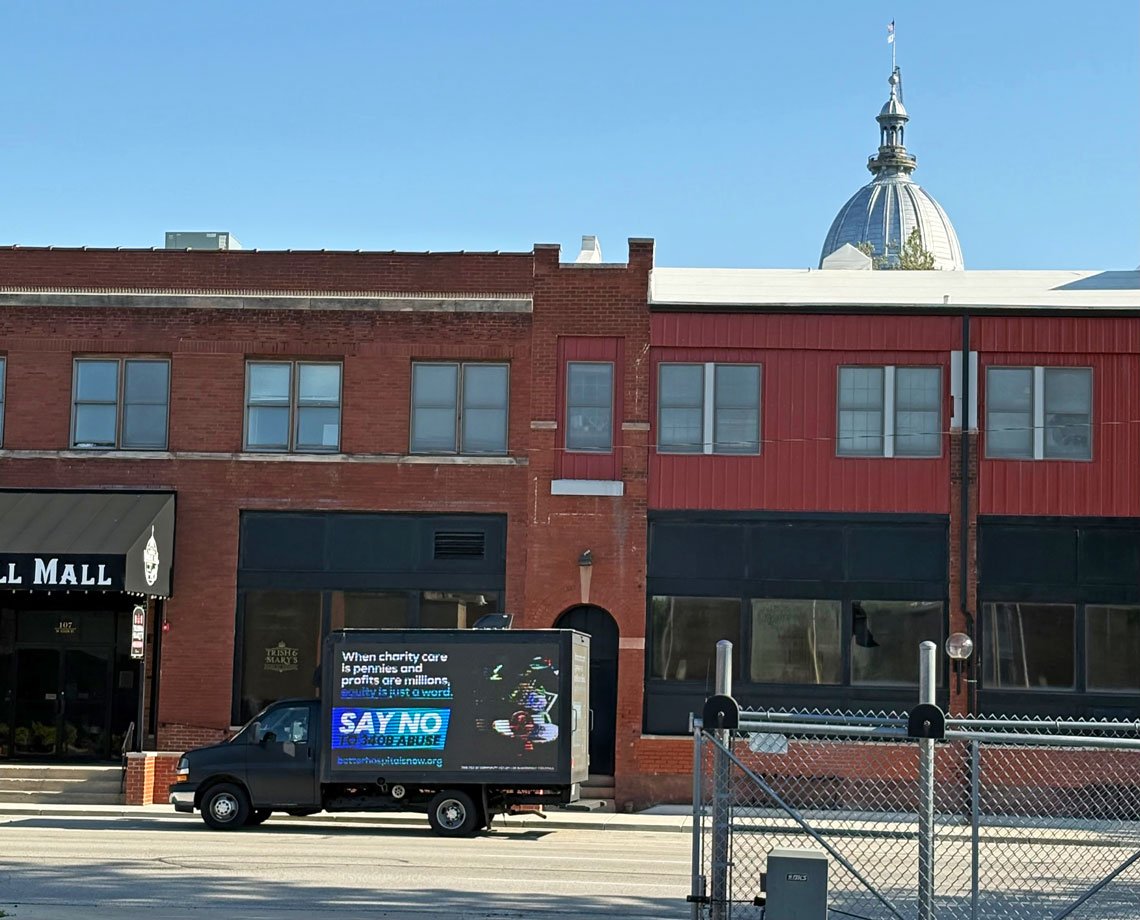
A billboard truck urges lawmakers to “say no to 340B abuse” as it makes its rounds in the neighborhood surrounding the Illinois State Capitol. (Capitol News Illinois photo by Jerry Nowicki)

Tech giants sued over ‘stealing’ voices of well-known journalists, voice actors to train AI

The 9 Class actions filed under Illinois’ strongest-in-nation biometric data privacy law

By HANNAH MEISEL
Capitol News Illinois
hmeisel@capitolnewsillinois.com 

Article Summary 

  • A group of well-known Chicago journalists, podcasters and voice actors are behind nine class-action lawsuits filed this week alleging major tech companies used their voices without their permission in order to train AI products.

  • The lawsuits represent a new area of focus for Illinois’ strongest-in-the-nation biometric data privacy law, which has spawned thousands of lawsuits in the last decade or so. The litigation has netted Illinoisans millions of dollars in settlements, mostly over the collection of employees’ fingerprints in timeclock technology.

  • Plaintiffs include locally famous broadcast journalists Carol Marin and Phil Rogers, both retired from Chicago’s NBC 5 news station, along with prolific audiobook narrators and podcasters.

This summary was written by the reporters and editors who worked on this story. 

CHICAGO — Over hundreds of pages in legal filings this week, a group of well-known Chicago-based journalists, podcasters and voice actors accused tech giants like Google, Amazon, Apple, Microsoft and others of “stealing” their voices to train Artificial intelligence.

The nine class action lawsuits, filed in Chicago’s federal court between Monday and Wednesday, represent a new frontier for Illinois’ strongest-in-the-nation biometric data privacy law. In the last decade or so, the state’s Biometric Information Privacy Act, or BIPA, has spawned thousands of lawsuits against companies alleged to have collected and stored biometric data from employees and customers without proper notice or consent.

The vast majority of that litigation — which has paid out millions of dollars to Illinoisans mostly via class-action settlements — has been over employee fingerprints collected by timeclock technology, though Facebook’s $650 million settlement in 2020 was with users over facial recognition.

Read more: Court rulings supercharge Illinois’ strongest-in-nation biometric privacy law

But as companies adopted policies to comply with BIPA and the pool of plaintiffs began to dry up, technology has rapidly evolved. Smart security cameras, safety cameras focused on workplaces, online “try-on” technology that allows users to envision, for example, what a certain pair of glasses would look like on their face, have become popular targets of BIPA litigation.

And with the breakneck speed of AI development, companies focused on building that technology could prove to be the next major focus for BIPA lawyers.

In the cases filed this week, locally famous broadcast journalists like Carol Marin and Phil Rogers, both retired from Chicago’s NBC 5 news station, along with podcast hosts and voice actors allege the companies ingested recordings of their voices in order to train their AI “foundational voice models.”

“What we are seeing is an illegal and unethical exploitation of talent on a massive scale, and one of the largest violations of biometric privacy ever committed,” Ross Kimbarovsky, an attorney with Chicago-based law firm Loevy & Loevy, said Thursday in a statement announcing the lawsuits

Kimbarovsky accused the companies of disregarding BIPA despite knowing “exactly how to build consent systems that comply with BIPA.” 

“They’ve built a billion-dollar industry on stolen voices because they thought no one would make them pay for it,” he said.

Other plaintiffs include journalist Robin Amer, audiobook narrators and voice actors Lindsay Dorcus and Victoria Nassif, and podcasters Yohance Lacour and Alison Flowers — all Illinois residents.

Tech heavyweights named

The lawsuits name Amazon, Adobe, Google and its parent company Alphabet, Apple, Microsoft and Samsung, as well as Facebook parent company Meta, text-to-speech AI company ElevenLabs, and advanced computer chip maker NVIDIA. None of the companies responded to a request for comment on the lawsuits.

BIPA defenders point out that biometric information is unique, and losing control of it can be irrevocable. If an individual’s Social Security number is stolen, for example, it may be a nuisance to get a new one but not impossible. But there’s no remedy for a stolen fingerprint, retinal, voice or face scan, they argue. Under the law, companies deploying this technology must obtain written consent before biometric information is collected.

But the lawsuits allege the companies never gave anyone a chance to give consent for their voiceprints to be ingested into their AI training models.

“None of them was told that their voice was being used to train Amazon’s commercial voice AI,” the lawsuit against Amazon said. “None of them was asked. None of them consented.”

A voiceprint “is a digital fingerprint of the human voice,” according to the complaints, which go on to characterize it as “a mathematical representation” of someone’s voice, including pitch, timbre and resonance determined by a speaker’s physiology. A voice is also defined by speech patterns “developed over a lifetime,” including accent, cadence and articulation. 

“Like a fingerprint, a voiceprint identifies the individual and cannot be changed,” the lawsuits say. “A Social Security number can be reissued. ... A person whose voiceprint has been taken cannot recover it by altering their voice — the biological and behavioral patterns that produced the voiceprint are the same ones used to speak every day.”

Voiceprint-focused lawsuits may very well become fertile ground for BIPA, especially if judges weighing the complaints filed this week agree the cases should move forward. Industry experts believe the cases could hinge on whether the voiceprints are identifiable.

In early 2023, upscale grocer Whole Foods — which was acquired by Amazon in 2017 — settled a case brought by 330 warehouse employees who alleged the company collected their voiceprints without permission and used them to verify workers' identities. The $300,000 payout was the first BIPA settlement resulting from voiceprint-focused litigation.

Capitol News Illinois is a nonprofit, nonpartisan news service that distributes state government coverage to hundreds of news outlets statewide. It is funded primarily by the Illinois Press Foundation and the Robert R. McCormick Foundation.
The Dirksen Federal Courthouse in downtown Chicago. (Capitol News Illinois photo by Jerry Nowicki)

Tell City Couple Arrested for Dealing Meth and Child Neglect

Perry County - On May 13, 2026, Master Trooper Trey Lytton of the Indiana State Police Drug Enforcement Section was contacted by the Noblesville Police Department for assistance in locating Zachary Duncan, who had a active warrant since September 2024.

On May 14, 2026, Master Trooper Lytton and Trooper Connor Giesler developed information indicating Duncan may be in the Tell City, Indiana area. Troopers subsequently observed Duncan leaving a residence in a vehicle, and contacted Lieutenant Detective Bryce Hammack of the Tell City Police Department to assist with a traffic stop.

Officers conducted the stop and identified the driver as Duncan, who was taken into custody without incidence. During the arrest, officers observed used hypodermic needles inside the vehicle, as well as a juvenile passenger seated in the backseat.

Lieutenant Trevor Vaal of the Perry County Sheriff’s Office and his K9 partner responded to the scene and conducted a free-air sniff of the vehicle. The K9 alerted to the presence of illegal narcotics.

During the investigation, troopers developed information indicating additional drug-related activity may have been occurring at the residence Duncan had exited prior to the traffic stop. Officers applied for and obtained a search warrant through the Perry County Circuit Court for the residence, which was also occupied by Haley Burton.

During the execution of the search warrant, officers located approximately 850 hypodermic needles. Many of the needles contained suspected methamphetamine, blood, and several were used with exposed needles. Officers also recovered approximately 15 grams of suspected methamphetamine, drug paraphernalia, and additional items commonly associated with the dealing of narcotics.

Officers determined Duncan and Burton were the parents of the juvenile child residing at the home. The Indiana Department of Child Services was notified.
Duncan and Burden were transported to the Perry County Jail without incident.

Arrested and Preliminary Charges:
Haley A. Burton, 29, Tell City, IN.

  • Dealing Methamphetamine (Level 2 Felony)

  • Possession of Methamphetamine (Level 4 Felony)

  • Neglect of a Dependent (Level 6 Felony)

  • Possession of a Hypodermic Syringe (Level 6 Felony)

  • Possession of a Controlled Substance (Class A Misdemeanor)

  • Possession of Paraphernalia (Class C Misdemeanor)


Zachary D. Duncan, 30, Tell City, IN.

  • Dealing Methamphetamine (Level 2 Felony)

  • Possession of Methamphetamine (Level 4 Felony)

  • Neglect of a Dependent (Level 6 Felony)

  • Possession of a Hypodermic Syringe (Level 6 Felony)

  • Possession of a Controlled Substance (Class A Misdemeanor)

  • Possession of Paraphernalia (Class C Misdemeanor)

Duncan is also being held on an active Hamilton County warrant for:

  • Possession of Methamphetamine (Level 4 Felony)

  • Causing Serious Bodily Injury While Operating a Vehicle with a Schedule I or II Controlled Substance (Level 4 Felony)

  • Possession of a Hypodermic Syringe (Level 6 Felony)

  • Operating a Vehicle with a Schedule I or II Controlled Substance or its Metabolite (Class A Misdemeanor)


This investigation was conducted by the Indiana State Police Drug Enforcement Section and was assisted by the Tell City Police Department, Perry County Sheriff’s Office, and the Indiana Department of Child Services.


Road closure planned for State Road 64 in Gibson County


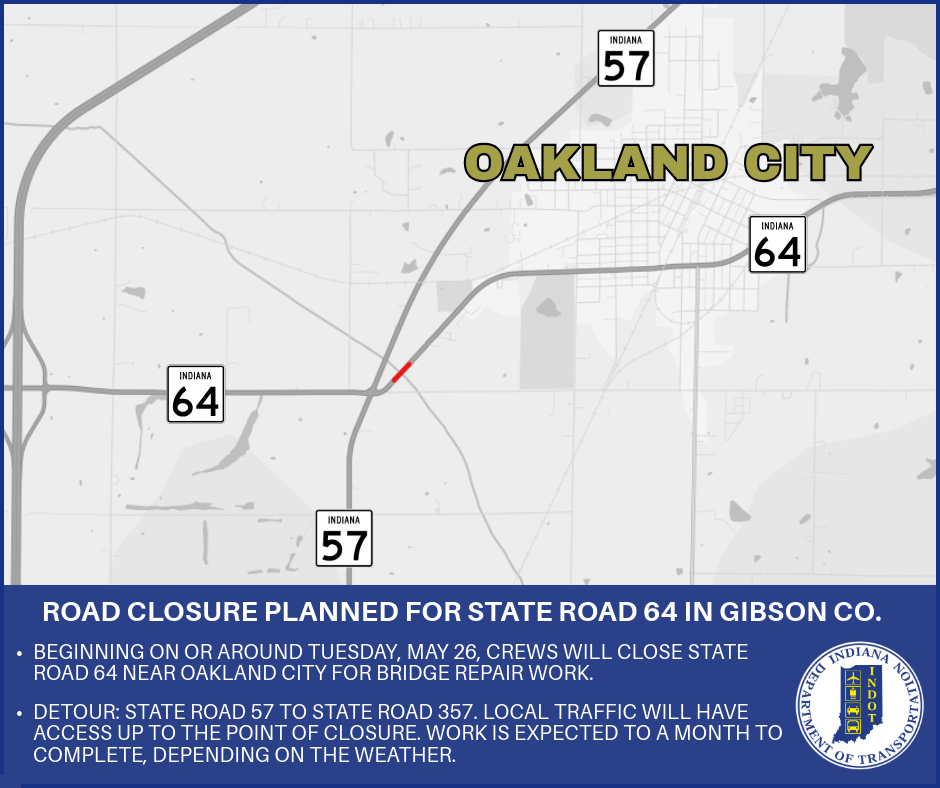
GIBSON COUNTY Ind. – The Indiana Department of Transportation announces a road closure for State Road 64 in Gibson County.

Beginning on or around Tuesday, May 26, crews will close State Road 64 near Oakland City. This closure will occur just east of the intersection of State Road 57, over East Fork Keg Creek.

This road closure will allow for bridge repair work. Work is expected to take a month to complete, depending on the weather.

The official detour for this project is State Road 57 to State Road 357. Local traffic will have access up to the point of closure. INDOT reminds drivers to slow down, use extra caution, and avoid distractions when traveling in and near work zones.

City Taking Action With Two Properties

At Monday afternoon’s Mount Carmel City Council meeting, City Clerk Ryan Turner updated council members on two city-owned properties targeted for cleanup and possible redevelopment.

Turner said the city plans to move forward with selling property at 115 North Chestnut. The city purchased the property several years ago and demolished a house there that had become an eyesore. Turner noted the vacant lot remains on the city’s books and is currently only being maintained through mowing.

Turner said he plans to prepare an ordinance for the next council meeting that would allow the property to be placed on the market.

He also reported the city recently purchased another dilapidated property at 114 North Market Street for approximately 900 dollars after it went to a tax sale. Turner said the structure, located near the ball diamond, had previously suffered fire damage and has been a concern for years.

Mayor Joe Judge noted the Market Street property backs up to the North Chestnut lot.

Turner said purchasing the property directly helped the city avoid legal fees and court proceedings, and demolition work could begin soon as the city continues efforts to clean up blighted properties.

Departure Leaves Vacancy On Health Board

A longtime member of the Wabash County Board of Health is stepping down.

Cindy Bishop announced during Wednesday’s Board of Health meeting that she will be leaving the board after more than 15 years of service. Bishop said she plans to travel more in the future and felt it would not be fair to remain on the board if she could not regularly attend meetings.

Her current term is set to expire June 30th.

No replacement was appointed Wednesday, but Health Department Administrator Judy Wissel said the search for a new board member is already underway. Interested individuals can contact the Wabash County Health Department for an application.

Any recommendation made by the Board of Health must be ratified by the Wabash County Commissioners, who in past cases have sometimes selected a different appointee.

Also during Wednesday’s meeting, two current members, Dr. Larry Jennings and Mark Brines, agreed to serve another three-year term on the board.

The board also approved its officer slate for the upcoming year beginning July 1st. Dr. Bryce Miller will serve as board president, current president Theresa Marcotte will become president-elect, and Marcia Hall will continue as board secretary.

Pool Project Begins To Show Progress

Mount Carmel’s aquatic center project continues to move forward, with visible progress now taking shape at the site.

During Friday’s “Ask the Mayor” segment on WSJD, Mayor Joe Judge said crews have poured the entrances and are currently working on drainage. He also noted that many of the key components needed for construction have already been delivered.

Judge says work on the bathhouse could begin within the next week or two.

As for the long-awaited state permitting, Judge reported the city has received partial approval, with full approval expected either Friday or early this week. He says the city has now met all Illinois Department of Public Health requirements after recent discussions helped clarify remaining issues.

Among the final concerns were items like a concession stand window and a deck drain, both of which have now been resolved.

Judge also expressed frustration with the state’s process, noting hundreds of pool projects submitted last fall are still awaiting full approval.

An additional update came during Monday afternoon’s Mount Carmel City Council meeting, where Mayor Judge announced the city has now received full approval from the state to move forward with construction.

Judge also said groundwork at the pool site has officially begun, with crews now using heavy equipment to excavate the large pool area. He noted the project is beginning to progress and expressed hope that construction activity will move rapidly in the coming weeks.

Chip & Seal Date Set For July 16th In Mt. Carmel

At Monday afternoon’s Mount Carmel City Council meeting, City Engineer Dave Dallas provided an update on upcoming street maintenance work.

Dallas told council members that a date has now been scheduled with Mt. Carmel Stabilization for the city’s oil and chip road work. Barring any changes, the work is expected to begin July 16th.

Dallas said the follow-up fog seal application is currently planned for the week after the oil and chip work is completed.

The annual maintenance program is designed to help preserve city streets and extend the life of road surfaces.

School board moves to fire Carterville coach charged with criminal sexual abuse

John Wakey can request a dismissal hearing, is suspended without pay in the interim 

Article Summary

  • The Carterville School Board has indicated it intends to fire the assistant football coach and teacher charged with nine counts of criminal sexual abuse.

  • John “Jake” Wakey is accused of sexually abusing students at Carterville High School over a period of years during the 2013-15 school years.

  • Wakey can request a dismissal hearing and in the meantime has been suspended without pay.

This summary was written by the reporters and editors who worked on this story.

By JACKSON BRANDHORST

Saluki Local Reporting Lab

jbrandhorst@dailyegyptian.com

CARTERVILLE — The Carterville School Board voted Tuesday night to begin the process of firing John “Jake” Wakey, the Carterville High School assistant football coach and teacher who is charged with nine counts of sexual abuse against students, including members of the football team.

The decision came during a special meeting five days after Wakey’s arrest.  

According to dismissal documents obtained by the Daily Egyptian, the board concluded that Wakey engaged in “unprofessional, unacceptable, and immoral conduct,” demonstrated a “consistent pattern” of inappropriate communication with students and was “not qualified to teach.”

He has 17 days after receiving the notice to request a formal dismissal hearing overseen by a hearing officer. If he does not request one, the dismissal automatically takes effect. In the interim, Wakey has been suspended without pay. Wakey had been on paid administrative leave for nearly three months, during which he continued receiving his roughly $3,300 biweekly salary.

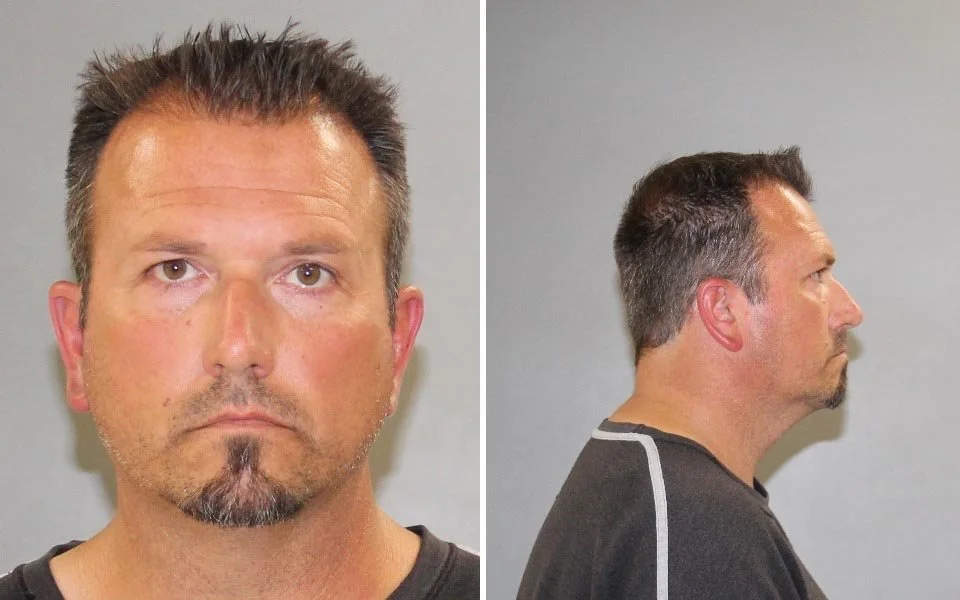
John Wakey. (Williamson County Sheriff's Office)

Wakey was arrested on Thursday, May 7, near Pontiac, Illinois. He is charged with nine Class 2 felony counts of aggravated criminal sexual abuse involving victims ages 13-17 by a person in a position of trust during the 2013, 2014 and 2015 school years. 

Williamson County Sheriff Jeff Diederich said during a May 8 news conference that four former Carterville students had provided formal statements to investigators after months in which detectives had only one verified statement from an alleged victim.

Diederich also said investigators had developed “solid and credible information” identifying nine potential victims connected to the Wakey investigation.

A day after his arrest, Wakey was transferred from the Livingston County Jail in Pontiac to the Williamson County Jail in Marion. He then spent three nights in the Williamson County Jail and was released from custody on Tuesday, May 12. During a detention hearing Tuesday, Williamson County Judge Michelle Schafer denied Williamson County State’s Attorney Ted Hampson’s petition for Wakey to remain in custody throughout the remainder of the trial.

“The defendant has no prior criminal history, and there is no history of violent or abusive behavior,” Schafer wrote in her decision. “Abuse is alleged to have occurred over 10 years ago … the relevant inquiry is whether the historical facts translate into a current danger. During this 10-year window, the defendant has had no criminal conduct, has maintained employment and has established community ties. As a result, detention is denied.”

Wakey was released on pretrial conditions including GPS electronic monitoring and residency confinement at his parents’ home in Herscher, Illinois.

Board notes ‘consistent pattern’ of wrongdoing

The notice of dismissal from the board of education repeatedly references Wakey’s “consistent pattern” of inappropriate communication with students, including text messages from 2022 and 2025, the Daily Egyptian previously reported

The board alleges that Wakey “engaged in unprofessional, unacceptable, and immoral conduct” by communicating via text message with a student in March 2022 and December 2025.

The dismissal document also acknowledges that Wakey violated a 2009 disciplinary warning. During that time, he was suspended for 10 days after the board found that he was “sending inappropriate text messages to students.” 

The board also alleges that Wakey initially denied having sent those text messages in each account, and that he also “failed to attend an investigatory conference with school administrators on April 16, 2026,” concerning the current investigation. 

During Tuesday's special meeting, the board heard comments from several parents of both former and current students concerning the conduct of the board. Parents raised various questions about mandated reporting, the validity of internal investigations and student safety. 

They also asked why administrators did not act sooner to remove Wakey from the classroom and called for accountability for district employees who may have been complicit in Wakey’s alleged crimes.

Board members did not respond to any questions or concerns raised during Tuesday night’s meeting. Previously, the district said it did not have enough credible information to take action when it first learned that allegations had been made to the FBI in November 2024. 

During the meeting, board President David Schwartz read aloud a statement detailing the notice of dismissal. The board also sent out a statement to parents of the district signed by Superintendent Sarah Barnstable notifying them of their decision after the meeting.

Currently, no other district employees have been charged in relation to the investigation. 

Wakey’s next pretrial hearing is scheduled for 8:30 a.m. June 24 at the Williamson County Courthouse. 


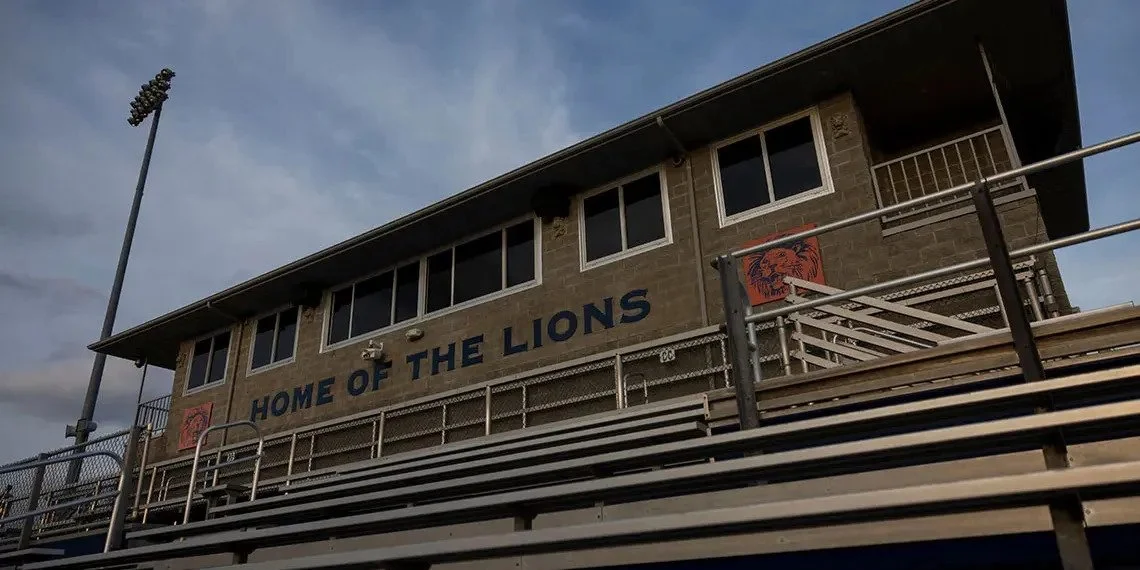
The sun sets on the press box at the Lions Field football stadium at Carterville High School. (Photo by Lylee Gibbs/Saluki Local Reporting Lab)

The Saluki Local Reporting Lab is a special project of the SIU Carbondale School of Journalism and Advertising and is designed to give students from diverse backgrounds practical reporting experience while providing news coverage to underserved communities.

Capitol News Illinois is a nonprofit, nonpartisan news service that distributes state government coverage to hundreds of news outlets statewide. It is funded primarily by the Illinois Press Foundation and the Robert R. McCormick Foundation.