Illinois farmers ease critical labor shortages through this agricultural visa program 

The H-2A visa has become a lifeline for farmers who can’t find enough domestic workers  

By GEORGIA EPIPHANIOU
Medill Illinois News Bureau
news@capitolnewsillinois.com

Article Summary

  • A lack of domestic workforce participation in agriculture pushes Illinois farmers to employ foreign workers through the temporary H-2A non-immigrant visa program. 

  • Illinois’ employment of farmers through the visa program has grown rapidly, filling 4,488 positions in 2025. 

  • These farms benefit from the arrival of foreign workers, as output, productivity and worker retention increases.

  • The administrative process is rigid, and costs associated with issuing these visas are vast, including providing housing and transportation, but the current administration has streamlined the application process and reduced wage rates. 

This summary was written by the reporters and editors who worked on this story.

CHICAGO — Jeff Flamm, farmowner at Flamm Orchards in Cobden, struggled to find enough workers to harvest his crops — and the problem kept getting worse each year.

"It got down to the point where I left a pretty significant amount of my crop in the field. One year I just couldn't get it fixed. We just did not have enough help to get the job done," he said.

To resolve this labor shortage issue, Flamm turned to foreign workers. For the past 20 years, he has been employing a majority (approximately 80) of his farmworkers from abroad, through an agricultural nonimmigrant visa, the H-2A. As farm labor shortages deepen across the country, the H-2A visa program has become a lifeline for growers who can no longer find enough domestic workers to keep their operations running.

“I came to the realization, if I'm gonna stay in business, I've got to do it,” Flamm said of using the visa program. 

The H-2A visa helps address seasonal labor shortages and allows U.S. farmowners to temporarily employ nonimmigrant foreign nationals for agricultural positions, but it can be costly. Farmowners need to meet conditions to qualify as H-2A employers, such as providing free housing, covering transportation fares and paying for the visa application fees. Additionally, employers must prove they cannot fill open positions with domestic workers.

At a time when President Donald Trump’s crackdown on undocumented immigrants has sent a chill through the immigrant community in cities and rural areas all around America, this program is an oasis of comfort and opportunity for legal immigrants and a demonstration of the vital importance of immigrant workers in Illinois and on farms across this nation. Many American farmers simply can’t make ends meet without them, and the Trump administration has even moved to streamline the visa program and make it more accessible to farmers.

Illinois ranks 18th in H-2A employment nationwide, with states like California and Florida taking the lead. Illinois’ reliance on legal immigrant farm labor has grown rapidly: About 8% of the state’s hired farmworkers are employed through H-2A visas, with Illinois’ growth rate outpacing the roughly 300% increase observed nationally since 2010, according to data from Farmdoc Daily. 

Illinois’ growth reflects a broader nationwide expansion of the H-2A program, with 398,258 positions certified in 2025, out of 415,496 applications, according to the Farm Bureau’s Market Intel. According to USA Facts, an overwhelming majority of applicants are from Mexico, accounting for 90% of filled positions in 2024, followed by South Africa and Jamaica. 

Is this strictly a farmworker program, or can roofers and hotels also use it?

Visa helps access labor

Raghela Scavuzzo, associate director of food systems at the Illinois Farm Bureau, said the H-2A program is a vital component of multiple sectors of agriculture in Illinois, impacting the state’s specialty crop industries and conventional agriculture. 

“It is a way to access labor that has not previously been available,” she said. 

According to the Economic Research Service of the U.S. Department of Agriculture, the number of  American farmworkers has significantly declined. According to the Western Ag Network, only 182 farming positions out of over 415,000 advertised were filled by a domestic applicant in 2025, accounting for less than 0.04%. 

Maggie Taylor, owner of Delight Flower Farm in Champaign, has also fallen victim to this trend, struggling to employ local farmers. She is now in her second year of using the visa program, having employed two women from Mexico last season. She expected two new workers to arrive by the end of March, but because of the partial shutdown of the Department of Homeland Security causing delays and slower processing, they are now expected to arrive by the end of April. 

She emphasized how these workers are professionally performing physically intense work that is otherwise deemed undesirable by Americans. “These workers are professional farmers. They are so good, such a high caliber of work and so efficient, that is amazing," Taylor said. 

“I felt like, if I didn't do the H-2A, I would want to quit farming,” Taylor said. 

Flamm has been renewing the visas of a lot of his workers every season. 

“Why do I keep doing it? Because that's the only way I can get the job done,” he said. “I can't hire. I have virtually zero local applicants for those jobs.” 

Beyond solving the labor shortage problem, Taylor sees the visa program as a mutually beneficial arrangement, sustaining her farm while providing meaningful income for workers who send their earnings back to their families abroad.  

“I see this as a win-win,” she said.

Taylor also pointed to the program's seasonal structure as an unexpected advantage. Unlike year-round employees who often leave during the winter and do not return, H-2A workers come only during the agricultural season, with their visas being valid only for up to 10 months, reducing turnover and keeping her workforce stable.

"I think the security of knowing that I'm going to have people to work on my farm and that they're going to do a good job is such peace of mind, and it really makes my farm business sustainable," Taylor said. "Hopefully the same women will want to come back year after year, and we all get to grow together and get more efficient over time."


Red tape and costs burden employers

To have H-2A visas approved, an employer needs to prove they have the resources to house the workforce. Flamm houses his workers in units he owns on his own land. Taylor however, needs to rent out spaces to accommodate her H-2A employees.

“You have to apply (for housing) 75 days before you want their contract to start,” Taylor said. “So that means that I'm basically paying for a vacant house at least 80 days,” 

Employers also need to pay visa application costs and cover air-fares and transportation for the workers to safely arrive at the site. 

“For my farm, it was around $12,000 in extra expenses beyond their wages that I would pay for,” Taylor said. 

Both farmers said filing these applications is a long bureaucratic procedure, and find it difficult navigating the Department of Labor, the Department of Homeland Security and the Department of State.

Effective Oct. 2, 2025, the DHS issued a new rule, aimed at strengthening the H-2A visa program and easing the application process. The rule states that the DOL will streamline the application review process that ensures the visa does not harm American workers. It will also speed up the U.S. Citizenship and Immigration Services’ reviewing process for visa petitions. 

The labor department also made efforts to reduce the red tape, establishing the Office of Immigration Policy in June 2025. The department aimed to create a “one-stop shop” to allow employers to apply for the visa through one single portal instead of doing so via three different agencies.

The office was intended to improve coordination among the federal departments and streamline the application and processing of employment-based visa programs, including the H-2A. However, internal emails obtained by Investigate Midwest showed that as of March 2026, the Department of Labor was unsuccessful in delivering on these goals, with officials failing to coordinate within agencies. 

When hiring workers through the H-2A program, employers are required to comply with federally mandated wage rules. 

“(The) H-2A visa has a required payment plan. All these positions have specific salary requirements,” said Scavuzzo, the Illinois Farm Bureau official. “Oftentimes, the salaries can be very high depending on those positions, which can limit how many people that they can bring over.”

The Department of Labor has set a new Interim Final Rule surrounding the Adverse Effect Wage Rate, the minimum wage for agricultural workers in the H-2A visa program.

Higher-skilled workers paid more 

Employed workers on the H-2A are divided into two categories based on their skill level, with higher-skilled workers being paid more of the adjusted wage. The minimum hourly wage for each category will be determined using data reported by the Department’s Bureau of Labor Statistics’ Occupational Employment and Wage Statistics survey for each state. 

Before the rule, the 2025 rate in Illinois for H-2A farmers was $19.57 an hour. Now, the rate is set at $15.48 for entry-level workers and $18.75 for experienced employees, according to Farm Week Now. 

Estimates calculated by the Economic Policy Institute show that farmworkers across the country stand to lose $4.4 to $5.4 billion annually because of the change. 

Robert Anthony Bruno, a professor and director of the Labor Education Program at the University of Illinois Urbana-Champaign, said this adjustment primarily benefits employers over workers, and that requiring farmers to pay for housing should not justify lower pay for hired farm hands. 

“It should be an additional benefit that the employers contribute along with paying them the required hour of pay,” Bruno said.

The AEWR has been adjusted to compensate for the free housing provided. Minimum wages for Illinois H-2A workers has decreased by $1.79 per hour, according to Farm Week Now. 

“We were like on a boat with a hole in it, and it was getting pretty close to being full. So it was a much-needed reset,” Flamm said. 

Scavuzzo said these changes can help Illinois farmers manage labor costs, which will in turn allow farms to hire more workers and sustain output in the years ahead.

“These policies which decrease the minimum wage are imperative — this way the number of farm workers employable will rise,” she said. 

Georgia Epiphaniou is a graduate student in journalism with Northwestern University’s Medill School of Journalism, Media, Integrated Marketing Communications, and a fellow in its Medill Illinois News Bureau working in partnership with Capitol News Illinois.

Capitol News Illinois is a nonprofit, nonpartisan news service that distributes state government coverage to hundreds of news outlets statewide. It is funded primarily by the Illinois Press Foundation and the Robert R. McCormick Foundation.
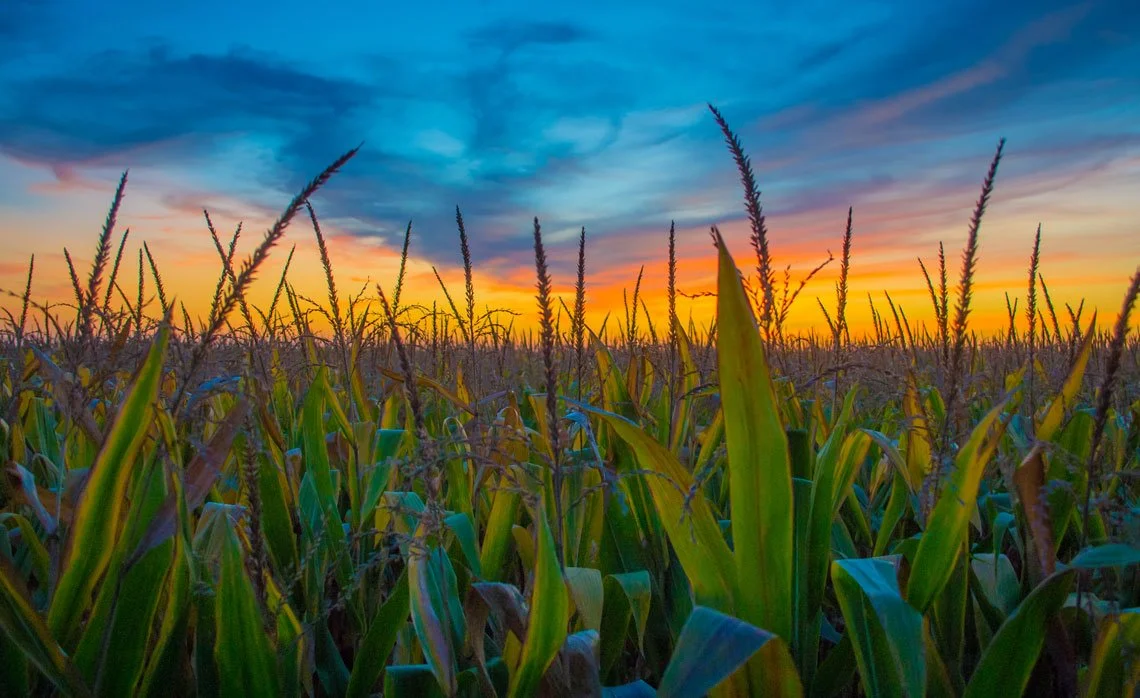

The sun sets over a field of corn in Douglas County. (Capitol News Illinois photo by Jerry Nowicki)

Richland County Student Among Illinois LICA Annual Scholarship Recipients

Strengthening its dedication to supporting members and their families, Illinois LICA recently established a scholarship program to help its members’ families offset rising costs associated with pursuing post-high school education. Open to high school seniors and upperclassmen pursuing ANY post-high school education (including 2 or 4 year degrees and trade schools) and ANY course of study, applicants must submit transcripts, an essay, and 3 letters of recommendation to complete the application process. For 2026, the selection committee awarded three outstanding individuals with $1,500 scholarships each:

Callista Ridgely (Parkersburg, IL) – Richland County High School - Chemical Engineering

Granddaughter of Allen & Patricia Yonaka and daughter of Austin & Suzanna Ridgely, Callista is a senior at Richland County High School where she is dual enrolled in both high school and college credit courses, maintaining a 5.0 GPA. She is engaged in a wide variety of extracurricular activities including Marching Band, Symphonic Band, Jazz Band, Honors Wind Ensemble, Scholar Bowl, FBLA, Tri-M, Student Council, FFA, Interact Club, Brain Games, and ACES. Callista serves as class treasurer, Tri-M Music Honor Society treasurer, and a council member for FBLA. She is a Big Future Rural and Small School Scholar and a recipient of the STRIPES award for respect, integrity, and self-discipline. Outside of school, Callista has committed time to volunteering with multiple organizations and service projects, from visiting nursing homes and  assisting with the Christmas Bucket Brigade to volunteering at the Parkersburg Chowder and serving food at local fundraisers like the Noble Airport Fly-In. With plans to attend Rose-Hulman Institute of Technology in pursuit of a chemical engineering degree, Callista has a strong desire to work in the energy and/or materials sector.

Jessica Dietz (Walnut, IL) – Eastern Kentucky University - Fire, Arson, and Explosion Investigation

Daughter of Paul & Kimberly Dietz, Jessica is a junior at Eastern Kentucky University, maintaining a 3.38 GPA. Being engaged with her local fire department in her teens and attending her first fire investigation by age 16, Jessica became inspired at an early age to pursue her current career path and has already gained years of hands-on experience. While making the Dean’s List and Honor Society, she has served on two local fire departments and assisted with her family’s drainage company, Dietz Drainage. Currently, she is a member of the Walnut Fire Protection District, an Emergency Medical Responder, and works at Ace Hardware, while maintaining her college coursework. After graduation, Jessica plans on working for either the Bureau of Alcohol, Tobacco, Firearms and Explosives (ATF) or Fire Tech, Inc.

Shay Layden (Hoopeston, IL) – Hoopeston Area High School – General Studies

Daughter of Eric & Angela Layden, Shay is a senior at Hoopeston Area High School, maintaining a 3.51 GPA. She is actively involved in Marching Band, FFA, National Honor Society, Drama Department, Student Council, basketball, golf, and softball. Shay serves as Vice President of her FFA Chapter and team manager for the softball team. Outside of school, she attends St. Anthony Catholic Church, where she is a member of the youth group and attends Catholic Heart Work Camp every summer. She also works part-time at a local ice cream shop. Shay’s aspiration is to become a Master Electrician with a focus on becoming an Outside Lineman.

Illinois LICA is honored to support these outstanding scholars as they work toward their future goals. Their dedication and passion exemplify the values of our association, and we look forward to seeing all they accomplish!

Callista Ridgely (Parkersburg, IL)

Princeton man arrested for OWI

On April 8, 2026, at 1:27 a.m. Gibson County Deputy Levi Sims conducted a traffic stop on a White 2016 Toyota Highlander after observing a moving violation on US 41 and County Road 350 South.  Upon approaching the vehicle Deputy Sims observed multiple clues that the driver 33-year-old Naxel Diaz of Princeton was under the influence.  At that point Deputy Sims began a roadside DUI investigation that resulted in Mr. Diaz being taken into custody and transported to the Gibson County Detention Center.   Upon arriving at the detention center Mr. Diaz was charged with Operating a Vehicle While Intoxicated and Operator never licensed.   
 
Sgt. John Fischer and Princeton Officers Sgt. Ben Kiesel and Officer Landon Perryman assisted Deputy Sims in his investigation.
 
All criminal defendants are to be presumed innocent until and unless proven guilty beyond a reasonable doubt in a court of law.

Carmi Officials Respond To Possible Threat At CWCHS

Ensuring the safety of our students, staff, and community is our top priority.  After school on Tuesday, April 7th, graffiti was found in a restroom at Carmi-White County High School that discussed a possible future threat of violence against Carmi-White County High School.  This possible threat of violence was reported to the Administration and the School Resource Officer. Carmi-White County CUSD #5 has been working closely with law enforcement to ensure the safety of our students, staff, and community. After a thorough investigation into a potential threat, law enforcement has confirmed there is no active threat, allowing us to proceed with regular school activities tomorrow. To enhance safety and provide peace of mind, there will be an increased law enforcement presence and additional security measures implemented during school activities. We appreciate everyone’s support to ensure the safety of our students, staff, and community.

Drug Awareness and Safety Day At MCHS

From Amy Duckworth, MCHS Principal:

MCHS students and staff were fortunate to participate in our first Drug Awareness and Safety Day organized by School Resource Officer Eric Emmons. The success of this event was made possible through the collaboration and support of the Mt. Carmel Police Department, Illinois State Police, Wabash County Sheriff’s Department, Wabash County Health Department Drug-Free Community Coalition, WGH Ambulance Service, Mt. Carmel Fire Department, Wabash Emergency Management Agency, Stat Flight #6 and Glenn's Auto Repair and Towing Service.

Throughout the day, students engaged in informative presentations led by SRO Emmons and representatives from the Illinois State Police, focusing on the dangers of substance use and the importance of making safe, responsible decisions.

The culminating event took place by Little Legends Field, where students observed a simulated emergency response. The mock scenario depicted a two-vehicle collision involving teens leaving an After Prom event. Students listened to a live 911 call and watched first responders act in real time.

This powerful and educational experience reinforced the importance of proactive safety awareness and the real-life consequences of impaired decision-making. MCHS extends our sincere appreciation to all agencies and individuals who contributed to making this day impactful for our students.

Two Sentenced To DOC In Separate Cases

Wabash County State’s Attorney Kelli Storckman has announced two recent felony sentencing cases in Wabash County Circuit Court.

On March 2nd, 37-year-old Eric Swanson of Mt. Carmel was sentenced to five years in the Illinois Department of Corrections after pleading guilty to Aggravated Intimidation, a Class 2 felony. The sentence was handed down by Circuit Judge William Hudson.

In a separate case on March 16th, 42-year-old Justin Gourley of Mt. Carmel was also sentenced to five years in the Illinois Department of Corrections. Gourley pleaded guilty to Felon in Possession of a Weapon, a Class 3 felony.

Both sentences were issued in Wabash County Circuit Court.

Greater Wabash Regional Planning Commission Board of Directors elects new Officers

ALBION, IL — The GWRPC Board of Directors elected officers for 2026 at the board meeting on Thursday, March 19th. All four current officers were reappointed for an additional one-year term. Rob Anniss, of Richland County, will continue as Commission Chairman; David Savage, of Wayne County, will continue serving as Vice-Chairman; Scott Merkle, of Wayne County, will continue as Secretary; and Randy Hallam, of Edwards County, will continue serving as Commission Treasurer. The GWRPC Board of Directors hosts members from all seven counties the Commission serves and oversees Commission activities.

The GWRPC mission is to serve the Greater Wabash District by providing local, regional, and comprehensive planning, facilitating knowledge enhancement, securing and administering funds and promoting cooperative solutions to regional issues. The seven counties in the GWRPC Economic Development District include: Crawford, Edwards, Lawrence, Richland, Wabash, Wayne, and White. For more information, please visit www.gwrpc.com

Trial Of Edwards County Man Pushed Back To July

The jury trial of an Edwards County man has been delayed once again.

Keith Armstrong’s trial had been scheduled to begin today in Wabash County Circuit Court, but proceedings were postponed due to the unavailability of a witness.

Court officials say jurors who were scheduled to appear today are no longer required to report. The trial has been rescheduled for July 6th. Pre-trial conferences are set for May 11th and June 8th.

Armstrong, 42, of Albion, was arrested by Mt. Carmel Police in May of 2022 on a Wabash County warrant following an investigation into the alleged sexual abuse of a child dating back to 2014 and 2015.

He was taken into custody at the courthouse on an unrelated matter and initially held on a 50-thousand dollar cash bond. That bond was later reduced to one-thousand dollars, which he posted.

Armstrong faces multiple Class 1 and Class 2 felony charges and is represented by Public Defender William Easton.

The case has seen several delays, with the trial originally scheduled to begin in January of 2023.

As with all cases, the defendant is presumed innocent unless proven guilty in a court of law.

2022 File Photo

Accident leads to arrest of Princeton man for DUI

On April 2, 2026, at 7:13 p.m. Gibson County Central Dispatch received a report of a vehicle in a ditch in the 600 block of East 250 South.  Deputy Bart Wagner and Princeton Officer David Jones arrived on scene and discovered a Silver 2005 Cadillac Deville on its side with the driver outside of the vehicle.  Upon speaking with the driver, 22-year-old Keaton Winkler of Princeton officers observed obvious clues that the driver was under the influence.  At that point they began a roadside DUI investigation that resulted in Mr. Winkler being taken into custody and transported to the Gibson County Detention Center.  Upon arriving at the detention center Mr. Winkler was charged with Operating a Vehicle While Intoxicated.
 
Arresting Officer Bart Wagner was assisted in his investigation by Princeton Officer David Jones and Deputies Wyatt Lashbrook and Wyatt Hunt. 
 
All criminal defendants are to be presumed innocent until and unless proven guilty beyond a reasonable doubt in a court of law.

ISP ANNOUNCES RESULTS OFALCOHOL COUNTERMEASURE ENFORCEMENTSURVEILLANCE DETAILS

MOUNT CARMEL – Illinois State Police (ISP) Zone 8 Commander Holly Finney announces the results of Alcohol Countermeasure Enforcement (ACE) surveillance at various establishments in Wabash County on April 1, 2026. The detail was conducted to determine which businesses may be selling alcoholic beverages to minors (persons under 21 years of age). The ultimate goals are to enforce underage drinking laws and save lives by preventing impaired driving crashes and fatalities.

A total of 18 locations were surveilled. Five establishments were involved in the sale of an alcoholic beverage to a minor.

Business Name / Employee

West Berwick Management INC: Neve Knapp

CVS Pharmacy #6887: Amber Thompkins

Tenpins LLC: Lawrence Byrns

Eagles: Brandy Keele

El Cactus Cuisine: Emely Gonzalez

The employees were cited for Unlawful Delivery of Alcoholic Liquor to a Minor, a Class A misdemeanor. The public is reminded that all defendants are presumed innocent unless proven guilty in a court of law. ISP commends establishments and their employees that do not sell alcohol to minors. This project is funded through the Illinois Department of Transportation.