In Illinois, a short-term guardianship can help youths during ICE deportations  

Some parents are turning to the state program to protect their children during a crisis

By OLIVIA ARDITO
Medill Illinois News Bureau
news@capitolnewsillinois.com 

Article Summary: 

  • Short-term guardianship is a process that allows another adult to become the legal guardian of a child for up to one year.

  • This process can be a protective measure and only implemented in extreme situations, such as the parent having a medical emergency or being arrested.

  • Amid immigration raids in Illinois, the process can help protect children should their parents be detained or deported.

This summary was written by the reporters and editors who worked on this story. 

CHICAGO — Operation Midway Blitz brought hundreds of federal immigration agents to the Chicago area last fall and led to more than 4,500 arrests. What happens to the children in these situations?  

One option for parents is to complete a short-term guardianship form for their children to protect them should the parents be detained, deported or disappear. 

What is a short-term guardianship? 

Short-term guardianship refers to an adult other than the parent or legal guardian taking temporary custody of a child for up to one year. Created in the late 1980s, the standardization of this process became law under the Illinois Probate Act after extensive lobbying by AIDs activists worried about their children if they were to pass away. 

“It gives families peace of mind in case there’s something that goes wrong,” Illinois attorney  Scott K. Summers said. 

Summers describes the process as preparing a backup or emergency guardian. It is one legal pathway to protect children in case something happens to their parent, whether that be a military deployment, a medical emergency, arrest or deportation. 

Rebekah Rashidfarokhi, the director of guardianship and immigration programs for children at Chicago Volunteer Legal Services, said the form can be easily revoked as well if needed.

Read more: Even amid partial DHS shutdown, Illinois remains on edge over ICE coming back 

“The parent filling out this form gets to designate someone, and if they change their mind, they can just revoke the form and write a new one. So they’re not really relinquishing any rights by filling out a short-term guardianship,” Rashidfarokhi said.

Since the start of raids across Illinois by the U.S. Immigration and Customs Enforcement and U.S. Customs and Border Protection, Rashidfarokhi reported that her group has seen a significant increase in the number of short-term guardianship forms filed. They have also been hosting frequent educational classes on what these forms are and how they work. 

How does one become a short-term guardian?

To become a temporary guardian of a minor, the parent or permanent guardian of the child must fill out this form in the presence of two witnesses over 18. This process does not need to be completed in a court of law or in front of a judge. Additionally, the form allows for the short-term guardianship to apply only under specific circumstances, such as if the parent were to be deported or arrested. 

“More advanced guardianships or longer-term guardianships do require going to court, filing papers, getting a judicial appointment as a guardian,” attorney Summers said. “This gives parents autonomy and convenience.”

Summers suggests that families who are curious about this process but have concerns over the legal details should speak with a trusted attorney to get more information and advice. 

Rashidfarokhi said a significant advantage of choosing short-term guardianship over alternative processes is the ease of doing so. Going through the courts can take months, cost money and require all members of the new guardian’s household to be fingerprinted. 

“Parents really have a lot of discretion and control over the situation, unlike in a court process. So, the court process is kind of the opposite of all of those things,” Rashidfarokhi said. 

Here’s what a short-term guardianship is not

Short-term guardianship is governed by state, not federal, law. Because of this, the new short-term guardian only has custodial privileges on the state level, and only for a year. For example, a short-term guardian could not get a child’s passport. 

Rashidfarokhi also notes that the short-term guardianship is not a good idea for parents to use in cases where one parent is unaware or against assigning their child a short-term guardian. 

“This somewhat flimsy piece of paper is not going to hold up in court against the parental rights of the other parent,” she said. “It’s really important to note that this is meant to be something that either both parents file or that at least the other parent is notified of, because it can actually be revoked by either parent.” 

Additionally, in situations of domestic abuse, short-term guardianship is not the best option. Rashidfarokhi suggests a full custody order or an order of protection would better serve that circumstance.

“I don’t recommend using it for really long-term situations. Like, it’s meant to be kind of a Band-Aid, which is why it only lasts for a year,” Rashidfarokhi said. 

How do short-term guardianships relate to ICE?

The guardianship process allows parents to list a “triggering event,” where if a specific incident happens, that begins the short-term guardianship process. Parents at risk of deportation could make their detainment their triggering event and then their chosen guardian would be able to legally take over decisions for the children.

“That’s why I’m an advocate for these short-term guardianships — it gives parents and children a lot of flexibility in terms of getting their needs met without having to go through a whole lot of effort,” Summers said.

Summers added that if a parent were to be detained or deported and this document is not pre-emptively filled out, the Illinois Department of Children and Family Services might take over as the child’s caretaker. When asked how many children DCFS have taken care of due to immigration raids, DCFS responded that this has not happened in Illinois yet. 

Read more: Metro East attorney helps immigrant families prepare for crackdown 

In the situation where a parent was already deported, they could fill out this form in their home country to help their child who is still in Illinois, according to the law. 

Parents looking for more information or support can reach out to organizations like Chicago Volunteer Legal Services or the Illinois Guardianship and Advocacy Commission

“I always feel like ‘better safe than sorry,’”  Rashidfarokhi said. “The form is easy to fill out. You don’t have to have a lawyer to help you fill it out. It’s free, and the parents are not giving up any rights. So I always recommend that everybody have one of these in place.” 

Olivia Ardito is a graduate student in journalism with Northwestern University’s Medill School of Journalism, Media and Integrated Marketing Communications, and is a fellow in its Medill Illinois News Bureau working in partnership with Capitol News Illinois.

Capitol News Illinois is a nonprofit, nonpartisan news service that distributes state government coverage to hundreds of news outlets statewide. It is funded primarily by the Illinois Press Foundation and the Robert R. McCormick Foundation.
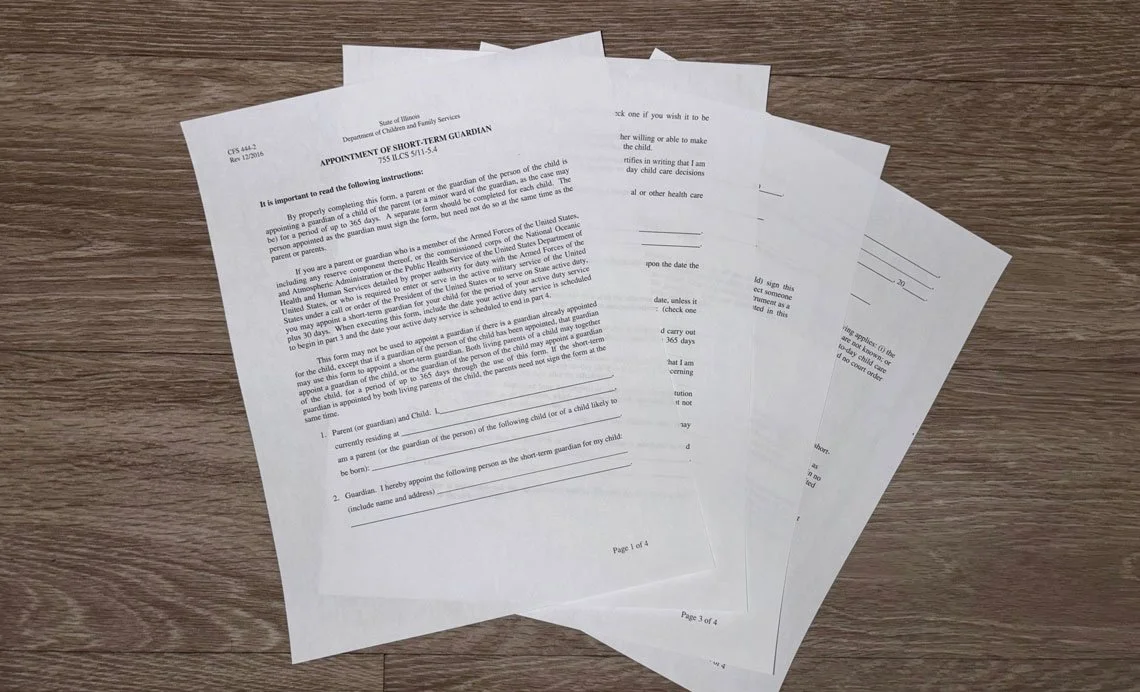

Form CFS 44-2, also known as the short-term guardianship form, allows parents in Illinois to appoint temporary custody for their children during a crisis. (Medill Illinois News Bureau photo by Olivia Ardito)
ILLINOIS STATE POLICE ANNOUNCES THE COMPLETION OF STATEWIDE NEXT GENERATION 911 SERVICE UPGRADES

SPRINGFIELD – The Illinois State Police (ISP) is announcing all 169 Public Safety Answering Points (PSAPs) throughout Illinois, commonly called 911 call centers, have successfully transitioned to Next Generation 911 (NG911). ​ NG911 upgrades the traditional 911 service from voice-centric networks to secure, IP-based infrastructure designed to support today’s communications.

 “This milestone reflects years of coordinated work by the ISP Division of Statewide 911, PSAPs, Emergency Telephone System Boards (ETSBs), local and regional stakeholders, and public and private partners,” said ISP Director Brendan F. Kelly. ​ “Illinois has moved into the 21st century for 911 communication offering more efficient emergency services.”

 Transitions to NG911 began with the first PSAP switching from the old to the new system in Grundy County on June 21, 2022, and concluded with the final PSAP cutover to AT&T Statewide ESInet in Northbrook on March 4, 2026.

 “This accomplishment belongs first and foremost to the PSAPs and their ETSBs who did the day-to-day work to prepare, test, train, and transition, while continuing to answer 911 calls every hour of every day,” said Illinois Statewide 911 Administrator Alicia Atkinson. “It also reflects strong public-private partnership and coordination among local, regional, and statewide teams, including the ISP Division of Statewide 911, which supported readiness, testing, and implementation. While this is a major milestone worth celebrating, the work continues as we build on this foundation to strengthen service reliability and NG911 capabilities statewide.”

 The upgrades were completed using various regional providers, including Comtech ESInet, INdigital ESInet, Motorola ESInet, AT&T Statewide ESInet.

 "We’re dedicated to providing Illinois with reliable, modern emergency communications service,” said AT&T Illinois President Eileen Mitchell. “We’re honored to support the state's public safety professionals and the communities they protect."

 The upgrade to NG911 means people in Illinois will have more efficient and reliable 911 emergency services. ​ In a legacy 911 system, a wireless call to 911 could be routed to emergency services based on the location of a cell tower as opposed to the location of the caller. ​ That could mean the call would have to be transferred to emergency services that were closer to the caller, causing a delay in response time. NG911 improves this by supporting geospatial call routing based on the caller's actual location. NG911 also provides redundant capabilities for reliable service. For example, if multiple PSAPs were unable to operate in southern Illinois due to damaging storms and tornadoes, emergency calls in that area could be rerouted automatically and handled by PSAPs in other parts of the state. ​

 Additionally, NG911 supports the continued expansion and reliability of Text-to-911, helping ensure equitable access to emergency services for individuals who cannot place a voice call. ​ The upgraded system allows for more flexibility as 911 services evolve, including the potential to eventually allow for photo and video sharing between residents and PSAPs during emergency situations.

WEMA Director Highlights Tech Improvements at City Council Meeting

he Wabash County Emergency Management Agency is continuing to modernize its operations.

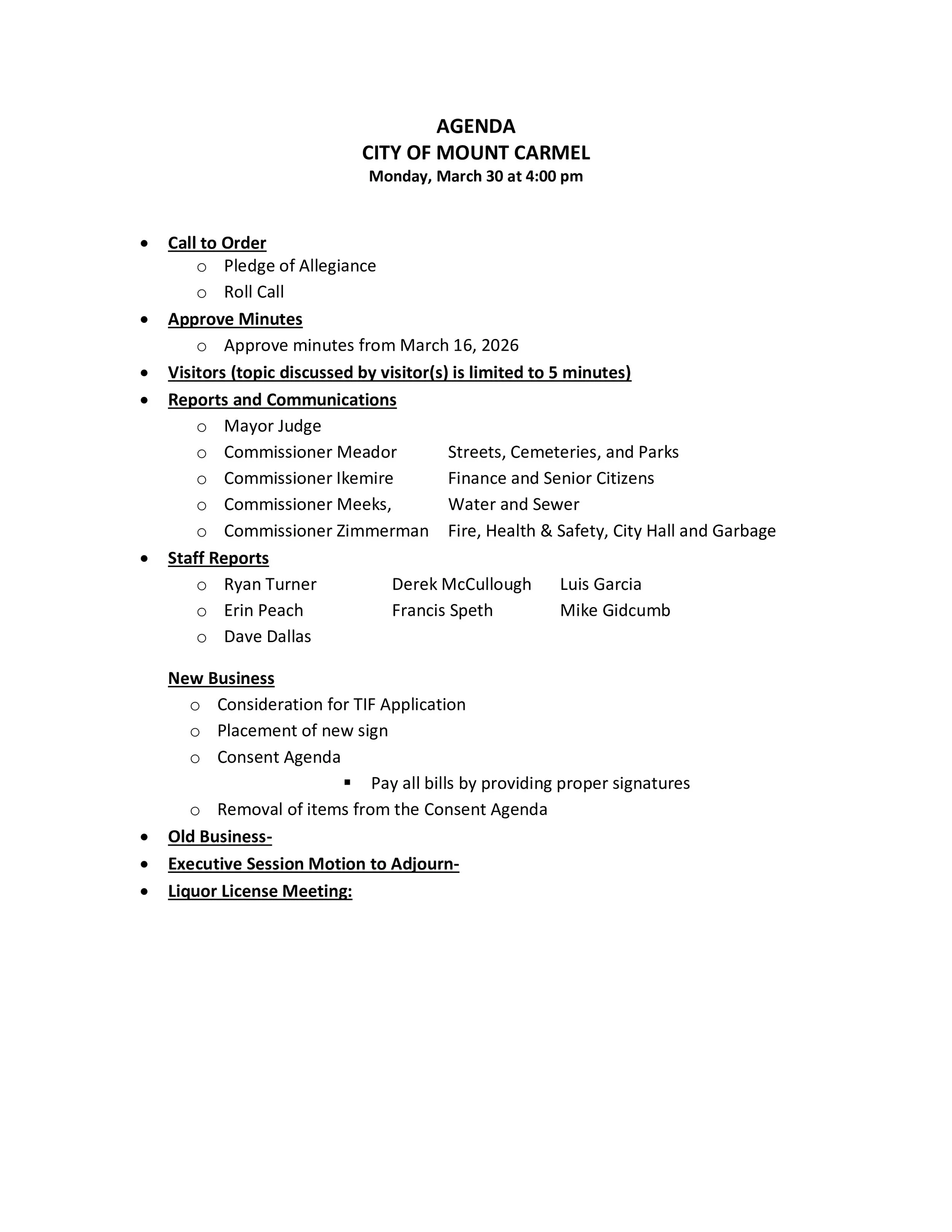
At the most recent Mount Carmel City Council meeting, WEMA Director Mark Seaton updated officials on recent technology upgrades and thanked the city for its support.

Seaton said after taking over the role last summer, one of his priorities was improving outdated equipment. He worked with city leaders, including Mayor Joe Judge and City Clerk Ryan Turner, to secure a new laptop for the agency.

Seaton told the council the laptop has now been received and is already in use. It has been set up in the county’s Emergency Operations Center, complete with a docking station, allowing staff to use it both in the office and in the field during emergencies.

He said the portable setup will be especially valuable during storms or other incidents when crews need to operate outside of the EOC.

Seaton also expressed appreciation to the council for helping move the agency forward, saying the upgrades are a big step from what he described as outdated equipment.

City leaders thanked Seaton for the update and for his work in improving emergency preparedness in the community.

Illinois House committee advances bill banning immigration detention centers near homes, schools

The bill comes months after Broadview facility became focal point of Midway Blitz

By BRENDEN MOORE
Capitol News Illinois 
bmoore@capitolnewsillinois.com  

Article Summary  

  • An Illinois House committee advanced a bill that would prohibit the federal government from operating an immigration detention center within 1,500 feet of any home, school, daycare center, park, forest preserve, cemetery or place of worship.

  • It comes months after an Immigration and Customs Enforcement facility in suburban Broadview became a central point of conflict during Operation Midway Blitz last year.

  • The state is extremely limited in its ability to restrict the federal government from operating within its borders. And it is unclear whether the proposal, if passed and signed into law, would pass constitutional muster.

This summary was written by the reporters and editors who worked on this story.  

SPRINGFIELD — An Illinois House committee on Wednesday advanced a bill that would prohibit the federal government from owning, leasing or operating an immigration detention center within 1,500 feet of any home, school, day care center, park, forest preserve, cemetery or place of worship. 

The legislation, sponsored by House Speaker Emanuel “Chris” Welch, D-Hillside, moved to the House floor on an 8-3 vote, with all Democrats in favor and all Republicans opposed.

“This is not an abstract policy debate for me,” Welch told the committee. “This is personal and it is deeply local.”

Welch’s district includes Broadview, the west suburban village of about 8,000 that became a central point of conflict during Operation Midway Blitz last year. 

Welch acknowledged, however, that the legislation is not retroactive, meaning it would apply to future facilities, but not the existing facility in Broadview or others currently owned or leased by the federal government.

The state is also extremely limited, however, in its ability to restrict the federal government from operating within its borders. And it is unclear whether the proposal, if passed and signed into law, would pass constitutional muster. Generally, the federal government is exempt from local zoning restrictions. 

The Trump Administration sued the state late last year a seeking to nullify a new state law that allows Illinois residents to sue federal immigration agents who arrest them in or near courthouses or if they believe their constitutional rights were violated. That case is ongoing.

Broadview facility

Immigration and Customs Enforcement used a facility the agency owns and operates in the community to detain undocumented immigrants swept up in the aggressive immigration enforcement campaign that targeted the Chicago region. 

Many detainees described inhumane conditions inside the facility, which had previously been used to quickly process and send them to their next destination. But, by the end of last year, a federal judge said it had “really become a prison,” with some detained there for as long as three weeks during the height of Midway Blitz.

Outside the facility, masked federal agents and protestors clashed repeatedly and often violently. The situation quickly overwhelmed the local police department, and Illinois State Police troopers and Cook County Sheriff’s deputies were called in to maintain order.

Read more: Judge orders ICE to clean up conditions in Broadview facility that’s ‘become a prison’ | Charges dismissed for 2 of ‘Broadview 6’ ICE facility protesters

“This bill says something very simple and very reasonable: Detention facilities do not belong in the middle of our neighborhoods,” Welch said. 

“It doesn't just affect the people inside that building,” Welch said. “It affects every child walking to school, every senior looking out their window, and every family trying to live in peace. This bill is about public safety. It is about human dignity, and it is about drawing a clear line and saying that Illinois communities should not be forced to serve as staging grounds for fear and intimidation.”

Broadview Mayor Katrina Thompson told the committee that some residents live as close as 600 feet from the facility. And she estimated that the village has lost more than $700,000 in direct and indirect impact associated with the facility, including a strain on public safety resources and economic disruption. She said the bill “recognizes that communities deserve a buffer, especially in areas where families live, learn, worship and gather.”

Illinois already bans privately-owned immigration detention centers. And under the Illinois Way Forward Act, local governments are prohibited from entering contracts with ICE to detain immigrants for the agency in county jails.

Capitol News Illinois is a nonprofit, nonpartisan news service that distributes state government coverage to hundreds of news outlets statewide. It is funded primarily by the Illinois Press Foundation and the Robert R. McCormick Foundation.


House Speaker Emanuel “Chris” Welch presents his bill to limit where federal immigration centers can be placed in Illinois to a House committee on Wednesday, March 25, 2026. (Capitol News Illinois photo by Jenna Schweikert)

Lawmakers advance Pritzker’s cell phone ban, social media regulations

Bill expanding 4-year degrees at community colleges progresses after facing opposition last year

By BEN SZALINSKI,
& BRENDEN MOORE
Capitol News Illinois
news@capitolnewsillinois.com

Article Summary

  • Several prongs of Gov. JB Pritzker’s legislative agenda began to move this week.

  • Those include youth social media protections, a ban on cell phones in classrooms and allowing some community colleges to offer four-year degrees. 

  • Many of the measures are expected to be amended and negotiated further in the coming weeks. 

This summary was written by the reporters and editors who worked on this story. 

SPRINGFIELD — House committees advanced portions of Gov. JB Pritzker’s legislative agenda on Wednesday, though in many cases lawmakers conceded they’d need to amend their bills to gain broader support. 

The House was working ahead of a Friday deadline for passing bills out of committee, an early test for Pritzker’s and other policy proposals, many of which have stagnated for multiple years.

One such measure would place new regulations on social media companies. But like many other bills advanced by House committees this week, the bill is expected to see more changes before being considered for a full vote. 

House Bill 5511, the Children’s Social Media Safety Act, would require social media companies to confirm a user’s age through the device’s operating system, prohibit companies from sending nighttime notifications to users under 18, establish default privacy settings protecting a minor user’s location data and profile information, and allow more parental controls. 

Supporters say the ultimate goal is to prevent children from consuming an addictive social media feed — and its advancement came the same day a New Mexico jury found that Meta, Facebook’s parent company, knowingly harmed children’s health. The company was fined $375 million. 

In Illinois, the bill passed a House judiciary committee Wednesday on a partisan 13-7 vote. 

“We’ve been a little bit too late to the game to talk seriously about how do we protect children’s mental health and children’s safety online,” said bill sponsor Rep. Jennifer Gong-Gershowitz, D-Glenview. “These conversations I think have been taking place in every household in America.”

Cell phone ban

A House education committee unanimously approved the latest version of a bill that would require school boards to prohibit public school students from using their cellphones in the classroom.

As amended, Senate Bill 2427 would require Illinois school districts to adopt policies by the 2027-2028 school year banning the use of wireless communication devices like cellphones, tablets, laptops and gaming devices during school time.

The prohibition would be bell-to-bell for elementary and middle school students, but the legislation leaves discretion for school districts to allow high school students to use their devices during lunch and passing periods. 

The bill also includes carve-outs for students with medical needs, who are caregivers for family members and who need their phone for English translation services. School officials can also permit device use if it’s for educational purposes.

“We know, as we've discussed many times, that the use of cell phones is causing a great distraction,” said state Rep. Michelle Mussman, D-Schaumburg, the bill’s sponsor. “It's an academic distraction, it adds to student anxiety, it contributes to bullying, and we really believe that all the research is indicating that students are much better off and more well focused and balanced when they have time away from their cellphones.”

School cellphone bans have become a rare area of bipartisan agreement in recent years, with more than 30 states banning or limiting their use. Pritzker called for the policy change in Illinois during his 2025 State of the State address. A version of the legislation passed unanimously out of the Illinois Senate last April but wasn’t called in the House.

Many school districts already have cellphone bans on the books. These districts would be able to keep their existing policy through 2030-2031 school year, after which they would have to adopt a policy conforming with the state’s requirements. 

Four-year degrees

The House Executive Committee unanimously OK’d an amended version of legislation authorizing Illinois community colleges to offer four-year bachelor’s degree programs in high-demand fields — another Pritzker initiative. 

House Bill 5319, sponsored by state Rep. Tracy Katz Muhl, D-Northbrook, would allow community colleges to offer bachelor’s degree programs in select areas, provided the school’s board of trustees can demonstrate the program would help fill an “unmet workforce need” in the area the school serves, and that the school has sufficient resources, expertise and student interest to sustain the program.

Tuition and fees per credit hour for the third and fourth years would not be allowed to exceed 150% of the tuition and fees of lower-division course work.

The goal of the legislation is to make programs more affordable and accessible while addressing local workforce needs.

The measure, also a top legislative priority of Pritzker’s last session, stalled in May amid opposition from the state’s four-year universities, which feared that the new programs might undercut similar programs they offer.

Under the amended bill, community colleges would have to first collaborate with four-year institutions to determine if a partnership can address the workforce need. It also contains provisions meant to avoid the creation of duplicative programs.

Katz Muhl told the committee that she won’t run the bill until she’s certain everyone’s on the same page. But, she doesn’t anticipate any additional changes.

Abortion fund

The House Human Services Committee voted 8-4 to advance legislation that would create a state grant program to pay for abortions for uninsured and underinsured women.

The Affordable Care Act requires insurers that cover abortions beyond the limited circumstances allowed by the federal government under the Hyde Amendment to collect at least $1 per person per month. These funds can only be used to cover abortions, which has resulted in many insurance companies accumulating large sums they can’t fully use.

Under House Bill 5408, sponsored by state Rep. Anna Moeller, D-Elgin, insurance companies offering plans on the state’s exchange would have to annually report to the Illinois Department of Insurance how much money is in these separate accounts, how much they spent during the year and remit 90% of remaining funds to a state-controlled abortion access fund. 

California and Maryland have passed similar legislation. The bill is an initiative of Pritzker’s office.

Capitol News Illinois is a nonprofit, nonpartisan news service that distributes state government coverage to hundreds of news outlets statewide. It is funded primarily by the Illinois Press Foundation and the Robert R. McCormick Foundation.

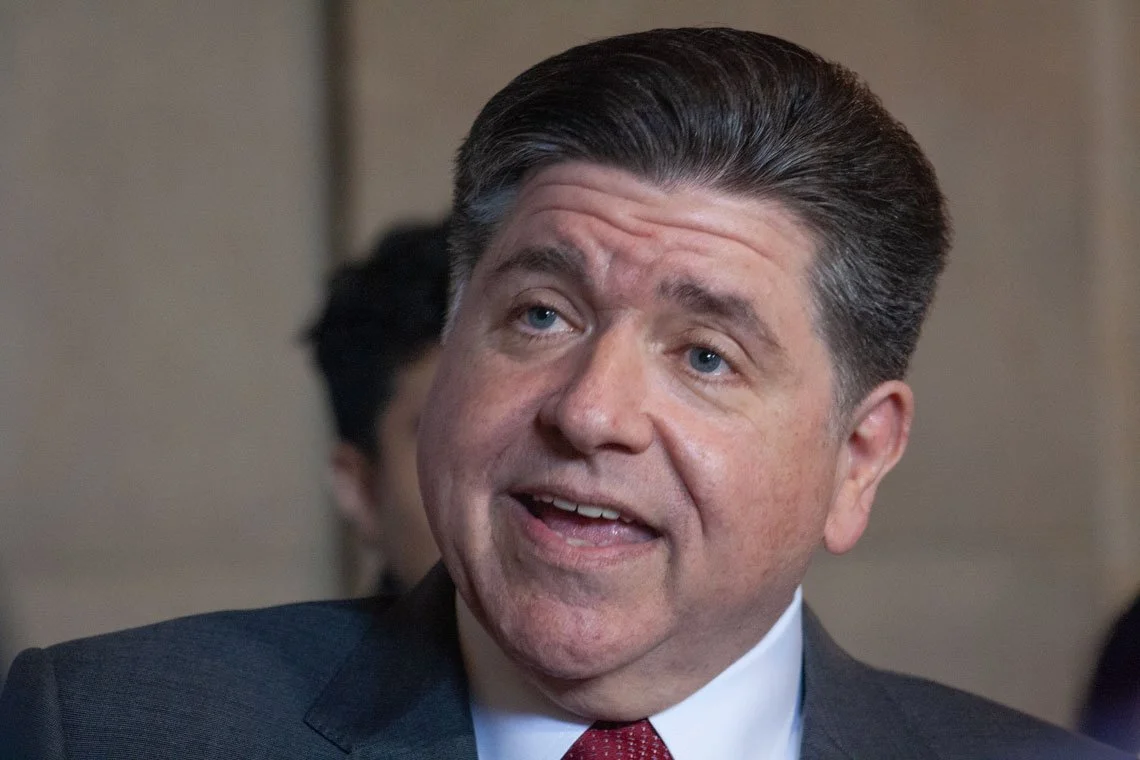
 Gov. JB Pritzker takes questions from reporters during Agriculture Day at the Illinois Capitol on Tuesday, March 24, 2026. (Capitol News Illinois photo by Jenna Schweikert)


Junk fees, child torture, tipped wage proposals among bills to clear committee

More than 150 measures have moved thus far as House deadline approaches

By JENNA SCHWEIKERT,
BEN SZALINSKI,
PETER HANCOCK
& JERRY NOWICKI
Capitol News Illinois
news@capitolnewsillinois.com

Article summary 

  • Friday marks a House deadline to advance bills out of committee, so lawmakers were scrambling to advance their initiatives. 

  • More than 150 bills cleared House committees on Tuesday and Wednesday.

  • They include a ban on junk fees, classification of “child torture” as a Class X felony, a retry at a nonprofit savings bill the governor recently vetoed, and a bill to strip Chicago’s authority to alter the minimum wage for tipped workers.  

  • All of the measures need approval from both chambers and the governor to become law, and many will be further amended in the coming weeks. 

This summary was written by the reporters and editors who worked on this story.

SPRINGFIELD — The Illinois House passed more than 150 bills out of committee from Tuesday to Wednesday as it worked toward a Friday deadline to move legislation to the full House. 

The measures included a ban on junk fees, classification of “child torture” as a Class X felony, a retry at a nonprofit savings bill the governor recently vetoed, and a bill to strip Chicago’s authority to alter the minimum wage for workers who make tips. 

All of the measures passed this week are still a long way from final passage, requiring approval from both chambers and the governor to become law. 

Tipped minimum wage 

Lawmakers considered a bill that would end Chicago’s tipped minimum wage ordinance, ultimately passing it in committee despite opposition from some Democrats. House Bill 4623 would give the state exclusive regulatory power over allowance for tips as part of hourly wages, ending home rule authority on that issue. 

The bill would overturn a 2023 Chicago ordinance that would gradually phase out the city’s “tipped minimum wage,” which allows employers to pay tipped workers an amount lower than the standard minimum wage if the rest is made up in tips. 

The city council, however, recently passed an ordinance pausing this year’s scheduled increase. But on Wednesday, Chicago Mayor Brandon Johnson vetoed that measure.

When Illinois passed its current minimum wage law in 2019, it maintained a provision that allowed employers to pay tipped workers 60% of the minimum wage, which is currently $15 hourly. The restaurant industry lobbied for limiting home rule authority during the passage of the 2019 law, to no avail. 

Bill sponsor Rep. Curtis Tarver, D-Chicago, said he brought the bill to keep tipped minimum wage laws uniform statewide. His bill does not prevent municipalities from having higher minimum wages than the state.

“Having 200-plus home rule municipalities, it doesn't make a ton of sense for somebody to get the home rule and have one set of goals and then to cross over to another municipality” with other rules, Tarver said. 

Proponents of the bill limiting home rule authority argued that the tipped minimum wage helps keep costs down. Eliminating it could lead to restaurant closures across Chicago, they said.  Opponents generally argued that the legislature shouldn’t encroach on home rule powers, and tipped workers in Chicago deserve the raise. 

The bill passed 22-4, with four Democrats from the Chicago area voting in opposition.

Junk fees 

The House Consumer Protection Committee passed a bill to ban ‘junk fees,’ or hidden charges that are placed on bills but not otherwise posted or advertised. 

House Bill 228 would make it a violation of the existing Consumer Fraud and Deceptive Business Practices Act for a company to post a price that does not include all mandatory fees and surcharges. It also mandates that prices and fees must be clearly disclosed prior to checkout.

This is the third time the committee has considered a bill to ban junk fees, but none have become law.

“At a time when working people are already struggling with rising costs, hidden fees that appear at checkout make it even harder to budget and compare prices,” Economic Security Illinois Action said in a statement. “Banning hidden junk fees and requiring companies to show the full price upfront is a simple, commonsense reform that will bring fairness to our marketplace and protect working families from corporate greed.”

Child torture offense

Democratic lawmakers could take the rare step of adding a new criminal penalty to state law. A House criminal judiciary committee passed House Bill 5562 unanimously on Tuesday, which would create the offense of child torture in state law. Democrats have typically shied away from bills that create new or tougher criminal penalties. 

Rep. Michelle Mussman, D-Schaumburg, who sponsored the bill, said it was inspired by a 2019 American Bar Association resolution calling on states to define child torture in their laws. The bill would apply to cases of physical and emotional abuse that “create, increase or prolong the pain, suffering and agony of a child.” The offense would be charged as a Class X felony — the most serious in Illinois. 

Mussman said the bill is important because torture “may not necessarily manifest as physical abuse that results in great bodily harm but still has a tremendous impact on a child’s physical, mental and emotional health.”

Some Democrats said they were concerned the bill was too broad and encouraged Mussman to craft an amendment outlining more specific cases that would be considered torture. 

“Child torture is wrong and terrible and we have a responsibility I think to be very cautious about when we create new Class X felonies because of the severity of that sentence that the conduct that could be sentenced to a Class X should be the most egregious conduct that there is,” Rep. Will Guzzardi, D-Chicago, said.

Nonprofit investment fund

A bill that would allow the state treasurer to establish a special investment fund for Illinois nonprofit corporations advanced in both chambers of the General Assembly on Wednesday.

The proposal is a revised version of one state Treasurer Michael Frerichs pushed in 2025. It would operate much like Illinois Funds, the pooled investment fund the treasurer’s office operates for state agencies and municipalities.

“This investment pool will allow our nonprofits to invest their money in a fund that will generate substantial interest and have a meaningful impact on their operations,” Frerichs told a Senate committee.

Gov. JB Pritzker vetoed the bill last year, saying it could have the unintended consequence of benefitting fringe and extremist organizations that organize as nonprofits.

The revised bill would limit the types of organizations that could qualify to participate in the investment pool to include Medicaid-certified health care providers, organizations previously certified to receive state grants, federally registered labor organizations and organizations whose missions fall within specified categories such as neighborhood development, affordable housing or services for military veterans.

It would also exclude organizations that are on certain suspension, debarment or stop payment lists for the state or federal government.

The new language is included in two identical bills, House Bill 5045 and Senate Bill 2968. Both bills await final action by the full chambers.

Unemployment benefits

School employees who get summers off would be eligible for unemployment benefits under a bill approved by the House Labor Committee on Wednesday. House Bill 4416 would allow school district employees like bus drivers, custodians and cafeteria workers to collect benefits in the summer if they are unemployed and cannot find other work. 

Illinois AFL-CIO Secretary-Treasurer Pat Devaney said the bill is a matter of fairness as private contractors hired by school districts are eligible for benefits. The bill passed 18-10, with Republicans voicing concerns it would be a significant cost to districts. Devaney estimated it would cost less than $200 million annually. 

Jury duty pay

House Bill 4844, which would require employers to pay employees their regular rate of pay when they are selected for jury duty, passed 13-7 out of a judiciary committee.

Bill sponsor Rep. Jay Hoffman, D-Swansea, said jurors can face financial challenges if they’re selected for a case that lasts several weeks, adding he hopes the legislation would make it more affordable for people to serve on a jury.

But Republicans voiced concerns the bill would be burden for businesses because they have to pay an employee who isn’t showing up to work.

Rate increase hearings

House Bill 4514 would require the Illinois Commerce Commission to offer hearings specifically to collect public feedback whenever it holds utility rate increase hearings. It passed 11-6.

The bill comes after a series of controversial rate increase requests from Illinois’ public utility companies.

Currently, the public is allowed to testify at ICC rate increase hearings but are limited to three minutes of testimony and cannot submit written statements. Residents would be allowed to testify and submit statements to the record during the newly required hearings.

Capitol News Illinois is a nonprofit, nonpartisan news service that distributes state government coverage to hundreds of news outlets statewide. It is funded primarily by the Illinois Press Foundation and the Robert R. McCormick Foundation.


University funding overhaul bill advances in House despite U of I opposition

Legislation would create a need-based formula for universities similar to one used for K-12 schools

By PETER HANCOCK
Capitol News Illinois
phancock@capitolnewsillinois.com

Story Summary

  • The bill calls for annual increases in university funding of $135 million each year over the next several years, with priority for new money given to schools that are currently the most underfunded.

  • The model is like the Evidence-Based Funding model that Illinois has used for K-12 public schools since 2018.

  • A similar bill failed to pass out of a Senate committee last year due in part to opposition from the University of Illinois System, which continues to oppose the plan.

This summary was written by the reporters and editors who worked on this story. 

SPRINGFIELD — A bill that would overhaul the way Illinois funds its public universities advanced out of a House committee Thursday and could face a vote by the full House soon, despite continued opposition from the University of Illinois System, the state’s flagship institution.

House Bill 1581, titled the “Adequate and Equitable Public University Funding Act,” would establish a needs-based formula for distributing new funding for universities similar to the Evidence-Based Funding mechanism that has been sued for K-12 school funding since 2018.

It calls for increasing university funding in Illinois by about $135 million each year over the next 15 years. That new funding would be distributed under a formula that sets an adequacy target for each institution and gives priority for new funding to those institutions furthest away from their target.

Rep. Carol Ammons, D-Urbana, the bill’s lead House sponsor, said funding for the plan would be subject to legislative appropriations each year while HB 1581 merely establishes a policy under which the new money would be distributed.

“The purpose of this is to establish a funding formula that gives us a baseline that will allow us to build an adequate system for the future,” she told the committee. “This process looks at real consequences, real students, real institutions, some of which are so far from adequacy at 40% to 43% funded from the state.”

The proposal came from a commission lawmakers established in 2021 to develop a new funding system for state universities, some of which were nearly decimated financially by the two-year budget impasse that ran from 2015 to 2017 during former Gov. Bruce Rauner’s administration.

Public universities generally have three main sources of revenue for their day-to-day operations: state funding; student tuition and fees, and federal funding. Many also have sizeable endowment funds that receive charitable donations from alumni and other philanthropists, but those funds are usually restricted for specific purposes.

In Illinois, as in most states, state funding used to make up the largest single source of a university’s total funding, followed by tuition and fees. Federal funds, not including student financial aid such as Pell grants, typically account for only about 10% to 12% of a university’s total revenue.

But since around the 1980s, according to the National Center for Education Statistics, as higher education costs have risen, states have not kept pace, forcing universities to rely more heavily on tuition and fees.

Jay Gatrell, president of Eastern Illinois University in Charleston, told the committee that trend has had a disproportionate impact on smaller regional universities compared to larger flagship universities.

“The reality is that regional public universities serve a significantly greater proportion of low-income, first-generation and underserved students than our nation's flagship campuses do,” he said. “For that reason, higher education funding like the K 12 model should account for these disparities.”

According to estimates provided to the committee, if the proposed formula were being used today, EIU would be ranked as one of the neediest universities in the state, with funding currently at only 49% of its adequacy target. Only Western Illinois University in Macomb, at 48% of its adequacy target, would rank lower.

U of I is most-adequately funded

The University of Illinois Urbana-Champaign campus, currently at 89% of its adequacy target, is considered the most adequately funded school under the proposed model and would therefore be last in line for new funding.

Nicholas Jones, executive vice president for the U of I System — which also includes campuses in Chicago and Springfield — said that would be unfair to an institution that serves 53% of all public university students in Illinois.

“Equity and adequacy are shared goals, but the proposed equitable funding legislation does not achieve equity or adequacy,” he said. “Instead, it redistributes resources in ways that under-resource the state's strongest public universities, those that drive Illinois' workforce development, anchor the research enterprise and empower economic competitiveness.”

The bill passed the House committee that deals with higher education appropriations by a vote of 12-4. The vote came as House members were working hard to meet a Friday deadline for House bills to pass out of committees.

As that deadline approached, many bills passed out of various committees with a verbal understanding that they would be brought back for further amendments before being voted on by the full House. But Ammons said she expects no further substantive amendments to the higher education funding bill, adding, “But I'm open to talk to anyone who wants to talk to me.”

Capitol News Illinois is a nonprofit, nonpartisan news service that distributes state government coverage to hundreds of news outlets statewide. It is funded primarily by the Illinois Press Foundation and the Robert R. McCormick Foundation. 


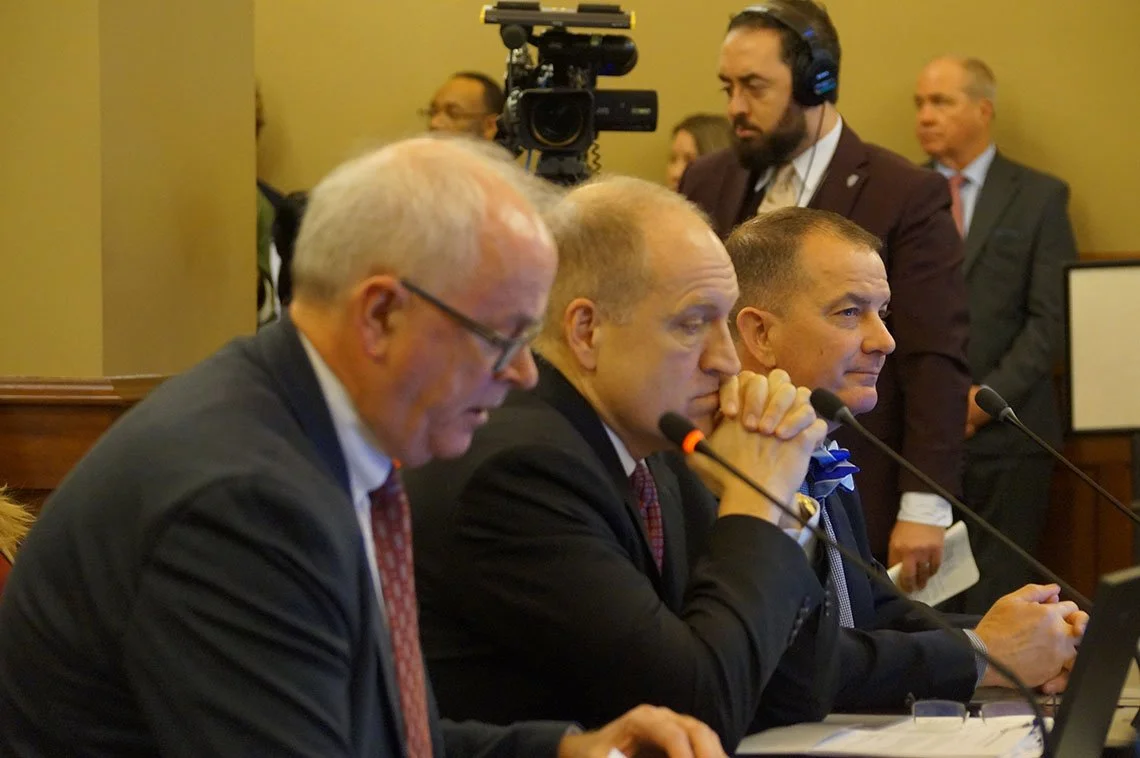
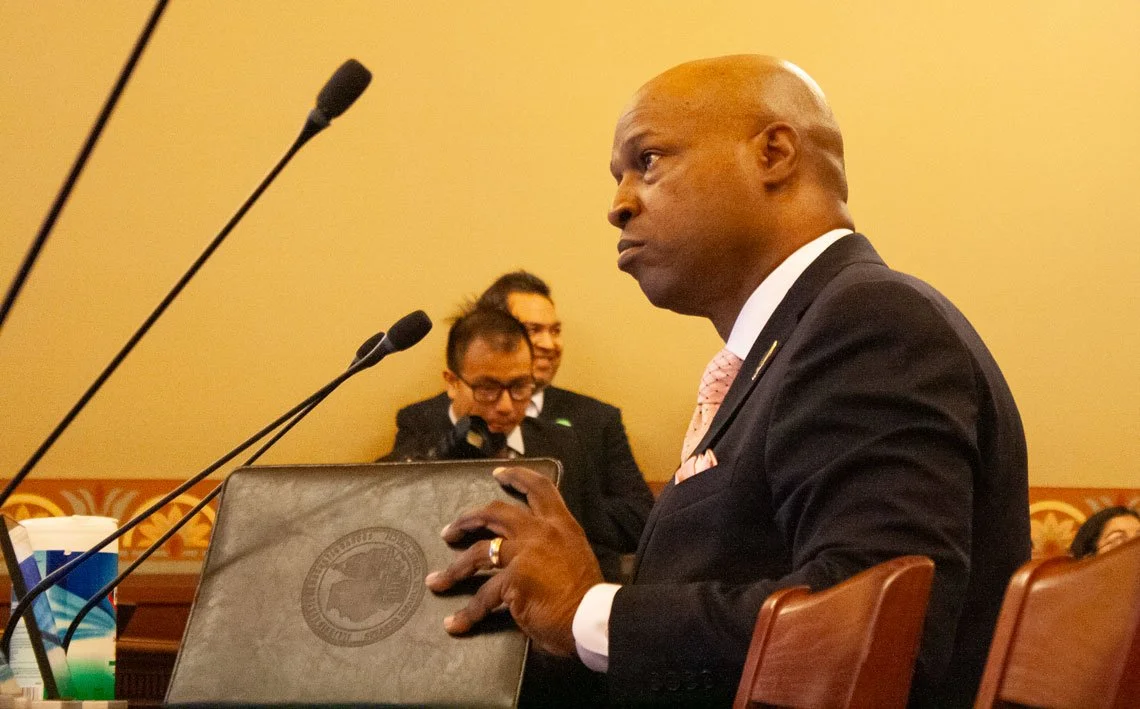
Nicholas Jones, left, executive vice president of the University of Illinois System, testifies before a House Committee opposing a bill to overhaul the way Illinois funds public universities. Also testifying in favor of the bill are Southern Illinois University System President Daniel Mahoney, center, and Eastern Illinois University President Jay Gatrell. (Capitol News Illinois photo by Peter Hancock)

Police shut down illegal dental office in Granite City operated by immigrants

The cash-only operation came to light after a patient complained about a root canal gone bad

Article Summary 

  • Prosecutors charged two Venezuelan dentists with operating an unlicensed dental practice out of a Granite City home. 

  • Idania Moreno-Paal worked as a dentist in Venezuela, then came to the United States in 2022, records show. 

  • She and Rodolfo J. Figuera, of Rolling Meadows, face felony charges of practicing medicine without a license, a felony. 

  • Police said they found money, dental equipment and a cache of extracted human teeth during a search of the home. Moreno-Paal, her husband and four children no longer live there.

This summary was written by the reporters and editors who worked on this story. 

By BETH HUNDSDORFER 
Capitol News Illinois 
bhundsdorfer@capitolnewsillinois.com  

GRANITE CITY — In a small, two-story brick house on a one-way residential street a couple of blocks from the police station, a bootleg dental practice operated, marketed through an encrypted app to the Hispanic community, authorities said.

Clients seeking dental care were led up the back stairs of a house in the 2500 block of Iowa Street and into a darkened room where there were dental chairs, suction hoses, dental surgical tools, orthodontics equipment and an X-ray machine. Cash was the expected payment for services.

It isn’t clear how long this went on. Residents in the working-class neighborhood didn’t notice anything unusual, they said, except for a few more cars parked on the street. 

“This is a pretty quiet street. We don’t have any problems here,” said a woman who lives nearby and didn’t want to be identified. 

For at least a year and half, the house operated as an underground dental practice upstairs until it was shut down last fall, according to a police report.

After a four-month investigation by Granite City police, prosecutors charged Idania J. Moreno-Paal, 41, and Rodolfo Figuera, 59, with felony practicing medicine without a license.

Moreno-Paal, of Granite City, and Figuera, of Rolling Meadows, near Chicago, both practiced as dentists in Venezuela before emigrating to Mexico, then to the United States.

Moreno-Paal, her husband Salvador Francisco Tabacco-Campos and their four children lived in the house, while upstairs she performed everything from cleanings to extractions and even braces, police said, in exchange for cash.

Figuera, who patients knew as “The doctor” would come to the Metro East to treat patients and paid Moreno-Paal to use her home for his appointments, according to a police report. He did not live in Granite City, and his whereabouts are unknown.

According to police, Moreno-Paal and her husband fled Venezuela into Mexico. In 2022, both had been granted temporary protected status work visas to enter the U.S. Tabacco-Campos “possibly owned and operated a pharmacy in Venezuela, according to the police report.

The illegal dentist office has since been shut down, and the whereabouts of Moreno-Paal and her family are unknown. Neither Moreno-Paal nor Figuera had been booked into the Madison County Jail or made a court appearance.

The U.S. Department of Homeland Security did not respond to a request seeking information about the family and Figuera immigration status, including whether they’ve been deported.

A root canal gone bad

The operation came to police attention in mid-October after a 33-year-old woman reported that she experienced an infection that spread and caused fluid to leach from her ears after a root canal went awry.

The woman spoke to police through a translator and told them she was suffering from a toothache in her rear molar and didn’t have dental insurance. Several of the woman’s co-workers referred her to Moreno-Paal, who she learned was a dentist in her home country of Venezuela.

The woman told police she contacted Moreno-Paal through the encrypted phone app “What’s App” in Spanish.

When the woman arrived at around 7:30 p.m. on a Saturday night, Moreno-Paal let her up the stairs and put her in a chair. The woman told police that Moreno-Paal gave her a pill and she lost consciousness and awoke after receiving a root canal. She left after Moreno-Paal gave her a pack of pills and told her to take one every eight hours. The woman told police she paid $850 in cash and left. 

Two days later, she returned to the Granite City house suffering from pain and swelling.

Moreno-Paal and a man, later identified as Figuera, proceeded to surgically extract the infected tooth.

The infection did not abate. The woman was treated in two local emergency rooms. Eventually, the infection relented, but then the hospital bills came.  

The woman went to Hoyleton Youth and Family Services seeking financial assistance with the medical bills, according to police reports. 

A Hoyleton worker contacted Granite City police. Two days later, Granite City police executed a search warrant on the house. 

According to a police report documenting the search, they found a container with human teeth inside, dental equipment, narcotics, six cell phones, notes and ledgers, bank statements and $1,254 in cash. 

A violation of the TRUST Act?

In their report, Granite City police noted that they conducted a records check through the Department of Homeland Security regarding Moreno-Paal, Tabacco-Campos and their four children.

The Illinois TRUST Act, signed into law in 2017, regulates local law enforcement interactions with federal immigration agents. It prohibits them from holding individuals solely on immigration detainers, stopping people based on perceived status, or sharing nonpublic information without a judicial warrant.

At the time, the TRUST Act was one of nation’s strongest state-level due-process protections for immigrants, designed to shield them from being deported while interacting with local police.  

Granite City police did not respond to requests for comment about the case or whether they assisted Immigration and Custom Enforcements agents. The Illinois attorney general’s office also did not respond.

In a May 2022 interview with a Mexican newspaper, Excelsior, Moreno-Paal told a reporter she did not want to go to the United States initially because she could not practice dentistry without going back to school.

Something changed after that.  Moreno-Paal and her husband, Tabacco-Campos, both were issued temporary visitor drivers licenses in February 2023 — six months before they filled out paperwork applying for an occupancy permit for the house on the Iowa Street. 

A man who spoke only in Spanish answered the door at the house earlier this month and said he now resided at the home and the dentist’s family no longer lived there. He didn’t know their current whereabouts and pointed to a mailbox stuffed with mail addressed to the couple.

After the search warrants were executed in October, Granite City detectives Noe Marquez and Brandon Shellenberg brought Moreno-Paal in for an interview. She denied the amount of income that she derived from the practice, according to a police report documenting the interview. When detectives confronted her with bank statements and wire transfers, she told them what she was doing with the money.

“She explained the money was for a home she purchased back in Venezuela,” according to the report. 

Moreno-Paal told the detectives she purchased the medications found in the home from local Mexican grocery stores, the report stated. 

The neighbor who lived down the street told a reporter that she didn’t know the couple’s whereabouts either but noted there have been other people living at the house since the search warrant was executed in October.

“It should be noted the above incident was not reported to the Illinois Department of Professional Regulation at the completion of this report in order for further criminal investigation to be completed,” the police report stated.

The department has no reports on file regarding Moreno-Paal and Figuera, according to the agency’s spokesperson.Capitol News Illinois is a nonprofit, nonpartisan news service that distributes state government coverage to hundreds of news outlets statewide. It is funded primarily by the Illinois Press Foundation and the Robert R. McCormick Foundation.  

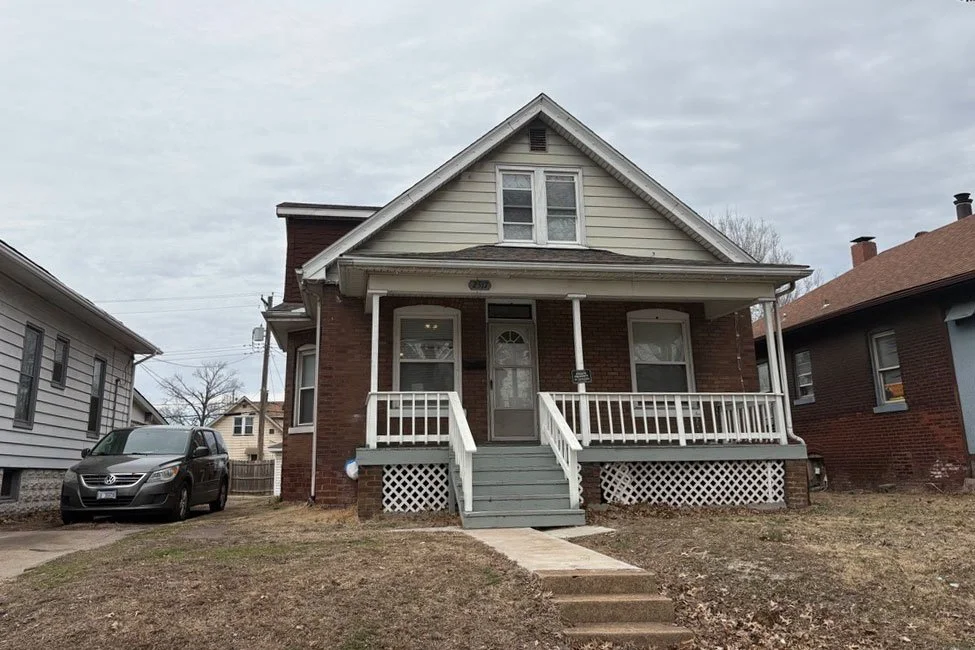
The house in the 2500 block of Iowa Street in Granite City where an illegal dental office operated. (Capitol News Illinois photo by Beth Hundsdorfer)

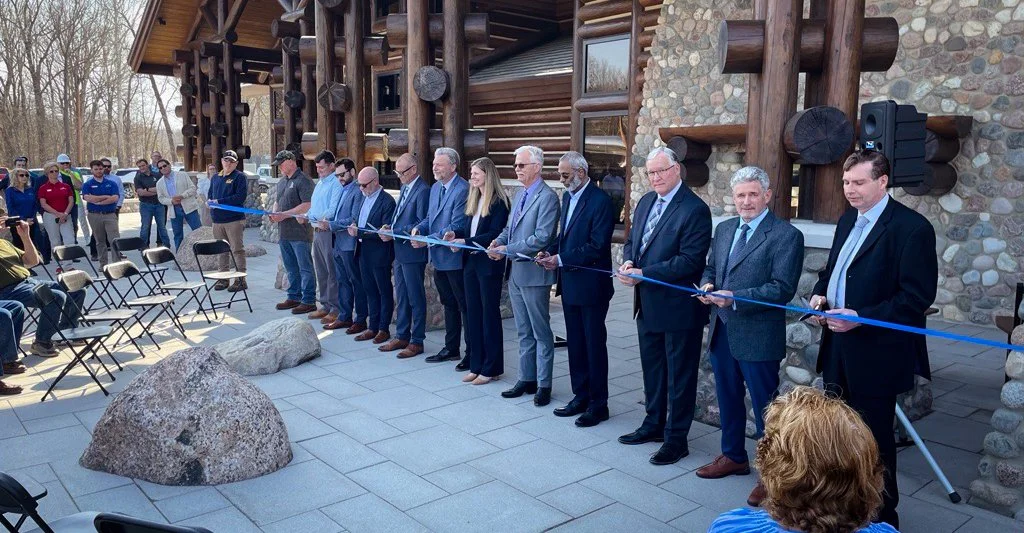
INDOT cuts ribbon on new I-64 welcome center in southwest Indiana

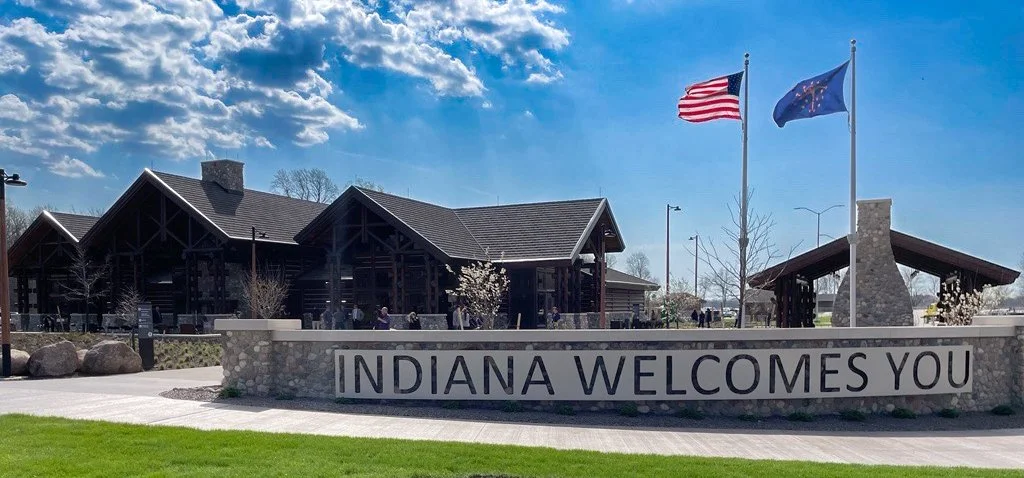
POSEY COUNTY, Ind. – Earlier today, the Indiana Department of Transportation joined public officials and contracting partners for a ceremonial ribbon cutting to mark the opening of the newly constructed Black River Welcome Center on eastbound I-64 near mile marker 7 in Posey County.

The new welcome center is inspired by the boyhood home of President Abraham Lincoln. Interactive exhibits feature historical information about the 16th president. Also featured are former presidents from Indiana, Benjamin Harrison (23rd president) and William Henry Harrison (9th president). Visitors will be able to utilize additional interactive exhibits and design elements that highlight southern Indiana.

“The new Black River Welcome Center showcases the very best of Indiana, our history, our hospitality, and our commitment to serving travelers,” said Gov. Mike Braun. “Opening this facility as our nation approaches its 250th anniversary gives visitors a meaningful opportunity to connect with Indiana’s role in shaping America’s story.”

Other amenities at the welcome center include an adult recreation area, children's playground, and dog park. Increased semi-truck parking will also be available, with 75 spaces in total, an increase of 60 spaces from the previous welcome center. Through INDOT's long-term rest area and welcome center improvement plan, the agency will add more than 1,200 truck parking spaces, nearly doubling capacity statewide.

"INDOT is committed to providing safe, informative environments where travelers can rest and recharge through our Rest Area and Welcome Center Improvement Plan,” said INDOT Commissioner Lyndsay Quist. “Giving motorists a place to take a break is just another way INDOT is working to make our roadways safer.”

The statewide improvement plan includes more than $600 million in federal funding for improvements to 21 rest areas and welcome centers to be completed by the end of Fiscal Year 2034. Improvements include modernizing facilities, constructing new buildings, and improving parking. Learn more about the plan and construction timeline here.

Construction of the Black River welcome center began in 2023 and was led by prime contractor Garmong Construction Services of Terre Haute. The new welcome center opened to the public after the event.