Commissioners Hear Update On Early Voting

Wabash County Clerk Janet Will delivered her monthly report to the County Commissioners Monday afternoon.

Will reported the Clerk’s Office received $19,323 in tax redemptions. Of that total, $2,731 was transferred to the county’s GIS fund, and $8,500 was deposited into the general fund.

Will also provided an update on early voting. Voting is currently underway in the County Clerk’s Office. So far, approximately 30 voters have cast ballots in person. In addition, 270 vote-by-mail ballots have been sent out, with about 75 already returned.

Will encouraged residents to participate in the election process, quoting Abraham Lincoln, saying, “Elections belong to the people. It’s their decision.” She urged voters to make their voices heard.

Bill expanding access to discounted drugs awaits House action

Clinics accuse drug manufacturers of restricting access to drugs in federal 340B program

By PETER HANCOCK
Capitol News Illinois
phancock@capitolnewsillinois.com

Story Summary

  • The 340B drug program requires manufacturers to provide steep discounts for certain medications to safety net clinics, Federally Qualified Health Centers and other health care providers that serve low-income and uninsured patients.

  • Those providers accuse the drug manufacturing industry of restricting access to those discounted medications, a charge the pharmaceutical industry denies.

  • Legislation to prevent manufacturers from restricting access to those drugs awaits final action in the House.

This summary was written by the reporters and editors who worked on this story.

SPRINGFIELD – Advocates for health care providers that treat low-income and uninsured patients are pressuring state lawmakers to pass legislation they say would prevent drug manufacturers from restricting access to medications that are discounted through a federal pharmacy program.

The program is known as the 340B Drug Pricing Program. It requires drug manufacturers to provide outpatient drugs to safety net clinics, Federally Qualified Health Centers, AIDS clinics and a variety of other health care providers that treat Medicaid patients at substantially reduced prices. 

The program has been in place since 1992. But in recent years, according to the Illinois Primary Health Care Association, drug manufacturers have found ways to limit the distribution of those drugs by restricting where patients can go to fill their prescriptions.

“What pharmaceutical manufacturers began doing was limiting the distribution of these drugs to a single location,” Cyrus Winnett, executive director of the IPHCA, said in an interview. “And when I say single location, I don't mean Walgreens chain or CVS or a local independent. I mean one physical location, which for our organizations and their patients that have wide service areas, that's extremely limiting,”

Winnett’s organization represents about 430 Federally Qualified Health Centers, or FQHCs, in Illinois that serve a combined 1.5 million patients.

FQHCs are primary care clinics, often run by local health departments or nonprofit charities. They receive federal funding to provide comprehensive primary health services to underserved populations, including Medicare and Medicaid patients and the uninsured.

Winnett said the vast majority of the clinics his organization represents do not have their own on-site pharmacies. Instead, they contract with outside pharmacies to fill prescriptions that are covered by the 340B program.

He said the practice of restricting where patients can fill 340B prescriptions began in 2020 with one manufacturer and one drug. But it has since ballooned to more than 50 manufacturers and thousands of different medications.

“You have providers in the clinic assessing the patient, reaching a diagnosis, and then trying to connect them with a drug that's available to them and one that they can afford,” Winnett said. “And there was this problem that crept up where providers were having to scramble to find alternative medications, either for patients that they were newly diagnosing or ones who have even been on a particular medication but are being forced to change because they can no longer access it.”

Pending legislation

The legislation pending in the General Assembly is a Senate amendment to House Bill 2371. Sponsored by Sen. Dave Koehler, D-Peoria, it would prohibit anyone, including drug manufacturers, from imposing any restrictions on the ability of 340B-eligible clinics and hospitals to contract with outside pharmacies to fill 340B-funded prescriptions.

It also prohibits anyone, including manufacturers, from requiring 340B clinics and hospitals, or their contract pharmacies, to submit ingredient cost or pricing data about 340B drugs beyond what is required by state or federal law. And it prohibits anyone from imposing requirements regarding how clinics, hospitals or contract pharmacies manage their inventory of 340B drugs.

In testimony before the House Executive Committee near the end of the 2025 legislative session, Jessica Lynch, of the Pharmaceutical Research and Manufacturers of America, or PhRMA, denied that drug makers are restricting access to discounted medications and said the proposed legislation would not benefit health care consumers.

"This is not an access bill,” she said. “This bill does not directly impact patients at all in any clear or comprehensive way. A pharmacy's status as a contract pharmacy has no impact on whether or not a patient can go pick up their medicines at the pharmacy."

In an email statement Monday, PhRMA spokesperson Tom Wilbur did not comment on the specific language of the legislation. But he said the organization believes generally that the 340B program needs broader reforms that would be best addressed at the federal level.

“The 340B program was created by Congress to help low-income and uninsured patients access medicines, but there is little evidence that patients are benefiting,” Wilbur said. “Instead, large tax-exempt hospitals and their for-profit partners are exploiting the program, buying medicines at steep discounts, and then marking them up by thousands of dollars.”

The bill awaits final action in the House before it can be sent to Gov. JB Pritzker. A spokesperson for House Speaker Emanuel “Chris” Welch said in an email the bill is still under review and the next steps will be determined in consultation with the Democratic caucus.

The next session of the House is scheduled for Wednesday, March 18.

Capitol News Illinois is a nonprofit, nonpartisan news service that distributes state government coverage to hundreds of news outlets statewide. It is funded primarily by the Illinois Press Foundation and the Robert R. McCormick Foundation. 


Treasurer Updates County Board On Tax Collections

Wabash County Treasurer Angela Broster provided an update on property tax collections during Monday afternoon’s Wabash County Commissioners meeting.

Broster reported the Treasurer’s Office has collected just over 95 percent of the 2024 payable 2025 tax levy. However, there are still 562 delinquent real estate tax bills and 21 delinquent mobile home tax bills outstanding.

Certified notices were mailed to delinquent taxpayers on February 27th. Broster said the deadline to pay and avoid having a name published in the newspaper is Friday, March 6th. The delinquent tax list will be published in the March 14th edition of the local newspaper.

The Treasurer’s Office will stop accepting personal checks after Friday, March 13th. The last day to make a credit card payment online is Wednesday, March 18th. Credit card payments can be made through the website listed on the back of tax bills.

The annual Wabash County tax sale is scheduled for Friday, March 27th at 10 a.m. in the courtroom.

Anyone with questions about delinquent taxes or payment options is encouraged to contact the Wabash County Treasurer’s Office directly.

Pritzker denies traveling on Epstein’s plane after Bill Clinton’s since-recanted testimony

Clinton spokesperson says president was referring to a foundation trip to Africa

By BEN SZALINSKI
Capitol News Illinois
bszalinski@capitolnewsillinois.com

Article Summary

  • Former President Bill Clinton recently mentioned Gov. JB Pritzker in a deposition to Congress regarding sex trafficker Jeffrey Epstein, saying he thought he might have traveled on Epstein’s plan with Pritzker and his wife. 

  • The direct quote: “I think it was on one of these trips — I think — that I had my first trip for a man who is now the governor of Illinois, JB Pritzker, and his wife.  

  • A spokesperson for Clinton quickly clarified the testimony, saying the former president was referring to a trip he took with Pritzker to Africa in 2008 for the Clinton Foundation, but it was not on Epstein’s plane and Epstein wasn’t present.

  • Pritzker said Tuesday he has never had any association with Epstein and called Clinton “clearly mistaken.” 

  • Pritzker is a longtime friend of the Clintons and was a key supporter of both of Hillary Clinton’s campaigns for president. 

  • Pritzker’s cousin, Thomas Pritzker, has acknowledged documented ties to Epstein.

This summary was written by the reporters and editors who worked on this story. 

Gov. JB Pritzker denied a since-recanted comment by former President Bill Clinton that Clinton thought the pair may have traveled together on a plane owned by convicted sex trafficker Jeffrey Epstein.

His denial was in response to a 90-second video clip of Clinton’s closed-door deposition before the U.S. House Oversight and Government Reform Committee that began circulating online Monday night.

“No, I have never, had never met Jeffrey Epstein,” Pritzker said Tuesday. “I was never on Jeffrey Epstein's plane. I was never on any plane with Jeffrey Epstein or with Ghislaine Maxwell. Never met her.”

Pritzker added he had never heard of Epstein until about 2019 when Epstein was indicted for child sex trafficking in the early 2000s.

Clinton’s testimony

In his deposition, the ex-president was asked to recall who he brought on more than two dozen flights he took on Epstein’s plane. He said it was often people who worked with him, for his foundation, including staffers and Secret Service agents, but also the governor of Illinois and his wife. 

“On occasion, I had people who had volunteered to help us and wanted to see what we were doing,” Clinton said. “For example, I think it was on one of these trips — I think — that I had my first trip for a man who is now the governor of Illinois, JB Pritzker, and his wife. They gave me — they helped me get started.” 

Speaking to reporters Tuesday in Chicago, Pritzker said Clinton “clearly was mistaken.” 

A spokesperson for Clinton on Tuesday also reframed the president’s comments. 

“President Clinton was simply giving an example of the many people he traveled with to see the Clinton Foundation’s work,” spokesperson Angel Ureña said in a statement to Capitol News Illinois. “Gov. Pritzker joined a Clinton Foundation trip in 2008. Not on Epstein’s plane. Not with Epstein. Not with Maxwell.” 

Clinton has said he cut ties prior to when Epstein was first arrested in 2005 for sex crimes and first sentenced to 18 months behind bars in June 2008. Clinton and Pritzker were photographed by Getty Images together in Rwanda in August 2008 on a Clinton Foundation trip. Pritzker said the plane for that trip was donated by Google. 

CLINTON

Neither Pritzker nor the Clintons have been accused of any wrongdoing related to Epstein. The Illinois governor’s name appears about two dozen times in the Epstein files — all references to news stories with Pritzker in the headline. The governor’s last name appears more than 7,100 times, likely in relationship to the governor’s cousin, Thomas Pritzker, who has acknowledged a connection with Epstein.

Illinois GOP response

Illinois Republicans still pounced at the chance to tie the governor to Epstein. 

“Time to do some explaining! Why were you on pedophile Epstein’s plane?” Rep. John Cabello, R-Machesney Park, posted at Pritzker on X.

One person who is mentioned in the more than 3 million Epstein documents released so far is President Donald Trump, whose name appears 38,000 times, according to The New York Times. Trump has denied any wrongdoing.

Illinois Republicans skipped a vote on a nonbinding resolution in the Illinois House last week that called on the Trump administration to release all files related to Epstein with redactions only for victims. 

“It's a wag the dog,” Pritzker said. “Let's, you know, ‘look over here, look over here.’ Don't look at the leader of their party, the leader of this country, who is a Republican, Donald Trump, who clearly is somebody that needs to be investigated, needs to be answering for his relationship with Ghislaine Maxwell, with Jeffrey Epstein, and has done none of that. You saw other people testifying. Where is President Trump’s testimony?”

Pritzker’s relationship with the Clintons

Pritzker’s relationship with the Clintons dates back two decades. According to the Washington Post, Pritzker connected as a political ally with then-New York Sen. Hillary Clinton in 2006 through a mutual friend. 

Hillary Clinton then asked Pritzker to be co-chair of her 2008 presidential campaign in the Democratic primary against then-Illinois Sen. Barack Obama. Pritzker remained a top fundraiser and advisor to her unsuccessful 2016 campaign against Trump.

Pritzker and Hillary Clinton even watched part of the 2024 Democratic National Convention together from balcony seats at the United Center in Chicago.

Pritzker, who is worth $3.9 billion, according to Forbes, and is one of the wealthiest elected officials in American history, also gave $17 million to the Clinton Foundation between 2002 and 2016, according to a 2018 Illinois Answers Project investigation

Another Pritzker

The governor’s cousin, Thomas Pritzker, recently resigned from his role as the executive chairman of Hyatt Hotels after his association with Epstein and Maxwell came into clearer view through emails released in the Epstein files tranche.

When asked about his cousin’s connection to Epstein in a recent interview, the governor said anyone who has done something wrong should be held accountable.

“I’m not close to my cousin, but I can tell you that it’s very important that people be held to pay the price for whatever it is that they may have done,” Pritzker said.

Read more: Illinois lawmakers call for governor-appointed Epstein investigatory commission 

Illinois Democratic lawmakers Monday joined advocates for women and survivors of sexual abuse to introduce House Bill 5723, called the Illinois Epstein Files Investigation Act.

The bill, if passed, would create a governor-appointed commission to investigate Illinois-based crimes connected to Epstein’s network. Those would focus primarily on the stories of victims in Illinois and crimes that may have occurred in Illinois.

Maggie Dougherty contributed.

Capitol News Illinois is a nonprofit, nonpartisan news service that distributes state government coverage to hundreds of news outlets statewide. It is funded primarily by the Illinois Press Foundation and the Robert R. McCormick Foundation.
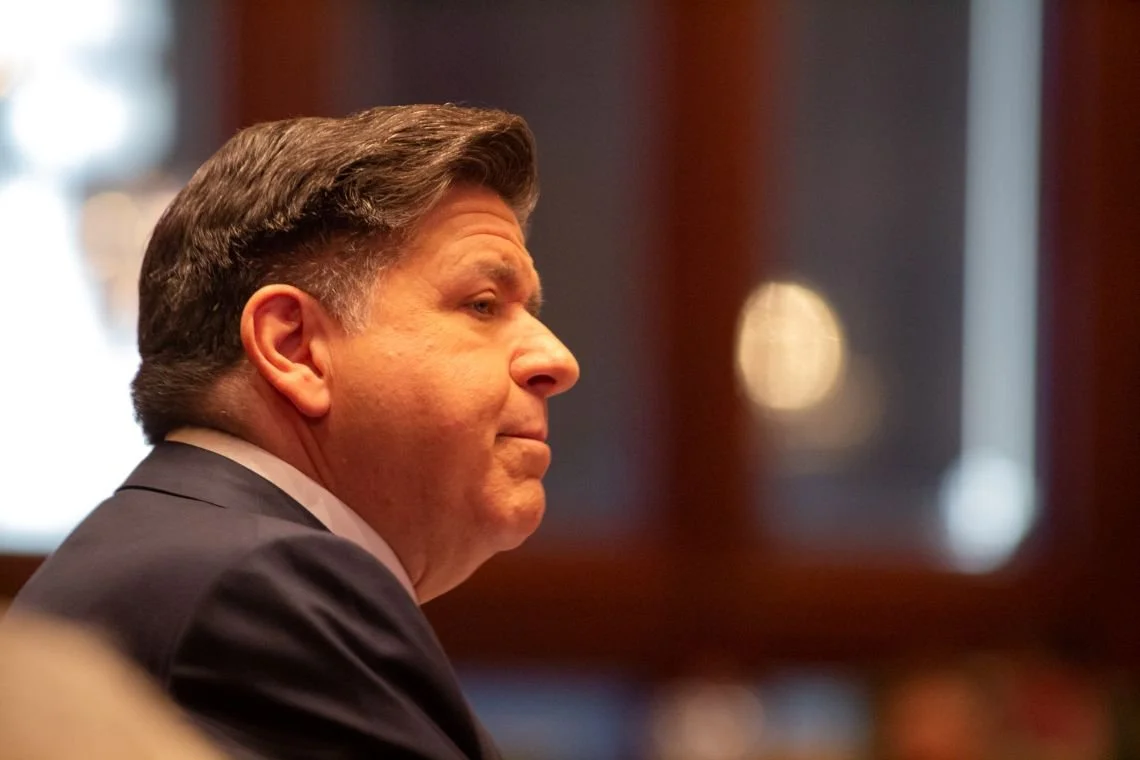


Gov. JB Pritzker delivers his 2026 State of the State address in the Illinois Capitol on Feb. 18, 2026. (Capitol News Illinois photo by Jerry Nowicki)


Former DOJ attorneys intervene in lawsuit seeking sensitive Illinois voter registration data 

Illinois is among 30 jurisdictions being sued by Trump administration over access to voter data

By PETER HANCOCK
Capitol News Illinois
phancock@capitolnewsillinois.com

Story Summary

  • Eighteen former Department of Justice attorneys signed onto an amicus brief arguing the Trump administration has no legal authority to demand voter registration data from Illinois.

  • Illinois is among 29 states and Washington, D.C., being sued by the Trump administration for access to their complete, unredacted voter registration databases.

  • Several organized labor organizations and public interest lobby groups have also filed briefs opposing the administration’s efforts. The case has not yet been scheduled for a hearing.

This summary was written by the reporters and editors who worked on this story.

SPRINGFIELD – Eighteen former U.S. Department of Justice attorneys filed a brief in federal court this week opposing the Trump administration’s lawsuit that seeks access to sensitive personal information about every registered voter in Illinois.

In a friend-of-the-court brief filed Monday in U.S. District Court in Springfield, the attorneys — including many who served in both Democratic and Republican administrations — argue the Department of Justice has no legal authority to demand the information.

They also accuse the agency of concealing its real purpose for seeking the data, which they argue is “to enable the federal government to conduct its own list maintenance to discover whether noncitizens or undocumented immigrants are registered to vote.”

‘Holy trinity of Identity theft’

Illinois is among 29 states and Washington, D.C., that are being sued for access to their unredacted voter registration rolls. Those databases include not just the names and addresses of every registered voter in those jurisdictions but also their dates of birth, driver’s license numbers and partial Social Security numbers.

“The holy trinity of identity theft, as I’ve called it,” David Becker, one of the former DOJ attorneys who signed the brief, said during a media briefing Tuesday.

According to the Brennan Center, federal judges in California, Oregon and Michigan have ruled that the DOJ cannot force states to turn over voter lists as of Feb. 26. No judges have ruled in favor of the DOJ. 

Becker is also the founder and executive director of the Center for Election Innovation and Research, a nonpartisan, nonprofit organization that conducts elections research and works with election officials around the country.

Becker said he and the other attorneys have filed similar briefs in most of the ongoing lawsuits seeking access to sensitive voter information in other states. He said while it is not common for former DOJ attorneys to intervene in cases against their former employer, it is also not unprecedented.

“I don't go around looking for places to disagree with the Department of Justice. I'm much happier when I think the Department of Justice is looking out for all of us and enforcing the law as it should be,” he said. “But in these cases, we needed to point out how the department's efforts to seize sensitive voter data from every American voter from the states that hold that sensitive data, that have state laws that protect that data, how that was unprecedented.”

History of the lawsuit

The Justice Department first requested the information from the Illinois State Board of Elections in July 2025, arguing it needed the data to determine whether Illinois was complying with federal laws that require states to maintain accurate and up-to-date voter registration files. That includes taking steps to periodically purge the rolls of the names of voters who have died, moved or who are not legally eligible to vote.

The state board, however, has so far declined to hand over the information. Instead, in August, it provided DOJ with a partially redacted data file — the same file it makes available to political parties and campaign committees — that only includes partial home addresses and does not include driver’s license or partial Social Security numbers.

In December, after a series of emails in which DOJ continued to demand the information, the board of elections  filed suit in federal court.

Several other organizations have also intervened in the case to oppose the administration’s efforts to obtain the data. Those include the Illinois AFL-CIO, the Illinois Alliance for Retired Americans, the Illinois Federation of Teachers, Common Cause and the Illinois Coalition for Immigrant and Refugee Rights.

No hearings or oral arguments have been scheduled in the case.


Capitol News Illinois is a nonprofit, nonpartisan news service that distributes state government coverage to hundreds of news outlets statewide. It is funded primarily by the Illinois Press Foundation and the Robert R. McCormick Foundation. 
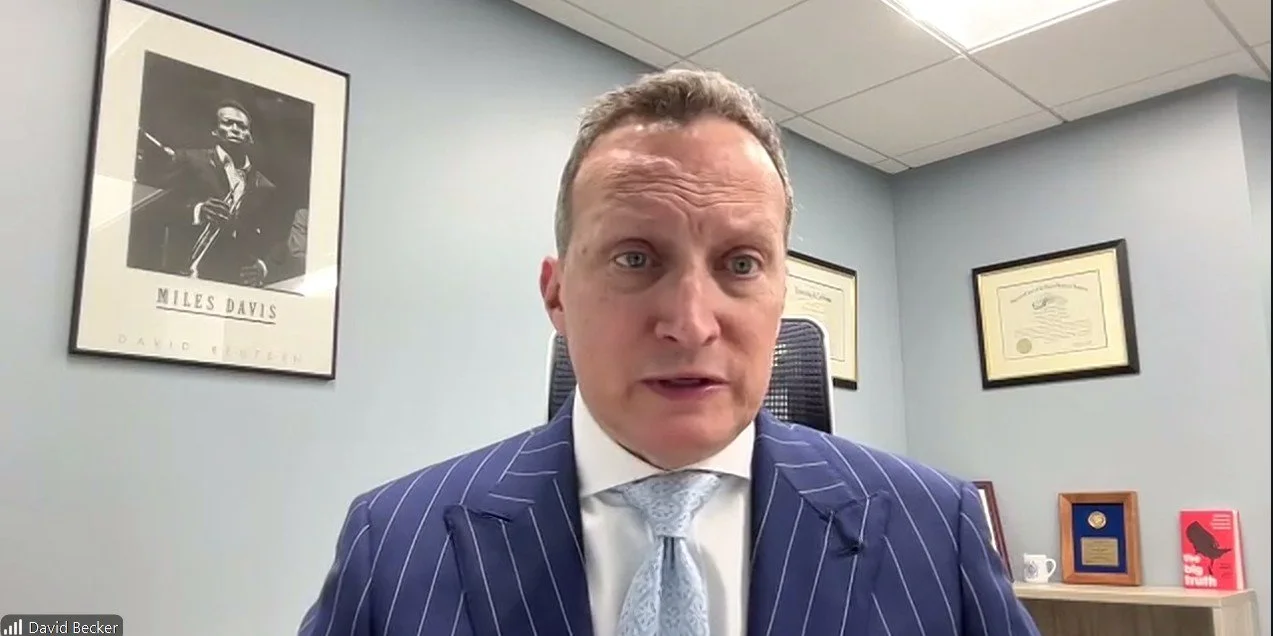

David Becker, founder and executive director of the Center for Election Innovation and Research, is among 18 former Department of Justice attorneys who filed a brief in federal court in Illinois opposing the department’s lawsuit seeking access to the state’s unredacted voter registration database. (Screenshot of Zoom call by Capitol News Illinois)


Former Carlyle Police Chief accused of embezzling more than $100,000

EAST ST. LOUIS, Ill. – The former police chief of the Carlyle Police Department is facing several federal charges for allegedly embezzling more than $100,000 for his personal benefit.

A federal grand jury returned a four-count indictment charging Mark A. Pingsterhaus, 52, of Carlyle, with two counts of wire fraud and two counts of theft of government funds.

“We strongly support law enforcement because the overwhelming majority of officers serve with dedication, honor, and courage. But when any officer, especially a chief, betrays the community they are sworn to protect we will take decisive action,” said U.S. Attorney Steven D. Weinhoeft. “I appreciate our partnership with the Carlyle Police Department and city officials, who have fully cooperated in good faith during the investigation.”

According to the indictment, Pingsterhaus is facing charges for allegedly embezzling funds from at least January 2017 to November 2025 as police chief for the City of Carlyle and as the chief financial officer for the Carlyle Fire Protection District.

Pingsterhaus is accused of using City of Carlyle and Carlyle Fire Protection District funds for unauthorized and personal expenses like travel, entertainment, goods and services. In two examples, the indictment states he used the City of Carlyle’s bank card to purchase WNBA tickets and the Caryle Fire Protection District’s bank card to purchase jewelry from Zales.

“Our partnership to combat violent crime and drug trafficking with the Carlyle Police Department and surrounding agencies has led to results that have undoubtedly made the region safer. That being said, our mission is to not only combat violent crime, but to protect against the exploitation of the very systems designed to help our communities,” said FBI Springfield Field Office’s Special Agent in Charge Ruben Marchand-Morales. “When resources meant for community elevation are diverted for personal gain, it undermines the safety we work so hard to build and harms the community we swore to protect.”

He is also accused of using funds from the Carlyle Police Department’s Drug and Education Fund for personal expenses.

An indictment is merely an allegation. A defendant is presumed innocent until proven guilty beyond a reasonable doubt in a court of law.

Convictions for wire fraud are punishable by up to 20 years’ imprisonment and theft of government funds can earn up to 10 years in federal prison.

The FBI Springfield Field Office is leading the investigation, and Assistant U.S. Attorney Peter T. Reed is prosecuting the case.

City Prioritizing Sidewalk Improvements In 2026

More sidewalk improvements could be coming to Mt. Carmel in 2026.

Mayor Joe Judge told the City Council Monday afternoon that plans are already being discussed for another strong year of sidewalk projects throughout the city.

Judge said he recently met with Mr. Turner to review several potential improvements, including a proposed new sidewalk along Park Road from North Drive to Poor Farm Road. The mayor noted that area sees heavy foot traffic, with many residents walking toward Poor Farm Road and using the route for exercise.

Judge said a recent visitor to Mt. Carmel even commented on how many people in the community enjoy walking, something the city wants to continue to support by expanding safe pedestrian pathways.

In addition to the Park Road project, the mayor said the city is also looking at installing new sidewalks along Market Street uptown.

Judge told council members he will be working with Dave Dallas on the projects and hopes construction can be completed before colder weather returns this fall.

He says the city is looking forward to continuing efforts to improve walkability and safety for residents.

How Illinois’ Road Fund will help fund transit, especially in the Chicago region


Downstate legislators are raising concerns over new distribution formula

By JACQUES ABOU-RIZK & AMY L. WONG

Medill Illinois News Bureau 

news@capitolnewsillinois.com

Article Summary

  • A new state transit law redirects revenue from the state’s motor fuel tax and interest from the Road Fund – funding historically used to fix roads – to public transportation. 

  • The money aims to stabilize Chicagoland public transit as pandemic-era funding runs dry. 

  • Republican and downstate legislators argue the shift will hurt efforts to improve Illinois’ roads. 

  • The bill allows Chicago transit to avoid fare hikes this year, but critics argue the bill permits transit agencies to avoid necessary reforms and efficiencies. 

This summary was written by the reporters and editors who worked on this story.

SPRINGFIELD — In Dallas City, a small town in western Illinois along the Mississippi River, Mayor Kevin Six says residents have grown frustrated wondering whether the state will ever finish paving Illinois Highway 96.

“They just paved six miles between our town and the next, but we’ve been waiting four, five years for more of it to be repaved,” Six said. “They’re just dragging their feet.”


The Illinois Department of Transportation included $7 million for six miles of resurfacing and culvert work on Illinois 96 in its October multi-year plan. The years of the project are listed for 2027-2031.

Six said his frustrations only intensified following the veto session of the General Assembly last fall and passage of a transit bill that diverted funds traditionally used for road construction throughout the state and put them toward public transportation, mostly in the Chicago area.

Downstate officials have aired frustration in the aftermath of the transit overhaul – though the Illinois Department of Transportation maintains that its multi-year plan unveiled prior to the new law’s passage will not be reduced or altered because of it.

Read more: Lawmakers approve $1.5B transit funding package without statewide tax increases

Senate Bill 2111, which passed in the final hours of the last day of the session, included $1.5 billion in transit funding. That includes redirecting a projected $860 million in sales tax revenue charged on motor fuels from the Illinois Road Fund to public transportation operations. The bill, which will take effect in June, distributes 85% of the diverted funds to Chicago-area transit and 15% to downstate transit agencies.

The Road Fund is a primary statewide account used to pay for or finance road projects through the Illinois Department of Transportation. Many road projects are paid for with construction bonds, and the state’s motor fuel tax increases with inflation each year to raise revenue to pay for them.  

The Road Fund is fed into by the state’s motor fuel tax, which is separate from the sales tax charged on motor fuel taxes. Before 2019’s Rebuild Illinois capital infrastructure plan, the sales tax on motor fuel was going to the state’s main General Revenue Fund, rather than to the Road Fund. 

Rebuild, which was the first comprehensive, multi-year capital plan since 2009, created an incremental shift of that money to the Road Fund, which the new law will alter. Pritzker received bipartisan support for the plan, in large part because it shifted the sales tax money on motor fuel purchases to the Road Fund.  

The new law also allows another estimated $200 million from interest growing in the state’s Road Fund to be allocated for mass transit.

That money will patch public transportation budget holes in the northern part of the state caused in large part by pandemic-era federal aid running dry. 

Pritzker signed SB 2111 on Dec. 16. The plan does not include any statewide tax increases but raises a sales tax in the Chicago area.

Existing road infrastructure plans

The governor defended the redistribution of transportation funding shortly after his signing of SB 2111.

“We have put more money into downstate roads than we have into the Chicago area roads, much more than historically. That’s just been the way it is since we passed Rebuild Illinois,” Pritzker said during an announcement. “We definitely are looking at ways that we can turn the dials and make it better for downstate, but I think we’ve done a lot already.”

Read more: Here’s what’s in Illinois’ $50.6B six-year infrastructure plan

The state’s latest $50.6 billion infrastructure plan expands on the 2019 Rebuild Illinois capital program.

For FY 2026 to 2031, Rebuild Illinois allocates $11.4 billion to projects specific to downstate IDOT Districts 4-9. Projects for districts 1-3 are slated to receive $12.3 billion for the same time, according to IDOT. Region 1 includes the state’s six most populous counties that make up two-thirds of the state’s population: Cook, DuPage, Lake, Will, Kane and McHenry. Districts 2 and 3 include 19 counties ranging from the state’s northwest corner south to Ford and Iroquois County.

Responding to concerns about how downstate road projects will be affected, a spokesperson for the Illinois Department of Transportation said, “No changes or reductions to the program are planned.”

“The department remains committed and has the resources to deliver all of the projects captured in the latest multiyear construction program released last fall, covering fiscal years 2026 through 2031,” spokesperson Maria Castaneda said in an email. 

The new law doesn’t explicitly divert funding from projects earmarked for central or southern Illinois. Rather, it pulls from the statewide funding pool that backs IDOT’s multi-year plan and directs the money to the 85-15 transit split on an ongoing basis.

Sen. Ram Villivalam, D-Chicago, a main proponent of SB 2111, argued the bill provides sufficient funding for downstate, pointing to the 15% of redirected funds, or $129 million, for transit outside the Chicago area. But Six and several Republican legislators, including Sen. Sue Rezin, R-Morris, said Springfield has continuously sidestepped downstate road infrastructure in favor of Chicago. 

“That’s peanuts compared to what they took from us and gave to Chicago,” Rezin said. “And what really makes me frustrated is, the people still in my district, when they go to gas up in my district, think that that money is going to repair their roads and bridges.’’

While a 2016 constitutional amendment approved by voters explicitly allows Road Fund money to be used for public transit and several other modes of transportation, Sen. Dave Syverson, R-Cherry Valley, characterized the diversion of funds as a “legal loophole.” The amendment limits money raised from transportation-related activities, like the motor fuel tax, to being spent only for transportation-related purposes. 

“When we talk to the public, and we sit down and talk to a group of people and have to say, ‘They’re taking $800 million of major roads and bridges that are supposed to get done out here in central and northern Illinois, that was taken and shifted over to Chicago, so your project’s now being pushed back a year or two or three, then they get angry,’” Syverson said. 

Villivalam pointed out the expenditure on transit is explicitly allowed in the text of the constitution.

Impact on trucking

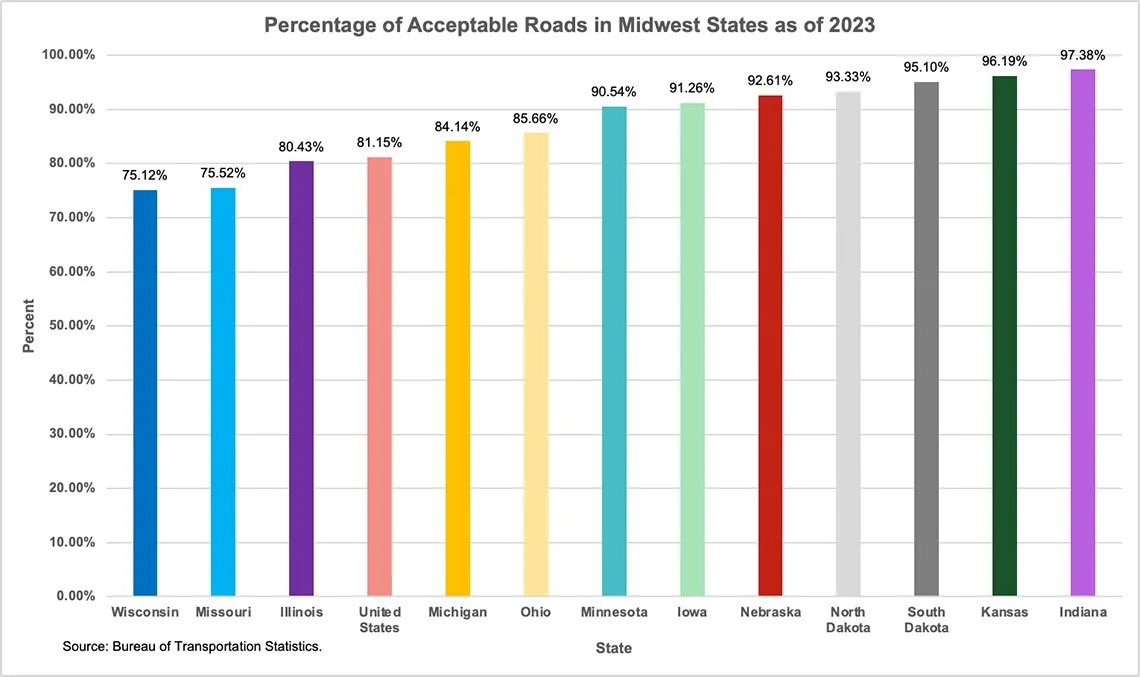
Industry groups have traditionally opposed any diversion of money from the Road Fund. Illinois Trucking Association Executive Director Matthew Hart said poor road quality leads to increased congestion during emergency repairs and hazards for commercial drivers.

“Every time there is an IDOT crew or maintenance crew out there, they’re closing down lanes and closing down capacity, then you restrict the flow of goods,” he said. “So that’s why it’s imperative that we keep the roads in good shape, so that we’re spending less time filling potholes.” 

Hart said poor road quality can lead to increased costs for truckers. “If you operate trucks on bad roads, you’re going to spend more time repairing your vehicles,’’ he said.

Joseph Schwieterman, director of the Chaddick Institute for Metropolitan Development at DePaul University, warned that downstate districts face increasing challenges financing their roads. Declining populations diminish the tax base, he said, and have reduced county spending on roads. 

Still, he warned, “we can’t fall back on our bad past habits of letting the road system deteriorate.” 

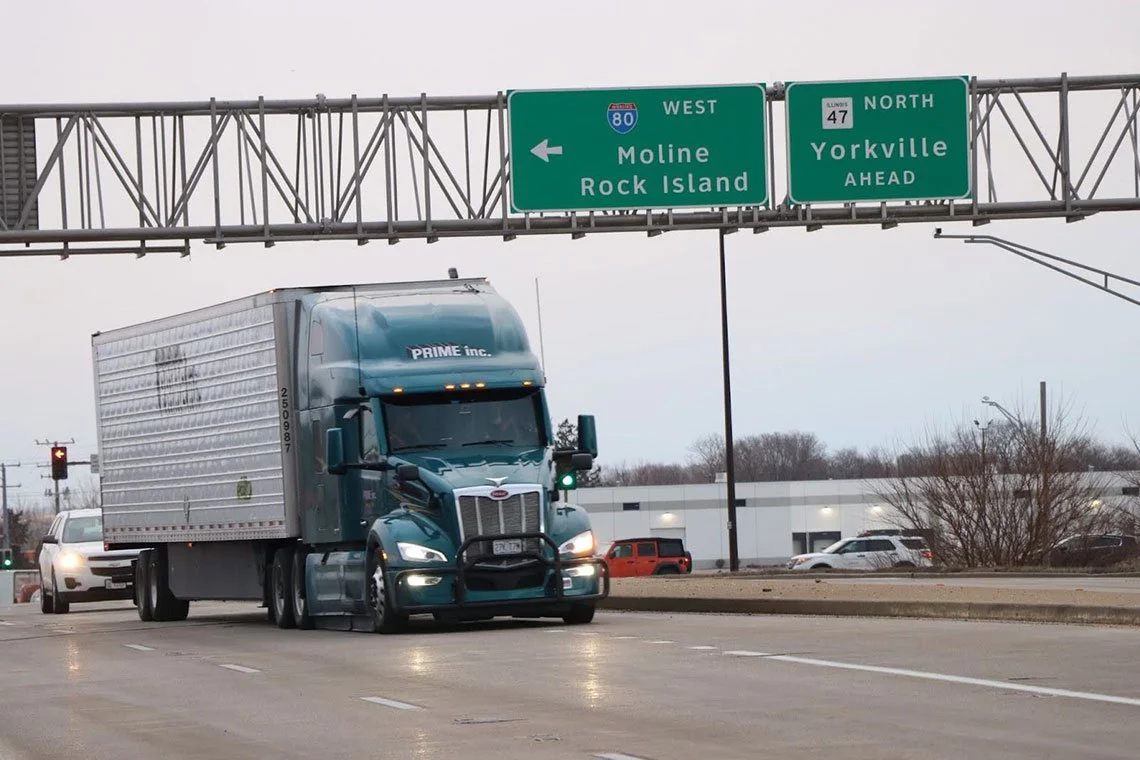
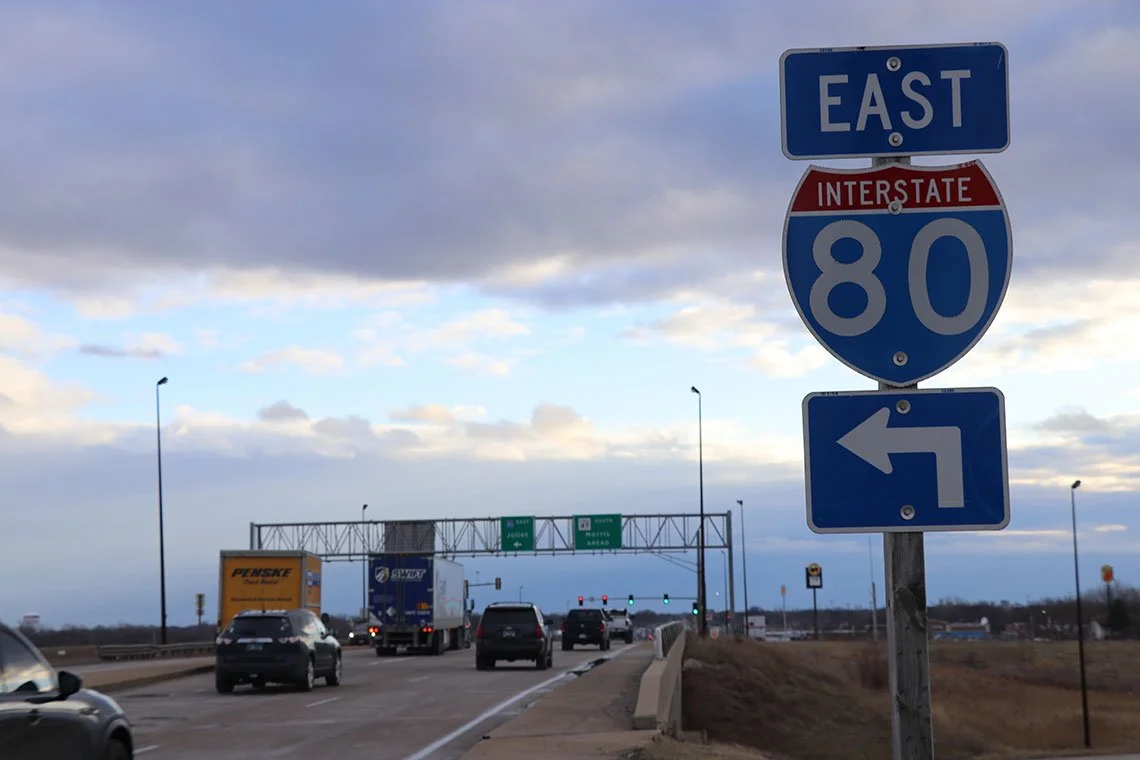
In Rezin’s district, she said Interstate 80 and Illinois Highway 47 are in need of repair. 

“There’s tremendous impact everywhere as a result of where we’re located,” Rezin said of her district that includes some parts of the far southwest suburbs. “My district will see directly less money coming in. There will be less projects that will be completed because of this massive diversion of road funds to pay for the CTA, which did not raise rates or fees.”

Syverson said he hopes legislators will adjust to improve funding for downstate road projects. 

The fare box recovery ratio — the percentage of a transit system’s revenue that comes from rider fares — has also decreased. The requirement will be waived in 2026 and dropped from the current 50% to 25% in 2027 and 20% by 2030.

Ajay Gupta, a Republican candidate for state representative in Naperville, said he views this change as a “recipe for disaster’’ because he believes it allows transit systems to put off changes that improve cost efficiency or =increase fares.

“There’s no incentive to improve efficiency, which is absolutely the wrong way to do this,” Gupta said.

The new transit law creates a more powerful governing body for the Chicago region agencies, the Northern Illinois Transit Authority, beginning September 2026. It will be able to establish a universal fare system and coordinate schedules between the three regional agencies.

Read: No fare hikes or service cuts for Chicago transit agencies, RTA chair says

Rezin is hoping the uproar over road funding will create unity among downstate politicians as they seek legislative solutions. “Downstate needs to be made whole,” Rezin said. “We need to be made whole because we have crumbling roads and bridges.”  

Jacques Abou-Rizk and Amy L. Wong are graduate students in journalism with Northwestern University’s Medill School of Journalism, Media, Integrated Marketing Communications, and fellows in its Medill Illinois News Bureau working in partnership with Capitol News Illinois. 


Capitol News Illinois is a nonprofit, nonpartisan news service that distributes state government coverage to hundreds of news outlets statewide. It is funded primarily by the Illinois Press Foundation and the Robert R. McCormick Foundation.
Local Communities Looking For Ways To Assist Champ Workers

Mt. Carmel Mayor Joe Judge says local leaders are working together following the abrupt shutdown of Champion Laboratories.

Speaking at Monday afternoon’s City Council meeting, Judge said he has been involved in discussions over the past week regarding the closing of the company’s Albion location.

The mayor said he attended a meeting last Friday along with Albion Mayor Wes Harris and Grayville Mayor Travis Thompson. The three communities have formed a task force and plan to meet again later this week to explore what local incentives or benefits could be offered to a potential new buyer for the facility.

Judge says the goal is to determine what steps can be taken locally to help resolve the situation and potentially bring new ownership or new opportunity to the site.

He also noted that First Brands, the parent company, announced Friday it is closing Jasper Rubber in Jasper, Indiana. That facility produced components used at Champion Labs, including check valves, O-rings, and grommets.

Judge asked the community to keep affected employees and their families in their thoughts and prayers as workers in multiple communities deal with job losses.

He says more information will be shared as the task force continues its work.

"Interim" Tag Removed; Peach Now Permanent MCPD Chief

Mt. Carmel officially has a new Police Chief.

JOE JUDGE MCPD CHIEF APPOINTED

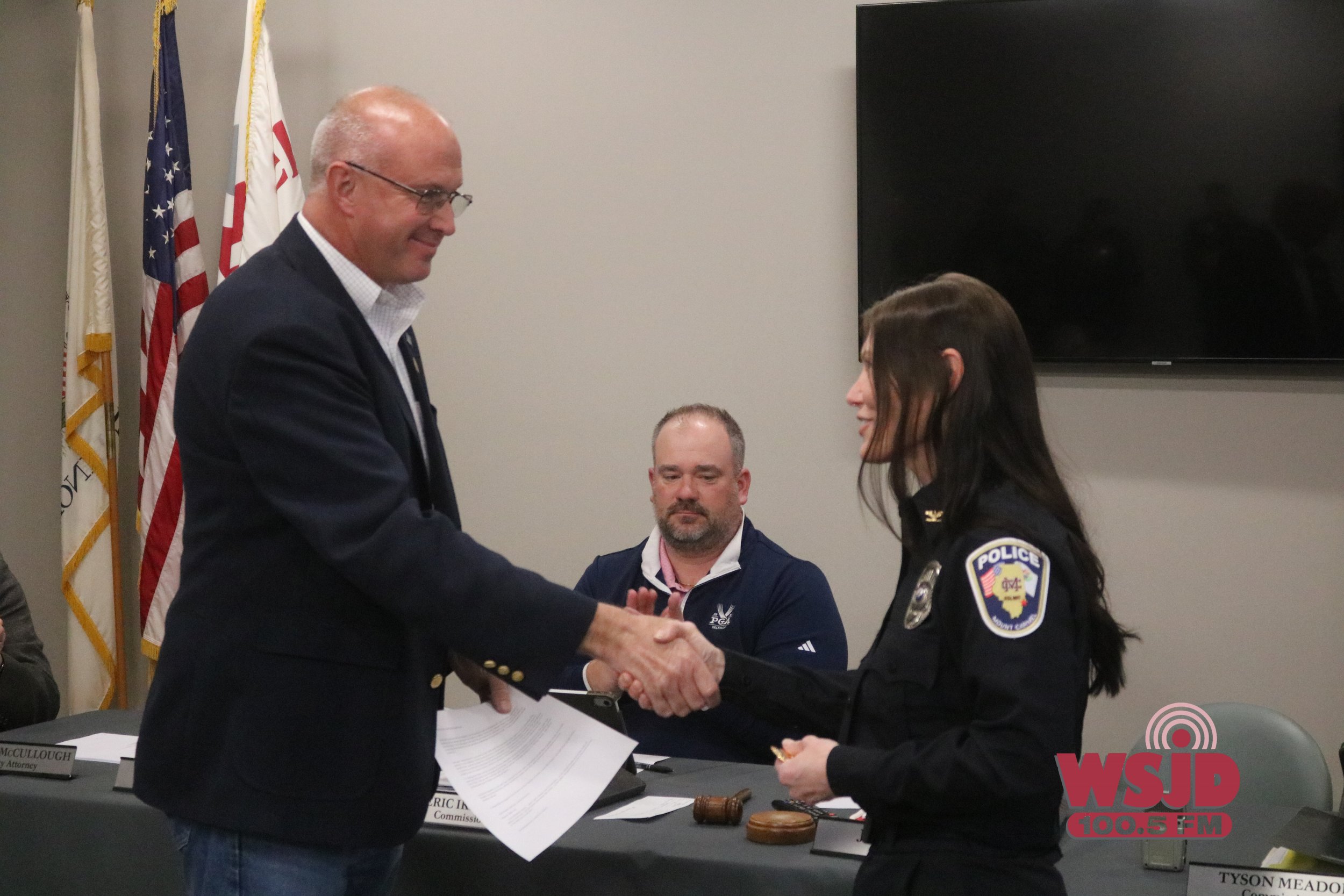
Erin Peach was unanimously approved by the Mt. Carmel City Council during yesterday’s regular meeting to serve as Chief of the Mt. Carmel Police Department.

Peach had been appointed Interim Chief on January 20th following the retirement of longtime Chief Mike McWilliams. With Tuesday’s vote, her position is now permanent.

Peach makes history as the first female police chief in the department’s history.

Family, friends, and fellow members of law enforcement were on hand for the swearing-in ceremony, including Wabash County Sheriff Derek Morgan and State’s Attorney Kelli Storckman.

City officials say Peach’s leadership experience and service to the department made her a strong choice to lead the MCPD into the future.


Mayor Joe Judge congratulates Erin Peach after she was approved as permanent Mt. Carmel Police Chief at Monday’s meeting. Monday’s vote removes the “interim” tag Peach had after the retirement of Mike McWilliams.