Health Needs Assessment Adopted By WGH Board

The Wabash General Hospital Board of Directors approved the hospital’s 2025 Community Health Needs Assessment during Monday evening’s meeting.

President and CEO Karissa Turner told board members the assessment is required for most tax-exempt 501(c)(3) hospitals, though Wabash General is exempt as a district hospital. Turner said the hospital chose to complete the more than 50-page report anyway as part of its strategic planning process and commitment to the community.

The assessment included two in-person focus groups with 21 participants and an online survey that generated 78 responses. Turner thanked local media for helping distribute the survey.

According to the report, Wabash General’s service area has a population of 33,632, which is projected to decline about four percent between 2025 and 2035. About 34 percent of residents are over the age of 55.

When asked what healthcare services are needed but not currently provided, respondents cited additional specialty services including urology, rheumatology, pediatric mental health, oncology, cardiology, and pulmonology. Turner noted several of those services are already available locally, highlighting the need for better public awareness. The hospital is actively recruiting for urology and rheumatology.

Other needs identified included dental care for children on Medicaid, autism support services, expanded pediatric behavioral health, and broader access to basic household needs and youth programs.

Mental health ranked as the most serious health concern facing the community, followed by substance abuse, cancer, obesity, nutrition, and social determinants of health. Turner said the hospital will maintain the same priority areas identified in its 2023 assessment, with mental health services remaining at the forefront.

Survey data also showed high levels of stress among respondents. Forty-three reported moderate stress levels, while 23 indicated high to very high stress. Joint pain, back pain, and obesity were also commonly reported personal health challenges.

Board members discussed what they described as increased openness about mental health issues and the importance of improving access through options such as telehealth and employee assistance programs.

Turner emphasized that while the assessment is not required for Wabash General, it provides valuable insight into how the community perceives its health and where services can be strengthened.

The full Community Health Needs Assessment will now be published on the hospital’s website.

Republican candidates for governor — minus Bailey — try to distance themselves

Candidates debated affordability, public safety, and campaign contributions

By BEN SZALINSKI
Capitol News Illinois
bszalinski@capitolnewsillinois.com

Article Summary

  • Republican candidates for governor Ted Dabrowski, James Mendrick and Rick Heidner met for the first time for a televised debate on Tuesday. Darren Bailey, presumed to be the frontrunner, did not participate. 

  • The candidates sparred over campaign contributions, including whether candidates are influenced by associations with Democratic donors or officials. 

  • All three candidates said they are open to receiving President Donald Trump’s endorsement. 

  • Candidates disagreed on what state lawmakers should do about a Bears stadium, with Dabrowski being the only one to oppose legislation allowing the team to negotiate property taxes. 

This summary was written by the reporters and editors who worked on this story. 

Three Republicans seeking the right to face Gov. JB Pritzker in the fall met for the first time in a televised debate on Tuesday as they try to muster momentum ahead of the March 17 primary. 

The debate gave DuPage County Sheriff James Mendrick, businessman Rick Heidner and researcher Ted Dabrowski an opportunity to introduce themselves to voters outside the shadow of the party’s 2022 nominee, Darren Bailey, who declined to participate in the debate hosted by FOX-32 in Chicago. 

“I’ve participated in four forums across the state, and my running mate Aaron Del Mar has taken part in three,” Bailey said in a statement to Capitol News Illinois. “Voters have had plenty of chances to hear from us — who we are, what we believe, and the direction we want to take Illinois.”

“At this point, my focus is simple: getting out across Illinois, meeting people where they are, listening to their concerns, and sharing our plan to move this state forward,” Bailey said.

A WGN/Emerson College poll in early January found Bailey had support from 34% of likely Republican primary voters while the three candidates at Tuesday’s debate all polled under 10%. 

The candidates largely declined to take any free shots at Bailey, though Dabrowski’s closing thought of the night was that Bailey should have participated, especially because the debate was held on a Chicago TV station in a market he struggled in four years ago. 

Problematic campaign contributions

Instead, Dabrowski and Heidner focused their attacks on each other. 

Heidner, a Barrington Hills real estate developer and video gambling mogul, has faced criticism since entering the race for ties to indicted politicians, people allegedly part of the mob, and campaign contributions to Chicago Mayor Brandon Johnson and former Cook County State’s Attorney Kim Foxx — both Democrats. 

“I’ve always worked on both sides,” Heidner said. “I’ll always be able to work with both sides. I’m very well respected by the Democrats, am very well respected by the Republicans. And I think it’s a huge asset.”

But Dabrowski saw those contributions differently as Heidner described how he hoped the contributions to Johnson would help in conversations about expanding gambling in the city. 

“That’s what I would call, in a way, pay-to-play politics, which is you benefit from doing deals with Democrats, with Republicans,” Dabrowski said. 

Heidner further bashed Dabrowski, telling the former Wirepoints researcher “you sit in front of a computer and hit Google, OK? Click, click, click.”

Dabrowski also faced heat about the conservative purity of contributions to his campaign. He has received contributions from several people who have also donated to Democrats in recent years. He defended the individuals as “Chicago executives or Chicago reformers,” rather than Democrats. 

“Let’s pretend they are Democrats,” Dabrowski said. “Man, if Democrats want to come over to me, everyone knows my conservative position ... if they want to donate to me and come to my side, heck yeah. And if they’re sick of Pritzker and if they’re sick of Brandon Johnson, which they are, they’re going to come to my side, which proves why I’m the campaign that can beat Pritzker.” 

Mendrick had to defend his donors, but in a different way — the lack of them and what it means for his campaign’s viability. The sheriff said he has to turn down certain donations because he’s a police officer. 

“When you’re beholden to money, money controls you,” Mendrick said. “And I am an honorable sheriff.” 

Alignment with Trump

One theme of the race has been each candidate’s attempt to pitch themselves as the most closely aligned to President Donald Trump. All three candidates at Tuesday’s debate said they would welcome Trump’s endorsement, though the president endorsed Bailey in 2022. 

“I get a president who loves the police, who supports the police, he supports the military — of course I’m going to support that,” Mendrick said, who was the only one of the three who did not identify something he disagrees with the president on. 

Heidner, who said he recently courted the president’s son, Eric Trump, at his home, said he wishes Trump would support “a path to citizenship without deporting them and then having them come back.” 

Dabrowski, a former international executive at Citibank, said he does not support the Trump administration investing in private companies, saying the government should say out of private businesses. 

Bears stadium

On what Illinois lawmakers should, or shouldn’t, do to keep the Chicago Bears stadium in Illinois, Dabrowski was the only candidate in the debate who said he does not support lawmakers giving the Bears power to negotiate property tax rates with local governments in Arlington Heights. 

“We should do all the public infrastructure that’s fair and necessary that the public benefits from to support a stadium, but we shouldn’t give the Bears anything and we certainly should not give them breaks,” Dabrowski said. 

Mendrick and Heidner said they support the legislation for the Bears. 

“This is not giving tax dollars away, these are giving tax dollars that they’re going to create as a partnership,” Heidner said.

Bringing down costs

Affordability was also a key topic of the debate. 

Dabrowski said property taxes should be capped at 1% of a property’s value. He added reducing the number of units of government in the state would help bring them down. Heidner said he would freeze all tax rates, including property taxes, if elected. However, property taxes are levied by local governments. 

Addressing rising utility prices is also part of Republicans’ affordability agenda. Mendrick said he’s glad Pritzker is embracing nuclear energy but said it’s not enough to bring prices down quickly. 

“That’s 2033 and they’re saying our crisis is going to hit in 2029,” he said. “Well guess what? We could use our own coal right now, create jobs, create energy reductions by using our own materials that we have a plethora of in our state and export at a profit.” 

Dabrowski said high energy prices aren’t just a problem for residents. 

“Now we’re starting to turn away data centers, we’re starting to turn away business,” he said. 

Capitol News Illinois is a nonprofit, nonpartisan news service that distributes state government coverage to hundreds of news outlets statewide. It is funded primarily by the Illinois Press Foundation and the Robert R. McCormick Foundation.

 Ted Dabrowski, Rick Heidner and James Mendrick, GOP candidates for governors, took part in a debate Tuesday. Candidate Darren Bailey, not pictured, did not attend. (Photos by Capitol News Illinois)

Date Change Announced For Chamber Days

The Wabash County Chamber of Commerce has announced the return of Chamber Days with a new carnival company and confirmed dates for this year’s event.

Chamber Days 2026 will be held August 12th through the 15th. Chamber officials say they are under contract with Fun Time Shows to bring a modern, well-maintained carnival to Mt. Carmel as part of the community’s end-of-summer street carnival tradition.

Organizers say the carnival industry has faced significant challenges since 2020, with many small and mid-size companies going out of business. That has increased demand for available carnival providers. The Chamber says it was able to secure a company that will pass through the area in mid-August, allowing the event to remain on its traditional schedule.

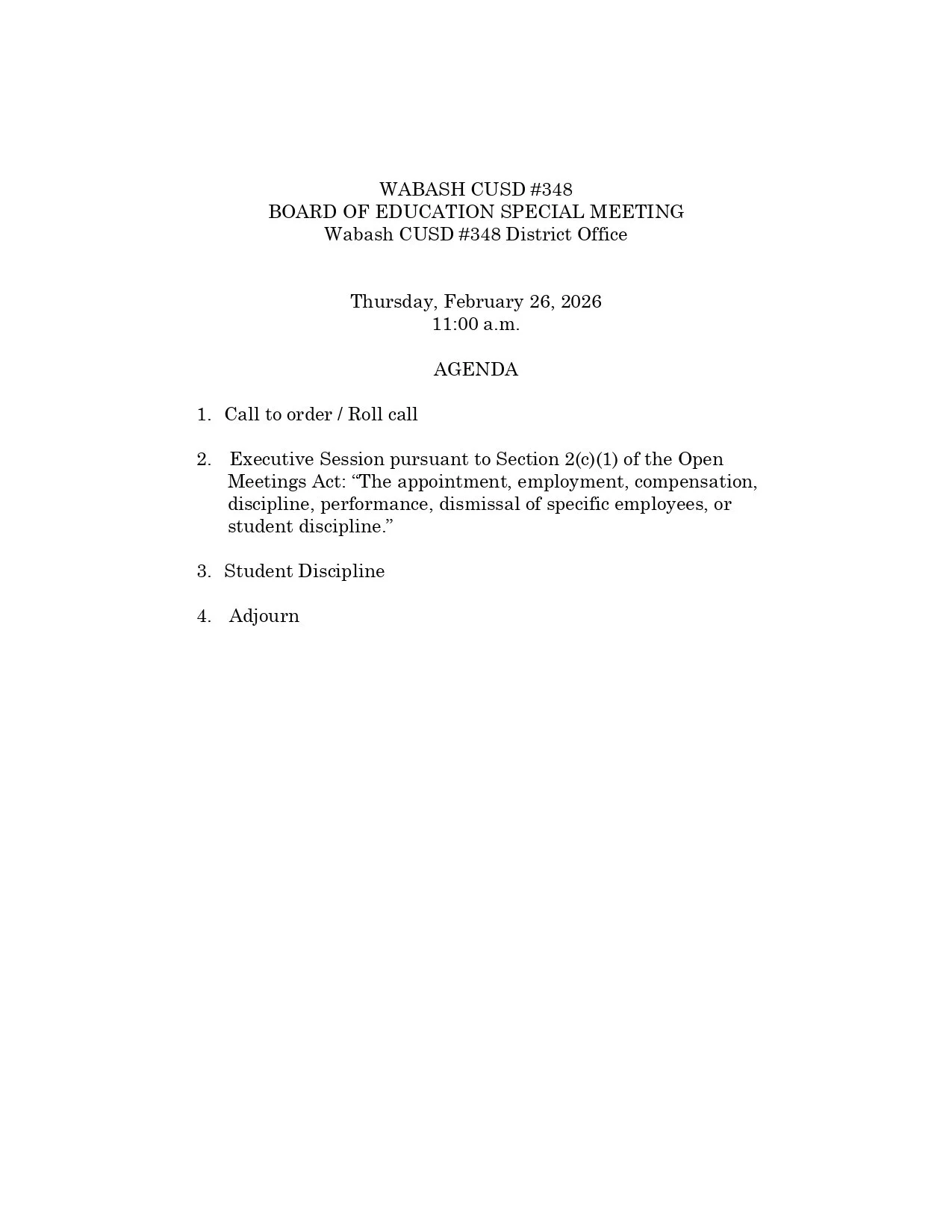
The Chamber also worked with Wabash Community Unit School District 348 Superintendent Dr. Chuck Bleyer to ensure the dates would minimize disruption to students and families during the school year.

As in previous years, activities will take place along the 300 and 400 blocks of Market Street, with a similar layout for food booths, games, and rides. All entertainment will again be held at Merchants Park to improve traffic flow and reduce congestion.

Chamber Days will feature lunch and dinner menus, lemonade and lemon shake-ups throughout the event, and opportunities for local organizations to host booths and games.

Chamber Days continues to offer free parking, free admission, and free entertainment. Organizers say their goal is to provide a fun and safe event for the entire community.

Champion Labs Permanently Closes

First Brands Group, LLC has announced the permanent closure of its Champion Labs facility in Albion.

In a news release issued today, the company said the shutdown begins immediately, February 23rd, with as many as 1,000 employees notified that their employment is terminated effective today. Because the facility is closing in its entirety, bumping rights will not apply.

The company says it regrets the decision and described the closure as permanent.

First Brands Group stated it spent several months exploring options to avoid shutting down the Albion operation. Those efforts included seeking additional capital and actively marketing the Champion Laboratories business in hopes of finding a buyer willing to continue operations and retain the existing workforce. Officials said announcing a potential closure earlier could have jeopardized negotiations, as interested buyers were evaluating whether they could keep the plant running.

According to the release, a serious bidder had recently advanced in the process, with both sides exchanging draft purchase agreements. Company leaders believed they were close to reaching a deal that would have prevented the closure.

However, the sale effort ultimately collapsed. First Brands Group said certain facilities had been relying on outside financial support to maintain operations during negotiations. That funding was unexpectedly withdrawn before a transaction could be completed. The loss of that support significantly reduced the company’s valuation and eliminated any remaining viable options for a sale.

In a statement, the company said that without a completed sale, it does not have access to capital markets or sufficient cash reserves to continue operating.

First Brands Group emphasized that the decision to close was made only after exhausting all alternatives and once it became clear there was no path forward, citing the sudden withdrawal of funding and changes in the sale process as unforeseen developments that forced the expedited shutdown.

2026-27 School Calendar Set By District #348 School Board

The Wabash District 348 School Board has approved the school calendar for the 2026–2027 school year.

During last week’s meeting, Superintendent Dr. Chuck Bleyer outlined the proposed schedule. The school year will begin with two Teacher Institute days on August 12th and 13th, with the first day of student attendance set for Friday, August 14th.

Bleyer said the remainder of the calendar closely mirrors the district’s current schedule.

He did note one date of interest in May. The calendar currently lists May 21st as a Teacher Institute Day, but that date may change. Bleyer explained he has been in contact with county emergency management officials about planning a countywide emergency training exercise. The drill would allow first responders to practice evacuation procedures and coordinated response efforts, similar to an exercise held several years ago. If finalized, the district would adjust the calendar accordingly.

Following discussion, the board voted to adopt the 2026–2027 school calendar.

Bleyer also reported the district was forced to use four snow days during last month’s winter storm, which now pushes the last scheduled student attendance day to May 27th. Bleyer said students will attend school four additional days as a result.

Vincennes man arrested for DUI

On February 20, 2026, at 11:50 p.m. Gibson County Central Dispatch received a report of an accident on US 41 near County Road 440 North near Patoka.  Upon arriving on scene law enforcement discovered that a White 2008 Chevy Silverado driven by 22-year-old Mason Harris of Vincennes had struck a Maroon Hyundai Tucson that was parked on the shoulder.  Upon speaking with Mr. Harris Deputy Levi Sims detected clues that the driver was under the influence.  At that point he began a roadside DUI investigation that resulted in Mr. Harris being taken into custody and transported to the Gibson County Detention Center.  Upon arriving at the detention center Mr. Harris was charged with Operating a Vehicle While Intoxicated. 
 
Deputy Zach Lienemann and Princeton Officer Logan Lashbrook and Landon Perryman assisted in this investigation. 
 
All criminal defendants are to be presumed innocent until and unless proven guilty beyond a reasonable doubt in a court of law.

911 call leads to arrest of Patoka man

On February 22, 2026, at 4:45 a.m. Gibson County Central Dispatch received a 911 report of a disturbance in the 200 block of West Vine Street.  Upon arriving on scene Deputies Michael Bates and Zach Lienemann began an investigation into the incident speaking to all parties involved in the incident and collecting evidence.  At the conclusion of the investigation 23-year-old Chyle Linxwiler of Patoka was transported to the Gibson County Detention Center where he was charged with Battery, Interference in the Reporting of a Crime, and Criminal Mischief. 
 
Arresting Officer Deputy Michael Bates
Assisting Officer Deputy Zach Lienemann
 
All criminal defendants are to be presumed innocent until and unless proven guilty beyond a reasonable doubt in a court of law.

Battle over data centers in Illinois pits consumer costs vs. state competitiveness

Lawmakers trying again to regulate industry as Pritzker moves to pause incentives

By GABRIEL CASTILHO
Medill Illinois News Bureau
news@capitolnewsillinois.com

Article Summary

  • The debate over how to regulate data centers in Illinois is intensifying as lawmakers struggle to balance a host of competing interests.

  • Illinois consumer advocacy groups are demanding action as electricity bills rise and data centers use an increasing amount of power.

  • Some state lawmakers want new data center projects to be responsible for renewable energy generation at their sites.

  • But data center operators warn unfavorable state policies, combined with an existing biometric privacy law, could drive them away from Illinois to places like Wisconsin or Indiana.

  • Gov. JB Pritzker has also proposed a two-year pause on state financial incentives for data centers that have been in place since 2019.

This summary was written by the reporters and editors who worked on this story.

SPRINGFIELD — The debate over how to regulate data centers in Illinois is intensifying as lawmakers struggle to balance costs to consumers and the state’s need to be competitive economically. 

Data centers house computer systems that store, process and distribute data but require large amounts of energy to power that workload. A growing number of these facilities are used to power AI.

A state report published in December projects energy shortfalls would begin in northern Illinois by 2029 and the rest of the state by 2031, driven in large part by data centers’ increased power usage. That’s led Gov. JB Pritzker to backtrack on a proposal he signed in his first year as governor to incentivize data center development in the state. 

“With the shifting energy landscape, it is imperative that our growth does not undermine affordability and stability for our families,” he said, proposing a two-year moratorium on the incentives in his budget address Wednesday. 

Illinois consumers blame data centers — which often receive generous tax incentives in Illinois — for straining the grid and driving up prices, and they want relief. But companies that operate the centers are seeking ways to build more quickly and pushing for looser regulation, arguing the centers are key to the state’s economic future.

And the state, from the governor’s office to the legislature, is struggling with ways to balance the economic interests tied to data center development with environmental and consumer cost concerns.

Read more: Lawmakers seek ways to prevent data centers from straining Illinois’ power grids

“We don’t want them to overwhelm our electrical capabilities and our water resources,” Sen. Steve Stadelman, D-Caledonia, said. “If we’re going to allow them and track them, how can we make sure it benefits Illinois residents and rate payers in the state?”

Data center negotiations continue

These are the same issues and tensions legislators hoped to address in their fall veto session. But no broad consensus was reached, and instead, Gov. JB Pritzker signed the Clean and Reliable Grid Affordability Act, adding new air regulations for backup generators used by data centers.

Lawmakers in Springfield have already begun negotiating a new round of data center regulations.

Sen. Ram Villivalam, D-Chicago, recently announced the introduction of Senate Bill 4016, known as the POWER Act, to place prohibitions on cost shifting, introduce “bring your own new clean capacity and energy,” guarantee transparent public engagement and implement water efficiency standards on data centers.

“By establishing policies that ensure data centers, not consumers, bear the increasing energy costs, and critical protections for our environment and sustainable water use, we can work toward a future built for technology to support our daily lives,” Villivalam said, “not deplete our resources and price us out of our homes.”

Read more: POWER Act: Lawmakers seek to regulate new data centers’ power, water usage | Pritzker touts Illinois’ economic development at data center groundbreaking

Environmentalists want new data centers to build their own renewable energy sources on site to prevent new projects from further stressing energy infrastructure and creating more pollution.

Pritzker said something similar earlier this month: “If they are, in any way, going to increase the price of electricity for consumers, they should pay for that increase, not the consumers.”.

The data center companies oppose such mandates, preferring a voluntary “bring your own energy” policy, according to Brad Tietz, director of state policy for the Data Center Coalition industry group.

“I think, ultimately, when you try to mandate something, you get less of it,” he said. 

States are competing to attract investments from companies that want to build more data centers as they seek an edge in the artificial intelligence race.  Illinois has the fourth-largest number of data centers — 222 — in the country, but Tietz said the state is in danger of slipping because other states have friendlier policies. 

Illinois has provided tax incentives for data centers since Pritzker signed bipartisan legislation in 2019. According to the state’s 2024 report, at least 27 data centers had received incentives totaling $983 million in estimated lifetime tax breaks and benefits. That would stop for at least two years under Pritzker’s plan.

Read more: Pritzker signs major energy reform bill amid projected shortages | As energy bill continues to take shape, a key Senate architect plans to retire

Sen. Terri Bryant, R-Murphysboro, said she would like to see “a change in our policy here in Illinois” so the state does not fall behind, though she hopes those centers bring their own energy.

State Sen. Terri Bryant, R-Murphysboro, with State Sen. Chapin Rose, R-Mahomet, speaks on her support for data centers supplying their own energy generators. (Medill Illinois News Bureau photo by Gabriel Matias Castilho)

 “We want to be able to do that because if we don’t, China will. If we don’t, Wisconsin will, Indiana will,” she said.

‘Little type of war’

As negotiations progress, the Data Center Coalition has signified another point of contention: A 2008 law known as the Biometric Information Privacy Act that prohibits private companies from collecting personal data without informed consent. The law allows people to sue over the misuse of their biometric profile, such as fingerprint mapping, facial recognition and retina scans. 

Stadelman said the privacy protections in the act, which Illinois put in place before any other state, are at the center of a “little type of war.”

Read more: Illinois Senate advances changes to state’s biometric privacy law after business groups split

“You have privacy rights advocates saying, ‘We're a leader in the country as far as protecting people's privacy rights and protecting their data,’” Stadelman said. “But the data (centers) say, ‘We're not going to have more projects in Illinois unless you change the BIPA legislation.’”

Tietz said these regulations have factored into operators’ decisions to bypass Illinois, although lawmakers in 2024 drastically curtailed the way damages accrue and the liability private entities are likely to face if found in violation. 

Read more: Judge dismisses biometric data privacy lawsuit citing revised state law

But the data center industry wasn't satisfied, and its leaders say the legal liabilities are one reason they are building in other states.

Abe Scarr, state director of the Illinois Public Interest Research Group, said biometric information is uniquely sensitive.  

“We should know who is collecting and commercializing information created from the stuff our lives are made of,” Scarr said. “And we should have to opt into — and be able to easily opt out of — pervasive, intrusive surveillance.”

Consumer backlash

The legislative debate comes as data centers have become increasingly controversial. In January, the Aurora City Council approved a moratorium pausing new data centers. The city had five data centers in development and had been receiving requests to build more even as residents and environmental groups complained about noise, water usage and rising utility costs.

Alison Lindburg, director of sustainability for Aurora, said the city passed the moratorium because it needed time to put requirements for data centers in place. 

“We have tried to explain that to communities, that it’s not just about data centers in Aurora, it’s about the entire grid, but that doesn’t matter to them,” Lindburg said in an interview. “I think they’re just very frustrated overall with the rising electricity prices.”

Read more: With electricity price spikes coming, environmental and industry groups pitch reform | As state regulators warn of impending energy shortfalls, capacity prices rise again 

Hannah Flath, Illinois Environmental Council’s climate communications director, said other communities are also opposing data centers. 

“In that case (Aurora), the local government acted in accordance with what their local constituents were saying,” Flath said. 

Tietz said he has been in conversations with officials from Aurora about the 180-day moratorium and is hoping he can help find a solution. 

Lucy Contreras, GreenLatinos Illinois state program director, said communities should have a voice in whether, where and how these projects are built. She said developers must ensure host communities receive tangible benefits rather than bearing only the burdens of hosting these facilities.

“They contribute to air pollution and consume excessive amounts of water daily, which restrains local water systems that might already be struggling,” Contreras said. “Without strong and forceful regulations, data center expansion will deepen existing inequalities, harm public health and undermine our Illinois clean energy goals.”

Spreading the costs

Utilities are building billions of dollars of new power lines and plants to keep up with energy demand increases brought on by data centers — whether they’re built or in the process of being built. They, in turn, spread associated costs to ratepayers.

“Speculation about data center development has actually increased prices,” Sen. Bill Cunningham, D-Chicago, said. “It’s not just the immediate demand, it’s anticipated future demand, so it’s really important to sift out the wheat from the chaff on what’s a real proposal and what isn’t.”

Cunningham said he expects fellow Democratic lawmakers to work on safeguards for consumers when pending data center projects go uncompleted. 

Recently, northern Illinois utility Commonwealth Edison announced it will require a 10-year guarantee of revenues upfront from big energy consumers. ComEd said this will help protect ratepayers from bearing the costs of high-load projects and ensure, even if they don't come to fruition.

Maddie Wazowicz, Midwest Energy Efficiency Alliance policy director, said utilities function best when they can plan into the future. 

“Whether or not data centers emerge — and how much, how many of them come, where and how long they last — does complicate utility long-term planning,” she said.

Gabriel Castilho is a graduate student in journalism with Northwestern University’s Medill School of Journalism, Media and Integrated Marketing Communications, and is a fellow in its Medill Illinois News Bureau working in partnership with Capitol News Illinois. 

Capitol News Illinois is a nonprofit, nonpartisan news service that distributes state government coverage to hundreds of news outlets statewide. It is funded primarily by the Illinois Press Foundation and the Robert R. McCormick Foundation.




Princeton Man Crashes after being Clocked by Radar at 135 mph

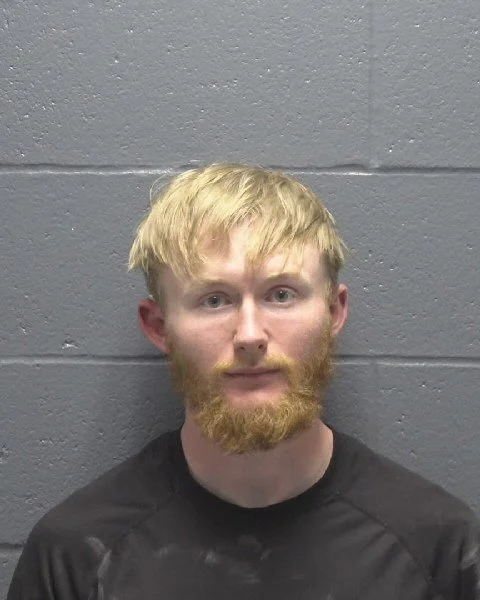
Gibson County – Thursday night, February 19, at approximately 10:11 p.m., Trooper Marsee was patrolling US 41 near the 39 mile-marker when he observed a motorcycle traveling south at 135 mph.  Trooper Marsee attempted to stop the motorcycle, but the motorcyclist continued south at a high rate of speed. The motorcyclist lost control and crashed after turning onto CR 175 West.  The motorcyclist was identified as a 24-year-old Princeton man. He was transported to Deaconess Midtown in Evansville where he is currently being treated for serious injuries. The motorcyclist’s identity will not be released until charges are filed.

This is an on-going investigation.