Democrats offer muted praise of Pritzker’s speech, Republicans dismiss ‘campaign’ rhetoric 

Reactions largely fell along partisan lines, though there were some mixed feelings all around

By BRENDEN MOORE, NIKOEL HYTREK & JENNA SCHWEIKERT
Capitol News Illinois 
news@capitolnewsillinois.com  

Article Summary  

  • Reaction to Gov. JB Pritzker’s combined State of the State and fiscal year 2027 budget address fell largely along partisan lines as Democrats offered muted praise while Republicans dismissed his affordability message as campaign-style rhetoric.

  • Rank-and-file Democratic lawmakers acknowledged the strain from federal cuts and touted Pritzker’s efforts to protect key programs from the chopping block. But some expressed disappointment in the largely defensive posture the governor is staking out.

  • Republicans were less generous in their assessment of the budget picture Pritzker painted. But they found some items to agree on, including slightly less charged rhetoric than his 2025 speech, which was delivered just weeks into Trump’s second term.

This summary was written by the reporters and editors who worked on this story.  

SPRINGFIELD — Reaction to Gov. JB Pritzker’s combined State of the State and fiscal year 2027 budget address on Wednesday fell mostly along partisan lines. 

Democrats offered muted praise of the largely status-quo spending plan while Republicans dismissed his affordability message as campaign-style rhetoric devoid of substance.

The $56 billion budget proposal and associated legislative priorities outlined by Pritzker, including a sweeping plan to encourage homebuilding through new statewide zoning standards and a renewed effort to ban cellphones in the classroom, come amid deep uncertainty over the status of federal funding under the Trump administration. About $1 billion in funds promised to the state are currently in limbo, the governor’s office said. 

This uncertainty was a common undercurrent as Democratic elected officials offered their first impressions of Pritzker’s proposed spending plan. Republicans found few items to praise though suggested that the tone was better than last year, when Pritzker likened the return of President Donald Trump to the rise of Nazism in 1930s Germany.

Democrats offer muted praise

House Speaker Emanuel “Chris” Welch, D-Hillside, told Capitol News Illinois in an interview that Pritzker’s speech was “a State of the State that needed to be said.”

“President Trump's policies and a Republican Congress that's been absent and letting him do what he wants to do is causing the cost of living to skyrocket,” Welch said. “Groceries are going up, health care is going up, energy is going up. Everyday essentials are costing more. And you have to talk about that.”

And with more federal cuts to come, Welch said it's something lawmakers “have to consider” as they “go through this process of presenting yet another balanced budget.”

Comptroller Susana Mendoza, who is responsible for paying the state's bills, told Capitol News Illinois she plans to "stay the course" in managing her office through the latest wave of financial uncertainty in the state. The FY27 budget will mark the last that Mendoza will oversee as she leaves office 11 months from now. 

"We need to make sure that we're not adding unnecessary spending to the budget," Mendoza said. "The governor was very clear today that that's not happening in this budget. This is a very conservative budget relative to prior years, and I think it speaks to the moment that we're living in, which is a moment of unpredictability and a lack of stability at the federal level. So here at the state level, we'll continue to prioritize the most vulnerable."

Mendoza said the challenges the state faces now remind her of her ascent into office in December 2016 during the state's two-year budget impasse, when many organizations that depend on state funding were also struggling under the weight of lost government funding.

Sen. Elgie Sims, D-Chicago, told Capitol News Illinois that lawmakers are "going to make the best decisions based on the information we have." 

"Nobody can predict if there's going to be a rage tweet that happens in the middle of the night that will lead to hundreds of millions of dollars being in jeopardy," Sims said. "We can't predict that. What we can predict is our response to it being responsible in this moment and responding in a way that protects taxpayers, that protects our neighbors, that also provides the services that people so desperately need."

Managing expectations

In his role as the top budget negotiator for Senate Democrats, Sims said part of his job will be managing expectations among lawmakers and advocates who want the final product to fund their priorities. 

"We're making sure that they understand that it's not a lack of desire, it's a lack of a partner that's willing to participate with us to help make people's lives better," he said.

Rank-and-file Democratic lawmakers acknowledged the strain from federal cuts and touted Pritzker’s efforts to protect key programs from the chopping block. But some expressed disappointment in the largely defensive posture the governor is staking out.

Some progressive lawmakers want to raise taxes substantially to fill gaps in the budget and to increase funding for “critical services” like health care, child care and education.

 “This moment calls for more than simply holding the line,” Sen. Graciela Guzmán, D-Chicago, said at a Latino Caucus press conference following the governor’s 48-minute address. “These are essential infrastructure. We should not be walking away from … our commitment to protect essential services and make sure that families are not forced to choose between their health, their rent and putting food on the table.”

Sen. Javier Cervantes, D-Chicago, said the governor’s proposal includes “helpful investments” for child care assistance and early childhood programs, but expressed disappointment that it did not include an increase in the state’s Child Tax Credit.

Leaders from the Illinois Black Caucus said they appreciated the governor mentioning the affordability of housing, education and energy, but they also want to see commitment to issues affecting the Black community.

"We know that there are budget pressures, budget challenges. The White House is not doing us any favors,” said Rep. Justin Slaughter, D-Orland Park. “But with that being said, we are advocating for equity. Advocating for a budget that reflects an intentional effort to address the historical disparities that plague our black communities."

This is the start of the conversation, lawmakers added, emphasizing their commitment to affordability. Many statements issued by members of the majority party said they would review the proposal “line-by-line" and “in detail.”

Welch said he expects “about 90% of the what the governor proposed” to end up in the budget lawmakers approve this spring. But unlike Pritzker’s tax strategy of tweaking on the sides while avoiding changes to broad-based taxes, Welch intends to push for a surcharge tax on millionaires. Supermajorities in the legislature would have to approve placing a constitutional amendment on the ballot by May 5, and then voters would then have to approve it in the November election.

“I'm having meetings with advocacy groups, I'm talking to people, I'm building support for it (and) making my case with data and facts because I certainly believe that that's one of the long-term answers to what we're dealing with here in Illinois,” Welch said. 

He said he’s had “preliminary conversations” with Pritzker and Senate President Don Harmon about the revenue-generating proposal.

Republicans respond

Predictably, Republicans were less generous in their assessment of the budget picture Pritzker painted. But they found some items to agree on, including slightly less charged rhetoric than his 2025 speech, which was delivered just weeks into Trump’s second term.

"I think, like we discussed before, you know, you walk out and say, 'Well, at least we weren't called Nazis.' That's a positive step,” said House Minority Leader Tony McCombie, R-Savanna. “The love stuff was interesting and weird. And just the whole thing about the speech was about his run for president. I mean, that was apparent."   

McCombie noted the “buzzword" of the year in Springfield is “affordability.” Pritzker used it at least a dozen times in his remarks. But she said the proposals don’t match the rhetoric.

“Let's be clear about what affordability really means: It means families can pay their mortgage and their utility bill in the same month, it means seniors can stay in their homes, it means small businesses can actually keep their doors open and it means tax relief, not gimmicks or new revenue schemes," McCombie said, referring to Pritzker’s revenue plan, which includes a proposed tax on social media companies. 

Senate Minority Leader John Curran, R-Downers Grove, summed up the governor’s remarks as “less of a State of the State, and it was more of a campaign speech."

“Certainly a governor in campaign mode (and) a lot of pointing the finger at President Trump and the federal administration when the reality is we have to address Illinois' fundamentals where we lack in economic growth,” Curran said, though noting that there was “less name calling” directed at Trump in this year’s remarks.

“He did keep the rhetoric above board this year, so that's a positive step,” Curran said.

Curran also said Pritzker’s executive order to promote the development of nuclear power plants is “a positive step forward” on increasing grid capacity. Curran also said Pritzker’s proposed cellphone ban “should get bipartisan support and ultimate passage.”

GOP governor candidates

Two of the Republicans seeking to deny Pritzker a third term criticized the proposal.

Former state Sen. Darren Bailey, R-Xenia, who lost to Pritzker by 12 percentage points in 2022, said the governor “offered more government and no relief” and that “families continue to feel squeezed.”

“The governor can talk about upgrades in our credit rating, but Illinois still holds the lowest bond rating in the country,” Bailey said. “He can talk about economic growth, but families and businesses are still moving out. He can talk about new programs, but structural challenges that have plagued Illinois for decades still remain untouched.”

Former Wirepoints president Ted Dabrowski highlighted Illinois’ high tax burden, outmigration and economic growth that lags the rest of the country as signs the state of the state is not great.

“He sees things the way he wants to see them,” Dabrowski said. “I see them grounded in reality. And if you look at the last seven years, they have been miserable, they’ve been dismal under Gov. Pritzker.”

Peter Hancock and Ben Szalinski contributed.

Capitol News Illinois is a nonprofit, nonpartisan news service that distributes state government coverage to hundreds of news outlets statewide. It is funded primarily by the Illinois Press Foundation and the Robert R. McCormick Foundation.

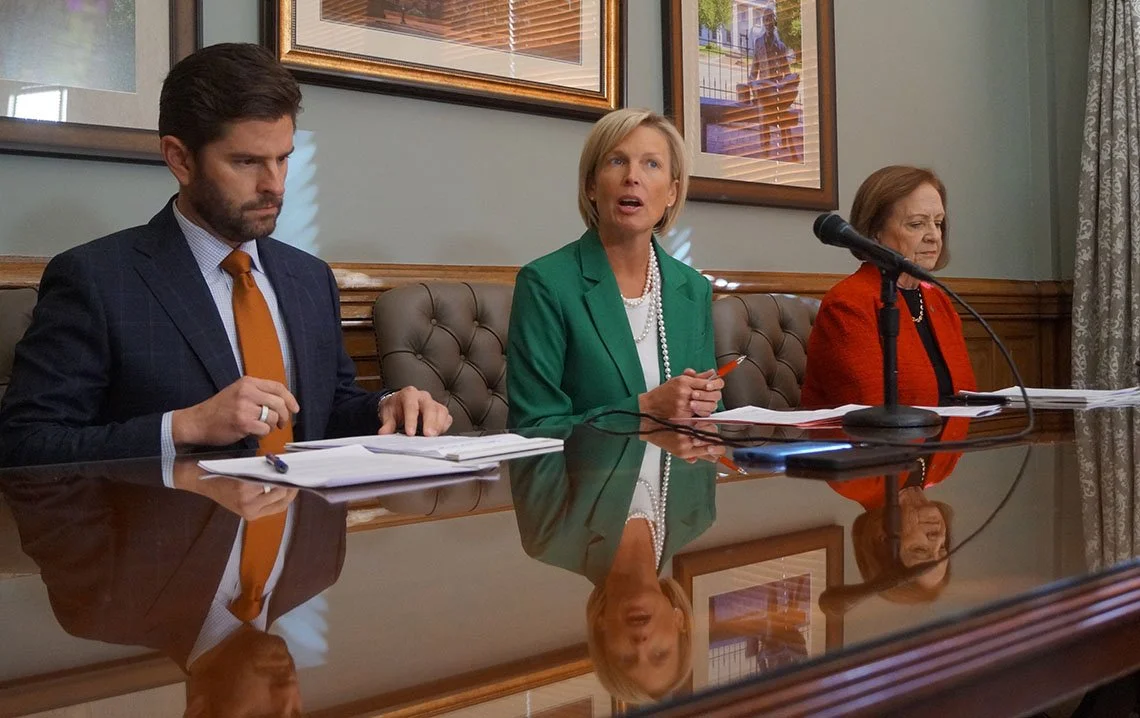
ouse Minority Leader Tony McCombie, center, R-Savanna, is joined by Reps. Ryan Spain, R-Peoria, and Norine Hammond, R-Macomb, at a news conference Wednesday, Feb. 18, 2026, following Gov. JB Pritzker’s budget address. (Capitol News Illinois photo by Peter Hancock) 


Pritzker proposes $56B budget with minimal new spending, tax on social media companies 

State faces challenging financial future amid federal funding cuts and new mandates 

By BEN SZALINSKI
Capitol News Illinois
bszalinski@capitolnewsillinois.com

Article Summary

  • Gov. JB Pritzker is proposing a $56 billion budget for fiscal year 2027 with minimal new spending. 

  • Outside of key areas like pensions, education and health care costs, discretionary spending under Pritzker’s proposal would rise by just 0.5%. 

  • Pritzker’s plan does not include major new taxes but would create a new tax on social media companies. 

This summary was written by the reporters and editors who worked on this story. 

SPRINGFIELD — As Illinois awaits court decisions about federal funding cuts and braces for even further cuts amid rising costs, Gov. JB Pritzker is proposing limited new spending — and yearning for “normal problems.” 

The governor delivered the final budget address of his second term on Wednesday, proposing a spending plan that largely maintains the status quo and forgoes significant broad-based tax increases. 

Pritzker also accused the Trump administration of costing Illinois billions of dollars in lost revenue via cuts or policy changes. 

“I have joked with many of you that I wish I could spend just one year of my governorship presiding over precedented times,” he told the joint session of the General Assembly. 

He said the proposed $56 billion fiscal year 2027 budget required him to make hard choices, but he argued it is ultimately the best path for the state to navigate its way through uncertainty driven by Washington. 

“It levels off and in some cases reduces programs that are important to me — some of which were proposals of my own,” Pritzker said. “But I believe that the imperative of responsible governance and overcoming the fiscal irresponsibility of past decades must come ahead of the interest of any one politician, program or party.”

The proposal represents an increase of $878 million, or 1.6%, from the current year. But most of that news spending is in required categories like education and pensions. Outside those areas, new spending will grow by just 0.5%. 

embed: <div class="flourish-embed flourish-chart" data-src="visualisation/27668131"><script src="https://public.flourish.studio/resources/embed.js"></script><noscript><img src="https://public.flourish.studio/visualisation/27668131/thumbnail" width="100%" alt="chart visualization" /></noscript></div>

On the revenue side, the governor is expecting $56.1 billion in FY27, which would be an increase of $830 million from current-year projections. 

Like the last two budgets, Pritzker is again opting for targeted tax increases that will be paid by businesses rather than consumers. His proposal does not include new taxes on millionaires and billionaires and corporations sought by progressive Democrats. Instead it would tax social media companies, raising a projected $200 million in revenue.

Tax on social media companies

Pritzker’s plan calls for raising $589 million in new revenue.

The hallmark of the plan is a new tax on social media companies with at least 100,000 users in Illinois. The companies would be taxed on a graduated scale beginning at 10 cents per user each month. Platforms with a million or more users would be taxed $165,000 each month, plus 50 cents each month on the number of users over a million. 

Pritzker is hoping to raise $200 million from the new tax — a more limited amount than a digital advertising tax floated last year that would have racked in hundreds of millions of dollars each year. 

“Social media algorithms have been proven to create mental health issues in adolescents and foster polarization and misinformation in society as a whole,” Pritzker said. “Those companies are profiting from online engagement of Illinois consumers, and they currently contribute nothing to ameliorate the negative effects of their platforms.”

Pritzker’s plan would also raise new funds by adjusting a cap on operating losses reported by businesses and aligning taxes on table and electronic games with each other. 

Budget officials in the governor’s office also said they aren’t assuming the worst-case economic scenario in FY27. They said the budget is based on S&P Global’s January outlook, which shows a stable forecast that assumes personal consumption will continue to grow, corporate profits will remain flat and the economy won’t be plunged into a recession. 

Alexis Sturm, a senior budget official in Gov. JB Pritzker’s office, watches his budget address from the Illinois House chamber Wednesday, Feb. 18, 2026. (Capitol News Illinois photo by Jerry Nowicki)

For the current fiscal year, the governor’s office expects revenue to be about $70 million lower than was first projected when Pritzker signed the budget last June. 

Federal uncertainty 

Pritzker’s administration is also assuming it will win court battles to continue receiving federal funding that President Donald Trump’s administration has attempted to cut. About $1 billion in child care funding is currently in limbo as the state sues to continue receiving funding, according to the governor’s office. 

Pritzker said when Trump took office, he was hopeful the election-year threats to gut programs were “the kind of unrealistic hyperbole that fuels a presidential campaign but then is abandoned when cooler heads prevail.”

Instead, the president stuck to those pledges — and Pritzker pegged the fallout at $8.4 billion for the state.  

“These are not handouts,” he said. “These are dollars that real Illinoisans paid in federal taxes and that have been constitutionally approved by our elected Democratic and Republican representatives in Washington.”

The governor, who many speculate will run for president in 2028, admonished the Trump administration for denying disaster relief funding to Illinois and instead requiring the state to paint over any rainbow crosswalks in Chicago. 

“I want to say to anyone on either side of the aisle: If you want to talk about our FY 2027 budget, you must first demand the return of the money and resources this president has taken from the people of Illinois,” Pritzker said. 

But the governor’s budget office also projects the state will face multibillion dollar deficits in the coming years as more cuts and new requirements for social services passed by Congress take effect. Pritzker told reporters on Wednesday following the speech that new spending on hiring and software included in his budget proposal is “building that infrastructure in order to deal with future years and making sure that we don’t get hit even harder.” 

Little new education spending 

While overall spending in the budget would grow by hundreds of millions of dollars, lawmakers and advocates who wanted Pritzker to propose spending big chunks of money on new services this year did not have their wishes granted. 

But the governor’s office said the proposal also does not include major cuts to programs. 

Funding for K-12 public schools via the state’s Evidence-Based Funding formula would increase by $305 million and, for the second year in a row, exclude roughly $50 million that would be designated for property tax relief. 

Advocates, including teachers unions, have implored state lawmakers to significantly boost EBF funding, arguing the formula is not doing enough to direct necessary dollars to the state’s neediest school districts. Budget officials in the governor’s office said they believe the state is still maintaining progress toward improving funding for those schools.

Andy Manar, a senior budget official in Gov. JB Pritzker’s office, talks to lawmakers before the governor’s budget address on Wednesday, Feb. 18, 2026. (Capitol News Illinois photo by Jerry Nowicki)

“I 100% agree that we need a bill that equitably distributes money to the schools and that we need more to go to our universities,” Pritzker told reporters. “The principles are all there. I think there are some tweaks and some questions that we need to get answered before we can get into a final result.” 

Other new spending for education this year includes $35 million to the Illinois Department of Transportation that would go toward helping mass transit districts provide transportation for students to and from school.

Fiscal year 2027 will also be the first year the new Department of Early Childhood begins full operations. Funds previously allocated through the State Board of Education, Department of Human Services and Department of Children and Family Services will be consolidated under one roof, totaling $2.1 billion in General Fund spending for the new agency. 

The state’s universities and community colleges will also see just 1% growth in spending for the second year in a row under the plan. The Monetary Award Program, more commonly known as MAP, will have funding remain flat at $721.6 million. 

Other spending areas

A program that provides health care to immigrant seniors regardless of whether they’re living in the U.S. with legal permission is also remaining in the budget, despite pushback from Republican lawmakers. 

The program was significantly scaled back in the FY26 budget and limited only to qualifying seniors and is projected to cost $143.6 million in FY27. Last year’s budget cut a similar program for immigrant adults. 

embed: <div class="flourish-embed flourish-chart" data-src="visualisation/27668128"><script src="https://public.flourish.studio/resources/embed.js"></script><noscript><img src="https://public.flourish.studio/visualisation/27668128/thumbnail" width="100%" alt="chart visualization" /></noscript></div>

Funding for Home Illinois, the state’s homelessness prevention program, is proposed to remain flat at $253.7 million after being reduced by about $15 million in the current year. 

The Department of Children and Family Services would see an increase of $74 million, or 4.7%, in Pritzker’s proposal. It would boost support for caregivers and intervention services.

Pritzker also proposed allocating $2 million to fund two new classes to train 100 new state troopers. The Department of Corrections would also get $103 million in new funding to add new administrative positions and 100 correctional officers. 

The state is also expected to spend $100 million beginning in the current fiscal year on new staffing and technology costs to implement new requirements from the president’s domestic policy bill that was signed last summer. 

Pensions would also be fully funded with $10.7 billion as Pritzker continues to pitch the General Assembly on supporting a pension reform plan. 

Local governments might get a smaller cut of revenue, however. The governor proposed lowering the percentage of income taxes that goes to local governments to 6.23%. That would keep $60 million in state coffers, budget documents show. 

The “rainy day” fund, on the other hand, would increase by $176 million, bringing it to roughly $2.5 billion. 

Policy priorities

A year after delivering a politically heavy speech that focused on Trump’s return to power, Pritzker focused much of this year’s speech on his legislative agenda for the spring.

Pritzker’s nonbudgetary proposal included: 

  • A ban on “junk fees,” or the advertisement of a price that doesn’t disclose all fees.

  • Statewide zoning laws and capital funding to spur housing development. 

  • A renewal of a community college bachelor’s degree proposal that stalled last year.

  • A ban on cell phones in schools, also revived from a year ago

  • An executive order aimed at spurring new nuclear power development. 

  • The “Children’s Social Media Safety Act” to increase parental controls, regulate how content is packaged to children and require social media companies to increase privacy settings on children’s accounts. 

  • A moratorium on tax credits for data centers.

Jerry Nowicki contributed.

Capitol News Illinois is a nonprofit, nonpartisan news service that distributes state government coverage to hundreds of news outlets statewide. It is funded primarily by the Illinois Press Foundation and the Robert R. McCormick Foundation.  

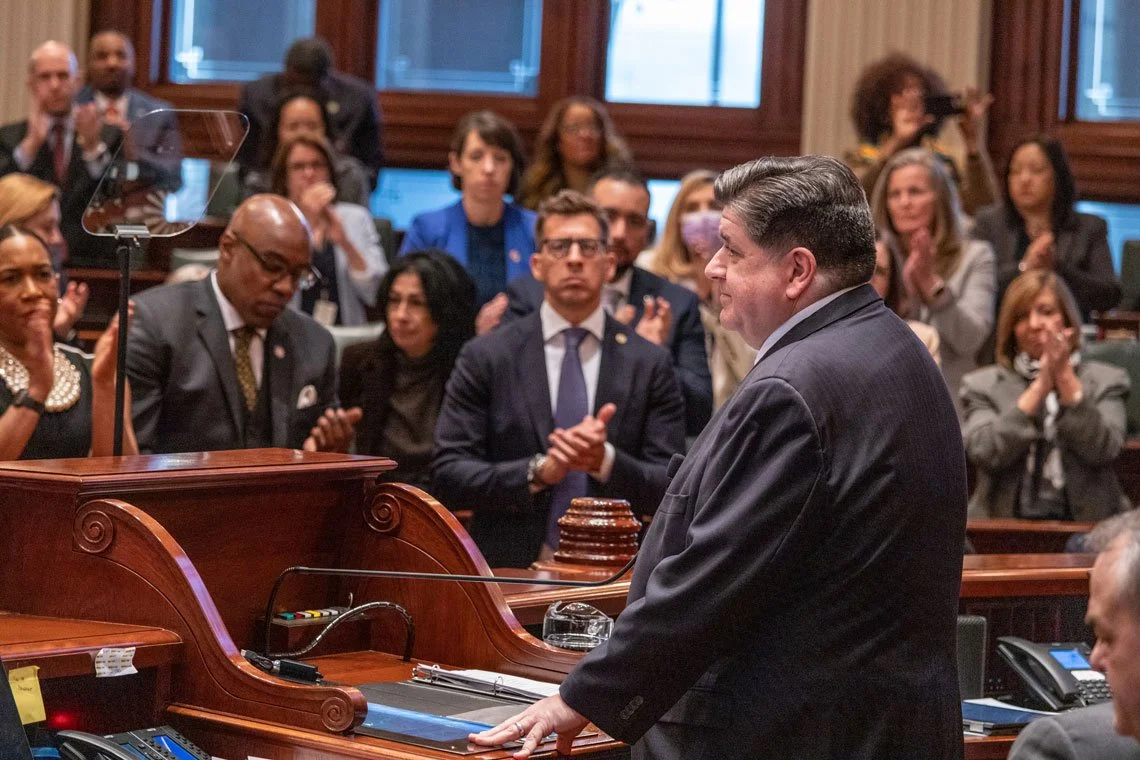
Gov. JB Pritzker enters the Illinois House chamber to give his annual budget address on Wednesday, Feb. 18, 2026. (Capitol News Illinois photo by Jerry Nowicki)

Pool Work Set To Begin Soon

Mt. Carmel Mayor Joe Judge says construction on the city’s new aquatic center is set to ramp up in the coming weeks.

Speaking at Monday’s City Council meeting, Judge said city officials recently met with Landmark Aquatics to review the project timeline. Fencing has already been installed and the pool site has been staked out in preparation for construction.

Judge says the company plans to return during the first week of March to begin excavation work and moving additional dirt at the site. Some of that excess soil is being hauled to the Mt. Carmel Airport.

While the project is still awaiting a few final state approvals, Judge says everything is lining up and Landmark Aquatics is ready to move forward. Full construction activity is expected to begin in early March.

The tentative goal is to have the new aquatic center up and running by Mt. Carmel’s Homecoming Week. City officials hope to host an open house during alumni activities, with the facility filled with water and fully operational for tours.

Judge says that timeline will depend on weather and any unforeseen delays, but for now, the project remains on schedule.

MCHS Graduation Date Set

Mt. Carmel High School Principal Amy Duckworth announced at Tuesday’s District #348 school board meeting that this year’s Awards Day will ber Friday, May 8th at 1:30 p.m. at the high school. Duckworth said holding the ceremony during the school day will allow freshmen, sophomores, and juniors to attend and witness seniors receiving scholarships and recognition alongside the community members who support them.

She also said that graduation is set for Saturday, May 9th at 10 a.m. at Riverview Stadium, weather permitting.

Duckworth noted that because Awards Day will be held Friday afternoon, the main gym will already be set up. In the event of inclement weather, graduation would move indoors to the gym but remain on the same date and time.

Split Vote Defeats Homeschool Policy Review in District #348

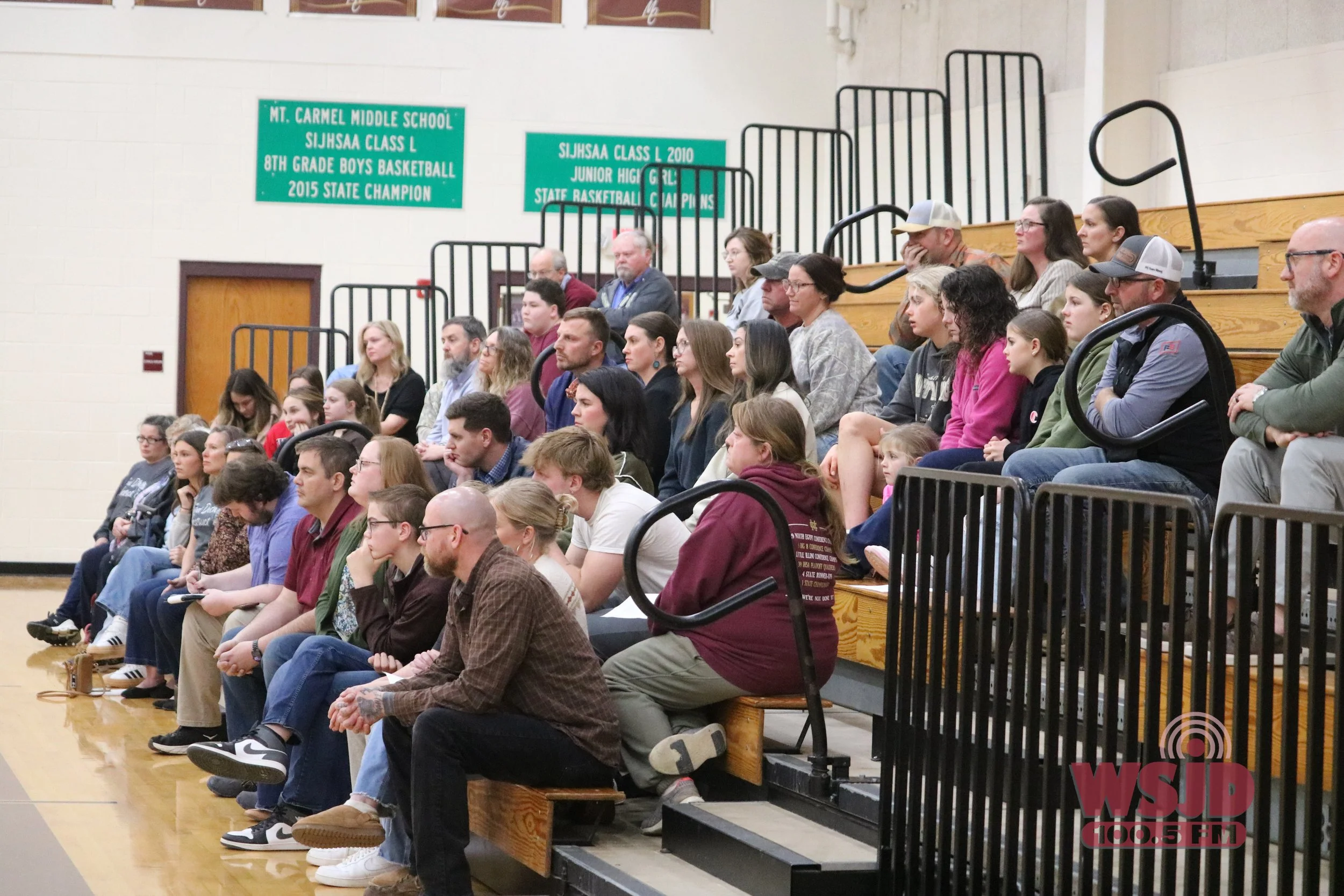
The Wabash Community Unit School District #348 Board heard from residents Tuesday night asking the board to allow homeschool students to participate in district extracurricular activities.

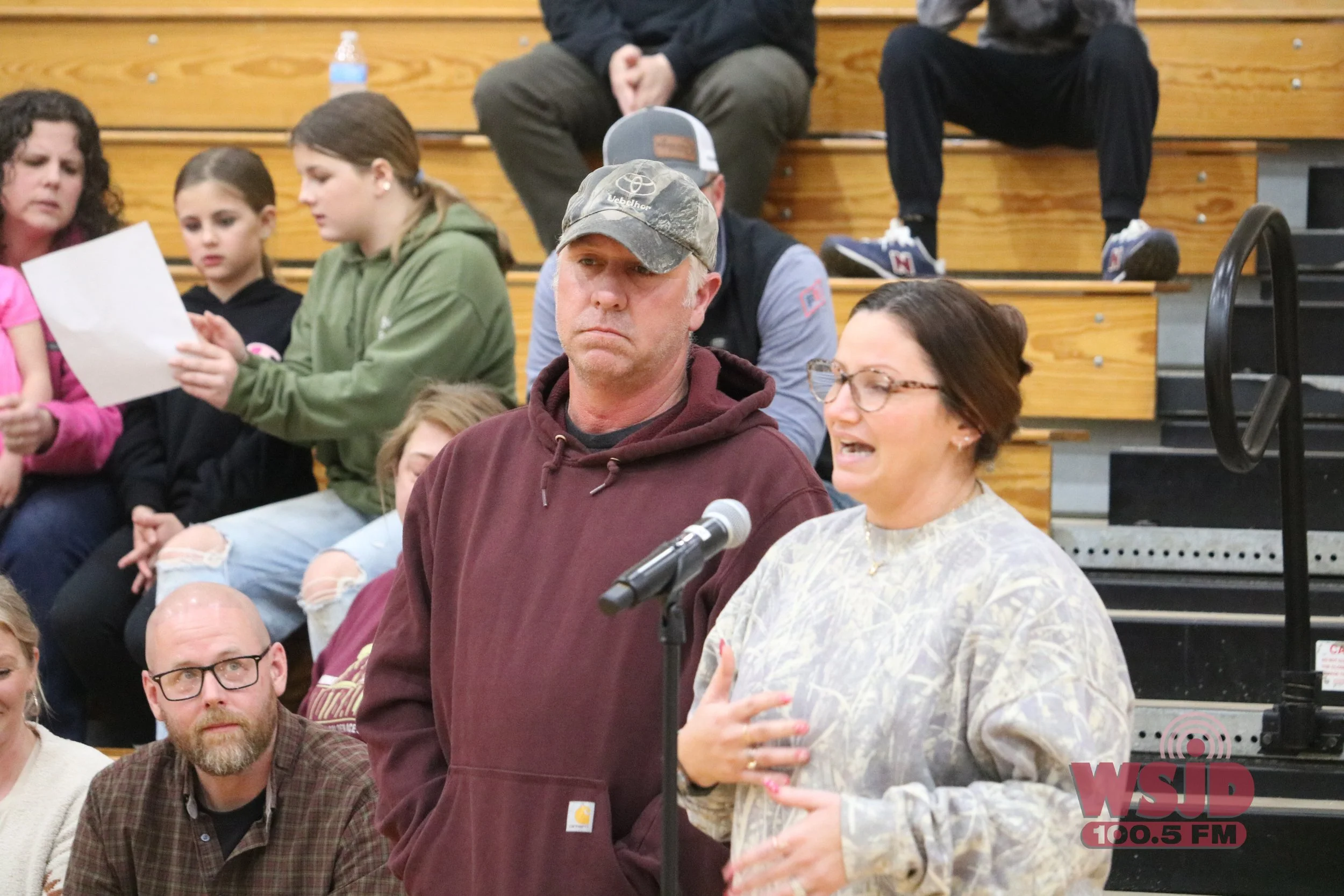
Parents, students, and community members addressed the board during an extended public comment session focused on the district’s current policy, which prohibits non-public school students, including homeschoolers, from taking part in extracurricular and interscholastic activities.

Eli Musgrave, a homeschool student in the district, urged board members to revisit the policy. Musgrave told the board his family chose homeschooling for religious reasons but emphasized that homeschool students meet rigorous academic standards and would be willing to comply with eligibility requirements.

Other speakers echoed that request, saying homeschool families remain active, taxpaying members of the community and should have access to extracurricular opportunities. Several residents argued that participation could be structured with accountability measures and would involve only a small number of students.

Superintendent Dr. Chuck Bleyer said the issue centers on existing Board Policy 7:40, which explicitly bars non-public students from extracurricular activities. Bleyer explained that any change would require a review of approximately 20 board policies, along with consideration of federal and state mandates, collective bargaining agreements, and consultation with the district’s attorney.

Board members expressed a range of views. Some voiced concerns about how academic eligibility would be monitored, noting that Illinois does not regulate homeschool curriculum, which could place responsibility for credit approval and oversight on the district. Others said they would like to see further discussion and research before making any changes.

Late in the meeting, board member Jessica Peter formally requested that the board place a review of the homeschool policy on next month’s agenda. After discussion, Peter made a motion to create a committee to review a potential amendment to the district’s homeschool policy.

The motion received a second, but failed on a roll call vote. Peter and Susan Wood voted in favor. Janet Alka, Theresa Hocking, Kyle Peach, Gregg Wilcox, and Board President Jamie McCorkle voted no.

No changes were made to the district’s homeschool participation policy Tuesday night.

Here are transcripts from speakers at Monday’s meeting:

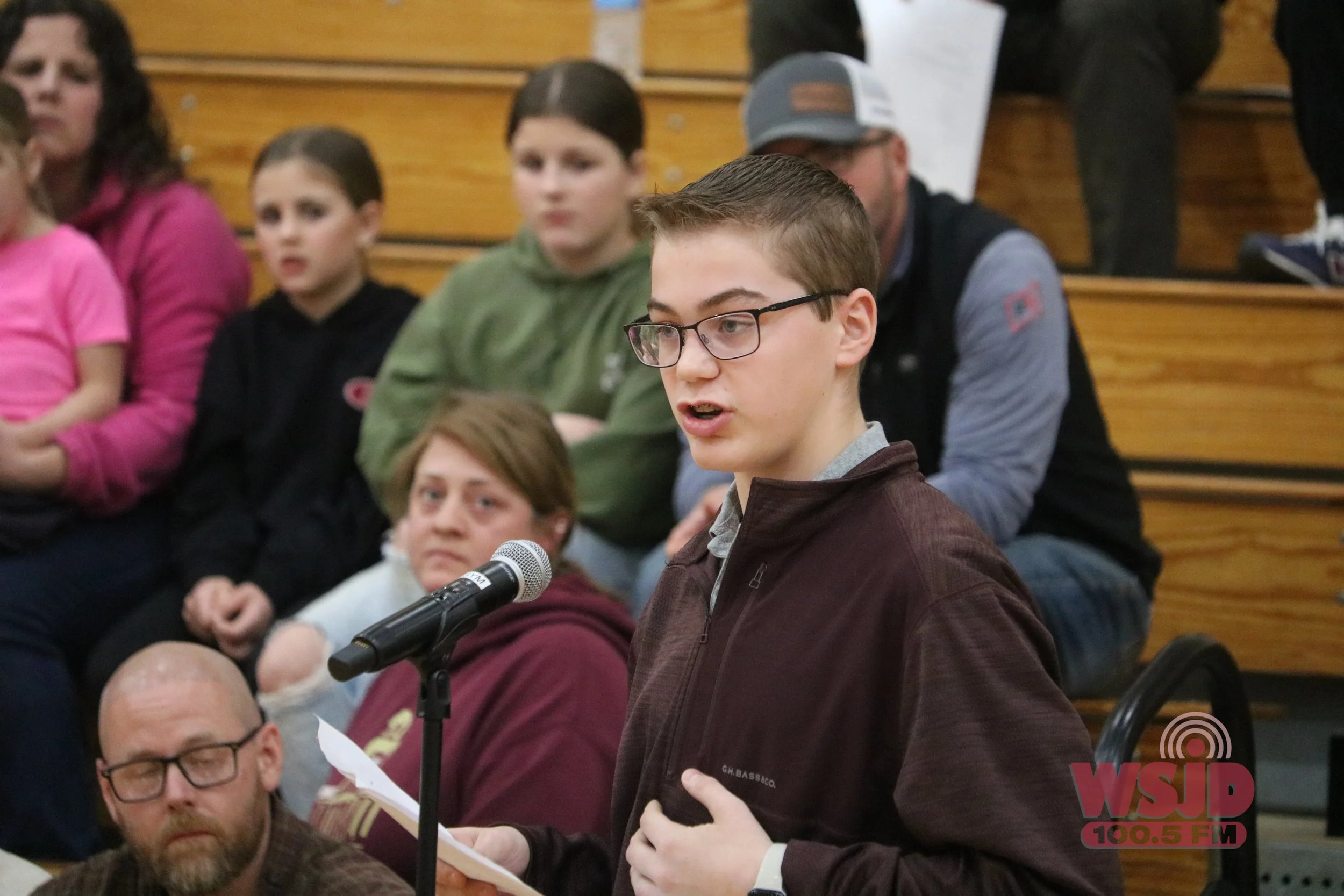
My name is Eli Musgrave, and I am a homeschooler in District #348. First of all, I would thank-- would like to thank each and every one of the board members and the superintendent for all you do in this community. Second of all, I would like to address the policy of homeschoolers not being allowed to participate in extracurricular activities in District #348. My family chose to home, homeschool on relig-- on, on religious conviction, and I'm sure this is true for many homeschooled families in this district, district. It is of question whether homeschoolers are getting a proper education. I'm here to say yes. I have sat with Dickens, seen works of Monet firsthand, learned about war from Winston Churchill himself, and am taking honors algebra and geometry, all while realizing that God is the maker of all things and is intertwined in all education. There has been expressed concern that homeschoolers get to sleep in and start school late. However, this is not the case in my household or any of the peers around me. I'm up early, starting school every day, some days well before eight. Additionally, when public school students had snow days, I was still getting up early and doing school. Even last night, I had to stay up late after play practice to submit a writing assignment at ten thirty PM, and was up at seven today. With the IHSA policy, homeschoolers must submit their curriculum and their grades. We are not asking to be left unmonitored while playing Golden Aces sports. We are asking to be held accountable. I have been playing football and baseball since I was five years old. It is not just Mount Carmel High School who are the Aces. It is ing-ingrained in our community as a whole. I was able to don maroon and gold as an Ace and play on the Mount Carmel Little League All-Star team as an Ace. Also, for the past four years, I've been able to play Junior Aces football, and the most recent year, I was elected one of the five captains and helped lead my team to the first JFL championship they've ever had. I earned this position by hard work, determination, and leadership. According to the IHSA website, the opportunity for boys and girls to represent their school and community as they participate in interscholastic activities offers significant lifetime learning experiences that cannot be duplicated. The Illinois State School Board and IHSA both see a value in homeschoolers participating in extracurricular activities because they've already written a policy allowing part-time enrollment and participation in sports and other activities, and they have given you as, as, as a school board, the opportunity to embrace this policy. As a board, are you willing to vote yes and allow me to continue being a Mount Carmel Golden Ace, or will you vote no and create a stumbling block for significant lifetime learning experiences? You-- for me and other students in this community. You, as a board, were elected by this community to represent this community. Are you willing to look at the interests of the whole community and not just the public school students? [clapping]

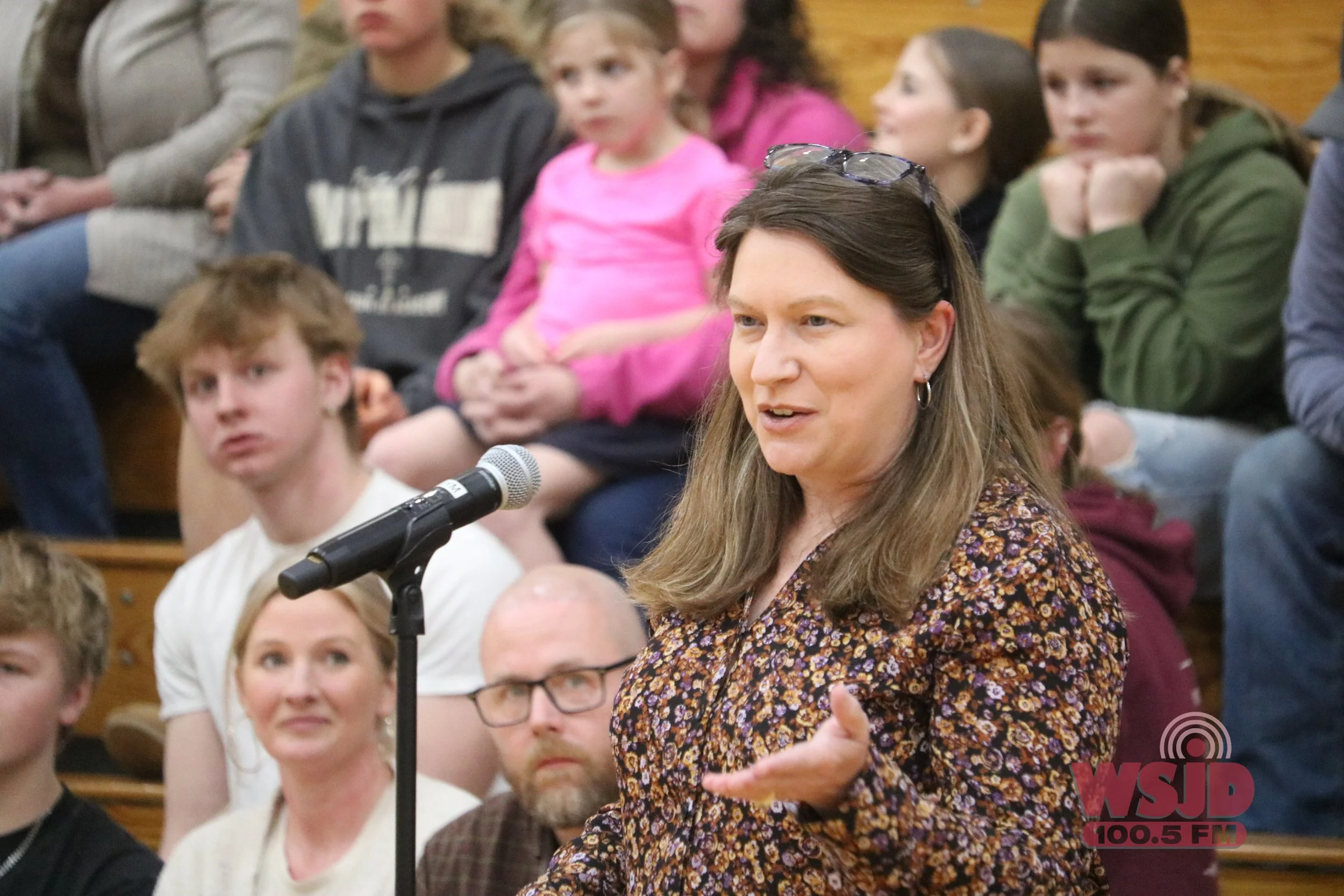
Tracy Gill: I was... I had this in my back pocket because I really was trying to decide whether or not, um, God was leading me to say anything, uh, but I feel like He is. So first of all, good evening to the members of the board and to superintendent. Um, thank you for the opportunity to speak and to the people that come and speak as well. I sent a letter to all of you a couple of weeks ago. So I sent a, a letter a couple weeks ago, and then after that, having seen lots of comments on Facebook, um, just I've kind of been thinking on that and, and the issues that have come up and the concerns voiced by many people, um, on social media. Because this public comment section precedes the superintendent's comments, um, you know, I might be speaking a little bit uninformed, so I apologize if I am. I recognize that there are strong feelings surrounding this issue, as evidenced by, uh, the number in attendance and the response on social media the last couple of weeks. I would just like to remind all of-...or, um, a lot of names on a petition, or a lot of letters and a lot of emails sent, that doesn't necessarily-- It may create the appearance of a broad consensus, but really, it's a few voices. So there's a lot of families that don't feel compelled to speak out publicly. Um, they don't like to cause division. I don't like to cause division. Um, a few years ago, my husband and I came to the board with the same request, um, and we had people asking if we were gonna continue to fight, and I said, "No," because I didn't wanna create division in our community. There's enough division without that. So, um, I hope you hear my heart when I say all these things. Um, it's been said, and many of you expressed it much better than I'm about to, that families who choose to homeschool, um, have an advantage because they're not seated in a traditional classroom for those six to eight hours a day. And, um, in reality, homeschool students, most of the time, follow very strict structured schedules. Um, many of them also work on family farms and businesses, part-time employment. Um, I can attest that my kids were up before, um, the sunrise, um, a lot of days going to work, um, and kind of experiencing, um, things that have set them apart today and, and things that they're doing. The days are also oft- often full and demanding, just like the student would attend in person in District #348. They're simply organized differently. Education setting does not automatically translate to reduced workload or competitive advantage. It's also been said that families who chose to homeschool knew that extracurriculars would not be an option, and that's true. We do know that. However, acknowledging what has been done doesn't necessarily determine what should be and to be. The existence of a rule by itself does not resolve whether it remains the most equitable approach to the students in our community. It may also be helpful to keep scale in perspective. The homeschool and private school community is relatively small. It's when you consider the district as a whole, and those students that would be, uh, interested in participating in extracurriculars makes it even smaller. So I think by the time you spread that out over several grades, you're gonna find that it's not gonna overwhelm the system. It's not gonna displace programs in place. Um, I think in keeping that, just that perspective and the, the number in mind is helpful. Um, other areas of community life, I was just kinda trying to think of some analogies. Um, we don't see that, um, there's a lot of exclusion in things that have to do with taxpayer dollars overall, right? If I choose to live in the country, I don't have access to be able to check out materials in the library, but there's a path for me to be able to do that. I can get a library card, right? I have to pay for it, but I can get one. Um, if I am someone who uses holistic medicine, and I don't really use Wabash General a lot, if I break my arm or if I need physical therapy, I'm not denied access into that system. So I just-- Just kind of an analogy as we kinda look at other taxing bodies within the district. At its heart, this question is not about gaining something without contributing. Homeschool families remain members of this community. They live within district boundaries, contribute as taxpayers, and support local programs and businesses. They also attend games, plays, and support district fundraisers. I can tell you, a few years ago, my husband and I, um, we, uh, bought six softball cards [chuckles] because we love those girls that played with my daughter. So we're all part of that. We're not choosing to disengage from the community as a whole. We've just chosen a different path for education. As a parent, I recall some strong reactions from my own children when something unfamiliar was introduced. Often, that reaction would stem from limited information or an understandable concern about change. When we would take the time to listen and explain, understanding would grow, even if enthusiasm took longer. I share that only to suggest that initial discomfort does not always mean that an idea lacks merit. Sometimes it simply reflects what is new and different. I would also respectfully suggest that decisions to homeschool or pri-- pursue private education are rarely made as statements against a district or its educators. For families, these choices are deeply personal and shaped by circumstances unique to their children, whether that involves scheduling realities that don't align with a traditional school day, specific learning needs, past experience with bullying, health considerations, or religious considerations. The reasons are complex and thoughtful. In many cases, families continue to hold great respect for the district and for the staff, while simply determining that a different educational structure better fits their child at this particular moment. I hope those decisions can be understood in that way, as individual choices made in good faith and not as a criticism or rejection of our public schools. In closing, I just respectfully ask that you consider whether a clear, accountable framework could allow participation while maintaining standards for integrity, eligibility, conduct, performance, inclusion, and high expectations. These are not in conflict. In many cases, they strengthen one another. Thanks for your time. [applauding]

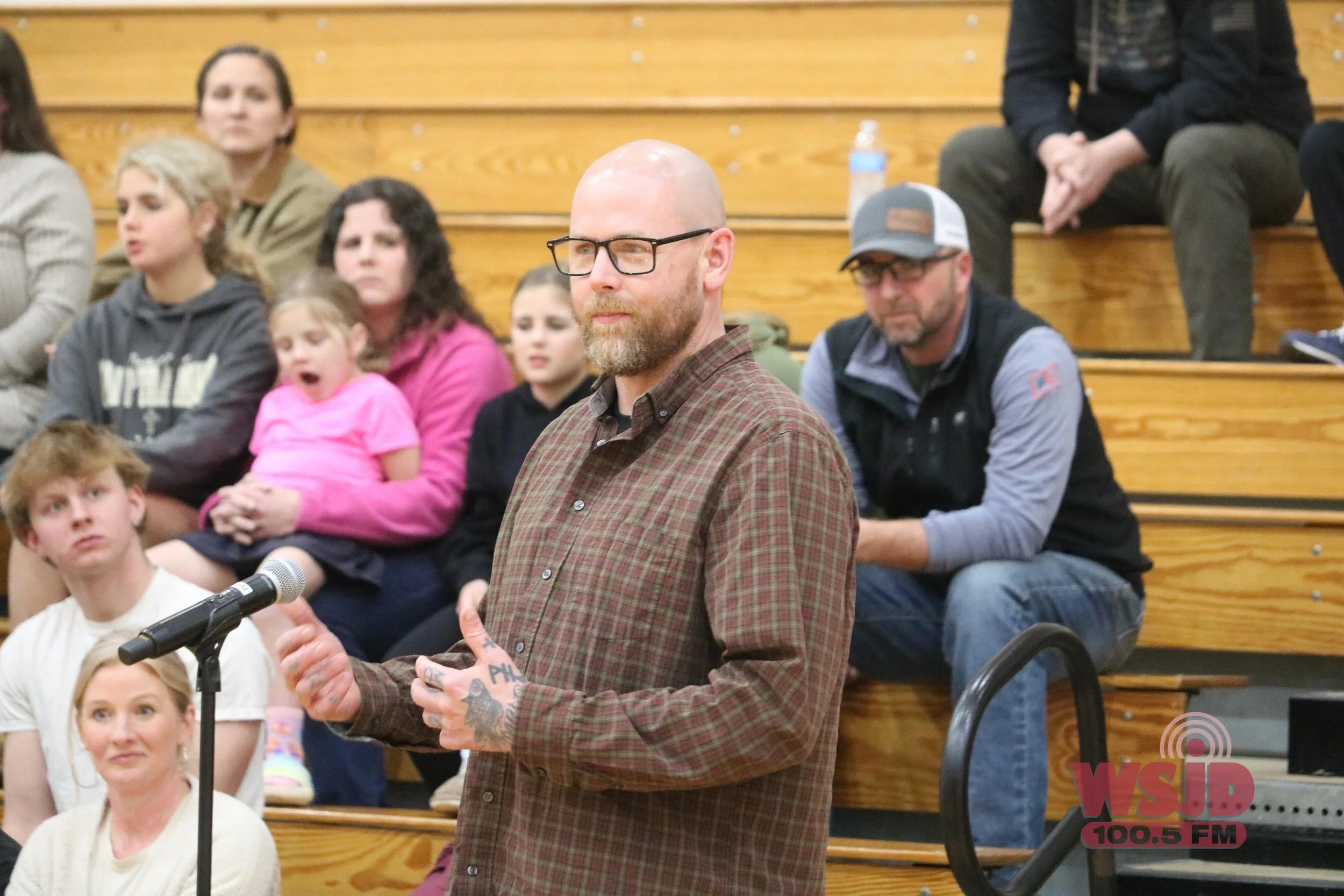
My name is Heath Reed, and I support, uh, allowing homeschoolers to participate, uh, in sports. Um, I know there's a lot of pressure on the board to make the right decision, and, uh, it's not easy when you have a growing number of people who are watching-... homeschool, private school, public school, uh, and we just do what's best for our family. Um, I don't see any of the negatives, uh, that could come from allowing homeschoolers to participate, but the benefits, uh, to the school, the benefits to homeschoolers and the community. I just think it's, it's worthy of being thought. Thank you. [audience clapping]

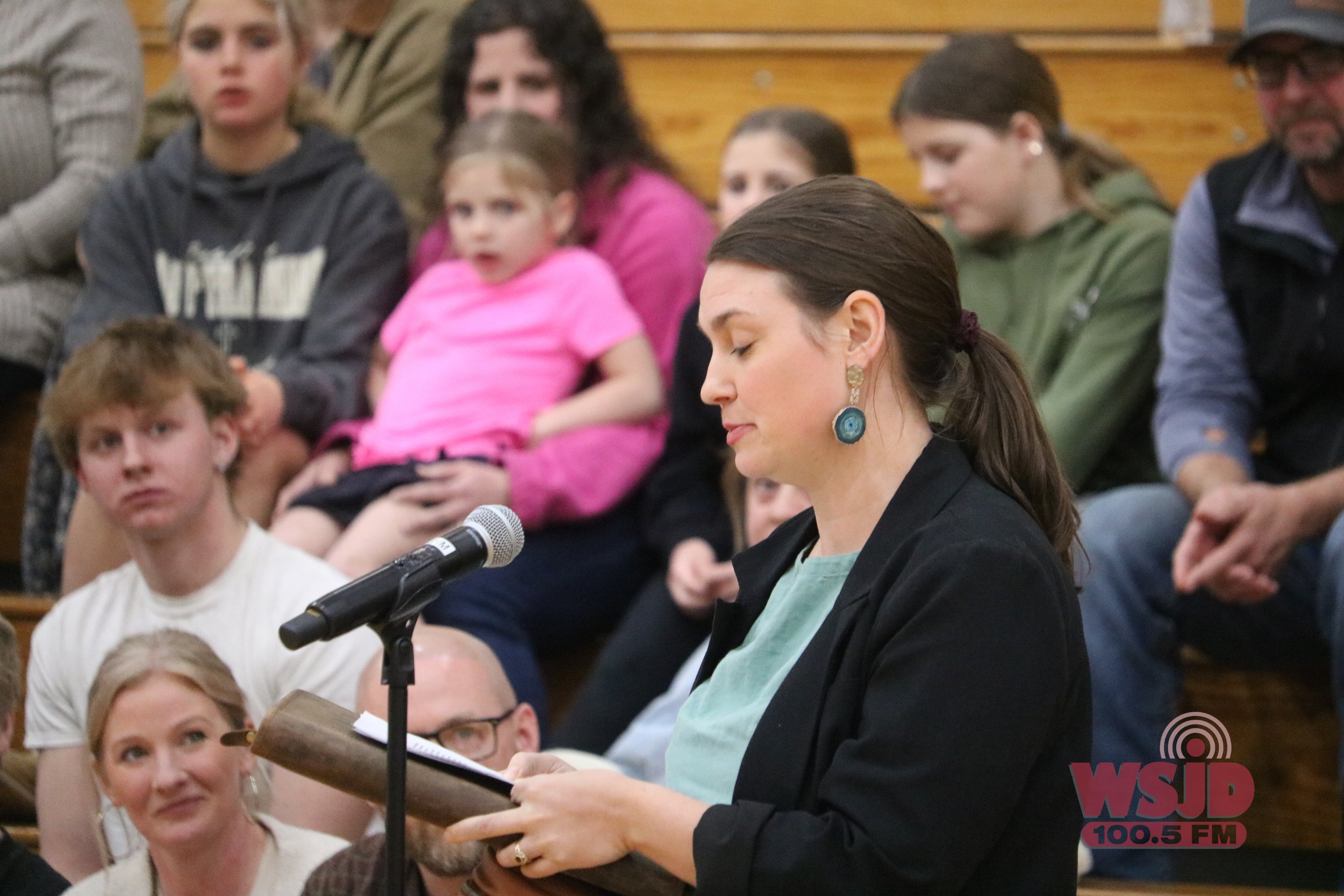
Ravyn Drone: Hello, members of the board, to all concerned parties and opponents, thank you for the opportunity to speak. I wanna begin by being clear that I'm in favor of and support homeschoolers' participation, and believe wholeheartedly that the facts, IHSA guidelines, and evolving state regulations would clearly sustain the board's approval. I say this from the perspective of a local mom and a community member, but also as a former local student-athlete who went on to obtain a Division One athletic scholarship and play four years. Perhaps most importantly, I say this as a former public school teacher, who fought and worked tire-tirelessly for her students' educational rights in the district of Champaign Unit Four, as well as this very district. I am married to a public school teacher, I am the daughter of two lifelong public school teachers, and I speak to you today as someone who wants nothing less than the very best for the students of Wabash #348. The core question in all this is simple: If we can offer more opportunities to more children in our community, should we? However, I'm gonna address some oppositional points I've seen floating around, because while I believe the core to be simple, some would make this request out to be confusing and more complex than it needs to be. Public school is being misunderstood by many as a strictly opt-out, opt-in, exclusive program, where in fact, public education is a free public service available to all until high school completion or the age of twenty-one. The local community in which a homeschool student resides is still required to provide them with special services as needed, including, but not limited to, special ed services, occupational therapy, speech, or classes like driver's education, according to the LIS school code. Homeschool students are also able to sign up for partial enrollment, pending they meet a few requirements, example, transcript. Uh, furthermore, if a class that a homeschool student takes requires extracurricular involvement, such as band, then that student must be allowed to participate in the co-curricular as well. This demonstrates that the foundation of public education is that it is meant to be as accessible to a child as they need it to be, in order for them to have their developmental needs met. It shows us plainly that it does not have to be a take it or leave it service. In fact, it is very commonly not, and law is increasingly evolving, evolving to ensure opportunities to homeschool students. These policies also speak to a core principle, that a healthy society prioritizes the production of fully developed children into adults, and a community values public and free opportunities for all children within said community. As to the financial logistics, my understanding is that adopting this policy would really only be fiscally beneficial for our district. The question of whether free or almost free access to extracurriculars should be offered to all children with our community-- within our community, is allowed and regulated by the IHSA. More and more districts are adopting the policy, including schools we compete against. Many have been implementing this policy for years. Homeschool students would have to try out and maintain grades, show sportsmanship, etc. So while this is really only a small group, in reality, they only stand to make our sports teams better and more competitive. It could even potentially incentivize hypothetical families in the future to move here, which isn't that the goal for our town, to provide incentives for people to want to live here? In the face of all the facts, the question is again simple: If we can offer more opportunities to children in our community, should we? As much as I wish the decision was only being made based on facts, because truly, I think the facts speak for themselves, this request has clearly become about more than that for many people. It has become about morality and exposed what I see to be a tender spot for the community. So let-- allow me to expand on this issue morally as well. Based on my experiences as a public school teacher and how I was trained to look at the service I provided for students, my goal was always what is best for kids. Full stop. My job was to give every student the best experience, equal opportunity, and as much access as I could possibly give, even if they skipped my class, or cussed me out, or continually pulled their phone out during a presentation that took me an entire weekend to create. My goal was to win them over, for a class, for a unit, even just for a project, it was always about them, not me or my ego. Gatekeeping only the specific developmental opportunity of extracurriculars to a child who's willing to enroll, abide by IHSA regulations and applicable, applicable school standards, first, goes against the principles set out for almost all other academic opportunities. Homeschool students are able to enroll partially or get other services they cannot get at all. Second, does not align with my values or the values I believe public school claims to be built on. The priority of public education should be equal access to as many developmental opportunities-... third, does not serve all students best, including public school athletes who are currently learning from us on sportsmanship and moral standards. We should be setting an example to our student-athletes about teamwork, inclusion, and grit. Refusing this request for our local-- of our local homeschool students does the exact opposite. As public school teachers, we operate in the understanding that equivalent doesn't need to mean the same. In fact, we agree that focusing too much on sameness creates inequities. Consider that at one point, there were no five oh fours and IEPs for students, but special education was developed entirely as we began to understand it was our responsibility to provide individuali- individualized pathways for each student to reach the end goal of well-rounded development. The IHSA has laid out the proper ways in which we can have equivalent standards that are not based in opinion, but are based in equal merit and value set by an unbiased governing body. I have seen those opposed to this request disagree, disagree from an opinion that homeschool students and families have elected to sacrifice their participation in sports for their choice. I would remind the board that we are talking about minors who don't choose, and that there are many reasons for homeschooling. However, more importantly, this is again, not based in truth, as the IHSA does not require the sacrifice of homeschool students. We are required to sacrifice for them. Our community is required to sacrifice. The Illinois School Code does not draw this dividing line. We are choosing to. Policy allows us to choose the kind of community we want to be. So my question is why? Why is it important to anyone that this one offering of public education, extracurriculars, should be denied to a homeschool student when almost all other offerings are available to them to access, knowing the IHSA says it's fine? Is this revealing of a healthy or unhealthy view of high school sports in our community? Further, I would question if applying the kind of surveillant attitude that someone would perhaps place on competitor teams to potential teammates is the kind of moral standard for sportsmanship we want to be teaching our student-athletes. Do we want to be a community that accepts the falsehood that one child's gain is my child's loss? Do we want to be the kind of school system where we stand behind pride and offense as an excuse to make a decision about children, all about the adults? If we can offer more opportunities to more children in our community, shouldn't we? In regard to the proposed grading conveniences and potential chaos of adopting the IHSA guidelines, my personal experience teaching homeschool kids, partially enrolled students who's busted from other schools, et cetera, and discussions with other educators and parents who work or live in districts that allow this, tells me that they are predominantly imagining this as other. I encourage board members to not just take my opinion and instead reach out to teachers and admin from other districts who have adopted this policy and ask how it's going. For those claiming to be concerned about the small population of students who are pulled from school and whose parents potentially do a poor job homeschooling, I would point out that providing an incentive like access to extracurriculars could actually get these students back in the door and under your care. I would provide inc-- It would provide incentive for parents to submit grades, allow us to check on their well-being. So if an educator is claiming that they are concerned about well-being or standards, they should want to incentivize partial enrollment for these students. We can drum up hypothetical what-ifs, but in the end, we cannot control what students do with opportunities. We can only give as many opportunities as possible with clear expectations and have reasonable consequences in place. To conclude, while my experience in other districts with homeschool participation contributes to my confidence in supporting this request, I understand it's a new year, and it is okay to have questions. But the answer to questions should be curiosity, discussion, and research, not exclusionary petitions or haste reviews. Public school's purpose at its best is meant to be just that, a public service, avail- available for every child as much as they need. The deeper issue that concerns me here is about the heart. As a public school teacher, never have I heard people or teachers be angry or begrudge a child an opportunity that could be afforded to them. My training drilled into me the principle that I want any and all students in my classroom as much as possible, because what I had to offer them was good, and we should offer as many good things to children as we can. Our society and country is built on moral principle that you hope we all have in common, that all children have value, not just our own kids. I am particularly concerned at the mindset we would be promoting in public school athletes by denying this request, and am truthfully passionate about the kind of community I would want to raise my two children in. In the end, I pray the board's hand will be over the decision when it comes to a vote, and all will be softened and unified in love for one another, no matter the outcome. I trust God knows what's best for our community far better than we do. However, I ask one final time: If we can offer more opportunities to more children in our community, shouldn't we? Thank you.

I am Melanie Linson and I appreciate this opportunity. Um, JC and I have lived in this community our whole life. Our children go to this school, and we have, um... Sports are very dear to his heart. [laughing] He, uh, has volunteered countless hours and years, um, bringing in new athletes from YIA just has poured into these kids, and, uh, I know a lot of people in the community appreciate that. Um, as a public school parent, I have talked to my child about this, and he does not see any competition and nothing that he would be in defiance of this happening. Um, he has been, uh, taking lessons with, um, Xander, here in town, who now has a very good business, who has been a homeschool child, who is now a semi-pro baseball player and is going to be pouring into our district as a baseball coach. So while we are appreciative of that, I feel like our community should know that as well, because a lot of people don't know where he came from and where he's going. Um, he's a great influence, and he is pouring into these boys, giving them free lessons for our high schoolers, which is so appreciative. Um, while Keegan thrives in this type of environment, our youngest struggles. He struggles with the long days. He struggles with the attention. He struggles with things that, um, most, most of the time comes easy for people, but we have put him in the public school, and we are trying to get him, um... basically, we're trying to keep him here. If this doesn't end up working out, we will homeschool him just for the fact that that is what's best for our child. It has nothing to do with the school system, it has nothing to do with the teachers, but it has everything to do with our family, and that's where our heart is with it. We have both graduated from this school, and we do not see any reason why this would not be something that would benefit our community. We have a lot of friends that homeschool their children, that are involved in the same type of things from YIA to junior high, and they have played sports with our kids for years. They integrate well together. There is not any fights. There's not anything that has any reason to keep them from continuing on for the next four years. Is there anything else you would like to add? Thanks, guys. Appreciate the time. [audience clapping]

Dr. Chuck Bleyer: The question of homeschool students. So basically, this centers around Policy Seven Forty, which is non-public school students, including parochial or homeschooled students. Uh, in that policy, uh, that's been here well before I got here, there is a provision, uh, that's called extracurricular activities, including interscholastic competition. Uh, it reads specifically, "Non-public students, regardless of whether they attend a district school part-time, will not be allowed to participate in extracurricular activities." That is solid school board policy. This policy actually bleeds into our, uh, it's thematic actually, and it goes into our student handbook, specifically, when it points out under athletic participation based on academic eligibility: "Students at Mount Carmel High School, in order to participate in athletics or extracurricular activities, must have passed twenty-five credit hours of high school work the previous semester, or its equivalent, if not a high school student, and must be passing twenty-five credit hours of high school work per week during each semester of extracurricular or athletic participation." So that's the current semester and previous semester, must pass five of seven classes. Also, attendance at practice and games is outlined in this po-- in this handbook policy. An athlete must attend school for half a day to participate in the game or practice. And number seven, lastly, is scholastic eligibility. "All athletes are expected to maintain passing grades in order to remain eligible. Passing grades is defined as a grade of D or above in any class." By reviewing school board policy, I came across twenty school board policies that would need to be reviewed, uh, thoroughly before anything else could move forward. There's also mandates that are involved-... federal and state mandates that would have to be reviewed. We would also have to be in consideration with the WCTA and the WCEA for their, uh, for how they would like to move forward with this. So we have two unions also, uh, to, uh, consider, and of course, we would have to have our board attorney involved in any kind of, uh, change. So there are many steps involved in, in this whatsoever or in, in this beginning. Um, just personally, I'm a, um, through and through public school. Uh, I don't, I don't shy away from that at all. I'm born and raised-- I actually did go to a private school for eight years when I was, um, at St. Mary's in Herrin, Illinois, but I became a public school student after that, public school teacher. My mom taught public school, my dad taught, taught public school, born and raised, and that's just where I come from. Thank you.

Board member Theresa Hocking: I'm most concerned about the twenty-five-hour credit, um, from... So from what I read, a twenty-five-hour student has to be passing this ISHA, am I right? An ISHA requirement. Okay. So I guess when I read about that, and I read about it, I-- we've all researched this. It's, it's not like we're here tonight and we don't know anything about it. We've, we've all researched it personally. The state of Illinois does not regulate home schools. Is that correct? So it seems to me like the ISHA is putting the burden of regulation on us as a school district, that we have to give twenty-five hour credit towards graduation at our school. So I think the, one of the parts that bothers me is that's, that's going to make us the caretaker of regulating whether you're homeschooled or... I'm, I'm sure most of you have appropriate homeschool learning plans or whatever they're called, but we would have to-- I mean, it makes us be the regulators. The state of Illinois, I feel, is slipping because they do not have regulation. It makes us the, the, um, person that decides what credits are good and what homeschool programs are good, and that puts us at a disadvantage and it, it, it's gonna be a difficult task. It's not as easy as some people think, because that's actual credit that we have to give towards graduation, the way I read it. And I respect homeschool parents. I respect that decision they make. I respect public school people, that that's a decision that you have to make as a family, and no matter which one you pick, there's extra stuff that comes with it, and, um, it's, it's just a really hard and tough... We don't-- We love kids. That's why we're here. That's why I'm on the school board. Actually, not, athletics is why I'm on the school board. I'm on the school board because I want our kids to be educated. I want them to be educated so they can enter different things in the world. The ones that don't have a chance, the ones that don't have the parents that can do certain things, they need our help as public school persons, and that is why I'm on the board. And [clears throat] I understand your dilemma, and I understand that I don't feel like we're leaving anyone out. The option is there to come to school, but it does put us in a position to be the caretaker of these credit hours. Like, who's gonna do it, and what does that actually mean? And that's-- those are my concerns that I came, came up with. And thank you all for coming. I appreciate that you're here showing your support.

Kyle Peach: I did a lot of research, and I read every document that was sent, and I read every email that was sent. For and against, I sadly apologize on behalf of the people in the community who were disrespectful online. Um, that was outrageous, uncalled for, and I apologize to the community. We need to apologize for that. Um, I want to say that I am not, as I think all of us are, are not opposed to your right as parents to decide what's best for your student. Homeschooling is a, is a path, exists, legally exists, uh, and I would say the thing that, that I would go back to is, I want your kids full time in our district. This young man right here, a classic example of someone I want walking the halls and rubbing shoulders with his classmates, because it's gonna be a positive influence on them throughout the school day. Um, I understand the reasons why you wouldn't, um, want to send your kids to the school district. Um, that's your personal choice. Um, I do want to clarify a couple of things.... Several of the emails that I've received from those in support of home school students being allowed in our extracurriculars, quoted an Illinois policy website article, which frankly, is an opinion site. Um, regardless of that, though, um, it said that the district and the state funding it receives would not go down if more students leave to become home school, home schooled, and that is technically true. Under the current guidelines, the amount of funding the district receives does not go down. It can go higher from year to year. However, what they don't say in that article is that if more students enroll full-time in our district, that our funding will go up, um, and that that will never go down from the point in which it goes up. There's also talk about eventual changes to state funding. I'm here to tell you, the people in Chicago are not happy with it. Um, I can't ever imagine a time in which having less enrollment on a full-time basis would be good for us. Talk about economics, um, we get, um, it boils down to be in state funding, about fifty-four hundred dollars per student per year that is enrolled full-time in our district. I imagine what we could do to improve our school system if we have more students enroll on that full-time basis. Um, it is not, as Theresa kind of indicated, something that is just as easy as adopting the IHSA policy. Um, we track eligibility through our online grading system that is checked once a week, to make sure that our students participating in extracurriculars are meeting academic standards. Um, we don't currently have a policy for how that would be tracked. Who is going to track that? What's the time commitment to be, to having that tracked? Those are things that, that, that trouble me with moving forward with, with this. Um, someone indicated in an email, something to the effect of no one has ever asked why they home school their, their children. If there is something we could be doing as a district to make it more enticing to send our-- your, your kids here on a full-time basis, I want to have that conversation. I want to know what those concerns are, because that it is, at the end of the day, what, what I, I think truly matters, um, is I would love to have that dialogue and to, and to get that understanding and to find a way, um, to get your kids, uh, in our schools full-time. I'll close with this and just say, I look across this room, there are many friends of mine, neighbors, even family, who home school their kids. Um, and I do appreciate the candor, the core, the core of the open conversations that have been had. Um, it's a, it's a tough call, but I think that sticking with our policy as is, is, in my opinion, what is the best path forward for our district.

Jessica Peter: So I wrote my, my thoughts down because sometimes it's better brain just sort of... So, um, I've been trying to respond to most emails that I received, um, but I do thank you for coming tonight and sharing your concerns. Um, as a board elected school board member in Wabash County, I took an oath to faithfully discharge my duties in accordance with Illinois law. That oath requires me to respect taxpayer interest by serving as a faithful protector of our district's assets, to foster extensive participation of the community, to formulate goals, set the course for our district, and to serve as an education's key advocate on behalf of students and our entire community schools. Importantly, and to address a common misconception, this means representing the entire community, all taxpayers, all voters, and residents who support our public schools through their taxes. Not just those with children currently enrolled in our district's program. I was not elected by the schools in the district. I was elected by the voters of the entire district. My responsibility is to the broader public interest, including families who choose homeschooling while living in our district and contributing to it. Every decision we make should be guided by what's best for our kids, all of the kids in our district, and for the overall betterment of our community, while recognizing that parental choices in education carry consequences for access to certain opportunities. Before moving on, I want to recognize and express my deep appreciation for our dedicated district staff, teachers, administrators, support personnel, and everyone who works their heart in educating our children every day. Your commitment ex-- to excellence in care of our students is admirable. It strengthens everything we-...Forty of our residents, parents, students, and neighbors respectfully attended our board meeting and asked us to revisit the current policy barring homeschool students from IHSA-approved extracurricular activities. As part of my duty to respond to the, to that community input, I've gathered facts from reliable sources, including conversations with twelve nearby districts, to inform this discussion. First, let's clarify roles. Sorry. [chuckles] Neither current Illinois law nor the Illinois High School Association prohibits homeschool students from joining public school extracurriculars. IHSA bylaws explicitly allow it for homeschoolers who enroll part-time at the member school, take and pass at least one course there each semester, and meet the combined minimum of twenty-five credit hours, typically five classes per semester, with credit granted by our district. All other IHSA eligibility rules apply just as for any student. A key development at the state level, where I spoke with today, Senator Jill Tracy from Brown County, proposed Senate Bill ninety-six. I would encourage you to read that bill, look into it, and contact your senator if you are interested. The bill amends the Illinois School Code to require districts, beginning of the school year, to allow residents, non-public school students, including homeschoolers, to participate in extracurricular athletic activities sponsored by the district without requiring enrollment or coursework at a public school, as long as they meet eligibility conditions such as residency and IHSA rules. This is currently in the State Senate in Illinois and could become law. I don't know if everybody has heard about, um... While the bill remains pending, its introduction and support reflect growing statewide momentum for eq- equitable access for resident families who contribute taxes, but choose non-public education. This underscores why proactive consideration of our policy makes sense right now. Importantly, our district already has homeschool students in our classes. I don't know if everybody understands that either. I believe we had seven this year. Non-public school students-- That could be last year's number, I didn't get clear. Um, non-public school students, including homeschoolers, may, may enroll part-time if space is available, the request is made timely by May first for the next school year, and they reside in the district. No eligible child can be denied access to available classes under these provisions. For all activities like band or theater, if a homeschool student enrolls in the class, related practices or performances are accessible. The neighboring districts report, um, a minimal workload and paperwork. Well, the number is specifically, like, five students. Um, there was a district who had twenty in total enrolled, and for extracurriculars, five students wanted to participate in IHSA programs and activities. So, um, there's not a whole, a, a lot of significant burden there. Um, participating dis- districts have gained student funding from part-time enrollment and, and view-- Actually, they view it as a recruiting opportunity to connect families to our resources. Their experience shows this works well with few issues. Concerns about parents and curriculum or private instructors are addressable under IHSA and state code, which recognizes parents' educational rights. Interest is often in non-athletic activities like theater, band, or scholar bowl, building skills and community without overwhelming our resources. Our current policy excludes resident homeschool families from opportunities their taxes help fund. Amending it to allow part-time enrollment for extracurricular access aligned with IHSA rules, regional examples, and the direction indicated by SB ninety-six would be fair, inclusive, and fiscally neutral or positive. It respects parental choice while strengthening our community and, most importantly, serving the betterment of our kids and the entire district. By keeping an open dialogue with people in our community, like the four residents who spoke up, we set a powerful example for our kids of how adults handle difference, differences respectfully. But keeping this dialogue open would... We're listening actively, working together toward solutions that benefit everyone. This, this model is the kind of civic responsibility and community spirit we want our students to carry forward. To move forward thoughtfully, I propose we request that we review the potential amendment of this policy and the others that Dr. Bleyer mentioned. It be placed on the agenda for next month's board meeting. This will allow us to continue gathering input, perhaps through administration, preparing a summary of options, a committee discussion, or further stake- stakeholder feedback, so we can address the community's concerns productively. I'd like to welcome your thoughts and look forward to continuing this dialogue. [audience clapping]

Susan Wood: You know, this is a subject very near to my heart, so it's been very difficult to watch so many different opinions on this. Um, I am interested in adding [pause] where I'm going with this one.... What most of you I think are concerned about is the curriculum. When some of the things were adopted, you know, implemented in our system, and they're supposed to be taught in the classroom, that's not a lot that I would want my student. I understand that. I'm not in agreement with the curriculum that we are handed tomorrow. I don't know how we can prevent or buy that, but I do understand where you're coming from. Ships, [coughs] house size, it's all what people are out in the channel for religious or other reasons. Thousands of parents in Oklahoma have decided that there's no way they're going to put their school-aged children in public education. Those families still pay taxes, yet their children are denied access to the same teacher and other school district activities, and yet they're taxed to support something that denies their children's education. And that doesn't have to be the case. Some school boards have proactively adjusted their policies to allow all students or all resident children access to the district activities with, with no commitments required. Taxpayers should get what they pay for. A school district loses no money when a family decides to remove their child, but it could receive more money via registration that it keeps by allowing their children to participate in the extra-curricular activities. Current law and other policies, such as those maintained by the Oklahoma School Association, allow students attending just one class during the day to participate in sports and other activities. Some Oklahoma districts already go further, allowing non-public school students to participate in institute or, and other activities. I'm sure we, as a board, can rectify what needs to be done in this system, follow other districts' examples, so we will continue to do research, uh, and seeing what we need to accomplish. [clapping]

 

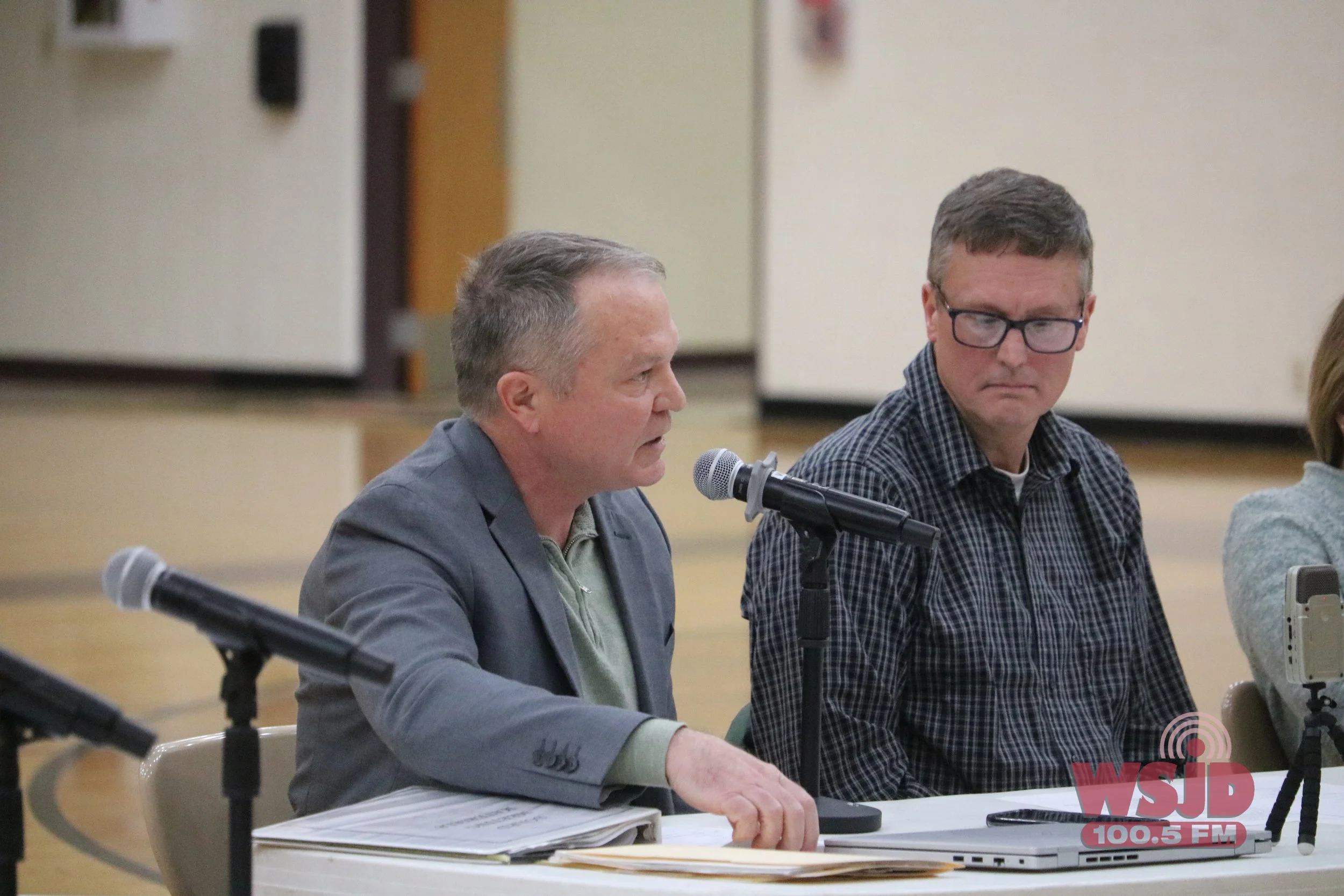
District #348 Superintendent Dr. Chuck Bleyer speaks while Board President Jamie McCorkle looks on.

Eli Musgrave

Tracy Gill

Heath Reed

Ravyn Drone

JC & Melanie Linson

Theresa Hocking

Kyle Peach

Board member Jessica Peter while board member Susan Wood looks on.

Emergency Roof Repairs Set To Start On Old Portion Of City Hall

An emergency roof replacement project at Mt. Carmel City Hall will be getting underway soon.

City Clerk Ryan Turner reported to the city council Monday afternoon that ADG has completed its proposal for the project and is recommending Joyner Sheet Metal and Roofing to handle the work.

Turner says the company is already pre-qualified with the Illinois Capital Development Board, which oversees state building construction and maintenance. He says that certification is a positive indicator of the contractor’s experience, quality of work, and ability to handle emergency projects.

The project will involve removing the current roofing system on the older portion of City Hall — which is more than 20 years old — and replacing it with an upgraded material designed to last longer. The work will also include added insulation and a new edge system.

The cost for the project came in at $89,996 — roughly $20,000 less than the amount previously authorized by the council. Turner noted that some late bids were received but were not considered, and the materials quoted in those bids did not match specifications.

Because the mayor and clerk were granted authorization to move forward at a previous meeting, no additional vote is expected.

Turner says the repairs are urgent, with buckets and trash cans currently being used to catch water inside the older section of City Hall. City crews have removed snow from the roof and attempted temporary fixes, but officials say a full replacement is needed as soon as possible.

Pritzker to present 8th budget as Illinois faces federal funding uncertainty

Democrats seeking new taxes while Republicans call for limiting spending 

By BEN SZALINSKI
Capitol News Illinois
bszalinski@capitolnewsillinois.com

Article Summary

  • Gov. JB Pritzker will present his eighth budget on Wednesday and outline a plan to deal with limited revenue growth and significant uncertainty over the future of federal funding for the state. 

  • Several policies from the federal government raise costs for the state or diminish how much money Illinois will receive, causing forecasters to project growing deficits in the coming years. 

  • A recent economic forecast expects the state’s economy to struggle under the weight of tariffs and cuts to social services. 

  • Progressive lawmakers want the governor to raise taxes on corporations and billionaires while Republicans are hoping to keep spending flat in fiscal year 2027.

This summary was written by the reporters and editors who worked on this story. 

SPRINGFIELD — Gov. JB Pritzker will stand in front of the General Assembly on Wednesday in a familiar position: confronting tremendous uncertainty over the state’s financial future.

Pritzker will present his eighth budget as he seeks reelection to a rare third term and becomes a growing national presence as a possible 2028 presidential candidate and one of President Donald Trump’s loudest critics.

The Trump administration has put Illinois and other states whose leaders disagree with his vision in the crosshairs, targeting them for massive cuts to federal funding. In the last two months alone, that has included a $1 billion child care funding cut that’s temporarily been blocked by the courts and $100 million in threatened health care funding cuts. 

At the same time, the economy has been shaken by Trump’s tariff policies and Congress passed a sweeping domestic policy bill, known as the One Big Beautiful Bill Act, that will alter the fiscal landscape for states across the country. That measure cuts eligibility for Medicaid and the Supplemental Nutrition Assistance Program, increases administrative costs and reduces what the state can collect in provider taxes

The ever-changing federal funding landscape presents lawmakers and Pritzker with a murky picture of the future — one that can change as fast as the president can send a social media post or a judge can issue a restraining order. 

But the state constitution requires lawmakers to pass a balanced budget, and Pritzker will outline his plan for one on Wednesday.  His annual budget address sets up months of negotiations — mostly between supermajority Democrats. They’ll try to balance their desires to fund programs while revenues — both from the feds and the state’s base sources — are projected to flatten at best. 

Rep. Kam Buckner, a top House Democrat budget negotiator from Chicago, said one of the goals of this year’s budget will be to play “defense.”

“It’s hard when the biggest variable in the budget is not something that you can control,” he said, referring to federal funding. “And with this president, the volatility isn’t a possibility; it’s a given.”

Pritzker and his team have already started setting expectations for a conservative budget, telling agency leaders in memos and signaling to legislators that it will be difficult for the state to fulfill funding requests this year. 

Federal impacts

The Governor’s Office of Management and Budget estimated in October that lawmakers will have to close a $2.2 billion deficit for fiscal year 2027, which begins July 1. Much of that deficit is driven by the state’s own spending exceeding projected revenue. But GOMB projected changes at the federal level are making the problem more challenging and will further exacerbate deficits in the coming years. 

In the short-term, Pritzker’s budget office estimates income tax revenue for the state will be lower because of federal tax code changes and some administrative costs for food assistance programs will be required this year. 

Most of the impacts of Trump’s big bill won’t be felt until FY28. But that doesn’t mean it won’t factor into this year’s process. 

“You can't ignore what is coming down the road, and so we should expect and work towards a proactive plan for next year’s gap starting now, not after May, because the gap is being driven by forces that won’t wait for the spring,” Buckner said.

Read more: Pritzker’s new budget report could set tone for conservative 2027 spending plan | Judge blocks Trump’s $10B child care funding freeze that targeted blue states, including Illinois

Dwindling federal funding is already starting to appear in the state’s balance sheets. The Commission on Government Forecasting and Accountability’s January report shows revenue was 3% lower in January compared to the same month in 2025, largely because of decreased federal funding. 

Federal funding to Illinois has declined for three consecutive months, though the commission cautioned there could be a variety of reasons for that, such as the timing of payments. In any case, federal funding was 35% lower this January than last and is now down 8% for the year. Overall revenue for the year is still up 3.5%.

Economic conditions

It’s not just federal funding that presents a challenge for lawmakers — the overall health of the economy does as well. A forecast by Moody’s Analytics released last week set an ominous tone: “Illinois’ economy is in a precarious spot,” and a weak economy ultimately makes it difficult for revenue to naturally grow.

“Potential budget shortfalls in Illinois and the city of Chicago mean lawmakers may need to consider a mix of revenue enhancements and spending adjustments, measures that could ultimately stifle consumer spending,” the report said.

The forecast predicts employment will not grow or decline, and the economy will grow at a slower rate than other states because of outmigration, a shrinking tax base, and a massive long-term pension liability. Additionally, tariffs are hurting the state’s manufacturers, and rural areas are suffering from both tariffs and higher farming costs.

“Illinois has a lot at stake, given its reliance on manufacturing and logistics and its above-average exposure to foreign trade,” the report said. 

Moody’s said the results of Trump’s big bill will be mixed by region, but the overall impact of the policy will be negative because it weakened social services. 

More broadly, Moody’s notes an artificial intelligence bubble in the stock market could burst and trigger a recession. 

Health care costs to balloon 

Lawmakers could also consider taking proactive steps to absorb new health care costs and cuts set to take effect in the coming years. 

Under a provision in Trump's big bill — one that applies only to states like Illinois that expanded Medicaid eligibility under the Affordable Care Act — a 6% cap on the tax Illinois can charge health care providers will gradually be cut starting in FY28 until it reaches 3.5% in FY32.

Read more: Illinois Medicaid program faces looming funding crisis due to federal changes

When the lower cap is combined with a decline in federal aid for Medicaid, the state could lose $1.7 billion annually by FY31, according to the governor’s budget office. 

The impending limits on Medicaid provider taxes will pose a significant challenge for lawmakers who will either have to find some other way to pay the state’s share of the cost or adjust the program to fit within the new fiscal constraints.

Since the federal changes do not take effect for another year, it is possible lawmakers will not feel pressure to take immediate action in the upcoming legislative session.

Current-year changes

The October GOMB report also revealed the state was on track to run a small deficit in the current fiscal year ending June 30, largely because the state’s income tax code was tied to the federal level and Congress made changes that will ultimately lower tax revenue flowing into Illinois.

In response, lawmakers decoupled the state’s tax code from the federal government in certain areas, which GOMB expects to reduce the deficit by $243 million. The state still faces a $587 million deficit because of the federal tax changes. 

Pritzker has also asked several state agencies to reserve nearly $500 million in spending because of uncertainty over how revenue will shake out as federal funding remains in flux. The reserves largely focus on cost savings, such as forgoing hiring in certain agencies for the remainder of the fiscal year, reducing available grants and saving money on health insurance costs. 

In the last two budgets, Pritzker and lawmakers have also relied on targeted tax increases. Though the FY26 budget ultimately amounted to a $2 billion spending increase, most discretionary spending outside core areas increased by less than 1%. Pritzker also warned lawmakers last year that if they want to increase spending for a certain program, they must come up with a corresponding cut. Pritzker has also opposed broad tax increases, such as statewide sales and income tax hikes. 

Senate Republican Leader John Curran, R-Downers Grove, said at a news conference earlier this month that he expects limited spending to continue in this year’s proposal. 

“You saw the rollback on the health care for working-age population for undocumented immigrants last year,” Curran said. 

The Health Benefits for Immigrant Adults program was launched in 2021 and covered qualifying individuals aged 42-64 but was ended in this fiscal year’s budget because it far outstripped initial estimates.

“That was something that the governor, in his budget address, readily admitted that it was a mistake to go down that road, and the state could not afford that,” Curran said. “So I think that process already started last year. I expect that to continue this year in this budget.”

What lawmakers want

A group of progressive Democrats want to raise taxes substantially to fill gaps in the budget. The $4 billion tax package calls for taxing the appreciation of billionaires’ assets, a 10% tax on digital ads, increasing taxes on corporations' offshore earnings, and closing loopholes in the corporate tax code. 

Lawmakers said at a news conference earlier this month that the taxes are necessary because businesses and wealthy Americans have benefited from tax policies in Washington. 

“If we don’t fight back with taxing the ultra-wealthy, we’re going to continue to chop services in order to balance budgets,” Sen. Karina Villa, D-West Chicago, said. 

Speaking to CNI, Buckner said any new revenue must be reliable for the state beyond one year and fair to taxpayers so they “are not the default state ATM.” 

“We got to create some certainty in this chaos and that means that we have to build a budget that can take a hit without passing the pain straight to families, hospitals, schools and local governments,” Buckner said.

Rep. Amy Elik, R-Godfrey, who leads budgeting for House Republicans, framed concerns about federal funding differently. 

“In my opinion, it is always volatile because you are relying on another level of government with programs that they may begin or end,” Elik told Capitol News Illinois. 

Elik said Republicans are worried Democrats will go to the taxpayers’ well for more money.

“They’re not even ashamed or embarrassed anymore to say we need to raise taxes,” Elik said. “And so when they’ve got so many people on board with that theory and concept, I’m very, very concerned.”

Republicans in the House have largely been shut out of budget negotiations for several years and Elik said she doesn’t expect this year will be different, adding Republicans won’t agree to vote for a budget before it is completed. 

The House Democratic Women’s Caucus said in a statement they are hoping to see the governor boost funding for social services that have been cut at the federal level and are “open to potential revenue options that do not negatively or disparately impact the vulnerable populations we represent.”


Capitol News Illinois is a nonprofit, nonpartisan news service that distributes state government coverage to hundreds of news outlets statewide. It is funded primarily by the Illinois Press Foundation and the Robert R. McCormick Foundation.


Penny shortage causes headaches for retailers in the Land of Lincoln

For many Illinoisans, it’s a sentimental ending to see “Honest Abe’s” coin disappear

BY ERIKA TULFO

Medill Illinois News Bureau

news@capitolnewsillinois.com

Article Summary

  • Illinois citizens and retailers are grappling with the slow disappearance of the penny in the Land of Lincoln.

  • The lack of fixed guidance at the state and federal levels on how to address the scarcity of new pennies has left some businesses at a loss.

  • Many retailers have resorted to rounding their prices up or down when selling or making change, but that is imprecise.

This summary was written by the reporters and editors who worked on this story.

SPRINGFIELD — At the Abraham Lincoln Presidential Library and Museum in Springfield, visitors can shop for sweatshirts, pillows, jewelry and chocolates using coins bearing the face of perhaps the most-famous Illinoisian, Abraham Lincoln.

But even here, pennies are growing scarce at the cash register. 

The museum gift shop, like the rest of the country, is grappling with a penny shortage after the United States Mint halted production of the coin in November, citing the rising cost of producing them.

The lack of fixed guidance from the state and federal governments about how to cope with the shortage of new pennies has left some business owners scrambling to come up with ways to address it. 

Many retailers are just rounding up or down to the nearest 0- or 5-cent mark in their prices to make change. They will accept the one-cent coins, but can’t always pay them out.

“The retailer faces frustration on behalf of the consumer,” said Rob Karr, president of the Illinois Retail Merchants Association. “Most retailers are rounding in the consumer's favor, which doesn't make the consumer mad, but it also takes profits out of the retailer and puts them at the narrowest end of the net profit margin. So every penny matters there. I think the absence of clear guidance at the moment is difficult.”

Some businesses, like the Lincoln Museum gift shop, display a guide on how its rounding system works. The museum, for example, rounds amounts ending in 1 or 2 cents down to 0. It rounds amounts ending in 3 or 4 cents up to 5 cents, and amounts ending in 6 or 7 cents down to 5 cents. However, other business owners say this kind of multi-tiered rounding system can be inconvenient and confusing for customers.

For many Illinoisans, there is a sad, end-of-an-era feeling watching the slow disappearance of the one-cent coin, which was one of the first coins made by the U.S. Mint after its establishment in 1792. President Lincoln’s profile has been on the “heads” side since 1909, and that change made him the first president featured on U.S. coins in honor of his 100th birthday.

Mary Disseler has been working as a volunteer at the Lincoln Museum for over 20 years since its founding in 2005. As a die-hard fan of Lincoln, she sees the decision to stop penny production as a sad but sensible decision. 

“It kind of breaks my heart. I think it’s a nice tribute to Mr. Lincoln, but I understand that it’s costing four cents to make a penny, so there’s a part of us that has to be practical, too,” she said. 

Keith Wetherell, executive director of the Illinois Beverage Association, which represents a handful of small, cash-reliant or cash-exclusive businesses, has practical concerns, too. He worries that the inconvenience posed by complicated rules around rounding could affect customers’ sentiments.

“The one thing that we would really lobby against was any type of bouncing around from city to city where you have all these different rules and stuff; we want to just minimize the confusion,” he said. “We just like to make everything as good and as easy as possible for the customer. Small businesses are struggling as it is. We don't want any operational challenges. When (customers) have challenges, they take it out on us by not buying them as much.”

Julie Johnson, who owns Daisy Jane’s, a boutique in downtown Springfield, said she rounded up cash change to the benefit of the customer when necessary, but would rather use pennies to give them exact amounts. 

“My jar is pretty low on coins. I’m gonna have to figure out what (the state) wants us to do with pennies,” she said. “There has to be a plan for that. When you calculate tax on something, it’s almost always going to have pennies as part of the equation.”

How will lawmakers respond?

Illinois lawmakers say the penny shortage is not an issue at the top of the agenda because of factors like the popularity of cashless payment methods and the fact that there are still billions of pennies in circulation.

Sen. Dave Syverson, R-Cherry Valley, wrote a note on his website in November applauding the U.S. Treasury’s decision to halt production, saying it was “more of an inconvenience than a useful part of the economy.” He said no steps were currently being taken to address the shortage at the state level and that he would await guidance from the federal level.

“It'll be something that they'll obviously start working on addressing more and more as the pennies become less in circulation,” he told Capitol News Illinois. “It doesn't look like people have to worry about it at all for 2026. I'm guessing that the soonest there'd be any guidance would be '27, when they would maybe set some rules about requiring businesses to accept whatever rounding decision that gets made.” 

But Karr, head of the retail merchants association, said he wasn’t satisfied with Springfield playing the waiting game and leaving the decision up to the U.S. Treasury.

“While the federal government makes currency decisions, the states make sales tax decisions. So it's a shared responsibility,” he said. “While there's clarity that the federal government needs to provide, there's also clarity that the state needs to provide. That clarity, it helps in terms of lawsuits as well, because there are lawyers out there who can sue if they don't think you've done something correctly. And without that guidance, it leaves the retailers certainly exposed.”

Gordon Davis, founder of the Springfield tea store Whimsy Tea, said he hasn’t had issues with the penny shortage yet, but that it was “looming.” He said that while 72% of his customers opted to pay with cards, more than one-quarter still chose to pay with cash.

Instead of rounding prices, Davis made prices tax-inclusive in his store’s point of sale system, which he says saves him the trouble of facing legal complications with rounding.

“Rounding, as I understand, can run you afoul of federal law because you have to treat all currencies, all payment methods the same. If you’re rounding for cash but not rounding for card, you’re breaking the law,” he said. 

Still, experts say that beyond minor adjustment costs on the retailers’ end, the penny shortage won’t pose a major issue in terms of price increases simply because its value is low. 

“Inflation-wise, it's not creating a problem,” said Shihan Xie, an assistant professor of monetary economics at the University of Illinois Urbana-Champaign. “The value of the penny has diminished. It's at a point where the value is so small that it’s not going to affect daily life much, or that it becomes crazy.”

But for some citizens of the Land of Lincoln, the penny shortage is an issue that has more to do with sentiment. Lincoln Museum volunteer Disseler she understands the economics no longer support the beloved one-cent piece. 

“We’ll still have the $5 bill,” she said. “Even though they’re phasing (the penny) out, we’ll keep his memory alive forever.”

Erika Tulfo is a graduate student in journalism with Northwestern University’s Medill School of Journalism, Media and Integrated Marketing Communications, and is a fellow in its Medill Illinois News Bureau working in partnership with Capitol News Illinois. 

Capitol News Illinois is a nonprofit, nonpartisan news service that distributes state government coverage to hundreds of news outlets statewide. It is funded primarily by the Illinois Press Foundation and the Robert R. McCormick Foundation.


ICE agents detain five men on their way to work at a Du Quoin sawmill 

This marks one of the first reported mass ICE enforcement actions this far south in Illinois

By JACKSON BRANDHORST & LYLEE GIBBS
Saluki Local Reporting Lab 

Capitol News Illinois

Article Summary

  • The men worked at a sawmill in Du Quoin and ICE detained them during a traffic stop on Jan. 29 on their way to work. Du Quoin’s mayor said he had no advance knowledge of the enforcement activity.

  • All of the workers had been employed at Alstat Wood Products through a labor subcontracting firm, and the owner of the sawmill said he had been informed the workers’ visa statuses were valid. 

  • ICE did not respond to multiple emails from Capitol News Illinois seeking comment, and reporters were unable to independently verify the existence of warrants for the men.

This summary was written by the reporters and editors who worked on this story.

DU QUOIN — U.S. Immigration and Customs Enforcement agents arrested five men on their way to work in late January in Du Quoin, marking one of the first reported mass ICE enforcement actions this far south in Illinois under President Donald Trump’s immigration crackdown.

ICE agents in an unmarked vehicle were conducting surveillance in Perry County on the morning of Thursday, Jan. 29, when they pulled over their truck and detained them, according to the owner of Alstat Wood Products, a sawmill in Du Quoin where the men had been working.

Those arrested were 53-year-old Carlos Sanchez-Luna of Mexico; 37-year-old Guadalupe Hernandez Lopez of Mexico; 27-year-old Ramiro Lopez Alvarez of Mexico; 28-year-old David Ernesto Rodriguez-Mejia of El Salvador, and 42-year-old Gilberto Gomez Perez of Mexico. They were booked that same day and sent to the Ste. Genevieve County Detention Center in Ste. Genevieve, Missouri, officials at the jail confirmed. 

Rodriguez-Mejia was transferred and is currently being held in the Greene County Jail in Springfield, Missouri. Gomez Perez was transferred to Greene County on Feb. 3 and was later extradited from the facility by ICE on Feb. 6, according to staff at Greene County Jail. ICE did not return multiple calls and emails seeking information on his whereabouts. 

The Perry County Weekly-Press, which first reported on Feb. 11 the names of those detained, cited an ICE spokesperson as saying that a sixth man — 38-year-old Yecfren Alexander Alvarez, of Honduras — had also been arrested. However, reporters from the Daily Egyptian at Southern Illinois University Carbondale and Capitol News Illinois could not independently verify his detention, location or status. 

ICE did not respond to multiple requests for confirmation or to comment on the arrests.

Daniel Alstat, owner of Alstat Wood Products, said the detainment of the workers took him by surprise. 

“I did not dream of this, really, to be honest with you — until I got the phone call saying that they’d been picked up,” he said. 

Alstat Wood Products is a family-owned sawmill and logging company located just off of Illinois 127 in rural Perry County, Illinois. The company has been in operation since 1988 and is one of the few remaining sawmills in southern Illinois. 

Alstat said he has struggled at times to fill certain labor-intensive positions with local workers, particularly during parts of the year when demand is highest. Depending on the season, the company employs about 25 to 30 people, many of them family members.

The visa and immigration status of the five individuals detained in Du Quoin is unclear. Alstat said he was told that the five employees he subcontracted had six-month work visas. 

Looking for additional laborers to begin work in 2026, other sawmill owners pointed Alstat to a contracting company called Midwest Lumber Solutions Inc.

Through this company, Alstat said he hired five men on six-month contracts at the beginning of the new year in what he called an “experimental” approach to finding employees. 

“When I signed the contract for the five employees, basically it states that they'll (Midwest Lumber) be responsible for them,” Alstat said.  “When I ran it through my people and got it approved, it was all good. So, we just kind of went from there.”

Diego Rest, of Kissimmee, Florida, the owner of Midwest Lumber Solutions Inc., which operates out of Missouri and Florida, confirmed that the employees had been hired by his firm and contracted to work at Alstat. He said he’d been aware they were detained by ICE but declined further comment. 

Rest is also the owner of Midwest Outsourcing Inc., located in Cape Girardeau, Missouri.

According to Alstat, Rest’s contracting company was responsible for providing housing and transportation for the men. They had been living in a trailer on North Howard Street in Du Quoin since November, according to neighbors, who were familiar with them and knew that they worked at Alstat.

Quiet neighbors

Multiple neighbors said they recalled more than one instance of police activity at the trailer during the months the men lived there. Several described what they believed was an incident weeks earlier in which individuals were placed in handcuffs and taken into custody. However, reporters were unable to determine which agency was involved, what prompted the response or independently verify the account.

Perry County State’s Attorney Matt Foster said his office had no reports involving the men or the address in question. A review of Judici, the online court records system used by most southern Illinois counties, did not show any pending charges for the men in Perry, Jackson or Union counties.

One neighbor, Tristan Gossman, said he didn’t hear much from the men, though had been familiar with where they lived. 

“Good neighbors are quiet neighbors,” Gossman said “They must have come and gone at different hours. I didn't know there was more than a couple people living there. I had not a single problem with them.”

Other neighbors said they occasionally heard loud music at night, and said it appeared multiple people were living in the home. 

Du Quoin is home to about 5,600 residents — 2.44% of which are Hispanic, according to Data USA, and is best known for the Du Quoin State Fair and Street Machine Nationals, which brings thousands of visitors to town during the summer.

Under the TRUST Act, Illinois state law prohibits local and state police officers and other officials from cooperating with ICE, with some limited exceptions.

Du Quoin Mayor Josh Downs said he did not learn about the ICE activity until after the men had been detained. 

“Du Quoin police were not notified beforehand or asked to participate in any way with any ICE activities in Du Quoin,” Downs said. “They were notified afterward by a resident who noticed unmarked vehicles in town.” 

The report from the Weekly-Press cites ICE Public Affairs Officer Nina Pruenda saying that ICE, along with federal partners, conducted a vehicle stop during a targeted enforcement operation and encountered six men — all which Pruenda told the Weekly-Press have warrants out for their arrest. 

Alstat said it was his understanding that the men were pulled over by ICE as part of a broader surveillance effort by the agency in the region, and that the workers were not necessarily the target of it. 

“From the details I’m gathering, they were pulled over on an actual highway,” Alstat said. “They got in their vehicle and started coming to work and drove through an area where they (ICE) were looking for people in another spot and when they happened to drive by with some Hispanic looking people they (ICE) went, ‘Oh look at that, let’s question these people.’”

Temporary labor

Intensified ICE action over the past year in places like Chicago, Minneapolis, Los Angeles and others, has produced a plethora of legal battles concerning the conduct and procedures involving arrests and detentions made by ICE agents, such as Perdomo vs. Noem.

Perdomo, represented by the ACLU, alleges that recent ICE activity violates the Fourth Amendment because ICE agents are racially profiling and conducting stops on individuals without reasonable suspicion. The ongoing case has made its way to the Supreme Court, where it saw a contentious concurring opinion from Justice Brett Kavanaugh.

“He (Kavanaugh) suggested that if ICE knows people are working in jobs typically held by immigrants, or at workplaces where immigrants often work, if they’re speaking Spanish or doing other things typically associated with undocumented individuals, that might give law enforcement reasonable suspicion to stop and question them,” said Cindy Buys, a professor in the Southern Illinois University Simmons Law School, who specializes in immigration law. 

Buys said that H-2A visas are used for agricultural workers, and that many southern Illinois farmers use them to add employees for seasonal labor. 

“It sounds like they had some kind of temporary visa, meaning they were lawfully present and had employment authorization,” Buys said. “However, depending on the nature of their criminal records, that could invalidate their ability to remain and work lawfully. For those without criminal records, if they were here on valid temporary visas, there shouldn’t be a reason to arrest and detain them.”

A wide range of criminal behavior puts an individual at risk of losing immigration status, including most misdemeanors. 

Buys said that obtaining immigration visas can be time-consuming, and that some companies specialize in handling that process. 

“Companies with expertise in the visa process may act as the employer of record and subcontract workers to local businesses,” Buys said. “There’s nothing inherently improper about that arrangement.”

Alstat said he entered into the contract for workers in good faith, and that the situation has been unsettling to him.

“If I’d have known this was going to go down this way, I maybe would have chosen a different path to approach this,” Alstat said. “But still, I needed the labor. It was a chance I was willing to take. At the same time, I don’t know that there’s really been anything that’s gone wrong with anybody, because I still haven’t understood why they were taken if they had that paperwork. So I don’t know yet.”

This story was produced for Capitol News Illinois through the Saluki Local Reporting Lab, supported by grant funding from the SIU Foundation and the Illinois Press Foundation. Jackson Brandhorst and Lylee Gibbs are students at Southern Illinois University, and senior members of the Daily Egyptian, SIU’s student newspaper. Brandhorst can be reached at jbrandhorst@dailyegyptian.com and Gibbs at lgibbs@dailyegyptian.com

Capitol News Illinois is a nonprofit, nonpartisan news service that distributes state government coverage to hundreds of news outlets statewide. It is funded primarily by the Illinois Press Foundation and the Robert R. McCormick Foundation. 


The sun sets on Du Quoin’s Main Street on Thursday evening. (Saluki Local Reporting Lab Photo by Lylee Gibbs)

Hazleton woman arrested for DUI

On February 12, 2026, at 5:36 p.m. Gibson County Central Dispatch received a 911 report of an accident with injuries on State Road 56 at the Shiloh Church Road intersection north of Princeton.  Deputies with the Gibson County Sheriff’s Office as well as Union Fire and units with the Gibson County Ambulance Service were dispatched to the scene.  Upon arriving Deputy Wyatt Hunt observed that two vehicles had collided and while speaking to the participants he observed multiple clues that one of the drivers may be under the influence of alcohol.  At that point he began a roadside DUI investigation.  At the conclusion of the investigation, he placed 53-year-old Billie Golden of Hazleton into custody and transported her to the Gibson County Detention Center.  Upon arriving at the detention center Ms. Golden was charged with Operating a Vehicle While Intoxicated.
 
Deputy Hunt was assisted in his investigation by Deputies Wes Baumgart and Eric Powell. 
 
All criminal defendants are to be presumed innocent until and unless proven guilty beyond a reasonable doubt in a court of law.